Asking BETTER Questions Can Be The Answer To Productive Meetings
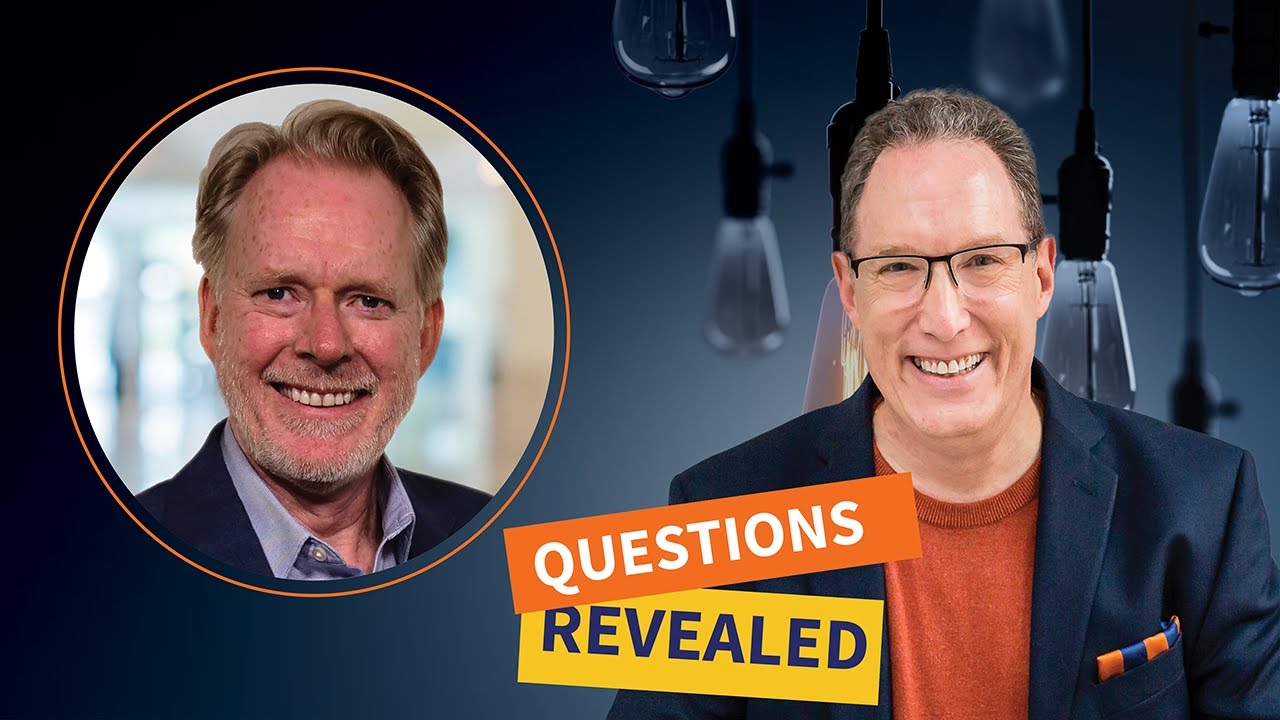
Shawn Grace, author of The Art of the Question, explains how leaders can transform meetings by shifting from giving answers to asking better questions. He introduces the Socratic 8 framework and a 3-phase questioning model, and shows how framing ideas as questions rather than statements reduces defensiveness and sparks creativity.
Chapters
If you've ever found yourself in a meeting feeling like you're going in circles or watching potential solutions just fizzle away, you're not alone. Most leaders believe that strong answers are the key to success. But here's the twist. It's actually great questions that unlock your team's potential. Without the right questions, insights get buried, innovation stalls, and employees start to disengage. And that's what we're talking about today on Marc Haine Live. Welcome to this episode of Marc Haine Live. This is where small business owners and entrepreneurs pick up core skill sets to create the show-stopping, jaw-dropping experience that their customers and their employees deserve. I am your host, Customer and Employee Experience Strategist Marc Haine. And I'm so glad that you're here with us because today, we are joined by Shawn Grace, author of The Art of the Question, who's here to show us why the most effective leaders don't just provide answers. They ask the questions that drive deeper connections, sparking breakthrough ideas and creating lasting solutions. So, stay with us. And if you haven't done so yet, please make sure you subscribe to this podcast. That way, you'll get you'll get a notification whenever we bring fresh new content to you each and every week. You know, as leaders, we're all looking for that magic formula to drive engagement, boost innovation, and finally get our team to stop spinning their wheels. But what if the problem isn't about finding the right strategy but instead, it's about asking the right questions? Think about it. How often do you ask your team questions that actually unlock their very best thinking? Or even better, it taps into their potential. Most leaders think that they're already doing this really well. But studies show that almost 80% of business conversations still leave crucial insights buried, unheard, or ignored. And when insights go unnoticed, so do the opportunities. Opportunities to improve, to solve big issues, and to innovate. And that brings me to our Question of the Day. So, when was the last time you asked a question that genuinely changed the way your team approached a problem and actually got you closer to a really valuable solution? I'd love for you to be part of this conversation. Feel free to go ahead and post this episode on your favorite social media platform. Hashtag it #ExperienceLeadership. Put your comments down and I'd love to have this conversation with you as well. As I mentioned, today I am thrilled to welcome a guest who is redefining how leaders connect, innovate, and solve the toughest problems in business. Not by having all the answers but by mastering the art of asking really great questions. Shawn Grace is a renowned consultant, speaker, and author of The Art of the Question, a groundbreaking book that has quickly become a must-read for leaders, problem solvers, and anyone looking to bring more creativity and insight into their work. Shawn's journey is unique with a background in sales, leadership development, and even the arts, he spent years fine-tuning the art and science of questioning, a skill set he teaches to top companies and teams around the world. Shawn, thank you so much for being here today. It's so great to have you.
Thanks so much for having me on, Marc. It's a pleasure to be here.
Likewise, love having you. Maybe you could start off telling me a little bit about who do you serve and how do you serve them?
Yeah, I serve a variety of clientele. Although I would say probably lately, the majority of them are in the science and STEM and technology fields. But essentially, what I provide is leadership development services through different types of corporate training. These go anywhere from sort of early career high potential individuals all the way up to the C-suite where I do more direct executive coaching, as well as a lot of mid-managers I work with on sort of honing their leadership and management skills.
I love that. And of course, communication is such a massive component of that skill development, isn't it?
I would say it's one of the more important, if not the most important aspects of effective leadership. is good communication. So, for sure.
Right. So, what misconceptions do leaders have about the skill of asking great questions?
Well, that's a good question and it's a complex one. I think traditionally, leadership and management, the perception of leadership and management is one where there's a high knowledge level, high experience level. and high problem-solving abilities. And that's still true. But I think what's changed over the past generation or so, or certainly over the past 10 or 20 years, is the need for more creative thinking teams. And the leadership, in my view and in my experience, has moved from a command-and-control concept of, I'm here to direct, You're here to follow. I'm here to solve problems or help solve problems. And you're here to carry out the commands type of thing. But what's happened is that what I've noticed with better leadership versus the more conventional leadership is the more advanced and progressive leaders are the ones who are more adept at asking better questions of their teams in order for their teams to become better problem solvers themselves. So, this idea that the manager or the leader is there and their value is about answering questions and providing solutions, I think, is an antiquated one, especially in this world where we really need more frontline people to think like leaders, to think more creatively, to think more critically. And that requires them to reframe how they're perceiving the problems that they are handling. And I think that what distinguishes the great leaders and great managers from the not-so-great ones are that they empower the people that report to them to think differently about how they're perceiving their particular challenges. And that's why it sort of settles on this idea of questioning because that's sort of the catalyst For that type of communication.
Well, and to your point, I see that when you say the command and control is a bygone era. In today's business environment, we are heavily relying on collaboration, which of course is Q&A, back and forth, open communication. But then, this idea that you mentioned about the expectation of what we have out of our staff, we no longer We no longer have this command-control thing. But we want our staff to start thinking of themselves more as intrapreneurs. That they're entrepreneurs within our organization to drive their excellence. Right.
So, and that— yeah, I'm sorry.
Go on.
Well, that very has to do with sort of that perspective framing. So, as a manager, As I was saying before, it's really the objective of a good manager is to shift that frame in order for them to be more self-reflective, in order for them to approach the problem from a completely different angle, and for them to explore possibilities and not to be afraid to make mistakes and not be afraid to take chances and not be afraid to ask questions, which I think is a cultural issue which is embedded a bit in corporations where there is a bit of a stigma regarding those who might ask a lot of questions, may appear either incompetent or they might appear just, you know, too meddlesome. Whereas in my experience, the organizations and teams who really encourage questioning and encourage sort of deconstructing ideas and reconstructing them are the ones that come up with the more innovative solutions. So, the leader and the manager, if he's able to foster that process, then I think that they're acting as true leaders as opposed to being there strictly as the end zone of the process of problem solving.
Or the figurehead. Yeah, yeah. So, for people tuning in, what are some common signs that leaders may not be asking the right questions?
Well, in my experience when I was coming up in management, I came out of that more command and control ethos where your job is to really bring your experience, your knowledge to the fore, and to command a group to follow orders and yeah, to think, but not necessarily to question and think too much. So, what happened was as a young manager, my team would come to me with problems and I would work very hard at helping them solve them. However, the difference is that soon I started to realize that I wasn't really building the critical thinking skills Of my team. In other words, they started to rely on me more and more. So, they would stand at my door and they would come in and say, here's my problem. I need ideas on how to solve this. And I would then dole out ideas on how to solve it. And then, they'd go away and the next person would come in. And after a few months of this, I said, hang on here. I'm not sure if I'm really empowering and enhancing and improving the skills of my team. They seem to be essentially leaning on me. as their manager to really kind of shepherd and help in a very tangible way to solve these problems that I know they could solve on their own. But because of the way I guess I approached business back then was that, yeah, but my job is to be the problem solver. So, I think for those leaders who feel that their value is really based on their knowledge and even their experience and their knowledge may very well fall back into that trap of doling out that knowledge as opposed to being more thoughtful in their questioning of their teams in order for their teams to say, hmm. And you may very well have the answer to the problem. Now, it depends on how urgent the problem needs to be solved. However, I found certainly in my own experience that when I started to empower and throw back questions to my teams and started to have them think differently about how they're looking at the problem, they started to form a different sort of mindset about how they go about dealing with problems. So, what happened was I developed a team of very strong thinkers, who turned out to become much better problem solvers as opposed to just relying on me or a manager or a leader to play that role. So, I think that is probably one of the deficits I've seen with leadership where they're still under this impression that good leadership and good management is really all about knowledge, where wisdom is not part of the equation. Wisdom does have a lot to do with your ability to ask better questions.
Right. And I can't help but wonder how much of ego comes into play when leaders don't want to give up the mantle of control. How many— like I grew up, obviously, I'm the latter part of the baby boomers where it was command and control. It was everything is on my shoulders as a leader. And you just have to execute everything. And then, when we win, I'm the one who's winning because it's my team and I made all the decisions. So, I can't help but think a lot of times when people are coming up in leadership roles, if they haven't been, if they really haven't had the leadership training, how much of their kind of decision-making, their team leadership is based on the hero complex of being the leader?
Yeah, I think that's a good insight. I mean, I think that that is still a big part of what's in the way of loosening up the leaders to think differently, where there is an ego thing. There is sort of this consciousness of, geez, if I don't show that I have the answer here, then my value is diminished as a manager and I'm not pulling my weight. Yeah. Where really the opposite— well, maybe not the opposite, but some other version of that where you may have the answer, but does it really make sense to dole that answer out, or does it make more sense to ask better questions of the team for them to think differently? Now, granted, in that process, you're giving up some of your control. And leadership, in my view, has a lot to do with trust. It has to do with empowerment and empowerment of others. And if anything, humility on the part of the leader. But some people are very hardwired. They've gotten to their position by hook or by crook. And they're determined to hold on to that former idea of what a good manager is. But I think what happens is they thwart thwart the development of the people that report to them. And in the end, the people that report to them, um, start to lose, uh, you know, um, engagement and lose a sense of purpose, um, where they're executing ideas but they're not necessarily feel like they're a part of the problem solving.
Yeah.
So I think ego is definitely a big part of that and has a lot to do with their own issues and how they develop their own idea of what a manager and a leader is.
And interestingly enough, when the 2023 Workplace Survey came out from Gallup and indicated that 72% of the workforce is disengaged at some level, that disengagement level happens because people feel that they don't have a voice. They don't have— they feel they don't have a participation. They're just in there just doing whatever they have to do in order just to get through the day. And of course, we had post-COVID, we had the quiet quitting component of, I'm going to take care of my mental health first and back off. Do you think this idea of good questioning practices helps turn the tide on these kinds of mindsets?
Yes, I do. I think—
Short answer.
Yeah. You know, I always think of sort of the one with the answer, or let's just say the answer is the endgame and the question is the journey.
Right.
And so, if you're sitting with your team and you're asking provocative questions of your team and evocative questions, that process in and of itself is going to open up all kinds of creative pathways within and across the team. And that's going to have them feel more engaged with the process. They're going to feel more ownership. Even simple things such as, I mean, I talk about this in the book and ways in which to ask questions, say, during a meeting, as opposed to if you have a very strong idea, is it better to just present that idea or is it better to present the idea as a question? So, if everyone's trying to decide, hey, there's a lot of different options here on solving this big problem we have. And we're looking for ideas. Now, if I have a pretty strong idea, I may just lay the idea out. I say, I think this is what we need to do. I think it's clear to me. I'm pretty strong about this idea. And I put it on the table. Now, that does a couple of things. Now, I'm taking ownership for the idea, which could automatically create a little bit of a barrier with others to be involved with the idea. So, they may automatically want to criticize the idea even if it's a good idea because it's not theirs. And there is a little bit of a competition of ideas. Now, nothing's wrong with a competition of ideas. However, if I presented my idea as a question and I would say, you know, what if we, or would it make sense if we considered looking at it this way and considering A instead of C? Would that make sense? Now, when I pose it as a question, what happens psychologically with the rest of the team is they're far more willing to participate in the conversation because it's an invitation. Questions are invitations for people to participate. And that questioning process is going to do a couple of things, not just have them participate but feel as if they're empowered to be part of this. And being that you're externalizing your idea from yourself, you're putting it in the middle of the table and saying, what about this thing here? Have we thought about this? Would it make sense to look at it this way? You are detaching enough that people will be more willing to actually support the idea and to be around it because there is this interesting psychological thing that happens where Once you can create some separation between you and the idea, you automatically make it safer for others to encourage, promote, build upon, etc. So just that simple questioning process as opposed to laying out ideas as if, here's idea 1, here's idea 2, here's idea 3, this is why this one's strong, this is why this one's weak. There are times for that. But if you want a group to really participate, feel empowered, feel engaged, and feel ownership, because it really is about getting people to feel a part of something, then asking those questions is going to create more open doors than, I'm not sure about that. I don't know if I like that idea.
Well, and just prior to going live, we talked about the power of improv.
Right.
In the ability to be able to say, to run the improv metaphor of yes, and versus shutting people down with no, but or yes, buts. Being able to sit at a table with our team and say, let's explore this idea. We know what the objective is. Let's explore this idea within the context of the objective will also help people feel like they're actually a contributor rather than, oh well, you're asking a question. But if I give you the wrong answer, you're just going to shut me down.
Yeah, right. Yeah, well, improvisation is certainly key there. But I might even add instead of saying, let's explore this idea, ask the question, do we agree that this idea is worth exploring? Would it make sense for the team to take a closer look at idea C instead of idea B? And now, Just simply asking permission is going to increase engagement because once people agree that, yeah, let's do this, then they're committed. They've made a commitment. So even just asking permission. Now, in the world of improv, of course, the yes, and concept is a very useful one. It also plays out in jazz improvisation. I play jazz. I work with jazz players. And the beautiful thing about jazz improvisation, I think I had heard maybe Miles Davis. He was questioned one time. He says, geez, you know, what happens if you hit a bad note on stage? And he says, well, it all depends on what the band does with it afterwards.
Well, and improv is all about accepting the gift of whatever happens.
Exactly. Exactly. And I thought about that. I said, you know, that's so true. It's not a bad note if the band reacts, and great jazz musicians will react immediately and create a new channel of harmony, melody, rhythm, even if you've hit a note that's out of the key and maybe otherwise would seem rather odd. So, the yes, and is, okay, let's build upon that, right? There's no bad note. Right. Ideas here. Let's see if we can build upon them. So same thing in the world of acting and improv where you're not there to shoot down an idea. And I bring up examples in the book on this, but to build upon and to create more of. So if someone has an idea and you're brainstorming around your conference table, instead of shooting down ideas, Even if you're not maybe totally in agreement with that idea, you could just say, yes, and we can take it over here potentially. What do you think about this? Yes, and how about we look at that instead of that? So, just that building upon as opposed to shooting down.
Right.
There's this other thing I talked about recently in an innovation workshop I did. And it was the idea of the devil's advocate. And the problem with the devil's advocate, because there's always going to be a devil's advocate and there's a place and there's a time for that. But beware of the devil's advocate because the devil's advocate can really kill a lot of great ideas in their infancy. There's always going to be those around the table who want to show their value by showing all the ways something's not going to work.
Right.
And I'm that way sometimes too. And I certainly say early in my corporate career, I may have been one of those, you know, to say, yeah, but, you know, analyze it and be overly analytical. I quickly got out of that. I didn't know the total negatives of being the devil's advocate. But it's true. When you'll be careful if you're leading a team and there's one or two people who continually throw up why something won't work, Right. As I say, it doesn't mean they're not valid, but there's going to be a very overly powerful effect on the rest of the team when you have someone who's saying no, or that's a dumb idea, or that's not going to work. So, those 2 ideas of the yes and and the devil's advocate being sort of opposite on the spectrum.
Yeah, my favorite question to ask whenever we're in like really tough discussions is, are you saying it's impossible? And then, when they say, no, it's not impossible. So, if it's not impossible, what will it take? So, that just changes the mindset a little bit. I'd love to get into some steps to start formulating really good questions. And we'll get to that right after this. When the spotlight shines on your business, are customers applauding or yawning? In other words, how is your business performing? Make your business a star with a new book, Lights!
Camera!
Action!, business operational excellence through the lens of live theater by Marc Haine.
Marc uses his business and acting experience to help you see your business like a live show so you can create a performance your customers will never forget.
Buy Lights! Camera! Action!
today at your favorite online retailer or directly at marchaine.com.
Before we get too deep into into our conversation. You've mentioned your book a couple of times, Shawn. Could you tell us a little bit about your book?
Sure. It's called The Art of the Question: A Guide for Seekers, Dreamers, Problem Solvers, and Leaders. And it essentially takes a look at the question as it's threaded through anything from the concept of curiosity and inquiry self-discovery through knowing thyself into areas such as interpersonal communication, persuasion, difficult conversations, conflict. And then the last chapter, the last section of the book is really about creative collaboration and how to use questioning in order to be more innovative with teams and to spark more creative thinking out of the people that you work with. So, that's sort of the essence. Of the book. And the book came out of the workshop of the same name called The Art of the Question that I created about 6 years ago. And that came out of a lot of the other communication workshops that I was doing and still do, where there just seemed to be a lot of interest in understanding how to ask better questions and frameworks, methodologies, and processes around the questioning process. So, I extracted a lot of those inquiries and created the workshop. And from the workshop and lots of hundreds of participants, I was able to get a lot of good feedback, refine the material, and then decide to sit down and pen the book. So, that's what that's all about.
There you go. It's almost a lifetime putting this sucker together.
That's true. That's true. I definitely pulled from a very, very, very, very long history in corporate as well as in the arts.
Right. As I was preparing for this episode, I started thinking about one question I had, which I don't know if it's clear or not. But is there a difference between bad questions and not asking good questions?
Yeah, I would certainly absolutely agree that there are better questions and and less good questions. I hesitate to say there are bad questions, although I guess, I guess if you were to be critical, one could say that, that there are questions that are negative and don't really get you anywhere.
Mm-hmm.
But there's a, it's a fairly flexible line there and big margin as to what we might consider acceptable and not acceptable. But certainly, there are more effective questions and more effective methodologies for asking questions. And I pull a lot of my basic ideas from, from someone from a few years back by the name of Socrates. And he, he laid out that there are 4 basic directions of thought from where you can then pursue inquiry. One area is the origin. So that would be, for instance, what is the origin of this theory or this question? What is the purpose of it? The second area of inquiry would be, what is the evidence and the data that might support this idea? The third one would be a point of view. From whose perspective and from what perspective are we examining this problem or this idea? And finally, what are the consequences? of carrying out a solution to this problem or not carrying out a solution to the problem. And from there, I sort of extracted what I call the Socratic 8, which are 8 questions that you would work through to sort of COVID those 4 areas. And it's everything from, is this— first of all, is this the right question that we should be asking? Right. So if someone comes to me and says, asks a question about Something that the team is struggling with, I may ask, is that the right question to be asking in this case? Now, it may very well be, but I always like to first cover that base. Is there a better question? And are we really trying to answer the right question, or are we just chasing something that looks like the right question? And that is so often the case that we end up asking the wrong question because we're looking in the wrong direction. So hopefully you try to figure out, is this the right direction? Is this the right question? What's the purpose? Where does this come from? What's the motivation for this question or this theory or this idea? And then you move through data, evidence. How are we interpreting the data? How are we interpreting this evidence? Whose point of view are you considering?
Right.
Is this a single point of view? What would an opposite point of view look like? If we were to take a completely opposite point of view, what would the argument be for that? And on and on. And you basically cover the 8 questions which cover the 4 areas. And that gives you a basic sort of framework for asking questions in all kinds of ways. Now, in the book, I also get into specific models. One's called the 3-phase model that I created that essentially is sort of this discovery phase, this challenge phase, and this inference phase.
Hmm.
And each one of those phases would have a series of questions. So, the first phase in a nutshell would be more observational. These questions are very open-ended. These are all about non-judgment and just listening to what someone might be saying and proposing or what They're thinking about. Once you cover all of the observation or discovery questions, you then move into a challenge phase, which is those questions change into perspectives. Could it be that you're perceiving this situation incorrectly? How would somebody else perceive this problem on the team? Have you come across this problem before? How have you handled that? Then use hypotheticals. If it didn't turn out the way you wanted it to, what would be the alternatives? What would you consider a best-case scenario if we were to solve this problem in the next day? What's the worst case? So these are hypotheticals. There's lots of different ways to do that. And then you finally move into an inference stage where you're working with the person in order to come up with next steps, conclusions, and hypotheses. Hypotheses. So this is where you're taking everything you learned in stage 1, as well as all the additional things you've learned in the challenge phase, which is where you're really putting to task, asking very sort of critical questions, having them think differently versus the first phase, which is purely listening and asking questions to have them expound upon what it is they're thinking. You take all that and And you come up with a bunch of other questions referring to, okay, what if we did this? Would it be— would it make sense if we considered this direction? Now, hopefully, if you're a leader, you are asking questions to empower the person that you're working with in order for them to maybe come up with some ideas on how to move forward with this problem or this concept that they're working on. And then you end with, of course, next steps. So you make sure that there is some type of action and it's not just an exercise in analysis. So that's one example of a model that I break down in the book. It's great for sales. It's great for leadership. It's great for even interpersonal communication when you're working with somebody and trying to help them figure out how to solve a problem.
Right.
There's another—
It's a little bit like drinking from a fire hose because what you've just covered in those 3 phases are pretty in-depth. Each one in themselves require some semblance of skill building and capacity building in order to be able to do that effectively.
For sure. That's why I precede that section with my chapter, Question Mechanica, which is sort of the mechanics of questions, the who, what, where, when, why, and how, which are the interrogatives, and how each of them, when you use a what question versus a why question versus a how question, essentially creates a different avenue of thinking. And so once you understand and take time to understand how those interrogatives work, you're then in a better position to use them more intelligently when you start working with the model. So it's important to have a basis on, like, for instance, I talk about 2 concepts in that chapter. One's called the problem with why and the trouble with should. And the problem with So, the problem with why— why is a great, chronic, very powerful interrogative question. It points to the reasons why we exist and the purpose why we get up in the morning. All those are very important things. But when it comes to interpersonal communication, why can trigger excuse-making, defensiveness, guardedness, all kinds of not very productive emotional reactions.
Mm-hmm.
That could end up putting you in a direction that's not very productive.
Right.
So, one example would be if your partner comes home from a long day of work and you happen to get home maybe a little earlier, and they come in and the first thing they say is look around and say, why is this house always a mess? Now, granted, that may be a legitimate question, but I doubt they're trying to find a root cause.
Right.
For why the house is actually a mess. It's a passive-aggressive move. Now, the other person, say it's me, I might put up my guard and say, hang on a second here. I understand the house isn't as clean as it always is, but I do my part and I do this and you don't do that. Before you know it, you're in an argument about who does what and it's not very productive. So, why can often trigger somebody to get into a defensive Posture versus if I came home or if my partner came home and walked through the door and looked around and said, how might we keep this house tidier? Now, that's sort of the same kind of question, but not really. It's cooperative. It's inclusive. You're inviting an answer that's potentially productive. You're taking the problem and externalizing it, and you're not passively-aggressively attaching it to the other person, which why often does.
Mm-hmm.
So, how might we is a great sort of substitute for why in some, if not many, circumstances. So, I go through a bunch of different scenarios of where why can be A negative and the problem with that. The other one is should, which is a little different. It's not necessarily a question. It's often used in a statement. But should carries its own level of risk and guilt. So if you say to somebody, you know, what you should really do, what you should really do is you should do this instead of that, you know. And they might say, yeah, I know you're right. I've thought about that for so long. And I, you know, you're right. I know I should be doing that, but I'm not, right? Right. Now, is that productive? Well, maybe. But is it as productive as asking questions like, you know, would it make sense for you to consider this instead of that? Have you thought about incorporating exercise into your routine? Have you thought about this or what about— So, there's lots of different ways to approach the same topic, yet by using questions and not using things like should, which can create a little sense of, uh-oh, you're right. I feel guilty about this. And they become disempowered.
And nobody likes to be shoulded.
Right.
How important is adopting a mindset of curiosity when it comes to questionnaires?
Yeah, it's a Good question. My first chapter is called Curiosity.
There you go.
And so, it's the spark of wonder. It's where all the essence of inquiry comes out of. So, if you're not a genuinely curious person, it's more difficult to compose good questions because it's going to be harder for you to get there. But if you can Cultivate curiosity and continue to build a sense of curiosity within yourself, you're going to be much more open to asking better questions of yourself, number one, and of the world around you. So curiosity is sort of the core component of good questioning. Without curiosity, it's just mechanics of asking questions and that's no fun. This is a human endeavor and curiosity is really the essence of great inquiry.
Yeah, it really is. And but there's an intentionality behind that curiosity as well. It's not just asking questions for the sake of asking questions. Being intentional behind your curiosity, I think, really becomes the key, isn't it?
Yeah, for sure. It has to be genuine and authentic. You know, you don't want to just go through a process, as you say, mechanically ask questions. Although, you know, I do some workshops where we do that. But it's really just an extreme exercise in getting used to asking questions. But that's an exercise and that's not real-world application. But yeah, I think it's necessary to have that inner sense of being genuinely curious about the world, about people. Because I think if you're not, it's much harder to engage with others. You have to really be interested in other people and also in solving problems. If you're not that interested and you're not that curious, well, then the art of the question is going to be Not the most powerful thing in your life. So, curiosity is—
You have to care about the result as well, right? My mom constantly will ask me questions about stuff and some interaction I had with somebody. And then, she'll ask me a question. It's like, I don't know. And she goes, well, why didn't you find out? It's like, because I didn't need to know it. And she goes, well, you're not interested then.
Right?
And it's like, well, maybe you're right. Maybe I'm just not interested. interested in asking follow-up questions that especially when it comes out to other people and it turns into almost gossipy kind of results. You know, like, why didn't Sheila show up to work? Or, Sheila's sick today? What's she sick with?
Right?
Those kinds of questions, right? So, I know that I'm challenged in those kinds of questions. You mentioned the whys and the shoulds. Are there any other myths or any other pitfalls Are there pitfalls you think that people should be aware of when they want to develop this new skill of asking really good questions?
Well, I dedicate a chapter in the book to listening. And I think listening is equally as important as asking great questions because you can't ask great questions and you can't be genuinely curious if you're not a good listener.
Right.
So, if you lack the listening skills, and I go over the different types of listening from passive to active to intuitive to all kinds of different types of ways that we listen, defensive, to be aware of the different types of ways in which we listen is sort of a metacognitive skill where you're conscious of the way your mind works, right? So, you know, listening, I think, is very important to start because to ask great questions is one thing, but you're not going to be able to follow up those questions unless you're listening intentfully and you're listening genuinely and authentically. The other thing that you might want to think about is the context in which you're asking questions. There's cultural aspects to this. There are environmental aspects to this. Where are you at the time when you're asking these questions? questions? Who is it that you're posing these questions to? And there's definitely cultural barriers that are in the way, I think. So asking permission of somebody before you ask them questions, depending on your relationship with them, is often a good way to start. Is it okay if we talk about this? Is it okay if I ask you some questions about your background or your family or whatever that might be? And to be sensitive enough to read how somebody is reacting and responding to you. So these are the subtle things that will determine the effectiveness of your ability to ask better questions. If you're tone deaf, if you don't listen well, if you are insensitive to the cultural peculiarities of the person that you're speaking with, Then questioning may come across as offensive and intrusive. So, I think that's another aspect that one needs to be more conscious of when they're going about asking these more probing questions because of our curiosity. So, those are a few things that come to mind, although I talk about a lot of different things in the book as well. You'll have to read the book to get all the—
You have to read the book. Excellent! And to that point, Shawn, this has been a truly great session. I've really enjoyed because you've brought up so many different components of this topic that from the initial standpoint, it's like, oh, we all know how to ask questions. But what you've been able to put through this framework that you've been able to kind of share with us, I think is super valuable. Could you let everybody know how they can get a hold of you if they want to explore this topic further?
Sure. You could reach me through my website, which is peakluma.com. And you could certainly contact me through Peak Luma. And you could get the book on Amazon. Yeah.
Perfect.
The Art of the Question: A Guide for Leaders, Dreamers, Seekers, Problem Solvers, and Leaders.
And we will put that link into the show notes so people have an easy click to go to. As we wrap up, Shawn, do you have any last thoughts about what we've been talking about today? Anything that we missed or anything you want to highlight?
Well, first of all, I want to thank you again for having me on. I think that obviously, I'm a big believer in this topic and I appreciate you recognizing the importance of this topic, especially as it relates to great leadership and being an effective entrepreneur and being an effective business leader. So there's— I mean, we did cover a lot of ground there, yet it's really just the tip of the iceberg. The book is a little over 300 pages, and I get into a lot of these concepts in much more detail. And there's a bunch of things, of course, we didn't discuss that's covered in the book. So, but overall, considering the time we had, I enjoyed our time together, and I think we covered some salient points. Absolutely.
Well, I thank you so much for sharing your knowledge and your passion and your expertise. This has been really, really great. It's been so nice having you on the show, Shawn. Thank you for making time.
Thank you very much, Marc.
Got any questions about today's episode? Or maybe you're thinking, hey, we could really use a complimentary 30-minute brainstorming session with Marc. Well, good news. You can snag a spot on my calendar. Likewise, you can reach out to Shawn. The link is in the show notes. Just hit the link below and you'll be able to book some time with either Shawn or myself depending on what you're looking for. As always, I am at your service. And if you haven't done so yet, why don't you go ahead and subscribe to this feed. And please make sure you connect with me on LinkedIn. I would love to connect with you. If you could follow my articles, you can follow my posts. It always would be great to have you as part of this conversation as well. It's been so great having you along for this ride. As I mentioned, my name is Marc Haine. I hope that you stay safe, stay healthy, and I hope you dare to be the exception. Thanks for joining me today.









