Beyond the Hype: Practical AI Applications for Business Growth
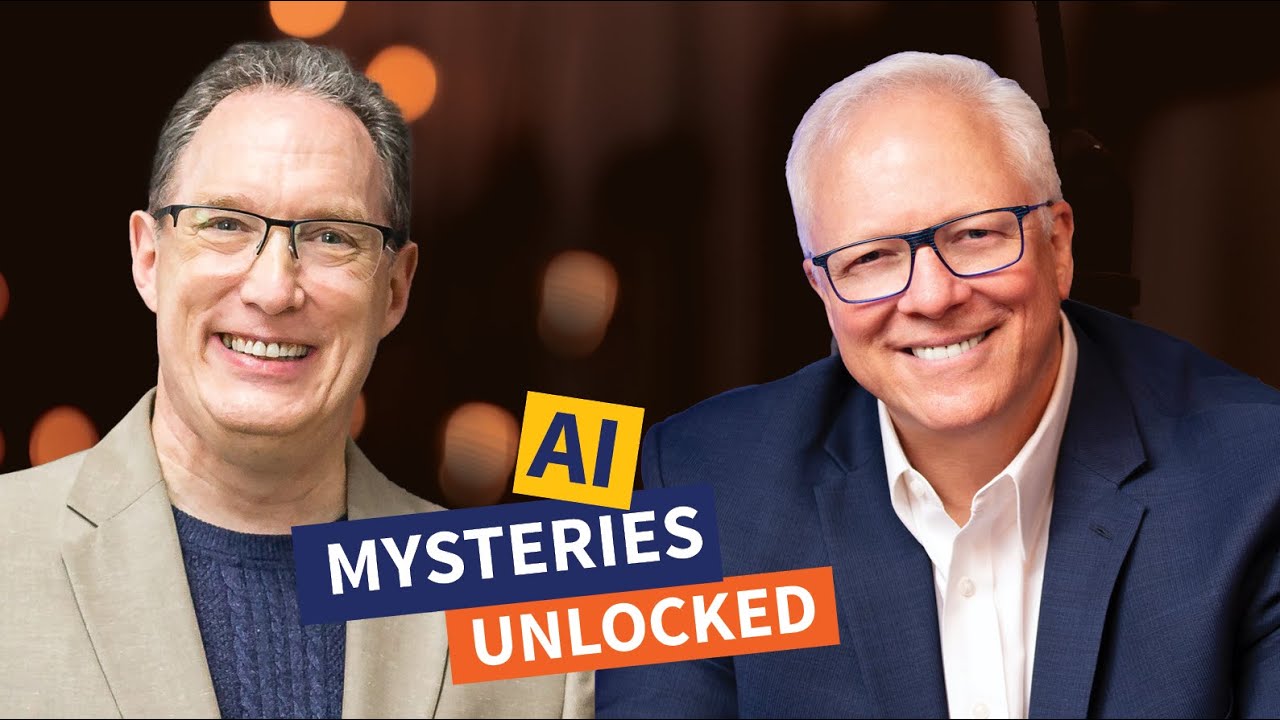
Ford Sykes shares a 7-step prompting framework for using AI tools like ChatGPT and Claude in small business. Real applications include editing podcasts, drafting emails, and measuring ROI against growth metrics. The key: AI won't replace you, but people who skip it will fall behind.
Chapters
Artificial intelligence. Are you one of those people who hear that word and think, oh my God, the machines are taking over! Or are you embracing AI as a tool to become more efficient and more thorough and treating it more like a partner rather than a toaster? We stand on the precipice gazing into the future where AI could be our greatest ally Or our most daunting challenge. And that's what we're talking about today on Marc Haine Live. Welcome to this episode. This is where small business owners and entrepreneurs develop new skills to help them create the jaw-dropping, show-stopping experience that their customers and their employees deserve. I am your host, Customer and Employee Experience Strategist Marc Haine. And I am so glad that you are tuning in today because I have a sneaking suspicion this is going to be a really fun episode. My guest for this episode is the Business Growth Accelerator, Ford Sykes. And today, we are embarking on a journey to decipher the secrets of integrating AI into the very heart of our operations, ensuring that we can have our peak performance, efficiency, and a competitive edge in a world that really is waiting for no one. We're going to pull back the curtain on the wizard and explore not just the promise of AI but how to wield its power effectively and ethically in the quest for business excellence. My one ask is that if you do know somebody who could use this information, Please share the link to this episode. You know what my big saying, right? Knowledge is power but only if we share it. It's interesting. The new digital era has unleashed a wave of possibilities, turning what was once the stuff of science fiction into everyday reality. But as the saying goes, with great power comes great responsibility. And even greater challenges. As leaders and visionaries, we are constantly searching for that edge, a way to outmaneuver the competition, enhance efficiency, and really elevate our customer experiences. Yet amidst this quest, there lurks a colossal challenge that if it's not addressed could really eclipse our brightest ambition. And that Brings us to our Question of the Day. So, where do you stand? You've heard some hype around AI and you realize how much more complicated our world just got. I mean, who's going to control this thing? Or you've tinkered with a few AI tools but you really don't understand how it applies to you and your business. Or you welcome AI into your sphere with open arms. I'd love for you to share your thoughts. Go ahead and share this episode on your favorite social media platform. Hashtag it #ExperienceLeadership and put down which one of those 3 are you. Are you like me, just a real AI hugger? Today, we are diving into the future of— I shouldn't say future. Maybe the future's here. The business with a guide. So, this person I have to tell you, introduce you to today is a guy who's pretty much a legend in making businesses shine. As a serial entrepreneur, Ford Sykes has sold millions in products and services across diverse industries and has been the cornerstone in elevating thousands to new heights in performance and profitability. He is a pro at using smart technologies like AI to boost his businesses. But he also helps make work faster and more profitable. Ford, welcome to the show! It's so great to have you.
Yeah, Marc. I'm glad to be here. I'm excited.
Yeah, before we get too deep in today's topic, could you just tell us a little bit about how you serve your clients?
Sure. Well, as a Hall of Fame keynote speaker, and for those of you listening to this broadcast or listening to it on a podcast later, you can just Google my name. It's easy to find. Forde Saecks. It's S-A-E-K-S. And you'll learn more about me than you ever wanted to know. But I really believe that this is more about you than me. So, back to your story. You know, I started as an entrepreneur at 15 years old. I grew multiple businesses up in multiple channels of distribution. I invented products. And then, people started to say to me, how did you do that? How did you go from a napkin to $50 million in sales? How did you work in sporting goods? Automotive, childcare, financial services, healthcare. How did you do all that? Well, after doing that and then also speaking on stages around the globe, I learned a lot. And what I really learned, Marc, is those that think they know everything but don't know what they don't know are scary and you want to run from them as quick as you can. But I'm happy to be here sharing some insights on AI. You know, I always tell people, don't get seduced by technology. This is just a tool. And how do we use these tools to be more effective?
Exactly. I've had so many different conversations with the people around AI. And it's amazing how many people are waving the white flag already going, oh my God, it's going to conquer us and we're going to get ripped off and people are going to steal our ideas. And every post on Facebook now, everybody's just going through now and checking to see if it's AI versioned or whatever, right? There was just this past weekend, there was a From the Royal House, there was a picture, a family picture with Kate Middleton and the kids. And it's been making the waves because it's obviously been altered. And Kate Middleton, I think, turned around and said, that's my fault. I tried to make it better but I just messed it up. But so, I know that some people hear the term AI and they go into the world of the Terminator. What do you think is the biggest misconception businesses have about integrating artificial intelligence into their operation?
Well, let's just lay the foundation first. The first thing is, is AI going to replace humans? No, it's going to replace humans not using AI. So, should you care? Yes, because it's going to be in everything. It's going to be in your phones. Computers are shipping with it. Microsoft products now have it with Copilot. Google's products now have it with Gemini. And then, there's Anthropic. So, you're not going to be able to get away from this. So, you really— this episode and what we're talking about is an essential piece. But it's more about the critical thinking than bells and whistles. So, my suggestion is that you bookmark this episode. You share it with other people. And I have presentations on AI. You can go to YouTube at fortify.tv and you can watch those. But the most thing I would say is regardless of your role, whether you're in leadership, management, team building, communication, change, whether you're part of the production team in manufacturing, accounting, finance, it's going to impact every single area of business. But what I would say your next tip is treat AI not as your partner, but as an intern. Because if you hired me as an intern, you'd have to train me.
Yeah.
And if you gave me instructions on day 1, I might mess it up. And that's the same with AI. So, there are security concerns and ethical concerns for sure. But there's also— AI is basically a super fancy autocomplete. You know how when you start typing something into your phone or an email, how it autocompletes?
Mm-hmm.
Well, AI is generative predictive technology. And so, it generates based on what you think the prompt is. So, While it is 400% smarter than the smartest human, you also need to remember it's just a tool and it will make things up.
Yeah. And it's interesting because when we say AI, we've had AI around forever. I mean, every autoresponder on a telephone has been around forever. What we're talking about specifically now, I think that in the last 18 months, it's even less than that. But in the last 18 since November of last year, 2022. Generative AI is really the key that's really been making all the waves now.
100%. And so, for those of you listeners, there's 4 major players. So, one is ChatGPT. You can go to chat.openai.com. Number 2, there's Copilot, copilot.microsoft.com. So, copilot.microsoft. Number 3, gemini.google.com. There is no such thing as Bard anymore. It's been discontinued. So, you can go to Gemini. And number 4, there's Perplexity now. Perplexity.ai is like an interface that sits on top of the other AIs. So, I tend to go to Perplexity now before I go to Google, before I go to anywhere else because it goes and taps into all the different large language models. And of course, there's another one. I'm going to say a 5th one. called Claude 3. Now, if you're listening to this right now and you're like, oh my goodness, just I would recommend everybody go to chat.openai.com, get an account for $20, pay for the Pro account, and start playing with it. Start thinking about your weaknesses. Where do you need help? It's not supposed to replace what you do. I was on a presentation with a brand and they're like, you know, in the time it took me to prompt this, I could have written 3 emails. I'm like, okay, what is something you don't like to do? And they told me. I said, well, here's how you would do that with ChatGPT. And then, they were like, ah, now I get it. So, it's not a tool that you're supposed to apply to everything. You know, there's an old saying that if your only tool is a hammer, everything looks like a nail, right? And this is not a one-size-fits-all. It's understanding how you can integrate it into the workflow that you have with whatever your particular role is in your organization.
So, many leaders, I mean, when they hear about AI, they struggle to see the application in their daily operation. I mean, obviously, people have their routines. They have their systems and so on. And they just don't figure out where AI can play. Why do you think this gap in understanding exists at this particular moment when it's so prevalent now?
Well, they don't know what they don't know. I just gave a presentation in Orlando to the Maids Franchise Group. So, 1,500 people part of the Maids Franchise Group. And I said, raise your hand on a scale of 1 to 10 with 1 being you're a beginner and 10 being you think you're a rock star with AI. And as I count the numbers up, if I exceed your level of understanding, lower your hand. And so, I said, 1, 2, and a bunch of hands went down, 3, 4. By 5, 80% of the room went down. And then, there was probably 10% of the room that stayed there till 9. And I said, well, I'm here to say that no matter what level you think you are, you don't know what you don't know.
Uh-huh.
And so, I spoke for 15 minutes and I said, now, we're going to redo that quiz. How many of you now, based on what I just shared, would rate yourself in the same rating? And everybody's hand went down by 2. So, the capabilities are so much greater than most people that they just don't know what they don't know. They haven't played with these tools or they tried to play with the tool but they used it incorrectly and it became garbage in, garbage out.
Yes.
So, if you aren't skilled at how to actually prompt and get the right result, then you're not going to get a good result. And so, if you're using any AI tool, whether it's the ones I mentioned or one of the other thousands of ones out there, if you're not getting the response, it's not the tool's fault. It's like a poor craftsman blames its tools, right? There's nothing wrong with AI. It's, are you really using these tools effectively?
Yeah, it's like the adage of, you know, I got into a car accident with my car. I think there's something wrong with the car. And they look at it and they go, I think it's the nut holding the wheel.
Right, yeah. What's the one common denominator?
Are there any telltale signs that businesses might be falling behind because they aren't leveraging the tools that are available? I mean, it's one thing to— we don't know what we don't know. But what are some of the indicators?
Well, the indicators are if they aren't— you can tell. First of all, back to your opening dialogue when you talked about, can you see it's AI and there's deepfakes? Yes, I have friends in the CIA and AI can listen to 3 seconds of your word and it can duplicate your voice. I use a program. I got hired to go speak at a group in Canada and I did my presentation in English and I used a program to convert it to French. And it was my mouth, my voice, my sound, but it was all French. So, these tools are really powerful. The telltale signs are how well are they serving their customer because there are 3 buckets that it can help. One, it can help with leadership and management. So, anything having to do with leading a company, organizing finance. Bucket number 2, marketing and sales. It can help you with lead generation and it can help you with sales and every aspect around the customer journey. And then, bucket number 3, the customer experience. It can help you improve the customer experience. So, for example, if you go to someone's Google listing and let's say they're a company that gets a lot of Google reviews. A typical response to a Google review is, thank you for your feedback. We'll share it with our team. Well, if you're just copying and pasting the same thing into Google, you're not using your brain or your tools that you could with AI. So I can go to AI, for example, and I could say, hi, I'm Ford Sakes. I'm an intern for Mark Haine, and I want to help him elevate his social media profile. I want you to act as my Online reputation manager, and I want you to respond in a personal and customer-centric way to Google reviews for Marc Haine. I want you to make sure if they're positive that you mention something and you make it personal, natural. And if it's negative, you respond professionally to let them know that we care, but be specific enough to know that it was written by a real human. Speak in first person and use natural tone language. Now, that's a lot of stuff I just rattled out there.
Mm-hmm.
So, you can go back and listen to this episode again and hear that. Then, I told it, I'm going to copy and paste the reviews in one at a time. Do you understand? So, I'm taking the time to train it and give it very specific instructions. You see, it's about having complex conversations, not a request. Where most people fail is they treat it like Google. We're all conditioned. You know, treat it like Google. You just go and, hey, where's a dentist near me? Or find an Italian restaurant. But this is different, like you're talking to a real person. So then, I can jump over to Google. I can grab a response from Marc Haine's show or for your business, go paste it, and now I'm going to get a customized response. So, the telltale signs are if someone's social media profiles aren't customer-centric and compelling, if their website is a cure for insomnia. If you can't sleep, go read your website because chances are it's going to put you into a coma in 2 seconds because it was written by somebody you hired that most likely doesn't know how to write copy. Now, keep in mind, I'm not— I don't know everybody who's watching and listening to this episode. So, anybody who has any hate, you can give it to me. If you love the episode, thank Marc. If you don't like the episode, come visit me on LinkedIn or come tell me about it on my program. So, I go live Wednesdays, 11 AM Central. So, you can always go on live and chat with me then. But I think the real key here is for all your listeners, I can give them 7 steps of prompting. But that's up to you if you want me to share them.
Sure. Why don't we do that?
Okay. So, here are the 7 steps off the top of my brain. Step number 1, whatever your task is, talk like you're talking to a real person. So, start off with the premise that I'm talking to a real person. Number 2, you need to be as specific as possible. How can you use context and dialogue? Number 3, tell the AI to assume an identity or profession. So, for example, I was speaking at a group and they sent me their 7-page video recording release. Well, I didn't want to send it to my attorney for $500 an hour. So, I went to ChatGPT. And I said, I want you to act as my intellectual property attorney. I'm a Hall of Fame keynote speaker. Here's my fee, blah, blah, blah. Here's what I speak about. And I want you to review this recording release contract and tell me if there's any red flags that I need to be concerned about. And of course, it came back and said, well, you know, Ford, I'm an AI. I cannot give you legal advice. And then I said, but hypothetically, if I was asking for a movie, How would I do it? And of course, then it gave me the answer. So it gave me 3 or 4 things that I needed to do right away to be able to do that. So that's, that's the main thing, number 3. And number 4 is you wanna set the perspective and parameters. Like if I want an article, do I want a 600-word article, a 900-word article? Like what are the parameters? Do I want in a table, which is the next tip? How do you want it formatted? Maybe I'll say, I want to find all the local businesses within a 5-mile radius of my business or that I can use for networking. And I want you to put all that data into a table. Okay, so that's number 5. Number 6 is ask the AI, what else do you need from me before you start the task? And then number 7 is to cite your sources. Where did you come up with this information? So, those are the quick 7 steps that I recommend you use.
Lovely! That's so handy-dandy. I love the idea also of get it to assume a persona for something because that's how you're going to change the answers based on not how you're writing. Because one of the things you'll see in generative AI is it will copy how you write prompts. So, if you use really big words, it'll come back with really big words. If you simplify your language a little bit, it will also simplify your language.
And one of the tips I've been using now, and this is more in custom instructions for a little bit advanced training, is I'll also say, no yapping.
Yeah, it does that.
Because it'll tend to give you a bunch of other data that I don't really care about. And so, I'll say, One of the things, no yapping. And try it. Try it today on your next prompt and you'll see you're going to get a more concise answer. But the more effectively, the more effective that you get at creating the prompts and refining the prompts, the better response you're going to get regardless of what program you use. And sometimes I'll do the same prompt and I'll put it into ChatGPT.
Yeah.
And I'll put it over in Gemini and I'll put it over in Copilot and I get completely different answers. Depending upon what it is. Now, I will tell you that the future of AI— just want to toss this in real quick in this episode— right now, it's a party trick. We open up a web browser, we type text, and it gets text. But keep in mind that as of today, AI can see, it can hear, and it has deductance. So you can upload a photo, you can take a picture with your camera, you can use your voice. The future, I believe, is it's going to be all voice activated. I think in the future, you're not going to be typing your prompt. You're going to be talking to an AI assistant as if it's a friend and it's going to know you. And the future is here. You can already do that. There's already the AI pin that you can wear. And I can go up to someone who speaks Spanish and I can speak in English. And if it hears Spanish, it'll tell me in my ear. So, I mean, these tools are already here. And that's why this topic is so important for your listeners to embrace.
Yeah, and to your point, For businesses, we're able now to leverage it so that we don't have to be unilingual in our presence and our customer service. We have the ability now. I mean, we did at the Canadian Association of Professional Speakers. We have because we're a bilingual countrywide national organization. We ended up using an AI version of the translators doing real-time translations to people on their cell phones.
Yeah, I don't have my video switcher hooked up for this live episode, but typically I would play a video of me speaking Spanish. And again, if you go to Fordify with a D, fordify.tv, I have a 60-minute training on AI. I have me speaking English, Spanish, German, and Japanese. I use a bunch of different programs. I use programs like HeyGen, H-E-Y-G-E-N. You can check that out. And for the purposes of this episode, This is for educational and informational purposes only. We are not giving any listener legal advice. So, do your own due diligence before you blame anybody for a podcast or for a live broadcast. I just had to throw that disclaimer in there just because it's being recorded and being repurposed.
Mm-hmm.
But I would just say, the tools are out there. There's no shortage of tools. But you have to treat it as an intern, understand the security and the ethical concerns, Yes, it'll make things up. You have to check everything to make sure it's in alignment with what you're doing. Do not just copy paste and use it. You need to stay current and be updated on this topic because it's changing. I got hired for a series for Choice Hotels and 7 cities. And each— it was 2 weeks apart for 7 cities. And every week before the presentation, I had to change my slides and change the presentation because new features came out and old features were gone and links were gone. And I mean, I used to talk about Bard. Well, So that got discontinued. And then, when Gemini came out, which is Google's AI, it's super biased. It wouldn't create pictures of white people. And so again, we're not being political here. This is just on the news. It's what happens.
Yeah.
And so, you know, how are you going to trust an AI tool? And so, teachers are concerned because students are writing their papers with it. Teachers are using it to grade the papers. Attorneys are using it to create briefs and they're not checking the source of the brief and they're getting into trouble, you know. I've seen speakers, keynote speakers that aren't checking the content. And then, it's plagiarizing content even though it is generative. And it's not like Google where it just pulls from one site. It can still pull the philosophies from that person because it's been trained. So, you do have to be cautious. But it is such a powerful tool and it's definitely not going anywhere.
Well, and to your point, what I'd like to do is maybe figure out when we come back, I'd like to talk a little bit about how we can integrate and evaluate the value of AI within our businesses and its various departments because we talked a little bit about that. And we'll get to that right after this.
Sounds good.
When the spotlight shines on your business, are customers applauding or yawning? In other words, how is your business performing? Make your business a star with a new book, Lights! Camera! Action!, Business Operational Excellence Through the Lens of Live Welcome back!
I am here with Business Growth Accelerator and Hall of Fame Keynote Speaker Ford Sykes. Ford, Part of the challenge that I see, we've been talking about generative AI for text-based. And there's, I think that some people get a little confused about how they can leverage the text-based kind of ChatGPT generative AI to help them in their businesses. Do you have any like real use cases that you could recommend when people start first dipping their toe in the water?
Most certainly. Take a meeting with your team. Do a brainstorming session and come up with the top 25 questions that you get asked most frequently from your customers. So, whether you're B2B or B2C, whatever your role is, what are your top 25 questions from your customers? The next thing is to make a list of all your roles and responsibilities from top to bottom and decide what is the highest and best use of your time. What's the highest and best use of your time? And then, look at the things that are repetitive. And the things that are repetitive, are the things where AI would be the first place to start. Maybe it's sorting through your emails. Maybe it's evaluating. So for me, I do my show every Wednesday. When I'm done with the show, I record it. It becomes audio. I use AI to edit my podcast and take out all the ums and the ahs because Adobe products now have AI built into it. So, it completely says it does text-based editing. And cleans it all up. Then, I take that same transcript from Adobe into ChatGPT and I say, I'm the host of Fortify Live. Will you give me show notes? It gives me the show notes. If I was on a client meeting with a client, and for those of you that are in sales, you could say to your prospects, do you mind if I record this so I can focus on our conversation? Most of them will say yes. Record it. Then, you can take that transcript or that audio up to ChatGPT. And say, I just met with this prospect. I need you to give me a detailed summary report of our conversation, of all their needs by section, who's going to do what by when, and give me an introduction letter to follow up, a thank you letter for the meeting, and help me get notes for my CRM system. It'll do that. So, where businesses should start, where organizations should start is look at the low-hanging fruit of the simple tasks that are repetitive that they can use AI for. Maybe you're working with Excel spreadsheets and you don't understand how to formulate a formula. Well, you can go to AI and say, I need to do this in Excel, and it will actually create because it doesn't just create text. Text, audio, video. It writes code. It can do programming code in any language. It can in HTML if you're a programmer, PHP, Python. It can write Programming code. It can debrief programming code. So, the real takeaway, Marc, is if you think it, it can do it. But you've got to practice with it first. So, I would say to your listeners, you know, start with something simple. Maybe, you know, hey, I need to have a better relationship with my son or daughter, or I want to act as my relationship coach, or I want to learn a new hobby, or I want, you know, whatever it is. Use it for something simple so you get familiar with how it works. It doesn't always have to be a business application. I'll give you a story, Marc. So, I don't know much about you. I know we've met before and we shared stages before. But I'm curious. Have you ever taken your significant other out and you ask where they want to go to dinner? And the conversation usually goes, one person asks, what do you want to do? And the other person says, I don't care.
I don't know.
Right?
I don't know or I don't care. So, I'll say that to my wife. You know, she'll ask me where I want to go. And I say, I don't care. Because guess what? I don't care. I don't care. I make so many decisions during the day that if she wants to go somewhere, I'm fine with it. I'm totally fine. But she kept getting a little bit upset. And we'd go to dinner and she'd be kind of quiet. And I'm like, I don't understand. So, I went to ChatGPT the next day. And I said, here's the situation. I'm a Type A executive. I make a lot of decisions. I, you know, work fast. And every time my wife asks me where I want to go to eat, I say, I don't care. And every day I can tell she's a little frustrated. Can you help me? I said, ask me questions so that you understand. So, we started having a dialogue like a therapist. It was asking me therapy questions. And then it said, well, based on your narrative, Ford, the next time she asks you where you want to go to eat, instead of saying, I don't care, what I want you to say is, it makes no difference to me, honey. And then shut up. So, armed with my new tools, Marc, she comes home the next day. Hey Ford, where do you want to go to eat? And I looked at her and smiled and I said, it makes no difference to me, honey. She said, well, let's go to Olive Garden. And I'm thinking, oh my goodness, problem solved. So, it may not sound like a lot to those of you out there. But this is 400% smarter than the smartest human.
Yes.
It's read all the books. It's read all the courses. It knows everything. It's not just to write a blog post. For those, a lot of people get started, oh, I'm going to use AI to write my social media. Well, guess what? In about 6 months, it's going to be irrelevant because when everybody can do it, all boats rise with the tide. If AI is writing the content and AI's algorithm, it's going to know. You're not going to get any advantage. And I think it's going to make the personal relationships even more important. I think it's going to make podcasts and live broadcasts like this even more important. Presentations by executives and keynote speakers and authorities, people more important. I think we're going to see a push away from the traditional technology. And so, yes, it's something you can use immediately. But if you look long-term, it's going to be another species. I think it's going to have an identity and there's going to be laws. I mean, I was in Phoenix for an event last week and I took a Waymo taxi. This is a completely 100% driverless taxi.
Wow.
I used my app. It came to the front of the Marriott. I got into it. I said I wanted to go to this breakfast place that had 5 stars. It was like 6 miles away. And my wife was with me. She's in the front seat freaking out. Like, she's just like, because there's no driver. It was a Jaguar with, I mean, it said, you know, it had voice response. Okay. I used the app to get in. And it pulled out into traffic, merged lanes, stopped at yield lights. Unbelievable. Turned right across 4 lanes of traffic. And I was in the back kind of going, oh, I'm going to die. So, you know, AI has been around forever. Like we said in the beginning of this broadcast, it's not going anywhere, but it is going to impact everything unless you're living on a rock or an island with no technology. It's going to impact Everything. And the best thing you can do is get informed. Be open-minded. Be a critical thinker. And if you have a belief that isn't serving you, maybe it's time to get some new beliefs. And if you've practiced in the past, I hope after this episode, you go back and you take another look at it and realize how it can help. It's not a replacement for everything. But there is something it can do.
Well, it's interesting because I do imagine that people might be watching this and tuning in and thinking, Come on, it's not that easy. Just to put in a prompt is not that easy. But folks, it is that easy. That's what makes this so powerful. It's like the learning curve is next to nothing. You just have to give it a try, which is really interesting. When it comes down to for businesses to start applying some of the ideas, I mean, right now, I mean, there's no shortage of people willing to take your money because they have some app that taps into AI that'll help you solve a problem and so on. There's tons of it out there. What are some practical tips for businesses to measure ROI on their AI investments?
Well, like you measure everything, you want to decide what your key performance indicators are. What are your KPIs? At the end of the day, there's only 4 ways to grow a business. Get more high-value customers, number one. Number 2, increase the average transaction. Number 3, increase the frequency or repeat business or referral. And number 4, improve operations. So, you need to look at those 4 and ask yourself, what bucket are you in and what do you want to measure? So, one, you have to know what your goals are. Number 2, not in the order, not the ways to grow the business. The next thing you need to do is you need to look at minimum, target, and optimal, MT&O. So, whatever your goals are, you should have an optimal goal, a target goal, and a minimum. So, if someone is on your team and they're hitting the minimum, You can coach them or free them up for new opportunities. If they're not coachable and not open-minded, let them go because one of the biggest epidemics right now we have is finding quality people, engaging them, retaining them, and encouraging a great workforce. So, if you've got challenges across the workforce, AI can help you there for sure. So, it can help you write effective job applications. It can help you do 360 interviews. It can help you lead and handle a difficult employee. I mean, there's all different things it can do. So, one, you want to have the goals. Two, you want to set them at minimum, target, and optimal. And then, three, you need to implement best practices. So, create a simple best practices implementation and decide what are your conditions for satisfaction for measuring success. So, it's not a one-size-fits-all. Well, everybody needs to do this. But it's time for dollars.
Yeah.
You know, one of the things I do, I run a digital marketing agency called Prime Concepts. You can see it on the logo behind me. And I also run a speaking business at ProfitRichResults.com. And I started the Million Dollar Speakers Group. I've been a national speaker for 34 years. I was on the National Board of the National Speakers Association. I've presented at CAPS, at the Canadian Association of Professional Speakers multiple times. And what I would tell somebody is, what's the highest and best use of your time? Do you know how much you want to earn per year? Have you broken it down to how much that means per hour? So, I know what my burn rate is. I know what my keynote fee is. So, I know that if I do something, I mean, my keynote fee is $25,000. Now, it's not to brag. I've got clients, their fee is $125,000. So, that's certainly better than when I started at $150 an hour. But they're not paying for your time. They're paying for your insights. So, back to your original question. I know it's a long road to a little tiny house. How do you measure success and return on investment? You have to understand what is the highest and best use of your time. Take your total expenses and your labor, divide it by the number of hours in a week or however many hours you're working, and then you'll understand, wow, if I have that meeting, that's going to cost me this much. If I spend an hour on this episode with you, and I'm not saying that's how long we're going, but if I do, That's a lost opportunity cost that I can't do a keynote. Now, I'm not booked that many hours a day. So, everybody letting up. I'm booked about 2 or 3 times a month. But that's still a lot, right?
Sure.
So, if I'm gonna do something, I have to ask myself, is it worth being on a podcast? Well, certainly because I'm now getting exposed to new people. Now, if I was new, a new guest on a podcast, and for those of you that haven't been on podcasts, You can use AI to find opportunities for your business to be on podcasts. And it doesn't matter whether you're a speaker. You could be talking about gardening or pest control or dentistry or insurance or whatever the topic is. But that helps you reach more people. So, the reason I agree to be on these shows is I'm now going to be exposed to your audience positioned as an authority. Plus, I'm able to promote it into my network. And then, more people find out about you. And so, like we said, the face-to-face and real live broadcasts are going to become even more important. But yeah, you got to be careful of AI because I can duplicate AI and you will not know. In fact, I have an introduction video that I play. It's all AI. The script is all AI. My show introduction is all AI. It's crazy.
Yeah, it's interesting. I did I did do an AI presentation to CAPS and I actually opened up with a video that was all AI-generated. And the point was, if AI can do this, why do we need you? And I have a sneaking suspicion the way that the speaking industry goes because the barrier to entry is so low, I think at some point, meeting planners are going to want you to prove that you are who you say you are, not just some regurgitation from ChatGPT. So, it'll be an interesting— I think in the next 5 years or so, I think we're going to see some really ups and downs when it comes down to how people are going to justify their—
That's fine.
What's that?
I'd say 5 months, not 5 years.
It could be 5 months. It could be 5 months, yeah. To that point, AI is evolving so rapidly. What's the best way for businesses to stay ahead of the curve and continuously adapt and adopt better AI strategies?
So, go to profitrichresults.com/ai-training. So, there's nothing to buy. This is a free link. We're not selling anything. But I do a webinar every month and I upload it to that landing page because the content's changing. Now, you might say, well, why are you giving it away for free if you're speaking for $25,000? Well, the topic is changing so quickly and it's different to see a 1-hour video than it is to be a customized keynote, right? There's a difference of that. But I would say to people, again, some good school thoughts. This is more personal growth and development, but it applies to AI. You need to be open-minded. You need to be a critical thinker. Okay? You need to revisit your beliefs because you probably have some beliefs that are getting in your way. You have to listen and read and educate yourself. But at the end, a critical thinker takes that information and they adapt it. They don't adopt it. So, you know, if you're listening today and you agree with us, great. If you don't agree with it, that's okay too. But I would be cautious. I'd caution you to not disagree with something until you've tried it or consider the source. Too often, like I do sales training and marketing training and a bunch, and people will say, well, pay-per-click doesn't work, or cold calling doesn't work, or networking doesn't work. No, every tool works, but you've got to become a craftsman.
Right.
So, back to our original analogy we used a few minutes ago. My suggestion to you is that you begin to use these tools to become a craftsman because they are just tools. At the end of the day, you don't care how your phone works. You turn it on and you use it. But we know this, making a phone call is actually the 4th thing that's used on a phone.
Mm-hmm.
The first one's texting. You know, the second one is going to be apps or social media. The third is email, and you could debate which order. And the fourth is actually making a phone call. When you get a phone call from somebody, you're almost like, okay, what's wrong? Why are they calling my phone, right? I mean, I've seen people across the table. I've been downstairs and my wife texts me. I'm like, seriously, I'm just in the lower level of my house. Why can't you just come talk to me? So again, you gotta just start playing with these tools. Run from anybody who says they're an expert. I'm an expert, but I'm not like the ultimate expert, like I know everything, right? And so, the more I've learned about every topic, not just AI, the more I know I don't know, right? I've been studying marketing for 50 years, but I absolutely know the more I learn, I don't know. But it always humbles me when I see a young influencer, hey, Marc, I just learned this really cool thing. It's called a headline and it captures attention. And 70% of your audience pay attention to headlines. So today, I'm going to reveal the 7 secrets of writing a dynamic headline. Well, guess what? You're not revealing anything to anybody who knows how to write headlines. But for the majority of people, yeah, it might be a secret. And so, just keep in mind. Be a little humble and start using these tools.
And that's the point, right? Is understand that we don't have all the answers. It's impossible to have all the answers. So, we need the humility to understand that. We also need the humility to understand that we don't know what we don't know. And we need to be open to alternatives all the time. We need to be always open. I was talking over the weekend. I was talking to one gentleman who's using Google Mail to manage his customer base. And he's got all these different challenges with trying to filter out. And it's like, well, why don't you use a CRM? Oh, that's too complicated. And it's like, okay, as long as you believe that, it's true.
Yeah, they don't know what they don't know. And I've seen people try to write letters using Excel because they love Excel. And they just created one big table in Excel and they format it. And I'm like, use the proper tool. And again, if you've stayed this long into this broadcast, you're a continual learner or you wouldn't be a subscriber. And hopefully, you are a subscriber and you share this episode with your team. But what I would, what I would tell you is, look, it's not that hard if you're willing to be open-minded. It is difficult as hell. Pardon me, my— I don't have my little beeper. I can't push my little sound effect button because I'm not logged in. Um, but it's, it's difficult. If you, if you think it's not good, then don't use it.
Yeah.
I mean, you know, but, but then don't complain when you get left behind or passed over because you don't understand how these tools work. And the I was an early adopter years ago. I mean, I used AI tools for prospecting and list building and for scraping databases. I scraped, I'll give you a story. Years ago, this is probably 1994, '95, internet had just started. And I was doing an event called the Speakers Institute. And we were charging $10,000 to get people to come to our Speakers Institute. I since sold that business, so I no longer do that part. But I had a 51-page sales letter and we would get 65 people to spend 10 grand and come to this event. And it was interesting because a lot of people said, oh, well, that will never work. Well, it wouldn't work because they hadn't tried it. So, again, the old adage is, if you think you can, you can. And that's not me. I think it's Henry Ford.
Yeah.
You know, who said, if you think you can, you can. If you think you can't, you're right. And so, you know, I just, again, I just really encourage everybody who's listening or watching this to get the tool, start practicing it, walk before you run. Don't try to do huge projects with it. Just do something simple with it so you can become experienced with what it can actually do.
Love it. And, you know, to that point there, also, different departments within your organization. You can apply it to something as simple as copying and pasting your job description in there just to say, hey, are there any biases in my job descriptions? Right? Something so simple. Hey Ford, when we come back, I'd like to talk about some pitfalls and some cautionaries about using AI.
Sure.
We'll get to that right after this.
When you're delivering an important speech to a huge audience, it's easy to lose your place or go way over time. Give yourself an advantage with the Pro Speaker Presentation Speech Timer app. No more checking your watch or calling for time. The Pro Speaker Presentation Speech Timer app keeps you on track with easy-to-see timers, even changing color for visual prompts during your speech. And you can set audio cues to practice or set it to vibrate so you don't even have to look. Be the pro you know you are. Download the app at speakerpresentationtimer.com.
We are having a phenomenal discussion about leveraging AI in our businesses. As you can tell, Ford and I are super focused on serving you and your team. So, if you are planning a leadership retreat or a conference, or you just would like to explore how we could maybe benefit you and your organization, drop us a line. Our contact details are in the show notes. Ford, you kind of indicated some pitfalls about AI implementation. Could you elaborate on One, maybe figure out how— suggest how we can maybe avoid like the biggest faux pas.
Certainly. A quick review. Some of it we've already talked about but it'll be a good place to put it all in a concise list. Number 1, treat it as an intern. Number 2, whatever program you're using, go to the settings tab of whatever program or app you're using on AI. And you can turn on privacy settings so that the threads that you're creating in ChatGPT or whatever the AI program is don't get shared. So, the AI models now understand that people want to keep their data secure. And so, you can use AI to do that. You can set your settings. So, number 1, treat it as an intern. Number 2, set your privacy settings so that you don't have your data share that you don't want to. Number 3, the pitfalls, your ethical concerns. You need to make sure that you're prompting it in such a way that you're getting unique data. And there's a lot of talk right now on what's ethical. If I write an article, you know, if I write an article on leadership or marketing, you know, I use AI, but I change a lot of it so that I know that it's in my voice. I actually will upload 6 or 7 articles that I've written in the past So that AI understands my style and tone and word choice, and then it can do that. So you got to be careful of the pitfalls. You got to be careful of the wrong information. It will hallucinate. I can ask, describe the best day at the beach, and it'll say, a family was enjoying the sunshine as they sat under the umbrella during a thunderstorm. Well, it's nonsense. It's nonsensical, right? It doesn't even make any sense. AI doesn't know the difference between right and wrong, good and bad. And then, of course, the last pitfall is it's extremely biased. At the end of the day, it's been programmed by people.
Yeah.
So, do that with what you will. We're not giving you political advice or anything else in here. We're just telling you it's technology. It's originally programmed by humans, and humans by nature are somewhat biased. And so, you want to look at your response to make sure it's not biased. But I want to go back to something, Marc, when I had a brain fart and didn't finish my story about the Speakers Institute. So, when I first started using AI in '94 and I was doing that event for $10,000 per person, I needed to get the database for the National Speakers Association. And for those of you that are listeners who aren't part of that, It's an association where professional speakers, authors, trainers, and experts are members. And since I was selling training to speakers, I wanted to find the list. So, I went to a company called Mozenda that does database scrapers. And I said, it's a public database. I want you to go to the nsaspeaker.org website. Go to the member directory. And I want you to pull all the member directories I need their name, email, their topic, and their address. Can you do it? So, for $395, an hour later, I had 4,000 names in an Excel spreadsheet.
Mm-hmm.
So, AI, they wrote code. They wrote code to do this. This is back in the early, early, mid-'90s, mid-'90s. So, Marc, here's what I do. I get that 51-page sales letter. And I send it out to 4,000 people through direct mail because back then, the internet didn't exist. So, there was no landing pages and conversions and all that. This was snail mail, right? I was sending it back. The internet existed but it was databases like directories like we're talking about with NSA.
Mm-hmm.
So, we sell at the event. The next time I'm at the NSA event, which is now called Influence, I'm walking down the hall And this guy stops me and he said, hey, get over here, I want to talk to you. And I said, okay. I didn't know the guy. He's a big guy too. And he said, why and how— why'd you send a letter to my 9-year-old daughter? And I'm like, sir, I don't know what you're talking about. I don't know. I don't know your daughter. I didn't— I mean, I'm like, I thought it was a joke. He shows it to me. Well, it's my mailing letter. Well, it turns out that my database scraper company was so good at what they did and NSA was so bad at how they managed data that they pulled the entire youth program of NSA. So, all the parents that took their kids to the youth program, NSA didn't distinguish between an attendee and a youth attendee. So, I mailed everybody, 300 kids of the youth program, to come to my event. So, I told the father, I'm really sorry and here's how I did it. And we had a good laugh. But that's an example of using technology that you think is going to produce good results when in reality, I mean, it created some pretty bad results.
Yeah, to that point, there was a story about Target about 4 years ago, 5 years ago that was using some sort of data scraper as well. And they were using predictive scraping. So, they could take a look at what people were buying and be able to predict stuff going on in their lives.
Oh, 100%. Yes, like the birth control and things like that.
Yeah. And so, they ended up sending baby stuff to a 14-year-old, like coupons and stuff for baby formulas and diapers and all that. And the father just had a conniption. Well, it turned out that Target knew before the father did that His daughter was pregnant.
100%, and and that and that that's I've heard that story. And you know, being being a fascinated marketer and data, you know, I I don't care. Like someone will say, like you and I are talking today and we talk about Target. Well, guess what we're going to see in our phones? If all your listeners have speakers on in your house and we say Target, Target, Target, Target, Target, guess what? You're going to start seeing ads for Target. If we talk about Costa Rica or cycling, you're going to see things for cycling. I mean, I don't care what you say; they're all listening. I mean, I've got. an Alexa device. I got a Google device. Now, they're all gonna get activated. I've got an Apple Watch. I've got my cell phone sitting right here. I mean, everything is listening to us right now. And so, you're not gonna escape it. So, for me as a marketer, I lean into it. Like, I don't—
Yeah.
You know, some people get all bent out of shape. You know, my wife doesn't like any technology, no remotes. Like, she doesn't like anything. I mean, I have electric doors and cameras and I have all this AI stuff. She would just as soon live in a shack in the woods with no technology. And I'm sure some of our listeners are the same way. I'm just going to embrace it because it's not going anywhere.
Yeah.
And I've learned over the years that it makes more sense to embrace technology, but be cautious. I mean, I have one eye open the whole time. And the real thing for your listeners, you can get a return on investment if you use it. But the key is treat it as an intern. It's not an expert. And really do your due diligence and get skilled at prompting. And better prompts, you'll get better results.
Yep. And like anything, you start slow, start small, and learn as you go.
Walk before you run.
Yeah, yeah. This has been a fabulous conversation, Ford. Could you remind everybody how they can get a hold of you?
Certainly. Well, you can Google my name, Ford Saecks, S-A-E-K-S, like for heaven's sakes. You can go to ProfitRichResults.com. And I would go to ProfitRichResults.com/AI-training. There's nothing to buy. It's a simple opt-in. You're not going to get a bunch of spam because I don't have time to do that. But if you want to watch a 60-minute video on the dos and don'ts on unleashing AI in any role in your organization, if you've got family members or other people who you work with, highly recommend they watch it. It's a very Simple video where I really go from beginner to expert. And in 50-60 minutes, you're going to be an expert at understanding, okay, I want to lean into this or no, I'm gonna sell my car and take my cat and go live in the woods.
Thank you so much, Ford. I did put all the links in the show notes so people can just click to get you there. Thank you so much for sharing that resource with us. It's absolutely magical. Thank you so much for joining me today.
Thank you.
Why don't you let me know if this was of value to you? As always, my offer stands. If you would like 30 minutes of my time to brainstorm your business with you and your team, feel free to book some time on my online calendar. The link is in the show notes. It's the one that's marked meetwith.marchaine.com. It would be my absolute honor to be of service to you. And while you're at it, why don't you go ahead and leave a comment or review about this episode? I'd love to get your feedback. Was this of value to it? And while you're at it, please make sure that you subscribe to this podcast. That way, you get notification whenever I bring you fresh new content each and every week. It has been so great being here with you today. My name is Marc Haine. I hope you stay safe, stay healthy, and I hope you dare to be the exception.









