Bring Your Heart to Your Productivity with CPR
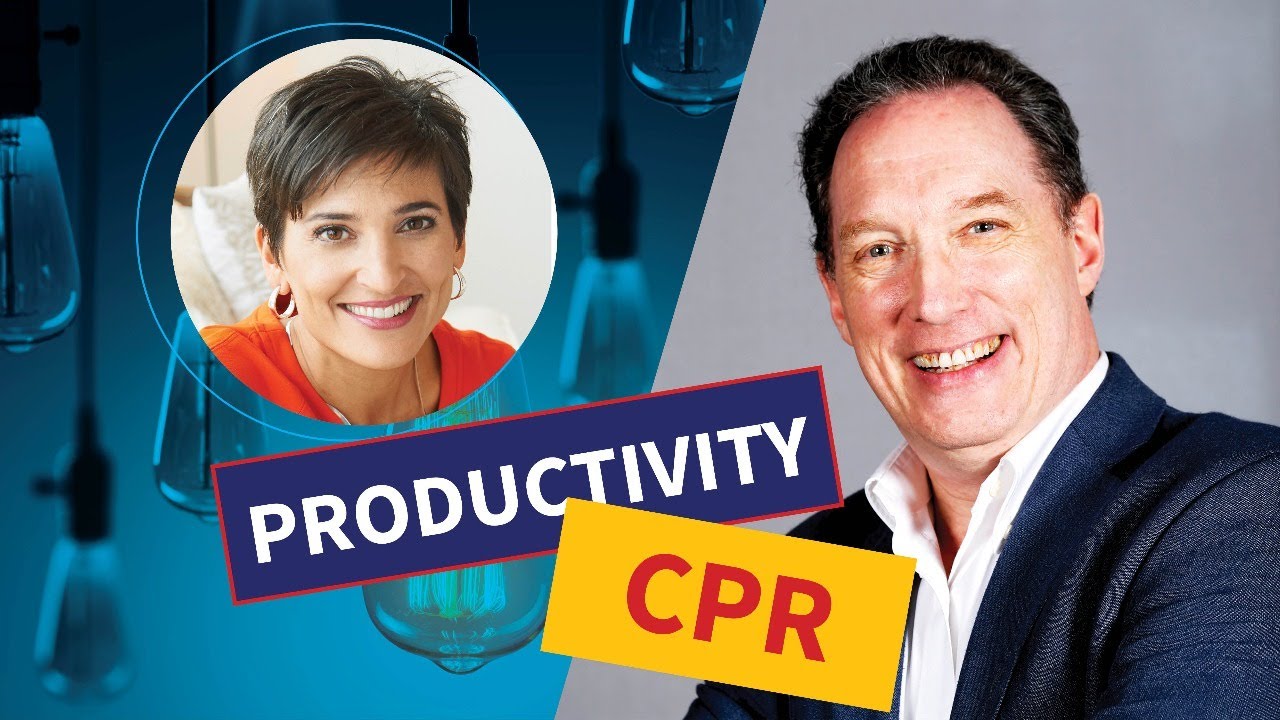
Claire Kumar explains her Productivity CPR framework: Compass sets life intentions, Performance manages attention and energy through sleep, nutrition, and movement, and Rituals turns habits into purposeful actions. She argues sustainable performance means delivering results without burnout.
Chapters
I have a sneaking suspicion that if you're watching this, you are an audacious leader. You have high standards and every day you want to— no, no, you need to get things done. How frustrated are you at the end of the day when your to-do list is just as big as when you started your day? Are you able to fit everything that is your priority into your day? And I mean your priority, not just the business's priority, But your priority. So, that's what we're talking about today on Marc Haine Live. Welcome to this episode. This is where small business owners and entrepreneurs pick up core skill sets to help them work on their business, not just in their business. I am your host, Service Expert, and Master of Experiences Marc Haine. Thank you so much for joining me today. It's really great that you're here and that you're watching this. My guest today is Productivity Catalyst Claire Kumar. And we will be talking about how to combine productivity and well-being to develop really a sustainable performance in your life. And we'll get to her in just a moment. In the meantime, feel free to be part of the conversation. You can subscribe to this program. I'd love to make sure that you are notified whenever I bring you some fresh content. Also, please do comment and share this post. If you know somebody who could benefit, I'd like to invite you to be part of that conversation. I will be the first one to admit that, well, I fill up my days. My agenda is full. I am driven to get things done. I still struggle with prioritizing what's important. Things like my family, my health, my honey-do list with what the business demands of me. I'm one of those Sad, sad sacks that if I'm not producing in my business, then I just don't feel validated enough. But that brings us to our Question of the Day. If you're like me, what's one area of your life you wish you could prioritize more? Please go ahead and share it in the comment box. Your conversation, your feedback will help other people who may be in the same situation. As I mentioned, my guest today is Claire Kumar. Claire is a productivity catalyst and a highly sensitive executive coach. She helps professionals improve productivity and well-being while avoiding exhaustion and of course, the ever damaging burnout. She is in huge demand for keynotes, her workshops, and her coaching while maintaining connection through her online community called The Happy Space Pod. Welcome, Claire! It's so nice to have you on the show.
Oh, thanks for having me, Marc. Good to see you.
It's great to have you. Before we get into today's topic, could you maybe dig a little bit deeper into what you do for your clients?
Sure. So, you mentioned the 2 words sustainable performance in the introduction, which is really what I'm all about. And the reason behind that is I believe if we're able to keep giving and sustainably perform, not head towards burnout, then we are able to get that sense of accomplishment and fulfillment. We can be really proud of our lives. The giving, you know, sustainable giving is getting, right? So my, all my work is really around encouraging individuals and leaders to invite the best performance from everyone on their team. I talk about getting the best from the most and the most from the best. And sometimes what happens is we're, we're missing groups of people. So if there's a lot of, you know, the coaching is either a one-on-one or in group, and it's about creating some mindset shifts around what's important, about the belief that you are truly important and it's okay to set boundaries and stake claims to create that rich, fulfilling life. So coaching, workshops, and speaking are the primary ways that I serve my clients. I also do a ton of media. So just this week, Reader's Digest, and CBC interviews last week, and The Kit had a piece on dealing with digital clutter. So I spend a lot of time contributing some thoughts out there for people So, you can find free ways to get my perspective on things sometimes.
Oh, that's amazing because it is not easy being a business manager or be an owner of a business. Have you seen through COVID-19 a difference in the levels of stress that executives and business owners are having to endure now?
Absolutely. And it's interesting because we hear the messages in the government, pay attention to mental health. But I think we've actually been missing the practical things that we can do. And that we need to be encouraged that this is a long-term game. This isn't a sprint by any means. And so we really need to embed and understand what we need and how we're going to claim that space to get it. I mean, NordVPN, which is one of the VPN providers, they provided some research early in the pandemic that said the day had extended by 2.4 hours. And the last workshop I did company-wide, people said the biggest issue they were dealing with is blurred boundaries. And so we have this erosion now since work landed in everybody's living room. We have this erosion of where does work end and where does my personal time start. And it's very hard to say you can walk away from the phone or shut down the computer. But we really, really, really need to do that.
And we're pretty bad at it, I'm thinking. I know I am.
It is tough. I mean, I've worked at home for 15+ years now. And so, it's interesting. There are different personalities too, I'll just say. Because some people like to integrate work and life and there's a rhythm to it. For example, in my personal choices, I will never go to Costco on the weekend, right? So, I'm really happy to take a Thursday morning and go to Costco early so that I And I might work on Sunday. So, my opportunity and just being able to work for myself, it can be very flexible. But I urge people to sculpt the life that really serves them. And once you know what that looks like, then you can gracefully defend it and be more common in control of that time.
Yeah, it's so interesting because like I'm a baby boomer. And so, I was brought up that You go to work. You work your tail off. It is that you are there to serve the businesses. And now, we have 5 different demographics, 5 different generations in the workforce. Have you seen that there's a switch or a change between those demographics as far as priority setting and that sort of thing?
Well, I think I was born ahead of my time because I was that outspoken millennial who was not a millennial, right? So, I think the values haven't necessarily shifted. It's just that the culture that we're in, we've now got, thank goodness, people that are willing to put voice to the experiences they want and the richness of life that they want. And they look at it holistically and they'll speak up about it. I mean, I remember it was 1995, I interviewed for a job and I'd already been working some years in the workforce and I'd already accrued 3 weeks of vacation or risen to that level. And the company I was interviewing, by the way, which was one of my most favorite jobs, I'm so glad I worked there, But they were like, well, no, everybody gets 2 weeks. And I'm like, not this girl. She's— I'm not going to take the job unless 3 weeks are on the table. And they— and I remember distinctly the HR individual saying to me, nobody like declines a job because of the vacation. And I said, you're looking at her. Not many people at that time would speak up about what they want, right? And so now at least We're getting a little bit louder in that. I think it always does come back down to the economics of the workforce, though, and whether employees feel they have some leverage. What I'm hoping, hoping that the pandemic has done is we've now got compassion as something we talk about as a core leadership skill that needs to be in place. So we can't forget that as we go forward. We needed it all the way along. There was just no room for it in the discussion. at the corporate mindset at the table. So we need to hold on to that because life goes sideways all around us all the time. It's for the first time we were up against a collective challenge. It was not the first time. I mean, during wars and so on, there were collective challenges. But in our generation, this latest generation, this is our first experience with a universal threat and the reactions individually and in leadership that have happened.
Right, right. And internally in corporations, the change that that's happening. I'm really concerned and really kind of put off by all the reports that we're seeing now about how as COVID-19 wraps up, we're going to start seeing an egress of people leaving their companies. And the majority of them are being women. That somewhere along the way, this idea of being burnt out of the extra 2.4 hours in the day, You know, the extra things that are happening now is it's getting harder and harder for women specifically to find that work-life balance.
Well, the load has for many, many years and still continues to fall more heavily on the shoulders of women. So, we have children that are asking their moms 50% more than they're asking their fathers for homework help. We've carried this mental load of planning the doctor's appointments and planning summer camps. And celebrate the men out there who are rising to the occasion. But the only way happened in my family was for me to consciously say, I'm not doing this anymore. I need you to step up. And to— and it's hard, right? Because here's the thing, here's the thing. Women generally marry a man who's older. Not always, but generally we marry a man who's older or partner with a partner who's older. By default, that person is likely making more than we are. So if we make a family decision around economics, It's almost compelling to say, well, clearly your career is going to be more important. And so I really encourage couples to look at this and say, let's play a long game. Because how do we share? Maybe we can make a choice to share the load here. And maybe as a male partner, I can go to my leaders and say, I need flexibility because my wife's career is also important. And I think that is one significant approach to slow down this she-session that we're in. And also, I give leadership workshops. And in them, I invite leaders to be sure they are asking their workforce equally about the flexibility and what each person needs to succeed, and to not make assumptions that the women are going to be the ones to leave early or put the boundaries. Men need to do the same thing because clearly, we've seen more stepping up of men. And with paternity leaves and things, we're seeing this interest. I know numerous men who have been really thrilled to partake more in their, you know, when they have a lovely new child or a new member of the family, they're able to spend more time and integrate. Well, it has to continue and it has to be embedded in the way we approach work and flexibility.
Yes, yeah. And We've seen the tides turn. It's unfortunate that a recent UN report says that what's going to happen with— what did you call it? The She-cession?
She-cession.
What a great little terminology. But they're saying that this is going to set— this could set women back 30 years. And to me, that's just scary because there's a reason why kids ask moms, for help more than they ask their dads because moms are smarter.
Well, it's interesting. There are some skills, some feminine nurturing skills that we have a huge appetite for in this world now. We need more of the nurturing, the curiosity, all of those skills which have been considered feminine traits. We need them in everybody. So, we need to embrace our feminine side, men, and in your leadership as well.
Amen to you, sister! It's so true. We went from the whole industrial age was all about getting people's hands working and getting them to be highly productive. Since we've gone now and we've evolved into this knowledge worker age where now it's about the souls and the minds. And how do you connect with the souls? Definitely not with the carrot and the stick.
Correct. And we need to understand that we have different temperaments out there and we don't all work the same way. We already know we have introverts and extroverts, right? And the fabulous ambivert in the middle who's got a mixture of both of those tendencies. It's about where you like— where you draw your energy. Do you draw your energy from being in a crowd of people or do you draw your energy from being in a quiet space? I'm on the just slightly extraverted side of being an ambivert.
Mm-hmm.
And so blessed to be able to experience both. But if you're forced to be in one situation when your body's telling you it needs a bit of the other, there's a stress in that situation. And what we need to have in our work environments, which we've been able to get for the large part at home, because I can guarantee for anybody working at home, there is a bed steps down the hallway. You can take time to rest and restore. And it's not available in most offices, although it's becoming more understood. And so, I was talking to one of my clients last week and we were talking about this idea of productivity and wellbeing are completely enmeshed. And so, I can't talk about productivity without talking about wellbeing. And we might, clients reach out to me and they were like, I need help with my task list and my calendar. And they're thinking of all the traditional productivity stuff. And inevitably, we get to a conversation about your ability to think and hold your attention, which relates to how much sleep you got last night and have you exercised and are you eating well? Are you fortifying the engine of every cell kind of thing? And so we can't escape understanding what we need to be sustaining this human animal. This is who we are as an animal. And we don't, like one of the analogy I used with this client was just imagine a mouse in a cage.
Okay.
So, the cage is a little bit sad. But imagine that's the analogy to being in your office. So, imagine a happy mouse. The happy mouse is sometimes running on the wheel or not. My sister said she had a mouse and all it did was climb the bars. It was not a treadmill mouse. Sometimes, it would be foraging and nesting. It might be eating and it might be sleeping. If you put the mouse in the treadmill and You know, closed up the side so it was on that treadmill for 8 hours. That would not happen. That would not be a happy mouse. And so if we look at us and we say, okay, you're an animal, what do you need to be a happy animal? It's a mix of all those things. It is not 8 hours of one thing at a desk that doesn't move and you're trapped there. So we have to understand our relationship to what we need. I call them productivity table stakes. And when we, when we know what those things are, Then, we can say, I can sculpt my day to have those things. And then, I can worry about playing a graceful defense to make sure I get them.
Sounds wonderful. I would really love to dig I think a little bit deeper into— I realize that there's some people watching this going, well, I'm super productive even though they might not have the balance in their life. And there are certain symptoms I'm sure that they share with other people in similar circumstances.
So, I'd like to dig a little bit deeper When the spotlight shines on your business, are customers applauding or yawning? In other words, how is your business performing? Make your business a star with a new book, Lights! Camera! Action!, Business Operational Excellence Through the Lens of Live Theater by Marc Haine. Marc uses his business and acting experience to help you see your business like a live show so you can create a performance your customers will never forget. Marc, welcome to the show. Customers will never forget. Buy Lights! Camera! Action! today at your favorite online retailer or directly at marchaine.com.
Welcome back! I am speaking with productivity catalyst and executive coach Claire Kumar. Claire, there are people out there who are Mr. Productivity or Miss Productivity. They are like beating their chest. I get so much done in the course of my day. And they might have success that's defined by how much money they have in the bank, or what they own, or even position titles. But from what you've been talking about, there's more to this idea of being productive than just those indicators.
Well, I think we have to think of the life experience that we want. As far as I know, I'm only here for one life, one life journey. Maybe there are other options. But this is the only one I know about. And so, I figure, I want to shape this as best as I can so I can be proud of the choices I'm making. And this comes from losing my dad at a fairly young age. He was 52 when he, um, when I lost him, and I just turned 53. And so I feel like I've won. I've won because I've made it past this horrific experience in my life of losing my dad. But looking at him working really, really hard For most of his life, he was a surgeon. He was very generous with his patients, and then falling ill. And then when he fell ill, he took joy in other things. He painted. He wrote. All the while along, he was a tennis player. He was a gardener. He tried to manage, you know, and integrate this life. He was, you know, a loving member of the family. But I felt he was so cheated. passing so early. And I thought, gosh, what happens if you don't build a life that you can enjoy all the way along so that you can say, I'm proud of my choices? If, you know, if I'm unlucky tomorrow and I step in front of a bus, God forbid, am I proud of what I've accomplished and how I've loved and how I've lived? And so that led me to do a lot of soul searching and, and, uh, Some people who have worked with a coach might be familiar with the concept of the Wheel of Life. Every diagram I saw was basic, sometimes too complicated, and not colorful. So I created my own version of that, which is an exercise. I'll show it to you now. This is an exercise I invite people to think about. And basically there are 6 different areas there that you can see: purpose, health, lifestyle, relationships, Development, and play. And each of those areas, what I want you to do is reflect on your level of satisfaction in each of those areas. And that circle diagram is an opportunity for you to rate yourself between 0 and 10 for each item. Put a dot and then join up the dots so you get some resemblance of a circle. And in most of the workshops I do, we get higgledy-piggledy arrangements and some areas which are really deflated. Well, that's a cue to say, you know what? I'm going to feel better with my life if I bring that up. And so then we look at from a coaching perspective, from a personal development perspective, what things might you do? What might you want to stop doing? What might you want to start doing in the next little while to raise your satisfaction in this area? I mean, work can be so demanding. And if we don't have these boundaries, our relationships are suffering. Our health is suffering. Our sense of play is not even on the list. The number of people that look at me blankly and say, play? I watch my kids play. Does that count? And they've completely lost touch. And play is such a part of creativity and innovation. We can't lose touch with that side of ourselves. It's really unfair to think that shouldn't be for grown-ups.
And so for people who've done those exercises, You know, my big fear is when they do those exercises, it becomes a band-aid thing. You take— now, I understand that you have a 3-part framework called CPR. Is this wheel part of that?
Yeah, so it's Productivity CPR. So, the idea is that we can revive your performance to keep it sustainable through Productivity CPR, right? And yeah, the CPR stands for 3 things. C stands for compass, and that's setting your intention for what kind of life you wanna have, whether it's professionally, personally, what kind of health do you need, what kind of relationships do you wanna have? All of that follows in. So that, what I was showing you was, I call it the lifetime management strategy. I put that in an ebook, a really expensive ebook, to take people through that exercise in about 2 hours, Lifetime Management Playbook. And I call it a playbook 'cause again, I want this sense of fun. My, like, I really, my whole point is, yes, we want efficiency and effectiveness, but we want enjoyment. We want productivity. We want, but we need to have pleasure in with the productivity. You know, productivity and performance, fine, but where's the pleasure? We need to embed joy into what we're doing and not dismiss it as a later.
Sure.
Okay, and so that was, that was the C. Shall I get that? Shall I finish the CPR? I don't want to leave you dangling.
I was actually going to dangle the CPR throughout the course and just have them dangle. What I'd like you to do, people are getting into this and people are getting a real good sense of who you are and how you serve. I mean, your passion is absolutely so transparent. It's amazing. Could you just let everybody know how they can get in touch with you if they want to explore this a little bit deeper you, especially this lifetime management wheel and the process it takes to get there.
Oh, thanks Marc. Yeah, you can find my website at clarekumar.com. I joke that it's Clare with no third eye. So, Clare without an I, clarekumar.com. And you'll see a lot of information there that is actually just there for you to absorb, whether it's through the blog or through the media page where I've got a lot of media articles kind of organized into productivity, organization, or work-life integrations. So, follow your interest and learn there. And in the product section, you'll find that ebook there.
Nice! Excellent! And you said there was an ebook that covers lifetime management.
Yeah, I call it Lifetime Management Playbook.
And where do they find that?
On the product page on the website. You'll scroll down and you'll find it right there. It's $9.99 right now. So, it's like less than 2 cups of coffee.
There you go. And if you go to One of the high-end coffee places, it's a cup and a half of coffee.
Exactly.
So, we've covered the first of your 3 parts, the Compass. So, the second. What is the second? And that's the R.
The P. It's the P. Of course, it's the P.
That's okay.
That's okay. So, CPR. So, P is for Performance. So, Compass was all around setting intention, right? But, so it's great. If you don't know where you're aiming, that's the biggest loss of productivity you'll experience. If you're actually planning to go east but you're traveling west, we've got a problem, right? So P though is about managing your attention, which is continually under threat, so that you can actually achieve those intentions. So you might be, you know, knowing you wanna go east, but there's people pulling you north and south even as you wanna go east. And so you're absolutely off-kilter. And technology's designed to do this. Our own brains kind of do this to us sometimes. And so we need to understand what we need as human animals to hold our attention. And that's what the performance piece is all about. And in the performance piece, I put a model together, and this is after working with people for over a decade now, and it's looking at what you need in your life every day to be able to bring and sustain your energy, and so you can hold it on those intentions. And so I can show you— I, I like visuals to kind of bring things to life. This is what I call productivity table stakes. So table stakes— I use the word table stakes because they are items that you need to have in your life to be able to show up at your best. You don't have these, you can't play your best hand. I'm not a poker player, but that's That's that's that's the best I can do, and this is an eight-sided table, which is also common in poker. So that's that analogy, and that appeals to to both men and women. But the other thing I want you to notice is there's some bevel cuts in this in this image. It looks like the top of a diamond, for example, and what that is meant to be an analogy for is all of the eight items that are on this are connected to each other. So mindset, you'll see at the top. I think mindset is the most important thing to take care of right now. And if we can take care of mindset, then we have a better opportunity at taking care of those 7 other items on the list. So there's, there's 8 different things to consider there. I spend probably most of my time on mindset and a lot of time talking to people about sleep.
Wow, really, eh? Sleep is a big component of that.
Huge. The number of people who tell me that, oh, you know what? I know I need, as the National Sleep Association says, I know I need 7 to 9 hours. So, I'm getting 7, so I think I'm fine. Or, I'm getting 6.5, so I'm close. I'm like, let's throw out the National Sleep Association 7 to 9. And how about we figure out How much body or how much sleep your body wants? How about we figure out your sleep number? So hashtag sleep number. It's it's it's something you need to know because only then when you know it, you can defend it. So what if you're somebody who actually needs nine, but because the NSA says, oh, you're fine between seven and nine, you're shortchanged by two hours. It's criminal. It should be. It should be that we we undertake understanding the amount of sleep our body needs. So that's often my first challenge. Is an opportunity for people to find out their sleep number. And it's not that hard to do. Basically, you figure out what time you want to get up. And I recommend back, you know, going back from that time by 8 hours to start. Why 8 hours? Because we generally sleep 5 sleep cycles to feel very rested in a day. And the sleep cycles are 75 to 90 minutes long. So let's be generous and call it 5 times 90. We get 7.5 hours. Let's allow a little time to fall asleep, 'cause I don't know about you, but not everybody falls asleep as soon as they put their head on the pillow, although I am about a minute or 2 generally. So it used to be about 40 minutes in my 20s to fall asleep, but now it's a minute or 2. My partner looks at me and goes, I cannot believe how fast you fall asleep. So once you know that, if you can wake up before your alarm, feeling rested, you found your number. If you've still woken up with the alarm, you need to go back another 15 minutes and back another 15 minutes and back another 15 minutes. And if you get to 9 hours, then you need to talk to your doctor because something else may be wrong. Okay?
Gotcha.
But, you know, somewhere between 7 and 9, I found mine was 7.5, and it is absolutely life-changing to wake up without an alarm feeling rested. You have clarity of mind. Your brain, your brain has done the healing and your body has done the healing that it's actually doing while you sleep. You've had memory consolidation, so you better be prepared for the test or the cognitive challenge that you have before you. So honoring sleep is, is one of the things that I think most people just go, I know, but I don't do it.
Gotcha! It's so refreshing to hear you say this because there are videos out there like Arnold Schwarzenegger was interviewed. I don't know if you've ever heard his quote where he was in front of a group of people and he says, you need 6 hours of sleep. But people are like— he goes, I know you're looking at me. You need 8 hours of sleep. No, you just have to sleep faster. Right?
Well, and we have these things. And then, we had the story about Marky Mark, right? Oh, he gets up and he does his workouts at like, gets up at 2:30 to go and do his workout. Did they make part of the story that he probably goes to bed at 7?
Exactly.
Right? It was never part of the story. This radical, like burning the candle at one end potentially, it wasn't there to see. There's no way he doesn't get enough sleep.
Sure.
Right? So let's make the full picture part of the story so we really understand it's not, you know, you can't have one. All the news anchors, if they were gonna show up on morning television radio and sound coherent and sustain this, there is no way they are not fiercely protecting their sleep.
Sure, yeah. And so, what about— you mentioned, you alluded to it a little bit earlier about naps. What's your theory on naps? If somebody's got their full 7.5 or 8.5 hours, is it okay to be napping?
Okay, so we have to look at the time. We also have to look at the quality of that sleep. So, if you were in bed for 7.5 hours, but there was a thunderstorm that woke you up and yanked you out of your sleep, or let's say you had a cat or a child or a snoring partner, any of these things can disrupt your sleep. If they're disrupting your sleep, you're not getting that deep quality of rest.
Sure.
So, even if you were in bed 7.5 hours, you might well need a brain break, a brain cleanse, if you will, sometime during the day. So if you can allow yourself rest before you have to get up, go for it. But sometimes we still have to appear. We've got commitments. We still have to make our way to those things. Have enough flexibility in your day to allow for 20-minute power naps. You can get a refreshment in 10 minutes. Salvador Dalí, though, was— I think he took this to an extreme. He would say, sleep with the key. Upright in a chair with a key in your hand. As soon as you fall asleep, you drop the key and it wakes you up. And he would attest to that cleansing his brain. My guess is you want to go a little bit further than that, but anybody who's taken even a 5 or 10 minute catnap, you feel the cleanse in your brain. You feel sharper. You wake up and you're not— you're— why we want to cut the power nap off is because we don't want to get into REM sleep. Rapid eye movement sleep, that phase. Because have you ever had a nap that went a little longer and you wake up and you're like, oh, is it Thursday? Is it Monday? Did I have breakfast? Like, what is going on? It's so disorienting, right? You really don't want that. And it might also disrupt your sleep at night. So, we keep it to 20 minutes and under.
Nice. I love that. And part of, I think, the challenge and I think the mindset change That needs to happen is you're not weak because you want to take a nap.
You're smart. Thomas Edison, Benjamin Franklin, Einstein, like Michelangelo. These are productive people, I would say. They were respected for their contributions in the world. Be like them. Be like them. Take a nap. Protect it. And hashtag no sleep shame.
Nice.
Hashtag no sleep shame.
Nice! Love it!
Yeah, let me know. Reach out to me. Twitter, Instagram, YouTube, whatever. #NoSleepShame, right? If this resonates with you, I look for that hashtag because I created it. So, I look for it. And I will be loving to see your comments about that. Tell me if you feel empowered to take a nap now.
Nice! I love it. I absolutely love it. I was working in municipal government and one of our— we would have these meetings like at 1:30, 2 o'clock in the afternoon. And like clockwork, one or two of our members would start doing the whole fighting the eyes thing and doing the nods, right?
Yeah.
And it's like, why do— and it's such a challenge. And I find now that everybody's on Zoom and everybody's concentrating on the screen, their minds now are just working so hard that I think we absolutely need to take that 20 minutes to have that quick little downtime.
Absolutely, we do. I actually talk about taking brain breaks and having even shorter ones in your day. So, you say after this. This is— it's an intense thing to be listening. It's an intense thing to be trying to pay attention to you, to stay looking at the camera, to be conscious of the thread of conversation. We're doing a lot cognitively and it is exhausting. Even after this, it's like I know I will need something different to do. I can't go into a high cognitive demand task after running a workshop, after a coaching session, because it's so demanding. So know what to expect of your brain, right? If we look at Stephen King as an author, an accomplished prolific author, three four hours a day writing—that's it. It's not an eight hour, nine hour day. It's not happening. So let's be reasonable about what we can expect. Let's structure focus time in our day so that we preserve those blocks of uninterrupted good stuff and that we allow some mind-wandering brain recovery brain breaks. It can be a nap. It could be a walk around the block. It could be some deep breathing. Even a 2-minute breathing exercise can stop the cortisol flow, calm the autonomic nervous system, and bring you to a place of feeling replenished to be able to then contribute again.
I love it. And to that, I would like to now get into the R of your framework. But we'll do that right after this.
When you're delivering an important speech to a huge audience, it's easy to lose your place or go way over time. Give yourself an advantage with the Pro Speaker Presentation Speech Timer app. No more checking your watch or calling for time. The Pro Speaker Presentation Speech Timer app keeps you on track with easy Easy-to-see timers, even changing color for visual prompts during your speech. And you can set audio cues to practice or set it to vibrate so you don't even have to look. Be the pro you know you are. Download the app at speakerpresentationtimer.com.
So, Claire, in past episodes, we talked about our programming, the things that are holding us back all the time. How much of what we're talking about today Oh, insecurities.
That's an interesting one because there's perhaps the practices that we have. There's also the culture that we're immersed in and the societal pressure to be a certain way and what's valued. I think what I encourage clients to do though who are wanting this sense of sustainable performance, well-being, calm, and control back in their day, and often it means Navigating workload with leaders and being able to feel confident in saying, my cup is full. I'm working. I know I'm working well. I think developing skills that we've never been taught. Like nobody taught us time management. We were taught how to tell time. We weren't taught how to integrate it into our lives and what our relationship to task and time ought to be. And so we, you know, we struggle. And I think I think the ability to hone some skills so that you can feel confident that you have an approach that means you feel as on top of things as you can be now enables you to have a discussion that says, my bucket's full actually. I know I can handle this next Wednesday, but I can't do it today. So is there something you want to reprioritize or is next Wednesday okay? And so it facilitates these discussions because a lot of my clients, they're like, they don't know how to articulate push back because they're not even sure how full the bucket is. They just know they're feeling like they can't take on anything else. And a lot are— there's such beautiful people I work with, they're people pleasers. And the people pleasers are— and they're very cognitively smart, high achievers. They're saying yes, saying yes. And because somebody is saying yes, you give them more work. And so all of a sudden there's a cycle until they They have no choice but to say, either I check out or I need some help. And my role is to try and help before people want to make a decision. It's either investing in themselves to get this calm and control or it's a real, you know what? This is not working for me. And my thought is, can we get it working for you?
Yeah, nice. And do you find that we talked about genders before and women in the workplace. Do you find it more skews on the female side?
No.
You're seeing it straight down?
No. Most of my coaching clients right now are men, in fact. So yeah, and with kids, without kids, different ages. We were never taught this and we're still not taught in school this kind of attention management and body management. We're not taught to take care of ourselves and manage our attention. And we're not taught the time and task mastery piece unless we are one of the people that has an individual education plan now. We have a learning disability or we have perhaps ADHD or some kind of challenge. Then we're taught these skills. Hello, education systems. How is this not brought in? And I'll tell you why. Because half the teachers don't know.
Right.
And so, how are we expecting our teachers to serve up work in a way that's chunked down so a child can say, I have a project due 6 weeks from now, and not wait 6 weeks or 5 and a half weeks to start that project. So the sad thing is it's multi-generational. We— none of us have been taught. Some of us have had— and this is what happened to me, I think, because I'm a highly sensitive person— me, I was innately motivated to figure out ways to calm my world. And so that's where all the organization practices and productivity skills came from. I was like figuring it out. My daughter's like this. She makes the best lists. And we're all, you know, she has strengths in some areas and still working on other things. My son, he wasn't so keen to figure things out on his own. He has got such an elegant mind in terms of simplifying some processes.
Yeah.
But there are times when, you know, um, one of his teachers at school and friends said, we need to intervene, we need to like get you organized. And so, you know, we have different appetites for this information, and some of us come to figure it out, but many of us don't. So park the shame, embarrassment, park all of that, because this is real skill building. And a big part of it is It's tuning in before we lean in. And so we've got to cultivate this self-awareness to understand. You mentioned insecurity. Is it an insecurity, or do I have a skill deficit? Or just do I simply not know? Am I being a perfectionist? Am I procrastinating? Why am I procrastinating? We get into understanding all that. That's why it's such a custom custom approach because we're all different, and our challenges and mindsets and biases are all different.
I love it. The third part of your CPR framework of course is the R. Would you like to delve a little bit into that?
Sure. I call it rituals. And rituals are all about those happy habits you need for excellence in execution. So, we went from intention, setting what we want to do, to attention, managing our energy so we can get there. And then now focus on execution. And these are the tried and true practices that you will embed in your foundational way to work so that you can meet those intentions that you set. And so it's, it's really important that we think of them in a, in a loving way. So I'm like, policies, procedures, routines. I thought, you know what, those words don't add honor to what we're doing. So that's why I use the word ritual. Because it uplevels that which we choose to do. And so I don't care if it's your laundry, inputting into your CRM, paying your employees, paying your taxes. How can we look at these acts with the honor of self-love and love for those we care about, or we might— and we might employ from a business perspective? How do we look at these tasks with a reverence that brings a different kind of energy to what we Wow!
When I saw the word ritual, I go, yeah, okay, it's habits. But the way that you've just described it now, this is so much deeper than what we do with habits.
Yeah, it's like, well, and the word hack. It's like, ah, sometimes we have hacks. Okay, that's a shortcut kind of thing. But it kind of diminishes the word. I hate the word clutter, for example. I hate it because it's like calling everything you own weeds. It's like just because it happens to be in the wrong spot, they could be beautiful flowers, but they're in the wrong spot. And I don't like to go and say we're going to declutter. I like to say we're going to treasure hunt and we're going to edit and curate your space and we're going to choose the things that you want to have and then we're going to release the things that you don't. So there's a whole level of— and this is why I think Marie Kondo was so— she resonated. It was the Shinto that she brought into her work, this reverence and honor and appreciation for things. And so we've kind of lost that in North America as we accumulated more and more and more and more. More is better, faster is better in our culture. And if we can slow down and think about ritual, if we think about ritual, there's reverence, there's honor. It's not a rushed thing. And so if we can embed that kind of feeling in how we live, we're naturally going to be calmer and feel more in control. Even if we're not in control of everything, we're gonna feel that sense of, I've got things. I've got things. And if I don't have things, I can trust people around me do.
How can the audience now look at this information and say, okay, I want to go from a habit to a ritual? What do they need to do in order to make that connection to it?
Oh, I love it. It reminds me of something I just read in a friend of mine, Jeffrey Shaw. I don't know if you know him. He's written one book, Lingo, and He's just about to launch his next book, The Self-Employed Life. He talks about his— one of his workspaces that he uses to pay bills and do that kind of processing. He says he lights a candle in that space to provide a scent which makes him feel happier being there. That's one example of how you can make something more joyful. It might be like the pink wall behind me. I love being in this energy. I actually have full mirrors across from me. it across from me with mirrored doors. And so I can see that pink in front of me, and then I— and I know it's behind me projecting into the screen. And that gives you some energy. So it's— and even these silly pink glasses, you know, there's, there's certain things that infuse joy. And, and so even if you're choosing a, um, a to-do list or a journal, choose things that you have a relationship to, that you're, that you're drawn to work with, that they're magnetic for you. And then, be that magnet to your clients. So, I think it's sort of about energy and including the energy you want in the way you do things.
Brilliant, brilliant! I do imagine that some people would be tuning into this and saying, well, that's great for you but not so great for me. How would you advise those people who just don't know where to take this information or how to start?
Hmm. I think it reminds me, reminds me of— this is one talk I gave, and, and it's not a story I tell very often, but when it serves the audience, I'll bring it up. And somebody was talking about this, this Wheel of Life, the satisfaction survey, right?
Mm-hmm.
And I was dealing with, talking to a room of about 100 women who had been through Really challenging times, and one of the women put their hand up and said, "I don't want to strive for ten out of ten. Why should I even have to think about ten out of ten? What does ten out of ten mean, and why should I go for it?" And I said to her, to to make it personal, I I shared a story of gosh, it's about it's about four almost five years ago now. I have an autoimmune issue. And when that autoimmune issue flares up, I can have pretty debilitating symptoms. It can take me half a day to kind of get dressed and make something to eat and make my bed if I'm lucky. And I told her, I said, on that day, my 10 was completely different. My 10 wasn't the 10 it is today based on What I can do today. So if if you're feeling a pressure or resistance to achieving something that you don't think is for you, make it for you. Make it be about you and what's going to bring you that sense of satisfaction and achievement. What what I invite people to do, and this is the position I want you to be in, is I want you to be the CFO in your life. And by CFO, I'm not talking Chief Financial Officer. I'm talking Chief Fulfillment Officer. And so, you can't outsource that. So, we can have a good discussion about how you can try. Good luck with that. You can get help to accomplish things for sure. But you cannot outsource the CFO position in your life.
Nice! This has been absolutely stellar, Claire. I've learned so much. And everything that you've been talking about, it's like I can really apply this here. And I can really apply this here. And I love the fact that you talked about this thing that my 10 today might be different from what my 10 was yesterday. The bandwidth is slightly different. And being cautious and intentional that we could still take joy in what we did manage to accomplish on bad days. I love that. Could you just summarize for me your Productivity CPR?
Yeah, sure. So, Productivity CPR is the holistic model for sustainable performance. C is Compass, setting intentions so you know what you want to achieve. P is Performance, and that's about managing your attention so you can bring it to those intentions you said were important. And then, R is for Rituals, those acts of reverence that you choose to do to be excellent in your execution.
You know, I just want to virtually hug you Thank you. As we wrap up, do you have any last thoughts about what we've been talking about today?
Well, I hope there's something that listeners have been— that you've been taking away from this conversation that maybe applies to you and you're feeling motivated to make one small thing. It doesn't have to be a huge thing. I have another hashtag. I love hashtags. #LittleBigThings. Sometimes it's a very small thing, a very small shift. It could be that, you know what, I'm going to go to bed at 11. I'm going to honor my body, mind, spirit, and I'm going to set my bedtime to 11 because, yeah, I'll be ready to go feeling rested by 7 in the morning. And to do that, I'm going to set myself a bedtime alarm. It's a little big thing to have made that step, and it could be life-changing. So I invite you to all look for those little big things in your life that'll make a huge difference.
Thank you so much. That is really amazing. Could you just remind everybody one more time how they can get a hold of you?
Oh, thank you. Yes, come and see me at clairekumar.com. That's Claire with no third I. Some people autopilot it in. clairekumar.com. And I have a special invitation for you if you recognize that you might be a highly sensitive individual, which overlaps Yeah. Often with ADHD and other disorders, which we can talk about whether they should be just disorders or just differences. But if you have any challenge focusing or concentrating, I've created a Facebook community. It's on Facebook now and it's called Happy Space Pod. So happyspacepod.com, you can find me in a really supportive community there. I'm sharing strategies like this there daily, and it's a community that's like-minded and supporting each other, and it's all professionals who want greater productivity and well-being.
Amazing! Thank you. And the link is in the show notes. So, feel free to be able to punch it and join Claire on her Happy Pod. Is it Happy Space Pod?
Happy Space Pod. Well, yeah, I'll show you the graphic.
It's cute.
It's cute there. And this is the HSP, is the subliminal highly sensitive person in Happy Space Pod. Did I lose you, Marc?
I'm sorry. I was just blown away by how you rechanged the HSP acronym into something else. And so, it was great. And Claire, thank you so much for being on the show today. You are absolutely brilliant. And I loved every minute of it. Thank you for joining me.
Oh, thanks for having me, Marc. A pleasure to chat with you.
Why don't you let me know if this was of value to you? As always, my offer stands. If you would like 30 minutes of my time to brainstorm your business with you and your team, why don't you go ahead and book yourself on my online calendar? The link is down below. It's the one that's marked meetme.so/haine. As always, I am at your service. And if you haven't done so yet, why don't you go ahead and subscribe to this feed? That'll give you the first dibs whenever I bring you fresh content that will hopefully help you work on your business, not just in your business. My name is Marc Haine. I hope you stay safe, stay healthy, and dare to be the exception.









