Building a More Inclusive Workplace with Cultural Sensitivity
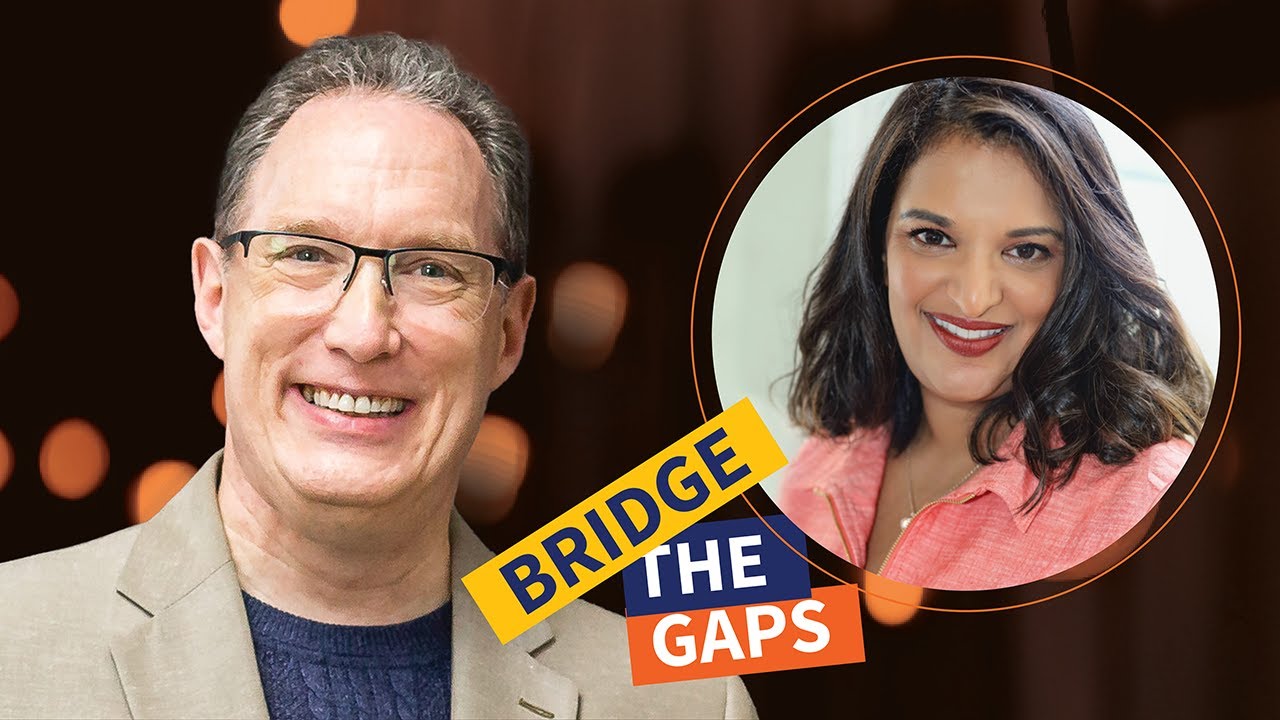
Tina Varughese, author of 50 Shades of Beige, discusses how cultural awareness transforms workplaces. She covers collectivist vs. individualist mindsets, unconscious bias, and concrete tactics like high-touch check-ins, culturally aware feedback, and inclusive catering to build psychological safety and prevent toxic environments.
Chapters
Welcome to this episode. This is where small business owners and entrepreneurs pick up core skill sets to help them create the show-stopping, jaw-dropping experience that their customers and their employees deserve. Their employees! I am your host, Customer and Employee Experience Strategist Marc Haine. And today, my guest is the human connection expert, Tina Veraghese. Today, we're going to be talking about how understanding and working with cultural differences can really improve your workplace. and make your team more productive and help your business succeed. So, stick around with us. This is going to be a highly valuable episode, I promise you. In the meantime, if you haven't done so yet, please make sure that you subscribe to this podcast. That way, you'll get notifications when I bring you fresh new content each and every week. Okay, so have you ever felt like your workplace is spinning its wheels with teams going through the motions but never quite hitting their stride? Maybe there's things like a high turnover rate. Or maybe there's people who are sticking around who aren't bringing their full potential to the tables. But you can still feel things like frustrations bubbling under the surface. Communication breakdowns keep derailing your projects. And somehow, despite all your efforts, you're struggling to connect with employees and customers alike. And that brings me to our Question of the Day. So, how much is miscommunication and cultural disconnect costing you? Not just in dollars but as I mentioned before, things like employee engagement, customer satisfaction, and your sanity. I'd love for you to share your experiences. Why don't you go ahead and share a link to this episode on your favorite social media platform? Put down your comments and make sure that you hashtag it #ExperienceLeadership because I'd like to hear your voice too. As I mentioned, our guest today is a powerhouse when it comes to breaking down barriers and building bridges in the workplace. Tina Verigies is a renowned human connection expert and the author of the insightful and very timely book, 50 Shades of Beige: Building Bridges While Breaking Bias. For over 2 decades, she has been working with organizations to help them navigate the complexities of cross-cultural communication with humor, heart, and an uncanny ability to make even the toughest topics approachable and actionable. She's been named one of Canada's top 10 speakers by Ignite Magazine. And Tina has worked with Fortune 500 companies, government agencies, and industry leaders to create inclusive workplaces where collaboration really, really does thrive. Whether it's addressing unconscious bias, fostering inclusive leadership, or teaching teams to communicate more effectively across the cultures, her work has helped countless leaders and organizations navigate the complexities of cultural diversity in the workplace. Tina, welcome to the show! It's so great to have you back.
I am back.
You're back.
I'm back. Nice to see you.
Nice to see you as well. My goodness, it's been— I think you were like the first season I think episode number like 8 or 9 or 10, right?
I know. And look how we've grown.
Right? So, for all the people who never saw that old, very old episode, maybe you could tell us a little bit about what you do for your clients.
Well, I'm a keynote speaker, workshop facilitator, and author. I've had a wonderful career that has allowed me to speak for amazing clients like Pfizer and Carnival Cruises and the Million Dollar Roundtable and many others globally. So, that's been awesome. What do I do for my clients? I really try to give them practical and tactical strategies on how to connect both internally and externally. So, with their very diverse workforces, not just culturally diverse, but when we're looking at behavioral diversity, cultural diversity, generational diversity, we have so many workplaces that are talking about how difficult it is to essentially have 5 generations in the workplace working. So, helping them connect on that level. But in turn, also helping them with their customers as well. And then of course, given my background, I did manage our immigration office for the province of Alberta for many years. And that background gave me insights into cultural differences. So, really helping companies go global as well. Even though Global digitalization has allowed companies to be able to reach much farther when it comes to markets. And so, helping a lot of those companies, a lot of those collaborations, multinationals really work more effectively together. So, it's been quite a ride.
I love it. And it's so needed today when you think about all the different challenges that we're up against. But maybe we should maybe kick off the episode by maybe could we define the differences between between diversity, inclusion, and belonging. We hear it all kind of mixed in and jumbled together. But they are all rather distinct on their own right, right?
Yeah, for sure. When we're looking at diversity, you're more looking at data. You're looking at the numbers, maybe potentially number of visible minorities you might have, number of women you might have, number of LGBTQ. So, you're kind of looking at the data piece. The— so, diversity is essentially that the numbers. But the inclusion piece is more how are we going to ensure everyone plays at the party. So, you might be invited to the party. But how do we ensure everyone plays? The belonging piece I feel is tied very strongly to authenticity. So, it really we're looking at how can we authentically show up without retribution, make mistakes without anything happening that's going to be a problem? How can we have these open, honest conversations so that we truly feel that sense of belonging at the workplace? So, it's an onion. It's a little bit layered. And you can have diversity. But if you don't have the inclusion and belonging, I don't think the diversity really matters.
Right, right. So, when we hear a lot of what's going on in the press, for instance today, I just found out I got the Washington News. The Washington newspaper is talking about how Trump today is going to be rolling back the DEI department in the United States government. We know that McDonald's and Walmart has already done it. Meta has already done it. When we're thinking about kind of what this all is, I mean, It's got to the point now where DEI is considered woke. And I can't even define what woke is. But why are we having these challenges, do you think, today?
Well, I do. I think that's been— I think there's been trickles of it for a little while. And I actually think, I never even have used the term woke. But I do feel they're weaponizing woke at this point. No, I've never even used the term woke. Like, does that mean we were sleeping before? I don't really get that. I do feel when you're literally laying people off and with paid leave with the eventual venue, they're going to be terminated essentially. It's pretty reactionary at the end of the day. But I also really have to wonder, a lot of these organizations move forward with diversity, equity, and inclusion initiatives. I know for myself, I've had my picture plastered on social media globally because I was their keynote speaker for a potential DEI event that they had. And looking back, that was optical allyship. They were simply using my image because they thought that's what society wanted, their clients wanted. And now that they're pulling back, to me, what you're saying is that was a pretty inauthentic message. So, how do we trust you at this point if that's the message you put out and then immediately, no, no, no, that's not actually— I'm taking backsies. I didn't mean it. You have the Walmarts. You have the McDonald's. But you also have the Costcos and the Apples that actually went against that and said, no, we actually understand that diversity isn't just the right thing to do. It's the more profitable. We understand the diversity of perspective that comes into play, which drives innovation and creativity and profitability. And so, you have firms that are actually becoming a bit polarized. And for myself, that kind of speaks on this topic and heavily speaks on inclusion and belonging and authenticity. I'm pretty lucky because now, I'm just attracting what I'm putting out because I don't want to work with firms that are doing this for the wrong reasons. I want to work with firms that are doing this for the right reasons. That they want more inclusive workplaces. That they want people to feel like they belong. There are enough stats and studies to show For example, even if you're not disabled but you hire someone that's disabled, you're going to create a more psychologically safe environment for all. There are enough stats to back it. So, I think some of these firms aren't listening necessarily to the political rhetoric and being reactionary. But they're actually using critical thinking skills and thinking about the why behind it and why they want to be doing these types of initiatives at the end of the day. I'm all for meritocracy. I've never believed in diversity hires. I believe in meritocracy. But at the end of the day, we sometimes have unconscious bias. And so, I saw the Trumpster. He was doing a lot of, we're getting rid of all the anti-bias training. I'm like, have you ever taken any? Like, do you actually understand what it is and why we actually need it? I highly doubt it. So, we're coming from maybe a framework of reactionary rather than critical thinking.
And ignorance. Yeah. And again, it's like you said, it's being politicized. And so, because there's a small portion of the population who have their perception of what they think DEI is. And it's funny because it's always tied to affirmative action things. I mean, at one point, somebody was talking about, oh yeah, all the immigrants are taking all the white jobs.
Yeah.
And it's like, what are you talking about? What? You're being displaced? Are they throwing you out of the country and replacing you with Right? They had the whole white replacement theory back 4 years ago. And it's just, I mean, the talk is ridiculous. But the reality is that now more than ever, we have people from different backgrounds in our businesses. I do know that when I was training at one particular business here in Alberta, we had to sit down. We had to be very, very cautious that we had people from the Philippines. We had people from India, neither of which English was their first language.
Right.
And when we did the training, we had to be really sensitive on how did we communicate So, what are some of the most common challenges leaders face today when they're managing a multicultural workforce?
We don't know what we don't know. And so, when I first started speaking on cross-cultural communication, people didn't even understand that there was a need because they just figured, well, you speak English. And so therefore, I can speak English and we aren't going to have these issues. They didn't really realize that there's a big difference. Let's say for example, between individualists collectivists. So in Canada, in North America, we're much more individualistic, meaning that we're goal-oriented, achievement-oriented for ourselves. That's not a bad thing. But when you look at our top source immigrant countries coming into North America right now, so India, China, Pakistan, the Philippines, Korea, Syria for Canada. The only difference in the States would be Mexico. They're all collectivists, meaning they're family-oriented, community-oriented. Their values are different. Even how they work is going to be different. We wouldn't think much of maybe doing a better job potentially than an employee. We wouldn't think much of it because we know that it's our job and we're looking at our own goals and achievements within that job. But let's say for example that you have a team And we have a lot of, let's say, in agriculture, for example, in the agri-processing industry in Canada. Well, we have a lot of foreign workers. Yes, they're taking jobs that quite frankly Canadians don't want. They're taking some jobs that are at meat processing plants. This is hard work. This is dirty work. It is tough work. When we think about COVID and who was getting ill first in bulk were a lot of Filipinos that were working at these plants because they living in such tight quarters. And so, you look at a collectivist. Well, they're not necessarily going to look at the productivity and go, I have to outshine my fellow worker. They're going to go, I'm going to go at the same level as my foreign worker, like as my comrade. Because they don't want to make— it's all about harmony. They don't want someone else to look better or they don't want themselves to look better. And so, even from a productivity perspective, managers need to understand they put teams together that might speak the same language, not realizing that actually might decrease productivity. You want to have mixed teams because if you have mixed teams, they're not going to care as much about the collectivism of their own culture. And so, they're going to be able to increase their productivity. So, it can actually affect profitability. So, that's why managers, leaders really need to understand the cultural nuance and cultural communication because it affects their bottom line.
Yeah, it's having worked in the hospitality trade. My biggest laugh that I ever had was when I brought in a bunch of foreign workers into the hotel. Not only did the customers look and go, oh, You're the guy bringing all these foreigners in. And it's like, hey, without these foreigners, you couldn't get your cup of coffee. But what I found really funny was when they, you know, I got to meet with them one-on-one. How are things going? Because I was really interested to make sure that we brought them in. I wanted them to succeed. And one of the comments I kept getting was, are all Canadians this lazy? Because they come from different backgrounds. I mean, they've worked in cruise ships and hotels where the carrot and the stick mythology was still very much alive. And you had to work hard in order to keep moving forward. And so, they have a work ethic that they brought with them. And then, you come here and there's kind of this dichotomy of everybody's getting paid. How come you're not working as hard as I am?
Right, yeah, exactly. Yes, I wrote about that a little bit in my book, Fifty Shades of Beige, like the perceptions of both sides. Because the whole point of the book was to connect and understand one another so that we wouldn't have necessarily barriers of misunderstanding but rather comprehension of understanding. And so, I totally remember interviewing 3 beautiful Filipino ladies and they started giggling because the first thing they said was, we don't take a break until the work is done. Whereas a Canadian will take a break because it's scheduled.
Yeah.
And so, they were kind of giggling because they were like so scared to tell me that that's how they truly thought. And even things like in some countries, you would never in a million years call your manager Marc, a first name. It would be Mr. Haine. And so that—
Mr. Marc. It was Mr. Marc all the time.
Exactly. I was Miss Tina in the immigration office, mostly because they couldn't say Varughese. They couldn't pronounce my last name. So, it really comes down like that's a cultural difference. But It also comes down to respect and hierarchy. That differs across the countries and across the world and how we look at hierarchy. So, that's going to affect the workplace as well.
So, I wanted— when we talk about this, I do know that people have a bunch of misconceptions. What myths do you think we need to bust today when it comes to things like belonging and managing through cultural and Managing cultural competency, our own cultural competency. What are some of the myths we need to break?
Well, I honestly think we've become way too politically correct. And we're just too scared to say anything at all. I empathize with the white guys who feel like their jobs are being taken. I get why they would feel that way. And I remember actually working with a government organization And a manager point blank said, well, I did hire someone of color. And I said, did someone tell you you had to? Like, why did you do that? And he goes, no, I thought that was the expectation. And so, I think having these open, honest conversations is just so important. And even if it's a feeling and you're uncomfortable about saying it, that doesn't mean that your feeling isn't valid. You know, so if someone was hiring someone of color because they felt like they had to but they weren't really doing it for any other reason, you could see why someone, you know, a white male might take offense to that because they're seeing someone take a job. So, I was empathetic to those feelings and those statements. And we still have to be able to do diversity right. And so, I can understand why people were having those feelings. Things like, I think we— something I teach, we will say, well, where are you from? I don't personally. And I teach that is a microaggression. People don't love to be asked where are they from. But we can reframe it to what is your cultural background? But then, make sure you're sharing your own. So now, it's not a microaggression. It's actually a talking point in creating a relationship, which is all we have right now. If we think about, yes, I hear all the buzz of AI. Artificial intelligence. But I'm a big believer of authentic interaction. And I think right now more than ever, we need connection in the most authentic form. And if that's with our workplaces, with our colleagues, with our families, we need to be able to have these really uncomfortable conversations to get to the point of trust and understanding. And we can agree to disagree. That's okay. But we can do it with civility. And somewhere along the way, we've lost some of that. So, we've lost that civil peace. I had an incident on an airplane. It was hilarious. This young lady, I think she was 24 or 25, just started a new position. And she actually was from the States. She traveled to Edmonton and she came on with her carry-on. She was sitting beside me in the front. But she couldn't find a place for her bag. So, she goes to the back to put her bag up and a complete stranger just says, well, that's way too big for carry-on. I'm like, mm-hmm. So, when did you start working for WestJet? Why are you policing for WestJet? Because no one from WestJet told her it was too big. In the exact same moment, the guy beside me pulled someone's backpack from the top, put it down, and put his own bag up. And she comes back and sits beside me and we in unison tell each other these stories. And we just both in unison said, the world's becoming unhinged. I mean, they're just becoming unhinged when things like this are causing you like this much. Like where you feel it's your right to tell someone their carry-on is too big. And when you're pulling someone else's bag. And I'm like, I see it in social media. I think people use the screen of anonymity as a sword and weapons as words. They don't realize there's someone on the receiving end of that. So, civility went out the door. And that's why I think understanding and communication and having these conversations, even if they're uncomfortable, is so imperative right now.
So, what advice would you give to leaders when they have a diverse workforce? How might employees communicate or not communicate whether or not they are sensing a level of exclusion where— because a lot of times, to what we talked about, these collective kind of personalities won't put up their hand and run to the boss and say, people are treating me badly. They're just going to keep their mouth shut. They're going to say, I'm just going to get through it. That's their kind of mindset. So, what do managers need to be on the lookout for?
Well, I think I borrowed this from our mutual friend, Tim Brightup. That, you know, big believer of high touch versus high tech. Because I think it all starts and ends with leadership. So, if leaders can actually have— you may not be able to have a 15-minute conversation with each and every one of your employees. But a touch base is so important. I remember I was facilitating a workshop for a group of leaders. And I finally just like, I had a pretty close relationship with the CEO. And he was sort of saying, well, I don't care if people just walk into my office and need to chat with me. And I literally, while he was in the room, I said, who here would love to have a formal appointment once a week so that you can talk about some of the things with your CEO? And half of them put up their hand. And he's like, well, why are you not just coming into my office? And I said, people are people. They operate differently. And so, I think we need to, maybe you don't need the 15-minute touchstone a day because that's impossible. But just checking in before people literally check out is really important because you hear about quiet quitting and you hear about all of these frustrations. And it eventually leads to burnout and potentially employee absenteeism. That's not what we want. And that can be mitigated. But not just with our leaders. We have to be able to give people the tools. If we show our vulnerability as leaders, And have these conversations and open honest conversations, then that's going to trickle down and people will start to do that with their colleagues as well. So again, starts and ends with leadership. If we lead by example, then it's going to actually trickle down and have a trickle-down effect.
I can tell you that in 224 episodes, my audience never heard that it starts with the leader.
Really?
Over 4. No, I'm kidding. We talk about it all the time. So, I'd love to dig into some more actionable strategies to break down some of these barriers and what leaders can do to really turn the tide. And we'll get to that right after this.
When the spotlight shines on your business, are customers applauding or yawning? In other words, how is your business performing? Make your business a star With a new book, Lights! Camera! Action!, Business Operational Excellence Through the Lens of Live Theater by Marc Haine. Marc uses his business and acting experience to help you see your business like a live show so you can create a performance your customers will never forget. Buy Lights! Camera! Action! today at your favorite online retailer or directly at marchaine.com.
Welcome back. I am speaking with the human connection expert, Tina Verigies. And of course, as you could tell, we love to laugh. Tina, you mentioned before, you mentioned your book. Why don't you tell us a little bit about your book? What's it all about? What are you hoping to solve with it?
So, I'd love to say it's as sexy as 50 Shades of Grey. But it isn't. But I think it's as fun as 50 Shades of Grey. 50 Shades of Beige: Building Bridges While Breaking Bias was actually a 5-year journey, Marc. Believe it or not, it took 5 years for me to write the book. The last year, I'd say 2/3 was written. And so, there was a lot of research base, a lot of social science, a lot of stories. Stories that came from my background when I worked in the immigration office. I also had a relocation and settlement company. So, a lot of practical tactical for people to understand the 3 parts of the book. So, the first section is all about bridges. So, bridges of understanding. Second part is all about biases. So, believe it or not, when it comes to unconscious bias, we have well over 170 statistically proven unconscious bias we can have. And having unconscious bias doesn't mean you're racist or discriminatory. It means you're human. We all have unconscious bias. But it affects decision-making and it impacts a lot at the workplace— recruitment, retention, who you invite to lunch. It has impact. And so, we need to kind of understand how we're making those decisions. And the last section of the book is all about best practices in a very practical and tactical way so that companies have a blueprint, a map of what to do and how to get there. So, it is definitely peppered with a lot of humor. You know that I love to use humor. We love to laugh. And I use a lot of humor in my keynotes. So, there are a lot of similarities to how I speak. is exemplified in the book as well. A lot of humor, a lot of storytelling, a lot of practical examples. And so, it's I hope a good read for people that will help them essentially build those bridges not only in the workplace but within their communities as well.
So, you mentioned earlier on, you mentioned this thing about authenticity. What does it mean to be authentic in a multicultural, multi-generational workplace?
So, it can be a real struggle for a lot of people because you want to be authentic to who you are. And I'm a big believer of being authentic to who you are. But we also need to remain adaptive and agile too. And so, if we can remain adaptive and agile but authentic to who we are, that's how we can lead by example. And so, being adaptive and agile really has to do with with learning, asking questions, remaining curious. It's really easy to judge. We all have judgments. But asking ourselves those curious questions as to why, coming from the perspective of why did someone do something maybe rather than judging someone for doing something. So, that is pivotal I think for sure.
And so, here I am talking with me not being on screen. So, the components within the book, I mean, basically the bridges, the bias, and the best practices are a framework that you've created. So, can we dig a little bit into it? Let's talk a little bit about this idea of bridges of understanding because I think when it comes down to that authenticity piece, us being intentional in how we understand, I think is really like step number one, isn't it?
Totally! Like taking the initiative to actually ask people questions. I'm working with a franchise. You'll love this. I'm working with a franchise this summer. And they, you know, franchisees like, you know, an example of franchisee, you know, Tim Hortons, McDonald's, etc. They're all franchisees. And they do end up hiring a lot of new immigrants, a lot of teenagers. So that is an interesting demographic that, you know, people need to really understand. And so what I love by, you know, sometimes I'll interview managers before I do a keynote or workshop with them. And I love the ones that just came from a place of curiosity. They didn't just manage. They took the time to get to know their staff on a personal level and then shared a little bit about themselves. So, they really came from a place of curious compassion and understanding and treated themselves as a student, a student of the world. And when they did that, they kind of realized what an interesting world we live in.
Right.
If we actually open ourselves up to new experiences, new foods, new cultures, it's freaking fun. But I think sometimes, we're maybe uncomfortable with that or we're scared or we assume we're not going to like it or we don't try. And the more experiences we have, the more diverse our circle is, the more interesting our lives can be. So, Why not?
Yeah, my mom brought us up. I grew up in Montreal and Montreal was at the time probably one of the most diverse cities on the planet when it came down. All the immigrants when they came into Canada landed in Montreal. And because of it, we actually had pockets of different communities all over the city. And so, all of a sudden, we had kids in our school that we all of a sudden, we got to know what it was like to be Greek, a Greek immigrant, or to be a Pakistani immigrant and all this, right? And it was like, as kids, it was like we were just so curious about how come he plays soccer so much better than us?
Yes, just I think that's where we need to be. We just need to be kids again because kids don't judge. They're just curious. They ask all those questions. You remember your kids when they were 2. And everything was why, why, why, why. We just need to become 2-year-olds again. Somewhere along the way, we lost that.
Yeah, yeah, yeah. Well, but a lot of when I started the program, I talked about projects not being fulfilled because there's these miscommunications within the confines of teams and that sort of thing. So, when we talk about this idea of bridges to create understanding, what do leaders need to do to kind of preemptively understand where their team is even before the crisis hits?
Right. I mean, I think I do believe that most employees, they— yes, sure, we all like to have salaries. But it's so low on the list when it comes to why people stay in positions. And people do value education. They want to continue to learn. And so, I always find when people don't put any emphasis on professional development, It's bizarre to me because I think that is a great starting point. You don't know what you don't know. And people want to learn. We want to become better humans. And so, even just starting with some basic professional development is pivotal. I think team building. When we can take— you don't have to make it a really expensive event. But when you get away from the office, It becomes a bit more casual. We've got to think about that. So for example, okay, we think about getting out of the office is pizza and beer without really thinking about, okay, does everyone eat pizza? Like for example, maybe some people might not eat pork. Some people are going to have dairy issues. And a lot of people don't drink. Some of that might be for religious reasons. Some might be for cultural. Some might be by choice.
Hmm.
So, you can certainly get out of the office. But think about, okay, what can we do out of the office that is inclusive so that everybody can participate? But just taking it out of the office sometimes can make a huge, huge impact. I know in the book, one of the things, one of the strategies actually when we get to best practices, especially when you're working with collectivists is I talk about if, or I wrote about if you are going to be Offering feedback to someone who's collectivist, take it out of the workplace and go to a coffee shop or go for a walk because they equate work with hierarchy. And they'd be very embarrassed to receive that messaging in the confines of an office. So, just offer that feedback even if negative at a coffee shop or outside of the office. It'll make the messaging much more palpable to hear.
Hmm.
So, that is, you know, it's a A small tip. It's a quick tip. But it's an imperative tip. It really affects people and their demeanor at the workplace.
I really like your exercise of taking people out of the workplace. And I talk about having shared experiences. I think that when you have a group of people who have a shared experience, it now gives them something that they have in common. It's something that they could talk about and refer back to. And it becomes kind of a central kind of connector when they've had these shared experiences. And so, for the managers who are thinking about, well, how do I bring my team together? Well, Tina just gave you the solution. Take them out. Do something. Give them a shared experience.
Take them out. Particularly now when we're going to remote and hybrid workplaces, I think that workplace culture is still really important. And you have new hires that are being trained and they're in their homes. So much happens via osmosis. And so, Just minimally getting those team-building events. You don't have to spend a ton of money. You can do really fun things that don't cost an arm and a leg. I have a really small company as you know. Like we, as speakers, we don't have huge teams. But I do have little team-building events. And sometimes, they're small but they're impactful. People like to. And I have such a— I have different generations, different genders. But I try to find some commonality so that now, we have exactly what you talked about, the shared experience. Because I want them to take some pride in where they work, which is for T-Works, for my company. But I also want them to get to know each other a little bit better. And when you're all remote, that can be really tough to do. So, this is an easy way to do it.
Love that. The bigger question we talked about Bridges of Understanding. But before we get into it, I'd like to talk a little bit about biases. But before we do that, I have a sneaking suspicion the audience's ears are perked right about now. How can they get in touch with you if they want to work with you?
Oh well, email would be a very easy way. tina@tworksforyou.ca. I'm also on every social media. So, if you want to DM me on Instagram, LinkedIn, my website tworksforyou.ca. I have a YouTube channel. I'm all over them. I'm ubiquitous. Marc, I'm all over the place.
You're all over the place. All over the place. And of course, all your contact info is in the show notes so people have no— people can get a hold of you. So, you mentioned— I mean, we could probably do a whole show just on biases, right? You mentioned the number of biases that we actually have as human beings. Could we talk a little bit about how do leaders start looking at biases and strategies to overcome them?
So, I again feel people don't really know what they don't know. So, they don't really realize that sometimes we're operating from a place of bias rather. So, we're trying to rationalize rather than being rational. And so, we might— something as simple as watching something on the news, social media scrolling can really affect our confirmation bias. Meaning, we might have a theory Or a thought. And now, we found one piece of information that confirms our thought. So, that becomes clear now. That's gospel. And so, that would be a type of unconscious bias. You might have had past experiences or maybe where you grew up. Maybe you didn't have a lot of access to people of color. Maybe your household wasn't necessarily one where people of color visited. So, whatever it might be. So, it may not even be a bias. But you may not have an understanding. And maybe, there's even a slight fear there because you're like, well, I wasn't exposed to it. Or maybe, you heard stories. And so, we all have unconscious biases that are shaped over time. We're not born with bias. But there's shaped over time with our experiences, with our upbringings, with every work experience we have, with the people that we hang out with. And that's why I'm a big believer of increasing that circle of diversity of perspective. If you were— I give an exercise in the book just to see who are your top 5 influencers and then go through a chart asking, are they male, female? Are they— how do you know of them? And even myself, I didn't really have my circle of influence Wasn't that diverse, and it kind of blew my mind because I'm like, "Gee, you know, here I am. I speak on this topic. I think I'm so open, you know, with perspective. But yet my actual circle of influence really wasn't diverse because my own unconscious bias were attracted to certain people. So that was coming into play as to what I felt I should honor. If that be education, if that be you know maybe my circle was more Female. So, I was putting a lot of emphasis on things that was really narrowing my circle of trust. We do that at the workplace. So then, we make decisions based on a very narrow landscape or a narrow mind. So, that's why we really need to understand this a little bit because we think we're making great decisions. But in essence, we may not be making great decisions. We're making decisions that are highly influenced. So, that's why it's really important to just take stock of what is unconscious bias. Why do we have it and how can we mitigate and manage it? And there are many strategies that we can use to manage and mitigate.
When it comes down to the workplace and leading in the workplace, I know that a lot of times leaders will say something to the effect of, I'll just do it myself. It's faster, rather than delegating it. But at the same token, I do know that they'll turn around and say, you know what? I'll just give this to Steve to do because he'll get it done half the time because I won't have to explain it like I do to Ali.
Right.
Right? And so, how do we call out ourselves for this? Because it's not necessarily intentional but maybe it's just lazy.
Yeah, I don't think it's lazy per se. But I will say, being on the opposite end of that, being that employee who got dumped with a lot of work because I was dependable. And you know it's going to get done. Well, you're not being praised for it. You're just getting more work. And so, but what it does is actually doesn't create that sense of belonging for all. And so, there are some things that we can do like putting in processes. When we onboard somebody, that is such an imperative time like that onboarding process, that first 3 months. That was one key piece I talked about in the book. I have a lot of universities that were bringing in a lot of international students. And they came here quite frustrated because when they arrived, they weren't offered the same, lack of a better word, hand-holding than they would have in their home countries. And so, something as simple as not knowing where the cafeteria was, coming here jet-lagged and missing all their classes because they slept through their alarm. Not knowing where to go to for their classes. They needed more support. And I think that when people start a new position, that's what they're craving. They just want to be— they want that guidance. And they want to know that they can ask people questions without ramification. They can make mistakes and they're not going to be in trouble for it. But they need to have that opportunity to learn with guidance. And I think even something as simple, and I talk about it in my workshops, acronyms. We use acronyms in the workplace. But the only reason we use them is to save time and money. But we might lose comprehension of individuals if an onboarding dictionary of acronyms that is specific to those firms isn't created. So, that would be an onboarding piece that in— and most firms don't have a dictionary of acronyms that are used in the workplace specific either to their sector or to their company. And so then, you lose comprehension for people. But they're too embarrassed to say, I don't know what blank means. I don't know what this means because they're scared of the ramifications. Well, that can now become a safety issue or a profitability issue. Certainly, a comprehension issue and definitely a belonging issue. So, I think so much of this can be handled at the start of someone's career in a firm if processes are in place for success.
So much came to my mind as you were telling me this because in a university case where somebody is walking around, they don't know where they're going. Their first inclination because of the background and because now they're in North America, their first inclination is to go and find authority to tell them where to go rather than shaking down somebody on the street. They say, can you tell me where the B room is? Right? It's like the Filipinos I know, the East Indians that I know. This would not be something they would do with comfort.
No.
Likewise, sitting in a meeting and being told an acronym and everybody's nodding along, they're sitting there going, I don't want to tell my boss I don't want to understand something. Because that's not what we do. And so then, people are like, well, why didn't you tell us you didn't understand it? Right? So, as a leader, we have to be that intentional.
Yeah. My daughter is in the process right now. She's looking at either renting or buying her first place. And she's young. She's a Gen Z. And she's so frustrated because it is so beyond. Like, she's got a degree. She's a smart kid. Born and raised in Canada, but it's so intimidating when you don't understand how a mortgage works. You have to go to the bank. You have to understand the process for warranties. And and she's like, "Well, why isn't anyone just taking the time to explain the the basics to me before I make these massive decisions?" So you know, I think somewhere we've lost that piece because. Like, that's how we have to come into this. We're not parents per se when we're leaders. But there is such a high component of teaching that is involved. And I think that people don't realize that. They just assume people know things and they don't. And they're too scared to ask.
And again, that's the generational divide, isn't it? I mean, I talk to baby boomers and it's like, hey, we just learned just to figure it out on our own. And we just had to figure it out. And God forbid if you made a mistake because then you got publicly slammed. And so now, we have Baby Boomers and people who are Gen Xs kind of stepping into the leadership roles and saying, well, this is how I was led. So, this is all I know. So to your point, one of the best practices would be get out there and get trained.
Right, right. Well, and also, well, that was how I learned. So, Does that mean that was good? You know, like, I don't think we used car seats when I was like— I don't think they existed. Well, you're fine. We're putting you in a laundry basket. It doesn't mean it's not good. Like, we have improved. We have, you know, and I totally understand some of the generational challenges. I get it. But it goes both ways. And so, I think that we really need to like take the lead. There's so much I learned quite frankly from my kids who are both Gen Zs. There's so much I learned from our mutual friend Patricia Morgan who's 78.
Yes.
And it all comes down to growth mindset versus fixed. If you have a growth mindset, you're willing to learn. You're willing to be curious. If you're fixed, and that has nothing to do with age. So, that age really doesn't matter. What matters is, do you have a fixed mindset or growth? How much are you willing to expand?
And that right there should be the note that everybody's jotting down right now. Because I think at the root of everything that we're talking about today, it has to be our flexibility to be able to learn and continue developing ourselves. Not just believing what we believe and that's it. That's all. Because the world is not that black and white.
No, it's not. And I have to admit, sometimes I joke. I'm like, oh, I'm done with the lessons. I don't want to learn any more lessons. This is hard. I don't want any more lessons. But you have to admit those past experiences, even if hard, even if so difficult, so challenging, is what gives us the empathy to lead. So, the more tough crap you've gone through, you're gonna be a better leader for it.
Absolutely. And you'll have stories to tell.
So many. So many stories.
So, I'd like to— my fear is always this whole idea of band-aid managers listening to this and thinking, yeah, you're right. We have to change something. And so, I'd like to get into some pitfalls to watch out for and maybe even some cautionaries. And we'll do that right after this.
When you're delivering an important speech to a huge audience, it's easy to lose your place or go way over time. Give yourself an advantage with the Pro Speaker Presentation Speech Timer app. No more checking your watch or calling for time. The Pro Speaker Presentation Speech Timer app keeps you on track with easy-to-see timers, even changing color for visual prompts during your speech. And you can set audio cues to practice or set it to vibrate so you don't even have to look. Be the pro you know you are. Download the app at speakerpresentationtimer.com.
Welcome back! I hope you are getting tons of value from today's episode. As you could tell, Tina and I are on a mission to support businesses just like yours. So, if you belong to an organization that could use our help, or you know somebody who might be planning a leadership retreat or a conference, drop us a line. We'd love to explore how we can be of service to you and your people. And of course, our link is in the show notes. So, take advantage of it for goodness' sake. So, Tina, what does it mean? So, we talked about this idea of being authentic within multicultural and multi-generational workplaces. What does it mean when we have the— how do we test whether or not we're ready to do this? Because like you said, you don't know what you don't know. And sometimes, we just accept our reality as There's nothing I can do about it because it's not my fault that they don't speak English. Or it's not my fault that whatever, right? That they're too young. That they're Gen Zs because they're just lazy. How do we shake that? How do we test ourselves?
So, I think sometimes people do so much preparation. And at the end of the day, sometimes you do have to jump in a little bit feet first and be ready to zig or zag.
Yeah.
And so, I think that you don't have to be completely in the know or prepared. You're going to learn from your people at the same time. Like, I'll say this once and then I'll say it twice because it's so important. We do not need to set ourselves on fire to keep others warm. We can be open and honest about what we don't know. And I think that's where leaders sometimes fail. They're scared to say, I don't have a clue. I was I was talking to a CEO recently that I'll be speaking for their organization. And she said, I know so much less than everyone else on my team. And I love that. I just went, she was honest. She was open. She was vulnerable. And she admits she completely depends on her team. You don't have to have all the answers. You have to have resource to get those answers. I do that myself. I don't ever think I have all the answers. But I know I can get them. And so, that's why we want to be open and honest about what we don't know and how much we can learn in the process so that we can be open and say, yeah, I have no idea. But I'll find that out for you. And be okay with that. Be okay with saying that in front of your staff.
Yeah, again, it takes humility. It takes a trusting environment to be able to do that. And I mean, Henry Ford did this when he was interviewed. He was like subpoenaed in the grand jury or something. And they kept asking him, so, tell me about how a piston is made. He goes, I have no idea. Tell me what the compression ratio is. He goes, I have no idea. And Mr. Ford, you're saying that you own the patents because you invent— you say you invented the auto. But you don't know how it works. And he goes, young man, he says, I don't need to know how it works because I hire people who do. Right?
Exactly!
There's this cockiness as leaders that we think we need to know everything. It's unrealistic and it's non-sustainable.
Right.
It limits everybody else.
It's too much. It's overwhelming. You don't need to know everything. You need to hire great people.
Yeah, absolutely. And again, there's another best practice, right?
Yes. Hire great people. Trust them to do their positions. Give them the autonomy to do their positions. But be there for support if needed.
Right. So, as we— Yeah, yeah. And when we say it, it's simple. But how come it's not? My big question is how come it doesn't get executed that way? How come we still have all these different clashes in workplaces today that border on toxic workplaces because we don't have it, right? It sounds simple but there's something wrong with the execution of it. And so, as we think about this thing about people getting this information and saying, yeah, I need to make a change. Are there any pitfalls, any cautionaries that we should be talking about today?
You know, it's funny when you said like the piece about toxic leadership and toxic work environments. I've been doing this for a really long time. I've been speaking for a long time, both virtually, in person. I can tell in seconds if a workplace is toxic. The minute I enter that virtual stage or the stage itself, I can tell within seconds. And one of my key indicators is silence. If there is a lot of silence, if you are surrounded by silence, chances are you have a toxic workplace because people are too scared to speak. And so, I've been, you know, I've presented for toxic workplaces. They're not the ones I necessarily want to work with. It can be very uncomfortable and Yeah. You feel it. It's a feeling that you have. But I can tell in seconds because it's such a silent atmosphere. It's very almost dictatorial, directive. People don't feel safe. And so, those aren't certainly the clients I want to attract or work with. I want to work with clients that are fun. They're open. They're honest. They're authentic. They take pride. in their work. And those toxic environments exist because quite frankly, we allow them to exist.
Yeah.
Why they exist is because we're not putting anonymous 360 surveys together where people can really be open and honest about toxic leaders at the workplace and then taking action to get rid of them. And so, it's no different than the flu. It's no different than a pandemic. If we allow them to exist in the workplace, They're going to spread that negativity and do a lot of damage. And so, that damage control, listen to your people. Have town halls. Have town halls where you communicate more effectively and share with your people. Communication is so key. And so, there are things that firms can do to mitigate this. Do they? Not all. There's not all. And that's when you see those high employee turnover rates and high employee absenteeism.
And I think one of the biggest problems I think that businesses have is they look at performance. They look at output. They're looking at who's got the most sales and whose team is being the most productive. And those don't necessarily define success on any level except for maybe profit margin short term.
One of my clients that I was the most inspired by was the one that said, we encourage employee employment leaves because we know if they're on leave, they're taking care of themselves. And they look at that as a metric. They wanted to see those leaves increase. And I was like this, what?
What?
But they wanted them to take these short-term leaves so that they didn't become long-term leaves. And they wanted them to be open and honest with themselves and with the organization to be able to do that. And that was one of the most inspiring. And this is a big organization and they were so blatant about it and so honest about it. And I'm like, hats off! I've never heard an organization say that before. It was pretty impressive.
And where on the other side of the coin, you have bad managers saying, Oh my God! If I do that, people will just take advantage of it. I'll never get any work done. And people will, right? And so, it's interesting to see the different styles and the different philosophies, right? Totally.
But at the end of the day, people don't want to come to the workplace and go, I'm useless. I'm not going to do anything. They want to be productive. They want to be helpful. So, it's not like people— I think for the most part, that's what people want. Yes, there is no question in my mind there are some people that might take advantage of it. And with time, you can get rid of those people. But that's going to take time. But to come in to think as a manager, oh, people are going to take advantage of it, is not the right viewpoint.
No. And again, as an effective leader, you're going to be able to isolate the abusers very, very quickly. It's not going to take months or years. It's not going to cost hundreds of thousands of dollars. It really will take a short amount of time because you see it right away. You know, it was interesting. I do a course called Voices of Influence for Northern Manitoba schools in like Thompson and like all Northern Manitoba. And somebody told me the best compliment I had. He says, I can walk down the hallway and I just looking at the behaviors, I can tell who's in Voices of Influence and who is not.
Interesting!
And the same thing happens I think in our community, in our in our businesses is you can tell just by looking at behaviors and looking at— you can tell who will be the abusers and who will not. The indicators are there if we're intentional to look for them.
Wow!
Yeah, it's so cool. Yeah. But so, Tina, this has been absolutely fantastic. Could you just remind everybody one more time how they can get a hold of you?
Website, tworksforyou.ca. My email, tina@tworksforyou.ca. I would love to hear from your viewers, Marc, and you anytime. You always make me smile.
I love it. And please again, feel free to put comments to Tina. We'll keep track of them. If you have any questions for Tina, put questions down because I know that this is something if you have humility, we know we don't know it all. And so, if you have questions, feel free to reach out because Tina's here to serve. So, I love this. Tina, any last thoughts about what we've been talking about today?
No, I am just so honored to be— I think it was your 224th guest. I was honored to be your 8th. And it's always such a privilege to be able to talk to you, Marc. And you know, we go way back. We have a relationship. We've always had fun. But yet, we still get the job done. And I think we're trying to, at the end of the day, make the world a better place. So, thank you for having me on your show.
High five to you. Thanks again. I really appreciate it. Hey, so if you have any questions about what we've been talking about today, about today's episode, or you'd like maybe a complimentary 30-minute brainstorming session with you and your team, feel free to book yourself on my online calendar. Feel free to reach out to Tina. My link is down below. It's the one that's marked meetwith.marchaine.com. As always, I am at your service. And if you haven't done so yet, Why don't you go ahead, subscribe to this feed, follow me on social media. I put out tons and tons of content each and every week. And I'd love for you to be part of the following. But then, I'd also like you to be part of the conversation. So, feel free to reach out, DM, text, whatever. Thank you again for joining me today. I hope you got tons of value. My name is Marc Haine. I hope you stay safe, stay healthy, and I hope you dare to be the exception.









