Building your brand foundation with Azadeh Yaraghi
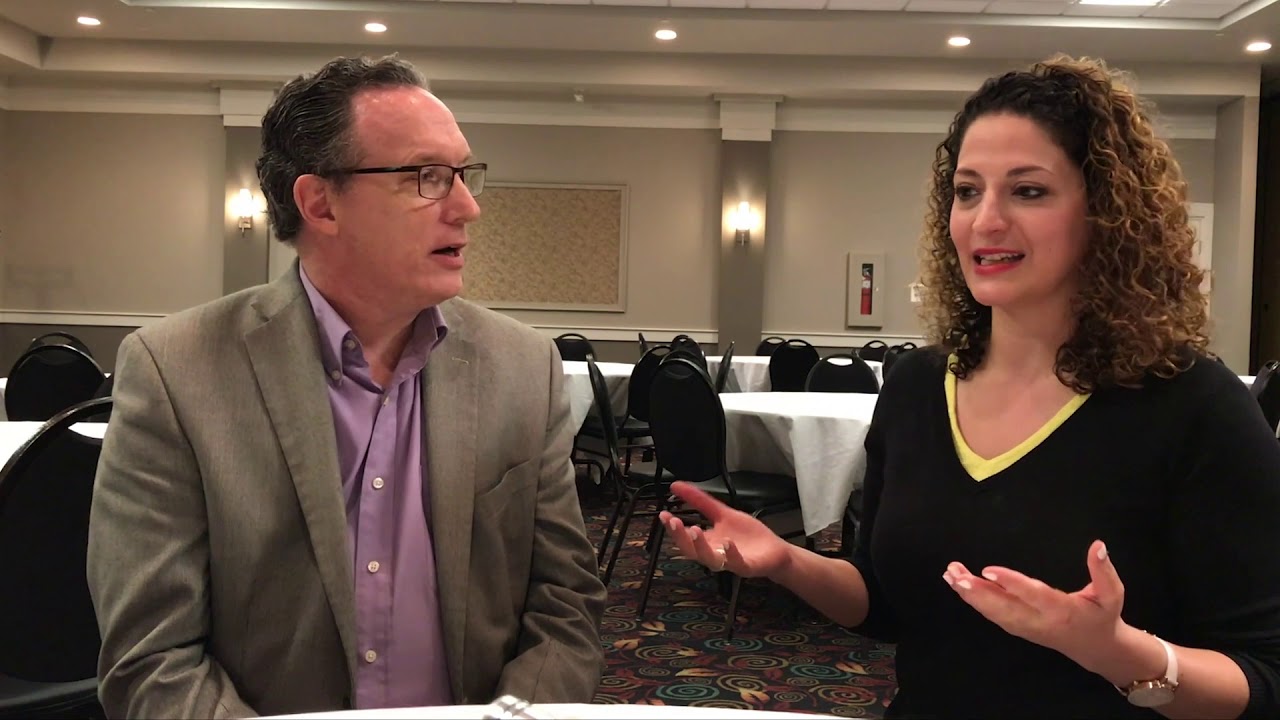
Azadeh Yaraghi, CEO of Go! Tallulah, explains how brands succeed by communicating one core idea rather than product features. Nike sells excellence, Disney sells happiness. She walks through the process of finding your brand's one idea: start with values and vision, ask hard questions, identify your archetype, then use that foundation for every message you send.
Chapters
Hi, this is Marc Haine here. Do you have a need to find your one idea? Oh, stay tuned and we'll talk a little bit about that. Hi, welcome everybody. My name is Marc Haine and I am thrilled to death to be here with Azadeh, who is the CEO and primary person at Go!
Go!
Tallulah. The reason why Azadeh is here is she presented to a group of my friends and my colleagues last night talking about the one thing. Azadeh, why don't you give me kind of a brief synopsis of what you were talking about last night?
Yeah, absolutely. So, the concept of the one idea is is the fact that people don't buy into your products and services. Instead, they buy into an idea and a brand promise.
Hmm.
So the reason why this is important to tap into is because when entrepreneurs or organizations are building their brand and building their messaging, building what we call your value proposition, which is what makes you unique, they tend to Go to the what we're doing, right? Like, what am I doing? How am I good? I do this, I do that. You know, we've won awards. We are the specialists in this and this and that. You kind of go inward talking about what you do and you think that's what makes you unique. But by knowing how to go outward is how it's going to make the difference. And that's how you actually flip it around. And start talking about them instead of you.
Okay, so I'm gonna play devil's advocate for a second.
Yes.
If I'm not talking about what I do really well, how will people know what I do really well?
They'll know it through you talking about how you're gonna fix their problems.
So you're saying that if you show that you are the expert in solving their problems, that they're gonna be more inclined to want to 100%.
100%. If I start talking about my experiences and what I've done in my life and why I'm so great, how is that impressive to you? I mean, you might be impressed to say, well, that's kind of cool. She's a cool girl and she's done things in her life. But it still doesn't pertain to you and where you're at in your life or where you're at in your business. But if I start talking to you about, you know what? You know the question, what makes you different?
Yeah.
What makes you unique is actually a trick question. So next time somebody asks that to you, just stop for a moment and say, "I'm not going to go into the me me me me me answer." Instead, by showing you my difference, I will speak to how I know what you're going through.
So it's almost like saying the trick question is you know what makes you so different is what makes you so different that you can cater to me.
Yes, because I understand your situation. I've possibly worked with other people who have been in your situation before. Or instead of answering it right away, I might ask you some questions to clarify something, right?
Mm-hmm.
So I might just go, you know what, I'll get to that in a minute, but you know what, let me just ask you something. I just want to get clear on, is it this thing that you're looking for, or is it this problem that you're having? it's in your own business, or you're having this issue with your teammates. Is it a bottom line question? Is it a messaging question? Or what, what is the ultimate thing that you're trying to solve?
Yeah.
And if I get clear on that, then I can go, okay, so I'm really clear on what it is that you're looking for. So here's how I see how I could help you. By looking at this and by doing that, we could provide this sort of a solution, or This is how you could possibly fix it. So you're not really answering, oh, how am I unique? But you're kind of just addressing the whole why are you unique from a different perspective. Because it's like, why do people even ask that question?
It's—
they're trying to tap into hiring someone who's going to understand them, who they're going to trust, and who they think is going to do the right job.
Yeah. And people who will always ask that question are the people who are looking for what is the benefit to me going to be. So when somebody turns around and says, well, how are you different from your competitors? They're not saying we want the list of things. It's how are you going to be different from your competitors to help me do what I need to do? Yeah, that's really interesting. You have this framework and this concept of the one thing. Can you explain that a little bit, what that's all about?
Yeah, absolutely. So we kind of brushed on it at the beginning when I said the one idea concept is the fact that people don't buy into your products and services, they buy into an idea and a brand promise. So the idea there is that whatever your business is, whether you are selling yourself, so you're a personal brand, or if you're a speaker, if you're a realtor, if you're a mortgage broker, you know, when people are buying into you, that's a sort of personal brand. So you think people are buying into your services, possibly your products, if they're books, if they're candles, if they're whatever it is that you're selling. Or you're an organization that's selling a service and you think, oh, we have to talk about our services because that's what people buy into. The point is that that's actually not what they're buying into. Here's an example. Nike. I actually like using Nike quite a lot because it's— they do such a good job at this and it's just clear.
Yeah.
So Nike makes shoes.
Yeah.
But people don't buy shoes or products from them. What they buy into is this idea of excellence.
Hmm.
Think about it for a moment. When you think about Nike, what are— how do they tell their story? What is it? What images are they showing to you? Because here's the thing with brands, it's as soon as you pronounce the name of the brand, you immediately have images and emotions that are associated to that brand. That come to you. That's how someone builds a really strong brand. So when we go to, okay, well, what is Nike really selling me? It's in their storytelling. It's what— it's the core philosophy of what they stand for.
Right.
So what does Nike stand for?
Excellence.
Excellence. And how do they show you that? Like, what is like a commercial or a thing you remember?
Well, so they never ever turn around and say, today's special on shoes is this, this, and this. Here's our lineup, is this, this, and this. You never ever see that. What you see is you see their reflection of excellence in, you know, kids playing soccer. There's a brilliant video that they have of like a chubby guy walking down, like running down a road all by himself, striving for excellence in his home, right? And they're saying, you know, you don't have to be the superstar. You have to just be the person striving for excellence.
That's right.
Which I always thought was, for me, it was one of those videos that I just went, oh my goodness.
That's right.
Like so profound. And so you're absolutely right. So a couple of things. If I was to say, I'm gonna mention a couple of brands and just see what you associate with it. Walt Disney.
Walt Disney sells you happiness.
Like it's, that's the thing, right?
Yeah, that's their one idea. They're not selling you the cartoons or the packages at Disneyland. That's all the stuff, but that's not what people buy. People buy into that experience. They buy into a value that they receive. People don't buy shampoo, they buy healthy hair. So when you're thinking about it from your perspective, what is that value that you provide to someone? That's what gets them to decide to work with you.
I'm trying to think the last time that I saw a commercial for shampoo that they actually said that we clean hair.
Yes.
Right? It's always about— they always have vitamins, minerals, even make up like their own technology. We use like amino acidosis to make—
Extra shine.
Right, whatever it is, right? And so they've tapped into what is it that their market really cares about and then they market to that.
That's right.
Using their brand of values and that sort of thing.
100%.
And you know, the one thing I really appreciate about this idea of a one idea is that the way that you do it especially. is you kind of ask a lot of really difficult questions to get to it. Because, you know, when you and I worked together, we talked about values, we talked about vision and mission, and we started talking about kind of the words. And, you know, you were brilliant in being able to pinpoint certain words that fed into this idea of a one idea.
Yeah.
And literally, it was about taking all this information about who our— what we think our brand is or who we think our business is and start peeling away this onion where you get to this core of this idea of one idea. And all of a sudden, it just makes It makes perfect sense that everything from that point on, you're just building on top of that.
That's right.
It becomes— that one idea becomes the foundation.
Yeah. And you have to go deep into it. If it's just a surface thing, you go, well, I provide change, and you kind of stop thinking there, you haven't dug deep enough yet because you have to think what kind of change? What specifically do your clients or customers need or are they looking for? That is tapping into your gift and your genius because you know that that's what you're providing. And then this one idea becomes your strategy. So this is usually what I say is you're not gonna walk around and say— do you wanna share what your one idea is with the audience or?
Sure.
Yeah?
Yeah, absolutely. So my one idea through, you know, I thought when I first came to— and Azadeh and I started speaking was my thing was I teach customer service and I teach excellence in the workplace. But that really wasn't, you know, I couldn't really find a differentiation and through working with With Azadeh, it turned out that whenever I worked with anybody, whenever I tried to do anything, there was this idea that it was always with a theme or a theory of uncompromising transformation. And that became my one idea. And so—
That's great.
I think it's amazing.
Uncompromising transformation. Like, there's so much to do with that.
Yeah. And, you know, and it is vague, but when you see the brand, and my website is gonna be released shortly. But when you see the brand, everything feeds into that one idea, that one thing of uncompromising transformation. The fact that my tagline is now Dare to Be the Exception is a perfect feed into that uncompromising, because it's saying no matter what, we're gonna transform. No matter what happens, we're gonna evolve, we're gonna transform. And I think we do that on a personal basis as well as corporations do.
That's right.
Now, you've worked with me as a solopreneur. I can imagine that working with bigger companies might be a challenge. Working with companies that have 150 or 200 employees, a company that wants to turn around and say, what is our place on this planet? How would you work with an organization like that?
Actually, it's exactly the same.
Oh.
It's unbelievable. Whether it's through personal branding or corporate branding, whether you're just one person or 1,000 people, at the core of it, at the foundation of it, Everyone is building something to be of service, to provide some sort of a service for somebody else. So either you're doing that at a smaller scale or you're doing it at a bigger scale. The foundation is exactly the same.
So if it was a corporation, then you'd sit down with the CEO and you say, Mr. CEO, tell me your values?
Yeah, we go through the exact same— it's not Mr. CEO. It's usually with sort of the top-line decision makers within that company. So, you know, it just depends how they're—
Right.
Usually it is the CEO. It's whoever is the visionary because you need to have the visionaries involved in this process because they are the ones who know where we are and where are we going. And whenever you're building your brand, you're always preparing it for the future. It's great what you know what you have for now, but you're really just preparing it for the future because you're not going to want to redo this all over again. You do it once, you do it well, and then you've got it down. So yeah, you usually have CEOs, you have managers, if there are partners. You don't want there to be more than, I don't know, I'd say about 8 people in the room.
Okay.
Just because it's a lot of things to go through and you really need people to make decisions. This is not a way of getting the board involved. It's really the key people who make decisions, who know, who are the driving force behind the vision of the company. And so yeah, we go through values, mission, vision, the archetypes. I mean, you usually— the archetypes, when we get to the archetypes, that's when everybody gets really excited because through these archetypes you build the personality behind your brand.
Hmm.
And once you establish that, then we go to the one idea because then you're ready to tap into that one thing that separates you from anybody else? And it's not necessarily even about competitors. It's what is it that you do that's really, really good? A lot of times organizations or entrepreneurs don't dig that deep to go, okay, what is it that I'm really, really creating? And you go there because when you go there, now all of a sudden it opens up. And like I was saying, Marc now knows that what he's providing is not customer service.
No.
Or before we had said it was Relief. And what did you say about that?
Relief, yeah. When we were first going, we were talking about how we uncovered, you know, that I bring relief to companies who have a lot of stressors. And she said, oh well, it looks like, you know, that one idea could be relief. And I said, Azadeh, I don't wanna be a laxative. And so we had to dig deeper.
And so now that Marc knows that it's uncompromising transformation, he's not gonna go walk around and say, hey, you know, selling uncompromising transformation here. It becomes an internal strategy where you now develop, you use that idea and you develop all your messaging, all your storytelling. You come up with other keywords that say the same thing so that whenever you're speaking, you're connecting to people with that one thing. It also creates this consistency in your messaging and how your brand is built so that you are also clear on the way your language, right? Whether you're doing an elevator pitch, you're creating a video, You're doing your talk if you're a speaker. It gives you a bottom line that you always go and you say, this is my foundation, this is my area of focus, I'm just gonna laser focus on this. Because now we've done the work that you know that this is your area of focus. So you don't have— it takes a lot of thinking out, and so you just go up, show up, and, you know, do your genius through that.
That's amazing. Hey, if people wanted to get a hold of you, how can they reach you?
Sure, yeah, you can reach me by— I'm sure Marc is gonna put my website or something as a link wherever he's posting this. So the website is gogotelugo.com, so g-o-g-o-t-e-l-u-g-o.com. And I'm also on Facebook as Azadeh Yaraghi. The name is kind of complicated, so Marc is gonna tag me wherever this is getting published.
It's so important what you're doing. And so thank you so much for taking time out.
Thank you.
Amazing to have you. And thank you for coming out and talking to the group last night. I know that, you know, the 23 people that were in the room yesterday just got so pumped by what Azadeh had to say. And if you're lucky, you'll have your time with her as well because she's absolutely brilliant.
So thank you, Azadeh. Thank you.
So appreciate you.









