Conquering Workplace Incivility, and Bad Behaviour - What's it Costing You?
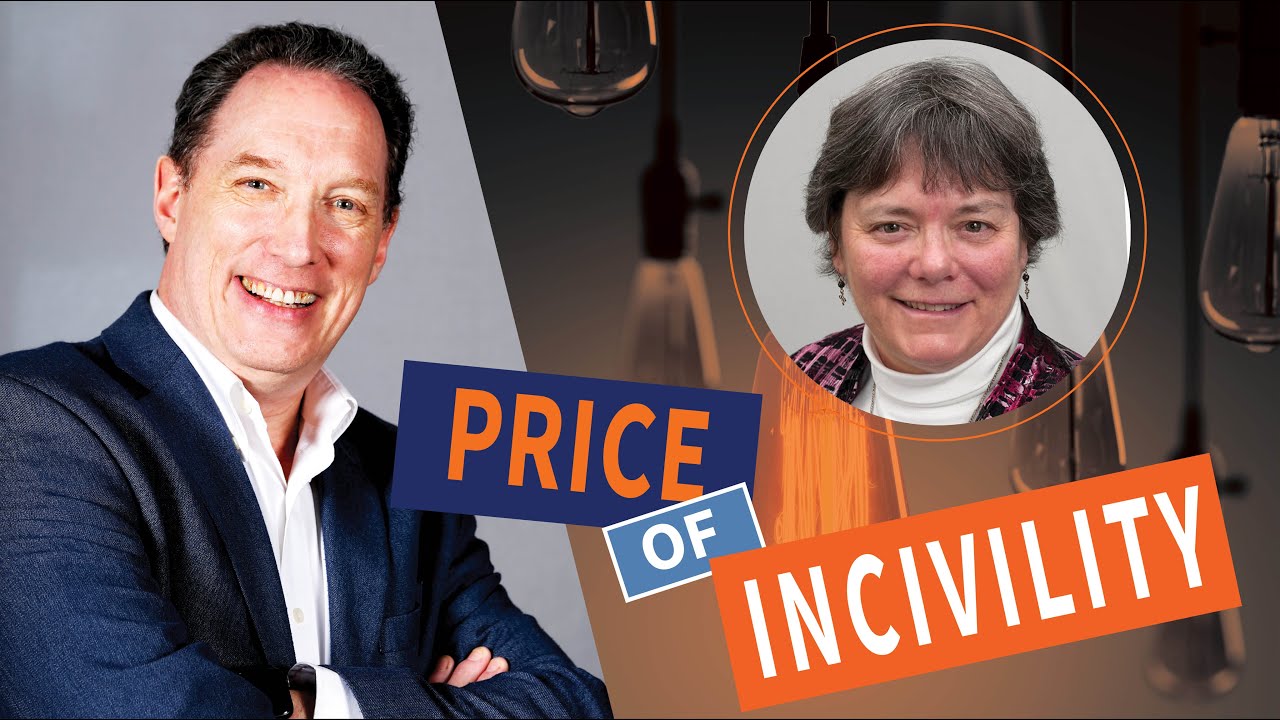
Ruth Surman, a workplace consultant, explains how incivility and toxic culture cost companies real money. Non-compliance with harassment laws can mean legal bills of $200-250k. She outlines how to spot the problem through surveys and audits, then fix it with clear expectations and leadership commitment.
Chapters
If you have a toxic workplace, would you know it? Interesting question, huh? According to an article in the Harvard Business Review, abusive behavior and workplace incivility can spread throughout an organization. But as a leader, what can you do to stem the domino effect and the abuse? And that's coming up next on Marc Haine Live. Welcome to this episode of Marc Haine Live. This is where small business owners and entrepreneurs pick up core skill sets to help them work on their business, not just in their business. I am your host, Service Expert and Master of Experiences Marc Haine. Thank you so much for joining me today. My guest today is Workplace Consultant, Mediator, Trainer, and Speaker Ruth Surman. And we'll get to her in just a moment. In the meantime, feel free to be part of the conversation. You can go ahead and you can subscribe to this program. I'd love to make sure that you are notified whenever I bring you some fresh content. Also, please do comment and share this post if you know somebody who could benefit. One of the biggest things you can do for anybody is when you get information that you think is valuable is go out and share it. I recently had a conversation with a Unified A uniform supplier who was so frustrated by the level of stress he had on his shop floor. He said whenever he would walk the floor, you could cut the tension with a knife. But when he'd ask individual workers what was wrong, they'd respond, nothing. And by the way, employees responding like that is like your wife responding like that. Honey, what's the matter?
Nothing.
It means danger. Danger, capital D. Watch any episode of Undercover Boss and they're always so shocked, so surprised when they start working with their staff. They come up to these realizations about what's actually going in the day-to-day lives of their workers. So that brings us to our Question of the Day. So, what kinds of toxic issues have you had to deal with in your business? What did you do about it? Again, put your comments in the comment box. The more you share, the more other people will learn from your situation. And who knows, maybe might be in the same situation as you. As I mentioned, my guest today is Ruth Surman.
Hi!
Ruth is a mediator, a trainer, a professional speaker, On the subject of conflict resolution, welcome Ruth! It's so nice to have you on the show. It's been a while since we've been setting this up. It's nice to finally have you here.
It's great to be here, Marc, and I'm looking forward to the discussion.
Yeah, before we get into today's topic, could you just tell us a little bit about what you do for your clients?
Well, my background's actually in environmental biology and chemistry. So, when I first started into the You weren't expecting that, were you? I'm also a retired turkey farmer, just, you know, so that, uh, to put it in context. Um, but when I first started into the, the full-time, you know, post-secondary, uh, post, uh, university workforce, uh, I was actually working, um, in the government in a lab, uh, on wildlife toxicology. And I got into the mediation world, um, Several years later, and I actually thought I'd left the science world behind, but I've come to realize that there's very little difference between organizational ecosystems and— or sorry, like ecosystems, like in the natural world, and organizational systems and human interactions and human systems. So the science has kind of crept back into it. So from my perspective as a mediator, I work primarily with large organizational groups. And particularly with groups where they're having issues or problems. So I don't do divorce mediation. There actually isn't any amount of money that you could pay me to do a divorce mediation. But I do do a lot of work with senior leadership teams, with CEOs, employers, and their management teams, and also with the employee groups on how do you create workplaces where people actually want to come to work, and where things like loyalty and retention are less of an issue than they are in the normal workplace.
Yeah, yeah. You know, being a business owner at the best of times, or even a manager is not easy. Today though, it seems like we get more and more reports of incivility in the workplace. And it seems to be really at an all-time high. In your experience, is that the case or are we just in a position where we're just hearing about it more?
Well, I think it's important to recognize that things like harassment and discrimination and codes of conduct and all that are relatively new when it comes to the work world. Much of it started back in the 1980s after, you know, complaints started being filed that ended up going through the Canadian Human Rights Commission, provincial human rights commissions, ended up in the courts, ended up at the Supreme Court. And one in particular, and I really want to get into legal precedents, by the way, I'm not a lawyer, but one in particular gave employers the obligation, the legal obligation, to provide a workplace that's free of harassment. And that sent shockwaves. Through the work world back in the 1980s because all of a sudden there was a financial potential cost associated with not having that. So some employers jumped on the bandwagon and said, this is great. You know, we recognize that happy employees are going to be more productive and likely to stay around longer, which deals with the retention. And other employers came on board more grudgingly in terms of, well, I don't really want to get I don't want to get stuck with a very large bill, so I'll do what I have to do. So you get compliance on every space on that continuum, from full integrated compliance right through to the other end where you've got very grudging or even very limited compliance, shall we say. In other words, we'll do it if somebody's watching, but we're not really going to get involved with it anywhere else. But at the same time, we've also raised generations of kids Where they've been led to believe that they have the right to say no, that they have the right to, if they're uncomfortable with something, to speak up. And so we have generations of people coming into the workforce now with very different expectations than what my generation had when we started. Basically, I remember my dad telling me when I got my first job, you know, your boss is just like your parent, and if they tell you to do something, then you do it whether you want to or not. Now, that's not what we tell kids today. And so, there's been an evolution both on the legal end, on the policy end, on the management end in terms of what managers expect from employees. But also on the employee end in terms of what employees expect from their bosses and from their workplaces.
Yeah, and I've seen situations where even today, where owners or managers shrug off issues thinking that It's a one-time thing and it'll go away. And issues that come up, that come to mind right now for, I mean, in our news, we've had it with the Governor General of Canada, for instance, where there was all sorts of issues that kind of got swept under the carpet. They're seeing it in the States now with Governor Cuomo that there were issues that people just swept away and didn't say anything. And yet, leaders would not say that they're condoning the behavior? Or are they saying that they're condoning the behavior?
Well, and part of that, that's a bit of a challenge because I think there are a couple of things. There are situations where leadership is aware that there are issues and choose to ignore it or minimize it. Maybe they don't see it as a challenge or a problem. And there are other times where people may be, I was going to say blissfully unaware, or on the other end of that spectrum, willfully blind, or, you know, choosing not to look, where they're aware it's going on, but they absolutely do not want to acknowledge it. And we're seeing that in the media as well. We're seeing it with police forces. We're seeing it with the court system. We're seeing it in businesses and organizations on a number of levels, and it's not always related to the isms—the racism, the sexism, you know—and so on. Sometimes it's double standards. Some employees in the workplace can get away with pretty much anything, and other employees would be targeted disciplinary-wise for any minor infraction. And so you've got very, very different expectations and very different levels of enforcement of policies and procedures. and protocols and codes of conduct and so on. And, and that becomes a problem. That's a major problem because there's this mixed message then that says it's okay for them, but it's not okay for you. And that can lead to some very challenging dynamics. You know, have you ever met a disgruntled employee?
Yeah.
I don't know too many employers who won't say that they've had a few frequent flyers coming through their office on a regular basis, for lack of a better term, that are either self-selecting to show up in the office with another, you know, yet another complaint or yet another concern. And those who may be, you know, the equivalent of being sent to the principal's office by the frontline supervisor or so on, that says, you know, like, you're late again, you know, you need to go and talk to the boss. And so then we have this dynamic where we've now got people within the workplace where they feel they're being selected, they're being targeted. Now, that's not to say that they may not have performance issues. We've all met employees, as you know, as employers, we've all met employees who didn't quite live up to the expectation around level of engagement, level of performance, Mm-hmm. Quality of the performance, and so on. I mean, that's, that's just the reality. You've got that whole spectrum. Where it becomes a problem though is when there's a double standard and the expectations are either unclear, or they're clear, but there's a selective level of enforcement.
Yes.
And that can become, and it's crazy-making. For people, quite honestly. And in the short term, there may be some benefit to the organization in that. If you have a top salesperson, for instance, and that top salesperson's approach to being the top salesperson is to walk over the rest of the team, in the short term, that may actually provide you with some pretty solid income. Your cash revenue stream may be very good from that person. The challenge is in the medium and long term, the rest of the team has been thrown under the bus.
Right.
So, what if that stellar employee leaves?
Right. And you know, it's so interesting. I just had this conversation with another manager in a different business. This idea that your top performer could be the top performer at all costs. And the damage that your top performer creates could actually be costlier than the revenue they're generating, especially when it comes to labor turnover and that sort of thing?
Well, I actually had— I was working in an organization, a very large organization. And I was doing what's called a workplace assessment, which is when we come in and we do comprehensive data gathering exercise. And because we're coming in from external, we don't have any vested interest in the outcome. And so, people tend to be more open. to talk.
Hmm.
We put some pretty strong provisions in place around confidentiality and so on to try and make it as safe as possible. Anyhow, I had one staff person who looked at me and he said, oh, I'll call him, I don't know, pick a name, Bill, Joe, whatever. I'll call him Joe. You want to know how Joe got to be the top salesperson? Ask him to lift his foot. And I thought, well, that's a little strange. And this person actually sat there, picked up their foot, and said, just take a look at the bottom of his shoe and see the faces of all the people he's walked on to get where he is.
Yes.
And that was a very graphic visual of the kinds of interactions that Joe was using in order to be the top salesperson. So, if your organizational culture is built on competition, then you're gonna have winners and losers.
Yes.
I mean, that's just the way it's set up. If your organizational culture is built on none of us is successful until all of us are successful, then you've got a more collaborative culture. And if one person leaves for whatever reason, you know, gets ill, takes another job, moves on, gets promoted, whatever, the rest of the team is, is capable of picking up and keeping things going. The competitive culture can be a challenge because you may have an individual who is getting a lot of attention. But if they leave, what about the rest of the team? They've kind of been left in the shadows or in the weeds. And they aren't necessarily able to step in and maintain the same kind of results. And then, that's a problem.
The question like, so we've mentioned leadership. We've now mentioned, is this a leadership issue, an HR issue, or is it an organizational issue? At the crux of what we're talking about.
Yes.
Yes, it's all 3.
It's all of those, Marc, and it can even be more sometimes. I think it's critical to realize that when you talk about organizational culture, there are a lot of moving parts. So first off, where did your organizational culture come from? And what's in it? Because most of us really don't know. So if you think about times when you've started a brand new job, and I say to people, what's the first thing that you want to do when you start a new job? And people will think about it, and they'll think about it, and they'll go, well, I need to get out whatever projects that they've given me. And I'm thinking, yeah, but that's actually about step number 3 or step number 4. The first thing that we want to do typically is find out where the washrooms are and, you know, where the lunchroom is. And the second thing we want to do, and we start it right after we've walked in the door, actually right after they've They've offered us the job is, what's it like to work here? Now, in some organizations, they'll give you an orientation manual. What they don't give you is the real orientation manual. What they don't tell you is, what are the unwritten rules about working here? What do you talk about? What do you not talk about? Who do you go to if you've got questions? What is it safe to, to discuss? You know, like, if you have an issue or a concern, do you raise it or not? And if you raise it, who do you raise it to and how do you frame it? Because there are some organizations where it's, it's safe to ask questions, and there are other organizations where, quite honestly, it's what I've had so many people over the years tell me is a CLM, a career-limiting move.
Right.
You know, you see something you don't like, Well, not your problem, not your, not your challenge. Shut up, do the job that you were hired to do, keep your head down, cover whatever part of your anatomy you feel needs to be covered, and collect your paycheck and go home. Now, if I gave you the choice of that kind of an organization, or the kind of organization where they're saying, you know, we make mistakes all the time, And when we make mistakes, we endeavor to learn from them, and we endeavor not to make those mistakes again, and we move on. You know, which one do you want to work for? The one where if you make a mistake, they're going to come looking for you, and there's what I would call a finger-pointing and blame-storming culture, or the kind of, of learning culture that says we're inevitably going to make mistakes, we're inevitably going to have failures. What we don't want to do is have the same mistake or the same failure twice.
Yes.
As my grandmother used to tell me, there are no shortage of mistakes that you can make. And you only fail if you don't learn from the mistake or the failure. That is the true failure.
I'd like to discuss some symptoms the audience should be aware of if they have a stressed workplace environment. We'll get to that right after this.
When the spotlight shines on your business, are customers applauding or yawning? In other words, how is your business performing? Make your business a Welcome back. I am speaking with Workplace Wellness Champion Marc Haine. Marc, welcome back. Thank you, Marc. Marc, you are a star with a new book, Lights! Camera! Action!, Business Operational Excellence Through the Lens of Live Theater by Marc Haine. Marc uses his business and acting experience to help you see your business like a live show so you can create a performance your customers will never forget. Buy Lights! Camera! Action! today at your favorite online retailer or directly at marchaine.com.
Workplace Consultant and Conflict Resolution Specialist Ruth Surman. Ruth, this is really interesting because I think everybody listening to this will have experiences in conflicted or conflict within the workplace. And in fact, you were talking about this idea about starting up as a brand new employee. And I, in my book, actually talked about a situation where a reception position kept turning over all the time. And her boss Couldn't understand why. She says, I treat them like gold and I don't know why they keep moving on. What she failed to realize was the life and times of that reception person. The first 3 months, she was always holding hands, really supporting that reception position. And then, when she figured, okay, she's got it all figured out now. I can back off and do my work. She would leave the receptionist alone. And all of a sudden, all these other people are coming in telling her what they needed. You know, one person wanted, hey, if somebody calls for me, then please text me. Somebody else is saying, hey, no matter what happens, if I'm in a meeting, don't text me. Don't nothing. And all these people had different criteria. And of course, when she's there texting on the phone, texting the message or whatever to the person in the yard, her boss comes out and goes, oh sweetie, you're not allowed to have your cell phone at work. Right? So, all these different conflicts were coming up at her. But It was something that her manager couldn't see. So, are there indicators or warning signs of a toxic workplace that owners and managers should be aware of?
Well, I think you've just identified one of the very first ones is that we often make assumptions. And we take those assumptions and we elevate them to the level of fact. If the boss had said, are people asking you to inform them? You know, when a call comes in, if they're not available, and the receptionist had said, yeah, I've got some people who want me to and some people who don't, and I'm, you know, it's driving me crazy trying to remember who's who, or, you know, what the instructions are for each person, then the boss would have been able to put that into context. Being told to put your cell phone down, and my question would be is, why is the receptionist having to use her personal cell phone? to text people at work, you know, is, is there something here that needs to be addressed? So, there are a number of indicators. When organizations do anonymous employee surveys, take a look at the results. Now, hopefully anonymous actually means that. I have had situations where it turns out that anonymous wasn't as anonymous as as the word implies, and when somebody had registered dissatisfaction, management came back to the individual who had filled in that anonymous survey and wanted to know why, why they had put down the response that they had put down. And now, what I got from the employee is, I'll never tell them anything again because I don't trust them. They told me it was anonymous, And it wasn't. So I think there's, there's a couple of key things. One is, are there mixed messages? Now, here's the thing. If I'm the one giving the message, I may not realize that what I'm saying is not consistent with what I'm promising. So a lot of it has to do with optics and messaging. What is it that employees are actually hearing? And what are the optics that they are seeing from the way situations are being handled? So, for instance, if you're in a staff meeting and somebody makes a slightly less than acceptable, shall we say, comment about, you know, for instance, if you've got somebody who stutters, or a report didn't measure up to somebody's quality level that they were expecting, and somebody says, oh, you know, we certainly expected something better than that, in a staff meeting where there's a bit of a— of derogatory kind of tone to the, to the comment. Now, most managers have been told that you, you praise in public and you counsel or reprimand in private. And so I know a lot of managers, I meet all kinds of them, who would then leave that comment because they didn't want to address it in a public forum of the meeting, and they would wait and address it afterwards by saying to the person who'd made the comment, you know, that was, that was unacceptable, or I don't want to hear any more comments like that. But what's the message that everybody else in the meeting gets when nobody says anything?
Right, right.
It's acceptable, and that may not be the message people are trying to say. My take on it would be, if, if somebody is making a comment like that in a public meeting, then you have to address it in the public meeting. And it can be as simple as just saying, could we please keep our comments professional? And then pick up, and then you look at the person who has made the comment and say, I'd like to see you right after the meeting. And then pick up the agenda and get right back to the meeting. That's all you have to say. Now, what's the message that other people get? That nips it in the bud. And then, and then there is no mixed message around what is, what's being, what the expectations are and what is being done.
Right.
Now, the manager will never go back to that group and say, oh, by the way, I put a letter of reprimand on so-and-so's file. That would be totally inappropriate. But the message is still there.
Sure. And very simply, and it's done in a way that's cordial and respectful without having to border onto the incivility part of it and calling people out in public. So, that works out really. Ruth, this is really interesting stuff. If the audience, any member of the audience wanted to get a hold of you, How could they reach you if they needed to use your services?
Well, the easiest way is just to go to the website. So, www.canmediate.com or ruthserman.com. They both get me. Or they can phone me, 613-298-8105. That gets me pretty much anywhere. Happy to have those conversations. I also had an audit for people that they could do where they could, and I'm hoping we can offer that to people here, where they can actually go through, and there are some rather thought-provoking questions in the audit. I would invite people to be brutally honest with themselves in terms of when they fill it out. You know, if you're not sure, then put a maybe.
Yeah.
And take a look, and at the bottom of the audit, there's all kinds of contact information there as well.
Terrific! You know, it's so interesting this idea with like, I don't know with your experience. But I know that I go in. I get hired in as a secret shopper sometimes to go in and assess kind of the client experience. And when they get the report, they are absolutely furious. I mean, we talked. I talked a couple of times. We've had a couple of episodes of the podcast where we talked a little bit about that. When it comes down to somebody doing the self-assessment, How much of getting their staff involved in that assessment, how important is that?
It's critical if you actually want comprehensive data. But how you do it matters. So, most people are reluctant to speak openly and honestly to their boss about what they see going on. And that's why when we come in, it's all done through us. So, for instance, I've had people take the audit that, that I have for listeners today and give it to all their staff, but they don't send it back to the boss, they send it to me. What the boss gets is a compilation, and that means that they, they have no way of knowing who or even what departments filled in different responses, and it's a good place to start. Mm-hmm. The challenge is that when the assessments or the investigation in terms of what's going on is being done by anyone internal, and that includes HR, it includes organizational development internal consultants, anyone who is perceived to have skin in the game, for lack of a better way to put it, or is attached to the organization, then people will filter what they say. And that's particularly prevalent even in exit interviews, if you're doing it with anyone who is part-time, student, casual, contract employee, anyone who doesn't have the security of a full-time substantive position. And so, if somebody wants to get rehired, even in an exit interview, it's unlikely they're going to be honest about what they have put up with.
Mm-hmm.
And I've had people disclose to me horrendous situations of microaggressions around sexual harassment. You know, comments, jokes, being subjected constantly to blonde jokes or racial slurs or demeaning expressions and things that people have said. And that's the norm of their day, but they're not. And they'll look at me and say, I'm, I'm not, I'm not talking to my boss about that because, you know, that would just put a tattoo on my forehead that says problem employee and I'll never get a job. And when, you know, I'm a student, I'm graduating next year, I would love to be able to come back here. This is my dream field to work in. This is what I want to do. And I won't get hired if the perception is that I've filed a complaint. So even when recourse options are in place, like complaint processes and so on, people are often very reluctant, and, and justifiably so, to use them. And it's not just retribution from management. There's also horizontal retribution that comes from colleagues, and that's actually even harder to deal with than it is when it comes vertically from, from the hierarchy.
Yeah.
Sure.
As a manager, if I ever heard that an employee didn't feel comfortable enough coming to tell me a problem, I would like— it would kill me honestly. Because all the environments I've ever created was open, honest, a lot more collaborative. In fact, I was always shocked when somebody called me their boss because whenever I describe my relationship with them, it's like, oh, I work with Steve. And so, is there an exercise or is there some way that a leader or a manager could look at a situation and say, I have to pull up my socks here and I have to become more approachable? Is there some way for— is there an indicator that is out there that somebody could look and say, I need to work on my leadership?
Well, and there is part of the challenge. That's one of the toughest areas is that if I am actually part of the problem, I am likely going to be the last person who will either realize that or acknowledge it. And because I'm the boss, most employees, if that's the environment that I've created, would see pointing that out to me as being the ultimate career-limiting move. So, part of the challenge is that leaders need to be willing to be brutally honest with themselves. And there are some indicators. For instance, you know, what do you read about your company on social media? Sometimes, that's the best exit interview that you're going to get because especially if people don't want to come back, sometimes the comments in those negative reviews actually have some validity. Now, whether you have access to them or not, whether you know them or not, that's another whole thing. It's not always filed as a Yelp review. Sometimes, it's somebody's personal Facebook post. But the reality is that the patterns will be there. And for somebody who's essentially fly on the wall talking to a whole lot of employees, it will show up fairly quickly to somebody who is looking at the bigger picture. But I've had lots of managers who've said, I can't believe that's the way I come across. And part of what we have to realize is we all have a vision of ourselves. And that vision of ourselves is usually the more complimentary version of, you know, I'm professional, I'm competent, I'm kind. Now, if you were to ask my kids how they would describe me as a mom, those are not the words that they would have used when they were younger. I was regularly told I was the meanest mom in the world. I was regularly told that I wouldn't let them do anything. You know, like their experience of me was very different than how I saw myself. And the same applies in workplaces, that every single person there has a vision of who they are. How many employees believe that the whole organization would fall apart without them? Even if they're the ones who require some performance counseling, it's like asking people how good a driver they are. You know, we've got a lot of stellar drivers out there, but we seem to have an awful lot of accidents. And so, you know, when it comes right down to it, for leaders, there is a, there is a need to be self-reflective. There is a need to, to recognize that there may be areas where improvement would would help. And part of that is that if that's the case, you can't be the one asking the questions because chances are if that's the dynamic, you are not going to get accurate information that you can rely on. And so, if you then believe the filtered information that you get, then you're operating with a false data set.
Right. Well, you know, and I would really like to dig into some some actionable strategies that business managers can implement right after this.
When you're delivering an important speech to a huge audience, it's easy to lose your place or go way over time. Give yourself an advantage with the Pro Speaker Presentation Speech Timer app. No more checking your watch or calling for time. The Pro Speaker Presentation Speech Timer app keeps you on track with easy-to-see timers, even changing color for visual prompts during your speech. And you can set audio cues to practice or set it to vibrate so you don't even have to look. Be the pro you know you are. Download the app at speakerpresentationtimer.com.
So Ruth, in past episodes, we've talked about dealing with some workplace conflicts. But what can leaders do now to not condone incivility? Because this is kind of the seed that we started today. It's one thing when things happen. But They need to have strategies, I think, to make sure that in this business, we are not going to condone incivility. We're not going to condone bad behavior in this workplace. What strategies can they initiate as they get off this podcast?
Well, I think the first one is to recognize that the evolution of what's acceptable and what's not acceptable in the workplace is an ongoing dynamically complex situation. You got to stay current. So if you're brushing off the MeToo movement, if you're convinced that there's no such thing as racism in your organization, or so on, the first thing I would do, I would say, is take a big step back and say, I need to understand what other people's experience is. So if you're spending more time saying it's not going on, then maybe it's time to, to look at what other people's experiences. And again, You know, organizations also have those 2 diametrically opposed views, how they see themselves and, you know, how other people experience them. And you won't know until you actually get some honest feedback what it is that other people are experiencing. So the first one would be educate yourself. The second one is to, to really take, and again, it's one of those brutally objective looks at, are the expectations clearly articulated in what, in terms of what is considered appropriate? And is what's being put out there as the policy, is it current? Because, you know, when I first started in the work world, there were no harassment policies, for instance. When they did get harassment policies initially, they only covered sexual harassment. And quite honestly, Marc, they didn't protect you.
Right.
They only protected women. Those were the first ones, because sexual harassment was something that was considered to have been done by a male supervisor or colleague to a female subordinate or colleague, and anybody else wasn't covered. So, there was no protection if I harassed you, even some of the rather glaring situations that have happened where it's women who've been the, the initiators of it. And we do have a bit of a double standard around what how we expect the policies to be applied, but that's another whole conversation. So, you know, if you're not current on, for instance, what abuse of authority means, if you're not current on what microaggressions are in the workplace, then it's time to get educated, because you can't, you can't support a workplace to avoid those things if you're not fully aware and understanding what it's like for the people who are being subjected to that. Does that make sense?
It makes perfect sense.
I think that's probably the biggest learning curve that most organizations are on right at this moment because of the murder of George Floyd, because of all of the media attention that has been on the treatment of women, Uh, you know, you look at, at what happened in, um, with, um, the media industry, like the film industry and so on, in, in the news a year or so ago. All the things that have not been discussed, those have been going on for decades and decades and decades and decades. So that's exactly the kind of situation where you've got a toxic environment that hasn't been acknowledged and it hasn't been dealt with because the people who knew about it were ignoring it.
Sure.
For lack of a better term. Um, and in some cases there was a certain level of willful blindness, and we still have it. And even what we teach in schools has changed. When I went to school, I was taught that Canada was— we were the heroes, we were the end of the Underground Railroad. People were striving to get to Canada to escape slavery.
Right.
Nobody told me Sir John A. Macdonald owned slaves. Nobody told me 2/3 of the Fathers of Confederation owned slaves. We didn't get that in school. We were the heroes. So, we have to understand that some of what we've been taught is not necessarily an objective look at what's going on. And I think those blinders are starting to come off, and I think we're in for a bit of an interesting change in terms of what is acceptable and what isn't, both at a societal level but also at a workplace level.
For managers who might be watching this and thinking, I have to make a change. My turnover is too high. I know I have a problem. I'll bring somebody like you in or I'll have a brainstorming session with Marc to take a look at culture, something along those lines. And they want to instigate change. What kind of pushback do you think that they can expect when they try to do these cultural shakeups to make their businesses more inclusive, to eliminate kind of this perception that supervisory equals power, right? What have you seen in the workplace when you've tried to initiate these kinds of initiatives?
Well, it's always interesting because organizational culture has a tendency to have a life and an energy of its own, and it will persist long beyond the tenure of those who have created it. And, you know, it does evolve, but in mediations with groups, I often put an empty chair in the room, and that's the chair for the organizational culture, because you can't ignore it. And it's important to recognize What some of the dynamics are that are going on. So you can expect pushback from some of your employees. You're going to have some employees who are going to jump on the bandwagon and go, you know what, this is awesome, I am so glad we're finally getting to this, and we need to do this, and sign me up. And there will be other people who are doing a little bit of the, yeah, I'm not really sure about this, and they'll lean back and they'll say, you know what, I'm just going to I'm just gonna see how this rolls out and whether or not this is the flavor of the month. And if it is the flavor of the month, I'm not going to waste my time and energy getting involved because by next month it will move— have moved on to something else. And then you'll have folks who will literally do the cross-armed, no way am I doing this, and you can't make me. Now, generally speaking, when we start in to do the work, those who are the early adopters, Will, they will be the first to sign up for interviews. They will be the first to volunteer. They will be, and they will be engaged, and that's okay. It's good to have that group of people. It helps if the management team is on board, and it absolutely, you have to have commitment from senior management and the employer to do this because this is not work you can do halfway. There's nothing worse than starting into it, Getting people's hopes up, especially those who have been on the more negative end of things, shall we say, in terms of what they've been subjected to, and then having it fizzle or, or stop partway through, because you can actually make it worse. If you're not going to carry it through, then you're actually better not to start, would be my take on it.
Which is—
The people who are reluctant to engage initially, they often will come on board once they see there is a serious initiative underway. And the ones with the folded arms, sometimes they'll come on board as they see that really their audience is shrinking in terms of people who think like them. And there's usually 3 things that happen. They will either come on board, they will disengage where they're coming in doing the job, but they're no longer actively trying to win people over because there is no audience for them, or Or they'll leave. Either they're either going looking for another job where the atmosphere is more conducive to what they want, or they retire, or whatever. They go off on long-term stress leave or whatever. But they will actually leave the workplace. And you know what? You don't have to have everybody on board. But you do need to get everybody at least to neutral. If you can get them to neutral, then they're not pulling the team back. And the ones who are engaged, they will carry it forward. What you want is the naysayers not to be the anchor that's holding everything hostage or keeping things from moving forward. Right.
That's probably the explanation. Yeah, so I like the fact that you use the flavor of the month because my next question was going to be on cautionaries. But it's right there. That this is, if you're doing any kind of cultural change, then it has to be a long-term strategy, not just a band-aid on the issue. It can't just be, oh, we got sued for this. So now, we're just going to be all gung-ho about inclusivity. It has to be a strategy, long-term strategy focused on making sure the corporate culture is conducive to a respectful inclusive work environment.
Well, and part of that is that, yeah, as you said, it's not a band-aid. It's also not an effort to put a tick in the checkbox.
Right.
That's probably the one I encounter most, is that someone further up the hierarchy has said we need to do this, and we've got to have it done by the end of this fiscal year. And so, you've got all kinds of people who are looking for the superficial band-aid over the abscess that allows them to put the check in the text, or the check in the tick box.
Yeah.
The tick in the checkbox, and, and At least pretend that they've attempted to do this. And then when it falls apart, it's like— and we have a tendency as human beings to put in short-term Band-Aid solutions as a way of knocking the fire back to where it's manageable, but then assuming that those short-term solutions are going to be viable in the medium and the long term. They are not. They were never designed to be. And So, a splint isn't as good as a cast. If you've got a fracture, you can use the splint to get to the hospital. But you still need the cast on in order to actually let the thing heal properly. It's the same thing with things. You've got to look at viable short-term, medium, and long-term solutions. And that's the part that sometimes gets lost, particularly in the era of tight budgets.
Yeah, yeah, I can see that. Ruth, this has just been so amazing. It's been so good to have this open conversation about this because Typically, what we're talking about today typically is the elephant in the room. And people try to shy away from these conversations. So, I really appreciate that you took the time out today to talk to us about this. Do you have any last thoughts about what we've talked about today? Something that we haven't covered that you think the audience needs to know?
I would say, don't be afraid of it because we often do the cost-risk-benefit analysis in one direction. Oh, if I start into this, I don't know where it's going to go. What if it What if it doesn't work? Do the planning, get somebody to help, be really realistic about what you can do on your own, and do the cost-risk-benefit analysis in the other direction. What if I choose not to do this? What if I choose to just continue the way we are? People get stunned when I suggest to them that if an employee files a complaint that ends up at the Human Rights Commission, then you're probably looking at $200,000 to $250,000 in legal bills. And I don't know anybody at any provincial or federal human rights commission who's going to come to you as the boss and say, how are you with this? You know, how's your budget this year? Can you afford it? Do you want to put it off till next year? You know, would you prefer to defer it? Or, you know, do you want to opt out? They don't offer you those choices. They give you a date and a time and say, show up.
Yeah.
And so, you know, when it comes to making a business case for it, investing the time and the energy and the money in avoiding that or minimizing the risk of that can actually be a pretty sound, solid business Sure.
It's almost like if you can't afford that, if you can't afford to do the work now, can you afford to pay it later? Right?
Well, and we are notorious for thinking that we can defer those kinds of things. And then, when it does come back and it starts creating problems for us, it's like, well, if only I'd known. And my mechanic put it to me perfectly. At one point, we were having a conversation and he said, I wish you had been here yesterday. I had a guy who came in with major engine problems. And he said, I have to put a new engine into his vehicle. He said, 8 weeks ago, I told him he needed an oil change and he told me he didn't have time.
Right.
Now, he wants me to do an oil change. And he just went, an oil change is not going to fix this problem now. 8 weeks ago, it would have prevented what he's dealing with at the moment.
Right. Well, and I also heard the adage that sometimes the best time to do something like this was 2 years ago. The next best time is right now.
My grandmother used to say, the best time to plant a tree is 20 years ago and the second best time is today.
Yes, there you go. So, to everybody out there, if you're unsure about what you need to be doing and when you need to be doing it. Now's the time to be asking those questions. Ruth, this has been fantastic.
We have conversations with people all the time around when they want to understand. You can pick up the phone and call me. I'll take a half hour, 45 minutes and talk to you about what your situation is so you can make an informed decision. More than happy to do that anytime. And particularly, if they call and they tell me that they heard this, Then, it'll be more than a half-hour conversation. My clock tends to stop on those kinds of calls.
Nice! What a great offer. So, just to remind everybody one more time how they can get a hold of you.
Well, canmediate.com. So, the word can and the word mediate stuck together, dot com. I have a link for the download that I don't know, Marc, if you can post that somewhere.
I will make sure it's in the show notes.
People can click on that and that audit will give you at least an indicator if you're being honest of what some of the issues are. Do me a favor if you're going to call me. Do the audit first. It really helps to have that as a background. It just speeds things up. And telephone 613-298-8105.
Again, it'll be in the show notes. Ruth, thank you so much. I have to acknowledge your generosity for doing this with us today. And And sharing your knowledge and sharing your passion. It's really super valuable. So, thank you so much.
You are most welcome, Marc. I don't know anybody who has ever said, I am so lucky I have the world's worst workplace to go to.
That's true. Absolutely true.
Nobody wants a lousy workplace. They really don't.
Well, and the upside is they now have you that they can call if that's That's the reality that they're living in. So, thank you again.
It's been wonderful, Marc. Thank you for having me.
Great! Why don't you let me know if this was of value to you? As always, my offer stands. If you would like 30 minutes of my time to brainstorm your business with you and your team, feel free to book yourself on my online calendar. The link is down below in the show notes. It's the one that's marked meetme.so/MarcHaine. As always, I am at your service. And if you haven't done so yet, why don't you go ahead and hit the subscribe button and ring the bell? That'll give you first dibs whenever I bring you fresh content that will help you work on your business, not just in your business. My name is Marc Haine. I hope you stay safe, stay healthy, and dare to be the exception.









