Create a Shui-t Work Environment
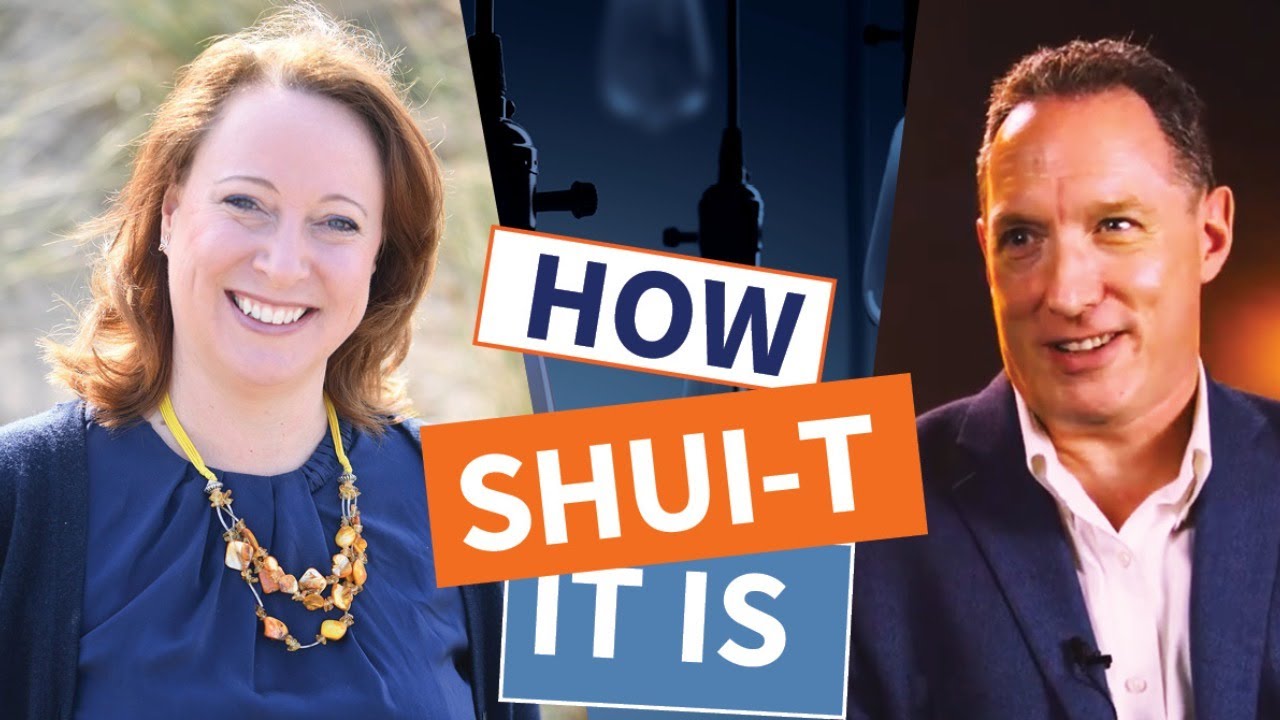
Claire Bosque Scott introduces Biz Shui, a workplace design method combining feng shui and employee experience, arguing that physical space and decluttering directly affect stress and customer loyalty. She shares a 9-by-9 decluttering challenge and a five-senses audit tool to assess how workplaces feel to employees.
Chapters
It is so nice that as we're coming out of our post-pandemic world, or coming into our post-pandemic world, that we once again have a chance to reevaluate our businesses and of course, our workplaces. But did you know that with a few simple tips and tricks to your workplace, you and your staff will be able to concentrate better, have more energy, and even be in better moods? And that's when you're delivering on Marc Haine Live. Welcome back to Marc Haine Live. This is where small business owners and entrepreneurs pick up core skill sets to help them work on their business, not just in their business. I am your host, Service Expert and Master of Experiences Marc Haine. And today, I will be speaking with Biz Shui creator and global customer service guru Claire Bosque Scott. And we'll be talking about how to pump you up and even increase your profitability by optimizing your workplace to drive employee performance and customer loyalty. And we'll get to that in just a moment. Before we dig into today's show, I just want to invite you to Go ahead and subscribe to this show. By doing so, you will be the first to know when I bring you new content. I also invite you to be part of the conversation. Feel free to drop comments, questions in the comment box here because that's how we get to share information. And that's how we get to even push back if we feel like it. You know, I have a confession to make. My home workspace is a disaster. It is. Between my work, all the nonprofit organizations I belong to, and all my pet projects, I feel that my fingers are in so many different pies. And I have to tell you, my desk reflects that in spades. And that brings us to our Question of the Day. So to you, is a messy desk a sign of a creative mind or a messy, disgusting, disorganized mind? What does your desk look like? Again, put your comments in the comment box. It'll be fun to share a little bit. As I mentioned, my guest today is Biz Shui creator and global customer service guru, speaker, consultant, and trainer Claire Bosque Scott. Now, if the name sounds a little bit familiar to you on this show, it's because she appeared on episode 34 of Marc Haine Live, episode 30 episodes ago, where we talked about measuring what matters in your customer service space. It was amazing and it was so much fun. And to have Claire back today is just brilliant. She uses a SWOT of different techniques. That was a word I used in episode 34 as well. She uses things like NLP, emotional intelligence, feng shui, which by the way, she's been studying for over 10 years, and mindfulness. And Claire works with and inspires businesses to make game-changing decisions by assessing, developing, and measuring every aspect of an employee experience, customer experience, all within the confines of your business. Claire is the author of 3 books: Thrive with the Hive. How cool is that? Thriving by Caring, and her newest release, The Secret Diary of a Mystery Shopper. Secret Diary of a Mystery Shopper. And aside from running her own training institute, she also runs individual and group coaching programs empowering people to feel happier in their environment and with their employees and customers. Claire, welcome back! It's so nice to have you.
Hi Marc! Hello everybody! Thank you so much for having me again. I can't believe it's 30 episodes ago.
That makes it 30 weeks. That 30 weeks. So, it's like really? It doesn't seem that long. It's crazy.
It seems amazing.
Yeah, I mentioned a lot of what you do for your clients. But Bishui is a brand new aspect It's a new brand that you're putting together. Why don't you tell us a little bit about what that is all about?
Sure. So, you know, I mean, when you're in customer service and customer experience and, you know, you're looking at really kind of how can we deliver that amazing customer experience. And the people who are delivering that service are key, right? If you have a happy employee, you know, he's inspired by the company, he really knows what he's doing, he's been trained properly, He's chipped, you know, he comes down the road because he's skipping to come to work. He really is happy. He's going to give great service to your customers, right? And it's not always as simple as that, right? And I just, the last decade of doing customer experience and employee experience, really kind of looking at the employee experience and how they're feeling and how those emotions and feelings in this their state of being really connect with their customers or not. And, you know, during, you know, as I was doing all that the last 10 years, you know, mystery shopping, customer service, I was also studying the principles of Feng Shui. So those ancient kind of wisdom coming from China, and I never quite really kind of told anybody I was doing it. You know, I kind of called it environment psychology or geomancy, you know, the things It's like, you know, it's a little bit more Western. It doesn't seem like woo-woo, that Feng Shui. But with the pandemic and the dramatic changes that we've had, you know, everybody suddenly has had to work from home, work from the side of a bed, the kitchen, you know, having 3 or 4 or 5 different people working in the same environment and trying to still be productive and doing your work. It's been completely mad, hasn't it? And so I thought, if now is not the time to actually come out and help those people so they can create better environment, they can feel better in themselves, so they can give that, still give that great service and, you know, still look after their customers. And, you know, it's now is the time. So I did it.
Nice. Nice. And, and so I get a sense, though, that your focus, the trigger point, of course, is the fact that we have so many remote workers now who are trying to balance their home life and their business life. I also get a sense that how I describe my home office is not a unique problem.
Well, and I think that's the thing. I was having palpitations as you were speaking, Marc. But then again, I think You know, and it is, you know, it is crucial that we understand that not everybody knows that. Okay, you don't know what you don't know. All right. Yeah, we all agree with that. Our environment, it has been researched and demonstrated that our environment will affect our state of being, the way we feel, the way we think, and the way we behave. So if you have an environment who's cluttered, Who's messy, who's not got any natural daylight, who's all dark, what smells. Well, this isn't gonna inspire you to work, isn't it? You know, you may have on your desk a messy desk with some sandwiches which are about 10 years old. That's not gonna help you, is it? So because the understanding of behind this is The energy and everything around us is energy. So when we start understanding this, that the energy coming through will affect us, and if we have an environment that inspires us, we have some pictures on the wall that, you know, kind of really give us some joys, we, you know, diffusing some beautiful essential oils and it smells nice, this connects directly with our emotional drivers, right? And you and I know that our emotions are the triggers for being happy, being— feeling good, wanting to come back. It increases customer loyalty and employee well-being. If you feel good in yourself, you're gonna feel good with others, and you're gonna share that love with your customers. It just seems so simple, doesn't it?
It does indeed. And it's funny because I wonder then, what is the impact on stress? Because even in the best of circumstances, we're running businesses. Stress can be very high sometimes. Is there any impact on how we handle the negative aspects of our business when it comes to this idea of stress threshold?
Well, absolutely. And I think a lot of people have been, the stress of the pandemic and everything just being so quick. You had time to kind of, you know, process. So your body's kind of on overdrive, you know. And, you know, I always talk about the yin and yang energy, you know, the little Tao up here, right? And the yang energy is that doing, is the going, is the action, is the go, go, go. And the yin energy is the time for the feelings, the dreaming, those aha moments, you know. It gives us that time to recharge our battery, this receiving time, the subconscious time. And if we're on the go, go, go, go, go, go, go, go, go, go, go all the time, well, you haven't got time to recharge your batteries, right? And this is when stress amounts and amounts and amounts. And this is a virtual spiral, right? This is really kind of where, you know, you can start people being sick. They cannot control because they cannot find that right harmony between the yin and the yang. They're not able to recharge their battery. They're not able to clear their head and actually be able to have more focus in what they're doing because they're just attacked with stresses and anxiety all the time. So we need to teach people to really kind of look at their outer energy, but they look after their inner energy too, and they both work together. It's really that alignment between what's going on outside will work on what's going on inside as well.
Is there anything like people are going to be watching this and I know that we're going to get into some tips and tricks a little bit later. But is there anything that people can do now to sort of evaluate their workspace? Because I mean, what you're talking about is not only the person listening to this but maybe they have an environment where they want their employees to get more positive energy.
Right. And that's the whole key, right? We talk about well-being. We talk about Wellness, and it's so important. Mindfulness. You know, we talk about resilience. Those are big buzzwords at the moment, right? But, you know, we talk about it, but do we really actually give them the time to do that? Do we actually encourage people to take the time, or do we ask them to have meetings until 5 or 6 or 7 or 8 o'clock in the evenings? And they haven't got time to recharge their battery. They haven't got time to really kind of create a work-life balance between their family and their life. And again, when you start losing that touch with your family, when you're working, working all the time, you're not finding harmony. The more you're doing that, the more stressed you become, the more anxious you become, you start losing sleep, and it's that spiral down, right? So as an employer, we have responsibilities. You know, we are entering a complete new era, Marc, and, you know, we need to, businesses need to really kind of get to the next higher level of higher consciousness. And they need to be accountable for their people, for their customers, and their environment. And that's a big thing about it.
Hmm.
You know, that really is. So let's not just use buzzwords, let's create strategies that you're actually putting in place for your employees to feel good all the time.
And it's so funny because you use the word and I was just about to mention, this sounds like this needs to be part of the strategic planning of the business.
Absolutely! It is. It's not just a nice-to-have. It's a must-have, right? If your employees aren't taken care of, They will never take care of your customers. So it's just as simple as that. A happy employee will give so much more if they feel part of their belonging, if they feel part of the company. They want to feel the love. They're spending so much time in the company. They need to feel that you generally care for them. So give them those tools. So they can really kind of really create harmony, feel that they can have that balance. And, you know, it's— I always talk about the Maslow pyramid in that environment because to survive, we all have needs, right? And to survive, we need to meet those needs. And the first need is the air, drinking water, eating food. This is our survival things, right? We need to have that, otherwise we'll die, okay? So that's it. Once you've met that level of need, you go to the next level and the next level is safety, security, shelter. This is the environment. This is exactly what we're talking about. If you have a home that you can lock in the evening and you can go to bed and feel safe at night, oh, you're going to be able to recharge your battery. If you haven't got this safety and that shelter, You know, those people, you know, unfortunately who sleeps in the street, they know that's not a great environment, is it? And, you know, how can we actually feel safe in ourselves? We're not meeting those needs. So we need to meet their needs and be able to tell your employees, making sure that they know that they've got a job, that, you know, they've got security. Those are the kind of things that really kind of get them to understand. So you can go to the next level, and the next level is love and belonging. And haven't we missed that, Marc? I mean, I'm a French girl, come on, right? I need my kiss, right? My kids are sick of me kissing them. But, you know, being part— belonging is so important for people. People want to be part of a tribe. They want to feel that they're working with you. in your business to get to the next level. They want that. So, you know, make them part of it. It's really so important.
Yeah.
And then you go to the next level. Next level is feeling of accomplishment. So, you know, tell your staff thank you. Tell your staff well done. Make some, you know, celebrate the success. You know, give them a bit of a pat on the back. Again, those are part of your strategies in your business, you know. Reward, recognition, celebrating success, ringing a bell, just as ringing a bell when something goes right. It's so important so they will feel part of it. They will want to do more because when you feel good, you do more. When you have your happy hormones coming out, you'll want more happy hormones coming out, right? And so it just, it really is satisfying all of the levels so you become to the highest level Which is that, you know, full potential, that fulfilling life that you really are, you know, you're doing what you love, you've got family, you're seeing them, you're creating harmony, you're healthy, you can eat some nice food, you're, you know, doing sports. And it's really kind of that fulfillment, which is all what we're trying to achieve at the end of the day, isn't it?
Yeah. And, and We strive and people push. And I think trying to achieve some of those successes, some of those levels on the pyramid, they actually work themselves into a tizzy because they forget that it's rooted. It's all rooted at the very bottom of the base.
Absolutely!
And so, I know that there are organizations who turn around and say, we have to put a an employee recognition program together because people are not happy. Well, okay. But you mentioned before that their safety is a core need. And that's both psychological and physical safety, obviously. And so, these aren't things that can just be band-aided.
Yes, absolutely. And that's why it's important that you are looking at when you are creating, when you are looking at your strategies as a business, what are the cores and You know, what is the most important things you need to really have and build on it, really build on those foundations? Because if you haven't got the foundations and you're adding things because you think it's good, you know, it may be good for, you know, a couple of weeks, but it's not going to be doing the work that it's supposed to be doing as a whole, as a business, as a long term. And, you know, we still need to think, you know, long term, what are you going to try to achieve as a business owner? What are your wishes? What do you want? And you need your employees to be there with you. So, it's really important to really create those really strong strategies that are going to take you a long time, not just short terms.
Yeah, you mentioned this idea of camaraderie and wanting to be with people. And people, I think, inherently need some level of contact. This pandemic of course has caused remote workers, people to be working from home. Have you seen anything that is stirring the pot here that is creating a disconnect between the employers and the workers now because there is so much remote working?
Yeah, so again, I think it's about the Zoom. Obviously, everybody's Zoomed out and I know everybody's saying that. But that's not going away. It's here to stay, right? So it's really kind of, again, it's about creating habits, creating things in your daily life as a business, as a leader, and as employee, teaching them to have habits during the day so they take the times off. They jump off their seats every hour, even if it's just a couple of minutes. They go and have some lunch outside. For a good half an hour and making them— that is part of your business, is what you want them to do because push, push, push, I come back to that yin-yang. If you yang, yang, yang, yang, yang all the time, you may just have your employees working hard for a few weeks, but at one point, something's going to go wrong and they are going to crash. And so, you know, really kind of taking care and showing them those great habits. And it can be as simple as teaching them to do a 1-minute focus minute, a 1-minute where you just, you know, close your eyes, you take that time, or you get up, you go and drink a glass of water, something that, you know, within the days they need to be able to, you know, take that break from You know, from this, and it is part of belonging. So you want to have things from also, you know, how are you today? How are you feeling? You know, how many times people ask those questions? Do you really have a strategy for assessing how your employees are feeling? You know, it's great to do an employee survey once a year, but, you know, it's just not enough. You know, you— You need to know how your employees are feeling now. So, you know, between 12 months and between, you know, every week, there's a difference, but you know, you need to really encourage those feedbacks so your employees really are becoming part of it, and you can pick up when things aren't going right, just the same as your customers. You need to ask your customers, what's, you know, is everything okay? You know, before the end of the meal, otherwise, you know, if the steak is too cooked, or not cooked enough, you're not going to be able to change it, right? So, you know, we need to do those things with our employees. So assessing your employees, checking how they are, really kind of taking care of what's important to them, them as a person. So again, personalizing, really understanding the profiles of each of our employees. And I know it takes a lot of time, but it's— you will see if you do that such a difference between Having employees and having people who are generally here, who are going to be with you on that journey, who are going to take your business to the next level. It really is powerful.
Yeah, yeah. You bring up so many good points. I mean, obviously, the scope of this podcast, I wish we could dig so much deeper into this because I think the employee experience is the one aspect that employers shove aside because they care about the sales. They care about the customers. They're so focused on making sure the customer has a great experience. But yet, they'll turn around and their number one customer, which is their employee, is completely ignored or treated badly.
Totally, totally. And it comes back to, it comes back to Beshiri.
Which?
It comes back to really helping your employees at all those levels from their touch points, from the minute they walk in through for an interview to the minute they're with you. All those strategies throughout the employee cycle really need to be put in place. Like you said earlier, Marc, it's that root, those foundations. Get your employee experience right. Get your employee feeling good. And then, everything else is going to drill from it.
Yeah. I'd love to discuss how applying some of the feng shui practices can help us thrive. And we'll get to that right after this.
When the spotlight shines on your business, are customers applauding or yawning? In other words, how is your business performing? Make your business a star with a new book, Lights! Camera! Action!, Business Operational Excellence Through the Lens of Live Theater by Marc Haine. Marc uses his business and acting experience to help you see your business like a live show so you can Create a performance your customers will never forget. Buy Lights! Camera! Action! today at your favorite online retailer or directly at marchaine.com.
Welcome back! I am here with Biz Shui creator Claire Bosk Scott. Claire, this is really wonderful. And as we went into break, a comment popped up. And so, I'd like to share it here. And it's Angela says it all boils down to empathy. Is it just empathy? Is there something more? Is it deeper than just empathy?
Well, empathy is a great word and we need to feel how people feel. And I'll go even further, Angela, and I'll use compassion because empathy is feeling how people are feeling. Being there in their shoes. Compassion, it takes it to the next level. It's not only understand what you're doing, but I'm going to do everything in my power to actually make sure that you're not feeling like that anymore. So bringing those elements into it of really understanding, listening to our employees, really doing things that if they're giving you ideas, See if you can put them in place. If you know, it's all those little things that will make your people feel part of it. You know that belonging sense that really kind of they want to do more because they know you care and you appreciate what they're doing, and you help. You know they're going to help you going on your journey in your business. So definitely empathy is a great word with it. And and what else can we bring into into our business?
Yeah, it's great. And when we first got together and you were talking about this idea that you've created this Biz Shui, my first thought was, oh, it's like Feng Shui and it's like moving furniture around.
Right.
But for those that embrace principles, I get a sense that it goes— I mean, we've been talking about it. It's so much deeper than just, okay, I'm going to move my desk from here to there. Now, I'm in balance. So, it's much more than that. For those that embrace principles, what kinds of improvements have your clients realized by taking some of the philosophies and some of the principles that you teach? What have they seen in their workspaces to change so drastically?
Well, it's not just their workspace, and that's the key to all of it. Feng Shui is about making People feel good, aligning that energy with, yes, the surroundings of the material, but with your inner energy. And I think the first thing that happens when people start shifting, you know, things around is they're shifting things inside themselves as well. So I had a client, we did move her desk, funny enough, Marc, because there is a certain position that your desk is supposed to be. So you are in control, you're in command. You see people if they're coming through the door, so you, again, your body doesn't feel like it's gonna get killed in the middle of the day. And so by just shifting some of the elements, your subconscious suddenly doesn't have to fight anymore, you know, trying to save you all day long. Suddenly your inner energy is feeling so much better, you know, so— doing those kind of things, it's aligning what's going on outside with what's going on inside. It's amazing what turning your desk could be doing for all the family. That particular client sent me a message afterwards. She said, even my children came in and they told me how much it changed, and my husband went in and he changed his desk as well. The whole family starting, you know, looking at it, looking at how they were. Because that, you know, it really changed that energy within the environment. So it's really important that, you know, you keep that energy going. We want good energy so we feel good in ourselves, right? And we come back to that decluttering and clutter. Marc, if you have a cluttered computer, what happens?
It freezes. It crashes.
There we go. You can't find anything. You're searching for it. slow, it freezes, you have to reboot it. Well, you know, your environment is the same thing, but it could be your phone, it could be your desk, it could be your filing cabinet. And not just only clutter is just making things slow, or, you know, you're not as productive as you are, but it also stops you opening up for new opportunities. So it's really important to kind of look at your environment and, you know, look at in your filing cabinets, I found an article, a magazine, Paperless Society.
The magazine was dated 1972. It's like they lied. That's the one thing I realized by cleaning up is I reviewed this and I thought, oh, they lied.
I raised my case.
There you go. See, I wouldn't have had that negative feeling had I decluttered earlier, like in 1973. No, in all seriousness, it's great. The theory, the idea of being able to have these decluttered spaces are great. But some remote workers have some very real challenges with working from home. What happens if they don't have a dedicated space? What happens if every morning after the kids go to school, they have to set up on the dining room table or on the kitchen table in order to do their work?
Well, it's exactly what they have to do. And I think that's what also we need to teach our employees is claiming their space and actually doing those habits on a daily basis. So, if you are working from the side of the bed or from your kitchen table, have a box Right? Or have a basket, and at the end of the night, you're closing everything. You close your computer, you put your pencil in that box, you finish off, you finish the day off, you're turning everything off. Not only that means that you're finishing your day, you're finishing on time, you'll stop, you know, working all day long, but you're claiming that space. Now I've finished with that, I will put it away, and now I'm moving Into my space of family, I'm claiming that space that I need to to do. If you have you know a desk in your bedroom, you know make sure that you put a cloth over the computer so you know when you're in bed you're not kind of seeing your computer or your files you know all night long because you know your mind is going to be do do do okay so those kind of things and again morning habits are really important so. If you go to work, you'll come down, you'll have your coffee, you will take your car, you will go to work, you park your car, then you go in your office and you turn the computer on and off you start. You do the same, right? You come out of your bedroom, you go down, you go and have a coffee, you bring your box with you, you go back in your bedroom, you take everything out and you start your day. You know, having those kind of— creating some really, really good Routine will really help you. And for example, if you have, like a lot of people have been, you know, working from the bed itself, okay, so the trick is, okay, please try not to work and sleep on the same thing if you have another space that you can. This is really kind of trying to keep your bedroom just for your rest, for your, you know, your rest full-time. But if there's no other solutions, at least move the other side of the bed, right? If you sleep on the left, work on the right, and, you know, maybe on the, you know, the bottom of the bed instead of the top of the bed. So you kind of, you know, you're creating, you're separating one from the other. And those are the kind of little things that you can be doing which will really help you, you know, for for really creating that space between work and between home.
Nice, nice. Like right there is so much value. Just the thought of I typically leave my laptop open. It's open and running. And so, every time I go past my office, it's like, oh, I'm just gonna check my email very quickly. Oh, I'm just gonna see who. And it's like, it makes perfect sense to shut it down, to just close it and close the lid, shut it down completely and call it a day. That's brilliant. And then, I agree with you. This idea of if you're doing it in your bedroom, it's kind of sort of like you're sleeping at work, which would be exactly how my brain would operate. If it's like I'd wake up at 2 o'clock in the morning, toss and turn a little bit, go, oh, I might as well go and check emails.
Right, exactly right. Yeah, yeah.
Claire, this is really great. How can people get a hold of you if they want to have you analyze their workspace or tap into your knowledge somehow?
Yes, so anywhere on social media. I'm on LinkedIn, Facebook, Instagram. So, you know, you can kind of find me pretty much anywhere. And obviously, my website is claireboskscott.com. So again, you'll have loads of information there. I've done loads of videos and really kind of start really sharing. So it's my little blueprint. So Be Shui really is looking at the environment, assessing first, then doing the decluttering, and then you're adding those Shui remedies, right? But then you need to look after yourself. So looking at your own state of being, How do you think? How do you behave? How do you feel? And what are the things that are blocking you? What are the habits that you have? What are the visions that you want to have? All those kind of things are important. So when you looked after the outer energy, you looked after the inner energy. Well, the last part is all about that customer experience. It's about communications. It's about employees, about team engagement. And finally, delivering that exceptional customer experience that we want to do when we run a business, increasing loyalty, productivity, and last one, profitability, of course. Yeah.
If there's no margin, there's no mission. So, I get a real sense that your take on Biz Shui is much different than the kind of consulting that's out there today. How is it different? How do you approach your customers?
Well, I think as much as I really think Feng Shui is a real secret weapon, I've been doing customer experience and employee experience for 10 years, for over 10 years now. It's 12, 13 years now. And This has never changed. My mission has never changed. It always has been to help organizations, businesses, and its people to thrive by delivering that amazing customer experience. B2B is just a new way to do that. It's just a more holistic and alternative way, an integrated way to actually deliver amazing customer experience. So, It's adding bits of what we discussed, that environment, that outer energy, that inner energy so we can feel good and deliver that great service.
Love it! I'd love to get into something that you called the 9x9 Challenge to help people get started. And we'll get to that right after this.
When you're delivering an important speech to a huge audience, it's easy to lose your place or go way over time. Give yourself an advantage with the Pro Speaker Presentation Speech Timer app. No more checking your watch or calling for time. The Pro Speaker Presentation Speech Timer app keeps you on track with easy-to-see timers, even changing color for visual prompts during your speech. And you can set audio cues to practice or set it to vibrate so you don't even have to look. Be the pro you know you are. Download the app at speakerpresentationtimer.com.
Welcome back! Welcome back! Welcome back! It's great to have you here. We are talking with Biz Shui creator Claire Bosk Scott. And Claire is just so— I just was telling her in the break, I am so blown away by how passionate she is about this.
Thank you.
We really are bred of the same cloth when it comes down to this idea of employee and customer experiences. And I do believe that we can design them. to be able to fit any number of— and people's journey as well. I talk a lot about people's journey within brands and so on. But Claire, you had something when I gave you the framework. You put this thing down called a 9x9 challenge. What is that?
Well, I think it comes back to your desk that we talked about right in the beginning.
Oh boy!
Oh boy! You may need more than 9. And you know, Sometimes people feel that decluttering is a big thing and it is really when you think about it because everything is emotions, right? You know, a piece of furniture, an ornament, a picture, everything's connected on an emotional level. So, you know, decluttering could be, you know, quite disturbing really. Even, you know, to that point, disturbing is the right word because, you know, your whole Everything is suddenly changed, or we're asking you to throw things away. And so one very, very simple way to start is 9 minutes. Is 9 minutes a lot, Marc?
No, no. 9 minutes is easy.
9 minutes is nothing, right? You can put 9 minutes in your diary every day.
Sure.
So the challenge that I'm giving you today is 9 minutes per day. For 9 days. So 9 is an auspicious number in Feng Shui in China, in China. And so being able to do 9 minutes of decluttering for 9 days will get you starting to really kind of start feeling shifting that energy. So it could be deleting some app on your phone, it could be doing one drawer in your kitchen. It could be deleting some files on your computer. 9 minutes of focused declutter for 9 days. Do you think you can do that, Marc?
I'll give it a go. You know what? I will send you a before and after picture.
Yes, that's exactly what I was going to say.
But I get a sense that this is not just for the office. You mentioned like the kitchen cabinets and stuff. I've gone into stores where they kind of lost the plot on what the customer experience looks like. And I joke. I said, there are 3 signs that the place that you're going into is a little bit sketchy. One is as soon as you open the door, the clerk behind the desk looks up from her cell phone for a split second and goes back to her cell phone. You take a look around and it hasn't been cleaned in months. And then, the third indicator is that You know, there's a little table set up in the back room and there's a bunch of cockroaches playing poker. And one of them looks up to you and goes, hey meester, close the door. And you know, it's a little sketchy. It's a place I don't know if I want to be here. But I think we lose our focus inside our businesses sometimes. And we start putting up with things because we don't have time for it now. Or yeah, it's just a defect. I'll take care of it later. But later never comes. Is there— how does one take a look at their environment maybe by applying the 9x9 challenge to be able to bring it up?
It's a good start. I mean, doing a 9x9 would be a good start for anybody to kind of look at their environment. But something that I work a lot and obviously, mystery shopping is a big big part of my business over the last decade in what I've been doing. So, you know, I want people to kind of mystery shop, do mystery shopping with their 5 senses, right? So when you're walking into your space, whether it's a retail, whether it's a corporate office or whatever, walk into your office as if you've never been here before. And use your 5 senses. What can you see? What can you smell? What can you taste? What can you touch? What can you hear? By using your 5 senses, your 5 senses are the connect driver to your emotions, right? So if you're walking in somewhere, oh, it smells nice. Oh, you've got some lovely photos, or you've got some great, you know, display. and it's attractive, you know, and you've got a bit of music in the background which makes you feel cool and relaxed, you know, this is what not only your customers will feel it, but your employees will feel it. They'll feel good subconsciously. They'll be connected at that emotional level. So you're killing two birds at once, literally.
Yeah.
By creating an environment using your 5 senses, it's gonna be helping your employees to feel good in themselves, to work better, to be more motivated, creative, and it's gonna help them delivering that great service. And your customers, wow, you know what? When they feel good somewhere, they want to stay longer, they're gonna browse longer, they're gonna touch longer, they're gonna want to buy everything, and then they're gonna come back, and then they're gonna tell their friends and family, they're gonna put it on social media, Don't we all want that, right? This is pure marketing. Pure marketing. Don't need to spend any advertising cost money. You can reduce all your costs of marketing and advertising. Start looking at what's going on in your environment. How can you connect with your customers on that emotional level?
Yes.
Very powerful.
And Anna wrote down, good morning. I can do 9 minutes a day. Thank you, Anna. I'm glad. Anna's committed by the sounds of it. But imagine per sector. I'm super close. Yeah. Talking to the employers out there is like, what will 9 minutes cost you for every employee? If you have 6 or 8 employees and you empower them to do 9 minutes over the next 9 days to figure out ways to declutter their workspace and the spaces around you to look for new eyes, I think that would be brilliant. And it's so funny that you mentioned this thing about this idea of kind of looking at your operation through the eyes of a customer. Because one of the things I have on my website is I have a customer touchpoint assessment that is actually a checklist of touchpoints. It has nothing to do with customer service. It is all by how people perceive your brand as they walk in. And so, you're able to then go ahead and check what and rate yourself. Does it need improvement?
Yeah.
What needs to be? And then, you can create basically a 30-day challenge for you and your staff to overcome some of these deficiencies, right? And it doesn't— you don't have to spend lots of money, right? I think all too often, I think all too often, employers look at stuff and they say, I just can't afford it. And it's like, but can you afford not to?
Absolutely, absolutely. And it's the same with people. Oh, I'm too busy, Claire. I'm too busy. I can't do that. You're too busy. You're too busy looking at your files because you can't find it. You're too busy, you know, looking at things around because, you know.
Yep.
Yes, right.
And people spend more than 9 minutes on TikTok.
Exactly. You know, and sometimes it's the other way around and people are procrastinating. And so, you know, they're here, but they're really not here. You know, they're present, but they're not really working or they're not performing. So again, you want to give that little bit of sparkle and you want to give them a bit of a— ignite their little body and ignite them. Make them feel part of it so they kind of start bringing that creativity and that engagement that you all want. Otherwise, what's the point to have an employee if he's here just to be there? Right, right.
This has been brilliant, Claire. As we wrap up, do you have any last thoughts about what we've been talking about today?
One last thought. Well, you know, that final thought is, you know, we all need to be the change we wish to see in the world. And that's kind of, you know, it's a sentence that I've seen a few weeks ago and it keeps resonating with me because this is what it's all about. You know, if we all are, you know, the change that we want to see in the world, you know, if we're all looking, taking our responsibility for environment, taking that responsibility Responsibility for ourselves, putting the mask in front of ourselves before we can help others. This is so important, really kind of looking at that higher consciousness and where we are and how we're taking responsibility for ourselves, for our customers, and for our people around us and our environment.
Brilliant, brilliant. Claire, this has been so great. Could you just remind everybody one more time how they can get a hold of you?
Yes, claireboscott.com or any social media. Find me on LinkedIn. You'll find lots of videos and stuff as well. So, I'd love to connect with you and do some shooey-shooey moves.
It sounds like a new dance move. But Claire, before I let you go, you have a couple of irons in the fire. You have some initiatives coming up. You said they're not public yet. But I said, let's lay the seed. Let's talk a little bit about some of the stuff that you're going to be doing What people can look forward to coming from you?
Well, you know, I think we've had such a you know terrible time staying in and you know being not being able to travel. And you know, you and I are keynote speakers, so you know our our feet are itching, right? I know it's amazing to be able to see each other like that, but um um yes, I've started planting a little. seed. And I'm looking at doing a Feng Shui, a woman in business Feng Shui wellness and wealth retreat in Dubai in December.
Oh, wow.
That's awesome.
So it's gonna be pretty, pretty cool. So it's, you know, it is, you know, I mean, we'll— I'll do one, I promise I will do one where men can come. But this one was really a bit special. I wanted to do something, you know, so the first day will be a lot more practical, business-like, you know, really kind of giving some practical on, you know, financial experience and financial planning, some Feng Shui as well, looking at your environment, assessing, developing some great strategies. And the second day is going to be a little bit more holistic. So, you know, we'll do some breathing, we'll do some yoga, we'll do some meditation. Meditation and intentions and things like that. So, it's going to be absolutely amazing. Love it!
That sounds exciting. Great! Claire, again, thank you so much. This is obvious, a passion for you and it comes through in spades. And I really appreciate that you shared this with us. And you brought huge value, I think, to the audience today. So, thank you for being here.
Thank you so, so much for having me. And we'll see you in 30 weeks then.
Hopefully, we'll do another 30 weeks.
What the heck!
Thank you so much, Claire. As always, my offer stands. If you would like 30 minutes of my time to brainstorm your business with you and your team, why don't you go ahead and book yourself on my online calendar? The link is down below in the show notes. It's the one that's marked meetme.so/MarcHaine. And if you want to get access to the Customer Touchpoint Assessment, you can go to marchaine.com. It is on the home page. You just have to sign up, get the assessment. It is a handy-dandy tool for you to be able to create a focus of looking at your business through the eyes of your customers and then rating its importance to you and see how that plays out for you. Maybe that's the first step. As always, I am at your service. And if you haven't done so yet, why don't you go ahead and subscribe to this podcast? This will give you first dibs whenever I bring you fresh content that will help you work on your business, not just in your business. My name is Marc Haine. I hope that you stay safe, stay healthy, and dare to be the exception. Thanks for joining me today.









