Customer Experience Strategies to Drive the Customer Journey
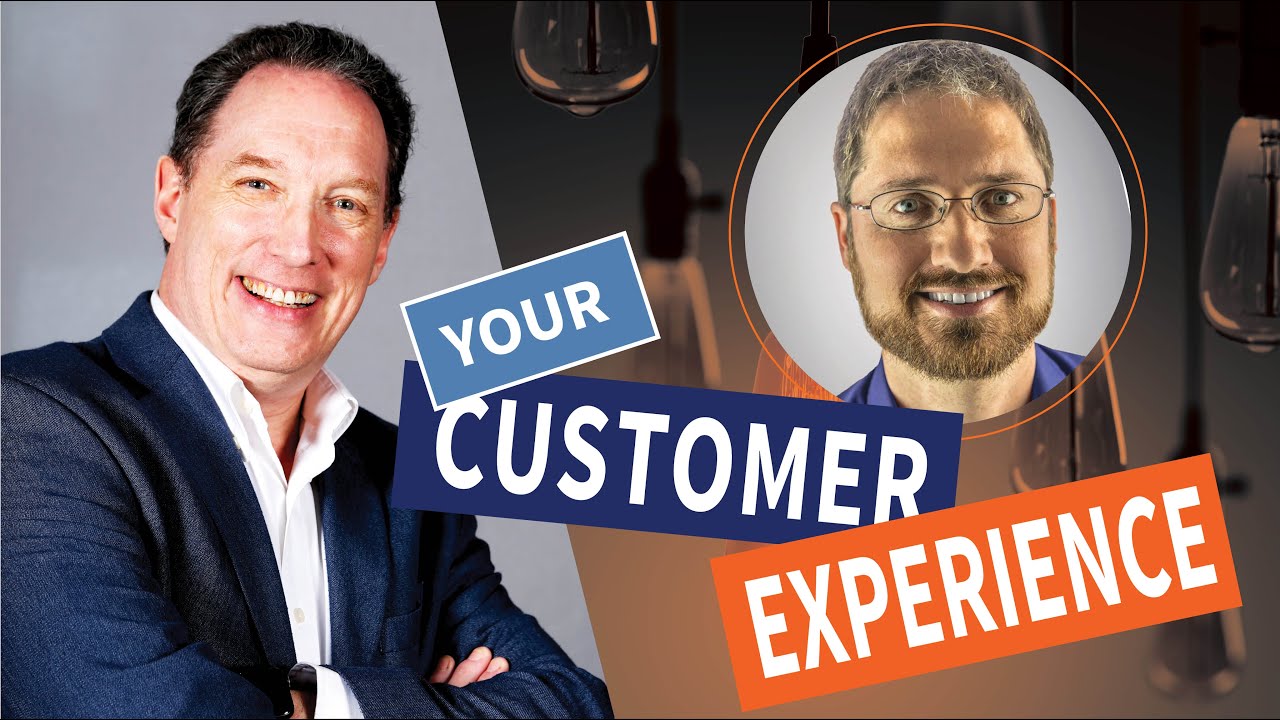
In this live‑style interview, host Marc Haine welcomes customer‑experience specialist John D. Hanson (Director of Business Development at Accelerated Revenue Inc.) to discuss why most small‑to‑mid‑size businesses fail at delivering world‑class service and how to fix it. The conversation opens with a striking statistic – only 15 % of businesses earn a 4‑star rating or higher – and quickly moves to the root cause: a lack of clear definition of who a "customer" really is. Hanson explains that the word originates from the Old English accustomed and therefore encompasses anyone with a recurring relationship, not just paying buyers. He introduces his "7 Ways Menu" framework, which categorises customers into seven distinct groups: paying‑customer subclasses (Class A, B, C) and six internal‑customer types (team members, supervisors, owners/C‑suite, vendors/suppliers, mentors/coaches, inner‑circle friends & family, and finally the self). The interview then explores practical tactics for elevating service: rehearsing excellence, recognizing staff (the most powerful retention driver), building intentional relationships with each customer type, and using "red‑carpet" experiences to celebrate Class A customers. Hanson warns against treating new frameworks as fad‑solutions; instead, he advises gathering Voice‑of‑Employee/Customer feedback, crediting contributors, and, when needed, bringing in a third‑party consultant for credibility. Both hosts stress the hero‑mindset – higher purpose plus excellence – and argue that small‑town businesses can thrive by leveraging personal engagement, even in a digital age. Hanson also promotes his new online course on Skill Builder, his upcoming website (accrev.com), and encourages listeners to connect via LinkedIn. The episode ends with mutual gratitude, a reminder to share the insights, and a plug for Marc’s book Lights! Camera! Action! which frames business as a theatrical production. Overall, the dialogue blends storytelling, actionable frameworks, and cautionary advice to help entrepreneurs redesign their customer‑journey strategy from the inside out.
Chapters
Hey, it says it's streaming live. Yay!
You know, it would be really nice if I had somebody behind the camera going, 3! Do you know that only 15% of businesses rate as 4 stars or above?
Yeah.
Only 15%.
Yes, yes.
Most don't understand their customers nor are they Before you poo-poo me, Anna, I have to ask you, how do you service the 7 types of customers you have in your business? And that's coming up next on Marc Haine Live. No, it's not streaming? No, it's not the same one. It's not the same thing. We'll give it a few minutes.
Now I'm seeing an indicator on my screen that says it's live on YouTube.
Well, you know, this is— so we're just going to go forward, and worst case scenario is I am going to be recording this for posterity's sakes, and then I will repost it, and I get to cut all this stuff out. Hey, we'll see, we'll see. We'll see where we go with this.
Like those live shows on late at night that aren't edited. They're totally unscripted and nobody can accuse me of being scripted.
Nobody. So, if you are joining us, welcome to this episode. This is where small business owners and entrepreneurs pick up core skill sets to help them work on their business, not just in their business. I am your host, Service Expert and Master of Experiences Marc Haine. Thank you so much for joining me today. My guest today is born of the same cloth as I am. You know, we hailed from like probably the same nest of eggs. He is a customer experience specialist and his name is John D. Hanson. And we'll get to him in just a moment. In the meantime, feel free to be part of this conversation. You can subscribe to this program on YouTube, or on Podbean, or on iTunes. I'd love to make absolutely sure that you're notified whenever I bring you some fresh content. So, if that means giving me a thumbs up and ringing the bell or subscribing to the feed, do what you must to get a little bit of this. Also, please do comment and share this post if you know somebody who could benefit from it. We always come across information and We then, it resonates with us. But then, we think, oh, you know what? Somebody needs to hear this. Somebody, I know somebody who could use this information. And if that's the case with you, if you kind of go through, watch this episode, you know somebody can use this information to help make their business better, then why don't you go ahead and share it? You know, back in I think it was episode 27 of Marc Haine Live, I talked about how important it was to get to know your customer. It's so important. But the one aspect we did not cover was defining all the different types of customers that we do serve, which brings me to my question of the day. A little pause because this is where I put in the little graphic and that I'm going to cut out afterwards. So, you can just imagine if you're watching this live. You can just imagine a little graphic pops up that says, question of the day. Do you have a crystal clear definition of what who your customer is? Do you understand their journey within your business? As I mentioned, my guest today is author and customer experience specialist John D. Hanson. He is the Director of Business Development for Accelerated Revenue Inc. John's mission is to equip companies of all sizes to become heroes in every human interaction through holistic consulting, paradigm-shattering keynotes, and engaging workshops. He is definitely somebody you need to listen to. He is the author of The 7 Ways Menu. It's a book that came out in 2017, John?
2018.
2018. I stand corrected. See, I'm standing correct. Welcome! It's so nice to have you on the show, John.
Thank you so much, Marc. And I will say this before we get going anywhere. If anyone has not read that book right behind you, Lights! Camera! Action!, oh my gosh. They have— I literally laughed out loud page after page after page. With how many books I read in the course of a year, if I'm laughing out loud in my office over and over again, it's an enjoyable book. And not only was it highly enjoyable, but I got so much out of that. Anybody that's in business in any department, any size company needs to get that book. I loved your book.
It is, it is a different way of viewing business.
Yes.
Right? And it was that one epiphany that I had that went, oh my goodness! If businesses could do this, they'd be stellar. Right? But before we get into today's topic, could you tell us a little bit about what you do for your clients?
Yeah. I realized that every one of us has the thirst to be a hero. We're kind of born with that. You know, the old blanket with the safety pin or maybe people don't know what that is. But a safety pin around the neck and then jump off the building. building.
Don't do that, people.
But as a kid, I'm sure those flights of fancy came to our minds where we became that superhero— Batman, Superman, Wonder Woman— not for me, but maybe for others. Things like that where we, we put ourselves in their shoes. And then it seems as we get older, we lose that thirst— unless you go to Comic-Con— we lose that thirst for heroism, and particularly in the business realm. So I took a trip to the good old Webster's Dictionary and I thought, what does heroism mean? And I discovered that it means 2 things: higher purpose and excellence. And we find that in every industry, but especially the ones that are notorious for poor service, that the ones who are really good have those 2 elements. They're actually being heroic in how they interact with humans. So my goal in especially small to mid-sized companies where we can bring about organizational change is to, through holistic consulting where it's not just my expertise but bringing in official partners that can address every slice of the business, we're going to help small to mid-sized companies, the heart and the engine of our North American economy and in the world eventually, rise to that, elevate to a heroic success where every human touchpoint is elevated to that standard. That becomes the goal so that instead of 15% of companies providing world-class service, maybe we can bump that to 25% or 30%. Imagine what a world would look like with that kind of an experience.
I'm looking forward through the course of this interview today to actually define what heroic-looking service looks like. I mentioned that the stat earlier was a stat that you provided me. That only 15% of businesses hit the 4-star rating or above. What do you think the problem is?
I think you mentioned it right at the beginning of your show, Marc. I think companies get in that rut of working in their business, which has so much in the course of a day to pay attention to and fires to put out and issues and things that you want to do well, that by the end of the week, end of the month, end of the year, you've been so consumed by working in the business that you've not had the opportunity to take that eagle's eye view and work on your business. And sometimes it takes a fresh set of eyes that are, are highly motivated to help your company be more successful. Coming in objectively, though, and saying, this is what I see fresh to your industry, fresh to your company, that I see that you could improve. I see these things you're doing well. But if I'm interacting with you for the very first time, this is my first impression, and you don't get a second chance at that. And then what things along the way can be easily tweaked so that the whole cast— I think that element of your book so resonated so strongly with me is that if you're not rehearsing what good service looks like, then it's accidentally happening as opposed to the companies that we know do it every single time because it's rehearsed. It's rehearsed excellence.
Yes. And this is where I really found the biggest aha moment with the book. And by the way, I am just going to just do the plug and say that this book is brought to you. This episode is brought to you by my brand new book, Lights! Camera! Action! And it is available on Amazon and on my website at marchaine.com/lightscameraaction. It does talk about business through the lens of live theater. It tears down what it takes to put on a great show for you and your customers no matter what business you're in. The book has just launched. And as I mentioned, you can get it on Amazon and on my website. The link will be down below in the show notes. But when I did the book, I realized this thing about rehearsals. Working in small businesses, and I'm talking about maybe 50 employees us. When I talk to owner-operators, they say, well, if I train my employees, they might leave. And of course, then I laugh and I say, well, if you don't train your employees, they might stay. But this idea of, you know, in let's say a food service operation, the new server starts in. She's experienced. She's wonderful. Great personality. And the owner says, here's your card for the point-of-sale system. Here's your apron. There's your section. Go. And I thought, what would happen if we put on a show and the actor comes in, great actor, terrific, like the right fit for the role, and you said to the actor, here's your script, here's your costume, there's the stage, we go on in 5.
I know you and I are laughing, but But it happens all the time, right?
Like, it's a ridiculous premise. Everybody who's watching this would go, well, of course, I would never do that. But then, why do we do it with our employees?
Yes.
Yeah. So, you and I connected a few weeks ago and we started talking about this idea about how businesses don't really understand who their customers are exactly. Why don't you tell us a little bit about what you've realized in your years of experience about small businesses not realizing who their customers are?
This paradigm for me was a radical shift that only happened just a couple of years ago, Marc. Again, the reason why I'm going to reference Webster's Dictionary is not because I get a cut from it or get some kind of commission every time I mention it. The hardback, I don't know if people buy it anymore anyhow. But the reason I say this is when I first started writing my first book, I promised myself if I ever came across a word that I thought could be rich in meaning, I would go to the dictionary and find out what does it mean, not just the most commonly held definition, but all of the definitions and see what kind of fresh insights are in that. Well, I've done that.
I don't know how many times.
It's been incredible. And it sourced a lot of the keynote addresses that I talk on or the books that are coming in the future. But customer was one of those. I thought, well, all right, I think I know what customer means. Well, what does it mean? Where does it come from? I found out that it's Old English, comes from back in the 1600s. It comes from the word accustomed. People you were accustomed to regularly interacting with were a customer. Talk about a light bulb moment.
It's like, bing!
I understood then that most people like myself are, are confining customers to the ones who pay us money. But if you take that definition and apply it to the fact that it's about relationships and about repeating relationships. Now, that means that someone that buys from you once and never comes back, they're not truly a customer. Someone that hits your website, comes in the door, looks around, leaves, they're not a customer either. What it means is that there's additional types of customers that we may not have identified as that, but we regularly interact with, that if we're not engaging and identifying those, then we are guaranteed to not have the level of service that we would like or that will help kind of set us, differentiate us in the space. If there's all kinds of options of your business in a major metropolitan area, why would customers choose you? Well, we find that the industry leaders do a great job. They have a recipe of identifying and engaging all these players. They may not call them customers, but when you look at the definition of who a customer truly is out of the dictionary, They do a great job of engaging all of them.
Yeah, yeah. And it's because this is the magic of what this episode's all going to be about. Because this is— we talked about you have this premise of the 7 different types of customers. And before we get into that, I just want to just have a discussion about the customers you mentioned. So, as somebody who comes into your business, buys from you once is not really a customer per the definition.
Correct.
Because you don't have a custom.
Right.
Would the mere fact that you yourself as a business operator have the custom of serving the people who walk through the door, would that denote a customer service or a customer if you are the one providing that service?
Yes, and that's where that— I think it's gotten so well worn, but that adage that, you know, everybody's in customer service. If you don't start off with what the definition of what— who a customer is, then it sounds like a platitude. It sounds like, okay, so we're all supposed to be taking care of customers. Of course, that's why the lights are on. You know, it seems like a kind of a given, but you're right. If you look at it from the side of what we should be providing, where we're supposed to be customer-focused, or at least if you want to stay in business, I think you should be. Then if you're understanding it, somehow there's this divide in our mind where we know how we would like to be treated as a customer, but then when you're on the other side of the counter, somehow or other this magic dust kind of settles in and poof, we've lost all translation of how we would like to be treated as a customer And I think it's because we get in the work mode rather than remembering, well, wait a minute, we want to build relationships where not only are we getting repeat business from these customers, especially if we, if we like them and they like us, but we also want to be building relationships with the people they know so that they become repeat customers. Because we know repeat and referral, if you can build your business off of that, you'll be indestructible. Because people can't imagine their life without you being a part of it. Yes.
Do you think— so we are in a time now. So I'm talking really pre-COVID because obviously COVID has changed a whole bunch of things. But it used to be that communities were the center of commerce. That literally, if you— like I live in a small town. We have 6,000 people who live in the small town. We have a downtown core that have very focused businesses. And when they first built the town, it used to have a movie theater. It used to have an art It used to have all these amenities because you didn't travel out of town. Even though we are 25 minutes from the nearest big city, people didn't travel out of town. And so, that relationship that you're talking about was much easier to get and to hone because the businesses were actually part of our communities. Do you think that we've lost that somehow in the 21st century?
I think so. I think it's evolved a little bit. But I would say this, I think we're going into a generation, we've made a shift where the bulk of consumers and employers are millennials and younger. And while this seems to be what they're doing most of the time, I would argue with you, not with you, but I would make the point and say that that's relationship to them. So how do you find a way, still in a small town or anywhere, where you are engaging with people? To prove a perfect point, I have more of a relationship with people on the other side of the world, meaning somebody in Australia wished me a happy birthday yesterday because they're 16 hours ahead, and my next-door neighbor doesn't even know when my birthday is, and we've lived there 8 years. Proximity does not equal relationship. Engagement does, and regular engagement. So I think small towns have the advantage— the business in a small town— because the people are already there. That's an advantage. The disadvantage is if you don't know how to engage through the medium that they're most used to engaging on, if you're not staying top of mind, then they're not as likely to darken your door. So there are some unique challenges with it, but I think if you involve people in your business plan that are savvy with this and know how to engage, you can still have the same kind of success that online. I think you can even have more because especially if everybody loves to be recognized, whether it's at work, as a customer, as a team member, if you find a way to engage them and then recognize them, know who they are, that little bit of extra effort You'll have plenty of customers because everyone is hungry for relationship. And if they can get it in person, they'd prefer that. This is just more convenient. Yes.
And that's a big difference, right? I remember talking with a small business owner who is local and she is choked with the whole internet ordering systems. She thinks that because Amazon is so easy and you can get it within the day or a couple of days or whatever, that it's creating a competition factor she was never prepared for. And the one thing in my discussion with her is the one thing that people don't get from Amazon is that connection, that relationship. They don't get the face-to-face with them when you're talking about what kind of paint do I need for my bathroom. They have to do all that research themselves. And so, they miss out on access to subject matter expertise that are available In specialized shops, right? Yes. So, yes, you know, I can understand from the retailer point of view that if you're selling, I don't know, a multi-screwdriver or multi-set screwdriver or something, that somebody could get it off Amazon and have it delivered within a few days. Or somebody could just go to the hardware, local hardware store and say, hey, I need a multi-thing screwdriver, but I want it to last. Do you have any suggestions? Yeah, I love the premise of your book. 7 Ways Menu is the title of your book and you talk about the 7 types of customers. I'm sure that people are watching this since I mentioned going, 7 kinds? What do you mean like men, women, children? Why don't we delve a little bit into what the 7 kinds of customers are?
Okay. And every presentation that I've made on this topic, Marc, they have never guessed the last one. So I'm going to do it in reverse order of how it is in our online workshop that goes through the 7. I start with the most paradigm-shattering definition of a customer first, but I want to kind of work it backwards. So within the paying customer, there are subsets. In my version, I classify them out as A, B, and C.
Okay.
classes of customers. What's interesting to find is that a Class C customer is typically the noisy wheel that gets the grease. A lot of work, a lot of effort, and they contribute about this much to your bottom line. Then you have the ones kind of in the middle, the Class B, that are— they've used your service or they bought your product and they were okay with it, but they're not a repeat. They're not a fan. They're not someone that's going to recommend you to others. And then you've got those Class A customers. just know, like, and trust you. They are regulars in your business. They know your name. They, they're fans, and they're more than likely to recommend you. If you don't identify who your customers are based on how they're buying and how they interact with you, the relationship they have with you, you can end up spending the bulk of your time on a Class C customer that's again contributing this much to your bottom line, and missing out on these Class A relationships of people that just love you, but they're getting— I made this example in my course where I said, it's like spending all your time with the arsonists who are lighting fires all around the city, and you're not spending any time with the people that wouldn't even think about lighting a match. Why are you spending your time on Class C and not setting aside time? This is where I think it comes in, the intentionality of spending time with those Class A customers or Class B that could become Class A. I'm not saying you can't take care of the Class C, but you really need to find a way to either limit or encourage them to look elsewhere if they're not totally satisfied with your service. If you've done all the fixes you can think of and they're still not happy, there's a possibility, possibility that they could be one of those customers that's, you know, somewhat high maintenance. So if you can encourage them to look elsewhere and they go elsewhere, Maybe they'd be happier there and you definitely would be happier here.
So that's one, the paying customer.
But then we go to, there are several kinds of internal customers. Again, these are people that we regularly interact with. So you not only have your team, say you're in leadership, a manager of some kind, you've got people that work for you, work with you. That's a customer. They desperately need you and leadership and engagement in order to provide the best form of service. So you've got your team that works with you, then you've got your direct supervisor. If you're in an organization that's big enough where you report to someone who else reports to someone else, they desperately need you to do well so that they are doing well in the eyes of the people they report to. That's another kind of customer, an internal one. Then you have the people that own the business. So if you've got levels of things, this would be like a C-suite role in a larger company, Or the business owner— there's the owner, management, and then you— you've got the ownership. They have a directly vested interest or a C-suite role. Their compensation and staying employed by the company is totally dependent upon how all the people of the team work together. That's another internal customer. If you're not intentionally investing into these relationships, they have a tendency to not be as healthy as they should. Another customer that gets missed, another internal, are vendors or suppliers. Think about this. Say you're a hardware store, and this supplier has just been so consistent, faithful, never misses a beat, but you've never reached out to them either because you're always fighting fires with this supplier that's never on time. Well, all of a sudden, that vendor decides, you know what, there's this hardware store that just thinks we're the best thing since sliced bread. People still think that's a great thing. And so we're going to go to them. All of a sudden, you've lost your right arm and like, what happened? How did this happen? We've never complained. Ah, but you've never recognized them for the great job they're doing. So if the only reason you contact your vendors is because you want a lower price or because there's problems, that's not a win-win relationship. So those are all internal customers. They're all types of customers. And imagine if you were reaching out to them and telling that vendor or supplier, that team member, that direct supervisor, the owner, how grateful you are that they're a part of your success. Those, I call them random acts of kindness, but I actually put it on my calendar so that I'm regularly reaching out to— they think it's random, but to me it's scheduled— reaching out to encourage. Those are the internal. But then we can take one outside of that, that people, they never guess. And there's 2 of them actually. So, outside of that, we have to take our business caps off and set them to the side. And then remember, the definition is people we regularly interact with. I call them business mentors, mentors or coaches. This is another person that I highly recommend people interact with. If you don't have a business mentor in your life, Someone not in your company, but respected and established in business or in your industry. I highly recommend that. These are a sharpener that can help you progress in your business. The mentor that I have, I'm not paying him anything. He is happy to help me succeed, just like someone— he's paying it forward to someone that helped him when he was coming up. Mentors love to coach people. A coach, on the other hand, is someone you pay. And that's becoming more commonplace. Professional athletes have a coach. Why shouldn't professionals in business? 2 more. And these are the most surprising. So remember, people you regularly interact with. The second to last one is our inner circle. These are our close friends that have stuck with us in the thin times, our family. These are people that we regularly interact with and probably interact with just about as much as at work. But the idea that you don't bring your family to work with you is just impossible. We are emotional beings, and if things aren't going well on the home front, things aren't going to go well on the business front either. Investing intentionally into those relationships, making sure that there's, there's at least some kind of balance or flow, healthy flow in between work and life. Don't neglect those customers, because how sad it would be if your business takes off And you've lost those relationships. But the most important, this is the one that nobody's ever guessed, the most important customer by far that we interact with by far the most is ourselves. And I got this light bulb moment from flying. I haven't done it since all the COVID emergence, but I love to fly. And they go through that safety demo and they get to one part of it where they say, if there's a Sudden loss of cabin pressure. The mask drops from the ceiling. Who does the mask go on first? The little kid next to you? The elderly person next to you? No, mask goes on yourself so that you can help those 2. The adage of you can't pour from an empty cup. If you are not taking care of yourself, self-care, you cannot be taking the very best care of all those other types of customers.
It starts with you.
And too many business owners, to the ruin of their own health, have sacrificed that most important customer on the altar of, I will get there someday where then I can invest in myself and my loved ones, and it never happens. So, by putting those things in the correct priority, you will— you're guaranteed to take the very best care of the paying customers because you addressed all those other kinds.
Yeah. And you know what you're outlining is really foundational. It's a natural process. I mean, look at how you build a house. You don't start a house by prefabbing the roof. It might save you time a little bit later on, but chances are you're going to run into problems, right? You got to start with the foundation of it all, right? Which of course is— and I love this. I think this is such great information because I think it changes the conversation a little bit about what is important. And in fact, it's so funny that you said that because next week, I have a business and life coach coming on the show to talk about how do we leverage our success and take care of what's important first.
Yes.
Because so many Really successful people have disruptive home lives. They have disruptive relationships. They have all this thing and there's no balance. And so, and I will tell you, growing up in hospitality, I was just as much a victim of all that as anybody else. I always thought I had to deliver. I had to push. I had to deliver. I had to push. And to the detriment, thank goodness, I have like the best wife because she is so supportive. I think other people would have left me years ago in the context of having to work all these crazy shifts and crazy hours in hospitality that virtually gave up every single evening, every single weekend, every holiday. And so, at some point, had I been smarter, I would have been able to look at that and say, there's got to be a better way.
Yes.
This is amazing information. I'm hoping people are watching this saying, wow, this is a really good aha moment. One of the things that you mentioned about the internal customers, there's this adage. I think it was Marriott who said that, take care of your staff and they will take care of your customer. And again, it goes to how we opened up when we talked about a little bit about theater versus a business. In theater, you wouldn't think of putting anybody on stage if you're not taking care of them. This idea of servant leadership came to mind. This idea that, you know, and again, I can't remember who said it, but there was a thing about if you're not serving a customer, you damn well be serving somebody who is.
Right.
So, in the role of this idea of these internal customers, I think is really important. Can we dig a little bit deeper into this idea of this hierarchy of who serves who and how you— how we can be more proactive in maintaining those relationships?
Yeah, on the internal, I think it's— I think you're able to do a little bit of a little bit. of all of them. I hope you do. I guess you could start with— if it's a whole new concept, you're thinking, I don't know how to apply this, you can start with one. But I think it's best served if you can address all of those. We just don't know how close people are to leaving us. And if the only interaction they have with us is once a year at the required review where we say, here's what you did well, here's what you need to do better, Good job. And maybe you got a bonus check, maybe you don't. If that's the only reason they're being called into the office, imagine if you can flip the script on them and they get, hey, you come to my office for a minute, Bill. And Bill's like, oh crap, what do I do now? And he comes in and they said, I just wanted to tell you in person, Mrs. Smith said she had the best experience from you. She was just buying a can of paint. You made it, you explained it to her, she got exactly what she wanted, looks great on her wall. Thank you for doing that for us. Something tangible, but to the customer, it was a huge deal. And that means that she'll come back again when she needs something in that same area or anything else because of the level of service she got. But if you're not communicating that on a regular basis, people who are taken for granted— Skill Builder had a study that showed that the number one reason why employees stay, team members, and it would be true of customers as well, or why they leave is recognition or the lack of it, not pay and not work-life balance. Those are 2 and 3. Pay is number 3, actually. So the idea that you can pay more doesn't work. The idea that, hey, we'll give them more time off, that doesn't work as well either. Number 1 by far reason was recognition. We're hardwired with that desire to be appreciated or at least recognized for what we're doing. I had a fascinating conversation with a gentleman in England Monday morning, hour and a half we talked about. And he said, studies prove that there's this thing called strokes. There's physical, there's a physical connection that makes for a positive experience. So there's positive strokes, there's negative strokes, and there's in the middle, nothing. They've proven that. And they looked, they did a study in the prisons. Positive strokes, obviously handshake, good job. That was best. Negative ones where there was physical consequence for acting up. Those people were still healthier than the ones in the middle that were in solitary with no interaction, no physical touch. They went crazy cuckoo for Cocoa Puffs because they didn't have any kind of strokes. Now imagine if you are intentionally and systematically and regularly investing into these relationships that make your business Imagine how much better the experience is going to be for everyone. And that's where you think, well, heroism sounds impossible. That's too audacious of a goal. But if people enjoyed coming to work, if your suppliers love working with you, if your direct supervisor is so happy for how you make them a success and the owner's doing well, everybody wins. Everybody wins. So it doesn't take a— together it takes more time, yes, than you were using before, But the payoff is so rewarding because of the relationships that are enriched.
The bottom line will follow.
Yeah. And this is the thing, right? When you tell people, when people talk about what they do, they talk about it in the context of making money and serving customers and their budgets reflect that. I can't tell you how many businesses I worked in. And there's this thing that every year you had to build in a 15% growth into the same-store sales. And it's like, but That's not sustainable, right? Like, you might have it but it's not. I mean, you can't just grow. I mean, it's like filling up a balloon. At some point, it's going to pop.
Right.
This idea of understanding your internal customers, the people who are working for you. In the book, if you remember, I talked about these different points of engagement. The one thing that people have to realize as well though is that these are not It doesn't. You don't figure out what motivates Steve and then that's what you're going to do for Steve through his whole entire career with you. Steve is on a journey.
Yes.
And so, his needs and his development is going to change from when he first comes into the company to when he leaves the company. And I think we have to be very sensitive to that. I'm actually doing a presentation next week called Engagealytics where I'm going to be describing kind of all these the different steps in the journey and the questions that these people have, whether they be a customer, an employee, or an association member. What are the questions people ask at every step of this journey? Because our role is to service that internal customer.
Yeah.
It's exciting stuff because once we realize it, and I know we've been talking a lot. I mean, there's a lot of talk nowadays with the customer journey.
Right.
But we have to realize that the customer journey also applies to the employee journey.
Yes, yes. Yeah, Richard— Sir Richard Branson of Virgin said, take the very best care of your people so they can take the very best care of your customers. Yeah, that, that's— it seems to be common sense, right? Yeah, but it gets missed often because it's not planned for. It's not intentionally said, we will do this, and then it's re— it's not rehearsed either. So Then it becomes just a Band-Aid or a fad that fades, a Band-Aid that falls off in the pool because it's just not going to take the licks of everyday life for the rest of their lives. I think that's also why you see churn in places. I think we'd still see it for people that are testing, like, is this a good environment for me to grow my career? They're sampling that. I understand that. It's natural. But once, if you're leaving skilled, qualified people that would be great fits to your team, and it's simply from a lack of attention or a lack of intentionality, well, I think you could address that and you would see improvement in that. So even if people left, they would happily refer people to come work there because they said, I loved it. I just had this better opportunity that came along and I wanted to try that field, that industry. People would be leaving for a better opportunity, not because they felt like I'm not getting invested here. I don't make a difference. So I'm just going to go down the road.
Yeah. Yeah. I can, you know, part of the challenge that I see is, and you mentioned it, that small businesses make up over 90% of our economy.
Right.
However, a lot of, a huge percentage of that 90% are what I call incidental entrepreneurs. They're people who fell into their business and because of it, They just do the best they can. They've never been formally trained in leadership. They've never been formally trained in human resource. They've never been formally trained in marketing. And a lot of them are struggling to find their way. Now, some of them might be watching this episode and saying, okay, I got the 7. I'm starting to understand now. But the last thing I think anybody needs is to get off this video and go to their staff and say, hey guys, I found a new way. Let's implement. Are there any cautionaries that you would suggest to people who are exploring this for the first time in this context?
That's a phenomenal question. It's one of the common mistakes that we address. So, in that course, we not only say, here's the best way, but here's some common pitfalls to avoid as you're going through implementing changes. And one thing that I say is you've got to be careful that it's not viewed as the next greatest thing How many next greatest new things have you introduced to the team in the first place? That's one. It was like, oh boy, the roll of the eyes. Here's the next fad. Let's see how long this one lasts. Everybody bets on the table. There's that response. If this is brand new and you're excited about it, that makes sense, then it's always best to ask first. Ask them, ask the customers. They call it VOE or voice of the employee. Or VOC, voice of the customer. I wouldn't be shocked if you asked for feedback from the team members that are engaged, from the customers that are engaged, that they would share a lot of the things that— the common sense approaches that we're sharing here. But instead, what you do is you credit those team members with the idea, you credit those customers, you credit those vendors and suppliers. Thank you so much for sharing that idea. Here's what we're going to do. And then you roll out a plan and then you follow back up with them and you say, thank you so much for that idea. Here's what it looks like. And you can take it even another step further. Imagine having a red carpet day where a customer that's a Class A customer gave you an idea that was invaluable for your business. You invite them in, they're the star of the show. They come in, they get a tour of the whole place, but the owner or the senior managers They get lunch where they're treated to lunch on-site or at some restaurant that's a favorite where you— maybe they've never visited or never known the whole scope of what you do, never heard the story, never got a tour firsthand. Can you imagine the impression that that would have? Because most Class A customers are centers of influence that know lots of other people. If you can engage them on a level like that, Now your rollout includes your team, it includes your key customers, it includes your vendors and suppliers that are— it's impossible for you to do what you do without them. These red carpet events where you're celebrating these relationships rather than— nobody likes change, but if you can house it in a celebration and they're brought on board where it's like it's their idea, ah, now— Everybody loves what you've done, and they don't know that you introduced change that you got from somewhere else. Or you could bring in a third party. This is where consulting— and Marc, you could speak to this even better than I can with your experience— a third-party consultant. I have proof of this in my personal life. We have been telling our teenagers for I don't know how many years to clean their room. Somehow or other, ping pong balls is bouncing off the brain there. But when their brand new coach says, If there's something you need to do, do it now, do it now, do it now. That was his mantra. They almost thought it was funny, but here was the deal. They did it now. We've been telling them till we were blue in the face to do it. Someone else they respect. Here's the thing, that third-party validation of an idea from a respected source— it's not that you aren't respected, and it's not that you don't have a good idea. It's that they know you too well. You bring in a third party, that is respected, that's an expert that wants to help you succeed, and they say the same thing you've been saying for maybe 10, 15, 20 years. You're like, I can't get people to hear what I'm saying. Third-party validation, it's huge. So bringing in this third-party consultant, that's that lack of familiarity, that degree of separation, but an established expert that can take the ideas that you have If they're smart, they'll sit down with you first and say, what are some goals you have for this business? What are some things you'd like to see change, but you just not feel like you've been able to roll them out? And then they'll work with you where the team doesn't know you've had this meeting and you've talked to the owner about what do you want to see. And then they pitch it like it's their own presentation. It's their own ideas. And the team's like, oh, those are fantastic. That's That's where the value of a third-party consultant coming can be invaluable for bringing about that.
Yeah, I learned that firsthand that when I became a consultant, automatically I gained a new credibility because I became the subject matter expert. There's something really interesting about this, what we've been talking about right now. Some business owners will be watching this and saying, that's great. That's great when you have staff. That's great when you have time. I don't have time. time and so on. But it's not that difficult. One of the most recent customer celebrations I just saw was actually on Facebook. It was a car dealer who— and it was an actual customer who posted himself standing next to his brand new truck with the sales rep in front of the truck. They took a picture of it and the dealership told the customer story.
Hmm.
This gentleman had come to us. He came to us 3 months ago wanting this red whatever that. And we thought he wanted a 2010 model and this is what we did. And today, we were able to deliver it to him. When the customer saw this post, he shared it and he says, I feel like I'm on a red carpet. I feel like I am a celebrity because of the way that these people are treating me now with the fact that I just bought a used vehicle. It's a 2010. But they're treating me like it's the biggest thing in the world.
Yes, stories. People's stories resonate. Can you imagine how many stories you can share on this device? How many people see it? Oh, it's so powerful. You can tap into stories.
Yeah, and you know, it's as simple as the business owner showing gratitude. It's publicly showing some semblance of gratitude.
Yes.
Right? And being able to do that for your customers is, I mean, that is so huge. So huge. John, this has been fantastic. Like I said, we're cut from the same cloth. And I really feel like you and I could go on forever about this and think of different ways to wow our customers, different ways to really kind of celebrate Yes. And because I do find it's extremely, extremely important and my goodness, it can't be more rewarding. Could you let everybody know how they can get in touch with you?
Absolutely. 2 ways. I mean, there's more than 2 ways. But the primary ways, if you'd like, like, okay, so this guy had a great conversation with Marc, but who is he really? You can find out. I have John D. Hanson on LinkedIn. I've got all kinds of content there. Another way is to— you'll find my contact information there. So my cell number, email, it's all there. We're unveiling our brand new website next week. So excited for that launch. New logo. The marketing team, the local marketing team that did the website for us did a fantastic job. They did a fantastic job. I'm so excited about that. When our website is live next week, a week from today, you'll be able to get us direct access there as well. That website, that's what I would highly recommend. Check me out on LinkedIn and then, once our website goes live, you'll be able to get all kinds of information on who we are, what we do, what our mission is. That's the 2 ways that I would highly recommend.
Do you have the URL for the website? For the website? Is it the same one? Yes.
It's www.accrev.com. So, we abbreviated Accelerated Revenue to accrev.com.
We'll make sure to put that in the show notes as well. And John, you were talking about these courses and seminars that you hold. Can you tell me a little bit about what you're up to?
Sure. Yeah. So, the course, it actually went live today. Today's my birthday. And so in celebration of that, I'm working with a gentleman who reached out to me through LinkedIn and we created a course on Skill Builder. It's a platform he developed that it's an interactive, kind of like a storybook process of short video vignettes along with text if you prefer to read, but in 3 phases rather than lots of video, pop quiz, all right, you're good to go. Add a 3rd element where you have to type in the correct answers. There's kinetic learning built into it. The retention goes through the roof with that, but it's designed for customer service leaders and professionals. That launched today.
What's the focus of the course?
The focus of the course is, how can customer service leaders be seen as heroes, as invaluable to their companies, especially in these turbulent economic times? Customer service professionals, customer experience professionals are on the front lines engaging customers. There's not a more valuable role in an organization. If you do it well, one thing that I've found since I've been in customer-facing roles since I was 16, we don't typically do a great job of promoting ourselves. It kind of goes against the grain, but here are some tools that I've put together to where they can position themselves so that they're promoting themselves by doing all these things that we talked about, these building these relationships where they're— it's understood clearly by their direct and senior management of the invaluable role they bring to their company, that this company not only needs to have you and recognize you, but when possible, they need to reward you for what you do. Yeah, I'm excited about that course. And then the keynote—
How do people access that if they want to find out more information?
So it's on my LinkedIn. My latest post today has that, and there's a special discount because Connected to my birthday. So for the first 45 people, because that might be how old I am, the first 45 people to take advantage of that discount.
And then we're going to have a few more specials coming out.
If someone provides a video testimonial, they take the course, they love it, they give us a video testimonial, we'll give them an additional rebate beyond that after receiving the video testimonials as a way to say thank you for letting us know. other future course takers of the value it was to them. So, um, that's gonna be the best way through that LinkedIn post today.
Okay, well, you know, happy birthday, by the way. Thank you. And I think now that you've hit 45 officially, you have to tell people you're 29 plus tax.
Yeah, I'm gonna save that one. Actually asked me— well, I'm so grateful that I still get surprised from people because they don't think I'm as old as that. If I shaved this, I'd look like a baby. So, my wife is grateful that I keep this on because it adds years. I put a little gray in there just from stress of life to keep a little reality there. But it's a great time of life. I have been connected with so many incredible people over the past few years. And Marc, I count you as being one of them that's just enriched my life and brought such great insight because the best way to add value to people is what you learn from others.
Yeah.
Yes.
I can share that with people going forward, and that just makes me feel so good to be able to learn from others and be able to bless and benefit others from what I have learned.
So, this just reinforces what I said at the beginning. If this information is good and you know somebody who could use it, Jon said share it.
Share it.
Jon, this has been so great. You know, again, you know, I am always so pumped when I have somebody Like-minded, somebody who talks about the same conditions and same paradigms that I talk about, that, you know, thank goodness I'm not on crack.
It's official. We're both crazy.
Thank you again, John. It's been wonderful having you on the show.
Thank you so much, Marc. And again, get Marc's book.
Thank you so much. Hey, why don't you let me know if this was of value to you? Go ahead, share the post, put a thumbs up, ring the bell, whatever you need to do, whatever platform you're watching this on. Anything that you can do to let me know that this is of value to you, I'd appreciate it. As always, my offer stands. If you would like 30 minutes of my time to brainstorm your business with you and your team, and your team, please feel free to book yourself on my online calendar. The link is down below. It's the one that's marked Meet Me And I will be more than happy to give you 30 minutes of you time to talk about whatever you want to talk about with you and your team. And if you haven't done so yet, again, why don't you go ahead and hit the subscribe button. Ring the bell if you're watching this on YouTube. That'll give you first dibs whenever I bring you the fresh content that will help you work on your business, not just in your business. My name is Marc Haine. I hope you stay safe, stay healthy, and dare to be the exception.









