Dealing with Angry Customers and Turning them Into Brand Ambassadors
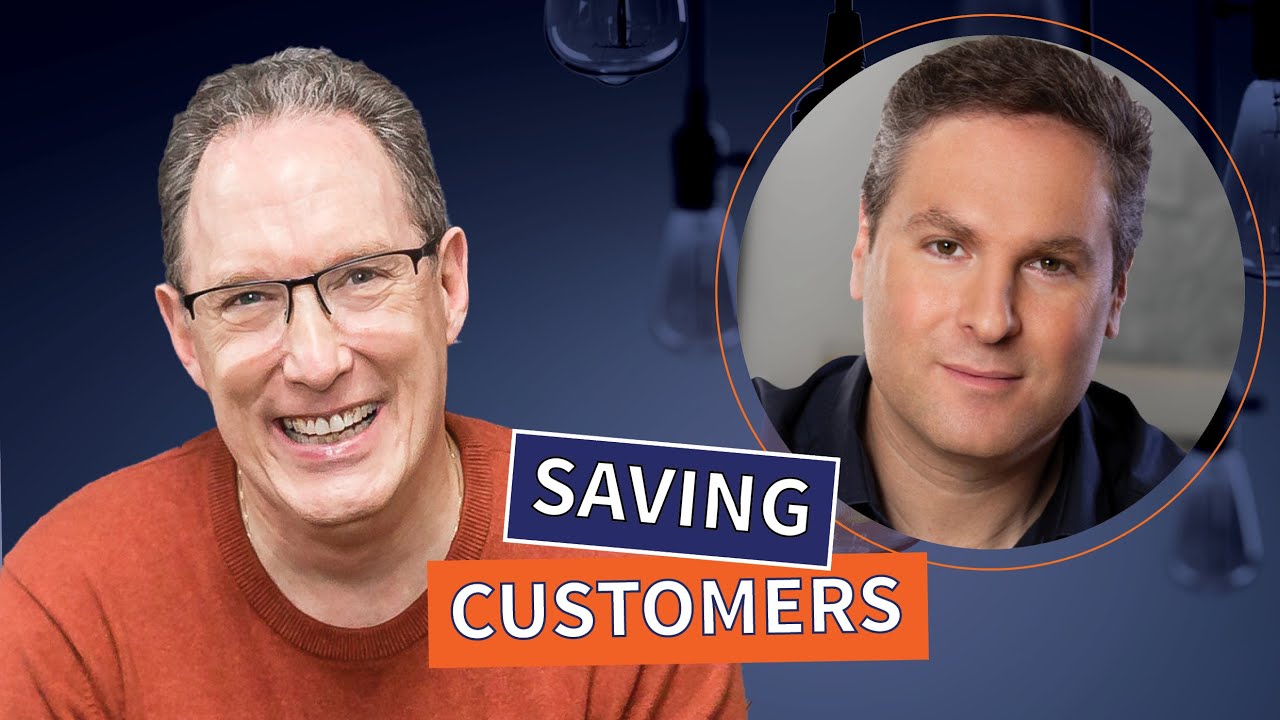
Marc Gordon explains why 98% of business owners think their service is great while only 9% of customers agree. He outlines three steps to turn angry customers into advocates: show genuine empathy, take ownership of solutions, and offer clear options. Hiring emotionally mature staff and letting frontline workers make decisions matters more than Net Promoter Scores.
Chapters
Try as you might, you can't always deliver the level of service that you want to. Or you cannot necessarily fulfill the expectations your customers have. But I have a theory. The true test of really great service is when things go horribly, horribly wrong. But how does one deal with angry and frustrated customers? Well, that's what we're talking about today on Marc Haine Live. Welcome to this episode. This is where small business owners and entrepreneurs pick up core skill sets to help them create the jaw-dropping, show-stopping experience that their customers and their employees deserve. It's almost a mouthful. It's funny that I've had to say that 135 times. I am your host, keynote speaker, and customer experience expert Marc Haine. And today, I am really excited to welcome back customer experience expert Marc Gordon. I can tell you magical things happen when you bring 2 experienced experts onto a show together and we start talking about this stuff. It's amazing! Today, we will be uncovering tips and tricks you can use when faced or even confronted With angry customers. And we'll get to that in just a second. I just wanted to reach out and say, thank you for joining us today. I know that time is our biggest commodity. And for you to take time out today to be a part of this, I think is extraordinary. And I hope you and your team do get extraordinary value from today's content. If you do, I'd really appreciate a comment or review wherever you're consuming This podcast. Years ago, I came across an interesting statistic. Now, this was back in the probably mid-'90s when I first came across this. But it was really interesting because it said that when it came to satisfying unhappy customers, 98% of business owners surveyed said that they did a fantastic job. 70% 82% of their employees said that they did a great job. But only 9% of the customers said that the response they got was adequate.
9%.
So that brings us to our Question of the Day. So, Where are you on that spectrum? As a business operator, as a manager in a business, how well do you think you rate when it comes to satisfying customers who are not having the best experience? And the bigger question is, how do you know? What are you doing to test it? I'd love for you to share your experience. Go ahead and share this episode on a social media platform that you love and hashtag it #ExperienceLeadership and put your comments down. I'd love for you to be part of this conversation. As I mentioned, this is my guest's second appearance on this show. Customer experience expert Marc Gordon, I'm so thrilled you are here. Marc is an internationally recognized thought leader in the field of customer experience. He's got over 25 years of marketing and sales experience in a number of diverse industries. And he has built a reputation for providing insightful concepts that are both innovative and hugely effective. As an award-winning keynote speaker, congratulations Marc. Marc has spoken for some of the world's most respected companies including Bausch and Lomb, Hilton Hotels, and Mondelēz. I should put you like on a screen all by yourself because with things shining off the back of your head. Marc is the only speaker in his field to have keynoted at the World Management Forum in Tehran. And he is regularly featured on television and radio for his opinions. Marc has shared his thoughts on topics that include Things like boycotting brands, customer service in the airline industry, and companies such as Facebook and Starbucks. Marc has been referred to as Canada's marketing superstar by a little-known operation called the Oprah Winfrey Network. Marc, welcome to the show. It's so nice to have you back.
Thank you.
It's not often I get to be on a show with someone who spells their name properly.
True that. It's so nice to have you back. I hope you've been well.
Thank you.
Thank you.
It's been a busy couple of years for a lot of people in a lot of industries. And I have to say, you had me smiling when you were doing that opening when you were saying things, when things go horribly, horribly wrong. And my first thought was, boy, if any business has hit that point where they're using the word horribly, horribly wrong, there's just— I don't even want to know how things got that far. But it can happen, I suppose.
Well, and it's perceptual as well. It's all in the perception of the customer, isn't it?
Right?
So, somebody not getting sugar for their coffee could be horribly, horribly wrong depending if that was your first cup of coffee or not.
Very true.
Very true.
You get to decide that.
Yeah. So, maybe you could start off by telling us, dig a little bit deeper into what you do for your clients and how do you serve them?
Well, essentially, I wear 2 hats. One is as a speaker where I share ideas and concepts and Things that businesses can do to deliver better, more fulfilling, more manageable experiences for the customers. I do it from the stage. And then, I also take on a consulting role for businesses who are like, okay, those are great ideas. And you kind of told us what we need to do. But we're not really sure how to do it or how to make it happen. Can you come on in and show us? And that's a role I take on as well. So, that's kind of it in a nutshell.
So, you're working with like Overall brands but you're also working with intact teams as well.
Exactly, yes. I'll work with a lot of departments specifically. A company will bring me in and have me speak to their call center people or the management team. For example, I'm going to be speaking in a couple weeks to a group that manufacture building supplies. And I'm going to be speaking to the sales teams because they also not only do sales but they also provide customer service and customer care and things like that.
Of course, they do.
Yeah, yeah.
The minute they say, hi, my name is, they're on the platform.
They're there.
We're constantly hearing about how bad service is in all sorts of industries, especially when you're talking just to normal Joes on the street about their experiences with different brands and that. What do you think is going on?
Well, according to a lot of studies, customer service has been going down since probably But I think that's definitely been accelerated by the pandemic. For the last 2020, 2021, into 2022, there were businesses that were closed. There were businesses operating on reduced resources. They couldn't get products. They couldn't deliver the services they wanted to. I mean, there were all kinds of external barriers that prevented businesses from functioning in a way that created the kind of experiences customers were used to. But as customers, you know, you and I included, we learned to adapt. We knew we weren't going to go to that restaurant. We were going to have to have takeout or have it delivered. And we knew it would take longer. And we knew there were certain products we weren't— we may not see on a grocery store shelf. And we knew we'd have to line up to go into a store because there'd be limited capacity. And we learned to adapt. We didn't like it, but we accepted it. And we adapted to it.
So, it's almost like— sorry, Marc. It's almost like because of the crisis of not getting good service as customers, we have changed our expectations.
Oh, absolutely. Yes, yes, we have changed our expectations. And I think this was due in large part, I think, because people were seeing the hardship that businesses were going through. You'd see someone with a restaurant who had a dining room that could seat 50, 60 people, maybe 100 people, and you saw that it was empty. And you saw that the entire business was reduced to a takeout counter. It's a little tough as a customer to go in and demand something more or something of perhaps the same level you're used to because you see that the guy on the other side of the counter, he's having a tough time paying his rent.
Yeah.
You know, he's the one working the counter because all his staff had to go. He couldn't afford to pay them. Now, of course, you are always going to end up with people who are unreasonable and still extremely demanding. And sometimes, that's because they think only of themselves. Or perhaps during the pandemic, they were just frustrated. They wanted that tiny sense of normalcy. And they would look for it anywhere they could. And if it didn't present itself, they would lose it. It wasn't necessarily against that business. But that business just happened to be the catalyst that made them a little crazy that day.
The pandemic aside because of course, the pandemic was unprecedented on many different levels and in itself created new sets of expectations and what would work and what doesn't work. Taking that out of the equation, should business operate or should customers care about what the business operators are going through? Like I do. I've heard many times where the justification for bad service or for food that's not 100% or products off the shelf is they start blaming kind of the situation. It's not my fault. I can't get good staff. All my staff are late. And they start pointing fingers at issues. Should the customers really care?
I would say most likely not. In most cases really, the customer— not only should the customer not care, but the reality is it's really not the customer's business. All right? When you and I or anybody walk into a business, And we order something or we take something off the shelf and want to pay for it or whatever the transaction looks like. We want to be able to do it in a way that is easy, convenient, and stress-free based on our previous experiences with that business or other businesses like it. And we don't care if they're short-staffed.
Yeah.
We don't care if their suppliers are raising their prices 20%. Like, we don't care. And the truth is, like I said, it's none of our business. And I would say to anyone watching this, if you own a business, you should not be divulging that information to your customers because it's none of their business who your suppliers are, what their terms to you are, how you pay for your products, how you go through your hiring process. It's nobody's business. Do not share it with your customers. And the reality is they don't care anyway. So, with regards to expectations, I think a lot of them have obviously changed over the pandemic. But now that we're out, Something really interesting has started to happen. And people have rushed back to believing that everything should be as it was.
Right.
And perhaps even more so, there should be better service now. And in many cases, businesses either can't rise to that occasion due to internal or external factors.
Yeah.
Or businesses have just lost their mojo for lack of a better term. They've lost that desire The business owners are tired. They're exhausted. Their bank accounts are depleted and they just don't give a crap.
Yeah. And to that point, when you lose the love in your business, it shows. And the customers. And it shows for the customers as well. There's a lot of indicators for businesses and for a business owner or division head that's sitting in the office that they're seeing. Maybe they're seeing slumping sales. They're seeing that the business wasn't as vibrant as they think it should be. They're not making budgets. Are there any indications that they're letting their customers down when somebody's sitting in an office? If they're not polling their customers, like how do you figure it out?
It's hard to tell sometimes if you're just looking at numbers because what the numbers don't— what the numbers tell you is sales. What they don't tell you necessarily is where those sales are coming from. So, is that customer who used to stop by your place twice a week to make a purchase, are they now coming by once a week? Are they now coming by once every 2 weeks? Or are they not coming at all?
Hmm.
And the question is why? And this is information that you'll get from frontline workers, the people behind the counter who get to know the customers. And the problem in many businesses is management don't know what's going on at the frontline. They don't know what the interaction looks like. They don't know how those customers, like what mood they're in when the customer leaves after the transaction. They don't know what motivates the customer. to come back. All they're doing is looking at sales. And it's so easy if things don't work out for them to blame the person behind the counter. They'll say, maybe you didn't provide a good enough experience. Maybe you're not being professional. Maybe you're not upselling. Who knows?
Yeah. And we had a while back, like 2 years ago, we were talking about Net Promoter Scores, NPS. And I know that when we look at reviews for— when I work with companies and we look at the reviews, it's really interesting how business operators will skew the data to make it not their fault. Like they'll read a review about something that somebody did. They might send somebody out to talk to the employee who maybe was involved in the incident. But then, it gets whitewashed and it gets, well, it's not our fault. It's the customer's fault. How does one uncover truly where the issue is going to lie, whether it's an economic downturn like we're seeing now? I mean, prices of produce and groceries has just skyrocketed to the point where people can't afford necessarily to go out and eat, or they can't afford the luxury item. And so, sales are dropping by that. But how do they test whether or not the service that we're giving is what is going to fulfill that expectation?
Well, that's a great question. So, with regards to Net Promoter Scores, I used to be a big fan of that. But over the last couple decades, as you mentioned, that data can be skewed. Businesses can present with it whatever point they want to make. So, let's set NPS aside for a minute and come to terms with the fact that to a degree, we won't know. So, let's say you're a restaurant, a chain restaurant for example. And you get customers coming in and you know every Saturday night, you're going to have 2 sittings, 2 full sittings at your restaurant. But then over time, instead of 2 full sittings, now you're getting 1.5. So, the question is, is it due to economic circumstances? Is it due to staff, lack of staffing? Is it due to any number of external things? Maybe you have a competitor that opened up down the street that's taking your business. The customers coming back, are they the regular customers or are they new customers? There are so many things we really don't know. A very easy way to do this is to create an environment where customers can provide you with that feedback. So again, it doesn't apply to all businesses. It depends on your business model. But if you can encourage businesses to leave a comment, leave a review, if you can connect with them in some form, even saying, join our email list and we'll give you blank. We'll give you a coupon for this or a discount on that. And within that, now that you've gotten that okay and you've created that connection with them, you send them out a survey. And you say, what did you think of your last visit? And you compile this data. And again, even that can be a little bit skewed. If someone were to be asked the minute they leave your business how the experience was versus asking them 3 or 4 days later, it could be very different because we have a way of processing things in our heads. So maybe things that were not so bad become worse or things that were decent become better. Who knows, right? It depends on the individual. So, I guess the short answer is to an extent, we can never really know what goes on in the hearts and minds of our customers.
Yeah.
What we can do though is try to deliver experiences. And in this case, based on what we're talking about today, dealing with problems in a way that at least gives the customer an opportunity to say, thank you. Where when you see them leave, you don't see them storming out of your business yelling and screaming, waving their fingers saying, I will never come back here again. Right? Ideally, that's not a good outcome. But there are things that people can do and businesses can do to ensure this doesn't happen, even if the customer doesn't always get the outcome they were hoping for.
Yeah, I've worked with lots of owners, especially since the pandemic has subsided somewhat. And part of the challenge is they do see we are seeing a lack of labor. And so, we're seeing that the industries, especially on the entry-level positions, are really stressed. And so, what I've encouraged a lot of people to do is to go back to What is your standard? Like what standard do you want to have in order to define what you think is going to be the customer experience? And then test against it through using secret shopper. Like I have a team of secret shoppers that we send out into the stores to be able to test whether or not are we meeting those standards. Because to your point, we don't know what the actual fallout is, what the cause of the fallout is going to be. And so, I think figuring out a strategic way to be able to analyze that I think is really key. And really, the rude awakening that some people get based on these secret shopper reports is somebody sitting in an office and they're like, I didn't even know this was happening. It's the same mindset thing that you see on Undercover Boss, right? When they go out and they go, I didn't even know this was happening. And so, how important is the management through by walking around, do you think?
Well, it's interesting when you talk about secret shoppers because secret shoppers for the most part are in a sense shoppers and they face the front-end staff. So, they report back based on that. They don't report back based on management and they don't report back based on company policies for the most part. It's just their experience. So, you have to wonder if the experience is a negative one or even let's say in this case, if it's a negative one, the question becomes, Is it negative because the person, the frontline person you're dealing with, whether it be in person or over the phone or whatever, is it because they were poorly trained? Then, it falls on management. Is it because the policies and rules of the company are very limiting as to what they can and can't do? Again, that falls back to management. Or do they just not care? There's someplace they'd rather be. They took this job because there was nothing else available. In which case, that could also potentially fall to management because they picked the wrong person to hire.
Yep.
The problem is most managers don't take on that responsibility. The belief is you're a frontline person. You're not creating experiences that are positive or that are reinforcing the image that we want to create. You're out of here. And then, they hire someone new and the whole cycle starts over again.
Yeah. And you know what's ironic about that is the manager who's doing that has probably not been trained to be an effective leader in the first place. They got promoted because they were a good employee.
It all starts from the top. It all starts from the top. Absolutely. Whether not just management but even company culture. And there are companies out there that are so incredibly customer-focused.
Yes.
Both big ones and small ones. Big ones, obviously people look to Disney. But with the small one, it can be the corner bakery. Where the owner's there every morning. He knows all the customers. His staff know all the customers. It's a big family atmosphere and they will do whatever it takes to make you happy. No customer should leave unhappy. It doesn't matter what industry you're in, what business you're in. You can do that.
You can, absolutely. And I teased with my friend. She keeps calling me back on it because I said, we were out. I think we were out for dinner. I said, you know what? If they just cared This much, it would have made a world of difference.
Yeah.
So hey, so I'd like to uncover and I know that you have something about the fact that you don't necessarily need to apologize to customers. So, I'd like to uncover why apologizing to the customer may be the worst thing we can do, right after this.
Yes!
When the spotlight shines on your business, are customers applauding or yawning? In other words, how is your business performing? Make your business Be a star with the new book Lights! Camera! Action!, Business Operational Excellence Through the Lens of Live Theater by Marc Haine. Marc uses his business and acting experience to help you see your business like a live show so you can create a performance your customers will never forget. Buy Lights! Camera! Action! today at your favorite online retailer or directly at marchaine.com.
Wh—
Welcome back! I am speaking with customer experience expert Marc Gordon. Marc, I am constantly blown away by how much we ignore the signs that customers are unhappy. That we go through transactions and we stop looking at things like body language. We stop listening to tone. And something I learned from my wife is when you ask somebody, how are you? And they go, fine. That is not a good thing. So, what should we be looking for? To find out because we're talking. I mean, it's one thing when the customer is irate. But when we're not meeting the expectations and the customer really isn't happy, what should we be looking for? How do we handle fine? No, I'm fine. Everything's fine.
Well, you're usually— yeah, it's tough. And you know what? There are experts out there on body language who would definitely be a much better help than I would. But in a nutshell, What you're waiting for is the word thank you. If the customer has a pleasant experience and you give them their product and you give them their food, you give them the service, whatever it is, for the most part, you're going to hear thank you. If they're not happy, you either won't get that thank you or like you said, you'll get that thank you. Thank you. Like, yeah.
I'm fine, thanks.
I'm saying thank you because I'm Canadian. Yeah, I'm saying thank you because I'm Canadian. But really, I'm not very happy right now. You know, as human beings, we're pretty good for the most part about reading inflections in the voice, tone of the voice, body language. You know, you'd have to have your head pretty deep in the sand to believe that just because the person paid you, that constitutes a good experience. But you had touched on before the break about apologizing. And if we could jump into that, I know your viewers are definitely going to want to know the deal with that.
Let's do it.
All right. So, I'm sure all of you at some point, those who are watching now, at some point you've called a company and you've had issues. And the person on the other end just apologizes profusely. And every time you say something, they respond with, I'm sorry to hear that, or, I'm sorry that happened, or, I'm sorry. There's always some variation of an apology. And a couple of things happen. First off, it starts to sound really condescending. In fact, it starts almost sounding flip. Like they really don't care. They're just brushing you off. They're saying, I'm sorry, because it seems like the right thing to say. But second thing that happens is they're taking ownership inadvertently. They're taking ownership of it. If you call a business and you say, you sent me something and it's not right, or it doesn't work. And they say, I'm sorry. When they do that, they are taking ownership. Now, what I tell businesses is this. There's nothing wrong with taking ownership. In fact, I openly encourage it when in fact, it is your fault. So, if you did send the wrong product or if the service wasn't adequate or if something's just not right because of the business, whether it be your staff, your policies, whatever it is, take ownership. Say, I'm really sorry that happened. Take a real, real ownership of that. Now, if it wasn't your fault, so let's say you're a company and you ship a product out and the courier is a few days late or the courier loses it. Is it your fault? No, absolutely not. So, it's okay to say, I'm sorry that happened. I'm sorry it occurred. I'm sorry that you didn't get your package. It's okay to say that. You're showing empathy. That's important. But you have to be careful not to take ownership. And the reason is simple. If you take ownership, the responsibility to fix the situation falls squarely on you. And although you're going to do your best to make things right, the customer needs to understand your relationship with the problem. So for example, back to the courier situation. If you ship out the product and the courier loses it, you can apologize for it happening. You can let them know how bad you feel about the situation. And then, you can say, let me reach out to the courier and find out what we can do. Let me find your package and see how quickly we can get it to you. Now, by doing this, what you've done is number one, you've shown empathy. Number two, is you said that you're going to take hold of the problem. And if I'm rambling here, Marc, let me know. But there are 2 parts to this. One is a functional task, a functional task and an emotional task. The emotional task is where you show empathy. You connect with the customer. And a great line if your readers or your viewers are watching this and there's one note, one thing they're going to write down, it's this. When a customer calls and they're upset, there's something not right regardless of who's at fault. If you respond with, I understand you're upset. I would be upset too if this happened to me. If you can say that or some variation of that, I understand you're upset. If this happened to me, I'd be upset too. That sentence alone will break down a lot of barriers because you go from being an adversary to being an ally. Because how can you get mad at someone who's saying, yes, it's okay to feel that way. I'd feel that way too. The entire dynamic of the conversation will change. And that's part of the emotional task. Now, the functional task. That's where really you will define the outcome. The functional task is where you take ownership not of the problem but of the solution. So, back to the courier situation. You say, you've lost your package. Oh my gosh, I understand you're upset. If they lost my package, I'd be upset too. Let me call the courier right now and see what we can do to find your package and get it to you as quickly as possible. I'm going to make all kinds of calls. And you can put them on hold. You can say, let me call you back, depending on the situation. But you do that. You take ownership of finding the solution. Now, what's really cool about this is if the customer sincerely believes that you are putting all your effort and all your mental and emotional energy into solving the problem, they will cut you so much slack you will not believe it. Even if you cannot solve the problem. So again, staying with that whole courier story, you tell the customer you're going to reach out to the courier. You're going to try to find the package, get it to you as quickly as possible. You call them back. You say, I have bad news. I called the courier. Nobody has any idea where this is. Package is. You're not going to get it today. I'm really, really sorry. I'd be upset too. I know you're upset. Here's what I can do for you. That's how you complete the sentence. Here's what I can do for you. And then, what you do is you give the customer some options. And this applies to any situation, by the way. It doesn't have to be about a courier. It can be about an airline. It can be about your meal being cold, your steak being overdone, whatever it is. You give them some options. Here's what I can do for And you give them options that work for you. I can give you a refund. I can send something new. I can replace the item or product. I can give you a voucher for next time. Whatever it is, every situation is going to be different based on your business and your industry. One important part to know about this though is to not give them too many options. If you give them too many options, it can become confusing and it also devalues each option. I would honestly keep it to 2, 3 at the most. And again, these have to not only work for the customer but also work for you. So, in the case of the missing package, you say, look, here's what I can do. I can refund your money or I can send out a new package for you. We'll ship it out today. Ideally, you'll get it tomorrow. What would you like? Now, the onus falls on the customer. They have all the power. They are going to decide. So, how can they be upset? Because they are the one making the decision that works for them. Now, they might be disappointed. They might say, well, you know what? I really needed it today. Getting it tomorrow won't help me. So, just give me my money back. They're disappointed but they're not mad at you. Right? That's the difference. They're not mad. That trust is still there. That relationship is still there because they know that you tried to make it right and you gave them some options.
It really is caring that much, isn't it? I mean, when push comes to shove, I mean, at no point did you turn around to say, it's okay to say, you know what, sir? I'm sorry. It's policy.
Yeah, 3 words no customer should ever hear. That's our policy. Never. Because again, these are internal things we touched on earlier and nobody cares what your policies are. And what I find interesting is businesses that post their policies on the wall.
Yeah.
And if any customer reads them, I guarantee you they're all written for the good of the business.
Yeah, yeah, absolutely. And to that point, when it comes to like, I've seen policies where it's like, our policy is that we're going to be happy and friendly. We're going to make our customers happy. Is that too restrictive? Like, does that make sense as a policy?
That's not really a philosophy. That's more of a company culture, I would say. Yeah. And also, really, what does that mean?
Yeah, I know.
That's very vague. Does that mean they're, you know, smiles are free? Like what? I don't even understand what that means.
Yeah, yeah. It's like, how do you test against it, right? It's like, okay, John. Yeah, our policy is that you're supposed to make the customer happy and you didn't make the customer happy.
It's like, And there are customers out there that will never be happy. Nope, nope.
They'll be demanding. They have expectations that might be unreasonable to what you can offer. And a lot of it, I believe that a lot of what we do, we're in contracts with people. We have an assumed contract when somebody walks in our door. We have a set of expectations that we abide by and that we want to fulfill. And it's when you can't live up to that, expectation. And that might not even be your fault, right? I mean, if you run a hot dog stand, somebody coming in and demanding lobster and steak, that's not a you problem. That's a them problem.
Absolutely. This is a classic. I would ask the customer, why did you think you could get lobster here? That would be my first thing. Was there a sign somewhere? Did someone tell you something to lead you to believe that? So, sometimes these expectations can come from interesting places.
It is. Yeah, I'm loving this conversation. Marc, how can people get in touch with you if they want to connect with you and get some of your feedback?
Oh, they can get tons of information. They can catch my videos, learn more about me, what I can do for their organization. All they have to do is visit Marc Gordon. That's Marc with a C as you would know. Marc with a C, marcgordon.ca.
I love that. I'd like to take a quick break and come back with some cautionaries about dealing with angry customers. And we'll do that right after this.
When you're delivering an important speech to a huge audience, it's easy to lose your place or go way over time. Give yourself an advantage with the Pro Speaker Presentation Speech Timer app. No more checking your watch or calling for time. The Pro Speaker Presentation Speech Timer app keeps you on track with easy-to-see timers, even changing color for visual prompts during your speech. And you can set audio cues to practice or set it to vibrate so you don't even have to look. Be the pro you know you are. Download the app at speakerpresentationtimer.com.
Welcome back! I hope that you are getting lots from today's episode. I hope this is high value to you. As you can tell, Marc and I are super passionate about today's topic. I would suggest that if you're planning an event like a conference or leadership retreat and you could use somebody like us or you know somebody who could use our services, why don't you reach out and do a connection request with us? Our link is in the show notes. And I know that both Marc and I would be more than willing to do a complimentary 30-minute discovery call with you to see how we can serve you. Having said that, Marc, when dealing with angry and unhappy customers, This idea of caring, of wanting to do better. What skill sets do you think are missing today in order to make that happen? You did mention empathy at one point. So, I would say that that in itself is a skill set. Are there any other skills that are missing in today's business world that could help alleviate some of the confrontations?
Yeah, that's a great question. And 2 come to mind. One being personal and the other one being sort of corporate. The personal one being the ability to listen. And I don't mean just nodding your head and keeping quiet. I mean, really listening.
I'm sorry, what?
Because in many cases, the customer is going to tell you what the solution to the problem needs to be if you listen. Right? They will come in and they will say, you know, I purchased this product. I love it. But it's the wrong size or it's the wrong color. Okay, they've just told you what they need or what you need to do to solve the problem. And it may not be that simple. But if you listen carefully, in many cases, the customer will actually divulge what the real problem is. Okay, it may not be what they appear. They come in and they're all upset and they're all Discombobulated. And sometimes, it's not even about the product. They walk into a store and I'm sure you've had this. You just know that the person behind the counter is going to give you a hard time, right? So, you're already tense. You're stressed out like, oh, I forgot my bill even though I clearly bought it here. They know I bought it here. But there's a no refund policy. I know they're gonna make my life difficult. Right? So, you're already anxious. So, you go in and you just blurt out this pile of emotion. The person on the other side of the counter just sit back and listen and let the customer talk. And it's not just about listening. It's about being like an investigator. You're looking for the clues as to what the real problem is. So, that is a skill that every frontline worker should have. The ability to listen, understand, interpret. And then, the second one is empowerment, which comes from the corporate level. And that being the ability to actually make a decision to do something for the customer. So, if you do have a policy of no returns, no refunds, and the person comes in and, well, the item wasn't quite right for whatever reason. It's really never been used. It might be something that you could easily just put back on the shelf and say, look, you know what? Can I get the different one? Can I get the blue one instead of the green one? Well, you can say, sorry, no refunds, no returns. That's our policy. Or you could say, you know what? No problem. Look, it's clearly brand new. I think you bought this yesterday. We'll take it back. We'll give you the new one. It's fine. There you go. No harm, no foul. And you now have a customer who not only trusts you, but when they come in, they're probably going to spend more because they're comfortable knowing that you'll back them up, right? When they see those signs, things like no refunds, no exchanges, they are hesitant to shop knowing whatever they walk out with they're stuck with. So, they're going to think long and hard about anything they buy. So, it's really about building that trust. It's about building that relationship. And one thing interesting I want to touch on is when customers come in and they're upset and they're angry about you, your business, your staff, whatever it is, the goal is not about solving the problem for the business owner or for the frontline worker. The goal is not necessarily about solving the problem. The ultimate goal is maintaining the relationship. That is the driving force behind everything they do. We just don't want this customer leaving angry and not wanting to come back and not wanting to go on social media and tell everyone they know how terrible our business is. That should be the driving force to everything they do. Things like offering options, taking ownership, showing empathy. All of that is fine and important.
But it's to be driven by the belief that this is a relationship we want And that's a choice because sometimes you have customers, well, you'll choose you don't want to continue that relationship. And that's okay too.
Absolutely it is. As a business, you have a right to fire customers. A lot of businesses don't understand that. And you are going to have customers that will drive you crazy and may end up costing you money every time they come in. Yeah, and it's okay to let them go. And chances are they won't leave happy because customers don't like being fired. And chances are, they may go on social media and bag on you. But you know what? That's life. That's the world we live in now. And that's time for— that's another episode.
But you know, we actually have an episode. We actually have an episode on how to respond to really bad reviews. So, check out the channel because it's there. Are there, for the people who are saying, yeah, you know what? You've convinced me I need to pull up my big boy panties and I need to get better on the idea of dealing with disgruntled, unhappy, or angry customers. Are there any cautionaries to setting up a system or setting up training the staff that we should be aware of when we're trying to instigate new strategies like this?
Wow! Well, the first part of it is hiring. So, you want to make sure that your hiring processes are such where you hire people who genuinely have that emotional maturity. to be able to deal with customers in a positive and negative situation. Second of all, you want to create policies that empower the staff to be able to make those kinds of decisions. And you also want to create a support system. So, if the employee is in a position or in a situation where they don't feel they can make that decision, that they can turn to someone who can, whether it be picking up the phone and calling head office, or speaking to a manager on site, that they know there's someone there to back them up. It's not going to fall on them because a lot of employees are afraid to make decisions for fear of being reprimanded or losing their job. So, it's important to create that type of situation. And really, it comes down to a desire from the top to create an environment where ideally, these things are minimized from the start. There are businesses out there where everybody leaves angry because the service is just awful. Just from the start. And they know half their customers are leaving angry. Either they don't know or don't care. So, again, maybe they would have one of your secret shoppers come by. Or maybe just talk to customers at the front line. Just ask them, how are things going? How are you liking the service today? There's nothing wrong with asking them that.
It's almost like I think people are afraid of the answer. So, I better not ask it because I might not like the answer. And if they tell me there's a problem, that means it's going to be something I'm going to have to deal with.
Right. Yeah. And sometimes, the worst answer is like you said earlier, it's fine. How was the service today?
Fine.
It's fine. It's fine. It's not a good answer. No, it's not a good answer. What you want is either, it was amazing. I love it here. I would never think of shopping anywhere else. Or you say, or you'd want, well, there was something that bothered me. And you know what? That is an incredible learning experience and you should be thanking the customer profusely for sharing that information.
Yeah, when I was working with a casino here in Alberta, I trained the serving staff that if they heard the word fine, that was their cue to stop, make eye contact, and say, how can we turn that from fine to being amazing?
Wow!
It was absolutely crazy because I mean, when you think about it, when you're thinking about serving staff and anybody who's been to a restaurant, see these servers going Pillar to post, fast like anything. But that one word was their cue to stop, make eye contact, and say, how can we move that from fine to amazing?
I love it.
Love it.
Yes.
And again, it was care this much.
It doesn't take a lot, does it?
It doesn't. It really, you just have to put on this thing about care. And the other thing to your point, you were mentioning earlier about people coming in angry. One of the things that we fail to realize, and because I've talked to staff and they'll come in after they've had a confrontation with somebody and go, I just don't know why they were so mad. Well, you have to keep in mind that getting mad is a snowball effect. They're irritated and they evolve. And it's something about the time and place that makes it worse. I mean, if you've ever gone through a drive-through and ordered a cup of coffee and you take the coffee lid off and you realize there's no milk. And so now, you park the car. You go and stand in line. And I bet you, you're frustrated that you Don't have the cup of coffee that you wanted. Now, you're standing in line seeing all these people and nobody's addressing you. And it's obvious you have a problem because you have the cup in your hand and you're just getting— and then somebody— and then you say, I'm supposed to have milk in this. And they're like, you are? And then they go check the ticket and they have to go and talk to— and it's like, just care enough to solve the problem. Because of course, this person is just gonna— their emotions are just gonna escalate. Every time they see we don't care, it'll go another notch. Marc, as we wrap up, do you have any last thoughts about what we've been talking about today?
Yeah, you know what? I would like everyone to know that generally speaking, customers just want to feel recognized, valued, and appreciated. This is not a business situation. This is a human-to-human situation. And we live in a world now where so many people feel that they aren't being heard, that they aren't being cared for. that they're not being wanted. And they have trouble turning to their family. They have trouble turning to their friends. And in many cases, the only person they can communicate with is that person working behind the front counter, or that person working tech support, or customer service on the phone.
Mm-hmm.
And if you can bring an ounce of joy, or compassion, or just the skill to listen, I gotta tell you, it will move mountains in terms of how customers will feel not only about you but about themselves. And if you can make people feel good, you are miles ahead of most of your competitors.
Yeah, yeah. And it just reminds me of a saying that I used to— that I learned back in the '70s, which is, if you're not serving somebody, you damn well be serving somebody who is. And so, that's your top-down thing, right? So, that joy you expect them to have with their customers, you better be having it with them. Marc, this has been so great. Could you just remind everybody one more time how they can get a hold of you?
Sure. Open your browser and visit marcgordon.ca. That's Marc with a C. And there's lots of stuff on there to check out.
Marc, thank you again. I loved having you back and really appreciate you being here to share your knowledge, your passion, your expertise. It's been a joy. Thank you for doing this.
Thank you, Marc. I appreciate it.
Thank you. I hope that you got lots of value from today's episode. We could call this the Marc Haine Marc Show now because, well, I think if Marc and Marc are the name of the show, then you're going to be my funky bunch. As I mentioned, Marc and I love this stuff. So, feel free to connect with us or pass our information along to somebody who could use it because I'm sure there's somebody out there as you're watching this going, Oh, you know somebody. I know somebody. And as always, my offer stands. If you would like a complimentary 30-minute brainstorming session with yourself and your team, please feel free to book yourself on my online calendar. The link is in the show notes down below. It's the one that is marked meetwith.marchaine.com. As always, I am at your service. And if you haven't done so yet, why don't you go ahead and subscribe to this feed? Follow me on social media. You'll get notified every single time I put out a new episode, which is weekly, Wednesday morning at noon Eastern Time. My name is Marc Haine. I hope that you stay safe. I hope you stay healthy and you dare to be the exception.









