Deciding to Lead - How Small Business Owners Can Develop Their Leadership Skills
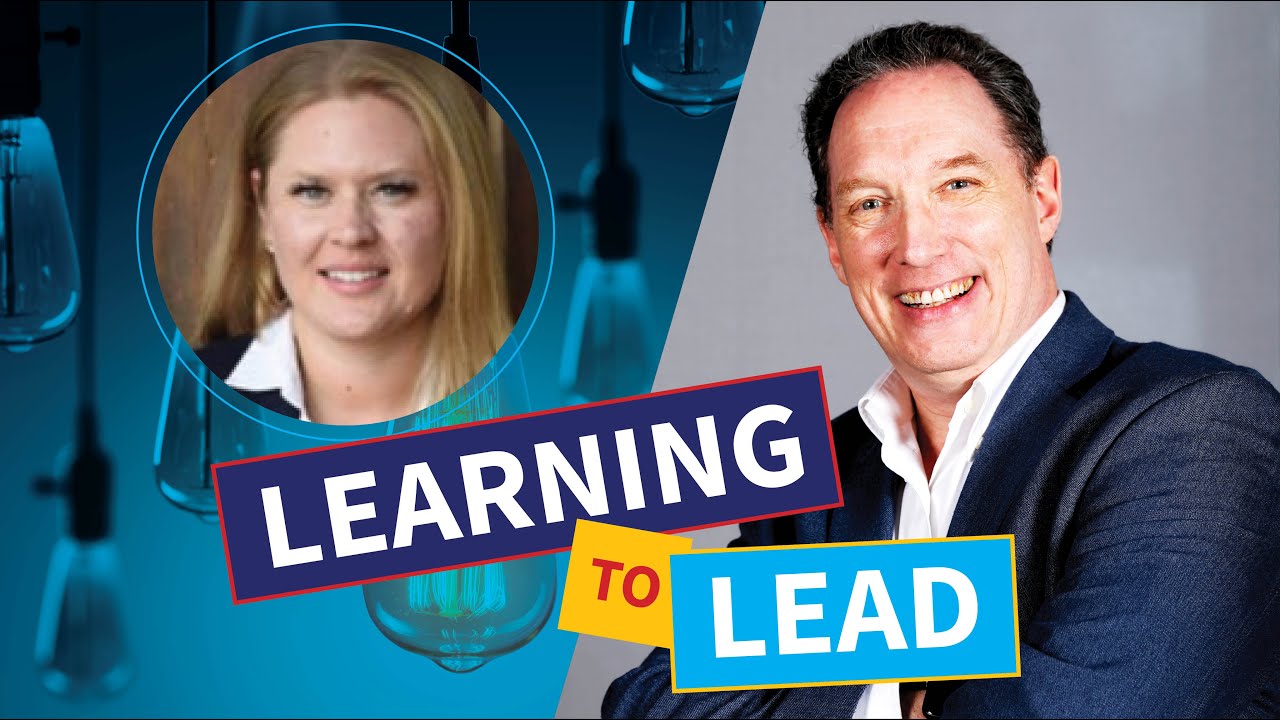
Katherine Rimshaw argues that leadership is a decision, not a title, and most small-business owners get promoted without training. She offers the APE framework: awareness of your strengths, practice through feedback, and evaluation of what works. Listening skills and humility matter more than ambitious plans.
Chapters
Okay, in past episodes, we talked about how incidental entrepreneurs are fabulous at the what and their why of their businesses. But does that make them good leaders? And that's what we're going to talk about today on Marc Haine Live. Welcome to Marc Haine Live episode number 39. This is where small business owners and entrepreneurs pick up core skill sets to help them work on their business, not just in their business. I'm your host, Service Expert and Master of Experiences Marc Haine. And I just want to thank you for joining me on this episode. My guest today is author Katherine Rimshaw. And we'll get to her in just a moment. In the meantime, feel free to give me a thumbs up and ring the bell. By subscribing to this channel, you're basically telling me That the information that I'm providing you each and every week is of value to you and worth your time. And I am so glad I can be of service to you. I'm hoping you find this of value. And like I always say, if you find this episode of value and you know somebody who could use the information, why don't you share it? Go ahead and share it with them. Get them involved as well. I realized something as I grew up as a leader in hospitality. And that is that most of us in leadership roles never ever got trained. Perhaps, you were fantastic in the job that you were doing and you got promoted because of it. And perhaps, when you started being a leader, you realized that leadership was a little bit more than just managing, which brings me to my question of the day. What was your biggest epiphany that you had in your very first role as a leader? Because I'll tell you something. When I got promoted as a manager, I was working at McDonald's. I was 17 years old and they promoted me to a manager. And I thought, this is going to be a cinch. All the people I'd be leading were going to be my friends. They're going to support me. It was going to be great. And then, when they just took full advantage of that love that I had for them, Everything fell apart. And so then, I became the demon. And somewhere as I grew, I had to find the balance. So, I'd love for you to be part of the conversation. Why don't you share your experience in the comment box below? I'd love to share. If you're a leader, how did you get into it and what was that epiphany? As I mentioned, joining me today is author and leadership expert Katherine Rimsha. Katherine is a lecturer at the University of Massachusetts Lowell. Where she teaches courses on leadership. She has spent over 10 years in marketing and communication— communications leadership in roles that have led her to learning and development for software companies. Her brilliant TEDx talk, which you got to check out is, Want to Become a Better Leader? Here's How. Just Listen. And it focuses on the importance of being a good listener as a leader. And I mean, not just, okay, I heard you. No, no, I mean truly listening. So, go check out her TEDx talk. If you didn't hear me, listen. Check out her TEDx talk. Katherine holds a Master of Science in Leadership and a Doctorate of Education with a focus on organizational leadership from Northeastern University in Boston. And if that wasn't enough, she is the author of The Leadership Decision: Decide to Lead Today. Katherine, welcome! It's so nice to have you on the show.
Thank you! I am so tickled to be here. And I sound way more impressive than what I think I actually am based on that lovely introduction you just gave me. So, thank you for that.
Before we get into today's topic, could you tell us a little bit about how you got such a strong focus towards leadership?
Gosh, that's a great question. So, when I was in college, I took a marketing class and I thought, this sounds like, no offense to any of your marketers or wannabe marketers in the audience, but I thought, oh my gosh, I don't think I want to be in marketing. But yet when I got out of college, the first job I had was in marketing and I ended up doing that for about 10 or 12 years. And along the way, when I was starting to explore master's degrees and, you know, what else I could kind of do with my life, fell into the leadership development world by accident. And in doing that, and in being in marketing roles and communication leadership roles throughout my career, it kind of made sense to eventually transition over to a leadership development role full-time, but really gave me the background with my work experience on writing a book about what it takes to be a leader and how leadership is a decision that we're all capable of making and trying to help my readers regardless of where they are in their lives, whether they're entrepreneurs or small business owners, or kind of in the corporate world, or even just in the community, finding ways that they can develop themselves as leaders that's truly going to make an impact for whatever that looks like for them.
Right. Yeah. And what's interesting was I started this episode talking about the lack of leadership training in those that get promoted. Some would argue that they studied management in school. Are we talking about 2 different things here when we're talking about Management training versus leadership training?
We totally are. I'm looking at my bookcase now and I have Management Essentials and then next to it I have Leadership Essentials. If you read them, they're 2 very different experiences in terms of what the texts look like. I think that's a huge kind of misconception that people make in that leadership and management kind of work hand in hand. I do think that when you think about the corporate world specifically, there are some elements of leadership that's still intertwined with concepts of management, but yet leadership is just so much more than simply giving the performance rating. It's how do you influence, how do you ensure that your people feel motivated and engaged. It's ensuring that people see what your vision is and how that maps to context and what they're doing each and every day, where management falls short in addressing some of those key pillars that really defines a leader from that of a simply a manager.
Right, right. You know, it was interesting because I think it was Stephen Covey who said that you manage things but you lead people. Oh yes. So, you can manage schedules but you have to lead people. We'll get into some of the work that you've been doing. But before you do, I have to do my shameless plug. Everybody sees this every episode. I'd like to remind everybody that this episode is brought to you by my new book, Lights! Camera! Action!, Business Operational Excellence Through the Lens of Live Theater. It tears down what it takes to put on a great show for you, for your customers, and for the people in your realm. You can get it online at amazon.ca or amazon.com or on your favorite online store. Or you can go to marchaine.com/lightscameraaction. It's all there for you. So, we're talking a little bit about this idea of being able to define leadership versus management. And I know that when I personally got first into a leadership role, there was no training. There's no such thing as training. As people are reading this, people are realizing themselves that they've had to grow into roles. Is there any systems in place that could really help leaders overcome the issue that they have with the lack of training that they received?
It's a good question. There's— people sometimes say that to me, and that, you know, I— in order to become a leader or a manager, I need to take a course, whether that be at the local university or virtually. And I always commend their ambition for wanting to learn about the formalities of leadership through some sort of academic medium, which is important. I mean, don't get me wrong, but there is so much free stuff on the internet about leadership. And there are so many great books and TED Talks or TEDx Talks, and even with some of the open-source courseware that so many of the universities offer across the globe, that there's really no kind of formality needed anymore to actually take a formal class. Although I'm not trying to dissuade anyone from doing that, but awareness and learning is just such a small part of leadership and becoming a leader. And I think that's where some people get hung up. Like, I need to take this course, I need to finish this webinar, I need to listen to this podcast. No offense to podcasts, because the podcasts are great out there with so much content about how people can become better leaders. And all of those should be digested, or as many as you can watch in a day. But that's where I think people get hung up, as I was saying, that it's not simply about taking a course, but it is an element of self-education that's so critical to leadership, whether you're in the corporate world, or like I said, the community, or you're a small business owner, or an entrepreneur trying to advance your understanding and then your skill sets. But it does come down to practice and actually finding ways to lead in whatever way that looks like to you. Right.
Yeah. And it's funny because in your book, you talked about how everybody might have a different definition of leadership. Why isn't there a common definition that everybody can use?
I wish there was. I mean, that would make my life so much easier if we had one definition that we were all training against just to make sure that everyone was meeting that criteria. I think that's the beauty of it too is that there isn't one standard set of skills or behaviors or attributes that truly define a leader from a non-leader, which is where it can become highly debatable about who's a leader versus who's not a leader in this these concepts of perception is reality come into play and saying, well, I see them as a leader and a high potential and someone who's going to do great things in the world, and this one's a dud. And yet there's no— it's kind of a— I don't want to say a game because I don't want to belittle it, but I think this is where there's so much interpretation left what leadership is. But then also going to that point that corporate leadership may look different from community leadership versus small business leadership and ownership. and kind of the skill sets that are really required there. I think that's what makes me kind of optimistic, too, about leadership and where it's going to go in the future is that we're not limiting ourselves by one definition and that we can look at it from various lenses in order to see what makes sense for both how we define value in ourselves as leaders but then how we define value in others, too.
Right. There's no good definition of what leadership is. Is there a definition of what I don't want to misconstrue it.
There are a lot of great definitions about leadership out there. I know my editor said that to me, like, you've written a whole book and you haven't defined leadership once. I got near to the end and I'm like, I should probably throw my definition in there, and talking about leadership tied with initiative. There are plenty of definitions out there, but I do think it seems to be easier for people to define bad leadership because they know how bad leadership makes them feel. And sometimes, that can be a bit easier to recognize compared to that of good leadership and how a good leader may make you feel because it's not as recognizable.
Yeah, yeah. Maybe because when you have a good leader, maybe unless you had an experience like yourself, maybe you could talk a little bit about your experience of having a bad leader versus getting into a work environment where you had a great leader.
Yeah, I've had the beauty. Here I am in my academic career and teaching part-time. Understanding what makes good leaders versus kind of bad leaders. But then also trying to navigate the corporate world in both marketing communications and now within software development and leadership development focus. And it's been interesting because I think, gosh, I spent so much time studying leadership. And I've worked for some incredible managers and some incredible leaders. But yet on the flip side of that, I've experienced some pretty bad leadership myself, which I talked about some, you're right, in the book about how they made me feel. And even being a woman, some of the diversity and experiences there of, you know, things that even males may not be aware of in the workforce and some of the things that women need to be more aware of as they make decisions about their leadership. But I've had my fair share of bad leaders. And I think that's where sometimes it's felt like, am I doing the right thing by writing books about leadership and studying it? Or am I just kind of wasting my time? As simple as that sounds. It has been. It's been kind of an interesting adventure for me because like I said, I've experienced both ends of it and tried to study it on top of that.
Yeah, it's interesting that you say because chances are the leaders who need your book don't necessarily have the humility to understand that they need your book.
Yeah, I was talking to somebody else the other day. They're like, leaders who are bad leaders don't realize that they're the ones that need the training and the books more so than the good leaders who are like, I need to read more and I need to understand it more. And I always think Such an interesting differential. Leadership that might need some improvement and people who are really fighting the good fight and doing well and they don't even realize it.
Right. And I guess, that's part of the— we've talked in past episodes. We've talked about this idea that people are really good at— they know what they know. Sometimes, they know what they don't know. Sometimes, they don't know what they do know until they sit down and go, oh my goodness! I completely forgot I knew this. But then, it is that one aspect of not knowing what you don't know. And so, people are working within their little bubble, their little world, and they don't know that there are ways that they can improve because they don't know it exists. Do you have any recommendations for leaders who have been doing this for a while and they think, ah, I know exactly what leadership's all about. I don't need to do anything else. Are there any kind of self-assessment things they need to be doing?
There are all sorts of self-assessments and tools out there in the the amazing World Wide Web that leaders can take to kind of self-assess. But for me, and the thing that initially comes to mind when I think about your question that I am telling leaders about regardless of what level they're at or what they're doing in their leadership lives, is getting feedback. And I think feedback, regardless— like I said, regardless of what you do, feedback is critical so you can further understand where you're doing well, because that might differ from what your own self-perception is in and around that topic. and where there's opportunities for you to improve.
Right.
I think that's especially beneficial now with COVID because we are all somewhat— we're stuck in our homes, we're, you know, stuck in our own heads in some ways, and it can be difficult to connect right now seeing how we're trying to navigate and lead within this virtual environment. And this is where the aspects of feedback are so critical. And it's not something, you know, feedback gets a negative rap. I mean, let's not be surprised about that. When somebody says like, hey, I've got feedback to give you, you know, the heart starts palpitating like, oh, I screwed something up. What am I going What are we gonna do? But I think also where people are kind of forgetting is that feedback can be a positive experience too and a chance to recognize. And I think for leaders to develop, like I said, regardless of what stage that they're in, it's still critical to get feedback and knowing where you're still making a positive impact. But where you might need to pivot and course correct to make a greater impact.
Agreed, yeah. And again, it takes humility to be able to turn around. I know that in your book when you talked about having a leader in the boardroom and he says, okay, I want to hear everything. You were really cynical when he said, I want to hear all the problems. And you thought, oh great! I'm going to put myself out there. And of course, when you're not in a trusting environment or when you haven't had that experience, you kind of just shelter yourself in and the feedback then becomes rather whitewashed.
Totally.
And so, is there anything that leaders can do to make sure that when they ask for the feedback that they're actually getting what they need to hear rather than what they wanna hear?
That's a good one. And I think it's one that's important that even as a leader, as you begin to think about where you want feedback, is to get feedback on the questions on your feedback. And that can be either other people that you work with who you're not gonna be directly asking the feedback from, or even people in your personal life and home life that might be able to help give you some direction. So feedback can become this never-ending circle of like, oh, you're getting feedback on the feedback questions to figure it out. But that's where you're going to get clarity and perspective. And as you talked about, it does lend itself to some level of vulnerability and opening yourself up and asking or saying, am I asking the right questions? Is this really going to be what's going to help me and to help me redirect and course correct if I need to? But it's critical too.
Absolutely.
And I think even just saying to somebody like, what else am I missing that you want to give me feedback about, can open that door too. Even though one might feel a little protected, like you said, in their shell, they don't want to give wrong feedback and get in trouble. But I think trying to create that environment of trust too is essential. I mean, that's easier said than done but still important. Yeah.
But again, it's— now, and this brings up an interesting thing because your book is called Decide to Lead. Is it? No, The Leadership Decision. Sorry.
The Leadership Decision. Then Decide to Lead Today is the tagline.
Yes. And so, this idea that people have a choice. on the kind of leader they want to become. In fact, you even mentioned something about a leadership brand. Could you dig a little bit into that?
Sure. Since I came up in the marketing and communications world, I always was really in love with the concepts of branding and how someone creates a brand that really tries to represent who they are or their reputation, if you will. When I was writing the book, I was thinking a lot about— and I was still in marketing when I began writing the book, so I was still looking at brands and personas. And marketing campaigns and mission statements and how organizations kind of funnel all those elements up in order to create some sort of presence and story that's going to help people connect. And in having all of those thoughts from my marketing years, I wanted to talk about those lenses from the leadership standpoint because it still applies. So a leadership brand is similar to that of what many of us are creating for our organizations. What do we want to be known for to others when it specifically represents us as leaders? So it's the matter of trying to challenge yourself. You know, how would you define a leadership brand? And having that definition, how are you going to define your own? But then also, when I do that, I torment my MBA students with this too, and I talk about it in the book. So now that you've outlined those elements, write your own story that showcases how you represented and lived your leadership brand in real life. So it's trying to get at some of the angles of values and how that relates to your leadership from the kind of back end. But then it's also, it's so critical because if we don't know who we are as leaders and what we're trying to achieve, it's going to be harder to make decisions to lead, which is where the foundational point of the book comes into play. But I think it's still important for us to think about, you know, how are we representing ourselves as leaders in our day-to-day with the actions that we take or don't take? And how is that all then founded in the decisions and the decision to lead or not depending on what that looks like to us?
You mentioned something about a framework that you have that helps leaders determine what they need to do to become better leaders. Could you share that with us?
Sure. So, the thing that I felt you know, the book is called The Leadership Decision, and it's like everybody can lead. And then I thought, well, I can't go out and write a book about that because people are going to be like, okay, well, we can lead and you can write a book about it, but then how am I actually going to make the decision to lead? What are the next steps going to be? Because it is pretty vague as it stands on its own. And this is where, after a lot of thought and research, like I said, over the years, I came to create this model called the APE framework or the APE model. And like you said, it's a framework for you to think about ways that you are making decisions that are going to impact your leadership, your leadership decisions, and ultimately your leadership brand. So A stands for awareness. So like you said earlier, how are you taking courses? What does that look like in terms of furthering your leadership acumen, which is important? P stands for practice, because no one ever got better at doing anything just by reading a book or taking a course. So if you're going to lead, you're going to find a way to lead and see what that looks like with your actions. But then E, to that point about feedback, stands for evaluation, which kind of is a cycle in terms of awareness, Mm-hmm. As well, because if you're going to be leading and practicing and gaining all this awareness, you have to understand how people are interpreting it. So you can get feedback or evaluate, whether self-evaluation or more formal feedback, whether it be within the workplace or even kind of creating your own surveys through SurveyMonkey. But whatever you do, it's— those are the kind of the critical elements that one needs to do outside of making the decision to lead in order to improve.
I referred to Stephen Covey's book earlier about this 7 Habits of Highly Effective People. And in it, he talks about this idea of moral authority versus formal authority. And when I read that, I was again, I was a leader and it was the first time that it kind of resonated with me that we have, you know, some people are just natural-born leaders and they pick up this moral authority. And I would argue that that moral authority becomes moral leadership. The people who become like— I've seen organizations where the organization as a whole was very dysfunctional. Municipal governments, for instance, come to mind. And I talk a little bit about this in the book. But in that organization, there was somebody who didn't have an official management title but yet had such high moral authority that people followed her and people listened to her whenever she spoke. Or she would be like a natural guide. To me, that's something that she didn't choose. It's something that was inherent, I think, into her personality. Are some personalities better at leadership than others?
I go back and forth on that. I think when I initially started leadership, I was of the camp of great man theory and trait theory and that leaders are born. And you're either born to lead or you're not. So, why am I even taking this master's program? This is just for a small group of people who really kind of intuitively have this ability. But I think as I started looking at leadership more and doing research and developing people at all levels, that's where it became clearer to me that there are a lot of people out there who aren't leading with that formal title. But like you said, they have that inner compass that directs them to lead and they make the decision to act. They make the decision to lead because they have that ability. But I do believe that people can lead if they want to lead, and they need to think about what that looks like for them. I mean, not everyone's going to be a corporate CEO, but people can make huge differences in their community when they see opportunities to make change or bring about progress. And that's leadership within itself, even though it's not some very kind of fancy, sexy CEO executive-level title. So that's where, for me, it's been a realization over the last 10 or 15 years of studying leadership, and that Anyone can lead. It's just going to be a different taste for everyone depending on where they are and so many other factors too.
And again, I think it falls back to your framework. If they need the awareness that this is something that they want to do. And if they are shoved into the position, they have to have enough awareness to be able to understand where they might be lacking and the fortitude to be able to ask those questions. And then, being able to practice it. And then, the evaluation thing goes back to what you were saying with the feedback. Constantly asking for that feedback, constantly looking at it and saying, how do I measure the effect that I'm having on my team or on the people around me or on the project?
And getting comfortable with that is tough. I mean, it's not easy to ask for feedback. And even as I talk about it now, I hope it doesn't sound easier said than done. But that's just sometimes too just habit of getting used to saying to people like, how did that go? What did that look like? What was the experience like? That can be something so simple, too, that even in your dialogue after people listen to this podcast or watch the YouTube clip or read a— wherever they go next after they leave this session, they can just go ask that question right off the get-go. Where can I get better? What did you think? How did that go? I think just having that awareness can do so much. To your point about evaluation, it helps people truly develop.
I know that in my industry, hospitality-specific, that a lot of people get promoted into roles and they don't have the training. For somebody who gets promoted, if they don't have a good mentor at work, how can they go about developing the skills they need to be effective?
The thing about mentorship is that some people depend on it and think that it's something that the organization needs to provide for them, which in some ways, yeah, organizations have a part of that. They do, but this is where I think as leaders we need to find some dependency in our own develop to think about who would best serve us in a mentor role, and then how can we use either people we work with directly within the workplace to get feedback and insight from those people. But it's bigger than that too, because you want a mentor who's going to give you larger perspective than simply what's going on at work. And that's where I think LinkedIn can be such a great tool to start to network and find mentors, you know, outside of the workplace. You know, in the book I talk about a couple different kind of support systems, if you will, you know, a feedback, feedback group and a success board. And the success board really should be that of a combination of mentors, people who are seeing you in your day-to-day at work, people who know you maybe from the academic standpoint or community standpoint. And then also some personal acquaintances in that too. The thing about mentorship is that it's not a monogamous relationship. And I think a lot of times people think like, oh, I've got this one mentor, I'm sticking with them, that's going to be it for the rest of my career. And that can be pretty dangerous. So as leaders, and if you want to have the mentor, which is a critical tool to help develop and gain perspective and awareness, I think it's a matter of saying like, okay, I want to grab 3 or 4 people who are going to see me at different points in my life and my leadership that are going to be critical to giving me feedback to help me grow and develop. So yeah, you could have somebody at work. And like I said, you could have other folks from a diversity of other spots in your life too. But it's important to take that self-step and to recruit your own mentors who are going to give you perspective, like I mentioned, and not specifically depend on an organization or a manager to grant you a mentor and say that's okay. Yeah.
But I get a sense then proactivity and humility are 2 key ingredients in order to make that happen. People have to be able to step up and say, I have the humility to understand that I don't know it all and that I have a lot of development that I need. But then, they have to be able to then say, okay, what is my next step? How do I shake myself out of this so I can get better?
Totally. I think that's a good word for it. I describe that as just being vulnerable in the book. Leaders need to have a level of self-awareness and find ways to be vulnerable because leaders don't know it all. Just because somebody says, well, I'm the leader, I'm the one in charge, doesn't mean that they have all the answers. It is a level of saying, yeah, I'm going to be able to do things to a certain extent, but this is where I need a team or a success board or people to give me feedback to help me figure out So, we've mentioned some key values I think in our conversations thus far.
Are there any like common denominator values that people need to be looking at when it comes down to whether or not they're going to become effective leaders?
The one that always— the one that people always say, and this can be both a blessing and a curse when you begin to dig deeper as to what this actually means. But communication, I mean, I hear people say that all the time, like, oh, I would be a better leader if I was a better communicator. Or I have other folks say, like, so-and-so is my manager and they don't communicate well. And then it's like, all right, well, let's really get into it because what communication is so broad, but it's that coverall of where either leaders excel or where they're really falling flat. This is where, when we talk about communication, I mean, you mentioned my TEDx talk. In that, I talk about listening, which is a very small piece of the communication wheel, if you will, but yet there's so much more to speaking and writing and social media. I mean, communication covers so much, but yet it's the one that constantly people complain about, that it's where leaders are screwing up the most. I think this, too, it's trying to boil the ocean when we say we're going to become a better communicator. And I think that's where even elements of your book come into play. And, you know, some of the pieces of mine about, you know, these are things you can consider, but we can't just say like, become a better communicator and have that be it. This is where you get feedback on specifically what do I need to do to communicate better that I can take very clear, actionable feedback on that's going to make a true difference to how I lead others. Because it's essential. I mean, communication is essential. I mean, we can't— Refute that. But it's just so massive and people don't know where to begin with it. And it's like, oh gosh!
And again, it's not something that we're trained for. We're not. I mean, there's nothing in high school that teaches communication. There's nothing in college that teaches communication unless you take communication. And so, you're left with joining organizations like Toastmasters. Toastmasters, their tagline is all around leadership and communication is Right? In fact, I mean Toastmasters started off as communication solely, recognizing that these business people needed to be better communicators. And then, they were able to then tie it and say, well, you know what? If you become a better communicator, you'll also become a better leader.
Yeah.
Right? And so, Toastmasters has been brilliant in that regard. And I know that their new system now is really focused on understanding where you want to go with your communication journey and being able to push it forward. But at some point, I think we need to be looking at how do we create the level of communication that we need earlier on so that you're not 40 years old joining Toastmasters and realizing how ineffective you've been.
Valid. And that Toastmasters program is huge. I mean, what Toastmasters offers is critical. And it's not only the speaking components but it's the listening components too and being able to give real-time feedback. I know I've said in some Toastmasters meetings even where I work that people take Because I think one thing too, I mean, people get to mid-career and they think, I've been screwing this up for the last 17, 20 years and it's just taken me to this point to get it. It's glad that they're finally— I'm glad that they're finally coming to that realization. But it's too bad too that, you know, I'm from the Boston area and you're right, we don't put that in our curriculums about how people become better communicators unless you take it as a class.
Yeah.
But even that about listening too, and I've gone all around the world and said to people like, okay, when have you ever taken a class on how to listen well? And ironically, it's always people in the, in the London area who have taken a listening course as a part of an MBA program. We don't have that here. And like I said, in the States that I know of or can think of, I don't know, in Canada, is that offered more in the curriculums or are you similar to what we have?
Not that I know of.
But I think it's, I don't know what's going on with those in London. Those universities in London, I think, have got something going that they offer that in an MBA curriculum. But it's, it's sad that we miss out on that and that people have to seek it out.
Well, and it's sad that even in London though, you have to get to an MBA to be able to get that training.
Valid point.
Right? Where we know that interpersonal skills and personal leadership becomes a core component on how do we manage ourselves? How do we manage ourselves in our relationships? How do we manage ourselves in our nonprofits and our associations in that sort of thing? But how do we manage ourselves with our family even?
Totally. It touches everything.
Yeah. This has been so amazing. I feel that we could probably talk about this forever. But we do have a finite time because like you said, it is such a big topic. And I know that I released one video that I said, Have the Guts to Lead, where it was like I wanted— I was really focused on this idea of this is a choice and you can choose whether or not you want to be a good leader Or a poor leader. Decide. But like you said, it's so many different definitions that somebody who's an ineffective leader could still turn around and say, well, I am a leader. You know, I've been given the title. I'm doing what I'm paid to do. Or, hey, I'm not doing what I'm paid to do but I still have the title. And not move, not be able to move that needle anywhere. If people want to get a hold of you, if they want to pick your brain or get a hold of you, what's the best way for them to reach you?
So, I'm on LinkedIn. So, I always love LinkedIn invitations and notes. And hopefully, I hear from a couple of your listeners and viewers that maybe they have taken a listening course in their learning curriculum, which I always like to hear. And then, I have a website too. It's theleadershipdecision.com. So, LinkedIn and my website are great ways to get in touch with me.
Terrific! And I will put the link down below in the show notes, as well as a link to your TED Talk. And I will put a link to your book as well. The one aspect I'm always curious about on this particular topic, are there any cautionaries to the people who are out there toying with this idea? Now, they're realizing, you know what? Maybe I need to start asking myself some serious questions. Are there any cautionaries about where people can maybe get off the path and fall off?
The thing that's coming to mind as you ask that is being overly ambitious. And leadership is not something you're going to flip the switch and be a leader and kind of go all in too quick and overwhelm people around you. It's something that you need to give some deep thought to about how you're going to strategize your decisions, which is where I hope that people find the APE model helpful. So it is gaining awareness and practicing and then seeing how that goes. So it's not just kind of jumping right in. I am— in the book, I talk about a guy who worked at Verizon, and every Monday his manager would come in and talk about how he was going to make change. And then they'd be all in on making that change on Monday morning. But then by Monday afternoon, it was kind of forgotten about. And you can't go in too hot and then not follow up. And I think that's where I sometimes see leaders making mistakes. They, oh, we're going to— I'm going to lead. I've made the decision. And they lead for a day or two and then they forget. So trying to think about what that looks like for you at a pace that makes sense.
That's awesome. The overambitious aspect, we've seen it time and time again. And a lot of times, it follows when the leader just gets back from a conference.
Yes. Oh, that's my favorite. Like, oh, they come back from that. What are they going to be implementing? Texting you through it. Oh God, I love that.
I've been to a conference, folks. And guess what? Things are going to change.
So-and-so from this Fortune 500 company said this and we're going to do it now too. Okay, here we go. And then like Wednesday, it's forgotten about.
So many of those. And it's even got to the point now where I do, when I'm doing like dealing with difficult people or when I'm doing seminars for teams of people, now I insist that the managers have to be there. Because so many times, I'll be doing sessions with an intact team. But the leaders aren't there. And they look at me and they go, oh my God! I wish my boss was here to hear this. And it's like, okay, from now on, now we're going to make it a contractual obligation. The managers have to attend the training with the staff.
Another biggie.
Because it happens time and time again, right? But, and again, I use the word— you use the word vulnerability. I use the word humility to understand that I don't know it all. And as leaders, nobody does. And I think that's a fallacy. Like I was telling somebody the other day that as a grown-up now, I'm really pissed at the older generation because When I looked at the people older than me when I was younger, I thought they had it all. I thought they had all the answers, right? It's like the biggest lie.
It is.
Right? And it's the same thing with leaders, right? It's like we don't know it all. We can't possibly know it all. So, what's wrong with saying, you know what? I think we need to come together and figure this problem out because I don't have the answer.
Yeah, it's hard. They want the lead. Some leaders want to think they know it all. But like you said, if they can Yeah, yeah.
Kathryn, thank you so much again. This has been wonderful. I've so enjoyed this. And like I said, I could probably go on for hours with you on this because this is so dear to my heart as well. So, and well done on the book. And I loved having you. Thank you.
Thank you. Thanks to everyone who listened and viewed.
If you found this valuable, Why don't you give this a thumbs up and ring the bell? If you ring the bell, you'll get a notification each week when I bring you some fresh content to help you work on your business, not just in your business. Something that I think is really important. And again, if you're listening to this and you go, wow, you know what? I think John needs to hear this. Go ahead and share it. Go ahead and share it with them. You'll do them a favor because again, we talked about this idea of not knowing what we We don't know. And by consuming some content, maybe somebody will open up a new awareness and say, you know what? I didn't even know that this was an issue. And they can then start doing some self-exploration and move forward. As I mentioned each and every episode, if you would like 30 minutes of my time with you and your team to brainstorm current issues, whatever you got going on in your docket that you want to brainstorm, why don't you give me a quick I do have a link in the show notes. It is the one marked meetme.so/MarcHaine. Book a 30-minute conversation. I'd be more than happy to make some you time with you and your team to help brainstorm this. As always, I am at your service. I hope that you stay safe, stay healthy, and dare to be the exception.









