Design a Succession Plan that Works for You
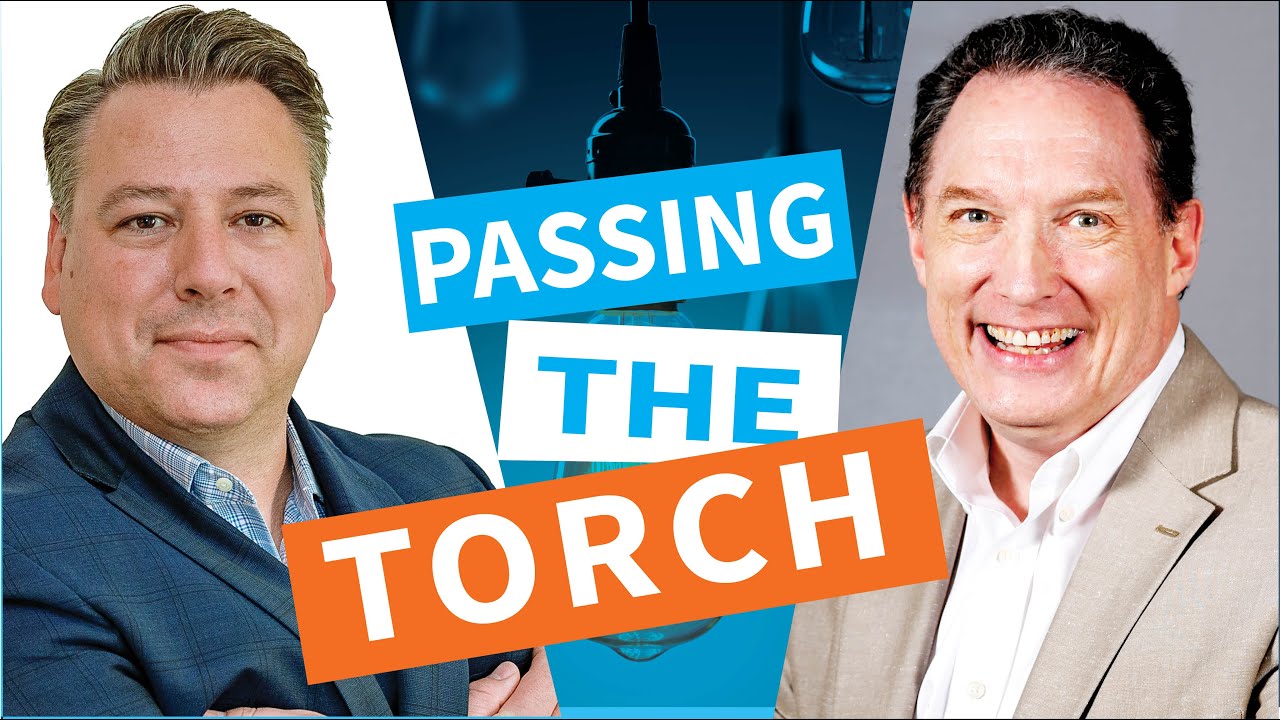
John Michalsky from ActionCOACH Canada explains why most small business owners are unprepared to sell. He outlines a 6-step framework starting with cash and time management, then moving to systems and delegation. The biggest mistake: working in the business instead of on it, which tanks valuations and post-sale happiness.
Chapters
You know, in a few months, I will be 5 years away from retirement. I have to tell you, I am the last of the baby boomers. I swear to God, the last one. I swear to God that somewhere in Montreal, somebody had a little clicker and said, okay, baby boomers, that's it. Move on. But it doesn't mean that just because I'm going to be retiring that I will stop working.
No.
But it does mean I need to think about succession planning. And when you think that 75% of small and medium-sized businesses are owned by boomers, well, what the heck are you going to do? And that's coming up next on Marc Haine Live. Welcome back to Marc Haine Live where small business owners and entrepreneurs pick up core skill sets to help them work their business, not just in their business. I am your host, Service Expert and Master of Experiences Marc Haine. And today, I am just so thrilled to be speaking with Action Coach John Michalsky. And we'll get to him in just a moment. I just want to say hi to my subscribers. I just want to say thank you for watching and thank you for following me. You guys are amazing. You are what makes this channel worth doing each and every week. And to those of you watching this episode, I'd like to thank you as well for joining me today. I hope you and your team get extraordinary value from today's content. That's why I do this show. If you find that the information here is valuable, please do click the thumbs up button. YouTube tracks that and they like to see when somebody gives a thumbs up button. So, let me know that I'm on the right track bringing you the information you can use in your business Today. I recently read a quote that I thought was very profound. It said, Succession is a process, not an event. Start it as soon as you are thinking about an exit. So, the minute you start thinking, I wonder what I'm going to do when I retire, that's the time to plan. So, I have to ask you, Our Question of the Day. So, as a business owner, are you ready to succeed from your business? If not, what do you need to do to make sure you protect the legacy of everything you have built? You've built a career around Your business? And what are you doing to protect that? I'd love to hear your comments. Go ahead and put them in the comment box below. I'd love to have a little bit of a conversation with you online about what you're doing to guarantee that everything you built is going to succeed you. As I mentioned, my guest today is John Mikowski. John is a passionate builder of strong relationships and takes great joy in seeing others succeed. With about 20 years of sales, marketing, and a service-oriented approach garnered through the global financial markets, John brings a spark of entrepreneurial spirit to serving others. He has helped turn and build companies in the transportation, logistics, and beauty industries. He believes that life should be filled with success, joyous memories, and inspirations of the soul. Welcome to the show, John! Thank you so much. It's so great to have you.
Thank you, Marc. Pleasure to be here.
Maybe we could start. Maybe you could tell us a little bit about what you do for clients.
For sure, for sure. So, I've got a kind of a twofold position within ActionCOACH. So, not only have I gone through their training and certification program that helps me deal one-on-one with businesses and it's world-class. But I also work for the master licensor who owns Canada, which means that, you know, a big part of my job is obviously finding, you know, passionate business owners or people who want to maybe start to monetize their— the business acumen and the amount of education and experience they've received through years and years of business ownership themselves. So, you know—
Okay.
Having both aspects of it really allows me to be on many different fronts for small and medium-sized businesses, finding solutions for them for their future endeavors.
So, we're not just talking necessarily a coach for succession. You're talking like a business coach.
That's right.
Yeah, correct. And so, what I also get from that is you're something of a connector. So, how do you go about connecting your clients with the resources that they need? Do you have a system for that?
That's the beautiful thing about ActionCOACH. We are all about systems, processes, methodologies. For 27 years, we have built out processes and systems that we know work in all markets including with small and medium-sized businesses at various stages of where they are in their building cycle.
Nice. Well, I started the show with some sober statistics. John, what are you seeing in the marketplace when it comes down to things like succession?
The biggest thing is just being ill-prepared, honestly. As you said, right? 75% of small and medium-sized enterprises You know, are owned by baby boomers. The next six, eight, ten years, there's going to be a massive wealth transfer culminating, we estimated, around one point five trillion dollars. Yeah, but what we do know is that you know businesses when they get up for sale, often a lot of them don't sell or they're very difficult or they're sold under unfavorable terms. In fact, you know MassMutual did a big study. And 12 months after the sale of small and medium-sized businesses, the past owners reflected and were very unhappy with what the outcome was.
And they were unhappy because they were ill-prepared?
Ill-prepared and didn't get the valuations that they had expected.
Wow. Yeah. You know, as a small business owner, you and I were talking offline just before we started the broadcast. I was saying that I've met a lot of entrepreneurs where succession planning isn't even something in their wheelhouse. Like they're not even considering when they retire even though they might be my age.
That's right.
Yeah.
Yep, absolutely.
And so, they decide. And I think for me, the scariest part of it is when an owner-operator gets sick. Do you see, are you seeing a lot of businesses being sacrificed because of health reasons from the owners?
A little bit, yes. But obviously, you know, we need to be able to— and what we do as action coaches is really teach those businesses how to pivot. You know, a great example, you know, just on foot traffic originally, this came from one of our coaches in the US who was working with a candy shop. And, you know, obviously it's a lot of children coming through the doors. Well, when COVID first hit and lockdowns started happening, what did they have to do? They had to reinvent themselves. And really pivot their business. And it's a really kind of cool story because what they did is they started now, you know, they had all of their client lists, they started calling these clients and doing home deliveries, but in costumes like bunny rabbits or the Easter Bunny. And they would go drop these candy packages in the backyard and the kids would watch from a, you know, safe distance behind their windows. And, you know, things just exploded like that, right? So, it was pretty cool to see stories like that. There is successes coming out of such a tragic pandemic, of course.
Gotcha. Yeah. And so, it's more than just talking business succession planning then. It's whole operation coaching.
Well, business succession planning is really just setting yourself up to be sellable in the future, right? As you mentioned, you know, we've got a huge transfer of wealth coming down the pipeline here. from baby boomers and owners of businesses, like over the next 6, 8, 10 years. And we estimate it's around $1.5 trillion in assets or wealth transfer that's gonna be moved. You know, sometimes family businesses, the natural succession is the children, but other times, you know, business owners, they need to plan years in advance to make sure that their business and their operation Right. What we do know is that 80% of businesses that do go up for sale really don't sell for what they were asking, or they get unfavorable terms.
Wow.
Yeah.
So you're saying 80% of the businesses. So are there like— what is the trend? Like, why is this happening?
The trend, I think, really comes down to what you said at the very beginning there, Marc, at the beginning of your show. People working in their business, not on their business, right? If you looked at kind of, you know, an entrepreneurial ladder, and we do have an entrepreneurial ladder that we describe, but, you know, if someone buys a business but they have to work in it, really, you know, that's the old term of I bought a job, right? You're a manager, you're a general manager. Some people might argue that they're business owners because they own an independent business, but they're not really at a level where I would consider them entrepreneurs. Entrepreneurs can step away from their business and let their business run on their own. So here at ActionCOACH, our definition of a viable business is a commercially profitable enterprise that can operate without you.
Right. And so, it's literally changing the mindset that this business needs me to developing it to a point where the business is successful in spite of me.
That's right. That's right. And I think we've been hearing this for years, decades of work on your business, not in your business. But I don't think the majority of individuals have the tools or processes and steps to be able to accomplish that. Or they just don't know where the starting point is.
Yes. And it's funny that you say that because this is episode number 32 of Marc Haine Live. And in previous episodes, we've talked about the need for people to build capacity because they might have been brilliant when they set up their business because they were really good at what they did. But they didn't necessarily go out and get HR training. They didn't necessarily go out and learn how to do marketing. They didn't necessarily go out and learn about finance and business management. They became what I call incidental entrepreneurs. They fell into their business probably up to here.
Right, right. But part of succession planning, we like the word coach because it identifies so many different aspects of what we do. Yes, we consult, we advise, but we're coaches because we're along for the ride the entire time with these organizations, with these businesses, and with our partners.
Nice.
But the word coach, I kind of relate it to any athletic endeavor, right? Whether it's a team event or an individual swimming freestyler who has a coach, right? A coach is there every step of the way, right?
Yeah.
And what's interesting, you know, when we're talking about business succession planning, if you are an Olympic athlete, you've got a pretty good idea on the number you've got to hit 4 years from now, right? If you're in the 100-meter sprint, you know you've got to run around that low 9-second to be competitive. So you work backwards on every training regimen, on every event, on your health, your fitness, nutrition from that endpoint in mind all the way back to day one starting in training. And that's what businesses need to do as well, is starting now to make sure that in those 6, 8, 10 years out that they do have a viable commercially profitable enterprise that can run without it. That makes it very attractive for someone else, a private equity firm, a third party to be able to own it as an entrepreneur, not as buying a job.
Right. And it's interesting that you use the analogy of sports because I don't know if you would ever have a star basketball player ever turning around to somebody and saying, I'm successful. I don't need a coach.
Never. Right?
But yet, businesses will turn around and say, hey, my business is great. I don't need a coach. And it's like the coach is there for accountability and support. And we've said in this podcast many times that we can't do everything by ourselves. We just can't. It's humanly impossible. Yeah, yeah. And so, it's really interesting, this idea of bringing on a coach. And I'm glad that your philosophy is actually melding very closely with mine. Just so everybody knows, this episode is brought to you by my brand new book. It's called Lights! Camera! Action!, Business Operational Excellence Through the Lens of Live Theater. It's where I take my experience as an actor and I break out the business principles that we use in theater to be successful. And my thought process was if we could put as much effort into our businesses as we do on stage to put on 6 shows, businesses would be absolutely stellar. And it tears down what it takes to put on a great show for you and your customers no matter what business you are in. To get a notification when the book is released, go to marchaine.com/lightscameraaction and click on the Coming Soon button. The Kindle version is available on Amazon right now. But the hard copy and the paperback is still pending. So, we're just waiting for Amazon to release those. So, go ahead and click the link. I did put a link down in the show notes here for you as well. So, John, now that I've got myself Shameless plug down. When it comes down to this idea of businesses shaking their mindset to start thinking about this idea of succession planning, is there a central problem here that people are focused with? Hmm.
I mean, first and foremost, I think every business should have a coach. I mean, our personal goal is to have an Action Coach for every business in Canada. We've got about 1.2 million small and medium-sized businesses across the nation, and we are severely, severely lacking in capacity for coaches. We can use a tremendous amount more and good, high-quality individuals. So number one.
Number 2.
I would say hire a coach. What a coach does is it holds you accountable unto yourself, right? The other thing that's like a commonality really would be in working in your business. They're not valuing their time like what the CEO should be valuing their time, right?
Right.
If you took a business that's operating, you know, $1 million in revenue per year, average 2,000 hours of work per year. basically, that CEO is a $500 an hour job, right? You can do that with many different outlayers— or sorry, many different businesses. But when you start looking at that and you start analyzing where they're spending the majority of their time, if they're doing, you know, $100 an hour endeavors or $15 an hour endeavors, the opportunity cost on the outside is, you know, tremendous, right?
Right.
decisions are the invisible ones.
Yeah, yeah. And it becomes a false sense of economy when people start doing the job that they should be hiring their people to do. And again, part of that is ineffective leadership. It's like, I'm not going to delegate it because I can do it better and faster myself.
That's right.
But then, you end up in the situation where you're no longer leading.
You're doing.
It can only last so long. When it comes down to this idea of succession planning, I too have dealt with a lot of different operators in hotels, casinos, and restaurants. And when I talk to owners about succession planning, it kind of gets poo-pooed away. I'll deal with it later. Are people waiting too long to think about their business transitions?
100%, 100%. You know, like the analogy that I gave with the Olympic coach, right? They know 4 years ahead of time what they have to do on every day moving back, right?
Yeah.
Businesses that are very, very comfortable, let's say they're making a good income for themselves, for their family, for the community, whatever it might be, they, unless they have, you know, some sort of what we call perturbation, external pressure put on them, to change, they get kind of very, very complacent up until a point where they say, oh geez, I would really like to move to the Caribbean. I'm just going to sell my business now, right? Back to the idea of the entrepreneur, the idea of the entrepreneur is that your business should be able to run without you. Therefore, there might not even be a need to sell because it just self-perpetuates and self-sustains itself, right? Without much management and time.
Right.
Ultimately, people value time, team, and money. And so, if we can set that up for that success, they might not need to even transition.
Yeah.
They might take it.
And you're not saying that it goes without leadership. It just means that the owner puts themselves in a position where they empower other people to take on those leadership roles to keep the vision alive and to keep the business moving forward.
100%, exactly.
Yeah. If somebody is watching this and they're saying, They're like me. They're on the cusp of turning 60 and they need to start thinking about this idea of, I've been doing this. Maybe I have been. Maybe I just bought myself a job and I've been doing this for years with passion. It's something I love doing. But now, I have to start thinking about the future. What are the steps they need to take in order to start that process so that they're ready in 5 years?
Yeah. I mean, we've got a very defined process on what that looks like. Ultimately, what we want to get people to is where, you know, where we can implement a general manager for that organization, right, that has very clean defined roles, you know, who can take over for that business owner. However, to get there, a lot of the small and medium-sized businesses don't have that, don't have the income, the finances. Or revenue rather to accomplish that. So we got to work backwards again, right? And really our 6 steps, you know, process within that starts really at the foundation of, you know, mastering certain aspects or pillars of the foundations of businesses, right? Your cash management, your time management, your delivery management, destination management, right? From there, then we can pivot. Once we have a very strong base within a company, an organization, Then we can pivot into, you know, identifying what their niche is, what makes them unique, what's their unique selling proposition, and then start to get to market on, you know, generating increased revenue. And we do it through, you know, a very defined process. You know, a lot of times people say, well, I want to grow my business, I need more customers. Well, it's not customers. Yes, you do need customers, but they're results of other actions. They are the results of, generating leads, increasing those leads, and increasing conversion rates. That gets you more customers, right?
Mm-hmm.
So, and then we just follow it through to how do we get more repeat business? How do we convert, you know, customers who, let's say, accidentally walked into your retail store as an example, versus someone who's going to be a, you know, a huge proponent and scream to the top of their lungs that you need to, you know, deal with Marc at his business, right? So how do we get them from, you know, like a suspect, a prospect, to actual customers and repeat business on top of that?
Right.
You know, those are very, very important things. From those points, once we've got a really good flow of increasing profits, then we can start looking at leveraging. Leveraging really means, you know, at its very core, doing something once and having it pay forever, right? Leveraging means team, leveraging means systems, leveraging means, you know, simple things like if you ran a retail restaurant and you needed to demonstrate how to work a fryer, you can use a little YouTube or a GoPro with a manual, and any employee that comes into the door from that day forward is not going to ever have to, you know, take the time away from that team, from that general manager, or whoever.
Right.
You know, from that point, then we move on up the scale again and get into teams and get really defined roles, see what capacity that each of the individuals in the organization can really handle. And do they understand what their positional contracts look like, their key responsibilities, their KPIs? You know, is the vision in alignment with the organization, the business, and the team? Because we get into that, you know, that business cycle that sometimes people forget. Where you've got the owner, the owner obviously is you know the the leader for the team. The team is the ones who are dealing with the customer, and the customer is what feeds the business and ultimately the owner. So you got to make sure all of those are very very in line and synergistic. And then you know general managers bringing in general managers to help facilitate that. It does a couple different things, right? Owners predominantly on smaller businesses they. They're a little bit more emotional about their business, and they also will discount their own services or value a lot of times. We do not want discounting ever in an organization. So a general manager generally will hold to the rule of law that had been set out, right?
Yeah.
It's very easy for the owner to make choices that are not in best alignment with the business. So that's kind of, you know, how we how we achieve massive results with companies and with organizations is through a very defined 6-step process. All of those have obviously different delineages or sub-areas. But as a whole, generally, that's how we build great companies.
This is really great information. John, before we— I want to dive a little bit deeper into the idea of this idea of owner mindset. But before we do that, could you let everybody know who's watching how can they get a hold of you if they want to hire an ActionCOACH or if they want to reach out to you specifically to get some more information? How can they reach you?
On both sides. Certainly, I mean, on all social platforms, it's just ActionCOACH Canada. You'll be able to search us on Instagram, LinkedIn, etc., etc. actioncoach.ca or actioncoachfranchise.ca. Both of those are set up specifically for individuals who are looking for a coach that can help guide them on this. And we have a little special offer for everybody at the end of the show that we'll talk about more. But also, you know, for our franchise, potential franchise partners, those individuals that are passionate that, you know, would want to be a part of the 2nd fastest growing industry behind IT right now is business coaching, right?
Right.
We were pioneers in it 27 years ago. And we continue to expand. We're in 85 countries now and Canada is just our new frontier. So, on both sides, we've got some pretty powerful stacked momentum and systems and processes in place to help.
It sounds like a really great resource. If you find this information helpful, as I mentioned at the beginning of the show, it is really important that you take information that you find is important And find somebody who you know needs this information and then share it. I have said this in past episodes that information is power. But it's only powerful if you share it. If you just hoard it into yourself and you watch it and you go, oh, that was great information. But then, you see other people in your Chamber of Commerce or in your community or whatnot who could use the information, help them out by sharing the link to this video. Because I know if you're part of a community, you know people who need this information. And again, please give it a thumbs up. Put comments in the comment box below and please subscribe to this channel. So, John, you were mentioning this idea of owners becoming emotionally attached to their businesses. And this is where I think I have seen when it came down to transitionals, where it came down to trying to free up the owners from doing the day-to-day minutiae stuff. So that they can start focusing on what's important to their business. This idea of hiring a manager and handing off the operation to a manager can be really, really challenging. What needs to happen in the owner as far as mindset, as far as systems is concerned to make that happen?
I think, I mean, the objective way to look at it is to look at your numbers. Know your numbers through and through. And, you know, if you can— and I'm not talking about numbers on a QuickBooks Excel P&L statement or here's my revenue number, oh, I know my numbers. No, we need to dive a lot deeper than that, right? We need to dive real deep into things like I was describing on, you know, leads or conversion rates, how many customers are coming back in and from what marketing sources, right? So in that instance, you know, I think giving them the hard numbers and showing them kind of what would actually happen if we were to institute some of these things and to stop discounting your services or what your products and services are offering, that will give a little bump in vision. Ultimately though, here's the formula for change in anything. It doesn't matter if it's personal relationships, if it's business ownership. It's your dissatisfaction times what your vision is of what your goals and dreams were both personally and in the business. Plus, your first steps in making a change has to be higher than what your resistance to change is.
Mm-hmm.
As I said before, you know, prior to COVID, there was a lot of organizations and companies out there that were comfortable, you know, maybe some complacent. This has, you know, stirred up the need for, you know, them needing advice and direction like never before. So, Things like that. That's the formula for change. Your dissatisfaction times what your vision is, plus your first steps is what we help you take, has to be greater than what your resistance is to change. If we can overcome those, and a lot of the times it just comes down to understanding the numbers, but also there's got to be a mesh of what your vision and the mission statement of the company was. What your personal— what you wanted to achieve, right? Maybe freedom and selling the business for X amount of money was the— maybe it's the dream. Maybe now once we've shown you what can be accomplished over the, you know, the coming years, maybe you just want to hold on to it. And again, get into that entrepreneurial mindset rather than the business owner mindset. Right.
When again, thinking about this idea of owners being emotionally connected to their businesses that this business, I built this business 20 years ago. I've been working every day since I opened the doors for the first time. This is my business. Nobody can tell me how to run my business.
Yeah.
When it comes down to shaking out that line of thinking, At what point does reinvention come in? Like, because it takes a lot of humility to realize that you can stand for some improvement.
That's right.
And so, a lot of these small businesses I think end up with these blinders on that they just can't see the force. But I think somebody last week said, you cannot see the label from inside the jar.
Yeah, yeah. So, Yeah, sometimes, I mean, you know, that's perturbation. That's back to the idea of perturbation. Perturbation is just an outside influence that, you know, creates change, right?
Yes, like COVID-19.
Like COVID-19, or as simply as a pot on a stove that has heat applied to it, right? Perturbation, change into steam. Simple things like that. So sometimes change ends up being a little bit too late because business owners, when they're going to sell, all of a sudden have a rude awakening that what they thought their business was worth is not what it actually was. You know, our CEO here at ActionCOACH Canada started a private equity— or helped founded a private equity firm, and he said time and time again, we'd be sitting at the table with these individuals that thought they had great businesses and, you know, had a $10 million mindset. And not only did they have that belief about what their business was worth, but also you know, transcended into their own personal lives because they were living the $10 million lifestyle or they had the vision of what that would look like afterwards. And a lot of these companies, when they were like, you know, one specific example, they were having trouble getting to a valuation of $5 or $6 million. And that really kind of changed their mindset of saying, wow, we don't have what we thought we did. We still need to work. Because we can't retire yet. So, sometimes it's too late. And I guess my message today is that you need to start today making those changes.
Yeah. And it doesn't matter if you're brand new in the business or if you're a baby boomer getting ready for that cusp of the new life. You need to be thinking this like, what is the ultimate goal? What do you want to take out of this business at the end of it? When we talk about this, so we talked about a coach. Is the coach the only person that they need in order to do the succession planning? Is this— I mean, obviously, it sounds like it is a good start. If somebody's looking to retire their business or retire from their business in 5 years, are there other avenues they should be looking at as well?
Oh, there's obviously going to be subject matter experts in all areas. I mean, obviously, you want to use professional advice. Accountants, attorneys, Etc., etc. You know, yeah, you've got to have a full team depending upon the size of the organization behind you that can help support a lot of those things. I mean, having a coach sets the business up to be very attractive for sellability, but as far as, you know, obviously, you know, we were talking offline as well, right, in regards to a VLT. business, right, or VLT within an organization, right? That's going to be very— a very unique selling feature, but you're also going to have to have individuals set up that would be capable of even owning that type of a business, right? So there could be a lot of players or brokers involved in trying to find the right candidate for that purchase. For that business, yeah.
Yeah. When it comes down to succession planning, when it comes down to the owners looking forward now, should owners be making it known that they will be retiring or selling the business at some point?
If there's alignment with the team in the business, if there's alignment with the customers, I mean, it really— I think it's going to be a little bit dependent upon the type of business and the type of relationship you have with with your clients, then I think if it's communicated properly, it's not going to be a bad thing. I look at something that is a very personable industry, like let's say the salon industry, right? My wife owns a salon. She's owned many different salons. You know, she's sold a couple of businesses as well, and her clients always followed her. If she said that I was selling and I'm retiring from this service, that might be a little bit of a different story and a little bit of a shock. I think that that would have to be communicated a little bit different ahead of time than just saying, hey, we're closing up this location and selling the assets here and moving another one.
Oh yeah, yeah. It seems like there's a lot of stepping stones when it comes down to this idea of succession planning. And the more you've been talking about it, the more I'm realizing as you're telling your stories and you're telling some of the philosophies behind it all. And I'm pinpointing people who I know are in this position and how important it is for them to get clarity on what it's going to take to succeed. This idea that people are unhappy a year after they sell their business. They are unhappy with the result of the sale, that it didn't go the way they thought it would. The pride factor comes in. They're thinking that, I've put 20 years in this business. You know what I've done here. It's worth a lot more than what you—
Right.
This whole pride thing. And this idea of getting kind of realistic expectations, getting a sound mind, somebody who's not tied to the business, who has no vested interest in the business to be able to provide that perspective, I can see would be hugely valuable.
And think of it this way. We know that businesses that are not owner-operated are generally 2 to 3 times more valuable or have a higher valuation. That is because they've got systems and processes in place that have made that company successful.
Yeah. So, there you go. If you're an owner-operator of your business, There's a cautionary for you. John, this has been really great. I feel that we could probably stay here for like an hour talking more about this and getting into like deep dives into different aspects of this. But could you please remind everybody one more time how they can get a hold of you and ActionCOACH?
Yeah, online through actioncoach.ca, actioncoachfranchise.ca as well. Any of the social platforms out there, ActionCOACH Canada. You can email me directly at jon@actioncoach.ca. And Marc will have my phone number posted on afterwards as well. There you go.
I will have to point down because at some point, it's going to end up down here. Thank you. And you mentioned something about an offer.
Yeah, I mean, an offer and what we wanted to bring to your viewers afterwards was You know, we've got a few things out there. Obviously, we believe in the entrepreneurial nature and the entrepreneurial spirit of Canada. As I mentioned before, we want to have an Action Coach for every business in Canada. It's a lofty vision, but it's something that we're pursuing. In that light, we do have, I guess, a referral bonus that we will buy $500 in products or services for someone who refers someone who becomes a partner or a client. So, an example from my wife's salon, if she had a client that needed either our Action Coach services or wanted to discuss partnership with us in running one of our franchises, if that took place, we would buy $500 of products or services from her. The other one, which is extremely valuable at this time, there's gonna be a white paper that Marc will send out as well as a free copy, it's an e-copy of Buying Customers by Brad Sugars. He's our chairman and founder. This also relates to really bulletproofing your business moving forward and also starting now with the end in mind and with that succession planning in mind. On top of that, we are offering 30-minute coaching sessions that, you know, is really going to give you— you'll walk away with some valuable tools that you can start right away. But also to see if there's a good alignment between what we could do and how we could help. I know we've never missed our mark. We actually have a 17-week guarantee for all our clients where we guarantee that within 17 weeks, we will find our coaching fee or we'll continue to coach you for free. Generally speaking, once we've done that diagnostic that you and I talked about earlier, Marc, We're 2 to 3 times that value in that time period. So we're very good at what we do. So anyways, on top of that 30-minute coaching session, Brad Sugars originally had put out 5 hours of video lessons right at the very beginning of COVID to survive and thrive. So as we're going through a second wave, we would like to offer that to all your listeners for free as well.
Oh, that's great. Thank you so much. And so again, I will be posting all the links to that down below. John, that's super, super generous. Thank you!
You're welcome.
Well, that's all the time that we have for today. And John, I can't thank you enough for being here to share your knowledge, your passion, and your expertise. And you know what? Your passion really does come through in spades. So, thank you again for doing this with us today.
Awesome!
So, Why don't you give me a thumbs up if this was of value to you? As always, my offer stands as well. If you would like 30 minutes of my time to brainstorm your business with you and your team, please feel free to book yourself on my online calendar. The link is below. It's at meetme.so/MarcHaine. As always, I am at your service. And if you haven't done so yet, Please, please, please hit the subscribe button. Nah, do it only if you want to. But if you ring the bell, it'll give you first dibs whenever I bring you some fresh content to work on your business, not just in your business. Again, my name is Marc Haine. I hope you stay safe, stay healthy, and dare to be the exception.









