Developing your Personal Business Brand
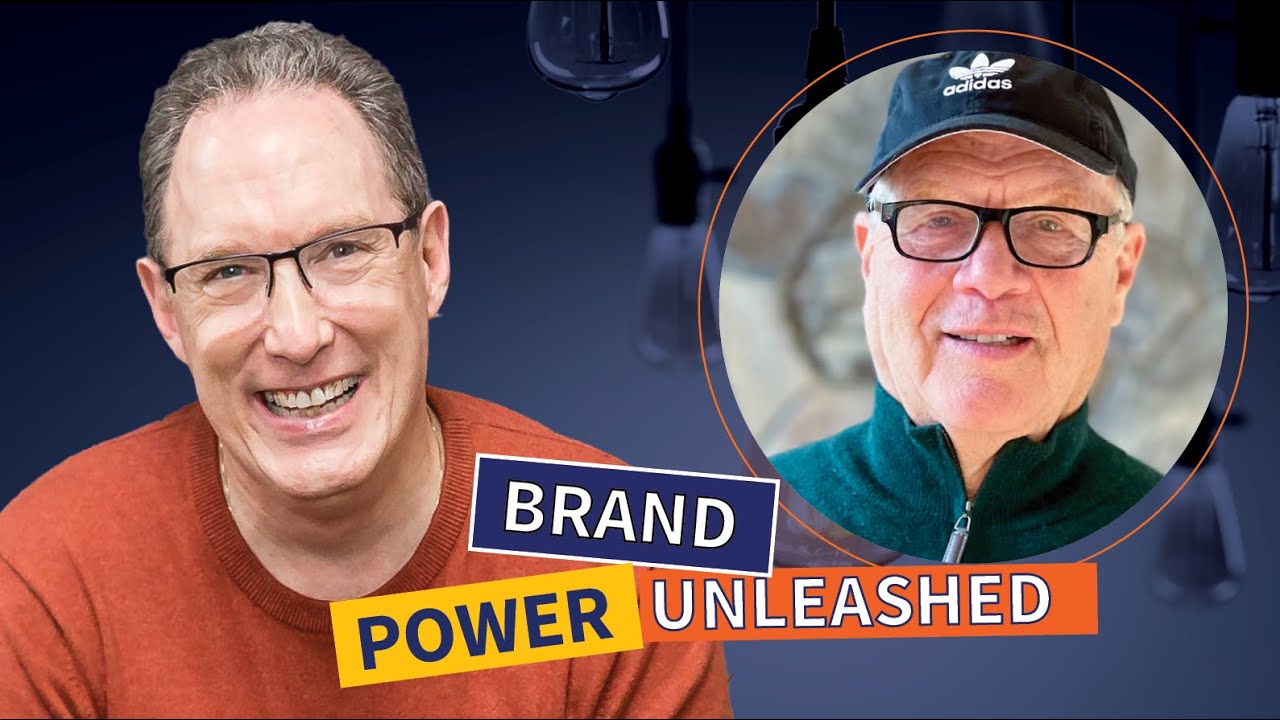
Robert Hargrove, the "CEO Whisperer," explains why small-business owners need a personal brand to amplify their company's reputation. He outlines three steps: define what you want known for, make it story-driven, and craft a single clear ask. Success requires disciplined daily posting on LinkedIn or TikTok for six months.
Chapters
I know something about you. Since you are tuning in with me right now, I know that you are super good at what you do. But there's a problem. Maybe you feel that you, your product, or your service is the best-kept secret in town. And even though you're working hard and your stuff is really great, not enough people know about what you do. There's got to be a solution. And that's what we're talking about next on Marc Haine Live. Welcome to this episode. This is where small business owners and entrepreneurs develop new skills to help them create the jaw-dropping, show-stopping experience that their customers and their employees deserve. I am your host, Customer and Employee Experience Strategist Marc Haine and I am so glad that you are here with us today. My guest for this episode is the CEO Whisperer, Robert Hargrove. And today, we will be cracking the code on making your business stand out. We are going to find out why some businesses are like hidden treasures. They're amazing but they're undiscovered. And we're going to figure out how to turn the tide on that situation. I do have one simple request though. If there's somebody in your circle who could benefit from the insights that we're sharing today, please do them the favor and pass along the link to this episode. Knowledge is power but only if we share it. You know, as a leader, And as a business, standing out isn't just about what you sell or the services that you offer. It's about who you are and the stories that you tell. It's about connecting in a way that not only captures attention but holds it and transforms it and transforms the people around you from passersby into loyal followers and customers. into advocates. But here's the rub. Many leaders and entrepreneurs are so immersed in the day-to-day operations of their business that they overlook a critical element. A problem so big yet so common that it is almost invisible. And it's costing them not just in potential revenue but in missed opportunities to create lasting relationships and a brand that stands the test of time. And so, that brings us to our Question of the Day. So, when was the last time you felt your team was deeply connected to your company's mission? Are they focusing so much on the nuts and bolts of your business that you're neglecting the very thing that is setting you apart? The power of your personal and business brand. I'd love for you to share your experiences. Why don't you go ahead and write out your response to that question of the day in the comment box here? Put your thoughts. Put your ideas. Share your own expertise and experience because who knows, it might go far into helping somebody else. As I mentioned, my guest today is Robert Hargrove, affectionately known as the CEO Whisperer. With a storied career that spans founding Masterful Coaching, venture capitalism, and authoring transformative books, Robert has redefined leadership excellence. His guiding principle is better leaders, better world. And it reflects his unparalleled commitment to elevating leaders and their businesses. Armed with strategic insight, and compassionate approach, Robert is here to share the secrets of building a personal and business brand that resonates deeply and stands the test of time. Robert, welcome to the show! I am so excited that you're here.
Well, I'm excited as well. And you're such a dynamo the way you present yourself.
Oh, why thank you very much. Hey, before we get too deep into today's topic, could you tell us a little bit about how you serve your clients?
Well, as I said, my nickname is the CEO Whisperer. And my main point of view in working with my clients is simply, what do I do to cause your success? And I find that a lot of people who are in leadership roles— CEOs, entrepreneurs, even owner-operators of small businesses— have a lot of stuff that's going on in their head. about how to take their business to the next level. But they don't have anyone to talk to about it. So, that's why I call myself the CEO Whisperer. But a lot of what I do is just act as a thinking partner. I call it sometimes a masterful thinking partner because I wrote a book called Masterful Coaching to talk about whatever is on that person's mind, whatever's on the CEO's mind, the founder's mind, the owner-operator's mind. And, you know, one of the interesting things is people tell me about their goals and their problems. They reveal something about themselves. There's a famous American educator, philosopher named Ralph Waldo Emerson. So, and he said that everything you say reveals you. So when I listen to people speak, such as the people who I'm speaking to right now, as I listen to you speak, I listen for your goals, your problems, and the underlying beliefs and assumptions that may get in the way of you being able to solve your goals and problems. A typical one, you probably have discussed this on the show before, is working in your business, for example, versus on your business. So, I'm listening. I don't just listen to what people say. I listen for where they're coming from. And it often reveals something that if I can detect that and help them make a small shift in mindset, it can have a big impact.
Yeah, brilliant. We have talked many times on this show about the need of bringing in trusted advisors and people to help exactly talk about what you talk about, which is this idea that we can't do this all by ourselves. And even the best of us needs a group of people or need people to help bounce ideas off of. Otherwise, we're operating inside of a bubble.
Well, as you put it, like, it's fascinating to me that more people don't have a CEO whisperer, a coach, a trusted advisor. I often say, look, Michael Jordan had a coach. Wayne Gretzky had a coach. How about you? You don't think you need a coach or someone to act as a thinking partner or sounding board? And what I've discovered is the higher you raise the bar of excellence— sorry, for your business, the more you'll seek out coaching. If you don't keep the bar, keep the bar pretty low, you won't seek out a coach. So, hopefully we can— go ahead.
And to your point, Michael Jordan didn't have just one coach. He had multiple coaches. He had multiple coaches, right? So, he had coaches for strategy. He had coaches for shooting. He had coaches for like, he had coaches for everything. And most football teams have multiple coaches focused on certain things. And even Wayne Gretzky on his teams had multiple coaches who were responsible for different aspects of his game. And so, to that point, it's not a one-size-fits-all solution.
And last week, I saw Michael Jordan. When you see him on TV, or YouTube, or whatever it is, he looks like a pretty tough hombre, right? But I saw a video of him last week kissing his coach from North Carolina. He revered him and cherished him so much. So, I hope everybody listening finds a coach and takes advantage of that leverage point.
Yeah, absolutely. But today, we're here to talk about business branding. In fact, we've talked a lot about this, about business branding on the show. But today, we're talking about this idea of personal business branding. To you, how do the two differentiate?
Well, one of the things that I notice is that the best CEOs in the world— I'm going to use some big names. But I don't want anybody to feel intimidated by those names. They're just well-known examples. The best CEOs build a personal brand that drives their business brand. So, if it wasn't for Warren Buffett, you would never have heard of Berkshire Hathaway. Right? If it wasn't for Steve Jobs, you probably, you may not have heard of the Apple computer, of the Apple iPhone. If it wasn't for Richard Branson, you wouldn't have heard of Virgin Airways. So, there's a very intimate connection between building a personal brand and building an organization brand. Building a personal brand puts a human face on your business brand and allows customers to connect with you.
Right. So, when we think about the idea of personal brand versus business brand and so on, are there any myths or common misconceptions about personal and business branding?
Well, I think one of the big misconceptions might be just to look at those 2 as separate. Probably, I would guess that you started the show by saying, I know something about you. So, I'm going to continue on that theme. I know something about you who are listening today and that you probably don't distinguish. You probably think of branding in terms of Apple computers and Tesla motor cars and Hanes underwear or whatever it is. But you probably don't think of the importance of having a personal brand. You mentioned earlier about companies that were excellent that nobody ever heard of. One of the things I noticed is I love the idea of people building a legendary company, a legendary company that's known far and wide. And whenever you have a legendary company, whether it's an Apple or Google or Amazon or a great supermarket chain down the street or auto dealer or restaurant, I think you had some great restaurants in Montreal. How do we know about those places? Those places are intimately connected to the CEO, the entrepreneur, and owner who has a personal brand. And where does the personal brand come from, Marc? It comes from what I say, the market and the soul at the same time. The personal brand of the company is a reflection of what's inside the soul of the person, what they care about.
So, I mean obviously, there are some businesses out there that have a brand. But then, there becomes an incongruency between the brand and the culture. And so, you'll see things on Glassdoor where people rate their employment experience with a company. And it's like, it's absolutely nothing to— it doesn't match up. A company that comes to mind is Amazon, right? Amazon became this pillar of purchasing and you're able to do things and it's all customer-centric. And then, when you heard the stories about what was going on in their warehouses, whether they were true or not, the fact that people were talking about them kind of salted the water a little bit for their brand.
Yes, I didn't have any direct experience of Amazon. Yeah, I do remember those stories coming out about a year ago. And I didn't want to believe it when I heard it. But I guess there was some truth to it. Another example that I'll share with you is I did some work with a company called Nike, which everybody knows about. And Nike—
Just a little company. Just a little company.
Nike has a— Nike is a great company. And it has a great brand. But I wound up coaching someone, let's say, at a very high level of the organization. I'm going to call them a CXO. That's— CXO is shorthand for CEO, CFO. And when I started working with that person, I saw that that person was— he couldn't do anything. He was tied up. The company had moved from being a startup in a garage or startup in the trunk of a car Phil Knight used to sell sneakers out of the trunk of his car to a big bureaucracy in which people had to jump through hoops to get anything done. And I encouraged this person who I was working with to make a move. I said, is this really what you want to be a part of? But the person was so, forgive me, sucked into the power, the money, and the prestige of working with Nike. They resigned themselves to a situation that rather than being soul-enlivening was soul-deadening.
Yeah, and we see that time and time again. But are there any telltale signs that a business leader's personal brand isn't resonating or isn't congruent with their target audience?
Well, I'm not exactly— oh, with their target audience? Yeah.
Well, I think so. Is there any congruency between Between what they— and I say this all the time. We see mission and vision statements on walls in offices. And yet, that's not the culture necessarily that's defined. It's the same thing I think with our personal business brand. When you have somebody who steps up into a role as a leader and people perceive, oh my goodness! This is going to be a really good thing. This person is— in fact, I was just reading my local municipality has a new CAO. And they started putting in everything that he's done in the past. And it's like, wow, this guy is going to be great. And so, on the get-go, we have a brand. If they don't deliver now on the hype, that brand will get crushed. And so, are there any telltale signs that you've seen that are kind of early warning systems that we might have an incongruency between the personal brand and the corporate brand and the target audience?
Well, those are— I don't know if I can remember all the steps in your question. But what your question is making me think of is something a little bit the opposite of that.
Okay.
How do you know the CEO or the founder or the owner-operator's brand is resonating with the target audience? Let's take it on a retail level. Here's the best way you know it's resonating. The parking lot is full. There's no— you can't find a parking spot. That's how you know it's resonating. You go into the store. There's a store near my house called Market Basket. It's a supermarket chain owned by a local family, but they have about 10 different or 10 or 20 different stores. All the customers are happy. They're not miserable. All the people in the store, they act like owners. The employees, they don't act like employees. They act like entrepreneurs and owners. The prices are good. The quality is good. The variety is great. And I go in there and I feel like I'm going to a bazaar in Turkey or Egypt or France because I feel good too. All the customers are so happy. Now, there's a store down the street from Market Basket called Star Market. And the store is— how you know the brand, the CEO's brand, personal brand and company brand is the parking lot is empty.
Hmm.
It's a huge store. There's only about the people. There's only about 10 people milling about. There's only— instead of their baskets being full, there's only a few things in the basket because they're charging $1 or $2 more per item than Market Basket down the street. So, I think the best telltale sign of a great brand is a full parking lot, happy employees, and happy customers. And what's interesting about this store that I just told you about, Market Basket, A lot of the people are people who recently immigrated from Guatemala or Mexico or El Salvador. But you can see they totally own the game. That's what you're really looking for for a great personal brand. But I think the thing that you want to point out is if you want to build a legendary company, connect to the employees and make the employees happy and they will do whatever is necessary to make the customers happy.
Right, right, right. For people who are new to the phraseology of branding and corporate brand, like you mentioned Nike and everybody knows Nike. Their brand is very powerful. Of course, their tagline is Just Do It. And so, just to make it clear, a tagline is not the brand. The logo is not the brand. It's what it all represents. And a good friend of mine, brand strategist Azadeh Yaraghi says, it's how people think about you and feel about you that makes up your brand.
Exactly.
And so, if you don't predefine your brand—
That's a beautiful way of putting it.
Yeah, Azadeh is a beautiful person. And she's brilliant. But so, here's the interesting thing is you mentioned Nike and you mentioned working at a high level with a high-level leader. To me, that smacks exactly of kind of this dichotomy between the personal leadership brand and the actual corporate brand. So, how important is it that one's personal brand is tied to the corporate brand?
Well, I think it's very important. But I'm sure that if you went to work for Virgin Airlines, you would have a direct experience of what it was like to be a guy like Richard Branson. Because his spirit— remember I said the brand comes from the market and the soul at the same time. Because the company would reflect his personality. I was on a trip to Turks and Caicos. It's an island. My friend has a house on a private island. I'm not wealthy enough to own a house on a private island. But I met a person there that was Richard Branson's groundskeeper. And he has a private island in the British Virgin Islands. I can't remember the name of it. And he said, every year people come from all over the world. I think he invites 25 or 50 people to come and make a pitch. And so, everybody was making their pitch. And one day, one of the gentlemen that was there bumped into Richard Branson and said, Richard Branson said, what pitch do you want to make? What do you have to pitch? He says, I don't have anything to pitch. He said, well, you must have a pitch. He said, no, I don't. I didn't come here to pitch. I just came here to have the experience of being around you. He said, well, what do you do for a living? He said, well, I make elevators. I install elevators. Well, I said, well, why don't you make me a pitch on how to make an elevator that goes from the first floor of my house over there to the top floor of my house, 3 levels higher? And if I like it, I'll buy 10% of your company and help bankroll for you to expand your business. I mean, that was a direct experience of a CEO whose personal brand reflects his organizational brand.
Yeah. And to that point as well, all the stories you hear about Richard Branson is he's really a fun-loving kind of adventurer. And when you look at Virgin Airlines, I mean, you get that feeling most times. I'm not going to say all the time. But you get that feeling that that's how he runs his company as well. That it's about having a little bit more fun.
He said something that I find myself repeating all the time because I've worked with so many CEOs and entrepreneurs that had what you said. They had that vision statement on the wall. They had all these core values that people were supposed to live by. And one day, I came across a line. It was, I think it may have been a book by Richard Branson. And he defined what a company was. And he said, a company is a group of people trying to help everyone be better off. I thought that would— I think that's absolutely fantastic. My job is, if I'm the CEO or entrepreneur, or probably like most of us here today, owner-operators, my job in running my company is to help everybody I come into interaction with better off. That includes the customers, the employees, my partners, my suppliers, everyone. Wow! If you have that attitude and radiate positive energy and good intent, you're going to have a successful company as long as you're doing something to help customers solve a problem.
I love that. Yeah. And again, it's with one of my core virtues being of service. I think that our number one thing is to be of service to people when you have a business.
But let me—
Yeah, go ahead.
Okay. Well, because I don't want— when you talk about personal brand versus company brand, there's a little phenomenon that can happen. And I think Peter Drucker, the great— the guy who supposedly invented modern management talked about is you have the monolithic example. So, I'm going to challenge you right now, Marc. Can you give us 1 or 2 or 3 examples of legendary companies in Montreal, in Toronto, in Alberta that maybe no one is— a lot of people have never heard of but are great examples of being legendary companies and where the owner has a personal brand that's reflected in the business brand and in the success of the business. So, just so we can have a small example.
It's funny you should mention that. I just wrote a blog article this past weekend about Jim Gilbert in the Atlantic provinces. He has a used car dealership.
Oh, beautiful!
And Jim Gilbert realized that He was talking the same way every other used car dealer was talking. But he knew he was different. And he developed— so with a good friend of mine, Garry Maxwell, the two of them started working together. And they kind of shook the trees on what made Jim magical. And he became Canada's huggable car dealer.
Now, you said he was talking the same way but he was different.
What did you mean by that? So, when we do advertising, when we do marketing messages, one of the things that we find is that if you check your competition and you go onto your competition's website, everybody's saying the same thing.
All right, yeah.
We believe in value, pricing, speed, expertise.
Quality, service.
It's all the same thing. And so, if we're all talking about the same thing and I was delivering a presentation about a year ago to a company in the States. And I said, if you're all talking the same language, same way, what is the differentiator between you and your competition? And it turns out that the only differentiator then becomes price. What do you think is the biggest challenge these companies have when they're dealing with a new client? How much do you charge? The number one question, how much do you charge? You haven't even gone into the details of what you need and they want to know how much you charge.
Exactly.
And so now, you're a commodity product. Now, you're a commodity service because you're just competing for the lowest dollar. And what Gare Maxwell did with Jim Gilbert was he was able to look at what Jim Gilbert did really well. And then, Jim started talking differently. All of a sudden, he brought stories into his ads. He talked about what he was doing. It even changed how he laid out his lot. He actually made it more family-friendly. He had pony rides. He had walking trails. He had all sorts of stuff to support the fact that he had this brand. And so, look it up. Canada's Huggable Car Dealer. And you'll see when somebody becomes that legendary brand as you were talking about in a small community, right? Because a lot of times, we have the excuse, we can't do it. We're too small. We're not like the big guys. We don't have the marketing budget.
Well, let me take off on your example for a second, which I really loved. I think the first step in building a personal brand is to identify Or get in touch with what it is you want to be known for. And oftentimes, it's not just the product and service. It's something about who you are. It's your personality. It's your ability to connect with people. So, everyone listening, or should I say, I'm speaking directly to you.
Right.
What do you want to be known for? What do you want to be known for? And what do you want your company to be known for? That's a first step in building a personal brand.
Yes.
A second step is how are you going to get that message across? And I'll tell you very— what your story told me, which was very educational, is make it personal. You have a story to tell and tell it in a very personal way. It's not just the words. It's beyond words. It's It's about the music. And that wonderful story you told is an example.
Yeah, it's excellent. I'd like to delve a little bit more into some strategies that we can use to bolster our personal business brands. And we'll get to that right after this.
When the spotlight shines on your business, are customers applauding or yawning? In other words, how is your business performing? Make your business a star with a new book, Lights! Camera! Action!, business operational excellence through the lens of live theatre by Marc Haine. Marc uses his business and acting experience to help you see your business like a live show so you can create a performance your customers will never forget. Buy Lights! Camera! Action! today at your favourite online retailer or directly at marchaine.com.
Welcome back. I am speaking with the CEO Whisperer, Robert Hartley. And we're having a great discussion about personal branding. Robert, you mentioned the importance of aligning personal branding with business objectives. When it's done right, what does that look like? You mentioned the parking lot. But there's got to be other indicators within the confines of when it's all connected, when everything's all synergistic and in line.
And what does it look like I think one of the things that stands out is that you are one of the— beyond just the owner being a great human being, a great guy regardless of gender, is they have a product, or a service, or a business model that makes them the best in the world at something. There's something about them that makes them special. In today's world, you have to stand out. You have to Stand for something. You have to be special. If you're not special, you're not going to survive. Or maybe you will survive at a certain level of success, but you'll never get beyond that. So, I think that's something everyone needs to think about. That's something that you need to think about, dear listener, is what is it that makes your company stand? What do you stand for? What makes you stand out? What makes you special? What differentiates you from all the other me-too competitors in your world?
Right, right, right. And so, in order to do that, can we talk about some strategies? You already mentioned 2 steps as a strategy. Are there— saying you're something and acting like you're something are 2 different things.
So— Well, I think you have to have one thing you have to have is a message. I said, step 1 is what do you want to be known for? Step 2 is make it personal.
Right.
3, this is very simple. You have to be able to have a simple message that says it's not really about you. It's about what you can do to help others. What can I do to help you? Whether it's help you to learn to play golf better or solve a problem with your home or Do a better podcast. So, you have to think, what can I do to help people? And you have to communicate that. And I'm going to give you a very clear statement here. To one audience. A lot of people try to be all things to all people. You have to say, to one audience with one ask. You want to, at the end of your message, you want to ask your customers to do something.
Right.
All too often, a lot of messages go out there and they just leave people hanging. It's like, I'm not quite sure exactly what I'm supposed to do with this.
Have you ever been on LinkedIn?
Never, never been on LinkedIn. Never, never ever have I been on LinkedIn.
Well, LinkedIn is the most powerful social network in the world, social business network in the world. There's a billion people. And what you have is a lot of, I would call it intellectual entertainment. People get full of tips and techniques about how you run your business.
Right.
But most of the things are— most of the people are not addressing their message to an audience. And most importantly, they never ask anybody to do anything like book an appointment or look Look at my website or give me a call or something like that. I wanted to say something that would be an encouragement to all the people out there. And by the way, I'm trying to train myself not to say all the people but to say, it's you and I. So, that's one of the things I'm working on, building a personal brand. But one of the things when I started my career, and I think this might be in the back of people's minds, I thought I was the best in the world at what I did. which was some kind of version of CEO Whisperer. I did leadership weekends. I put on leadership weekends for 25,000 people all over the world. Every week, I would go to someplace else with 100 people. But I started with nothing but a telephone book and a telephone. And I desperately wanted to— I thought I was really good at what I did. I did it in small groups. But I had no brand. The moment I put down the phone, nobody There was nobody there. I was sitting by myself. So, but, and I looked in the newspaper. What would it cost me to put an ad in the newspaper? Wow, that was way too expensive. Even putting a 1-inch ad. I live in America, the Boston Globe, the United States. I couldn't afford a 1-inch ad. I couldn't afford a 30-second radio spot. I definitely couldn't afford to buy a booth at a conference.
Right. Right.
But today, that's all changed. So somebody sitting there who is listening may think, I can't— building a brand, that's for big companies. What does that have to do with me? Well, that's why I say that in 2024, if you're not building your personal brand by leveraging social media or leveraging artificial intelligence, then you're absolutely missing out on a fantastic opportunity to make your thing successful. Now, now with social media, whether you use LinkedIn or TikTok or, or, uh, Twitter, you can capture huge amounts of attention for absolutely free. And if you worry about, well, I'm not sure how to write a sentence or how to write a brand message, you can put the general idea down on a piece of paper, put it in ChatGPT, and you'll have a If you know how to do the prompts right, you'll have a very good advertisement. So this is really an opportunity to— 2024, there wasn't artificial intelligence. ChatGPT didn't exist before 2023, or at least nobody knew about it. So this is the year of the brand. And let me tell you something, every person who is listening to this wants to increase their sales, right? So how are we going to increase it? How are you going to increase your sales? Well, I want you to take this message and print it indelibly in the back of your mind. Brand drives sales. The stronger your brand, the stronger your sales will be. I went into a mall a few weeks ago and they were selling a pair of Nike shoes for $1,000. And while I was there, someone actually went into the mall and bought those shoes for $1,000. Now, why did they buy those shoes? Those shoes had the name Nike on it. Without the name Nike on it, no one would have bought those shoes. So, you know, you can— a car dealership is a good example. There's all kinds of car dealerships. But it's the huggable— what did you call the huggable car dealer?
Canada's Huggable Car Dealer.
Yeah. That guy is making all kinds of And success over success over success.
Robert, this is really, really great information. If people are tuning in and want to get in contact with you, how can they reach you?
Well, I am on LinkedIn. Robert Hargrove on LinkedIn. I have a website called masterfulcoaching.com. That's www.masterfulcoaching.com. And I'll even put out our company phone number. 617-953-5252. And if someone wants to talk, they can talk about whatever's on their mind.
Terrific! Thank you for sharing that. Is there a way for leaders to measure? Part of the challenge I've always had, I guess, with organizations, especially in the realm of marketing is return on investment, key indicators of success. Is there a way for leaders to measure the impact of their personal branding efforts on their business's success?
Well, yeah, I think that you have an increase in sales. But before I go—
But that could just be you put an ad and somebody saw a new ad. It doesn't necessarily tie one-on-one, right?
It might be hard to distinguish at first. I'm not sure I have a good answer to that question. But I think the point I'd rather emphasize is that there are probably— I don't know what businesses you're in out there. You could be running a restaurant or a car dealership or a pizza place or something or a department store. You may be attracted to the idea of building a personal brand. But you know what it's going to take from you? It's going to take investing time and energy in it. You can't do it. You either— there's 2 ways you can build a personal and company brand. One is you pay someone to do it for you.
Right. Okay.
And the other is you do it yourself. And if you do it yourself, it takes a significant amount of time. So, it takes a certain amount of discipline. So, I spend an hour a day either posting something on LinkedIn or Twitter or TikTok. And another idea, reading, figuring out what things I want to post. So, I say that discipline is destiny. So, if you have the discipline, To leverage social media and post, let's say, 3 times a day or 3 times a week, it won't pay off. But if you do that consistently over a 6-month period, I think you'll see a big payoff. But it comes back to what I said at the beginning. You're working either in your business or on your business. If you're a plumber and all you do is answering the telephone and running to the next job, you'll never build a personal brand. You have to take 1 hour out of your day and invest it. building a personal brand.
Well, and what's interesting is the thing about brand is if you don't build and develop your brand, the market will. The market will know, oh, Steve the plumber, he's so hard to get hold of because he's never in the office. He's scheduled. He's always late because he's always running, right? That in itself is a brand. It's not a good brand. But it's a brand.
Well, Marc, Marc, I want to call you Marco for some reason or other.
Maybe I just need to grow a little mustache and have a little Italian accent. Yeah.
Well, you made me think of a really good point I wanted to make is that everybody has a personal brand.
Yes.
But not everybody knows they have a personal brand. And not everybody knows what their personal brand is. It doesn't take— if you're running a business, you're running a an auto dealer or a pizza place or a supermarket and you're in a bad mood and you let that be known, it doesn't take very long for a conversation to get going about you that's independent of you and lasts for a long time. But I would think a great exercise for you listening to this would be to ask people who are your customers or ask people who are your employees, Or ask your wife or your husband, what do you think my personal brand is? Here's what I would like to be known for. I'd like to be known for a great leader and manager. Well, what do people— what am I actually known for? And it may not be what you think. It would be worth finding that out because that would be your starting point. What is your personal brand today and how do you want it to be?
Being that we're releasing this on Valentine's Day, I would strongly suggest that if your wife comes to you and asks you what her personal brand is, do not tell her anything negative.
Right.
So, there's a component in there of political agenda when you're asking people about it. But there are different ways that you can definitely find out how people are thinking and talking about you as well.
I think that one of the best ways that people could, uh, listening, uh, that you listening, that you want, that is to build your personal brand, is to take one of Marc's, uh, public speaking courses. I've never seen anybody— Marc is absolutely terrific. I'm learning a lot just from being on the show because a lot of what, a lot of what it takes to build a personal brand is you've got to get out of yourself. You got to go out there with people. You can't be walking around your store with your head down to the floor. I think everybody needs to be able to put it out there. And I'm sure that signing up for some of your courses would be absolutely amazing.
Well, thank you for that. I appreciate you saying so. I'd love to talk about some pitfalls and some cautionaries that we should be aware of when it comes to visiting your brand and trying to boost it to something that is going to be elevating your business, not killing yourself. And we'll do that right after this.
When you're delivering an important speech to a huge audience, it's easy to lose your place or go way over time. Give yourself an advantage with the Pro Speaker Presentation Speech Timer app. No more checking your watch or calling for time. The Pro Speaker Presentation Speech Timer app It keeps you on track with easy-to-see timers, even changing color for visual prompts during your speech. And you can set audio cues to practice or set it to vibrate so you don't even have to look. Be the pro you know you are. Download the app at speakerpresentationtimer.com.
As you can tell, we are having a really great discussion. I hope that you're getting tons from what we're discussing today. As evident from our discussion, Robert and I are deeply dedicated to supporting business leaders just like you. So, if you are in the midst of planning a leadership retreat, an industry conference, or you need some expert guidance, we're just a message away. Our link is in the show notes. Feel free to reach out for a conversation about your unique challenges or to discuss how we can collaborate to help you achieve your goals. We're more than happy to be here to help you. Robert, what advice would you give to a new leader that's coming into— a lot of people get promoted without the training. What would you tell a new leader to avoid some of the common pitfalls of personal branding?
Well, I think that— let me put it to you this way. There's a famous writer, historian. He actually died a couple of years ago. And his name was David McCullough. He wrote a book called 1776 about the American Revolution and many other great books. And he said, you can't learn about leadership by taking a class. You can't learn about leadership by reading a book. You can only learn about leadership by leading people. And I think that many people who are new to leadership are experts in something. Maybe they're an engineer. Maybe they're a Chief Financial Officer with a degree in economics. Maybe they're an auto mechanic. But they forget that really the job of running a business, leading a business is leading people. And the way to make that work is you have to like take your attention off the your functional area, your area of specialty, and put it on leading people, inspiring people, empowering people, enabling people.
I love that. That is so powerful. That is so powerful. And that in itself will help you define your brand, right?
When people— And I think again, let me use you as an example of this. We didn't discuss this before. I never We didn't speak before this call. But one of the things I noticed about you is you speak with good intent. You're out there. You're committed in this podcast to making a difference in people's lives.
Right.
A lot of people when they talk, a lot of CEOs and entrepreneurs when they talk, they don't speak with good intent. They're sarcastic. I think that's a sign of someone who is not a leader, someone who's sarcastic and cynical. Someone who says things about side comments about people behind their back. Another thing I noticed about you, Marc, is see, I'm a people watcher. I've observed a lot of things about you on this show. You radiate a lot of positive energy. If you want to have a great brand, those are 2 good things right there. Speak with good intent. Radiate positive energy. And be a cheerleader for people versus— A wet blanket. That, you know, know what you want.
Official terminology, wet blanket. It's an official terminology.
And hey, by the way, I have a suggestion for you.
Yeah.
If you don't mind because as a CEO Whisperer, there's a lot of people listening to this show that run a business. I would think it would be a great idea If we could put together, if you could have a series of groups, let's say that would meet. Let's say a group of 10 people that would meet on a quarterly basis. And they would all join this process. And it would be about creating a legendary company. And you could be the— you and I could be the orchestrators of those groups. You could have one in Ottawa and one in Montreal.
There you go. All over the place. They have the legend. I mean, obviously, we have in the States.
See, I'm not— see, let me give you an example. I'm not on this show. I'm on the show because I like to educate people. But I'm also here for business. And I see an opportunity. You have so many great viewers and listeners. And there's only so much you can do through a podcast. Let's bring people together in one room. And see if we can build some legendary companies.
There you go. Robert, this has been such a great conversation. Do you have any last thoughts about what we've been talking about today?
I think that if I have a last thought, it's been that it's been a wonderful opportunity to be on this podcast with you. I felt riveted from the first moment that you started talking. What I really like to do is get a copy of this podcast so that I could use it on my website if that's okay.
You will have the link and feel free to put it on there.
Thank you very, very, very much.
Could you just remind everybody one more time how they can get a hold of you?
Okay. Robert Hargrove. I'm CEO of Wisdom. My book is called Masterful Coaching. My company, It's called Masterful— www.masterfulcoaching.com. And I'm on LinkedIn. You can connect with me on LinkedIn.
Wonderful!
Thank you. Sorry.
Go ahead.
I'll just leave my phone number, 617-953-5252.
Thank you so much. I really appreciate you sharing your passion and your expertise with us today. This has been a very fun episode. Thank you for joining me. Being our guest expert for the day.
And thank you for what you demonstrate. I think you personify the power of love in business. Thank you, Marc.
Oh, thank you so much! Why don't you let me know if this was of value to you? As always, my offer stands. If you would like 30 minutes of my time to brainstorm your business with you and your team, feel free to book yourself on my online calendar. The link is in the show notes. It's the one marked meetwith.marchaine.com. It would be my absolute honor for me to be of service to you. And while you're at it, why don't you go ahead and leave a comment or review about this episode? I'd love to get your feedback. Was this of value to you? Did you get something, a nugget that you can apply to your business? I'd love to know that. And of course, if you haven't done so yet, please make sure that you subscribe to the podcast. That'll give you first dibs whenever I bring you fresh new content, new experts, new topics each and every week. Thank you for joining me today. My name is Marc Haine. I hope you stay safe, stay healthy, and I hope you dare to be the exception. Thank you so much for being here.









