Do This to Reinvent Your Small Business | Entrepreneur Mindset and Small Business Ideas
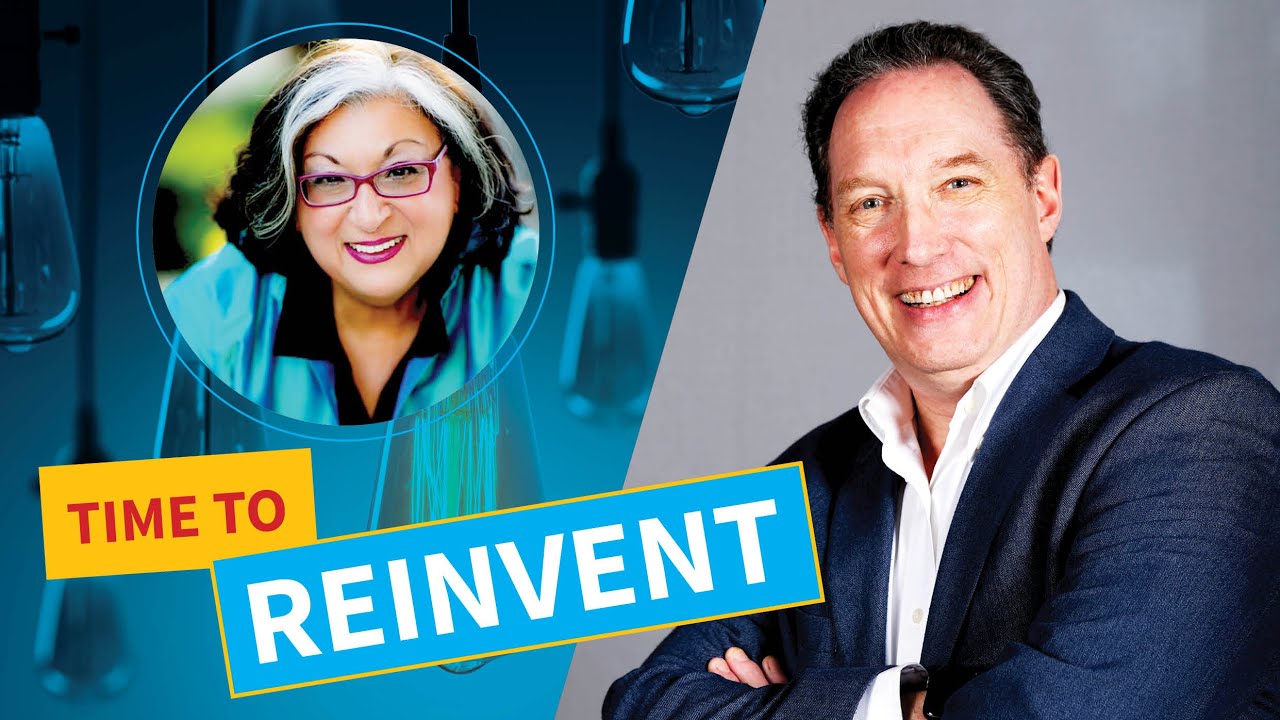
Danielle Silverman, a reinvention specialist, explains how small-business owners can move from survival to thriving through a three-part framework: anticipate change, design new strategies, and implement them. She uses the "Titanic Syndrome" to show how arrogance and ignoring reality sink companies, and notes that 75% of change initiatives fail due to poor implementation.
Chapters
There's a lot of talk about going from surviving to thriving. But what happens if you can't? What if you're still in survival mode, unsure of where to go next? Could it be time to reinvent your business? That's coming up next on Marc Haine Live. Welcome to Marc Haine Live Episode 16. This is where small business owners and entrepreneurs pick up core skill sets to help them work on their business, not just in their business. I'm your host— Sorry about that. I jumped the gun. I'm your host, Service Expert, and Master of Experiences Marc Haine. And just like anything live, sometimes the crickets get in and all sorts of things happen. But I am so glad to have you here for this episode. We have a special guest today. reinvention expert Danielle Silverman. And we'll get to her in just a moment. But in the meantime, feel free to drop a question or your own fabulous insights in the comment box below. I feel that people can benefit from everybody's feedback. So, they can benefit from your experience as well. This is not the first time that businesses have faced a dilemma that COVID-19 has caused. We've had lots of recessions. We've had lots of things going on. But this is the first time, at least in this generation, where the The sheer volume of businesses are challenged. Usually, it's affecting one industry or so. But there are so many industries now, so many different businesses that are affected by COVID-19. So, I would like to know from you. And here's our Question of the Day. Have you ever considered reinventing your business, especially during this pandemic? And what would that look like? Why don't you put your comments down below? I'd love to hear your feedback on what it means to you to maybe reinvent your business. And as I mentioned earlier, our guest today is a sought-after Certified Reinvention Specialist Practitioner and co-founder of the Reinvention Society of Canada. My goodness, it's hard to get that out. She holds an MBA in Management and Marketing, as well as a Master's in Human Systems Intervention. Welcome, Danielle Silverman! Thank you so much for joining me today.
Thank you so much for having me, Marc. It's really great to be here.
It's great to see you. You look great, by the way. Just saying.
Thank you. Thank you very much.
And you're situated in Montreal so you get all the nice humidity and stuff. I hope it's not too, too humid for you today.
Yeah, no, the air conditioner has been on for 2 months now.
So, before we get into today's topic, could you tell us a little bit about what you do for your clients?
So, wow. So really, what we do is we help people survive. We educate people on what Mm-hmm. And really, the biggest desire is to help people being able to survive and thrive through any change. And so, reinvention is about learning how to change. It's about embracing change. It's about reimagining, rethinking what you're doing based on past experiences to really Make sure you have a viable present and future.
Nice, nice.
And so, yeah, it's not cookie cutter. There's a—
No, I would imagine that every situation would be a little bit different when it comes to reinvention.
Probably, yeah.
Yeah, I understand also that you also had a successful career as a Director of Marketing and Communications for a software company. And that you have a whole history of what prompted the change. So maybe you could share with us what prompted the change and how has the change affected your personal life?
Wow! That's a big story actually. Well, yeah, I got sick actually. That's all it is. And in the middle of my sick leave, I had a pretty big burnout that lasted 2 years, believe it or not. And in the middle of that, I got laid off from my job. And so, when I started getting back to normal a little bit, I started working with a consultant to figure out what to do with the rest of my life. And at that point, I became a career coach because there was a lot of connection between marketing and helping people find jobs. On the jobs, there's no harder product to market than oneself. But eventually, I realized that really the thing that is important to me that I care about first of all is helping people. That's why coaching is very, very critical. But the other thing is that the whole idea of transition. So, change is an issue that's very near and dear to my heart. And as I started to learn more and more about it, that's when I came across reinvention and started working with the guru of reinvention who's Nadia Zhigshambayeva. And Started following her, started taking her courses and becoming a Certified Reinvention Practitioner.
That's amazing. So, I mean, we've had— I mean, there are all sorts of terminologies being thrown around. What exactly is reinvention?
Well, a definition of— there are many definitions of reinvention as you can imagine because it's reinvention. The reason we have many definitions is that It depends on the situation. And we always try to think about, okay, what's the better way of doing things depending on what the situation is. But bottom line is it's a systematic approach of engaging healthy cycles of planned renewal. So, there's a system. It's planned. And it's building on the past to ensure the present and the future viability. which is what I said before. But it's also strategic and not fixed. It's emerging. So, we're constantly looking at what's working and constantly trying to think about, okay, what is it that might cause us to fail?
Sure.
So, how do we— we're constantly asking ourselves, how do we kill the company basically? So, to figure out what do we do in case something happens.
Yes.
So, COVID-19 happened. But there were predictions a long time before that something like this would happen. And so, the smart thing would be to think about, okay, what's the next thing on the horizon? What might come? It might be a competitor. It might be a supplier. It might be any, you know, something like COVID, you know, whatever it is. Collectively, let's come and think about what it is and what do we do in case that thing happens. Sure.
Anyway, it sounds really super compelling and I can't wait to get into the meat of this topic. But at the moment, I just wanted to remind everybody that this episode is brought to you by the Speaker Presentation Timer app. It helps speak— I created it to help speakers and presenters who want to develop great stories and compelling presentations without ever having to break the fourth And if you ever want to know what that fourth wall is, you could check out the website at speakerpresentationtimer.com. It's available for iOS and Android-powered devices at the App Store and on Google Play. So, go ahead and visit speakerpresentationtimer.com. So, Danielle, in past episodes, we have talked about— well, we talked to business strategist Ronny Pauwels about the need to adapt and adopt in our business and with new ways of thinking and being. We've also talked to Business Link CEO Barbara McKenzie about the importance of being able to pivot. What makes reinvention different from those kinds of philosophies?
So, reinvention is a system and a set of tools. And it will, depending on what your business needs are, all of the tools can be valuable. And it's not just about pivoting. It's really about setting up a system that will keep you thriving long-term.
Hmm.
It's not just, okay, how do we react? It's not reactive. It's much more proactive in that sense. It's a living system. I mean, that's why the definition keeps changing. Every person you talk to has a different way of thinking about it. I look at it as an immune system. So, it's something that you build within your daily, weekly, whatever cycle of business that keeps you alive.
Nice.
I think that's something that has that power to consistently because change is not about to go away. First of all, it's existed you know, forever since the universe began. But on top of that, what's happening is the speed of change is increasing. Complexity is increasing. Things are compounded. We're living in something called a VUCA world, which is volatile, uncertain, complex, and ambiguous. That's a term that was coined by the American Army, I think, for the Iraq War. to explain what it was like in that particular theater of war. And but, but it's being used in business today because that is the world that we're living in. And given that that world is like that and it's not getting any better, Hmm. it's becoming even more volatile, uncertain, complex, and ambiguous. We need to be able to find ways of working in that kind of atmosphere. And so, having a system, having a set of tools that allow us to do that just ensures the viability of the company, present, future.
Yeah, I imagine that when it comes down to any kind of change within a business, especially when you're thinking where business operators now need to start thinking about reinvention, about taking a look at what they're doing and saying, how can we be Completely different. I'm sure that they— how do they get there? Like, I understand pivoting and I understand you have capacity. Reinvention is a completely different ball of wax. There must be a ton of questions that business owners have to really cover in order to figure out whether or not reinvention is right for them.
There's a core. There's a core to it. So, the core is really 3 basic things. You have to be able to anticipate change. You have to be able to design it and you have to be able to implement it. And the problem is that some people, some organizations are good at anticipating, or at designing, or at implementing. But very rarely are they good at all 3. What happens when you intersect some, you know, there are different things. Sometimes, it's just about putting out fires or sometimes, it's just about not being able to motivate your employees because there's just no action. But the 3 are very important. And the problem today is that And the reason that 75% of change management efforts fail is that most companies are not really good at implementing the change. But you have to have a good balance between the 3. So, that's among the 3. And so, that's the core. But you then also have to have a culture of reinvention. You have to have a mindset of reinvention and not have it be static or resistance because resistance to change is a very big deal. So, mindset of reinvention, culture of reinvention, and you have to have a system as well. So, all of those things are necessary to put in place. Yeah.
So, you mentioned— so, one thing that popped out as you were saying that is this idea that mindset has to come into play. Like I can imagine that from When it comes to making the change, the mindset perspective, what do business owners need to do to adjust how they think about their reality?
So, mindset is about being able to— how do I say this? Hold on a second. Let me Figure out. It's about how you view, for example, if you believe that the ultimate good is improvement, it's progress, it's development as opposed to something that's stable and predictable.
Mm-hmm.
Okay, that's a reinvention mindset. If you see change as constant and manageable, that's a reinvention mindset. If you If you view the unknown with curiosity instead of fear, that's a reinvention mindset. Just to give you some examples of what that might be.
Okay. Yeah, because I work with a lot of small businesses. And a lot of the owner-operators that I deal with have been in business for 15, 20 years doing what they've always done. And I find that one of the biggest challenges they have is they can't think themselves out of their current situation. They've had a reality for 15, 20 years doing the same thing that worked maybe 20 years ago when they launched. They had good responses. But now, they're competing in a more global way even if they are just a local business. I mean, they now have to— the competition is huge. They now have online ordering. They have the internet is— a huge bane of a lot of small business owners' reality. And now, they have to adjust. And some of them just don't have the skill set or the capacity to be able to change. How would somebody like that start thinking about this idea of reinvention?
Well, I think you have to first of all look at the mindset issue and figure out where you stand in it. And have that awareness first of all, what, you know, where you stand, where you fit. Because that awareness is very important. The next step is to figure out where you fit in the grand scheme of things for reinvention. So, do you know how to anticipate change? Do you know how to design change? Do you know how to implement change? And we actually have an assessment for that that will help you. It's called the Titanic Syndrome Assessment. So, the kind of companies that you're talking about may be suffering from something called Titanic Syndrome.
And it's funny that you should mention that because I saw you speak at a McGill University event last week.
Yes.
And you mentioned this Titanic Syndrome.
Yes.
So, I'd like to dig a little bit deeper into that because when you presented it at McGill and I just thought it was so— what a brilliant definition of kind of the outfall of the unwillingness to change or the unwillingness to shake up the status quo. Can you dig a little bit deeper into the Titanic Syndrome?
With pleasure. So, what we call the Titanic— first of all, the Titanic is— everybody knows the story of the of the Titanic that sank in 1912. And it's a wonderful, wonderful metaphor for business. And it's— so what we call the Titanic syndrome is a corporate disease in which organizations that are facing disruption create their own downfall through either through arrogance, through excessive attachment to past success, or an inability to recognize a new and emerging reality. And so if we look at some of the things that happened on the Titanic, For example, the first officer who was on duty the night the ship sank, because the captain was asleep, it wasn't his shift, he was a man with 16 years of experience. And he was known for having— for being level-headed and also for being able to avoid ship disasters, ship collisions. On his previous assignment, He, as he was second officer, and he actually countermanded— not even countermanded. He refused to listen to an order that his captain gave him, and he took the helm and did a particular manoeuvre that kept him— that allowed his ship to avoid an oncoming ship. They were really bound to— they were about to collide. And what he did actually made them avoid. So they came within inches of each other, but they never collided. So on the night the Titanic was close to the iceberg, this first officer did exactly what he knew he did. He relied on his 16 years of experience, used the same maneuvers, and unfortunately they didn't work. So this is how— an example of how being attached to past successes might not work in the future. What got you there may not be what will get you— what got you here will not be what will get you there. That's one example. There are many others. There were no— there were, yeah.
I mean, one of the ones that really was interesting that when you were talking about it was this idea that they couldn't get to the binoculars. And because I've been, as a small business consultant, I forever have been in situations where people, they don't do something because that's not how we do it. And so, the binocular story is really interesting.
So yeah, I can tell that too. But doing things the way you've always done it is an issue for sure. So, the night again, the night of the Titanic, The— on the eve of the departure, actually, of the boat from Southampton in England, the second officer who was in charge of the— what they call the crow's nest, he was— he had the keys to the cabinet that held the binoculars. And he was asked to leave the ship on the eve of the departure. They didn't need him for some reason. He was disappointed and completely forgot to hand over the keys. Now, yes, there were binoculars. They were in a locked cabinet. And I'm sure that at some point, somebody could have broken open that cabinet. But they didn't think that they would need it. There was some kind of arrogance. This was an unsinkable ship.
Well, I mean, so you have the arrogance but you also have the culture because the culture would have been completely contrary to destroying a door. Or a cabinet in order to get something.
Exactly right.
And so then, I wonder with small businesses how often we have a culture of doing things that we stop questioning. And then, because of it, we create bigger issues over the long haul. This is such an interest for me. It's such an interesting topic, this idea of reinvention because it really does mean we have to change the way we're thinking. But it also means that we have to put some sort of systems in place to be able to test out presumptions and assumptions and all that sort of stuff. So, I'd love to get into how one can build a system of reinvention. But before we get into that, could you tell our audience how can somebody who thinks that they might need your service, how can they get in touch with you?
So, I think I shared with you a link to our page where you can sign up for our mailing list. And I do that as a first thing just so that we can have your information. What I don't work alone. I work with a colleague. And what we really want to do is help you solve your problem in the least amount of time possible to get you where you want to be. So, there is no cookie-cutter way of doing things. We're not going to ask you to sign up for a program that is going to make your eyes roll and things like that. We want to start by getting to know your business better. And so, if you give us your name and your email, email address, then we will contact you and we'll have that initial call with you to figure out what it is that you need.
That sounds great. And so, you mentioned something about an assessment. Is there also an assessment online as well?
It's not online. It is something that we use as part of our analysis when we're working with a company. We're working with a company now. It's a salon, which is Quite in— most of the people in that industry, in the beauty industry, are in tremendous uproar right now because the whole thing has changed. Will the clientele come back? How will they do it? And so, that was one of the first things that we did with them. And it was really, really interesting. And every company is different in the results that come out.
Yeah.
So, we work with With the results. And then, we design the next thing based on what their needs are.
I think this is so rude for me to pull out my cell phone. But I just received a text from Joanne. And she says, when is the best time to change? We're in the middle of a pandemic. Shouldn't businesses wait until things stabilize before they start thinking about reinventing themselves?
That's a great question.
Isn't it?
Now is the time. There is no better time.
And so, why is that? Like, why wouldn't businesses wait until a solution to the pandemic has come, that they can see that there's the blue sky behind the clouds? Why is today the day people should start thinking about reinvention?
Because we live in a VUCA world. Because we don't know what the future is going to look like. And this is going to last a very, very long time. COVID-19 is just the tip of the iceberg. The world is undergoing a radical change. We haven't even begun to look at the impact of this on healthcare, on education, on our borders, on global trade, monetary system, banking, economic— everything is being tested right now. So if we wait, it could be 10 years before we know what that is. And so now really is the perfect time to start thinking deliberately and systematically Because otherwise, we're going to constantly just be staying in firefighting mode or we're going to die. Yes.
Yeah. And I think this is unfortunately, this is the reality in many situations is that small businesses cannot see themselves past what they've usually done. And now, because of this, I mean, the percentage when you look at the independent stats from the Independent Business Federation, it's shocking how many small businesses are closing. I mean, I remember like a month into the pandemic, 10% of small businesses have said that they are closing for good. And that was in April.
Restaurants, movie theaters, beauty salons, whole industries that may very well just disappear.
Mm-hmm. Yeah, or get reinvented.
Or get reinvented.
Right. And I think necessity is the mother of invention. And, you know, in my book, my upcoming book, I mentioned about a welding shop in Kelowna, Alberta here where they were pipe workers. I mean, they had a welding shop, 25 employees. And in 2008, when everything started happening with the oil and gas industry, all of a sudden, he was stuck having to lay off all his employees.
Yeah.
And he, you know, when he was down to himself and one other employee, he went for a barbecue at his cousin's house and he saw their fire pit and thought, I can make a better fire pit than that. That's really cheap. And so, he and his brother designed fire pits and stuff. And they make these beautiful high-end fire pits now that when things started to rebound before COVID-19 hit, it actually attributed to about 8% of their total sales.
Right.
And now, they've taken the pivot one step further where they do construction steel now. So, they're not just doing the oil stuff anymore. And this is a perfect idea that not only is it a pivot, but it's also a reinvention of their whole business model.
Right. So, the idea is to look at what you're really good at. And so, and then work on that and figure out, okay, what other markets could use those, that skill that we have, the core. So, we're not throwing out the baby with the bathwater.
Right.
We're keeping what we're really good at. We're doing it in an appreciative way. And we're trying to figure out, okay, how can we use this strength now for the future? The best example, the example that I like about this is Philips. So, if you think about Philips in the 1970s, do you remember what they did? What they were known for?
No, no, I don't.
They made televisions. But they didn't sell. And so, they sat down and they thought about, okay, what can we do? What are we good at? And they realized that what they were really good at was imaging. They had a much crisper image than any of the other televisions out there, right? They just weren't good at marketing. And so, they used their imaging knowledge and capabilities to create machines in the healthcare industry. So, wherever you go, if it's a dentist's office or a hospital or a doctor's office, the imagery that is being used is Probably created by Philips.
Amazing.
And so, they've gone through 2 or 3 innovations. So, you know, today, the life cycle of an organization, that's another reason why people need to reinvent now. The life cycle of an organization 50 years ago was maybe 75 years, which means that by the time you get to the upper part of the curve and start going downward and declining, you probably had 37.5 years to be able to turn around. In 2002, I think there was a study done that said that that curve was now 15 years, which meant you only had about 7 years to reinvent yourself or to start thinking about what the next iteration was going to be. And then, there was a study done in 2018 That meant that— and that showed that about, I think it was 12% of organizations needed to reinvent every 1 to 2 years. And more than 33% of organizations need to reinvent every 3 to 5 years. So, if you don't do that reinvention, then you will get to the decline and you will disappear. So today, who knows? That was 2 years ago.
Yeah. It's amazing because evolution is a natural cycle.
Yes.
And I think though, small businesses when they do their thing, if somebody, I don't know, builds a pizza shop, they think, okay, I'm gonna build a pizza shop and I'm gonna be a pizza shop. Or it's a nightclub, or it's a hotel, or whatever. The focus becomes so stringent that they forget that one of the natural principles Correct. Yeah. It was interesting again when you were doing your keynote. And by the way, you did a brilliant keynote for McGill University just so you know. You spoke about the need to build a system of reinvention. Could you talk a little bit about what that might look like?
So, the system of reinvention is really what I was talking about earlier, which is the core. the core. And then, so anticipating change before it happens, deliberately designing change and implementing change, and also having the supporting elements of reinvention mindset, culture, and the systems that are flexible and agile enough to build a healthy reinvention. But it starts, I think, with asking the right questions. Asking the right questions that are going to help the company thrive. And questions are really a starting point of change. Because when you begin to ask the right questions, then you can— then that's when some sort of awareness develops. And the second thing is to really develop the reinvention mindset. So, to look at that framework and then to analyze where your company is with respect to the Titanic syndrome.
Hmm.
And within all of that, there are tools that That we use as practitioners to help you. There are tools for strategic planning. There are tools for business models. There's tools for what kinds of things to do when you're in a time of crisis. How to look at— the example that I love is a story of a car shop mechanic. that seemed to be losing some of its customers. And so, the traditional way of looking at why you're losing customers is to ask people why they're leaving. But then, all you get to know is what you're not doing well. The better way I think of looking at things is to ask people what you're doing well. A little bit like Philos was looking at what do they really do well. And so, this particular car wash turned around and asked their existing customers, those who stayed, why are you staying? And what they learned was really interesting. What they learned was that we're staying because when we— we're happy to drive far to come and see you because when you fix our cars, you give us a free car wash. They would never have found that out if they asked the customers who had left why they had left.
Right.
Yeah.
And I think, especially when it comes down to small businesses, I've talked to a lot of small businesses who they say, I can't compete with the franchisees. But my philosophy has always been as an independent business operator, you have a lot of flexibility to be able to look at your marketplace and adapt. Quickly. Whereas, franchisees don't necessarily have that same privilege because it has to go through a chain. It has to go through kind of a chain of decision-making. It's got to be analyzed. All sorts of tests have to be done. Then, it has to go to one particular location. It's got to be tested. And meanwhile, everybody else is suffering.
Exactly. And not only that, but they have rigid rules because it's a franchise. You have to do it this way because if you don't do it this way, then you're no longer part of the brand.
Yeah, you're in breach of Franchise agreements.
Yeah, exactly. So, although, you know, more opportunity for resistance.
Yeah, yeah. And different levels.
Yeah, as opposed to flexibility, creativity, you know.
Yeah. And it goes along like I keep thinking about this welding shop in Kelowna. If they were a subsidiary of ACME Welding, they would still be working on producing something for the Coyote. But But the fact that he's independent, he was able to do what he wanted, how he wanted. And in response to that, he ended up creating his own passion projects.
That's phenomenal. Yeah. So, you end up reinventing yourself at the same time.
Yeah. Danielle, this is really great information. Like, I have a sneaking suspicion we could talk for hours about this.
You're probably right. I would love to.
It's so interesting. It is such It's like such an in-depth topic because when you think about reinvention, you think about what if this, what if this, what if this. And which is a natural propensity of a reinvention model is try, test, try, test, try, test, right? And being very flexible that way.
Yeah. And so, the thing is to do away with perfection also because we don't have time. So, that's exactly what you're doing. Have an idea, test it. Have an idea, test it. Come back. And the same thing with strategic planning, right?
Hmm.
You have an idea. Perfect! Let's write it down. You have a starting point. This is what you think. You have an endpoint, right? Or what you think the result is going to be. And then, you've got different things that you want to try. And you have limits also.
Right?
So, you have what are your limitations. It could be financial. It could be other things. But every once in a while, and it could be quarterly, or it could be every week, or it could be every 2 months, or every month, whatever is right for you, then you have a review process. And what did you do? Okay, what worked? What didn't work?
Yeah.
Let's test it. And once we've tested it, okay, what worked? Let's continue with that.
Amazing!
Until you reach your endpoint.
Yeah, yeah. I could absolutely see that your input on several different kinds of businesses would be so invaluable with that line of thinking. At the end of the day though, I think it's going to be really important that when it comes down to reinvention or any kind of change management, owners and operators need to have a sense of humility to say, hey, you know what? Maybe I don't have all the answers. Maybe I need to reach out to somebody who knows something more about this.
Right. And that's a very, very good point, Marc, because one of the things that sank the Titanic was ego. Yeah. You know, thinking that they were invincible. Yeah. So humility definitely is part of the process of reinvention. Absolutely.
This has been so great. So today, we talked about the importance of adopting a reinvention mindset. We talked about the need to assess where you are as a leader and where you are as a corporate culture. We talked about being able to ask the right questions to help you and your company thrive in a time of uncertainty. And Danielle, you talked about building a system for reinvention to help our business owners moving forward. If you wanted to suggest one thing our audience should do today to start the process of reinvention, what would that one thing be that they can do as soon as they're done this Oh wow. Call you!
Yeah, of course, call me. Yes. Yeah, I'm trying to be humble. No, yes, absolutely. We'd be happy to talk to anyone who wants to know a little bit more about this. I think as I said before, first of all, be aware. Recognize That this is the right time to start thinking about how you want your business to survive. And but before you move into action because there's a danger there as well to think about how all the pieces fit together. So yes, please give us a call.
Well, unfortunately, this is all the time that we have today. Danielle, thank you so much. So much for being on this show today. Could you just remind everyone one more time how they could get a hold of you? I do have the email or the link in the comment window. And I will have it in the show notes. But if somebody wanted to call you today or get in touch with you today, how could they do that?
Absolutely. Well, they can call me directly. It's my name, danielle@daniellesilverman.com. That's Danielle, double L-E, daniellesilverman.com. That's the name of my website also, daniellesilverman.com. They can reach me by phone if you want that as well. It's 514-347-5229. We have a page. We don't have a website yet. But we're on LinkedIn as Reinvention Society Canada. We're also on Facebook, Facebook group as Reinvention Society Canada.
And that's an open group?
You have to ask to join the group. But also, we have free reinvention breakfasts once a month. We're not doing one in August, but it's the 3rd Wednesday of every month at 11:00 a.m. Eastern Time so that we can get both coasts. And the one in September is specifically about small businesses, and I believe we're going to be talking about business models. So, and those are free.
That's wonderful.
If you join our mailing list with the link that you have in your— that you're showing, then you will receive the notices for those breakfasts as well.
And that's completely free.
That's amazing.
Danielle, thank you so much. I'd really like to acknowledge you for your generosity for being here today and to share your knowledge and your expertise. It is so hard like as a small business owner myself, having grown up as a small business owner, it was always so tough to get information. And it's people like you sharing your knowledge and your expertise that makes it really— makes it a really accessible source to small businesses because a lot of us weren't trained in this. We were trained in what we started our business for. So, thank you so much for sharing today.
It's my pleasure. And you know, Marc, it's part of our value system as well. And that's what I love so much about doing this work in reinvention and having Nadja Ruzic and Baeva as a mentor. It's part of the value system and it's been a pleasure.
Thank you so much again. Nice having you.
Nice to be here.
Why don't you give me a thumbs up if this was of value to you? As always, my offer stands. If you would like 30 minutes of my time to brainstorm your business with you and your team, and that's the criteria. It has to be you and your team. Please feel free to book yourself on my online calendar down below. The link is below. It is at meetme.so/MarcHaine and that's Marc with a C. As always, I am at your service. And if you haven't done so yet, please, please, please do me this great privilege of subscribing to this feed and ring the bell. That'll give you first dibs whenever I bring you some fresh content to help you work on your business, not just in your business. My name is Marc Haine. I hope you stay safe, stay healthy, and dare to be the exception.









