Do You Know How To Eliminate Churn and Create Joy Through Human Connection?
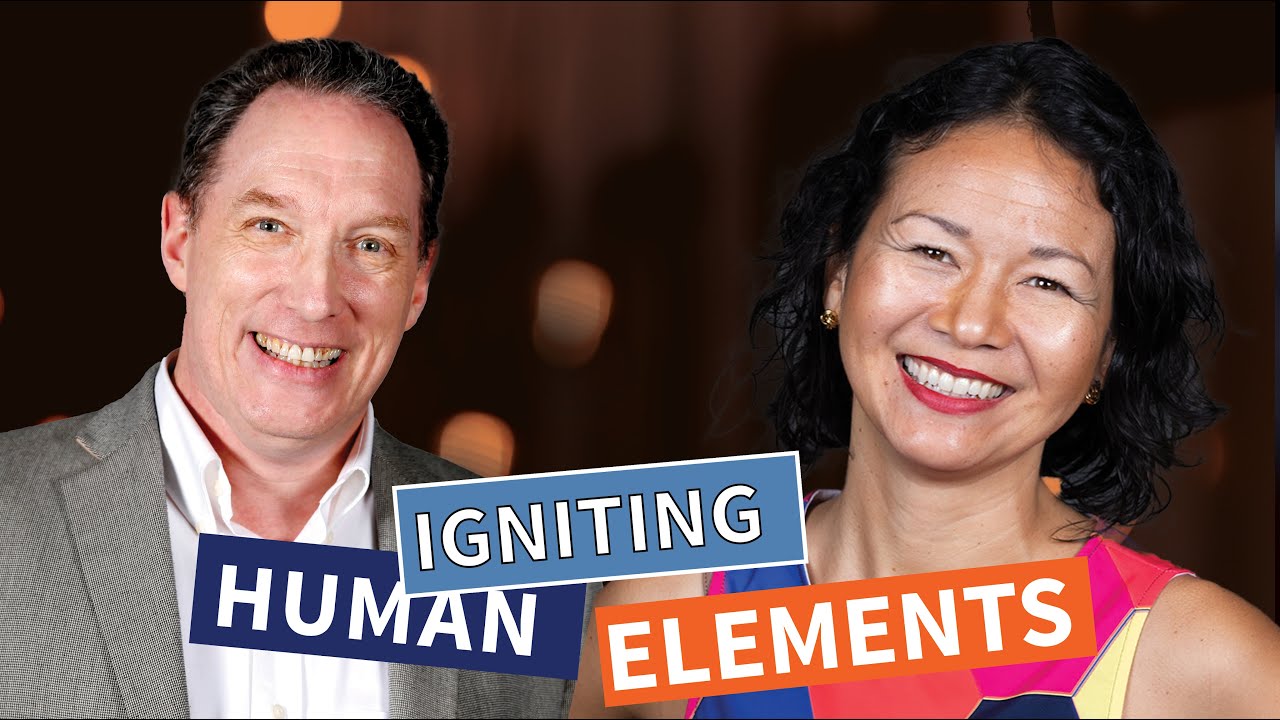
Christina Alden, a business and brand strategist, talks with Marc Haine about using emotional intelligence and clear values to reduce churn. She explains how communication problems often hide behind diversity initiatives, and why understanding what customers actually need to accomplish matters more than guessing.
Chapters
Yesterday, I was speaking to a salon owner who was so frustrated that people just weren't getting her. She considers herself a soulful salon with a unique reflection of her core values in every aspect of her business, or so she thought. But her staff and her customers, she would always say, they just don't get it. So, how can we as business owners ensure that our messaging, our product development, and our delivery match our why? And that's what we're going to be talking about today on Marc Haine Live. Welcome to this episode. This is where small business owners and entrepreneurs pick up core skill sets to help them create the jaw-dropping, show-stopping experience that their customers and their employees deserve. I am your host, Service Expert and Master of Experiences Marc Haine. And I am so glad that you are here with me today. It is so great to have you here. I know that one of the biggest challenges and the biggest investments we make today is our time. So, thank you for checking us out. My guest for this episode is Business and Brand Strategist Christina Alden. And We will be discussing 3 core values you need as a foundation to setting and establishing your business decision-making. So, stay with us. If this is your first time with us, I invite you to check out the other videos on this channel. Each one is chock-full of information and learnings that you can apply to your business featuring experts just like Christina.
Thank you.
Absolutely invaluable. In the midst of crisis, we can truly see if we walk the talk of our values that we set for our businesses. The challenge is if we are incongruent, our employees feel it and our customers feel it. In fact, all our stakeholders feel it. So that brings me to our Question of the Day. How do you reinforce your core values with all your stakeholders? I'd love for you to be part of this conversation. Why don't you go ahead and share this episode on your favorite social media channel and hashtag it #ExperienceLeadership and put your comments and your suggestions and even your point of view on the post as well. As I mentioned, my guest today is Business and Brand Strategist Christina Aldan.
Hi Marc!
Christina is highly regarded for her approach to business, partnering with clients to find unique strategies that ensure that their goals are being met. Christina builds connections through her keynote addresses, training workshops, and technological education. She has sat on local and state boards supporting women in tech, entrepreneurship, mental health, and children with learning disabilities. She is the recipient of the Las Vegas Women in Tech Community Service Award, which is Brilliant! And the Distinguished Woman of the Year Award in STEM, which is equally brilliant. Christina, welcome to the show. It's so great to have you.
Hi Marc! Thanks. Thanks for having me today. I'm happy to be here.
Before we get into today's topic, could you dig a little bit deeper into how you serve your clients?
You know, everything that I do is wrapped around emotional intelligence. Emotional intelligence has 26 different traits. And so, whether we're talking about leadership, whether we're talking about your team outputs, whether we're talking about your sales strategy, your marketing, your overall brand strategy, it all comes back to emotional intelligence. And that's my approach.
And so, why do you think that this is such an important topic for today's world and the climate that we're in today?
Well, you know, so much of it when I say that there are 26 different facets, we're talking about empathy. We're talking about communication. We're talking about emotional awareness. We're talking about self-awareness. Those are just some of the facets of emotional intelligence. And as you can see, if we are going to be successful leaders, right? Those are important traits to have, as well as if we're going to create a brand strategy that really connects with our audience and our ideal clients. Well, then, we're going to We're going to need to be able to empathize with them. We're going to need to be able to be aware of where their emotions are. We're going to be able to have to communicate that message as well. As you gave the example at the beginning, right? I get this a lot where people say, they just don't understand. Well, that can be really expensive. That can be really expensive to say that everyone around me just doesn't get it. That's an expensive communication problem. A lot of times, the big hot topic right now, especially my industry, I work in tech a lot, is diversity, equity, and inclusion. And people really don't often like to hear this. But DE&I is often not a diversity problem. It's usually a communication problem.
Yes, so good. You mentioned the phrase emotional intelligence. I know that there's people hear EQ. They hear emotional intelligence. They're hearing all sorts of taglines around that. Could you just define for us what emotional intelligence actually is?
We're born with our IQ, right? Our intellectual quotient. We're born with that automatically. That is how we learn. That's our capacity. That is how we take in information. Our EQ also considers our intuition. how we feel about things. The cool thing about that is that our EQ can be shifted. Some people say EI, or emotional intelligence. Our emotional quotient, our EQ can actually be cultivated more. And you can see the posters behind me. In fact, this is my emotional intelligence keynote that was live drawn on stage while I was delivering it. I do a workshop. I do a keynote and I do several other trainings about how to improve our emotional intelligence, cultivate more of it in our lives. And you can do that by becoming more emotionally self-aware yourself, by improving your communication, by building mentorship into how you put your own skills into the community, right? And so, that's what emotional intelligence entails. And I help people employees and leaders alike to cultivate more of it so that you learn better, you connect better. And at the end of the day, all of that affects your bottom line because that's really what we're talking about, right?
Yeah, at the end, it's all about at the end making the sales and making the profit behind it and minimizing the expense. But to that point, this idea that when Part of it is I've talked to leaders who have a belief that they're emotionally intelligent, that they are tapped into. How many times have you talked to a leader who says, no, I'm tapped into what's going on in my— and yet, they don't know that they're getting it wrong. What are some of the signs that maybe they are getting this wrong?
Some of the signs that you're getting it wrong are you're losing employees often. You have a high turnover. Right? You're losing clients. We call that in tech, we call that like our churn or like your burn rate. Maybe you're really great at going out there. Your sales team is rocking it. Your marketing campaign really worked. You onboard a whole bunch of users for your app. And then, it's like every 3 months, these people are dropping off. They're dropping off. They're dropping off. These are really expensive problems and they can affect your bottom line. And so, if you're not Really understanding that and doing the market research upfront. It doesn't matter how amazing your marketing campaigns are or how amazing your sales team is. Once they get onto your app or your website and they're using your product, people are going to go away because you didn't do that upfront market research where you really were asking nuanced questions to get into the minds of how your buyers were feeling at that time. You have to really understand, all right, Where was the fulcrum at these little micro moments that happened that led you down the path on your customer journey to make that purchase or not make the purchase? And then, once they're there, it's important to make sure you have these strategies to get feedback, not just with surveys, not just with polls, but actually to have nuanced conversations. And it goes the same internally as well.
Hmm.
You have to have those conversations with your partners, with your employees. Because your community partners, guess what? They're out there spreading your message. And so, it's really important for you to drive and direct that message in a positive way.
Well, and to your point, to your point that they're spreading the message they have about you whether or not it's in sync with what you want them to be talking about.
That's exactly it.
But you mentioned multiple times about customers. I believe that when we talk about customers, we have to also include employees. There are a lot of myths around now why people are becoming disengaged and why people leave. And so, both employees and customers. What myths do you think need to be busted? What are some of the things you're hearing and you're just going, that's just not the case?
Well, a big part of it is people say there's this mass exodus right now, right? About how, oh, people just don't want to work. And in fact, that's not true. What we know about human behavior— remember, I'm the student of emotional intelligence. Like, I larger population. My degree in fact was in ecology and environmental sciences. So, I've been studying systems and human behavior and how they move in those ecosystems for decades, right? And so, when we think about human behavior, in fact, Things that bring us happiness and joy are purpose.
Yes.
And so, people want to know that there's purpose. I know brilliant technologists who are getting paid a lot of money and they will change jobs if they feel like their work is not fulfilling. If their work is not helping. If the tech that they're building is just maybe pulling a lever, moving a toggle, that's not valuable. No amount of money that you can pay them is going to be fulfilling and keep them in that role. I just returned from Scottsdale, in fact, from the Executive Women's Forum. It's a cybersecurity conference. The top leading cybersecurity women in the country, Fortune, or in the world even, Fortune 50, Fortune 100 companies.
Right.
And we had this conversation about it's not about the money. My staff needs to know that they're challenged. They need to know that they're respected. They need to know that they are actually working on technology that's making the world a better place. Otherwise, they leave. And they'll leave for less money. It's not about the money. And there's a big shortage of people in cybersecurity right now. So, this conversation was ongoing the entire week It's amazing.
And to your point, I know people, peers who at some point got into the big thing when I was in college was programming, was getting into the IT business and programming. And when I talked to people who've been like 10 or 15 years into it and they decide that they wanted to leave, I said, why do you leave? He goes, well, because I wanted to get into programming where I could get creative and solve problems. And most of the time, all I'm being done is being given code and told to fix it. And so, they were going through this whole thing of they're there for a purpose. But the company wasn't allowing them to be able to exude kind of their zone of genius.
They want to thrive.
Right?
And people want purpose. And that's a big part of emotional intelligence, especially people who have that high EQ. They want to— there are 4 parts to emotional intelligence: awareness of ourselves, awareness of others, Management of self, management of others, which is really that community piece and how we're putting our skills back into the community. And so, if you're hiring people who have a high emotional intelligence, then you're going to need to make sure that they have that piece through mentorship, through imparting their skills into the community, and also feeling like they're thriving and they're being challenged.
And that they're a participant, right? old legacy code over and over and over and over and over and over again. I know that your background is in predominantly IT. But let's talk a little bit about the price of churn, the price of losing these resources time and time again.
Well, I do a talk about leadership and we talk about how 40% of managers actually don't even want to deal with these human problems, these communication problems. We've all heard this, right? Oh, we're all adults here. Work it out. That's what they say. Or they say, when you look at the surveys, it's something like 87-90% of managers think, oh, I have an open-door policy. My people can come in and they can talk to me anytime they want. And in fact, you do the survey for the people and it's like 35%, right? So, they have this false That they have an open-door policy. No, our policy is just don't be a jerk, right? We've heard that before. I'm like, that doesn't work. In fact, you have to be specific because you have to define what a jerk looks like. Otherwise, there's no communication back and forth. There's no accountability back and forth. And there's no way to solve that. And so, what happens then is people become disenfranchised and you lose a lot of the really good people. And you end up with people who maybe aren't so excited to be a contributing member of the company, right?
Yes.
Because people go, look, I've reported it multiple times. I've complained. I feel like now I'm being treated like a complainer. And nothing's happening. But the reality is that again, the data tell us that 65% of managers have to— they spend 65% of their time on conflict at work. And so, the managers, as we saw earlier, they don't want to deal with that conflict. So, it's important for us as individuals to learn how to manage that. But also, it's important as leaders to recognize you can't just say, I have an open-door policy. Anybody can come see me. You have to be able to have anonymous reporting. You have to have asynchronous communication, both written and in video, or phone, or through the web. Have an anonymous web form. Take surveys. Take different kinds of polls and have those one-on-ones with people. at different levels. Because if your strategy for getting back feedback is once a year we have a review, it's already too late.
Yeah.
And then, of course, you're gonna hear like, people don't want to work and they're out of here.
Yeah, and then people are going, I just don't know why. Could you just define— you use the term asynchronous communication. Could you just define that for the audience?
Yeah, so especially in the tech industry, the community, the industry fosters Yeah. People who are neurodiverse. They foster people who might be on the autism spectrum, might have ADHD. And not only that, but even just right now with people who've been suffering from COVID or people who are caretaking sick people at home or people who are under a lot of stress, what happens is we don't have a lot of what's called the working memory. We have 6 memory subsystems in our brains. And so, that Working memory is really short. And so, asynchronous communication means we're going to have a spot to communicate these meetings, these meeting notes, or what was discussed in getting the prerequisites, whatever that is asynchronously. There's going to be a time for people. Maybe they're later at home. Finally, the kids are put to bed. Finally, you know, my— the person I'm caretaking is resting and I can actually now focus on my work. I want to open up a written document and communicate via text. Put my notes in there. Maybe there's a video that's recorded of the meeting. It's a Zoom meeting. It's recorded. It's put into the company intranet and then I can go in and I can write comments on the video later. So, that's what I mean by asynchronous communication, especially with remote teams. We see this, right? If there's a 10-hour time zone difference or a 12-hour time zone difference, then it's going to make sense that we have the ability to communicate asynchronously when we can actually focus on that. on that time for whatever reason. If it's a neurodivergent reason, if it's a distracted reason, if it's a I'm busy, if it's a time zone reason. There's so many different reasons. And that's where a lot of this talks around diversity, equity, and inclusion come in.
Yes. And to your point, I think when we hear DEI, we're all thinking about race. But it goes much deeper. It goes much deeper than that.
You know what? Even people who are subject to DE&I and love DE&I, we roll our eyes, right? Because we're thinking, oh gosh, here's this conversation again about diversity. Lots of times, it's not a diversity issue. It's a communication issue. And I know people don't like to hear that. But a lot of issues could be solved by having more communication for people that is inclusive, right? And so, what happens is we send out the surveys. We send out the polls. We think we're doing a great job. We look at the data and we go, okay, 90% of people said this. So, this is how we're going to proceed.
But only 10% answered the poll. Right.
And the issue with that also is that there are 10% that are outliers. There's somebody who is hard of hearing. There is somebody who has a physical limitation. There is somebody who has a time zone limitation. We need to also include that subset into whatever we're building internally and externally as well. And whatever data that we're feeding the apps, whatever we're putting in, that's what it's going to put out. And so, if we're only putting data in from one perspective or from 90%, we are excluding that other 10%. It takes more money. It takes more time. That's the reality. And so, people want to push, push, push to just, no, this is the best. These are what most people want. Okay, cool. Except now, we just excluded somebody who uses a cane and needs needs to walk into. And now, we've designed the entire building without a ramp for them. Or we've decided to design the accessible bathrooms on the second floor and make them go all the way up while everybody else, their bathrooms are on the first floor. These are the types of things that happen when we don't include the subsets of people. And it all comes down to communication. It all comes down to doing that upfront market research where we're having those nuanced conversations. to really find out what led people down these decision paths. And if you're having those conversations, you'll walk out of them with about 15 to 20 actions that you need to take when you design your products, when you design your company, when you're designing your process.
And your customer touchpoints.
That's right.
Yeah, this is— I am loving this conversation. But we will be right back With more from Christina Alap.
When the spotlight shines on your business, are customers applauding or yawning? In other words, how is your business performing? Make your business a star with the new book Lights! Camera! Action!, Business Operational Excellence Through the Lens of Live Theater by Marc Haine. Marc uses his business and acting experience to help you see your business like a live show so you can create a performance your customers will never forget. Buy Lights! Camera! Action! today at your favorite online retailer or directly at marchaine.com.
Welcome back! I am speaking with the fabulous Christina Aldan. Let's talk. We've talked a lot about kind of this overarching kind of understanding of the umbrella that we're under when it comes down to this idea of culture. Let's talk about the importance of Establishing core values within our organization.
Yeah, I think it was— I think I always get it wrong. But I think it was Walt Disney who said like, once you understand what your core values are, all the other decisions are easy from there, right? So for me, when I first started out with my consultancy, I'm a brand strategy consultant, speaker, trainer. But when I first started out, I thought I would need to take on everybody. I would need to take on all the clients, serve everybody, everything. And that actually didn't serve me all that well. It wasn't until I got down to my core values and really understood what I was about that I started then attracting similar clients with those same core values. And so, let me tell you what that looked like for me. For me, I built my consultancy initially and my agency helping female entrepreneurs and female entrepreneurs who were doing a lot of social good, who were very active in the community. That was important for me to amplify their voices. I became co-managing director for Girls in Tech Las Vegas and really started plugging into that community as well and supporting other female business owners. Once that happened, I attracted other women who were all about the same, right? They wanted to lift each other up. We weren't seeing each other as competitors. We saw each other as collaborators. And when I started doing that, my work changed. The decisions that I made in taking on contracts changed because I would have a new client as I expanded my business from there as well. And I hired a web development team because I was doing much more, many more of the sales and the community stuff. I started to look at these contracts and people who came in. And then, I started to be able to decide, this is probably not a good fit for us. Like, I don't want to build a website that isn't in alignment with our core values, that isn't going to lift up other people, that doesn't have a positive message that is maybe harmful to the environment. My background again is in ecology and environmental sciences. So, that was always important for me too, right? And once I started making decisions based on those core values, it really helped me focus in. I stopped taking on just any client willy-nilly. And then, I'd have drama because there wasn't a good alignment or they weren't going to have the integrity to honor a contract. And then, I'd have to work with that. And so, those core values are really important. So, we have to think about that as a company. What are those core values? And then, hire folks who are also in alignment with those core values because if I'm a company and I want to focus on speed of delivery over quality. But then, I hire employees who focus on quality over speed. We're going to have some tension and we're going to have some really difficult times for product delivery.
And to your point, it could be that the values that you celebrate are really pretty weak values. A perfect example is when I see in the mission statement about, we will honor our stakeholders and support are, right? And they use words like employees and customers at the very end of their mission statement. But the challenge I think is the incongruency. I think that we will attract people in our realm. So, if you focus on stakeholder value and stakeholder return on investment, you're going to attract the people who are in that. But to your point, Definitely. if you then bring in people who are purposeful and who are fighting for a bigger goal or bigger outcome, you're gonna end up with a lot of clashes. Twitter comes to mind.
Yeah, that's right. That's right. Twitter is a hot mess right now. And so, it's very interesting because they came on their new CEO and then they went and fired a whole bunch of people. And then within 24 hours, they invited a whole bunch of people back.
Oh yeah, we do need you.
Yeah, we do need you after all. And a lot of people are saying, well, in fact, the price is a lot higher now, right? And so, it's really, really costly. And they were already losing advertisers because advertisers at companies, every single company. And this was already coming down the pipeline earlier in the year. They don't talk about that. But Advertisers and companies have a very specific set of core values, their brand strategy, right? They have a branding guide, a style guide. Every single company has this. It talks about their mission, their core values, their tone, what kind of messaging that their brand is putting out. And if they see advertisers that aren't in alignment with that, then they're not going to spend their dollars there. And so, this was already coming down the pipeline in April and May Once the the drama had started for the initial the initial talks, and so people are acting like oh suddenly in just two days all the advertisers are pulling out, and this is a well in fact that's that's not quite you know it's been kind of coming down the pipeline, and then alongside that yes if things aren't going to align with their brand. Strategy, then they are not allowed. It's in their— how their operations are. They're not allowed to advertise with other companies that aren't in alignment with that. That's just how it goes across the board. Everybody has a style guide. Everybody has their brand strategy. And if they're not in alignment, they're not going to go advertise and spend their advertising dollars on something that's incongruent with that. Yes, Twitter is struggling right now.
Yeah. And the whole value proposition and for me, one of the kind of test modules for whether or not people have their values intact is when things go horribly wrong. If you say the customer is your number one priority but then, when it comes down to responding to your customers, you blow them off and you don't contend with that, then we're going to lose market share all the time. And it really is. And I think we really saw this during the pandemic in March 2020. We saw all these organizations who were like, no, we're going to support our growth and development of our employees. And then, as soon as the lockdowns happen and people have to work from home, it's like, oh, how can we get software on their computers so we can monitor what they're doing?
Yeah.
And that just created like this whole big divide between what you stand for and what are you walking.
Absolutely, yeah. That's really it. I work with a lot of startups too. Well, I do corporate training. I work with small businesses or medium-sized companies as like their fractional CMO. And when Tony Hsieh had invested his $350 million in downtown Las Vegas, we had the Downtown Project. And we had a lot of startups born out of that. And so, one day, I took a lot of meetings and did some advising and stuff. And one day, I sat down as an example with a company that was building a health It was a web application that organized partners and vendors and everybody all in one spot. And I sat down and I said, well, this is a great company. I love your idea. Tell me a little bit about your core values. And she said, we value health. We value our employees number one thing. And we really value putting out quality, secure software. And I said, okay, that's great. So, how was your weekend? Are you sleeping? Startup life, the grind. And she said, oh my gosh, I'm really proud of our team. I'm so proud of our team because all weekend, we just did this huge push. I'm exhausted. I've only slept like 2 or 3 hours a night. And I said, okay, so is everybody here because you're going through the Accelerate? No, we have employees here and then a couple remote. And then, we have some people that just flew in just for the weekend just to just Really get down to it. But we got the launch done. I mean, it wasn't perfect. But it's good enough for our demo. And I said, okay, hold on. Let's just pause for a second because first, you said employees are important. Then, you told me that you didn't pay them for doing all of this extra work overtime over the weekend. Next, you said health is important. And you're telling me, you're looking at me and your eyes are bloodshot. You're exhausted. You haven't slept. Your co-founder hasn't slept. And then, the third thing is that you said quality secure software. And how are you pushing out quality secure software if you are just racing to get it out the door for this demo? And I have to wonder what kind of testing you did and things like that. And she paused and she's like, oh yeah, you're right. I was like, at the operational level, at the very foundational level of your business, you're not living your core values. And that's going to show through your products, your employees, and also through your own performance through your leadership.
Yeah. And sometimes, it just takes somebody like yourself to be able to point that out. So to that point, how can people get in contact with you if what you're talking about is resonating with them and they might need a little help?
I'm Lucky Girly Girl everywhere on the interwebs. So, it's L-U-C-K-Y G-I-R-L-I-E Girl, Lucky Girly Girl everywhere. You can reach me on LinkedIn, on Twitter, on Facebook. Well, as long as Twitter stays up for a while. Let's see what happens. I have my website. You can contact me through there. And then, you know, through email. But I'm always available. I work, like I said, I'm an international speaker and trainer. So, I'm happy to help. And anybody who's listening to this, I'm happy to give a free 30-minute consultation to your viewers, your listeners if they want. We can get a lot done in just 30 minutes.
Sure, that sounds great. It does seem to me more than anything else, the magic bullet here is really establishing trust.
Yeah, yeah.
And go ahead.
That consistency really is how you're showing up all the time. How you're showing up consistently. And I'll leave you with this one little story. I was doing a little workshop here in Las Vegas and I was speaking about LinkedIn and social media. And I stood up in front of the room and I said, they called me up and introduced me. I said, hey everybody, good morning. And I did it and I spoke and it was like 30 minutes, 45 minutes. And I said, okay, are there any questions? And somebody raised his hand and he said, I have a question. Do you get underestimated all the time? And I was like, what? I was really taken aback. And he said, because I was in a networking event with you last week and you sat in the back of the room. You were hunkered down. You didn't communicate. You didn't network. You left early. And I was like, oh, I just got called out, right? Exactly, yeah. And so, consistency is how You're showing up because the reality is you already have a brand. Your company already has a brand. And the important part is to drive that conversation.
Yeah, yeah. And so really at the end, and again, I really kind of am challenged to ask this question. But how do people know? How do organizations know when they've got it wrong?
Yeah, well, I can tell you, you know when you've got it wrong when people are leaving. When you have a high churn rate for your customers, when people are calling in sick. If you find yourself like the story earlier where she was saying, I just don't— people don't get it. People don't get it. I had somebody, a startup tell me about how people just weren't getting her app. I mean, everybody does this. So, we have to— it was buying clothes. Everybody buys clothes all the time. People just don't get it. And I have to If you have to teach people how to use it, if you're trying to change their behavior, then it's not working. You have to meet people where they are. Understand what they want and what's going to motivate them to show up, to engage with your brand, employees, customers, advertisers as we're seeing in Twitter, right? You have to understand, meet them where they are. And that's how you collaborate together and you co-create together. That's where the money is. If you're starting to try to change people's behavior and going, it's them. It's all them. They need— that's a good indicator that it's you.
And it proves the point that no matter how delusional you are, the result will be what the customers and your employees and your stakeholders are doing, not what you believe in your mind. Always.
Numbers don't lie.
And how many times have you run into an operator or a business person who goes, they're just stupid. I just don't get it. Like, I remember reading a story about Microsoft ages ago when they were with the programmers. And they would program all this stuff and the users weren't getting it. And they'd go on to the helpline and stuff. And all the programmers were like, people are just stupid. They're just stupid.
People just don't get it.
And so then, they forced to your point earlier on about this idea of the market study. They actually brought users into the room and had the programmers actually watch how people were using the software. And it was only then that they turned around and went, oh, okay.
And so, that's what happens a lot of times. We do this upfront market research. We have polls. We have surveys. And we think lots of times though, those couldn't be leading. And so, it's important to, your UX researcher has to not lead the user as they're using things. So instead of saying, you know, the goal isn't to get them to put something into the shopping cart and have them add their credit card and then hit send. The goal is to get them to have their son's Christmas present delivered to the door by November 10th. Go. Then, you just watch how they use the software How they're putting it into the shopping cart. Oh, I see. It's because they're thinking this. Oh, they don't recognize the icon. The icon's not clear maybe. And that's how we find these 15 to 20 little action steps that we can take out of those interviews and then go back to the drawing board with our product, with our services, and redesign the product and service to match the customer's behavior to help them and meet them where they are.
I love it. This is so in your notes. This is what you defined as jobs to be done. And I'd like to dig a little bit deeper into that before we end our podcast today. And we'll do that right after this.
When you're delivering an important speech to a huge audience, it's easy to lose your place or go way over time. Give yourself an advantage with the Pro Speaker Presentation Speech Timer app. No more checking your watch or calling for time. The Pro Speaker Presentation Speech Timer app keeps you on track with easy-to-see timers, even changing color for visual prompts during your speech. And you can set audio cues to practice or set it to vibrate so you don't even have to look. Be the pro you know you are. Download the app at speakerpresentationtimer.com.
Welcome back! I am having a fabulous conversation with brand and business strategist Christina Aldan. As you can tell, Christina and I are absolutely passionate about serving business owners and managers just like So, if you are listening to this and you're thinking, good golly! And yes, I know you said good golly.
Good golly!
Marc and Christina, I need to train my leaders. I need to update and understand what I'm doing in my business. Then, feel free to reach out to us for a quick discovery call. Our contact info is in the show notes. And Christina has offered 30 minutes discovery call to help you discuss whatever might be hurting you today. So, what we've been talking about today really It permeates into every facet of the business, doesn't it? Like, it's not— this is not a singular, oh, I'm losing staff, or, oh, I'm losing customers. This is a huge umbrella.
That's right. I give a talk called User Experience is at Every Level of Business. And that's what we talk about. If you're sending your employees off to a conference and people go, hey, so how's work? How's it going over there? And they go, oh gosh, Just Company X is just terrible. This is my manager. But that's your brand. That's your marketing unfortunately. If you're doing the same thing with your advertising in the wrong platform and people go, you're giving them money? We see this with news stations sometimes on the TV and they'll pull someone's show if enough people complain about it. And so, it's important to kind of understand that this It permeates every single level of your business. Yeah, absolutely.
I mean, again, a perfect brand where that's happened now is Kanye.
Oh yes, that's right.
It has permeated every aspect. And as much as he might get mad at it, you know what? That is their choice. That is their ability to be able to do stuff like that. And so, when you become incongruent, it's tough.
Well, and the thing too is around mental health, which is another big thing for me. I'm certified in Mental Health First Aid for youth and Yeah. And so, before we move on, I just wanted to say that, you know, when somebody stands up, especially a celebrity stands up in front of people and says, I suffer with mental health issues, I haven't been taking my medication, I'm struggling in this area, I think the wrong thing to do is to shine a light on him and go, oh, let's watch him while he has a breakdown. Let's watch him while these decisions are happening and while these probably not good decisions that are in his best interest are happening all over the place. Instead, maybe let's get him some help, right? And so, I think I just wanted to say a quick note about that as well. But yeah, to move on, we were going to talk about jobs to be done.
That was my next question. Why don't we define jobs to be done and that kind of philosophy?
It's a new kind of product management and product delivery tool methodology, I guess I would say. And so, while I've only kind of dipped my toe into it, I have spoken to some really cool startups who are incredibly successful using this. And so, what you do is you do a lot of upfront market research, which people don't often like to do. But it's important to interview in lengthy interviews your people who are going to be using the product, your customers, your clients, and have a significant population of people that you're interviewing along with the surveys, along with the polls. But the surveys and the polls and the other kind of maybe Facebook ads or different kinds of input that you're taking in to get feedback from people. They don't give you the nuance of the conversations. And so, what I mean is lengthy conversations. 1 hour, an hour and a half. It takes time. A lot of people don't like that. But if you have these conversations and you can kind of think about what that path was that led them along that journey. Okay, so Lay this out for me, right? And we break it down. So, you're having a conversation. So, tell me, John, you were there at the store? Yep, I was there at the store. And so, what day was it? You might not think these details are important. But in fact, they are, right? Well, it was Sunday. Oh, okay. It was Sunday. So, every Sunday we go to church and then we go to the thing. And then, in this case, my wife wanted me to stop at the store. Okay, so there you were. You were at the store. Yeah. And so, then you bought it? No, no, no, no. I was walking. I had to get the taco ingredients. I couldn't, you know, I was late. The one kid was sick. I forgot the cough medicine. So, this was the second time I was at the store. And you're starting to understand and really get into their head about, all right, they were in a stressful situation. They normally have a Sunday routine and this broke up their Sunday routine. They were also upset because they had to come back to the store. So already, in those first few moments, we're getting right into the head of where that customer is at before they purchase the product in the store. Okay. All right. So, tell me a little bit more. So, you're walking through the store. You saw— Well, yeah. You know, there was a sign and it was on sale. And I figured, well, you know, my wife has been bugging me. I had to get these other things already. It was on sale. Okay, so because it was on sale, you bought it. Well, no, no. It had been on the grocery list for a couple of months already. And I just kept forgetting about it because she told me and I didn't update the app of the grocery list.
Oh.
So now, you're learning about your client. They're not a techie person. They don't keep their apps updated often. They are maybe not used to doing the shopping. Maybe the wife is used to doing the shopping. So, you're getting all these data. And after you do, let's say, 20 of those interviews, and I know it's time-consuming. But if you do about 20 of those interviews, you can find some patterns in there. And you can take out about 15 to 20 different actions, jobs to be done. Okay, look. This is what we need. We need to make sure that on Sundays, our product is at the forefront of the end cap. So, it's easy to access and people don't have to look for it. We need to make sure that it has a sale sign on those Sundays because that was the additional trigger. We need to make sure that it doesn't have to— the person doesn't have to open up the app on their phone to get the coupon for it. Maybe we have a paper coupon. Maybe we have some coupons just sitting right there on the shelf even for them for the sale. And so, you start to understand their behavior and what leads them down the path to that purchase. And what's going to affect these tiny little fulcrums all along the way so that for them, they don't have to change their behavior. For them, it's seamless and just the entire customer experience as they go right down to putting their money into the bank.
Yes, as you were talking, I had to write down emotions in narrative.
Yes.
Because it is. It's all those words that you were using. It was frustrating when this happened. It was crazy that this happened and so on. And then, so what you're listening for really is those emotions and narrative because that will be the terminology that will bond one respondent to the next respondent to the next respondent.
Correct. And that's how we build these emotional triggers into our marketing campaigns when we're creating a brand strategy. And surveys and You don't get that. You can sit people down and watch them use the experience. You can set up a fake marketplace and watch them go through the store and buy. But it's still not going to give you those data from the day-to-day use in their emotional connection. And so, that's really what makes that methodology, the Jobs to Be Done methodology very special.
We have talked about so much today, Christina. It's just been— and I knew that this was gonna happen when we first chatted a month ago. But as people are watching this, there are different aspects going on. Are there any cautionaries people should be aware of if they decide to jump on the bandwagon and say, okay, this month we're going to change?
Uh-huh, uh-huh, right. Well, depending on how large your organization is, about Shifting things, right? We know that startups are more agile and they can pivot a little bit easier. Maybe you have 5 people on your team. Okay, you can shift some things, right? Medium-sized companies, not so much. That's going to take some time. It's going to take about a year or so as we're moving things, shifting things. Maybe you even realize, wow, our logo doesn't show our core values. Our partner program doesn't show our core values. Just the reorganization of that, it's going to take some time. The interviewing all of the employees. What would they like to see more of? What would they like to see less of? What's driving their motivation to— maybe it's purpose. Maybe it's more time with their families. Maybe it's setting their own schedule and they want to work remotely. Maybe it's that asynchronous communication we talked about. And then, for large companies, it's going to take even longer. It takes about 5 years to really shift over a culture internally. It can take about 18 to 24 months depending on what the product is to gather those data and shift the messaging for that product development that's already been launched, right? And that's kind of the timelines that we're looking at. Once that's set though, the money and the growth are exponential, right? We see this when in companies who win awards for employee engagement, for customer service year after year after year. Because once it's set, that's just how they do things.
Yeah, this has been such a great topic, Christina. Do you have any last thoughts about what we've been talking about today?
You know, I have always lately been telling people and reminding people because there are so many distractions in the world. I mean, just yesterday in the U.S. was voting day. And so, it's been really, really heavy. And we've just been bombarded with things. And we have people with this next wave of COVID that's been coming, right? We have a lot of loss. We have a lot of grief. And we have a lot of shifts that companies have had to make. Some people who closed their companies and are even going to work for larger corporations. I really just want to encourage people, everybody out there to just treat yourselves gently because that internal narrative and that dialogue that we have, that often drives our behavior. And so, if we can just treat ourselves gently. This came from one of my good friends, Nancy Gabriel. She's a fantastic mediator. And she always says to just tell yourself the truth in the kindest way possible. And if you can be gentle and forgiving with yourself, then you're going to be a lot more gentle and forgiving with others. And you're going to be able to give them the grace that maybe they need at this moment because we're all struggling.
Yeah, give them and yourself grace.
And yourself. Yeah.
Christina, thank you so much. I want to thank you so much for sharing your passion and expertise with us today. Could you just remind Yes, you can get a hold of me by anywhere on the internet.
It's Lucky Girly Girl. My website is luckygirlygirl.com. And of course, my company site. I work at Arana Software and I look forward to hearing from you.
Thank you so much again, Christina. Brilliant! Why don't you let me know if this was of value to you? As always, my offer stands. If you would like 30 minutes of my time to brainstorm your business with you and your team, feel free to book a time that works for you on my online calendar. The link is in the show notes. It's the one that's marked meetwith.marchaine.com. It would be my absolute honor for me to be of service to you. If you enjoyed today's episode, why don't you go ahead and subscribe to the channel and leave a comment or review. I'd really love to know your feedback. To Christina's point, we only know the feedback when you give it to us. And so, was this of value to you? And do you have any other topics you would like to see on this channel? It has been so great being here with you. My name is Marc Haine. I hope that you stay safe, stay healthy, and dare to be the exception.









