Employee Exhaustion Is REALLY Hurting Your Business
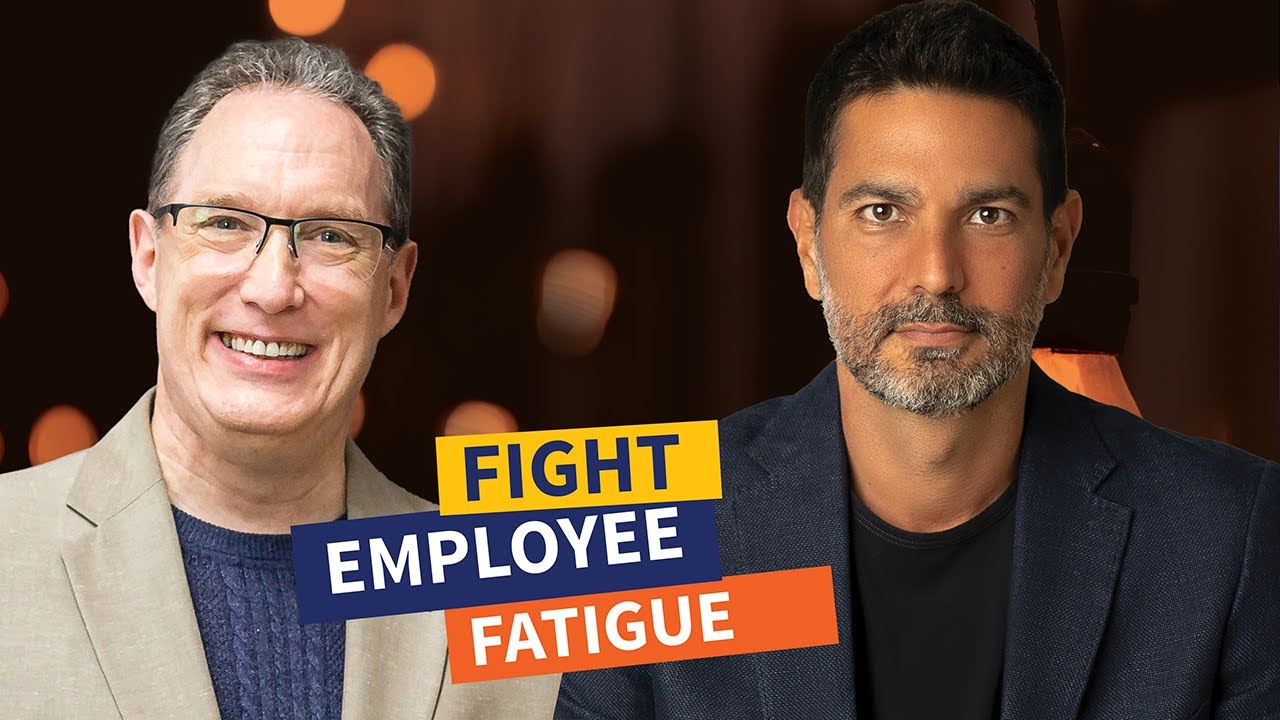
Dr. Labib Goulmia explains how chronic workplace fatigue tanks productivity and profits. He introduces the Net Vitality Score to measure employee exhaustion and discusses how environmental toxins and poor recovery practices drain performance. Leaders can use these tools to identify and fix fatigue before it costs them.
Chapters
Have you ever noticed how everyone at work seems to be dragging these days? It's like the coffee in the lunchroom, no matter how high the octane is, isn't doing the trick anymore. And tired has become the new normal. But here's the thing. That exhaustion is costing your business a lot. And that's What we're talking about today on Marc Haine Live. Welcome to this episode of Marc Haine Live. This is where small business owners and entrepreneurs pick up core skill sets to help create the show-stopping, jaw-dropping experience that our customers and our employees deserve. I am your host, Customer and Employee Experience Strategist Marc Haine. And today, my guest is the founder of the Vitality Formula, Dr. Labib Goulmia. And today, we're going to be tackling a problem that is really sneaking up on companies everywhere. And that is chronic fatigue. So, stay with us. And if you haven't done so yet, please make sure you subscribe to this podcast. That way, you get notification whenever fresh new content comes up each and every week. And please, Make sure that if you know somebody who could use this information, please make sure you share a link to this episode. You know, I don't know if something has changed since the pandemic. I do know that employee well-being has been on the hot list of many companies trying their best to counter things like burnout, low productivity, and slumping employee performance. It seems like We're all running at full speed trying to keep up with the demands of day-to-day. But here's the kicker. It's not just a rough patch. This is costing our businesses big time. And so, that brings me to our Question of the Day. So, have you ever stopped to calculate how much your team's fatigue might actually be costing your business in lost productivity and innovation. Could this be the root cause of a deeper issue impacting your operational success and financial stability? I'd love for you to kind of comment on this. Go ahead and share your experience. It'd be better if maybe you can share a link to this episode on your favorite social media platform. Hashtag it #ExperienceLeadership and then put down your own comments. What are you experiencing At work? And what do you think this is costing you? As I mentioned, joining us today is someone who is not just a doctor but a powerhouse when it comes to understanding how to keep people and businesses alive and kicking. Because let's be honest, we all have felt that midday slump. But Dr. Labib Gummia knows it's more than just a need for Stronger Coffee. Dr. Labib is a double board-certified OB-GYN and a maternal fetal medicine specialist. He's also the brain behind the Vitality Formula, a game-changing approach to beating workplace fatigue. He's also the author of a brand new book called Gen Talks Live Clean. Dr. Labib, welcome to the show. It's so great to have you.
Hello, hello Marc!
How are you?
Thank you for having me. It's a great honor to be here.
Oh, the honor is all mine. Trust me. Hey, so maybe you could start off by telling us a little bit about how you serve your business clients. I know you do a lot of training, a lot of speaking. What else?
Yeah, so I think the first question is like, how did I get into this whole well-being and the Vitality Formula? So, as an OB-GYN, I of course take care of women, pregnant patients. But again, what happened to me is, you know, from my life experience and trying to solve my own problem, I noticed that, you know, I wasn't the only one struggling with burnout and with fatigue. Uh, you know, midday, right after lunch, like, I would shut down. I, I couldn't, you know, function anymore. I wanted, I wanted a solution. So based on what happened with me, I You know, created the Vitality Formula, and I'm really like, you know, I want to talk about it. I want to raise awareness. I want everybody to, you know, try to try to help people, you know, that are struggling, that struggle the same way I struggle, get over this pandemic because you called it a pandemic, and I I definitely think it's a pandemic, and I want to get to the root cause of it. And exactly these are the two words that you used, and I. I fully agree with you that we need to get to the root cause and solve this pandemic.
So, how would you describe the current state of workplace fatigue? We've been hearing a lot about it and wellness and burnout and all this sort of stuff. What do you think is what's going on in our businesses right now?
I think this problem is affecting all types of businesses, whether it's small businesses, large businesses. Hospitals, you know. So it's it's it's really something that's a pandemic, basically. So everybody's struggling, and I I think of course the COVID pandemic maybe unmasked it, but it's been there for several years and and maybe decades. Nobody was talking about it. Everybody was going along with their jobs and trying to survive day by day, and trying to you know saying oh this is. How it's supposed to be. I, I, it's normal for me to feel fatigued after a long day, and maybe because I'm aging, I'm getting older. But you know, this is not the issue. You can get older. Yes.
Yeah.
You just mentioned one of the misconceptions being kind of like this is our normal that we walk around thinking this is our normal. Are there any other big conceptions misconceptions about chronic fatigue, especially? In the professional world, you mentioned in your background being in healthcare. I mean, I'm seeing it all over the place, but what other misconceptions do we have?
Yeah, I think the first thing they need to differentiate is between fatigue or acute fatigue that happens, let's say, after we go to the gym or do something strenuous. Everybody gets fatigued. I mean, our cells produce a lot of energy and there's a small organelle inside ourselves called the mitochondria. And, you know, the mitochondria, you know, as we get a bit older, you know, we lose some of these mitochondria. So it's normal to feel fatigue after a strenuous day. But I think the problem is not an acute— this is something that's chronic and that's been going on for a long period of time. And this is what puts us down like a step below where we're supposed to be normal. And one of the misconceptions is like, oh, I need to drink coffee or take, you know, some energy drink or something, a pill that will, you know, give me some energy to, you know, finish up the day and be strong the whole day. But this is not really the, uh, the, the main problem. I think this is one of the misconceptions that I can take something and solve it. That's one. 2, uh, the other thing is people think it's, uh, it's, you know, a quick fix, you know, uh, and it's gonna take a couple of days or a week and I'm done. No, this is a process that you have to put effort in it, and it takes time for you to regain your baseline energy level. And then you can even improve it further by trying new things, living healthier. And actually, I think identifying what's making you drained is key because there are many stresses in our lives that might not pay attention to. And if you have an open eye, or if you kind of reframe the way you look at your health and about your environment, uh, this will, uh, you know, help you a lot. So I tell people, like, you have to go back, like, or go, like, feel like you're in a drone and you're looking at your life from a drone, and try to see what's, like, pulling you and, you know, causing you to be fatigued. And work on each, uh, step slowly And take baby steps. It cannot happen overnight. So, as long as you remove some of these stressors, and even if you remove a tiny bit of them, you will find a difference in your health and in your energy.
Terrific! For leaders in their workplaces, are there any early warning signs that leaders should be on the lookout that they might have chronic fatigue issues within their teams?
Yeah. Again, when you are physically or emotionally or mentally or socially stressed, fatigued, this is going to show in your work. It's going to show in your productivity. It's going to show maybe in the days you are not able to go to work. So I think as leaders, if you notice your team is not functioning as well, there is delays in deadlines, there is something missing, people are being more absent or being more like You know, closed up, they're not talking. So there might be something there. So I think these are some of the warning signs that you need to keep an eye on. It's basically the performance, productivity of your team. And that's why you need to keep assessing the team. It's not a one-time assessment. So that's part of the vitality formula. Actually, the 3rd step is to keep assessing things, make sure we improved on that front. Maybe now we need to tackle the other front. So I think Assessing constantly or consistently is the key.
I love that. So, you just mentioned the 3rd step. However, I want to jump into the whole Vitality Formula and we'll get to that right after this.
When the spotlight shines on your business, are customers applauding or yawning? In other words, how is your business performing? Make your business a star with a new book, Lights! Camera! Action! Business operational excellence through the lens of live theater by Marc Haine. Marc uses his business and acting experience to help you see your business like a live show so you can create a performance your customers will never forget. Buy Lights! Camera! Action! today at your favorite online retailer or directly at marchaine.com.
Welcome back! I'm speaking with the founder of the Vitality Formula, Dr. Labib. Dr. Labib, your new book, Gen Talks: Live Clean is interesting because it puts an interesting spin on how we live today. And it could be part of what we're talking about today is— could be part of what we're seeing in your book. Could you talk a little bit about your book?
Yeah, actually, you know, you said it correctly. So, like, fatigue can be due to many causes. Some of them are, you know, very obvious. Some of them can be hidden. And actually, I wrote this book with another, you know, physician, a colleague of mine. And because one of the reasons why people are fatigued, and this was exactly my experience, is toxins or environmental toxins, which are really chemicals that we are exposed to every day from the moment we wake up until the moment we go to bed. We are exposed to chemicals. And yes, today if we compare to, you know, 20, 30, 40 years, we are more exposed to chemicals, no doubt. And there is a lot of scientific evidence that you know, these toxins that we're putting on our bodies or we're inhaling or we're eating are affecting our hormones. Our hormones are affecting our organs, how our body functions, and this is leading to, uh, to fatigue. This is, like you said, one of the reasons. There might be other reasons. And in my case, you know, after I discovered— it took me a while to discover and get to the root cause because I was so busy at work and I was so fatigued that I didn't even have time to sit down and say, let me see what's causing my fatigue. I was just accepting the status quo. And I, I wanted, you know, I reached a point in my life, you know, after moving, you know, from Lebanon, uh, to the US, I had a bit more time on myself to think about my health and my family's health. And I discovered that my testosterone level, for example, which is one of the hormones that is vital in our life, whether you're a man or a woman, has affected my energy. And then I started asking myself why. And, you know, why is, I think, one of the most important questions we can ask ourselves in anything we do is why is this the case? Should I just take testosterone and that's it? Um, I didn't wanna do, do that. So I, you know, dug more into the reasons and I discovered that my toxin levels were high. And that's what led me to write the book. And I think, you know, I was my first patient. So I, you know, worked on myself and tried to figure out where are these toxins coming from, and I tried to avoid them. Um, I did not do any sort of, you know, crazy detox, you know, protocols that are out there. Yes, you can maybe, but you have to be careful because some of them are not that, you know, effective. And so you have to be careful. But I think avoiding avoiding them and letting your body, which is a great detoxing machine, get rid of these toxins, uh, I improved a lot. I mean, like, my health within a year, year and a half, uh, I would say I improved maybe more than 60-70%. I'm not, you know, at my optimal level, but I'm much better than, you know, where I was before. And I even tried this, you know, technique to, you know, some of my patients, some of my friends, family members, and I really saw the same changes. And, and, you know, once they systematically looked at the problem, try to work on, you know, few of these baby steps or a few of these pillars in your health, and then 6 months later reassess things, reassess your toxins. And when I say toxins, I don't mean by environmental toxins. They can be other types of toxins in our lives. Then, you know, you'll start seeing this And it took a year and a half for me to, you know, go from way below where I am to slightly above, but I still have, you know, work to do. And this is where the Vitality Formula came from. And, uh, you know, I want to help as many people as possible, uh, and I hope, you know, more, you know, people can try to adopt this formula. It's, you know, when I say formula, it's not like a secret potion, like, you know, it's only So it's not about having a bunch of test tubes and, you know, mixing up stuff and having it in a little lab? Exactly, yeah, wearing the white coat, right? Yeah, exactly, no, this is not it, but there is a way, like every problem, there should be a systemic way of, you know, solving it. You can't just, you know, get lost in the problems and don't know where to start, so I I think it's a way to look back. It's a system that worked for me, worked for some of my patients, and I think it can help, you know, young professionals or even, you know, big organizations in working on these points and improving everything from, you know, being happy to go to work to producing more. And eventually, you know, this will lead to better outcomes to the organization.
Sure. So, why don't we introduce the Vitality Formula and its core components? So, let's start off with how do we start shaking up our world to make our lives better?
Yeah. So, I really wanted to make something easy, make it like something objective because the human mind, when you talk about things that are very subjective, gets lost. So, I wanted something scientific, But not overwhelming because science and medicine can become sometimes overwhelming. Something very easy to be able to identify first where are these stressors coming from. So I created a small questionnaire that will take maybe 2 to 3 minutes from someone's time, but it will give you a lot of information. So I looked at multiple health pillars that will help me identify where the problem is. We would look at your physical health, which includes your nutrition, your sleep, your energy levels. We look at your emotional status. We look at your mental status, your social status, because this is so important. If you're not surrounded by friends and people and— these people that live to 100 in those Blue Zones, one of the main things they have is a community around them and support. So this is very important. It's one of the health pillars. Your financial situation. And then one big thing I noticed that was draining me too is the technology, you know, our cell phones, our computers. We're always connected to social media, um, and this really drains our bodies. So by first, you know, trying to calculate and giving what I call the net vitality score, um, this is, you know, one objective way, and this is the first step. So we would calculate your score And then based on the score is step 2. And step 2 is where we identify the, the, the, the stressor that's mostly affecting you. It might be all of them, it might be 2 of them, and each one of us is different. So, uh, you know, by, by trying to assess which problem is affecting you or affecting your team or affecting your organization, we would concentrate on that, try to, you know, give people resources, try to give them tips On how to improve that stressor. And then a few months later, 6 months or even a year later, retake the score and see where the score is. Once you see improvement in your score, you're going to get more excited. You're going to feel better about yourself. And then you can move maybe to pillar number 2 or problem number 2. So this is basically in a nutshell the Vitality Formula.
So, it's doing an assessment initially as a first step. Then, it's pinpointing and trying different things within the context of our lifestyle. Is that fair?
Exactly.
And so, what kind of things? So, when it comes into the second step about kind of visiting different aspects of our lifestyle, what things should we be looking at? Are we looking at just stuff that's happening at work? The stress level, our workloads? What are we looking for?
You cannot disconnect work from your life. So I think, you know, your life at home, maybe you spend quite a bit of time, or during your day you spend that at work, but, you know, you cannot disconnect them. So it could be, for example, you're getting exposed to toxins at home from the air quality in your house, or you can, you know, be having the same thing, you're getting exposed to mold, for example, or Or toxins in your workplace. It could be that your relationship or your social relationships at home is in a good situation, but at work, you and your colleague are not on good terms and there's an issue there. And I think everyone has a different set of stressors, so we cannot generalize to everyone.
And so—
But yeah, the most important is not to disconnect them. I think they are connected. You can't be healthy at home and unhealthy at work and vice versa. They should— they are connected somehow. And I think the main issue, a lot of people disconnect them. You know, I'm at work, I'm a different person. But, you know, when you come home, you become someone else. No, you are the same person whether you're at home or at work.
Right, right. You might have different accountabilities at home or at work, but you're right.
Absolutely.
Yeah. What makes this approach kind of different from other wellness programs? Like you mentioned, there's tons of things out there. What makes this approach different?
Well, all the organizations now are organizing basically wellness days or wellness weeks. Of course, some of them have a whole department that tackles wellness. I can talk about the setting I'm in, in a hospital. We do have, for example, residents that are in training and One of the important things we are very diligent about is to make sure their well-being is sustained because we don't want them to burn out and not perform well. And one of the things that was done several years ago is to limit the working hours, for example, for these residents, make sure that they get a day off. They can't work more than 80 hours a week without affecting their education because Right. Residents are in training. And I think the same thing can apply to other employees. But the problem with this is basically we're just, okay, identifying who is not doing well and maybe talking to them one-on-one or patching their problem. We're not getting deep into why is this resident, for example, not performing well. Maybe he has issues at home that are affecting him. Maybe he has financial problems. Maybe he's exposed to toxins, really. that are affecting his health. So I think the difference between the Vitality Formula and the, and a regular wellness program is getting into the root cause of the problem. And this is something I discovered from my own personal experience when I got into what we call now functional medicine. And functional medicine, I used to think maybe 3, 4 years ago that it wasn't something that important. It was, oh, maybe a kind of a voodoo science, you know, like, oh, what are you talking about? You're talking about your gut, you're talking about, you know. But now I think it's a very powerful science that can help, you know, physicians identify root causes, solve this in addition to giving, you know, Band-Aids or like symptom healers. And that way, you know, you'll be able to solve the problem from its primary cause. So I think the difference between the Vitality Formula and other wellness is getting into the root cause first before patching the problem. Sometimes you have to patch the problem in order to have time to discover the root, but you cannot live your life with a Band-Aid on. You have to remove it eventually.
Sometimes you have to patch the leak before you can find out what the source of the leak is.
Exactly, exactly. So I think that's, that's the difference.
This is really fascinating for anybody who this is resonating with. Could you let everyone know how they can get in touch with you if they want to explore working with you through your Vitality Framework to help them uncover some of it?
Yes, of course, I have a website that's actually— as we speak, we're revamping the website. So, in a couple of weeks, it'll be ready and up. And then, of course, on Instagram, I have my account with my name on it. I have a LinkedIn account. So these are the 3 ways, you know, that people can, can contact me if they need help one-on-one, or if they really need help, uh, you know, to have a keynote or a workshop for, you know, a small team or, or organization. Uh, this is the best way to, to, to find me. Or maybe, you know, they can, you know, log on to your website, contact you, and you can contact me because, you know, we're always in contact, you and I.
I will be in the show notes.
They can always find— they can always find me, uh, I mean, these days, it's so easy to find people.
Yeah, it is. Just Google Dr. Labib, you'll find them. So, you mentioned earlier about kind of a net vitality score. How does the net vitality score work as a tool for measuring energy levels and health?
Yeah, because it's a questionnaire that's, you know, I even validated this questionnaire on multiple people to make sure this is you know, really correct. It's giving me a score that's really showing weakness or not weakness.
Right.
And, you know, there's multiple questions and each question is scored. And then depending on the final objective score, uh, we can, you know, know if this person is really suffering. And then we look back at where were the, the, the weak points in the scoring system, and then that's where we, we work on. So I tried to make it as objective as possible, but But I don't want to make it, you know, too boring and too scientific because, you know, we all run away whenever we get like in our emails like, oh, can you please do this survey? We know they tell you it's going to take 2 minutes and you end up, you know, having to spend 10 minutes. 2 minutes, you have like 10 minutes. Yeah, and you stop in the middle of it and, you know, so like I put myself, you know, whenever you are fatigued, you don't even have the energy to do a survey. So I wanted to make it as, you know, less painful and quick and really informative as much as possible.
So that's the next point. And so is that something that they can contact you for and get this assessment, or is it something that's available on your website?
Yeah, whenever we're working with an organization and we decide to work together, I'll be sending out the assessment or the Net Vitality Score to these individuals. Sometimes if it's a one-on-one, we can do the Vitality Score just together. It doesn't have to be done You know, on the side, you know, by going through very detailed maybe questionnaire, a bit more than the Net Vitality Score, we can get deeper into the person's, uh, you know, history. We, we, we, we, in the functional medicine world, we really go back, you know, from the day they were born and even before that, how they were born and, you know, what they had issues during, during their childhood, uh, whether they were exposed to certain things during their childhood. So we get into their deeper into their medical history, social history, what are the obstacles they went through in their childhood, adulthood. So, you get deeper into what we call the matrix. So, we can do this a bit deeper when it's a one-on-one consultation.
Yeah. I love that. That sounds amazing. I'd like to toss around some ideas about implementing this and some of these strategies in today's workforce, and we'll get to that. Right after this.
When you're delivering an important speech to a huge audience, it's easy to lose your place or go way over time. Give yourself an advantage with the Pro Speaker Presentation Speech Timer app. No more checking your watch or calling for time. The Pro Speaker Presentation Speech Timer app keeps you on track with easy-to-see timers, even changing color for visual prompts during your speech. And you can set audio cues to practice or set it to vibrate So you don't even have to look. Be the pro you know you are. Download the app at speakerpresentationtimer.com.
Welcome back! I hope you are getting tons of value from today's episode. As you can tell, Dr. Libib and I are on a mission to support businesses just like yours. So, if you belong to an organization that could use our help, or you or someone you know might be planning a leadership retreat or a conference, drop us a line. We would love to explore how we could be of service to you and your people. Dr. Libib, would you say that the Vitality Formula is a one-size-fits-all solution when you're talking about workplaces? Or how does that work?
Yeah, absolutely not. It cannot be a one-size-fits-all. But it's like a big framework that every organization can use But every organization is special. Every organization has their, you know, type of people. The age group of the people is different sometimes from different organizations. Stressors can be different. Their geographic area can be also affecting them. So no, it cannot be, you know, a one-size-fits-all formula. And now even in medicine, I mean, it's— we are, we are shying away from this. We are becoming— we're getting into the personalized tailored care for every patient. We are all genetically different. We all respond to stressors differently. If you are exposed, Mark, for example, to, to mold, for example, you might have some, some genes that you were born with that can detoxify, for example, these molds or these toxins, whereas I might not have them and I might be affected more than you. So there is no way you can— it can be a size fits all. And today, you know, with the advancement in medicine and with AI— I know this is a very hot topic, I'm not going to talk about AI, but It's going to help us find out every person's plan or genetic makeup and finding what are the stressors that are affecting them and then accordingly tailor a plan or a formula or a protocol for them to improve. So no, it cannot be the same protocol for every organization or person.
So how can you tailor the Vitality Formula to fit different individuals within our teams? I mean, we have— I mean, my background, I have 85, 100, 120 people who might be working within my department. How can we execute the Vitality Formula on a scale that can help the individuals within my teams?
Yeah, I think once we identify through the first step who— I mean, where is the weakness. Of course, you might have multiple weaknesses. But you want to identify the weakness that's mostly affecting that team, and you work on that point. Then you can come back a few months later and work on the second point after you do another reassessment. It's very difficult because it's such a heterogeneous group of, of, of people, uh, and everybody, like I said, is different. So you cannot just, you know, have one formula for everyone, but you can have a formula that can, you know, help the majority, I would say. And then, you know, at a later stage, you can, you know, tackle another problem. But it's impossible to tackle everybody at the same time with one session or with one keynote or one workshop. This is— it's very important to understand that this is not like a switch. It's something that you need to, you know, tweak and work on. The nice thing about it is once you identify it, you can People can start working individually on their own, and they don't have to go back to the whole team. If everybody does it on their own and identify their own problem and get the right resources, then you will have a better outcome.
That's not to eliminate things like might be environmental causes, right? I mean, you mentioned mold, for instance. Like doing an air quality check within your office space, eliminating neon lights which suck up vitamin D or said to suck. I don't know if it's true or not. I'm not a medical professional. But somebody said that neon lights suck up vitamin D. Being able to look at whether or not you have nature around us sometimes. Like I do know that there are some businesses that have put up living walls to help clean cleanse air and that sort of stuff. So, some of it is environmental. Some of it is individual-based. What are some of the things that organizations can do to be able to figure out what is it I'm in control of versus what they're in control of?
Yeah, part of the scoring system is when we talk about the physical part, we do ask some questions that might give us a hint about, you know, exposure to toxins. Uh, you know, people that have, you know, chronic headaches, brain fogs, a lot of allergies, you know, this can, you know, lead us more to the area that maybe it's an environmental physical problem. And then we can, you know, advise these organizations to check their air quality, uh, check their water quality, you know, where are these, uh, people like drinking their coffee from. So yes, we can get into the details once we identify you know, something that leads us to maybe an environmental problem. If it's something more into the, let's say, you know, people are always, you know, not concentrating well, and it could be something related to, you know, their social media, you know, exposures. So we can also check those and maybe come up with some certain rules or, or things that will help these employees. So yes, the, the, the, the The scoring system helps us know where to look. And yes, of course, sometimes we might not be able to fully identify one problem. But the way I created it, it's going to let us know in which direction to look first.
Okay. It kind of is like peeling back an onion to get to the core, right? You're going layer by layer.
Exactly.
So how can businesses avoid the trap of quick-fix solutions like I just mentioned, neon lights. Well, people can go running into their offices now and say, let's change everything to LED so we don't have neon lights anymore. That's a quick-fix solution. But does it address the symptoms of the problem or symptoms of fatigue? So, how do they avoid the trap of quick fix and band-aids?
Yeah, I think like you said it correctly. I mean, I think you should look at the whole organization, at the whole office. think a bit differently. And, and, you know, from time to time, if it hasn't— it's been years since you, you've checked the quality of the air or water in your office, maybe it's a good time to do that. And, uh, and I, I think, like we said, we— I mean, it took years to become fatigued, so you cannot fix it in a, you know, in a second. So I think being patient, being patient and working slowly, taking baby steps I think is very important. And because if you look outside the office, you know, people are getting sick with chronic diseases and the environment is a big role. So I think it's also one good place to start with because you will find a lot of issues in that sector. So definitely the environment in the office is super, super important.
So, are there any cautionaries about people wanting, you know, they might be tuning into this episode. They might get some information and go, yeah, I could see this happening in my space. And they want to do a quick fix. You mentioned that there is no real quick fix. It took so long to do it. But aside from that, are there any other cautionaries about what we should be concerned about working today and trying to make a change?
You know, as far as I think knowledge is so important. Learning about where these toxins come from. So there are a lot of courses, you know, online that people can take that will, will let you know or identify where these toxins are coming from. Because you might not be aware that, you know, the shampoo you're using, the, the toothpaste you're using every day, uh, the fragrances you're putting on your body or in your car, uh, you know, when you're getting into your car, you know, the sun, you know, hits your car and there's a lot of plastic things that are coming into the, uh, you're breathing all these plastic or like these vapors that are coming from your plastic. The water we're drinking nowadays, you know, there's a lot of studies showing that the water or the, the, the, the plastic bottles we're drinking from are full of microplastics that are being discovered in lungs and blood and even placentas of pregnant patients, which means our kids are getting exposed to. So I think being knowledgeable, especially if you're a leader, or not only if you're a leader, like this is for, I think, for everyone. Yeah, I mean, even if you're not a leader, you're a leader at home, you know, you're a leader of your own health. Yeah, so I think trying to, uh, gather power and acknowledge will make you powerful, uh, in identifying these things that you never thought about. Um, but I always tell people not to obsess about these things because our body gets rid of them.
Mm-hmm.
But I think today we are overstimulating or overburdening our bodies with these things. So trying to filter some out will make a huge difference. So I think that's one of the things that I— one of the messages that I would like to relay to leaders is to try to think outside the box, outside the box of your office, and look at your office from far and see maybe there's something in there that's causing all these symptoms to my employees. Why, you know, every week I have 1 or 2 people like calling in sick at the last minute, um, you know.
So yeah. Dr. Labib, this has been absolutely fantastic. Could you remind everybody one more time how they can get a hold of you?
So one of the ways they can get a hold of me is through my website, drlabibg.com. or on Instagram, Dr. Labib Ghulmiya. I know my last name is long, but, you know, it's, uh, you know, once you type G-H-U, you will find it. And, uh, and then of course on LinkedIn also under my name. Um, so these are the 3 ways that you can get in touch with me.
And you can check the show notes. It's going to be in the show notes.
Of course, of course, of course.
As we wrap up, do you have any last thoughts?
No, I think, you know, the, the most important things we already mentioned, I'm gonna, I'm gonna repeat them, is to have, you know, an open mind, uh, know that the solutions are there, but you have to take them slowly. And, uh, and don't, don't neglect and don't just concentrate on, on the work because, you know, health, work, and productivity are all connected. So if you feel you're, you're, you're not producing well, You know, look back and check your health. And and I'm just worried that you know this issue is going to get worse and worse. So if we can stop it now or try to identify the issues now, we're gonna you know save ourselves a lot of problems in the future. And lastly, I would like to really thank you for you know allowing me to talk about this. And I know you are very passionate about these these you know these things, especially when we spoke first. you and I spoke about it, you know, you told me like how important this topic is, and I'm very glad that we were, you know, able to do this today. And hopefully people can reach out to me or to other, you know, experts out there that can, you know, help their organization and help them as humans on a one-to-one basis. So thank you again for having me.
Well, thank you, Dr. Libib. I really appreciate that you You're here sharing your knowledge, your passion, and your expertise. It's been absolutely brilliant. Thank you for joining me today.
Thank you.
Got any questions about today's episode? Or maybe you're thinking, hey, we could really use a complimentary 30-minute brainstorming session with Marc. Well, good news! You can snag a spot on my calendar. Just hit up the link below, the one that's marked meetwith.marchaine.com.
MarcHaine.com.
MarcHaine.com and you're all set. As always, I am at your service. And if you haven't done so yet, why don't you go ahead and subscribe to this feed? Make sure that you are following me on social media and linking to the podcast on a regular basis, subscribing to the podcast because that'll give you notification whenever I bring you fresh new content each and every week. I want to thank you for joining me today. I hope you got tons of value. My name is Marc Haine. I hope you stay safe, stay healthy, and I hope you dare to be the exception.









