Encouraging Failing to Success
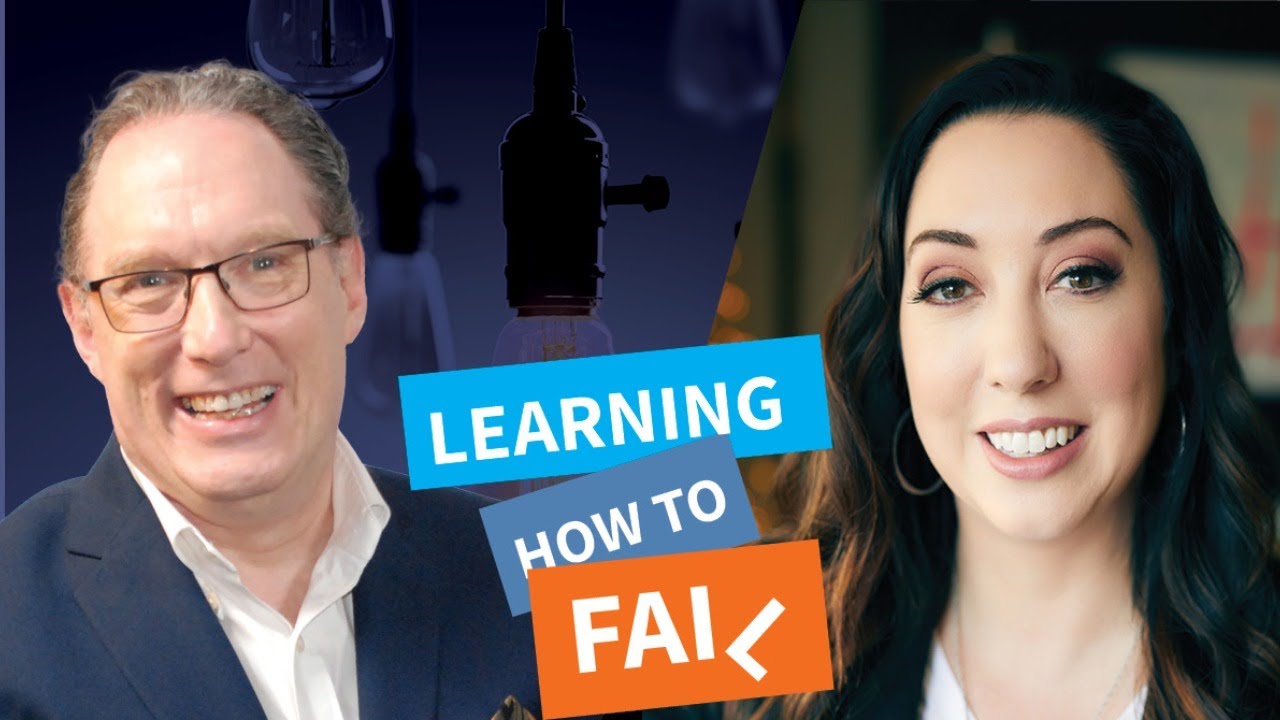
In this Marc Haine Live episode, host Marc Haine interviews leadership and culture specialist Selene (Celine) Williams about how organizations should stop demonising failure and instead treat it as a learning practice that fuels innovation. The conversation begins with a real‑world story of a bartender’s cash‑theft and explores why firing the employee isn’t the solution. Selene explains that failure is rarely a single point of breakdown; it is a series of system‑level issues that can be dissected to extract lessons. She frames failure as "practice" and argues that avoiding it blocks risk‑taking, learning, and ultimately growth. The dialogue moves through concrete examples of how companies like Google (20% time), 3M, Dyson, and Thomas Edison turned repeated failures into breakthrough products. Selene outlines a four‑step process for moving through failure – admit, process without judgment, pull out lessons, and share – and stresses that leaders must model vulnerability, trust, and clear communication. Psychological nuances such as shame versus guilt, the role of expectations, and the need to meet people where they are are discussed. Practical advice is given for managers: start cultural change with direct reports, create safe spaces, avoid overwhelming teams, and balance empathy with accountability. The episode ends with Selene’s contact information and a plug for her podcast and the upcoming Audacious Leaders Summit.
Chapters
An employee makes a mistake that costs the company thousands and thousands of dollars. Do you fire them? That's coming up next on Marc Haine Live. Welcome to this episode! I am so glad that you're here with us. This is where small business owners and entrepreneurs pick up core skill sets to help them work on their business, not just in their business. I am your host, Service Expert and Master of Experiences Marc Haine. And today, my guest is Leadership and Culture Expert Selin Williams. And today, we are talking about how we tend to avoid really talking about failure and the costs associated by not properly managing failure in the workplace. So stay tuned and we'll get to that in just a moment. A moment. In the meantime, feel free to go ahead and subscribe to the program. I'd love to make absolutely sure that you don't miss an episode as it is released. And while you're at it, why don't you let me know what you think of the episode? Put some comments in the comment box. Love to hear your feedback. I think starting the conversation and being part of the conversation is really, really important. And of course, go ahead and share this podcast if you know somebody who could benefit from it. Information is power but only if it's shared. I remember one of the biggest issues I've ever witnessed in a business that did not actually result in personal injury was at a hotel. The lounge was a pretty busy place most of the time. The bartenders were expected to serve customers in the lounge as well as make drinks and make sure that they made the drinks for the servers. On one particular fateful day, 2 sets of customers came in in the middle of the afternoon. They sat at the farthest area of the bar possible, forcing both the server and the bartender to be away from the bar, distracted. Meanwhile, an accomplice crawled on his hands and knees and stole all the money from the cash. So this brings us to Our Question of the Day. So, hearing the story, would you fire the bartender for being negligent? Would you do anything at all? Like I mentioned, I'd love for you to be part of this conversation. Why don't you put comments in the comment box wherever you're consuming this content. My guest today is an international speaker and founder of Revisionary, a boutique consulting firm providing executive coaching, leadership development, and culture services to human-focused businesses around the world. Selene is also one of our featured presenters at the Audacious Leaders Summit that is kicking off this Friday. The link is in the show notes. You can check her out. Welcome, Selene. It is So great to have you here.
Thanks for having me. I'm excited about this.
Before we get into today's topic, which I think is just going to be absolutely phenomenal, we're going to have so much fun with it. Could you dig a little bit deeper into how you serve your customers? How do you serve your clients?
Absolutely. So, I always say that the really short way that I put this is I help organizations, leaders, and teams have better conversations. If I had to put it into one sentence, that's really what I would say. But a lot of it is around— I work with organizations to help them find alignment and improve the quality of conversations they're having, the performance of the people, but not in the sense that we're focusing on the performance specifically. We focus— we help them focus on what do we want to do more of, what are we doing well that we can build out, what does that look like. And so We work specifically with teams and executives. So, I've stopped doing individual executive coaching where it's just like one person, a random organization. We've stopped doing that entirely because alignment's way too important to the work that we do. And so, we work with teams and organizations in a different way with alignment as the sort of central focus of what that's going to look like.
Very cool. In my opening story, I know that leaders always have this challenge of something goes wrong. What do I do? Based on what we just talked, what I just talked about and what you do as far as this idea of alignment, what would you advise the management about this particular situation? How do they deal with their employees?
So specifically, the bartender situation in a I do not think firing those people is the solution. I think the question becomes, what can you learn from what happened? What are the failure points inside of it? What went wrong? Because it's not just—it's never just one. Let me—it's not never. It is rarely just one single point of failure. It is a series of things that have happened, or a series of systems, or whatever the case may be, that got them to the point where this is what they're dealing with. So. I would be having the conversation, understanding what happened, what went wrong, what went right, what needs to change, you know, how, how this situation came to be. What are the different moments that brought us here? Because it's not one thing. And then what can we do differently? What can we learn? What is the opportunity to change inside of this? How do we minimize the likelihood of this happening again? And then when are we going to review the changes that we've made to see how they're actually doing? And what they're looking like and the impact they're having.
Yeah, it seems to me that you have— most people when they hear the word people failing at work, they're like, oh God, no! But it seems to me that you have a different focus to failure and mistakes.
Failure is practice. If we are not failing, we're not trying. So, I always think of failure as practice, right? That when you are— the mistakes that we make mean that we're trying to do something, means that we're open to learning if we want to actually find the lesson inside of it. So I don't think failure is a bad thing at all. I, I think it means that we're innovating, that we're trying something new, that we're willing to put ourselves out there, that there's the possibility of something better. If we're not failing, then we're not— there's no possibility of something being better or different. So I think that failure is a is a really positive thing if we can focus, if we can step out of focusing on just the thing that didn't work. And the problem is that we are in from, and this is a general societal thing, this is not an individual thing, but we get so focused on the thing that didn't work because that's what happens in school. That's what happens as we grow up. It's the thing that didn't work as opposed to the whole picture. And so, we demonize failure. And I think failure should be— listen, I recognize that not everyone's gonna be like, woo! Failure! Let's celebrate! But I think it needs to be— we have to stop demonizing it. Let's put it that way.
I love that phrase, stop demonizing it, because failure is equated with loss many times. I mean, we have even in our lexicon, we have like Time is money. I remember my father was like, do it right the first time. Right? And there have been things like, and I think, I don't know if this is just a baby boomer thing or what. But it used to be like, why didn't you do it right the first time? Well, I didn't have time. Well, if you didn't have time to do it right the first time, how do you have time to fix it?
Yeah, yeah.
Right? And there's all these kinds of industrial age mannerisms surrounding it that do demonize failure. And it's become a really, really kind of challenging outcome. I'd like to delve a little bit into the important link that failure provides organizations and leadership teams. And we'll get to that in just a second.
When the spotlight shines on your business, are customers applauding or yawning? In other words, how is your business performing? Make your business a Be the star with a new book, Lights! Camera! Action!, Business Operational Excellence Through the Lens of Live Theater by Marc Haine. Marc uses his business and acting experience to help you see your business like a live show so you can create a performance your customers will never forget. Buy Lights! Camera! Action! today at your favorite online retailer or directly at marchaine.com.
I could imagine that people are sitting, maybe watching this thinking, Failure, like the cost is just so enormous. Like if I lose a customer, the cost is enormous. If I lose product, the cost is enormous. And again, the kind of industrial age mannerism was if you messed up, you're out of here. It's kind of like I was watching an episode of Star Trek and a Klingon made a mistake. And so, they The head guy killed him. And it's like, that way, he'll never make the mistake ever again.
Yeah.
And so, we typically do this. We typically look at this idea. And you mentioned the demonization. How do leaders start focusing on the lessons learned rather than the incidental cost that has happened?
I mean, it's— there's a, there's a few different things in here. Um, first of all, it's a practice, and it does take practice to step out of the way that we tend to think about failure. And so here's the fun fact: you're gonna make mistakes inside of that, and there are gonna be times where you're gonna fail inside of learning about failure. Like, that's the, that's the fun irony of it, but you will. Because sometimes something will happen that feels bigger or feels, you know, you're okay handling failure in this situation, but then something bigger happens and you overreact and you, and you revert back to behavior. The first thing to note is that this is going to happen to everyone as we go through the process of reprogramming how we think about failure and accepting it. So I just want to acknowledge that right up front because that is real and it's okay that we do that. I think some of the things that we need to keep in mind as leaders is that in most circumstances, things that feel like really big deals, they're not life or death. They're truly not life or death. And so we have to give ourselves— it helps to— we don't have to. It helps to give ourselves that grace and understanding. We don't have to do anything, but it helps to give ourselves that grace and understanding to remember that The, you know, losing product, losing a customer is generally not life or death. And what can we— if we can focus on what we can learn and what we can improve so that we, instead of losing a customer, gain 3 customers, instead of, you know, something happening with a product, we make a better product or we have a better outcome. If we can focus on that possibility, the faster we can focus on that possibility, the faster we can step out of the incidental failure that is happening. And the first thing I always say when we talk about failure is we have to admit that there was a mistake in order to talk about failure, in order to move through failure. I have a process around moving through failure, and everyone always laughs when I say the first thing you have to do is actually admit that there was a mistake. But many of us are really terrible at admitting that there was a mistake, at looking at our team, at looking at what we've done and saying, oh, that, that was not great. Right? That was not— because we feel the shame of it or we feel guilt or responsibility or whatever language you want to use. And we're trying to avoid that feeling, but we can't move. We can't accept failure. We can't move through it. We can't do any— without first admitting that there were mistakes. One or more, always more mistakes made to get us to this point. And so, leaders have to be willing to admit that there were mistakes first and foremost.
Right.
And not blame but saying like, hey, here's the things that went wrong.
Yeah, and like you said, there are life and death mistakes. There was a few years ago, there was occupational health and safety issue where a 17-year-old was using a floor waxer on a weekend. The place was closed and it had a frayed cord that had been frayed for months. And he ran, he got it into water and he electrocuted himself and he died. Those are really big mistakes. Those are really big things.
Right.
But like you said, there are a bunch of things that led up to that. It wasn't just It was a frayed cord. There were many more things. There was lack of communication. There was a lack of response to the communication if somebody reported it. There was lack of procedures and policies that made that. But when it comes down to the regular everyday failures, you mentioned it that people don't want that feeling because I mean, since we were a little bit, a little tiny, right?
Yeah.
When you spilled the milk and your mother or father looked at you and said, look what you did. Right? Now, I have to clean it up. Right? Well, it starts all the way back from there. So yeah, we're trying to avoid it. But I also see that in some circumstances, success and failure are actually tied to people's identity.
Very often. And in fact, a lot of it goes back to what you just said when you're that little, when you're that young child. And you spill milk and someone says, look what you did, what they also often say is, you know, bad girl or bad boy. So there is a judgment inside of it. And what happens when you succeed? The judgment is good girl, good boy, smart girl, smart boy, whatever it is. And so we are— our brains are primed through our life to have the failure is bad, success is good, black and white. And the truth is that we don't get to success very often. There are— when you're a small child, there are moments where you can get to success fairly quickly just because things are new. So sometimes it works. But generally speaking, outside of that paradigm, we don't get to success without failures along the way. So, it isn't one or the other. It's actually failure helps us succeed. And we avoid the negative but then, we struggle to get the positive as well because it's not black or white.
And it's funny that we're using the analogy of a child. The child making a mistake, becoming a bad girl, bad boy. However, if that child was on a bicycle with a helmet on trying to ride and they fall down and they hurt themselves, the very next thing that the person says is, it's okay. It's going to take you practice.
Yeah. Oh, we do it with everything, right? Like, it's so funny because we have the paradigm of the— and I always get the saying wrong. But it's like the getting on the horse again, whatever that saying is.
Yes.
We have sayings around getting back up and trying again. We think of practical things like falling off a bike. Or I always talk about playing piano. I grew up playing piano. And I hated practicing piano, but the only time I got better at playing piano and performing, because I did love the performing, was when I practiced. And I made— it was horrible to listen to me sometimes when I was learning a new piece of music. It did not sound good. There it was, 2 hours of cacophony of mistakes and failures, but it got me to the place Where I could perform in recitals or whatever the case may be. And no one ever said to me, stop making all those failures when you're hitting the wrong key. It was like, practice makes perfect. Practice makes perfect. Practice makes perfect. So why we—
And yet, when we get into the workplace, we have a completely different reality.
Exactly. In the workplace and in a lot of educational institutions as well. That too, yeah.
Right?
Practice makes perfect. It's okay to make mistakes. Just keep trying. And in others, we demonize it, good or bad.
Right. You got an F.
Yeah, that's right. You're a failure.
You got an A.
Yeah.
Yeah, it's really interesting because we're talking about something that becomes kind of this inbred thing of, I don't want to fail. And I know that as an introvert myself and as somebody who had kind of this demonization of failure as he grew up. It was like, I didn't want to put myself in any position where I might fail. And what do you lose then in potential when that's the case?
Absolutely. And when we are avoiding failure, when we're trying to avoid the feeling that we get, the shame, the guilt, whatever our personal, whatever it is for us because we all have different feelings associated with it. When we are trying to avoid that feeling and failure so vehemently, we're also avoiding any risk. And when we avoid risk, we're avoiding change. And the only thing that is constant is change. So how then we are unable to deal with new information, new technology, new ways of doing things. Because we could make a mistake. It's like, it becomes such an issue in how we operate in the world that we work in. But in any way, systemically, that until we deal with our relationship with failure and learn how to process it and learn how to lead through it and then help the people around us do it, we're stuck.
Yeah. And like you said, it is crippling. It is absolutely crippling. I alluded to and you've been kind of hinting at it throughout the course of our conversation so far is this link that failure provides. Failure is connected to something. Can you elucidate a little bit on that?
I mean, I would say failure is connected to a few different things. It's certainly connected to innovation as one of them. Right? Failures while is is imperative. I can't even say it's linked or connected to. It is imperative to innovation. It is imperative to change and transformation, whatever that looks like. I I mean, I think it is a foundation of really. I mean. I'm gonna sound— there's no way to say this that's not gonna sound super cheesy. So, bear with me. It's like, can I say this in a way that's not— no, it's gonna sound cheesy no matter what. I think it's a foundation of the future of business and the future of the way that we're working and what's coming next. I think being able to lead through and manage through failure, there's a huge link there.
Yes. Yeah. And I think this is the Yeah, so this idea of— I like the phrase that you use, managing through failure.
Yeah.
How huge is that now that we're not managing failure? In other words, we're not trying to eliminate it from happening. But we're trying to find ways how can we better leverage it. And when you hear things like Google, when they had their 20% time, Yeah. It was the 20-15% anyway, where people were able to work on their own projects as long as it was Google-focused. They were able to work on their own pet projects. 3M. I mean, the gentleman who invented the glue for 3M was an utter failure because that's not what he was working on. And they shelved the glue until somebody else came along and went, hey, wait a second. We could use this for something else.
Right. Because we don't succeed without failure, right? Failure lets us innovate. Innovation leads us to success, right? Like, whatever, whatever the version of innovation is, whatever the version of change and transformation is, that helps us get to success. Success comes from failure. It is not success. This is the— like, I sometimes feel like I'm a broken record. It's not succeed Or fail. It is fail to succeed.
Right, right. Do it until it's right. Do it until you succeed. Like, I wonder if anybody ever looked at Thomas Edison after months and months and months of his light bulb going, God, Mr. Edison, you're such a loser. I mean, it's what, 560 times now? When will you get this right? Right, right.
Anything, anything. There's— I mean, Dyson was the, the— with the vacuum cleaner. I don't— I remember I'm gonna get the number wrong, but I put it in a presentation once. It was something like he created 178 versions of the vacuum cleaner until he got the one that finally worked. But at no point was he like, well, I'm just gonna give up because my idea is bad. He was like, okay, something's not working. What can I learn and try and do different? And we have like, thank God we have vacuum cleaners and that he continued to do it because can you imagine where we would be without them, right?
Exactly. Somebody had to invent the first one even. So, he just improved on it, right? It's so interesting because I'm so blown away by innovation when you see something like Dyson and he does something. And then, it's like, oh my God! Now, everybody else is copying it in some form or fashion. Everybody's copying the concept of how he created the vacuum. And we continue to innovate. And the idea, the whole theory of minimal viable product is all based on let's release something and then, we'll find out what's wrong. And we'll evaluate and we will reinvent and we'll push, keep pushing forward improvements and so on. So, it's become part of the lexicon now to be MVP when you're doing a startup. Get it out.
And yeah, 100%. And it's really interesting because I think that some of the reason that we're starting to see shifts in leadership and culture and how businesses work, not only what they do but how they work, comes from that agile framework, that continuous improvement framework that we see. That's where MVPs come from, what tech companies are doing. And that model is starting to be applied to leadership. There are forms of agile leadership And because continuous improvement is so successful in other areas, why not have it be part of how we work as well as what we do?
It seems like it is a self-evident solution to it.
Yes.
You have a— excuse me. You have a 4-step process for moving through failure. Could you talk a little bit about that?
Yeah. So I mentioned already that sort of admitting it, which again, I know it sounds super basic, but you have to start by admitting that something went wrong. And it is fascinating how challenging it is for people to actually start there. But that's the first thing that we have to say, okay, there was a mistake and this is what went wrong instead of avoiding it. Or trying to cover it up or, you know, moving it around, right? We have to actually admit it. The second thing we have to do is we have to process it, and that is where we are not judging it. We are not saying that someone was wrong and someone was right, and there's no judgment inside of it, but actually kind of deconstructing and processing what happened to get there. And this is where we move out of one incident and what is the What are the steps that happen? What are the different dependabilities? Who are the— what are the different people, different teams, whatever it is that got us to where we are? Because again, it's very rarely one singular failure point, but it really is looking at all of the processing. It is looking at what those different pieces are and saying, okay, here's the steps that we took to get here. Here's what actually happened to get to this point. The third piece of it is to then pull out what the lessons are. So What you know, I I say it's embracing the failure. So what are the lessons? What have I learned outside of it? What worked? Because there's always things that worked even inside of failure. What worked and what didn't work, right? What were what were the things specifically that got us to where we are right now? What are the things specifically that that have that resulted in this failure, this mistake happening. And then the last part of it is to share it. And here's the really fun thing. If we're not talking about our failures and our mistakes with other people, then we are perpetuating that shame and guilt that is associated with making mistakes and failing. And so sharing it, even if it's with your team, whatever that case may be, that is how we normalize talking about— that's how we normalize failure as part of success. This is how people connect to us, right? I always—I say quite often that when someone gets on stage and there's—and no, there's—I this is not shaming anyone who does this because I recognize that there's a lot of people do this. There's nothing wrong with it. But when someone gets on stage and says, "Here's the reasons that I'm wonderful and I've been successful and it's amazing," and look at all these fabulous things that I'm doing, we might be very impressed in the moment. You're like, "Wow, that's amazing." But we don't feel particularly connected to that person. When someone gets on stage and says, let me tell you about how I lost all my savings in my first year of business and then what I learned and what I can do, what I can help you. We are like, okay, I feel connected to that because we've all made mistakes. We might not all be wildly successful international speakers, multimillionaires running the whatever Tony Robbins empire. We might not all be that. But we can all relate to the mistakes that we make to get to whatever level of success that we're in. So, sharing those failures is a hugely important part of process of moving through failure as individuals and as teams.
How does a manager start this process? Because admitting that we're making mistakes can be really tough in a lot of organizations that are trying to merge away from the command and control. The people who are turning around and saying, we want to be more kind of transparent. We want to be more human. But this is a tough bullet to bite.
Yeah. So, I think the first thing that I would suggest is that they Create that culture with their team and their direct reports if it's not something that is on at their table or above them, right? So there are situations in organizations where the people that you report to, they don't want to have this conversation. They are still living in the command and control universe, and that's that's fine. It's not about you know hammering this to them and starting there, but start with your team and start with your direct reports and and. I am a firm believer in going through the front door. So opening that door and saying, hey, I think it's really important that we start to really learn from the mistakes that we make in order to be more successful. And I think it's really important that we implement some form of continuous improvement in how we talk about these things. And here's what I'd like to do, and here's why. I want this to be a safe space to fail. I want this to be a safe space to explore lessons and learnings and what opportunities are. And here's what I'm suggesting we do as a team. And we're going to try this. And I'd like to try this out. We're not— we're going to— I'd like to try this out for 3 months, 6 months, whatever it is. How do you all feel about that? And open up that conversation and let people process it. Let them have reactions, have discussions about it. But really start with the people that report to you. And find out what you're comfortable with from a failure standpoint and where it's going to start, and what they're comfortable with from a failure standpoint and where it's going to start. Because people have a lot of years, decades of guilt and shame and stories and avoiding failure and not understanding how to get lessons out of it, not understanding it with their brain, but not actually understanding it with their heart, right? Where you're like, I conceptually and intellectually understand that there are lessons in failure. Sure. I don't think there are very many people who would disagree with that, but the number of people who can in the moment say, okay, what can I learn from this? What is the opportunity? What are we going to do about it? Are few and far between because there's a big difference between intellectually getting it and emotionally and, and in the, in our, in the being in the practice of getting it. And so I think that I would say start with your direct reports and open up that conversation. And honestly, Go through the front door. I think the challenge becomes if you are trying to influence the conversation of failure on your team or your organ— in an organization or on your team, and you are doing it without having a direct conversation, you are going to be hitting a wall over and over again if it is not already part of the culture of the organization or the team that you're in. So avoid that. Don't— I mean, that is going to get really frustrating at a certain point. And yes, you can fail through. You can fail in that and succeed in the end. And there's an easier way.
Sure. Right off from what you were saying, 2 components come into my mind about that that need to be overcome as a major barrier. One is trust. So, being the leader to go up to your team and saying, this is what I want to do. You have to be prepared that you're going to get that thrown back in your face. Well, the last time I made a mistake, you came down pretty hard on me. So, I never want to— right? You have to have those really courageous conversations. The second part is our habit of blaming because our blaming is our defense mechanism to when things go wrong.
Absolutely.
And it's a practice and it's a habit that somehow needs to be overcome as well. This is Absolutely fabulous! I could go on talking about this forever with you, I think, Celine. Celine, while we're in the middle of it, could you just let everybody know how they can get in contact with you if they want to bring you in to have a conversation?
Yeah, absolutely. They can find me online. My website is revisionary.ca. You can email me celine@revisionary.ca. That's probably the easiest way because it actually comes to me. Or I'm always on LinkedIn. Celine Williams. I literally somehow managed to get the LinkedIn /celinewilliams and I am— it's nice and easy, which is wonderful.
Nice, great. I encourage people to look you up because you do also have a podcast, don't you?
I do. I have a podcast called Leading Through Crisis where I talk to various people specifically around leading through challenging times. And unsurprisingly, we talk about making mistakes and learning a lot.
That's it. Yeah, it's great. I'd like to get into— I think I'd like to get into a little bit of the skill of managing failure. And we'll get to that right after this.
When you're delivering an important speech to a huge audience, it's easy to lose your place or go way over time. Give yourself an advantage with the Pro Speaker Presentation Speech Timer app. No more checking your watch or calling for time. The Pro Speaker Presentation Speech Timer app keeps you on track with easy-to-see timers, even changing color for visual prompts during your speech. And you can set audio cues to practice or set it to vibrate so you don't even have to look. Be the pro you know you are. Download the app at speakerpresentationtimer.com.
I am here with culture expert Celine Williams. We are talking about failure. Sometimes, we all feel like failures. But we learn. And what I'd like to talk about is the— we've talked a little bit about from the manager's perspective. We talked about the need for communication. Are there any other skills required to effectively managing failure so that failure becomes productive?
I mean, I feel it's so funny because I feel like communication— it is, but it also— I feel like communication covers— if you could learn to communicate effectively and specifically about failure, it covers off so many other of the skills that are needed. So, you know, to go back to something you said, I want to give you really an example because I love what you said, which is that, that idea of trust. There has to be Trust, because if you're stepping into the conversation of if you're opening up a conversation that's like hey I want to make failure part of how we do things and someone comes back to you and says well you know that's not always how you've treated me or that's not the way things have been there yes trust is a big piece of it it's also a really great opportunity to learn from the mistakes that you have made in the past and to own it in that moment and a lot of that. Comes down to communication, knowing how to communicate, and also self-awareness, right? How you manage yourself, understanding your reactions, being able to be vulnerable and open about, yes, that, that I fully appreciate that I have been that way in the past, and that doesn't mean that's the future I want for myself as a leader or for this team. And so a lot of it comes from communication, but there really is that ability that it's maybe it sounds strange, but I think that vulnerability and being vulnerable is a skill that we practice. And to me, skills are anything we can practice. By the way, I truly feel like if we can practice it, then we can improve it, and therefore it is a skill. And vulnerability is one of those things. And I think that being you know being vulnerable inside of failure is. hugely underappreciated and imperative to really being able to process failure and move through it effectively and efficiently.
Yeah. And from what you were saying, the word humility popped into my head.
Yes.
Right?
Yes, I love that.
this need to be able to turn around. And this is, I think, where like we have the Audacious Leaders Summit coming up. And the whole basis of the summit was around this idea that leaders don't get trained in the skills that they need in order to be effective leaders. And this is why I'm so looking forward to your presentation on being people-centric, getting a people-centric mindset.
Absolutely!
Because I think when we We're so focused on the product and the profit that we stop thinking about the people behind what we're doing. And we have our personal agendas. And you mentioned it before, this thing about tying it to emotion.
Yeah.
Could we dig a little bit deeper into how one manages that? Because to me, that's where I see that the explosions happen while you're on shift or while you're at work and something happens and you have an expectation. And really, at the end of the day, the whole explosion happens because of an unmet expectation.
So, there's a few things inside of this. The first thing I want to say is that we are really terrible at sharing. One, being clear about what our expectations are. Two, sharing them and setting them clearly. And three, making sure that everyone involved has the same expectation. So let's start with that first and foremost, and let's acknowledge that we tend to be really bad about this in general. I, you know, I have a practice of clarifying expectations, and I, on a consistent basis, still end up in situations where I'm like, well, we were on 2 wholly different pages. Let's, let's, what can we learn so we avoid this next time? Right. And, and, and this is a practice that I have. So first and foremost, Let's just acknowledge that we all need to get better at clarifying our own expectations, setting our own expectations, sharing those expectations, and ensuring that the other person or other people have the same expectation. So first and foremost, that, because that is what a— that is what a lot of the emotion often comes from, is that unmet expectation.
Mm-hmm.
So.
One.
I feel like I derailed that slightly, but like truly, I can't, I can't overemphasize the importance of expectations. And I know that there are people right now who are saying, you know, who are talking about how no one should have expectations and how it's unfair. And that's fine. And that's not the reality is that we are humans and we have stories in our heads and we're always going to have expectations. So instead of trying to say— instead of trying to demonize expectations, how about we learn to communicate them better? Right? First and first, right there. Inside of the emotions of our reactions, one of the things that I would say is it is not always the most fun work to look past the reaction or look into the reaction to what is really going on and to look at our historical reactions to things. And to kind of map out what is the actual emotion that I'm feeling, because a lot of times we react and we assign the emotion to the other person or to the failure itself, as opposed to the stories that we've had or the history that we have or whatever it is. And I think it's really important that we become comfortable with doing that. So I always, you know, Brené Brown talks a lot about guilt and shame and vulnerability and all these things. I was doing a training with a company and we were talking about it and doing some work to figure out who naturally— or naturally— who has the habit of shaming themselves versus guilting themselves, right? Because oftentimes it's one or the other. And to watch a group of leaders get very uncomfortable, even starting from that conversation was fascinating and really eye-opening for me to, to recognize, like, oh, we really avoid naming the emotion we're feeling and figuring out what it actually is. And so that is a really important part of let's, let's, let's get the expectations as set as possible, and then let's actually look at what we do. So I use— I'll use myself as an example. I'm not a person who— I don't tend to shame. Like, I don't tend to— when something goes wrong, I don't tend to end up in a place of shame where I think there's something wrong with me. But oh, the guilt, the guilt that I feel. And that is my natural tendency because I feel responsible for everything else. And then I didn't do— you know, it's all on my shoulders tends to be my tendency. So knowing that means I can manage my response to failure better. means I can recognize when I'm starting to come from that place and say, okay, what do I need to do to shift out of this? Because this isn't really serving me and it's certainly not serving the outcome. And it's certainly not serving the people around me when I'm so stuck in my story about it.
Right. I think what I'd like to do is just define— I know we're getting late because— and I told— I warned you if the conversation gets good. But this idea of shaming yourself versus guilting, you alluded to it. But could we define that a little tighter?
Yeah, 100%. So this is a really, really basic, um, definition of this, and I, I really do recommend Brené Brown's work when it comes to this because, you know, this is where a lot of mine come— a lot of my understanding comes from. But shaming, guilting yourself is saying, I have done something wrong, I have done something bad, you know, this is, this is a result of something that, that I have done. Shame becomes, I am wrong, I am bad, I am not good enough. And that is an identity piece. And you alluded to identity earlier. That becomes much more tied into our identity, um, from an emotional standpoint when we shame ourselves. Guilt becomes part of our identity in a different way. So as an example, I always say that like my, my identity is around, I can figure anything out.
Mm-hmm.
I can be— I have to be responsible for all those things, the things that are happening. That's part of my identity from guilt. But shame is really different in that it is there's something inherently wrong with me. That is the simplest differentiation between shame and guilt.
You have a perception of being defective.
Yeah.
Yeah. That is so cool. Now, I imagine that we have managers and leaders watching this. And now, they're feeling really guilty and shameful for how they've been conducting change. What kind of cautionaries do you have for anybody wanting to initiate a change in their workplace now?
Well, so first and foremost, I would say don't I'm just so don't try and do everything at once. It is when you hear you start to learn about failure. When you start to hear, oh, these are the changes I can make. We are like, you know, I'm gonna everything at once. It's gonna. This is great. I can take it all on. Let me just put it on my shoulders. Put it on my shoulders. Don't do that. You're gonna burn yourself out. It it's exhaust. There's always going to be more to learn. This is a process. This is— there's not a destination where suddenly you're like, well, I've mastered failure and everything is— that doesn't— that's not real. So let's acknowledge that this is going to take time. There's going to be learning inside of this. Don't try to do it all at once. You know, avoid burning yourself out, which also means don't overwhelm the people around you by like jumping into this and being like, we're changing everything and this is what it's going to be. Don't do that. It's really tempting, but everyone is going to be at a different stage of this. So you want to meet people where they're at. You don't want to overwhelm them with everything that you suddenly know, which is super tempting as someone who has a tendency to learn a new thing and be like, let's change everything. It's very overwhelming for the people around you. So be mindful of that and let's not do that. Um, the other thing, there's a few other things, but one that I would say for sure is We can tend to overcorrect even if we're not fully in the process of going through this. We can tend to overcorrect and suddenly we become— everything is perfect and we become almost these cheerleaders, right? Like, everything's gonna be okay, it's great, let's just learn the lesson from this, it's fine, there's just a lesson. Don't— yeah, exactly. Let's not do that either. There is a balance between, hey, here's the reality and there were mistakes made and there was failures, and There are lessons inside of that. There is a— there has to be a grounded, practical approach, and we can tend to jump into the person— to being the person that's like, you know, someone comes to you and they're like, listen, this is a problem. Here's what's happening. This is the situation I'm, I'm dealing with. And someone who is not really in the process of failure but has jumped to cheerleader will be like, that's okay. It's going to be okay. Everything's going to be fine. What can we do about it? What can we— Let's just find a solution. No, no, there are emotions involved for that person. So let's not undervalue their emotions. Let's stay with them in the reality. Let's meet them where they are. And yes, we're eventually going to help them get to the lesson, maybe in that conversation, maybe in the next one. But don't jump over and devalue their emotions into being a cheerleader, which can be a really natural tendency when you start to step into this space. It's not that there's anything wrong with it. It's just that there's a better way of moving through the process of getting better at failure.
Right, right. And I think we have a natural propensity when we want to do the change to reassure. So, I can absolutely hear that. That somebody's coming in absolutely just gobsmacked with something that they've just done. And you're like, no, it's fine. Don't worry about it. But they're doing the guilt. They're doing the shaming. And instead of addressing that, you're just saying, okay, well, let's just hop over it. Not a good thing.
Exactly, 100%.
This has been so good. This is such a great topic, Selene. Like I mentioned, I could probably talk about this for days. With everything that we've talked about, is there anything that we haven't talked about? Any last thoughts about what we've talked about today that you think the audience should know?
I mean, the only thing I would say is Get comfortable being uncomfortable, and failure's uncomfortable. And the more we can get comfortable with that discomfort, the better we're going to get in general, because success comes from that, that those mistakes and those failures and that learning. So just be okay with being uncomfortable. It's not comfortable to fail. It's not comfortable to talk about failure. Gets easier. But it's never comfortable because no one really wants to fail, right? Like, we're not primed to be like, well, I'm looking for failure as my end goal. So, it's never going to be 100% comfortable and that's okay.
Yeah, recognize that this is a path towards perfection. It is not the absence of perfection.
Exactly.
Yeah, yeah. Fantastic, Selene. Selene, could you just remind everybody one more time how they can get a hold of you if they want to look you up?
Absolutely! Email me, celene@revisionary.ca. You can find me on LinkedIn, Celene Williams. And then, I have a podcast and the podcast is at leadership— leadership, nope! leadingthroughcrisis.ca. So, you can find us there.
leadingthroughcrisis.ca.
Yeah.
Fantastic! Celene, thank you so much for the generosity of everything that you've brought through and your humor and everything else. This has just been so much fun. The time has just flown right by and I can't believe how late it's making us. But you've been wonderful and I really appreciate it. I can't wait to have your presentation this weekend at the Audacious Leaders Summit.
Thank you, Marc. It's been a pleasure.
As I mentioned, if you'd like to hear more from Celine, why don't you check out the Audacious Leaders Summit happening this Friday, June 11th, 12th and 13th. Celine will be talking about the mindset people-centric leaders must have in order to be successful with their teams. As always, my offer stands. If you would like 30 minutes of my time to brainstorm your business with you and your team, please feel free to book yourself on my online calendar. The link is down below. It's the one that's marked meetme.so/MarcHaine. And that's Marc with a C. As always, I am at your service. And if you haven't done so yet, why don't you go ahead and subscribe to this feed? That'll give you first dibs whenever I bring you content that will help you work on your business, not just in your business. My name is Marc Haine. I hope you stay safe, stay healthy, and dare to be the exception.









