From Burnout to Fulfillment: Realigning Your Leadership Style
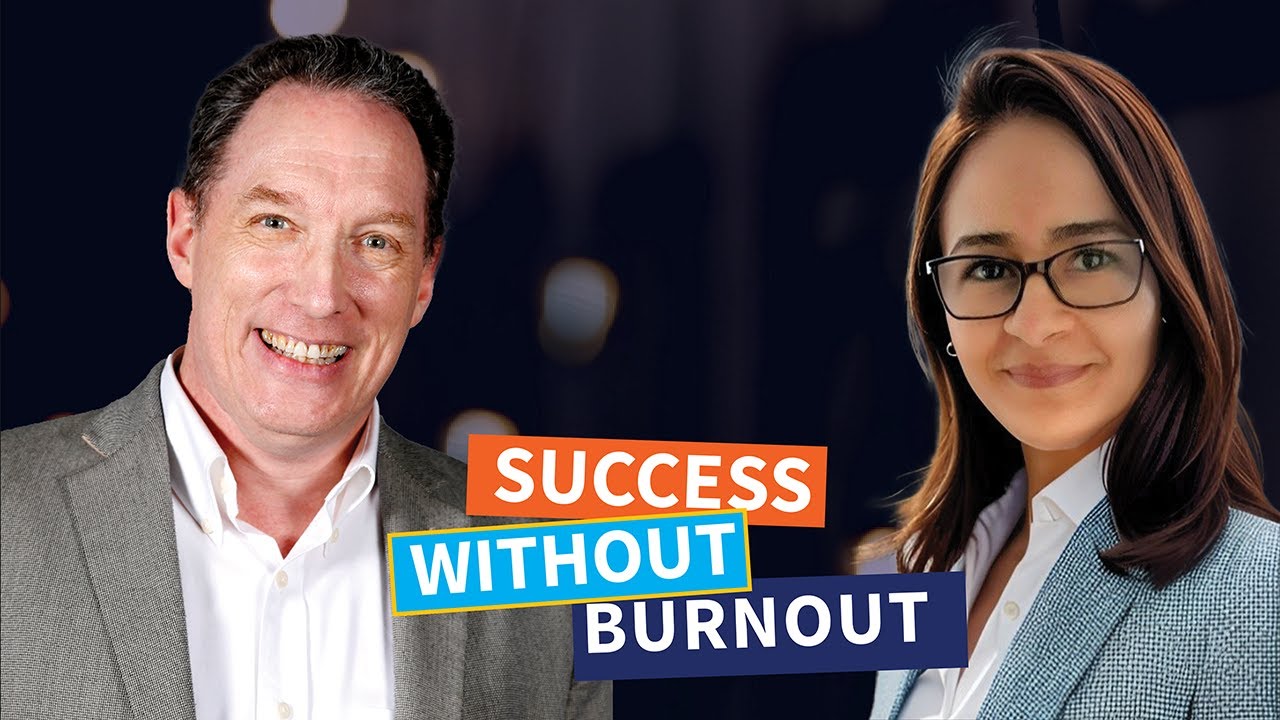
Marc Haine talks with Irene Riad about leadership burnout and the Mosaic Integral Leadership System, which addresses mind, body, soul, identity, and community. Riad explains how misalignment between a leader's purpose and business goals creates exhaustion, and shares practical exercises teams can use to realign.
Chapters
Have you ever felt like your organization is full of high achievers but their impact is very low? Leaders hitting their targets but somehow missing the mark on what really matters. This is really a common problem. Despite all the goals met, there's a creeping feeling of emptiness, an invisible drain on engagement, productivity, And legacy. And that's what we're talking about today on Marc Haine Live. Welcome to this episode! Of course, this is where small business owners and entrepreneurs develop new skills to help them create the jaw-dropping, show-stopping experience that their customers and their employees deserve. I am your host, Customer and Employee Experience Strategist Marc Haine and I am so glad that you are here with us today. My guest for this episode is the Mosaic Integral Leadership Expert, Irene Riad. And in today's episode, we're going to be pulling back the curtains on what it truly takes to lead with purpose and impact. We're going to uncover how aligning your inner values with your business goals can really transform not only your leadership style but your whole entire organization as well. I do have one simple request. If there is somebody in your circle who could benefit from this insight, I would love it if you would share this episode with them. Pass it along and let them know this episode exists because knowledge is power but only if we share it. So, in a nutshell, if I was to summarize this episode into one word, it would have to be misalignment. Today, we're addressing a hidden struggle that is faced by so many leaders, especially those on the front lines or in middle management. You're checking all the boxes. Your business goals, your KPIs, your financial targets are all on track. But beneath the surface, there's this unsettling disconnect, a sense that despite all the wins on paper, Something is missing. Your employees don't seem to be engaged. Your customers seem to be distant. It's what I call the misalignment between one professional role and one's deeper purpose. And that brings us to our Question of the Day. So, are you leading from a place of true alignment with your mission and your vision and your values? Or are you just managing the metrics? Why don't you go ahead and share a link to this episode on your favorite social media platform? Hashtag it #ExperienceLeadership. I'd love for you to be part of this conversation. As I mentioned, my guest today is very special. Irene Riad isn't somebody who just talks about leadership. She's helping people reimagine it. Irene Riad is a powerhouse in global talent consulting and a trusted guide to leaders who want more than just to succeed. They want impact. Irene is an ICF Certified Executive Coach. She's a coach mentor and a supervisor. Irene works with leaders to uncover the deeper purpose behind their roles, transforming the way that they approach work, and life. Her Mosaic Integral Leadership System is a game changer, offering a fresh framework that integrates mind, body, soul, and everything else in between. She's here to challenge the way we think about leadership to help us see it is not just a checklist of achievements but as a journey towards real alignment and fulfillment. Irene, welcome to the show! It is so amazing having you here.
It is so amazing to be with you, Marc. Thank you so much for this introduction.
Yeah, before we get too deep into today's topic, could you tell us a little bit about who your clients are and how do you go about serving them?
Absolutely. So, my clients are the high achievers, whether they're in corporate or they have their own businesses. So, they could be entrepreneurs. High achievers who are looking for something more. And I'd love to especially work with those who have setbacks. So, if you're a high achiever yet you've got some significant setback maybe in the past or current, I work with them. I work with you to empower them to reach their legacy at their work.
I love that. Your whole mission intrigues me. What inspired you to address the issue of leaders feeling disconnected from their purpose?
It's the mission I took myself personally. I think we all start somewhere similar to the clients we serve, we love to serve. And at some point, I reached the pinnacle of my leadership career in corporate life. And yet, when I reflected, I realized I was so far from what made me happy and what added meaning. And that's where it all sparked.
And at the top of the show, I used this word misalignment because that's That's kind of the feeling that I have a lot in kind of the show notes that we went back and forth with, kind of the purpose of what we want to talk about. This alignment, this word misalignment, how does it— this misalignment in your experience between leaders and their core purpose, how does it show up in daily business operations?
Yeah, what I see and what leaders come with misalignment could be masked as frustration, anger in the workplace, or results that are not up to par, whether they are engagement results, KPIs that are not achieved. But on a personal level, when they come to me and they're looking for that person who would kind of match their desire to grow their success, it's around them having even a lack of interpersonal capacity to make that impact. They know all the how-to technical. They've got a tremendous amount of experience. Yet, something is stuck. And they talk about it. I'm stuck, frustrated, unable to get through to the people or to impact a culture since they're usually CEOs, VPs, heads of departments, and they're trying to impact more than just one team.
So, in real-world dynamics, the fact that somebody might be stuck or frustrated, they might not recognize that there's a misalignment between what they're doing and their true purpose. Are there any signs that they should be aware of that there's an incongruity between their purpose and what they're doing every day?
Absolutely. The flags start to show when there is At the end of the day, if one feels drained to the degree that it's having a negative effect on the weeks to come, then we know that draining burnout and that space where leaders feel that whatever they do, it's not working anymore. And it's kind of impacting them in a way where they start to not put or not care but not feel that they have the capacity. So, lack of confidence starts to dip a bit. Burnout, emotional resilience starts to become less. And that means there is some misalignment because if we are passionate, If we're aligned with the work that we're doing, hard work, long hours have a different impact on us. They don't drain us. They don't push us to a place where we don't have enough capacity to work with complexity. We find that when we're really aligned, hard work, hours of work, Okay. Complexity becomes easy. And that's where it starts. The little flags can start with frustration, fed up, a little bit of anger, the stuckness that doesn't go away because we all get stuck every once in a while. It's not bad. But it's when it is ongoing. And I've had leaders who come to me where they've actually fainted in the workplace. Or they've had heart palpitations. They've had some kind of they've had to go to the medical check. It wasn't really a stroke, but it was something maybe toward when people reach the body speaks. So when our body, if we catch our body in in the in all its ways, mind, body, the sensations where we can no longer withstand. Ambiguity, complexity, failure, if we're really triggered by what goes on in the workplace, then it's time to pause and see, are we aligned? And if so, then there are other things to do. But a lot of times, we've gone off in terms of doing work that isn't really aligned with either values or aligned with our dreams for the company, for ourselves. Something is not connected correctly or fully.
To some people watching this and even some entrepreneurs and business leaders that I know, all the kind of high-stress stuff that you just described, to them, they would look at that and go, well, that's just Tuesday. That they're so ingrained in that this is their reality that they've stopped looking at it. So, part of what you're suggesting then is that we need an intentionality to be aware that maybe what we're seeing every single day, 365 days a year is not normal.
Absolutely! I totally agree with that.
And so then, how do we define and shake ourselves out of this? Obviously, if you're tuning into this podcast is because you're here this long. You know that there's something wrong. So obviously, getting information from outside sources that This is not a normal way to go. But people know their reality because they live it every single day. And yet, they haven't been able to filter out that this might be the misalignment that you're talking about.
True. And either we get intentional as to question ourselves, is this the lifestyle I want to maintain? Because we could have our days of really excessive work. But is this happening so often that it has become my lifestyle? And do I want to maintain living like that for the next half of life?
I would suggest that there are even people who would say that, would look at that and go, I don't have a choice. It's my business.
That's the trick of an ego. You always have a choice.
Love it! Yes, I love that you said that because that is so important to realize that a lot of what we put ourselves through is this ego of, I don't want to fail. I don't want people to see me weak. I have to be the leader that I know I should be. And so, because of that, we're creating this additional— this is kind of the stress squared.
Absolutely, yes. And it's a big choice to make because it requires change that either we are— we've got to be intentional and willing to make that change that won't be comfortable initially. And as you said, we may interpret it as weakness. So again, really holding that ego in its place because the ego will play all its tricks and cards to keep you doing what you know how to do best. And we've all had to work so hard initially in our earlier careers. And so, that has served us. It's not a lie. But that's why I say the next half of life because what has got you here will not get you there as we know that famous saying.
Yep, yep.
And it's true. The more I learn and research, the more now I understand what really that means.
Right. So, I mean, obviously leaders are surrounded by other people. Are there specific behaviors or habits that you see in leaders who are struggling with this type of misalignment?
Yes, there's the habit of busy, busyness. This is a real challenge because there is a lot to do. It's not trying to ignore that there is not much to do. There is. But then, one has to really get clear how much of this to-do is just busy work. It's not important. It's not the— it could be urgent but it's not important for you to really put your effort in. And there will be things that we'll have to get out of that busy list, whether through delegation, whether through scrapping it off and being more strategic in how we look at The value of our work. So, that busyness is always something to juggle and to be intentional with how we tackle it. The distraction is another one. There are plenty of people, external requirements that will grab our attention. All of it is important to someone. Now, if we want to look at what success means to that leader, that's another place to define it. Then, we can align the important busy work, the important work that actually drives me to that success, and the distraction. How much of it? Because I can't eliminate it. But how much of it? Again, I get very intentional. What kind of distraction Do I want? That could maybe be leisure or a way of release of some sort. But be very intentional. What is success? How much distraction do I want? What kind of, like, play, being play, having some play, having some leisure that could be my way of a bit of distraction is useful. But then, you're very intentional. that it's not just getting stuff checked off of a list because that makes us feel good. But it's again, it's an illusion that, okay, I feel good. I've checked 20 things off of my list. But I didn't do the number one thing that actually takes me closer to my success.
And to your point earlier about this idea of purpose being tied to purpose, the distraction side could be very It could be not only a distraction. It could be destructive. It could be things like alcoholism and drug use and so on that takes people away from, oh, I do this so that I won't experience the stress. Or I do this because it's a way for me to escape it. I hang out at a casino and blow thousands of dollars because it keeps me from having to think about all the problems I have at work. Is that fair?
Absolutely. Absolutely. And so, the question also becomes the willingness to pay attention to the emotions we're trying to avoid feeling.
Yeah. Yeah, very good. How does this problem of misalignment impact overall corporate culture and potential growth of not only the company itself but the teams? How does that— how is it manifesting itself?
Well, there's research now that says that cultures that are not really focused on helping teams and leaders be purpose kind of driven, that there's around 76% of burnout that they feel. And around 77% are disengaged or not fully engaged. So, these are very high percentages, whether burnout, not engaged. And leaders who are not able to find that purpose that keeps their drive in alignment with the success of the organization, they'll also have fatigue. Eventually, they'll either— we call it burnout or they'll just be fatigued. They're just tired. And that will take a toll on our focus, clarity. And with our teams, if the leader is not able to be the compass, be the role model of actually balancing the energy and the purpose-driven focus of a culture, teams won't catch on. They will feel they also need to stay busy. Burnout becomes a badge. Engagement is faked. And there is an end to all of that when KPIs and ROI is just not attainable, sustainable at least.
I truly believe that the metaphor is like the snowball going downhill. It picks up speed. It gets bigger and it gets more damaging when it hits the bottom.
Absolutely, yeah.
I'd love to delve into your mosaic integral leadership system. And we'll get to that right after this.
When the spotlight shines on your business, are customers applauding or yawning? In other words, how is your business performing? Make your business a star with a new book, Lights! Camera! Action!, Business Operational Excellence Through the Lens of Live Theater by Marc Haine. Marc uses his business and acting experience to help you see your business like a live show so you can create a Welcome back!
I am speaking with Irene Riad. Riad, your book has been a long time coming. Can you tell us a little bit about what it's all about?
Absolutely, yes. It's been 3 years since I actually started putting paper to pen. But it's been, let's say, 2 decades in the real making when I had to reflect to bring it all into meaning. So, my book is coming out towards the end of the year. It's called Radical Becoming. And I'm co-authoring it with the legend Brian Tracy. It's an honor for me to write with him in that book. And what it looks at is that superpower which we can look into now, which I call the mosaic.
And so, tell us a little bit about this Mosaic Integral Leadership System. Can you explain what it is and what it entails and how it addresses this idea of misalignment?
Absolutely. So, Mosaic is an acronym and it stands for the mind in M. Then, the mind, how we look at the mind and work with the mind in terms of thoughts and beliefs. And then, the O is around the operating system, which is our body, how our body or the physical manifestation and what we sense and feel. The S is around our soul and spirit, which needs to be in alignment. And that's where the alignment of all 3 starts to take shape. But the A is the alignment within our higher self. The I is the identity because the Mosaic Integral Leadership System is actually based on how we view ourselves. So, the core of it is identity. And the C is around that community. I call it community of friendship that you start to build around yourself and become part of.
So, it's interesting because it really seems to start really internally and work its way outward.
Yes. So, the focus is from inside-out leadership.
I am so proud that I figured that out without you telling me.
Thank you, Marc.
So, the framework itself, is it fair to say that if you're not strong in one of them, that the rest of them can't happen?
Not so much that it can't happen. It's happening. But without conscious awareness means it's probably misaligned.
Gotcha.
So, the Mosaic System is about bringing awareness to every leader. We start with leaders themselves and it can go to teams. But to every leader, if you're not aware that you've got 7 key areas to keep in alignment or to keep tabs on, are you aware of how it's evolving? Then it then that could be the place where one starts to say, "I'm stuck. I'm not sure why things are not working." I've I I'm using my mind, and I'm very conscious of my. Let's say if you are using, like if you understand how your mind works in terms of how beliefs affect thoughts and feelings and all that, that's great. You're probably doing a lot better than people who don't know how to use their mind in a in a in a more com. Complex way. But then if you're neglecting your operating system, which I say the body, if you're not connecting to how your nervous system shows up in times of stress, in times of important presentation, you're missing cues. You're missing information that could actually be intuition that you're just not really tuning into, whether it's heart, Gut. So, the body plays a lot. And then, the soul. Oftentimes in the corporate world, if I bring the topic of soul, it's like, what are you talking about?
It becomes so woo-woo, doesn't it? It's like, oh my goodness, she's talking about— because it doesn't have substance. But to your point, when we talk about manifestation, that becomes a substance, isn't it?
Absolutely! That's the source. From where your imagination is cultivated.
And your mindset.
Mindset.
Right?
Absolutely. Absolutely.
You mentioned something about the 7 lenses. You mentioned, is that the 7 components of awareness?
Yes, of mosaic, specifically the mosaic. So, the 7 actually align well with 7 levels of consciousness.
Okay. And so, can you define what that is? What these 7 lenses are?
So, the first lens is the mental lens.
Oh, okay. Okay, so the mosaic is each one of those?
Yes, yes.
Gotcha. Okay. And so, how does one start looking at kind of this mosaic framework and start kind of shifting and developing so that they're going to be in a more positive light when they come out of the end of this framework? I mean, obviously, when you're saying mental is one of the first components of it. But that in itself can be its own kind of amazing barrier to moving forward.
Absolutely. So, when I work with clients, helping them understand how to work with each lens becomes part of the process. So, when we— I start with the mental lens first.
Yeah.
Usually, that's the best place to start because we're incorporated always on that space anywhere, anyway. So, I look at the mental lens from a Jungian perspective. Carl Jung, a Swiss psychologist who looks at the mind from a psycho-spiritual perspective helps us understand the components of our mind. For example, how is the ego creating the persona or the personality with which you show up in the workplace? So, helping the leader that I work with actually recognize the voice of the ego, recognize that the ego is supporting them in putting a great persona on. However, it is also limiting them to help them connect to what could be in the shadow. So, we talk about the shadow. What is hidden? What are things that are not considered leadership-like? They're not part of my persona. I'm a high-achieving, go-getter kind of person. So, this lazy, not putting in the hours, We have a judgment on the opposite of our persona.
Hmm.
The learning is that we're all of it. We are a lot larger than our persona, which is what the ego likes us to think. So, spending time to start with how our mind is thinking because we are not our mind. We have a mind. We are not our thoughts. We have thoughts. Which of these thoughts are yours? Which of these thoughts have come from father, mother, peer, society? So, we drill. It takes some time to really understand which of— where am I in all of this mental space lens?
And where do I exist in it? But at the same token, this mental model, this idea of putting on a persona, I do believe that we just like in acting, we assume a role. When we get home in the evening, we're assuming the role of a parent. When we're at work, we're assuming the role of a leader responsible for a team. We're also part of a team that we are answerable to certain things. And so, it feels very much like this whole mental model is really we're putting on one mask over another mask, shifting out for another mask. How do we find ourselves and our true being within the confines when we have all these different roles that we're playing?
Yes. So, finding ourselves starts to grow when we tap into the body and the soul because we are not just a thought or in that mental space. It's just recognizing that you have awareness of them. So, that phase of looking at the mental space is important for me to work with the leader and understand that they are aware that they have thoughts.
Yes.
So, we play with that until we reach that space that you are aware. So, this awareness is who? Who is being aware? And so, you start to expand in terms of who you're actually being when you're aware. And then, that means so in your body, how does that— what kind of messages are you getting in your body? What is it that— where is the— how much of your decisions are coming from heart space, mental space, gut space? And it's when we reach the soul where it becomes more purpose. Sometimes, if people, if leaders struggle with soul, It's not about the word itself. We can scrap the word. It's that higher level of purpose.
So, it has nothing to do with religion or belief systems. It is really kind of how you feel about your place in this reality.
Absolutely. It has nothing to do with religion. It's all about the essence. Your larger essence is It's something that is felt. And the soul language is feelings.
Yes, I love that.
The feelings that we get.
This is so fascinating. Very quickly, how can people get in touch with you if this is resonating with them?
Please get in touch through LinkedIn. I've got my profile, Irene Grouillard, linked on LinkedIn. Also, the website www.sigtset.com. And they can contact me through both of these spaces.
I love that. In the show notes, you gave in this concept of Avoda, which is work as a sacred act. Could you talk a little bit more about that? Because again, I think it's one of these things. Some people will hear it and they'll go, oh, that's just another woohoo concept. But there's something very real here, I think.
Absolutely. So, Avoda is a Hebrew word that has multiple meanings. It's mentioned And in the Bible, but it's also just outside of the Bible, it does have a meaning of service, doing work of higher purpose. And so in the context of doing your work, it's not about your role or job. When you are connected to your work, you're connected to your avoda, which is that service-level work. That has deeper purpose and deeper meaning. And so, every leader, you're in a position where you're able to serve a lot more people. You're in a position to really dig deep. And there is a reason that you have that role. There is a reason you have so many people looking up to you and impacted by everything you do. And if we start to turn that lens a bit from just job to higher purpose, then that work, work which is your avoda, is more sacred than you may have believed or may have thought initially. It's not just that— yes, it pays the bills, uh, it is a business perhaps, but when it is looked at from more of a soul or a purpose lens, you start to see your work as avoda, the Hebrew word that actually means Sacred work or service.
I love that. We're all being human animals. We have our biases and our belief systems. A lot of it taints everything that we've been talking about today. How does one kind of overcome some of those pre-programmed biases and beliefs? Is it strictly through kind of counseling, working with you? Or is there a way that they can do some sort of self-reflection exercise to be able to see exactly how their world is being tainted by the kind of glasses they're wearing?
Yeah, absolutely. Well, the work I do is actually coaching, not counseling. Counseling could help. But coaching where questions— and if they don't, they could start on their own as well. Questions that start to— that helps them ask would be things around what beliefs about yourself or the leadership that you're holding is fully coming from embracing your potential, for example? How is your physical well-being influencing decisions that you're making or choosing not to make? So questions that I would recommend is actually carving out 10 minutes, 10 to 15 minutes in your day, whether that's the morning or the evening or somewhere Where you start to reflect on what, what, when did fear come into your decision-making? And when did love was the actual, or kindness, or whichever word that you joy. So whatever you feel is the, is the opposite of fear. So, and then that would be reflection time that allows us to see, are we being pushed by fear or are we being pulled by love, or joy, or kindness? Because fear is the language of the ego and love or joy is the language of the soul or the purpose.
And it's the language of contribution as well.
And contribution, community, having service. Yeah, absolutely.
I love this. Hey, when we come back, I'd like to talk a little bit about some cautionaries and pitfalls for people who might be this might be resonating for and they want to take the first step. What are some things they should be aware of?
And we'll get to that right after this. Color for visual prompts during your speech. And you can set audio cues to practice or set it to vibrate so you don't even have to look. Be the pro you know you are. Download the app at speakerpresentationtimer.com.
We are having such a phenomenal discussion and I hope you're getting a lot from it. As evident from our discussion today, you can tell that Irina and I are deeply dedicated to supporting business leaders just like you. So, if you're in the midst of planning a leadership retreat or an industry conference, or you know somebody who is, Irina and I would love to serve. So, feel free to reach out for a conversation about your unique challenges or to discuss how we can collaborate to achieve your goals. Irina, I'm loving this conversation. You know, my tagline early on is daring people to lead with love and kindness first. So, I know that we're on the right track because I think, you know, when we're putting on this lens, of caring, it changes everything about us. Can you talk about how self-awareness and self-reflection can really benefit leaders? I mean, you talked about doing it. But really, what is that benefit?
The greatest benefit is the deeper connection with oneself. So, the little time, and it doesn't need a lot of time. Little time, 10-15 minutes, even 5 minutes. But the act of actually just reflecting and going in, stretch your muscles to actually connect with yourself. So, the most important is that the leader is connected with who they are authentically. And the more reflection, the more time we spend on how we feel inside, What's my state of mind? What are my values in this meeting? Like if you're sitting in the meeting and you're having 5 minutes of reflection, these minutes, they don't have to be long hours. Actually, it's recommended just small minutes throughout the day stretches your capacity to stay connected with yourself because there's so much distraction. There's so much to do that if you are not connected with yourself, It just becomes pointless, and you go into the other hamster wheel of burnout, meaningless work, and so forth. So if we could stay connected with ourself, self-reflection, self-awareness, looking inward, looking at ourselves from different lenses, is what keeps us intact. Because there's so much of there's so much that we can do. But instead of just doing, doing, and and having. an external focus, just looking at results outside. Keep your focus inside. Keep that measure of being connected with who you are.
Once we do this for us, how valuable would it be to run this exercise with your team?
Oh, this would be extremely valuable. Teams have no time to— they're not given time to actually self-reflect.
It's interesting that you said that because one of the things I've done in my last few contracts is I break out the Virtues Project. Virtues Project has a bunch of cards with virtues listed. And when we have a meeting, a leadership meeting, a way of being able to get together and start communicating, we'll do virtues picks where we'll go around the table literally picking a virtue and talking about it and opening it up. And what I found happened was there was some really great reflection. Because no matter why you were meeting, usually it's because we have problems to solve and things to overcome that can result in finger-pointing and the egos taking over. But when you have somebody turning around and acknowledging you for a particular virtue that you're talking about, it becomes harder and harder to really kind of lead with ego after you have those levels of acknowledgement. Is that to you— I found that to be a valuable exercise for me. Are there any other exercises people can do with their teams to lower the barrier of ego and really bring in the love and kindness and caring into their team dynamics?
Yeah, a great exercise is actually sharing together On what is the environment that they all need with one word or phrases. What is the environment they all need to show up at their best?
Yes.
So, prior to starting any meeting, just a flip chart or a piece of paper and everybody just calls out a word. What is it that they need right now given the context we're going to talk about XYZ problem? What is it that they need right now from all of us that will allow them to show up at their best? And once everybody has said a word, you get a huge flip chart. And then, it's the second thing. I kind of stretch it a bit. Have each person take one word and they become the owner that they own this for today. So, if anybody starts, if let's say we say respect or Yeah, respect. We respect different views. And somebody says someone and then immediately somebody objects. The owner of respect just can hold the card and say, we need to follow that. Just holds it up and then people will recognize, okay, we need to leave space for that. So, we each give a name. We each have an owner for one of them. And we bring this responsibility together. It's not the leader's job only. It's all of us.
Yeah. And so, it gets— and it also gets rid of the ego about, hey, you remember what we talked about at our meeting? You're not just holding up a card and people going, oh yeah, right, right.
Yeah.
And it helps get that mind. And again, it's about kind of challenging your mindset as you go forward because we are always in crisis, it seems. For people wanting to kind of start this journey, what are some cautionaries and some pitfalls they should be aware of? Because I have a sneaking suspicion It can be really easy to create a band-aid solution to something that won't stick. It'll feel inauthentic over the long term. And then, people won't— it'll actually break trust within your team.
Yeah, yeah. So definitely, the precaution is to be careful not to be labeling people. Because initially, we do start off by recognizing our ego may have a certain tendency, a preference. And then, for example, I may have a preference of being busy, high achiever, perfectionist, let's say. And so, if we are doing this in a team and we are sharing our tendencies and our preferences that ego has, it's extremely Extremely important cautionary that we don't use these to later label people and say, "Oh, here's your perfectionist coming out again," and it's pointless. People are not going to be sharing with an open heart. We share them because it is a practice of vulnerability. We are becoming aware, and so initially there should be a strong contracting part where. We're all doing this together. And there is no bad thing about an ego. There's nothing bad about a perfectionist. They're there for a purpose. They're useful for certain situations. So, recognizing labeling is part of awareness. But let's not take it and use it as labeling someone later in the workplace. to kind of help them remind them they shouldn't be doing something.
Yeah, you're bad. You're bad. You're being bad. Yeah, this has been such a great conversation, Irene. Do you have any last thoughts about what we've been talking about today?
It's been very rich with you, Marc. I think, yeah.
It's been like this big.
It's been— Yeah, I think what comes out to me again is that As leaders, we are evolving. So, our identity of who we think we are is always evolving. And so, leaving people with a question is really kind of maybe where I am at this point. Who are you becoming? And have that vision of whom you are becoming. Right there, right now so that you are being. The being in becoming is fully someone that you're able to connect with.
Love that! Personally, I'm becoming Han Solo. I don't know about anybody else. But could you remind everybody one more time how they can get a hold of you?
Please connect with me on LinkedIn. It's Irene Riad, same name. And on the website www.sigtset.com. I would love to connect with anybody and all people on your audience.
Thank you so much. And again, thank you for coming by and sharing your passion and your expertise. This has been a brilliant conversation. I really appreciate you.
Thank you so much, Marc. Really appreciate the chat we had.
Why don't you let me know if this was of value to you? As always, my offer stands. If you would like 30 minutes of my time to brainstorm your business with you and your team, feel free to book some time on my online calendar. The link is in the show notes. And feel free to reach out to Irene if you feel that she can help serve you and your team. I know it would be an honor for her to be of service to you. It's just how she's wired. And while you're at it, if you want to follow me on LinkedIn, please connect with me on LinkedIn. I'd love to be able to connect with you. And see what you're up to these days. And while you're at it, why don't you go ahead leave a comment or review about this episode. I'd love to get your feedback. Was this of value to you? Did it serve you in any way? And of course, if you haven't done so yet, please make sure that you're subscribed to the podcast. That way, you get notifications whenever I bring you fresh new content like today's featured guest, Irene Riad. Thank you for joining me today. My name is Marc Haine. I hope you stay safe. Thank you, Marc. Stay healthy and I hope you dare to be the exception. Thanks for joining me today!









