Get Fired Up and Ready to Shift
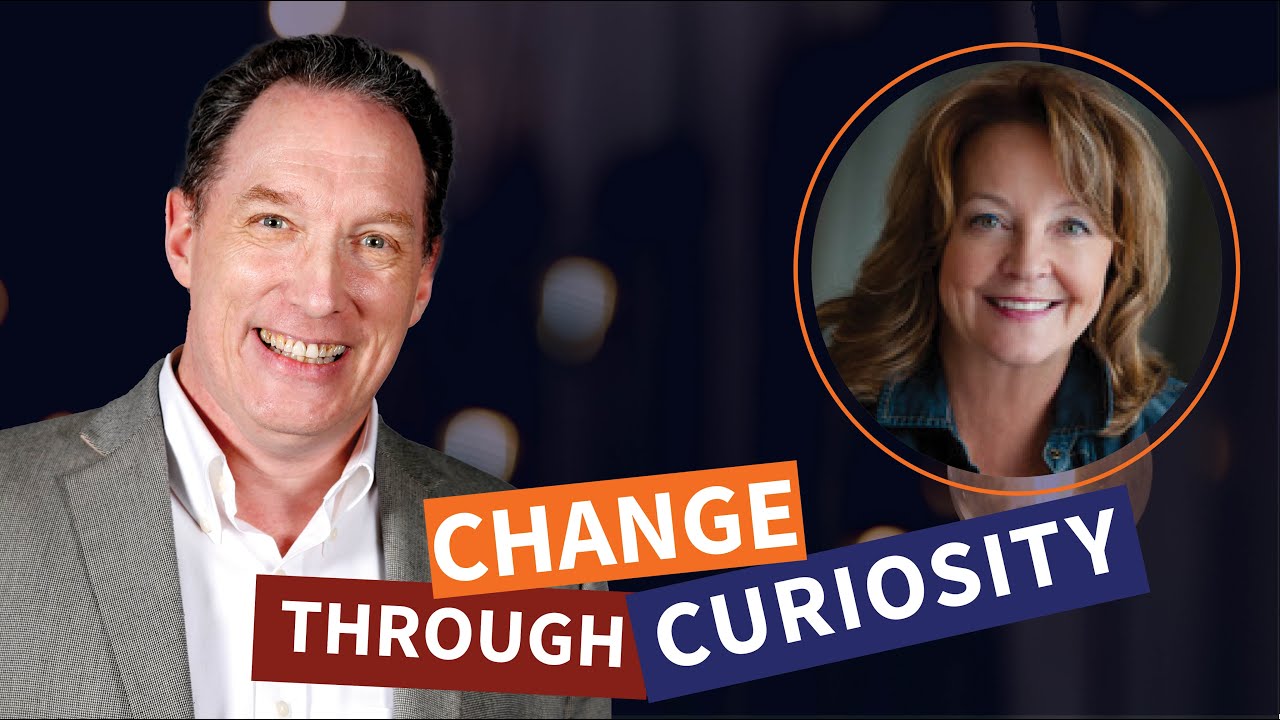
Marc Haine interviews change-leadership expert Linda Edgecombe on shifting workplace culture. She argues leaders must know their blind spots, practice humility, and use "move the dial" incremental changes rather than overhauls. Clarity, humor, and lifelong learning are the levers that move employees from overwhelmed to engaged.
Chapters
Welcome to this episode! You know, in my 35 years of leading grassroots businesses predominantly in hotels, casinos, and restaurants, the one thing I realized early on was that attendance issues, absenteeism, and employee engagement and retention issues were all indicators of a much bigger problem. But how does one Peel back the symptoms to reveal the crux of the issues. And that's what my guest and I will be talking about today on Marc Haine Live. Welcome to this episode. This is where small business owners and entrepreneurs pick up core skill sets to to help them create the jaw-dropping, show-stopping experience that their customers and their employees deserve. I am your host, Service Expert and Master of Experiences Marc Haine. And my guest for this episode is Change Leadership Expert Linda Edgecombe.
Hi Marc!
We will be uncovering how we can drill down into the symptoms of busyness, overwhelm, and distraction to get to the heart of what ails us. when it comes to employee engagement. So, stay with us. I hope this will be an extremely valuable podcast for you today. This is a really tenuous time for leaders in our, what I like to call, the almost post-COVID era. More so, I think, because we have new sets of expectations. But nowadays, the news is filled with employee health, And employee wellness. In Canada, public service workers are now on strike during— at this point in our recording, partly because they want the government to allow a hybrid balance with the ability to work at home some days of the week. They've already got a teaser and a taste of what that reality looks like. And so, they're demanding that the government allows them to do more of that. So that brings us to Our Question of the Day. So, what adjustments have you had to make as leaders to meet the new expectations in your workforce? Is it causing you any grief? I'd love for you to share your responses. And you could go ahead and do this by sharing this episode on Social media. Hashtag it #ExperienceLeadership and put your comments down. I'd love for you to be part of this conversation. As I mentioned, my guest today is— I'm so thrilled to have Change and Leadership Expert, Hall of Fame Speaker Linda Edgecombe joining me today. As a Resiliency Expert, Motivational Coach, and a proud disruptor of the status quo, Linda travels across the globe speaking to leaders just like you. She is the author of several books and has been presented with the Humanitarian of the Year Award twice in the last 4 years. Linda, welcome to the show! It is so great to have you.
Thank you, thank you. Wow! What a beautiful lead-up to this episode. You do a great customer Customer experience right off the top. I'll tell you that. Amazing!
Hey, before we get into today's topic, could you let us know a little bit about how you serve your clients?
Oh gosh! My approach to the clients who want to work with me is that I offer up that I want to be a team member. I mean, obviously, I mean, I'm not sure like for yourself or your listeners. But I live at events. My life is at events. And so, I've had 30+ years of being at events and want to at least give them my insights and thoughts on what it's like to create a great experience for the audience members. Some of the sort of fine detail because I mean, big, big, big event planners, they've got this down. This is their profession. But the majority of conferences and meetings that happen across the globe, They tend to be smaller kinds of events. So, that's one thing. I like being a team member. I like giving people lots of advice on, again, how to set up that meeting. But I like to be an easy-to-work-with professional speaker. I love showing up early. I always make sure I travel early so there's no stress to that. That to me is a service that I'm not just running in the door. Have I ever ran in the door? Yes, I have. In the 30 years, I've definitely ran in the door with late flights and whatever. But So, I've learned how to be easy to work with. I don't have high expectations. I don't want to be a princess. I don't think I ever have been a princess. But that's a value for me. That's not everybody. But that's me. I don't need M&M's in a jar before I go on stage or any of that stuff. But I know we make some fun over that kind of stuff. But anyways, I have said lately, I do require a shot of full 100% agave Patron before I go on stage. And that's And that the meeting planner should also have a shot because it's a lot of work putting on a meeting.
And they need it.
It's so funny that you say that.
Every play that we do, every play that we do just before we get on stage, we have that one shot of that 100% agave tequila. And it's a good way to give you a little spiritual kick in the bum.
And as a past bartender at The Keg back in the early '80s, when it was okay to drink on the job because it's not okay anymore to drink on the job. But to think that it was actually okay to drink on the job. They knew well enough at about 10:00, 10:30 at night when you've been working hard since 4:00. They'd line the bar for all the staff. Anyways, I know it's crazy. We're talking about alcohol, not talking about great leadership.
But truthfully, we are talking about employee engagement. And we're talking about all the different Symptoms that people like. It's so funny when I talk to leaders. They talk a lot about the blame. They play a lot of blame game. My staff, they're always late. My staff, they're always calling in sick. They quit just to get 25 cents more across the street. Like all these different kinds of talk. But as I kicked off the show, the issue is actually really a deeper issue. So, before we get into it though, I want to from you get an idea of why you think this topic is really important today.
Well, okay. So yes, we've just come through this crazy experiment experience, whatever this last 3 years has been. And when people were majority remote working, even in companies that were like— I'll speak about my husband's companies. He's a developer and a construction guy. And so, that was a essential worker. But lots of his admin staff definitely work from home. Their skill level. So, leaders don't— leaders, there's lots of leaders who don't have a skill set of their own self-development, their own self-awareness, and their own ability to keep people accountable because they don't really want to create conflict or call what I'd say is obvious to them onto the table. So, they avoid it and then grumble about it after. And so, we've come through that. So, people have been working and now there's, yes, everybody's like, I kind of want to do a bit of home, a bit in the office. There's benefits to both. I think we'll be hybrid from here on in, except for the organizations that clamp down and say, no way, come hell or high water, you're coming back in the office. Of which then, they will then Lose people, of course, because people have set their mindsets to knowing that they can be effective. They do work. I mean, did people take advantage of it? Yes. Lots? No. Most people overworked because it's just right there. It's in front of you right now. I'm sitting in my office right now. I could run to the fridge, run home, back and forth. So, here's what I've noticed, like with the big slap in my face over this whole why are people staying or going. Since we, myself as a speaker, have gone back to in-person events, And we always, I mean, always talk to every client. What's going on? What are the issues? I like to position it by saying, should I know anything just so I don't step in it? That's a good way of saying, is there something I should before I get on stage and whatever, put egg on my face? And organizations who have leaders and executive leaders could be just a boss or it could be layers of bosses, layers of executives who literally lead people first with their hearts on their sleeves are the ones who, when I ask them, so, what has your turnover been like? They're like, very, very little. We have very little turnover versus leaders who don't really understand their own personal whatever's going on for them. See, on stage I'll say to my audiences, in the 30-some-plus years I've been doing this, the most successful people I've ever come across Whether it's leadership or not, the bosses or somewhere in between, are folks who are just very self-aware, which means— so I say, so what does being self-aware mean? To me, self-aware means that you know what you got going on that you're really good at. Yeah, and you're cool with that. But you also know what you got going on that you're not great at. And you're okay to admit it all. And the truth is that there's not one of us On the planet. But I usually say in this room right now or on this podcast who's listening. There's not one of us that's got it together. Nobody does. Will I stumble through this today? Yes. Will Marc? Yeah, he already messed up a word. I mean, who gives a rip really? And when we can get okay with the fact that none of us have it together, meaning we got lots of— I mean, I have a highlight reel as do you, as is everybody listening. We all have a highlight reel.
Yeah.
I have a lot of lowlights too. I'm extremely human. When we can get it in our heads that it's okay to not have it totally together, we can stop spending the energy we're spending trying to look like we have it together. And we can take that energy and dive deeper into some stuff that really has more meaning. We'll have more impact, whatever the goal is, personally and professionally.
Yeah.
Humility is Like literally the key to a leader's and employer's success these days— humility. So, what does it mean to be humble? I mean, you gotta let your people know who you are. They want to know who are you, something about you. I mean, connection right now is one of the most meaningful things you could foster in your organization is connection to each other, you to your people, Your people to each other because when we connect, that's when we buy in. We trust. I know something about you. You know something about me. Well, that's why I would jokingly say with our deep, deep friends that we have in our lives, the reason you're deep, deep friends is because we all know too much about each other. You have to stay friends because it's not going to be cute if you break up.
Because then, you have to pay them off for all the bribes.
Exactly, exactly.
It's really interesting because you've hit on a number of things. And as you were talking, it's like, oh yes, We need to talk a little bit about the power of humility. You've talked a little bit about leaders not getting prepared to be leaders. When we think about kind of this organizational dynamic of we love to be able to promote people who know what they're doing, we've talked about this a lot on this podcast about how leaders become incidental leaders because it's like, hey, you're a really great welder. Why don't we promote you to shop And then, you could teach everybody how to be really good welders just like you. And 6 months in, you got the guy going, why do I suck so much? And you're looking and going, why aren't we getting the results that we wanted? And we're not developing the leaders in a way that they are. Do you think that there are other aspects of supporting leaders that organizations are really dropping the ball on?
Oh, absolutely. I mean, it's historic. We've been Promoting people into position because the number of years they've been there. Unions, honestly, sorry unions out there. I mean, and I've been in unions, are the worst at this because that's how tenure works. And does that person A, have the desire to want to look over, watch people, comment on people, give them feedback, build a vision with that person, build a leader? The truth is you want 1 person working with you versus 4 people working for you. Which means you have to bring people along with a vision and a goal that's clear and clear and understood. But when we promote people into positions that they're not skilled for, but if you can see that they could be trained for, I mean, yes, then there's that piece. But not every personality out there—
But you also have to be willing to be trained as well.
Yeah, exactly. Yeah. And we're still kind of coming through as a boomer. I was gonna say, as a boomer, we're still coming through. A group of people who are in their, I'll just say 60s because we're at the end of the boomers, who were raised on a different hierarchical leadership kind of organization. And is that my phone ringing? I hope not. Anyway, it doesn't matter. Like I said, life happens. If someone comes to my door right now, there's going to be a dog barking. I'm guaranteed right now because it's too hot outside for me to put my dog outside.
Yeah.
Anyways, it's just really important that we, when we're choosing people to come along, that you don't just make the unilateral or the top-down. It's more like a top-down decision. John's been here for 30 years. Let's make him shop foreman. And we've all heard this too. It's actually not the CEO unless the CEO is fairly unethical. But it's not exactly the CEO of most organizations that people leave for. It's their direct managers.
Right, right.
It's the environment they create.
So, we're talking a little bit about now the environment and kind of the role I think that leaders have impacting their cultures. I started off talking about this idea of absenteeism and attendance issues and people quitting and all this. When it comes down to this idea that leaders are in control of their culture, are there any myths you think need to be busted About that?
Absolutely. Just listen to a great presenter the other day. I got it. I just want to give you her name because she's Bridget Schüttel, who did this. She's done a lot of— she's got a book out called Overwhelmed and has done a lot of work with LifeLabs and was talking about the countries where people who work the longest. So, this is a cultural thing. You put in your 30, 35, 40, 60, whatever the expectation is of hours in a week. And some organizations even more. In some countries, even way more. The countries who have the most productivity on the globe have the shortest work weeks, have the 4-day work weeks, which are most of the Scandinavian countries. The country that has the most time put in at the desk which is Japan, has the worst outcome, the worst productivity compared to the number of hours they're actually putting in. Because there comes a point in everybody's brain in any given day where it's gone. And so, I think it's our inability or our ability to say, can we actually look at this differently? Is it more about the what we do than the where we do it? Is it, can you get, if someone is very productive and get their stuff done in a 5-hour workday? I mean, but then again, it's a leadership or an employer who thinks, how much control do I mentally really think about? How much control do I really need to have over my team? Let alone all the software we're putting on our computers now to make sure that your staff are actually sitting at their computers. Well, I mean, I know. I've been an entrepreneur for 30 years. So, all I do is observe. All I do is observe. So, I'll give you an example of one of the groups that blew my mind. I just spoke for a few months ago. It was the New Brunswick WorkSafe New Brunswick. And they, of course, all went home. They have 3 or 4 buildings. They've sold 2 of them where all their staff were coming into. They've sold 2 and they've kept their main building. Everybody else has gone home. So, just before this convention, they had their annual meeting. Hadn't been together like everybody in 3.5, 4 years, all of them. It was a lot of fun. They really made this a very engaging, fun event. And people came into that event to see each other like as if they were like, not that you can see this if you're listening, but they're seal clapping. They're like so happy. Again, like their voices are like almost like kids. It was fantastic. Anyway, their CEO just before this convention that they held sent everybody as a surprise an ergonomic desk, like a stand-up, sit-down desk. And an ergonomic chair because they are WorkSafe New Brunswick. But he says, hey, if you're going to be working from home, you need to be as safe and as comfortable physically, mentally, all of it as you possibly can be. And I thought, wow, now that's progressive in my opinion. And that's the first time I went, okay. So, when I was doing sort of a bit of a fun personality profile with the whole group while I was on stage, yeah, he definitely is a guy who put his heart literally on his sleeve.
Yeah, he's living his methods as well, right?
Yes, he is staff first, then clients, then suppliers. That's how he leads. That's how important his people are to him. Yeah, that's why they have—
it's so funny because you'll also see that reflected in their mission statements, right? When you take a look at the mission statements where somebody might turn around and say, our mission is to provide fantastic return on investment for our stakeholders. And The quality of our product is really going to be good and that will take care of customers. And it's like, why is customers last? Why is employees not even mentioned, right? And it really gives you a good hint on kind of the culture people are going to be walking into.
Yeah, this whole work-life balance thing, which balance is never really— it's never even existed. But if you could think about work-life well-being, You take an approach to— I mean, the one best, the greatest thing for me that happened, came out of COVID is that it made it okay for us to A, not be okay. That just became the norm. It's okay to not be okay. We don't have to fake it anymore because all this stuff's been going on way before COVID But talking about mental health, it's— And again, not a very comfortable place for most leaders in organizations. But it's been enforced. It's on the table. Let's learn about it. They might still begrudge about it because I hear the underpinnings too. But it is what it is. So, it's like, let's get on board just like every other cultural change that's happened on the planet. I mean, we've had lots of them in the last good 20 years. But this is one that's not going anywhere. So, employers and having them put in wellness programs, mental health programs that are commonplace, not just hidden. Oh, we have this insurance policy. And if you need to see a counselor, come and see our HR person. It'll be very confidential. I'm like, who cares anyway? It's like, okay, hands up. I need one. Give me a counselor.
Take advantage of it.
Yeah.
And it's so interesting because you mentioned COVID again. And I think COVID was a huge learning curve for leaders. And I think it provided huge opportunity But if COVID showed us anything, it's how we need to be prepared for constant change. I mean, we were talking about this for years. But really, COVID just— it was like somebody just put this ore in this huge pot. They just stirred this pot and said, we're going to change in such a way that you have no control. So, I'd like to deal— I'd like to delve into maybe some concrete strategies that leaders can look at when dealing with change. And we'll get to that. Okay.
When the spotlight shines on your business, are customers applauding or yawning? In other words, how is your business performing? Make your business a star with a new book, Lights! Camera! Action!, Business Operational Excellence Through the Lens of Live Theater by Marc Haine. Marc uses his business and acting experience to help you see your business like a live show so you can create a performance your customers will never forget. Don't forget, buy Lights! Camera! Action! today at your favorite online retailer or directly at marchaine.com.
Welcome back! I am speaking with the fabulous Linda Edgecombe. Linda, this is such— I'm so enjoying this conversation. Leaders so badly want things to go back to what they know. When it comes down to this, what advice would you give them now? The ones that are pulling out their hair going, my reality is just shaken up so much and I just don't know How to deal with this? What advice would you give them?
You know, it's a picture I took of a back of a stationary truck owned by Lukey. And it's a flowchart that says, are you happy? Yes? Keep doing what you're doing. Are you happy? No? The key to the whole flowchart is, do you want to be? So, if you want to be happy, most of us say, yes, of course, I want to be happy. I want to be happy. And I go, yeah, you know what? If we all want to be happier, we'd stop telling the stories we keep telling over and over and over and over, right? Same old, same old, same old, same old.
Hmm.
Now, as a person who's spoken about, written about, researched change for forever, I have never— now, COVID again was— it landed on our lap and we had to deal. What exhausted us, what has been exhausting us over and above all the other sort of things that we went through is that we have cycled through the first 3 phases of change All through COVID. Get your angst. You're anxious. Then, you get your hopes up and then, they're down again. And then, you get your hopes up and then— so, this roller coaster of emotion has exhausted us. So, what we never really got past, and this is my advice here, is the discomfort of the work that has to happen when you come to terms with the fact you have to lean into the mirror. So, leaders and employers that are thinking, okay, I'm just so sick of change. Well, Well, then you've got to find something else to do. I'm serious. It just is what it is. And if you are in some work and it's causing discomfort, you're in the best place you possibly could be. But you have to lean into the work. So, as I lean into my camera, leaning into the work. We avoid it because it's not easy, because it's not always beautiful. And when you lean in, you start to, if you're open to it, you start to read things you haven't probably read before. Different kinds of stuff. Maybe you're saying a few things about, man, I'm really stuck with this whole change thing. I'm sick of it. Then, you have somebody pipes in and has another comment. You wouldn't have had that conversation unless you started to verbalize it. You have better conversations. You have deeper conversations.
When the spotlight shines on your business.
Oops, sorry about that.
That's okay. That's a spotlight shining on me. That's a spotlight. That pushes us into the phase of change that is discovery. That's where we get re-energized. Not rebirthed but you definitely sort of get new ideas. We get more creative. And all of that then shifts our perspective on how we see ourselves moving forward. It's like when you're in high school and you're learning some calculus formula. And for some reason, you can't get it. You can't get it. You can't get it. And all of a sudden, boom shakalaka! It comes to whatever. Something shifts. You go, wow! I just got that. That took me longer than I expected it to. The other piece on change, I always say, do you want to be happy? Yes. Change something. But I'm not a big believer in turning yourself inside out. We've already gone through that experience. What I am a big promoter of these days is just moving what I call move the dial slightly. So, on whatever it is that you know you've got to juggle and learn more or learn less or stop thinking or change a mindset or whatever, move the dial slightly. Even just a couple degrees. Because what you'll be like in literally 30 days from now will be completely different from where you are today. So, if you're feeling stuck in a mindset or you're grumbling about, yeah, the good old days when we could have drinks at the keg while you're working, just move the— I mean, that's a silly example. But think of change as moving the dial, not complete turn yourself inside out because that's overwhelming. No one wants to do that. And we're exhausted already. We're just trying to reboot our energy from the last 3 years.
Yeah, it's interesting that you said move the dial because my analogy is I say, just take a step. It doesn't matter what direction. But just keep moving forward. You can always change directions. You can always adapt by taking a step in a different direction. But if you just change it slightly, you'll end up in a much different place than if you just—
A different spot.
Right. Linda, this is fascinating. I know that probably people are biting at the bit just trying to figure out how they can get in touch with you. Could you just let people know what's the easiest way to get hold of you if they want to book you, if they want to explore working with you? What does that look like?
Well, as my dad would say, who's my dad since passed, but what he always said is that I have more, he said, more shit than Shinola. So, I have every— you just Google my name. If you Google my name, yeah, you'll see more crap than Shinola. I love— I have to say that because I just adore him. But obviously, lindaedgecombe.com is where all the info you Nice. More than you possibly need is there. You can download my latest ebook. It's free.
Nice.
If you want to talk about busyness, distraction, and overwhelm, that's Breaking Busy: Finding Peace in the Chaos. But yeah, just send me an email if you have any questions. My gosh, I have lots of resources on my site. I've got lots of video I'm doing like Marc but not quite as beautiful and fancy as Marc's. I'm podcasting for the first time ever, which is Shocking considering how much I love to talk. Give me a mic.
There you go. There you go. That's great. So, lindaedgecombe.com, people can find you and they can connect with you as well. And I also know that you're on LinkedIn as well, right? So, easy to find.
Yes, all the socials.
Easy to find. This idea of constant change, we talked about this idea of just making little incremental changes, training a dog just a little bit. But how would you recommend that business leaders get ready to stay ready for change? Because it's one thing to say, just make little increments. But how do they, from a mindset perspective, from a dynamic perspective, how do they get ready to stay ready for the next change?
I would certainly work on, well, there's, I mean, staying ready for change is staying as healthy as you possibly can. Because I know a healthy work team is an engaged work team. Diverse teams are way more creative, to be honest with you. And just so stay in a mindset of curiosity. That's the point I'm trying to make here. When you get triggered, when something comes up, when a stressor hits you, don't just respond to the stressor. Sit. But you got to catch yourself. This is a skill that takes practice to catch yourself and go, hmm, why is this stressing me right now? Or, hmm, why is this bugging me right now? That is a curiosity mindset. And if you can stay in curiosity, Instead of going to judgment or reaction. Because when we go to judgment and reaction, we're actually judging ourselves. It's one of the harshest things we do to ourselves. It's a self-perpetuating, you know, it's an awful thing that we drain ourselves with is judging other people or other situations and reacting to that. And if you can stay curious, you're so much kinder to yourself, which allows you to have some grace and some energy to then say, okay, How do I want to move forward on this? The other piece that I talk about pretty much every time I'm on stage is just there's that being, having energy and resilience to deal with stuff that comes down the pipe every day. Stuff hits a fan every day. Change, decisions, whatever in or out of your control is that resilient. It's not a destination. It's a Menu of sorts that you can use every day. Okay? We all need to move more. That's no question. We sit way too much. We all need to move more. That's a non-negotiable no-brainer. We all need to sleep better. You have to take your sleep seriously. Take your sleep, how you actually get restorative sleep seriously. We all need to laugh more. Well, I don't because I laugh all the time. But sometimes, laughter is literally Even if you're going through the heartbreak of your life right now, or the most stressful situations you've been in, if you cannot laugh through that, it's the best bridge into healing. Laughter is the best bridge into connection. So, if you can make some levity of yourself as a leader or an employer with your teams. Honestly, when I get permission, when I can go into an audience, especially to these who I always say, I always bow to the person who's the most in charge and curtsy or whatever. And say, can I make a bit of fun? Can I make some fun of you if it comes up that it works that I can make some bit of poke, a bit of fun at you? And if they say yes, which most of them do, and I do, their teams, their staff just think that's the best because that endears them to that person. It just works the best. So, humor is everything. Laughter, laughter, laughter, laughter.
You mentioned a magic word, resilience, which I think Because what you're talking about now is you've gone from kind of these tools, I guess, to get ready for change. But you've now thrown in this idea of resilience. I think in the paperwork that you sent me, you had this idea about resilience requiring clarity. Could you jump on that for a second?
Absolutely. Because after laughter, clarity is the next.
Clarity.
Clarity is literally the next essential. I call them essentials for resilience. And it's like I say, it's a menu of sorts. Clarity is being honest with yourself and saying, look at all the stuff you have on your plates right now. And why have I willingly piled all this stuff on my plate? Because everything that's on your plate, you've put there. Some stuff gets dropped but you keep it there. And when I say, okay, clarity means— and the reason we keep piling stuff on our plates Is because then, we don't actually have to deal with what's on the other side of the plate because you can't actually see it because the plate's so piled high. And when I— the biggest pushback I ever get from my audience members when I do, when I dive deeper into all the roles we play and the values that we have, the reason there's so much pushback in me asking them, choose 1 or 2 roles that you're currently playing and let them go. Oh well, I might as well just take one of their children from them. I mean, it's just like there's such pushback. It's just incredible. Although you're exhausted and overwhelmed and can't even think about when's the last time you had the best laugh you've ever had or those kinds of things or felt actual pure seal clapping joy. It's because you're all so much stuff but you're not willing to let go of some stuff. So, clarity means what do you really want? And you already know what you really want. We just don't want to admit we know what we really want because when we know what we really want, we can say no to what we don't want. So, that clarity piece is figuring out really what— where do I want to go from here? And that's kind of honestly—
That's really interesting. Sorry, I didn't mean to interrupt you. But that's really interesting, this idea of clarity. Know what you want because I always fall back on Henry Ford. Ford's disclaimer of, if I went up and listened to what people wanted, they just wanted faster horses. Could it be that we sometimes know what we want but we don't know what we need?
I think probably. When I ask people, okay, if— and I've surveyed my entire database a few times on this. If you could change one thing, this is knowing what you really want. If you could change one thing about yourself, that you know would make an immediate improvement in getting to where you want to go, what would you change? So then, they listed all the things. And mostly, it's get more organized, get my finances in order, get my health. So, they'll list the things that they would change knowing that that would totally move them forward towards where they want to go, to knowing what they really want. Then, I ask them, and so, what is holding you back from making that change? And it is, well, basically, it's fear, fear, fear, fear, fear. But the fear is not knowing what the outcome's going to be, which means none of us want to make— we don't want to get to what we really want because we're not quite sure when we get there if I can handle it. That's literally— we can't control the outcome. So, we just stay exactly where we are by what I call hovering.
We can't control the outcome of where we might end up when we want to do the growth, when we want to do the changes. So, we just stop and we stop trying. So, what—
Can I say one more thing? Sorry.
Yeah, please.
This is my profound thing that probably has affected me and that I've done because I'm always on a continuous learning curve. Someone once said to me, if you have a friend who will be honest with you but will be kind, Not brutal honesty. That's not— that is not— when someone says, I'm just being brutally honest. Well, no thank you. Keep it to yourself. But they'll be honest with you but they'll be kind in the delivery. You say to them, how do you see me holding myself back? That's the question you ask a good friend who knows you well but will be kind in the response. How do you see me? Because believe me, when you think about your good peeps, your good friends, the people that you really know because we all have things that we hold ourselves back with. And then, you have to sort of just sit with that because it's going to be some honest— you already know the answer. We do. We all know the answers. But sometimes, when someone else verbalizes it, it makes it more real because we can just put it away in the back. Just forget about it. That's a clarity piece.
I love that. And you mentioned one other aspect. You mentioned that you're constantly learning and pushing yourself to learn. So, I'd like to delve into the importance of being a lifelong learner as a leader and how that can contribute to business success and growth. And we'll talk about that right after this.
When you're delivering an important speech to a huge audience, it's easy to lose your place or go way over time. Give yourself an advantage with the Pro Speaker Presentation Speech Timer app. No more checking your watch or calling for time. The Pro Speaker Presentation Speech Timer app keeps you on track with easy-to-see timers. Even Even changing color for visual prompts during your speech. And you can set audio cues to practice or set it to vibrate so you don't even have to look. Be the pro you know you are. Download the app at speakerpresentationtimer.com.
Welcome back! I am speaking with the proud disruptor of the status quo, Hall of Fame speaker Linda Edgecombe. As you could tell, Linda and I are super passionate about today's topic. So, if you are planning an event like a conference or a leadership retreat and you know someone who could use our services, why don't you reach out and do a connection request? Our contact information is in the show notes. And I promise you, you won't be sorry.
I promise you won't be sorry.
So Linda, this idea of being a lifelong learner for leaders, like I've come across Many different organizations where the leaders, to your point, baby boomers, they're the carrot and stickers. They've been doing the same thing for 20 years. So, why should I change? How important do you think being a lifelong learner is to a leader? And how does it benefit the organization on the long term?
Oh my gosh! Well, first of all, leaders that are listening to this, you got to go there and get there.
Yeah.
If you want your teams to step up, keep growing, keep learning, keep getting inspired, come in as healthy as they possibly can and energized, yeah, you got to be that person too. And I will say this as well. Because of what I do for a living, and my husband runs a very large construction company, he is in the last probably, I'd say 5 to 10 years max. And he's been doing it longer than me, his business. doing an amazing amount of personal reflection and growth as himself as a leader. But before that, it was like he'd be saying, are you workshopping me again?
I don't know. Can we dive a little deeper into that?
Exactly. I mean, I don't— why else are we here if we're not just learning something different or new? I mean, my hallmark Yeah. My hallmark question that I've been hanging my flag on for 25 of the 30 years I've been speaking is, when's the last time you did something for the first time? It's the reason we're on the planet is to create new stories, to learn new things, because all of that makes us way more interesting people and enjoyable to chat with, enjoyable to meet other. It's just an expansion on an expansion. mentality for me. So, I just say, if you want to be inspiring, I mean truthfully, if you're a leader in any organization, you are a cheerleader. And if you want to be inspiring people around you to step up and be the best person they can become, you got to go there to get there.
Yeah, you have to model that behavior. But there's so many different philosophies out there. And I think when you talk to leaders and you ask them about, do you think we should be training your up-and-coming leaders to become more effective? more, whatever the needs are. And everybody says yes, but precious few of them actually will invest in that. So, from a kind of 20,000-foot—
Shame on you.
What's that?
I said, shame on you. Shame on them.
Yeah.
Not investing in it.
So, what can organizations do to create this culture to help their leaders skill up? What do you think are the keys there?
Well, first of all, I'd have Leaders do a workplace audit with their leaders and go through. And if you want, I've got an audit on my site that you can just download and have it. I mean, it's just as a launch pad for a conversation. Let's just call it just that to begin with. Have your team drill down through all aspects and it's all there laid out for you. And just rate it in their opinion at the moment. of where they feel the team, their leadership team is at. And then, make decisions. What are we going to move on this year? And start with honest conversations and where we can grow. And it takes, for someone who's a business owner or a CEO or a top-level executive, the information might not all be the easiest to absorb sometimes because not everything we do is always great. And so, I mean, it starts there. And I'm sure lots of people have done that kind of thing. But yeah, I'd be starting with a conversation and saying, okay, so what specifically can we move ourselves through to then offer up to our teams? And then, but yeah, as we all know, as it trickles down.
And again, as you were saying that, the word humility kept popping into my head. We don't have all the answers. And as much as when I was 19 years old in my first workplace, place. And I would look at my boss and it was like he had all the answers. And I couldn't wait to grow up to the point where I had all the answers. And I got to my 40s and it's like, wow, all the people in their 60s have all the answers. And then, I got to be 60 and it's like, where are the answers? I thought they just come.
Yeah, that's the 40-year-olds have the answers now.
It's true.
That's what I think.
So, leaders who are listening to this and tuning in and thinking, yeah, I need to shake things up a little bit. Would you have any cautionaries to this idea that we have to turn the dial a little bit? We have to maybe change directions a little bit. We might have to shake up our status quo a little bit. What cautionaries would you offer to leaders as they try to bridge this and create this new culture?
You know, I would because it's a reality of all workplaces right now is our unconscious biases about so many things. I would suggest that they speak to a coach, or a counselor, or somebody who can lead them through some training or some questioning in our own unconscious biases. I just did a beautiful podcast with a good colleague of ours, Andrea Menard. She's a Métis woman from Manitoba.
She's lovely.
Oh my God! I've got a huge crush. She's just fantastic. But we talked about all of that. And that our own— I think I'm open-minded. I think I'm all these things. But we all carry a lot of that. And I don't just mean in culture. I mean in A, how you see a 20-year-old pushing a shovel or a broom in your company to a high-level executive male to a high-level executive female and the wage discrepancy and all that. That's all bias. But that we don't. I'd start there because that's a real— it's in our— it's current. It's on the table. It's a must-look at. That's where I would suggest someone start if they want to improve. There's a lot of really great business development leader programs that are out there. My husband is literally at his afternoon meeting today with his crew. And where it's the first place that I know for him who, you know, he's got a big staff and lots of moving parts where he is forced in a room. The phones are off and they talk about the top 5% and the bottom 5% of their business, their health, and their relationships. Those 3 things.
Wow!
And that is a safe place for them to— they come, they have a sort of a commonality of business prowess. Let's say that they're fairly successful business people. And it's men and women. But top 5%, bottom 5%. But it's only business themselves, their own personal growth, and their relationships. And because your point, when one of those cogs falls— sorry. Yeah.
But to your point, your husband runs a construction company. You would think, oh well, construction people. I mean, they're tough. They're hardworking. There's no way that they have self-doubt. There's no way that they have mental health issues.
And Oh my God!
Right?
And so, I mean, that's my bias looking out. Being out looking in is like, they must have it all down pat. But to your point, nobody on the planet is perfect.
No. Well, perfect doesn't exist. I know. For those of you, by the way, who are perfectionists, it is much tougher for perfectionists to lighten up than it is for the rest of us who are not perfectionists to actually get it together. Because those of us who don't care, Like we're good with both. But perfectionists, if you're— and there's also 2 kinds of perfectionists. People who have a high standard for themselves. The second kind of perfectionist, a person has a high standard for themselves and everyone else around them. And if you're number 2, you're going to go through your life being continuously disappointed.
Yeah.
Because the rest of us will disappoint over and over again.
You've just outlined my mindset when it comes to golfing. You know, the first 8 holes, I am so focused on This has got to be perfect. This has got to be a great swing. And then, by the time I get to the 9th hole, from 9 to 18, it's like, I don't give a damn. I'm just gonna have some fun.
Exactly. I call that the second drink. There's a tipping point. I don't give a shit. The second drink.
Linda, this has been absolutely amazing. A great discussion. Do you have any last thoughts about what we're talking about today?
You know what I would just say? Because the majority of the planet hovers. We have lots of ideas. We have lots of things. And we're thinking, okay, I just got inspired. Just start on something. Just move on one thing. If something is curiosity for you from this podcast, whether it's your own health, whether it's something else, whether it's a staff person or a conversation, just start one thing. Because motivation doesn't come from us blabbing. It comes from you putting one foot in front of the other and moving into something and allowing physics, which is inertia, to take over and just move because it'll take you somewhere.
Love it! Could you just remind everybody one more time how they can get a hold of you, Linda?
Yep, just Linda Edgecomb with an E on the end, .com. And you'll find everything ever you need to know about me. Thank you so much.
Thank you so much for being on the show, Linda. This has been— I've just been tickled that you are on the show and that we've had such a great discussion. Thank you so much.
Well done.
You betcha.
Thank you.
Why don't you let me know if this was of value to you? As always, my offer stands. If you would like 30 minutes of my time to brainstorm your business with you and your team, feel free to book yourself on my online calendar. The link is down below in the show notes. It would be my honor for me to be of service. And if you haven't done so yet, why don't you go ahead and subscribe Subscribe to this show. We are now hitting over 90,000 views of this podcast. So, I am just tickled. And by subscribing, it'll give you first dibs whenever I bring you fresh new content that will help you create the jaw-dropping, show-stopping experience that your employees and your customers deserve. Thank you for joining me today. My name is Marc Haine. I hope that you stay safe, stay healthy, and I hope I hope you dare to be the exception.









