Get Noticed: Why Your Business Needs a Podcast
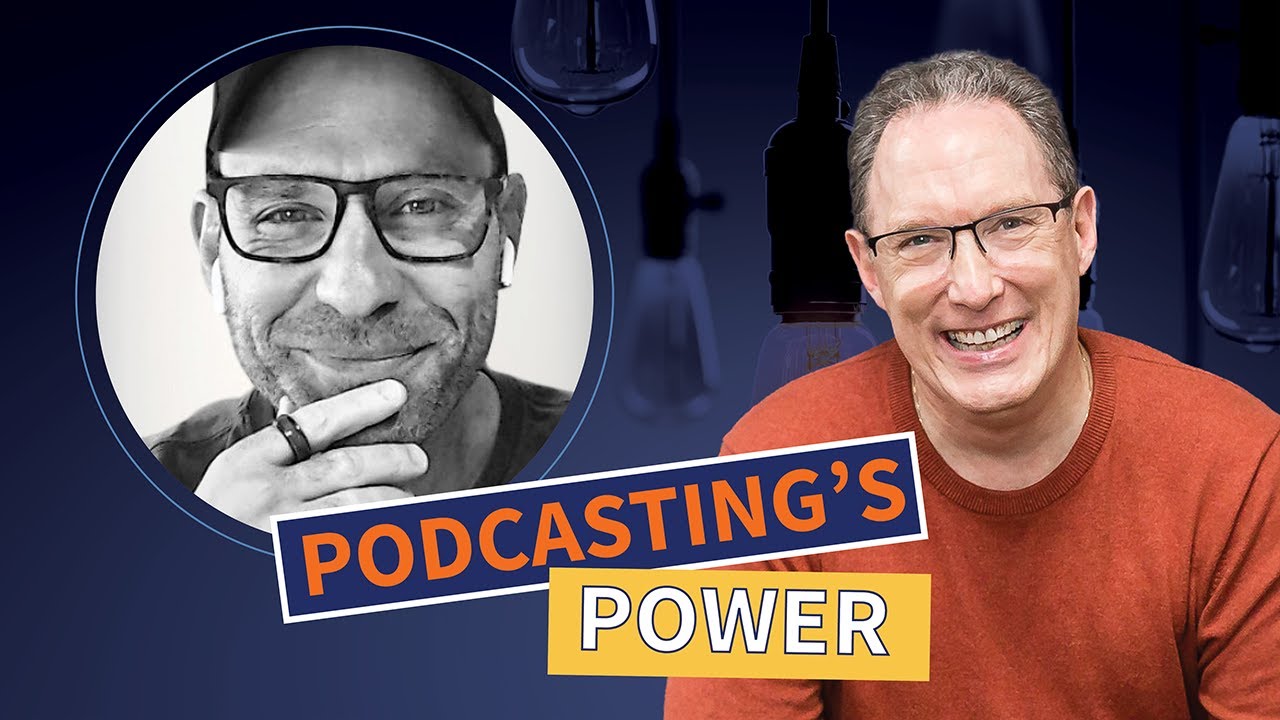
Podcasting strategist Darren Saul explains why small businesses need a podcast to get noticed in a crowded marketplace. You can start with a USB mic and 2-4 hours a week, then repurpose clips across social media and newsletters. The real work is showing up consistently and waiting for audience growth, not buying expensive gear or chasing quick returns.
Chapters
It used to be that when you built a business, you built the business for a local economy. That means you built it for the community you were in. People were walking into your stores and that sort of thing. And your communication was around that local economy. Today, our businesses have much further reach than we've ever had before. But at the same time, our messages get blurred with the messages and our competitors' marketing in the very similar space. So, if your business isn't being noticed, maybe it's time to get serious about looking at your marketing strategy and bringing in some things you might not have considered. Something like maybe podcasting. And that's what we're talking about now on Marc Haine Live. Welcome to this episode! This is where small business owners and entrepreneurs develop new skills to help them create the jaw-dropping, show-stopping experience that their customers and their employees deserve. I am your host, Customer and Employee Experience Strategist Marc Haine. And I am thrilled that you are here with me today. My guest for this episode is the podcasting powerhouse, house, Darren Saul. And today, we are going to uncover how to get real business results by integrating a strategy around podcasting into your marketing. We're going to talk about things like why having your own podcast is a game changer for your brand awareness and for content creation. We're going to be talking about the tech that you need to get started without breaking the bank and how to plan, produce, and promote your show Without losing your sanity. We're also going to undercover why— uncover, undercover, uncover. We're going to uncover why podcasting is the mothership of endless marketing content. So, stick with us today. My one ask is that if you know anybody who could use this information, please, please, please share the link to the episode. Knowledge is power but only if we share it. And if you haven't done so yet, please make sure that you're subscribed to this show. That way, you get notified whenever I bring you fresh new content each and every week. every week. You know, I can tell you that back in 2020, trying to market my business was a real chore. I had things like lead lists. I was sending out cold emails. I had social media posts saying, hey, look at me.
I'm over here.
Pay attention. I was kind of like that 6-year-old on Romper Room when she took out the mirror and she says, I see Susan. I see David. I see Paul. And I'm sitting there as a 6-year-old going, please say you see me. My name's Marc, please. It was kind of like that. It wasn't until I lent my expertise to this channel did people start taking notice. And that brings us to our Question of the Day. So, are you struggling to get your business noticed even though you know you've got something valuable to offer? I'd love for you to share your questions, your comments, even your experience. Why don't you go ahead, share a link to this episode on your favorite social media platform, hashtag it #ExperienceLeadership, and become part of this conversation. I'd love to hear what you have to say. As I mentioned, today's guest is someone who truly embodies the power of making yourself known. Darren Saul is not just a serial podcaster. He's a strategist. He's a trainer, coach, and a keynote speaker who has mastered the art of capturing people's attention. Darren started out in the photography business but quickly realized that to stand out, he needed more than just great photos. He needed a platform. Enter podcasting, which transformed his business and led him to become a true podcast junkie. Now, Darren injects podcasts into every vein as much as he can. And he has dedicated his time to helping other businesses leverage the incredible power of podcasting to get noticed, build their brand, and achieve results that they never thought possible. He's here today to share his journey, insights, and the strategies that have made him a sought-after expert in the world of podcasting. Darren, welcome to the show! It's so great to have you today.
Thank you for having me, Marc. Well, that was such an exceptional introduction. I feel like my job is done.
Well, it took It took a long time to get stuff like this down, right? So, let's first kick off. Why don't you tell us a little bit about how you serve your customers? Who are your businesses and how do you help them become successful?
Yeah, awesome! So, I tend to work generally with a lot of small businesses and solopreneurs that are trying to build their brand, get marketing content up and running, get noticed as you say. These days, it's not about who you know. It's about who knows you. And you've really got to do a lot of work, as you said earlier, in the marketing realm to make sure that your messages are reaching your target audience. And for me, podcasting is the number one strategy to allow you to do that. So I help loads of different people, and I also help guests. Actually, I've started doing a little bit of work on the other side of the podcast equation because a lot of people come on my show And I see that they don't do enough with what they've just recorded and what they've just gathered. So, I started teaching guests how to actually leverage the energy and the effort they've just put into coming on the show and not letting it just be wasted. So, that's another thing, a little side tip as well.
Yeah. So, there's a little hint in there that it's not a one-and-done process and we'll get a little bit deeper into it. In the meantime, why do you believe so many businesses are struggling to get noticed in today's marketplaces?
Look, it's just noisier and noisier and noisier every day.
I'm sorry, what? What? I'm sorry, what?
Exactly. Exactly. Social media is absolutely rampant with people just throwing up their messages all over the place, every platform. There's more and more platforms. Email marketing is kind of making a bit of a resurgence, I think, because of that in a way. But you've got to do it well. But just in general, there's so much competition. There's so much noise. And it's hard to really stand out anymore because everything's been done before. There's not much new. There's no new idea that's groundbreaking. Everything's just another iteration of something else. That doesn't mean that that's a bad thing. It just means that you've got to be better at it and you've got to execute in a smarter way. Right.
So, what are some of the signs that a business is operating under the radar? We talked about this thing about not getting noticed. And they're not getting the recognition that they deserve. What are some of the signs that that might be the case for a small business maybe tuning in here?
Yeah, well, first perfect sign is you're not getting any referrals. No one's referring you because that's number one. If you're doing a great job and you're servicing your clients really well, you'll get a lot of referrals. And the more clients you have, the more referrals you get. So that's number one telltale sign that you really need to get out in front of more people.
Yes.
Um, another telltale sign might be just general, um, comments and likes and shares and activity on social media. You know, if they're very, very low, it means—
I, I can absolutely see that because I can see that if you're not part of a conversation, the conversation will happen without you. And so, that whole idea about having some semblance of exposure on social media is you kind of creating those conversations so that people can talk with you, around you, as opposed to behind you. Absolutely.
Or without you. Absolutely.
So really, I'm interested. What led you to realizing that podcasting no longer is just a nice-to-have but it's a must-have for business?
Yeah. So I started doing a lot of work. I come from a strong sales and marketing background or sales background in particular with pharmaceutical sales and I work in recruitment as well. So I've always been a salesperson. But I started to realize that I've got to find new ways to market my business and get my name out there and get in front of more people. And I fell into digital media probably about 6, 7, 8 years ago. And I thought to myself, wow, this is really interesting. It's kind of cutting edge. I can see the future in it. And I thought, I'm just gonna dive in and I'm gonna do everything I can think of in the digital media space. And people were always saying, you've got to have a podcast. You've got to have a podcast. So I thought, you know what? What the hell? And I actually did. I actually started up 2 podcasts, one for my recruitment brand and then one for my photography brand. And I continue to run both of those in tandem. But the podcast for my photography brand, which is what this show was kind of branded under, Suspended Animation, I've turned that into a whole marketing platform where I teach and coach and train. And I'm starting to monetize my podcast in creative ways as well. And I just fell in love with the whole process of podcasting and I saw great results. So I thought, you know what, this is amazing. And then along the way, I started to get more and more sophisticated and learning more about how I can extract and leverage the content from the podcast. Because a lot of people fall short there as well. They do the podcast, they have a great show, they have fun, they enjoy it, and that's the end of it, done. Whereas that's only the beginning. If you can start learning how to really leverage your content, that's when you can really get some traction because it's what you do with it after for the next 6 to 12 months and repurposing and repackaging and regifting and putting together in different ways and extracting all sorts of different forms of content. That's the key to really the marketing puzzle.
Yeah, yeah. You know, it's interesting because, you know, you're a podcasting specialist. So, you know, to you, what you're saying is, you know, if you want to be successful, you have to be a podcaster. But I've also had people who've been on LinkedIn who are LinkedIn specialists say, if you want to be successful, you have to be on LinkedIn. Or a Google specialist says, if you want to be successful, you have to do Google Ads. How is your approach different kind of from the other quote-unquote tech gurus?
Yeah. Well, that's a really good point. Absolutely, you can be great at any facet and be a specialist in that area and do really well. But the beautiful thing about podcasting is it allows you to be a specialist in all of them at the same time.
Right.
That's the point. If I just record a video and an audio podcast, I can then have endless marketing material on LinkedIn, on Google for blogs, on YouTube, on all the other platforms, on my podcast app, in my newsletter. It just allows me to start 10x-ing everything that I do and all I've done is one thing. I've just done one show. So now, I've become an expert on every platform. I'm omnipresent but I haven't done any extra work. So, that's the power.
Yes, yes. And I see it. I mean, having had this podcast going since 2020, that's something that I uncovered as I went along. My initial podcasts were just one and done. I put them up on YouTube. I put them up on my website and I washed my hands of it. But then, very quickly realized it's like I have a lot of assets here. that have huge value. And so then, now it's all over. Now, it's on LinkedIn. It's on Facebook. It's even on Instagram as Reels or on TikTok as very short content. So yeah, to your point, it can be doing. So, I mean, today's businesses, I mean, we obviously have owner operators who are so busy working in their business. They're not necessarily working on their business. How do they internalize taking a step out of their business to start thinking about this idea of creating podcasting where they're basically creating a platform where they're an expert?
Yeah. Well, look, you've got to spend a little bit of time at some point stepping away from the mechanics of the business and working on the business as opposed to in the business. But it doesn't have to be a lot of time. Even if you spend an hour or 2 a week, that can do it. And if you just build a nice workflow that possibly semi-automated or fully automated, that allows you to leverage all the technology that we have these days and all the AI and all the automation, and maybe engage some people that can help you, like freelancers for editing and, you know, posting up on social media and all that kind of stuff, or some family or friends or colleagues. You can really start developing a podcast strategy that is only going to take you a couple of hours a week to execute.
Yes.
And if you could just dedicate that, you're already doing incredibly well.
And that's the big point, right? Is it doesn't have to be, oh, I have to do a podcast. Oh, so now I'm gonna be taking 4 hours a day. And it's like, no, that's not the commitment for it. It really is just a couple of hours a week to do even a weekly podcast. But you could probably do a couple hours a week to do twice a week podcast even if you have the workflow done correctly.
Absolutely. And that's the point. It's the workflow. It's like I've built now a whole landing page where I just— if someone wants to come on my show, I email my guest my landing page. It tells them everything they need to know. They can book the episode through there through Calendly. They can then open up a Jotform, fill out all the details, send me their headshots. All from the one link. So, I don't have to do everything 10 times. It's once. And you start to work out how to streamline all that and make your life easy.
How can, for those people sitting on the fence right now, how can missing out on podcasting impact a company's overall marketing ROI?
Well, these days, as we mentioned at the beginning, it's getting noisier and noisier and you have to stand out. So whether you stand out on social media, which you still have to have some presence on, but then again, I'm really finding that newsletters and email campaigns and automation can be really powerful now if you do it well and you give lots of value. So just by those 2 things alone, if you can use your podcast content to generate a whole system in that space, you will get a lot of leads, a lot of prospects, a lot of traction, a lot of attention. And if you don't do it, great, your business might do okay. But at some point, you're gonna need some extra eyeballs. And that's just basically it.
And who doesn't need the extra eyeballs on our businesses?
We all do.
We all do. Yep, we all do.
As they say, if you're not going forward, you're actually going backwards.
In today's day and age, yeah. I mean, it's, in fact, I would even argue that Podcasting has been around for a long time now. And if you're not podcasting, you're what? Behind the times right now. You are so far behind. But like Confucius said, the best time to plant a tree was 20 years ago. The next best time is right now. I would say, I would hazard that that's the same thing for podcasting.
Love it. And funny enough, you should say that. It's almost like now is a bit of a honeymoon period again for podcasting because of the automation and the technology and the AI. So all the podcast apps now have built in or baked in all these great AI workflows. It can extract videos for you automatically, it can give you captions automatically, it can give you your transcripts automatically. You can do things like this at home in your home studio across the, across the world. Microphones and tech is really cheap, so it's almost like a re— birth of podcasting with all the new technology around. And now, if you're really gonna do it, do it now. Don't wait any longer.
I love that. For the people who are tuned in saying, oh no, no, no, I can't do this. I'd love to get some specific strategies and we'll get to that right after this.
When the spotlight shines on your business, are customers applauding or yawning? In other words, how is your business performing? Make your business a star Welcome back!
I am speaking with serial podcaster and coach, Darren Saul. Darren, what are some of the short-term opportunities available to businesses who want to leverage the power of podcasting as part of their marketing strategy?
Perfect! You mean in terms of how to learn?
Yeah, how to learn but how to also apply what they're doing with the podcasting. What are the opportunities?
Gotcha, gotcha. Well, first thing of course is always think about, and this goes for podcasting or it goes for anything that you're doing. Always think about everything in terms of content. Whatever you're doing today, can you make some content out of it? Can you leverage it somehow? Can you do a behind-the-scenes video with a friend or a colleague or a contact? Can you record a little screenshot? Can you take a photo? Can you write a quick article? Whatever, anything that you're doing, leverage it. And podcasting is no different. So you're going to be leveraging your podcasts in every different facet and every different way you can. Um, in terms of learning, I mean, there's so much information on the internet. It's almost teach yourself. It's not difficult, but there's— there are intricacies of the actual whole system that you can start to gather and grab if you start learning a little bit more and doing a few courses and all that kind of stuff. Um, so if anybody's interested, I, you know, I give all sorts of courses that are very, very budget to very, very premium, and you can learn all that, all about that kind of stuff. But it's really just about saying yes, starting the process, learning as you go, and you will— it's like you have to build the plane while you're flying. You're not going to know everything before you start. You're not going to have a perfect episode. Just start. Even if you don't call it a podcast, call it a vodcast, call it a video blog, call it anything, but just start doing some kind of content creation in video and audio form. And that's the point as well. I think video is very, very important. So if you can, don't shy away from video. Embrace it and start to get a bit better, a bit more confident in front of the camera, and it will make a huge difference in how you connect with your audience and how you build trust. Because people need to see you. It's just the way it is.
Yep. I'm going to do a little shout out to Annette Brown, who was one of my coaching clients and worked with me and my social media strategist because she could not imagine herself in front of a camera. She felt awkward by it. She's a personal care consultant and she does hair removal and all that sort of stuff. And she just couldn't figure out how her place in the podcasting world, even content creation world, could could be envisioned. And so, we worked with her to really start to focus on her bubbly personality and really started to work with her to get value out there rather than, hi, welcome to my podcast. I want to sell you stuff. And she became really brilliant at it. So, let's maybe start out on how to get started. I envision a grassroots business owner or operator like I know people who have welding shops, or restaurants, or garages, or whatever. And they're thinking, what the heck do I have to talk about? How do they pick kind of the theme for a podcast?
Lovely! What a great question. Well, first of all, the most important thing is to be able to build an audience and build a loyal following. You have to give them value. You have to give them information. You have to give them education. You have to give them entertainment. Something that's good for them, not that's good for you. And that's number one. So if you can just think about what your customers need, you'll come up with a million ideas. If you're a mechanic, you can come up with all sorts of interesting ideas on how to maintain your car so you don't have to go to the mechanic so often. How to— what type of petrol to put in, what type of— is petrol versus hybrid versus electric better? I mean, there's so much information that you can put out. To educate your clients and your customers so that you become the person they trust. And of course, when they need anything done on their car, they come straight back to you. But you're building that trust factor. That's the key. And so, it's not hard to come up with ideas, to sit down with a piece of paper and think about what is it my customers need? What will help them along their journey? And it's not difficult to come up. You can even use AI. Pop it into ChatGPT. It'll give you 500 different ideas. Like, it's amazing what you can come up with.
It's so interesting too because people, I think naturally, we are curious about the world around us. And there are lots of things that we see in businesses that we don't get to see behind the curtain. And so, we love shows like How It's Made or the manufacturing shows and stuff. And so, having people put out there like I just came across a young lady who does tiling. And it's like, oh, that is so interesting that she's got all these different formulas for tiling in all different ways. And I think her content is fascinating. Do I want to be a tiler? No. But she's got really great content that when I do things like renovate my bathroom, she's given me a lot of things to consider.
Yep, absolutely. And the same with cooking. I watch a lot of cooking shows and I learn a lot and I'm interested in it. And then, Who am I going to go and buy a book from or get a course from or Google? My favorite chefs that I watch on TV. It's just common. It's the common progression.
Because I guess we put out the information. But in social media terms, we were saying we want people to know, like, and trust us because then they'll buy from us. And that know, like, and trust factor is being in people's faces and creating that relationship even though we don't know who they are. They will very quickly learn who we are.
Yeah, yeah. And it comes through, I think, if you're doing it authentically or you're doing it just with the endgame in mind of selling something. If you really want to help people, people will realize that. Yeah.
And so, to that point, how important— like we know how to maybe do something. We know how important it is. But how important is the why? Because my fear is that somebody tuning in might think, Oh great, that's a great idea. I'll create a podcast and I'll tell them why I'm the best pizzeria in town.
I love that. Yep, so good. I mean, first of all, that's gonna fail because nobody wants to hear why you're so fantastic. You know, they want to— everybody wants to know what's in it for them, not what's in it for you. Before you do anything, before you give anything to your audience, you've got to think, what are they getting from this? Not what am I getting from this? And of course, it's okay to do a little bit of a promotion or sell here and there. But the ratio has got to be far in favor of them versus you. And in terms of what you mentioned, I think that's really important. You have to love the process and you have to love doing it. You're not doing it just to make a bit of money or because it might be a good idea. If you're not going to love the process, don't even bother because it's a long-term game and you're not going to continue. You're not going to sustain it.
So, Then, we need to talk about why people would do it. Because like I mentioned, Annette Brown, who was one of our clients, didn't like doing it. But after she did it, after she got coaching, after she got some confidence behind it, she learned to love it. So, people doing this for the first time might hate the process. I hate the way my voice sounds. Why do I look so fat on camera?
Right?
There's all sorts of reasons why somebody would hate to do this. So—
Yeah.
How do we encourage people to give it a try but give it a fair shot?
Yeah, well, first of all is try. I know it's hard, but just try and do it slowly. Dip your toe in the water. Do 5-minute episodes, do 10-minute episodes, do some fun stuff. And then as you get more confident, you'll stretch your episodes, you'll talk more about things. The other great hack is invite a guest. When you interview to get— when you interview a guest, you can ask as many questions as you like and you hardly have to say anything. So it's a really great hack as opposed to having your own solo podcast where you're going to be talking for 45 minutes. So that's huge. The other little hack is if you really don't want to show yourself on camera, you can start doing things like building caricatures or little cartoons of yourself or doing some animation where you're talking via your little caricature, not yourself. So you can hide behind that in a way, but it's still dynamic because it's moving a little. So you can find little hacks if you really don't want to be in front of the camera. But, um, it's just practice. And, you know, if I go back to my first episode, you know, I probably ran out of questions after 10 minutes. Now I could go over an hour. So it just depends on— it's just practice, you know.
This is, I think, really high value for the people tuning in who haven't considered podcasting and maybe would look at this and say, you know, maybe this is something I should explore. If people want to get in contact with you, Darren, how can they reach out and how can they work with you?
Yeah, well, I mean, just jump on my website. It's just suspendedanimation.com.au. All my stuff is there. And I'll also give Marc a little landing page link where you can find all sorts of cool podcasting stuff, a lot of free stuff, some paid stuff, and you can just squeeze through it and to see what you might like.
Terrific. And the link will be in the show notes. So at the very least, people can just scroll down. So what is the biggest misconception you think people have about podcasting as a business and marketing tool?
Yeah. So a lot of people think, number one, isn't it saturated? There's a million podcasts. How will I be heard? And my answer to that is, you know, there's a million cars. They're still making different cars. There's still— there's a million different restaurants, still new restaurants popping up. It's really about who you are and what you have got to give to your audience. And nobody's going to do it like you in your way. So don't worry about the fact that there's a million others behind you. In a way, that's a good thing because the market's established. You know, you want to be in a market that actually, you know, there's a need for whatever it is you're doing rather than being the first one sometimes. So sometimes being the second or third one is better. But even if you're the 10th one or the 100th one, you can still do really well. And the other point is it's the long game. Be patient, do it consistently, build your systems and your workflows, get your team together, don't spend too much money, and just start to learn how to enjoy it and all sorts of other knock-on effects will come from that. You'll get more confident. You'll start collaborating with people. You'll start doing all sorts of interesting business partnerships and collaborations. People might start asking you to speak, do workshops, consult. And then there's another whole plethora of ideas on how to start monetizing your podcast in a bit of a creative way as well. So, you know, it's just, you're just opening, it's the tip of the iceberg and As long as you have the right mindset, it's amazing where you'll end up.
It's so true. I just came back from the restaurant, the California Restaurant Show. And it was amazing that the number of speakers who got asked to speak at the convention because they have some sort of social platform going on where they're teaching people. And they thought, hey, why don't you come into a live event and come and teach people live? Which I thought was what a great opportunity that it was for a guy like one of the guys who were there. It was A couple, a husband and wife couple who started a pizza chain. And so, they wanted to talk to people about entrepreneurship and what the first year was like. And it's like, what great value that was.
Yeah. And the interesting thing is coaching now is the fastest growing industry in the world, I think. Something like that. It's insane. And whatever it is that you're doing, you might start off creating content for your business. But then you might also start becoming a coach of some kind to people at any point in that trajectory in their journey. And you've got so much value to give. And then you can start selling online courses and start doing webinars and all sorts of things as a little side gig to your framework or your main business, which is what started you off in the first place. So, it's amazing where this can go if you just— Stick out it and you never know. And you have an open mind really.
Yeah, yeah. In fact, one of my guests recently was in the restaurant and food service industry. He had an Edible Arrangements franchise. And from there, he evolved and people wanted to know how he became so successful. And so, he also goes to these and he speaks on stages all over the world now because of that. So, you mentioned something about it doesn't have to cost you a packet. So, For those tuning in, what technology do you really need to get started and how much would it cost a typical operation?
Yeah, easy. I always advocate start really small, start really simple, but honestly, for a couple of hundred dollars, you can set up your whole studio. That's it. And most of the podcast apps are free. YouTube is free. That's where you're going to put your video most of the time. You're going to use an app like Spotify for Podcasters or Podbean or something. There's free versions of all of those. You're going to get a microphone. If you don't want to get a microphone like this, just use your AirPods, use a lapel mic, do something really simple that costs $30 or so. If you want to get a more serious mic, even a mic like this is about $100-something these days. They're not expensive. You can plug them straight into your computer as a USB mic. Or you can put them through an interface. You need a couple of lights that light you up from the front. So you might just need a couple of ring lights that you can buy for $20 from probably Home Depot or whatever, many other Walmart or whatever, all those kind of stores or on the internet. And you need a web— some kind of webcam. And most of the time your computer has a great webcam in it, or you might buy an external Logitech webcam or something. You don't have to start buying the latest Sony. video camera or anything like that. So for a couple hundred dollars, you are set. And then later on, if you want to start adding certain pieces of software or pieces of hardware, you can start doing that. And the other little tip for people is Canva. I love Canva. And what I do with Canva is I use Canva to put a little framework or a template on my video show before I load it up into YouTube. So whatever it comes out as, I've put it into Canva first, make it even nicer, and then load it up and it's even more professional on my YouTube channel. And you can also use it to create intros and outros and caricatures and audiograms and logos and all that kind of stuff. And again, free. So yeah, doesn't have to cost a lot of money.
And to your point earlier, you can always bring somebody on board who knows how to use it. If you don't know how to use Canva and if you really, because of the scope of your business, can't afford to take the time to learn Canva, you can always bring somebody on who could do it at a nominal cost. It won't be very— it won't break the bank.
No.
I guess, I fell into the disease of, oh, I'm gonna start a podcast. And then, it's like, oh, I had my cell phone and I had my AirPods. And it was like, I'm gonna start with that. And it's like, no, I can't. I tried recording one. It was terrible. Okay, okay. I have to go out and I have to go and buy myself a proper mic. And so, I went out and bought a proper mic. Oh, but now I got the mic that needs an interface. So now, I need to buy an interface. And I had to plug it into my computer. It's like, oh my God, right? And it just was one of those things that I just felt, oh, I have to make this investment to make it good. And then, I realized half the stuff I bought, I don't even use.
Exactly.
Because it was not necessary. I would think that if anything, this is a surefire exercise in being able to fail forward effectively.
Yeah, yeah, yep. Keep it really simple. I even bought great earphones that I never use. Like, there's all this stuff that we buy that we don't use. So, just keep it real simple. The most important thing is the quality of your audio. The video is important, but it doesn't have to be perfect. But the audio has to be good because if your audio doesn't sound great, It's just people are going to get annoyed and they're going to switch off. Yeah.
And so for those people who are just tuning in, who don't really know a lot about podcasting, why is that so important? Why is audio so important?
Because a lot of the time, even though you might have a video version, people might just be listening to you. A lot of the time, people consume podcasts while they're at the gym, while they're walking, in the car, you know, wherever, whatever they're doing. And they might have you just have you in their ears. So they might even not even be seeing you. So, and that's the other benefit of it really is that you are so intimate with that person because you're in their ear for 45 minutes, 1 hour. They get to know you, but the sound quality has got to be good because if it's not, if it's annoying, people go, oh, I can't listen to this anymore. Yeah.
And we've all heard podcasts that were like that where there was a high-pitched ting consistently through the episode or there were this stop and start kind of background hiss noise or whatever. But again, I think that you can go on to Fiverr or Upwork, ask an audio engineer to prep it for you and just see the difference between what you do natively off your machine and then what he can produce for you. And then, you can look and see if it's worth the $10 a week or $10 an episode to do that.
Absolutely. And I use a couple of, 3 great audio engineers in the Philippines as well. They're all very trained and they do my video stuff for me. They do my audio stuff for me. Comes back in a Google Drive and I upload it and all the work's done. So, it's fantastic.
I do the same thing. Yeah, I do the same thing. I just upload it and he takes care of it. He grabs the files, does what he needs to do to it, puts it in a new directory, and it's good for me to post.
Yep. So, there's a lot of work on the weekend.
It does, right? It takes it and it And it keeps it from being overwhelming within our day-to-day workflow.
That's right.
Right? So, how does one in your best estimate, again talking to people who haven't really considered this, how do they actually prepare and produce a podcast? And how much time should they dedicate to a show?
Yeah. Well, I would say honestly, 3 to 4 hours a week if you look at everything, and you'll get faster at it as you streamline it down the track. But there is a lot, a lot said about preparation as well. So I'm very big on preparing yourself and preparing your guest, if you have, if you have guests for the show, because an episode that's not prepared can end up going off like a train wreck, and you're going off a million tangents, and it doesn't flow. And that's another reason why people just switch off, because there's no continuous logic. It's just a mess. So preparation is important. So I always like to send my guests a great little template to explain what I need, to explain what to expect, and then I'll take some information that they give me. So I'm asking them to do a lot of work for me as well. I'm going to plug that into my own framework for the episode, send it back to them so they can prepare, and then I'll produce it or send it to my podcast team to produce and then I'll promote it. So all that is really 3-4 hours of work a week and you can streamline that quite well with AI and different tools. But you're now, you've now created a whole marketing system that you're streamlining. You're creating the episode, but you're also promoting your brand and your business, which brings you more revenue and more customers and more prospects. So it's really the whole end-to-end system So for 3, 4 hours a week, that's pretty good to me.
Now, would it be fair to say it's 3, 4 hours a week of time, not necessarily your time?
Um, I would say probably still a good 2, 3 hours of your time.
Okay.
Because you're still gonna have to prepare a little bit. You're gonna have to think about how you put that episode together, send it off to someone, you know, play around with the files or send them, upload the files. All that takes a bit of time. But, and then start promoting things. So you've got to put it up on YouTube, you've got to put it up on your podcast app, you've got to put it into your social channels. You can use distributors and, and all those things for that as well. Um, so yeah, I'd say between 2-3 hours. And you want to learn a bit about doing that yourself properly as well. You don't want to have to outsource everything, because if you outsource the whole system, then you're kind of in the dark. And if you're, God forbid, you're editor or someone that helps you can't work that week, you're finished. So you kind of got to know a little bit about what to do on your own if you have to, but it doesn't have to be a long process. And if you can't find 2, 3 hours a week to work on your business as opposed to in your business, you know, that's crazy. Everybody's got 2, 3 hours.
There's a bigger problem. Um, you mentioned promoting the podcast. Can you talk a little bit about what things need— what they need to consider as far as being able to promote the episodes and stuff? Because I think a lot of people will get into it. I think the stat is that somebody will go 6 podcasts and then give up because they'll publish a podcast and then they'll go on every hour to see how many views they have.
That's right.
And I know personally, it took probably about a year and a half for my podcast to start gaining traction. But really, it took about 2 and a quarter years before I got real numbers. And I mean numbers past the 35 viewers, the viewer number. Like it took, it seemed to take forever. So can you talk a little bit about promoting and the patience we need as we start launching?
Yeah, for sure. Well, first of all, let's hit, let's start with patience. I mean, as you said, it's a long game. 6 episodes or 10 episodes is not going to do it. You've got to do at least 50, 80, 100 to start getting a bit of traction, but you can do them quite easily. Once you've got your system up and running and you have fun doing it. And from a promotional point of view, you're going to start utilizing all your social channels. But what you've got to do is you're going to start grabbing a little 30-second key moment from your show in video form. You're going to run it through some great products like Opus Clip that do all the video captions for you. They put emojis on them. You can put that up into LinkedIn. Facebook, YouTube Shorts, um, all sorts of different— any other platforms, TikTok. And then you'll link that key moment video back to your full video or your full audio. And that's how you start building a bit of a brand and a bit of awareness for your podcast. You're going to put that in your newsletter, very important. You're going to, you know, you're going to try and send out all your latest episodes to your newsletter, to your community. You're going to put possibly a link in your email signature to send people to your podcast. You've got to link— you might even put a lead magnet of some sort on most of the things that you do from a marketing point of view and say, by the way, if you want to listen to our podcast, click on this link. And you know, you might end up on your email distribution list for your podcast or something. So you've got to think about how I can start tapping into everything that I do But you've got to use every marketing tool at your disposal, and that's the key. A lot of the times, if you just have a podcast and that's all you do, that's— nothing's going to happen. You have to promote it. It's like people that spend $10,000 or $15,000 to create the most amazing website, and if nobody knows it exists, nothing happens. It's exactly the same with your podcast. So you've got to think about creating the podcast and all the great material But then you've got to promote it. And again, that doesn't have— that's all part of that 2-3 hour process. Or you can get someone to do it for you, or you can automate it using all those other— is it Hootsuite and all those other buffering sequencing and scheduling tools? There's so many out there now. But, but it's— it can do all that for you. A lot of these— a lot of the apps now, like Riverside for example, is a great way to record your episodes has a lot of this AI workflow built in. They've done a deal with Spotify for Podcasters, and, um, they'll give you the videos, the captions. They might even allow you to distribute it to different platforms. There's another great one called Splashio, which I use, which is Splashio, and they distribute it for you as well. So you can— technology is your friend now, and you can really start using it to help you in this whole process so you can scale what you do.
Yeah, it's so interesting how quickly everything is evolving since generative AI made its kind of footprint a year and a half ago. And it seems like everybody's jumping on the bandwagon. So, there's apps out there like Whisper Transcribe, which is what I put my— the audio from this show. I put it through Whisper Transcribe. It'll give me show notes. It'll give me learning outcomes. It'll give me a blog post. It gives me as much as I want to take from it. And then, it's a question of, well, I just have to take this information, just rewrite it in my own voice and send it out there. And life is good.
Absolutely. And as you mentioned, you've just done all that. Now, you've got that whole article. You can create a great article on LinkedIn. You can create a blog post. You can create 5 blog posts. Put it together with a little trailer video. Put it together with a photo. Put it together with a cartoon. So, I'm starting to mix and match all the material that I can chop up from the last episode and reuse it 4 or 5 times in the next couple of months. Because again, just because you post something once or send it out once doesn't mean everybody's got to see it. So you can start revisiting it and get creative in how you do that. You can do greatest hits videos, you could do like, put like with like.
Bloopers.
Bloopers, behind the scenes. Another great tip is when you're playing around with your, or setting up your YouTube channel, From the beginning, set up playlists as you're going. Something that I didn't do and I did it later and it took me ages to go and reset all the playlists. But if you can do it from the beginning, you'll save yourself a lot of time.
And if someone wants to find what playlists are for people who might not know what they are, right?
So on YouTube, you can have— you can organize every episode into or categorize them into a playlist. So if I do an episode on finance, I can tag it in finance. If I do an episode in health, tag it in health, and then someone can go to my channel and just click on health tag, and all the episodes in that genre are in one place. So they can really just listen and consume what they want to consume and not having to go fish through hundreds of episodes that aren't relevant for them. So make a huge difference to your audience experience as well.
Yes. And so, and it keeps them focused on what is most interesting to them. Like for instance, this one will be in the playlist called Marketing, as well as Marc Haine Live, as well as Entrepreneurship. It'll be in those playlists so that anybody in those who are interested in those specific topic fields will be able to find it quite easily.
Exactly. And then, you can link that playlist on social media. You can have a post and say, guys, if anybody's interested, here are the last 50 episodes that I've done in the marketing space. Go for your life. Have some fun. It might be Christmas time. You're looking for something to listen to or watch. Here you go. So, you can start utilizing and see how I'm repackaging and I'm drawing people back to the same episodes in a creative way.
Yes. Yeah. And the interesting thing is being the creators, we might look at it and go, well, nobody wants to hear it. Or I've played it so many times or I've shared it so many times. We might see that, but the audience on the other side might only be seeing it for the very first time.
Definitely, you know, because these days, as we said, the attention is so short and the noise is so vast that, you know, only a small percentage of your audience sees anything. So you can't assume that posting something once or sending it out once, even in your email newsletter, that everybody sees it. Sometimes I just resend it And I get a whole new audience seeing the same thing because they just didn't have time to look at it yesterday. But today, they did.
Yep, interesting. Hey, when we come back, I'd like to talk about some cautionaries and pitfalls to be aware of as we think about and start strategizing starting our own podcast. And we'll do that right after this.
When you're delivering an important speech to a huge audience, it's easy to lose your place or go way over time. Give yourself an advantage with the Pro Speaker Presentation Speech Timer app. No more checking your watch or calling for time. The Pro Speaker Presentation Speech Timer app keeps you on track with easy-to-see timers, even changing color for visual prompts during your speech. And you can set audio cues to practice or set it to vibrate so you don't even have to look. Be the pro you know you are. Download the app at speakerpresentationtimer.com.
Welcome back! We are having a phenomenal discussion about leveraging the power of podcasting for our businesses. As we take a deep dive into today's episode, I just wanted to take a moment to let you know that Darren and I are not just voices behind a mic. His mic is in front of him. Mine is right here. We're here to help you take your leadership and your business to the next level. So, whether you're looking to empower your team, enhance your customer and employee experiences, or simply need fresh actionable insights to navigate today's business challenges, we're available for leadership retreats, conferences, and tailored workshops. Tailored workshops to your needs. I've spent years working with businesses just like yours, helping them transform underperforming leaders into influential, effective game changers. And Darren brings a wealth of experience in leveraging podcasting and strategic content to drive real business results. Together, we offer a unique blend of expertise and practical strategies that can truly make a difference for your organization. Again, we talked a lot today about working on your business, not just in your business. So, if you are planning an event and want to provide your team with impactful, high-energy sessions that leave them equipped and inspired, let's connect. We'd love to bring our knowledge and passion directly to your team, helping you not just work in your business but truly work on it. So, feel free to reach out to us. Our contact information is in the show notes. So, there's my shameless little plug. You said we can sell a little bit. A little bit, Darren. You said a little bit. So, I just took a small percentage of our time to sell a little bit just to let people know, hey, you can call us.
Hey, there's nothing wrong with that.
So Darren, you called podcasting— I really love your phrasing. You called podcasting the mothership for content creation. And you've talked a little bit about that. But do you have any suggestions? I think you mentioned some tools. For kind of generating this or having this philosophy of generating endless marketing content. What else can you tell us about that?
Yeah, well, I can list a whole bunch of tools for you if you like for the audience. So first of all, your podcast app tools, you've got to be in either Spotify for Podcasters or Podbean are my 2 favorites, but there are plenty of others as well. YouTube is going to be the place to be for your episodes. I think You can't go anywhere else. YouTube is the king. Um, from a content point of view and a creation point of view, get familiar with Canva. That's great. There are other, um, tools like CapCut, C-A-P-C-U-T, that's fun to use. There's things from a workflow point of view, there's things like Descript which do a bit of editing and audio enhancing for you as well. So Descript Then you mentioned, what was the one you mentioned about the transcripts?
Whisper Transcribe is the one that I use.
There's also Rev, there's Otter, O-T-T-E-R, there's Swell AI, it's another good one. There are so many good ones that does it all for you. ChatGPT. If you want graphics or photos to use with your material, I love a site called 123RF, and that's a really— and the quality of photos and cartoons and caricatures that come out of that are second to none. So I love their, uh, and some free, some paid, they're great. Um, from a technology point of view, I mean, the Rode mics is an Australian brand. Rode mics are great and quite cost effective. Um, try and go for a mic that's a USB mic rather than having to worry about the audio interface. So get something that's a USB. But if you want to go to the next level, you get a more sophisticated mic with a USB— with an XLR, and you're going to have to have an audio interface. If you want an audio interface, things like the Scarlett Solo by Focusrite are great. But now Rode has got their all— their own little bundle products as well.
Yeah, um, they have their RODECaster.
Yeah, the RODECaster. Yeah, absolutely. A friend of mine just bought it and he said this is unbelievable. Yeah, so they really got some great fun cool products. Um, from a content, um, video point of view, use Opus Clip, which extracts all your video and in, in 15 minutes it'll give you 30 different trailer videos. With captions and emojis. And you didn't do anything.
You can edit. You can, which you can edit. You don't have to just say, AI is going to do it for me and then just leave it. You can actually go through it and go, oh, you know what? I think I want to cut this or I think I want to add this to it as well. And so, it is really easy to edit through.
Definitely. And the other one is Splashio. So, Splashio. What else do I use? I think that kind of covers most of them. But There's, you know, just do a Google search. There's new products coming up every second. People are launching stuff all the time. And there's no end to what you can find on the internet. It's crazy.
And there's no shortage of people willing to take your money. So, please don't just be impulsive. Do some research. Find out, do you really need this? Because I can tell you, I spent a ton on stuff that I didn't need only to cancel it later and go, ah, it didn't fit my needs.
Exactly. And they add up. All these things are subscription. $10 a week, $10 a month. Before you know it, you're spending hundreds of dollars on stuff that you're not using.
Yep, yep. So, just be very strategic with it. Hey, so as we wrap up, cautionaries for people who want to jump onto the bandwagon, who think that this is a good idea. They figured out through our conversation today that maybe this could fit into their strategy. Are there any pitfalls or cautionaries we should be concerned about?
Um, I would just say the biggest one is, as you just mentioned, is don't go out there and spend loads of money and buy the best of everything before you even start. Just kind of start small, dip your toe in the water, make sure that you're going to enjoy it, and then you can start upgrading from there. The other thing is don't go into it thinking that you're going to be a millionaire after 10 episodes, you know, you've got to be Joe Rogan after 10 episodes. Got to give it the time. Enjoy it. And the process is going to be a long one. But it will. The results will come back to you. I guarantee it. And it's happened to me. It's happened to Marc. You just got to stick with it and find a way to enjoy it.
I think consistency is really the key, isn't it? That's the big thing. You have to be consistent. So, it's one thing to plan out the first 6 episodes. But what is episode 50 going to look like for you? I think it's a really good discussion to have.
Definitely, you know, and then you might have some fun. You might have some special guests coming on your anniversary shows or your big milestone shows. And, you know, then you can do a little— you can even write a book about your episodes. You know, there's all sorts of things you can do. Yeah, it opens up a whole plethora of opportunities the longer you do it.
Yes. Any other pitfalls that we missed, do you think?
Um, the only other thing would be Make sure you're prepared. Don't just turn on the camera, turn on the mic, and start recording because I've seen that before and it doesn't usually work that well. You have to have a little bit of preparation. Like, I can see Marc's done a lot of preparation and this show is really streamlined and it's sensational because he's done the work up front to make it run so well. You can't just do this on the fly.
But having said that, it is an evolutionary process. So, my message to everybody who might be tuning into this is don't be freaked out by the fact that it's going to be out on the internet. Oh, it's going to be on the internet. People will see it forever. Because to your point, the noise is so great out there. Nobody watches my first episode and it was terrible. It was a terrible first episode. But you could see if you go through each of the episodes, you could see how it all evolved.
Yeah.
And so that's kind of the fun. Yeah.
That's the fun. Like you can go back and say, wow, look at my journey from that to that. And your audience will do the same. But when you're at episode 200, very rarely is anybody gonna go back to episode 1. So thank God it works in reverse chronological order. So that's pretty good. Yeah.
Do you have any last thoughts about what we've been talking about today?
So I would just say if you're interested in podcasting, do some research, talk to other people that are doing it, have a good think about it, and enjoy the journey. Have some fun. It's a great journey, it's a great vehicle. And in the— in this day and age, marketing is everything. You know, if you don't know how to market well, you're not going to have a business. It's just unfortunately the truth. So using something like this can really help you take your marketing material and your marketing strategy to the next level.
Love it. Could you remind everybody one more time how to get a hold of you?
Yeah. So, everybody just jump on my website suspendedanimation.com.au. And I'm going to give Marc a link to a whole bunch of stuff on a landing page as well.
I love that. Darren, thank you so much. I really appreciate you sharing your passion and expertise. It has been absolutely brilliant. Thank you for doing this today.
Thank you. I loved it.
Why don't you let me know if this was of value to you? As always, my offer stands. If you would like 30 minutes of my time to brainstorm your business with you and your team, feel free to book some time on my online calendar. The link is in the show notes. It's the one that's marked meetwith.marchaine.com. It would be my absolute honor to be of service. And while you're at it, please feel free to leave a comment or review about this episode. I'd love to get your feedback. Was this of value to you? And of course, if you haven't subscribed, do so now. Please do so now. Thank you so much for joining me today. It's been brilliant having you along for the ride. My name is Marc Haine. I hope you stay safe, stay healthy, and I hope you dare to be the exception.









