Get Unstuck and Move Your Business Forward
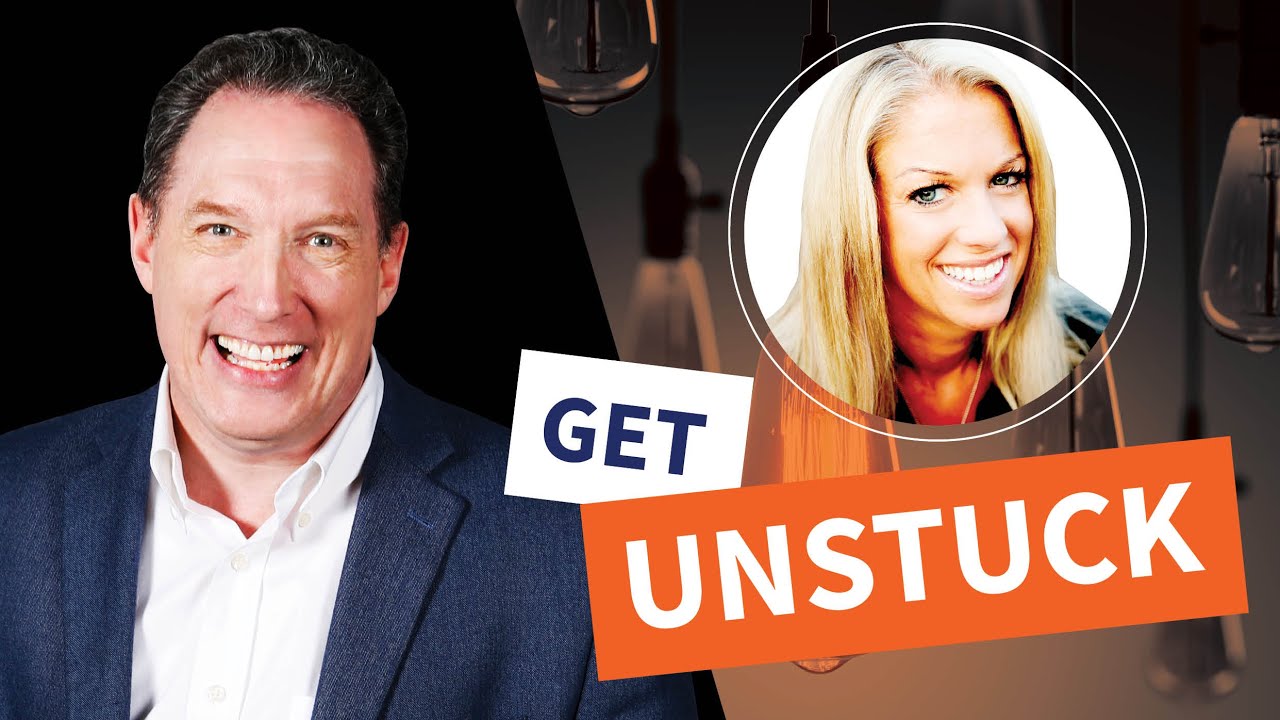
Nathalie Plamondon-Thomas explains why entrepreneurs get stuck: powerful emotions like anger and fear idle in your mind until you acknowledge their lesson. She teaches a two-step technique to reprogram negative self-talk: restate the thought in past tense, then follow with a progressive statement like "I used to be stressed; I am willing to learn how to feel calm."
Chapters
Who the hell am I to do this? What makes me so special that I think I can get away with it? Today, we're talking with Nathalie Plamondon-Thomas about the 3 techniques you can use to get unstuck so you can live the life you want and make money from living your passion. And that's coming up next on Marc Haine Live. Welcome to Marc Haine Live where small business owners and entrepreneurs pick up core skill sets to help them work on their business, not just in their business. I'm your host, Service Expert and Master of Experiences Marc Haine. And we're broadcasting here on YouTube every Tuesday, noon Eastern Time. So, if you're in Alberta where I am, that's coffee break, 10 o'clock. It works for you. Of course, you can follow me on Facebook, Twitter, LinkedIn, and Instagram. Feel free As you're watching this video, hit the subscribe button just down below and ring the bell. That'll give you first dibs when I bring you some fresh content. And please, please, please feel free to drop your own fabulous insights in the comment box below so people can benefit from your experience as well. A few weeks ago, on a previous episode of Marc Haine Live, we talked about the need during this time to pivot our businesses. There has also been a lot of talk about how beneficial it is to start our business in a downturn. And let's face it, we've never seen a downturn in our generation like we're seeing during COVID-19. I mean, this downturn is lower than any previous downturns that we've had, making this the down-turner of all downturns. But hey, we all know that change is hard. And if you ever thought to yourself, No one will pay me for what I know or what I can do. Or if you ever thought, I'm not as good as that person there. Or you thought, what happens if I make a mistake? Just know that these are thoughts and feelings that are normal. And to help us get through this particular funk, we'll be speaking with mindset specialist Nathalie Plamondon-Thomas. But first, our question of the day. So, what do you imagine for yourself that would make your life magical? The bigger question, what's holding you back? Our guest today is an 8-time international number one bestselling author. She was awarded Fitness Instructor of the Year in 2007 and is an expert with a proven system to get her clients transformational results. She works with entrepreneurs who want to find confidence and clarity so they can make money living from their passion. Welcome, Nathalie Plamondon-Thomas! Thank you so much for joining us today.
Hello, Marc! Thank you so much for having me on your Marc Haine Live. It's a privilege. Thank you!
Thank you. Thank you so much! Hey, before we get into today's topic, I would love it if you could tell us a little bit about what you do with your clients.
So I'll take you back maybe about 10, 12 years ago. I was starting to build my coaching business and I wanted— I was still working full-time because, yeah, I needed to keep my full-time job because I needed a steady paycheck, right? So you can't live from your passion. You don't make money in the speaking industry or in the fitness industry or the coaching industry. Oh no. So, I had all these limiting beliefs, and I had this voice in my head telling me that I wasn't good enough, that there was no way I would make money if I was an entrepreneur and working on my own. So, somehow, I was choosing to listen to that voice. And, I remember, I remember I was teaching a yoga class, and then, at the end of a yoga class, I was telling everybody to relax, you know, like, to lay down and be comfortable. And, I wanted them to relax their face, relax their jaw. Mm-hmm. And I'm French, so I was just starting to speak English, and I was telling them to put their tongue on the roof of their mouth to let their jaw relax. And I said, put your thong behind your tits. Yeah, beautiful. So that voice was in my head. What are you talking about? Like, you think you can write books in English? You think you can be a motivational speaker in English? You don't even speak Speak English. So that's when I realized, you know what? I need to shut down this voice inside my head. This is not helping me. This voice is keeping me stuck. And I started research and I started realizing that 70% of our thoughts are negative. We wouldn't have any friends if we talked to them the same way we talk to ourselves. So I just spent the last decade studying neuroscience and creating a system to reprogram that voice inside my head. So that I could succeed. So that's what I do with my clients, is I help them reprogram that negative self-talk, all the self-sabotage, the limiting beliefs, the bad habits, all the bad stuff that happens inside our ears, between our ears, inside our head, so that we can transform that to find confidence and clarity and make money living from their passion. So that's— That's awesome.
That's awesome! You know, I listen to you and I hear your passion already. And it's like, oh my goodness! This is like you, I bet, have such a level of energy that is contagious. I bet you can beat anybody's negative self-talk out just from your attitude.
Well, the truth is I can't beat anything because I don't do anything. My clients do the work.
Nice.
They do it. It happens for them. Have you ever had a friend that tells you, hey, I think I'm going to do this, and you're like, dude, I've been telling you this for 3 months? Or if you have children, they have a brilliant idea. They're going to do this, and you're like, that's what I've been telling you for 4 years. Like, all of a sudden, you have the brilliant idea. Well, that's the point. They need to have the idea themselves. So I don't do it. I don't give advice. I don't tell people what to do because nobody wants to be told what to do. in the first place. They need to do it themselves and generate the light bulb themselves. They need to figure it out. That's what I do. I teach them. I ask the right question so that they get it themselves. And that's why it works. That's why it's working, because nobody wants to be told what to do.
Yeah.
Of course, I could change their limiting belief myself. That'd be much faster, much easier. I need to take them to the point where they do it. And that's why it works because I don't— I'm not an accountability coach that would hold people accountable week after week having to work with me for 15 years. It's short. I teach them how to fish. I don't give them a fish.
Nice.
They figure it out for themselves.
Yeah. You know, I wish I had met you like 20 years ago because I have to tell you that my life has been a constant barrage of self-doubt. False starts. And I will admit, I have talked myself out of many really great ideas just because I didn't think I was qualified for doing it. So, this idea of being stuck is not new and not being able to move forward is very real. So, just before we jump into it, I just want to let our audience know that this show today is powered by the Speaker Presentation Timer app. It's helping speakers and presenters who want to develop great stories and compelling presentations without ever breaking the fourth wall. And if you want to know what that means, jump into my website at speakerpresentationtimer.com. The app is available for iOS and Android-powered devices at the App Store and on Google Play. So, go ahead and visit speakerpresentationtimer.com. So Natalie, I know that you have done— you mentioned that you've done this extensive study on the brain and the condition that we find ourselves in. So maybe we could start off by talking a little bit about why is it that people get stuck.
Okay. So one thing that we need to understand is that when we're stuck, it's usually our own fault. It's usually because it— we're not stuck because somebody is putting a barrier in front of us. We're usually stuck because We are reentering the emotional loops. So when we experience a powerful emotion like anxiety, like fear, like frustration, anger, the top 5 are anger, fear, hurt, sadness, and guilt. So these are the ones that keep us stuck the most. It's because we don't understand that these powerful emotions Are our allies. So all emotions are created equal in the prefrontal cortex of our brain. And when we create an emotion, what happens is that the brain gives it a meaning. And if we decide that it is anxiety, then our brain will send cortisol and 1,400 chemicals through our body to slow us down. But if we decide that it's excitement, Then our brain is going to send positive, happy fix, like good feeling chemicals through our body and will make us feel good, like dopamine, endorphins, serotonin, oxytocin. So all these good chemicals are giving us a boost and make us, they make us feel better. So then we can face the challenges that are in front of us. So let's understand powerful emotion. As if, one, they're all equal, and the most powerful one are the anger, fear, anxiety, frustration. So when something happens, visualize you have a truck delivering a gift, a package in your driveway. So that's how you want to visualize that. So pretend that there's a truck coming in your driveway. And the driver is going to wait there until you open the door and receive your package. Right? So the problem is we don't have time for that. And the truck stays in the driveway and it idles. So we don't open the parcel for the delivery guy to give us our parcel. So we don't open the door. That means something happens at work, for example, and then you're like, well, I don't have time for this. I'm in front of my coworkers. Oh, everything is fine. Yeah, I'm good. No problem. Then you get home and then your kids are asking, are you okay, Mommy? Oh yeah, Mommy's fine. Yeah, no problem. Yeah, I'm good. Yeah, Daddy's fine. No problem. don't have time to face the music. We don't take the time to open the package and say, okay, what's in this? What am I learning? This is an opportunity for me to grow. This is a gift for me, a positive learning. And we need to figure that out, because every single time that you have a truck in your driveway, unless you look for the learning and say, oh, I'm very uncomfortable with this. Oh my gosh, I need to move my business online. I don't like this. I'm not good with technology. What's going on? Then you start panicking. You have to ask yourself, what am I going to learn? Well, I guess I'm going to learn how to use Skype and Zoom. And I'm going to learn how to use these platforms. And I'm going to get better at this. And when you go into the learning, then the truck leaves your driveway. But if you don't look for the learning, if you just stay into your emotional loop, that should only last 30 to 90 seconds. An emotion shouldn't last that long. You've seen that in children. You know, like they're super happy. And then 90 seconds later, they're crying. And then 90 seconds again, they're happy.
Yeah.
Because emotions don't— are not designed to last that long. They just deliver a parcel, they give you your learning, and then they go. But the problem is we don't open the door, and then another truck comes in the driveway, and another truck comes in the driveway, and another truck. And all of a sudden, your whole driveway is filled up with trucks, and you can't go anywhere. You can't go around anymore. And now you're stuck. And then you, you, you can't go anywhere. You're depressed. And that's where deep anxiety starts and so on. So we can decrease very fast in our mental health going from there. So you need to start by understanding what it is that you are learning. So to get unstuck, look for the learning and change your way of seeing things. Every single time you feel angry or frustrated or, Just tell yourself, wait, I don't wanna tell my prefrontal cortex here where it's being created. I don't wanna say that it's a negative emotion. Instead of starting to be angry, I'm gonna say, I'm gonna be excited instead. Ooh, I'm uncomfortable. That means I'm receiving a parcel. I'm receiving a gift. Oh my gosh, what am I learning? I'm learning something. This is so cool. I am receiving a package. And get excited about it. And then you'll receive good chemicals to help you. get through whatever it is that you're going through.
What a great way to view those conditions where we just think it's hopeless. Because what you've just said, we are in full control on how we react to these stimuluses.
Absolutely.
That's really interesting. So, you know, we have— you've been talking a lot about kind of the chemical thing that goes on in the brain. But we're also brought up, I think, with belief systems. And I personally, in my experience, my belief system has always resulted in kind of this idea that I have negative self-talk. I'm afraid to pick up the phone to do a cold call, for instance, in case I get rejected. I mean, even as a young man going into a club and I'd see a beautiful woman and I'd say, oh, I'd like to go and talk to her. But it's like, oh, I better not talk to her because— She's just going to reject me. So this negative self-talk seems to me to be like a real driver and kind of roots how we behave. So how do we kind of deal with this barrage of information that we're constantly telling ourselves?
Yes. So I'll talk about 2 different parts of the brain now. I'm going to talk about the logical mind and the unconscious mind. So the logical mind is is your day-to-day thinking. You can do 5 to 9 things at a time. You can assimilate 5 to 9 pieces of information every second. That's pretty cool. You can multitask. But have you ever noticed when you're driving to a new address, for example, and when you get closer to that new address, you're looking at the numbers on the houses, you have to lower the music on the radio? Have you ever done that? So true.
So true. Yeah.
Because when you're driving to a new address, you have your foot on the brake, the foot on the accelerator. There's the little boy that's about to cross the street, the red light ahead, the lady that's probably going to cut you up. And then there's this guy in the car beside you winking at you. Gross. So when you add looking at the numbers on the houses, the music becomes, becomes the one too many because 5 to 9 is not that many things. It gets overwhelmed very quickly. So living at a logical level It's not ideal. One, 70% of our thoughts are negative. So this is, this is not the place to live your life at the logical level because these thoughts are 70% negative. And you can only do 5 to 9 things at a time. You can only assimilate 5 to 9, which is getting overwhelmed very quickly. Living at a logical level is like this. You have your goal and now you're going towards that goal. You're trying to build your business. You're an entrepreneur. You're trying to maybe make some cold calls. Maybe you want to look for new people to buy your client— buy your services. You get up super early. You accept clients super early. You work super late at night. You still have to take your kids to sports and school, and you're homeschooling them now. And it's a lot of work. You're investing a lot of money. You have to post on social media, or you start a podcast, and you're doing your website, and you're redoing your promise statement. And there's so much stuff to do that you feel that the harder you work, the more exhausted you feel, and you still live paycheck to paycheck. And it's just like as if you were trying to fly to Halifax, but you are in an aircraft that's flying to Vancouver. You're never going to get there if you stay in that aircraft. So a lot of people say, Natalie, I need to get off that aircraft. Help me. And then I say, no, you shouldn't get off the aircraft. You should stay on that aircraft. Talk to the pilot and say, hey bud, mind turning around? Because that's where I'm going. Imagine how much faster you're going to get there if the pilot is on board. So that's the other part of the brain, the subconscious or unconscious mind that can handle 2.3 million pieces of information every second. 5 to 9. 2.3 million pieces of information every second. That's where the power is. That's what you want to be tapping into. And that's what you want to use in your everyday life. Not just a poor logical mind that gets negative and overwhelmed after 5 to 9 things. 2.3 million. Imagine the power that you have at your service. So you want to be talking to this pilot as if it was a personal assistant in your head.
Mm-hmm.
As if you had this little personal assistant writing down everything that you say or think. So everything that you think gets written on that clipboard and the personal assistant writes it down. Problem is, people wake up in the morning, they look at themselves in the mirror and they go, I'm so tired. Oh, I'm so stressed out. I think I'm gaining weight. So, the personal assistant writes it down. Tired, stressed out, gaining weight. Okay, I got this. Tired, tired, what can I do for this? Oh, I know. I'm going to keep her awake all night, so she's not going to be able to sleep. That's perfect. She's going to be really tired in the morning. Check. Stressed out, what can I do for this? Oh, I know. I'm going to make her forget something at home. She's going to have to turn around in traffic. That's going to be super stressful. Check. Gaining weight. Oh, easy one. I can certainly find a chocolate bar, something deep fried for her to eat today.
Check.
Check. So your personal assistant listens to everything you, you think or say, and it makes it happen. So you have to be very careful with what you tell your personal assistant. You want to tell your personal assistant what you want, not what you don't want. As if you would hire a construct— a contractor to paint your kitchen, and you would say, I would like you to paint my kitchen not blue. Like, your contractor is not gonna know what you want, right? So, and my— you're laughing, Marc, but I tell you, I tell you, my clients do this all the time. They call me, they sit in my office or on Zoom because I have clients everywhere in the world, and they say, Natalie, I don't like blue, I don't like red, and I don't like black for my kitchen. 'Cause they say, I don't wanna be stressed anymore, I don't wanna be impatient with my kids, and I don't wanna be broke. So their personal assistant writes it down, stress, impatient, and broke. I got this. Because your person doesn't hear the, I don't want to be. It just focuses on the main thing. Like, close your eyes for a second at home. If you're listening to this, just close your eyes. You'll love this. Do not visualize Mickey Mouse wearing a yellow tuxedo standing on top of a pink Mercedes-Benz. Do not visualize Mickey Mouse wearing a yellow tuxedo standing on top of a pink Mercedes-Benz. You can reopen your eyes.
Impossible.
Did you see it?
Of course.
You saw it, didn't you?
Of course.
Because your brain has to process the whole information before it can negate it. So you have to say what you want, not what you don't want. Because even if you say what you don't want, it's too late. It's going to be on the clipboard and that's what you're going to be focusing on, right?
Yeah, yeah, yeah.
So that's why we self-sabotage is because we don't tell our personal assistant what we want and we need to start putting the right stuff on the list. So, start thinking differently.
So, I mean, it's great to say that. But the reality is when you're in a conflict and you know when I recognize this the most is probably when I quit smoking in 2005. The minute I decided I quit smoking, the one thing that I wanted all the time was a cigarette. And it wasn't until I actually created a routine that basically said, first of all, I had a full package in my pocket that was wrapped. With the words failure written on it. And every time I craved it, I took it out and I looked at it and I would say this mantra. I would look at it and I said, I can open up this package, but if I do, by the end of the day it will be gone. By the end of the week, I will have a carton and it will kill me. And so, I made sure to do this mantra each and every time. But there were times when I just completely forgot about it and I really took it out and I really had to stop myself. But there's so many things in our behavior that we don't stop ourselves. And so, it's like when you say changing this idea of the negative self-talk, how does one maintain a focus on the negative self-talk aspect? Because we have to recognize it as well.
Yeah, exactly. Because if you've been going the wrong way for a while, let's take back the transportation analogy. Where there's an address on the GPS, like, if you don't change the address on the GPS and you start going a different direction, your GPS is going to go recalculating, recalculating, recalculating, right? So, you need to change the address on the GPS, because otherwise, right?
Right.
So, how do we do that? How do you change the address on the GPS? Well, this needs to happen at an unconscious level. That's what I do with my clients, with specific processes to work at an unconscious level. Now, you can't really do that by yourself at a logical level, but today, I'm going to give you a technique, a 2-step technique that you can use right away. So, it's easy. It makes sense. And then, you'll understand how you can get started with the brain reprogrammation parts.
Okay? So, before you get into that, because I know that this is going to be a doozy, And when we spoke earlier, you said that you want to share this 2-step technique with our audience to help us conquer the negative self-talk. But I want to tease our audience just a little bit because I know that if they get anything from this episode, it will be this 2-step technique to overcome our limiting beliefs. So before we get into that, I just want to find out from you, how can people get a hold of you to tap into your expertise?
Absolutely. So usually it starts with a chat. So let's just, let's just chat and see, um, how I can help you. So the Think Yourself Academy offers many different, uh, varieties of things. I've created a 3-step system, the DNA system, to reprogram your brain. So the brand is wide. So think yourself successful, think yourself a relationship pro, think yourself a business pro, think yourself healthy, think yourself wealthy. So I have many different programs, different online courses at the Think Yourself Academy that you can do online. You can do some one-on-one coaching with me to reprogram these limiting beliefs and change that negative self-talk. As I have a fast-track process to do that, that you would get started with your 2-step technique and also do business mentorship.
Yes.
So I've been doing business mentorship now for about 4 years, because a lot of people are telling me, you know what, Nathalie, I have confidence and I'm good. I trust myself. I don't really have these negative self-talk, but how do I make money? Can you just teach me how you make money? Because I'm pretty good at that. I started to do business mentorship. So there's many different things that you could need. So I always start with a free 15-minute virtual coffee. So you go to thinkyourself.com/schedule, and then you book a virtual coffee with me. It will be my pleasure to just have a chat and see what, which is the best way that I can help you, either through the online recorded courses, which would be a lot less expensive than working one-on-one with me. And if you need business mentorship or confidence and clarity finding. So that's how you get ahold of me.
That's really great.
thinkyourself.com/schedule.
And you also, you've published multiple books as well. So, I'm assuming that they can just look you up on Amazon, right? If they just look you up, look up your name, they'll find your books?
Yeah, my books are all on Amazon or you can find them on my website as well on thinkyourself.com/books or just thinkyourself.com. And on the main menu at the top, there's a shop section. So then, you'll see all the books are there, the online courses and things that you wanna find. If you wanna go also to thinkyourself.com/free, I have lots of free gifts and implementation guides and different workbooks that you can download for free, balance wheels, lots of stuff.
Nice!
So, go to thinkyourselffree-gifts. You get a lot of value there.
So, it sounds like a ton of value, not just a little bit of value but a ton of value. Thank you so much for sharing that with us and with the audience. So, okay. So, here's the doozy then. This is what This is what everybody on this call is waiting for. So, we talked about the reasons why we get stuck. We talked about kind of that negative self-talk, that what I call the negative self-talk disease. This 2-step technique to get over it. Tell us a little bit more about that.
So, you probably have heard of affirmations. A lot of people are doing affirmations. Well, I Sorry to be the one saying this, but affirmations don't work if you don't believe them. And when I work with my clients with the Think Yourself Thin program that are highly overweight, it's not going to work to make them stand in front of the mirror and say, I am thin. Well, that's not how it works because their brain, the personal assistant goes, no, we're not. You're totally delusional right now. This is not happening. That— no. You're totally off whack. Or, if I work with my clients with the Think Yourself Wealthy program, they're in deep financial trouble. They can't just put their hands on their hips and say, I am rich. It's not, this is not happening. Like, their personal assistant goes, no, we're just, I guess, watching some weird movie right now. This is, I'm not putting this on the list. This is not true. So, in order for your brain to believe you, you need to use this 2-step technique in order to start reprogramming it. So, if you hear a negative, thought in your head. You hear something negative. Let's say you hear, oh, I'm so stressed out. Okay? Or, this technology putting online and all this technology is stressing me out, or whatever. You hear something negative in your head. So instead of saying, oh, I love technology, or, I'm so calm. That's not true. It's not going to work. Here's the technique. First step is to talk about it in the past.
Okay.
You repeat what you just heard in your head in the past. So you hear yourself say, oh, I'm so stressed out. Wait. You catch yourself. You're aware of your thought and you say, I used to be stressed out. So now your personal assistant's like, yeah, that's true. We used to be stressed. Wait, why are we talking about this in the past? Are we done with this? Like, what's happening here? So then you immediately follow this with Step 2, a progressive statement. A progressive statement starts with, I am willing to learn, or, I'm in the process of. Okay? So, get back to the example. I'm so stressed out. Step 1, I used to be stressed out. Now, I'm willing to learn how it feels to control my life. Now, I'm in the process of creating an organized life for myself. Now I'm in the process of feeling that I can control my emotion. I'm willing to learn how. So you're following up with that progressive statement. So step 1, talk about it in the past. Step 2, progressive statement. So then your personal assistant's gonna say, yeah, I used to be stressed out. So do I write that down because it's in the past? I'm not sure. Oh no, you're willing to learn how it feels to be calm? Perfect. Willing to learn how it feels to be calm. That's what you want on that clipboard.
Got this.
So that's what your personal assistant is going to write down, and that's what your personal assistant is going to do in the background, working for you as you continue to live your life. This 2.3 million pieces of information every second, because you've put the right thing on the list, your personal assistant is going to work for that. It's going to make you feel like waking up early in the morning. It's going to make you be in the elevator at the right place at the right time, matching you with the right person, just like a chef in the kitchen. That will go and get all the ingredients you need to get your goal to be fulfilled.
So, it sounds to me that what you're doing is you're kind of outlining exactly what you want to accomplish.
Yeah, exactly. And with saying it in a progressive way. Progressive is the key here. I'm willing to learn how it feels. Like somebody you know, that's highly, highly overweight, instead of hearing, oh, I'm so fat. Instead of saying, oh, I am thin. That's not true. They can say, I used to feel like I was overweight. Now, I'm willing to learn how it feels to be happy with my body.
Mm-hmm.
I'm willing to learn, or I'm in the process of getting back in shape. I'm in the— and that's true. I'm in the process of, or I'm— sometimes we're not in the process of at all because we haven't started yet.
Right.
We could say, I'm willing to learn how to get back in shape. That's true. It's true. I'm willing to learn how to get back in shape. It doesn't mean I'm in shape and I'm thin. It means I'm willing to learn. And that's a progressive statement. And as you continue your progression, Then you go into the, I am in the process of getting back in shape. And then, I am getting back in shape. And then, I am in shape. Because you keep progressing—
Right.
Until you can actually give the statement and feel that it's true. So if you say something out loud and then your brain goes, yeah, right, then that means you're not progressing enough in your statement. Create a statement that feels true for you when you say it out loud.
So, truth is really the magical button there. It has to be a true statement.
That needs to feel true.
Okay. So, somebody just doing the steps without fully committing would say something like, oh, every day I'm going to wake up. Every day. So, maybe the negative self-talk is, I wake up tired every single day. That's the negative self-talk. So, what you're saying is that in a 2-step process then, we would turn around and say what?
I used to wake up tired every day.
Okay, so past tense.
Okay. Yeah. Now, I'm willing to learn how it feels to have a good night's sleep. Now, I'm willing to learn how it feels to wake up rejuvenated. Now, I'm in the process of sleeping better so that I wake up rested. Right? So then you create your progressive statement with— and honestly, the biggest limiting belief that I change with 95% of my clients is the way they sleep.
Okay.
Most of my clients, after 2 sessions with me, think that I've changed their whole world. They're like, oh my gosh, you've changed my life. And we haven't touched anything yet of their problems. I just help them out to sleep better because most people self-diagnose themselves with, oh, I have anxiety, I have depression, I have anger problem, I'm frustrated.
All negative words. Yeah, you're right.
They're not any of this. They're just sleep deprived. They're just Sleep deprived. If you don't sleep well, oh my gosh, sleep is the most beautiful thing ever. And stop thinking and saying out loud, oh, I'm a light sleeper. How is that serving you to believe that? Stop believing this.
It's almost like a badge of honor, right?
Yeah, exactly. And your personal assistant writes it down. Light sleeper. Perfect. As soon as there's a little noise, I'll make sure they wake up.
Yeah.
How's that serving you to believe that? So start saying to your personal assistant before you go to bed, hey, I have a lot of things on my mind. Why don't you go and think about this? Why don't you go write this article for me while I sleep comfortably? So tomorrow morning when I wake up completely rejuvenated and feeling great, you'll tell me what I should pack for this trip, or you'll tell me what I should tell to my son that that's got problems right now because we have a teenage son that is wanting to quit school or whatever. So you sleep comfortably while you send your 2.3 million pieces of information working for you overnight, and then they'll do the thinking for you, and then you'll get up in the morning. It's like you have a personal assistant. Use it, because otherwise they're bored. That's a lot of stuff they can do in 2.3 million pieces of information every second.
Yeah.
Give them stuff to do. And then say, while I sleep at a logical level, I will completely shut down and I will be absolutely rejuvenated tomorrow morning. And I'm in the process of becoming a sleeper. And maybe what you could do is tell your unconscious mind that whenever there is a noise that must be heard, like a fire alarm or a phone call from your older parent that just had a cardiac arrest or something, That you will hear. And you program your unconscious mind to only hear what is absolutely important. Anything else, you will be completely oblivious to it and stay in your deep sleep. And you will tell your unconscious mind, please alert me if there's something that I really need to hear, and you'll be fine. Right?
Just right there. That to me was the price of admission right there. This idea of reprogramming the unconscious mind by changing how you think before you fall asleep, change how you think about what you're trying to do, I think is wonderful. And so, Nathalie, is there any cautionaries or pitfalls people should be aware of when they're looking at this 2-step process?
Well, the beauty is your mind is yours.
Mm-hmm.
And your mind has this huge instinct of survival. And whatever idea you have, it means that you can either face it, that whatever dream you have, it means you can either realize it, you can reach it. Otherwise, you would not have this idea. So whatever you can see in your head, you can visualize, whatever you can do, You're always able to deal with it because otherwise nothing would happen to you that you would not be equipped to fulfill. I'll give you a quick example.
That almost sounds like a Napoleon Hill quote. He says, if you can believe it, if you could think— what is it? Think it, believe it, you can achieve it.
Yeah, absolutely. It's like You know, when you go to a restaurant, do you sometimes order from the menu, order something that you are not able to cook yourself at home? Do you sometimes order something at the restaurant that you don't know how to cook this, but you order it at the restaurant? All the time. So do you think the chef knows how to cook it? They put it on the menu, right? More likely they know how to cook that. You hope so, right?
I hope so.
More likely they have all the ingredients to cook this dish because they put it on the menu, right? They would not put it on the menu if they didn't know how to cook that.
Right.
Your unconscious mind would not put anything in your menu if they didn't know how to cook it. And if they don't, if the chef at the restaurant doesn't have all the ingredients, the chef is going to go to the market and then go pick up the ingredients that it needs. Same with your unconscious mind. It's going to make sure that you end up on Marc's podcast and make sure that you listen to some of his learnings and you You end up meeting this person that might teach you something else and the other person that might teach you something else. Because if you were able to dream it, that means it's on your menu.
Mm-hmm.
That means your chef knows exactly how to cook it. Otherwise, you would not be able to dream it. You would not be able to think about it if you were not able to achieve it. So there's no, be careful, because if you start going there, you might... There is no— really, I'm not doing hypnotism. I'm not doing— there's nothing to harm you just by starting to think differently and starting to dream with the things that you want in your kitchen. So tell your personal assistant what color you want your kitchen. That's what you'll get.
That's amazing. Natalie, thank you so much. In this episode, we've defined why and how people get stuck. We have talked about how to recognize and turn off the negative self-talk. And now, this 2-step process helps us rephrase kind of how we think and reprograms us. Nathalie, thank you so very much for this information today.
You're welcome. It was a pleasure, Marc.
And so, just to remind our audience, One more time, how can they get a hold of you if they want to book some time with you? That 15-minute coffee break sounds amazing.
Yeah, you go to www.thinkyourself.com/schedule.
Perfect! And of course, we will have everything in the show notes. And likewise, through the episodes of Marc Haine Live, after every episode, I invite you With your team to schedule a free 30-minute call with me as well. You know, I don't know what your challenges are. I don't know what you are fighting up against. Obviously, we know COVID-19 is huge on our minds right now and how we get back to work and that. But my offer still stands. That is, if you'd like to brainstorm, just maybe get something out, talk to somebody about an issue that you have right now, I make myself I want to make myself available to you for 30 minutes free of charge with the proviso that it's with you and your team. I want to be able to work through with you. Like I said, I might not have all the information. I might not be able to necessarily help you. But I do have a lot of resources and I have a lot of people that I can maybe point you to to help provide the solutions for you. So, please take me up on that. I'd love to sit down with you and your team, discuss these things, and figure out If there's anything that we could do to help you along. So, I appreciate that you joined us today for this episode. I'd love to know what you think of today's episode. So, please go ahead and drop a comment in the box below. And if you think you know somebody who could use this information, please, please, please go ahead and hit the share button. I almost said, go share and hit the button. Go ahead and hit the share button because ultimately, as I've mentioned before, information is power. But it's only powerful as long as we share it. It does us no good to hoard information to ourselves thinking, one day I'm going to use this. Right? And if you haven't done so yet, please go ahead and hit the subscribe button and ring the bell. And who knows? Maybe one day I'll come out with some really brilliant content that you'll want to be privy to. And so, I want to make sure that you get the notification on YouTube. So, my name is Marc Haine and I'll see you next week when I will bring you— I hopefully, hopefully, hopefully will bring you some really juicy, tantalizing content to help you run your small business. I hope you will stay safe, stay healthy, and dare to be the exception.









