Goal-Driven Discipline: The Key to Mastering Success and Achieving Your Goals। New podcast Episode
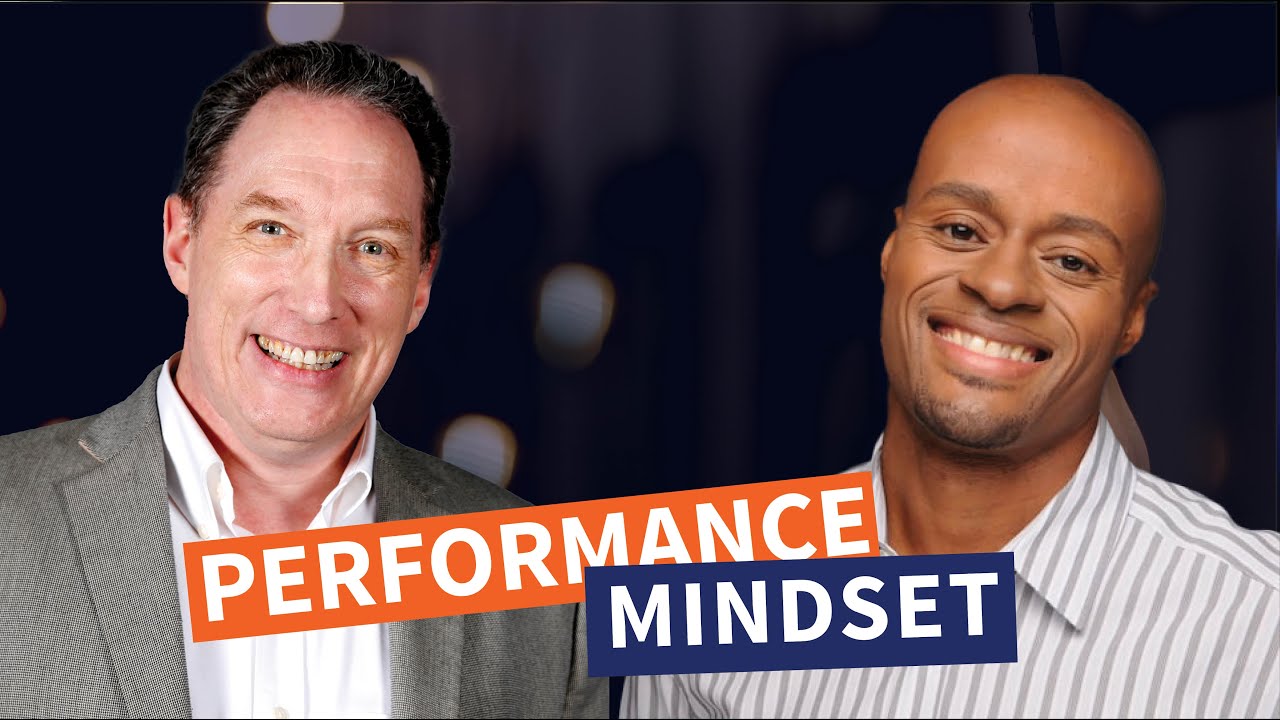
In this episode of Marc Haine Live, host Marc Haine interviews DeRay Baldwin, founder of Work On Your Game, to explore how disciplined, goal‑driven habits differentiate true professionals from average leaders. Baldwin outlines his 4‑part client framework—mindset, strategy, systems, accountability—and explains that professionalism is fundamentally about consistent, reliable performance. He introduces the “third day” metaphor, describing the point when novelty fades and true discipline is tested. The conversation delves into his “Roadmap in Reverse” method, which starts with the desired outcome and works backward to create a concrete plan, and the importance of structured systems that make discipline a by‑product. They discuss why many leaders either lack awareness of their problems or fail to act, emphasizing self‑assessment tools, accountability, and the need for multiple specialized coaches. Baldwin also shares the four keys of his Work On Your Game model (discipline, confidence, mental toughness, personal initiative) and warns that discipline is the hardest to sustain. Practical advice includes narrowing information sources, establishing clear milestones, and using report‑cards to track progress. Listeners are invited to contact Baldwin via Instagram, his Work On Your Game University site, a free Monday Motivation text service, and a free copy of his book “The Third Day: The Decision That Separates the Pros from Amateurs.”
Chapters
We live in a time where leadership isn't just about managing teams or hitting quarterly targets. It's about the grit, the passion, and yes, the professionalism that we bring to the table every single day. But here's the deal. Countless leaders are grappling with amazingly big problems that they're facing burnout, They're struggling to show up with the same enthusiasm they did when they first started their jobs. And the line between commitment and complacency is becoming blurred. So, that's what we're talking about today on Marc Haine Live. Welcome to this episode. This is where small business owners and entrepreneurs develop new skills to help them create the jaw-dropping, show-stopping experience that their customers and of course, their employees deserve. I am your host, Service Expert and Master of Experiences Marc Haine. I am so thrilled that you're here to join me today. Thank you for investing your time. My guest for this episode is Strategic Advisor DeRay Baldwin.
Hi Marc!
We're going to put a spotlight on True professional in your business from your mindset all the way to your performance. My one ask is that if you know somebody who could use this episode, please share the link with them. You know my philosophy, right? It's knowledge is power but only if it's shared. You know, I've had more conversations with employees lately than I have had cups of tea. And trust me, that is saying something because I drink a lot of tea. In past episodes, we've covered the conundrum, people don't quit their jobs, they quit their bosses. Yet, when I chat with leaders about this, they tend to pass the buck quicker than hot potatoes in a campfire game. As leaders, we sometimes become KPI junkies. We wake up, gulp down that morning coffee, and dive headfirst into the vast sea of balance sheets, income statements, and the never-ending game of whack-a-crisis. Some days, it feels like we're in a never-ending episode of Groundhog Day. The movie, you know? And not the fun montage bits, but the times when Bill Murray keeps stepping into that icy puddle over and over again No matter how many times he's been through it, he continues to do it. It can be, let's be honest, it can be soul-sucking. But hey, at least we've got our spreadsheets to keep us warm at night, right? We can cozy up to spreadsheets. Why not? But that brings us to our Question of the Day. So, have you ever felt like you are stepping into the same pitfalls even though you know better? What are you doing to elevate your game to break that loop? I'd love for you to be part of this conversation. Why don't you go ahead, share this episode on your favorite social media platform, hashtag it #ExperienceLeadership, put your comments down, and I'd love to follow what some of your thoughts are. As I mentioned, my guest today is nothing short of inspirational. He is the very embodiment of discipline and determination. Get ready, Dray, because your head's going to explode. Dray Baldwin, the visionary CEO and founder of Work On Your Game Inc., isn't just about talk. He's about transformation. With 4 captivating TEDx talks under his belt, he has penned a whopping 33 books and amassed content views in Staggering, staggering amounts. His daily podcast, Work On Your Game, isn't just any show. It's a masterclass in professional and personal development with over 2,600 episodes that has over 7 million viewers or listeners worldwide. But here's the twist. Before Dray became the powerhouse in leadership development, Dray was slam dunking challenges on the basketball court across 8 countries in a pro career that spanned nearly a decade. 10 years of doing that. His framework hailed as the Roadmap in Reverse is an unparalleled approach to crafting a mindset, strategy, systems, and execution applied seamlessly from the realms of business to the adrenaline of sports. Dre, welcome to the show. It's so great to have you.
I'm excited to be here, Marc. I appreciate that glowing introduction. Hopefully, I can live up to it.
Before we get too deep into today's topic, could you tell us a little bit about how you serve your clients?
Sure. Here at Work On Your Game, our 4-part framework is based around mindset, strategy, systems, and accountability. And that's what we do here is actually really simple. What we do is we take the tools to help athletes get to the top 1% in the sports world, the mental and strategic tools, that is, not the push-ups and the sprints. And we translate them over to the business world to help professionals perform at their highest level, do so consistently, and as a result, make more money in their business.
I love it. I love it. So, have you ever made one of your coachees, one of your leaders do push-ups? It sounds like it might be something that would shake things up a little bit.
Only if their goal is to lose weight. And some of them do have that goal. So, yes.
Awesome! Hey, many folks believe that they understand what professionalism is. But from your perspective as a peak performance coach and a professional athlete, Could you define what professionalism means to you?
Sure. So, the dictionary definition says a professional is a person who gets paid to do something as their main occupation. And we extend that definition, not contradict it, but extend it by saying, well, why would someone get paid to do something as their main gig? And the reason you get paid is because you are consistent, dependable, and reliable at what you do. So, here at Work On Your Game, we make sure that people understand that the true root of professionalism is the consistency of your performance. People need to know what they're going to get from you. They need to know that you're going to deliver it, and you need to consistently give them what they expect. When you can do that, they will pay you because they depend on you. When people depend and rely on things, they're willing to pay for them. So, that's what makes you a true professional.
So, it really is about becoming that trusted advisor as well, right? Being trusted in everything that you do and having that capacity.
That's right. People knowing, just knowing what they're going to get from you, knowing that if they come to you for XYZ, And that's your thing, then you're going to give them XYZ every time. And when they expect that and you're delivering it, then they'll be happy to pay for it because people, humans are creatures of habit. So, we like things that we can predict. Yeah.
And we like that easy button, right? So, that prediction just makes everything easy. How would you identify someone who's struggling with the idea of being a professional? What are some of the telltale signs that somebody might be falling off the boat?
Good question. Well, that's a common thing I get someone telling me directly. They say, Dre, I need to be more consistent. I need to be more disciplined. And those are the 2 words that I hear most often from people. to say that to me directly. I'm not as consistent as I need to be when it comes to making the calls for my business, when it comes to sending emails out, when it comes to recording my podcast. I'm doing great in my business and I'm making money. I'm making more than I made last year. But in exchange for that, my home life is going crazy right now. I'm not taking care of my body. I'm not in good shape. I'm not spending enough time with my kids. So, I see it from— I hear people talking about it on the personal side and the professional side. But those 2 words, consistency and discipline, I hear them every day from somebody.
Wow! How do you see the parallel between being an athlete and maybe from an athlete not even fully showing up, let's say, to games or to training, to training and a business leader not being fully present? Because I see that a lot, especially in smaller businesses.
It's a great question. So, the difference with the sports world and the business world is that in the sports world, if you're not showing up all the way and doing your job, everybody can see it. Because as an athlete, every single thing you do at work is Public knowledge and it's publicly broadcast. So if you're not doing your job in the sports world, it's obvious and you're going to get called out for it because there are people whose very job— they call them critics— their job is to watch you and talk about you and talk about what you're doing and not doing. Now, on the practice side, your teammates and your coaches will call you out. But again, everything you're doing as a professional in the sports world, somebody is watching your work, especially on a team level. You're playing a team sport, everybody can see everything that you're doing. Now, in the business world, if you're good enough at what you do, you could not really be showing up all the way, but you can get away with not showing up all the way. Nobody will notice and nobody's going to call you out on it, especially if you're the boss. No one has the authority to call you out on it. However, over time, and this is one of the concepts that we talk about, a concept I call the third day. And if you're not showing up consistently and doing the work that you're supposed to, eventually those third days start to catch up to you, those days when you're not showing up all the way. And then it becomes so obvious that you haven't been showing up that you can't lie or front about the fact that you haven't been showing up because the results are speaking for themselves.
Yeah, and that's why I think often I'll see leaders backpedal. And that's where they'll start blaming things. It's interesting because in sports, I mean, everything is tracked, right? Like when you used to play basketball, every aspect of what you did was tracked and recorded and people could see it on a minute-to-minute basis. But in business, Leaders aren't that accountable. Do you think that having some semblance of a report card or something would be something that would be able to tip that scale?
Absolutely. Because a lot of times when people are asking about discipline, I'll ask them before I go into offering anything. I'll ask them, well, what have you tried or what do you think you need to do to solve this problem of not being as disciplined or as consistent as you want to be? And they'll reply and say, well, I need to be more disciplined. LOL. I need to work harder. I need to be more consistent. I gotta Be more persistent. I got to just work on it. I got to keep trying, which is, in other words, they're saying, I'm going to keep doing the same thing that I've been doing that we already know does not work. So, they're already banging their head into a brick wall. So, what a lot of people don't understand, Marc, is that discipline is not something that you force-feed to yourself. It's not something that you make yourself do. Discipline is a byproduct of structure. So, when you have the right structure and the right process or the right system, in this context, we can use those words synonymously. in place, discipline comes out as a byproduct of those. So in sports, the great thing about sports is that a lot of it is structured. A lot of what we do is structured. We got practice at this time on this day, and the coach tells you what drills we're going to do. He tells you what workouts. Everything is structured and in order. And because of that structure, you don't have a choice but to be disciplined when you play a team sport because everything you're doing as a member of the team is following a structure that somebody put in place. You don't have a choice. And if you don't follow the structure, they kick you off the team. So, in the business world, especially people who are in leadership positions, often they need to get that structure, either go get it from somebody like hiring a consultant like yourself, a coach like myself, or— and the people who work for them, maybe their structure is handed to them because they have somebody above them. But when you're in the top position, there's nobody above you. So, if you don't have a structure, then you don't have a structure. And then you're not getting as much done as you could get done. And again, no one to hold you accountable. So, That's how things can fall apart.
And that's exactly what I see happening day in, day out. But I do see you're lucky because the people who come to you have already recognized they have a problem. I do see that we do have 2 distinct problems with what we're talking about today. One is that a leader doesn't know that they're lacking. They're just doing the best they can every single day. They think everything is fine and will even deny that they have a problem. don't have the humility to step up and recognize that there's something wrong with themselves. The second potential issue is that leaders know that they have a problem but they don't take steps to fix it. So, I'd like to start with the first one. How do we wake ourselves up if we don't know that we have a problem?
That's the million-dollar question because a lot of people never wake up. So, they go through their entire lives asleep because they don't realize that they have a problem. So, I'm interested for you I know I'm the interviewee here, but I'm interested for you. How do you get people to realize that they have a problem? How do you get them to even talk to you in the first place if you're going to point out to them they have a problem if they're not sure they have one? Because usually, like you said, people I talk to, they know that something's missing.
Right.
And then you can ask the right questions to prompt them to talk about it. But usually, I see the same issues coming up over and over again. But I'm interested for you, especially a person in a leadership position who doesn't really have to answer anyone if they don't want to. How do you get them to realize that something's missing?
Yeah. And again, like you said, that's the million-dollar question. Part of the thing is we need to be able to put vehicles. What I believe is we need to put vehicles in place so people can self-assess themselves. So, they can go through just even out of curiosity. It doesn't even have to be anything on a professional development front. But if they have some level of being able to self-assess themselves or to compare themselves, with what standard practices or best practices are. I think we can uncover some weaknesses. But it takes a level of humility. So, how do you deal with the people who might say, you know what? I'm the boss. I know what I'm doing. You can't tell me I have a problem.
Well, as a general rule, those people are not the people I'm looking for. I'm looking for the people who know that they do have an issue and they're looking for help. But people who are in a position where they don't feel like they need anything, I mean, you can share what you share. Let's say if they're on your email, so they're following you on YouTube, you can put your material out there and maybe something will open their eyes and ears. But generally, I'm looking for the people who know that there's an issue and they're problem aware and they want to do something about it. But the people who are not problem aware, I've found— and one of my principles here is I'm not in the business of changing minds.
There you go.
I'm in the business when somebody's already of the mind that they want some help.
That they need some help. Wonderful. You know, when we come back, I'd like to uncover your thoughts on the second issue, and we'll get to that. Right after this.
When the spotlight shines on your business, are customers applauding or yawning? In other words, how is your business performing? Make your business a star with the new book Lights! Camera! Action!, Business Operational Excellence Through the Lens of Live Theater by Marc Haine. Marc uses his business and acting experience to help you see your business like a live show so you can create a performance your customers will never forget. Never forget, buy Lights! Camera! Action! today at your favorite online retailer or directly at marchaine.com.
Welcome back! I am speaking with the founder of Work On Your Game Inc., Dray Baldwin. Dray, you know, it would be interesting to do a commercial with your books because you have 33 of them. So, I think actually, if it was a 30-second commercial for each book, we'd end up with an epic saga.
Yeah, a lot of commercials.
So, we talked about that first problem, which is The people who don't know that they have a problem and they don't have the humility to kind of uncover that they might be the cause of their problem. So, what needs to happen to address the second issue? The leaders who know that they have a problem but they don't take the steps to fix it.
Well then, that is a few things. It really first of all depends on the nature of the challenge that they have that they know they have because It's going to come down to how, how much of a problem is this really in the eyes of the person who has it. Because if you see something as a small problem, something that maybe if you ignore it, it'll go away— and we know that doesn't happen— but if that's the way the person sees it, then maybe they'll just allow it to fester and let it sit. And it would have to get big enough and uncomfortable enough for them to finally want to do something about it. Now, if it's something that they want to do something about and it becomes an urgent, immediate need, Then that's when they're going to go looking for who's the first person they think of, who's the person that has already planted the seed in their mind to talk about this, or they'll go ask somebody they know, hey, who do you know who could help me with this situation? Kind of thing like a toothache, for example. Who would you call who knows the answer to that question, who can help solve that problem? So it really depends, Marc, on the severity in the eyes of the person experiencing the problem. It depends on the severity that they see it. What level do they see it at? That determines whether or not they're going to take immediate action. Are they going to Go do some research? They're going to send their assistant to go put together a file and tell me what I could possibly do about this? Or are they picking up the phone immediately and saying, I have to do something about this right now? Now, I have found that the more successful the person, the more they tend towards the action of doing something about it, more urgency that they have. But I also found at the same time, the majority of people are not that. The majority of people will let something sit until it gets to a point that they absolutely have to do something now, and then they finally move themselves to action.
I like your analogy of going to the dentist because sometimes you have that, right? You have a little cavity. It aches a little bit but you live through it until it is excruciating. And then, it's like, oh my goodness! I have to go to the dentist. And now, it's escalated into an abscess or God knows what else. So, the same thing with your analogy of you can't just let issues stay and expect that they're going to disappear by themselves. Do you find that the majority of people that you start dealing with are the ones who've reached that pain point of, it's now or never. I gotta change now because I've tried everything else and I've let it sit for too long. I have to change.
I found about a third of people get to that point where I have to do something right now. And then, the other two-thirds of people, Marc, and these are my ideal people. These are the people who practice the slight edge. These are the people who are already doing better than damn near everyone around them. And they know why. It's because they are consistently investing in themselves and in their growth and in making sure they're being held accountable. And they're just looking for who or what is going to be the next thing that I engage in to hold me accountable and help move me forward. And I become the answer to that question. Those are the ideal people. Now, the people who are experiencing an emergency, well, it depends on how they got into the emergency, right? So, some of these people can be bigger headaches than they're even worth. But it depends on the situation.
Yeah, I think it was Einstein who said something to the effect of, you can't solve a problem with the same mindset that created it.
That's right.
And I think this is why we've done on this show, we've done episodes talking about the need for coaching and how can you identify that you need coaching and what kind of coaching do you need. Because I think when people think about coaching, they're thinking like one person to do it all. Where in essence, I mean, when you played basketball, did you only have one coach when you played When you were out training?
No. Well, you could have a trainer, but when you got on the team, there were multiple coaches.
There are multiple, and each one focused in a certain— so, would it be fair to say that people should be figuring out what essentially their challenges are and then finding coaches like yourself to come and help with the performance side of it, but then hiring coaches to help with other aspects that you identify along the way?
I would agree with that ideally, that that's how people would do it. I would say maybe about 3% of the population does that though, Marc. I would say most people, other 97%, they go out and they consume. They read books, they watch videos, they listen to podcasts, and they're just consuming, not really with a specific intention. But then the right person catches their ear and they're paying attention like, okay, I like what Marc's talking about. I see what he's saying. And they listen for a few months and then they say, okay, well, I probably should get a coach. Well, I'm already listening to Marc. Let me go hire Marc. And that's how they end up there.
And, you know, prior to the start of the show, we talked about, you know, the purpose of this. of this podcast. This podcast was all about this idea of I want to move people from I don't know anything about this to now I know I don't know anything about this. And guess what? Now, Dre's out there willing to serve you.
Right. So, you just want to be available, make yourself available and known to them. So, when they finally get around to understanding that they need it, then you're the first person they think of anyway.
Yeah, yeah, yeah. You've coined this intriguing framework when I read it in the notes, the Roadmap in Reverse. Can you break down what that is for us and what does it mean?
Sure. Actually, one of my coaching clients actually said that in a testimonial video at one of my events. And I said, I like that. I'm going to start using that. So, I give credit to him for saying it. And I took it and extended it. So, the roadmap in reverse is a relatively simple concept is that we look at where somebody's at and where they want to go, and then we deconstruct from the endpoint backwards to the current point. And then, we flip that around and now we have our game plan. So, that's what the roadmap in reverse is. So, you basically take where you want to get to and we just work backwards. What would need to be true for this to occur? What has to be in place for that? What would have to happen for this to be the situation? And, we keep working backwards until we get to where we are today, turn it upside down, and there's our plan.
I love it. I love it. So, again, I think it was Stephen Covey who said start with the end in mind. So, you're starting with that goal, with that end.
Exactly.
Figuring out where you are and then figuring out what you need to fill that gap.
That's right.
Fantastic. Hey, Dre, this is really interesting. How can people get in touch with you? If this is really resonating with people, how can they get in touch with you?
Well, I'm active on all the social media platforms. If they're social media users, probably most active on Instagram, which is because I use the stories function. My Instagram is just my name, Drake Baldwin. As far as off social media, Work On Your Game University is our focus now and moving forward. That's where I do all my coaching, all my frameworks, trainings, courses. And that link is just workonyourgameuniversity.com.
Wonderful! Thank you. I had a thought. In moments of immense pressure or challenge, which I think a lot of leaders get into through what I call the WACA crisis that we tend to go through, how do you recommend that leaders tap into the discipline of a roadmap? Like once you've defined those gaps and you start working towards it, it takes discipline to stay on track.
Well, the most important thing is that you have a clear structure. So there needs to be— you need to have certainty about this structure can actually get me where I want to go. It needs to be clear. You need clarity so that you can look at it and understand what step 1 is, what's step 2, what's step 3, what's step 4. Then you gotta have the confidence that you can actually go out there and execute on what those steps are. As long as you have those things in place, then you can go out there and Make it happen. But it needs to be very clear. I find that for many, especially entrepreneurs that I work with, a lot of them just don't have clarity on what exactly they're doing. They have an idea where they want to go but there's no clarity on the process. And that's what gets them kind of in the muck. They get slowed down because they're not clear.
Yeah. And would it be fair to say that people who haven't been through the process sometimes can't gain that clarity until they've accomplished? As you were saying that, the picture that came to mind was was Mr. Miyagi with the wax on, wax off, right? The kids doing the work and doing the thing without understanding what it is that Mr. Miyagi was doing. But yet, coming out on the other end of that, being able to perform. Would you say that that's kind of sort of what we're talking about?
Yes, it's being able— is having done it and also just having crystal clarity on what you're doing. I find that a lot of times, especially in today's world, Marc, because we have access to so much information. And, you know, there are thousands of podcasts and a million YouTube videos, and everyone's on social media, and everyone has a message that they're putting out there. And people— if you're trying to learn on any subject, name a subject, there are hundreds if not thousands of people talking about that subject. So it's very easy to get in the weeds and go down rabbit holes of more and more information on a subject from different people. And then what happens is Person A's information conflicts with person B's information, and neither one of them is wrong. But now you can't decide which one should you listen to because they'll take you in 2 different paths. And before you know it, time has gone by and you haven't done anything. So this paradox of choice comes into play because of the ubiquity of information these days. So what I tell people is that you have to narrow your options and pick a handful of people that you're going to listen to, just them, all their stuff on certain subjects. And ignore everybody else on that subject so that you can get a focus and go straight through with clarity.
Yeah. And I think to your point, I think once the roadmap is done, you now have the milestones to be able to test against it. So, if you're working with the coach and you're saying, this is where I want to get to, and then 6 months in, you're not reaching where you're supposed to be in 6 months, and a year later, you're not reaching where you're supposed to be in a year, then it's maybe time to look for a new coach then. Fair to say?
Yeah, that's right. And maybe you picked the wrong person. Maybe we also got to check and make sure you're executing. Maybe the coach told you all the right stuff, but you're just not doing it. That's also possible.
Right. Well, I know that in doing my research about you, I know that you have your Work Your Game framework. And I'd like to maybe delve into a little bit after this break.
Time, the Pro Speaker Presentation Speech Timer app keeps you on track with easy-to-see timers, even changing color for visual prompts during your speech. And you can set audio cues to practice or set it to vibrate so you don't even have to look. Be the pro you know you are. Download the app at speakerpresentationtimer.com.
Welcome back. I am having a fabulous conversation with the author Keynote speaker and the epitome of professionalism, Dray Baldwin. As you can tell, Dray and I are passionate about serving amazing business leaders just like you. So, if you're planning a leadership retreat or your training session or even a conference, or you know somebody who is, maybe Dray and I could be of service. We'd love to help you. So, why not click on our contact information in the show notes down below and get a complimentary clarity call to see how You can leverage our brilliance because I know it's there. Jay, you have your work on your game. And as I was doing some research, there are basically 4 keys to this idea of working on your game. Could you summarize them for us?
Sure. It's the discipline to show up every day to do the work, confidence to put yourself out there boldly and authentically, mental toughness, keep showing up, doing the work, putting yourself out there even when success is late to the party. And personal initiative. Be a go-getter who makes things happen instead of waiting for things to happen. Those are the 4 pieces.
I love it. So, out of the framework, like, are there— out of the 4, is there one that you find people have the toughest time kind of getting on board with and following through on?
Oh, yeah. That's easy. That's discipline. The discipline. That's definitely the hardest one for people. It's the simplest one to understand and hardest one to execute on. And it's actually the simplest one to implement once you accept it. The hardest one for people to do in terms of actual implementation, which is a paradox, but seems to be true about most things in life. The simplest things are the things that people take for granted the most and don't do.
Yeah, yeah, exactly. And to your point, we all know things like we have to have a better diet and we have to work out more and so on, but it's the discipline to actually go ahead and make it happen.
Exactly. Or not even the plan but just the initiative to actually do it. Yeah.
You had your pro career. You had gone through probably years and years and years of training before you turned pro. Is discipline something that you think is ingrained in most people? Like the people who really truly succeed, do they have like a DNA thing on there? Or is it how you were brought up? Like how did you become kind of this world-class athlete through your years of growing up?
So, as far as my discipline in general, well, actually, to answer your first question, does everybody have discipline? I believe yes, depending on how you look at it. Because some people have— because discipline doesn't necessarily mean for good things. You got to have a discipline for procrastination. You have a discipline for second-guessing yourself. You have a discipline for being slow and to act. So, that is a discipline in itself. Now, when you're talking about the positive kind of discipline, I think, yes, it is a, it is a kind of like a secret ingredient for people who are highly successful that they do have the discipline. Because being a professional, Marc, you notice as well as I do that a lot of the work of a professional is boring and monotonous. That is not some big— it's not some long roller coaster ride, and it's not one big party the way that it may look from the outside looking in, depending on who you're following on social media. That's not what it really is to be a professional. There's a lot of The same things the same way every time. That's another phrase that I use all the time with my audience. So, for me, as far as that discipline goes, I had to give credit to my parents. My upbringing, they were not— my parents were not athletes, but they did wake up and go to work every day even when they didn't even have their own cars. So, when I went to play sports, I just followed what I had been seeing at home. And, you know what they say as parents, your kids pick up on what they see you doing, not what you say, but what they see you doing. If I had to give credit to anyone, I have to give credit to them for that. And I saw that that worked in sports. And then when I got into the— first into the internet world before there was even money to be made here, I applied the discipline. And I said, what discipline can I apply that nobody else is applying? Because I always want to stand out. What can I do that's different from everyone else? I said, all right, I'm gonna put out content every single day. Nobody else is doing that. And I kept doing it. I still do it to this day. And then in the business world, when I got out of sports, I figured, okay, the same discipline, that discipline worked in sports. It probably works in business too. So, that's what I've been applying ever since.
And it's so funny because again, as you were saying that, I was thinking this idea of doing consistent action each and every day. I do know that for podcasting, for instance, I think the stat is people will get to 6 episodes and then give up because they're not seeing the results. They're not seeing the 100,000 views and so on. But it's like Trying to get fit, you're not going to do 2 days of push-ups and then expect that you're now going to be fit. It's going to be the consistent action that's going to pay off.
That's right. And I have 20,000 pieces of content online, free content online, Marc. I've never had a single thing go viral, not one. But I continually publish my content. So, over time, it just starts to— you got the compounding effect of just being available and being seen and being out there where people can find you. And that's how I continuously get found because I just keep going. It's not that I have— there's no one thing that just all of a sudden everything blew up for me. Maybe one day that'll happen. But I'm not banking on it. I just keep being consistent with what I do.
I have a theory that it takes about 10 or 15 years to become an overnight sensation.
Yeah, that's right.
This has been a great discussion. For people who are tuning into this and thinking, yeah, I gotta make a change. Are there any cautionaries about people jumping on the bandwagon of, I want to have more discipline. I want to do better. Anything we should be on the lookout for?
Well, yeah. Number one, be on the lookout for what we call the third day. So, the third day, I'll give you a quick example of this is let's say you decided you want to work out. You haven't worked out in a couple years but you know you need to be in shape. You want to be healthy. You want to see your grandkids grow up. The doctor told you get in shape. You might have a heart attack in 5 years if you don't. So, you go sign up for the gym. You sign up for a boot camp class. You hire a trainer. You buy some new workout gear. First day, you feel great. You're all excited. You go to the gym. The workout kicks your butt because you're not in shape, but you drag yourself home. You look in the mirror and you say, hey, I'm doing this. Second day, still excited and you're a little sore from day 1, but notice the second day in a row in the gym. This is a new thing. It still has that new car smell, so to speak, Marc. And, you go to the gym. This workout's even harder because you got day 1 fatigue plus the fact you're still not in shape. Workout kicks your butt, drag yourself home, look in the mirror with just a little bit less enthusiasm. You say, I'm doing this. By the 3rd day, everything's different already. By the 3rd day, your workout sneakers feel like they made of concrete. The 3rd day, you don't want to smile at the smiling person at the front desk of the gym because you're just not in the mood to talk to them. 3rd day, you don't want to hear your trainer's mouth. The 3rd day is that kind of day where you might roll over in bed, grab your phone, and text your trainer and say, look, just charge me for the session. I'm not coming. All right. The 3rd day is that moment in any situation, the gym, business, anywhere, where you realize that this thing that you signed up for is not one big party. It's not all fun and games. The novelty and the newness has worn off. And this thing that you decided to do, there's some real work involved. And you had to decide, are you going to show up all the way and do the work of a professional or are you not? And every professional goes through the 3rd day often. The 3rd day does not have to be 1, 2, 3 in a row and it's not isolated to one day. You can have a 3rd day for a whole month. Straight. You have a whole year of the third day depending on what the situation is. And a true professional shows up and performs on the third day in a way that if you're watching from the outside looking in, you wouldn't know that it's the third day for them because their performance is consistent either way. So that's what that third day is. That's the number one thing anyone should look out for when they start to— when they decide to engage their discipline, because everyone has access to discipline. It's just not everybody uses it.
I love that. I think that's such a great metaphor as well because as I mentioned at the beginning of the show before we went live, I was talking about how I, as an economic development officer, I'd go into these businesses who really look like they've lost the love.
Yes.
And they've been around for 20 years. And it's like, really? It's like, don't you care about it? And it's not until I ask them that one question, how did you get started? Do I see the lights go on? And you could see that the motivation that got them started But then, the big question that happens like, okay, what happened in the last 20 years to make you care less, not be as present, not be as focused on outcomes and that sort of thing? So, that 3rd day metaphor I think is just brilliant. Well done!
Well, thank you. Appreciate it.
Do you have any last thoughts about what we've been talking about? Anything that we missed that you think is important for the listeners to be aware of?
The most important thing, Marc, is that everybody has a game. No matter what it is that you're doing, you have a game, whether you're a teacher, a maintenance man, a podcaster, entrepreneur, consultant. We all have a game. So, you need to, first of all, understand what game you're in. Know what game you're in. A lot of people are very confused. And I work with a lot of entrepreneurs. A lot of them are very confused as to what business they're actually in. So, you got to know what game you're in, number one. Number two, go develop the skills to play that game at the highest possible level. Number 3, you perform. Number 4, you produce results. Number 5, if you produce results, you get rewards. And then you go through that whole process all over again.
And it's just, it's, and it just becomes a self-fulfilling prophecy as, as you move forward.
Right. This is a flywheel. Once you get it going, it kind of goes on its own momentum.
Yeah, yeah, yeah. And it's a physics principle, right? Things in motion stay in motion. So, Dre, I want to thank you so much for sharing your expertise with us today. This has been a Fascinating conversation. I hope that the listeners have got a lot out of it. Could you remind everybody one more time how they can get a hold of you?
Sure.
I got a Monday Motivation text I send out for free every week. Can I share that number?
Sure, please.
Yeah. So, if you just text me at my number, which is 305-384-6894, every Monday, I send out this message guaranteed to have you focused, sharp, and on point to start your week. Call it the Monday Motivation. You get it free of charge. Just text me, get into my text community. And, uh, that concept, the third day we just talked about, I got a book on the subject. It's actually right here. I'm, I'm in the mirror. I'm mirrored here, so I'm looking at that red book right there. Book is called The Third Day: The Decision That Separates the Pros from Amateurs. I'll ship you a free copy of the book, and that's at thirddaybook.com. The book's free, just cover the shipping. It's USA, it's $9.95. International, I believe it's, uh, $29.95. So that's the shipping, and we'll ship it anywhere you are.
Terrific! Dre, thank you so much. This has truly been brilliant. It's been amazing having you on the show.
I appreciate you having me on. Thank you for sharing your platform, Marc.
Why don't you let me know if this was of value to you? As always, my offer stands. If you would like 30 minutes of my time to brainstorm your business with you and your team, feel free to book it yourself on my online calendar. It's the one marked meetwith.marchaine.com. The link is in the show notes. It would be my absolute honor for me to be of service to you. And while you're at it, why don't you go ahead and leave a comment or review about this episode? I'd love to get your feedback. Was this of value to you? What was your big takeaway? Please let me know because it tells me that we're on the right track. Thank you for joining me today. My name is Marc Haine. I hope you stay safe. I hope you stay healthy. And I hope you dare to be the exception.









