How to Manage Cash Flow and Collect on What You're Owed
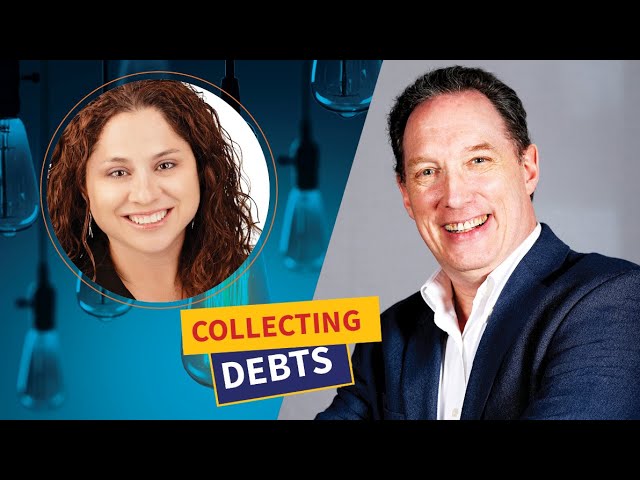
Krista Walsh, founder of KC Collect, explains why 10% of invoices go unpaid and how to fix it. Start with a written credit policy and vet customers before extending credit. When customers are late, use interest as leverage and escalate with calls at 90 days.
Chapters
There is an old adage in business that cash is king. But what if you have customers doing everything to avoid paying what they owe you? One of our— the most difficult conversations you can ever have with your customers is asking them for payment. At least, it was difficult until now. And that's what we're talking about today on Marc Haine Live. Welcome to this episode. This is where small business owners and entrepreneurs pick up core skill sets to help them create the jaw-dropping, show-stopping experience that their customers and their employees deserve. I am your host, Service Expert and Master of Experiences Marc Haine.
Hi!
I'm Marc Haine and it is so great to have you here with us today. My guest for this episode is the extraordinary Krista Walsh. And today, we will be talking about how to create and manage your cash flow. So, stay with us and we will uncover some common challenges with extending credit and what you can do to collect on your accounts receivable all while keeping your customers. My one ask is that if you know anyone who could use this information to please make sure that you go ahead and share This link to this episode. I want you to know something. If you have customers that still owe you money, you're not alone. According to a report by Sage, 10% of invoices are either never paid or are paid late. So that company has to write them off. And that is 10%. That is dangerous. Add to that that as a small and medium-sized business, the time, energy, and resources required to deal with the 1 in 10 invoices can feel really, really overwhelming. So that brings us to our Question of the Day. So, what is the biggest frustration you have managing your accounts receivable aside from sending Biff and the boys to make sure they collect? Do you have any strategies that you can share? I'd love for you to be part of this conversation. So, go ahead and share this episode on social media wherever you're consuming the information and make sure that you hashtag it #ExperienceLeadership. I am really excited to be joined today with the Excuse Terminator, Krista T. Walsh. Krista is the founder and president of KC Collect, a multi-award-winning credit and resource management company in Eastern Canada. The first collection agency to be owned and operated by a woman in Atlantic Canada. Today, Krista is a multifaceted entrepreneur and a speaker with businesses spanning from debt collection to fitness. She has been named an Emerging Leader for Atlantic Canada twice. She's been on the Chamber of Commerce Entrepreneur of the Year and Canada Association of Professional Speakers Rising Star. And she has developed into one of Canada's leading young entrepreneurs. And if that wasn't enough, Little Miss Underachiever Krista is also the author of the book, 20 Tricks, Tips, and Techniques on Successful Debt Collection. Yeah! Welcome to the show, Krista. It's great to have you.
Thank you so much for having me, Marc. I'm super excited to be here and answer any debt collection questions.
Well, hopefully the first one's not gonna be too difficult because I have a theory that most small and medium-sized businesses are incidental entrepreneurs. That is, they kind of fall into a business as a passion project. How did you get into this line of work?
So, I was a dental assistant, a good stable job. And I got fired 3 times within 6 months from graduating. So, facing unemployment, not having a paycheck, I moved back in with my parents. So, moving back in with my parents, I was tired of failing, being the failure in the family and embarrassed. And my dad had started a heating company around the same time. So, my dad would go out and fix the furnace in the middle of the night and he wouldn't get paid. And because I had this like deep inside me that I didn't want the business to fail, my dad wasn't going to be a failure. I couldn't go back to failing again. Hashtag failure. I started to get a little more aggressive with the phone calls asking customers to pay. I started to look into why we were going to certain customers. If they just called us on the phone and said, come, do we drop everything and go? So, there was a lot of policies that I started to research and look into to make my dad's company successful.
And because of that, you found that this was a passion point for you that you were really good at.
It was definitely a skill set that I didn't know that existed. I didn't— I wasn't in high school and my yearbook thing was not growing up to be a collection agent. You fall into it and you realize that it's a skill set or it's pushed upon you and you realize that you're good at it. It does take a lot of backbone. And a lot of like disconnect from the situation.
Oh, and we'll get a little bit into that. But right now, I know I've dealt with a lot of small businesses where the accounts receivable to them are like the big thorn in their side. Usually, they're getting there, handing a list to the receptionist and saying to the receptionist, call these people and tell them to pay me. What are some indicators that accounts receivables are a problem for an organization, like a real problem?
Most businesses, especially new businesses, are so eager for a sale that as soon as the phone rings, they're dropping everything and going. They need a little bit better of a vetting process. It's like a preventative measure even before you get the sale. But because they're so eager for the sale, they just want business in order to Have the sales. So, the preventative measure would come out first to say, okay, who am I charging to? What's my credit limit? Which really means, how much am I willing to lose if this person doesn't pay? Who am I going to charge to? What tactics do I have in case they don't pay? So, there's a lot of questions even before the actual sale for the small business owner that need to be discussed or thought of. And I always say, I can write you a great credit policy. But if you stick it on the shelf and never look at it again, Yeah, yeah.
I mentioned at the beginning about this 1 in 10 invoices don't get paid. What are the consequences of having badly managed accounts receivable?
Most companies fail within 2 to 3 years because of accounts receivable. It is the number 2. One is poor business management and number 2 is poor credit management. And that's where I come in. The credit management needs to be looked at. It needs to be monitored daily, weekly, not once a month when you say, oh yeah, these people didn't pay. And then you send them. My favorite is when people send an invoice and they just stamp past due on it. I'm like, what's that getting you?
Because it's in red, Krista. It's in red. It means something.
Throw that stamp out because it's gonna do nothing.
Yeah. So, to that point, are there any myths about managing account receivables that you think need to be busted?
Okay. So, every time I tell someone that I work in debt collection or I'm a collection agent, they're like, well, who do you hire that goes door-to-door? And I'm like, listen, if I come to your door or if a big burly man comes to your door, which one are you going to answer the door to? So, one of the big myths would be that you have to like have muscle in the industry in order to get a debt paid.
Yeah. So, the whole thing with bringing Biff to the door?
Yeah, no.
Not so good? No? Okay. And so, these myths that people have about it like I also know that I've talked to operators and I'll say, You have— you're making the sale, which is good. Like they celebrate to your point. They celebrate. They kick up their heels like, yeah, we got the sale. We got the sale. And then, it's like, well, what's your strategy for collecting on it? Oh, they gave us a down payment. It'll be fine. They're good for it. This idea of trust in an operation, obviously, you see time and time again that that's not a driving value system when it comes down to managing accounts receivable?
We see a lot in the current society, which is extendable credit or a line of credit or overdraft on your bank account is more people are using as disposable income instead of properly budgeting their money. Now, I wish there was a course in school that taught kids at a young age in order to budget and even how to write checks. I might be dating myself, but in order to budget and book Yeah. How do you bookkeep your own finances? Because when you get out into the real world and you have all these advertisements saying, I'm going to give you this rate and this rate, all of a sudden, they think it's great. But then, they have to repay it at a top interest rate. And there's no understanding or knowledge of that. So, we have to backtrack a little bit and say, what can we do before we get out into the real world? What knowledge do you get? Like, where do you learn How to budget? Where do you learn life skills around finances?
And to the earlier point about this idea that a lot of entrepreneurs are incidental entrepreneurs, they might be really great welders or really great mechanics or whatever they got into business to do. But they've never been trained on these essential core skill sets that are required in order for them to run their business.
A small business cash flow is so important obviously because you don't want to go out of business. But you need to learn how to extend credit, how to collect on credit, and how to deal with those customers. And how to deal with those customers and keep the customer so you can keep the relationship.
Yes, yeah, because it gets really challenging. I talked to one operator and he didn't really worry when he first started up because he said on the invoice that he charges interest for all past due accounts. Is that an effective strategy?
We use interest as a negotiation tool because most of the time, people, it's like they've won a prize. So, I will waive the interest today if you pay the invoice in full. And people are like, oh my God, yes, yes! So, they feel like they've won. So, in the collection world, we use it as a negotiation in order to help it along. And sometimes, I mean, if you're dealing with Visa or larger companies, you have to pay that interest.
Sure.
But in the small business world, we can use it in order to help collect on it.
Ah, excellent! So right there, there's a really great strategy. When we come back, I'd love to uncover more strategies business operators can adopt to get a handle on what they're owed. And we'll do that right after this.
When the spotlight shines on your business, are customers applauding or yawning? In other words, how is your business performing? Make your business a star with a new book Lights! Camera! Action!, business operational excellence through the lens of live theater by Marc Haine. Marc uses his business and acting experience to help you see your business like a live show so you can create a performance your customers will never forget. Buy Lights! Camera! Action! today at your favorite online retailer or directly at marchaine.com.
Welcome back. I am speaking with KC Collect founder, Krista Walsh. Are the challenges with accounts receivable a process problem that people aren't asking for their money? Or is it a systems issue that we haven't like made it a driving policy so now it's getting neglected? What is it? What's the source here?
First of all, when you're dealing with small businesses, it's usually as you mentioned earlier, a small business person that has a really great trade or idea and they're the salesperson. So it's really hard to go from being like the head person, the salesperson trying to get the business and then like switch it to be the collection agent or the accounts receivable and ask for the money because it's like split personality, if you will. And it's hard to transition one from the other. And I often tell small businesses, husband and wife, You designate one of you to do each. My dad is extremely really good at his trade, and he is the nicest man. But when it comes to collections, he simply won't do it. He never has. It's my job, obviously. But we we have that. We know what our roles are within the small business, and instead of everyone wearing many many hats like entrepreneurs do, and if you don't have that resource. Outsource it. Outsource it to a company that can help you with it.
A lot of times, what I've seen especially in the solopreneur or entrepreneurs where the owner is really hands-on inside the business, that when they do assign to the receptionist or to whoever they're saying, make these calls, they typically will get something from the customer. Hey, I've known Ken for 30 years. Just tell Ken. He'll be fine. Just Just, you know, I'll pay you next month. Ken will be okay with that. How do they respond?
So, one of my greatest tips is to know who your friends are when you're in business. Everyone when they owe money are your friend because they're trying to get past it. Your friends, write this one down, are people that have gone to your wedding or your divorce ceremony, that know your kids' names, and know your birthday. If you do not know these, you're not friends. You're acquaintances. Everyone wants to be your friend when they don't want to pay you. Of course, they're best friends because we've been friends since high school. I don't have to pay that. No.
Until you have to get hot and heavy with it all.
Exactly.
Yeah, you mentioned before about this idea of a credit policy. Can you talk a little bit about why every business needs a credit policy and what exactly is a credit policy?
A credit policy. I'm very— I stress written credit policies. So then you're investing in your staff to know exactly what your policies are. What happens when an account gets 30, 60, 90 days? What letters are sent? What's— is it a statement? What interest is charged? All these things have to be thought of because it's going to happen. And the policy is a preventative measure so you don't have extremely high AR and that If you do get in a situation, you know how to defuse the situation. You know how to handle the customer. Or you know what letters, what correspondence, like what do I do after these many days? Like what is our policy on that? And this protects the entrepreneur and helps them with their cash flow because without cash flow, what do you have?
No margin, no mission. Yeah. Hey, and it's interesting that you say that because What you're talking about now is actually making accounts receivable part of your business planning process. I mean, when you do your business plan, you know where your customers are coming. You know how I'm making sales. But having actually a component within the business plan addressing collections would be probably the cat's meow.
Well, because it's such an important— like it's an important part of any business. You have your business plan. But do you have your policy Regarding credit, are you going to charge to anyone that calls you? Are you going to make them fill out an application? Are you going to go only to certain areas because they're wealthier areas? I'm not joking. These are some of the questions that customers have asked me. Oh, they're from a certain wealthy area. I'll go there.
And because of that, I don't need to check this box.
Exactly.
Yeah, interesting.
But in our world with credit, it's just so expendable right now, the credit, that you could have this nice big fancy house and 3 cars. But you don't pay your bills.
And you don't have to pay your bills for a very long time before somebody kicks you out of there.
Exactly.
When it comes down to the credit policy, talk a little bit about kind of this. You mentioned have people sign an application or fill out an application. What should the onboarding process be then for new customers?
New customers, you need more than just their name. When I first started working in accounts receivable, I remember getting an invoice on my desk that was John Smith. No address, no phone number. And I took it back and I was like, how do you expect me to bill, put this invoice out and charge the customer when you've given me no information? So, your employees have to know What information they have to take if it's an after-hours service call. If they're the one that happens to be answering the phone on a weekend, it doesn't matter. Like, what information do they need? They need more than just a name. They need more than a post office box because post office boxes can be changed or altered. You need an address. Are they a homeowner? Do they have assets? Do they own the house? Who is paying for this bill? Like, what kind of conversation can you have? On the phone during that initial conversation, like even if you brought up these are our methods of payment right away, then they have, oh, I have to pay this. Well, we only go out if we have a Visa or MasterCard number. We'll only do this if we have half now and half when we're done. All these things have to be discussed and tailored to whatever fits your business properly.
So again, you need somebody to For people who aren't trained on this, you need help. You need somebody to help you kind of guide this process because you have to be extremely strategic with that. Krista, if for somebody who's watching this who says, yeah, yeah, I'm getting it now. I need help. How can people reach you if they need to pick your brain or get your services?
I'm extremely easy to contact. You can go to my website which is www.kccollette.com. You can Google collection agency PEI, and you'll get me. info@kccollect.com will come to my desk. You can old school call me, and I will probably answer the phone. So 902-838-7000 is me, and I'd love to talk to people. Obviously, this is a passion for me, and it developed from family business, but I believe everyone in small business should get paid.
You are in Eastern Canada but you don't— you're not limited to Eastern Canada.
I'm not limited to Eastern Canada. This is where I call home. But I do consulting all over Canada and in the U.S. And I do training seminars for credit policies all over North America.
Wonderful! There's a book that I just saw recently called, I think it was 1,001 Excuses or it was like 10,001 Excuses. And that's all this book was. It was literally a listing of excuses that people make why they can't pay their bills. For you, do you have like a top 3 list of the things you consistently hear?
Number one is, I'm going through a rough time right now. Of course, everyone's going through a rough time right now. I'm waiting for my unemployment check to come in. That's a real one. Or, I'll pay you when I get some money. Very vague excuses. My favorite excuse of all time was, I was robbed on my way to the post office as I was sending your check. Because we all know even in Eastern Canada, if something big like that happened, it'd be all over the news. So, that simply wasn't true either.
Yep, yep. So, it was playing that we're at the evolution of the dog ate my homework. Is working now for checks. You know, I've seen some TikToks where people get really, really emotional on both sides of the process. Any advice to those people having to make this call? Because I can imagine, especially if quote-unquote your friends, that this can get really to be a tough conversation.
So, you have to realize that we have to prepare yourself to handle any kind of excuse. And I say the ABCs of debt collection right off the bat, which is ask questions. Because if they're going to lie, then You're gonna catch them when you ask a lot of questions. B is backbone. Always have backbone in this situation because if you say, okay, just pay me when you can, you're never gonna get paid because something else is always gonna come up and eat that money. And C, you need to control that conversation because if they go on and on about their personal challenges, I mean, yes, it's sad and you can sympathize with them. But The debt remains. It doesn't disappear. So, you do have to focus on that and try to work with them in order to recover it or work on a payment plan.
Yeah, yeah. And you mentioned the backbone part of it, right? And I can absolutely— I think you and I way back when we started talking about you coming on this podcast, right off the get-go, I was thinking, oh my God, Krista, you must be absolutely brilliant in managing those conversations to the point where you're taking your emotions out of it. How How would you recommend that people do this? Because I do know that people tie their identity. I'm a nice person and now this person's making me be mean. What would you recommend on them getting over this?
So, when you're a small business owner, I always call it choosing Mr. Right or finding Mr. Right, which is me finding a Mrs. Right too. You have to have the appropriate person on your staff or outsourced in order that can do this job because we can't take this personal. If someone calls me and yells at me, it really means nothing to me because it has nothing to do with my company, me personally. It has to do that usually that they're upset about their financial situation and how they're going to address it. And they don't know how. But that's the way they're expressing themselves. So really, personally, it has nothing to do with me. Right.
Yeah, I mean, if they're having trouble paying your bill, chances are they have trouble paying other people's bill. And this is not the only phone call they're getting as well, right?
And as long as they're willing to say, hey, I need help, or can you work with me on that? Most people are like, of course, I can work with you. But you can't ignore them. You can't ignore bills until it gets to a state where they've exhausted all their resources. So, they're looking at legal action or seizing of assets. So, as long as you're willing to work, then you usually can come up with some kind of plan.
It makes perfect sense. I'd love to get your number one recommendation. Of course, some cautionaries about making those calls and having those discussions, and we'll get to that right after this.
When you're delivering an important speech to a huge audience, it's easy to lose your place or go way over time. Give yourself an advantage with the Pro Speaker Presentation Speech Timer app. No more checking your watch or calling for time. The Pro Speaker Presentation Speech Timer app keeps you on track with easy-to-see timers, even changing color for visual prompts during your speech. And you can set audio cues to practice. Or set it to vibrate so you don't even have to look. Be the pro you know you are. Download the app at speakerpresentationtimer.com.
As you can tell, Krista and I are passionate about helping entrepreneurs and business managers just like you. If you belong to an industry association or an organization that is planning a conference or a leadership retreat, or you feel that they can use our services in some form or fashion, feel free to reach out and drop us a line. You can send us a connection request or you can contact us directly. The information is in the show notes. This is such a great conversation, Krista, and I'm blown away because this is a conversation I don't think that we have enough of. If you were to have the number one biggest number one tip to avoid all this headache, what would it be?
Definitely invest in your staff and your knowledge in order to be preventative and rather than have to do collections or have high accounts receivable. So credit policies are a must. I can't advocate more for that because it's such a preventative measure. I don't want to put myself out of business, but at the same time, a lot of it can be avoided with certain conversations and certain planning.
Right. You know, it's funny because small businesses will often turn around and say, oh, you know, the big people have it easy because they have all the resources. And yet, I'll talk to big companies and they'll say, oh my goodness, smaller businesses have the thing. And because they have the one-on-one relationship, they have it so much easier. And I know that on both sides of the fence. I know like huge companies, like multi-million dollar companies are having challenges with collections. And yet, the small owner-operator is challenged at the same time. Where does persistence come in? Because if 1 in 10 invoices aren't being paid, something's got to give.
Persistence equals payment. So, it's like the out of sight, out of mind mentality. If you do not contact the customer for 6 months and they get it in their head, I'm gonna wait 6 months to pay this because they weren't really serious about me paying it because they waited so long, then you're going to create higher accounts receivable. So, it's out of sight, out of mind mentality. And one of the businesses that I consulted for, they would send it the next day. And how serious are they about getting that bill paid?
Yeah. And so, what about the escalation notices? Like how obviously, you send an invoice like you said. Some people get a red stamp. They stamp it past due and think that that's going to do it. But then, there's going to have to be a next step.
It definitely depends on the policy that you have. And I mean, Every business is going to be different and require tailored things. Maybe they are not comfortable sending anything until it's 60 days. But I will tell you anything between 90 and 120 days, your rate of collection of that invoice keeps going down once it hits that. So, the longer you wait, the harder the debts are to collect.
Good notice. I mean, that right there is gravy. So, this is not something that you're gonna send out the letter and just hope it's gonna go away and they're gonna— the check is magically gonna come in the mail. It requires a follow-up. And again, I like this thing you keep falling back onto about having this credit policy as part of your strategic planning right from the get-go. I love that. Are there any cautionaries about taking this on? Like somebody doesn't have it right now. They're willing to get started. They know they have to. Their business depends on it. Cautionaries about them trying to initiate this on their own.
People can. And sometimes, I talk to clients and they're like, we don't have any accounts receivable. We're good. And it's more or less because every company has accounts receivable. It doesn't matter if it's like $35 to $30,000. It depends on how far they're willing to go to get their money. And I say this because if you don't get your money, then you're just working for free. Like it's Christmas every day for your customers because you're never going to charge them. We'll go back to a little bit on what do you do after 30 days, after 60 days, after 90 days. And maybe it's a notification at 60 that say, hey, a friendly reminder, you know, in a letter. And then if they still don't respond, maybe it's a phone call, maybe it's 2 phone calls, it's whatever suits the company and it should be tailored to whatever company you're in and the industry and the relationships that you have. And we always try to keep the customer, customer before it gets escalated to that. But we do deal with a lot of people that like the out of sight, out of my mentality that I'm just not going to deal with it until it's escalated and they have to. So that's unfortunate when dealing with collections because one phone call would have been like, hey, let's work this out.
Yeah. And so, do you suggest that you make that part of the process? Like after 60 days, should somebody be picking up the phone and actually having that conversation rather than escalating nasty letters?
There should be some kind of notification and a phone call made absolutely after 60. I would probably go like the overdue notice with the statement and the interest charges and a phone call. And then, after 90, you're still going to send a statement, a notice, Saying your account is now 90 and maybe 2 phone calls. Again, depending on the situation and the clients. But again, if you leave it, it's not going to pay itself most of the time.
So, back to your point, persistence equals payment.
Exactly.
Wonderful! This has been such a great topic. It's something that we've never done in the year and a half, 2 and a half years I've been doing this show now. And so, this has been brilliant, Kristin. Do you have any very last thoughts about what we're talking about I will always stick to the facts when dealing with accounts receivable.
It is very cut and dry. It is not like a he said, she said. It is very like, these are the facts. You didn't pay it by the state. And I'm not a mediator, nor do I care about customer service issues or experiences that people might have. That has nothing to do with me. I am just focused and hired to collect the debt. That's it.
We should maybe nickname you Biff.
It's very hot in here.
We should nickname you Biff. Yeah, you could be the vocal baseball bat. But you do— so part of your service that you offer is that you do train teams on how to do it. So, if somebody decided, you know what? I'm going to take my receptionist. I'm going to take one other person that we're going to empower to do accounts receivable. You can then train that team and teach them how to get some of these skills that are required.
Yes, definitely. Like whoever you want trained in accounts receivable, that's what I do. I train companies and staff on credit policies and accounts receivable in order to collect the debt that they're owed.
Okay. Just before we sign off, I'm just imagining that you're in front of a bunch of people training them on how to collect on the debts that they're owed. What are some of the big excuses when people start first starting learning these skills that you keep hearing?
Like the excuses that people don't want to?
It's like, I don't think I can do that. That's— right? What are some of the things that some of the pushback you get from people being trained in this?
I didn't sign up for this. This is not in my job description.
I'm a receptionist. I didn't sign up to be BIFF.
But you have to have the knowledge or their perception that if you don't collect this, you don't have a paycheck. Yeah, you're not going to be with reception as much longer if there's no accounts to pay your paycheck.
Gotcha. Yeah, this has been—
How many businesses have— or business owners have stayed up at night wondering how they're going to pay their payroll next payroll because of accounts receivable and cash flow.
Cash flow is so important. Like I used to run restaurants and I can, to your point, my staff made more money than I did. And to your point, I remember payroll coming around and going, oh my God, I gotta pull from this investment account. Or I have to pull something to keep us afloat because we had a really bad year. I've been there, done that. So, I know how hairy that is and the stress that you go through to make that happen.
So yeah, cash flow is the number one concern of small business owners. How am I going to pay them? How am I going to pay the government? How am I going to pay CRA? And when you are charging or extending credit, you have to have a process to get that back.
Yeah. And what about companies that say, oh, I don't give credit. We're a cash business. Like I run a restaurant or I have a dollar store.
What would you say? They must have an incredible credit policy because if they call and they say, I simply don't have credit, then it's cash when you're there. Yes, that's the credit policy. Yep.
And we don't know how the businesses evolve, right? Like a restaurant for instance, because COVID did a lot of things, right? And so, restaurants that people came in and they collected the Visa things and they didn't have— they weren't carrying accounts receivable. But then, all of a sudden, they start doing catering. And without having something defined, They're a hoop because people aren't paying necessarily credit card right then and there. They'll say, hey, we're a regular client. Give us credit. We'll pay you at the end of the month.
Yeah.
Krista, I want to thank you so much for sharing today your passion, your expertise. It's been brilliant. I have a sneaking suspicion we could go and play what-if scenarios endlessly and have you kind of tear them apart. But I invite people to reach out to you. Could you just remind people one more time how they can get a hold of you?
Sure. So you can call me. Call me.
Call her.
On the phone, like a real phone.
Krista's not afraid of phone calls.
902-838-7000. And you can email me if you don't want to talk to me and you're thinking late at night and you just want to email me. It's krista@kccollect.com or info@kccollect.com. It'll still get to me. Or you can just browse my website at dcpollect.com.
Krista, thank you so much. This has been absolutely brilliant. I've loved every minute of this. And like I said, we're gonna have to come back and do maybe another show on a different aspect of collections. Maybe the 5 big tips to making that phone call or something.
Absolutely! It's been fun. Thank you for having me.
Thank you so much! Why don't you let me know if this was of value to you? As always, my offer stands. If you would like 30 minutes of my time to brainstorm your business with you and your team, feel free to book yourself on my online calendar. The link is in the show notes. It's the one that's marked meetwith.marchaine.com. It would be my absolute honor for me to be of service to you. And while you're at it, why don't you go ahead and leave a comment or a review about this episode? I'd love to get your feedback. Was this value to you? Was this something that you needed to hear to help push you into high gear and become more effective? My name is Marc Haine. I hope that you stay safe, stay healthy, and dare to be the exception. Thanks for joining me today.









