How to Market Your Business: Elevating Your Business and Personal Brand Presence
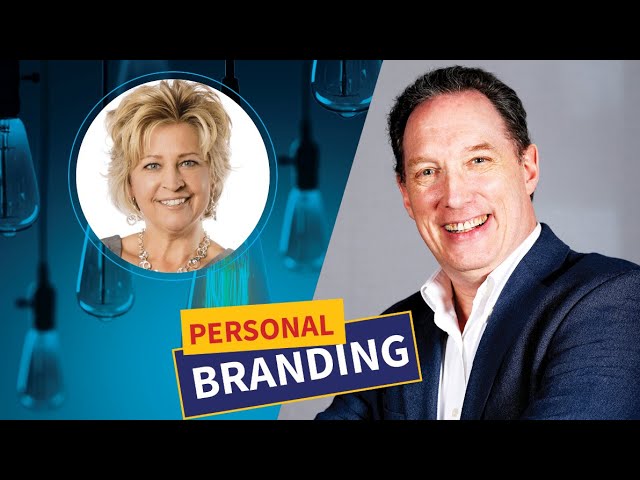
Brand-clarity specialist Suzanne Tulin explains how small business owners and leaders can align their personal brand with their company's promise. She shares practical techniques like values-based interview questions and brand-awareness sessions to embed consistent messaging across teams and reduce employee turnover.
Chapters
When I say the names Disney, Apple, Tesla, Facebook, Amazon, and Virgin, these are very recognizable corporate brands. We all have a picture in our head of what they represent, their values, their promise, and what they mean to us individually. However, what about leadership brands? How important are they? And that's coming up next on Marc Haine Live. Welcome to this episode! I am so glad that you're here with us. This is where small business owners and entrepreneurs pick up core skill sets to help them work on their business, not just in their business. I am your host, Service Expert and Master of Experiences Marc Haine. And I am so grateful that you're here with us today because my guest for this episode is Brand Clarity Expert Suzanne Tulin. We will be talking about how one defines personal brand and how to leverage it within your company. We'll uncover 3 of the most powerful attributes of a successful brand and pull back the curtains on what the key elements within your brand DNA is. But we'll get to that in just a moment. In the meantime, I'd love it if you would be part of this conversation. You can go ahead and subscribe to this program. And if you ring the bell, you will get notified whenever I bring you some fresh content. And while you're at it, if you feel this type of content is valuable, please go ahead and check out the Audacious Leader Summit That is running from January 21st and 22nd. And if you miss it, check out audaciousleaderssummit.com for more offers and upcoming dates. So, we mentioned how you feel about corporate brands. But what about their leaders? Walt, Jobs, Musk, Zuckerberg, Bezos, and Branson. When you think of those names, what do you feel about them? Do they represent the values and promise of their corporate brand? Which brings us to our Question of the Day. So, as the face of your business, do your customers feel that you as a person are congruent with the values and promises of your company. I'd love it if you would share your comments, your content, your thoughts about this idea of personal branding. You could do so in the show notes, in the show comments, or if you like, you can share this episode on social media. Hashtag it #ExperienceLeadership and put your comments down. I'd love for you to be part of this conversation. My guest today is author of newly released Personal Brand Clarity: Identify, Define, and Align to What You Want to Be Known For. Suzanne is a master of strategic communication, employee brand engagement, and internal brand development. She co-founded the Global Institute for Inspiration and helped create the most inspiring Inspiring Companies Report. Aside from her new book, Suzanne is also the author of The 6 Myths of Small Business Branding and co-author of Brand DNA: Uncover Your Organization's Genetic Code to Competitive Advantage. Suzanne, welcome to the show! It's so great to have you. Hi Marc!
Great to be here. Thanks for having me on your show. I love this.
Oh, it's brilliant. And the more I looked into kind of your background and kind of what you talk about, and I just the synergy between this idea of leadership and corporation about what they mean to each other and how interconnected they all are. But before we get into today's topic, could you dig a little bit deeper into what you do for your clients?
Oh, there's so many things I can do. But I'll start at that core piece of the Brand Clarity Expert. And what I mean by that is I help companies identify, define, and align themselves at the internal levels with their systems and processes, their culture, and their leadership to become who they want to be known for. To enable them to step into some specific distinctions that enable them to deliver on their promise. And then that leads to the leadership piece, which is helping these leaders, these people, emerging leaders sometimes in corporations, to really want to hone in on who they are as a brand at the individual level and step into that as well to become who they want to be known for as a leader within the organization.
Fantastic! Why is this topic so important?
Oh my gosh!
Oh sorry, that was just a little question.
Yeah. How much time do we have? It's so important because one of the key characteristics— I know we're going to get into this. Is authenticity, right? And consumers are so smart these days. And we can really begin to understand very quickly whether a company that we want to, we think we want to buy from is in alignment with our core values and with what we believe. And we're very quick to make decisions in that space if we see something incongruent happening. So, it's important to really Get your arms around what you stand for and what your value position is as a brand. And get super clear on what that is so that you can build out those experiences that you talk about a lot, Marc, in every aspect of the customer journey as well as the employees. And that's what I like to focus on is that more internal piece so that your employees are living the dream or living the values. that you're espousing as a leader within the corporation.
Yes, yes. It's more than just putting it on a poster on the back wall, right?
Oh my gosh, yes.
It goes much deeper. What are we seeing in the workplace now as consequences of badly managed personal brands? What are some of your experiences?
Oh gosh!
Oh sorry, another little question.
Like I know, where do I begin? Badly managed personal brands, we see a lot of dissent. You know, people retention is a big issue because of that. You know, most people leave their jobs because of their supervisors, because of the relationship or lack thereof relationship, right? The incongruencies that the workers are seeing from what they might be portraying out in the market in terms of marketing messaging versus what they're actually doing and living and being internally with the organization.
Right.
So, when we pick up on that, we're feeling like, wait, where am I working every single day? And why aren't I feeling more in alignment with what I'm doing every day? So, we've got this— humans have this great sense of intuition. And we know that if something's off, we've got to start delving into what that looks like. And oftentimes, it shows up in the experience at their workplace.
Yeah.
So, that's why it's important.
Yeah. And so, you talked about the employee side. From the leadership perspective as well, I mean, before you and I went live, we were talking about some examples of leaders who behave badly. And because of that, they negatively affect their business. How prevalent is this as far as the tie-in between the leader's behavior, whether it's on the job or off the job makes no difference, to the actual kind of value of the business itself?
Well, it doesn't last very long because we catch it very quickly. Because there's so much communication going on that we can communicate now through social media and so many platforms that people are catching the incongruencies. Luckily, it doesn't last very long. They either shape up or they apologize or they do something that amends whatever is happening out there. But I want people to realize that every single person out there has a personal brand already.
Uh-huh.
The real question is, are you in control of it? Right? And have you done the due diligence and the work to truly understand who you are and what you yourself are standing for? And do you stand in that position on a regular basis? How are you making your own personal brand tangible out there in the real world?
And that's such a good point because to the previous point, when we define people based on what we feel we see out of them, we see their values being reflected and we connect with people because of their values. When they act to your point, incongruent to their to what we believe, all of a sudden, we shatter that and that branding is lost. I mean, Andrew Cuomo, perfect example. His brother on CNN supporting him as he should. He's his brother. But now, CNN wants distance. Think of any Pepsi sponsor that went off the rails.
Yeah.
All of a sudden, you hear all these things about somebody behaved in a certain way and all of a sudden, they lost all their sponsorship opportunities because people are pulling back. And wanting to distance themselves from whatever that person said on social media or how they behaved in public and so on.
But it's so sensitive these days.
It is because we're so open, right? I mean, we're so open. But I think for the people watching, maybe what we need to do is I know that some people define branding as kind of the logo and the marketing piece. Could we define a little bit what is the difference between Oh, that's such a great question.
And that's why I'm in business because I'm so passionate about this distinction. So, if you think about you market a brand, right? And if you're out there marketing something, which is the dissemination of information. If you're out there marketing something that you have not yet fully identified and defined, which is the brand, then what are you actually marketing out there? So, branding is just the verb that speaks to the assignment of meaning to an entity called an organization or could be the person, right? The personal brand. So, if I haven't done the work to literally sit down and identify and define and then align myself to my set of core values, my brand style attributes, which are personality attributes, I need to know what my distinctions are, my unique distinctions, my credibilities, my skill sets. My experiences that bring certain, you know, skills to the forefront of how I act and behave in the world. If I don't know those, then how can I even think that I'm being authentic? And that's the big problem that I see out there. A lot of people say, oh, just be yourself, be authentic. But if you haven't done the work, you don't know what authenticity is for you. If you haven't identified and defined it.
Right.
Right.
What we tend to end up doing, Marc, and this is— I see all the time, is we are becoming so reactive to our environments, our external environments. We are no longer in the driver's seat in being internally driven to stand in our value positions because we're reacting to those things around us all the time. And we haven't taken the time to really understand and get clear on who we are as a leader or just a personal brand, to know how to distinguish or discern differently in our lives so that we're creating a consistency, which builds trust, which is one of the attributes of a great personal brand.
Yeah, you bring up some interesting points. We know that values play a big thing. How we connect. You and I connect because we, at some level, we share some values together. Or else, we would have this incongruency. I'd like to dig a little bit deeper into the importance of having congruent personal brands. And we'll get to that right after this.
When the spotlight shines on your business, are customers applauding or yawning? In other words, how is your business performing? Make your business a star with a new book, Lights! Camera! Action!, Business Operational Excellence Through the Lens of Live Theater by Marc Haine. Marc uses his business and acting experience to help you see your business like a live show so you can create a performance your customers will never forget. Buy Lights! Camera! Action! today at your favorite online retailer or directly at marchaine.com.
I am speaking with the fabulous Suzanne Tulin about the role personal branding has on business leaders and the companies that they represent. Working in restaurants, I worked in restaurants, casinos, hotels. I was embedded into the hospitality industry. I was always very concerned with the behavior of my staff when they were off shift. I feared that if they misbehaved and people knew that they worked for me or for my organization, it would negatively affect my business. Suzanne, is that a sound fear?
Well, sure. It's a sound fear. Because we are so exposed these days and we are connected with how people know us and know us through these experiences versus these experiences. Everything is connected. So, it is a sound fear. And you want to— it kind of brings up the whole point of getting the right people in the right seats when you're hiring.
Right.
And making sure that you do a great a job at vetting according to the organization's or your core values and ensuring that you inculcate them into the process or onboard them into the brand's value position and its promise. A lot of companies skip over a lot of that stuff, especially smaller businesses, because they want to get them right into the position and get them rocking and rolling and doing their job. They negate the fact that they really need to be trained culturally as well as through their systems and processes and those types of things. So, I think it is important and it is a sound fear that the employee you're hiring is a good fit for your core values and what you stand for as a brand.
Yeah. How important, like you mentioned training people into the brand as well.
Are there any tips or techniques you could suggest for getting employees to be Yeah, so there in the very beginning when you're interviewing, there's what we call an interview-based value or a values-based interview process. And so, you take your own core values that you've identified and defined. You have to have them defined as well. And then, you weave them through the questionnaire process. And then, you ask questions that are based on those values. So that you're literally getting information out of these prospects, your potential hires, about their own core values and how they're congruent with your company's brand values. So, when you see that and you listen to their answers, you can literally discern better fits for your culture. So, that's just one way. But when you start inculcating them and really beginning to onboard them, There's a lot of collaboration that you can create. I've developed these kind of like these journals for new employees to— they have to go to each department and talk to different people within these departments about brand philosophy, about the brand promise, about what they see. So, they're like interviewing them. I mean, there's all kinds of great little tips and tricks and experientials that you can do with onboarding.
Yeah, I love that. That's such a great— that's a really unique technique. I haven't heard that before to actually empower and get people to tour through the organization talking to the department heads and that sort of thing. Part of the challenge we have and we're seeing it all over the news now with the Great Resignation is that businesses are challenged with attracting the right kind of help. And according to studies, the newer generations of workers are very concerned with the corporate environmental and the social values of their employer. How have you seen those values represented in the marketplace?
From the corporation?
Yes.
So again, I think companies and specifically HR departments, if your business is big enough to have an HR department, they're really starting to hone in on Identifying and defining those and getting them out there and utilizing them in the interviewing process to make sure that even when they're advertising, they're also infusing them or peppering them into some of the ads that they're putting out there to really showcase what they stand for. And they have to really begin to beef up those onboarding programs so that they are walking the talk and delivering on that promise even in the very beginning in the get-go. And of course, vetting. Your whole program for vetting is really important. And I think they're extending that vetting process because they need to ensure that the price of hiring somebody and training them and getting them up to speed is— I think there was like an average of $3,500 at least in America for employees. It's high.
It is.
So, taking more care in doing that and really honing in on what the company believes and really showcasing that because The employees or the prospects out there, the pool that's out there that you're trying to pull from is kind of in control right now. They're kind of calling the shots.
I see that. You know, it's so funny that when you look at social media, the brands, you see as much from the brands kind of exuding their values more so than they are now kind of advertising their products. I mean, when you look at a Nike commercial, it's all about the values. They're not holding up a pair of shoes and say, you should buy these pair of shoes now. They're on sale.
Go to—
that's not how they're selling anymore. Instead, they have a brilliant ad of a chubby fellow just jogging and they're talking about what excellence and brilliance is. And you have this little chubby fellow just going along and being an athlete. And they said, it doesn't have to be that. You just do it, right? And how brilliant is that, that they're not talking necessarily about their products but they're establishing their values by talking about what they're doing behind the scenes, what they're doing outside of the business, and so on.
It's interesting you say that, Marc. If I can just interject here, companies are really beginning to realize, and this is my philosophy all along, is that The product or the service is never really the brand. Your products are not your brand. It's really the how you actually deliver what you deliver and follow through on what you follow through on. The visceralness that people have at that endgame when they're done purchasing or having the transaction, that visceral experience. So, it is the core values that they're actually starting to market, which is very interesting. Instead of the push, push, push on the product or the price points and that sort of thing. So, I love that they're doing that. But the problem is and the realistic piece of this is that they have to deliver on it, right? Again, this can't just be words out there, push, push, push to attract, get them in the door and then, it's nothing. Nothing like they promised, right?
It really is. exuding, kind of building that trust factor over and over again. I mean, what is it? It takes— what's the consistent thinking? It takes 7 points of contact, 7 to 10 times before somebody's willing to buy from you, which is really interesting because it is this whole thing about being trustful or being trustworthy in your brand as well.
And that's built from consistency.
Yeah. Yeah.
So, you can be consistently late or you can be consistently on time. Either way, you're still building a brand perception, right?
Yes, exactly. Or you can deliver as you promise or you can always be late as you promise. And I think this is where reviews come in, right? I see especially small businesses, they're so horrible at properly responding to reviews on social media or on review sites. I mean, they're just horrendous. Getting all defensive and stuff. But which brings an interesting kind of position about this idea of social media. You know, when we had our federal election, I think it was the one 6 years ago, we had a person who got voted in. And she was under pressure because they found a reel from her when she was 21 in Mexico holding up a cannabis t-shirt. And I mean, it caused such a kerfuffle. But what role does social media now play in establishing one's brands?
Oh my gosh! It's very dangerous. It's a dangerous role, I think, because it is so sensitive, right? You really have to be able to again know who you are well enough to stand in your own value position. And combat some of those things. You know, we're all human. We all fall off the brand wagon every once in a while. But it's how you get back up and how you recover and then get back on that consistency train, so to speak, that helps you really then begin to, you know, buy back the trust, so to speak, and the ownership.
Mm-hmm.
of your own personal brand. But it is, you know, the political arena is pretty scary to get into. You've got to give it to those people who actually want to put their foot in the pool and try to get out there because dirt is dug up on so many of us that decide to get into the political arena. And that's going to happen, right?
Yeah.
So, you have to manage it by By truly being clear on what you stand for and really discerning differently through your actions and behaviors from that point on.
Yes, interesting because I do talk to some people who post on social media. Small business owners, they figure because I have a business profile, I have a business page, I'll post all my business stuff there. But my personal page is my personal page. And then, they don't can't figure out why they're pissing people off because they're writing these little op-eds on their personal page. And they're really kind of grating against kind of the values that their business is. Can people separate business from personal on social media?
So, I've always said, and I learned this from one of my training workshops that I took way back to get certified as a trainer. Um, that how you are one way is how you are every way, right?
Mm-hmm.
And if you, if you don't believe that at the core, um, then what you're trying to be outside of yourself in any given situation that is not authentic to who you are is unsustainable. People will catch on. We're all pretty smart. We, we get when someone is lying or someone's putting on an act or And if you cannot be seamless across the board and from your personal values and beliefs to work values and beliefs, they cannot be separate. They have to cross-platform in order for you to holistically be authentic. It just makes sense.
It's so funny because there are tons and tons of examples out there of people who behave one way in public. But then, something happens. They go, oh, but I was drunk and I acted that way, or I said that. And because of it, it destroys their careers. And so, it's really interesting because it does. It really is how you behave when nobody's watching or you think nobody's watching, right?
Well, right. And again, that's externally driven, right? We're being reactive based on our environment and we might be acting outside of ourselves that isn't true to who we really are. But we become a chameleon because we want others to like us. And that's the big dilemma that we've got to— and that's because we're weak in understanding our core value position. And until we can go there, we cannot be in the driver's seat of our own personal brand. And we cannot be consistent or authentic.
I think that. But that's the thing. We have to be intentional on our authenticity no matter what we're doing. Jumping back on kind of that whole branding small business aspect. When I talk to some small business owners, they're so busy kind of working in their business. When I talk to them about marketing and branding and what they represent within communities and that sort of thing, a lot of them just turn around and go, bah! Humbug! Branding is for big companies. I'm just a small business. I can't go out and market myself, or I can't go out and brand myself. How reasonable is that?
Well, when you understand that a brand is just a perception and you've been getting perceived by the community, by your employees, by your prospects, your customers this whole time as soon as you opened your doors up to run a business. And you're not in control of it. then they're branding you instead of you branding them. So, you're being branded either way, right? Whether you're focused on the intention of it or not. So, why not be in control of it is the point.
Yes.
And branding is not expensive. You might have to pay some time to really focus. But if you're in business and you haven't spent time and effort identifying, defining, and aligning to your value position, then you're really missing a big opportunity to create consistent, distinctive, and competitive advantage. And your employees probably come and go.
Yeah, no, I love it. The first chapter of my book is called Experience Expectation. And I do a keynote for groups and for organizations all based around this idea that we can actually design the experience that customers get by understanding what those experiences are going to look like. And how do you stay congruent to those values time and time again? I've never looked at it as being branding. But now that you mentioned it, it's like it's exactly what it is. It's setting and being intentional about what you want people to feel and see and kind of internalize what that business means to them. It's brilliant!
Oh, Marc, you could probably, if you haven't already read this book, you probably know about it. It's called The Experience Economy by Joseph Pine and James Gilmore. And in it, they have this great quote I use in my workshops all the time. It says, in the absence of a distinctive brand experience, price becomes the default in your customer's buying decision.
Isn't that interesting?
So, if you want to operate on price and constantly have these price wars and cutting prices, You can be that way, sure. But if you want to be premier and not have to do that, then you have to create experiences that create distinction.
Yep. And so, right away, think Tesla. Think Apple. I mean, what is it like whenever you get an Apple box, right? And I was just looking at how brilliant their little Apple boxes are, right? And how when you open it up, it's done in such a way that you uncover things, right? They create an experience Just from the box itself, they're creating an experience and I just love it. Suzanne, this is so fantastic. If people want to get in touch with you to bring you in to take a look at what they're doing, how can they get a hold of you?
Well, my website is brandascension.com. I am on LinkedIn. Join me on LinkedIn too. I'm building my profile there and have been on LinkedIn for a long time. But I love connecting with people there. And Facebook, Brand Ascension. I'm pretty much out there everywhere. Google me and you'll find me. I also have a Personal Brand Clarity YouTube channel, which has lots of great little short videos and all kinds of tips and tricks for personal branding as well.
Love it! And I do believe we did put the links to all that in the show notes. I'd like to take a walk down the 3 most powerful attributes a successful brand can have. But I'd like to do that right after this.
When you're delivering an important speech to a huge audience, it's easy to lose your place or go way over time. Give yourself an advantage with the Pro Speaker Presentation Speech Timer app. No more checking your watch or calling for time. The Pro Speaker Presentation Speech Timer app keeps you on track with easy-to-see timers, even changing color for or visual prompts during your speech. And you can set audio cues to practice or set it to vibrate so you don't even have to look. Be the pro you know you are. Download the app at speakerpresentationtimer.com.
Welcome back! I am speaking with brand clarity expert Suzanne Tulin. Suzanne, a lot of what we've been talking about today is about being conscious and intentional. with branding ourselves. How much of personal branding is unconscious right now?
Too much of it, I think. In my opinion, I think that people again are just— it's easier to be reactive than to go inward and really think through and land on those attributes that are in full alignment with who you are. So, I think my mission is to get out there and get people to start caring about their value position. And really uncovering what that looks like for them to make it tangible so that they can walk the talk and deliver on the promise. And they feel good about it. Then, you start, you walk in this realm of alignment. You start manifesting things, all kinds of great things that you are in alignment with, which is fabulous.
And it's so much better to do that than to have to backpedal all the time.
When will we learn?
It's true that we have all these behaviors and And people are constantly backpedaling and saying, that's not how I meant to be. Or, I'm sorry for this. But it's like, but there's an undercurrent there of how do we know we can trust now? And it's exactly what you said. It's like people don't want to feel like they're being acted to. Let's pull back the covers a little bit on the attributes of powerful brands. What do great brands have in common?
Well, great brands, if we're talking about corporate arena, they're just slightly different for the corporate arena versus the personal brand. Well, corporations have to be consistent for sure because consistency builds trust. Trust creates history. History forms tradition. And tradition is kind of the ultimate thing to build upon so that you have loyal customers. The next thing is being highly distinctive and making sure that everything that you do is unique. Even if you sell cars and your competitor sells cars too, right? What's unique about your delivery of that car? The features and benefits of the car and your follow-up process. I mean, there are so many details and intricacies that you can be distinctive with. How you talk about it, what it, you know, your tone, your brand style attributes come into play in that space. Bring employees, types of things in your culture looks like and feels like. All, there's so much to talk about in terms of these individual attributes that make a successful brand. And the final one for the corporation is engagement, making sure that you are an engaging brand. And these days it's so easy to be engaging almost at no expense really. It's just about creating contests, creating polls, reaching out to your customers, getting feedback, responding to that. So many different things that you can be engaging around because This next generation coming up is so all about that stimulus, right, and getting engaged. So, those are the 3 corporate ones and just slightly different for the personal brand.
And so, how do the personal brands differ?
Yeah, so we do have the same one called consistency because it's very important to build trust again with your personal brand. But you cannot be consistent without really understanding what those core values are and the style attributes. So, if you say, I'm consistent. Consistent at what? And if you don't know what that is, then you've got to take that deep dive into understanding that. The second one is being authentic. And again, you cannot be truly authentic to who you are as a brand until you do the due diligence and you do the homework and unpack what those attributes are that you are fully aligned with. And you can easily, organically walk the talk and deliver on your promise about who you are and how you show up. And then the final one is a unique word. We don't use it often in, in regular spaces, but it's called being generative. And this means that you're always looking to how is like Suzanne going to be her brand 101 versus 201 versus 301, 401, 501. What is my next update? But staying true to my core values, but what does that now look like in this new economy, in this new experience that I'm trying to reach out to, right? My new market space, whatever that is. But I'm constantly generating that next thing. But it's still in alignment with my core values because those don't change, right? Those are supposed to be enduring. You're supposed to land on them, do the deep work, find those core values, and then land on them, right? And live them.
As you were saying— I know that was fast. As you were saying that, the one thing that popped into my head is the values stay the same. But you're thinking, Yes, yes.
So, you know, Just Do It has always been this tagline for Nike and it's been all about performance, right? That is really a core value of theirs. And so, over the years, they have begun to create new campaigns and ways of talking about it and showing up in it that match what's going on in the outside world, right?
Yeah.
So, you can take it to that next level and be really innovative. That's how you continue to stay fresh.
And what's really great with the direction that they've gone is you don't have to be an elite athlete to appreciate Nike.
Right.
Right? And that's something that they've— that's one of their core things is it's about just doing it. Not being necessarily brilliant at it. Not being the best in the world. But just doing it to accomplish, which I think is a brilliant way to look at it. I know that your previous book to this one was called Brand DNA.
Yeah.
Are there any key elements in the Brand DNA that kind of apply to what we're talking about today?
There's, yeah, everything in the DNA process. It was built to help companies literally unpack and identify, define those brand attributes that enable them now to make those tangible within their systems and processes, within their culture. their hiring, operations, etc. Right? So, standards of performance is one thing we haven't talked about that's in the process of brand DNA. So, we have to set these standards of performance basically in— we have 4 buckets. One is process bucket. One is customer bucket. One is employee bucket. And one is financial bucket. So, we create these statements that help strategically guide us to create then supportive actions so that we're walking the talk and delivering on those declarations called the Standards of Performance. And they're all tied into your core values, your organization's core values and style attributes. So, everything's all weaved together once you identify the components of the DNA of your operation. And then, you get to start really creating what your forte is, these experiences, right, that help them walk that talk. So, it gets really exciting and fun after that.
Yeah, no, it's brilliant. It's really in alignment with a lot of stuff that I talk about. It's brilliant.
I know.
Do you have, for people who are watching this saying, yeah, you know what? I need to get started on defining this. I need to start taking ownership of my brand, whether it's personal or the company. What are some of the cautionaries you would have for people wanting to kind of dip their toe in now?
Cautionaries. I would say it does take time. And it takes commitment and passion to really extract these components from the DNA and then infuse them in. It's, uh, once it starts coming out and you start really getting clear on those attributes, Pandora's box opens up and you find so many creative, innovative things you can begin to do that are in alignment with what you've chosen as your attributes. That create that distinction. So, it can be overwhelming. But I would say, take baby steps and do each activity and each exercise as you need to. Take a couple of weeks for each and engage your employees in the process. That's one of my specialties is when I'm working with organizations with employees, we choose up to 16 key constituents within the organization. Even those that are influencers all the way down to the front-facing customer Service, right? And bring them in. And we have this wonderful process where we're just fleshing out this material. And then, they want to right away start implementing, right? What can we do to get this out into the hearts and minds of our other employees? And that's when I do what we call a brand awareness session where we have a big rah-rah event and we create activities and exercises to get everybody infused into the new terms and words that we're going to be using to describe our brand so that we can actionize it. Nice.
I love that. Why can't it be a word?
Actionize.
You can actionize. It's interesting because what I get from that one cautionary is that it cannot be the shiny object of the moment. It can't be the policy of the month. It has to be something that is highly strategic. But then, you have to just hang your hat on it. You have to put up the flag and you have to live by it. Come what may. Because part of the challenge, especially for small businesses, is they're so afraid, if I do this, I'm going to lose customers. But what they get on the flip side is, yes, you might have the pain of losing the customers who liked you the way you used to be. But now that you're really kind of synced into what the market wants, you're going to actually get better and be better.
Well, I think they're going to hone in on the customers that are more in alignment with who they are.
Absolutely.
And then, that's when business explodes. So, they're really— it's the 80/20 rule. They're really getting rid of the people that aren't very loyal, that would not purchase if you did a small price hike, right? They would go somewhere else. And what you end up finding is with your systems and processes and you're really starting to get those experiences together that are really fun and interesting and distinctive, those people that really love what you're doing and they tell their friends. And then, you have this no-cost sales force building through your loyalty programs.
Absolutely, absolutely. Those are called— that's what I call in the journey that you turn them from being active participants in your business to becoming ambassadors.
That's right.
Yeah.
This has been thrilling. I've so enjoyed this conversation with you today, Suzanne. Do you have any last thoughts about what we're talking about today?
Well, let's say I have so many thoughts. Your marketing might get your customers in the door. But it is your brand that keeps them coming back. So, invest in brand development is what I would have to say.
And that is not just your customers. That's employees as well. If you want to attract the best employees, it's the same. It's the same thing. This has been brilliant, Suzanne. Could you just remind everybody one more time how they can get a hold of you?
Absolutely. Thank you. It's brandascension.com. I'm on Facebook, Brand Ascension. LinkedIn, Suzanne Thulin. I've got books on personal brand. Well, you can see them over in the corner here on this side. Brand DNA and Personal Brand Clarity on Amazon. Reach out. I'd love to talk with you. I have a Kickstarter toolkit for personal branding on my website. So, sign up for that. It's free. It's your Kickstarter kit that provides assessments and documents and some activities that you can begin to do.
And what will that do for them? What will that kick them off to?
That'll get them thinking differently about how they're actually showing up and really start taking that deep dive.
Love it! Love it! Suzanne, thank you so much. This has been so much fun and been so brilliant. I appreciate you and I appreciate your generosity of sharing your knowledge and your passion with us today.
Thank you so much, Marc. You guys have a great rest of the year and enjoy what you do and keep doing what you do because we need it so much.
Thank you so much! Why don't you let me know if this was of value to you? As always, my offer stands. If you would like 30 minutes of my time to brainstorm your business with you and your team, go ahead and book yourself on my online calendar. The link is down below in the show notes. It would be an honor for me to be of service to you. And that 30 minutes is absolutely on my time. It's something I'm passionate about. If anybody followed me at all, you know I used to be in economic development. I loved working with small businesses to help them overcome some of the barriers that they have. Because like we always say, you cannot see the label from inside the bottle. Sometimes, you do need to bring somebody from the outside to tell you what's on the label. And if you haven't done so yet, why don't you go ahead and subscribe to this show? By doing so, you will get first dibs whenever I bring you fresh content that will help you work on your business, not just in your business. My name is Marc Haine. I hope you stay safe, stay healthy, and dare to be the exception.









