How to Reignite a New Passion for Your Small Business
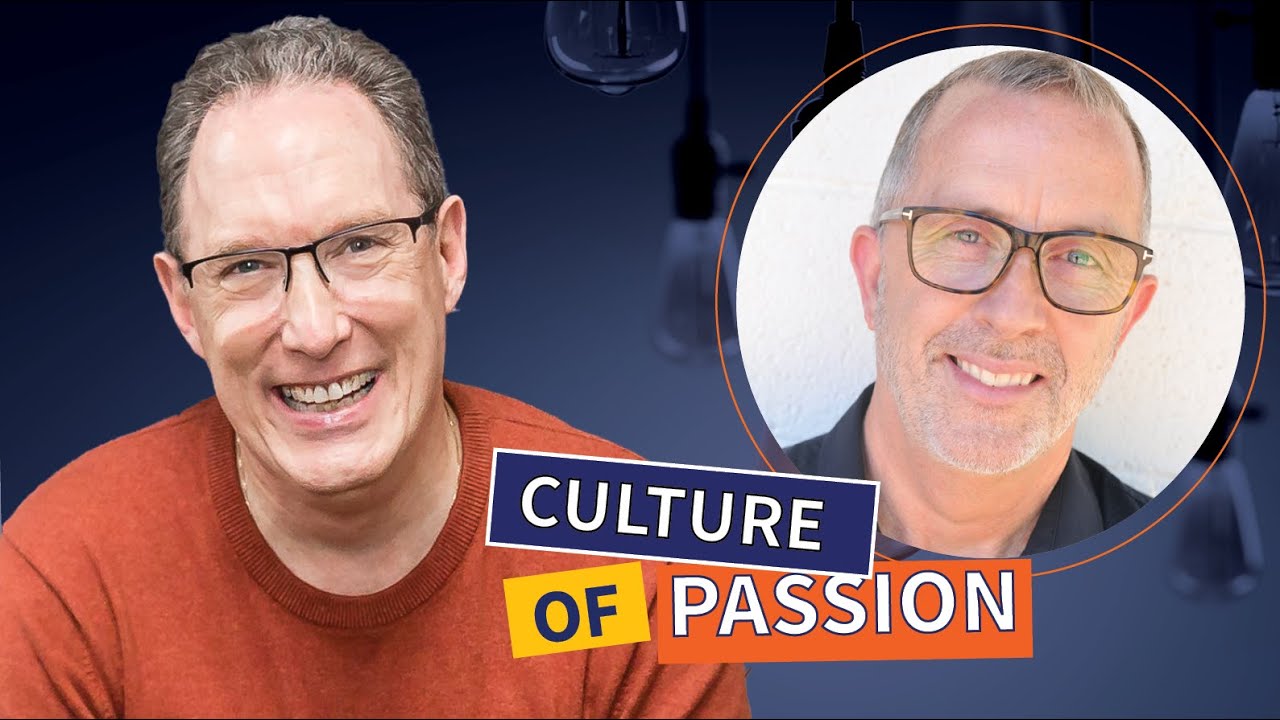
This content was created by Marc Haine. This content was uploaded by Marc Haine. This is a YouTube episode titled "How to Reignite a New Passion for Your Small Business" (published 2023-11-09). It is an interview-style episode of Marc Haine Live in which host Marc Haine (Customer & Employee Experience Strategist) speaks with guest Tom Freeman (Managing Partner, Pacific Advisors Nevada; dubbed the “Culture Reigniter”) about restoring passion and purpose in small businesses. The conversation covers how lack of passion shows up in culture and operations, COVID’s impact, generational shifts, practical strategies to re-engage teams (check ego, listen, take a “mulligan,” focus on retention and purpose), personal anecdotes (Tom’s recovery and leadership lessons), and contact information for the guest. The transcript includes ad/read segments and Q&A-style back-and-forth in English.
Chapters
When you first started your business, you poured passion into every plan and were proud of every product. You knew that you were doing something that would serve a higher purpose. It would serve your favorite people and their needs. But years have passed. You've got it down to a routine. Maybe it's smooth sailing. Maybe it's not. Maybe the daily grind is taking its toll. And that's what we're talking about next on Marc Haine Live. Welcome to this episode! I'm so glad that you're here with me today. This is where small business owners and entrepreneurs develop new skills to help them create the jaw-dropping, show-stopping experience that their customers and their employees deserve. I am your host, Customer and Employee Experience Strategist Marc Haine. And again, thank you so much for joining me today. I am so thrilled that you're investing some of your time with today's topic. My guest for this episode is, well, I'm going to call him the Culture Reigniter, Tom Freeman.
Hi!
And today, we're going to help you relight the flame of passion that you had for your business. Because it's not about falling in love with your business. It's about staying in love through the thick and thin, through the crises, through the good days, through the balance sheets and the brand strategies. And well, I think you get the idea. My one ask is that if you do know somebody who could use this information, please go ahead and share a link to this episode. You can share a link. You could share it on your favorite social media platform. You could hashtag it #ExperienceLeadership and be part of today's conversation. You know, when I was working in economic development, I had the pleasure of visiting numerous businesses and having great conversations with owners and managers and their teams. Now, I know that business is not easy. I can't tell you how many times I've walked into a business and I sensed That the love was gone. Meeting with the owners started taking on kind of like a negative air of feedback. Business is slow. The economy is bad. It's so hard to find employees. Yada, yada, yada. And as much as those things might be true, the businesses themselves Felt like how the owners and the managers felt. But an interesting thing happened. When I asked them how they got started, all of a sudden, I could see that the gleam would come back into their eyes. The passion that they once felt came back into focus. All the dreams, the aspirations, and of course, the glorious opportunities that they felt back then returned, if only for a minute. So that brings us to our Question of the Day. So, have you ever felt yourself on autopilot running your business more out of habit than passion? What was that moment that made you realize it and how did you feel about it? As I mentioned, I'd love it if you would share your experiences in the comments. You can do that in comments here or share it on social media on your favorite social media platform. Hashtag it #ExperienceLeadership. I'd love for you to be part of this conversation. With us today, as I mentioned, is Tom Freeman, the Managing Partner for Pacific Advisors Nevada, where he is a beacon for growth, strategy, and leadership. Tom's expertise isn't just in navigating the complex waters of financial services. It's in elevating the potential within each advisor and the clients that he works with. His philosophy? To live a good life for the rest of your life. A mission he embodies and he imparts. His leadership journey, which took a significant turn in 2023 as he became the Managing Partner for Pacific Advisors Nevada, has been about fostering excellence and synergy in his team. His commitment to giving forward is exemplified by his dedication to numerous charities supporting things like children's health research, food security, and animal welfare. Tom, it is brilliant to have you on the show. Welcome, welcome, welcome!
Well, thank you, Marc. I'm very happy to be here and looking forward to the hour together.
Yeah. Hey, before we get too deep into today's topic, could you tell us a little bit about how you serve your clients?
How do I serve my clients?
Wow!
You would think that that would be an easy one. But you're causing me or you're challenging me to think right away. The best way that I serve my clients is to be genuine. I learned a long time ago that integrity goes very far in my line of work as a financial planner, as a business coach, as a partner managing a financial services industry. My integrity is everything. And so how do I serve my community? My community being my team, my community being my clients, my community being the prospects that I have yet to meet, will be with being genuine, And being a— I hate to say it this way, but being a man of my word.
And being that trusted advisor. That's how you do it, right? So, you and I connected a few weeks ago and we were talking back and forth. And we were questioning whether or not you'd be a good guest for today's show. But then, in our conversations, you mentioned this thing about passion and reigniting what we've once In your experience, how does— let's start off with how does a lack of passion among business leaders reflect in their overall operation and the overall atmosphere of their companies? Okay.
So, for all you small business owners that may be listening to me right now, please don't take offense to this. There comes a time in any relationship and that relationship could be with your business where it becomes stale. And what I have found in my close to 20 years in this business is that when working with the individual and I sit down and I have that conversation with them, talk to me about how the numbers are going, what the business is forecasting, what the last few years have been like, those types of things, I see a flat line of sorts. I don't want to see a heartbeat and I definitely don't want to see an irregular heartbeat. But I want to see a trend. And it's really easy to diagnose when I'm meeting with a business owner where the business itself has flatlined. And the very first question I'm going to ask that individual is, tell me about your vision when you got into this business. And then, the follow-up Tell me what has changed since that day.
Very interesting. Likewise, being in economic development, having had those conversations, I see that there's a lot of misconceptions. What misconceptions do you think business owners have about the role of passion and belief, I guess, in their business leadership and their corporate culture?
Okay, that was a lot there. So, we talked about corporate culture. We talked about misconceptions. So, I live in Las Vegas, Nevada. And Las Vegas, Nevada, when I say Las Vegas to you, Marc, what do you think of?
Vegas.
Vegas. Casinos, lights, shows, everything.
Busy.
Yep.
Busy. Well, Vegas, Las Vegas, if you've never been to Las Vegas, Las Vegas itself is very small. So, there's about 2.6 million people in Clark County. Well, Vegas itself, there's only about 700,000 people. And then, when you look at it, Vegas is really the Strip. Everyone thinks of Vegas. Hollywood has portrayed it in such a way. Well, when you think about these grandiose hotels and you think these big convention centers and these shows and all these individuals that come and perform here, What you don't realize is that Las Vegas is built on the backs of small business owners. The small business owner has one job in that mega casino, in that hotel. They go in and they do that. And they do it so well. They do it as well as anybody in the country. But all these small business owners are here. And what are the trends that we see? Well, right now, we have F1 coming, Formula 1 racing coming.
Hmm.
So, what do people that live in Las Vegas, what are they talking about right now? Well, they're complaining about the traffic, the congestion, the construction, everything that has gone on for the last year with regards to this one race where hundreds of thousands of people are going to descend upon this very small town for one weekend and stimulate an economy that is a pretty darn good economy in and of itself. And so, what are the trends? Well, the trends are number one, people like to complain. Okay, that's an absolute trend, and people wonder how they're going to get through it. And the number one that I'm hearing right now is, "I can't find good people," and I'm wondering where did all the good people go? Ten thousand people. Redfin said ten thousand people in August left Los Angeles. and moved to Las Vegas. Now, I'm one of those people. I moved 3 years ago from California.
Mm-hmm.
During COVID A lot of us did, and a lot of us are still leaving California. But when someone asks me, where did all the good people go? My follow-up to them is, they're right here. Did you change? And that has a tendency to throw someone back in their seat a little bit because what do you mean, Marc? Why would I? I didn't change. COVID didn't change anything. I didn't change. Well, tell me, how did you and your vision change?
Yeah. And it's interesting. I've had those conversations a lot of times. You know, been in small communities and it's like, oh, we're in a small community. We have no good employees. And it's like, but everybody that you have around you have magic within them. What have you done to stimulate that and pull that out of them? And yes, are there some negative Nellies out there? Negative workers? And yes, but it's such a small percentage of the workforce because I truly believe that nobody gets up in the morning and say, ah, today I'm just gonna slack off and do absolutely the bare minimum. I don't see that happening too often because it makes for a very long day.
That's really well said. Someone asked me the other day, or someone said— I was having a conversation with someone. They're like, oh, I'm dreading going back to the office on Monday. And I said, that's not something I've said in a long time. In fact, I'm not sure I've heard it in a long time. First of all, who goes to an office anymore? Right. Okay. COVID, for all the terrible things that came with COVID COVID changed how we all do business. And it caused us to refocus on the things that were important. And what is the most important? I was speaking about this at an association event in California a couple of weeks ago. Culture. Culture. So, Marc, if you were to ask me, where is culture derived from in a business sense? I would say it's derived from sitting down and sharing your vision.
Hmm.
And when you share that vision for what it is that you want, what it is that you hope to be able to build, and who you hope to be able to do it with, you're going to have people that are going to gravitate towards you. It's almost as if we all have this magnet that's inside of us. And we know what happens when the magnets are out of alignment. They have a tendency to push one another away. But if my magnet is positioned correctly, it's going to pull you to me. And it's not just now my vision. It's now our vision.
Yes.
And if it's our vision and 1 becomes 2 and 2 becomes 4 and etc., etc., all of a sudden now, that breeds culture. So, who dreads going to work if we're all part of a unified vision Towards growing a great culture. Right.
Well, and to your point, COVID, if COVID did anything, it highlighted the lack of trust we had in our corporate cultures. Because of course, the very first thing that happened during COVID was people were scrambling to buy software to track computer usage to make absolutely sure that my employee is going to be on her computer from 9 to 5 and doing all this stuff. And so, right away, the whole premise of trust was shaken. And I think that in itself became kind of a magnifying glass on the culture that people were working within. But as we go through, kind of now that we're out on the other side of it, this idea— I attended a networking event yesterday with a bunch of about 350 business owners. And it was still funny that still the the negativity of short-staffed, not qualified staff, and so on is still percolating. And so, this idea of having negative leaders within their industries, I mean, because of what you do as a financial advisor, you probably have seen kind of some long-term repercussions when leaders' passion have kind of mellowed out and kind of stagnated. Can you tell me a little bit about what some of those consequences have been?
It's a morale killer. So, we saw it in early COVID when everyone was sheltering in place, especially in the States. Everyone had to be sheltered in place. And I was living in California at the time and they told me I couldn't go outside in my own community. Well, I was in a community inside California, so I was already in— I was in Southern California, so I was already in a little bubble. And then they told me I couldn't even leave my bubble. It became problematic. And then all of a sudden, 6 months in, we're realizing, hey, we can all work from home, but we may not like the people that are in our home. And there may be too much— there may be too much that's going on. So, all of a sudden, you started seeing all these people leaving these major metropolitan areas, California, that And people were going to the middle of the country and getting land and living in bigger homes. And they were doing it because they needed space. And they're like, hey, I love my spouse and I love my kids, but maybe not 24/7. So, give me a little bit more space and everything will work out. And communities and businesses said, hey, we're going to be okay with this.
Yeah.
You can work in California remotely from Idaho. And then all of a sudden something changed and someone said, ah, wait, y'all need to come back. And that's the great thing about Pacific Advisors, the firm that I've been associated with for the last 8 years, is they didn't say it. There's 6 general agents, there's 6 managing partners of this firm, and every one of them moved. during COVID out of a major metropolitan area. That's cool. So, if the leaders themselves are moving out, why wouldn't— why would we ever say, hey, all you advisors, y'all need to go back to the way you're doing things? So, that would be a culture killer.
Yeah.
Or morale.
Yeah. So, at the very beginning, I was talking about how I get a sense that a lot of business owners start blaming kind of everything but themselves. You know, that they're trying to address all the symptoms. That is the daily grind of putting out fires and trying to figure out why is this always happening. How do they drill down to find out that the cause to their angst is complacency and a lack of passion on their part? A lack of kind of that entrepreneur spirit of Fire. I don't know. Yeah.
So, Marc, I've been studying people for my entire life, and generations have always fascinated me. You've got the boomers. I'm a Gen X, and you've got all the generations that are before me and after me. And one of the things that I found to be Absolutely amazing is the couple generations underneath me. I have 2 of them. So, I have a 30-year-old son and a 26-year-old son. And I'm going to use my 26-year-old son as an example here. He got into this business that I'm in and he said, I really want to learn, but I don't think anybody's going to take me seriously. I'm 24 years of age. What can I tell someone and why would they listen to me? And I said, listen, Ry, here's the deal, bud. All we want to do is listen to you. We want that shot of adrenaline. We want the new idea. And so, when you take these unbelievably powerful generations that are coming up behind us and they're saying, we want to do away with the 5-hour or the 5-day workweek. We want to do away with the 8-hour day. We want to do away with work one career your entire life. We want to do things differently. This is about living our lives. You throw COVID in on top of that and all of a sudden, this was a huge shock to the system, Marc. And now, we've got this unbelievable opportunity. And I looked at COVID as an opportunity to reframe How we were doing things. And when we have a chance to reframe how we were doing things, we get a chance to have a do-over. And for any golfers out there listening, you get a mulligan, baby. You get a mulligan. You get a do-over. And I know that a real golfer is not supposed to take a do-over. But you're not on the PGA Tour or the LIV Tour or whatever tour. You're not on the tour. Take the do-over because— If you take that do-over and you hit that second shot again and you just nail it and it lands 6 inches from the cup, the momentum from that shot is going to take you through the rest of your round, probably the rest of the day and maybe into the week. And you'll forget, hey, someone just gave me a do-over and I took that opportunity. So, I say to everybody listening, take the mulligan. Take the do-over. COVID gave us this do-over. So, take it.
It's so interesting because I have prior to COVID, I'd come across business owners who were challenged with what was going on. And they're like, God, if only I could start over. Like, if I could just reset and start from scratch. And I do things so much differently. And that's exactly what COVID did for us. People ended up laying off all their staff, closing their shops, or putting them on pause, finding out different ways to monetize, all that sort of stuff. But then, as soon as restrictions got lifted, it was like, okay, let's just get back to what we were doing before. And it's like, why would you? You had an opportunity.
Definition of insanity. Doing the same thing over expecting a different result. And I think it's great. Marc, you bring up— so one of the things I always tell individuals, don't start over. Just take a step out and sit down with a couple trusted advisors. They could be friends. They could be people inside your institution. They can be anywhere. Just take a step out and have a conversation. It could be over a long weekend. But remove yourself from the situation and just sit there and say, if we could do it all over again, what would we have done differently? Chances are you really don't do a whole lot differently. differently. But just going through that simple exercise, you re-engage with that fire that was there in the beginning.
Because it creates that purpose, doesn't it? And when you sit down with that kind of mindset of let's take a look and let's be honest. Let's drop the ego crap that we're constantly doing of we're looking at ego metrics all the time to see, let's see how many people gave us a great review. And then, we take a pisser when we get a bad review. And then, we yell and scream. And it's like, don't people understand how hard this business is? And it's like, really? We have an opportunity to get the feedback and respond to it in a way that we can reevaluate our business.
Yeah, right, right. I was having a conversation about ego this morning. And I said, it's always going to be there. It's just a question of whether you make it a strength or a liability.
Right, right. So, I'd like to get into some strategies that we can use to reignite our passion and our businesses. And we'll get to that right after this.
When the spotlight shines on your business, are customers applauding or yawning? In other words, how is your business performing? Make your business a star with a new book, Lights! Camera! Action!, Business Operational Excellence Through the Lens of Live Theater by Marc Haine. Marc uses his business and acting experience to help you see your business like a live show so you can create a performance your customers will never forget. Buy Lights! Camera! Action! today at your favorite online retailer or directly at marchaine.com.
Welcome back! I am speaking with Tom Freeman, who I have dubbed the Culture Reigniter. And Tom, I hope you're gonna steal that.
I'm definitely going to. I love it. I love it. Thank you.
Tom, so what are some What immediate actions do you think that our audience can take to rekindle their passion for their business today?
Well, before we went to break, we were talking about the ego. And I think one of the first things that we have to do is we have to check our ego at the door. In fact, I'd go ahead and give the ego a vacation for a little bit of time. And what I mean by that is I would sit down with those people in your life, those individuals in your life that you truly do Value. And when I say value, I mean you value their input. They're good listeners. They're thoughtful in their response. And they're not going to tell you what you want to hear. They're going to tell you what you need to hear. So, by checking that ego at the door allows you to do a little bit of self-reflection. You know, everything that I've learned in life, I've learned the hard way. Okay? I'm a typical individual who thinks that they know best at most times. It took me a while to be able to check my ego at the door. It took me a long time. But once I did, I was able to make unbelievable change for myself. And once I was able to make that change for myself, I was able to help make that change for others. So, I've been a part of the group, Marc, where I've sat there and I've told someone what they needed to know. But I've also been the recipient where someone told me what I needed to know. But that's the first thing I would do is check the ego.
I'd love for you to recount if you could When you said before you had your ego checked, how was your behavior in the scheme of how you viewed the world when you didn't have your ego checked? When you thought that this is— you have your experiences. You're the master of your universe. What were some of the handicaps that you were aware of?
Well, what I was aware of and what I was told were not the same thing. So, I was told, Tom, you are the individual that walks into a meeting room, drops a grenade, and walks out and doesn't look back to see how much damage was done. It's your way or the highway. Tom, you're just laser-focused on you and you're just laser-focused on overall production. And you really don't care about the carnage That happens as a result of your actions. So that was the number one thing that I heard. And Mark, I gotta tell you, when people told me that, my response was, "Okay, I'm I'm I'm here to produce." Well, what I didn't know, Mark, was that I was miserable inside, and. It took a long time for me to figure out why I was miserable. So, that's the short answer.
Well, so I'm imagining that in that kind of a culture that you had spin-off was that people were unhappy. People didn't feel like they were heard. People didn't feel like you hired them for their ideas. And then, the flip side to that is you yourself felt some level of negativity Probably not being able to focus in on it and going, I'm just doing the best I can. I don't know what else to do. Yeah.
And eventually, it's like the juggler who gets too many objects in the air. Eventually, once you take your eye off it, they all fall. And that's what happened. People would tell me. I would tell myself. I would tell others. And all these circular conversations that were going on were going on around me. And again, I didn't care. I didn't care about culture. I didn't care about integrity. I just cared about doing what it was that I wanted to do when I wanted to do it. So, what did that look like? I was a very successful from a production perspective advisor. I golfed 150 times a year. I got to do whatever it is I wanted to do when I wanted to do it. Unfortunately, Didn't have any relationships that trusted me, loved me, wanted to be a part of my life. And it was not until I lost the second of my parents that the bottom fell out. And when my bottom fell out, I crashed. And when I crashed, there was very few people there with me.
Hmm.
And I'm not sharing this for a sob story, quite the opposite. But, there was people that had been on the periphery, but they had to take a necessary step back and to protect themselves. And, some of them are still in my life today, and thank you for hanging on. But, I'm an alcoholic. And so, I had to make a decision, and that decision was I need to change how I'm living my life. What I didn't know, Marc, was until I started to work on the things that were truly driving me, did I realize that that was the dangerous part of me.
Hmm.
And that's what needed to be fixed. And so, like the business owner who gets off track and starts being driven by reasons outside of themselves, or maybe internally that they're completely unaware of, which is why I went back, I said, Step out, step out, take a look, step outside your body and take a look and see what's wrong. Not until I did that, and many thousands of dollars and hundreds of hours of therapy, did I realize that life is better when I'm focused. Life is better when I'm healthy. Life is better when I'm taking care of myself. And life is better when I'm operating with an abundance mentality.
Yeah.
That has little to do with me and everything to do with those that are around me.
And what's interesting about that abundance mentality, it's not about the profit sheets, the P&Ls, and the balance sheets, and everything else. It becomes a greater purpose, I think overall, to the business and to your purpose within that business.
Absolutely, yeah.
You know, when you and I talked weeks ago and We were talking about this idea that the entrepreneur spirit is kind of one step in the journey. Like entrepreneurs tend to be very focused, growth-oriented, innovative. They're risky. They take risks. And we know that as they grow, all of a sudden, things will change. And it could be the pressures of, oh, now we're financed. Now, we're leveraged to the hilt. We have to be able to make our payments. We need the revenue to keep generating our growth and so on. But how can business owners ensure that When they do reawaken that passion, that it remains a driving force in their culture even as the company will grow. Because I think that's something that becomes part of the challenge, isn't it?
It truly is. And that word entrepreneur has been thrown around so much in the last 10 years. And I don't know if it's good or bad. But There's either way too many entrepreneurs or there's not enough. And let me explain that. I was having a conversation. I was in Atlanta last week and I was sitting with one of my partners and we were looking back on the last 8 years that we've been working together. And he said to me, we were at the first night and there was 20 of us sitting around and he looks at me and he says, God. It wasn't all that long ago that I'd be working the room. And I said, yeah, now look at us. We're sitting here on a couch, just 2 fat old guys, and we're just sitting on a couch and we're just watching what's going on around us and we're being a part of the conversation. And we laughed and we said, isn't it nice? Well, I was sitting next to the definition of an entrepreneur, someone who's always looking for the next greatest. So, the entrepreneur to me, if I could redefine it, the entrepreneur would be the individual that just doesn't want to settle for the status quo and wants to continue to challenge themselves. That's how I would define the entrepreneur. Now, once you find something that you're connected with, you can tinker away. But I think this is where a lot of us get lost, this entrepreneurial spirit is we work so hard to find the one thing. And even though we found it, we don't realize we found it. So, we keep moving on to something else. It's like, wait, wait, wait, stop. You actually found it. You're actually really good at this. And that's where I think the conversation from last week was so powerful is because Here we are with 2 guys in our middle 50s and we're sitting there. We're saying, yeah, this is actually pretty cool.
Yeah, yeah. So, strategies for companies. The ability to keep their culture vibrant and passionate through all those kinds of changes and expansions. I mean, it took you kind of having this falling out of your cultures and hitting kind of that rock bottom for you to be able to see it. But is there a way for organizations to start kind of figuring out what they need to do to fan that flame?
Yeah. So, there's one thing inside of all of us. Inside of all of us. So, I think that business owners have an uphill climb. I can only speak for the States. I can't speak for Canada. But from preschool on up, we're trained to follow. Kindergarten all the way through high school, grade school, high school, on through college. We are taught to follow. And then, we're told to go get a job. And A business owner is the individual that steps out and says, I don't want to be a follower. I want to go out there and I want to create my own path. How scary is that to create your own path when for your prior 20 years of existence, 30 years, 40 years of existence, you've been a follower? Okay? So, now you have the courage to go out and step out into the marketplace and say, I'm no longer a follower. I want people to follow me. So, what's the first thing we do? We start telling people what we're doing. So, from a solution or a strategy perspective, share with a few people and then listen. Become the best listener. Get a PhD in listening. Because talking at people doesn't create a bunch of followers. I mean, look at our political system in the States right now. It's ridiculous. Talking at people doesn't do it. Talking with people, that's listening. So, have the conversation. Sit down with the individual that's working in the mailroom or the individual that's cutting the payroll checks.
Listen.
Hear what it is that they have to say. That would be the number one strategy is share early and listen forever.
Love it, love it. Tom, this is absolutely fascinating. Could you let everybody know how they can get in contact with you if they want to look you up?
Yeah, the easiest way to do it if someone wanted to reach out, you can find me on LinkedIn. Thomas Freeman with Pacific Advisors. Also, thomas_freeman@pacificadvisors.com. You can also— do I— I don't think I want to give out my phone number, do I, Marc?
You don't need to.
But you can find me on Instagram. Instagram, Take the Mulligan. Hashtag Take the Mulligan, all one word. I've been having that for quite some— I started that last year. Having some fun with that. Watching to see what the power of social media. And Facebook, you can find me. If you're looking at me today, you'll see me. There's only a very odd-looking individual. So, you'll be able to see me on Facebook.
Great! So, for the people who are making changes, obviously, they want to be able to meter. Is this making a difference? Are there any indicators that suggest that somebody kind of renewing that passion in their business, if it's taking hold and benefiting the business's culture and the overall performance, are there any indicators they should be aware of?
Any indication? So let me— I don't understand the question. Are there indications that they're going down the wrong path? Is that what you're asking?
No, that they're going down the right path. So what are some of the indicators that once they start making a change, And they start saying to themselves, I want to bring this passion back into it. I want to exude it. I want my employees to start living it and I want our customers to feel it. What are the indicators that it's working?
Okay, that's what I thought you had said. Okay, so perfect. So, a few weeks ago, you had my wife on, Cheryl Green. And she's a professional speaker. But her real claim to fame is her ability to write. When Cheryl and I first started dating, I actually hired Cheryl to ghostwrite my book. Unfortunately, or fortunately, depending upon how you look at it, 2 days before our first appointment, we went to a show together. And from that, we ended up falling in love. And so, we never really got to write the book. But her ability to write is something that will make such a tremendous impact. And what I told her was, I hired you because of your writing style. You may not be the best writer, but I hired you because of your writing style. So, do you. Throughout the course of our relationship, what I realized with my background from a consultative perspective is I started to look at her business and And all of a sudden, she just launched this new book. And this new book, You Had Me at No, just launched at the end of August, early September. And it was written so that it could impact people. And what has happened from there is people have stopped 25 pages in and shot her a text. 50 pages in, shot her an email. 100 pages in, they said, I just bought this book and I gave it to this person. The impact that it's making is exactly what she had hoped for and what I knew she was capable of. Now, I share this story with you because everything is about feedback and the confidence that Cheryl had. She had authored many books before, but as I kept telling her, this is going to be the one that's going to put you on the map. And let's send this book off, and then let's send another one to the same person saying, once you've read this, give this to someone else, or halfway through, give it to someone else. And what we realized was that the positive feedback all along the way that she was receiving from me She started receiving it from everyone. And it's not that people weren't giving her feedback before, Marc. She just now was okay with receiving it. The imposter syndrome was gone. And that's the— it's just I see it destroy so many business owners as they get to this spot and they sign the lease and they hire their first employee and they get their first contract. And then, they're like, wait a second. What am I supposed to do now? I'm not qualified to do this. It's that imposter syndrome. And it's just let it go. Let it go. You got into this for a reason. So, let's just do it.
Yeah, yeah. I can absolutely see that. And so, the indicators to your point is now Cheryl has seen that her purpose in the world is having an impact. And as you were saying that, I was thinking, well, isn't that what we all want to do. Like, we all want to go to work every single day and know that what we do means something. That it's not just putting grommets on a widget and doing this repetitive. We want what we do to make sense and to matter to the world.
I think that's all we want, right?
Yeah, yeah.
Just make a difference. Just leave an imprint. And it's not graffiti on the wall.
It's like, no, make Leave your mark. I like to say, make your mark because that's just on brand. Hey, when we come back, I'd like to talk about some cautionaries that we should be aware of when we're trying to make the change. And we'll get to that right after this.
No more checking your watch or calling for time. The Pro Speaker Presentation Speech Timer app keeps you on track with easy-to-see timers, even changing color for visual prompts during your speech. And you can set audio cues to practice or set it to vibrate so you don't even have to look. Be the pro you know you are. Download the app at speakerpresentationtimer.com.
Welcome back! We are having a great discussion. I hope that you're getting a lot As you can tell, Tom and I are driven to support business operators just like you. So, feel free to reach out to us if you'd like to discuss what your situation is all about, or would like to explore how maybe we can work together. Our contact information is in the show notes. Tom, so my biggest fear, and I think it's just because I've been around so many different businesses, people learn something brand spanking new. They become aware of something and all of a sudden, it becomes the procedure or the policy of the month. And they put a big band-aid on it and they think this is going to change the world. But it really doesn't. Are there any cautionaries as business owners tuning in are thinking, yep, you know what? I need to stir my pot and get passion back on the plate here. Anything they should be aware of as they start crossing this threshold?
Absolutely! There's one. Know your limits. Know what you're capable of. I used to play a lot of golf. My body doesn't allow that anymore. But there was times when I could go 300 yards off the tee. And then, I'd be 250 yards out and I'd say, I'm going to take my 4-iron and hit it 250 yards. No one hits their 4-iron 250 yards. But here I was thinking, I'm going to go ahead and I'm going to do that. Well, what I realized was that if I just take out my 4-iron and I hit it the 200 yards it's supposed to go, now I'm just 50 yards away. I can just go ahead and I can attack the pin. And it became— golf became— I went from being a 20 handicap swinging out of my you-know-what down to a 6. And I made the drop because I realized I'm limited.
Physically.
So, why don't I stay inside those limitations? Now, physical limitations and the other limitations that you have, some of us were not able to do certain things physically, but mentally, what am I capable of doing? Well, I had this conversation with a group of individuals this morning that support me. in growing this agency. And my opening to the meeting was, I know we're here and we're going to be talking about all the individuals that we're going to be hiring. And I want to let y'all know I'm not hiring anyone right now. And I'm not going to be until the rest of the year because we just opened this agency on September 1st. And we already had people that we brought on board. And I want to give them my all. I don't want to take anything away from them because it only matters that they're here a year from now. And Marc, in the States, in my industry, there's a 10% retention rate.
Wow!
10%! That's horrific. That's horrific. So, that means that if you get to 15%, you get to throw up your hands and be like, yes, I'm better than the rest. That's terrible. You're dealing with people's livelihoods. And so, what I said to my partners is I said, let's just not be like everyone else. And let's make sure 100% of the people that we started with on September 1st are here September 1st next year. And how do we do that? Let's get everyone together and let's just run together. And as we— we will know when we can start adding to it in the future.
Hmm.
So, that's the limitation that I'm talking about. I'm only so good. It's a scratch agency. So, it's brand new. So, I'm the expert. I'm the chief bottle washer. I'm the— you name it. So, I'm doing everything. And my job is to make sure I develop other people so that they can help, so that they can help, so they can help. So, Slow and steady is going to win this race so that we don't become part of the industry norm, which is a 10% retention rate. Right, right.
And again, you brought in so many different components just in that one thing. This idea of humility in what you're doing. The being able to look out for others. So, that generosity of spirit to make sure that you're taking care of the people that you have. This will, want, and desire to help people grow. I mean, this is phenomenal. Like, it's a phenomenal mindset. And it's unfortunate that in businesses because of the pressures, we get waylaid in what really we're passionate about when we first started. So, congrats on that. This has been such an amazing conversation, Tom. Do you have any last thoughts about what we've been talking about today?
Yeah, give yourself a break, everyone. If you're thinking about starting a business or you've had a business and the business is flatlining or you just don't know where to take it, give yourself a break.
Mm-hmm.
Just give yourself a break. Let's not be so hard on ourselves. If we mentioned this earlier on, COVID gave us the reset. The generations that are coming up behind us, they have this mentality already. Let's just not take it too serious. Just because we're doing something doesn't mean we always have to do it that way. So, allow yourself to go ahead and reflect on what it is that you have done, what it is that you're doing, and what it is that you're going to do. In fact, I live by this mantra of no regrets on yesterday.
Nice.
I'm excited to— just excited all hell for today, and I'm prepared for many more tomorrows. And so, if you can just go through life with that, I'm going to tell you, it's going to release a whole lot of burden. So, put your head on your pillow at night with no regrets, meaning if you had to say sorry to someone, hopefully you did. But don't carry any of that stuff because tomorrow is the most exciting day.
Love it. Could you remind everybody one more time how they can get a hold of you?
TakeTheMulligan, Tom at TakeTheMulligan. Sorry. Take the Mulligan is Instagram. Thomas Freeman at Pacific Advisors is LinkedIn, and then thomas_freeman@pacificadvisors.com. If anybody just wants to drop a line, I'll be more than happy to have a conversation with anyone. Free consultation, just to sit and chat.
And again, you know, you mentioned it a couple of times, the trusted advisor, this idea We have episodes that we've talked about whether or not you need a coach. And then, how do you go about getting a coach if you should need one? Because sometimes, you can't just go to your spouse and say, I need your feedback. Sometimes, that's the worst thing you can do. So, being able to find that trusted advisor, give Tom a quick call and see what he can do for you. Tom, I want to thank you so much for sharing your passion and expertise with us today. This has really been a really brilliant conversation. Thank you so much for doing this.
Thank you for having me, Marc.
Why don't you let me know if this was of value to you? As always, my offer stands. If you would like 30 minutes of my time to brainstorm your business with you and your team, feel free to book time on my online calendar. The link is down below in the show notes. It's the one marked meetwith.marchaine.com. It would be my absolute honor For me to be of service to you. And while you're at it, was this episode valuable to you? Why don't you go ahead, leave a review or comment about this episode? I'd love to get your feedback. Was this of value to you? And of course, if you haven't done so yet, please make sure that you subscribe to this podcast. And on YouTube, that means ring the bell. That'll give you notifications for the next episode ahead of time. Thank you for joining me today. My name is Marc Haine. I hope you stay safe, stay healthy, and I hope you dare to be the exception.









