How to Stop Chasing Change and Start Leading It
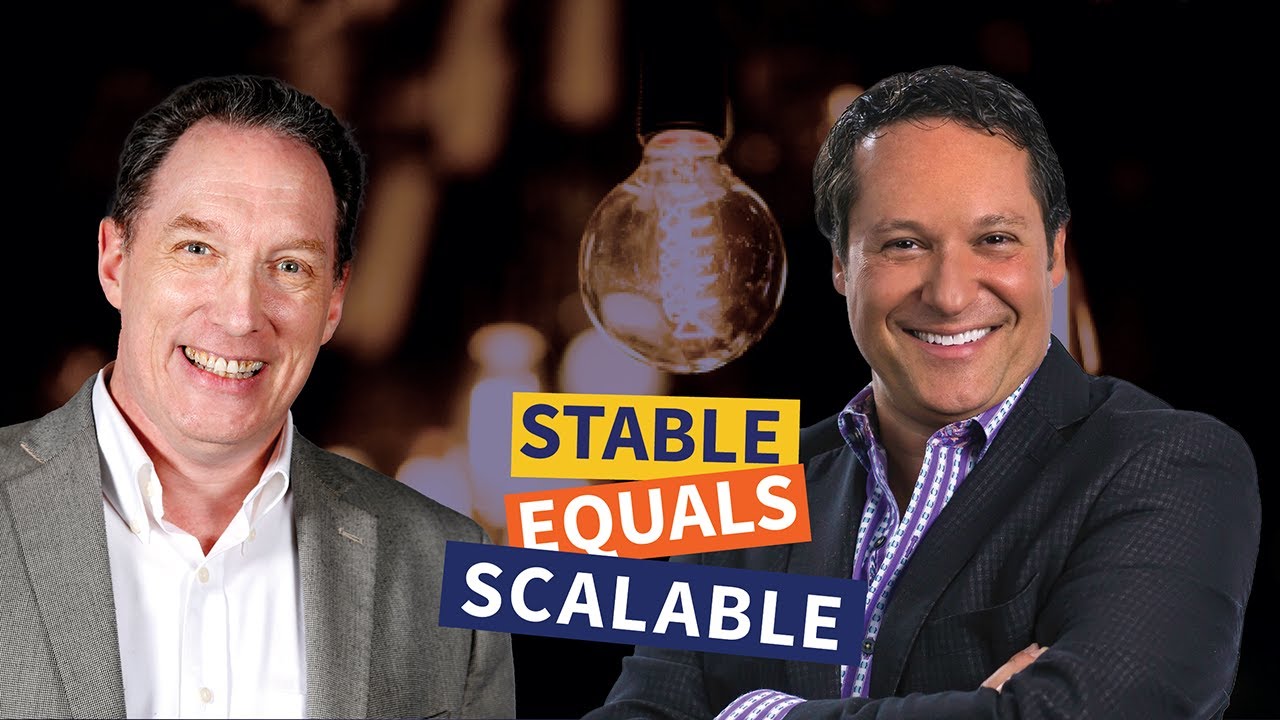
Steven Shapiro argues that constant pivoting without a stable foundation burns out organizations. He introduces the Innovation Targeting Matrix to classify activities as Support, Core, or Differentiating, and the 5 Ds of Differentiation. Radio Flyer shifted from selling wagons to selling smiles and memories by identifying what actually sets them apart.
Chapters
Every day, businesses are throwing time, money, and people at problems that they don't understand, all in the name of being agile. But without a stable foundation, every pivot you make is just a shot in the dark. And that shot could be costing you everything. And that's what we're talking about today on Marc Haine Live. Welcome to this episode of Marc Haine Live. Of course, this is where small business owners and entrepreneurs pick up core skill sets to create the show-stopping, jaw-dropping experience that your customers and your employees deserve. I am your host, Customer and Employee Experience Strategist Marc Haine. And today, we are putting a spotlight on how to stop reacting to every disruption and start building the kind of stability that turns uncertainty Into opportunity. So, stay with us. And if you haven't done so yet, please make sure that you subscribe to this podcast. That way, you'll get notification when I bring you fresh new content each and every week like the content that we're going to be talking about today. Because you know what? What do you do when the world changes faster than your business plan? Well, if you're like most leaders, you pivot. And Pivot. And then, you pivot some more. And eventually, that spinning starts to feel like you're stuck on a merry-go-round of confusion, burnout, and declining margin. And that brings me to, well, maybe our Question of the Day. So, is your team chasing change so fast that they've actually lost sight of what actually drives value, what they're actually there to do. If that hits a little bit too close to home, this episode is going to be right up your alley. This is what you need. So, feel free to drop your thoughts, questions, and epiphanies in the comments below. I'd love for you to be part of this conversation. And if you're so inclined, go ahead and share this episode on your favorite social media platform. Hashtag it #ExperienceLeadership and put your comments down. Be part of this conversation. of this conversation because I'd love to keep this conversation going. Because my guest for this episode is the author of Pivotal: Creating Stability in an Uncertain World, the innovation instigator himself, Steven Shapiro. Steven began his journey by founding and leading a 20,000-person innovation practice at Accenture. Since then, he's taken the stage in over 50 countries, been featured on major networks like CNBC and TLC, and created tools like Personality Poker used by over a quarter of a million people to build high-performing teams. He's a sought-after Hall of Fame speaker, a Senior Research Fellow at the Conference Board, and a magician making the impossible possible whether it's on stage or in strategy sessions. Steven, welcome to the show! It's so great to have you.
Hey Marc! That was a fantastic introduction. I am excited to see where we go with this. Let's make a little magic happen over the next 45 minutes.
Let's do this! Excellent! So first off, can we talk a little bit about who your clients are and how you serve them?
So, my clients come from all different industries and sizes and functions. What I'm always looking for is organizations that are willing to change. Now, I want to be clear when I say change, as we're probably going to talk about today. It doesn't mean change for the sake of change. But actually, They're willing to really make some shifts in the organization that are powerful foundations for them moving forward. So, I work with pretty much any organization that needs to stay competitive. And the main thing that I'm focused on right now is creating predictable growth in an unpredictable world. And I think that's probably what interests me most about my clients.
And let's face it. This world is so friggin unpredictable right now.
That is true.
So, I have to ask you, Steven. I don't know if it's just my perception. But I know that COVID did some real damage. But even now, it seems like business operators are just trying to become super agile. Like they're so afraid of being caught off guard again that now, it's like any little trend that happens, any market trend is going to spell absolute disaster. So, we have to be ready. What's going on, do you think?
The concept of agility and pivoting has been around for a long time now. And so, it's not new. But it just really got amplified during the pandemic. And I think what happened was there were a number of different factors. It wasn't just the fact that we couldn't meet in person. But at the same time, there were supply chain challenges. And then inflation shifted left, right, and center, which changed interest rates. And so, there were all these other types of compounding issues that were piled on top of it. And now you throw AI into the mix. And what ends up happening is companies don't have a sense of clarity. And I think that clarity is the most important thing an organization could have. And so, what ended up happening is companies started pivoting around in circles, getting dizzy, spinning, chasing every seeming opportunity when they were just distractions. And we need to really understand. And I think the key thing that most organizations fail to focus on is stability first, then agility. Because if you have a stable foundation for your organization, then you can pivot. Then you can shift. Then you can make changes from a place of power rather than making these changes on quicksand.
So, all too often, people when I talk to entrepreneurs and it looks for me being outside it, It looks to me like they're chasing like the shiny object. Is there a test that operators and business managers can use to gauge and evaluate if they're being strategic? Because when I sit down with them and go, oh no, this is our strategy. This is our strategy. We want to— can they— is there a test somehow that they can say, am I being reactive or am I being strategic?
Yeah, so I think there's a framework. One of my key mantras is innovate where you differentiate. And basically, what that means is we need to identify what we do better than anyone else. We can deconstruct this. But what do we do better than anyone else that no one else does, that no one else can do, that is valued by people, valued by our clients, our customers, and it also creates internal value? And when we can focus on that and we double down on that, then we get that clarity. Now, just to make it clear, A differentiator is not a technology. It is not a product. It is not a service. It is a capability. And when we focus on what are our differentiating capabilities, then we can create new products, new services, new offerings that meet future needs. And so, that's really the key thing is to make sure we understand what capabilities do we possess that no one else does that creates the greatest value. And that is going to be our North Star.
I love that. And so, for the people tuning in who go, well, no, that sounds exactly like we're doing. For the people who are kind of looking at it and they think that that's what they're doing, this kind of turbulent kind of reactionary response must be affecting their organizations in some form or fashion. Are there any signs that they would know that even though mentally they might think that they're being agile and they're being kind of— they have clarity. But everybody in their Their business seems to be doing exactly that. They're going, okay, we're looking over here. Now, we're looking over here.
So, you're gonna have some leading indicators and some lagging indicators. At the end of the day, the lagging indicators are going to be you're going to be bleeding. You're not going to have market share. Your market share is going to erode. Your revenues are going to start failing. But you may not know that for a while. So, sometimes the best thing for us to do is look internally and just ask ourselves. And there are some measures and statistics for this. But like, do people have clarity? Is there burnout? The more burnout there is inside the organization, burnout typically happens when people lack clarity because they don't know which direction, which then leads to inefficiency. So, if everybody has total clarity, even if you just asked every employee, what is our differentiator? And what are you personally doing to contribute to our differentiator? If you gather that information, and you saw that there's a lack of clarity around that, that's a very simple diagnostic. So, when we get our differentiator, unfortunately, a lot of times it's left to the C-suite to figure out what it is as opposed to saying we need to get everybody not just understanding it intellectually but they need to understand it viscerally. And when we can understand what our differentiator is, then we can double down on that.
Everything that you've been talking like, we could probably do a whole episode just on that. On how do you take C-suite decisions and strategies and bring it down to the rank and file, if you will, to bring everybody into this conversation to help define that and help move things forward. But at the moment, we still have a lot of, and I hate to say it, we still have a lot of baby boomers who are, this is my business. If I want you to jump, I'll tell you how high, right? If I want your ideas, I'll tell you what they are. So, this idea that there's still a lot of distrust, I think, in organizations. How is this playing into the hope that they're agile enough? They hope that they have clarity. How does this trust aspect really fit into all this?
Trust is an incredibly important part of the process. Now, part of it's going to be the rank and file having trust in the leadership, but it's also equally important for the leadership to have trust in the rank and file. So, some of the most successful companies, their philosophy is that the leadership has no clue what's really needed for the organization. Now, just let that sink in for a moment. I mean, it's like one of the companies that I've studied for years, a $100 billion privately held company. And the CEO or the owner of the business basically has said, I know nothing about what my customers need. The people who talk to my customers know. So, they invest in experiments. And these experiments are designed to meet certain criteria. And so, that's one way of making sure that everybody's engaged in the process. But at the same time, you need to make sure that while people are running these experiments, they are aligned with a direction. I just— can I tell you a quick story that I think is one of my favorites?
Please.
So, it's a simple story but I love this company. Maybe you know the market. It's called Radio Flyer. Radio Flyer formed in 1917. The original red wagon is what they're known for. So, they make red wagons. Now, wagons aren't really a differentiator. But lots of companies make wagons. So, when I talked with Robert Passon, who is the current CEO, he's the grandson of the original founder. He calls himself the Chief Wagon Officer. And I asked him, how did you figure out what your differentiator is? What your purpose is? What's most important to you? He said they decided that they were going to stop focusing on the product, the wagon and all the other products that they make, and really start focusing on the brand and the experience. And so, when he would go to talk to customers, and that's really the key is you can't as an organization define your differentiator. Your customers determine your differentiator. So, when he would go to talk with people and he would say, hey, I'm the CEO of Radio Flyer. What do you think of Radio Flyer? He said the first thing that always happened is people would smile. Big happy smile and then they would always launch into a story. And the story was never about, I loved my wagon. The story was, it wasn't a wagon. It was a flying carpet. It was a spaceship. We're going down the hills. I could remember the wind whipping through my hair. I could smell the grass. I had one of my clients who said their Radio Flyer wagon was actually the centerpiece at Christmas because it was such an integral part. They have the tree on and they would move it through the house. And so, what they realized was is they're not in the wagon business. They're in the smiles and memories business. And so, when they define that as their differentiator and purpose, we create smiles and lasting memories, memories that last a lifetime. Everything they do from that point, every person in that organization understands what they need to do. So, if somebody's answering phone calls, when they're answering phone calls, yeah, they're trying to solve the problem on the phone. But the ultimate thing is that person has to leave with a smile and a lasting memory of that conversation. If you go into a store, even if you don't buy something, you should leave the store with a lasting memory and a smile. And I just love that because it's a capability that no one else can replicate. It is something which they can build on though and create new products and offerings.
And there are stories upon stories of different brands that do this. Harley-Davidson is one. Disney is another, right? As different as their business models are, This is the same kind of thing as they've differentiated because they focused on what their true north really is.
Exactly! If you get clear on what you do that no one else does that people are just hungry for and you can deliver that, it may not be for everybody. But for the people that want it, you will stand out and you'll get clarity. So, every dollar you invest, you will now know this is a dollar that is worthwhile because it helps me further my differentiator. And we can even deconstruct how do you operationalize this to use this as an investment decision-making tool.
Right. And as you were speaking, I know that when I talked about differentiation to a plumber, he goes, well, I'm different than an electrician. It's like, no, no. Differentiation means that in the world of the category of plumbers, you're different. in some form. People see you as being different. And what does that look like, right? And so, for the people tuning in, as we go through kind of your framework, I'd love to uncover how they can start evaluating where their superpower is so that they can differentiate on the same model. But what I'd love to do is I'd love to dig into your pivotal framework about this idea of being clear and being able to have one foot down, ready to go so that it's fixed and people know what they're doing. And we'll get to that right after this.
When the spotlight shines on your business, are customers applauding or yawning? In other words, how is your business performing? Make your business a star with a new book, Lights! Camera! Action!, Business Operational Excellence Through the Lens of Live Theater by Marc Haine. Marc uses his business and acting experience to help you see your business like a live show so you can create a performance your customers will never forget. Buy Lights! Camera! Action! today at your favorite online retailer or directly at marchaine.com.
Welcome back! I am speaking with the Innovation Instigator, Steven Shapiro. And Steven, why don't you tell us a little bit about your book, Pivotal?
So, I wrote Pivotal, published last year, 2024. And the reason was the things that we've been talking about. People are just struggling. They're confused. They don't know where the next step is. And so, I wanted to create this book. And the fascinating thing about this book is it's a book about innovation but it's not a book about change necessarily. And let me deconstruct that a little bit only because I think this is critical is most people when they think of innovation, they think of what's next. What's new? What's novel? And the reality is this book is built on the premise that we need to stop focusing on what should change and we should start focusing on what shouldn't change. What stands the test of time? Where do we double down? What creates the greatest impact? And so, that's the general idea behind the book. And I actually got the idea for Pivotal as a play on the word pivot from basketball. So, I've done some work with my Orlando Magic NBA team here. I'm a terrible basketball player, but I love watching basketball. And when somebody does a pivot, what's fascinating is everybody's focused on the foot that's moving. And even in business, when we say pivot, we're always talking about the shift, the change in direction. But for it to be a real pivot, what most people don't realize is there's a foot that doesn't move. There's a foot that's planted to the ground. That's the one that gives stability so that the other one can move. And in most cases, when we're doing pivots, they're not really pivots. They're just shifts that lack strategic direction. And if you have that anchored foot, that planted foot, now everything you do comes from a place of power. And that's basically the general idea behind the book is what shouldn't change is often more important than what should change.
I love that. I get a sense that part of the magic of what we're talking about today is really focused on the idea of creating value rather than solely focusing on your P&Ls. Am I off track on that?
It's all about value. I mean, to me, a differentiator is an externally defined perspective. So again, you as an organization don't get to define your differentiator. The world defines it. And if you can define differentiator, the thing that helps you stand out in a crowded market that people will be hungry for. If you look at the word pivotal in the dictionary, I love this. And this to me is sort of the mantra that I always try to think about is the dictionary definition of pivotal has nothing to do with pivot. It is about being irreplaceable. It is of being crucial, of crucial importance. And so, if you become irreplaceable to your customers and your clients, you're going to be the only option. But most of the time, we just are a me too. We're an also-ran. We don't have something that is distinguishing about us. And so, there are frameworks, 2 primary frameworks in the book that help you figure out what is your differentiator. And then, what do you do with your differentiator once you figure it out?
So, could we talk a little bit about that? What does the pivotal framework look like?
There's the 5 Ds of differentiation, which help you figure out what your differentiator is. But I'd rather start with the other one called the Innovation Targeting Matrix. And the Innovation Targeting Matrix is actually a tool I developed decades ago and I've used, and it stands the test of time. Some things are just timeless principles that work in any environment. And I would argue it actually is more relevant now. The concept of the Innovation Targeting Matrix is that in the work we do in our organizations, There are 3 categories of activities. I want to be clear, these aren't departments, these aren't functions, these aren't people. These are activities. Every person in every department and every function will do a combination of these 3. And I'll just go through it pretty quickly, but it's support, core, and differentiating. Support activities are the ones that support the business. They create internal value, but they don't create external value. That is, The customers don't really see it and don't care about it. Payroll as one example. The difference between core and differentiating though is really what's most important. Core are the table stakes. Core are the expectations. It's not the reason why someone will do business with you. But if you get it wrong, it will be the reason why someone leaves. So, you don't want to innovate your core. You want to create that foundation of a core that works through partnerships, through optimization, not innovation. And what that does is free you up to innovate where you differentiate, which is your special sauce, the thing that people will want to do business with you. And this is more important than ever, especially with AI and other technologies that are on the horizon. Getting the clarity between what's core and what's differentiating is critical. For most organizations, AI Is core. It's an expectation. But I see a lot of companies saying, no, we're going to be the greatest AI healthcare system in the world. You're going to fail because there's no way as a healthcare organization you can keep up with AI at the pace that is changing. Partner with someone who is an AI expert and spends 100% of their time on that. And that'll help you move forward.
And then leverage the pieces that you need, right? So aside from that healthcare, just to put all this into context, can you give us a story or a kind of an example of what you're referring to as you talk about these 3 elements?
Sure, I'll give you one actually from my Accenture days. So like I said, I developed this framework a long time ago. And so, what we did is we looked at training. Now, when most people think of training, your mind immediately would go, well, that's support. It's not a— doesn't create customer value. It doesn't create products. It doesn't market products. But it's not true. Again, a department is not support, core, differentiating. It's all of the above. So, in the training department, when we use this framework, we sort of stepped back and said, how can we adopt this framework to help us prioritize our investments? And what we realized was is that the support training were basically the commodity training. It's like the expectations. It's the minimum, bare minimum of training. Now, what was interesting is at the time when I was with the organization, we had between 40,000 and 60,000 people. Now, they're much larger than that. But at the time, we had about 60,000 people. We would spend all of our money training 60,000 people in these basic skills. But those weren't differentiators. So, we realized, okay, there's some core skills that we have to be good at. We're not going to— so, what we ended up doing, by the way, for the support is we just bought off-the-shelf training. There was no internal development because it was the cheapest, fastest way to get that basic skills. At the core level, we did partnerships with universities because they were important but they weren't our special sauce. Most of the money— and we flipped the model on its head— most of the money went into these differentiating courses. We partnered instructional designers. With people who are experts. And we created programs that were custom developed for the things which were most important to us and special to us. And the key message here is for larger organizations in particular is don't confuse volume with value. That's what we did is we thought 60,000 people, that's volume. But that's not value. The smaller number of people who are trained in those more advanced differentiating skills That's what really made the difference. And we put our energies there.
And so, for people tuning into this and a lot of them are employees, the under 20 employee businesses as kind of the local kind of mom-and-pop operators and local business operators, how can they leverage this concept to help them again create their North Star, help them create their differentiator so that if they own a welding shop that people salivate when they hear John's got a welding shop?
Yeah, so the key, the first thing is to get clear on what your differentiator is. And there's 5 D's of differentiation. I'll just cover them quickly here. We can again dig deeper. One is it has to be distinctive. That is, it's what no one else is doing. Now, that's the different and differentiator. But that's just one dimension. And being different for the sake of being different doesn't make it a differentiator. So, the second D is desirable. People must want it. They must crave it, must need it. It must solve a problem that people have in a way that no one else is solving it. The third one is durable. That is, others can't copy it. So, it's difficult to replicate, which is why technology and products are rarely differentiators. People can copy that.
Like that.
But if you have a skill, a capability, something that a brand is a differentiator because it's difficult to— Tiffany's blue box. That's a differentiator. Most people don't care what's in the box. But if it comes in a Tiffany blue box, that's what matters. Coca-Cola. That is a differentiator. So, you can build brands as differentiators because they're difficult for others to replicate. So, those are the 3 key ones. And when you get those, you have that stability. But But then you obviously need to be dynamic. And that's really less about the foundation, but that's about the fact that we do need to change. The world changes and we need to adapt. And then the last of the Ds is to disseminate, which basically says everybody in the organization internally and externally needs to understand. And so, one practical thing that you can do as an organization, small organization, is not just innovate where you differentiate. Sell where you differentiate. Market where you differentiate. Look at the conversations you have with your prospects. Look at the marketing materials and brochures. How much of what you put in that is expectation, core, everybody else is doing it, and how much of it is your special sauce, something you do that no one else can do? And again, the only way to figure out your differentiators is to talk to people. Talk to your clients. Talk to your past clients. People who don't do business with you, why aren't they? People who've never done business with you. And then, you triangulate and you can start getting some clarity.
It's interesting because as you were saying that, I fell back to a conversation I had with a home renovation company probably about 8 months ago. And we were talking about this idea of differentiating and picking up like actually looking at picking a market. And when He was telling me a story about how he was helping his grandmother to stay in her house because the one thing she didn't want to do, she didn't want to move out. She wanted to stay in her house. And so, he created an environment that would make it easier for her. Open concepts, wider doors so walkers will fit through, ramps, the whole bit. And as he was talking about it, I could see the pride he elicited. And it's like, So, why aren't you marketing your construction company to seniors who want to stay home? Why aren't you becoming that trusted advisor so that when you speak out, you're talking to people who you know full well? Somebody's 72 years old, they want to stay in the house. If they're 80, they want to stay in the house. This is a common thread. And because of that, he was able to differentiate within a market that is like really flush Yeah, I love that.
That's a great story. And one of the key things in order to be able to really leverage your differentiator is it's not about breadth. It's about depth. It's not about the quantity of customers. It's the depth and relationship you can build with your customers. Because once you get into that world, whether it's building houses for the elderly, there are other offerings that you can then build on top of that.
Yeah.
And it's so— and it's sometimes tough for us to see what's different. So, I'd like to just share an epiphany I had about a year ago when the book came out. So, Pivotal came out in June of last year. And it was maybe about 3, 4, 5 months later when I realized I wasn't applying concepts of the book to my business. And I think I just froze there for a second. Sorry. But I wasn't applying the concepts of the book to my business. And what I realized was, is that I needed to step back and ask myself, what is my differentiator? I've been a speech and innovation person for 25 years. I give speeches. But what I realized, my differentiator is actually one specific speech and product that I created 20 years ago that I never really leveraged. And so instead of continuing to market myself broadly as an innovation expert, I've been really focused on selling and marketing this one speech because it's a speech that's the most interactive keynote on the planet. Nobody else can do it. So, it's durable. My clients love it. It's the thing that they actually enjoy the most and get the most value from. It's distinctive because nobody else is doing it. And what I realized is I was never applying my methodology to my business. So, instead of broadly saying, I'm a generic innovation expert, I am now the personality poker guy. I'm the person who's going to go into your organization and through gameplay help you improve collaboration, innovation, and predictable growth.
I love that. And it's so funny because as you and I both know the speaking industry, we know that there are people out there who every time somebody comes up and go, hey John, can you speak on this? They're like, yeah. And it could be complete. There's so many people who are chasing kind of the quick win. But to your point, nothing they're doing is really deep. They're not being known because of that. And so, your philosophy now has completely, I'm sure, transformed your business. And now, people call you just because they're interested in this whole idea of personality poker.
Yeah, and the key then when I had that clarity, I knew exactly what to put into my marketing materials. I knew exactly what to have during a sales conversation. I knew exactly what assets to create to promote my business, but I also knew what new offerings to create. So it's about depth. That to me is the key. It's not just about clarity, but it's then leveraging that clarity for depth. So Personality Poker used to be a deck of cards, a speech, and that was pretty much it. Now it is a transformational program. So if somebody likes the speech, well, what's next? How do I help them leverage the concept of this game in their organization to create a culture of innovation and collaboration. So, it opens up whole new opportunities for me to build a deeper relationship with my clients and my customers. And it's the same thing for anybody who's watching. It's not about just getting clarity. It's about leveraging that clarity and going deep and deep and deep.
For the people who are tuning in and listening to what you're having to say here, Steven, How can people get in touch with you if they think they want to work with you?
So, my name is spelled a thousand different ways and pronounced a thousand different ways. So, the best thing to do is to go to theinnovationspeaker.com. theinnovationspeaker.com. And this way, you'll get to me. Or if you just want to learn about personality poker, personalitypoker.com is the easiest place to go.
So, we're talking about this idea of pivoting and being Concrete. What makes a pivot successful rather than destructive?
If a pivot is built on your differentiator, that is like for example, I would argue that moving away from speeches to delivering transformational programs is in some respects a pivot. Now, it might not be a change in content. But it's a change in focus. But it's built on my differentiator. I didn't all of a sudden say, well, I'm speaking about innovation today. Tomorrow, I'm going to start talking about posters. So, it really has to be built on that solid foundation. So, every shift you make in strategy should be about leveraging your differentiator. And so, what you need to do is balance your internal capabilities. What do I do better than anyone else that the world craves? Recognizing the fact that the world is changing. So again, just coming back to AI since that's sort of the hot topic. I'm always looking at how does AI positively or negatively impact my business. And in particular, the pains, problems, and opportunities for my clients. So like for example, one other reason why I decided personality poker was one of my differentiators Uh, if not my key differentiator, is because in a world where everything is digital, people are craving the physical more than ever. Board game sales are increasing. People don't want to just be on their phones. They do, but there's something nice about a social activity where you're holding physical cards, you're trading cards with people during the speech, you leave the speech, you leave with your cards, you get gift cards from people, you can gift cards to other people. And it's just a really powerful thing. So, you always need to be looking at your differentiator and how you can leverage it to create new solutions, offerings, products, and technologies that solve the new pains of your customers and clients.
It's so interesting because as you were saying that, the more you do that, the more your pulse is on those shifts and those pain points that keep shifting because you'll be right. You'll be at the grassroots of every single time somebody changes and it in itself creating a new problem. You get to see it before it's become this huge massive kind of obstacle in your business.
Yeah, and what happens though is people love bright shiny objects. So, it's like, hey, we've got this new technology. We got this new thing. This new— and instead of hitting the pause button and saying, does this leverage differentiator? Does it enhance my differentiator? Does it help me do this? If the answer is no, it doesn't mean you just outright push it aside. If it's something that's core and it's a partnership or a new technology that can help you, it might be a smart investment. But you have to recognize it's only there to create that highly efficient, that well-oiled machine of core in It's not trying to create something new or different.
Right.
And so, that clarity becomes so incredibly important. And we as service providers, if you are in that kind of business, you have to have your finger on the pulse of what pains and problems do people have. Not yesterday. It's sort of the curse of expertise is we knew our customers. We knew our competitors. But we don't know them today and we might certainly not know what they are tomorrow. And so, we need to constantly be doing that outside in, marrying it with our differentiator, which is that inside. Like as a human being, I know what I can do and I know what I can't do. I'm not going to be a great basketball player even though maybe that becomes the hot topic. I'm not going to do it. Even with AI, AI is the hot— like every speaker on the planet now is an AI speaker.
Yep.
I've been an innovation speaker for 30 years. It's what I talk about. It's all I will ever talk about. Now, I may talk about how innovation is influenced by AI or how you leverage AI for innovation. But I'm not jumping on any bandwagons. And unfortunately, that's what too many people do.
Well, and the sad part about the bandwagons, it's kind of like when I was studying comedy. They said, stay away from politics. Because the political situation will change. And in 4 years, that comedy won't fly anymore. It's the same thing when you're kind of getting on the bandwagon of what's hot right now. It's like you might become an AI speaker and teach people how to deal with AI in their business. But how's that going to fare when AI is 5 years out or 10 years out? How is that? What are you willing to invest to make that happen to stay on and be that differentiator in that market? And I just don't see that people have the bandwidth for it.
Okay. And you can be a fast follower. I mean, that's not the— it's not a bad strategy in some cases. Fast follower in terms of trends, following trends. But you have to be prepared then to spend your life following trends. And you'll never really be known for anything other than the person who follows trends.
Right.
So, for me—
Which is okay if that's your shtick, right?
If that's your shtick, yeah. Look, there are some people who are trends. That's their business. That's their world.
Yeah.
But for most people, that's not it. So, if you create that stability, coming back to something earlier, it's about trust. If you have that trust, stability creates trust. When you don't have stability and you're one person one day and something the next day, I don't trust you. So, that stability and depth of relationship creates the trust that will help you basically be successful in the long run.
I love that. Hey Stephen, I'd like to get in some pitfalls to watch out for and of course, some cautionaries. Because I'm always afraid that people will consume information like that and kind of find the shortest route and put a band-aid on it. So, I'd like to dive into the pitfalls and cautionaries right after this.
When you're delivering an important speech to a huge audience, it's easy to lose your place or go way over Give yourself an advantage with the Pro Speaker Presentation Speech Timer app. No more checking your watch or calling for time. The Pro Speaker Presentation Speech Timer app keeps you on track with easy-to-see timers, even changing color for visual prompts during your speech. And you can set audio cues to practice or set it to vibrate so you don't even have to look. Be the pro you know you are. Download the app at speakerpresentationtimer.com.
Welcome back! I hope you're getting tons of value from today's episode. As you can tell, Steven and I are two peas in a pod. And we are on a mission to support businesses just like yours. So, if you belong to an organization that could use our help, or you or someone you know might be planning a leadership retreat or a conference, you're looking for compelling content that can really serve your people, drop us a line. Our contact information is in the show notes. We'd love to explore how we can be of service to you. And your team. Stephen, what practical steps should— looking at everything we've talked about today, what practical steps should leaders take now to filter out these distractions, make smarter pivots, and start today to inspire their teams during all these different changes of uncertainty?
I think the first thing I would say is conversation. It's not very sexy but conversation. Have conversations internally. Have conversations externally. So, you were talking about pitfalls. One of the pitfalls that I see a lot of my clients do is they will sit around. They will hire a consultant. They will sit around in a conference room. You got the top people and say, okay, well, what's our differentiator? And then, they come up with something that doesn't make sense. Just a quick story.
It's almost like spinning the bottle, right? It's like, hey, let's just spin the bottle and see what our differentiator is.
Yeah, look, and you can declare your differentiator. But if it's disconnected from reality, like what people think or care about. I was doing work in the hospitality industry for a major hotel chain. And so, one division, their Latin America division, they wanted me to help them define their differentiator. They said, we're going to get our top dozen executives together in a room and we're going to talk about this. And I said, that's not how you do it. Now, I do it a different way. But if you want to get your top 12 people together, great. But we're going to bring some other people into the room. So, I want you to identify some of your most important customers. Now, customers aren't guests necessarily. For many hotel chains, it's the owners of the property. So, bring some of those property owners into this meeting. Find a consultant who's an expert in the hospitality industry, people who actually understand what everybody's doing. And so, what we did is just a fun little experiment is I let the 12 people just talk, gave them some frameworks knowing where this is going to end up. And after about an hour, not letting anybody else talk, it was just the 12 executives. After about an hour, hour and a half, they were all 100% aligned. This is our differentiator. We know it. And the entire time, I'm watching the body language of the customers and the consultants. And I turned to them and I said, so, what do you think? And they all were like, maybe 10% right. Here's how we see it. And they started to share their stories about the things that this organization did that no one else could do that they really valued. And I think that's really the important thing is it's conversation and stories. We need to understand it's not about analyzing data. It's about coming back to Radio Flyer. How did he do it? He had conversations. And it wasn't the question of, what do you think of our wagons? It was like, When you think of us, how do you feel? It's about that feeling. It's a visceral thing. So, tap into the visceral aspects, those emotional feeling aspects. And that's when you're going to get much greater impact than just being very intellectual.
It's funny. As you were saying that, I kept flashing back into the TV show, the reality show Undercover Boss. You never ever watch an episode of Undercover Boss where they're not actually stymied By, I didn't realize that they were going through this. I didn't know this was happening. I didn't, right? And all of a sudden, this awareness opens up because all of a sudden, these people who are in their corner office C-suite, they're coming down now and actually experiencing what the reality looks like in front of customers and in front of their staff, the service deliverers of their products and services. And all of a sudden, the light bulbs go off and it's like, where were you the last few years?
Exactly, exactly. There's just not enough conversation. There's more dictation.
Yeah.
We get some leaders who decide for the organization. But they're also deciding for their customers and their clients. And their customers and clients don't want them to make the decision. They don't want the company to make the decision for them. They want to make their own decisions. So, talk to them. Have conversations. Get stories. And don't do focus groups the way we typically do it. Certainly, don't do surveys because we're always leading the witness. They tell us what we want to hear. But when we can get people to talk in story, we can then start to uncover what's underneath all of that. And so that, yeah, I think it's the biggest pitfall is people think they have the answers when they don't even know what the questions are to begin with.
Well, and so many people fall on Net Promoter Score. Right? And they go, oh look, Neprud, we're at a 6. Let's try to get to 7 without understanding why it's at a 6. And to your point, that would be for me, it's not only a pitfall but this is also the necessary first step for anybody tuning in. If you want to see a difference in your business, start inviting people for coffee. Go have lunch. Invite people for lunch and just sit down and just have a candid conversation about what experiences are, I think is a brilliant first step as well. Are there any other cautionaries we should be aware of as people want to make this change?
So, I think the other real big cautionary thing here, and it's funny you talk about comedy before. I've trained in improv comedy. I'm not good at it. But one of the things in the improv comedy world and a lot of speakers have talked about it. It's like, you never say, yeah, but.
Yes.
You always say, yes, and. And I think that's actually wrong. For business, we need more yeah, but people. And I know it seems counterintuitive, but the biggest enemy of innovation, the biggest enemy of a company's success is something called confirmation bias. And confirmation bias is when we fall in love with our own ideas and our own thoughts Because once we believe something to be true, no matter what evidence we're given, we will ignore disproving evidence and we'll only find the evidence that confirms our belief. And so this, yeah, but, is not a bad thing. We should actually embrace the devil's advocate, the naysayer, the person who's challenging our perspectives. It doesn't mean they're right either, but I really do believe that Yeah, but is not the enemy. It's the, wow, this is a great idea. Because once you have that strong belief and confirmation bias kicks in, you're down a losing path very quickly. And that's why I think most innovations fail is actually just confirmation bias.
Yeah, because somebody said something you wanted to hear. It sounds a little bit like a good example of this would be our political systems. On both sides.
Confirmation bias everywhere. Yeah, confirmation bias is everywhere.
Isn't that what social media kind of focuses I mean, if you follow one particular story, they'll keep feeding you that story or aspects of that story because they know that that's your shtick. That's your focus. And until we are intentional about changing that confirmation bias, nothing's going to change.
Exactly, exactly.
Stephen, this has been absolutely fantastic.
Yeah, I really enjoyed this conversation.
Could you remind everybody one more time how they can get a hold of you?
Sure. You can go to theinnovationspeaker.com. That'll take you to me. Or you can go to personalitypoker.com, which is going to take you to the game. So, those are the 2 best places. And you can find out about the pivotal book and all that from either of those places.
And somewhere, you're giving away the audio version of the book to anybody who's tuned into this. Is that what I got in there? Oh sure.
I will gladly— anybody who writes me and says you want the audio— now, I want to be clear, uh, this is the audio version for the Personality Poker book that I'm giving away.
Oh, okay.
Because I—
very—
yeah, the other one, the other one is published, but the, uh—
Gotcha.
But the Personality Poker book, I will give away the audiobook of Personality Poker, and as long as people are comfortable with the fact that it's in my AI voice clone. So after I recorded Pivotal in a studio, I took those recordings, loaded it up into AI, and I had to clone my voice. And then, I uploaded the manuscript for Personality Poker. And it's not perfect but it's not too bad. So, anybody wants that, just drop me a line. Just go to theinnovationspeaker.com. Hit the contact button and you'll find me.
Thank you, Steven. Of course, your information is in the show notes so people can just grab it from there. As we wrap up, Steven, do you have any last thoughts about what we've been talking about today?
I think if I were just to give the mantra, stop focusing on what's next and new. Stop focusing on what needs to change and ask yourself, what shouldn't change? What aren't you leveraging? Where haven't you doubled down on what matters most? And if you can get that crystal clarity around what is most important to your organization, what is most important to your customers and your clients, What is it that no one else can do and no one else could ever do? That gives you clarity. And just make sure you communicate that clarity to everyone internally and externally.
Oh, you make it sound so simple, Steven.
It is.
It is.
Thank you so much for what you've done today. I really appreciate you being here and sharing your knowledge, your passion, and your expertise. It's been absolutely brilliant. Thank you so much for being here.
My pleasure.
If you have any questions about today's episode, or you'd like to have a complimentary 30-minute brainstorming session with you and your team, feel free to book yourself on my online calendar. The link is in the show notes. It's the one that's marked meetwith.marchaine.com. As always, I am at your service. And please feel free to reach out to Steven. He's a wealth of information. And I know that if you've tuned in, if you got any nuggets of value today, Stephen, working with him will help you take that and put that on steroids. So, and of course, if you haven't done so yet, please make sure you subscribe to this feed. Follow me on social media. I'm posting all the time. Hey, I want to thank you so much for taking time out to being here with me today. Thank you for investing your time. I appreciate you being here and I hope you got the value. My name is Marc Haine. I hope you stay safe, stay healthy, and I hope you dare to be the exception. Thanks for joining me.









