How to Take the Plunge, Transitioning From Employee to Entrepreneur
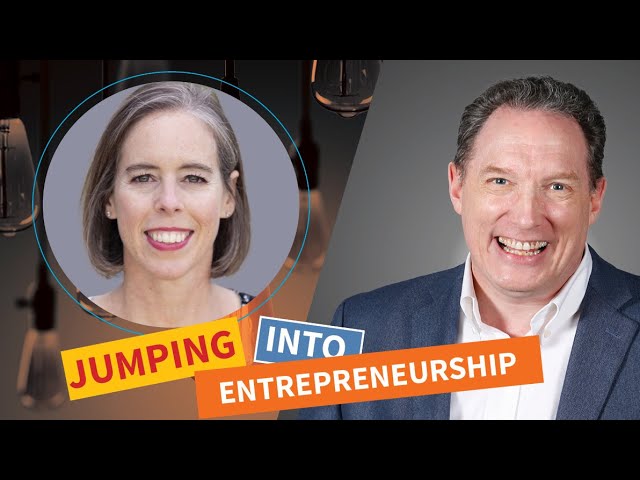
Marc Haine talks with Christine Campbell-Rappin, a business coach, about leaving employment to start a business. They debunk myths like "build it and they will come" and discuss four foundations for a scalable business: mindset, revenue models, accountability, and systems.
Chapters
Ooh! The prospect of jumping into your own business is so exciting and scary. And I bet you feel that this may be the perfect time. But there are a few things that you need to consider before you jump full into it or as you are launching your brand new business. And that's what we're talking about today on Marc Haine Live. Welcome to this episode. This is where small business owners and entrepreneurs pick up core skill sets to help them work on their business, not just in their business. I am your host, Service Expert and Master of Experiences Marc Haine. Thank you so much for joining me today.
My pleasure.
My guest for this episode is Business Success Coach Christine Campbell-Rappin. We will be discussing the differences between buying a job and building a business. And we'll also reveal the 4 foundations you need to create a scalable business. So, stay with us. In the meantime, feel free to be part of this conversation. You can go ahead and you can subscribe to this program. And if you ring the bell, you will get notified whenever I bring you fresh new content. And of course, go ahead and share this episode with somebody that you know could use this information. You know, we know that the best way to create job security is to create that security for yourself through entrepreneurship. In fact, in the last 5 years, new businesses have skyrocketed. The applications alone have skyrocketed, especially during COVID-19. We had the biggest jump ever in 2021 with over 5.3 million new businesses starting up in the U.S. But sadly, reality is that within 5 years, 45% of those businesses will fail. So that brings us to our Question of the Day. So, I really want you to brag. Wherever you're tuning into this podcast, post your answers in the comments. The question is, what is the business you're starting or wanting to start? Put that in the comment box. And then also answer this question. What steps have you taken to be successful? Now, come on. Toot your own horn. This is really an exciting time. Put it in the comment box. I'd love to see your comments. My guest today is the author of the soon-to-be-released bestseller because I know it will be. It's called HEAL 4.0. Christine Campbell-Rappin is a Business Success Coach and a Lifestyle Strategist. Christine has a Bachelor of Commerce and an MBA in International Business and is the owner of CLEAR Acceleration She in 2018 founded the online community Chasing Dreams and Making a Positive Impact. With over 25 years thriving in the corporate world, she has learned to define success on her own terms. Christine, welcome to the show. It's so nice to have you.
I'm so excited to be here. This is such an important conversation. It's like of our time, right? The Great Resignation.
Thank you. It is. It is. Exactly. But before we get into today's topic, could you tell us a little bit about your new book, Heal 4.0?
Yeah, it's an interesting one. It's actually going to be very on topic to what we're talking about today. Everyone's got a journey. And the truth is, when you are contemplating what comes next, I always think it's like the plot twist. There's this great moment of darkness and you're wondering or standing at the crossroads of your life saying, do I go? Do I not go? How do I move forward? Move forward. And sometimes, you're going through some trauma. In my case, my chapter in this book is Plot Twist: I've Been Fired. Because my story was I was 1,400 kilometers away from home having a great day of business. Walked into the hotel lobby envisioning a glass of wine and some emails. And I saw HR and my boss in the lobby. And I never saw it coming. And while they jetted off to Toronto and flew home, I didn't have the luxury. It's not the next 17 hours at that crossroads in a hotel, not able to fly home, having to make that tough conversation with my family that says, sweetheart, I've just lost my job. The house that we had just about to put an offer on evaporated. And I went, what comes next? I'm in the plot twist. And I wasn't the damsel in distress. I was the warrior who had to figure this out. And so, my chapter in the book is really about what is the journey of reinvention and how do you choose to write a new chapter. Because it will happen to us all, whether you're choosing entrepreneurship because of the plot twist like I did. I just want you to know plot twists happen. You will face adversity on the road. But I hope that the chapter and the book as a whole will help you figure out what steps to take.
I love it.
Because it's so possible to reinvent yourself.
I love the fact that you went from being a victim of a circumstance to being the warrior in the circumstance. And I think that happens to a lot of us. We have that fork in the road. We have to make that decision.
And say, I don't want this anymore. Okay, what path am I on? Is it the right one? Because what I wanted when I was 20 and 30 isn't necessarily what I wanted now. And yet, I realized that the only person who would make that change for me Yes, yes.
I'd like to dig a little bit deeper into what you do for your clients. How do you serve your clients?
Yeah, so I have a really interesting approach when I'm working with clients. Typically, I'm working with early-stage entrepreneurs. So, they might be solopreneurs. They might have a couple of contractors that are in their business. But they have started down the path of, I'm an accidental entrepreneur, which means maybe they have thought of an idea but don't really know yet how to make a business successful. So, in the work that I do with them, Yes, there is a coaching component, which is the vision casting, the accountability, and cheerleading on the rocky road and emotional roller coaster of business ownership. But it's also very much the strategy piece. How are you actually going to build a sustainable and thriving business? What are the foundations we need? How do we identify gaps, bridge them, and then mentor you to grow and run? So, to your point, you're not working in the business 24/7. For little to no profit. Because I'm pretty sure that was not the vision when we started. But it can happen too often. Or you run out of runway and say, this is harder than I imagined. And then you boomerang back into a J-O-B. And there's a whole bunch of shame, guilt, lostness. And think, I don't want anybody to give up on their dreams. The dreams are possible. You wouldn't have them if it wasn't possible. But you don't have to do it by yourself. The lone wolf syndrome will get you killed or exhausted. That's not the goal either. So, I'm calling the lifeline. Stop being the lone wolf. There's no glory in it.
We will get deeper into that. Why do you think this topic is so timely today?
I think the world has woken up to there's not only one way to create the life you want. And I think that the pandemic shifted Our perspectives of values. We strove less for balance and more for harmony because we were forced to. And at the same time, I think there's this big moment of I feel called to do more. The world has shifted. I don't know that I'm in alignment anymore with that, and I'm ready to create something new. I think through any kind of adversity, the plot twists of job loss, the world going into hell in a handbasket. There's also this incredible potential that is here. It's what is possible. And so I think there's this real awareness to reflection because we were forced to slow down in many ways. And now it's what is possible. And there's the energy of collaboration. We are in this together. So maybe we could redesign it in a way that reflects more of what I want.
Yes.
And the impact I can create.
And it was interesting because I did see some statistic that said that although people worked 3 hours a week longer, more with their employers, we also saw that a lot more people were not only working their full-time job but they were dedicating some time to actually starting their own side hustle.
Yeah, I believe the side hustle is a really important milestone. The gig economy has been around for a long time. But it's important to recognize that side hustles aren't necessarily an either-or conversation, either in your head or with your employer. Because I'm an advocate of the side hustle because I said a side hustle can provide you a million different things. It can give you intellectual places to play. It can give you financial resources. It can be a way for you to contribute and give back. I always say there's a million reasons to start a business. What will yours be? But it doesn't necessarily mean that a side hustle is going to replace your job because maybe you don't want that. What I love about the philosophy of it is it creates choice and creates a potential for you to say, my future is job optional. But there is a big difference between having a side hustle and a thriving business that will support you to the level of safety, comfort, and kind of vision that an employee role might have. But there is no security in it. So, don't believe there is.
Yes, it's so interesting because there's a whole adage about it's better to work at a job that you want to work at than one that you need to work at.
Yes.
The stats I mentioned, a quick little stat about what happens after a few years in business. The stats this morning that I researched said that 20% of businesses fail in the first 2 years. 45% will fail within 45 years and 65% will fail within the first 10 years. What's going on? Why is this such a pandemic in its own right?
Yeah, I think it's a couple things. And I think the numbers can be misleading. I think the first number is true. And that's partly because we think it's going to be easier and we haven't built the capacity and capabilities we need to shift. From an employee to a business. So, we don't have consistent client revenue. And I'm sorry, I say it's the hokey-pokey. If you are one foot in, one foot out, one foot in, and you're shaking it all about hoping for a miracle, you have a problem with your business strategy. And that's why they're the first group that fall out because they run out of runway. And they often feel pressure to themselves or their family that says, you have until X to make this work. And if not, we need a financial lifeline. So, a J-O-B. Becomes the conversation. So, that's the first piece. The second piece where I think that a lot of people end up out at 5 years isn't necessarily because businesses are failing. I think there is an element of the business has served what I needed it to serve. So, many people start a job in their young years but they become an entrepreneur in their latter. So, they might think, I want to work 5 more and this can be the way to end the retirement on my own way. And I don't want something that's full-time anymore. So, I think sometimes a business can be built and Sold and built and exited. And while that number shows up as an exit, it isn't necessarily a failure. It served its purpose. So I think that number, I always want to challenge it because I said, you know, we say all the time, I built a business to work five more years. I don't know if I'm going to stick to that because I really love what I do. But that's the conversation we're having. It's the five-year medium. But part of it is also your business must evolve like a person does. So You need to be thinking of what you started is never what comes next. The dominoes fall in ways you don't anticipate. You must be able to flex. And the skill set often that starts you isn't the one that sustains you.
Hmm.
Very rare that people have both sets of skills. I'm a unicorn. I've worked both in startup and big business and thrived in both. But sometimes, that's the difference too. Why businesses peter out is because you don't have the same skill set that you need. And there can be a lack of awareness to the need to shift. But if you don't shift, you can struggle. And suddenly, it's like, how did this just go so wrong? Well, different skills require different capabilities at year 5 than they did at the beginning. Right.
One of the biggest myths with some entrepreneurs is this idea of build it and they will come. Why is this so faulty?
Oh, it's because we believed in the Kevin Costner movie, Field of Dreams.
Yes, yes.
I joke about this. This is actually something I get quoted around a lot because I always say to people, if you believe in the Kevin Costner Field of Dreams world, that's where you've Googled your business strategy. And it's not the best surefire way to grow a business. And I think there is a belief that because I was capable in a corporate world that I will automatically be equally capable in a business world. And I think we set a lot of false expectations around that. And part of it is because many businesses that start are service-based businesses. So, you're using something that is intellectual in its nature, in its heart. You're thinking, well, I know I have the intellectual capability because I was successful corporately at it. And I have people that think well of me in the industry. Potentially, you're making a lateral shift, not a complete new vertical. And saying, well, they'll follow me. And they will follow you from a support point of view. But that doesn't mean that they're going to necessarily quit their service provider and jump ship to you. And so, there can be a false sense of, well, I'm starting with 5 clients. And say, well, what happens once you either deliver to them or what comes next and you haven't built your audience? It's one of the biggest mistakes I see businesses make is they think it is about launching the product or service. And they spend all their energy thinking that's the engine. It is not your engine.
It'll sell itself, Christine. It'll sell itself.
I hope I see that happen in my lifetime. I haven't seen it yet. But I've been looking for the unicorn and it must be out there. And so, I always say to people, Kevin Costner Field of Dreams is your business strategy. I'd like to introduce you to my community. I'd like to introduce you to some amazing business owners because you're going to need to model this. And Google is a place to start but it is not going to be the answer because all the information is available. That doesn't mean it's the right information. And it doesn't mean you can apply the information you have. And without application, you're living in the theory. You're living in the idea. And the idea is not what you need to live in long term to actually bridge the gap.
Right, right. And it's interesting what you said about this thing about the evolutionary part of it. Because like us, we all grew up. We grew up as kids. We wanted to be astronauts and police officers and whatever. And then, we went to university to study certain things. But precious few of us actually are in the realm that we actually studied in because incidental things happen that pulled us away from that. And our business is the same thing. The vision that you have when you first go in, 5 years down the line, 10 years down the line might be a completely different vision.
100%. And the stats are scary. I want to tell you stats. So, I've heard it was 25% of people that finish education stay in the field they study.
Wow! Only 25%.
Yeah.
There's an awful lot of pissed parents out there who finance that education.
This is very true. It's like, but there's also not a lot of education of like, what are you going to do with it after? Like, I have, you know, my bonus daughters are in that education system now. We spent a lot of time. What are you going to do after? Let's talk about that because there needs to be support and occupation behind it. But it is a scary stat. And it's true. I always talk about the domino effect as one of the key analogies I use in my business. Many people that are accidental entrepreneurs. And I said, the first domino is not where you land. And you must keep showing up to make the actions. I said, I didn't set out to be a coach. It wasn't like I woke up one day and said, I'm going to coach. I'm like, I mentored in my career all of my corporate life. So, I loved helping and leading people. But it was other people who kept saying, this is something you're doing really well. Can you show me and teach me and mentor me? And I was like, sure. And I never saw that as a business. How ironic! I couldn't see that as the business until someone said, I've got 5 people. Would you like to run a workshop and we'd pay you? And the light bulb went ding. And I was like, I didn't realize this was unique. And sometimes, that's the problem when you focus only on, I know what the solution is, when someone says, that's not actually the problem I have. And when someone said to me, that's the problem I have. I don't know how to build a business. Everyone says, treat your business like a business. And Christine, I have no idea what that means because I didn't live corporately like you did. And I'm like, oh well, I know how to build a business in 1 hour a day because that's how I started my side hustle. 1 hour a day. And I've doubled my business every year. And I still had a life. I had a very big corporate job. And people are like, like, is there a magic thing? I'm like, no, but you need to know what to focus on. That's when you're that wandering in the wilderness, like hokey pokey with your business. You don't know what to focus on. And focusing on the wrong things And simply doing more of it is exhausting.
Yeah.
And potentially the definition of success— of insanity because you're not moving in the right direction. And I think one of the worst business tips, this is so controversial, but I'll be controversial on your show, is the worst business advice is, you know, go do what you love. Here's why I think that's worst business advice. Because if you only do what you love in your business, you will always live in your comfort zone. How do you do that? Your business will not be built in your comfort zone. And the interesting thing why businesses struggle when they may take the expectation of early client success and thinking it can be repeated is your business is going to be built on strangers. And I'm sorry, living in your comfort zone, how often do you meet strangers?
Right.
It's a dangerous analogy. And people say, do what you love. I said, I love it. I know I'm in flow when I do what I do. But I know that I must every day step outside my comfort zone. Yeah.
And I see this a lot in food service where a chef will open up a restaurant and their passion point is cooking and creating and that sort of thing. But then, what happens when it's the same menu month after month after month? Where's the creativity component? And then, of course, you still need the bookkeeping. You need the management. You need the staffing and so on. All those kinds of things will drive people crazy if your passion is Singularly focused.
That's the danger of service. Like, if you are a service-based entrepreneur, it's like, I love the service delivery. And so, I only want to do the service delivery. Well, guess what? You need to find the clients to do the service delivery. So, hello. Just—
Yeah.
There's 2 here. You have to go find your clients. But the funny thing can be is that can lead you to really much peaks and valleys. And I'm in a heavy period of service delivery and I'm living in my jam. And then, all of a sudden, you're like, wow, I have bills to pay and I don't have any clients. So then, you go back into ramping up with an audience and building new stuff and you don't like that. But if your energy is bad in that bit, it's really hard to get them back into service delivery. And it can be a very big roller coaster. And that's when you really have moments of self-doubt that come into play of, I don't know that I want this. And that's when the insidious root, if you ever leave a back door open, that said, maybe a J-O-B is easier.
Yeah.
And some people, that's when that year 2 comes around and they're like, Crossroads.
Yep, exactly. We talked about build it and they will come myth. Are there any other myths we should be aware of?
Yeah, I'm gonna say there's always 3 myths. And these are the ones I talk about a lot. Number one is the belief that it's gonna just be hard work that will make success happen. Because we often think it needs to be hard and hard work is the answer. And everyone wants to be focusing on that glory of hard. But I will tell you that hard work does not equal success. And you know this actually because you've got people in your life that you know work really, really hard and are not having the ability to get ahead. So, myth number 1, hard work does not equal success. I want to shift and reframe that to it is effort on the right things that will lead to success. So, let's figure out what those right things are. The second myth is that hustle is necessary. I am quite controversial also when I tell my clients, I want you to make more impact and work less. That's possible. And they're like, you're crazy. I am slightly crazy. But I'm hopefully the right kind of crazy. What I think is really important is saying hustle is leading to imposter syndrome. It's leading to exhaustion. It's leaning to burnout in corporate and on the path to entrepreneurship. And so, this idea of more Always more is not necessary for success. Sometimes you really do need to slow down to move forward and to get clarity, which you can't get if you're constantly hustle, hustle, hustle, hustle. Hustle culture, I think, is really dangerous. The third final one is that the only measure of success in your journey is revenue and profit. Like, they are important measures, but if you are only focused in the journey of those 2 things, you will not find joy in the journey. And that will also put you at risk of giving up. So I say, how are you defining success today? What one small action did you take today that was scary today that, you know, will move you forward? You must celebrate that and see those milestones in the journey because doing the right habits, which are where the success milestones come from, actually will lead to the revenue and profit. But revenue and profit is not the only way to measure success in your business. And don't let anybody else's opinion convince you otherwise.
Yes, it's so good. I did have a guest on once before, Dan Rolston, and she talked about measuring success by measuring your satisfaction. And what a completely different premise that is because corporate culture is we look at the financials. We're looking at profit. We're looking at loss. We're looking at our balance sheets. We're looking at did we make a profit and so on, right? And that becomes a big driver. But you're absolutely right. We've evolved now that it has to be— there has to be joy in what we do or else, what's the use?
Yeah, finding joy is a really important part of the journey. If you challenge yourself to what scares me and shift from the butterflies are making me nauseous to this is actually anticipation. You will propel yourself forward. And I always say to people, the way to build momentum is to not focus on the moment but to build the momentum. And it's easier to stay in momentum in business than it is to create it.
I agree.
So, yeah, that's what you do to do that little bit of success building in yourself. And some days it is, I got out of bed. I will be honest. Some days it is, I got out of bed. Other days it's, I'm Mach 10 with my hair on fire and I've committed to 3 things that scare the living daylights out of me. Both are success.
Yes, absolutely. I'm absolutely loving this conversation, Christine. I'd like to uncover the 4 foundations that every business owner needs to build to create their future, the future of their dreams. And I'd like to get to that right after this.
When the spotlight shines on your business, are customers applauding or yawning? In other words, how is your business performing? Make your business Star with a new book, Lights! Camera! Action!, Business Operational Excellence Through the Lens of Live Theater by Marc Haine. Marc uses his business and acting experience to help you see your business like a live show so you can create a performance your customers will never forget. Buy Lights! Camera! Action! today at your favorite online retailer or directly at marchaine.com.
Welcome back. I am speaking with the fabulous Christine Campbell-Rappin about what it takes to transition From an employee to a business owner. Christine, just before the break, we talked about myths. And I know one myth that people feel is that I have to do this all on my own.
Hmm.
How do you feel about that? Like, I mean, I know a lot of solopreneurs. I call them incidental entrepreneurs that do it. And it's like, this is my business. This is all mine. I have to do it.
Yeah, I've been there. I've actually been a bum hand. I would say that was me. I definitely thought in the early days that there was glory in that. And that's one of the reasons why I built my community right when I first started because I knew that when people make the leap, they don't always have a good cheering squad. And that's why they think they have to do it on their own. And it's true. You may have a lot of people that are casting shade at you, subversive comments, Lack of support. Don't let anybody else's opinion live rent-free in your space. Nobody else's opinion will ever pay your bills. Okay, so it's important to know that one, you do not have to do it. And sometimes the biggest stress de-plugging happens when you go, I actually found this whole amazing tribe of other entrepreneurs because entrepreneurs support other entrepreneurs. And yet we think there's no one else is crazy like us. I always say find your right kind of crazy. And I mean that kindly. What's interesting about that journey though is recognizing there is no glory in doing it by yourself. And in fact, you will reach more success faster with less effort when you let go of the expectation to it. What is really true is nobody else is responsible for holding your vision. The vision wasn't given to your spouse, to your parents, to your best friend. They don't need to carry your vision. You are carrying your vision. But if they are not in your camp from the day they start, let it go because it's possible and it happens more than you think. So, go find a tribe that will take you at face value. Join mine if you want. I'm very welcome to have you. But there are great networks of other entrepreneurs who are going to say, you're a business owner? Fabulous! Tell me your story. And just take you as you are. And they will be the first to celebrate you. encourage you, and believe in you. And you need to know that once you find them, you're like, wow, this is a lot less stressful. It's also a lot less lonely. And it's a lot more fun to have other kinds of peeps who get it and the challenges that you're facing. And that will also help you endure moments of doubt.
It's interesting because in my experience, the naysayers, the people who said how hard it's going to be to do this and who scare the bejesus out of you when you mention that this is what you want to do are the people who've never done it. The people who have done it are the ones who are waving the flags and saying, yes, you can. Yes, you can. Right? And offering their help.
So true. You never want to seek somebody else's opinion whose life you wouldn't trade for. If they've not walked the journey, their opinion does not matter. Opinion is the cheapest form of entertainment. So, be careful that it is pure entertainment. Laugh where you need to. But don't— I said, don't let it live rent-free in your head because The biggest thing we say is we go to people who are not business owners, who've never stepped outside their comfort zone, and who are really more frightened that you pushing yourself will reflect that they need to push themselves. And so, there's a little bit of anxiety that gets kind of shadow cast at you. And say, you know what? I want to seek people's opinions who have done this. And if they say it's— if you need that permission, if you will, borrow belief until you can cultivate your own. But there's nothing worse than saying to somebody, should I go be a doctor? And they're like, Well, I plant. I'm a planter for life. I'm a gardener. It's like, well, which school should I choose? Well, the only one I know from TV. Like, it's not going to give you the same level of context that potentially would really help you make an informed decision. So, it's very true. There's a lot of peanut gallery.
A lot of peanut gallery, yeah. And usually, they're just throwing the shells. Christine, fantastic! I imagine that people— you mentioned your community. How can people get in touch with you if they need to Reach out.
Yeah, the best way is to find me on social media. You can find my website. It's actually my name. So, it's christinecampbellrappan.com. That's what you're seeing on the screen. In there, you're going to find some great resources, the 3 myths we just talked about, and the community. That's the place to start. I always say to people, sit until you're ready to stand. This is about building conversation. So, this is the start of one. I'd love to have a conversation with you. Come join the community. Come find what I'm all about and connect to me.
How do they find out more about the community? By connecting? By emailing you?
You can find out about the community. There's actually a link to join it right on my homepage. So, you can start there.
Excellent! I'd love to uncover the 4 foundational keys business owners need to create their dream business. This is something I'm a big fan of having something really succinct that people can sink their teeth into.
What are the 4 Well, the first one is about managing the toughest 6 inches in business. And that is the 6 inches that are between your 2 ears. This is the mindset game that will bend you in all kinds of ways. The limiting beliefs that hold you back. And those limiting beliefs are things like perfectionism, procrastination, focusing on the wrong priorities, scarcity mindset, and the belief that it is easier for someone else. And I will tell you, Living in your head will leave you standing on the fence far longer. Every business owner I know, when I say, what's the one thing you wish you would have done sooner? And they said, make the leap. The reason is because you're stuck in that 6 inches, the quagmire of your brain. The only cure to this is really, really, really simple. It's take action. Imperfect action taken today will trump perfection and a perfect action taken tomorrow because Tomorrow actually never arrives. So, the first pillar is about managing your 6 inches. And I will tell you that this is a lifelong aspiration. Just when you think you figured something out, you have moments of self-doubt. You have moments of somebody else getting in your space. And you need to remember, nobody else is going to do this for you. But you do not have to do it by yourself. And finding tools and strategies that help you manage Oh, I see you, limiting belief. No, I don't buy into that anymore. And reframing it to, if that wasn't true, what was possible? And the biggest way I would say if you're hesitating right now is like, instead of saying, imagine if... the world imploded and I never earned another dollar, it was, imagine if this turned out better than you thought.
Hmm. Nice.
Because both are options. Which one will get you moving?
Love it. This mindset piece as well. There's something that needs to adjust as well. If people have been employees forever and they jump into business ownership, that mind shift needs to change as well.
So true. So, there's kind of 3 stages. And I think this is a continuum. It's not always that you go step by step. Sometimes, you slide forward and sometimes, you slide back. But there is a distinct thing about an employee. An employee is really focused on job stability. So, I work an hour, I get paid an hour. I want steady vacation. I want my weekends off. I want my health benefits. I want somebody taking care of all the details and just telling me what to do and having a very clear plan that I did not have to create from scratch. So, that's where we often start. But as a business owner, you're focused a little bit more on the long term. You're recognizing I have to put in effort and I don't see an immediate return. You're a little more open to the long term. But where you start to think I really need to deliver is when you start to have contractors. You're not so much concerned about your own return, but you want to make sure that they get paid. And so, you're motivated to pay for somebody else more than you are motivated to get payment for yourself because it's easier to do that than focusing on someone else. You're a little more open to investing in your skill development. You're not waiting for the employer to give you a budget to go to a course. You're saying, I must put the money today to reach my dream tomorrow. And you might be more into networking, but you might still have a tendency to get distracted by shiny objects and easy solutions. And the business of Google Field of Dreams can still be something you fight with in your business owner hat, if you will. But you make the leap from that point to an entrepreneur where an entrepreneur is like, I'm very focused on the long term. I am very focused around tell me how I get there more quickly with less effort. Talk to me about the dollars and cents. What do I need? You have a great group of thinking partners in your community. You've Established a network, and you're saying, "You know what? This vision is worth it. The impact I am making is what drives me more than the fact it's about the dollars I get paid." And so you go from this predictability to the some level of flexing on predictability, but also still, you know, wanting the security, but not quite running independently to. I am without a safety net because I believe in what's happening. And I am prepared to put my money where my mouth is. I know I've got gaps. I'm bridging the gaps. Tell me more. Leaning in. And I think it's a continuum. I said, you don't always jump one step to the next. And sometimes you go, oh, things aren't going so well. I'm sliding backwards. Show me where my weekends are. Show me where the revenue is and show me where the perfect shiny object is. that gets me from A to B. And I'm like, there is no magic. But it is simple when you know what to focus on.
As you were talking about that, from employee to a business owner, the idea, the word accountability came into my mind. When you're an employee, you're accountable to somebody. And so, as a business owner then, you mentioned the stakeholders. Well, that's creating a situation where now you're going to be accountable to a different party. To make sure that you deliver on your promises and on your excellence.
Absolutely because I think we always say that the 8th wonder of the world is magic compounding. One action taken every single day is how you grow. It's how I grew my first business. It's how I grew my business today in the coaching world. I always say to people, consistency is a human failing. We all know we should be more consistent. That's how we're going to get healthier. That's how we're going to make bigger impact. It's all— but it's a struggle. I don't care if you're Tony Robbins or you're someone who's just starting out. You have a problem with consistency. It's a human problem. So to fix that, I always say, what's your level of accountability? And up your level of accountability to be more consistent. So you can see as an employee, it's, you know, my business strategies come from Google, or I just look for free information and there's nobody who knows I did it, so I don't have to do anything with it. Low accountability. Then you can go up to, I'm going to sign up for a course, which business owners might be doing and employees might be doing if an employer Pays for it. But they're likely not investing in their own training on their own dime. But a business owner is. So, they're saying, okay, I'm going to take a course. But again, in coursework, we know most people don't complete courses because again, lower accountability. And I get the theory but I'm still stuck with what do I do with it. So, not moving in the right direction but not fully solving the problem. Then, you get into, well, now I'm going to belong to something group-oriented or something where somebody's physically delivering service and I am accountable for implementation. That's medium level of accountability. You're moving more quickly. You're getting sound bites to help you tweak your thoughts and approach. And you're seeing more success as a result. The really high extreme, of course, is that private support, that pure one-to-one account. I see you. What did you say you would do? How is it going? You are going to move the most quick in that capacity because your accountability is highest. So, I say to people, Ebb and flow in your business, ebb and flow in your life. What's the thing you want to solve? How much accountability do you have in it? If it's not high enough, you need to know yourself. In a group environment, are you someone who sits in the front row? Are you someone who hides in the back? Depending on your personality type, you will get more or less out of the experience. But you can't learn business simply from observing.
Yes.
That's where— how do you overcome the 6 inches, which is your first pillar? You must Take action. And I'm going to say, not just action on the things that are comfortable. You've got to do the things that scare you because nobody gets great the first time they do it. So, there is a kind of a joking expression which is you need to embrace the suck because you will suck at something the first time you do it. But you must keep doing it to get better.
I've been questioning this for decades. I've been questioning this for decades because as kids, we learn to ride a bicycle and it takes time. And we have our parents saying, you can do it. You can do it. Try, try again. And then somehow, when we become adults, we have this expectation that the first time I do something, I'm going to be perfect at it.
Well, and even if you are, you don't know why. You actually learn more by the failure, right? Like somebody says, you hit something out of the park the first time you do it. It's actually more scary, I will tell you, because then you go, I don't know how to duplicate it. And business is about being able to duplicate success.
Yes.
Duplicate your systems. And systems are so important to scale. Otherwise, simply more of that leads to hustle and burnout, which is why I think it's a limiting belief that we need to myth bust on. And it's true. Our fear is about other people's opinions and the perception that we don't have it all together. Well, sorry. Nobody has it together.
That's point number 1. That's key number 1 is mindset. What's key number 2?
Key number 2 is you actually need to understand how money works and how to build revenue. So, there are 4 ways in business to build revenue. And most people don't get this. This. And you may start with one or two, but you must build a scalable, sustainable business that you are not working 24/7 and building no money in. It is to understand revenue. And so, you know, the first way most people start businesses is existing product to existing clients. You do it really, really well, you might have a product you sell multiple times. If you do it really well, they're going to refer you. So you get new clients out of an existing product. A little bit more effort but same types of strategies. When you move up the ladder, you start to go, what comes next to my existing client? You need to add new product. New product to an existing client. That's going to give more value. Where you're giving more value, you usually have more profit and a higher price point, which means you can work less for more money. People said I was crazy. I'm not. It's a strategy. This is it. The final thing is, of course, complete white space. New products, new clients. It's interesting as you go up the 4 ladders though, your effort level increases. As your effort level increases, your value creates. Why do people be successful in business? It's because they create more value in the marketplace. So you need to think about how do I want to create revenue? Where can I add value? And who perceives that value that will pay for it? So you must in pillar 2 understand the 4 ways to actually make revenue in your business and audit How many do I have today? And what is my strategy to have all 4? Because a successful thriving business will have all 4 over time. Build intentionally towards that. You will not have inconsistent revenue if that's the case.
And the whole new product aspect is what you talked about with this natural evolution. As you get into something, you're going to see that as you're in the space of something, you will see opportunities start to expand. Because you're in that space.
100%.
Yeah.
And you need to be thinking about that. It's the value ladder. And recognize that everyone might come into your business in different points. So, how do you serve them? Some people might start in one element and move backwards because you realize you're missing a foundational pillar. Or they might need to go back and refresh. And other people are like, I actually can jump the first 3 steps because I'm already here. As your business grows, you need to have that value ladder. It's like an accordion. And it's not to say that you have so many offers that you proliferate it. You don't vomit your business at somebody. You need to know what's the value and where they are. And how do I serve at the highest level in that place? And then be prepared for— love it— what comes next.
Right.
And have an answer or build an answer.
And that feeds into step number 3.
Step number 3 is you cannot have a Kevin Costner Field of Dreams business strategy. You need to build your audience. And this is a huge one. So, the whole pillar 3 is build your audience. It's 3 specific things. Number 1, it is about more people, more ways, more often. You must be getting friendly with new people all the time. I tell my clients, 50% of your time, I want you meeting new people, not delivering your service. This is so important. You must create your funnel of new people to get in front of. Number 2 in this building audience pillar is you need to know your so-what factors. There's 3 of them. Why are you in business? It is not time and financial freedom, people. It is not time and financial freedom. What does time and financial freedom mean to you? That's the heart of your why because your why will pull you forward in moments of doubt. It will get you out of bed and will get you taking uncomfortable action. Number 2, what's the problem you actually solve? And the problem is not the surface problem. Again, you have to go down the level. I'll give you a quick example on it. People say to me, the solution is skincare. The problem is bad skin. The problem is not bad skin. Bad skin is the reality. True. What's the bad skin cost you? It costs you relationships. It costs you first dates. It costs you jobs in many industries. It costs you confidence. If you want to talk about the problem of confidence, you have my attention. If you tell me my problem is I have bad skin, I feel criticized. Not that interested. So, what is the problem you solve? And most entrepreneurs, the reason they fail Is they do not know the problem because they think everybody needs the solution and it's obvious. It's not obvious. Problem number— what's the problem? And the second, so what? The third one is, why are you the guide to solve the problem? You are not the solution. So let's just be clear, you're not the solution. You are the guide to help them solve the problem. So you need to know why are you the right guide and recognize you are not for everybody. Why are you specifically the right guide for this group of people in this space as they navigate the darkness and into the light? And how can you be the footprints in the sand that wants them to follow you as the guide? The final thing in my Build the Audience pillar is business is built on conversation. How many conversations you're having. So I always say to people, you want to know how your business is? Show me your calendar. It's the first thing I audit when I bring on a new client. You want to be clear that the reason you're in conversation is to provide value first. Nurture a relationship. Be a contributor. You're getting incremental buy-in that people are saying, you, I like you. I trust you. You're credible. And I want to know more. And every time they lean in, they create the habit of I'm interested. And if you create that paradigm for them, guess what? They come into your inbox or they run across you at a networking event or they reach out and say, I'd like to know what it looks like to work with you. You've already established value. Now, you're just working the fine-tuning, which is the final pillar number 4. But you got to be building your audience.
More people. And it's not about the elevator pitch, right? I find so many people are so focused on, I have to create an elevator pitch because I have to be able to tell people what— that is not a conversation.
No. And really, nobody wants to know your name, your business name, and what you think you do because you're going to use generic terms that most of the industry already decides yes or no right away. And you've lost the conversation before you even had it.
Right.
So, chances are you're going to a networking meeting and you're not actually getting any meetings out of it. And that's insane. It's a waste of time. And so, I can help you around that. But that's a whole bunch of training I do specifically to that because you honestly, you need to recognize it's not about you. You've said that before. It's gold. So worth repeating. Hello, it's not about you.
Right.
This is about how do you help somebody else. And then, when you get to pillar number 4, which is selling is service. And you need a very simple approach to selling. I'm sorry. This is true. Sales is the oxygen in your business. If you do not have sales, you're likely on life support. You haven't bridged the gap. You bought yourself a job. It's very hard. You're exhausted. And it's not going anywhere. But when you reframe, I know who I serve. I know the problem they have. And me keeping silent and not delivering value is a disservice to them. I'm leaving them in the dark. Who does that? Be a good human. Who does that? Just be a good human. You want to show up in service and provide the value, nurture the relationship, show them how to get through the light. And when invited, say, I can help you do that. And it's simple. Reframe it. Be invited into the conversation. And please do not think that your business strategy is showing up on social media, vomiting your business, and saying, hi, I've got cool stuff. Buy it. Please stop doing that. It's actually painful for all of us. And remember, nobody wants to feel sold to. But every single one of us are buyers. The only time we want to buy is when we get the, oh, you see me. You have something that I value. You can help me get there with less pain, faster, with less effort. And I've created curiosity. So remember, all of the reason you're building your audience is not to say, hey, come buy my stuff. It's to create curiosity to have a conversation. And only if you feel you're in alignment do you make an offer. But your business is simple. Meet more people, give value, and make offers. If you are not doing all 3 things consistently, rather, you are not building a thriving business. And if you are in that place, I can help.
Now, you mentioned at the beginning, we talked about a scalable business. So, part of this, and we've had shows on this on Marc Haine Live and on Experience Leadership before, we talk about putting systems in place so that You can repeat the processes without having to be involved.
100%. And that's part of where that number 2 pillar is so important because it's like you need to understand how revenue happens. And when we are talking the lower value things, it's very intensive. So, if you think the answer is I need 5 more clients, do you have the hours, capacity, and ability to just you deliver that all the time? And if you want to step away for 4 weeks, 6 weeks, 6 months of your business, can you? Not without systems and support. Not without a predictable experience. Your client wants to know you can deliver exactly what you said on your promise. You do that by making sure you know how to break it down into a repeatable process. And you need to think about when it comes to scale, what does scale actually mean to you? Because we all think scale means the same thing. And guess what? It does not. Do you want to grow a team? Then you must manage your team. Do you want to outsource things? I always say outsourcing is great but be careful of when you do it. Because otherwise, you think they're solving the problem. You think they think you're the one who has to give them the content. And you're both looking at each other saying, isn't it you? And you spend all this money. And I'm talking tens of thousands of dollars I've seen clients waste thinking, well, I was trying to scale my business. I'm like, you were trying to abdicate responsibility.
Yes.
You must always lead your business and be clear with what does scale look like for you and move up to creating more value because you can work less for more impact and higher dollars when you create more value. So, think about that math. And sometimes, we have to have that real conversation of what is your value? How are the systems going to automate this? Once you've done something multiple times, you recognize this is a formula. Let's automate some of the nurturing. But nothing ever takes the place of contact.
Right.
Face contact, human contact. talking to me. So, don't ever remember that in your business. You're not integrally always involved in that. But that's the bit you should love.
Yes.
To be successful in business.
This has just been such great learning, Christine. I can't thank you enough. I'd like to talk about some cautionaries. So, the people who are privy to band-aid solutions a little bit, there are some cautionaries I think we need to talk about. And we'll do that. Right after this.
When you're delivering an important speech to a huge audience, it's easy to lose your place or go way over time. Give yourself an advantage with the Pro Speaker Presentation Speech Timer app. No more checking your watch or calling for time. The Pro Speaker Presentation Speech Timer app keeps you on track with easy-to-see timers, even changing color for visual prompts during your speech. And you can set audio cues to practice or set it to vibrate So you don't even have to look. Be the pro you know you are. Download the app at speakerpresentationtimer.com.
Welcome back! We are having a fabulous conversation with Business Success Coach Christine Campbell-Rappin. Christine, I believe that a lot of people will get this information and they right away will start sitting down trying to strategize how they're going to change now. What are some of the cautionaries? What are some of the things that we should be on the lookout So that we don't fall into the Google style of management or the Google management by Google.
Yeah, I think one of the first things is really the clarity piece. It is so important that you don't abdicate responsibility. And we were just saying that before the break. I think that people often rush to outsource too early and think, well, if I'm going to start a business, here's the list of things I need. I need a logo. I need a website. I need business cards. And it's all these assets that they think they need to create. And I will tell you, you don't need that to start your business. What you need to do is clarity and clients. And so, the audience building and the messaging is really where we need to start because you need to build credibility in the marketplace. But you don't yet know where the dominoes will fall. So, one thing that you will find is if you do this too early, you're spending a ton of time and a ton of dollars changing it every time you have a new light bulb. So, it is worth recognizing that outsourcing is a really important part of your business. But I encourage people to do it later than they are thinking they should in their business. And a big part of that can come down to the recognition that, well, the way to find clients is to buy clients. And particularly things like Google Ads or lead magnets or lead generating companies. They will be predatory. The moment you say, I'm in business and I— hello, I'm a coach. So everyone assumes I need desperate help finding clients, which isn't the case. But they assume I'm failing. So please don't do that either. But the funny thing about that is I just want to point out one of the big cautionary things is yes, there'll be a time in your business you might pay for advertising. You're more effective right now to buy into a networking group as an advertising strategy getting in front of people, building that conversation than you are spending on ads. The reason for it is, remember, those who win the ad game are those with the deepest pockets and a low-priced value offer. That's not how you will build a successful and thriving business. It's actually start high, work low. And remember that if you're just starting business, you probably don't have the deepest pockets. So chasing after it is expensive. And it's not that effective if you don't know who you're serving yet.
How important is it to have a business plan?
I think a business plan is important from a thinking point of view. But I wouldn't think the business plan is a magic pill because I think you need to think about the strategy. I think you do need to look at the numbers. I think you need to look at what is the strategy and the revenue and how many clients do you need and what's going to be the intentional strategy to get there. I don't think it needs to necessarily be bounded in a thing called a business plan. But I think you need to understand the concepts of business as it relates to you. Because the one thing I will tell you that the moment you start your business, and we talked about dominoes, 6 months in, it will look a lot differently. So, if you spend 9 months thinking on a business plan and don't move, you are stuck in the 6 inches of your head. You do need to get some strategy. But you do need to make sure you put time in your calendar to go, What is working? What can come next? Who can I be in thinking partners with? And how do I build my audience? That's more important to me in the early stage. When it comes to scaling, business plans are effective. I sometimes think we put the cart before the horse if we think the business plan is how we're going to launch. And often the business plan, the reason we do it is to go get money from somebody else. And we don't again have enough clarity and people are like, Show me why. I said, well, that's the so what factors. You can get that a whole bunch easier than writing a business plan that isn't living in your day-to-day. So, I'm slightly controversial on that.
Well, and this is all— when you say controversial, I will even challenge that because I think you have a philosophy and a framework that really kind of makes sense when you go and push forward. Like you said, the banks will insist upon a business plan because that's how the oligarchy does the work, right? Well, somebody wants to know, I know I have a plan.
Like sometimes, that's a gap of I just want to make this big impact. And it's like, doing what? And then, part of the reason I think services like what I offer are valuable, it is the accountability piece. It is the logic piece. It is all those. So, Safety check of this is needs to be reframed. Let's talk about the money for a second here. We need to have aligned to that because I said if you think you're going to launch a product and you're going to spend all this time launching a course, build it they will come. Nobody comes. I'm like, oh, is you going to sell it for 197? How how many people do you have in your network? Ten. Like well, you needed ten thousand to sell that to make one month's revenue. Never mind repeat. There's just a really quick gut check that you don't need to be beaten over a horse with in a bank saying rejected because that's awful. But you can have a good reality check. And that's important for all of us in any stage of business is to have good thinking partners who are the safe space to say, I have great faith in wanting you to succeed. Have you thought of this?
Yes.
And have that group of people. I would call it like your inner circle. And I, I'm really blessed in my business journey to have people that have helped me to do that. And I've also intentionally put myself into environments where I'm like, I'm not the smartest person in the room. And so, things that freak me out, they're like, that freaked me out 5 years ago. But keep going. It's not that scary.
There's an adage that says, if you are the smartest person in the room, change rooms.
Great!
Do you have any last thoughts about what we're talking about today?
Yeah, I think my final thought is just to say to people, it sounds like effort and it is. But it is the best gig out there. You talked about the best way to create job security is to build it for yourself. There is enormous freedom to make impact in today's economy unlike any other time. It's incredible to say, I want to be one of the crazy people. I can be. I am doing this. And I just want you to know, like, you know, from everything I've seen, I've seen hundreds of businesses. I've worked with people in all different places all over the world. Your dreams matter. Have the courage to make the leap. You can build your wings on the way down. And trust me, there's no right one way. But the world needs what you have to offer. I know that. I just know it from the heart of me. Have the courage. Borrow mine if you need to. You can make it happen. Love it!
Could you remind everybody one more time how they can get a hold of you?
Absolutely! I'd love to have a conversation. Come find me. My website is my name, which you see on the the bottom of the screen. It's christinecampbellrappin.com. Love to get you into the community, help you download— there's a free resource if you're not sure what your future looks like and you're still on the fence. Do I leave corporate? Do I build a side hustle? Could I be an entrepreneur? There's a free downloadable on the website. It's a Visualize Your Future worksheet. It is the same content that I put into the book Heal 4.0, which is the questions I ask myself every time I'm at the crossroads. What comes next? It's not a job title. It's not salary. It's how do you want to feel and what's the impact you want your life to be about. It's a great resource. Download it.
Love it, Christine. Thank you so much for being here today. And thank you for sharing your knowledge and your passion and your expertise. This has been brilliant.
Thank you. So much fun. Thank you for the opportunity.
Why don't you let me know if this was of value to you? As always, my offer stands. If you would like 30 minutes of my time to brainstorm your business and help you and your team overcome some obstacles, feel free to book a time that works for you on my online calendar. The link is down below. It would be my honor for me to be of service to you. And if you haven't done so yet, why don't you go ahead and subscribe to this show? That'll give you first dibs whenever I bring you fresh new content to help you work on your business and help you create those jaw-dropping, show-stopping experiences your customers and your employees deserve. My name is Marc Haine. I hope you stay safe, stay healthy, and dare to be the exception.









