Leveraging the Power of Experience to Fill Your Labour and Knowledge Gaps
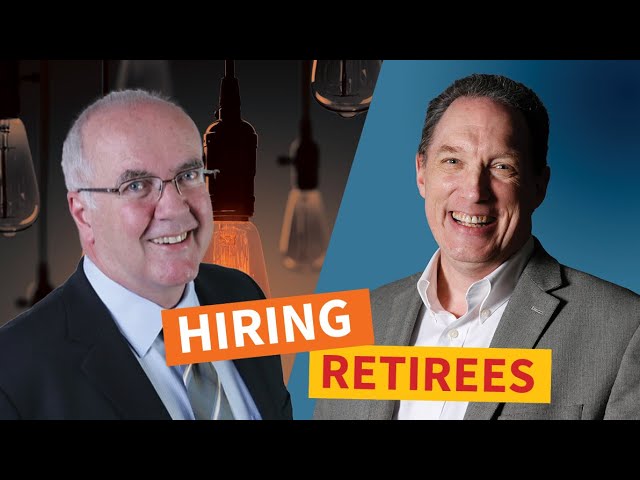
Marc Haine talks with consultant David Guthrie about hiring workers in their 70s and beyond to fill skill gaps. Older employees bring patience, deep industry knowledge, and decades of experience. The key is assessing competence, not age, and designing interviews that sidestep ageism.
Chapters
Psst!
What if I tell you that there are a whole pool of people with tons of experience waiting to work for you? In a time when the Great Resignation is rampant and low unemployment, what they're now calling quiet quitting, is at an all-time high, wouldn't it be great if you could tap into a pool of people with work ethic out the wazoo. And that's what we're talking about today on Marc Haine Live. Welcome to today's show! I am so glad that you're taking the biggest commodity you have, which is your time, and sharing it with us. We hope I can deliver on that value for you. This is where small business owners and entrepreneurs pick up core skill sets to help them create the jaw-dropping, show-stopping experience that their customers and their employees deserve. I am your host, Service Expert and Master of Experiences Marc Haine. And it is great to have you here. My guest for this episode is the amazing and the extremely funny David Guthrie. And today, we will be talking about how you can leverage the power of experience within your business. So, stay with us and we will uncover Common myths about recruiting septuagenarians. Now, I challenge you that please write down how many times I mispronounced that word. We are going to be talking about the myths about recruiting septuagenarians. And we will give you some steps that you can take to tap into the wealth and knowledge that they bring. I should maybe just call them septus. That's it. We'll just call them septus. My one ask is that if you know Someone who could use this information, please share the link to this episode. There is a real skill shortage in virtually every industry, every organization as a consequence of COVID-19 and the subsequent outfall. One of those outfalls being that yesterday in the newspaper, they were saying that more baby boomers are retiring this year than have ever retired. And part of that is because COVID-19 showed them that they don't have to work anymore if they don't want to. But at the same time, there are many talented individuals who have been placed on the shelf by society because of their age. And it's not for lack of willing.
So here I am, applying to be one of your interns because the more I think about this idea, the more tremendous I think it is. I love the idea of having a place I can go every day. I want the connection, the excitement. I want to be challenged, and I guess I might even want to be needed. The tech stuff might take a bit to figure out. I had to call my 9-year-old grandson just to find out what a USB connector was, but I'll get there. Eager to learn. Also, I want you to know I've been a company man all my life. I'm loyal, I'm trustworthy, and I'm good in a crisis. And I love that you're right here in Brooklyn. I've lived here all my life and lately I feel I may not be hip enough to live in Brooklyn. So this could help with that too. I read once musicians don't retire. They stop when there's no more music in them. Well, I still have music in me. Absolutely positive about that.
Looking at retired people to support businesses is a great opportunity to provide amazing economic value to those who are insightful enough to bring them on board. While tapping into the experience that they bring. So, this brings me to our Question of the Day. So, what keeps you from hiring people in their 70s? I'd love for you to be part of this conversation. Why don't you go ahead, share this episode on your favorite social media platform, hashtag it #ExperienceLeadership. And let's have the discussion because there's some myths out there. There's some biases out there. And there's some really cool stories about hiring seniors or hiring retirees. I am really excited to be joined today by David Guthrie. David is a sought-after consultant who is best known for his creative presentations, playful demeanor, and relentless focus on delivering value. to his clients, colleagues, and of course, his community. David's experience comes from working with a plethora of organizations on all 4 continents. He's been in high-tech, biotech, government, and not-for-profit sectors. David, it is so great to have you on the show. Welcome!
So good to be here, Marc. And I want that video. That's incredible! I love it.
I just, you know, as we were talking to set up the show and stuff, it just kept popping in my head, the movie The Intern. about and how out of place seniors can feel if they do have the chance. But before we get into that, maybe you could start off by telling us a little bit about the focus of your current business.
Well, I would say that 80% of my work is doing strategic planning of one sort or another. So, across a broad range of industries, clients, different levels, things like that. And you said, for Contents and then corrected to say 4 Continents. And I was thinking, yeah, there probably are 4 contents that I work over, right? But being more playful at work, being more creative, planning intentionally, things like that. But it's usually working with groups and it could be groups of 5 or 6. There could be multiple hundreds in person or online. So, basically helping people have higher quality conversations so that hopefully, they'll be more engaged, more likely to follow through in what they come up with.
Wonderful! And so, to your point now, I mean, this is a topic that we've never talked about on the show. This idea of hiring people who are actively retired, who kind of like that little video showed, have people who still have the music in them. Why is this such a passion point for you?
Besides the fact that I'm 70 and I'm taking it very personally. I never actually thought of my age until just this year. It's like, 70. That sounds kind of old. Certainly, my 22-year-old daughter tells me that on a regular basis. But it occurred to me, I've been talking to friends, colleagues, clients that want to keep working and are really frustrated that they're, as you said earlier, put on the shelf by society because of their age, not because of their competence. It's kind of there's this label. I guess another little piece is my wife, who's of I know exactly how old she is but I can't say this. But she was a project manager for 30 years doing amazing work. Huge long resume, fabulous testimonials and things like that. And headhunters were approaching her but she wasn't getting the jobs. And so, she started shortening her resume so it didn't look like she'd been doing it for 30 years and still, she didn't get hired. So, she finally got frustrated, went into something totally different which she's loving, which is early childhood education. But it's that whole thing that ageism. And I'm not particularly here to bang the drum against ageism. Rather, I want to focus on the opportunity for people that are older. And so, I'm personally connected to it. I think I'm doing some of my best work ever. And I'd actually, the first thing I'd like to do is get rid of the word senior or retiree, right?
Okay.
And senior because there's no value attached to senior. You're an older, right? It's not like in an Indigenous culture where elder actually has some value attached to it. It's not just about age. And just because you're older doesn't necessarily mean you're an elder. But I think as soon as we use the word senior, it creates an image. Or retiree. Old person, nothing else to do. And in many cases, they're not actually retiring from life and work. They're stopping doing what they were doing to do something else. So, I'm blathering on. So, that's my opening comment.
It's so cool. My mother pointed out she was reading an Agatha Christie novel or one of the novels written around those same times. And they were saying that the elderly gentleman of 58 hobbled down the street. And it's like, what? 58? That's so young. But I think a lot of people, I think one of the myths that are out there is that this idea of, why should I hire people who are retired? Because I mean, they've already had— they've worked every day of their whole life. They've had a successful long career. Shouldn't they just stay happily retired? Isn't that what they want? Comments about that?
I find that they absolutely don't. I was talking to a friend of mine who's an Anglican priest in Ontario. And based on the way I knew her from university, I'm surprised she got accepted for that role. But she wants to keep doing what she loves, like going on the missions to Africa and things like that. But well, you probably don't want to do this or your health might be there. And yeah, it's just really frustrating. And I think there's a need to detach the label of senior or retiree from competence because to me, it's about competence. You can be competent at 70 or 80 or 90. I'm And I've got examples of that. And you could be incompetent at 40 or 50. So, I think to hire someone should be based on their competence and not let these other things that are optics, whatever, shade your ability to look at them to see if they're actually capable of doing and how they can benefit your organization in a way that younger people cannot.
Right.
And when you think about that level of incompetence, I mean, we are talking about that there are lifetimes of experience that we could be tapping into. People have been there, done that. They bought the t-shirt. And why not tap into it? But to your point, I think that there's a lot of misinformation or myths about hiring the people who have retired, the people with the experience. Do you think that there's any huge myths that should be busted?
Well, I think any of them around age should be busted.
Right.
So, because there's biases around that like if you're older, therefore. And some biases may— perceptions may be accurate but irrelevant. And I'll give you an example. I was talking to a friend of mine who's 65. She teaches at a local community college. She's concerned that she may not have much time left there for a couple of reasons. First of all, she sees that other people are being let go and they tend to be women and they tend to be older. Not cool. Then, she went on to say, I just can't learn software as quickly as these kids can. So, I said, well, okay, let's stop for a minute. What can you do that they can't do and focus on that? So, you've got life experience. You've got broader context. You know that you don't have to respond to everything like that because not everything is a crisis. You've got that. You've got wisdom. You've got intuition. You've got better questions. A lot of things that you can't just teach someone younger. They have to go through that experience. So, for people to start thinking about what they have to offer regardless of their age, I think is really important. So, that's for the person looking for the work. But also, for people that want to hire folks and say, what is it that they have that I don't have, that my younger people don't have that will actually have some economic benefit? So, I also want to say I'm not opposed to people retiring and doing nothing or traveling. If that's what they want to do, great.
Yeah.
However, if there's people that want to keep working and have a lot to offer, then they shouldn't be expected to have to do it for free because they're older, because they don't need it, or because they have nothing better to do. I just think that's wrong. Self-serving. Yes, of course it is.
Well, it's only self-serving if somebody looks at you and you say, well, you're retired. Can't you just work for free? Then you say, well, no. Let's talk about a paycheck.
Yeah, well, I talk about value. Like what's the value it brings?
Yeah, yeah. We've talked in past episodes about the fact that we can now have 5 distinct and different generations working with us. A lot of people would look at the fact that, oh, we've had older people working for us. We had Bob who was with us for 25 years and he was such a pain because he didn't want to change. But we're not talking about that. We're talking about actually inviting new people into our business, not people who might have been stagnant or complacent over time. Is this idea of mixed generations, is this an opportunity or is this just another way of forcing conflict into the workplace?
Well, I mean, I think it's an opportunity because they all have something to bring. I think part of the problem with all that is people start to get formulaic about this is what Gen Xs are looking for. This is what Gen Y. This is Boomers. And put them in a box and that's the lens that you look at them through. So, I think that does create a problem. If you look at the person, the competence, and what they bring, it's tougher to do because you're not responding to a category. You're responding to an individual. I think you're much more effective in being able to do that. So, bring on the generations. Like I have said to some of my friends, I've been staying connected with some of my university pals through COVID every 2 or 3 weeks for the last couple of years. And I totally forget what I was going to say. This is one of the problems with age, Marc. I have so many things going on now. What was I going to say? What was the last thing I said before I started talking? Do you recall?
And this is where patience might come in.
Yes, right.
This is where patience might come in. And it's the way that we have to adapt. But yeah, you sent me on a tizzy now too. And I'm only 61. I'm still a child compared to you.
I know what I was going to say about last man standing. So, you know, the group that I've worked a lot in the credit union system, the ones I've had the most joy in working with are their category, young leader, which means under 40. But the nice thing about the generations is that I know that I don't have to spend as much time assuaging, taking care of their ego. That they are keen to learn from each other as opposed to prove how much they know, which often happens when you get senior executives. So, I want to work with those folks and share not what I know but the way that I think about things. What I know isn't necessarily transferable. It's not going to make them more successful. But if they can think about things differently, if they can look at a broader context, those are transferable. And I think really, really productive and really healthy. So, I don't find the generations for me a problem. Whenever you come at anything from a position of curiosity, you're going to win. So, whether it's listening to my wife talk about the kids she's working with that are 3 and 4 and I have some opinions on that. And a 22-year-old daughter. So, I have opinions about those kinds of things. But I've learned to keep my opinions to myself. And when I ask questions, to ask questions based truly in curiosity rather than trying to test something that I think I know by asking a leading question.
Ah, yes, yes. How many do you require? You also brought in this really great point that no matter which generation it is, it is all about competence and capability. And all too often, I think as organizations, we drive that through this misguided approach that we need to have people tied to a job description. And because of that, we're judging based on some checklist of, oh well, you can use computers. Check. You can Adapt to new software? Check. As opposed to, what can you do that supersedes your job description that is of value?
Well, and Jim Collins in one of his books talked about getting the right people on the bus, right? As opposed to getting the right person in the right seat. Get them on the bus, right? And then see if there's opportunity. I mean, you want to check to make sure something's malleable and can be open-minded and things like that. And I'll give you an example where A fellow who is my tutor in residence at the University of Waterloo. He and a number of his colleagues fought a human rights battle that they won overturning mandatory retirement for professors at age 70. Because he got great results from his students. He wanted to keep teaching as did others. The problem is that when you have things like tenure, you can be incompetent at 50 and it's really hard to get rid of someone. So, it doesn't necessarily mean because you're 70, you're competent, or because you're 50, you're competent, or that you're incompetent at any age. It really is about saying, what does this person have to bring that's of value to me? And how do I get them? And how do I get them coming to me instead of someone else?
Yeah. And it's not just a condition of, oh, let's hire this person and let's have them standing at the door to greet everybody. People have more value than that.
Yeah, yeah. It's not to fill a requirement for showing that you don't have ageism. That's, I think, a bad reason for doing it.
Yeah, I'd love to get into some things we need to consider when we recruit older workers. And we'll get to that right after this.
When the spotlight shines on your business, are customers applauding or yawning? In other words, how is your business performing? Make your Make your business a star with the new book Lights! Camera! Action! Business Operational Excellence Through the Lens of Live Theater by Marc Haine. Marc uses his business and acting experience to help you see your business like a live show so you can create a performance your customers will never forget. Buy Lights! Camera! Action! today at your favorite online retailer or directly at marchaine.com.
40 years at the phone book company? That is amazing. Seriously. Okay, Benjamin. Now I'm gonna ask you one of our more telling questions For all of our interns, so I want you to like this is the one to really think about. Okay, and and take your time. Where do you see yourself in ten years? When I'm eighty. Yeah, sure. Yeah, whatever. Wait, did not realize you were seventy. That's that question just doesn't work for you, does it? Should we just scratch that one and just move on?
It's your call, Justin.
Okay, that one's gone. You look great, by the way. So great, and your clothes. You're clearly more than qualified for the job. You're actually like way overqualified. And we were so impressed. You had great interviews, great video. You nailed it, Ben. Congrats!
You're an intern.
Welcome back! I'm speaking with David Guthrie and we are having a great conversation about hiring people who are older workers. And I just love that clip because this is specifically the thing we were talking about, about checkboxes. About here's something that we have to make sure and he will check the box without even thinking about who it is we're talking about. When we think about, you mentioned experience as one of the things that older employees can bring. What can older employees bring? What can they offer that really clever employees, a fraction of their age, can't easily duplicate?
I made a list here, Marc, in anticipation of this question. So, there's a bunch of different things. First of all, patience I think is huge. I think the ability to ask questions. Like, I think as you get experience, I am less concerned. I won't say that it doesn't matter to me what people think of me. But it really doesn't. So, I'm quite willing to ask the dumb questions and to ask further. I think a lot of younger people don't want to ask a question because they're afraid of looking stupid. I think you look stupid if you don't ask a question. that you need the answer to. So, I think the willingness to not have their ego front and center I think is something that's huge. I think their ability to build relationships that aren't competitive. And maybe this is more a guy thing. But I find that a lot of men when they're having a conversation with someone else, as well as being engaged in the conversation, they feel sometimes that they have to prove themselves that they're as good as, that they're as smart as. And that doesn't work particularly well. And I think it doesn't work when a younger person is interviewing an older person and the younger person somehow feels that they have to prove that they have just as much to offer instead of truly being curious about the older person. So, I think the ability to have insights, it's kind of like the more experience you have, it's like there's this pool of experiences. And what we do is we stick our hand in this pool of experiences and bring it up. All these random connections come together. We can call that output insight, or an idea, or something like that. And if you only have 5 things in the pool, there's not a lot of things to jam together. If you have 40 or 50 years of work experience, you have a lot of things unconsciously that are in there that a problem comes up and you just kind of like start thinking about it and stick your hand through this pool of experiences. And up comes something that no one else could possibly duplicate. I mean, not just a younger person but any other person. So, I think that wealth of experience is really helpful. I think experience in other industries. So, having experience that translates from one industry to another could be with respect to building relationships, communication, managing creativity, things like that. That is really, really valuable. And the more industries you've worked in, probably the more of that that you're going to be bringing to the organization. So, having a sense of this too will come to pass. There's, I think, and I'm sure you've seen these at your tender age of 61, Marc. where there's a different management theory that comes up. And all of a sudden, it's really hot for about 2 years. And then, oh, whatever happened to that? And so, there's some organizations that have this knee-jerk response. We have to bring this in. And someone's been around for a while can say, okay, yes. And how long should we wait to see if it's going to work? What are some others that might do the same sort of thing? Are we doing this because it's a trend or because we really think it's going to help our business? So, asking those tougher questions. And I guess another one is sometimes phrased as truth to power. So, I don't care if I'm talking to a person on the line, or a mid-manager, or the CEO because they get status based on who they are and how they are, not on what their position is. 20 or 30 years ago, I would have gone, oh, CEO. Why is the CEO listening to me? Why is that person? This person like working in financial services. This person's probably making 5 more than I am. Oh, I'm not worthy, and all that kind of stuff. Now, I don't care about that. I have some ideas to offer. If someone wants them, great. And just because you're the CEO or the mayor, this, that, and the other thing, that tells me a little bit about your job but not about you. And I'm more interested in you and how we can work together to help you be more successful.
Yeah, you've just hit something on the nail, the nail on the head. That's I think so ingrained into what we do. And I think what's interesting about this is we heard about the Millennials and Gen Zs now coming into a work environment where this is no longer a condition. It's no longer that the CEO says something and as Baby Boomers, we had to— when the CEO said something, they told you to jump. You didn't ask why. You asked how high. But now, the younger people coming in are holding leaders accountable to the decisions and the requests that they're making to say, okay, but why do you want me to do this? What's my purpose to do this? And I think having older people also turning around and being able to use that level of patience and that inquisitiveness to be able to question that moving forward, I think is great. And the one thing, if anybody has— if those movie clips that I showed from The Intern, if you haven't watched that movie, If you're interested in taking a look at that dynamic, cultural dynamic, go ahead. It's a funny movie. But my goodness, there's something quite real about how they portray the perceptions of older people within a working community. And how they can really turn around a lot of times and just kind of marginalize older people because they think, okay, we're just going to blow past them at some point.
Well, I've actually— it's a great movie. I've got it running in a separate screen on my monitor right now. So, if I seem distracted, Because I'm what? Multitasking. You know, my middle name is multitasking. So, another thing that occurred to me when you said that, Marc, and that when I was growing up, there was sort of the phrase, you should respect your elders, right?
Yes.
And all it meant in that case was respect your olders. And now, kids are saying, why? Right? So, it's not about the fact that you're older is nothing to me, right? It's maybe it'd be nice if they're more polite. But people get annoyed when kids or younger people ask questions. Well, they're trying to figure figure things out. Why wouldn't you want them to have that answer to be successful? So, it's age. So, it kind of works both ways. Age doesn't mean that you don't have anything left to value. And age also doesn't mean you automatically have something of value just because of your age. So, it's kind of a double-edged sword. But personally, I'd rather again, we were talking previously about focus on competence and what value you bring to that person and the relationship that's so important. And how when you're interviewing someone, you ask questions about that. Like, don't ask them, so, tell me a little bit about your work experience over the last 50 years. Give me a break! Like, what is it that you have that you've learned over those years that you think is going to help our organization? And if the person can't answer that, then they're probably not a good candidate. But it's not how long you've worked. It's how well. Like, I've heard people say that as managers, some managers have 20 years experience in 20 years. Other managers have 1 year experience 20 times because they don't learn from it. So, what have you learned as you've grown that we can benefit from?
That's brilliant. What other considerations should we be considering when we recruit septuagenarians? I'm going to get the word right at some point.
Well, I don't— I mean, I'm not a human rights Guy Marc, so I'm not sure how to respond to this. But just like you're not supposed to be asking women, so, are you planning to have a family? Like, if you want your head knocked off, you can do that. But at age, sometimes people wonder, how long are you going to be around? Like, is this going to be 5 years, 10 years? How much longer do you want to work is one of those questions. And I, as a hiring person, should be asking, how long do I want you to be contributing rather than the other way around. Now, there's health issues. Excuse me. In the last couple of weeks, I've had spouses of really good friends pass away. And that's— you can't guarantee I'm going to be healthy. I plan to live to 115. That's my plan. The universe may have another piece of that. But I don't think it's appropriate or even legal to say, so, do you have any life-threatening diseases? Are you living with any chronic illnesses? And things like that. But I'm sure that's going through someone's mind who's younger. Right? Because their parents might have gone through that. They might have had cancer. They might have had a heart attack, high blood pressure. So, focus on the competence. What's the here and now? And sometimes, having a person as a contractor provide advice is much better than hiring them as an employee. It's how do I get the capacity that they have into my organization in a way that works for both of us?
It's what's the best way to squeeze this orange?
Yeah.
Without it being as violent perhaps. But to your point, as you were talking about that, I was thinking about this idea of people coming on board. You mentioned about will people be— I think one of the fears is, oh well, we want to hire people who's going to be with us for a while. And If you're 70, how many more years do you have left? Maybe 5? Well, the average— what's the word I'm looking for? Retention rate. The average retention rate right now is like 3.4 years. Anyway, this is generally in the population. We don't retain. We're not retaining people for 15 or 20 years anymore.
Yeah.
So, being able to hire somebody who's 70 and if the intent is, yeah, you know what? I want to work for another 5 or 6 years. Chances are you're going to have more employees turning over if he stays with you the 6 years. You're gonna have more employees turning over in that time frame anyway who aren't people who are elderly, or older, or aged, or experienced.
So, I was helping an organization with some of their plans around succession for the executive director last night. And he's been part of the organization for 40 years. And people are saying, so, we need to find a time when we're going to transition to a new executive director. How long do you want to be working? And the conversation was that's actually not a useful question.
No.
Because most people that want to work say, as long as I can remain relevant, provide value, and enjoy what I'm doing. So, I find that older people, if they're not enjoying it, they're not going to do it. Just, you know, I could just hit myself over the head. I don't need to go work for a place I'm going to get beat up on. But I think those factors become important. So, it's how well do you want to work as opposed to how many more years. Because who knows? Who knows at this age or at any stage for that matter?
Well, and I think that question is valid for any of the 5 generations. As long as people feel like they're a contributing aspect to the business and that they're valued, they'll stay as long as that is the case. It's when people don't feel valued or don't feel like they're contributing. That's when they're looking in the phone book. Oh, Google, not phone book anymore.
Damn it! So, one of the things that I want to do, Marc, and I may get your help on this because you're brilliant at this podcasting, is do a podcast. And the project I'm working on calling 70 Over 70. So, 70 people that are over 70 that are still working, still have lots to contribute, whatever they're doing. My daughter says, why don't you just do 60 over 60? Then, you don't need to find as many people. I said, it's really not the point. That doesn't serve me quite as well. But I'll give you some examples of people that I look at and I look up to. So, one is he's 88. And when I was talking to him, his plan is to hole on his 90th birthday.
Wow!
He did something similar on his 80th birthday. But on his 90th birthday, he wants to arrange for a celebration of what he calls Global Renaissance Leadership. He's planning 2 years ahead what he's going to do at 90. Huge event. Another guy I was talking to when I first met him, he is the CFO of an oil company. He retired. Went to be the CFO of a mining company. Retired. Went to start up his own organization, testing out the proof of concept for tidal power. He's 80 years old, still going strong. Someone that I work with regularly has developed a thinking system model. 75 years old, selling it all over North America, doing amazing work. Whether he's selling his product or not, he's got so much wisdom and so much that he can offer. Like the pool, you know, there's— I'm just going to stray a little bit here. So, there's all kinds of people in society that contribute to the economy but don't get counted in the GDP. So, things like stay-at-home parents, nannies, right, that don't get measured but they enable other things to happen. And I think there's this pool of untapped wisdom and economic capacity of people that are older that still have a lot to contribute. And it's like, I think if we were to tap into that society, like if there was an employment agency that only work with people that are 70 over. And I've seen a couple of sites that say they do that. But it's not really clear that they do it. The only criteria that's not 70 or over is 70 incompetent and over. Like that would be huge to tap into. I was working with one regulator where they brought back in someone who'd retired from a high-tech company to actually look after governance and things like that. He's quite a bit older than I am. But he's got lots So, I just feel the potential that's better for our country if people were to look at this resource not as something that has to be tolerated, or has to be put up with, or has to tick a box. And it's the economic waste that really concerns me. Ageism, yes, there's lots of people looking into that. How do we stop that? I look, what's the lost opportunity that these people have?
Yes, yes.
Does it sound like I care about this, Marc?
It does. And I'm so glad you do because I think it's brilliant. It comes across in spades. You know, you're talking about this project you'd like to work on and stuff. How can people get in touch with you? A, if they think that your podcast idea is great and they have somebody that they want to refer to, or that they're in an organization and they want to be able to tap into some of your knowledge to figure out how they can make this happen.
Best is through my website. Which is www.davidgouthro.com, G-O-U-T-H-R-O. I'm sure you'll have it on your site. Or to email me. That seems to still work these days. If you want to send me an Instagram note, or Slack, or whatever else, go for it. But email and my website are the best ways. I realize they're traditional.
You don't have a fax number?
Yeah, I do. It's not for company. I think I erased it on all my business cards. Oh yes, I use business cards as well or LinkedIn.
We have, you know, at the very beginning, I talked a little bit about some myths about biases of older employees. Where do some of this come from?
How can we set them aside so that we can create a more positive relationship with You know that I think that's really tough to do because a lot of biases are hard fought for. And I think in some cases, it's because people had the experience of their parents. It used to be like when my dad was working, you retired at a certain age and then maybe, you consulted a bit. But that was it. So, there's a lot of models of people that say, when you're a certain age, this is what you do. Retire. So, Part of it is to first of all get people to think about perhaps I have some biases. Where do those biases come from? And what do I need to do to not let them get in the way of me being effective and helping our organization be effective? So, there's so many biases. But I think having the conversations about it is the first part. Sometimes, interviewing the interviewers to find out what their biases are is really important. When I was a young lad, they actually at the time, I don't remember them having courses in human resources. Like, you couldn't get a degree in human resources. Now, there's all kinds of those. So, you have young people who've gone through school and have been trained in different aspects of human resources. But they're also a lot younger than people that used to do the hiring. And these are quite often, especially in high tech, that you have to deal with. So— I'm not sure. So, this is a little bit bold. But I think if you are older, a septuagenarian plus, plus, plus, and are being interviewed, hopefully it's because you want the job, not because you need it. So, I think asking the interviewers is a really good question. So before, because you're interviewing them as much as they're interviewing you. So for example, so who's the oldest person that you hired in this organization so far? What are your thoughts about older people in general? And just rather than having them unconsciously make it an issue, bring it up. Say, because I'm here because I think I have something to offer and it's helpful to know what your views are. I don't want to waste your time and I don't want to waste my time. So, I think asking more questions of the interviewer because you don't need the work. It's because you want the work. And I personally, I think that puts you in a position of power and influence.
I have to say that for 25 years, I've always said I would rather hire somebody who wants to work than somebody who needs to work. And I don't care if you're 70 or 17. I'm always looking for why is it that you want to work here? What do you want to do? And if they turn around and say, well, because I need a paycheck, unfortunately, that's not motivation enough for me to turn around and hire you. So yeah, so I think that works regardless.
Yeah.
And walk away.
I'd love to get into some considerations about actually working with the older generations, and we'll get to that right after this.
When you're delivering an important speech to a huge audience, it's easy to lose your place or go way over time. Give yourself an advantage with the Pro Speaker Presentation Speech Timer app. No more checking your watch or calling for time. The Pro Speaker Presentation Speech Timer app keeps you on track with easy-to-see timers, even changing color for visual prompts during your speech. And you can set audio cues to practice or set it to vibrate so you don't even have to look. Be the pro you know you are. Download the app at speakerpresentationtimer.com.
As you can tell, David and I are passionate about helping entrepreneurs and business managers just like you. If you belong to an industry association or an organization that is planning a leadership retreat or a conference and you feel that we could be of service, feel free to drop us a line. Or even a connection request. Our connection notifications and our details are all in the show notes. So, feel free to reach out. If you are just tuning in, I am speaking with the incredible David Guthrie. We've been having nothing but a bunch of giggles as we typically do when David and I get together.
David, just for funsies, hiring retirees is like squeezing stress balls because Well, I can't answer that question, Marc, because I said we have to stop using the term retiree or senior. So, you could ask that question a little bit differently. I'll do my best to respond.
Okay then. Hiring older people is like comforting squeezy balls because?
Because there's some resistance but not too much. There's some pressure. There's some give and take. There's some resilience. Things bounce back. I think that there's many different uses for that ball. I mean, it can be used just for reducing stress. So, having someone as an advisor can reduce your stress to help you guide you through some tough times. If you need to release energy, you can throw something. And that's like throwing that person at a problem that you think they can solve. I could go on. How much time do I have?
Didn't I say he was brilliant?
Didn't I?
We talked about compensation, right? We want to make absolutely sure that they are fairly compensated. What are some of the other cautionaries we should have and considerations we should have when hiring and working with the older generations?
Well, and again, it's tough to answer that because there's a lot of variability within the older generation. So, there's some people that are quite happy. They get up at 5 in the morning and they're quite happy to work till midnight Because that's what they've always done. There are others that won't do that because their life balance is important, which by the way is happening to a lot of younger people as well.
Sure.
I don't live to work. I work to live. No, it's the opposite, right, these days. So, understanding those differences I think is really important. I think, and I don't think it's any different from anyone else, Marc. If someone says something, to be curious and respect their opinion. You don't necessarily have to agree with it. But let them know that you've heard it because otherwise, why ask? And I'd say that's the same for any employee to understand that they may have— well, like in that video, he had grandkids. So, there's grandkids and there's other life experiences and things like that. And yeah, I don't think it's a whole lot different than what you have to pay attention to for anyone. Just that it may be magnified because there's other issues that come into play. When you're 70, you're more likely to have to go to a funeral. When you're 30 or 40, you're more likely to have to go to a wedding, or a shower, or things like that. So, it's all different events that come up. But to understand that those events are different and of importance to that person.
So, yeah, I don't— And I think that where COVID really, I think, helped us out now, especially with this idea that we've gone from work-life balance to work-life integration. is really, if I would suggest that this is the perfect time to bring older employees in because we are now generating cultures where we're listening to the inputs of people and adjusting our workplaces to be able to have that work-life integration at a higher level than we've ever had.
Yep, yep. I totally agree. And part of about coming back into work is all just thinking about this, Marc, that most of the people that I know are older that want to keep working, They don't want to work in isolation by themselves. I mean, as we know, that's an issue for older people through COVID-19, the loneliness and things like that. That they actually want to be connecting with people. Now, it's not that they can't use the technology. They're very comfortable with it. But they actually like the face-to-face. And for many organizations where people are trying to figure out the hybrid workforce, I think giving them an opportunity to be with other people is helpful on many different levels.
Yeah, yeah. I had a conversation last week with a younger person and I said I was 61. And she's like, oh, you're 61. So then, you're not really good with technology then. And I said, what are you talking about? I'm 61. We invented the technology.
Yeah.
It's funny that it's like, are you kidding me? I love tech. And there's lots of seniors out there who— but to your point then, it comes back to Capacity and competence. And so, I think if anything, if anybody watching this is going to take away one thing is derive your processes through capacity and competence.
Well, and as it turns out, after this, I'm going to do half of a lecture in a change management course at Capilano University. And so, I guarantee that I'm probably at least 3 times older than a lot of folks in there. And one of the questions that they posed is, so what do you need to know about change as an older person? Like they haven't asked me that because they don't know how old I am. And I'll be darned if I'm telling them. I'm going to say I'm 43 but I haven't aged well. But I'm going to be saying that as you get older, it doesn't necessarily mean you're better at responding to change or worse at responding to change because it depends on your experience. I think Probably, the older you get, you've in all likelihood gone through more changes and you know that you're going to survive them, right? But I'm quite looking forward to working with this younger group and all these questions that they're posing about change.
Yeah, this has been a brilliant conversation, David. I can't thank you enough for hanging out with us. Do you have any last thoughts about what we're talking about today?
No, well, I think there are 2 different audiences for this, Marc. And one is for those that are thinking of hiring older people. And another is for older people that are wondering if they still have something to give. And I'd say that there's lots to give. There's lots to get. And that I do think that being fair to people based on their competence and their contribution rather than their age is really important to figure out.
Wonderful! David, thank you so much for sharing your passion. It's your small passion. I should say your little bit of, you know, kind of the little thoughts you've had about this. No, the huge passion that you brought with you today. And of course, your expertise. Could you just remind everybody one more time how they can get a hold of you?
Yes.
Well, LinkedIn. My name is, well, as you can see, it's spelled G-O-U-T-H-R-O. So, it's www.davidgouthro.com. Or LinkedIn by my name. There's not too many others of me out there. And you can certainly email, call. Okay, telephones. I still use telephones. I know, I know. 604-218-2877. Do I have time for a quick funny story?
Sure.
Okay, it's not that funny but it'll be quick. So, I was doing some work with an IT group for an oil company over in the UK. And one of the things we were doing is having everyone talk about when something's important. what communication method to use to escalate it. And the head of this group said, call me. And everyone went, but this is technology. Like, it's not Slack or email or something like that. He said, I get tons of those. If it's important, call me. Right? So, it's different for everybody, right? And we just happen to be talking about septuagenarians enough. But I think a lot of the principles we talked about apply to everybody. But don't let your biases And perhaps previous experiences get in the way of considering someone who probably has a lot to offer and would do so with great joy.
David, you've been brilliant. Thank you so much for all of this.
My pleasure. Thanks for having me, Marc.
Why don't you let me know if this was of value to you? As always, my offer stands. If you would like 30 minutes of my time to brainstorm your business with you and your team, feel free to book yourself on my online calendar. The link is in the show notes. It's the one that's marked meetwith.marchaine.com. It would be my absolute honor for me to be of service to you. And why don't you go ahead and leave a comment or review about this episode? I'd love to get your feedback. Was this of value to you? Did you learn anything? Did you giggle just a little bit? My name is Marc Haine. I hope you stay safe. I hope you stay healthy. And I hope you dare to be the exception.









