MARC HAINE LIVE 100th Episode - Finding Your Groove
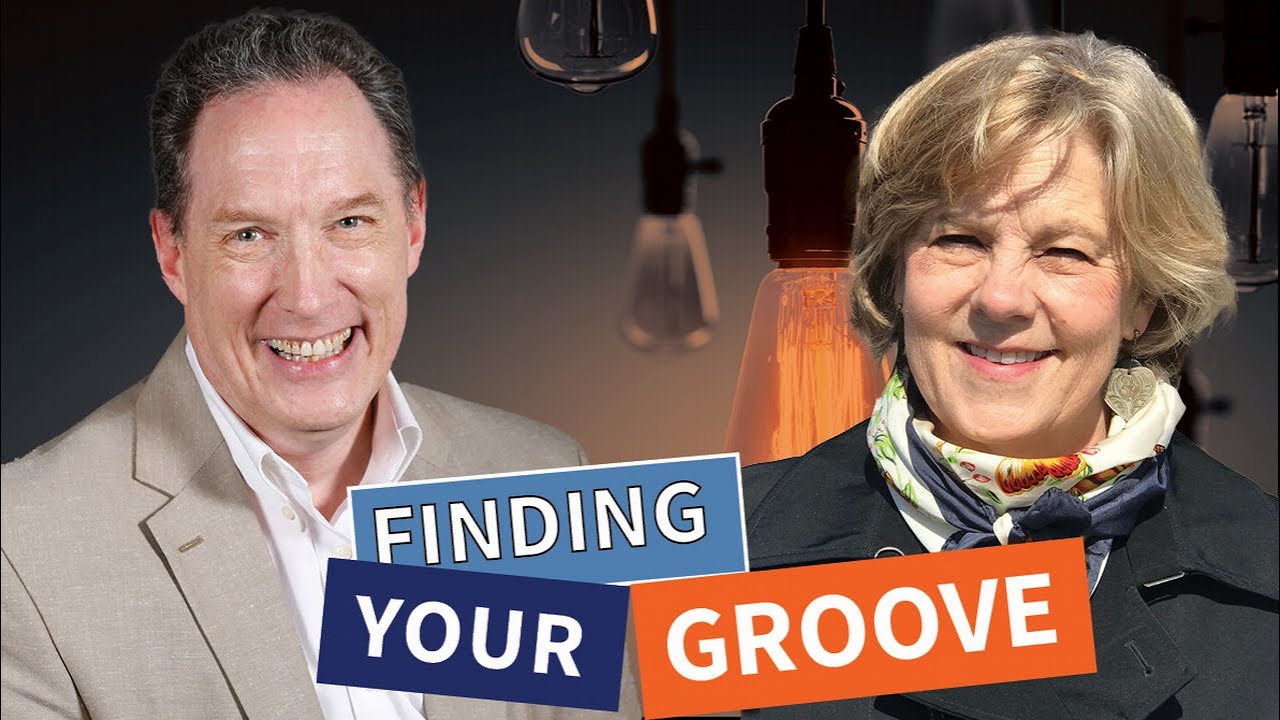
Marc Haine and transition coach Jean Howard discuss how to find your "groove" where values, talents, and reality align. They walk through a five-step framework including childhood interests and daily task audits, and warn against common traps like financial pressure and the myth that money is required for impact.
Chapters
Welcome to episode 100! This is a very special show. You know, precious few of us are living the life that we dream for ourselves. I know that I never got into the role that I went to school for. But I do consider myself lucky I ended up in roles that I am passionate about. I ended up finding my groove. Did you? And that's what we're talking about today on Marc Haine Live. Welcome to this episode! This is where small business owners and entrepreneurs pick up core skill sets to help them create the show-stopping, jaw-dropping experiences that their customers and their employees deserve. I am your host, Service Expert and Master of Experiences Marc Haine. And my guest for this episode is Business Consultant and Transition Coach Jean Howard. And today, we will be talking a little bit about how to get your groove on. But I have to say, as I mentioned, this is a very special episode because it is my 100th episode. And we are streaming live on Facebook. And we are streaming on LinkedIn. And we are streaming on YouTube. This is the first time I'm doing this episode or this podcast across platforms. So, if you're joining me on any platforms, come and say hi. See, tech issues, right? Tech issues. I will be opening up the chat windows so you can add your comments and your questions. It'll be great to have you come by and be part of today's celebration. I don't know about you. But as a kid, I grew up with dreams. And my big dream was I wanted to be a police officer. After high school, I went to college and I studied police technology. And while I was in school, I started working at a restaurant. And I did that for my 3-year program. And then, when I graduated, while making applications for different police forces across the country, unemployment being So darn high at the time, I stayed working in the restaurant. And I worked full-time. And I was really grateful to have a job. But before I knew it, I was married. I had children. And I was absolutely embedded in the industry. So, I'd like to know from you our Question of the Day. Are you living your highest value? Are you living your purpose? Are you working within the scope of your expertise? I'd love for you to be part of this conversation. Why don't you go ahead and put comments in the comments section? Go ahead and be part of this conversation. And if you're going to be sharing this on social media, make sure that you hashtag it #ExperienceLeadership so that we can follow along with the conversation. My guest today first came on this show just over a year ago with episode 45.
Amazing!
Jeanne and I hit it off immediately and knew that we had to work together. She came back onto the show for episode number 63. And she and I created the Audacious Leaders Summit together. Just a little bit about Jeanne. Jeanne is a sought-after business consultant and a transition coach. and is the CEO of Griffin Fletcher LLC. She works with organizations and she's an absolute phenomenal coach. Jeanne, welcome to the show! It's so nice to have you for number 100.
I cannot believe it. And what a perfect topic to be addressing on this, your 100th episode. You got your groove on. It didn't happen overnight. But here you are, your 100th episode. And congratulations, Marc. This really is an accomplishment.
Thank you.
So thank you for the introduction. Just for those of you who participated in the Audacious Leaders Summit, it will be appearing again in the fall. So stay tuned. And we are excited about what we're going to be doing. We learned a lot from the first time, as we always do. So let's talk a little bit about your groove. Are, are, is the work that you do aligned with your talents? Is it aligned with your values? COVID gave us permission to explore that in depth. COVID said, okay, either you don't have a job anymore or you're going to work from home, so how does that feel? Or, sorry, this business is closed. You don't have a job. I don't have a job. And now what do we do? Now, fortunately, I would say that at least in the US, there was a lot of support for from the government, and people took advantage of that to do a variety of different things. I specialize in helping businesses or people go through transitions. They know something's wrong, something's not working right for them, and I help them identify and clarify what their values are and what they want out of life and create a strategy to move forward. So where did I get this idea, or just the word groove? Marc mentioned his life, how he started out down one path and then changed direction completely. But I'm certain discovered the commonality between being a policeman who is helping people all the time and being in hospitality where we're serving people all the time. So, what he identified was a, you know, was a core value to him, which was helping people. How am I going to do that? And decided that he didn't want to be out on the streets helping people, waiting for a disaster to happen, but wanted to be in a situation where that help, assistance, and hospitality was more consistent. So, let's talk about groove. 1998, a fantastic movie came out called How Stella Got Her Groove Back. It starred Angela Bassett. Angela was in a bad— her character was in a bad marriage. She was making it happen, but then suddenly something happened that said, that's it. It's over. I don't know what you're about, but I'm out of here. And the story goes on, and she discovered love in the islands with the pool boy, and life was beautiful after that. But does it take that kind of crisis to get us to start looking at what we're doing? I've worked with many people who are unhappy in their jobs. Something just isn't right. And how do we take it? So, what I'm going to talk about is how we take it from being sort of uncomfortable to comfortable, aligned with values and talents, and really rocking it.
So, Jean, why is this important topic? Why is it specifically that this topic is important today?
Well, Marc, I have some news. All of us only have 24 hours in the day. And if the last 2 years haven't taught us this, I don't know what it would take. But every day is precious. Why spend your time doing something that you don't want to do? Furthermore, there are a myriad of tests that you can take online. The DiSC, a Myers-Briggs, or Myers-Briggs variant, other things that will tell you who you are. But you know who you are, you really do. Unfortunately, over time, we are barraged with opportunities and shoulds, if you will. Oh, you can go be a policeman. You can go be a chef. You can go invent something and be a millionaire app. You can trade cryptocurrencies. You can grow your own food. You can open a farm. You can do just about anything. This is a generation of what I would say access because of the internet, Because of media, because everything's— how do you choose? It could be paralyzing.
Yeah, yeah.
I have a lot of interests. So, now what?
So, before we dig really deep into this, I think maybe it might be worthwhile to define what it means to be in one's groove. When you use that phrase, what does it mean to you?
We all are created with a set of talents, a set of skills, a set of— what's the right word— tendencies. Tendencies for whatever. We like certain things. So those things are laid down. In addition, we have skills and loves like, I love math. I love concrete issues. I love ideas. We all have that, and that is our special sauce. Each one of us is just terrifically unique. So the opportunities to go and grow and build something are, are definitely there. You can start a business. You can find money to start a business. Typically, financial limitations are not huge right now, but you have to be real about, you know, where you are. But more than that, it's— we all need to, as human beings, Make a contribution. There are a variety of different ways of doing that. But work, I don't think it's work because I have a lot of fun. But work, that 4-letter word, is where we spend a tremendous amount of time. So, why not bring your best self to that? Be aligned with your values, your skills and talents, and your work product, your contribution to society.
And that's I think a lot of people would be watching this going, yeah, that would be great. But what do you think are— what's handicapping people from living their best life, do you think?
Well, one thing is reality. We have to put food on the table. Or maybe you have to put food on the table, maybe not. So, it's the reality of your situation. Can you just quit your job, go start a business, and not make money For 3 years. Most people would find that hard to do. A lot of it is fear, Marc. It's fear of what would happen if I stopped trading stocks on Wall Street and I bought a farm and grew herbs because I completely and totally believe in the power of botanicals as preventative medicine. What would happen? Oh my goodness, my lifestyle would have to change. So that's another thing that is preventing people is the fear of uncertainty and lifestyle. Sometimes it's a fear of failure or fear of success, or it's the expectations that other people have put on you. Stop listening to other people. Listen to yourself. You can listen to other people, but they're not the boss of you. You are. You have one life. You have one opportunity of 80, 90, 100 years to contribute to this world, this planet, this universe. And what are you going to do?
Yeah, yeah. When it comes to people thinking about what their passion project is or what their purpose is on this planet, are there any myths that you think that we need to overcome in order to move forward?
That's interesting. Are there any myths? One myth is you can't contribute unless you have money.
Oh, okay.
And so, I only have freedom and I can only make a difference if I have money. Here's another one. The only way I can make changes is in politics. It's the only way to make changes. So, the only, you know, or decisions are being made by politics that are affecting me. And therefore, I'm stuck. But here's a perfect example. Michael Bloomberg was making lots of changes and influencing a ton of people, millions of people through his business, Bloomberg Media. And he decided that he wanted to have a different impact and left that position as CEO to become mayor of New York City. He's subsequently back in the position of CEO. But he said, look, I'm reaching A sector of the population through Bloomberg Media. But there are many other people that I could be helping that maybe in a position in politics, I could really make a difference. Other things that stop people from moving forward is, what would so-and-so think?
Yes.
Maybe you don't have the support of your partner or of your parents or of your children or of your best friends. That's hard. But maybe, your family is going to be your family. But commitment, they know you. If you are committed to making a change and going a direction, you can convince them and they will support you. Otherwise, get new friends.
Well, and that's part of the challenge, isn't it, when it comes down to kind of following your passion, following what you'd love to do is you have people who will support you. But you will also have those soul suckers that will tell you everything you can't do. And what's interesting about that is I find that the soul suckers, the people who will quash your dreams, are all the people who've never done it, whatever you're attempting to push forward. But the people who have done it are the ones who could be your biggest supporters.
Right. And I'm not suggesting that you go out and jump off the cliff or dive into the pool. There are many ways of making that transition.
Sure.
That are comfortable for you. And so, I have a 5-step approach to that. But here's another thing that stops people. It's denial. No, I don't love gardening that much. No, I don't love experimenting with botanicals that much. Nah, it's not important to me. No, I don't really like serving at the soup kitchen every week, but I think I should do it. No, no, you do. You really do care about that oppressed or left-behind population. It's, it's all right. It's okay to be that way.
Yeah.
So stopping everything, stopping the media— the media is telling you what you should have, what you should be, um, constantly— just shutting that down for a while and realizing that's that. I'm me. It's okay to be completely and totally Uniquely you. There's no other job available for you except you. Be you.
Brilliant! I really love that. And you mentioned you have the 5 steps. And I'd like to get into that. And we'll do that right after this.
Great!
When the spotlight shines on your business, are customers applauding or yawning? In other words, how is your business performing? Make your business a star with a new book Lights! Camera! Action!, business operational excellence through the lens of live theater by Marc Haine. Marc uses his business and acting experience to help you see your business like a live show so you can create a performance your customers will never forget. Buy Lights! Camera! Action! today at your favorite online retailer or directly at marchaine.com.
Welcome back! I am speaking with the Incomparable. Incomparable. Traditional.
Incomparable.
Incomparable. The incomparable lifestyle coach Jeanne Howard. Jeanne is such a brilliant coach. So Jeanne, you mentioned something about these 5 steps to being able to identify what our groove actually is. How do we know if we're in our passion, if we're in our groove, or How do we find it if we know that we're not?
So, there are a couple of factors, key factors. At the very base of everything is your values. What are your values? For example, I am an environmentalist. I would be hard-pressed today or any day in my past to go work for an oil company. It just wouldn't be where I would go. Now, would I work for an energy company? Yes. provided their focus is on renewable energy, whether it's solar, or wind, water, something other than fossil fuels. So, at a core value, it, for me, it's environment. How is anything I do going to affect the environment? So, you need to know your core values. The second part is your skills, your innate skills, not the skills that you have learned, Or acquired over time, but your innate skills. For example, I like talking. That's probably an innate skill. Marc, you like talking. That is an innate skill. But there are lots of people who don't want to talk, who don't want to be in front of, of others. A lot of my clients in business aren't interested and have no skill in Numbers. They don't want to manage their finances. If you ask them what their revenues are, it's hard for them to even come up with it. It's important, of course, being in business, to have some capacity with numbers for your financials for success, but you don't have to be the person who's doing all the, the mechanics about in bookkeeping or financial management, for example. So we look at your values. We look at your skills, and then we kind of over the top of it, look at the reality of your life. Because of your children, your family, ailing parents or whatever, you can't move. You look at the real constraints, not constraints that you've imagined, but the real constraints. And in many, many books will say, just go and find this, but don't even bring in the reality. I say, bring in the reality, but challenge it. I live in a wonderful place. I don't have children. I don't have to stay anywhere for, for school. So could we move? No, no, we can't move. Of course we can move. There's no reason why we couldn't move. The same thing even if you do have children. You have children, great. They're ending one school, going on to another. Is it possible to move them? Is it possible that your partner's job could be geographically or physically Remote, or do they need to be someplace? So those 3 things, you're looking at your values, which is all you, it's nobody else. Dig deep, guys. They're your values. Secondly, your innate talents. We can add to that, what skills have you picked up that you really love? Um, I don't know. I mean, there are lots of examples of that, but, you know, Keep that in mind too, and then finally the reality of your own situation. So once you have that, so let me share with you a couple people who who did that, who made a huge jump. You I don't know exactly their motivation, but Bezos he used to be a computer science person in a financial company. He said enough of this boop boop boop boop created a retail business went online, and we know we know the story of him. We don't need to go any farther. Martha Stewart Martha. Martha Stewart also was on Wall Street and she loved cooking. So what happened? She left. She started her cooking show. She built an incredible business in Martha Stewart Omnimedia. I mean, that's incredible. And what did she bring in? Other things that she loved to do. A little more modest development is one of my clients. Worked for the state and she did a lot of training. So she was in front of people. She has that gift of, of talking and a presence and poise, but she loved shopping and she has opened her own online business and is rocking it, absolutely rocking it. So you can take what you love doing and integrate it into something that you can continue to support your family or make money on, whatever your goals are. But where do you start?
Well, you know, I keep talking. Just give me half a sec.
Sure.
One of the things that you alluded to is this thing about the values and so on. And then, people pushing themselves forward. It really does sound to me that if people want to stay comfortable, then they start making excuses on why they won't make changes, why they won't start. Again, you mentioned something about having a paycheck and being able to make the mortgage or not being able to move because the change I think is what is scariest for most people.
Yeah. But hey, we all live through this. If you're watching this, you're still alive. You lived through the last 2.5 years of incredible change. Incredible change. Getting your groceries online, getting misfit or rejected food and realizing that is perfectly edible and you can do marvelous things with it. Starting your own garden so that you have tomatoes that are fresh and tasty, not something that was, was grown in a hothouse. I mean, we all have experienced the change, and each one of us can talk about even this. Look at this. We're talking. You're in Edmonton. I'm in upstate New York. And we have developed this relationship having never, ever met in person, which is—
Right.
Absolutely remarkable. All right. So the world is really open. Now, now look at what we're going through right now, a horrible war in Europe.
Yeah.
You know, civil strife in many other continents of the world. And so there is change. Change is constant. I don't know who said that, but it was brilliant. I didn't say it. Somebody else said it. And that, that is it. But we do want to hold tight. The harder or the tighter we hold, the less opportunity there is to absolutely sing and live in joy.
And I guess that's the big change that COVID allowed us. COVID gave us, forced us into becoming all of a sudden, becoming uncomfortable and shaking our status quo thinking and forced us to start thinking about what would it be like to actually work from home? What would it be like if I didn't have to drive 45 minutes into doing a commute into an office every day and back again?
Amazing!
They question. People question. I think the biggest challenge I think is for positions that are entry-level positions. Hospitality, Culinary arts is suffering drastically because people have figured out, hey, you know what? There are different ways and probably easier ways for me to be able to make a living and live my passion at the same time.
Right, right. And the number of businesses that have launched over the last 2 years is really remarkable. And if you look at— and there's lots of information out there and graphs. But there were I forget what the numbers are. At the beginning of 2020, there was, I'm gonna make up a number, you know, 500,000 businesses being formed, but 5.3 million businesses in the US formed in 2021. People figured out that there was something else they could do. But to your point, they were forced into it. But wouldn't you wanna make the change because you choose it rather than you're forced into it? So here's a great place to start. Number 1, take a piece of paper. If you want to do it on your computer digitally, that's fine. Think about who you were, your 8-year-old self. What did you do? No responsibilities. What am I doing with my time? Am I figuring out new ways of making blueberry muffins? Am I exploring my new chemistry set and mixing things up in In, you know, my little lab? Am I painting things? Am I out in the garden exploring bugs or leaves or cutting flowers or, or whatever? What are you doing? Or am I figuring out new moves on my skateboard? Am I just hanging out with my friends playing board games or playing games of some sort? Get in touch with your 8-year-old self. At 8 years old, we're not influenced as much as we are when we get into middle school and get older. We're still who we really are. What were you good at then? Were you good at making peace with your siblings? Were you good at talking in front of church or singing or whatever? What were you good at? Okay. Then fast forward to when you were 12. What grade is that? You're in middle school at this point. There's a lot of different forces and factions and influences coming in. Do the inventory then. What do you like doing? What's your best subject in school? Where are you getting your A's? Maybe your best subject isn't even something in the classroom. Maybe your best subject is, is something having to do with sports. Maybe it's, you know, gathering people and your, your friends all to Do a food drive or put on a neighborhood play or open a lemonade stand. Who knows? But look at what you were doing at 12. I'm sure everybody has enough pictures or journals, scrapbooks. If your mom and dad are still around, ask them. Ask them what they saw in you at 8, at 12. And then fast forward. What are you doing now? Maybe you're 24, maybe you're 54. What are you doing now? And try to draw the lines between those. I think you'd be really surprised. So that's the first step. The next step is— okay, we put that aside. Take inventory of your current situation. This has been incredibly eye-opening for people, whether you're in your own business Or you're working for someone else. Log what you do every day, how many hours you do it, if you're good at it, if other people think you're good at it, if you like it or you don't like it. And you can do a 1 to 10 with all of those, and you will be surprised that you are probably choosing— if you own your own business, you're choosing to do the thing that you love. Ha, that's a good insight. Okay, if that's what I love, then great, I need to focus on that. So perfect example of somebody in their own business is social media posting. We have to do social media posting to get attention, for people to know us, right? Who wants to do that? You know, I heard a statistic yesterday that to get rid of the ads on LinkedIn, You need to post, or maybe it was Facebook, you need to post 500 times a month. That's outrageous. I don't know if that's true or not. It might just be folklore. But the point is that you have to do a lot of social media posting. Well, maybe if you hate, excuse me, hate it and you find that you're spending an hour, 2 hours a day, get somebody else to do it. But this is really eye-opening. I worked with another fellow who was an employee and we did this. He did it very religiously for a week. He discovered that 85% of his time was spent doing something he hated. He hated. Never mind the fact that other people thought he did it well. He didn't like it. That's huge. 85% of your time doing something you don't like. Okay. So, now you have sort of the big picture, the past, your innate abilities, and what you love to do from a very pure standpoint, 8-year-old, your 12-year-old self, and now kind of current. And now, you have where are you spending your time and looking at the reality of that. Okay, don't shoot yourself because you might discover that 90% of your time is being spent doing stuff that you don't believe in for somebody that you don't believe in. You don't believe in their values or you just don't like it. And maybe you're not even good at it. So, I ask you this question, Marc. Why would you spend any time trying to develop a skill that you have no gift in, you have no talent for? Why would you do that? I'm not saying that you shouldn't know something about it. And for all of us who hire other people to do our websites, to do our social media, etc. You need to know about it. But heck, I don't need to know the ins and outs and the logarithms— excuse me, algorithms for LinkedIn or Facebook or LinkedIn Live or YouTube, etc. Because it's not my gift.
Yes.
Yeah. So, it's so interesting because we do force ourselves into it because we feel maybe that we have to. It's my business so I have to do it. Yeah, I hate it but I have to do it. I talked to some business owners and the one aspect that they hate is they hate the bookkeeping. Then, why are you doing it? Because chances are, if you paid somebody to do it, A, if they have a passion for it, they'll do it much faster, much better, and they'll be much more consistent with the work rather than you having to go, ah, now I have to do the bookkeeping. Right?
Well, there's also— you asked why is it important to do this. I believe that there is abundance for all.
Yes.
There is abundance for all. And if we're not operating in our sweet spot, subconsciously, we're just going to be resentful or angry. That may not even boil up and you may not even be able to identify it. But if you're not working in your purpose, if you're not working in your skill set, if you're not working doing something you love, Frankly, you can force success. But that doesn't mean that you won't come home every night, whatever, or leave one room and go to another one. And work out your disappointments, your deep disappointments in another way.
Yes, yes, yeah, exactly. Jean, this is just so marvelous. And again, I think you're brilliant with how tapped into I think that you are into the human condition. How can people get in contact with you if they turn around and say, oh, I have to— I need Jean.
You do. Well, you can, you can email me directly, 123bestpeople@gmail.com, or you can join my Facebook group called Abundance with Purpose. Because you know what Pablo Picasso said is the purpose of life is to find your gift. The purpose of your gift is to serve others. So, my job is to help you find your gift and get into the situation. And I hold your hand. I provide cheerleading to get you into the situation where you can really thrive. We need you. We need your gifts. Society is— we're all hurting, aren't we? I mean, at some level.
We can. And so, part of it is we have people who are in quote-unquote dead-end jobs. And they're like, but I need the paycheck. There's just no way I can develop. What do you say to those people?
Start exploring. Find out if there's anything in your job that you like. Anything. Dead-end jobs, flipping burgers at Mickey D's. Is there anything there that you like? Try to just squeeze that out. It's not always easy.
Hmm.
And then, find somebody who is somebody in a role who does that part of it. I really like preparing the food. I like preparation. I like putting stuff together for someone else to do something with it. And explore that. You asked me why people don't change. I will give you a primary reason: access. They don't know that I could do the prep work for somebody all day long. And they could be doing something else. Maybe I'm watering plants. Maybe I'm repotting plants in a nursery. Maybe great because I really like to be outside. Anyway, my point is that there is a lot more that we could be doing other than this job that we hate.
Yeah.
Again, I say, No need to jump off the cliff. You can do the transition. But I will tell you this, and everyone that I have worked with who has done this gets excited and then is willing to take the risk and handle the risk necessary to get to that next point of joy. So, it's getting out of your own skin and talking to other people.
I find that sometimes when people kind of want to make this change, they They go all in and it just becomes all-consuming. And I think this is part that— this is me by a landslide. When I learn something new, I get so excited by it that it just consumes what I do. How important is balance when people are trying to get into their groove?
Huge, huge, hugely important. That's why we do the exercise or the work of values. first. And so, when you decide to do something, is this supporting my values? Is it supporting my long-term or lifetime goals? You may not have any lifetime goals. You may not even have a goal for today.
Right.
You may not have a goal for the next quarter. But out of your values and out of what you want in life come your goals. And so, it tells you, are you spending time in the right place? I have a colleague. Who is a coach, who is an awesome business coach. However, when there is a new software, I find her digging into that software and getting to know all the bits and pieces of it. She loves it. So as good as she is as a business coach, I query to her, is this supporting what you really want? And then I say, because you're doing this and you obviously love it, exploring this new software. Have you thought maybe about sharing that talent, that passion, that love, that figuring out how this— the mechanics of something? Have you thought about taking that to the market in your clients? Hey Marc, you could save a lot of time. Here's a new software that will combine these 3 softwares that you're doing right now. And as a business coach, I help you not only with the software and the mechanics of it, but how you transition. to it. So, balance is really critical. I have an— it's easy to get consumed by your work. Those of us who have found their groove and are in a space that we just love, it's easy to shut out the world. But then comes the discipline of my family, you know, my— whoever that is.
Yes.
Don't isolate yourself just because you're in your groove.
I have a sneaking suspicion my wife is watching this going, see, even Jean says it. Even Jean says it.
Maybe, maybe so. But it's true. But we love it. But it's incredibly self-indulgent once you're in your groove.
Yes.
But in terms of keeping balance, I'm going to add number 3, which is talk to your 2 best friends. Say, you know, we've known each other for 30 years, 20 years, 10 years. What do you see that I do really well? Because they don't have a vested interest as your employer does. Your best friends are your best cheerleaders. Ask them, you know, I'm thinking about X. What do you think? Or, you know, I don't like this in my job. Have you ever thought that I did that well? Because I really don't like it. But talk to your 2 best friends. They're your buddies. They're your support. And then spend time alone. Number 4, spend time alone. Walk in the woods, listen to some music, not a podcast, but just some music that just taps into the other side of your brain. Make, you know, make a practice of just 3 pages a day of writing, just stream of consciousness, just write. Write whatever comes to you, just write down. What you're trying to do is shut out all the other influences, peel off the layers of expectation, of media, of message, and get back to yourself, just your own core self. I call it walk in the woods. Yeah, you'll be distracted by the, the bugs, the animals, the trees, etc. But it puts you in a totally different place. And then finally, you're going to figure out a strategy to go from where you are to where you want to be, to where your groove is. And if you need help, there are coaches available to help you. I certainly am available to help. But I will say this: Rome was not built in one day. Muhammad moved the mountain one pebble at a time. And so, don't expect that whatever you've created over the last 25 years is going to change overnight unless there's a crisis. And then, you're not choosing it. Somebody else has chosen it for you. But no need to be a victim. No need to be a victim at all anywhere.
Yeah, it's so good, Jean. This has just been so fabulous. I'd really like to get for the people who are motivated to get started. And I love the fact that you mentioned that they can call you or call a coach. And understanding that there are different coaches for different things. And I think that's one thing we need to put out there is if you're looking for lifestyle changes, if you're looking for somebody to— that's one coach. If you're looking for somebody to help you with the business, that might be another coach. If you need somebody to help you with time management, that could be another coach. There are different ways to approach coaching. And so, I think it's really incumbent upon people wanting to make the change that they analyze and say, where do I need the help? in, and who do I need to help support me in that? Yeah, it's brilliant.
Yeah, and, and what I would say also is that good coaches, coaches with integrity, will say, you know what, this is not my area of expertise. I don't do grief coaching. I don't, I don't help people get through their grief. For example, I don't do addiction coaching. At all. And although it's clear that I know how to speak, I don't do speaker coaching like you do, like you do in terms of helping people position themselves and get those speaking gigs. So if somebody came to me and said, you know, I really want to start speaking on an open platform, I'd say, great, I know the person. I'm, I'm not going to help you. I'm going to hand you over to my buddy Marc, who really is an expert in this. So, you have to know. I mean, us, we as coaches, we need to know who we are too. And my expertise is somebody who is stuck. Somebody who needs to scale their business. Somebody who finds themselves in the wrong place. Somebody who knows that they need to grab a new opportunity and move on. And that is my expertise.
Beautiful! I know that as people are watching this, they're thinking, okay, it's time for me to take the plunge and do something. I'd like to talk a little bit about some cautionaries about making changes and about jumping into finding your groove. And we'll do that right after this.
When you're delivering an important speech to a huge audience, it's easy to lose your place or go way over time. Give yourself an advantage with the Pro Speaker Presentation Speech Timer app. No more checking your watch or calling for time. The Pro Speaker Presentation Speech Timer app keeps you on Keep on track with easy-to-see timers, even changing color for visual prompts during your speech. And you can set audio cues to practice or set it to vibrate so you don't even have to look. Be the pro you know you are. Download the app at speakerpresentationtimer.com.
Welcome back! I am speaking with my very good friend and brilliant coach, Jean Howard. As you can tell, we are really passionate about helping business owners and teams excel. If you know people or you know somebody who could use our help, or if you belong to an association or an organization that is planning a leadership retreat, conference, or just needs some training, feel free to connect with us. All our details are in the show notes.
Sure.
Jean, before we get into some cautionaries, what's the one thing? If anybody takes one thing away from today's episode, what is that one takeaway that people should take from our discussion today?
Try it.
The gold nugget.
Figure out who you are. Live you, whatever that means, and be proud of it.
Great!
You know, Marc, you're a comedian. You know, you really like, like comedy, and you're a comic. You ended up, you know, before the show we talked briefly about that. I said, well, were you a cut-up at school? You said, no, I was too shy.
Yes.
But somehow you overcame that, and now you get to work all that comedy into either your stand-up routines that you do or into your speaking gigs. Um, it, it's just, it's such a gift in this In this era where things seem so overwhelming. And what, what if, what if you never explored that part? You would be another droll person doing a speech about customer experience, etc., and your listeners would go away. And that's what I say to other people. If you don't tap into what you've got, to give to the world. They're missing out and you're missing out.
Yeah, I can honestly say that that is one area in my life is I waited too long. I was too focused. Being a baby boomer, it was always your boss tells you what to do and you just do it. And I pigeonholed myself into status quo, into being comfortable. and not taking chances. Because in my mind, taking chances equated the risk of failure. And so, maybe it's maturity that changed all that. I don't know. But goodness gracious, I wish, you know, and I say this to anybody who's in their 20-somethings right now. Now is the time to explore your genius, right?
Definitely, definitely. You asked me early on, what is stopping people From, from, you know, exploring this and moving on. And it is, you know, it is this fear of what's going to happen. Well, think about that. What's the worst that could happen?
Right.
What's the worst, Marc, if you, if you delivered a joke or a funny story? What's the worst? They didn't laugh? Well, great. You still have, you know, 10 fingers, 10 toes, your eyes, your ears, etc. And maybe your skin is a little redder because the joke fell flat. That goes away too. So, what's the worst that can happen? What's the worst that can happen if you have a very responsible position and somehow you've made it there but it's just not your passion? It's not tapping into the depths of who you are.
Yeah.
I'm going to tell 2 other stories. When I first started out of business school, I was a financial planner and I worked for the CFO of a division of a very large conglomerate. And in the springtime, he would disappear. I would say— that's not his name— where's Sammy? Where is Sammy? Oh, he went home because it's planting time. He went home because it's harvest time. He loved his gardener— garden. He was a farmer at heart. He took time out of his position to be able to do that. Now, not all of us have that kind of flexibility to just disappear in the middle of the day, but I tell you, we have a lot of flexibility working from home these days. As long as you put in your X number of hours, many companies say whenever you want to work is fine. You want to start at 5 o'clock in the morning or end at 10 o'clock at night? Great. Get the work done. So we have the flexibility. And we have the access. So, it's available. We just need to exercise it.
Yeah. So, let's get into some cautionaries. What should be people—
Cautionaries.
Cautionary. Caution about what should they be cognitive of?
Yeah. Well, we've talked about jumping off the cliff. You know, don't— if you're going to change jobs or if you're going to start a business, Have six months of living expenses in the bank. Have it in the bank. You need that cushion. You also need to understand, you know, how you are going to make it in between. You know, maybe you're going to start selling your collection of coins while you're developing something else. Fine. Be real about your financial status and about your. your cost of living and make sure that's covered. Just make sure that that's covered. So that's the one thing. Secondly is, I'll say it again, there's no panacea. You might start something and say, I really want to X, and find out that didn't do it for you. Okay, that's fine. I can't tell you how many jobs I've had over my lifetime, and it was very clear from the time I was pretty young that I was a teacher. that I was an educator that I really believed in and helped other people to discover and express their genius. I mean, it took me forever. But anyway, if it doesn't work out, understand that that's not everything. Always have that backup plan. If it doesn't work, then what am I going to do?
Yeah.
Start small. Do it as a hobby. Join a group that does it. Whatever it is, get involved in meetups. Listen to podcasts. Explore on your own before you make the change.
And what's interesting about that is when people do that, when people get into a mindset or get into an area of their life that they want to tackle, as soon as they jump both feet into it or as soon as they start exploring, they'll find other people who are doing it. They'll find other resources.
They'll learn more.
Like When I started this podcast 2 and a bit years ago, I knew nothing about podcasting. Only that I just wanted to be of service to my audience. And through the 2 and a bit years, I've learned things and done things. And even today, we've had some little minor tech glitches. So what? At the end of the day, this is my passion. My passion is to serve. And that's what I'm doing because that's my core value.
Right. Here's one other thing. You can't do it alone.
Yes.
You can't do it alone. You may think you can do it alone, but you can't. That's not the way we are wired. You need— put yourself into a community. Just what you're saying. Put yourself into a community. A community where, hey Marc, I'm thinking about such and such, expanding my service. What do you think? Marc's doing it. I'm doing it. We can do it. We don't have to be alone.
Yeah. Jean, this has been such a fantastic topic. And again, you and I, I enjoy talking to you endlessly. We always have some really great conversations. Do you have any last thoughts about what we're talking about today?
I have so much to say on this topic. I would just say this. My value, my core value is to help people discover themselves and bring their brilliance and their light to the world. It brings joy to them. It brings to others. If anybody would like to talk about it and just have a conversation, drop me an email, 123bestpeople@gmail.com. We can explore it. You know, who knows? You learn a lot by talking to other people, but you can't do it alone. And don't think you can. And by the way, don't think that all those people that we hear about in the media who have succeeded, whatever your idea of success is, they didn't do it alone. They never did it alone. You just don't hear about all those people who supported them.
Right.
That's my last word.
Ah, Jean, thank you so much for being here. Thank you so much for being and helping me celebrate my 100th episode. It's been absolutely stellar having you.
Congratulations!
Thank you so much. And thank you for your support.
Good for you!
And thank you for being my coach. And thank you for being the person I can talk to when I'm pulling out my hair saying, Jeanne, what am I doing? I just— Jeanne, help me! I enjoy having you as my coach.
I have one of those days.
And I enjoy our conversations. And thank you so much for being here today and being part of this because you're part of who I am now.
Thanks, Marc. Congratulations and we'll see you soon.
Thank you.
Thank you everybody. Get to know us better. Marc Haine, Marc Haine Live, Jean Howard. There you go. You can find us.
Thanks, Jean. Why don't you let me know if this was of value to you? As always, my offer stands. If you would like 30 minutes of my time to help you brainstorm your business or challenges you're having with your business or with your teams, feel free to book yourself on my online calendar. The link is in the show notes. It would be my absolute honor to be of service to you. And if you haven't done so yet, why don't you go ahead and subscribe to this show? By doing so, that'll give you first dibs whenever I bring you fresh new content that will help you work on your business, not just in your business. My purpose is to help you create that show-stopping, jaw-dropping experience that your customers and Your employees deserve. My name is Marc Haine. I hope you stay safe, stay healthy, and I hope you dare to be the exception. Thanks for joining us today.









