Navigating Uncertainty: How to Drive Decision Making for Long-Term Success
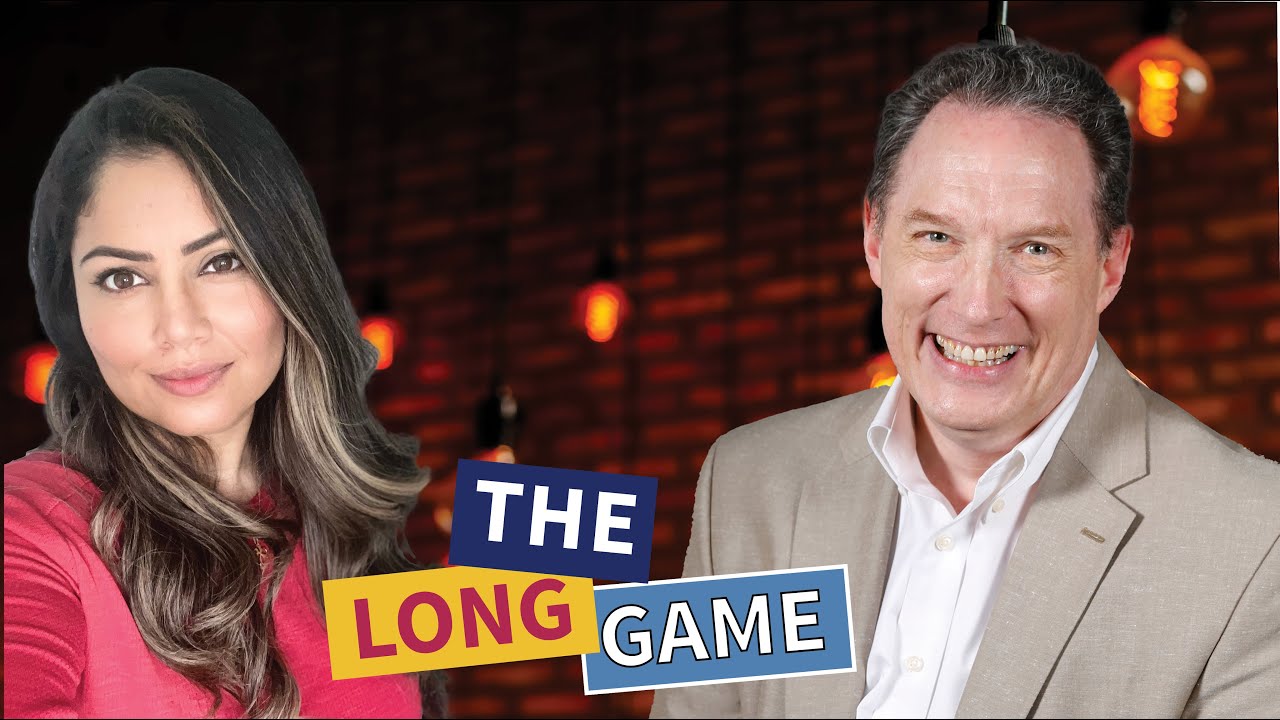
Executive coach Sandeep Ogla explains how leaders can move from crisis management to deliberate long-term decisions. He introduces the Domino Strategy, a physical exercise using labeled dominoes to map decision pathways and consequences, and stresses the importance of considering all stakeholders, not just shareholders, when making high-stakes choices.
Chapters
Every day, we as leaders have to make decisions. But most times, we are addressing a current need in a current situation or a crisis. But how many times have we made a decision that really bit us in the butt down the road? And that's what we're talking about today Welcome to this episode! This is where small business owners and entrepreneurs pick up core skill sets to help them create the jaw-dropping, show-stopping experience that their customers and their employees deserve. I am your host, Service Expert and Master of Experiences Marc Haine. And I am Marc Haine. And it is so great to have you here today. I appreciate that you invest your time. And I hope to goodness that we deliver on that investment for you today. My guest for this episode is Executive Coach and Keynote Speaker Sandeep Ogla.
Hi Marc!
We will be discussing the value of playing the long game when it comes to decision-making and uncovering some key strategies for thinking more comprehensively when making effective business decisions. So, stay with us. If this is your first time with us, I invite you to check out the other videos on this channel. Each one is chock-full of information and learnings that you and your team can apply to your businesses today. As leaders, we are under pressure every single day. We not only have to constantly prove our mettle but we also have to deliver results. Results like higher output, more sales, lower costs, more profit. The list is endless. And sometimes, what seemed like a good decision today could have devastating consequences tomorrow. So that brings us to our question. Question of the day. Why don't you share this episode on your favorite social media platform? And in the comments, tell us about that one decision you made. You know, that one decision that you will never forget because somewhere along the line, it bit you so hard in the butt. that you think, if only I had been more considerate and more contemplative of the outcome. And go ahead and make sure that you hashtag your comment with #LeadershipExperience. I'd love for you to be part of this conversation. As I mentioned, my guest today is Sandeep Ojla. Sorry about that, Sandeep. Sandeep started her professional journey in managing operations for large multinational She pairs her business acumen with her training in organizational psychology to bring evidence-based decision-making to really help business leaders navigate difficult situations and make high-stakes decisions with greater confidence. She prides herself in serving as a trusted thinking partner to many business owners of medium and large businesses Sandeep, welcome to the show. It is brilliant to have you here today. I can't wait to get into today's discussion.
Thank you so much, Marc. It's totally my pleasure.
Before we get into today's topic, could you just tell us a little bit more about how you serve your clients?
Absolutely. You know what? Thinking partner is the key term. How I do that really varies across the services that they need. So, in many cases, it's working one-on-one with the CEO or with the executive team. And the goal is to coach them to find their own solutions. So, the client or the CEO or the executive team is in the driver's seat. And I, as an external person, is helping them think comprehensively, look at all the possibilities, assess the pros and cons, and make decisions that will serve them not just now but also in the future. Now, that is a common way.
When you first— you and I first talked and you said that you're an organizational psychologist and it kind of blew my mind because I didn't know there was such a thing. Could you talk a little bit about what that means in the scope of how you serve your clients?
Absolutely. So, I'm an organizational psychology practitioner. And I know it's a mouthful. It is absolutely a degree that has prepared and trained me To look at all the things that relate to decisions around people, work, and workplaces, looking through the lens of data. And data does not just mean the numbers that inform us about how organizations are doing, but really looking at the qualitative and quantitative data such that we're making the most informed decisions before just jumping ahead and giving marching orders. So, I think it really sets a stage of evidence-based decision-making. And that gives greater confidence in choosing the best possible option.
I love it. And I can just see being, I think of so many different experiences I've had and I wished I had somebody like you in my corner in order to drive that. Because again, I didn't realize there was such a thing as organizational psychology. But why do you think— so today, we're talking about this idea of decision-making in a way that That we're thinking about playing. We have to play the long game when it comes down to decision-making. And at the very beginning, I talked about this idea that we tend to be very reactive to crisis and to situations. And we don't necessarily think about long-term implications. Why do you think this is such an important topic in today's world?
Well, because we have to live with those decisions, right? So, the amount of rigor that we in making a decision. And more often than not, the intention is always positive. However, the amount of rigor that you put towards making decisions has impacts that you will have to live with. And of course, report to your board or to your employees. So, the initial investment. And of course, not every decision requires long deliberation or tons of data collection. It's knowing which decisions are those high-stake decisions that will impact your business's sustainability or perhaps the growth of your business. So, if you can use your judgment in identifying those opportunities that require you to pause, reflect, think comprehensively, those opportunities when you use all that data to make an informed decision and not just thinking about, let me just take care of the presenting problem or the symptoms of what I'm experiencing. But dig deeper to actually understand what the root cause is so that you're addressing the problem for the long run. All those things give you greater confidence because as I said, you have to live with those decisions. And that little bit of additional rigor can make all the difference in getting you to be successful.
We see that now as we've come to this, what I like to call the almost post-pandemic era. The pandemic is no longer part of the nightly news cycle. And people seem now to just be getting through their day as business as usual. But are there new expectations on leaders now to be more strategic in this new era?
That's a great question. I think we are recognizing we have new challenges. And because it's not business as usual, whether it's figuring out whether our employees will work on-site, some combination of on-site or out away from work. The challenges of these new expectations definitely have presented an opportunity to think differently. Now, to borrow your words, is that an invitation to think strategically? I think it is. But not everybody's prepared to do so, primarily because people are burnt out. And there is so much Coping that has happened for such a long time without enough rest period, and we are already you know willing to say it's business back as usual when there's nothing really back. You know there's nothing going back. It's like that it's the typical resilience piece. So it's a rubber band that has been stretched so far; it's never going to go back to the same shape. So we have to be prepared.
Yeah, I get a sense though that I don't think that there's anybody in business right now who's turning around going, oh, I'm too tired to think strategically. I believe that every business operator and manager watching this is thinking, of course, it makes sense to play the long game. Of course, we have to think strategically. We have to consider future implications. But to your point, what they believe to be strategic decision-making They might not be taking in all the considerations. So, how do they know that they might be really bad at this?
Oh, that's hurtful. But let's go back to the intent. I think we agree everybody listening and everybody who's in business has the best intention at heart. Best intention to serve their customers, best intention for their employees, and for their own personal success.
Right.
The challenge is when the pace of business is so fast and there are so many constraints that are being experienced by these leaders. Yes, they want to be strategic. But it's also really, let's just get it over with. And the desire to take care of the problem fast and not pausing enough takes away the opportunity that there exists to be strategic. And the other part that you and I were talking about before about some of the decisions you have made in establishing your business success is leveraging the coaches. It's knowing that there's a limit to what I know today. And that acceptance alone, that truth helps you make progress towards what do I not know? Who can help me find out what I don't know? Who can expedite my growth? So, it's really that partnership and awareness. And obviously, we can't do that for every decision.
Right.
But if we can have the judgment about decisions that really require that pause and reflection, then yes, business leaders are going to be better positioned to get or find the resources or tools and tactics that we can talk about today that would help them be more strategic.
And to your point, I think that leadership has changed over the last 30 years. I mean, it used to be like when I was growing up in management roles and so on, I'd always be looking at my boss going, oh my goodness, my boss has all the answers. He knows everything. It's like, I I can't wait until I get into a position where I know everything. And then of course, as I got up to it, it was like, wait a second. I don't know everything. And this is where our conversation took us about actually having— I hired coaches because I couldn't see things I didn't know.
Right.
And so now that whole change has happened now where it's okay for leaders not to have all the answers. It's okay for leaders to tap into their teams. It's okay to for leaders to tap into subject matter experts to help drive them forward. It's no longer considered a weakness. And so, do you think that this is a mental shift now that is ingrained in our corporate society?
It's hard to say if it is ingrained. But people who now think it's not just okay but it's actually very smart of me to expedite my growth and my business's success by engaging my team, by bringing people along, by bringing those external experts. That is being strategic. So, I think the invitation here from what I'm hearing you say is not only is it okay, you really have an opportunity to bring your entire team along. And Marc and I do a lot of coaching. So, this is not a pitch for you to hire us. But you can work with your internal experts. Your own executive team to say, are we thinking diverse enough? What do we not know? What are we pretending to not know? By asking questions yourself, you will unleash and unlock brilliance within your own team. Because more often than not, if you've been working together, it's very likely that consciously or unconsciously, people are either not going to say the most contrarian idea. Or they just want to move things along and will just say yes to everything that you propose. So, you can do this on your own. It just takes discipline.
Yeah, and it takes— and if you do it on your own, it takes a lot of research and a lot of kind of soul-searching. And I think to that point, I think that's the other thing that I'm seeing is that really, it's okay now for leaders to say, I don't have all the answers. And to be able to take a step back and say, I need to do more research on this. So, there's a humility and an ego check I think in the throes of it.
Absolutely. And if you, I, and all the listeners were to think of one leader that they absolutely loved, it could be someone they worked with 20 years ago or someone they're working with now. I would absolutely bet that this is a person who demonstrated that humility. They did not show they knew all the answers. They were willing to solicit your ideas or external information and thinking ways just to make sure that they're making the right decision. So, we've always wanted it. I think, Marc, as you were saying, the good news is it's becoming more of a norm. It's more acceptable to exercise and demonstrate that humility.
Right, right. I'd love to tap into some to what you mentioned before, some strategies and some considerations about making decisions. And we'll get to that right after this.
When the spotlight shines on your business, are customers applauding or yawning? In other words, how is your business performing? Make your business a star with a new book, Lights! Camera! Action!, Business Operational Excellence Through the Lens of Live Theater by Marc Haine. Marc uses his business and acting Experience to help you see your business like a live show so you can create a performance your customers will never forget. Buy Lights! Camera! Action! today at your favorite online retailer or directly at marchaine.com.
Welcome back! I am speaking with keynote speaker and trusted thinking partner, Sandeep Ogla. I'm loving this conversation because this idea of being able to tap into how a leader feels of their role within their organization and what people perceive them to be. On this podcast, we've talked many, many times about this idea of humility, checking egos, trust building, and so on. And everything that we've alluded to thus far is really pointing to this idea that we can reach out to this people that we hire. We hire based on capacity and competency and tap into that knowledge. But when we think about this idea of, you mentioned a couple of times, thinking comprehensively. Could we define what that might look like and what that is as opposed to just strategic thinking?
Absolutely, absolutely. So, what I mean by those words is one way to look at it is are you considering all the stakeholders, not shareholders, stakeholders that are impacted by your decision? So, even if you are a business of just you or you have a small business with 10 people or you have a clinic or what have you, you have customers that you're serving. That's one stakeholder. You have employees. That's another. You have vendors that you're working with or partnering with to provide or deliver those services. You may have a board of directors who are providing governance oversight. You may actually have investors and real shareholders. All of these people have different interests and priorities. So, when you make a decision that is high stakes. So, an example of a high-stake decision is something that will change possibly the trajectory of your business. So, one of the conversations that I'm having a lot because I do work in the healthcare space very much is with dental clinics in and around Greater Toronto Area. We have a lot of them. And they are projected to grow even more. In Canada, the dental industry is I think a $16 billion industry. And it's projected to increase by 2%. When you think about all these dental offices, one of the things they all have complained about and worried about is finding talented people to work with them. So, very small talent pool, tons of competition. Same issue is a business problem for all of these business owners who are actually dentists more often than not. And they're trying to figure out, okay, how do I address this? I just need to fill the space. Let me hire somebody ASAP. So, they could choose to just find the first person who applies for the job and get them to fill that seat and make it warm. Or they can think about, okay, is this the right person to serve my clients well? Is this the right person who understands the industry enough to know how to work with our regulatory compliance-related partners? Is this the right person who actually will stick around, provide an exceptional service, such that they don't leave after 2 months and I have to retrain and then continue that cycle of lost productivity and performance. So, when you start thinking about your customers, your partners, your shareholders or investors, your clients, that's what it means in one way to think comprehensively.
Yeah, yeah. No, I can absolutely see that. And I told you my background is in hospitality.
Thank you.
And in hospitality, we tend to be in the very same boat as what you're talking about in that is like, I'm so short-staffed. If I can just get somebody with a pulse just so I don't have to. Yeah. And then, 3 months later, you're pulling your hair out going, I don't understand why I hired this person. It's not working out. Right? And you're starting the whole cycle over again. I love this idea of thinking comprehensively. However, when you mention all these different stakeholders, I also see that there can be huge clashes between outcomes when you're measuring the effectiveness of a particular decision on one stakeholder versus another and what the demands and expectations are for one stakeholder versus the demands and expectations of another.
What an excellent point! I love it the moment that a business owner can recognize that there may be competing priorities across these different stakeholders.
Yeah.
So, my invitation is to look at what is one common denominator that matters to every stakeholder group. And guess what? If there's nothing else, in healthcare, it's easy because everybody's there to serve patients. But even if you didn't have a noble goal, if you run out of business, none of these stakeholders will be able to survive or benefit in any way. So, as much as at surface it may appear Employees are asking for greater pay. Shareholders or investors are saying, well, you need to reduce cost. So, I'm at odds. What am I going to do? It's actually this tension or polarity could be reframed and thought about, okay, I need to reduce cost. But by giving low pay or by letting go of people, am I really— is this the only way that I can reduce cost? When people think about reducing costs, especially as small businesses really struggling with cash flow, They don't think about the long-term implications of just those short-term easy decisions that create the cash. Cost reduction is not about value-giving sources of cost like people and payroll. It's about things that we're wasting. Are there better negotiations with your vendors for how much you're paying for things? So, what looks like competing priorities between different stakeholders actually is an invitation and an amazing opportunity to reframe how you're looking at the problem. Because the solution actually will make you sustainable. And that's what all stakeholders want.
It is really a mindset thing though, isn't it? Because even during the pandemic, in my realm in hospitality, we had people who were closing down their restaurants because we had to lay off all the staff and we couldn't We couldn't adjust and we just had to shut down. And we had other people who went to their staff and said, okay, here's the problem. What can we do? And all of a sudden, their serving staff became delivery drivers. Their cooks became teachers for home meal videos and that sort of stuff that people were able to kind of make new decisions that were outside the scope of their comfort. How do we reconcile the different mindsets so that people can— because again, people are working within the frame of what they know. How do we shake that so that people could start considering other things than what maybe they're comfortable with?
It's a very difficult question to answer because I think the contingency for that mindset is a recognition that there are limitations to what I know. So, beliefs that each one of us has as business founders or running different businesses are thoughts that we put a lot of emotional stock into. And we have benefited from these beliefs and how we've functioned in the past. So, it's really hard to kind of let go of the old ways of doing things. But I hope that with so much volatility, especially with the economy right now, Creativity or creative thinking is forced on us if we want to be sustainable in our businesses. We don't have an option. What got you here won't get you there, right? And how can I get there? Of course, I can take 10 years and try every single possible thing out. Or I can unleash the brilliance of people that work with me because they have different perspectives. They have from a diversity perspective. They may be demographic. Lived experiences that are different than mine. But they may also have deeper diversity of how they think, what they value, how they see the world. So, they may because they also want their jobs. They are invested in this. And that's what I keep telling my clients. Your clients, my clients' clients, or other stakeholders, they're not trying to take things away from you. Everybody's here to make sure you're Because if you're successful, everybody connected to you is successful. So, can you bring them into that creative thinking and brainstorming and experimenting? And instead of taking 10 years, could you expedite that journey and get better results faster?
I'm loving— I love that philosophy because had we adopted, had a lot of businesses adopted that line of thinking early on in the pandemic, we would, I think we would have had a lot more survival rate. among businesses over the long term had people been that way. How does one test themselves to figure out if they are indeed thinking comprehensively or comprehensively enough?
That is a great question. I'm very curious. I'm not looking at the comments that may be coming in right now. But people can reflect on what are some of the decisions they have made that created consequences intended or unintended that weren't aligned with the intention. So, if you can identify those experiences and then based on this single approach of thinking comprehensively from a stakeholder perspective, take stock of which group did you not consider when you were looking at the options. Which group did you not engage? And if the consequence a failure came from a certain group, it's figuring out, okay, what could I have done differently? I think all that self-reflection, looking back at specific times where you have suffered based on decision, is an opportunity to figure out, am I not thinking comprehensively? Or do I have limitations where just I have a bias and I don't always think about my client? I think about the Stakeholders. So shareholders, I think about investors. But I don't always think about the ultimate experience of people who are paying for the services that I'm offering. So, I think that reflection either by themselves or with a thinking partner could help them figure out, are there areas that they're not giving enough attention to?
So, from what I'm understanding, what I'm hearing is it is rather this idea that it's okay to fail forward. If you finally make the decision because one of the challenges I think that we're trying to avoid is we're trying to avoid that we have so many considerations that we don't do anything. Right? So, at some point, we have to bite the bullet. We have to make the decision. But then, we have to be open to taking a look at it. And instead of blaming the situation, or the people, or whatever that we're pointing at is we're turning around and saying, this is a good learning opportunity. to be able to think about what we can do better next time.
I completely agree with you. The worst thing than making a wrong decision is to not make a decision at all and just let things take its course. So, you gave away that agency and control to actually see, experiment with an idea, learn from it, and as you said, fail forward. Because you will be better positioned of knowing what doesn't work. However, there are a couple of things that you as an organization with clients can do in setting them up for success. So instead of just waiting for that high-stake decision-making opportunity, can you start creating some routines such that on a monthly basis perhaps, there's an opportunity for the executive team to come together and look at which is the biggest problem that is standing in our way. From being successful? And what are the different options? So instead of waiting for that big mammoth moment, can you create routines, processes, structures, and systems that give you periodic information and opportunity to reflect so that you're better positioned to make good decisions with enough information that you have? Because you will never have every piece of information necessary.
I love it. Sandeep, this is a fast— I'm loving this conversation. For those people who might be watching this wanting to get in contact with you, how can they reach you?
LinkedIn would be the best way. You can find me on LinkedIn and I'm happy to connect.
Wonderful! And the link is in the show notes. I'm really liking this idea of bringing your management team together. This idea of being able to look at the cause and effect. I mean, we're seeing lots of things in the media, especially in the political realm of how does policies affect outcomes and that sort of thing. I mean, obviously, the train wreck in Ohio is something that's top of mind where the Trump administration now is being blamed for canceling out certain regulations that would have prevented this from happening and so on. When we think about this idea of consideration, some of the things that we can do can be hugely damaging to our value system or our perceived value system if we're not considering it. Is there a way for people to be able to checklist where they stand?
I think some of the things we've talked about do set you up for success. But It is important to recognize that with the best intention and the best amount of rigor, you may make decisions that result in things that were outside your control. Every outcome, good or bad, is not just because you were so brilliant or not so brilliant at making a decision. There are many things happening in the environment that interact with that decision to create that consequence. The example you're sharing is really a sad one. And for those that may not be familiar, It is the leakage that is of all these nasty chemicals that are negatively impacting the life and quality of flora, fauna, people. I would say leaders have— going back to the comment that you made about humility, leaders need to be prepared. Because when we talk about strategy and when executives get up in front of stages and talk to their people to inspire and motivate them, There is an imbalance. We're not talking about everything that could go wrong. And I think we don't treat our employees with the same respect as any other adult that we don't have to protect them from the bad news. Can we own the bad news? Acknowledge it. Maybe it is not your fault. But create that as the moment of, okay, what are we going to do differently? Because there will be times when even with best intention and greatest amount of rigor, some decisions will create horrible outcomes.
Yeah. Again, I think it falls back to what we talked about earlier, this idea of having value systems. Like if we're communicating and living our values, would stuff like that happen less often? Like if we had the value system that we want safety above all else. If the braking mechanics or the engineers or whatever pinpointing problems and saying, well, safety first. And people go, okay, let's fix this problem. Would that have helped, right? And so, it's being able to, I think, how do we wrap ourselves around those value systems and keep them top of mind when we do have those competing priorities— profit, low costs, shortage of staff, and so on?
It's a great point you make. And you know what? The thought it's triggering for me is around strategy. So, most medium to large organizations have strategic plans. Before they create a strategic plan, they look at what their values are, what the mission is for the organization, and what is the vision of where they want to go. If, in my opinion, strategy is a decision-making criteria such that if you have 500 people or 5,000 people in the organization, you can't be everywhere as the CEO or the executive team. Do people have clear identified values or strategic priorities to know how to make a decision and what decision to make? So, to borrow your words, Marc, it's letting those values guide strategy or strategic priorities and letting that strategy or strategic priorities guide decision-making. I believe 100%. If we worked it that way, there should be much lesser frequency of situations where consequences are completely antithetical to what the goals or hopes were.
Yeah, yeah, yeah. We hear all the time. We hear that our values are more than just the poster on the wall. And so, it's great when we see organizations step up and live those values. We also know that when we're incongruent with those values, our customers will figure it out. Anyway, when it comes to developing the skill and capacity to be more strategic in our thinking, especially given that there are just so many competing priorities, how does one start gaining those skill sets aside from the fail forward component of it? Is there anything that people can do to develop their their ability to have really strategic thinking processes in place?
Absolutely. So, I think this is a moment where we go back to even how you asked me to define thinking comprehensively. What does it mean to think strategically? And when you're making decisions for the business or for yourself, it would be strategic if it is with the intention that this is going to create leverage and consequences. So, it's not just any decision. It's a purposeful, intentional decision that is supposed to do things for you. So, to your question, how can people create greater opportunities to think strategically is one that we talked about in terms of reflection. But the second is running your own 360. So, what if— and we don't do a good job in business asking for feedback. But what if you actually asked your close team, just your direct reports, what is one thing that I do well? What is one thing that I need to work on? You can almost start. And if there are 8 people or 10 people, God forbid you're a nurse manager with 150 people. But if you collect that data from anywhere from 5 to 10 people, you will start seeing some trends. And that can be an opportunity to reflect. Make a commitment about one of them and come up with a plan. I know it sounds like a lot of work, but that's what all self-development is. It's coming. It's having the recognition that if I'm strategic, I'm going to be better positioned for my own career success and for the success of the businesses I work with. And once you've made that decision, it's coming up with a plan, a very proactive plan to help you get there.
I love it. I love it. I'd love to delve into your Domino Strategy. Hint, hint, hint. And we'll get to that right after this.
When you're delivering an important speech to a huge audience, it's easy to lose your place or go way over time. Give yourself an advantage with the Pro Speaker Presentation Speech Timer app. No more checking your watch or calling for time, the Pro Speaker Presentation Speech Timer app keeps you on track with easy-to-see timers, even changing color for visual prompts during your speech. And you can set audio cues to practice or set it to vibrate so you don't even have to look. Be the pro you know you are. Download the app at speakerpresentationtimer.com.
Welcome back. I am speaking with the fabulous Sandeep. And this is a great conversation because it really pulls at the different aspects that drive me, which are values, humility, being of service, and so on. As you can tell, Sandeep and I are passionate about serving business owners and managers just like you. If you are tuning into this and thinking, good golly, Marc and Sandeep, I need to train my leaders and I need you for our next leadership retreat or conference, then go ahead and feel free to reach out for us for a quick discovery call. We are more than willing to serve. Our contact information is in the show notes. Sandeep, I teased just before the break about the Domino Strategy.
Yes, so it's actually something I actually use real dominoes. And they're labeled differently. But it is to invite people to get out of their heads And work with something tangible. So, if I'm working with the executive team, I will give them the dominoes and we identify a single problem. So, not everything we want to be such as cost reduction or finding talent or retaining talent. Something, one specific problem that both is solvable. Yes, it's challenging but it's solvable. And once solved, it's going to have amazing implications for Motivating our employees, showing our customers that we value them. So, it's a specific problem-solving engagement. And what I do is every single person is given these dominoes to figure out different scenarios of what may happen and work through how the dominoes will fall depending on what decisions you make. So, it's a tactical way to look at every single decision has consequences, intended or unintended. And the team comes up with the different options and then figures out, okay, thinking proactively, what decisions are most— what are the different possibilities and what is the probability of each possibility? And then, what is the possible outcome and the consequences that you can expect? So, it really creates a really rich conversation to think comprehensively rather than just being in your mind, working with something tactical, bringing all your senses in. That helps people think differently.
I really love it too because it's a great way just to get whatever random ideas down and out of the way. So, I mean, by labeling that domino, even if you don't use it later, you get it out of your brain and you set it aside as a consideration for something. And then, somewhere you might see a path for it. So, really, really interesting. I love to use mind maps. Anybody who knows me and has done any kind of strategic work with me knows I love Mind maps. I love anything that creates a path. And so, dominoes are right up there. As somebody's watching this and tuning into this and they're thinking, yeah, you know what? I need to start. I need to be better at this. This is a skill I need to get better at. Are there any cautionaries they should be aware of when it comes to this idea of decision-making?
I think something you alluded to earlier. One of the worst things with good-intentioned people is analysis paralysis. So, they'll collect all this data, try to be as thorough and rigorous as possible. And then, they just don't know what the next right step is. So, as I said before, and this is not something I— it's a quote who I can't remember who said this. But the worst thing than a bad decision is to not make a decision at all. Don't give up that agency. So, I would say absolutely work with that intention. Invite enough thinking partners, whether it's a coach or your entire executive team, or just a diversity of mentors or people that you trust. And see what is the most important relevant information. You will never have everything. But do you have enough so that you can feel confident in the decision that you will be making? I love it.
I once told a colleague of mine, just take a step, any step.
Yeah.
You can always pivot. You can always, if you find out after 1 or 2 steps you're going in the wrong direction, you can always change directions. But make a step and move forward. And I think the theory of Minimal Viable Product, MVP, has been in our vernacular now for 20 years. And that's all about, let's get it done. Let's not go for perfection. Let's go for getting it done and then, we will iterate as we move forward. And again, that's all about this idea of failing forward.
And when you talked about mindsets, this taking that first step is directly aligned with mindset. When people say, how can I develop a new mindset? It's actually by taking action. Something that is about beliefs and how you work, that mental model is shaped by stuff you do and how you learn from it. So, I think this is incredible advice is don't get stuck. Take a step, learn from it, and then hopefully, you're failing forward in the sense that you're actually making progress.
Yeah, yeah. Sandeep, this has been an absolutely wonderful conversation. I've loved every moment of it. Do you have any last thoughts about what we've been talking about today?
Well, it's an invitation. I hope every single listener is thinking about one critical high-stake decision that they are pondering for their business. And taking what Marc and I have discussed today, think about who are all the stakeholders? What are their competing priorities? And how can you reframe the problem such that your business and all the stakeholders actually gain from that decision?
My big takeaway, at the very least, you have to be talking to your stakeholders. Sandeep, I want to thank you so much for taking time today to share your passion and your expertise with us. Could you just remind everybody one more time how they can get a hold of you?
Please look up my name on LinkedIn and connect with me there. And then, we can take the conversation forward.
Okay. And the spelling is on the screen and the link is in the show notes. Sandeep, thank you So much for taking the time today. It's been brilliant.
Thank you so much, Marc. It is totally my pleasure.
Why don't you let me know if this was of value to you? As always, my offer stands. If you would like 30 minutes of my time to brainstorm your business with you and your team, feel free to book yourself on my online calendar. The link is in the show notes. It's the one that's marked meetwith.marchaine. marchaine.com. It would be my absolute honor for me to be of service to you. And if you enjoyed today's episode, why don't you go ahead and subscribe to the channel and leave a comment or a review about this episode? I'd love to get the feedback, especially if it was of value to you. But you know what? I love the feedback even if it wasn't because I like to fail forward. And so, if there's a better thing, better topic I can do for you, Please do let me know. It has been so great being here with you. Thank you for investing your time. My name is Marc Haine. I hope that you stay safe, stay healthy, and I hope that you dare to be the exception. Thanks for joining me today.
Thank you, Marc.









