Pros and Cons of Incorporating Your Business
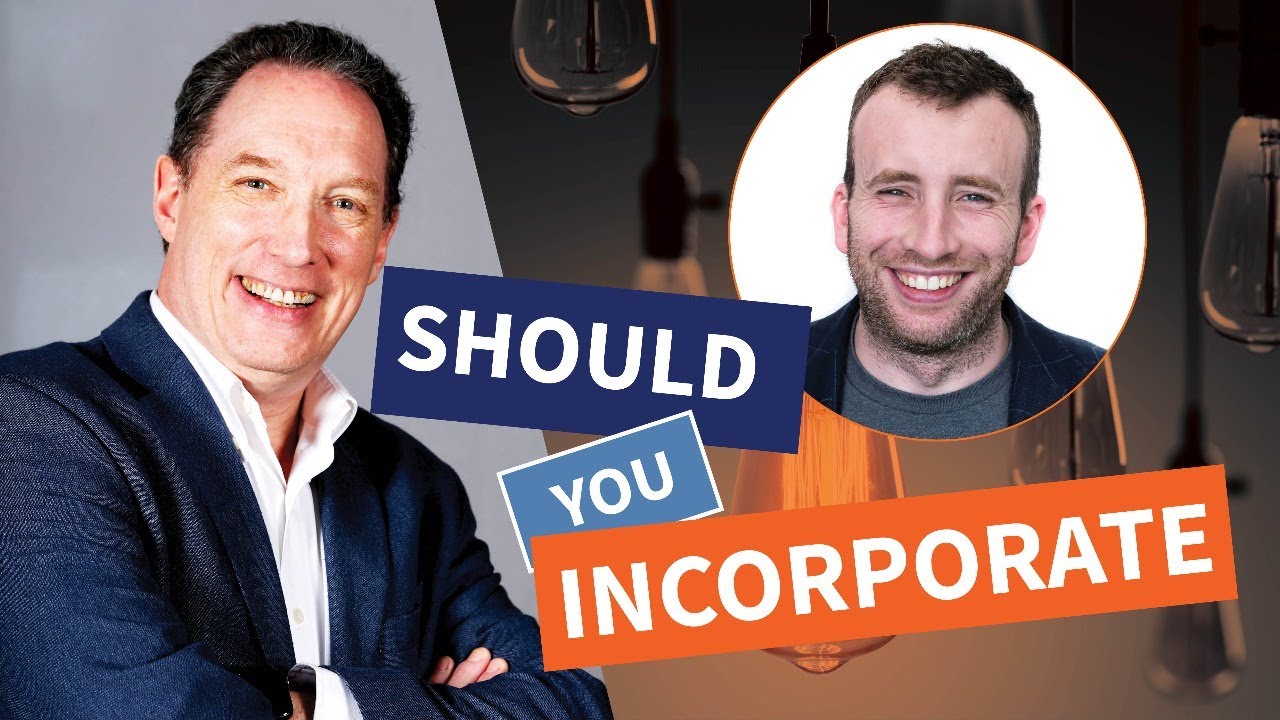
In this episode of Marc Haine Live, host Marc Haine interviews CPA and CMA Shawn Gander to explore whether small‑business owners should incorporate or remain sole proprietors. The conversation begins with a description of common mistakes made by “incidental entrepreneurs” who incorporate without proper systems, leading to tax and compliance problems. Gander outlines the main legal structures—sole proprietorship, corporation, partnership, and trusts—explaining how incorporation creates a separate legal entity that can protect personal assets (the corporate veil) but requires proper setup (minute book, share issuance, lawyer or accountant guidance). The discussion then moves to tax implications: Alberta’s 11 % small‑business corporate tax versus personal marginal rates, the mechanics of salary versus dividends, refundable dividend tax on hand, and the dividend tax credit, emphasizing that tax deferral is possible when earnings are retained in the corporation. Gander illustrates financial flexibility, such as using retained earnings for reinvestment, corporate‑owned life insurance, and phased withdrawals to manage personal tax brackets. He also highlights estate‑planning advantages, including the lifetime capital‑gains exemption when selling qualified small‑business shares and the ability to use trusts. Throughout, the importance of solid bookkeeping and integrated CPA‑bookkeeper services (cloud‑based, end‑to‑end) is stressed, with warnings about poor record‑keeping leading to missed deductions and higher accounting costs. Finally, Gander provides a decision framework—consider business type, liability exposure, growth plans, revenue thresholds (e.g., GST registration at $30 k), and the need for professional advice—before deciding to incorporate.
Chapters
To incorporate or not incorporate? That is the question. With so many— During— sorry about that. With so many businesses launching during COVID-19, it's really clear that there is some confusion about whether or not you need to incorporate your business. And that's coming up next. Welcome back to Marc Haine Live where small business owners and entrepreneurs pick up core skill sets to help them work on their business, not just in their business. I am your host, Service Expert and Master of Experiences Marc Haine. And today, I will be speaking with CPA Shawn Gander. We'll get to him in just a minute. Before we dig into our show, I just wanted to invite you to subscribe to this channel. Also invite you to be part of the conversation. So, what that means is feel free to put your comments or questions in the comment box below. Feel free to like this post and please feel free to subscribe to this channel. Today, we will be talking about whether or not you should incorporate your business. To some of you, you look and go, I don't even know what the difference is. And we'll cover that today as well. It seems like there's so much misunderstanding and uncertainty surrounding incorporations. So I have to ask you our question of the day. So very simply, where are you at with your business? Are you clear with what incorporation can do or cannot do for you? My guest today is CPA and CMA working right here in Alberta. He's out of Grand Prairie and he has over 10 years experience working in business and accounting. He's worked with the big boys but has a real passion for supporting small business owners with their accounting headaches. Welcome, Shawn! How are you today?
Marc, thanks for having me on the show. I'm doing great today.
It's so great to see you. You look fantastic!
Thank you!
Yeah. And so, to kick us off, why don't you tell us a little bit about what you do for your clients? Why are they hiring you?
Absolutely! So, my firm follows a bit of a different business model. And it's all about alleviating accounting headaches. alleviating those pain points that a lot of small business owners deal with. Most traditional firms, they bill by the hour, and, you know, perhaps there's inefficiencies within the firm, employees are incentivized to pad their timesheets, whatever it might be. With my firm, you pay for an end result, a product, a service, not necessarily the amount of time it takes to get there. And I have packages That are built in a way to give you everything that you need for your company, bookkeeping, personal taxes, corporate taxes, T4s, T5s, the whole slew. And so that everything's being taken care of under one house and you don't have a disconnect between your bookkeeper and your accountant.
Absolutely.
And you're not worried about the fees.
That's so great. I'm so glad to have you on the show. So, in my introduction, I mentioned that you used to play with the big boys. What does that mean? Like, where were you at and what were you doing?
You know, I started off my career working for a publicly traded company, Capital Power. Highly competitive position. There were 2 positions for over 300 applicants as a developmental program. So I rotated through different departments. After that, I went to another publicly traded company, a subsidiary of Great West Life, a real estate subsidiary. And so big boys, I worked for some large publicly traded companies before getting into the nitty-gritty and the smaller businesses.
Yeah, yeah. Now in our first meeting, you were telling me about how some business owners get themselves into some real hot water when it comes down to their accounting systems, taxes, legal structures, and their responsibilities. Could you maybe dig into a little bit about what that is for our listeners?
Absolutely. Especially I find here in Northern Alberta, you have so many people that they'll just go and incorporate a company because whoever they're subcontracting out to requires that it be a corporation, and there can be some issues with that, but that's besides the point. And so they'll incorporate a company, but then they won't They won't set up a separate bank account. They won't do monthly bank reconciliations. They won't hire a good bookkeeper. And then 2 or 3 years down the road, the CRA is knocking on their door. They haven't filed any corporate taxes. They haven't remitted any GST and they're in head over heels. They have got no idea what they're doing.
Yeah. Yeah. I like to call those, and in previous episodes, we've talked about this idea of incidental entrepreneurs. And I said, incidental entrepreneurs are those people who get into business usually up to here. Before they realize, holy moly, I'm actually running a business. It's no longer a hobby. It's no longer a pastime or whatever. And so, it's really interesting that you say that sometimes it's a contractual obligation that the contractor is actually requiring them to incorporate. And so, they go through and it's so simple because especially in Alberta, I mean, you go to a registry's office, you do a search, you get a name and you say, yeah, I'd like to incorporate. And they give you all the things but no counseling, no idea what that means.
Yep.
Yeah, I'd love to delve a little bit into defining legal structures and the pros and cons of each. But first, before we get into that, I'd like to remind everybody that this episode is brought to you by my book. My book, Lights!
Camera!
Action! You can see it on the back shelf here. My new book, Lights! Camera! Action! Business Operational Excellence Through the Lens of Live Theater. It tears down what it takes to put on a great show for your customers no matter what business you are in. The book just launched and is available for sale on Amazon and on your favorite online bookstore. You can get more information about it at marchaine.com/lightscameraaction. The link is down below. And that is the end of my shameless plug. So Sean, I think what we need to do to get kicked off here is maybe can we define the different kinds of legal structures businesses can have?
Sure. So you can be a sole proprietor. That's just a self-employed individual. They report their income and their expenses on their personal tax return.
Okay.
You can have a corporation set up for your business, which is a separate legal entity. You can have a partnership, which, which is a separate beast of its own. You can have trusts. There's all sorts of different Corporate and legal structures, but typically business owners will fall into the sole proprietor.
Okay.
So reporting your income expenses on your personal tax return, or they'll set up a corporation for their business, that separate legal entity.
Right. So it took me a while as a small business owner myself, it took me a little while to figure out what the difference was when somebody said, oh, you know, you're sole proprietorship, you report everything on your taxes, but on a corporate, on an incorporation, you don't. And so it took me a while to understand that when you incorporate, what you're doing is you're separating the business from yourself, basically.
100%. Yeah.
And so are there pros and cons to, you know, staying as a self-proprietor, being just self-employed and just reporting all your income on your personal taxes versus incorporating? Is one better than the other? Can we talk a little bit about why you would need them? Which, who, how should you consider whether or not you should be a sole proprietor or an incorporation?
For sure. So a big part of this comes down to your business plan. What, what type of business are you starting? Because there could be some liability issues there where you might want to incorporate regardless of the tax implications. What are your plans? How big do you want to grow? Do you want to have employees? And so having a solid business plan and understanding what exactly your goals are and what, what your end plan is, what you're doing, what your long-term strategy is, is huge in making that decision on whether or not to incorporate. For pros and cons, I'd say a lot of people rush into incorporation too quickly. They'll read some stuff online, they'll talk to their friends, they'll say, you know what, as a corporation I can have all these tax deductions, I pay a low tax rate, yeah, let's incorporate. But the reality is, is you can write off, you can deduct the same expenses as a self-employed individual that you can as a corporation. And if you're making, let's say, $80,000 a year in your corporation, but then you're going and pulling all of that money out and using it personally, then there's no tax deferral. You have no tax advantage whatsoever of having that business in a corporation. And so in that case, as a self-employed individual, your accounting and legal fees will be much less. So your costs associated with your business will be lower. Your bookkeeping will be simpler. And so there can be advantages of staying self-employed if you're under $100,000 in revenue, you're not growing, you don't have employees. So it really boils down to what's that business plan? What type of business are you in? Where are you headed? What are your projections? That's the first question.
Okay. So I get a sense then the idea of Incorporation, you know, I've heard some people say, well, I'm never gonna incorporate because I can never get my money out, which I know is not the case. At the same token, I've also had people who refuse to incorporate because they figure, oh, I'm gonna end up paying corporate taxes. Is there a benefit? Like, is corporate taxes versus personal taxes, is there a difference?
Yeah, there's a big difference. So in Alberta, corporate taxes, if you're under $500,000 in taxable income, income, which a lot of small businesses are, then you're paying 11% corporate tax rate. Personal taxes, it really depends on your tax bracket on how much you make. So your first $13,000 or so, you're paying no taxes. You're paying relatively low taxes until you start getting over $100,000 in personal income. And so from a corporate tax and a personal tax standpoint, you mentioned, well, people have this concern, well, if I'm paying corporate tax but I'm also paying personal tax, is that double taxation? And the answer is no, it's not, because if you're taking a salary from your company, then that's a deduction in your corporation and you're not paying any corporate taxes on that. You're just paying personal taxes like you would as a T4 employee.
Right.
If you're taking dividends, and so you're not paying yourself a salary, you're not paying in a CPP, you're a shareholder of your company as a corporation. Someone has to own it. And you as a business owner that set it up, typically you're the owner of it. You're the shareholder. You own the shares of the corporation and you invested in that company. So you can take dividends much like you'd invest in another company on the stock market and you'd get paid dividends. Except since you're the only owner of the company, you can decide as the director and the owner how much you pay yourself in dividends. It can be, you know, really almost anything. You have to have, you know, the cash to support it.
Mm-hmm.
But if you're paying yourself dividends and then there's a mechanism in place called refundable dividend tax on hand for, you know, investment income, if you have investment income and you're paying over taxes, Or in the case of just normal dividends, you have a dividend tax credit. And so if you pay yourself dividends, this dividend tax credit, which gets applied to your personal tax return, offsets theoretically all of the corporate taxes that you've already paid.
Right. And so I think, so I think it's important for the listeners to understand that, you know, if you have an incorporation, there's you, Making income, and then there's a company making revenue. And so you're billing through your company, all the money sits there, but then if you as the individual decide, you know what, I'm going to take some dividends, you'll pull that money out, but then you'll be taxed on that money on your personal taxes.
Yeah, and from a very simplistic standpoint, that's it. Yeah, you take money out of your company, out of your corporation, you're taxed on it personally. Whether it's dividends or salary, however that works, you're taxed on it personally.
Yeah. Is there any benefits? Is there any benefits as far as, you know, the expenses you can claim? The, you know, I know a lot of small business owners are just starting up again, incidental entrepreneurs, but they're using their offices, they're, you know, paying internet, they're using their cell phone, they're doing mileage on their car, but they figure, oh, it's just the stuff of me doing it. I don't have to track that if I'm just by myself.
Yeah, they still have to track it. If they're self-employed or if they have a corporation, they have to track it. The level of tracking is more complex with the corporation because you have to track everything because it's a separate legal entity.
Right.
Whereas if you're just a sole proprietor, you really have to track your revenue and your expenses. And if you buy assets for your company, you have to record those as well. But you don't have to necessarily record the liabilities and the equity in the full balance sheet. So yeah, you have to track it. And deductibility, like I said before, whether you're self-employed as a sole proprietor or you have a corporation set up, the same type of deductibility standards apply.
Yeah, so you're not, you don't have to forego deducting the support costs of your office because you're a sole proprietor, not an incorporation. You could still do that.
You can. Yeah, correct.
Yeah, you mentioned something, and in past episodes we talked about the importance of creating a business plan, and you just mentioned it. It depends on what your business plan is. What role does deciding whether or not to incorporate come into play when you're kind of sitting down saying, okay, I have to do a business plan for 2021. And now I have some questions. What are those questions they should be asking themselves on whether or not they should incorporate?
I'd say, I'd say number one, what type of business is it? And is there much liability?
So can you define a little bit, define liability? You've used that word a couple of times. Liability is not necessarily somebody tripping and falling on your front doorstep. Can you talk a little bit about that liability part?
100%. Could you get sued? And like you said, it might not be an injury lawsuit, but, you know, are you, are you a contractor that builds houses? Are you a house builder? And if you are, and then could, you know, your trades sue you? What if something goes, goes wrong with the house? Could the end customer sue you? Whatever the business might be, You know, what are the chances that you could get sued and what would that look like? And are you able to mitigate that risk by having liability insurance? And if that liability insurance is good enough that you, like, you're covered, maybe you don't need a corporation. But what a corporation does, because it's a separate legal entity, is if you're operating within a corporate structure, let's say ABC Inc., Then your business cards will have ABC Inc. on it. As you interact with customers, it will be on behalf of ABC Inc. And so if something goes wrong with your business, those customers or those vendors or whoever is involved, they can't sue you personally unless, unless they can pierce that corporate veil. Which I know is some funky terminology there, but if you did something illegal, and there's, you know, I'm not a lawyer, but there's various things. If you did something illegal and, you know, breach trust, etc., and then they can sue you personally. But if you're doing everything you're supposed to be doing, you're just operating as a business, and, you know, something gets messed up, then they have to sue your corporation. They can't sue you personally. And if your corporation doesn't own investments and assets and stuff, and that's where holding companies come into place. A little bit more complexity here from a tax standpoint, but really, like, there's— depending on how you have your structure set up, you might not have that much in your corporation. And so if someone sues you, you know, you don't have much to lose.
You can't draw blood from a stone.
Exactly. You can't lose that much. Right.
But I think it's also— but I think it's still important to understand that, as you mentioned, you'll go out and hand out your business card with ABC Inc. on it. You are a representative of that company.
100%. And if you are interacting with your customers on behalf of ABC Inc., that works. But if you're going to your customers and you're not mentioning your corporate name, you're not billing, invoicing from your corporation, you just have your personal name on that, that's not going to work. That's not going to protect you.
Yes. Yeah. It's really interesting because you do get down, you know, we kind of in our, just in our very short conversation so far, we've gone through this idea of, you know, taxation and accounting and systems to this idea of legalities. And like you said, you're not a lawyer. How important is it for somebody who wants to incorporate to actually talk to a lawyer?
I recommend it.
Okay.
So I'll share a story. Back when I was in university, I started a longboard manufacturing company. And again, this goes back to liability. You know, could someone sue you? Well, I was manufacturing longboards from raw materials, and longboards are like long skateboards. So if I manufacture a longboard and, you know, it cracks or something happens to the physical board, that results in someone riding it down this steep hill to crash and crack open their head, I could potentially be liable. And that's some pretty big liability there. And so I set up a corporation to do that and I set it up myself. I self-incorporated. So I essentially went to the registry and said, hey, look, I want to set up a corporation. They set it up for me and I was done. And now the problem with that, and it's a lesson learned on my end, when I went to sell that corporation, that longboard company, I sold it to one of the vendors that I used. I sold the shares of it for the capital gains exemption. Again, getting into some tax terminology here.
Mm-hmm.
but I never actually issued myself shares. So I wasn't even technically a shareholder of this company. No one was, 'cause no shares were ever issued. And that was a long time ago. And at that point I had no idea what I was doing from a tax or a corporate legal standpoint. I do now. But I find this relevant to a lot of business owners is they'll go to the registries, they'll set up a corporation, but they don't maintain a minute book. They don't know what a minute book is. They don't issue themselves shares, so they're technically not even shareholders of their company. There are certain things that need to be done, resolutions that need to be done on a regular basis, that if you use a lawyer, then that stuff's gonna get done, it's gonna get done properly.
Mm-hmm.
If you don't, you just go self-incorporate, there's gonna be gaps, there's gonna be holes, which could cause issues for you in the future. And so typically I do recommend using a lawyer. If you don't use a lawyer, at least get some advice from your accountant or have a quick conversation with a lawyer to make sure that you do it right yourself.
Yeah. No, and you bring up some really good points, you know, this idea that we could possibly, you know, do something that will actually cost us more money when what we're thinking is, oh, I'll become incorporated and I'll save myself a ton of money on taxation and all this sort of stuff. But then over the long haul, you end up costing yourself a lot of money because you're in your business because you know what you're doing. It doesn't automatically make you an accountant. It doesn't automatically make you a really good bookkeeper. In fact, you and I had conversations and I told you that I did bookkeeping way back when, and I used to have clients come to me after they've been in business for 6 months with garbage bags full of receipts saying, oh my gosh, you know, CRA is calling me for a GST return. What is that? It was really tenuous at the best of times. In previous episodes though, we talked about systems and how systems help operators separate themselves from being the business. Is that part of the consideration when we're talking about whether or not they should incorporate or not?
Absolutely. So, going back to that capital gains exemption, that terminology I used before, you have this lifetime limit. Where if you sell the shares of a small corporation that qualifies, there's some qualifying things that you have to, conditions that you have to meet, but a lot of small corporations, if they don't have excess cash or investments in them, they will qualify. If you set up a corporation as a business, and when I talk about a business, I talk about those systems and processes that you're referring to, you set it up with systems, processes, employees. And so it can actually run as a functional business without you being there overseeing and doing everything. And if you have a functional business with those systems and processes set up, and then you have a tangible asset that can be sold to someone else who can take over and get a return on their investment. Because all those systems and processes are set up. And if that's the plan, if that's the goal for you to do that, then I definitely recommend incorporating a company to do that. Because you could, if you do it right, you could grow something that's worth $1 million, sell the shares of it for, say, $1 million, and $870,000 of that will be tax-free.
Amazing. And it goes hand in hand with what we talked about through the episode with Yvonne Weld, who is a business strategist who said that people who are able to put systems and methods in place are able to create increased valuation. So, as small businesses kind of look at their businesses, they say, okay, I'm incorporated now. I have systems in place that the business doesn't rely on me to do all the work. And now the value of my business also goes up. And what you're talking about now is there's a huge benefit when you're incorporated, when you sell the shares of your company to somebody else that you can actually benefit with huge tax relief or tax breaks. It's not all, you know, oh my God, if I sell my company, I'm gonna have to pay 50% tax.
Yeah, no, you can, shelter a lot of that tax. Yeah, you can save on a lot of that tax.
This is really great. I really appreciate, you know, this feedback and stuff. This is actually the first time on the show that we've had a financial specialist come on board and talk to us about some of this stuff. And I realized that some of it can get really complicated. Could you let everybody know how they can get in touch with you if they want to pick your brain a little bit based on their own situations?
Absolutely. If you just go to simplifyaccounting.ca, all my contact information is there. You can book an appointment directly into my calendar from my website. The website's the best way to, to get a hold of me.
Wonderful. I'm hoping that this is making sense and is of value to you. Please feel free to give a thumbs up and share your comments or questions in the comment box. I do have one thumbs up in the comment box right now. I don't have any comments, however. But that's okay. This is going to be up on YouTube. Feel free to put in comments. If I see comments in there, I can help answer them. If not, I can forward them over to Shawn and say, Shawn, I got some comments. I know that. So, I was like you. When I started my business 10 years ago, I incorporated because I thought that's what I had to do. And like you, I had to learn as I went along and realized, oh my goodness, I'm making X amount of money. And Then I had to file and get a GST number because after, if you're going to hit $30,000 in revenue, you have to get a GST number. And I had to run and do all this stuff. And I didn't have the professional knowledge necessary to be able to do that. But I know that I've had good years where I could mitigate my personal tax because I don't take everything that the company makes. One of the things I've always told small business operators is save stuff for a rainy day. And in a corporation, you can do that without affecting your personal income. Whereas if you're a sole proprietor, that goes directly to the income, whether or not you're saving the money. Am I right?
Absolutely. So in fact, you can defer up to 37% in taxes.
So maybe can you explain what that means and how one would go about doing that?
For sure. So like you mentioned, if you're a sole proprietor, then 100% of your income is reported on your personal Mm-hmm. So let's, let's say that you're a doctor and you're making $400,000 a year. Theoretical. If you were self-employed, a sole proprietor, then you're going to get taxed on that full $400,000 at your marginal tax brackets, and you could be paying in Alberta up to 48% in taxes. Whereas if you have a corporation and you only need $100,000 to live off of, Then you could take $100 grand as a salary from your company. You'd pay corporate taxes on that excess $300 grand. Let's say net. There's a lot of variables here, but let's say $300 grand for simplicity.
Yeah.
11%. So $33 grand on that $300 grand versus, you know, 48% or whatever that tax bracket that you're in might be. And so you're deferring, you know, upwards 37%. In taxes. Now, the kicker here is that it's just a tax deferral. It's not necessarily tax savings.
Mm-hmm.
Because when you take that cash out of your company, you'll pay personal taxes on it. But what you can do is you can use various different investment strategies. You can get corporate-owned whole life insurance policies. So this goes over to more of the financial advisory type side of things.
Mm-hmm.
You can, you can grow that money. You can reinvest that money in your business and grow your business. You'll have more cash in your business to, to grow.
Right, right.
And then in the future, yep, when you say retire, you can pull out that excess cash at lower tax brackets.
Yeah, because you don't have to pull it out at its full value. You can do it in bits and bobs. You don't have to do the whole, you know, if you got $200,000 sitting in your corporation, you don't have to pull that all in one shot and pay taxes on it. You can pull it out at, you know, $40,000 at a time or whatever you might need in order to survive.
Correct. Yeah. And there are strategies to pull that out if you have, you know, an excessive amount of cash in your corporation at preferable tax rates as well.
Right. Well, I know personally it helped me a great deal having the good years, being able to let let money sit in my corporation and then pull it like something like COVID-19, where as a professional speaker, as a coach and so on, all of a sudden my business just dried right up. And so since COVID-19 has happened and I haven't been making any new contracts, being able to pull out of my corporation to sustain myself and to sustain my business and to be able to invest in my business while we have the downtime was a huge blessing.
Huge.
And so it was a great way for me to take the extra earnings or the earnings that I didn't have to pull for myself through the years came in really handy during this last year.
Huge. Yeah.
So you talked a little bit about some of the financial flexibilities that owners can have with incorporation. Is there anything else that we haven't talked about as far as financial flexibilities?
I'd say estate planning.
Okay.
So with the corporate structure, let's say that you build those systems and those processes and you want to pass that business on to your kids. Well, with that corporate structure, there's a lot that you can do. Sorry, I'm losing my voice here. From an estate planning aspect and moving moving that business over to the kids. And that corporate structure, it can continue to exist beyond your death. You can, you can set up trusts, there's various things. The tax planning can get fairly technical and detailed, but depending on how large you grow your business, how successful your business becomes, there's, there's a lot that can be done with it.
That's awesome. That's awesome. And so when we talk about this idea of whether I should incorporate or stay a sole proprietorship, are there any Are there any cautionaries that you could offer the listeners?
Absolutely. Either way, you want to make sure that you have a good bookkeeper. And, you know, people talk about CPAs. And so I'm a CPA. I worked at a national accounting firm, M&P, as a manager before starting my own firm. And, you know, someone will use an external bookkeeper And they'll take their books into their accountant, their CPA, at the end of the year to prepare the corporate tax return. Now, the expectations of some business owners is, well, it doesn't really matter how good my bookkeeper is because my CPA at the end of the year, they go through everything and they fix it. Well, that's not—
And you're right, they will fix it.
And you know, that's We'll go through it and we'll make sure that, you know, your bank balances reconcile, that they match up, that your liabilities, and so any loans, that they reconcile. We'll go through various accounts and we'll make sure that things look good. But, you know, if your bookkeeper isn't recording business expenses that were paid for personally, those are missed. We can't, we can't catch that. If they're recording things to the wrong accounts, let's say they're recording, you know, loan payments to some random repairs and maintenance account and the loan payments are, you know, maybe variable, we might not catch that. There's a— we're not going to necessarily catch everything. We're not doing an audit. We're not going through all the receipts. Like, that would cost a lot of money for us to do that for you. And so if you're bringing in, you know, poorly kept books, and then you're going to end up, one, paying more for the accountant to go through it at year end. And so it's going to cost quite a bit more for your corporate taxes. And then two, you could be missing out on, you know, thousands of dollars in tax savings because deductions are missing because the bookkeeping was done poorly. So having, having a good bookkeeper that knows what they're doing is gold, and their fees can save you much more money in taxes than what you're paying them.
So this brings up a really good point, this idea that people are running their business If they hire you as a CPA, you're part of their team. If they hire a bookkeeper, that person is part of the team. Should there be some sort of a connection between the teams? Like you mentioned, they have to have a good bookkeeper. Well, you know, if you're in construction or if you're doing some— you're a welder and you're doing oilfield contracts and that sort of thing, you don't know if your bookkeeper is good or not until there's major problems.
You really don't.
Is there anything like— should— could— is there anything that the owner can do with their CPA to make sure that the bookkeeper knows what they're doing?
Yeah, they can, they can look into education, experience, background, they can get references. The nice thing with my firm is I'll do everything under one house, and it's all cloud-based. And so my firm will do the bookkeeping plus the corporate taxes. So there's no disconnect there. I know exactly what's going on with my, you know, with the companies that I deal with. I can provide advice throughout the year. And since it's cloud-based, I have access to their information. But if you're using an external bookkeeper, and I still do corporate taxes for one-off corporate taxes for people that have external bookkeepers, you can look into their credentials. How much you're paying them, that's an indicator as well. You can pay bookkeepers anywhere between say $20 an hour up to $70 an hour. And I'll tell you right now that The person that you're paying $60 an hour versus $20 an hour, likely they're 2 to 3 times as efficient. So you end up paying about the same, and the one at $60 an hour is going to do it right. And so you're going to end up paying a lot less in accounting fees to fix stuff at the end of the year, and you're going to get a lot more in tax deductions because they're going to account for everything.
Sure.
And so, I mean, you have, I'd say over 50% of the bookkeepers out there are Are people that don't have any kind of background experience, education, that just look at it as, wow, there's a lot of demand for this. It looks like it's really easy to do, so I'm going to start up my own bookkeeping company on the side just as a part-time gig.
Yeah. You hit the nail on the head, this idea of somebody who's efficient and effective and so on will take a lot less time to be able to to do all the work. Also, I find that where you will see a difference is in the questions that they ask. Like a really good bookkeeper will be up your bum the whole time saying, where's this receipt? Give me this receipt. Give me this receipt. Like they're really there. And bad bookkeepers are like, okay, I didn't have it, so I didn't enter it.
Right?
So that's—
Absolutely.
The best bookkeepers have been like the thorn that it's like, really? Again? Well, I did. Okay. Right? But that That person is there also to help keep you accountable, to make absolutely sure that you're getting all the deductions and all the— you're being able to book in all your expenses so that you can take advantage of the input tax credits for the GST. You can take advantage of the expenses offsetting your revenues and making sure you're absolutely running the business the best that you can. So this has been great.
100%.
So, you know, you mentioned that you also do— part of your business is you do bookkeeping as well and you do it all cloud-based. Are you the person who, give me those receipts?
I've got an employee that does that. She's got about 13 years of bookkeeping and admin experience, but I'm still very involved. I just started my business August of 2019. It's still relatively small. And so my involvement is very high right now. And as I continue to grow my business, I'm going to cap it out at a certain revenue number for myself because I don't want to grow too big. I want to maintain that involvement with the business owners.
This has been great. This is, you know, and I'm excited for you as well and excited for the clients who come in with you because it's, you know, being able to have a CPA in your corner, not just the bookkeeper, but having somebody who knows business, somebody who could look at situations and help guide the conversations and guide your decisions is really important. And we've said it before in past episodes. As an entrepreneur, you cannot do it all by yourself. Shawn, this has been really amazing. I really appreciated having you on the show.
Thank you so much, Marc. It's been amazing being on your show. I've seen some of your other episodes. They're fantastic.
Thank you.
I encourage anyone that's watching this to subscribe and to watch some of the other great content that you have out there. Yeah, it's been a really good experience.
Thank you so much. And could you just remind everybody one more time how they can get a hold of you?
Absolutely. Simplify, S-I-M-P-L-I-F-Y, accounting.ca. Simplifyaccounting.ca. Just, uh, go to my website. All my contact info's there. You can learn a lot about my business there.
Thank you again, Sean. Thank you so much. Thank you for being my very first financial specialist on the show, and thank you for sharing your knowledge, your expertise, and your passion for what you do. This has been Fantastic!
Absolutely, it's been great, Marc. Thanks so much. Thank you!
Why don't you give me a thumbs up if this was of value to you? As always, my offer stands. If you would like 30 minutes of my time to brainstorm your business with you and your team, please feel free to book yourself on my online calendar. The link is down below. It is meetme.so/MarcHaine. And as always, I am at your service. I hope that you will subscribe to this channel. I hope you will find that if you buzz around the other 35 episodes, you will see that this is really high value and that some of the tips and tricks that are given by the subject matter experts are wonderful. And I hope you'll click the subscribe button, ring the bell. That'll give you first dibs whenever I bring you fresh content that will help you work on your business, Not just in your business. My name is Marc Haine. I hope you stay safe, stay healthy, and dare to be the exception.









