Reimagine a Thriving Culture That Builds Profit By Building People
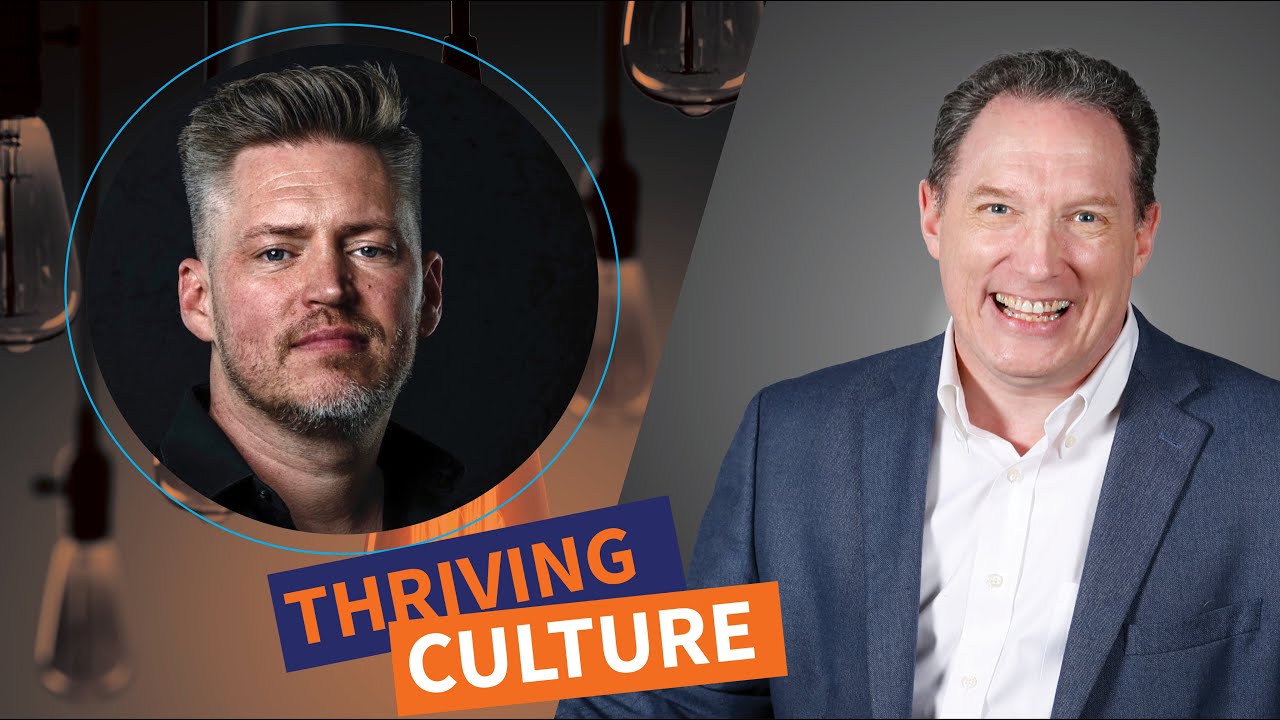
In this episode of Marc Haine Live, host Marc Haine interviews culture and growth strategist Drew Neal about the current state of workplace culture, the decline of employee engagement, and the rise of "quiet quitting." They explore why these trends are emerging now, diagnose a leadership vacuum where technical experts are promoted without human‑skill training, and argue that profit and people growth are mutually reinforcing when a company cultivates a human‑centered culture. Neal outlines five foundational pillars for a thriving culture – authenticity, trust, meaningful work (purpose), social impact, and sustainability – and explains how each can be measured through feedback, surveys, and behavioral data. The conversation also covers practical mechanisms for leaders to surface cultural blind spots (vulnerability, real‑time feedback, one‑on‑one check‑ins), the importance of becoming a learning organization, and cautions against over‑reactive, one‑size‑fits‑all cultural overhauls. Throughout, both speakers stress that culture is a continuous journey, not a destination, and that courageous, self‑aware leadership is the catalyst for aligning employee fulfillment with profitability.
Chapters
It's interesting. We are not hearing about the Great Resignation as much as we did, nor is quiet quitting hitting the airwaves as much as it used to. But the internet is awash with articles about low employee engagement, mental wellness, and unsafe workplaces. With a part of our workforce looking to limit their participation? How can leaders drive the passionate culture required to make work more meaningful and focused on helping people thrive? And that's what we're talking about today on Marc Haine Live. Welcome to this episode of Marc Haine Live. This is where small business owners and entrepreneurs pick up skill sets to create the show-stopping, jaw-dropping experience that their customers and their employees deserve. I am your host, Service Expert and Master of Experiences Marc Haine. Thank you so much for investing your time with me today. And today, my guest is Culture and Growth Strategist Drew Neal. We will be uncovering and spotlighting 5 keys to discovering and creating a thriving workplace culture. So, stay with us. If this is your first time joining us, I'd like to say welcome. If you find this episode valuable, please check out our other past episodes. You will find that I have a plethora, a swack, unbelievable amounts of experts on this show. And so, it is I think really worth your time if you are a lifelong learner as a leader. This channel is going to benefit you no end. We've talked a lot on this show about the importance of employee engagement. And what's really funny is that during the pandemic, Gallup reported a slight increase in employee engagement with people adjusting to working remotely, working from home, from their living room and bedrooms. But now that we have a mixture of hybrid, remote, and in-person jobs, Employee engagement has fallen to an all-time low. So that brings me to our Question of the Day. Corporate culture has been a buzzword since the early '80s, if not before. But what does it mean to you? What does corporate Culture mean to you when you hear that? I'd love for you to share this episode on your favorite social media platform. Hashtag it #ExperienceLeadership and put your comments down. What does corporate culture mean to you? My guest for this episode is Culture and Growth Strategist Drew Neal. Drew is the founder of Solutionary Capital and Solutionary Labs. By discovering the growth gap between humanity and technology, he is able to implement wise and innovative solutions that help his clients thrive. Drew, welcome to the show. It is so brilliant to have you here today.
Yeah, Marc, thank you for having me. Honored to be on here and excited for our conversation. It's going to be great.
Maybe you could start off by telling me a little bit about how you serve your clients.
Yeah, certainly. Ultimately, I have a high core value on growth. It's funny. I'm not a person who usually gets triggered over anything. But if I was asked, Drew, what's one of your triggers? It would be ungrowing, regressive situations. And so, because I'm so wired for growth, every experience that I bring to people is very much about overcoming their obstacles of growth. And I believe that one of the greatest opportunities for growth right now is understanding how humans can relate to what they do, how they earn, and what types of systems we need from a culture point of view to overcome some of the problems that we have when it comes to employees relating with their place of employment. And so, I believe a thriving culture is that key. And so, we're excited at helping companies to grow in a lot of ways. But we're starting the conversation in this culture bucket, if you will, because a thriving culture will allow people to relate, to connect, to perform in a way that will just blow the lid off when it comes to profitability. So, we're excited to do that and offer who we are and help people really grow.
Wonderful! I do know that low engagement and quiet quitting have been something that's been in the news. It seems to be unbelievable. Like quiet quitting, the difference between quiet quitting and disengagement I think were 2 different things. Disengagement was, I'm not happy in my job. I don't really know why and I'm just not performing. Quiet quitting was kind of like an intentional decision. What do you think when you see these words and when you see these situations? What do you think is going on now in the workplace today?
Yeah. Well, I think quiet quitting has been the next step in a progression of other quiet behaviors. Quiet quitting is just finally the passive revolt against quiet dissatisfaction. That's where people have just been undervalued. They feel like they've been looked over. They feel like they've been a number. And even in the good agreements where they maybe were in a situation where they did feel dignified with value, the quality of work, meaning the meaning of their work, it just wasn't there. It wasn't aligned with something that they felt was important to them that maybe they couldn't even put to words when it comes to how they relate and translate who they are to the world. And so, I believe everyone's on a journey of trying to find out who they are on the inside and then translate that into value on the outside. And so, as people become much more intelligent on the inner workings emotionally, socially, and maybe even spiritually, if we could say that, that it's creating a divergence in the commitments that they have about how they're applying themselves, how they earn, who they're in relationship with, how they represent themselves. And so, this level of emotional intelligence or self-awareness is allowing for a new competitive edge in the market that I'm excited we can talk about a little bit more today. But there's a real need here and people need to have their outside world be aligned with who they believe they are on the inside.
So, why do you think that this is coming to a head now? Like, why today? Why now?
Well, I mean, it's complex, right? But I think one of the key pillars that has really shifted this is just the acquisition of wealth. You can't talk about purpose. You can't talk about desire. You can't talk about preference unless you have time and money to absorb the process of surviving. And so, as we've evolved as a society, we're becoming so wealthy that we believe we're entitled to do something that we love. And so, there's more resources today. There's more opportunity today than there's ever been where we can sit down. I mean, in the hunter-gatherer age, you didn't have time to sit around and ask, what do I want to do today? No, it was you better get out and hunt and you eat what you kill. And that was survival. And of course, we've evolved since then, but there's still been that survival mentality that has pervaded. Most of the culture and most of the people in the culture have had this survival mindset. How can I just pay my bills? How can I get through? What little ladder can I climb to get that next little breadcrumb? And people are realizing that they have opportunity that's bigger than maybe the normal systematic progressions of evolving as an adult or responsibility as we've packaged it. And people are getting much more creative and realizing that their value and who they are has disproportionate value to particular groups of people. And as we're having the time to explore that, we're realizing that if we were willing to take a little bit of a risk, we could find that value transfer and earn at a greater level, have more impact at a greater level, and of course, earn disproportionately than where we are in our unsatisfied arenas.
And so, from there, so this is all kind of like you mentioned. It's all on the person now having new wants and desires. How are leaders adapting or not adapting to this new want and desire and new value systems that their employees are evolving with?
Well, They're having to learn. And we have a leadership vacuum right now. I mean, ultimately, we have a leadership vacuum. And the typical trajectory for the leader was that you were really good with your skill and you were the top skill performer. Thus, you got promoted. Thus, you made a little more money. And then the administrative and leadership responsibilities start to multiply because you are the most skilled person in your particular expertise. And what we're starting to realize is that actually is not the right way to find leaders. Leaders are not your subject matter experts. They're your subject matter experts because they know a lot about a particular hard skill. But they may lack some of the human skill. They may lack some of the ability to really translate meaningful human experience inside of that particular objective or KPI, if you will. And so, there's a real challenge there because we have people in leadership seats simply because they performed well at their expertise but don't really know how to lead people. And so, this is really a human skill, right? We used to call it a soft skill. And that comes across as weak. And so, I think human skill is the better way to explain this. And we need leaders who are self-aware, who can self-regulate. That then allows them to become socially aware and then socially regulate. And this offers a unique human experience that changes the synergy. It changes the capacity to feel understood, to belong in a team, to know your role in a team, to understand your value in the team. And ultimately, this builds trust. And so, we're trying to figure out right now as leaders in the marketplace, How do we build trust with people that yields performance and also meaning for the individual, performance for the company, and meaning for the individual? And this is really the chasm that we're in from a leadership point of view. And so, it's a very interesting road that we're on from a corporate point of view. And as people are dissatisfied, I think the quiet quitting is really the understanding that says, hey, You're good people. I'm good people. But this ain't a good fit. And I wonder if I could take a shot at working for myself. I wonder if I could take a shot with that one person I worked with 5 years ago that was so fun. We had a desk next to each other. I wonder what they're doing. And it's these innovative conversations and understanding, hey, what if I could go make the same amount of money and control my time and do it with someone that I enjoy working with? And so, there's a new competition in the market. And that competition is not— ultimately, corporate leaders are losing their leverage. And the old leverage was, we'll pay you more.
Yeah.
And so, the data on motivation for pay is that that motivation is decreasing. People are willing to take less money to do something that's more meaningful. This next generation, they're motivated differently. And so, leaders are going to have to figure out how to understand human mechanics and create trusting belonging environments that aren't soft from an accountability standpoint but are mindful of the human experience while also driving results that equal profitability. And so, I believe we need leaders who can grow people. And as a result of people growing, profits increase.
You have uncovered just a A plethora of ideas just in that one segment. I'd like to step back for a second to people getting promoted because they were good technicians. They were the best in their field. And I've seen this time and time again. The cook got promoted because he was a good cook and he was consistent. It's like, oh, why don't— if we promote you to kitchen manager, then you can teach everybody how to be as good as you, which never really worked out. But to your point, These people didn't make great leaders, not because they were bad people or a bad promotion, but because they had no training or bad training. How important is it for corporate cultures to become learning organizations?
Well, I mean, it's critical. I mean, because your business isn't going to last if you don't. I mean, there's a squeeze now. There's pressure now in this place, in this arena that companies have to get more emotionally and socially intelligent. And of course, this is an interesting conversation because there's a lot of political agenda attached to this. This is not a political conversation. This is a human conversation. And we have to pull apart some of the constructs in our society that are trying to divide people or all this. There are lots of thoughts on that space. Ultimately, this is what we need to understand is that people today want to buy products or do business with other businesses that are mindful of the human experience. And the fear by companies who are not making the adjustment, who are not learning is that if they choose to be dignifying in human experience, that it eliminates their profitability. Because let's just be honest. Anyone in a leadership position is hyperleveraged in earnings and revenue generation and profit sharing. And they're motivated to want to see that bottom line because this is their big opportunity in life. They paid all their dues for 25 years, finally got the seat. They want profitability because this is their big payday. And so, the leaders believe that their profit-earning opportunity is in competition to dignifying humans inside of the workforce and the lower rankings of companies. And I believe that that's a lie. I believe that's a fear. And I believe that fear is informed by negative experiences in their past that aren't necessarily true for today if we're willing to understand how the market's behaving, what the market wants. And ultimately, the market is saying, we want human-centered products. We want human-centered services. We want to know that people were taken care of while you got your payday. You can have your payday, but are also people getting their opportunity? And really, there's a side conversation that I won't go deep into, but this really, this mindset of decentralization is really confronting the marketplace. And employees, consumers have more leverage today than they've ever had before. And so, people are having to get very creative and having to learn about what it means to do business in today's culture.
Yes. And what's interesting is the way that you describe kind of the leaders wanting their payday. And they're working towards an ultimate goal that they have as an expectation. But I think where we differ slightly is that I don't think that there's an intentionality. I think that there's just an ignorance or naivety on what the expectation of the team is when they're doing it. I think when people get into their roles and they finally get that seat at the table, they're thinking about, I have to prove myself. Everybody's got their own imposter syndrome and everything else. And I just find that people, the leaders I talk to, they just, well, I pay them. They're working for me. I give them the schedule. They work their job description. You mean they want more?
Yeah, I agree that there is an ignorance, but there's also, you know, it's in that ignorance or, you know, it would seem logical. Like, if these people are so smart to run billion-dollar companies, then the only reason they're not dignifying people with value is because they don't believe it's rewarding. Because the market, they do whatever they believe the market is yielding, right? People Companies perform according to market behavior. And so, if they believed that the market was demanding this, they would shift. And so, to your point and your credit, yes, there is an ignorance. But there's also a lack of even desire because they don't believe that this is actually in the profit conversation. And so, there is a lack of intelligence here. As I was saying, emotionally and socially, it is a lack of intelligence. And so, but if you bring up the conversation, there's also— that's where you feel the resistance. And that's where the fear is at because you're like, this is the strategy. This is the way forward. And not only is it good for society, not only is it good for humanity, but society wants it. The market is saying yes to this. Now, we're early still, but it is emerging. And Consumer Reports are showing us that this is a growing trend. It's not going away. It's only increasing. And this is the new competitive edge in the marketplace. I believe in prior eras, competitive edge may have been that you were funded. Competitive edge may have been you have exclusive technology. But the democratization of wealth and the democratization of technology has said that everyone can have access to capital. I mean, there are so many incubators today. There are so many accelerators. I mean, money has been printed and thrown out in the business world. venture capital. I mean, it's crazy the checks that are getting written right now. It's never more than right now. And there's so many applications and softwares and subscriptions that help you be profitable in your business. So many tools, all the SaaS space. I mean, it's honestly nauseating all the options that are there. And so, no longer is it a competitive edge that I'm funded. That means I'm the edge or I have the tech. I have the edge.
Yeah.
That is true generally for a few companies still because it's disproportionate to others. But I believe the new competitive edge is your team. Yes. Absolutely. Do you have humans who are able to execute and create a human experience in the midst of your funding, in the midst of your technology? And that is really how you're going to acquire talent or keep talent is that you have something unique, a culture that's dignifying to those people, a shared purpose, meaningful work. And it's important for us to understand that. And it's exciting. Leaders need to learn this. And if they're willing to learn, they're going to have a competitive edge today.
Well, and to your point, they need to be aware as well of what their corporate culture is. Because when you do talk to leaders, they'll paint a perfect picture of what their corporate culture is like. But when you talk to the employees, it's different. So, I'd like to just maybe describe for the people who might not understand this idea of this, what this bubble is called corporate culture. I'd like to describe a little bit of what unhealthy corporate culture looks like. And we'll get to that right after this.
When the spotlight shines on your business, are customers applauding or yawning? In other words, how is your business performing? Make your business a star with a new book, Lights! Camera! Action!, Business Operational Excellence Through the Lens of Live Theater by Marc Haine. Marc uses his business and acting experience to help you see your business like a live show so you You can create a performance your customers will never forget. Buy Lights! Camera! Action! today at your favorite online retailer or directly at marchaine.com.
I am speaking with sought-after keynote speaker and cultural guru Drew Neal. Drew, it seems to me that leaders can be blind to how unhealthy their internal corporate culture is. Like, you see the posters on the wall. You see their mission statements inside their their onboarding documentation and all that. But yet, there's still this poison within their culture. Is there any mechanisms leaders can use to uncover where they stand in their workplace?
Yeah, and it's pretty radical. I think one of the greatest breakthroughs we can offer in the corporate space that will allow us to understand our culture is really bringing in and elevating a core value on vulnerability and authenticity. And obviously, there's great research is coming out. The Brené Browns are emerging. And please, I mean, go gobble up all of her research. It's profound. And ultimately, what this is doing as these values would be adopted, it really creates an experience of feedback. And one of the greatest opportunities for growth is for the leader to understand how the direct reports are experiencing them. Or how the direct reports are experiencing the company as a whole. And I can— I've been in situations where people have been blown away. We're in a room full of very powerful experts. I'm leading the room. I'm making decisions that aren't always popular, correct? Not everyone's going to agree with the strategy, the timeline, the implementation, who's going to own which parts of the project. And I've been in situations where I'm able to, in a room full of these people, take 5 minutes at the end of a meeting and take the person who has the most objections and just invite them into a feedback moment in front of the whole room and say, hey, I understand that you have some objections right now. And I understand you're experiencing some frustration. How are you— can you confirm how you're experiencing this? How are you experiencing me and my leadership? What are some other concerns that you have that you may not be speaking right now? And allowing someone to speak into my leadership, they may not agree with my timeline. But am I giving them a dignifying human experience that says, I'm accountable for my actions and I see you and your skill set and understand who you are and the value you bring to this? And there's something powerful in that exchange of saying, hey, whether right now, in a few minutes, I'm secure enough and understand who I am as a leader and realize that my strength is in the human experience. It's not just in the fact that I'm an expert. It's not just that I know what all of you do from a 30,000-foot view and have an opinion on how to architect it all together. It's that I'm able to win your confidence and trust even when we disagree. And there's something powerful about the ability to do that, to negotiate the relationship Even in those moments, this is a radical idea because it confronts the political culture that most companies foster. It's the, what have you done for me lately? I'm only as good as my most recent idea. Someone's gunning for my job. And all of these things create hamster wheels of performance-based culture, chaotic culture, political cultures. And when executive leaders team leaders can be confident that they can make room for human experience like this and not be perceived as weak but be perceived as dignifying. And that this is actually the strength and the key to building successful teams. We're going to see wins at a level like we've never seen before. We're going to keep talent like we've never kept before. And it may be good for that leader to not lead that individual if they're consistently in a situation of being a resister may not be a chemistry fit. We might need to put them on a different team. But people will understand that there's room to be who you are and for that discovery process to be part of the process of working together. And as long as it's done efficiently in a way that doesn't waste people's time, in a way that dignifies everyone else in the process as well, those 2 or 3 minutes at the end of a meeting can be invaluable at building the trust of your team And letting everyone know that you're mindful of the humans and not just mindful of the bottom line.
It really is a paradigm switch from, I am the boss. So, if I want your ideas, I'll tell you what they are, to giving people a voice at the table. I've been studying some stand-up comedians. And you have 2 types of stand-up comedians. You got the one standing up on the mic just doing a monologue to everybody. You have another stand-up comedian who actually engages the audience, which is probably the riskiest thing a comedian can do because they open up themselves to be vulnerable because they don't know what's coming. And to your point, these leaders who have understood the need to be vulnerable enough to turn around and say, you're the subject matter expert. What do you think? is paramount. But we're still not seeing a lot of that. The signs of where people think that they're doing this, how do people uncover whether or not they're being now successful in creating these safe, trusting, value-driven cultures rather than just giving themselves lip service and going, yeah, I'm a great leader now? Because I gave somebody an idea or I let them share their idea.
Yeah, it becomes a talking point in your next one-on-one with your direct reports. And how am I doing? How do you think I'm doing?
So important.
So important. And so, there's something powerful. I have a framework that I train leaders on how to do reviews and end-of-year reviews or biannual reviews with their employees. And I really believe that the most powerful opportunity for growth is when someone self-realizes. They self-discover their growth. And so, I've been on a great journey of allowing people to be transparent and create an environment where people can talk about their opportunities for growth and anticipate those things, acknowledge those opportunities for growth, and then me just simply hold them accountable in their process to change. And in that same environment, there has to be an exchange. If there's actually going to be a dignifying human experience, we have to live in a two-way street. And that old-school leadership model was authoritarian, top-down. I'm the only one who can have an opinion here. Be seen and not heard. We raise our kids that way too, right? I mean, it's there. And we're really reimagining what leadership looks like, what power and authority looks like. And it doesn't have to weaken accountability. It doesn't have to weaken the results. It doesn't have to weaken the outcome. But it says, hey, I'm a human and you're a human. And ultimately, we're all going to win here if there's a dignifying experience. And so, creating that two-way street of feedback without losing your position of authority or power, without coming across as weak, I really believe is the way to go and it's the way of the future. And we're starting to figure out how to do that because it looked like weakness in the past. But there's a way to lead people with strength, with great courage, with great wisdom, and also make room for people to create feedback for the blind spots in your leadership. And if you want to grow, I believe this will be a competitive edge.
Love it! This is brilliant. Absolutely brilliant, Drew. Could you just give everybody a heads up on how they can get in touch with you if this is resonating with the audience?
Yeah, certainly. Just go to drewneal.com and I have resources there for keynotes and for workshops. And that's a great way for me to get introduced to you and your company, or your events. And very happy to customize keynotes and really meet the objectives and the takeaways you're looking for your event in this space. And so, I'm excited to bring strategy, a little bit of humor, and something interesting to take away and really bring long-term transformation. And so, I don't just love the stage. I love that deep formation part of the process. Stages are nice ways to get connected and date a little bit before we get married. So, if you're looking for an opportunity to reimagine your culture, I'd be honored to see how I can bring some value to you. drewneal.com is a way to do that.
Thank you so much for that. I'm just so in awe of the work that you're doing. This idea of switching the paradigms the way that leaders think. We do know that I mean, I'm the last of the baby boomers. I'm 1961. I have a couple more people who are in that realm with me. But I grew up with the boss is always right. I grew up with exactly what you said. If I want— if I tell you to jump, don't ask me why. Ask me how high kind of mentality. And over the years, I've had to evolve, especially as I jumped into leadership roles. I've had to evolve and change. But I still feel that there's some people out there who this will sound really good to. But they just don't know how to do it. How do they take the armor off to be more vulnerable? How do they openly share with the team about how they feel about the current situations or current projects? Or they should be able to share their frustration in a productive way rather than in a destructive way. Any tips or tricks for them?
Yeah, I think you have to find intentional moments and get buy-in from your team to begin to explore how to do it. Because ultimately, depending on where the culture is at in the organization you're working in, it will reward or it will punish these moments. And so, it may not be a fit to explore emotional and social regulation inside of your weekly reporting meeting where the team shows up. It may only be in the one-on-ones. But I think an invitation of starting with a survey in your one-on-one meetings of just saying, I believe our culture could be healthier as a team. And one way to do that is for me to begin to open up to more feedback from you guys into how things are going. I want to hear from you. Your voice is important to me. And so, if we could start to in our one-on-ones, let's just take the last 5 minutes, the last 3 minutes, and you give me a couple of things that are going well that you think I'm doing. And also, give me a couple of things you think I need to be more aware of for the team or for my leadership style. and how you're experiencing me. And one of the challenges in the feedback experience is that we believe that feedback is against us. But there's always— and we also don't know if we're going to agree with the feedback, right? I really believe that the power in feedback is that there's a level of truth in every feedback experience that we have. And so, it's really about on the leader to find the nugget of gold of growth inside of the feedback that we're giving. Our direct reports may not be really great at articulating with words how they experienced us. They just know they experienced a rub. And so, as leaders, we're leaders for a reason. I believe we should be self-aware enough to understand how to translate what people are giving to us, the experiences they're giving to us in feedback, and translate that into a growth opportunity for ourselves. And could you imagine taking— if you have 10 direct reports, could you imagine in your director level if you went to who you report to and you come up with a growth conclusion, 3 or 4 growth conclusions based off what your team is doing and you get buy-in from that team that you're growing as a leader as you lead them? These people will die for you. These people will go to work for you at a level where they know that you're advocating for the goodness of their team. out of the goodness of your leadership. And so, I think starting in small ways of surveying, is this something you desire?
What would—
how would that experience— what would it look like? What do you think would be a good use of our time? How— what would be the right way to use our time in this space? Get buy-in from your team. Allow them to speak into it. And maybe share this podcast with them. If you're listening right now, share this podcast with your team. Ask them to listen to this first. And then, have it as a line item in your direct report meeting and say, hey, I want to introduce some of these thoughts into some of our time. What would be the best way, best use of time considering what you're responsible for, how we could facilitate a conversation around this? And I think you'll be surprised at the responses you get from your team.
Brilliant! You know, it really, as you were saying that, I was thinking this is the difference between management Being a manager and being a coach, right? It is really just sitting down with people and trying to do exactly what you do as coaches, which is you just try to bring out the best in other people while maintaining that self-awareness of, is this working? Is what I'm doing being effective to my team? I think it's brilliant. I'd like to talk about the 5 keys to discovering and creating a thriving culture. I know that you've hinted and alluded to a lot. But Maybe what you could do is just break it down for us. And I'd like to get to that right after this.
When you're delivering an important speech to a huge audience, it's easy to lose your place or go way over time. Give yourself an advantage with the Pro Speaker Presentation Speech Timer app. No more checking your watch or calling for time. The Pro Speaker Presentation Speech Timer app keeps you on track with easy-to-see timers, even changing color for visual prompts during your speech. And you can set audio cues to practice or set it to vibrate so you don't even have to look. Be the pro you know you are. Download the app at speakerpresentationtimer.com.
Welcome back! I hope you are getting a lot from today's episode. And to Drew's point, this is a great episode to share because it's one way when you want to change something that's going on in your environment. If you help educate everybody along the way with it, then everybody gets the plot. But as you can tell, Drew and I are passionate about today's topic. So, If you belong to an organization that could use our help, or if you're planning a leadership retreat or a conference, why don't you go ahead and drop us a line? We'd love to explore how we could be of service to you and your people. I think it would be a brilliant use of a spin-off from this episode. Drew, we kicked off talking about 5 keys to creating a thriving culture. I'd love it if you could just Break that out for us. What are the 5 keys to creating a thriving workplace culture?
Yeah, well, I think we have to begin to measure, right? We have to have real capacity to measure something that has really felt unmeasurable at times. And so, we're learning how to measure social and emotional behavior more today than we ever have. And part of that process is the leader becoming more emotionally and socially intelligent and gaining these tools. But generally, I really believe that there are 5 buckets that we need to explore and discover in. And first and foremost, it's authenticity. How authentic are we? Meaning that, is there transparency in the organization from the motivation of the leadership to the objectives that are communicated? Motivation and outcome is a powerful thing to reconcile. And how authentic are we? Do people have permission to be themselves? How guarded are we in our meetings? And ultimately, having feedback from our employees and feedback from our leaders allows us to understand if people really feel they have the permission to be themselves. This authenticity really helps us to understand not even just how to make employees happy. Because actually, once an organization becomes intentionally authentic, the next thing you're going to find out is that, well, they've hired some people who probably aren't a great fit to the organization. And so, there's a need for organizations to become self-aware. Just as the leader needs to become self-aware, the organization needs to become self-aware. about who's a good fit for the company, not just from a hard skill standpoint but from a motivation standpoint, from a core value standpoint, from a synergy standpoint. And so, companies being authentic in brand, companies being authentic in values, I find is really the greatest discrepancy to start with because core values can be hung up on the wall. Let's just face it. They're on the posters. They're reiterated at the annual event training. Maybe someone brings them up at a Christmas party. Who knows? And no one is there measuring if these core values are actually governing behavior. If these have just been discovered to throw into the business plan over a spilt latte and a rushed delivery date for the next project plan, well then, these are not governing our behavior. And so, we need to understand if our values aren't governing our behavior, that means we have a discrepancy. That means we're running a hypocritical culture because we're saying one thing and we're doing another, which is the greatest divisive experience you could ever have in leadership. And so, we want to make sure that core values, which dictate human behavior inside of a company, are aligned with how people are actually performing. And so, oftentimes, we allow people's behavior just to be driven by the political motivation of getting the promotion. How much sales revenue did we generate? There's a lot of things that start governing behavior. And companies get misaligned very quickly from what they say are their core values, their high core values versus the ways that people are actually behaving. And so, authenticity is one. And I won't spend this much time on all of them. I just realized I spent a lot of time there. But authenticity is one. Trust is the next one, right? Once you're authentic, you can gain trust. How trusting are people? Once again, we measure this according to feedback and understanding how people perceive trust. One of the greatest keys we can ever do is say, is ask someone, you feel that you can trust someone most when they do what? And of course, that's a different answer for most people. But understanding the types of experiences will allow us to realize as companies if we're willing to create that type of trusting experience for our workforce. And ultimately, we got to make a decision on what is— where's the highest ROI? Where's the highest amount of impact we can have as a company by creating a particular type of trusting environment and then hiring according to that from that point forward? Meaningful work, number 3. This is a powerful opportunity for us to do and discover purpose. I believe there needs to be a purpose. How Meaning, is there a result that is going to bring value or dignify some form of humanity as a result of our company existing? And are we able to share that purpose as employees, as stakeholders in this process that believes there's some— that the needle's getting pushed forward somehow, some way? It doesn't have to be mind-blowing. It doesn't have to be the most innovative world-changing idea. It just needs to say, are we mindful of advancing human good in some form? And what part are we going to play in that? Number 4 would be impact. Are we actually having this type of social impact from the products and services we're creating? We're motivated by it. But are we actually impactful? And is this just something we say as a marketing funnel or trying to appease the consumers that, yeah, we're socially conscious? Or are we actually understanding what the impact is and allowing that to be a key motivator? Are we impactful? And how do we measure our impact? That's number 4. And then, just number 5 is how sustainable is this? And it's simply how do we measure our ability to walk this out internally and create a dignifying experience for our employees so we can continue to walk this out for the consumer, for the person who's experiencing our technology, the user if you will. And so, there's a real need for us to create equal amount. What this does, it creates equal amount of value on your stakeholders as it does the end user. And when we're able to discover in these 5 realms, we're able to build a thriving culture that's customized to us. unique to us and allows us to become accountable in these areas and ultimately have a thriving culture that allows us to build people and grow profit at the same time.
What I find really interesting about these 5 keys is these are not destinations. Each one of these are journeys because as you get to a certain point, to a certain milestone, expectations and awarenesses and opportunities will arise in that so that the path, the journey continues on. I really like the way that Simon Sinek talked about the infinite game. That this is not something that you're not going to get into a board meeting and turn around and say, okay folks, we're going to build trust. And in 3 months, I want to come back and know that we've hit the trust mark.
Correct. Yeah, it's not. Humans are dimensional. And according to how they've been nurtured while having a nature, I think a nature is a sum total of kind of what you're given from the beginning when you come out of the chute, right?
Yes.
It's genes, it's character traits, it's things that you inherently were— it's in your blueprint, right? But there's a nurture piece, and the nurture is how those core traits are shaped through life experience, which then creates a lens And that lens is dimensional. I really believe that we are the sum total of probably one major event every 7 to 8 years of our lives. And we collect these major events. And the longer we live, the more of these events shape our lens. And so, depending on who's in the room, we have to be mindful that people have different lenses of how they perceive life experiences according to those mountaintops and those valleys they've had in their life. And so, what does it look like for us to be people who can be willing to explore and make room for that experience that people would truly feel dignified? But the real sauce in this is after I discover and I'm willing to get that feedback and get that lens, get that dimensional awareness, now we have to create a custom solution that says, this is how we can build considering what we're working with. If you don't know what you're working with, you don't know how to advance. And that really is the secret sauce is knowing how to deal with unique personalities and different people to either pivot people to a different seat on the bus, pivot people off the bus, and then also find the right people to fill some of the empty seats that we can build a culture that's a win for every single person. I think a thriving culture will create a win for your shareholders, A win for your founders, a win for your executive team, a win for all your workforce, and a win for your user all at the same time. And as we architect cultures, we're really able to customize and create an experience that's unique to the preference of the leadership that then allows the workforce to be attracted to a model that will allow them to share in purpose, to thrive and bring the impact to your user. And so, it gets really, really exciting very fast. But it's not a one-size-fits-all. When we discover in these 5 areas, then we have to know a unique strategy and how we're going to implement that fits us uniquely. And that really is where the home run is at.
And to your point, you keep your values as your true north and you use everything that you're trying to accomplish as the destination. And you always test against it because it's easy to put stuff in that's going to be reactionary to a certain situation. But then, you have to test it against something. For the people who are watching this, for people who are— this is all of a sudden they've got the light bulb moment. They're going, yes, I want to do this. Are there any cautionaries that you would warn against when people want to implement some sort of cultural shift within their organization?
Yeah, I think ultimately, there's a few things that people have to be mindful of. And because People can get inspired. And when they get inspired, sometimes they can overreact. And so, this is not a— building a culture is not a one-size-fits-all type of a situation. There really is a need for us to be mindful and methodical in how we're implementing according to the human needs that are in front of us. So, growth is about meeting needs. And all of our human experience is about negotiating our ability and our willingness, or our inability or lack of willingness to meet that particular need. And so, one of the things if you're architecting a new culture, don't overreact and just fire people you're frustrated with. I found many times that there is value in our workforce that is untapped simply because people are not under the right leader. They're not on the right team. They're not in the right seat. They They communicate well. But they use a different language than maybe the team that they're on. And so, really understanding that this is about increasing the human experience and elevating the human experience, not about creating more chaos in the experience that says, hey, whenever we make a change, the first thing that happens is people get fired. And so, I think understanding there's a growing tension here in this particular space that says, Do we get a vision and then find people to fulfill it? Or is there an opportunity to understand that we can be flexible in our vision and adjust our vision when we build around the team that we have? And there's a dance here. There's an ebb and a flow by healthy leaders who know when to be committed to a particular outcome versus knowing when to be committed to a particular group of people. And there are wins in both of these spaces at times. And a good leader, a smart leader, I mean, this is high-level stuff to know when. But ultimately, if you can get that ebb and that flow and understand the moments when to be committed to a structure and the moment when it's time to be committed to a relationship, brilliant leaders know when to do this. And so, we can't be hyperreactive when we have people problems. We got to understand that there's an opportunity here for everyone involved. And so, we can't overreact. I think that's a real critical one. And ultimately, we also have to know that we can't just hire people off of expertise. If you have a problem in your culture, you aren't going to fix it by just finding another expert, right? You really got to find people who are a fit for you. It's just like for me in my business. If people don't want to receive from the experience that I give them, Outside of my expertise, there are lots of culture architects that are out there. But there's only one Drew Neal, cultural architect because I create a unique human experience when I walk into the room. And so, there are times when I realize that people don't value that human experience I'm offering and they only want my expertise. And there have been times where I've understood that that's probably not a good fit for me. Because it's going to turn into an unsustainable experience for everyone involved. And so, learning to walk away from agreements with people that are only functional. There are times we're desperate. There are times we don't have any other options. And we got to make those decisions and they're hard to make. But when we have the ability to be authentic, we can start to negotiate value exchange at a much higher level that includes this human experience And understand what that can look like, which allows us to have much higher wins. And so, some don'ts would be, hey, don't implement a culture that's inauthentic to you. Don't just slap core values up because everyone else, because Google had them, or Apple had them, or whoever Joe Schmo down the road that was your mentor 10 years ago had them. You need to understand what is sustainable from a human governance standpoint when you're the leader attracting other people. We got to be sustainable. And sustainable is about authenticity and being able to iterate. That's a big key to sustainability is mindful iteration. Are we willing to make those adjustments when we realize something's not working for me as the leader and the stakeholders that are involved? And so, let's not implement a culture that's inauthentic to us. Let's not just overreact to people, number 2. And number 3, let's not just continue to hire experts because we're desperate to get over the finish line. Let's find people who really resonate with who we are. And I think we'll win in those moments.
And there is no finish line. This is an ongoing journey. As we wrap up, this has been brilliant. I just love this conversation, Drew. And I know that we could probably go in hours just uncovering every element of these 5 keys. And of course, the cautionaries. As we wrap up, do you have any last thoughts about what we've been talking about today?
Yeah, I just think it takes a lot of courage. And leadership is being correct. Einstein, I'll mess the quote up. But ultimately, he has a famous quote that says, courage is the willingness and the brilliance of knowing when to go the opposite direction everyone else is going. And this conversation needs courage. And it also needs a sense for the timing of when to go the new direction, right? And only you know that as the leader. You know when the right time is. Your gut, your instinct, your feedback, your shared interest with other leaders, however you're exploring to know where you're at right now, you know the right time for this. But it takes courage to say, even when you know it's the right time, that it's That we're going to make the move. And so, my encouragement to you would be, be encouraged. Be strengthened. Know that you're the leader for a reason, that you're in that seat for a reason. And that if your motivation is the value of people, that everything's going to work out. It's going to take some time. But the work is worth it. And there's an opportunity to have real impact in people's lives that's bigger than just the paycheck. And I think we're ready for conversations that say, We should be able to do well by doing good. I can do well for me. It's okay for me to do well for me. But what if I could do well for me by doing right by others? And that's where the power is. I think that's the future. And so, I would encourage people to take their step at the right time to do this as well.
Love it, Drew. This has been absolutely fantastic. Could you remind everybody one more time how they can get a hold of you?
Certainly, thanks for that. drewneal.com. And they'll find their opportunity for my keynotes, my workshops, which really opens up a chance for us to connect and understand how we can support you in your journey of discovering a thriving culture that grows people and profit at the same time. And of course, behind that, Solutionary Labs is an amazing growth engine that we're able to get behind businesses and solve major problems inside of that. And so, we're excited to introduce the conversation. As well as do some deep formation when the time is right. So, drewneal.com is a good beginning point. And I'd be honored to speak at your event and bring real tangible takeaways that will inspire your people and your leadership like never before. And I look forward to seeing you guys there at drewneal.com. There's actually a free 30-minute discovery call that I'll do with organizations. And so, there's a link there. You can get on my calendar and I'd be happy to understand what your needs are and And see if we can be a good fit to serve you.
Thank you so much! I really appreciate that you came here today with a mindset of abundance, sharing your knowledge, your passion, and your expertise. It has absolutely been brilliant. Thank you so much for doing this with us today.
Thank you, Marc, for having me on today. I appreciate it so much.
If you have any questions about today's episode or would like a complimentary 30-minute brainstorming session with you and your team, Feel free to book yourself on my online calendar. The link is down below. It is the one that is marked with meetwith.marchaine.com. I am always at your service. And if you haven't done so yet, why don't you go ahead and subscribe to this feed and follow me on social media? We can connect. We can explore and we can discover together. Thank you for joining me today. My name is Marc Haine. I hope that you Stay safe. You stay healthy. And you dare to be the exception.









