Revolutionising Feedback: The Shift to Ongoing Employee Development
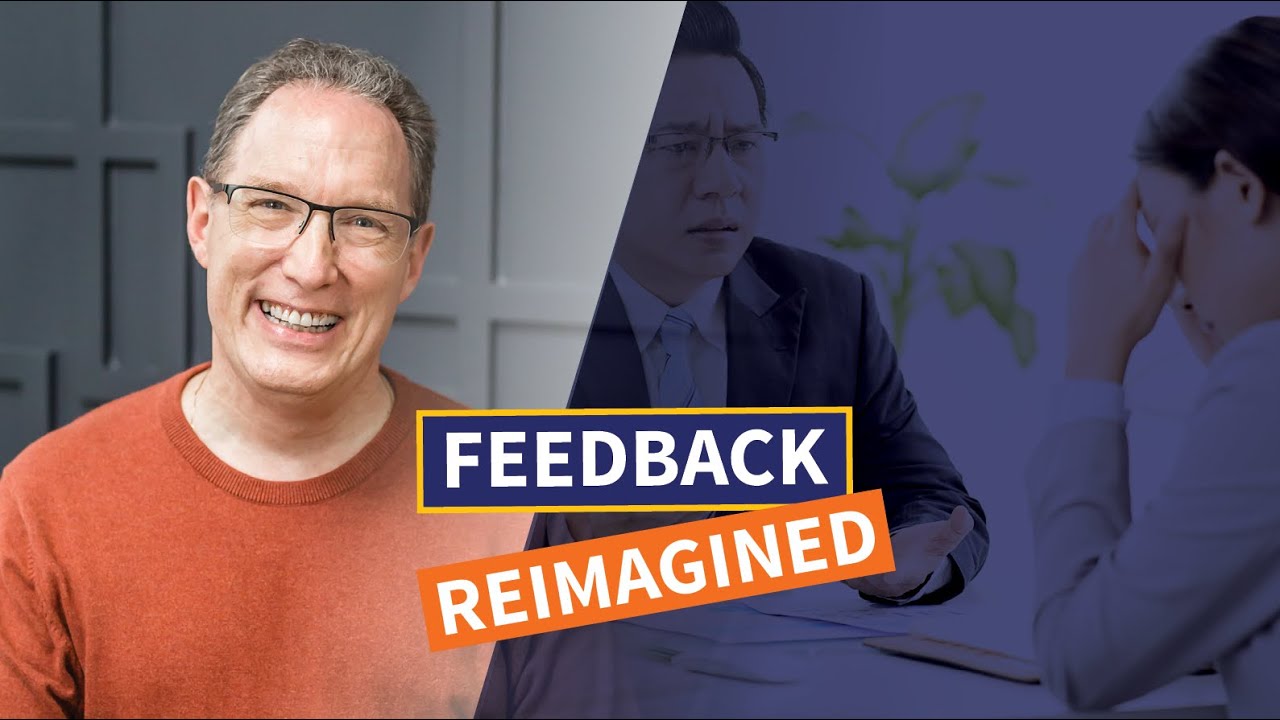
Marc Haine argues for replacing annual performance reviews with continuous coaching and ongoing development. Annual reviews fail because feedback needs to happen constantly. Leaders need training to become coaches, and companies should pilot the shift before full rollout.
Chapters
Welcome to episode 180.
Whoop whoop!
180 episodes, over 125,000 downloads. This is a time to celebrate. And I'm so glad that you are along for the ride. Today is probably going to be my most contentious episode because one of the things that I think that we need to do, I think personally, it's time to kill The whole annual performance review process. Did you just have like a shiver just then? Did you kind of just like tweak when I said that? Get rid of it. We've been doing it for absolute decades. But let's face it. You hate them. The employees detest them. And it serves no real purpose other than fulfilling the checklist of what managers have to do. And honestly, there is a better way. And that's what we're going to be talking about today on Marc Haine Live. Welcome to this episode. This is where small business owners and entrepreneurs pick up core skill sets to help them create the jaw-dropping, show-stopping experience that their customers and their employees deserve. Let's face it. Everybody deserves it, even your stakeholders. I am your host, Customer and Employee Experience Strategist Marc Haine. And in today's episode, we will be talking about how to kill the annual performance review and revitalize your team's growth through the power of ongoing coaching and mentoring. We will be diving into transforming leadership And the leadership roles from being taskmaster roles to becoming talent cultivators. And how this shift can create a more engaged, dynamic, and a successful workplace. Don't think we can make that shift? Well, stick with me. I'd love for this to be an open forum. So, if you have any questions, go ahead and post them in the comment box. I'll address them here live as we're doing this show. Or I will come back to it on the replay and answer them there as well. And while you're at it, why don't you go ahead and make absolutely sure that you subscribe to this podcast? That way, you'll get notification when fresh new episodes drop, when I bring you fresh new experts and content to help you make your business better. And as always, if you find this topic compelling, which I hope you do, I do offer a 30-minute complimentary coaching session. You can go ahead and book a time that works for you on my online calendar at meetwith.marchaine.com. The link is in the show notes. You know, is it any wonder that we can't engage and retain the newer working generations? As a working society, we've evolved past the Industrial Age. We've strode past and The Knowledge Age and we've landed smack dab in the middle of the Relational Age. Why are we still hanging on to the Industrial Age management processes? Imagine a world where the dreaded annual performance review is a thing of the past, replaced by something far more dynamic, more engaging, and let's face it, More effective. And we're talking about a revolution in shifting employee development. A shift from the annual evaluations to a culture of ongoing coaching and mentoring. So that brings us to our Question of the Day. So, are you still clinging to The outdated annual performance reviews. Have you ever thought about how this old-school way of managing employees might be costing your business more than you realize? I'd love to hear your thoughts. Why don't you go ahead and drop your thoughts, your experiences, even your ideas and your struggles into the comment box and share it on social media. If you do share it on social media, make sure you hashtag it Experience Leadership. I'd love for you to be part of this conversation because I know it's going to be contentious. We have some hardcore baby boomers out there thinking, my goodness, without the annual performance review, I won't know how to pay my staff. But you know, it really hurts me when I think about my daughter going through the exact same humiliation I did 30 years ago. Hey Hannah! Thank you so much. Nice to have you on. Nice to have you watching. My daughter's going through the exact same process. Last week, she came home waving a paper saying, oh, I have to fill this out and give it back. It's for my evaluation. And so, when I took a peek at it, I was amazed to see that this was the same kind of form that was used for my evaluation decades ago. And I do mean decades. And it was the same type of form. And it was actually the same kind of form that I was forced to use in my past jobs where human resources would give me a form saying, you have to do your annual evaluations of the staff. The irony is that the employee is not given the form designed for them to fill out. They give the employee the exact same form that the supervisor needs to fill out. They give them the forms and say, give me your feedback on how well you think you're doing and we'll get together to compare notes. Then, on D-Day, the employee sits in front of the supervisor justifying why they deserve the ratings that they gave themselves. There are so many problems with this process. So many! The rating systems don't make sense. The biggest issue is that the ratings typically are not weighted, which means they don't calculate the point system based on what means most to the success of the team, or the company, or the person. They are given the same kind of weight throughout the evaluation process. For instance, the last evaluation I had, which was I think 6 years ago, It rated my performance 1 to 5 with a maximum of 5 points. Punctuality was rated 1 to 5 with a maximum of 5 points. And adherence to the dress code was rated 1 to 5 with a maximum of, you guessed it, 5 points. That means performance, that is the actual deliverables of my job, represented only 5 points out of 100. The same as lesser criteria such as, hmm, keeps his workspace organized, demonstrates effective use of the communal kitchen, and doesn't take the last box of staples without telling anyone. It just doesn't make any sense that you would rate performance at the same level as everything else. So, their performance reviews are not well thought out. The forms are not well thought out and they are Actually, I think they do a disservice to the employee. Number 2, the employee has not been trained in what the definitions mean. So, what constitutes a 3 compared to what constitutes a 4? But then again, I guess the supervisor hasn't been trained that either because when you ask them, they go, well, it's just, you know, it's just, I just feel it's a 4. And then number 3, the annual evaluation process is used to blindside employees time and again by pointing out faux pas that were never addressed at the time. So, the poor employee is sitting there getting, oh well, you remember 11 and a half months ago when Sheila needed to go home early and you said that you couldn't stay? That was really selfish. I mean, poor Sheila. Her goldfish died. I could go on. But aside from the process being demeaning and causing a ton of unnecessary stress, they tend to really focus on the past Rather than focus on present performance. There's a thing called recency effect where the biggest things that stick in the manager's mind is going to be the things that happened the most recently. And let's face it, the whole process is a time suck. The employee has to sit down. They have to go through it. The supervisor has to sit down. They have to go through it. And they have to make stuff up. They have to sit there and really kind of go through each of the things and go, oh yeah, okay, what can I find fault? As opposed to what can I recognize and reward. They are time sucks. They're expensive. They're a really expensive use of time. And it really doesn't improve the employee's skill or overall performance. And really, in the scheme of things, it really does feel more like an interrogation rather than a constructive dialogue. Now, I'm not saying they all do because I know some really great managers out there and especially human resource managers out there who are really kind of really effective in how they apply it. But honestly, The annual review process procedure which was created during the industrial age is as outdated as rotary phones. You could still use them but they're not as effective. When we come back, we will uncover alternatives that not only builds people and teams up but gets people performing at a higher level. And we'll get to that right after this.
When the spotlight shines on your business, are customers applauding or yawning? In other words, how is your business performing? Make your business a star with the new book Lights! Camera! Action!, business operational excellence through the lens of live theater by Marc Haine. Marc uses his business and acting experience to help you see your business like a live show so you can create a performance your customers will never forget. Buy Lights! Camera! Action! today at your favorite online retailer or directly at marchaine.com.
If you've ever read my book, you'll see that I have advocated for dropping onboarding. If you haven't read my book, what are you waiting for? It's really funny and we have a good time with it. You should really pick up a copy. Honestly, you honestly really should. Am I self-serving? Abso-friggin-lutely! But you heard me right. Let's get rid of onboarding and let's opt for forever boarding. Whenever I say that to people, they're like, ooh, I like that. It implies all sorts of good things, doesn't it? Who knew I could be so brilliant? Who knew it? 180 episodes in. Ah, come on. But the philosophy of forever boarding fits So neatly into the alternatives to annual performance reviews. It really does. Foreverboarding is a developmental process where employees receive continuous feedback and guidance from their managers, from HR leaders, or from external coaches, people brought in to help employees develop. This approach shifts the focus from the annual performance reviews to a more frequent conversational style of performance management, where feedback is given in real time and is more aligned with current employee activities and goals, both professional and personal. I love this idea of Forever Boarding. This is where the employee is coached and mentored. A much more holistic approach to the needs of our relational economy workplace. And I go into it in details in my book. So, pick up a copy, gosh darn it! There are so many different benefits. Honestly, when we do forever boarding, we're actually looking at the journey that the employee is on with us. And as they change, being with us on their journey, we are able to coach them past any kind of operational hiccups, any kind of organizational hiccups, any kind of developmental hiccups. People say, well, I don't really understand that. Only thing I can ask them is, would you talk to a day 1 employee the same way you would talk to a year 5 employee? And the answer is always, well, no, of course not. Well, that means that from day 1 to year 5, that person has evolved. And by forever boarding, we're able to be there when they make those evolutionary steps and we can help them on their way. So, team members get continuous feedback unlike the annual reviews. Ongoing coaching provides employees with immediate feedback, allowing them to adjust behaviors and improve performance continuously. It is much more relational. It helps build confidence and strength. So, especially in high-trust organizations where you encourage people to fail forward, doing coaching, it helps employees understand and deploy their strengths, boosting their confidence and enabling them to tackle challenges much more effectively because then you sit down and you problem solve. You kind of figure out what went right, what went wrong, what should we be celebrating, what could we be working on. And then of course, to that, the next one is it creates a culture of growth and development. Coaching fosters a culture where employees are encouraged to grow and develop, leading to increased job satisfaction and lower turnover rates. Think of yourself as a leader. Have you been coached? What did that feel like? And what did that do for you? Did it change mindset? Did it change ideas? Did you change how you thought about things? I mean, 90% of what we have to contend with is all up here. It's in mindset. And so, coaching helps people kind of overcome some of those obstacles. Obviously, forever boarding and ongoing coaching reduces anxiety and stress. You know, I can't tell you how much stress my daughter's going through filling out this evaluation form because she doesn't know, should I be evaluating myself really the way I think I am? Or should I just evaluate myself the way my supervisor sees me? And so, right then and there, when we start considering ourselves about how other people view us, And kind of assuming what we think they think, we're in for a rude awakening because we don't know what other people think. And so, it can lead to things like imposter syndrome, negative self-talk, self-esteem, all sorts of things that are going through her mind as she fills out this form. And let's face it, taking on the role of coach and mentor builds trust with individuals on the teams. Honestly, and if we can separate performance evaluations from salary discussions, that in itself will reduce stress associated with traditional performance reviews. I can't tell you how many times that tends to be done. Once a year, we're getting people together. We're calling it annual performance review. But what we're doing is we're going back and we're rehashing and figuring out what kind of raise should we give this person. And I think that's a real challenge because the two are completely separate components, two separate discussions. And all too often, when I see the annual performance review happen in smaller businesses, it really does feel like it is an ambush. A lot of times, the issues that plague the organization are not being addressed. How employees and team members deal with it is not being addressed until we're sitting down in front of them in front of this inquisition. And all of a sudden, they're bringing up all this stuff. And it's like, well, if it was wrong 6 months ago, why didn't you say anything? Oh well, we were just waiting for the evaluation. I hope this is fun for you, first of all. And I hope this is useful. As I mentioned earlier, if you'd like to delve into your particular circumstance. I am here to serve. So, just reach out. My contact is in the show notes. You know, it was interesting. I had this discussion. I just gave a presentation to the Chefs Federation. And I was mentioning this idea of forever boarding. And like I said, people look at me and they go, ooh, that's really novel. But I could see that when it came down to leaders thinking about it, it's like it's such a Big shift. And people are trying to calculate, is this really something I can do or is this a challenge? And I guess the biggest downside to forever boarding and turning managers into coaching is that we have to do just that. We have to turn managers into coaches. We have to implement a coaching Culture. And so, that requires that we need to integrate coaching into leadership and talent development. We can start by embedding coaching into existing leadership and talent development frameworks. Like, take a look at how you're developing your leaders. You are developing your leaders, right? You are. Well, and if you are, take a look at how you can bring coaching into the throes of that. Because the more we can help leaders become coaches, the better their performance will be because all of a sudden, they become better communicators, better listeners. They become more empathic. It's magical. And so, we have to equip leaders with coaching skills. It's essential for key leaders including HR professionals to be equipped with coaching skills. Some of the very best HR managers that I have ever had in my life were really good coaches. They were able to look at Situations. And I was talking with one of my colleagues. Well, one of my— she's become a really good friend. Was an HR manager way back in the 1990s, late 1990s, early 2000s. I was working for a casino and Lanny Stevenson was my HR manager. And she was absolutely brilliant in the way that she used to push back at my assumptions. I would come in and say, you know, I have a challenge. And she'd push back on assumptions. And she challenged me to think about how I was looking and viewing the situation. Essentially calming me down through an empathetic approach of asking really good questions and then pushing me forward. And from her, I learned this idea that leaders can be highly empathetic. We don't have to be as reactionary. But it took coaching to do that. So, by helping them create and develop their coaching skills, you enable them to use coaching not only for developmental purposes but also to tackle everyday challenges more effectively. You'll see it going in. Not only is it dealing with the employees on the team but in any kind of customer interaction. Empathy, communication, asking really good questions. Those are core skill sets that we develop when we teach our leaders to become more coaches, more so than managers. And then of course, we link coaching to organizational goals. We ensure that the coaching culture aligns with our organizational goals and ties into the team members' personal goals and their journey. Long gone are the days where we are just driving our business, not giving a hoot about our employees. It's gone. COVID changed all that. COVID gave us a platform where we got to see as leaders and as managers and supervisors, we got to see that people were in their own environments, living their own lives, and they were individuals. And so, the curtain was pulled back so we could see the reality that each one of our people on our team are individuals. And each one of them are on their own journey. Doing this will help us create diverse coaching programs. We don't have to have a one-shop stop or a one solution for everybody. Just like a sports team has subject-specific coaches, right? Like a baseball team will have a batting coach. We'll have a running coach. We'll have a catching coach. Everybody's got subject-specific coaches. We can create a diverse offering and even escalations of coaching that align with what your organization wants to accomplish. I mean, we can do things like executive coaching, wellness coaching, high performance and high potential coaching. We can do new management Training and coaching, career coaching, group coaching, and even drop-in coaching. There's all sorts of things that we can do. And when we look at organizations, we say, oh, you know, it'd be really good if when we bring new people in that they can have a mentor. That's also coaching. You train your staff how to— they themselves become coaches. And this top-down kind of culture starts permeating Even your new hires. And that's how we go from this idea of, okay, welcome to the team. Here's the manual you need to watch and here's the— we're onboarding. And as soon as the onboarding is done, you're all on your own. To now that we have this idea that every aspect of the organization is tied to the idea of Forever Boarding. I know you're probably thinking, but Marc, my managers are busy enough. They don't have time to become coaches. I hear you. And this is where the paradigm shift really has to happen. We have to get out of the industrial age thinking that if a manager is not at his desk pouring over spreadsheets and filling out requisitions and feverishly responding to emails, then he's not really working. In fact, because I grew up in hospitality, if I was stuck behind my desk, I would constantly say, oh Marc, we need you on the floor. And then, when I would be on the floor kind of working with the team, and I would start getting criticism that I'm not handing in reports in time. And so, I always had this push-me-pull-you about, oh well, I need to get the reports done because everybody wants the reports. But I can't be in my office doing it. I have to be outside doing it where I don't have— at the time, we didn't have computers on the floor. We just had big-ass computers on the desk. And so, I couldn't be doing both at the same time. But the expectation So, successful managers delegate those tasks. I mean, honestly, the tasks need to be delegated. And then, the leaders just receive briefings and updates throughout their day so they can concentrate on leading. Effectively done, we can build a culture and a cultural integration and critical mass of coaches within our teams. As leaders model the coaching behavior, they'll see an increase in things like collaboration, employee retention and an environment where employees feel empowered and engaged, contributing to individual and organizational success. It's not just an organizational consideration of what's in it for us. How are you doing us? How are we profiting? How are we becoming more efficient? How are we lowering expenses? How are we increasing profits? We're also looking at it from the perspective of the employee on how are they developing. How are they growing? How are they better today than they were yesterday? And how are we going to make them better tomorrow? A dedicated budget for ongoing coaching programs is vital for long-term benefits. You're going to have to build this into your budgets. It's essential that we need to give it some resources. But it's cheaper than you think it is. Honest to goodness, when we go out and we delegate effectively, we delegate some of the tasks that the managers are doing. It's amazing how much more productive we become. And then of course, over the long term, the fact that we're not turning over staff constantly is saving us a ton of money. We're not training staff from day one constantly. So, that's saving. That means that customers are happier. The employees are happier. Of course, your bottom line is happier as well. So, when we come back, let's talk about some concrete strategies and a few things to watch out for. Making the transition. So we'll get to that right after this.
When you're delivering an important speech to a huge audience, it's easy to lose your place or go way over time. Give yourself an advantage with the Pro Speaker Presentation Speech Timer app. No more checking your watch or calling for time. The Pro Speaker Presentation Speech Timer app keeps you on track with easy-to-see timers, even changing color for visual prompts during your speech. Speech. And you can set audio cues to practice or set it to vibrate so you don't even have to look. Be the pro you know you are. Download the app at speakerpresentationtimer.com.
As you can probably tell, I'm really tickled about this topic. I really think it was something that I devised when I wrote my book in 2020. It was an idea, thought process I had that thought, boy, oh boy, if we could do this differently. We could become better organizations. I mentioned sports teams having different kinds of coaches. You don't have coaches on sports teams that say, okay, never mind. If you can't do it, I'll go out there and do it. And they put on a helmet and they go out and play. You just don't see that. It doesn't happen. Likewise, in theater, we're in the middle of a production right now. In theater, we don't— the director doesn't say, okay, You're having problems with that line or with that role? Never mind. I'll just do it. And yet in business, we're constantly doing that. We're constantly figuring out ways to not develop the staff and not allow them to fail forward. So, as you can tell, my purpose here is serving business owners and managers just like you. So, if you're tuned into this and you're thinking, good golly, Marc! I really need to train my staff. This is making a lot of sense. I need to train my leaders. If you are planning a leadership retreat, or a conference and you're thinking this could be really valuable, feel free to reach out for a quick discovery call. Honestly, it won't cost you a cent. And what we could maybe uncover for you is we can uncover a path. My contact is in the show notes. It is the one marked meetwith.marchaine.com. And please, if you know somebody who could use this information, it would be really great as a leader if you share it because knowledge is power. But only if you share it. So, I just want to pause here for one second and ask you, how are you feeling about this? Now, I realize that's a rhetorical question because you're not putting comments in the comment box and you're not talking to me. So, I do know it's rhetorical. But I think it's good to just check in for a second. How are you feeling about this? Is this— are you looking at this going, oh, this is just complete nonsense. There's no way we can make the change. Or are you thinking, Hey, this is an idea. This is something we might need to explore. I do know that this is a lot to take in because as I mentioned, this is a huge paradigm shift on how we think about performance evaluations and driving performance and so on. And so far, we've talked about how society has evolved from the Industrial Age to the Relational Age, questioning why management processes, particularly annual performance reviews, have not kept up With these changes. Our people are different. And when I hear people, I was just at a convention this past weekend and people were saying, oh, the younger people are so lazy. And they're not lazy. Each one of them has magical superpowers and passions that they bring to the forefront. We just haven't figured out how to tap into it. So, by tapping into the concept of forever boarding, which is a continuous feedback-driven process replacing the annual review, we put the focus on real-time performance alignment with both professional and personal goals. I was talking to Twyla during this conference. And so, she came to me. She says, I have 16-year-olds. And we sat down and we had a really good conversation on how we can coach for their best performance. Today, we've also covered the advantages of establishing a coaching culture with ongoing coaching, including continuous feedback, building confidence and strengths, fostering a culture of growth and development, and reducing stress and anxiety that comes with ineffective processes. It is a heck of a shift though, isn't it? As I mentioned, we have to shift how we define the role of the manager. Honestly, that's probably the biggest paradigm shift is we have to look at the manager and shift the perception of what they're there to do. In my view of leadership, it places greater emphasis on developing and empowering employees rather than just directing tasks. They're not traffic cops. This means leaders need to allocate more time for coaching, mentoring, and supporting their team's development. That has to become kind of the primary role of the department leader, or the front-end leader, or the department leader. For leaders to focus on coaching, They need to be adept at time management and delegation. We have to take stuff off their plate so that they can start focusing on the most important thing, which is connecting with the employees and working through this idea, this paradigm of coaching and mentoring. It's about moving away from being the primary doer to enabling the team to excel. But it involves trusting team members with more responsibility and being comfortable with them taking the lead on operational tasks. And like I said, every one of your team members on site have their own magical superpowers. And by sitting down with them, by going through this process, you're going to find out what it is. And you will be amazed at the skill that you have on your team. To facilitate this shift, organizations need to foster a culture that values continuous learning and growth. This involves training leaders in coaching skills and ensuring that they have all the tools and the support to effectively coach their teams. That means your coaches might need coaches. Leaders need to balance coaching with their other responsibilities. Again, I believe it needs to be a primary driver of why they're there. This might require changes in organizational processes to ensure that the coaching is recognized and valued as a key part of the leader's role. And I think that we need to rethink performance metrics. I think this is going to be really essential because it's not a, I do it and we see a result. Success in a coaching-focused leadership role may not be as quantifiable as the traditional doing tasks. The impact of coaching manifests over time, seen in improved team performance, employee engagement, and retention rates. When I worked for one particular organization that had a 300% Turnover rate over the course of 4 years, we were able to bring that down through slow progressive improvement. We were able to bring that down to 24%. Think about that for a second. For this paradigm shift to be successful, it requires support from HR and upper management. They're going to need to recognize the importance of coaching and provide the necessary resources and recognition for the effort, maybe they themselves becoming your coach and mentor. Leaders, CEOs, when you think of things like Tech Canada and Vistage are out there as peer-led coaching programs. When you think that people, leaders, CEOs, and leaders are hiring their own coaches themselves, this can be a top-down process. where the leaders get coached. Those leaders coach others, and so on and so forth. But here's the thing. They become a coach and mentor. You see what I did there? The idea is for every level of leadership, every leader of leadership to become coaches and mentors. As you explore what this might look like for your organization, keep in mind that There is a negative impact of a poorly executed strategy. So, a coaching approach should be interactive, focusing on engagement, productivity, and job satisfaction rather than solely on criticism. And it does require that your coaches need to be trained. Oh, did I say that already? I mean, you yourself, you wouldn't trust your manager to work on your car's brakes, would you? Not without training. So, don't let them mess with coaching without giving them the skill-building opportunity. And then of course, what we're talking about today is we're talking about a whole cultural shift. And change isn't easy. We know this. Implementing a coaching culture requires a significant shift in organizational mindset. It's absolutely crucial to assess whether your organization's culture can adapt to Encouraging ongoing dialogue and having effective conversations throughout the year, not just the once a year. And this shift can really be challenging and may require a gradual approach with maybe a pilot program to start to manage change and inspire others. Maybe you just start with one department and you train that leader and you get that leader to train the subsequent leaders in the hierarchy to become more effective. And we see if it makes in itself will incite a change. An ineffective adoption will mean that if and when crisis hits, you'll be thrown right back into the comfort zone of doing what you've always been doing and getting the same results. I've seen this time and time again when it comes to a cultural shift is that when a recession hits, or when we have to start cutting labor again, or whatever the crisis is, that all of a sudden, the leaders will go, well, let's just park this initiative for now and let's go back to doing it the way we used to do. Which I think is just so painful. It creates uncertainty for the staff, creates uncertainty for your different leaders, levels of leadership, and your customers just get really confused. I think leadership and managerial skills need to be redefined. But here's the secret is not all managers might be comfortable with or skilled in coaching conversations. I think part of it is it does take a certain personality to be able to do it well. And so, we need to figure out which people on our team would be really uncomfortable and not very effective as coaches. And then, we need to figure out how we adapt and include them in the processes. But coaching requires a bi-directional approach where listening and asking questions are more important than giving people advice and telling people what to do. So, training managers in coaching skills and helping them to transition from traditional review methods to a coaching mindset is absolutely essential. Oh wait, didn't I say that already? Anyway, documentation and tracking. So, when transitioning to regular performance check-ins, it's going to be important to have a system for documenting and tracking the conversations and the interactions. This could range from having a shared document on like Google Drive to more sophisticated tools or even software. There's tons of coaching software out there. The documentation helps in keeping track of the discussions, outcomes, and follow-up items. It makes it— the more you can arm your leaders with the tools so that when they're getting ready to meet with an employee, that they can get a quick synopsis of conversations that maybe they had with another supervisor, or another manager, or another coaching session. You can go and remind yourself very quickly what you've talked about and make the processes more, well, painless, right? And then of course, the transition should be supported by adequate training opportunities for the managers. We need to be able to looking for things that we could do for our managers, looking for training courses, looking for training opportunities, and making sure that we are ready to give them more tools as they evolve in their journey. Empathizing. Empathizing— emphasizing why check-ins are important and providing guidance on leading and facilitating those conversations are crucial. So, this is something that you need to do. Like if you're a head of an organization or a department head, you bring your managers together themselves. You bring all your leaders together into one room to talk about how are they adapting. How is it working out? And managers should also be trained on how to provide and receive feedback effectively. Effectively. I'm kind of feeling like I'm experiencing déjà vu. Have we talked about this already, the whole training managers thing? Anyway, gaining the support of leaders, managers, and employees is really crucial for the smooth transition. And you will again, you will find that there's going to be points of static as you want to make the change. People aren't good with change. And so, you need to use your coaching skills to sit down, to listen, ask good questions of the people who are having difficulty with the transition. But I think one thing you can do is create focus groups. You can have pilot groups and you can have change champion groups who can help build internal goodwill to support and manage transitions. In one organization I went to, I wanted to create a training team of trained— and so, I had to do train the trainers. But we didn't have the budget to train people. So, I went out to the staff and I said, would you like to be part of the Train the Trainer? And the very first question was, what? Does it pay? Will I get paid for that? And I said, no. But what I'm going to do is I'm going to set you up so that you're not going to constantly be frustrated with what you see from new people coming on board and make you more effective training— make you a more effective trainer. And out of the 12 spots, 8 people signed up for it. And after the first day, I had 8 more people come to me afterwards and go, oh, I heard about what you did yesterday. It's real. I really want to get in on it. But I only had room for 4 spaces. So, getting people to do it, we think, oh my goodness, we can't afford to pay people. But when you tap into what people are passionate about and how they want to participate in solving our problems, magical things really do happen. But I really do think that as we— if you make the transition, you're going to want to set realistic and conservative expectations for a new process and the adoption. This is so important because Part of what we want to do is we want to be able to fail forward. We want to be able to take a look at what is working, what doesn't work, and then apologize when we fall flat on our faces, pick ourselves back up again, and keep on going knowing that we're failing forward into a new process. And really, nothing that we're going to do as long as nobody gets hurt, like nobody gets hurt, nobody dies, we can move forward with it. And then of course, we have to establish success measures and track statistics to leverage moments of success or lessons learned to share with other people. A perfect group leadership opportunity as I have ever seen. It is such a good way to bring your team together and say, let's tackle this together. Let's be part of all this together. And let's openly share and be transparent on where we're falling down, where we're not— we don't think we're really all that good. And let's learn together as a team. And oh yeah, in case I haven't mentioned it, it is so important to train your leaders to become effective coaches. As I wrap up, I have to say transforming from the dreaded and ineffective annual performance reviews to a coaching culture really offers numerous benefits. But it requires thoughtful implementation. It's a culture shift. It's a paradigm. You're changing our mindset on how we're thinking about leadership. We need the training and we need support systems to ensure that everything we do is effective and sustainable. Again, one of the biggest challenges with, you know, we do this but then culture crisis hits and we end up taking a step back. So, we must absolutely make sure that how we progress is going to be sustainable. When done right, you will reap an amazing benefit over the long term. You will see things like increased employee engagement. You'll see Increased employee retention. You'll see your leaders are kind of more pumped in doing what they're doing because they know that every day they're coming in, they're not just going in to make a job. But they're coming in to incite change and they're helping other people. They're being of service to the people that they are leading. And that in itself is magical. It gives people a sense of purpose in what they're doing as opposed to, oh, I have to go in and I have to answer emails and I have to do my spreadsheet and I have to do my report. This becomes a component of a leader's job that really is in itself self-fulfilling. It really gives you that option that managers come in and say, today, I get to work with a couple of my staff members and we're going to see how they've grown over the last little while. I hope that this has been helpful for you. If you have some questions about our topic today and you'd like some to brainstorm some aspect of your business, feel free to click the calendar link in the show notes and book a complimentary 30-minute session with me. I live to serve. This is something I fell into. I evolved into. I love doing this. And please, if you enjoy this episode, feel free to subscribe to this podcast and share this episode with your network. Honestly, sharing is probably the best thing you can do as a leader. Thank you for joining me today. My name is Marc Haine. I hope you stay safe, stay healthy, and I hope you dare to be the exception. Take care.









