Revolutionize Your Management Style: From Solutionizer to Empowerment Expert
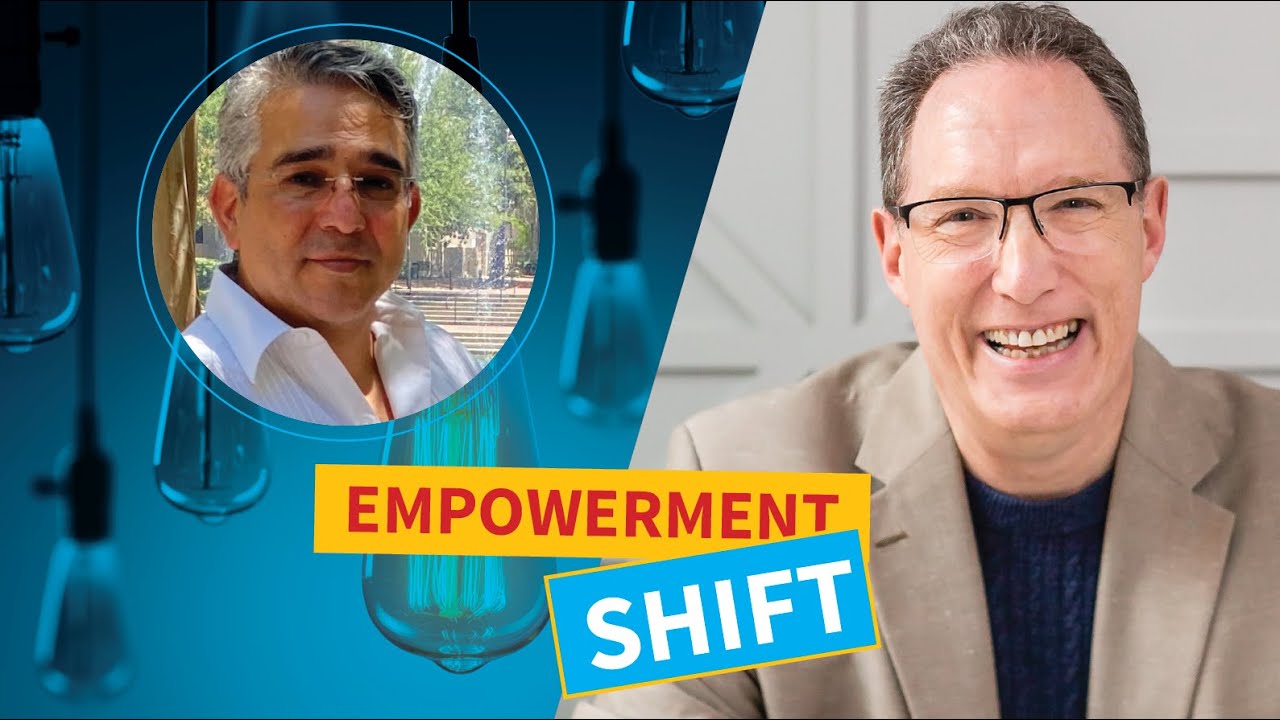
Marc Haine talks with Jesse Hernandez Jr. about how leaders become bottlenecks by constantly solving problems for their teams, creating dependency instead of autonomy. The fix: ask open-ended questions, give advice only when asked, and share your own mistakes to rebuild trust.
Chapters
I get it. You're busy. It seems like every minute of your day is hijacked by the endless demands of your team, your customers, and the crisis of the moment. I can't help wonder but if your expertise has become a crutch to your business, stifling innovation, crippling autonomy, and undermining the very fabric of effective teamwork. And that's what we're talking about today on Marc Haine Live. Welcome to this episode. This is where small business owners and entrepreneurs develop new skills to help them create the jaw-dropping, show-stopping experience that their customers and their employees Deserve. I am your host, Customer and Employee Experience Strategist Marc Haine. I am so glad that you are investing your time with us today. We're about to have an amazing conversation because my guest for this episode is the construction mind shifter, Jesus Jesse Hernandez Jr. And today, we are going to delve into a crucial yet often overlooked aspect of leadership. The art of empowering our teams to operate autonomously. We will tackle the pervasive issue of time bandits in the workplace. Those practices and habits that stealthily steal away leaders' times, leaving them overwhelmed and the teams overly dependent. Before we get into the show though, I have one simple request. If there is somebody out there, somebody in your circle who could benefit from the insights that we're going to be sharing today, please do them a favor and pass along this link to this episode. Knowledge is power but only if we share it. And it would be a shame that you come across this magic content today that we're going to be talking about and you not share it with somebody who who could really, really use it. Recently, I met with a printing shop owner who says that it is time for her to retire. She's been at it for years. She is the absolute master of all knowledge when it comes to her business operation. And she has been there the whole time. And through all the different iterations of employees that she's had over the last 20-25 years, She has been the constant within that business. But she's tired. She feels she always has to be there. And maybe you feel a little bit like she does. Maybe the line between being a leader and becoming the lifeline of the team has been blurred. We feel the weight of constant interruptions, the endless streams of questions, and the never-ending need to provide the solutions or to be the provider of solutions. This relentless demand on our time and our expertise is not just a minor inconvenience. It is a significant costly business problem that is hiding in plain sight. And it is the anchor to your business. That is, it's the anchor that's holding you back. It is draining our resources. It is hampering our team's growth. And ultimately, it limits our organization's potential for innovation and for success. So that brings us to our Question of the Day. So, have you ever found yourself wondering why no matter how much effort you put into solving problems for your team, there never seems to be enough time in the day for you to get your work done. And your team doesn't really seem to grow. They don't seem to be becoming more capable or more independent. In fact, you might be walking around going, gosh, why aren't they? Because you probably say gosh. I know I do. But you're probably saying, gosh, I wonder why they're not taking more initiative. I'd love for you to share your comments, And your thoughts, why don't you go ahead and put them in the comment box attached to this podcast? I'd really like to hear your 2 cents. And probably, your experience will help other people figure out if this is resonating with them as well. As I mentioned, my guest today is the Construction Mindshifter, Jesse Hernandez.
Yay!
Jesse has a rich background that spans from practical construction work to advising executives. His unique perspective is that regardless of our roles, we share more similarities than we do differences. Jesse is dedicated to helping leaders evolve from the transactional to the transformational, emphasizing contribution ownership and vulnerability. His insights are encapsulated in his book, Becoming the Promise You Are Intended to Be. And his engaging livestream, No BS with Jen and Jess, is streaming. You'll tell us what platform it's on, eh, Jesse? Welcome! Welcome to the show!
Thank you, Marc. Thank you. Such an awesome intro. Yeah, No BS with Jen and Jess. You can find it on YouTube and on LinkedIn. Those are the primary spaces to find it. And it's like every other Saturday at 8 AM Central.
Lovely! And BS doesn't stand for beef sandwiches, does it?
Negative.
No beef sandwiches. Okay. So hey, before we get too deep in today's topic, could you tell us a little bit about how you serve your clients?
Yeah, I guess the easiest and maybe most complicated way to describe that is by listening intently to understand what it is that they're doing that's contributing to their pain. And when I figure that out, then the next step is for me to be, I would call it like courageously informative, meaning serving up the stinky truth about what that is. And then, finding ways to help them get out of their way so that they can apply their gifts and talents to achieve the business outcome outcomes that they're seeking. And so, that's a lot of time, right? It's a lot of contact time, a lot of listening, a lot of asking questions, and really understanding where are they headed, where are they right now, what's in the way, and what are we going to do to move that ball forward.
And without getting too far off topic, this is important conversations that business leaders need to have predominantly with people who aren't involved in their businesses. Because I find all too often, we talk to people within our businesses. And when I talk to leaders, they go, oh yeah, I got managers and we get together and we talk about our stuff. But a lot of times when we're inside the mess, we can't really see the forest for the trees.
Yes, yes.
And so, your role is to be that trusted advisor.
That's the goal, right? When I'm at my best, I have become a trusted resource to the leader or decision maker that I'm working with. And because you know this, Marc, and I'm sure your audience out there knows this. As we progress in our careers through the organizational charts, the number of peers that we have becomes smaller. And it's so competitive. The likelihood that I'm going to share my issue with you when you might take my next promotion. There's all these weird power dynamics that come into play. So, we get super tight, close-minded. And then, that's compounded with The fact that all our direct reports, because they want your favor or our favor as the bosses, they're going to polish up bad news and hide the stinky truths so that they don't lose favor. And as the leader, you're kind of— you got your hands on the wheel. But the wheel's connected to a different car or not connected at all. And so, what I put my effort into is letting people know like, hey, that's a great wheel. It is totally not connected to the car and here's why. So, let's dive into that bad boy.
I love that because I think that a lot of times, our problems within our organizations can be attributed to the nut holding the wheel.
Totally.
And to your point, we could probably do a whole episode on scarcity thinking versus abundant thinking, right? When we think about this idea. But there are a ton of organizations out there. In the United States, there's Vistage. Or sorry, there's Vistage. And then in Canada, it's Tech Canada where you get peers together. So, you get CEOs talking their non-competing businesses, talking about issues that are there. And those are very, very valuable. But we also have on this channel, we have all sorts of resources on here about the importance of finding a coach and finding coaches that are specific to helping you within that problem. So, I'm glad that you're in that foray and glad that you are out there servicing the people who need it the most. So, And again, welcome to this show. Lovely to have you.
Thank you. I'm excited.
So, I mentioned in the intro your word, which is this idea of time bandits. Could you define what that means and how it typically manifests itself inside a business environment?
Oh, absolutely. So, the favorite phrase of the time bandit is, hey, you got a minute? Hey, you got a second? Like, no, I don't have a minute. I don't have a second. I'm stressed out. I got back-to-back meetings. I got reports that are due. I have a big problem that I'm kind of ignoring right now. So no, I don't have a minute. No, I don't have a second. Now, that's kind of harsh, right? Because sometimes people just want to engage and be human. And that's awesome. But the reality is these time bandits, the people that will come and rob a 5-minute, 10-minute, 20-minute thing What they're really doing is they're coming to me with their problem. And so, here's the counterintuitive thing. The answer to why is because I have historically taken that problem out of their hand, made it my own, and in effect conditioned them to be the time bandit that I'm irritated with. It's like cats. If you feed cats, what do they do?
They keep coming back.
They keep coming back. Yep.
Right.
They don't—
they're not going to do anything to earn that food or serve themselves or feed themselves. They just show up because you keep feeding them. But at the root of it is because I take the problems away from my people. And I do that every time they come to me with an issue and I give them the answer to the issue. I have just chipped away at their need or practice of accessing their critical thinking. I have chipped away at their autonomy because I am signaling to them that they don't know the answer. Only I know the answer. And so, in effect, I'm creating this army of time bandits for me so that they can come and steal all my time. And it's that I'm the root. I'm the problem.
Yep. And we would define, and typically as leaders, we would take a look at that and say, well, I have an open-door policy. I am here to support you whatever you need. And so, our service heart wants to be able to do that, right? But it's kind of to your point. When I think about this, it's kind of like when my kids just started like elementary school and doing homework for the first time. And it's like, Dad, What's 2 2?
Right?
And you want them to figure out. But then, in a shortness or whatever you say, it's 4.
It's 4.
Well, we've just taught them, if you have any problems, come to me and I'll give you the answer.
You got it.
And then, they learn zero.
Yes, they learn dependency. And so, it becomes learned dependency. And you already know, as a business leader or someone growing in through the managerial or leadership ranks, You need bandwidth and like brain space to learn new skills, learn new processes. And you ain't gonna have that while people are dependent on you because you've made them dependent on you. I think that's the key thing is like, folks, we're doing it to ourselves.
Right.
And we can break it. Like, we could totally break it. And it just requires some intentionality and a lot of practice.
And we will get into some strategies to make that happen. But at the moment, I can imagine that some people might be watching going, no, I'm just supporting my staff. Are there any kind of common habits or practices that lead to the creation of these time bandits? You've already mentioned one, which is this, I'm always available, right? Hey, do you have a minute? Are there any other habits that leaders have that kind of perpetuate this ongoing kind of Dependency?
Yeah, I think one habit, which I'm just gonna pick the one that I'm ultra guilty of, is my response to problems, right? If I'm— my reaction, I should use the word reaction over response. But if I react punitively, meaning people can tell that I'm upset or disappointed or irritated with the information you just gave me, I create the thing, right? Because now they're like, I don't want to make a decision. I don't want to make a mistake because if I do, I'm gonna have to come tell this guy and this guy's gonna lose his mind every time. So, why make a decision? Let me let him make the decision. And so again, there's these small things but that's a huge one that even I've, you know, after I started kind of practicing and working on this thing, even gritting my my jaws when I get like, this is bad news. It's still interpreted as a negative response to problems. And so, it's these types of behaviors that we may not be aware of but we know we feel that are signaling to our people, don't bring me bad news. Don't use your thinking because I'm not going to be happy with it either way.
Interesting that you say that because part of, as you were saying that, I was imagining as well how many times do we feel That, oh, come on, it's common sense. Or, hey, we paid to train you. What do you mean you don't know this? Right? So, those kinds of attitudes even though we're thinking, oh well, we have a guy here who's been here, been with me for 15 years. How does he not know this? And how that manifests in our body language, in how we respond, how we breathe must send that negative message out there as well.
You know, I'm going to touch, double tap on the training thing because we do this thing as leaders. I've done it and I've had it done to me where we send people to some conference or some seminar, some training. And the person sat there for X amount of hours. And we have this crazy idea that they should be experts on whatever that subject matter was. Which is an unrealistic expectation because at best, they're going to come back with some vocabulary, some terminology, a new idea that they need to put into practice to turn it into knowledge. And so, I ran a little experiment. Luckily, I didn't get— this was back when I had a real job, right? I was working for a company. And my group, we were largely responsible for delivering training.
Right.
And the big complaint was, we're sending all these people to training and they're still horrible at the thing. Like, well, yeah, because they're learning how to do it. And so, it was all the VPs of a central region. And before I did my report out about training, I said, okay, everybody stand up. I'm going to teach you the basic step to bachata, which is a Latin dance. And so, we went through that, right? 1, 2, 3, 5, 6, 7, hip. Da da da da da. Y'all got it? Yes. Okay. Played a little bit of music. Do it on on beat. Yeah. Okay. Good. I did my presentation at the end of my delivery of me reporting out. I said, "Okay, who is going to come up here to walk us through the basic step of bachata?" And they all said, like, "What in the world are you talking about?" Yeah. They all shrug like, "Not me." No. And I'm like, "What do you like?" Jesse, there's no way we could learn it in the 3 minutes. Whoa, timeout!
You went.
You had the training, right? This is the expectation that we put on people, which is not realistic. It's totally detrimental to the effort overall. Yes.
Yeah, it's interesting because to your point, I've had those same conversations. And so, what I do with the leaders is I bring in a skateboard and I tell him the mechanics of working on a skateboard. And I said, let's go out into the parking lot. I want to see you skateboard now. Right? And it's like, but I've had no time to practice. That's the magic word. That's the magic word.
Yes, yes, 100%.
So, you have a phrase for the leaders who jump in with all the solutions. What was it?
Solutionizers.
That's right. Solutionizers or solutionizing, which I loved. I love it. It's Like we turned it into an act of, hey, have you been solutionizing today? If so, we have a remedy for you right now.
For $9.99.
So, what signs should leaders look for to recognize that they might be falling into this trap of solutionizing?
Oh God! This is my favorite. So, one super easy one that we're all guilty of is when we're giving unsolicited advice. I'm sure you've been in a conversation where somebody is sharing this thing that they've been dealing with and they come, or you're sharing with somebody, you know, I'm working with what my kid can't really— oh, you know what you should do? You got to check out this YouTube channel or there's this podcast you got to listen to. And so, they start solution shanking you and giving you advice and their resources when you haven't even asked for them. Right? Or seeing somebody struggle and instead of letting them work through the struggle, you jump in and save them. And I'm going to say like parents are ultra guilty of solutionizing because they don't let the learner, in this case, their child, go through the struggle of learning the thing, whatever the thing is. And just like you said earlier, Yeah. We learn through repetition. And so, observing so that you have some data or intel so that you can coach in the need or in the event there was a need or an invitation to coach is the appropriate thing. But what we do is we jump in and again, take the problem away and say, do this. You should do this. Why haven't you tried this?
Right.
And it's in an effort to be helpful. The problem is what I think happens as a human being when people are solutionizing me and telling me what I should try, what I should read, what I should listen to, is it's severing any connection that we had because I feel judged. I feel like, okay, this person clearly thinks I'm not intelligent enough to find a damn book on the problem. And I wasn't even asking for help or answers. I may have just been venting and sharing a situation. But Mrs. Genius in front of me has to give me all the damn answers she has, which minimizes me as a human being. And now, there's no connection. So, that's the solutionizing behavior of just kind of walking by and saying, Why are you doing it like that? There's a better way to do that.
Yeah, a positive indicator of whether or not somebody is solutionizing is if you start off the phrases with, you should, or, you need to.
Oh my, yes, yes.
Those are good.
Like, you're going, you're fixing to jump. Don't do it!
Are there any long-term impacts for leaders who aren't addressing this habit that they have? Is there any like what's the long-term kind of consequence to team autonomy and to their business growth, do you think?
Oh my God! So, I'll say we'll talk about if I combine the solutionizer behavior with the propagation of time bandits. The long-term problem there is you cannot progress and grow to the next level because everybody is dependent on you.
Mm-hmm.
You are cut off from the truth and the reality of the problems that the business is experiencing because you have inadvertently communicated to everybody that you don't want to hear about problems. And brother, you know there's problems. There's all kinds of problems all over the place. And so, when I had an abundance of time bandits, like when all my people were dependent on me, I was irritated with, man, people just don't show initiative anymore. That wasn't true. It was me. So, I turned off their critical thinking. I turned off their heart and their creativity because I was always losing my mind over problems and bad news. And I was always giving them the answer. And so, we'll just say like, as a middle manager, one of— I hit a plateau. And the number one reason was because the people around me weren't growing. They said, you got to grow people. Like, no, you just need to hire better people. And they said, no, you need to learn how to develop capabilities. And so, when I started learning how to, instead of giving the answer, solutionizing, or when I started not responding with the answer to the problem and saying, What have you tried? When I started accessing the critical thinking that they actually already have, and some of it is way better developed than mine, they started flourishing and growing. And then, little by little, they say, hey, there's this thing happening. This is what I'm thinking. Like, oh, cool. Like, okay, what else?
Do it.
What do you need from me? So now, it's just a bounce back and forth. There's trust. There's support. They know I believe in them. They know I'm going to support them and they're able to handle more, which gives me more to handle in effect. Now, like if I'm further up the ladder, very same thing. I've got to assume that people have the capability to go and drive change. I mean, I ran a group of folks, of change agents, highly skilled and highly talented people. And so, the way I chose to operate was We're going to have conversations about problems. And because we're the leaders of change within this organization, part of your job is to create problems, to face conflict and go there and have the conversations and help people have the awakenings necessary. What that means is you can get a lot of rejection and people are going to get crazy and upset. And I'm going to deal with that. But that's what I'm here for. So, if I hadn't developed the callus, if you will, or the capacity to absorb people's negative reaction and not displace that on my people but just absorb it as a natural course of business because we are driving change, all of a sudden, me and my team, we were able to provide deep and lasting sustainable impact instead of just kind of the superficial Checkboxy stuff.
Right, right. Well, and so, you have just kind of teased out kind of the content of this podcast today. And so, what I would like to do is I would like to get to some solutions because you've just kind of teased out this. You've just given us a 30,000-foot view of what the solution is to get over this.
Yes.
So, I'd like to delve deeper into it and we'll get to that.
When the spotlight shines on your business, are customers applauding or yawning? In other words, how is your business performing? Make your business a star with the new book Lights! Camera! Action!, Business Operational Excellence Through the Lens of Live Theater by Marc Haine. Marc uses his business and acting experience to help you see your business like a live show so you can create a performance your customers will never forget. Marc Haine is a speaker, author, and coach. Don't forget, buy Lights! Camera! Action! today at your favorite online retailer or directly at marchaine.com.
Welcome back! I am speaking with the construction mindshifter, Jesse Hernandez. Jesse, you've mentioned so many different aspects to a potential solution of making this happen. One of the things that popped out to me like it was a firestorm is the word trust. How much of this catalyst of solutionizing and allowing all these time bandits, how much of this has to do with a lack of overall essential trust?
All of it. That is the primary gap is we are the social currency. The emotional bank accounts are all spent and overdrawn. Which means there is an entire and complete lack of trust.
And yet, leaders will turn around and go, no, no, no. I trust my people.
You know, I think they mean it when they say it. But they don't. We don't understand that our behaviors are saying the opposite. Like, we just were completely unaware of it. And part of it is Because the conditioning that we've experienced to make it up the ranks, to start our business, or to be the manager, leader, VP, whatever, is you get there by competency, right? We get there by learning how to execute, manage things, deliver on timelines, etc. And then, we get to this point in our career where the core function is to develop and support people. But we didn't get there because we were developing and supporting our abilities to build people. We got there because we were really good at managing things. And then, we treat people like things. And there's no room for trust in that type of operation. And it's not okay. Like, for whatever reason, the professional space is supposed to be like operating room sterile.
Yeah.
of humanity, of messiness, of opinions and feelings. Like, for some reason, we've adopted this thinking that in order to be a professional, I have to be less than who I am every day.
Or more than. Or more than who you are every day. Or more than. And because to your point, I think this is all born from the industrial age. of I get hired to put buttons on a fabric and that's all I do. My role is just to button it, move it on, button it, move it on, button it. The skill capacity is very little because it's defined for the lowest common denominator. Now that we've bypassed the Knowledge Age, now we're in this Relational Age where now there's higher demands. Where before, it was like all I want— Industrial Age. All I want is your hands. The Knowledge Age, I want your hands and I want your brain. And now, we're saying, now if we want to succeed, we need the hands, we need the brains, but we also need the heart.
Okay.
And so, tapping into this now, trust is one thing. But another aspect of it is this idea of, and you mentioned it, is people coming back to practice the skills. And just by its own core definition, Where does failure fit in?
That's the thing is practice. You're not practicing if you're not failing, right?
Exactly, yeah.
It is a part of it. And so now, we get into this super scary idea of vulnerability, right? Being vulnerable. I mean, there's— I'll say there's degrees of vulnerability, right? And when we hear the word, especially in the professional space, we assume that that means that I'm going to cry to you, Marc, and tell you all my pains and heartbreaks back from when I was in 6th grade. That is a measure of vulnerability. But saying, I don't know, is also a measure of vulnerability. Asking for help is another measure of vulnerability. Saying, I jacked that thing up and it took me 6 months to build that skill, is a measure of vulnerability. And I know for a fact that when I came to terms with that, that it was okay to be human and let people know that I'm not perfect, my life got easier. All the energy that I was putting into suppressing my insecurities and putting up a front and having a commanding executive presence, all of that, was wasted energy. If I'd have just said, man, I'm horrible at this thing and I really could use some help. How do you do that? Boom! That my learning curve just went from this to like a little bump. But it's about—
But you tap into people who have the magical superpowers that you're looking for.
That's it. I don't have to have— I'm never gonna have to. I'm never gonna have all of them. And I don't have to. Because guess what? There's a million amazing people around that I can lean on and tap into their skill.
Absolutely! So, I mean, having said this then, are there practical steps leaders can take to encourage problem solving and autonomy within their team? And if so, what are they?
Yeah. So, some easy ones is like manage or track your airtime. If you're Making more mouth noise than the person in front of you, you're on the verge of losing or you have already lost. And so, what does that mean? Like our instinct is to give an answer and explain and etc. If you shift that instinct and put like a what or how or why in front of whatever you're going to say, That's a step in the right direction. So, asking a question instead of giving answers is one way to start building this autonomy and building this connection with the human being in front of us. Simply asking a question as the default mode. It takes practice. But if you do that, it's going to disrupt the normal pattern and it's going to engage the person in front of you like, whoa, this almighty, all-knowing person asked me a question? Like, whoa, this This is kind of a big deal. And then, if you want to graduate from there, ask an interested or a curious question about the person's thinking on the matter. When we're asking curious and interested questions about the person in front of us, and what I mean by that is demonstrating interest in the human being, what they think and feel about the matter. Not the facts and data and details about the problem, but where they're at as an individual with the problem. Now, we're starting to build trust. Now, this trusted resource idea starts to blossom and grow because you have demonstrated a real interest in me as a human being. And since that just got invited, guess what I'm going to do? I'm gonna bring my human, which is all of me.
I love that. That is such a great philosophy. And it really again ties into the fact that we are now in the relational age of leadership, not transactional age. This is fantastic. For people who are tuning in, Jesse, how can people get in touch with you if this is really resonating?
Oh, the best place to get a hold of me is on LinkedIn. So, if you type in Jesse DepthBuilder on LinkedIn, you'll be able to find me. If not, I got my website depthbuilder.com.
Perfect! You mentioned this idea of asking probing questions as a method to combat this. Can you provide examples of the— you mentioned open questions and probing questions. One of the things that I recognized as you were saying that is it So, it shifts the responsibility to the leaders now to become more intentional in what they're doing. So, are there other examples of ways that we can become that intentional with our team members to make absolutely sure we're not crossing that line into solutionizing?
Yeah, yeah, absolutely. And actually, I'm going to steal the rules. It's a set of rules that we use with the Emotional Bungee Jumpers, which is a group that we actively work on this skill set. And so, the rules are this. No closed-ended questions, meaning no yes or no questions. No leading questions like, have you tried? That's a leading question. Negative. That's a violation. And no advice. Like, if you just avoid those 3 things and try it because it's not easy, right? No closed-ended questions. No leading questions. And no advice. Everything else counts provided it's focused on the person's thinking and feeling about the situation or understanding of the situation. Again, the questions are focused on the human being, not the situation. If you can get your mind wrapped around that, you're going to be— it's one of those things that you can't unsee. You'll see other people that always ask closed-ended questions. You'll see people that always have sneaky tells where they frame their direction or their suggestion in the form of a question. Or me, the one I'm notorious for is I'll make a statement and at the end, I'll inflect my voice to make it seem like it was a question. But it wasn't a question. I made a statement like I gave direction. There's these things that I would absolutely focus on. And I'll say it one more time. If you can avoid closed-ended questions, you can avoid leading questions, and avoid giving advice, you are on the path to building this mode of interaction that is going to build connection and trust with your people. And I want to add some clarity because people freak out when I— what do you mean? I can't— like, no, no, no, no. I'm not saying stop asking leading questions. I'm not saying stop. If somebody's on the edge, You need to grab them by the collar and pull them back in. So, there is a venue and an appropriate time to tell people what to do and to give advice. Like, those things are appropriate. What I'm saying is we are experts at that. And our skill to ask open, curious, interested questions that connect with the human being, I'm saying that that's weak. So, add this to your toolbox. So, you can diversify the way you interact with people. And I promise you, if you— when you build this skill, rather, when you're actively working on it, people will notice a difference. They're not going to be able to identify exactly what it is. But they will say like, man, like he's— she's a little different. Like, where's that coming from? That's— I like talking to him. I don't know why. But I love talking to them. And it's because of this. It's because there's so many people that are out there dictating, solutionizing, solution-shanking that when they come across a human being that actually gives me space to share my thoughts and perspective and be a little vulnerable, it's such a profound difference that it's like, wow, that person's magic. And all we did was listen a little more than we talk.
And I guess that to me, that's really the solution I think to my next question, which was, how can leaders create a safe space for employees to share their ideas and attempt to solve their own problems?
That's it. You invite them in. You ask. I mean, one, here's a super easy cheat code is when I say, I don't know. I've never done that before. I need help, or I screwed up. Like, if we say those because we do those things every day. But if all we have to do is share that with my team, share that with my direct reports. Because like, for real, for real, as we progress in our careers, our words and our behaviors get amplified by our position. By our title, but we're unaware of it. And because we never say, "I made a mistake. I dropped the ball, man. I made a ten thousand dollar law decision that lost us ten grand in two minutes," and we don't share that with people because I know we've done it. They think the reason I'm where I'm at is because I'm perfect, because I don't have any problems, because I never make a mistake. And so. To create that space, demonstrating interest is a long way into it. But a way to get there super fast is share your mistakes, share your shortcomings. And then, because it humanizes us. And when we commit to our people that are reporting to us that are aspiring to be in the roles that we're in, that we're human too, that's a big deal.
Yeah.
Like, it's not— if you say, well, I have an open-door policy. That's not the same as saying, man, I almost got fired 2 years ago because of X, Y, and Z. And I was terrified. I didn't know how I was going to get out of it. But I got a coach. I got a mentor. I accessed these resources to close that gap. That's going to drive connection, not open-door policy.
Just be human. You know what I got from that is as a leader, Model the behavior you want your employees to have.
Right.
So, if you want them to be open and honest about their challenges and not try to struggle staying at work until 8 PM because they're trying to figure out something and they're afraid to come to you and tell you that they don't know how to do this, or they don't know where the resource is. And so, people spend a ton of time, right? Modeling as a leader that it's okay to turn around and say, you know what? It's okay to make a mistake. Here's how I made a mistake. Or to come back in and go, you know what? That deal that I thought was going to take off, it didn't. It cost us a fortune. So guys, let's gather around and let's figure out how we're going to overcome this.
Yeah, yeah. And I want to add, Marc, the inverse is also true, right? Like if I need to demonstrate the behaviors that I seek.
Yeah.
And When my people are exhibiting behaviors contrary to what we're looking for, I need to take that as a reflection of what I'm showing them to do. They are following. They are modeling my behavior. So, they didn't just get it from nowhere. They got it from me. And if I take ownership on that, the timeframe in which to correct it gets super, super small and it gets real easy. provided I take ownership.
Yeah, yeah. When we come back, I'd like to talk about some cautionaries and some pitfalls that we should be aware of as we try to adjust ourselves to make adjustments to become better leaders. And we'll get to that right after this.
When you're delivering an important speech to a huge audience, it's easy to lose your place or go way over time. Give yourself an advantage with the Pro Speaker Presentation Speech Timer app. No more checking your watch or calling for time. The Pro Speaker Presentation Speech Timer app keeps you on track with easy-to-see timers, even changing color for visual prompts during your speech. And you can set audio cues to practice or set it to vibrate so you don't even have to look. Be the pro you know you are. Download the app at speakerpresentationtimer.com.
We are having a fabulous discussion. I hope you're getting a lot from it. As you can tell from our discussion today, Jesse and I are deeply dedicated to supporting business leaders just like you. So, if you're in the midst of planning a leadership retreat, an industry conference, or you're just needing some expert guidance, we're just a message away. Our link is in the show notes. Feel free to reach out for conversations about your unique challenges or to discuss how we can collaborate to help you achieve your goals. Jesse, this idea of kind of making changes, my fear is always the band-aid solutions, right? I'm always fearful that somebody gets some new information and go, okay, that's it. For the next 30 days, this is going to be our focus. What common challenges do leaders face when they're trying to change their behavior from solutionizing to empowering?
Yeah, the very first one that comes to mind, Marc, is that we— I'll use myself as the example because I'm a great, rather horrible example because I was not the nicest guy. When people, when the company wanted to get rid of people, they would put them on my team because they were likely to quit. And we didn't have to terminate them because of the way, you know, my maladjusted behavior, my styles. Now, one thing that I've seen a lot of leaders do is They've decided to change, right? They've decided to work on their solutionizer habits, their behavior of minimizing their people. And they forget to account for the shadow that they've cast over themselves. So, what I mean by that is when I've been a jerk for 5 years, there's about 10 years of history that I need to mend. There's 10 years of damages and offenses and microcuts that I've left along the way that still needs to heal and mend. But because I'm actively trying to be a better person or working to become a better leader, I have the weird expectation that everybody should just forgive and forget all the damage I And if you're not giving people space to heal and mend, you are making a mistake. You will cash in all the social currency. Any social currency you build, you will cash it in immediately because it is fair for them to be cautious or weary or skeptical about this new behavior. One, because it's new. 2, because you're not great at it yet. And 3, because you did hurt people, right? Like, that was my story. I used to get super irritated about like, man, why are y'all still complaining about that? I'm working on it. It's like, yeah, you're working on it. But it's still there. So, all the stories, all the damage, all the aftermath of my transactional way of leading and managing is still there. And so I need to have the endurance and the wherewithal to continue forward on the path, understanding that my steps forward are going to be making deposits. Uh, they're going to be on the path to becoming that promise I'm intended to be, not just because I decided. I mean, you know how many times I've been on a diet and I wish I could say, well, I decided to be on a diet, so I should have lost 38 pounds right now? That's not how it works. You got to do the work because there's all these extra layers of insulation that we've been packing on over the years that we have to give time to wear off.
Yes, it took that many years to gain it. Don't expect that it's going to come off over a weekend doing bench presses and sit-ups. To your point, making the change, I can definitely see that when somebody decides like yourself, you decide at some point, I gotta stop being a jerk and I gotta start being a little bit more sensitive to it. As you start making that change, there is still that idea that the trust bank account has been withdrawn severely. And it's going to take time to build that trust. What's the first step do you think that somebody who's lost all that trust, what's the first thing they need to do in order to start building it back?
Oh, 2 things. One is own That I overdrew. I cashed it all in. I did that.
Yeah.
2 is ask, how can I make that right? It's not— it's very different than saying, I'm sorry. Let's start over. That's not a good way to build trust. It is saying, Marc, I lied to you. How can I make that up to you?
Mm-hmm.
And you get to answer that. And then, I've got like, okay, I've kind of got us back to center. You tell me what I need to do to make it up to you. I need to go do that. And then, it's like, okay, there's this. This looks for real. And then, we continue doing that, right? And then, after that, it's maintaining the optimal say-do ratio. Right? When you say you're gonna do something, do it. How many times have you said you're gonna do something and you don't do it? Those are little— you're running on the edge there. And so, be very careful about what you say and what commitments you make because everybody's time is leveraged. Everybody wants to do good things. And we say yes way more often than we can actually deliver, which also undermines that trust, especially if we're coming back from Yeah.
So, for the people watching, the idea of this trust bank account was something that Stephen Covey kind of brought to the world back in The 7 Habits of Highly Effective People. If you haven't read that book, I encourage you to read it because that is quite a profound statement. I know it definitely had relevancy for me when I first read it. And it made perfect sense that if you deplete your trust bank account to the point where you're going to be withdrawn, you have no trust. So, thank you for bringing that to the forefront, Jesse. This has been a terrific conversation. Do you have any last thoughts about what we've been talking about today?
Yes, I think the most important thing is if you're out on your journey working to become a better version of yourself, give yourself grace. Like, be graceful and be kind to yourself because you're not the only one that did it wrong.
Yeah.
It's gonna be hard. And the fact that it's hard and slow and taking so much effort is not an indication of you being less than. It's actually just proof that you're human. So, be graceful with yourself and keep working.
Love it! I love it. Yeah, have grace for yourself because again, you will trip. You will fall. But it's how you get back up and keep on going. Could you remind everybody one more time how to get a hold of you?
Yes. LinkedIn, Jesse DepthBuilder. You type that in, you'll be able to find me. I'm super hyperactive on there. And if not, go to depthbuilder.com. Depth like in deep trust, deep commitment, deep vulnerability. depthbuilder.com and all my socials and connect buttons and all the stuff are there on the website.
And it's all going to be in the show notes. right here. So, super easy. Jesse, thank you so much. I love your passion. I love how you've kind of shaken the tree to drive through your expertise. And I thank you for sharing with us today. It's been brilliant.
Thank you, Marc.
Why don't you let me know if this was of value to you? As always, my offer stands. If you would like 30 minutes of my time to brainstorm your business with you and your team, feel free to book yourself on my online calendar. The link is down below in the show notes. It's the one that is marked meetwith.marchaine.com. It would be my absolute honor for me to be of service to you. And while you're at it, why don't you go ahead and leave a comment or review about this episode? I'd love to get your feedback. Was this of value to you? And of course, if you haven't done so yet, make sure that you're subscribed to this podcast because you'll get notification whenever I bring you fresh new content like I did here today with Jesse. And you'll get it in your inbox and you'll know when we launch brand new episodes. Thank you so much for joining me today. I hope this was of value. My name is Marc Haine. I hope that you stay safe. I hope you stay healthy. And I hope you dare to be the exception.









