Staying in a Positive Mental State during COVID-19
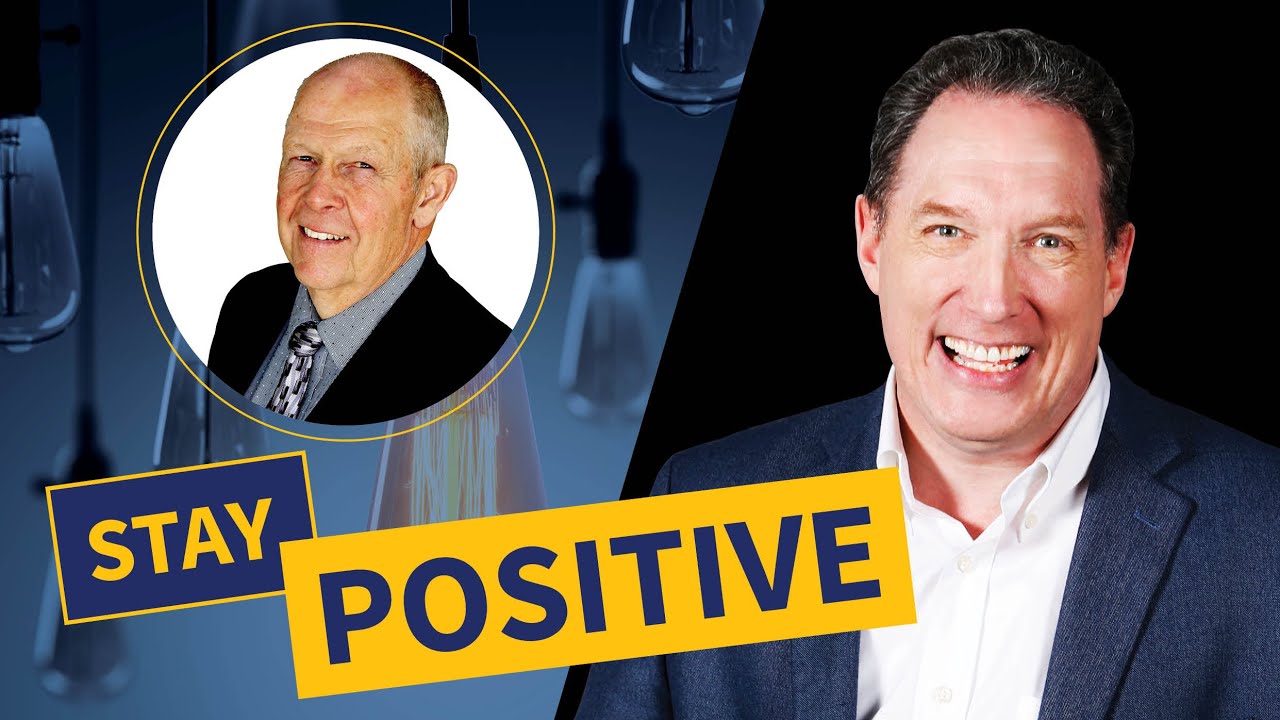
In this live web‑vlog, host Marc Haine (Service Expert and Master of Experiences) interviews life‑coach Bill Lee about maintaining a positive mental state amid the COVID‑19 pandemic. The conversation begins by outlining the unprecedented stress on businesses—closures, layoffs, financial strain, and the accompanying guilt owners feel for their employees. They introduce the idea that focusing solely on negativity is a one‑sided mindset. Bill shares his personal story of surviving farm crises, emphasizing a paradigm shift from seeing himself merely as a farmer to recognizing his broader role in helping people. He outlines the five stages of grief (denial, anger, bargaining, depression, acceptance) as a framework for processing pandemic‑related loss, and stresses the importance of moving through them rather than bypassing them. The dialogue then explores the “victim vs. hero” narrative, drawing on Donald Miller’s StoryBrand framework, encouraging listeners to choose the hero role by asking, “What would my hero do?” They discuss limiting beliefs tied to identity (e.g., equating self‑worth with business success) and how expanding one’s self‑concept can unlock new opportunities. Practical strategies are offered: daily gratitude (listing three things each morning), visualization of positive conversations, serving the community (e.g., window‑painting, color‑coded help cards), and creative home activities. Both hosts extend offers for personal support—Bill provides a free 30‑minute coaching session, and Marc offers business brainstorming and visualization sessions. Contact details are shared, and the session concludes with encouragement to stay kind, helpful, and proactive.
Chapters
Hello and welcome to my web vlogcast. It is nice to have you here. If you're tuning in right now, my name is Marc Haine. I was going to jump in and go, hello everybody! Today, we're gonna— but I figured Grover is the wrong message I want to send, even though he's hilarious, I think. Anyway, he's like He's my, he's my, my, you know, when you say you have a bromance, Grover is my bromance. Something about that guy. Just really, I just really love the guy. Hey, today we are talking about mindset. We're going to be talking about how to get a little bit more positive in life and what we can do during this COVID-19 pandemic. We have so many issues right now with businesses being shut down. We have people being laid off. We have people laying people off, which in itself creates all sorts of ramifications. My name is Marc Haine. I am a Service Expert and Master of Experiences. I drive operational excellence by daring leaders to cultivate a generous attitude and lead with love and kindness first. And of course, I do this by building empathy and experiences into processes. We're always looking for experience expectations. So, we are live. So, I do have a comment section up on my screen. So, feel free to drop comments, even ask questions. Maybe you can just put in who you are, where you're from, what you're doing. And see, as we talk about stuff, maybe you can even share some things that you do to keep a positive mindset. As I kicked off, we have a huge problem right now. Businesses being affected. Some businesses are even closed. Staff are laid off. And the difficulty with that is, especially with a lot of entrepreneurs and owners that I come across, is that they start feeling guilty about the fact that they're laying people off. Last week when I did the vodcast, I mentioned a salon in Montreal where the salon owner said that he is providing for his family. But to him, his family was more than his immediate family. His family was also the 18 families that were associated with his business through his employees. We know that bills are piling up. Of course, April 1st is coming and going. And so, the big thing about rent is due. And all the stress that is happening because of COVID-19 and what it's doing to our businesses. And again, this is a super unprecedented time for us because this is really the first time in our generation where we're actually closing down businesses that are viable. They haven't been flooded out. They haven't been knocked down. They haven't been set on fire. These businesses are still standing. They're viable businesses. And we're saying, we're going to limit services or we're going to close it down altogether. Add to that that you might be stuck at home. You might be dealing with illnesses of your own, God forbid, or worried about the well-being of your family, your friends, your employees. There is a lot of fear surrounding us today. And of course, it is absolutely in the news every single minute and on the internet every single second. The future is uncertain and this is an unprecedented time. And it's understandable that we are worried. We are stressed. And probably, if we're ready to admit it, we're even frightened. And this is all normal. But this is a one-sided mindset. And keeping focused on all the negativity is not necessarily healthy. But know that you are not alone. There is a lot of uncertainty during this crisis. But how you think and feel is driven by your thoughts and by the words that you use to represent your stress and that uncertainty. So, I'm thrilled to death to have with me joining me today is life coach Bill Lee. He is a life coach and mindset specialist. Bill knows what it's like to have the world turned upside down from forces outside of your control. He has a farming business. that survived the drought in 2001. It survived the mad cow disease in 2002. And either one of them at any one point could have and should have wiped out his business. But it didn't. Bill knows how to turn the tables on fate, going from a victim to a hero in his own life story. Please, I was going to say, please help me welcome Bill and everybody clap. But I guess we could all clap. But however, welcome Bill! Thank you, Marc. How are you feeling today?
I'm doing very well. Thank you very much. It's been a pleasure to be here.
So Bill, I've heard a lot of rhetoric around the changing of mindset. You hear people say things like, ah, just get over it. Change your focus. Hey, think more positive. Don't listen to the news. Are these really good strategies to get over this whole idea of mindset?
Well, I'm sure they're all good ideas. But everybody says, well, how do I do that? Right?
Yeah.
And in our farm, when we went through that situation, I went through all that. And it wasn't until I realized I had a paradigm. We called it paradigms now. Then, we called them limiting beliefs. But I think our viewers know What that paradigm is. And my paradigm was I was a farmer and that I had to stay as, you know, making money off the land. We're averaging about anywhere 12 to 16, 18 inches of rain a year. That year we got 1.25 inches of rain. I had no crop. I had nothing. And so to survive, I liquidated— we had a sheep operation, we were breeding dogs, and we had cattle. And we liquidated everything but the cow— well, the cows, we had a very small herd and made But when I finally changed my thinking up here, that I really am not just a food producer, but I'm a person that helps people. And when I started thinking of different ways to helping people, then opportunities come my way and I got on boards and committees and all these kind of things and people were paying me for my wisdom and my advice, which I very much enjoyed.
So, what was the catalyst for you to change your mindset? Because it means one thing to say, I just changed what was up here. But what were some of the strategies that you used?
I was lucky because I had been reading, you know, Wayne Dyer and a few of these other motivational speakers and stuff. And I knew there was a different way to think. And it was the test that come to force me into doing that. And so, it's being aware that there's another way of doing something. Knowing it's there, then you can go seek Seek it and find it. But if I may, Marc, I think what I want to talk about is the situation that we all are in because we're all suffering a loss here in one way or another.
Yeah.
Either lost our businesses, maybe going to go, our income's gone. We're not sure of the future. So we have this grief, let's call it, and all of us have to go through this. And I think this is important to understand that That there's 5 steps to grief. And there's denial, usually comes first. Oh, this can't be happening, and all this. Then there's anger. Well, I'm mad at the world. Why are they doing this to me? Then there's bargaining. And what that is, is, well, if I do this, or you start praying to God and you start doing all kinds of stuff like, I've got, you know, I'll be better next time. If only I would have done that differently. And then we get depressed. And when it's all said and done, We come out with acceptance. So, if any of you guys are feeling any of these, ladies and gentlemen, if you're feeling any of this stuff, it's natural. That's what happens. But when you get to the acceptance part, when you accept your situation, that's when you can start taking action. So, I encourage you, go through this. Go through these motions. Get them out. Get them done and get into the acceptance.
So, is it a question of then you just have to deal with like these 5 stages of grief? Is it you just have to just deal with it and get through it? Or are there strategies to help take you from one stage to the next stage?
There's all kinds of strategies. The reality is we all in some way or another have to go through it. Because if we jump all the way to— if we just all of a sudden, we're just going to rush in there and we don't cover these a little bit, they'll come to haunt us later. What I'm trying to say, Marc, is that when you get mad, It's okay. Get mad. If you get depressed, get depressed because the sooner you accept it and do it, it moves you on to the next phase and you can get through this a lot faster. That's what I'm trying to say.
And so, I mean, obviously, there are healthy ways and unhealthy ways to do things. I mean, the idea of get mad, get mad. But I mean, there's healthy ways to be mad and then there's unhealthy ways to be mad.
Yes, yes, yes, exactly. Exactly. And it's a positive mindset that keeps you going through this.
Yeah, I've always been of the philosophy that when we are mad about something, like when we are temper tantrum mad about something, it's because we are harping on our problem. We're not dealing with them. And I've seen this time and time again in business when something happens and then I just pull out my hair and I curse. And it's like, And then, I realized, wait a second. If I was to put a plan in place and start acting on the plan, then I would be dealing with it. And before I knew it, I wasn't mad anymore. I was just dealing with it. And we were just doing what we had to do.
Yes, yes, yes. The thing is, if you look at your life, Donald Miller talks about this in his book StoryBrand. And he talks about life is like a movie, you know, or a good book. You have the villain, you have the victim, you have the hero, and you have the guide. And these 4 characters are in every good movie and they're in our life. If you want to consider your life as a movie and it's playing out over and scenarios change and everything else, you have the choice which character you want to play. All right? You do. It's your movie. So that you can be the villain. You could be the miserable guy if you want to be, or person. And you can be the victim. And a lot of us are feeling like we're victims right now. And you can tell when you're a victim by what you say. It's somebody else's fault. Why did they do this to me? What am I supposed to do? It's all about somebody else. has hurt me. That's victim mentality.
Right.
And so, if you want to move into the hero mentality, and heroes are often victims. When the movie starts off, they're all together and somebody raises his hands or gets pushed by the other victims. You're our guy. You got to save us. He's a man of action, person of action. He's— the hero starts thinking differently and changing his ways. Thought instead of him as a victim, He's a person or a person that wants to get out of this situation and says, there's a way out and I'm looking for it.
Right.
That's the difference. And we can choose that in our lives if we want to be the victim or the hero. It's just a choice.
I think you hit the nail on the head because it is a choice. It's something that we get to choose for ourselves even though there are people who go, well, there's nothing I can do about it. It's not my fault. There's still a choice that we decide that that's how we want to react. Hey, in case you're just joining us, we are talking with life coach Bill Lee. We're delving into how we can change our mindset to be more positive during the COVID-19 pandemic where we might be caught up, stuck at home, limited business, shutting down our businesses, and so on. Bill, I know that people whose very identity is tied to their work, They might have an identity tied to being a good provider. When they feel helpless, what are some of the steps they can do to kind of overcome this?
Hey, I was there. When you have a mindset that the business is you, that's pretty limiting because then everything is You're more than your business. You're more than your— you're everything, your relationship, physical, all this. You are a combination of all them things. But if you look just at your business and say, this is me, then you have an identity situation here. And that is a paradigm. That's a limiting belief.
So are you saying that the way that we view ourselves in the context of our identity Is also a limiting belief.
Yes, yes, yes. Because if you start thinking that you are your business and you put your identity— I did as a farmer. And it's not easy to change that because you spent years and years. That's your baby. This is who you think you are. And people say, what do you do for— what do you do? And you think that this is you.
Right.
No, no, no. There's a whole lot deeper stuff inside than just the business. And so, all you have to do— and that's not all you have to do— but just realize that what you're thinking right now is a limited belief and it's holding you down. And when you open up to more possibilities than what you see in front of you and what you have, and there's other doors to open that you just haven't looked for, then you can let that paradigm shift happen.
Right, right. Well, you know, you did mention something in At the very beginning, you mentioned this idea that we are being of service to others. And I firmly believe that when we are of service to others, our happiness manifests itself.
Yes.
When we can be taking care of other people. So, here's the paradigm shift as far as I'm concerned is this whole woe is me victim mentality. When you start working towards the betterment of other people, Then, happiness starts to occur. And all of a sudden, the woe is me is not so bad anymore. And every news broadcast, we're seeing these amazing stories of people who are going out in their communities, business owners who are going out of their way to make sure that they're being of service to others, to make sure that their neighbors are getting food, to make sure that their neighbors are okay. I heard of one situation where Cards were handed out in a community. And if everything was good, you kept a green card in your window. If you needed help, then you put a red card. If it was just, hey, I'm okay but I could really use something, then you put a yellow card in. And then, people found ways to be able to touch base with each other and be able to make sure that from a get-go that our neighbors were okay.
Yes.
I have a neighbor across the street from me. He and his child painted his windows. They painted rainbows. And sunrises on their windows as an homage to the healthcare workers, and to the truckers, and to all the people who are providing essential services to us. This is not, as far as I'm concerned, all doom and gloom as far as this crisis is concerned. When you think about the individual though, are there any other things that they could be doing to help perk up their mental state?
Well, perfect, perfect, Marc. You said when you're helping others, when you're serving others, you're helping others, you feel good. It makes you feel good. In fact, every business that's out there is helping people in some way. They're helping people. And in exchange for that help, they give you a monetary reward back. That's what business is.
That's what business is. But sometimes, it's not about the monetary reward.
It's not about a monetary reward because Sometimes, you just do it for the sake of doing it. But the feeling still feels good inside. So, what I'm saying to the businessman, this part of your business maybe is not doing well. It's something happened.
Hmm.
But you're in the business of serving. You're in business of helping other people. And when you change that and you start thinking, how can I help people now? In this situation, how can I help people now? And that's where these cards in the windows come from. All these other ideas, maybe they're not new ideas but they're ideas that came from somewhere else to be changed and used at a different time.
Right. And the interesting thing about the painting the window idea is I'm impressed because it shows that there's other things people could be doing inside their homes. And we're seeing on the internet, we're seeing all sorts of things. We're seeing seeing house concerts. People are playing music in their houses. We're seeing people singing off balconies. We're seeing people taking painting. People are starting to draw and start getting creative. And they're starting to use physicality in home. And I think that's a wonderful mindset to get into is now, we have some opportunity.
Oh, unlimited opportunity really. And the opportunity is equal. A lot of times when you have a disaster, it's only a select few that are in it. The whole world's in this same thing. So, it's equal opportunity, everybody.
And so, could you think of some other things that from a mental state, what could people do for themselves as opposed to doing for— what are some of the things that they can internalize and do for themselves that would make them a— to help perk up their mindset?
We talked about victim and hero. Ask yourself whenever you're going to do something, you got a situation, ask yourself, what would my hero do? What would my hero do? Not that you're the hero, but what would my hero do? That question opens up an opportunity for the mind to expand in the right direction. And I mean, when I say, what would my hero do? It's not just about what I'm doing in my business. What am I doing with my physical body? What am I putting in my mouth? What is my love relationship and my family relationship and all the other interactions that I do? What would my hero do? You start following that path, success is bound to come. Yeah.
You know, it's funny because—
Physically every which way.
What you're insinuating is you take a look at yourself as an outside person and say, in this story, how would this entity become the hero?
Yeah. Wayne Dyer referred to it in his books too. He talked about be the third person. Step back and pretend you're standing away from the conversation 30, 40 feet. Or maybe you're in the movie theater and there's your life movie and you're one of the persons peeping People in the audience. You know what? How many times have you watched a movie, especially a horror movie, and the hero is there and behind him is coming this evil guy with a knife and whatever, and you're screaming at the screen, there's somebody! Turn around! Turn around! Okay? So, when you get yourself back, you can see that. Yeah, you can see those things. You look at it, the big picture. You can see the forest because often, we're all stuck in the trees, right?
Yeah, I also believe that When you're in that mindset, all of a sudden now, new opportunities arise. You're aware of the opportunities that are out there.
Yes.
I don't see any comments on the Facebook Live yet. Does anybody have any kind of comments? Does anybody want to ask Life Coach Bill anything? Feel free to type in a comment and we'll see if we can share it. I'm hoping I see it on my screen. But it says that there's no comments.
So, while you're waiting, Marc, we talked about the hero and victim. And if you pay attention to the words that you use, and this is hard because often we don't listen to ourselves when we say stuff. But your spouse will. Listen to your words. Are those the words of what would come out of a hero or a victim? Be careful with those words because those words started somewhere. And that's with your thoughts.
Right, right.
Our company has a logo that says, good thoughts lead to good things.
Well, and it goes a little bit along what you were saying earlier on about it starting up here, right? I think, was it yesterday that we had the conversation about how things And it first starts in your mind?
Yes, yes. Everything is created twice. That was what we were talking about yesterday. Everything is created twice. The computer screen we're on, the clothes we're wearing, the chair we're sitting on, the building that we're in— all has been created twice. And the first time comes from somebody's mind. Somebody had to think of it. Somebody had to think of making this pen before it was made. Everything is created twice. That's my point, is the power of the thought. It's everything because it all starts there. Positive, negative, whichever which way.
It all starts there. Yeah, I'm not seeing any comments in the window, which is okay if nobody has any questions or comments. I certainly would like to see if we can help anybody who's got a specific issue that they're trying to overcome. But Bill, this has been some kind of wonderful information for us. I think it's It's extremely timely that we share strategies with one another. We will see as time comes if we haven't already. I mean, I've already started to see a little bit in the way of mental health. I shared a funny Facebook post on my Facebook about the introvert and the extrovert and how they handle being isolated and being homebound.
Yeah.
And there is a little bit of a difference. But the idea here is If you have challenges, if you're not feeling that you are all there, then I think it's really important that you reach out to somebody. And Bill, I really appreciate you kind of sharing some of your ideas here. I do have a challenge for anybody who is on this Facebook Live. I think one of the things that I learned ages ago is this idea of gratitude and how when we're thankful for things, we don't necessarily have to be the richest person on the planet. We don't even have to be the healthiest person on the planet. But when we have gratitude, we are stronger for it. And so, my challenge to our listeners today is when you get up each morning, before you hop out of bed, I'd like you to stop for a second. Sit up, stretch. But then, I want you just to pause and think of 3 things that you are grateful for. 3 things before you get your day started that you're thankful for.
Yeah.
And I would even challenge you to say it out loud. And I unfortunately don't want to wake anybody. So, I try to tend to keep it to myself. But I say these things out loud. But then, I'd like you to visualize 3 positive conversations that you will have today. Visualize what those conversations look like for you. Who do you love and who loves you? And visualize that. Now, I don't know for sure if starting your day like this will help. But it certainly isn't gonna hurt. And between you and me, I think that we could do a lot worse. So personally, I am really grateful to be able to livestream for you today. I am so grateful for Life Coach Bill hanging out with us today and giving us some insight. Bill, thank you so much. And I am so grateful for you for joining us. And I am grateful to you for joining us. This has been a wonderful conversation. I hope that you get something out of it. And Bill, once again, thank you so much for your time and your energy today. I really appreciate hanging out. Thank you, Marc.
It was good. It was good.
Thank you so much. I hope everybody has a wonderful day. Please keep smiling, keep helping. And please, if you need anything, Bill, how can they get a hold of you?
Okay, it's bill@lifecoachbill.ca. Make sure it's .ca. So, bill@lifecoachbill.ca. Or they can phone me, 780-305-3823.
Wonderful.
And I'm offering 30 minutes of my time to anybody that wants to follow up on some of the stuff we talked about today, or if they just need some guides. Because, you know, when we talked about all the players, the guide is very important, you know.
Yeah.
And I, I— if you want to be a hero, you need a guide. So find somebody that you can talk to and give you some guidance. It doesn't have to be somebody that's in the— in your forest. Find somebody Somebody may be in a different forest. They'll see things differently for you.
Yeah, yeah. And I mean, you just using the word guide. It is a journey. Life is a journey and this is a journey. And we are going to be uncovering some new realities for ourselves. And likewise, I will do exactly the same offer as Bill. If you need somebody that you want to help brainstorm your business, brainstorm with your team, that's the one thing I insist on is If you'd like to kind of figure out what we're going to do, what you're going to do, I really, again, I'm a big supporter of visualization. And so, we need to visualize that you are going to be reopening your business or your business is going to be getting better. And if you would like to take 30 minutes with your team and do a brainstorming session, I'd be more than happy to do that with you. You can reach me. All the details will be on my Facebook page.
Beautiful.
Feel free to message me, email me. More than happy to sit down with you to figure this out. My name is Marc Haine. And as always, I am at your service. Please dare to be the exception. Thank you so much for joining us today.
See you guys!









