The Career Development Mistake Costing You Top Talent
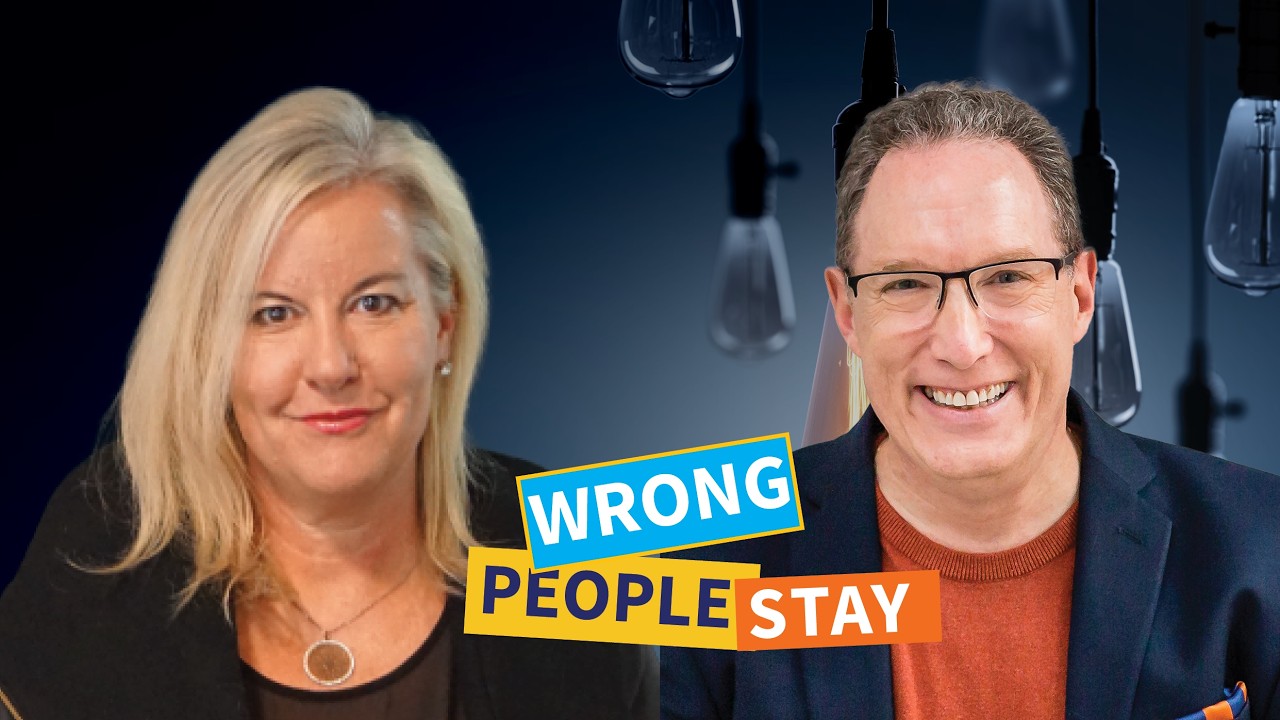
Melissa Jenner, founder of ACTVO, argues that companies lose top talent because traditional career management doesn't give employees clarity or agency. She recommends honest career conversations, allocating 10-15% of work time for learning, and shifting managers from career management to activating human potential.
Chapters
Okay. So, you've trained them. You've supported them. You've even invested in them. And then, well, your best people leave. Meanwhile, the ones that you are quietly hoping would figure it out at some point, they're still sitting in the same chair doing the same thing 5 years later. That's not bad luck. That's a system problem. And that's exactly what we're uncovering today on Marc Haine Live. Welcome to this episode. This is where small business owners and entrepreneurs pick up some core skill sets to help them create the jaw-dropping, show-stopping experience that their customers and their employees I am your host, Customer and Employee Experience Strategist Marc Haine. And I'm so glad that you are with us today because my guest today is none other than Melissa Jenner. And today, we are going to be unpacking why leaders need to really stop managing careers and start activating human potential. So, stick around with us. My only ask is if you know somebody who could use this information, please make sure you share a link with them. Let them know that you came across across this topic and they might be able to find value in it. And please do make sure that you subscribe to this show. That way, you'll get notified when we bring you fresh new content each and every week. Okay, so there is a moment every leader faces but nobody really talks about. It's the quiet realization that the career conversations that you're having with your team Aren't actually helping anybody grow. In fact, they might be doing the opposite because unfortunately, your people don't need more advice. They need another training. They don't need another training program. And they definitely don't need a scripted HR development plan on page 35, halfway down where you have to fill out that form. They don't need that. What they do need is clarity. And right now, most of them don't even have it. And if they don't have it, well, they're either going to disengage or they're going to leave. And that brings us to our Question of the Day. So, if you asked your top performers to clearly explain their next step, the skills that they need, and how they're going to get there, could they do it? Or would they just give you a confident answer that quietly falls apart the minute you start asking them questions? I'd love to understand what your experience is. Why don't you go ahead and share this episode on your favorite social media platform? Hashtag it #ExperienceLeadership and put your comments down. And that way, you can be part of this conversation. As I mentioned, my guest today has lived this problem at the highest levels of business and decided to do something about it. Melissa Jenna is the founder of ACTVO, the world's first AI-enabled career navigation system designed to help individuals and teams take control of their growth in a rapidly changing workforce. Before launching her companies, Melissa held senior leadership roles with global giants like Microsoft, Barclays, Sachi Sachi, and Cantor Fitzgerald spanning finance, tech, and creative industries across 3 continents. She was also a member of the Barclays Wealth Management Global 100 leadership team by the age of 38.
So, she's pretty brilliant.
She's trained in leadership at Columbia University, design thinking at Stanford, and is one of the early pioneers of applying design your life those principles within career development. She's also the author of Emotional Leadership and her work sits at the intersection of maybe performance, identity, and the future of work in a little thing called AI. In short, she spent decades solving problems most organizations don't even realize they have. And that's why she's on the show today. Melissa, welcome to the show! It's nice to have you.
Nice to be here. Thanks for the great introduction, Marc. Appreciate it.
So, can we dig a little bit deeper into— let's talk a little bit about your business and how it serves your clients and who your clients are. Are they the top 1% of all the businesses? Are they entrepreneurial businesses? What does it look like?
Yeah, good. So no, I designed this business for companies who really want a new way of thinking about how to develop their people. The past has proven to get us into a lot of trouble. So, for about the last 30 years, leaders, traditionally boomers or Gen Xers, have been obsessed with this idea of engagement, surveying it and trying to keep people engaged and trying to keep them to stay with their culture. And it hasn't worked. We've actually got the lowest rates of engagement now than we've had in the last 25 years. So, we've been spending money on things that haven't been working. And so, I kind of looked at that and then I looked at and I went, I spent a lot of time talking to employees in my past business model. And what I realized was actually people don't want to be engaged. They want to have their talent activated. It's quite a different mindset of thinking about how for leaders to think about how they're going to help people. And it's quite a rewarding thing for employees to recognize, right? One of the— I used to work a lot in the stock market and when You know, when you buy something as a financial product, a stock or a bond or something, you think that's the most important moment in your investment journey. But actually, it's the selling is where the value happens. And so, people get value when they leave and move. And I think that, you know, that's a natural cadence of life is learning, growth, and change. And unfortunately, the organization doesn't like that. And so, it tries to kind of keep us. It tries to keep us in lanes and it tries to keep us with them. And that's where we'll get this friction.
Yeah.
And so, I've designed a business and a product to help companies who see that, help companies. They tend to be more midsize. They tend to be smaller companies. They tend to be companies who want an innovative way of thinking about developing their people. They don't want to follow, you know, the track that perhaps they've seen not work in prior companies that they've worked in. So, yeah, it tends to be younger leadership teams, more innovative. Yeah, those are the sorts of businesses that I really enjoy working with.
Well, it's interesting because as you were talking about this idea of career growth and leaders kind of taking the— being at the front runner and helping their employees drive that. Just before we went live, I was saying that I've come across a lot of different businesses and this is not even on their radar. It seems like there are some organizations that, here's your box. You sit nicely in between it and don't worry about the edges. Just stay there. And so, this idea of actually businesses initiating and pushing forward career growth is really a step in the right direction.
Yeah, we've got a conflict because companies' number one goal is to be sustainable, right? So, to be sustainable, they like to create patterns and they like to create stability. And so, and the number one goal for human beings is to grow and learn. And so, we often come into conflict with each other because a business figures out something's working and they want to keep it that way. And they only want to change the things that aren't working. But often, the people that got the things to be working are some of the most talented people. And they're the ones with the fastest learning curve. And so, they want to change. Now, there's only so many roles at the top of the company. And so, we need to start thinking differently about how we progress people. And my challenge to any leaders on the call is that there will probably be at least 30% to 40% of the people in your team who are all ready to change. And that change particularly comes in humans after about 2 or 3 years. And here's the rub, they're the most valuable people to you because they've got corporate memory, they've learned the system, but they are really ready for something new. And so, if you try to hold on to them, if you haven't got anything for them to move into, if you try to hold on to them, you're actually doing your company and them a disservice. And so, it won't end well. You're better to have much more honest conversations and get into that flow of life inside companies, right? We don't all live and stay in the same house our whole life. We're not going to do the same thing with companies. We're going to move. We're not trees. We like to move.
Yeah.
And so, yeah.
It's interesting because I've worked with organizations and I get the baby boomer kind of response of, if I train my people, they might leave. And then, of course, we throw back at them. It's like, well, if you don't train them, they might stay. And that's a challenge. But now, we're talking about kind of the next evolution, which is Something that I've kind of— it's been my driving force whenever I've been in any environment where it's like, I think as leaders, we have an obligation to be a legacy in somebody's development. Like they come in and they're going to learn their skills and we're going to be there to help coach them forward and so on. But I think at the same token that we owe them some level of legacy planning, some area where we help them just be better human beings in the scheme of things. And I know people are probably— some people watching goes, No! No, no, it's all about my profit and my customers. And the rest of it will take care. And I know it doesn't. So, where do most organizations get this idea that when they decide that, yeah, yeah, I want to start developing people because we don't know what the future is going to look like. There might not be a role today. But maybe 5 years from now, there will be. Maybe 5 years from now, you're going to be kind of working and scaling your business where you might have more opportunities that you don't know in present day. So, when we think about this idea of career development, what are organizations getting completely wrong?
Yeah, I mean, I've sat in many boardrooms where we've made decisions about people's futures on their behalf with zero dialogue, zero conversation. And then, we've just announced it to people. This is the direction that your career is going to go. You're going to be moving in 2 years into this team. We see a future for you as a leader in this. And what's missing is dialogue. what's missing is listening and learning to understand, right? And what we're not doing is we're not sitting down with people and trying to understand what they want. And a lot of managing directors or leaders will say, well, why do I care? You need to care about that because otherwise, your employees are faking. They're doing what they think you want them to do, but they're actually already leaving. So, it's about alignment. You have to get alignment on purpose. You have to get alignment on values. You have to get alignment on ambition. And you have to get alignment on what really people are going to work to do. What's their why? Now, that sounds to a leader, if you're listening to this, you're like, wow, that just sounds like a whole lot of hard work. And you're right, it is. And that's why it needed a really simple system, which is what we designed. Because I've lived in both shoes. I've been a leader. I've run global teams. I've navigated people into the jobs I've wanted them to do. watched them lose productivity and leave and gone, hmm, but I was so good to them. I don't know why they didn't stay. But I've also been on the receiving end of being told, your job's changing. This is your new job. Aren't you lucky? Take a $10,000 pay rise. And neither of those moves resulted in any kind of productivity gain, innovation.
Yeah.
In fact, what they did is they eroded the most important relationship we have in our lives. spend most of our time at work. And our relationship with our manager and our organization, it's very visceral. It has emotion involved in it. And so therefore, running cold processes over the top, it's— you're going to kill the flowers, right? And so, I'm very encouraged that leaders, younger leaders today— I hate it when we talk about young and old leaders because I actually think leadership is a mindset. But definitely, if you've got—
yes.
I love that. less years on the clock, I think you have more hope. You have more hope for change. And I do think young leaders actually want their businesses to be places where people want to be. They don't want to hold on to people. I mean, when I was young in leadership, we talked about cost centers and people as assets. And my people are my assets. And it was really language that I found very dehumanized and very unhuman. And We're trying to hardwire people and that's not how people are. People are emotions. They've got passions. They change. They grow. And we have to accept that and we have to watch for it and we have to lean into it.
Yeah, it's interesting because to your point, I've always been since I entered the workforce and became a leader and started seeing that our labor was an expense. And everything is about moderating the expense. And from that point on, I've always kind of wondered how can we change that verbiage? How can we change the way we look at people? And instead of just being this expense note on our P&Ls, that there's actually an asset base to it. There's actually an investment criteria that you can measure return on investment. What's interesting in your notes, Melissa, was I noticed that you wrote down that some of your research shows that 70% of the people who are working right now can't articulate their skills. How is that possible?
Yeah, this is an interesting one. We ran a study in the U.S. We had over 600 people participate in it. And you're right. The number one headline was that 70% of people find it very hard to articulate what they're good at. And this plays out in the work that I've been doing with individuals over the last 8 years. They can't articulate their skill and they can't articulate the value that that offers businesses. Because what happens is it's like the analogy would be, you know, where we're kind of working in this bubble and we are doing— skills are actually one part of what makes up our capability. So, every day we go to work and yes, we have skills, we have competency, we have our personality, and we have our values. And we have the environment that we're in. So, we have all these ingredients and they all combine to a capability set or a value proposition. So, we've had this obsession lately because of AI on skills and skills alone, and they are very important to know what your skills are. But what's much more important is what's the value contribution that you make in business. And in order to understand that, you have to unpack what you do every day and understand why you do a particular thing really well. What's your superpower? What's your— what's the magic ingredient? Now, it could be something very small, that you speak and listen slowly. It could be that you're very able to combine a soft skill and a technical skill in a new way. I work with somebody who is very, very good at strategy. And I don't know if you've worked with many strategy leaders, what they tend to do is they tend to talk in very big language and they tend to talk a lot and they tend to complicate things. And this particular person is the best strategy person I've ever worked with because he keeps it extremely simple. He also listens. He's got the superpower of how he communicates strategy. He probably isn't any better technically as anybody else, but it's the way he brings it into the workplace. So, it's very important that we know what makes us really good so we know how we can grow and we know how we can transfer. Now, very few organizations are interested in that with people. They've made assumptions about you. They've looked at your CV. They looked at the HR system. They've said, oh, Melissa's come from this background. We think she'd be really good at that. Melissa's actually walked on in a completely different direction. So, if we don't have this dialogue, if we're not open to listening and getting that alignment, we're actually putting square pegs in round holes.
It's really interesting as you said that I was flashing back to some of my experiences. I've done presentations to leaders and one of the questions I'll ask is, how many of you have people who are in positions that are far more capable than their job description allows? And almost every single hand goes up, which is like, to me, that's heart-wrenching. To know that you know that people are more capable of the work that they're doing. They're more capable of other things than what the job description is allowing. And I remember promoting a banquet server. I wanted her to become banquet supervisor. She had so many qualities that I needed in a banquet supervisor to be able to work with clients. And the owners looked at me and they said, what? And you're promoting a server? Into your banquet manager? It was like they couldn't see past her job description. And so, how does one look at this and how does one start to evaluate whether or not people have these skills?
Well, there's processes that you can run and we've designed one. But I think what I would encourage leaders to realize is that there's 2 types of— there's generally 2 types of people in your workforce. There's those that think they're a specialist and there's those that are actually generalists. And let's just talk about this a little bit for a minute because I've worked with both and both can get unstuck, right?
Yeah.
So, specialists train like a lawyer or a doctor or an accountant or whatever it is. They train to do one thing. And very often and more and more now with AI in the workforce, they are the ones that are getting the most unstuck because specialists, people who are trained to do one thing extremely well, are going to be the first to be disrupted by AI. So those people will soon, if not now, need to start becoming a generalist. And there's an ideology that was started a long time ago back in Stanford, and McKinsey's now picked it up, called being a T-shaped person, which is— it doesn't mean you have to give up being a specialist. Say you're very, very good at graphic design or you're very good at engineering, but what it means is those things are very likely to be impacted by AI. So now you have to learn things at the top of the T of your of your competency and your capability, which are more generalist. So we're talking about things like communication. We're talking about things like the ability to network and scan ideas and problem solve. And we've all heard this before, right? I think some people get very afraid by it. They think, oh, does that mean I can't still do engineering or be an accountant or be a marketing manager? Yes, you can. It's just that in the future, a lot of those processes that you would do will be automated. And so, So, think about your workforce. Think about who your specialists are and help them learn some new generalist skills. Now, with your generalists, they're the ones that are actually very active. They're constantly learning. They love picking up new skills all the time. They're the ones that like to move a lot. So, you've got 2 sort of different challenges going on in your workforce. You've got— you want these people to stay and you want them to sort of tap into with the intention and the direction that the organization's going. And you've got these specialists who you want to grow and you want them to kind of learn new skills. But the third thing I would say is every single human being is creative. Every single human being. It's just how we express our creativity. So, your banquet server, she has something that she's uniquely really good at. And this current box she's been put in doesn't allow her to demonstrate that to her organization because organizations like the Marriott or the Hyatt, they don't want banquet servers suddenly Going outside of the rule box. But, you know, those are those magic moments as a customer when a banquet server says, let me get that for you, or, can I help you with that, like with a chair? You know, they're not trained to do that. And those are those human moments when people bring their creativity into their specialist job. And so, I'm really on this call want to encourage leaders and individuals sort of break down this kind of hardwired thou shalt do things this way. Of course, if you're in a compliance environment, like flying a plane. Don't get too creative about chatting with the hostesses. But I think most people aren't, right? Most people can use their creativity right where they are and create these little moments. And I think with AI now, it's becoming a real opportunity for cultures to actually show their true character. And that's why I talk a lot about activating ambition. I'm not talking about everyone being a leader. I'm talking about people being able to activate who they truly are at work. And those magic moments are when we see companies really carve apart from the stock standard.
Yeah. And so, to that point, I think what I'd like to do, I'd love to talk a little bit about the leader's role into those activations. And we'll get to that right after this.
When the spotlight shines on your business, are customers applauding or yawning? In other words, how is your business performing? Make Make your business a star with a new book, Lights! Camera! Action!, business operational excellence through the lens of live theater by Marc Haine. Marc uses his business and acting experience to help you see your business like a live show so you can create a performance your customers will never forget. Buy Lights! Camera! Action! today at your favorite online retailer or directly at marchaine.com.
Welcome back. I am speaking with second-time founder and designer of ACTVO, Melissa Jenna. Melissa, why don't you tell us a little bit about your book?
Okay. So, Emotional Leadership is a book I wrote about how I believe leadership is changing in the age of AI. And really, what sits at the heart of this is this idea that whilst we're having this tornado come through the workforce, and change everything, emotions are heightening, right? There is— humans are fundamentally wired to express. And I think right now, if you think about your environment, there's a lot of emotions happening. If you think about politics or the world, emotions are very heavy right now. And so, leaders in the past, emotions were sort of left at the door of the conference room or it was something that was to be managed. Whereas I see in this world disrupted by AI emotions as a superpower in leaders. in a couple of ways. Number one, being able to observe, see, and act early on emotions that could either disrupt the work that people are doing or in fact superpower and supercharge the work that's being done. So if we're seeing people, you know, really leaning into something and they're emotionally kind of— it's bringing them joy or it's bringing them energy, why is that? And why would we try to stop that even if it's not in our kind of current work plan. On the other hand, if we're seeing emotions of toxicity or negativity, you know, why is that? Where is that coming from? And how do we manage that? And so, for me, I think leaders learning how to really listen for the signals of emotions and really tap into them and use them as a way to understand the culture of people. Everybody always has an emotional reaction to change. And right now, everybody is experiencing change. So, emotion is very high. And I believe that this is the time when leaders need to start really managing those emotions and looking for them and turning them into energy power.
Yeah, you mentioned emotions are a big thing. Would it be fair to say that a lot of the emotion is tied around fear and around uncertainty? And maybe even our leaders aren't equipped to help them deal with that?
Yeah. So, in my book, I explore what I call the emotional triad. What tends to happen in most families, relationships, or organizations where you've got people working closely together is there tends to be often, if there's an argument or disagreement, it tends to be 2 sides, right? And at work, the 3— the 2 sides that I took were fear and love, right? And so, you know, often, as you said, there's often 2 things going on when any kind of challenge comes up. And usually, People are driven by fear or love, and there tends to be this conflict, right? Like, but why don't you want to do that? Because somebody really loves the project and they love the direction that this is going in, but somebody else is quite fearful. So there's a third emotion, which is what I call the triad, which is sort of a disabling or an encouraging emotion. And what I talk about is hope. And in times like this, when there's a lot of fear in the world and in the workplace, and there's people desperately trying to bring love back in, it can be very polarizing, right? They're very opposite emotions. And so what's more helpful is to think about the middle emotion, and hope is a moderating emotion. Another one is creativity or curiosity. And so when you think about hope, hope is about having people having vision. Hope is about people being able to see different ways forward, right? It's not one or the other. And hope is about people having agency. Hope is about people being— feeling empowered and enabled to access that vision, to go down that pathway for change. And so I think When you're seeing these opposing emotions in the workforce, think about what's the emotion you can bring in that will bring people together and give people— that's why I love hope because it actually, it's very empowering. And everybody, when you're in those conflict moments as a leader, some people hate AI. Some people are so passionate about it, right? And there's always arguments happening or disagreements around ethics and morals. But let's talk about What's our vision for AI? What are the pathways in which we could use AI? And how can we give you agency over AI so we're not asserting things on you or taking things away from you? That's hope theory. It was pioneered in the 1980s. And so I haven't invented that, but I've just put that into that triad of emotions. That's an example, right? And the emotional triad is something you can take into families and relationships as well. But I think leaders increasingly now, as the world is becoming very, very volatile, they need to start also not managing just strategy and costs and customers, but they need to be navigating and watching emotions. And here's the interesting thing about that. I know you're going to want to change topic, Marc, but real quick. AI doesn't have emotions, right? Human beings have emotions.
Right.
It's our last— it's the last bastion of what makes us unique creatures. And when we partner our emotions with extremely good products like AI, that's where the magic happens. And so, I think emotions has got— its time has come. And that's not a new idea. Emotional leadership has been around for a long time. Sorry, emotional intelligence. But I'm talking about how you bring it into your leadership style.
Yeah, I love that. For the people tuning in, Melissa, how can people get in touch with you if this is resonating and they need some help?
Just drop me an email, melissa@activo.ai. It's, um, yeah, activo.ai. Look at our website, you can find my details on there. Um, yeah, I, I offer 3 free 30-minute consults with anybody who wants to talk about leadership. Everything's— sometimes it's really hard for leaders to figure this out, and so having somebody independently they can just have a quick conversation with. Um, they can access my book. I'm really happy to send it to anyone for free if they get in touch with me. Um, I've got a lot of really good stuff on my website under my blog. And I also have a Substack.
I love that. It's interesting because it seems to me that we had back in the '90s, we had this terminology about being a lifelong learner. But it really seems to me that leaders now more than ever really have to learn how to learn again.
Yeah, yeah. This is a really interesting one because we, especially older leaders in the workforce, we felt like we did all our heavy lifting on learning when we were young.
Yeah.
only learn on the job, right? But the reality is, and actually a lot of that learning on the job is pretty, if I'm honest, it's pretty sloppy. It's not really in any way monitored or kind of managed. It's just kind of we're hacking through it, right?
Right.
But the reality is everything's changing, right? Everything is changing right now. We've got 5 generations in the workforce. We've got AI. We've got globalization of products. I think if we all don't start learning how to learn again, We are going to be obsolete. Now, there's lots of data out there around this, like 30% of skills are going to be obsolete in the next five years. I don't yet know many people in my age bracket who have gone back and done any technical training, who are purposefully trying and experimenting to learn new skills on the job, who are reading, who are listening to podcasts. I think what we have to do is we start have to start opening our mind up and realizing that the world's changing. It's not going to go back to the way it was. So companies like to put. learning into a, into a box called learning and development, but they're quite different terms. Learning is, is the art of kind of taking in new knowledge. Development is about how do I take that knowledge and apply it.
Mm-hmm.
And so, there's 2 steps to it, right? And I think the missing bit is how do you put those 2 together in the environment that you're in? And what that takes is experimentation. It takes having a go at things. And it takes leaders and managers allowing people to try new things. I mean, I was trained in design thinking. We call it prototyping. We have to bring experimentation on the job back into the workforce. And so, the product that I built, we teach people 3 types of learning: solo learning, social learning, and skill-based learning. And so, we build learning pathways. And you can have all your learning social. You can do all your learning from just observing others. Taking part in new projects, getting a mentor, talking to somebody who's an expert. I would suggest you mix it up, mix it up and figure out what your best learning style is. Social learning is not the way that I enjoy learning. I'm much more of a solo or a skill-based learner. But I think, you know, figure out what your learning style is, mix it up, try lots of things. But here's the real killer, Marc. Companies don't make time for this. I work with a lot of companies right now who the number one reason when we deploy our product into companies, it doesn't work is because they don't make time for people to learn. And I find that fascinating. It's like keep working. It's like there's a hurricane of change coming, but don't don't stop being on the tools. Carry on. No, we need to we need to give ten percent or fifteen percent of people's time back to learning how to learn and learning what they need to know in order to be. already ready for what's coming. Because once it arrives, it's too late. Then, you're going to be affecting productivity if you're learning whilst change is here. We need to be learning now for the change that's coming in the next 5 years.
I love that theory. And to your point, if businesses were to kind of invest in that time for their people, the one thing about learning is it's moving people from not knowing something to becoming aware of something. But then, that awareness itself is kind of a little tsunami of kind of awarenesses. Because when you get into a learning module or a modem, you can look at something and go, well, if this is true for this, is it true for this? And by creating an environment where people want to learn and can learn, you actually kind of support this whole idea of curiosity. And to your point before the break, you talked about this idea of how do How do we initiate with and not have the fear that failure is going to cost us too much money?
Well, we want failure. We want small failures and we want fast failures. We want people to figure out what the wrong things are early and environments that are not going to impact customers or processes that create profit. So, small experiments learning are really important because that way, people don't assume they're right and launch the wrong thing. You need to get into a testing mindset. And I think that's really important. The other thing is that there's so much emphasis on structured learning that the organization has predefined for people. If we go back to the first conversation we had about people's desire to grow, people naturally want to learn into things that's going to enhance their life journey. And so, the most effective learning— statistics and research tells us this— the most effective learning is that which people choose. So, there's a new type of learner now called self-directed learners. And there's a lot of evidence, which I'm happy to share with anyone offline, it's on my blogs, about how self-directed learning, i.e., where you've allowed people to learn what they want to learn, is the most effective way to help people grow. As opposed to saying, here you go, Marc, these are the 3 things we've decided you need to learn next. You, you know—
Here are the manuals! Yeah.
But it's really interesting because I worked with a CEO recently who's looking at adopting our product. And he said to me, my worry is if I put this in and people people learn new stuff, they're going to want more. And, you know, maybe they'll leave. And I said, yeah, then, you know, they're going to want more and leave and go somewhere that's going to allow them to create more. And I said, if you don't allow people to learn with you, they're going to go somewhere else because people are naturally wired to grow. People naturally want to keep learning. People are curious. Now, some people are curious slower. You know, I think we're not all A-types. No, we're not all fast learners, right? But we all, if you look at your children or your friends around you, it's a tiny, tiny minority that stop learning or never learn, right? So, people go at different paces as well, you know? And sure, there's people that are going to learn super fast. And man, you want to keep up with them because they're going to rocket ship through companies, right? But also recognize that some people just need a little bit of encouragement. But what everybody needs Right now is to be able to have some time at work. Because work is stressful and life is hard. They go home and they need time with their family, right? A lot of CEOs and senior leaders think, well, why can't they do this on their own time? It's like, I think you need— we also need to recognize that when people go home, the world is very stressful, right? Schools are changing. You know, there's a lot of cost-cutting going on in home life. And so, making a little bit of space for people to learn at work as opposed to expecting them to do it in their home life, I think you'll find people People will stay a lot longer because they realize that you care.
Yeah, it really feels like we have to redefine kind of our role in our communities for our organizations. That is not just come in, you're going to stand on line, you're going to put widgets on thimbles or whatever. And you're just going to repeat that process non-stop until the bell whistles. And then, you're going to go have lunch and then, you'll come back and do exactly the same thing.
Right?
We're no longer in that frame of mind or frame of economy even for that. Even though there are some factory jobs out there that does require repetitive tasks. But more times than not, people like we don't want our business to stagnate. Why do we want our people to stagnate?
Yeah, I think I mentioned this earlier. There's 5 generations in the workforce and I work with a lot of young people. I think we shouldn't be ageist in these conversations because there's old people that are also extremely. But young people come out of university and they're So excited about coming into the workforce because they see it as their opportunity to have some purpose in the world, make some change, right? And make a difference and use their values and their creativity in a positive way. Then they arrive in a workforce where everything's predetermined and there's hard edges and there's linear pathways and there's training programs. And it's like, that's not how they're wired, right? People are wired to be creative and positive and purpose-driven. Yeah. And that's a good thing. We need that in the workforce, right? And so, I guess I'm talking a little bit about unbundling how we manage people and treating people more as human beings who are growth organisms. And I always start by encouraging dialogue. Dialogue and listening to learn and being open to understand. And if you, if people are not in alignment with you, the earlier they leave, the better, right? Help them find the company where they're going to get that alignment. And find someone to be aligned to you. Starts right from that beginning when someone starts. Make sure that journey— figure it out early in the— when you're hiring people, when you bring them on board. The sooner you figure out if people are in the wrong lane and the sooner you help them move, the less impact on them, the less impact on the organization, and the less impact on their community. Because they will just take home their troubles and talk about your company and the pain spreads. So, I think we just all have to look at our employees much more as emotional beings that are creative, will grow. And instead of trying to, like you say, lock them into like lanes, it's just not going to work anymore. It's broken.
Yeah. When we come back, for the people who are tuning in who want to implement some changes, I want to talk a little bit about some cautionaries and pitfalls that they should be aware of and We'll get to that right after this.
When you're delivering an important speech to a huge audience, it's easy to lose your place or go way over time. Give yourself an advantage with the Pro Speaker Presentation Speech Timer app. No more checking your watch or calling for time. The Pro Speaker Presentation Speech Timer app keeps you on track with easy-to-see timers, even changing color for visual prompts during your speech. And you can set audio cues to practice. Or set it to vibrate so you don't even have to look. Be the pro you know you are. Download the app at speakerpresentationtimer.com.
We are having an amazing discussion today and I hope you're getting tons of value from our discussion. As we dive deep into the episode today, I wanted to take a moment to let you know that Melissa and I are not just voices behind the mic. We're here to help you take your leadership and your business to the next level. So, whether you're looking to empower your team, enhance your customer and employee experiences, or simply you need fresh actionable insights to help you navigate today's business challenges, we're available for leadership retreats, conferences, tailored workshops, whatever you need. Feel free to reach out to us. Our contact information is in the show notes. Melissa, through our conversation today, I get a sense more that that this is much more than just an HR policy or something that gets diverted to the HR office. What role should HR play in all this? And how should they contribute to make sure that leaders are on the track to be able to help their people?
I have a very controversial view on this, which is organizations should start out with the belief that they don't need HR.
Hmm.
I have a strong point of view and this is going to get a lot of people offside. But if you think about it, right, what happens in a company is you have a founder or a managing director who hires a team. And that team's job is to hire the next group of people. And what happens is as the company gets bigger and bigger, people decide that that's a really hard job. Let's give that to somebody else to figure out. the, you know, the nitty-gritty and the knots and untangle stuff. Guess what? That is the job. That is the job. We are going to have machines soon that are going to write all our processes, manage a lot of our risk. Our job is to grow people. And when a founder or a person who invents a company or starts a company, what they really want is they want people in their own likeness. Now, the next layer down are not exactly like them. They're going to hire people a little bit in their likeness. So, we're going to get more and more diversity, which is a good thing. And that's the leader's job, right, is to bring out the best in those people. We now have AI agents. We have— if you want to figure out what employment lawyer is, if you want to figure out what a good CV looks like, there's a lot of technology that can help you now as a leader. And I believe the businesses of the future may have one or two people who are in people support when things go wrong and there's conflict. But I see them more as coaches. as opposed to people who are running processes. And so, my vision for the future is that we have organizations that don't have HR. When you outsource your people problems to HR or when you get HR to build learning plans for your problem, you're treating everyone as the same.
Hmm.
And the most powerful relationship inside the company is between the manager and their employee. That's the moment of magic. And we need to start treating people in a much more higher regard. And that's where you've heard me talk about this today. You know, it's okay for that person to leave. It's like being in a bad marriage, right? Don't try to hold on to your husband or your wife. If they're in the wrong place, you know, you're not going to change that, right? You can try to change it, but you're not going to— if people need to leave and have a different experience, that's what they need, right? And so, it's sort of like, you know, if you love them, set them free kind of thing. I believe the most powerful relationship is between the manager and their employee. And figuring it out together, having dialogue is possible. And I really want to encourage young people on this call not to think of HR as the people who are going to solve their people problem. They should be the coaches to support you in your journey of working with your people.
So, it's interesting as you were saying that because in my mind, HR, we need to redefine the purpose of HR. As far as I'm concerned, The best organizations who have HR departments, the HR departments are their values system defined and the true north definition of the organization. So, because what I fear is that when the— to your point, the closest relationship anybody has is going to be directly to their manager. Well, when you have a bunch of these kind of work bees kind within these kind of like siloed relationships, we can lose values. We can lose our sense of why we do what we do. And we can really lose kind of that mission, true north mission of this is the direction that we're going into. And I see this all the time. Like I've seen in municipal governments where it seems like they have a lot of siloed components of it. And really, the left hand doesn't know what the right hand is doing. So, how do we accomplish what you're talking about? But do it in a way that we can maintain the sight on what is our true values that we want to live as an organization. And how do we instill that within everybody who is taking up a role with us?
That's the leader's job. That is the job of a leader. And leaders are outsourcing to these poor people in HR. I really do feel for HR at the moment. I feel like this is getting hard. Let's get HR involved. And I think it's about human relations.
Yeah.
It's not about human resources. And if you're a leader in a company and you can't get on and agree with your leadership team what your values are and how you— I have been in many, many leadership teams where we have done the hard work. We have figured out together. We've butted heads. We've negotiated. These are our values. These aren't. This is how we're going to measure people on those values. We haven't outsourced that to some poor 30-year-old in an HR team to figure it out for us. Why should we abdicate our responsibility? We're paid to be leaders, right? And I believe that that's why, that's what I'm saying. I think in the future, human resources people will be there as coaches because you're right. We all sometimes have fallouts and we have disagreements. But they're going to be much more about psychology and much more about resolving conflict in human relations than they are about doing the job of a leader. A job of a leader is to have strategy, have vision, make decisions, unite people around that, and resolve problems. Honestly, and I think half of that, half of what I just described, we get HR teams to do. And I have great admiration for them. But I also think that as leaders, we've got to take back what our job is, particularly now that there's so much change in the organization. People will look to leaders for a lot of the stuff that in the past, we might have looked to HR to do. And that's why we've been talking about this relationship around how learning comes in and growth and development comes in. Leaders have to own that. You can't outsource that.
I love that. And that makes perfect sense because that was kind of the direction I was going was I want the human resource person, the human relationship person to be there to help coach leaders and be kind of a conscience to the organizations that leaders come to them And say, I have this particular problem. I just need guidance on the direction to go with my people. Right? And they become the ultimate coaches for the leaders. Yeah, yeah.
So, because HR law is available to everyone, right? Like sure, you can get a lawyer involved or a legal expert. But the reality is the main job really is to improve human relations and keep people on track. But leaders set that vision, right? And then, they're the support. They're important people. We need to reframe who they are. I see them as coaches to culture and coaches to leaders to help everyone stay united, right? Because this is a troubling time. So, they should be the cheerleaders of leaders. And we just need to be reframing that whole part of the workforce.
So, as people are tuned in there, people who buy into kind of our conversation today and they realize they have to make a change, are there any pitfalls or cautionaries they should be aware of As they try to want to shake up kind of the status quo and their culture to be kind of more human-centric in everything that we're doing?
I mean, I'm trained in human-centered design. And essentially, any change that you're doing inside a business is human-centric design. And so, think about if you're wanting to make effective change in your culture, or your system, or your leadership team, you have to start with the number one step of human-centered design, which is empathy. Empathy-based research, which means you have to go out and understand what's happening, understand actually truly what's going on, understand what people feel, what they think, what they do. We've got to bring these emotions back in and you've got to spend a long time understanding first, understanding what people want to change and synthesize what you've heard Into a point of view about the opportunity for the future. And that's where the design of change starts. It doesn't start with your idea. If you go into a change process with, I know I've got this great idea, we're going to get rid of HR. And we're all, I know I've got this great idea, I'm going to let everyone learn whatever they want.
No, no, no.
You started with an idea. Your motivation's good. Underneath that, you've got some underlying goal. Go out and listen and talk and learn what's going on right now. And what people really want, and synthesize your data into a point of view of what's the real opportunity. Because very rarely when you're designing change, you start with an idea, and that's the mistake most people make. Listen, mistakes are the most sorry ideas are one of the most competitive things in organizations. Everybody wants to have the best idea, but the best idea doesn't come from one person; it comes from a collective. And so designers know this right? They don't they don't impose their ideas on people. They listen. They they socialize. And they are very open to multiple ideas coming out. And we figure out together what's the right way to change. So, you know, human-centered design is a simple process. Listen, form a point of view, generate multiple ideas, pick one, test it. If it works, keep building on it. If it doesn't, go back to the ideas, go back to the point of view, go back to the empathy. It's a cyclical motion of learning. It's super simple. There's lots of good tools out there. I'm really happy to give people some of my own tools for comp. But I would say we're humans and we are designing change right now, all of us. And we have to begin with empathy.
Yeah, I love that. And that's just in the world of uncertainty and friction, empathy I think is one of those superpowers I think we need more of. We need to just stop for a second and just be a little bit more empathetic. around how people are perceiving their world, right? Melissa, this has been such an amazing discussion. Do you have any last thoughts about what we've talked about today?
Yeah, I was just thinking when I went to Stanford, a great professor said to me, he called me out actually because I was a very fixed mindset leader. He said, I'm going to give you 3 words as a leader that you need to start using more. And it's just shocked me to my core. And the 3 words were, you need to start saying more I don't know. What do you think?
Yeah.
And it was super powerful for me because as leaders, we're trained to have all the answers. And actually, when you start thinking as a leader, I don't have to have all the answers. What I have to do is understand. And that was probably, I'd say, in a time of volatility, in a time of change, as leaders, let's start listening, having empathy, learning. And just, you don't have to have all the answers. Amongst your team. Your people are creative. Your people have so much more talent than you see. Get out, walk the walk. Go spend time with people. Have conversations. Don't have ideas. Just listen. And it's okay not to know. And you'll find the answer if you do more walking and talking.
Love it. Melissa, could you remind everybody one more time how they can get a hold of you?
melissa@actvo.ai. It's Melissa with one L. 2 S's and it's actvo.ai.
Terrific! Hey, I want to thank you so much for making time today. I know it's super, super early where you are. I really appreciate you being here and sharing your knowledge and your passion with me today. This has been brilliant!
Thank you for having me, Marc. I've really enjoyed it.
Yeah, why don't you let me know if this was of value to you. As always, my offer stands. If you would like 30 minutes of my time to brainstorm your business with you and your team, Feel free to book yourself on my online calendar. The link is in the show notes. It's the one that's marked meetwith.marchaine.com. It would be an absolute honor for me to be of service. And while you're at it, check out Melissa's website. Check in with her as well because she's a wealth of information. She could really help you if your back is up against the wall and you need some guidance. We can't do this by ourselves, folks. We have to be able to shake ourselves out of our little bubble. And we have to ask for help. And Melissa is a perfect expert to help make that happen. Hey, while you're at it, why don't you go ahead leave a comment or review about this episode? Was it handy for you? Did you get lots out of it? I'd love to get your feedback. And also, please make sure that you're subscribed to this podcast. That will give you heads up when I bring you fresh new content each and every week with another brand new expert to help us work on our business, Not just in our business. Thank you so much for joining me today. My name is Marc Haine. I hope you stay safe, stay healthy, and I hope you dare to be the exception. See you next week.
Bye!









