The Five Key Elements to Boosting Business Success with Co-Creative Leadership
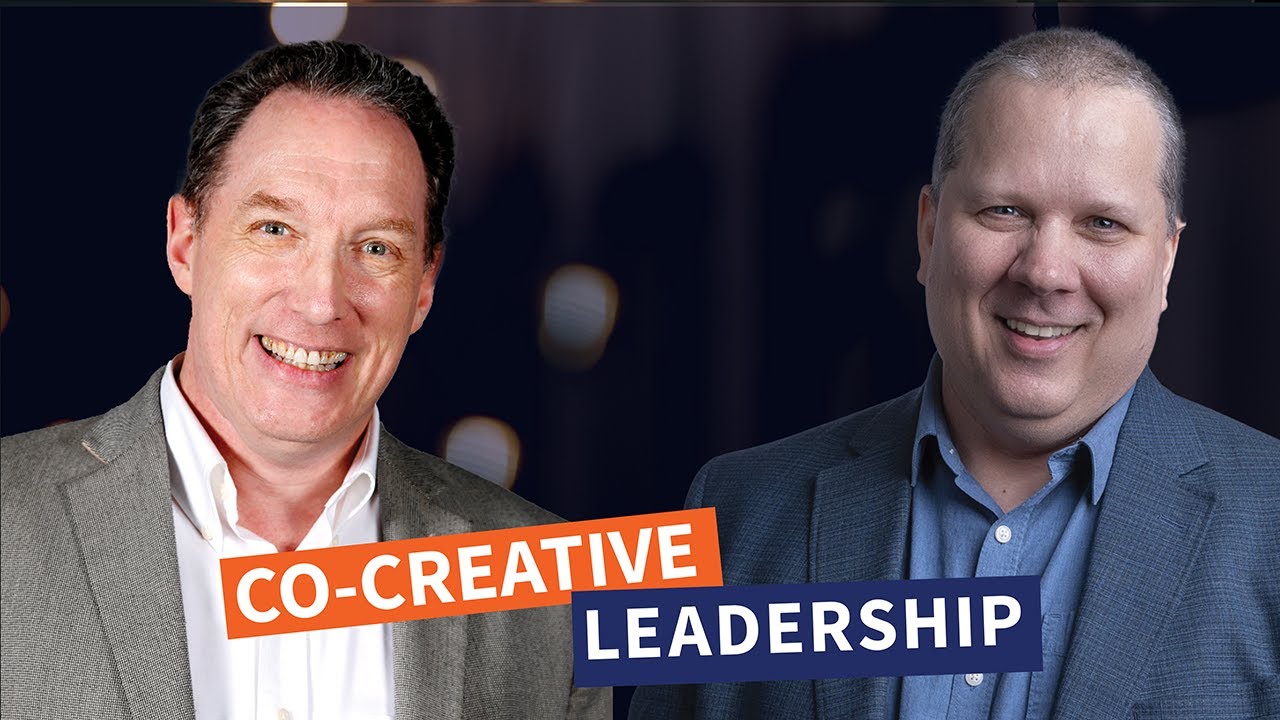
Leadership coach Stéphane Serdec outlines five core skills for co-creative leadership: being one voice among many, unleashing dormant leaders, building team capacity through teaching, adapting plans fluidly, and fostering learning by doing. He argues this approach reverses burnout and disengagement that traditional models create.
Chapters
There is a critical issue that plagues many middle and frontline managers. The overwhelming burden of leadership. I know it sounds funny. But feeling the weight of every decision, believing that as a leader, you have to carry all the responsibilities all by yourself, it can be really daunting. This mindset, this way of being leads to burnout, stifles innovation, and leaves your team feeling disengaged and underutilized. But what if there was a different way to lead? A way that lightens your load and empowers your team to reach their full potential? That's what we're talking about today on Marc Haine Live. Thank you for tuning in today. This is where small business owners and entrepreneurs develop new skills to help them create the jaw-dropping, show-stopping experience that their customers and their employees deserve. I am your host, Customer and Employee Experience Strategist Marc Haine. And I'm so glad that you are here with us today. My guest for this episode is the father of co-creative leadership, Stefan Serdek. And today, we are going to be highlighting a revolutionary approach that empowers leaders to share the load, engage their teams, and foster a collaborative environment. I do have one simple request though. If there's somebody in your circle who could benefit from the insights that we're sharing with you today, please do them a favor and pass along the link to this episode. Knowledge is power but only if we share it. And we know that there are people in our circle and it's like you get come across some content and you think, good golly, Kevin could really benefit. Go ahead and share the episode with Kevin. Say, hey Kevin, here's an episode you need to watch. And today is going to be no different. You know, I've mentioned my journey into leadership many, many times on this show. I was a high performer working in a restaurant when one day, my manager came to me and said, Marc, you do such an amazing job. You're fast.
You're thorough.
And you are really great with customers. It's like, oh shucks! Why don't we make you a supervisor and you can get people to perform just like you? What I didn't realize was the scope of what I had agreed to. It seemed like I was responsible for everything. I felt if I didn't have all the answers, I'd be judged If I couldn't do something, especially if it involved a customer or employee request, I'd lose their respect. And on top of all that, how much leadership training do you think I got? Absolutely nothing. So that brings us to our Question of the Day. So, have you ever felt the weight of leadership being solely on your shoulders that you leave every single day exhausted and wondering why your team isn't working half as hard as you? Look, I shared my story. I'd love to hear yours. Why don't you go ahead and share the link to this episode on your favorite social media platform. Put down your story. And make sure that you hashtag it #ExperienceLeadership because I'd love for you to be part of this conversation. As I mentioned, my guest today is Stéphane Serdec. Stéphane is a renowned leadership coach, author of the groundbreaking book, The Way of the Co-Creative Leader, and founder of Serdec Solutions. With a rich background in software development and agile coaching, Stéphane helps leaders transform the their mindset and leadership style to increase trust, commitment, and engagement from their teams. Stéphane, welcome to the show. It's great to have you.
Yeah, it's great to be here, Marc. Now, I'm going to have to match your energy level. That's a tough act to follow, man.
Hey, you know what? I like to bring people up with me.
Well, let's go.
The tide brings up all boats and I hope I am a tsunami for you.
Well, let's do that for everyone today. Let's go. Excellent!
So, before we get too deep into today's topic, I'd love to know a little bit about how you serve your clients. Who are your clients? Who's your target market and how do you serve them?
So, I have 2 types of clients that I work with. One of my client types are leaders inside organizations. So, this could be executives, directors, general managers, that kind of position. And I can work one-on-one with these leaders to help them become more co-creative leaders. So essentially, when I work with them, I take a look at their leadership style. I take a look at how they act, how they work with the people on their teams. And based on that, I can give them feedback. And when we have our one-on-ones, we can talk about what could they do different. How can they address some of their current issues based on the skills of a co-creative leader. The second part of my clientele are management teams. So, you know those infamous leadership teams that struggle making decisions together? The meetings go round and round in circles. There's a lot of unsaid things between people on the leadership team. And the team is kind of dysfunctional.
That never happens. Come on, Stéphane. Get real.
Come on.
I know. It never happens. But when it does, I'm there for it. And I'm the person that can help them get over that.
On the rare times it happens.
On the rare times. But it's fun giving the caricature because when I explain my work to people and I explain it in this way, they say, oh, you must not be lacking any work. Just because of how often this happens inside of companies.
And it is amazing though because there is still some semblance of truth because a lot of leaders I don't think are actually aware of the problem. What they're reacting to day to day are really the symptoms of the problem. But they're not really addressing the problem. So, it's not like you have leaders calling up and going, uh, Stéphane, yeah, I'd like to hire you because I think I suck as a leader.
Well, it's not even that they suck as a leader, to be honest with you. When you look at the management teams, I think part of the problem is people just got used to things being this way. And they can't imagine it being any other way. So, they kind of just work with it. They live with it the best they can even though they're not happy doing this.
Right. So, let's start off by talking about the traditional leadership paradigm and why it often results in leaders feeling that they must take on all the weight.
So, what I've found over the years, I've been doing organizational coaching now for about 10 years. And what I've noticed is that often, the problem that you brought up when you started the story of leaders getting no training, that's a very common story that happens with a lot of leaders. So, you have technical people in IT, for example, which is more the world I grew up in, that get promoted in higher and higher positions inside the company because people want to acknowledge the work that they've done. They want to acknowledge the influence that they've had. And they'd like to have people that are just like those people. But the problem is those leaders didn't have any training, didn't have necessarily always good examples. So, they're reproducing the patterns that they've seen from other leaders in the past. And the other thing is that some leaders really lack the self-awareness piece. So, they'll be very demanding with people. But they don't notice themselves how they contribute to the mess that's happening around them.
Right. Because again, what they're seeing is they're seeing the outfall. They're seeing people are at their desks or doing their tasks and they're confused about certain things. And unfortunately, as a leader, I got trained through osmosis, which meant that I learned more by getting into trouble and people saying, you're not supposed to do it that way. Than anything that— I mean, that was the scope of my training. And so, in many organizations, I find that this is typically the challenge, right, is that people are left. And so, this manager from where they're sitting are seeing people who are disengaged, somebody who's not taking initiative. They're not very creative in their problem solving because ultimately, the staff don't understand what their role and their responsibility is. Right.
Yeah, and then they fall into the pattern of saying, okay, I'm going to turn the screws and be a bit more demanding with people. But when they do that, they're not necessarily expressing what they're trying to create. They're just turning the screws on people. And then they wonder why people still aren't motivated. What I've found over the years is that people on the ground, they know the problems. They know the solutions. The biggest issue is we don't take the time to ask them as leaders. We don't take the time to ask them for their opinion. So then, we want to do a culture transformation or we want to do X type of transformation. And all we're doing is kind of inflicting our views because they'll say, oh, but this is Marc's project. If I have time, I'll work on Marc's project. But if you can get your team on board with you, get some key people on board with you from the start, You can get a completely different result because now you have people that understand where you're trying to go. You have people that brought some of the ideas that are defining where we want to go. And that allows you some support on the ground. If someone isn't sure, they'll go ask Marc and say, Marc, hey, what about this? And there's someone on the ground that can answer and that can support the change you're trying to bring.
So, are there any misconceptions leaders have about their role and their responsibilities? I mean, everybody knows that I'm the manager of a department, or I'm a leader, or whatever. But is there any kind of philosophical misconceptions that they have about their roles and responsibilities?
I think the main one that's there is that leaders feel that they need to know all of the problems that are going on, of things that are going on inside their organization. And they feel that they need to come to their team with solutions as well. So, taking the position where you take a step back as a leader and you ask people, that's something that's not comfortable for people. And I find that's one of the biggest misconceptions is leaders will think, how am I going to look if I say I don't know?
And that was one of my challenges growing up as a young leader. was it's like I have to have all the answers because people are coming to me and I'm going to look like an idiot if I say I don't know anything.
Yeah.
My most recent gig that I had where I was with people in a casino and somebody came to me with a problem. And so, 2 girls came with a problem and they said, here's the problem. So, I looked at them and I said, so, what do you think the solution is? And they're like, why? You're the manager. Why are you asking us? I said, because you're the ones doing the work. And they were so blown away that a manager would even stop and even ask them that question.
Yeah. And it sounds revolutionary. But at the same time, it's just a bad habit that people are into. And sometimes, what happens is as leaders, because we ask a question sometimes and people don't answer right away, then we kind of feel bad. And we feel the need to scramble and bring something and fill that void and fill the gap. And when we do that, we're actually not leaving space for people to grow, for people to figure out things by themselves.
Yes, yeah. So, we talk about that. So, we know that that's a leadership paradigm, that control is one aspect of what we do. But are there any signs that a leader could be struggling under the weight of what we now call traditional I think one of the easiest things is, how many hours is this leader working? Hmm.
I see a lot of my clients over the past few years have been working very long hours. I get emails in the evening sometimes from people. And it's like, but where's your family time? You know, so when you hear that people don't have time to do their work during the day because they're getting pulled in all of these meetings. So, Now they need to work weekends. They need to work nights. That's one of the warning signs that you may be on the way to burnout. Another key thing is, are these leaders able to delegate? And are these leaders able to say no? When some requests come, you don't always need to say yes to everything. You don't need to pick up everything that people are asking you to do. Especially if it's the same people that are just piling up work upon work. So, as a leader, how can you position yourself so that you create a sustainable place for your team and yourself?
So ultimately, you mentioned the private part of it. But at the same token, I do believe that nowadays, we are in less of a transactional corporate culture and more of a relational corporate culture. And so, I imagine that you're not only suffering on this, the home side, but your work side is you're no longer— you're actually forcing yourself into your own silo. Is that fair?
Yeah, I think that's fair. But when you talk about business being more relational than transactional, I think that depending on the company and the culture, there are still a lot of people that see it as transactional. They won't see the person in the other department as their partners. They'll see it as these people that they need something from. And they don't look at how good partners they are. Do they ask early enough? Do they make it easy for the other team to say yes to you? Or do they just kind of arrive and come with all the baggage and all the stories that have been there over the years?
Exactly, doing the same thing over again expecting different results.
Yes.
So, how do these struggles then in leadership manifest in the leader's behavior and decision-making processes then?
So, when it comes to the decision process, one of the things I find is that for some leaders that are discouraged just with their— even with their leadership team not stepping up and taking ownership and making— people tend to grumble by default and go, okay, This is what we're going to do, and they put their foot down instead of just being curious as to okay, no one's saying anything. Why? And you know, trying a different angle on it to get people to talk. I think sometimes people are just so discouraged, so to speak, with the way things are that when they see some of those patterns happening, they you can you can see them with the big sigh. And then, they bite the bullet and they do what they don't want to do but what they feel they need to do.
Yes, yes. It's interesting. I just got a comment from Anna, who's probably one of my best followers. I'll put it up here. She says, see if I can make this a little bit bigger. She says in her post here, she said that she has worked for somebody. Let's see. Can I make it bigger? It won't let me make it any bigger. Okay. She says, Marc is the type of manager that always included his team and asked for— oh, okay. So, this is when she was working for me. He made us all feel that our ideas mattered. And so, this was the perfect scenario in which when something happened, I wanted to include the team rather than take all that on myself. But that was after years and years and years of development.
Mm-hmm.
We do know that even now, there are managers out there who are still carrot and sticking people who do feel that they need to make all the decisions. So, how does this particular behavior impact the overall culture and growth of a person's team, a person's company, what they're responsible for?
I think what happens in those cases is that they start completely disempowering people. One of the biggest questions that I ask leaders, and for you people listening to this, if there's only one thing you need to note down from this entire conversation, it's what does your leadership create? So, that self-awareness of when I speak up as a leader, what does it create? When I don't speak up, what does it create? When I act in this way, what does it create? What does it generate around me? And I'll give you a very subtle behavior that we'll see from some leaders sometimes that you'll go, oh yeah, it's a good thing. But when you think about it, it's actually not as good as you think. I think of these leaders that someone on their team comes to see them and that goes, oh Marc, I'm thinking of doing this to solve a problem. And Marc says, oh yeah, great idea. Go ahead. Now you just approved. Maybe you didn't want to approve, but you just gave them a blessing. So sometimes, you know, people come to you, it's a good idea to ask, uh, why are you asking me this? Are you looking for an approval, for an opinion? What is it that you want from me right now? Just to help people kind of notice kind of what they're creating and for you to create something different.
Yeah. And so, part of that to your point, I mean, depending on what the corporate culture looks like, sometimes people will come to share ideas on what they want to do next just because they feel they have to, to make sure that they don't get beaten down with the aftereffect of whatever happens. By the way, I just want to quickly just mention to Anna, thank you so much for the compliment. When it popped up on my screen, I didn't read it at first. So, I just want to say thank you for that. So, I'd like to get into the 5 key elements of this idea of co-creative leadership. And we'll get to that right after this.
When the spotlight shines on your business, are customers applauding or yawning? In other words, how is your business performing? Make your business a star with a new book, Lights! Camera! Action! Business operational excellence through the lens of live theater by Marc Haine. Marc uses his business and acting experience to help you see your business like a live show so you can create a performance your customers will never forget. Buy Lights! Camera! Action! today at your favorite online retailer or directly at marchaine.com.
Welcome back. I am speaking with the leadership coach and the father of co-creative Leadership, Stéphane Serdèque. Stéphane, why don't you tell us a little bit about your book?
Okay. So, my book was a fun journey actually. It's called The Way of the Co-Creative Leader. And the idea for co-creative leadership actually came up at the end of 2014 for me. And I was giving a talk somewhere. And at the end, they asked me, what is the one quality that leaders need to develop to be better leaders? And after about a minute of ranting, I blurted out, it's very easy. Leaders just need to learn how to be more co-creative. And the idea of co-creative leadership was kind of born in that way. And the next thing was I had written an article to talk about the ideas and to talk about the why. And someone reached out for me and said, hey, would you write an article for our website? So, I said, what could I write? And thinking about it, I said, well, how about the 5 key skills of a co-creative leader? So, You can almost say I made up the 5 key skills based on my experience, of course, written on the side of a napkin. But since then, this is what I've been teaching my clients. This is how I've been teaching them to work. So, these 5 key skills in a nutshell. The first key skill is being a voice among many inside the conversation. So, how many leaders feel the need to speak last? Because if they bring the idea first, or as soon as they bring an idea, their team stops talking and they go, oh yeah, let's do that. So, how can you be that leader that can speak first, that can speak in the middle of a conversation, that can speak at the end of a conversation, but your team is still going to be comfortable challenging what you've said, challenging your idea, and creating a conversation around it? There's a bit more to it, but that's the high level. The second key skill is unleashing the leaders around you. So, there's something in organizations. We see them everywhere. I like to call them dormant leaders. So, dormant leaders are these leaders in companies that don't have the title. And unfortunately, because of the culture where they're at, they don't have the title. They're not considered leaders. But if you ask them what they do at home, they're doing these great things. They're the coaches of your kids' sports teams. They get involved in all sorts of ways as leaders in their community. But at work, they just can't show up that way. So, unleashing the leaders around you is around the leaders creating leaders. So, how can you take these dormant leaders and prop them up inside your organization?
I love that. Before you jump into the third one, for those people who are watching it, some people might be listening to you going, oh my goodness, this seems like a really different way of looking at my leadership style and the way I've been operating. How can people get in touch with you if they want to pick your brain and get you to help them out?
The easiest way is to find me on LinkedIn. I'm on LinkedIn every single day. You can send me a connection request. We can chat over DM. You can— we can interact in that way. Or you can write to me directly at my company email at my first name, Stéphane, And just say that you saw me on Marc's podcast. This topic intrigued you. You'd like to know more. And we'll just book a call and we'll have a chat together. I'd be glad to share more.
Sounds great. Okay, so we've got the first 2 of the 5 key elements. What is element number 3?
The 3rd key skill is building the capacity of your team. So, as leaders, when it comes to building capacity, often the Mindset is, hey, I have money. I pay for training. But that's one way of building capacity. The other way of building capacity is you getting involved as the teacher. So when I talk about building capacity, I want to make this really visual for you. So imagine yourself at the gym. You know that infamous gym subscription at the start of the year where maybe you get to march or not? So you have 15 pounds on the bar and you're doing curls and it feels really, really, really heavy. But after a few weeks, you're at 20, you're at 25, eventually you reach 40. And building capacity, the easiest way to see this is once you reach that 40 pounds, you may say to yourself, how about if I go back to 15 just to see how it feels now? And it feels super light and heavy, super light and easy, not heavy. I messed up there. So, the idea is how can you teach your people slowly so that they're able to acquire the skills to do what you're looking for them to do. And they're able to take ownership of it and take ownership in a way that you don't need to worry about doing this anymore. They've got it. So, that's the 3rd key skill.
And so, it really feels to me that this is what I've been of preaching for ages now is that we need to be less of managers and more like coaches.
Yes.
But you know, I'd like to put a caveat to that.
Sure.
Because one thing I see inside organizations is I hear this often that says managers need to be coaches now. So, you're not allowed to give solutions. You need to ask questions. But then, what happens is The managers don't know the right questions to ask. So, they're going to ask leading questions to lead you along to the solution that they were thinking about.
You're telling me that the manager who's being told to coach hasn't got training to become a coach?
Something like that. The same way they didn't get training to become a leader. So, when I talk about this with teams, I often tell the leaders, there's a time for you to be the leader and to help them and to give a solution. And there's the time to be the coach to ask the questions to support to let them figure it out. But it's not just ask questions. There's a balance that you need to figure out there and play with. Gotcha.
Great. Okay, so that's number 3. And number 4?
Number 4 is dancing with the system. So, you know, often when we want to do change, when we want to transform something, we want this perfect plan that starts at point A, that finishes at point B. But the truth of the matter is those plans never work out. People forget about a plan one month in, if you're lucky. Sometimes, it's a week in because we're not keeping it alive. We're not doing anything like that. Dancing with the system is about looking at change from a more systemic mindset. What does my organization need now? What are the people talking about? Where do I need to build capacity? And then pivoting there and doing what you need to support that part of your organization. And so, that's one aspect, which is around the growth. Dancing with the system can also be around helping you manage relationships with other departments. So, I call this part of dancing with the system changing the game. So, I had a client that was working with people in another department. And they were supposed to be collaborating a lot that year. That was kind of their project together. But when they were having meetings with executives, Their business partners would throw little verbal grenades in the middle of the room to make my client's team look bad. And we were wondering, how do we stop that? So one day, what we did is we just asked them the question. We said, hey, aren't we supposed to be focusing on collaboration this year? By dropping this little verbal grenade, how is this helping us collaborate better? And we did that in the same moment that they dropped the bombs, the little verbal grenade in front of the executive. And eventually, they learn, don't do that because you're going to be challenged. Don't do that because it doesn't work with us. This isn't how we want to work with you. So, how can you dance with the system? Inject something, do something, see what it generates, then adapt, and then try something else.
And that seems to make perfect sense in the context of being able to debug and then open up that lines of communication. It does seem to me that there's a couple of skills required from the leader in order to make some of this happen.
Oh yeah!
First thing that popped to mind is this idea of humility, right?
Yes.
Understanding that you don't have all the answers and that's okay.
Yes, humility is a big one. Vulnerability is another one.
Yes.
So, to be a voice among many, for example, if we take this for vulnerability, if you notice that you just shut down someone, do you have the courage in front of your team to say, oh Marc, I'm sorry. I just shut you down. I shouldn't have done that. I apologize. Can you start over please? I'm going to listen now. Doing that and overcoming that fear of looking bad is a big challenge. for some leaders initially. And once you start doing it and getting more comfortable with it, it gets easier.
And again, we started off the show talking about this idea of being judged or losing respect. And one of the worst— the best ways to lose respect is not to own up to kind of your cause and effect, understanding that there's an intentionality behind what you're doing. And being able then to be human enough to say, I goofed up. I really messed up. I apologize.
Yeah. And you know, I do that with— I do this with my spouse sometimes. We'll talk together at home because I just want to show these skills apply everywhere in your life. It's not just a work thing. It's a life thing. There's times when I've argued with my spouse where I've told her, okay, now We need to stop this conversation because look, next thing you're going to tell me is this. I'm going to tell you this. You're going to tell me that. Then we're going to go there. I don't want to have that conversation. So, can we stop this now and just try a different conversation so that we can address this in a more healthy way? And just naming that and framing that switch makes it so that you can look at each other and go, yeah, okay, it was going to go that bad, wasn't it? And it becomes okay. And that's what we want. We want some of these things to become normalized but in a different way than what's normal now.
How do you reconcile when you hear some of these horror stories that are going on in the U.S. in the political system, for instance? Right now, we're going through an election where it just seems to be such a high level of disrespect. And I am going to I'm going to be powerful because I'm going to bully you kind of these kinds of mindsets. Like, I'm even seeing it permeate north of the border, like coming in. Like some of the emotion and some of the aggression is coming into our political system. How do you relegate that when— because that is going to start bleeding itself into our corporate environments as well?
Yeah. And I think the big thing that you need to do and that you need to learn as a skill is to learn to elevate the conversation. So, when people do that, it's about how do you react to them. So, I'm going to come back to that example that I gave you earlier when I was talking about the other department that was throwing verbal grenades and making the people on my client's team look bad. We didn't get aggressive with them. We just called them out in a nice way. And then, we told them, okay, these aren't the rules that we're playing by. We're playing by these rules. So, you have to play with this here. So I think that we need grownups in the room. If you get me going on the US political situation, it's going to get ugly on this for the rest of this. I have very strong opinions as to what's happening there, why it's happening, and how all of it is just a complete joke. But it is true that it permeates at different levels of society. And I think it's just because we're getting bad examples from the people that are leading us.
Yeah, yeah.
That's my political way of answering.
Because I also do see this. Like, I see this a lot in the different cultures. Like my daughters are working age now. They're working in their first jobs. And they're coming home with horror stories of how they were treated. In fact, I wrote a blog post called Employees Are a Dime a Dozen. because I was in a store listening to a supervisor chastise one of the employees who was asking for, you know, they had requested the weekend off and something to do with the scheduling. Why it was happening in front of house, I don't know. But then, I witnessed it and I literally witnessed the supervisor looking at the employee and going, look, employees like you are a dime a dozen. Right?
Yeah.
And it was like a dagger in my heart of You have just taken a scenario where you could have empowered, you could have led, you could have fostered a strong connection. And instead, what you did was you just stomped on somebody and said, you don't matter.
You know, you remind me of a leader once that I worked with. This leader used to like to inflict his ideas on his team and the way that he worked on his team. And I was trying to help this person soften down. And what happened in the end We had a meeting with people on this team about how to improve things. And people on this team wouldn't speak up even when I was trying to encourage. And it's because this leader was bullying them a bit. So, in the end, I had a conversation one-on-one with the leader and I said, okay, did you notice what happened? And we started talking about it. And the person told me, well, all they need to do is they just need to know how to respond to me. And how to answer back to me. So, I said, okay, so that's what you want? And they said, yeah, that's what I want. I said, okay. So, I took 1 or 2 people on his leadership team and I didn't tell this person. And I trained those people up to be able to answer the leader and to kind of stand their ground. So then, the leader was complaining to me, why are they standing their ground? I said, well, isn't that what you asked me to do? I gave you what you asked, maybe not the way you expected it, but I just gave you what you asked. Now, if it's a problem this way and it's a problem that way, what's the commonality? Where's the real problem now, do you think? So it's about challenging the mindsets. I think, you know, just, just to say one thing about the politics in, in the States, and I'm going to force myself to stop, what I find is people are living in alternate universes. And it's okay. And, you know, it's okay to ignore the quote-unquote real world. But if we don't have a common goal, a common understanding, a common way of seeing the world, we're as leaders, and it's part of our responsibility to help create that in our teams.
Yes, yes, absolutely. And to your point, you're always going to have people on your teams who are going to be kind of pushing back. Some won't push back to your face. But they'll push back at the water cooler, at the lunchroom. And so, being close to it, being close to the floor as it were, will help leaders gain some insight Especially if, like we talked about, they have high humility. They have a high level of vulnerability. And they've built a high level of trust doing it at the same time.
And sometimes, you need to let people go. If the people aren't interested in what you're trying to do, if they're not the right fit for the culture that you're trying to create, the fact that you're keeping them— if we come back to this dancing with the system— by keeping these people, you're telling the system, This is okay. So now, other people see those behaviors and think that they can start acting that way. So, you need to kind of draw the line somewhere.
Yes, yeah. And the one thing about human behavior, especially the negative human behavior, is it will never get better on its own. It will always evolve and will always evolve to the bad unless it's addressed.
Yeah, yeah, yeah because people are testing limits.
Yes. And so, key number 5.
Key skill number 5 is fostering a culture of learning by doing. So, what I mean by that is sometimes we get caught up in— people know this term analysis paralysis, right? So, we want the perfect solution. We don't want to make mistakes. We need this to work the first time around. But that's not always true. And when I talk about building a culture of learning by doing, I think about it from 2 perspectives. I think about it from the perspective of the leader themselves. Are you blocking your team from trying because you're afraid of all of these things? And now, you're the bottleneck. You're the problem. Or are, on the contrary, you're willing to do this and now, you just need to teach your team the mindset and you need to give permission for the team to try stuff. One of the things that gets to me when we think about organizations is there's often this popular thing now about the right to make mistakes, fail fast, and all of those things. I like to say those are complete BS because all we're doing when we do that is we kind of propagate our existing culture. If we want to change our culture, what's more productive is if someone on our team wants to try something, ask them, what are you trying to learn by doing this? And if they can't give you a cohesive response, help them figure it out. Help them identify 2 or 3 things that they're trying to learn by doing this. Once they've tried that, ask them, what did you learn? And now, based on what you learned, what are you trying next? Because sometimes, it's not about, you know, even in baseball when you think about it, You can score a run with 4 singles back to back. It's not about the 1 home run.
Right.
Same principle here but for change.
Well, and it's the same thing in golfing, right? In golfing, everybody works on their drive, right? But really, it's their drive and their putting is the 2 things that— but it's you have a whole game in between each round.
Yeah, exactly. Exactly. It's the overall game.
To your point, like I'm a big I'm a big fan of the idea of failing forward. I'm a big fan of creating— I did one episode I called Yes, And where we use improv techniques within management to start thinking about when somebody comes and brings you ideas. We play the Yes, And game and figure out what is it that they're trying to solve. We get curious as to what they hope the outcome to be. And then, we as leaders are there to kind of push back so that they can think through the whole context. And then, when they are given the chance to try something, the last thing that we should ever do is sit them down and tell them what a failure they've been and how much you've now cost the company and la-di-da-di-da.
Yeah.
Because when I talk to leaders and they go, I just don't know what's wrong with my staff. Nobody wants to take a chance. Nobody wants to be innovative. Nobody's creative.
Yeah. And then, the next logical question is, and how did you contribute to this?
Yeah, exactly. Exactly.
Yeah.
Right. But they don't see it like this. Right? They don't see it like that.
Yeah. But it's nice to challenge them sometimes on that. Yeah. I was talking about the right to make mistakes earlier. And I realized I didn't finish my rant. The reason why I don't like people talking about the right to make mistakes is because there are mistakes that have bigger consequence than others. So, if you ever end up in a position where someone makes a mistake and you need to fire this person, then what your culture is going to do, what your system is going to say is, you see, we're not allowed to make mistakes because Stéphane made this mistake and he got fired. So, if we talk about how to try, what are we focused on learning, Where are we going? What did you learn? What are you trying next? When people make mistakes that are real mistakes, we can talk about it as mistakes. And there can be different gravities to mistakes. There's mistakes that no harm, no foul. And there's mistakes that cost money to the business or that impacts the business in a negative way. But then, we can have the conversation about the mistake. Yes. And what we learned from it. Yeah. And where do we go next from here?
We can do a causal analysis of the mistake itself, find out why it happened. We could analyze what we need to do so that it never happens again.
Yeah, and it's a much more productive conversation than talking about the right to make mistakes. Yeah, exactly.
Yeah, I love this. This is a great conversation. When we come back, I'd love to talk about some cautionaries and pitfalls that we should be aware of So that when we try to apply these 5 elements, that we stay on the right track.
When you're delivering an important speech to a huge audience, it's easy to lose your place or go way over time. Give yourself an advantage with the Pro Speaker Presentation Speech Timer app. No more checking your watch or calling for time. The Pro Speaker Presentation Speech Timer app keeps you on track with easy-to-see timers, even changing You can change the color for visual prompts during your speech. And you can set audio cues to practice or set it to vibrate so you don't even have to look. Be the pro you know you are. Download the app at speakerpresentationtimer.com.
I don't know about you but I'm having a blast with this conversation. I hope you're getting a lot of value from it. If you're tuned in, I'm talking with Stéphane and we are talking about this idea of Co-Creative Leadership. As evidenced from our discussion today, you can tell that Stéphane and I are deeply dedicated to supporting businesses just like yours. So, if you are in the midst of planning a leadership retreat, or an industry conference, or you know somebody maybe who is, Stéphane and I would love to serve. So, feel free to reach out to us. Our contact information is in the show notes. Let's see if we can talk about how we can collaborate to help you achieve your results. Stéphane, I'm loving this conversation. The more we talk about it, I have a sneaking suspicion we could go on for hours about this. But for people who are tuning in, who have taken notes and they say, you know what? From this point on, for the next 30 days, I want my leadership team to do this. What advice would you give business owners to avoid the common pitfalls or some cautionaries that you might have?
So, the first cautionary thing when I talk about co-creative leadership, we're used to seeing so many frameworks now in the market and people saying, implement this, implement that. I just want to be clear. Co-creative leadership is a way of living your life. It's something that you integrate in your way of interacting with people. And you only get there by practicing. So the first pitfall is don't think that you have anything to implement. This is something that you need to practice every single day for this to start becoming a habit for you. The second thing is try to avoid being too hard on yourself. No one gets this right from the get-go. When I work with clients, it takes us between 6 to 9 months before we really start seeing progress and evolution. So, I just want to tell you it's a normal process. You will not get it right the first time. So, embrace the not getting it right. Have fun with it. Even be vulnerable with your team. I can't believe how I messed this up again. And laugh about it because it creates a much better and a much healthier vibe with the people around you. And it sets the example. The— where was I going next?
We're talking about cautionaries.
Yeah. Yeah.
And so to your point—
And the next thing is—
Go ahead.
No, go ahead. To my point.
So I lost my train of thought as well. So this is what happens when 2 podcasters have a brain fart. Yeah. So, we're talking about—
So, the one thing that I'd like to add—
Yeah, go on.
The one story I'd like to add, it's not necessarily a pitfall, but it's kind of a suggestion for how you can move forward with this. Find safe spaces to practice. So, sometimes the safe space may be your family, maybe a conversation with your spouse that you've never tried before, an interaction with your kids that you've never tried. Before. Those all count. One of my clients that I worked with was someone that was very reluctant to coaching inside from an organizational perspective. And one day, I gave this person a book, The Gift of Imperfection by Brené Brown. And the leader read the book 3 times apparently over the weekend. And when we met again, the leader told me, Stéphane, you know what was cool? I saw a lot of things here that I could apply with my daughter. So, I started coaching this person to improve their relationship with their daughter. And that was our focus. I didn't even talk business. We just focused on their daughter. And eventually, I saw a business context happen, which looked a lot like a conversation that I had about their daughter. So, I asked, I said, if this was your daughter, what would you do? And then, the lights came on. So, it's a little bit like a Karate Kid moment. Wax on, wax off. That's kind of what we were doing. And we can just apply those skills elsewhere. So, it counts everywhere you can practice. It's about getting used to this new suit that you're wearing, so to speak.
And again, to what we talked about earlier with transparency, vulnerability, and so on, there is absolutely nothing with bringing your team together and saying, guys, I've made a commitment to myself to become a better leader. And here's what you can expect.
Yes. And if you want to—
And use them as your accountability partners.
Yep. Using them as your accountability partners may be tricky though because depending on your culture, they may feel bad doing it. So, that's part of the learning game. Sometimes with leaders, what I'll do is I'll invite them to try something where they say, okay, We're having a management team today, management team meeting. What I expect for the next 2 hours is I expect to hear challenges. And we're going to see how I react. We're going to see how you are good at bringing those challenges. And we kind of normalize that that's what we're practicing today. Nice.
So, I could even turn that into a written exercise where people might have little tabs of stuff about saying, and maybe the tab starts with, when we discussed with a blank, I felt like, right?
Yeah, give them stubs and then have the conversation. And just the fact that you're having that discussion as a group, that's amazing because that also counts as practice. And that's what you want to do.
Stéphane, this has been such a great conversation. Do you have any last thoughts about what we've been talking about today?
If I had to summarize everything, what I would say is for the leaders that are on this call, on this, listening to this podcast right now, I'd strongly suggest that you just take some time to take a look at your leadership. What are the things that you like? What are the things that you like less about it? And don't be harsh on yourself. Just start learning to see these things in action so that you can appreciate them. Because sometimes, we act. We say that we act but we actually react. We're not thinking about our actions. And one of the most important things I like to teach leaders is that we can change. But it starts by noticing our behaviors. Because when we notice our behaviors, we notice our not-so-great behaviors, we can say, do I want to do this right now? And there's a time you're going to say yes and there's a time you're going to say no. But it becomes a choice. And that's what matters the most when you're trying to grow as a leader.
I love that. That is so good. Again, that intentionality piece, right? And we're not fooling anybody by saying it's not going to take intentionality. It's not going to take focus. And it's not going to take energy because it will.
Yeah, yeah. And the thing is, have you ever bought a new car, Marc?
Yes.
Have you ever had this when you bought a new car that you say, oh, this car, there's not many of these on the road. Right? And then, you drive out of the dealership and what do you see? You see your car everywhere, right?
Especially when you're driving around the same dealership. It's like they're everywhere. I don't know what it is.
Yeah, yeah, yeah, yeah. But even on the road, man. My God, you just need to pick on me there. Even when you're on the road, you start seeing these same— you start seeing your car everywhere. And it's not because they weren't there before. It's that they weren't in your scope. They weren't in what you can see. So, as a leader, I often ask leaders to look at the— identify some of the bad sides of themselves. But it's not to have them do a walk of shame. It's about for them to take time to notice, why did I act this way? What was my trigger? Hmm, what did my trigger look like? Because if I recognize the trigger, then I can go, I'm triggered. What do I want to do? And that's where we're trying to get to. In the end.
It's funny because I just did a dealing with difficult people exercise with the Government of Alberta employees. And we did a hot button exercise. And so, part of the exercise was to get them to see something that says, no, this triggers me. And so, the whole basis behind the exercise was to say, once you can recognize what it is that triggers you, once you can name the devil, well now, you can put together a strategy to deal with that devil, which I think is handy.
Exactly. And sometimes, you're going to choose the bad behavior because that's what you're going to feel is the right one at that moment. But as long as it's a choice and not something automatic, then you're already more empowered.
Love it! Stéphane, could you remind everybody one more time how they can get a hold of you?
So, the best way to get a hold of me is on LinkedIn. So, you can just look up my name in the search bar, connect to me. You can say that you've seen me on Marc's podcast. I share leadership content pretty much every day. I share videos, different aspects of co-creative leadership and conversational debt, which is another one of my topics. So, you can get to learn a lot just by following there. Or if you want to reach out to me directly, you can reach out to me via my email address. at stefan@cerdek.com. So, my first name at my last name dot com. And just tell me that you saw me on Marc's show and that you'd like to have a chat and we'll go from there.
And you also have a— you mentioned in the notes that you have a free PDF that you're willing to share.
Yes. So, this is probably in the show notes. Actually, no, let's change this. If you connect to me and write to me on LinkedIn that you want the PDF, I will send you a PDF with the 5 key skills of a co-creative leader. And it's a tiny document. It's less than 10 pages. But it talks to you about co-creative leadership at a high level, the 5 key skills. And for each skill, it breaks down the symptoms, what you can do, and it's a nice overview.
Brilliant! And that's So high value. So remember to connect with Stéphane on LinkedIn and let him know that you'd message him. Let him know that you'd like the PDF. So that would be brilliant. Stéphane, I want to thank you so much for sharing your passion and your expertise with us today. It truly has been brilliant. Thank you so much.
It was a great time, Marc. I really appreciated our time together. If you ever want to do this again, I think we have a few more shows in us.
Oh, I think we do. Thanks again, Simone.
Thank you.
Why don't you let me know if this was of value to you? As always, my offer stands. If you would like 30 minutes of my time to brainstorm your business with you and your team, feel free to book yourself on my online calendar. The link is in the show notes. It's the one that's marked meetwith.marchaine.com. It would be my absolute honor to be of service. And while you're at it, why don't you go ahead and leave a comment or review about this episode? I'd love to get your feedback. Was this of value? Did you pick up something? Did you get a nugget? Anything? Please put a comment down. Let me know that this mattered to you. And of course, if you haven't done so yet, why don't you go ahead and make sure that you're subscribed to this podcast. Thank you so much for joining me today. My name is Marc Haine. I hope you stay safe, stay healthy, and I hope you dare to be the exception.









