The Hybrid Work Leader: Transforming Leadership
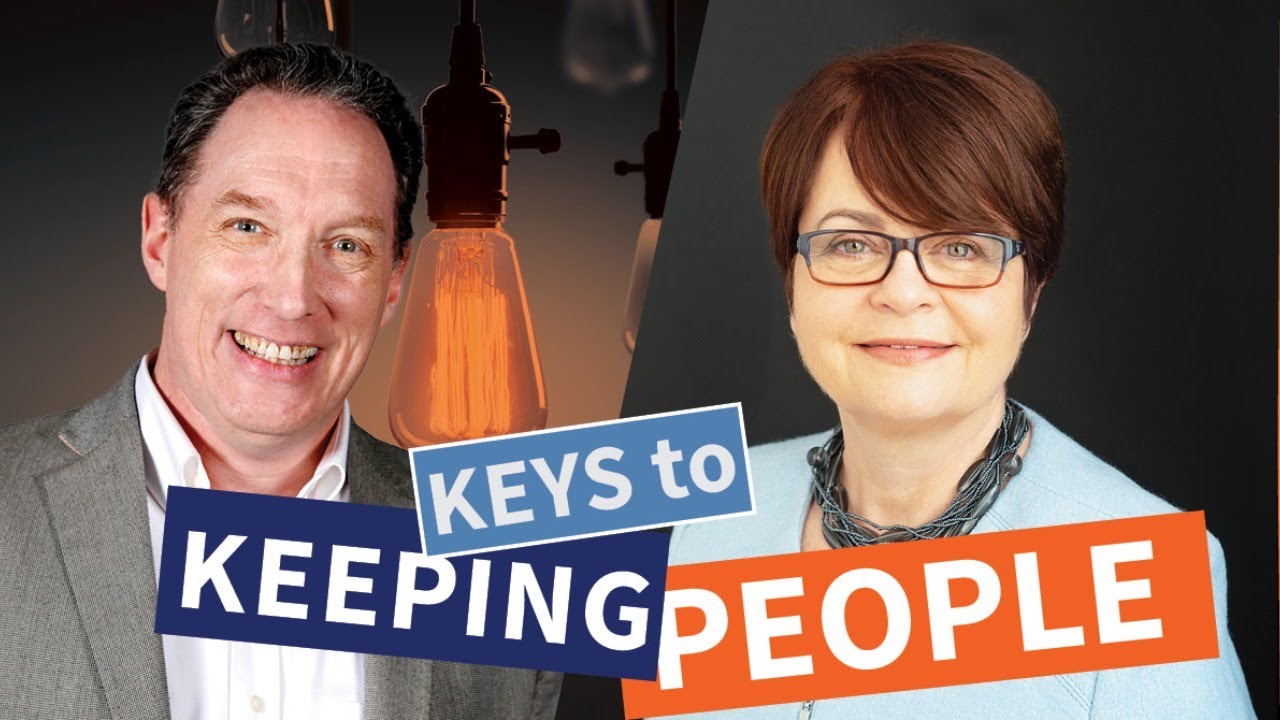
This content was created by Marc Haine. This content was uploaded by Marc Haine. This is a YouTube episode titled "The Hybrid Work Leader: Transforming Leadership" (published 2021-08-04) — a podcast-style interview hosted by Marc Haine with guest Nurdan Tokoz, a human performance and behaviour-change expert. The recorded conversation addresses post‑COVID return-to-work and hybrid-work challenges, including employee performance, empathy and trust, change management, inclusion and equity (especially impacts on women), practical tips for hybrid meetings and leadership self-mastery, and resources/offers for listeners.
Chapters
This past March, Forbes reported in a survey that 26% of workers plan to look for a new position once the pandemic wave has waned. HR Executive reported last month that there is a new class of workers emerging from the pandemic. And that are those people who will move on if they don't like your post-COVID policies and your practices. And that's what we're talking about today on Marc Haine Live. Welcome to this episode of Marc Haine Live. This is where small business owners and entrepreneurs pick up core skill sets to help them work on their business, not just in their business. I am your host, Service Expert, and Master of Experiences Marc And today, my guest is Human Performance and Behaviour Change Expert Nirdan Tokoze. And we will be uncovering what is impacting performance today as people are returning to work. We'll get some ideas as to what you can do to overcome those challenges, as well as what you can do to become a fulfilled leader in your own right. But before we get to that, I have 2 favors to ask of you.
Yes.
If you haven't done so yet, could you please subscribe to my podcast? If you subscribe, you will get notification whenever I bring you fresh content each and every week. Hopefully, it's content that you find because that'll feed into my second favor is share this podcast on social media with the hashtag #LeadersLearn. And go ahead and put your own thoughts and comments in there as well. And I'm not afraid If you would push back. If there's something that we talk about today and you think you'd like to push back a little bit, that's okay. I'd love to get the conversation going. And that's what social media is all about, right? It's about building community. So, go ahead and do that. Remember to use the hashtag #LeadersLearn. Last year, as we were coming out of the very first wave of COVID I did an episode of Marc Haine Live addressing what you needed to do to make your staff feel safe by returning to work. Now that we are tipping the scales into the 4th wave, I have to ask you our Question of the Day. So, how have you adjusted your corporate culture for the post-pandemic world? As I mentioned, I'd love to get this as part of the conversation. What are you doing different? What's going on in your business environment that you're going to be adjusting to what the demands are for your workforce? But also, what are you doing internally to make sure that people are going to stay safe? Go ahead and post it in social media wherever you're consuming this content. I'd love to get your feedback. As I mentioned, I am thrilled to have with me today Nurdan Tokoz. Nurdan is is a human performance and behavior change expert with degrees in industrial engineering and adult education. What a good mix! Nurdan puts an extraordinary spin on human performance using instructional design principles and human performance improvement methodologies. As a professional speaker and facilitator, she develops effective performance solutions that reflect the current environment and positively affects businesses' Businesses just like yours. Welcome, Nurdan! It's so great to have you here.
Thank you for having me. This is awesome, Marc. I really appreciate it. Thank you.
Well, thank you for making time because I know you and I have spoken offline. And you have such a wealth of information. And I can't wait to dig into today's topic. But before we do that, could you dig a little bit deeper into how you serve your clients?
Well, as you— I'm just looking at the last 1.5 years basically. And when this pandemic happened, there was a time everything froze. And at that time, there was one thing in my head, how can I help? Because the conversations I was having with the leaders, with my clients, I saw the confusion. I saw the question marks. I saw the fear. This was not something anybody experienced before. And such a big uncertainty, unknown. Are the businesses going to survive? At that point, those conversations really helped me to understand the real pain point, what they need. And during that time with my consultant group, we decided to prepare some programs to help these leaders at that time exactly for their pain, how to work from home. How are we going to lead when we have people and we have the people not in the office, in the next door? That helped them really start going. And from time to time, we had these conversations, leader conversations, got together, talked about the challenges, and just understood what everybody is doing. And I put my 2 cents in it too. And during this pandemic time, that is how I try to support them. And I think when I hear the results and their feedback, that helped them quite a bit.
As you— because maybe we should start and go back. Maybe we should go back 15 months. What was the big adjustment that you felt that leaders had to make 15 months ago when all of a sudden, the closeout, the shutdowns were happening? People were now starting, I have to work from home and so on. What was the big paradigm shift that you saw happen?
It was the— that's a big change. And when we do not have the control over the change, we need to understand the change and accept the change and see how we can adapt to that change best in our terms. That was a little bit of a barrier going over that change, that accepting it. This is how it is going to be for a while. It is not only a couple of weeks. It is not only a couple months. So, a fear of change was the biggest barrier. Once they came over that and figured that out, oh, okay, yeah, this is an unknown. But fear doesn't help. Fear doesn't even help them to think properly and make the right decisions. We need to take that fear factor out. That is why just putting new strategies in place. And also, it was the opportunity for most of the leaders To find, to think of, to come up with new ways of doing things. So roles changed a little bit. The job requirements changed a little bit. People moved from one area to another area to have that balance. But I think the biggest mind change was accepting the change and figuring out how we can adapt to this change. In our best terms.
Right, right. You know, I was talking about the statistics that we're seeing now. Back in February, they were saying that a quarter of the workforce will be leaving the workforce. The majority of them at this point is some of them will be moving on to other places that are going to be more in line with their values and so on. What are you seeing from your clients? What are some of the stories you've heard?
I think one thing is when people started working from home, the connection is getting weaker. The social relationship is changing. People are connecting behind the cameras. They're getting really tired of this Zoom environment or Microsoft Teams environment or whatever the environment is. It is that connection between the team members and the leader It really affects the communication, lack of communication. Those were the big things. It really affected the culture of the team, the culture that they used to have. And some leaders were better at handling that and trying to keep that culture in place. But in some cases, we really saw very drastic results because of that culture disappeared.
Right, right. So, there were more consequences to the fact that people were hooked up to Zoom all throughout the course of their day. There were bigger consequences than the fact that they forgot how to dress the lower part of their bodies.
Definitely, definitely. Yeah, that is a minor thing what they have pants or PJs.
But yeah, there are more It's going to be interesting to see how people return to work to see if people show up in flip-flops. I don't know. When you and I had our conversation, you mentioned that 46% of the people surveyed are not comfortable going back into the workplace. Can you talk a little bit about that? What that's going to represent for us?
I think everything starts from there. Any issues we're going to have when they go back to workplace is that Uncertainty, unknown, and the fear we have when there's an unknown uncertainty. It's an automatic feeling comes up fear. We we don't know what's going to happen. Am I going to be safe? What if? What if? What if? All those inner conversations, if they are not answered properly, clearly, very transparently, they will come with this baggage back to work and. When that happens, as I said, in this last 1.5 years, relationships changed. People got adapted to be in the house with their kids, homeschooling. Each partner is doing their work from home. And I have so many clients still that they have their little kids on their lap, we're having meetings. And you know what? This became normal, which is something we never thought before. So this is going to shift again, and people will come back and try to get into that office environment that yes, they knew it before; they didn't forget it. But it is it is weakened. So that is the problem. What is going to happen? They're going to adapt again, sitting in the office all day long and not being able to checking their kids anytime they need to. Not being at home, that is different. That's an adaptation again. And the other one is having that social relationship, that connection in the team getting stronger. And leaders have a big role in that.
Yes.
Yeah.
I recently interviewed the brilliant Claire Kumar, who I think we both know.
Yes.
Who tagged the fact that when we talk about the exodus of people, people resigning their positions, it turns out that the majority of them are actually women to the like 2 to 1. Women are leaving the workforce but not necessarily changing sports. They're actually leaving the workforce. And the World Health Organization, I think it's the World Health Organization, said that it's going to set women back 30 years because women are choosing now to stay home. Claire Kumar called it a she-session. Why is this affecting women more than men, do you think?
I think it is the one more like natural instinct. Being with your kid if you're younger and everything feels safe for a mother. I've been there. I raised kids too. So, leaving them at home or in someone else's hands It's not easy. And this is, this is where it is coming from. And I think the roles in the society, uh, how a woman is seen and how a man is seen and what their responsibilities are. And this gender equity that we are talking so much nowadays Why women have to go and take care of it, but men don't. This is a long conversation. And I would love to have that because I start talking about this topic more and more now. What is the gender equality? What is the role of men and women at the workplace? And why are we mixing it with their personal lives?
Right.
Yeah, it is going to impact women more because now women, have experienced being at home with the kids, what kind of a different impact it has on their kids too.
Yes, and on their personal lives. I mean, not having to wake up in them. Yeah, not having to wake up first thing in the morning to pack lunches and to dress the kids and drive them to daycare. And then, you're looking at your clock at the end of the day going, oh, I gotta pick up the kids. I gotta pick up the kids. Right? So, all that as well, right? So, there's a positive effect on the kids and a positive effect on the balance of On the family life.
So, that is hard to leave behind. How that is going to be balanced, we'll see as we go. But it is not easy to shift from that as a woman. I don't know.
Yeah, I believe it.
That's an important point. We'll see.
As people head back to work, there will be some factors that will impact how well they perform. And I'd like to get into that. And we'll do that right after this.
When the spotlight shines on your business, are customers applauding or yawning? In other words, how is your business performing? Make your business a star with a new book, Lights! Camera! Action!, Business Operational Excellence Through the Lens of Live Theater by Marc Haine. Marc uses his business and acting experience to help you see your business like a live show so you You can create a performance your customers will never forget. Buy Lights! Camera! Action! today at your favorite online retailer or directly at marchaine.com.
Welcome back! We are talking about the effect that the post-COVID world will have on people and their performance. And I am here with behavior change expert Nourdan Tokos. Nourdan, we're touching base on so many different things. And as you alluded to, It would be so easy to talk about something and get way off course because the deeper we dig, we're talking at a 30,000-foot level here because we can't talk about the minutiae that you could probably talk with your clients when you're face-to-face with them and actually hearing their stories. Are there some things, some indicators that people should be aware of when they're bringing people back that they might not have people who are happy at work?
Yes. And just to add to that, to be honest, I'm talking about my passion here too, as well as my business. So, I can go off track and please put me back on track if I do. I have so much in my head that I want to say. But so, one thing is I just want to look at it from the leader's perspective. It doesn't matter what the situation, what the occasion is. We're in the times that we work from home or coming back to office. But this is something for a fulfilled leader to have, whatever the case is. Because it will make the leader's life easier if these skills, these tools are in their toolboxes. One is the internal side of a leader. I'm going to split it into 2 to make it easier. And the other part is the external part. And I'm going to connect it to the benefits of our behaviors in that way. What will it make it different for the employee? The internal part is what we call Self-mastery. Self-mastery is mastering your thinking, mastering your feelings, mastering your behaviors coming along with that. It is just understanding all that and figuring out what is the best way, what is the best state you can keep yourself as a leader. Where your thoughts are coming, what kind of feelings they're creating. And what kind of behaviors you are bringing out. That is one piece. The second piece is more external. That is the heart-centered connection, I call it. Heart-centered connection means empathy. Heart-centered connection means trust. Heart-centered connection means caring about people and let them know that so they understand. And heart-centered connection is maybe challenging them a little bit too. It is not only a rose garden, but just for their growth. All these things are your external heart-centered relationship. When people come back to the office, one thing I think, one skill that is really critical is being able to show empathy. As we mentioned before, they will be coming with so many worries, leaving the kids at home again and just building that social relationship again, the figuring out what the unknown is. Just think about all those emotions. They're coming back and they will have their own stories, each person, their own struggles. Empathy. If we know people or situations, it is easier for us to show empathy. That is a fact that behavioral scientists figured out. They said, let's say we're working on the same team, Marc, and you came to me and you mentioned some of the struggles you have. Because I know you, because I work with you in the last 5 years, 10 years, it is so easy for me to show that empathy. And then guess what? I have this new hire which I hired while we were working from home, so we really didn't even see each other face to face. When that person comes and talks to me, hmm, do I show the same empathy? May not. Okay, so that is it? All new people won't have empathy and the others will? No, of course not. To be able to show empathy, if the rule is we need to know that person or situation, then let us learn about that person and that situation. Let us ask questions. Let us ask deeper questions to understand. Listen very carefully. And when we ask our questions, there is one thing that I really want to make clear: asking those questions Without any judgment, asking those questions only with curiosity to understand really their feelings, their situation, how they're feeling, how they're willing, what are their struggles. When you do that and when you have that connection, the trust starts building. When I feel that my leader is listening to me and understanding, And asking questions to know better. Wow, I will open more. The more I open, it will be more real of me. And the more I see connecting, I'm going to say, oh, I can trust that person. That is the key. And when that trust happens, even if they're struggling around whatever they're doing, their problem, They're gonna put their best effort in it. And what is the end result?
Performance. Nice.
That is how we treat human performance when we go back to work.
It's interesting that as you go through that, what you were saying in there are the virtues of trust. There's what I gather the virtue of humility that As a leader, you don't necessarily have all the answers and you can't dictate how people will think or how people will do stuff, right? And so, I think the one aspect that you really pinpoint when people become empathetic is you cannot be empathetic manager at the same time.
Yeah, yeah. It is just that connection. That is why we call it heart-centered connection. Because really, you're connecting to their heart.
Right.
Performance comes later. We're not connecting to their performance. First, we need to have that heart-to-heart. And you are right. That's a very good point because as leaders, leaders will figure out solutions as they go because this is a new setup. Maybe the roles are going to change. Responsibilities are going to change. That is okay. And if we do not have answers at that point for our teams, that is fine too. And there is nothing wrong to say, we are working on it. To be honest, I'm not even sure how that is going to work, but I really like to hear your feedback. What would you think would work the best? Just including those opinions. That inclusion is so important when we go back to the offices. Because people feel already isolated. Now, we want to make them feel included again by valuing their opinions, asking, checking in how they're feeling. This is a big change. So, I see this as a big change project. When there is a change in an organization, the biggest thing is explaining people the why of the change. So they will embrace and adopt it. I love Simon Sinek and his Golden Circle too. And that really works here. Why is this change happening? Why are we changing the processes? Now we're back to work again, back to the office again. Explaining that and then tying that why and how, the change itself, to people's personal relevance. How is it gonna impact my work? How is it gonna impact the whole team? After we explain that, then people feel, oh, actually, it is not that bad that this change is coming. Maybe it will even make the world easier, my job easier. Hmm, I'm motivated to take an action. There you go. Bang! That is the behavior change we want to see.
Right.
And if the change—
sorry, Nurdan. If the change is difficult, making sure people understand the why means then, oh, okay, this is going to make my life much more difficult. But I understand the why. So now, I'm ready to go to battle. Now, I'm ready to go and do it because I understand what the big picture is.
Exactly. And why explains that. What is changing and how we're gonna do it. If you think that these 3 questions are answered clearly and very transparently, Apparently, although there are areas we are not certain about and we put it out there, people will not be afraid of it anymore. People will not be going against it anymore because we really want to create these champions.
Sure.
And they will be supporting. And once they take that action and start developing new behaviors, because that will require a new way of doing things, when they start developing those behaviors, then the feedback part is critical. This is the insight we need to collect. Then, we're going to say, okay, how is it going? Where are you struggling? Those conversations, team conversations around the change is magical.
True.
And that is how we just work with our clients, having those team conversations, bringing up the challenges to the table with the leader included in that group because they need to be aware of that. And then, we just adjust it according to the feedback we get, the feedback we give, and the change becomes successful. And you know that it's a very well-known statistic. And it always hits me every time that McKinsey's numbers, 70% of change initiatives in organizations fail.
Yeah.
We need to remember this circle. When we talk about success.
And when you think that nothing is more certain, and this is the one thing COVID-19 proved to us, nothing is more certain than change. No matter what happens, everything is going to change.
Everything. It is changing. And change is not bad. Change comes from creativity. Change comes from innovation. Having those ideas and new ways of doing it but including the people who are doing the job. in that decision-making and in that change helps the change to become successful too.
Sure.
Yeah.
Nirdan, this is just really amazing. How can people get in touch with you? You're bringing up so much good information. It's absolutely, I mean, it's so clear that you are such a passionate person when it comes to change management and this idea of human behavior at work. If somebody wants to get a hold of you, how can they?
Well, that's my email. I think it's the best. And it is nurdan, my name, @solutionsforhumanperformance.com.
Wonderful!
nurdan@solutionsforhumanperformance.com.
Great! And the link is in the show notes as well as your link to your LinkedIn account. I have your address there for your LinkedIn as well.
Perfect!
At the very least, they should follow you on LinkedIn so that they see what you're up to.
Okay, beautiful. Thank you.
Change being everything that it is, a hybrid work environment now is going to be the challenge. This is going to be the new change now. It's you and I, we're talking offline about some conditions about the hybrid workforce that we're going to be seeing probably coming up. Is having a hybrid work environment the only factor employees need to consider now? Is there other considerations they need to have before they think hybrid work environments?
I think the biggest thing is what a worker, an employee, a team member would look at. What am I going to be able to do when it's hybrid work and I chose to work from home? So, there will be a group of people working from home and there will be a group of people in the office. How is that going to impact me? If I lose some opportunities because I'm working from home, I'm not right there when the opportunity comes up, then that's not easy to take. But as I think I mentioned this in our conversation before the podcast, I said, if a company says, It is up to you. We are giving you two choices: you can work from home or you need to come into the office. Pick one. And because of my family situation, I pick the one working from home, and I'm really productive doing that. I'm doing my job fine, but at the same time, I'm taking care of my family. Then I really don't want to see any kind of missing opportunities because I. I choose that option because it is given. So it will be equal opportunities to both parties. That's what I'm trying to say. For example, let's take a meeting. 5 people from the team came to the meeting room and 4 people are on the screen. It is so natural the people in the room will have the more opportunity to answer questions, give their opinions, because they are right there. And the little conversation Can be there among those 5 people. And these 4 people behind the cameras are trying to put their words in. And sometimes they can, sometimes they cannot. How would that feel? And if the leader is in that group, how can this be balanced? Well, there is one very practical way to do that if it is the case. I'm just giving maybe one out of 50 tips. But just giving the first chance to talk to the people on the Zoom behind the cameras. Then they can put their 2 words in. Then the rest of the team can bring their opinions. So it will be equal chances given to people. Or in a physical layout of a meeting room in the office, we should be so careful that we are really including the people and nobody is sitting her back, his back to the camera. And it is just a U-shape and the screen is there. So those people are part of it. And keeping the cameras on is a big thing. It's a big— it's very important in virtual world. When I do sessions with my clients, I really explain them the benefit of keeping the cameras on. But I set these expectations. before my meeting. And I explain why. And I have the cameras on.
Yes.
If it is an update or if it is a report review or something, yeah, people can go on and off because if the kid came up on their lap, they may turn their camera off and all that. But if it is talking about the process, talking about the project, or giving feedback, You need that connection because that is the only connection we have here. If I keep my camera off and talk, how would everyone feel about that? So those are the things. Hybrid workplace. Or if it is hard, maybe I should add this too. If it is hard to control those meetings, then make the platform equal and have everybody attend the meeting. from their office even if they're in the office physically. Then, everybody will be behind the cameras. Those kinds of small things impact the performance, people's motivation, people's morale, and the connection and the trust on the team. Just those little things.
And as you're talking about this, the word that keeps popping into my mind is consideration. It's giving other people consideration. based on whatever the situation is, which I think tells me that the leader is more empathetic because they're making these decisions to be considerate of other people, which I think is important.
Yeah, that is where the heart-centered connection relationship comes into place.
Yes, yes. In my research, when it comes down to people amalgamating now into a hybrid work environment, some people are Actually rebrand the office as a destination for very specific purposes like collaboration, networking, and onboarding. What are your thoughts using, as opposed to using the office the way we used to, is using it for specific purposes?
Yeah, I know a couple of companies planning to do that too. They're working on it. It is a place where they come for Let's say team meetings. So instead of doing it virtual, and people agree to do that too, it is not a big thing coming to the office for once a week or whatever the duration of that, the frequency of that meeting. So that is okay. And sometimes they're having this after-work hour meetings, getting-togethers. Or this can be outside of the office too. But if it is the case, those are very critical. Those are the only times people are in face-to-face, in-person connection. They can give each other a hug.
Sure.
And they can just say, hey, they can just give high five or whatever. But those are so important. Or, sorry, I shouldn't give wrong messages. Giving an elbow kind of thing or give a fist or something. So, Yeah, different times.
You mentioned about the situation in hybrid environment. People, consideration needs to happen. But one of my concerns when we get into hybrid is this idea that there becomes an inequity of participation between people who are in the office versus people who are remote working. And I'm thinking that at some At some point, we might end up losing people who are at home working remotely, might be losing opportunity by staying at home. What are your comments about that?
Definitely. And again, on leaders' shoulders. If there is an opportunity, if there is a project, just think it exactly. I think the easiest way of doing this. If everybody was in the office, how would I do that? So I would just make a team meeting, and I would just say this important project is coming up, and look at your timelines and your workload at this point. Who would be interested? Put the like any, and then in 24 hours send me an email. There you go. Why wouldn't be able to do this with the hybrid group? Have your meeting. Explain it. This is the opportunity coming up. Who would like to be part of it? If that is how you do it when it was in person, 100%. Really, nothing is changing. We don't need to figure out new ways of doing it. But we need to be conscious of, now, I used to do it this way. But if I only call 5 people in the office, it won't be equal chance. Then I will be pulling the other people and do it too.
Right.
I mean, it is not that complicated or new ways of doing it. To be honest, Marc, during this COVID time, the leaders that I see before having very strong leadership skills, fulfilled leaders, they went through it way easier than the leaders who are really struggling to own, adapt, engage those behaviors.
Oh, that is good because to do— you've just mentioned it now. You've set the seed. But I'd like to tap into what the traits are of fulfilled leaders right after this.
When you're delivering an important speech to a huge audience, it's easy to lose your place or go way over time. Give yourself an advantage with the Pro Speaker Presentation Speech Timer app. No more checking your watch or calling for time. The Pro Speaker Presentation Speech Timer app keeps you on track with easy-to-see timers, even changing color for visual prompts during your speech. And you can set audio cues to practice or set it to vibrate so you don't even have to look. Be the pro you know you are. Download the app at speakerpresentationtimer.com.
Welcome back! We are speaking with Nurdan Tokoz about what it takes to adjust to our constant changing reality when it comes to the definition of the workplace. And of course, nothing is going to be changing more again than people coming back into hybrid environments and leaders having to adjust what they do and how they do it. Before the break, Nurdan, you set a seed talking about fulfilled leaders. Could you define what that looks like and what that is?
Fulfilled leader, as we talked about, this will be kind of a nice summary of the content too. As I said, fulfilled leaders need to know how they think, how they feel, and how they behave. They have that self-control, self-realization, because if you think about it, Yes, employees, teams are coming to this different environment. But leaders are coming into this environment too. So, we always talked about how the team is going to feel. But the leader can have the same fears, same uncertainty, same struggles. But that being aware of your thoughts and behaviors and feelings will help them. If they're stressed, They should master their stress.
How?
What are the tools in my toolbox I can use to lower the level of my stress so it won't impact my team? Or with that stress, I won't be making myself sick. Or I won't be bringing out behaviors that are not appropriate and make the team feel even worse. That consciousness is the key. For a fulfilled leader. And when that consciousness is there, then as he understands his thoughts, feelings, and controls his behaviors, now he will be able to understand from the— looking through the same lens, he will be able to understand the other's worries too, which comes with empathy. But empathy, as I mentioned, is with curiosity, not with judgment, and trying to understand the real feelings of that people, of those people, because we cannot just read them from their eyes. Some people do not even show any feelings, any emotions, but there is a big fire is going inside. But when we ask questions and listen, we can pull those out. And then the trust builds. When the trust builds, people talk easily. Being transparent is very important. If you don't know something, say, I don't know it at this point, but I'm gonna share with you. But what are your ideas? Include your team. And when they're included, when they're listened, when they're understood, They will be more motivated and explain the change. Hey guys, our world is all about change anymore. Don't be afraid of the change as a leader. Change is not a bad thing. Change is a good, good force that will push you to move forward. And when they understand the reason, know why it is happening, include them in that change, help them to build those new behaviors, to go along with the change, there you go. Performance is there. So, we don't need to talk about performance all by itself because performance comes as an outcome after these. That would be my suggestion, my 2 cents for any leader, to be honest.
Yeah, it really sounds like the key there is the intentionality and the presence. Being present to all the different situations. And then, this intentionality of always kind of testing against your decisions, testing it against your values and what you want to do as an empathetic leader.
Exactly. And today, I was reading an article before our conversation. And it was saying that this hiding leaders is hiding from people's email. They are not responding to emails. They are not answering questions is becoming more and more. And that really proves why over here we are talking about these open conversations, understanding people's problems. Hiding doesn't help. If you don't answer, if somebody comes with an email, with a problem, with an issue, with a struggle, hiding doesn't help. How can I trust somebody when I need help I cannot reach?
Yes.
Yes, yeah.
That is another thing hit me today. Apparently, it is coming more and more in organizations because of fear. It is because of the fear. The leader doesn't know most of the things. But just share it. It doesn't take anything away from a leader's credibility if they say that, I don't know.
And again, it's that humility piece, right, that's missing. It's that humility of saying, I have to know it all. And if people perceive that I don't know everything, then they're going to look down on me or they're not going to trust me. And really, it's the opposite that's true, right? It's the more you kind of put yourself out there and say, you know, guys, I don't have all the answers. Let's talk about it and let's brainstorm it.
Yeah, be authentic. Authenticity in this environment is very critical. But it's very helpful too. If you just be who you are, people are not going to struggle. Oh, is that really what he means? Or Is that really? No, people see you. That's what you say and that's what you do. There you go. I trust.
Yeah, yeah.
I trust.
This has been so good, Nurdan. As we wrap up, one of my big fears is I've known a lot of managers who have been what I call band-aid managers. They'll get some new information. All of a sudden, this is going to be the new thing that they're going to try to implement. And like you said, 70% of strategic plans fail because of the execution. Do you have any cautionaries about people who are taking this information now and might say, I want to implement stuff. I want to become a better leader. I want to be— what are some of the cautionaries?
Well, one thing I'm open to have as a kind of— and as part of this program, I'm open to have people, leaders reaching out to me and having a little bit more conversation. So you have my email and your link, my LinkedIn. Just reach out if you are kind of confused in some parts and we can have a conversation. It's a conversation meeting. It is nothing more than that. So yeah, I would just suggest that if you're open to that, you are very welcome to do that. And I'll be happy to talk more about your situation specifically so I can maybe provide some more tips and some guidelines for your specific case.
That's wonderful, Nurdan. This has been such a tremendous conversation. I can't thank you enough for taking time out. Super high value to anybody out there thinking about you yourself as a leader. What can I do different? And again, Nurdan, that offer for a 30-minute phone conversation just to bring your authentic self to Nurdan to talk about it. I've known Nurdan, like she said, I've known her for about 5 years now. And Nurdan is one of the most thoughtful, kind people that I've ever met. And you can see it just by the passion today that you brought to the floor. So, Nurdan, thank you so much for today. I really appreciate it.
Thank you so much. This was such a pleasure. And if I can be helpful to anybody listening, I will be even up in the sky. So, Thank you so much for the opportunity. And you're welcome to connect with me and we can talk deeper.
Wonderful! Thank you so much.
Thank you.
As always, my offer stands as well. If you would like a complimentary 30-minute session with me to brainstorm your business with you and your team, feel free to book yourself on my online calendar. The link is down below. Feel free to use it. A conversation, I promise you, there is— it's not a sales job, nothing. It is to talk about you and your business and the struggles you might be having. And like I've always said, if I don't have the answers, I know people who do. And I can maybe point you in the right direction. As always, I am at your service. And oh yes, mark your calendars for November 5th. We will be hosting the Fall 2021 Audacious Leaders Summit on November 5th and 6th. And you can go ahead and check it out at audacious leaders.com. So, feel free to go and check it out. And please remember the 2 favors I asked you today. Subscribe to this podcast. Trying to get to 1,000 subscribers. It's a long hog after 66 episodes. I think I'm at 109. And please go ahead if you think this information today was valuable and what Nurdan shared with you was gold. Share this podcast on social media. with the hashtag #LeadersLearn along with some comments about what you heard today. I'd appreciate it. Again, my name is Marc Haine. I hope that you stay safe, stay healthy, and dare to be the exception.









