The Simple Sales Fix That Can Really Double Your Revenue
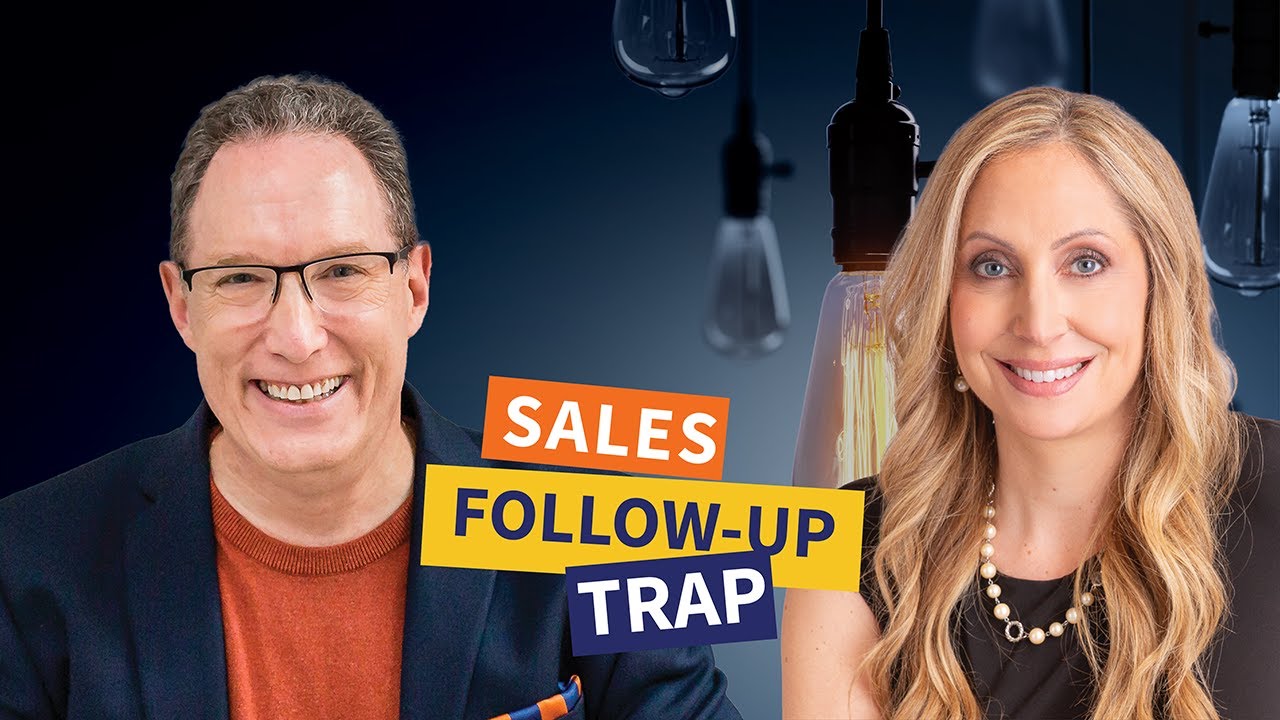
Marc Haine interviews Ursula Menches, author and NLP expert known as the "Accidental Salesperson," on why most deals close after multiple follow-ups. She shares tactics like the "15th of the month" appointment trick and CRM tracking to help small business owners and sales teams double revenue through persistent follow-up and reframing selling as service.
Chapters
Let me ask you something. How many sales do you think you've lost because your product was still great and your pricing was okay but you lost the sale simply because you didn't follow up? Now, before you say, oh, I always follow up. Let me hit you with this one little tidbit. 85% of sales close after the 5th follow-up. But 90% of the business owners never follow up more than once. And that's what we're talking about today on Marc Haine Live. Welcome to this episode. This is where small business owners and entrepreneurs develop new skills to help them create the jaw-dropping, show-stopping experience that their customers and their employees deserve. I am your host, Customer and Employee Experience Strategist Marc Haine. And I'm so thrilled that you are here with me today because my guest today is the Accidental Salesperson, Ursula Menches. And today, we're going to be diving into why follow-ups, or rather the lack of follow-ups, are quietly killing your sales, costing you customers, and keeping you from the growth that you deserve. If you've ever hesitated to check back in with a prospect because you didn't want to seem pushy or salesy, this episode is about to change everything you thought you knew about closing deals. I do have one simple request though. If there is somebody in your circle who could benefit from the insights that we're sharing with you today, please, please, please do them a favor and give them the link to this episode. Because you help them, you help the show, You help me because not that I make a lot of money on this at all because I don't. But because I get more viewers, more people sharing the knowledge. And the more knowledge we share, the better the world will be. So, help me out, won't you? You know that feeling when you're absolutely certain a deal is going to go through? It's going to close. You just know it. The conversation went great. They loved the offer and you walked away thinking, this is done. This is a done deal. But then nothing. Crickets. You tell yourself that they're just busy so you wait a week and that passes. Then 2. You consider following up but you don't want to seem pushy. And before you know it, that sure thing, it's gone, never to be heard from again. And here's the thing. It's not your product. It's not your pricing. And it's definitely not the economy even though you might be blaming that. Are you? I think you might be. It's your follow-up. And it's probably costing you a heck of a lot more than you realize. So that brings us to our Question of the Day. Have you ever stopped to consider how much money you are leaving on the table because you're afraid to follow up? Think about that for a second. How many deals never closed not because a prospect wasn't interested but because you never checked back in? I'd love to get your thoughts. Why don't you go ahead and share this episode on your favorite social media platform? Hashtag it #ExperienceLeadership and be part of this conversation. I know. I think you worry about sounding too salesy. And I want to hear from you. I want to hear your experiences, and even your mindset around that. What makes it feel salesy to you? Okay, so I'm gonna look forward to it. #ExperienceLeadership. You're going to be part of this conversation. If you've ever felt like sales is a game you weren't meant to play, like you're forcing something unnatural or worse, coming across as pushy, then today's guest is about to change everything you thought you knew. She didn't start out loving sales. In fact, she hated it. But despite that, she didn't just learn how to sell. She mastered it. She climbed the ranks from the outside sales rep to the president of a $20 million company, all because she cracked the code on what's truly driving sales. Ursula Menches now is a USA Today bestselling author, business strategist, and coach. She helps entrepreneurs double their monthly revenue in as little as 30 days while working less. She is an expert in neurolinguistic programming, which means that she doesn't just teach people what to say. She helps them shift their mindset of what's holding them back from success in the first place. She is also the host of the top-ranked podcast, Quantum Revenue Expansion, and has been recognized by the SBA as a Woman in Business Champion and even received a Lifetime Achievement Award from the President of the United States for her work in entrepreneurship. Today, she's going to help us tackle one of the most expensive problems in business. And that is the fear of follow-up. Ursula, it is so great to have you on the show. Thank you for joining me today.
Marc, you have no idea how excited I am to be here. Thanks for having me.
This is going to be thrilling because I know what we're talking about. I know as a professional speaker, this is something I was challenged with for years. And I really had to get over myself. And I know that people in the speaking industry because they're solopreneurs, Everybody is like, I'm a speaker. I'm not a salesperson. And so, I can't wait to delve into what you do today. But maybe let's start off by talking a little bit about who your customers are and how do you serve them right now?
Yeah, great question. I work with small business owners who maybe struggle in the sales area. They've made it to multi-six figures and really want to go to 7 figures and beyond. And they're just not quite sure how to do that. And they feel like they've maybe been stuck for a while. So then, they typically show up in our world and we're excited to work with them.
Nice, nice. I've talked about how we assume that people are busy or if they're interested, they're just going to call me. Those kinds of mindsets. And I know these are just stories that people are just telling themselves. How really is this affecting companies right now?
Yeah, this costs companies not even millions. I would say trillions of dollars because we believe and we hope that if our prospect really wants That's what we have, they'll call us. And Marc, you and I both know that the day that our prospect calls us and, hey, Ursula, I was just thinking about you, here's my credit card, is the day we should go buy a lotto ticket or 10 of them, right? Because that's a really good day. Here's the thing, your prospects are waiting for you to follow up with them. Your prospects want to know that you actually want their business, that you're actually a professional, that you're actually going to follow up and do all the things necessary to help them.
Right.
Right? So think about like, they're waiting for you to follow up.
Yeah, it's really interesting, right? Because this whole idea of, oh, I don't want to be pushy. And I know that this was something I had to get over myself with. And it's like, I really had to change from a mindset of sales into a mindset of service. But I knew that at the same token, I was telling myself a lot of stuff. So are there any really big myths that business owners are using and falling back on, believing that sales and follow-ups are like really keeping them stuck because they have all this belief system around them.
Yes, yeah. It's the reason I had to go get certified in NLP. NLP is like neuro-linguistic programming, as you mentioned. And I wanted to know like, where do those limiting beliefs come from? Can we change them? Like, what happens if they get stuck? Because I get it. When I first started out in selling, I thought for sure that if I followed up more than once or twice, that prospect was going to think I was being super pushy. They weren't going to want to do business with me. Like, why is this chick calling me again, right? And what I quickly learned was that if I didn't follow up, my sales were not going to grow. They weren't growing at all. And then, I started to realize something. Selling is about service as you said. In fact, the root of the word, the Latin root of the word to sell means to serve. And when you serve at the highest level, that means you're following up probably more than 5 times to close the sale. And moving from, am I being a pushy salesperson, to this sentence, this new belief: I am a professionally persistent problem solver. And Marc, you and I both know when we get there, when we get to that point where we can put our, our fear aside, our discomfort aside, Our clients will appreciate that. I should say our prospective clients will appreciate that because we get to serve them.
Yeah, yeah. But again, what we fail to realize is that every person who is a prospect is also a human being. And like us, their email box is getting filled in moment by moment, like hour by hour. The emails just keep flowing. Their task lists are growing. And somewhere along the way, The priority of dealing with us has fallen down the list. So, this idea of follow-up becomes even more critical because out of sight is out of mind.
Yeah, great point. And I think we overestimate how much our prospective clients, those amazing humans, those souls out there that we'd love to support and help, are thinking about us. And here's how many times they think about us. Not at all. Zero times. They're not thinking about you. So a lot of people ask me like, how soon should I follow up after a meeting? First of all, what I recommend is if a sale doesn't close, set the next appointment. And not like 2 or 3 weeks out or 3 months out. Set it in like 2 days. Like if they have something they're stuck on, they can't make a decision, well, let's meet in a couple— like, what do you— how many days do you need to kind of figure this out, talk to your business partner, find the money, the funds, like whatever you need to do, and then let's talk again. Now, If you forgot to do that thing because no one's like we're not trained to know how to do these things. If you didn't know to do that, then follow up as soon as possible because your prospect's not thinking about you. I've worked with many many sales reps. I've I've led sales teams, and the top ten percent of sales professionals never think about the last time they talked to their prospect. It's never like oh did I just talk to them? Is it too soon? What they're thinking about is. Oh my gosh! I haven't served this prospective client of mine because I haven't gotten an answer. And I haven't talked to them. So, top sales reps will call you until they talk to you. They're not even thinking about it. I worked with top sales reps who would call you 10 times in a day. And it was like, listen, Shelley. I haven't heard from you. I've got this. I used to sell computer training consulting. I've got this incredible trainer lined up for you. They match with the dates you need. I need to hear from you today to see if this is going to work, right? It's about serving them. And they would call up until they got an answer.
Yep. And it just seems so easy, Ursula. It's like when you say it, it seems so easy. So, what is it that's holding people back?
Yeah. Well, we're human, right? We don't like rejection. We don't. Most of us, especially if we're in sales, we don't like people to not like us. And if you know the DiSC assessment, on the DiSC assessment, we have D-I-S-C. There's a lot of salespeople that are on the D or the I, right? They're inspiring. They're direct. They kind of fall in that space. They're also typically like, they want to be liked, especially if they're an I on the DiSC assessment, right? If they're a high D on the DiSC assessment and they're like a driver and they're going to make it happen, they care less about what you think, which is great, right? They're just going to pound the phone until you answer the phone. But if you're in the I space, or if you're more of an S or even a C, you have a lot of thoughts going through your head of, you know, what are they thinking about me? How can I be more supportive? And that can definitely get in the way. And what I recommend is really challenging your thoughts and beliefs about that. So, if you say to yourself, you know, if Shelly really wanted what I have, she would have called me back, or she would have emailed me, or if she liked me, she would email. Throw that all out the window. Just make the assumption that if Shelly has talked to you, she probably needs what you have, right? And she's probably waiting to hear from you, but she's got 5 million other things going on. To your point, Marc, her inbox is full. Maybe one of her kids is home sick. Like, she's got stuff going on. And actually, she'll really appreciate it when you follow up.
Yeah, yeah. So, I do know that lots of business owners and business managers and stuff, they have sales teams. Are there any red flags that indicate to the business owner that they might have a follow-up problem? Are there any kind of telltale signs they should be looking for? Because I do know that when people don't get a lot of sales and it's a lot of cold calling and a lot of that, they'll just start boning up on actually more people doing the same thing rather than looking at the people they have and changing that.
Such a great question. So, you know, right?
I know.
So, you're triggering this memory. We used to have a course that we taught all the time called Sales Camp. It was a 2-day course and we would often work with sales teams. And this is a story back in the recession, the Great Recession as we called it. And I was working with a high-end garage door sales company. So, they sold high-end garage doors, okay? So, picture this. It's the middle of the recession. Who's buying high-end garage doors? You know, there was a select group of people. Okay. So, the CEO sat me down. He's like, I just want to invest in my sales team. I really want you to make a difference for them. You know, work on their front-end sales script. So, I said, okay. So, he wanted me to work on getting more appointments. But then, I was like, something was triggering. I said, how many times do your salespeople follow up? And he said the magic numbers, which I hear often. He said, Probably 1 or 2 times. And I said, Mr. CEO, you're leaving thousands and thousands of dollars on the table. So, when we do the Sales Camp course, I will of course work on a new sales script to get more appointments for your sales team. And we're going to work on a follow-up script because I guarantee you there's money on the table. So, one of the things we used to do at Sales Camp, so much fun, is that day 2, we would take those sales scripts, Marc, and make real phone calls in 30 minutes. And we'd have a contest to see how many new appointments could be set or how many follow-ups could happen. And guess what happened during that time, right? So, several of the sales team members did follow-up calls. They closed thousands of dollars in garage sales, garage door sales because they followed up. And of course, people ask me like, well, what did they say? Well, it's not as much about what they said. It's what their customer said, which is, I haven't heard from you. Where have you been? Yes, I want to buy your garage door. Or Some said very heartbreakingly, I already bought it from somebody else.
Yeah. Well, it's interesting because I started doing something different this year that I didn't do before. And that was I started picking up the phone to call my prospects. And it took me this long since 2017 to get over myself and figure out that if I pick up the phone and get people on the phone, I have a much better chance of number one, gaining interest. Number 2, actually selling something. And without even getting on the phone to talk about sales, it was like, hey, I saw that you have this great conference. I'd love to dig a little bit deeper into finding out why you're bringing people together and looking for how can I help serve this because it sounds fantastic. And I got a response last Thursday. I talked to somebody. I had sent her like 8 emails. To crickets. And I called and she answered the phone. And she says, first it was like, yes. And then, I told her who I was and what I was doing. And then, she's like, oh, I'm so glad that you're calling because you know what? I get tons and tons and tons of emails. And I don't know which ones are real, which ones are spam. And I just delete them.
Yeah.
And it's like, well, isn't that interesting? Hmm, am I on to something?
Well, I mean, who's— this is what I think, you know, who's opening emails today? Even if we are tracking that, maybe, maybe 10, 20% of emails are open. On a great day, 30 to 40%. Like, that's a pretty big lotto day. So, we're busy. We're not opening them. It doesn't mean they're not interested. I know I'm on people's email lists and sometimes it just makes me feel good to see their name in the subject line. It's like, oh, I love that person. I don't even open the email but I don't want to be off their list.
Yeah.
But if they called me up and they're like, hey Ursula, I got this really amazing thing just for you. I think it's going to be incredible for your business this year. I would listen.
Yeah, yeah. It's interesting. Hey, I just want to say hello to Tricia. Tricia's joining us today. So, I'm so glad to have Tricia on the call. Tricia, if you have any questions, feel free to tap them, type them out into the comment box. More than happy to address them as we go forward. Ursula, the business owners who are still skeptical about the power of follow-up, is there a way for them to be able to measure financial impact of not having a follow-up system? Is there some means by which they can look at their business and go, we could change this?
Say more about that. Like what kind? What do you mean?
Well, because I know that a lot of people, if they're not doing it right now, they don't know what the outcome is going to be. So, when they might be tuning in right now and going, yeah, maybe we should do 1 or 2 more follow-ups. But again, that whole mindset thing kicks in. Right? If they really truly want us. But I can't tell you how many times somebody turned around and go, oh, I'm so glad you called back. For the life of me, I couldn't find your number.
Yeah, yeah. Here's a good rule of thumb. Keep following up until you get a clear yes. Here's my credit card or here's how I'm paying. A clear no. I've served you and it's not a fit. Or a next step on the calendar and we can decide then.
Hmm.
Those 3 things. For some people, that could be following up 5 times. For some people, that could be following up 20 times. I've had clients tell me, I followed up with this person 11 times before they answered my email and we got back on a call. So, until you've gotten a yes, a no, or next step on the calendar, you don't know. To your earlier point, measure everything in business, right? If you're not measuring it, you can't track it. You don't know what the ROI is. One of the things we use in my business and with our clients is a marketing matrix. So, we look at the ways you're marketing and we track everything because if you don't know, you don't know. And we also track how many times you follow up. I was just thinking we have a client right now. We're building a campaign for LinkedIn. And there's a lot of automation tools out there. And this person, like, he's an amazing entrepreneur even in the AI space. But we decided together, you know what? Let's not automate this at first, right? Let's fine-tune it. Let's have a— let's have 25 people on the list and track every single message and every follow-up message until you get results. And then, we'll know what's working or not working. I find that most people aren't willing to do that piece, that really granular piece. But when you can shift it and start doing it, you'll get information. Then, you'll know what's working.
Yeah, you'll get all the data you need to justify it and then measure success when you decide to change something. It's a great way like if you're measuring it and you do something incremental, you'll get very quickly whether or not that's going to pay for itself.
Absolutely, yeah.
Hey, when we come back, I'd like to explore your solutions to creating more systems. And we'll get to that right after this.
When the spotlight shines on your business, are customers applauding or yawning? In other words, how is your business performing? Make your business a star With a new book, Lights! Camera! Action!, Business Operational Excellence Through the Lens of Live Theater by Marc Haine. Marc uses his business and acting experience to help you see your business like a live show so you can create a performance your customers will never forget. Buy Lights! Camera! Action! today at your favorite online retailer or directly at marchaine.com.
Welcome back! I'm here with accidental salesperson Ursula Menches. And Ursula, you yourself have a book, don't you?
I have a couple books, yes.
Yeah, but you have one specifically you want to talk about today, don't you?
We can talk. Yeah, I mean, for this topic, definitely Selling with Intention would probably be the best book for this group because it talks about not just why it's powerful to follow up but what it means to be intentional in the entire sales process. How to have a sales conversation, how to get an appointment, how to follow up.
Lovely! And that's a tool that people can use to help them develop. Don has a question for us. Don wrote, what do you recommend as a good follow-up system for tracking? Or a good follow-up system and a system for tracking, I think she means.
First, you want to have some kind of CRM, customer relationship management system. You can go super fancy. There are tools out there like Salesforce. There's Kajabi for business owners, right? There's Zoho, which can be free. There's a lot of them out there. I, even if you have a sophisticated CRM, I highly recommend tracking on an Excel spreadsheet. And everyone in the world of automation just groaned and they're throwing things at their screen right now. And I totally get it. But here's the thing. Most of us aren't working on thousands of customers or clients at the same time. Most of you who are listening probably could. If you had 20 more clients in the next month or 2, you'd probably be pretty happy. So, tracking it on an Excel spreadsheet. We use something called a work in progress report, which comes from my days back in the IT world where I was making 100 cold calls every single day. And this is what I used and it still works to this day. And what I'm tracking at the top are my prospects. Once I've had a conversation and set an appointment, they go into the middle, which I call 99% closed. Once they're closed, they go on the bottom. Next to each one, I have 2 things. What's my next step with this customer? And second, what's the opportunity revenue-wise? A lot of people are like, I don't know. How would I know? Because you guess and you get good at guessing, right? Like, oh, back in the computer training days and consulting, I would think, okay, this is probably like a $50,000 opportunity. That's my guess. What's powerful, Marc, and you know this, is then your subconscious mind just starts to move these prospects from the top to the middle to the bottom. And on average, only 25% of a sales pipeline will close on average. So, if you want to do $25,000 a month, you need $100,000 in your pipeline every single month. So, that's an easy tool that anyone can set up.
I love that. That makes it so much easier. But again, any system can be a great system as long as it's used consistently. One of the things I find that people go out and they spend, people throw money at stuff and they think, oh, if I get a really good CRM, That'll solve my problem. In restaurants, if I buy a great inventory program, that'll solve my problem. But then, months in and they've stopped using it because it added work to what they needed to do. They didn't figure out a workflow to be able to update it. And so, how do we shift that mental state to make the importance of the consistency of the process important enough that they want to do it?
Oh, such a great question. So, one of the things I used to do when I worked with salespeople full-time was have them make some behavioral shifts. Okay? So Marc, in the morning, typically after we— what do we do after we get our cup of coffee or a cup of tea when we get to work? What's the first thing we do?
We probably check emails, probably.
Yeah, absolutely. Good one, right? Okay. So, when you grab your cup of coffee or your cup of tea in the morning, my challenge for you is to open up your work in progress on your Excel spreadsheet, which costs you no more dollars, zero, and pick up the phone and make 20 calls. Even if you just leave voicemails, I don't care. In 3 days, if you do that, you will create a new habit because you have latched that onto an existing habit. And that's from the book The Power of Habit, whose author just went out of my head. I'm sure somebody out there will know. The Power of Habit. Anyway, I love his research because he said, if you want to create a new habit, just tuck it into an existing habit. Get your cup of coffee or cup of tea. Make 20 calls. Now, some of you are like, can I make emails as well? Sure. Can I send emails? Send emails to set appointments. Make calls to make appointments. Do both. Whatever it is, make it the first thing you do. And then, that becomes a new habit which you will see results from that.
I love that. If anything, right now, that as far as I'm concerned becomes to anybody who wants to think about their sales process and the power of follow-ups. That to me becomes the first step is to tie something to an existing habit so you start doing it. Because really, I think to your point, if you need $100,000 in the pipeline of potential leads before you sign on a quarter of that or even a third of that, then it's a total— it's a constant grind. It's something that never ends.
Yeah. Yeah. And there's other research out there too. Like if you feel like, oh, like 20 calls is too much. Totally get it. If you just made one follow-up call after you got your cup of coffee for the next week, I guarantee you it would start to become a habit for you.
5 calls. Yeah.
Yeah. And then, you have a habit and you're going to want to do it because it's like, I did one today. I can— or you do one and you're like, I could probably do 2 today. And then, so on. It keeps growing. You'll see you can do it.
I love it. So, I mean, the initial premise when we started the show was this idea of, oh, I don't want to feel salesy. Like, I just don't want to be the bother. I don't want to be that sales rep that people will, oh my God, Marc is calling again. How can business owners really shift their mindset around the follow-up so it doesn't? So, it feels natural instead of salesy?
Yeah. First, Right. Remember, you're coming from a place of service. You aren't really serving your client if you don't follow up until you get a yes, a no, or a next step on the calendar. And then, ask yourself, what's not true about me being salesy if I follow up? I love to shift a belief like that. So, if my belief is, oh, I'm being so salesy. If I'm following up, no one's going to want to talk to me. Right? What are 3 things that are potentially not true about that? One, right? Like I'm not serving if I don't follow up with them. 2, I know everybody in the world has to follow up at some point to close a sale, right? So, so you normalize it. Other people are doing it. And 3rd, one way to really soften it, I think about like, this is how I show people I care. Like, whatever you decide to do is up to you, whether you work with me or not. I want you to know I care about you and your business and having your business be successful. So, when I follow up for the 10th time with you, it's because I want to help you. And if I can't help you, I'm going to help the next person. I want to help people make a lot of money in their businesses so they can give back to the organizations they care about and live a great life. That's my mission. I gotta live it. So, I'm going to show you that I care. And I care.
I love that on so many different levels, Ursula. For the people that this is resonating with right this second, how can they get in touch with you if this is resonating with them?
Yeah, you can email us at ursula@ursulainc.co. And I know we'll have that information in the show notes. I also hang out on Instagram, Facebook, and LinkedIn. So, you can definitely find me there as well as Ursula Mentjes, M-E-N-T-J-E-S.
I love it. I remember growing up, my very first sales job, I was probably 20. I'm an introvert and I'm having to go door-to-door and sell stuff at businesses. And I hated every minute of it because I just felt like it was sleazy and just like crappy. And that kind of tainted my whole headspace on how I felt about sales and what I felt sales was. And you mentioned like when we listen to kind of your purpose in life, Yeah. it makes perfect sense because none of what you said is, my purpose in life is to get as many customers as I can, hit $100,000 in revenue and Like none of it came boiled down to selling a product or making money.
Yeah. I mean, while we have revenue goals, that's not why I get up and do what I do. Because if that were why I got up to do what I do every single day, Marc, I would have been out of business a long time ago.
Yeah. Yeah, it's interesting.
Decades, right?
Because I remember talking to somebody when I was 20 and they go, you have to sell yourself before you can sell anything. But then, the more I'm thinking about it now, especially in my most recent mindset shift, was this idea that selling myself is really not what I was doing, wanting to do. Selling my why was really the purpose. It was really kind of getting on telephones, getting people to feel secure in the fact that I was there to be a partner to them. not to sell a package or to sell a program. It was because I wanted to serve them, to help make them better so that they could overcome their barriers and make their world better. And I wanted to be a partner, a trusted advisor in that. And the minute I shifted that, it changed my whole rationale for being able to pick up a phone.
Right, right. Because people feel that. So much of sales is Unconscious. It's what it's what we're not saying, right? It's that connection that people feel, and I think now more than ever, more than ever, if that's not there, people sense it immediately, and they're not going to do business with you, right? But the second they feel like you care, you want to solve their problem or meet their need, like there's that shift in energies. There's there's that shift in the conversation, and it's like someone's like, well, how how could I do that? Just come from a place of, I'm here to serve you. If I can make a difference in your business or life, I want to do that. And if I can't right now for whatever reason, I want to refer you to someone who can. That's it.
I love that. And again, as a trusted advisor, you have no problem referring them to somebody who can help you. It's really, you know, my background's been in hospitality and I've had to deal with sales reps all my life. All these food suppliers and all these You know, people coming in and go, oh, we have a special on this and we have a special. It's like, I don't use that. Why are you bringing that to me? You know I don't use it. And one company that I have to do a shout out that does a really great job is Sysco. Sysco Food Services. They did a really great job with us because their sales rep came in to learn about our business. And I really felt every single time I sat down with them and outlined a problem I was having or whatever, I really felt like I was talking to an advisor. I was talking to somebody who helped me problem solve. Somebody who had a different background. And I was able to leverage that relationship to make my business better. And so, them coming from that perspective rather than coming in with a fly sheet of all the different specials that they had this month was so much more productive. And it created a relationship that lasted decades.
Yeah, that's so beautiful. And having that connection, that's like You're still talking about them. You're still telling this story, right? And it's you. I love to say this in our clients. I'm like, always say it with me. I am a professionally persistent problem solver. That's what they were doing for you, right? And it's not about being a pushy salesperson. When you're a professionally persistent problem solver, you're just there to solve problems, make a difference. If you can, great. If you can't, refer them to somebody else.
Yeah, yeah. And not be afraid of that, right? Like I remember having somebody on my show who's in the same realm as I am and customer experience and customer service and all that. And he says, why did you have me on the show because I'm your competitor? And I said, well, you're only looking at that because you think I'm a competitor. I said, I have no problem when I speak at a convention around a particular topic. And it's like, hey, next year would you like to do something similar because I have an idea to help you introduce you to somebody who could bring a different spin on the same kind of topic. Would you like me to make an introduction? Right? And so, we have— why do we have this scarcity mentality around this idea that, oh, my job is to sell this widget. And so, that's all I'm going to do is sell the widget. And we stop. We take ourselves out of that service mindset.
Yeah, well, I think as humans, we often run on fear. There's that amygdala, that part of our brain that wants to keep us safe. And it's like, there's not enough. There's not enough business out there. There's not enough money. There's not enough food. There's not rent. And they're just generations of beliefs that we've taken on. And so, our job is to question those. And you can question. We talked about this before. What's not true about that? What's not true about there's not enough business for everyone, right? 8 billion people on the planet. There's plenty of opportunity for everybody. And we always joke with our clients like most of us could only take on like 0.0000 whatever percent of the opportunity that's even out there. And so, it's about starting to let go of that scarcity thinking and those limiting beliefs that are keeping us locked in where we are and where we don't want to be.
Yeah, I love that. I know that you have a 15th of the month trick in your quiver. And I want to uncover what that is. Here's a little teaser and we'll get to that right after this.
When you're delivering an important speech to a huge audience, it's easy to lose your place or go way over time. Give yourself an advantage with the Pro Speaker Presentation Welcome back.
As you can tell, We're having such an amazing discussion and something about really that really turns our crank. And that is the one thing I think that scares all entrepreneurs is this idea of sales, especially in my realm as a professional speaker. I deal with other professional speakers and sales is probably that one aspect that is kind of this really like a huge weight on their back. As you can tell though from our discussion today, you can tell that Ursula and I are deeply dedicated to supporting business leaders just like you. So, If you're in the midst of planning a leadership retreat, a business retreat, an industry conference, or you're looking for some amazing content and you're needing some expert guidance, we're just a message away. Feel free to reach out to us and have a conversation about your unique challenges and needs. Or if you'd like to discuss how we can collaborate to achieve your goals, our contact information is in the show notes. Don't be afraid to reach out. It's a quick conversation and it's not salesy. How can we help you? I hope that makes sense. Ursula, the 15th of the month trick. I'm super curious.
I haven't talked about this in a minute, Marc. So, I'm excited to share. So, and thank you for saying all those kind words about us and how we can help because we truly are here to serve. So, okay. This is not for the faint of heart. Let me just say that. This is for someone who really wants to double their sales, double their revenue this year. So, if that's you, get your pen and paper out and you can totally do this. You can totally— anybody can do this. You just, you just got to be willing. Okay. So, question, how many days are there in a month? So, just think about that for a second. Not February because it's a short month. But on average, we say like there's 30 days in a month, right? And so, when you think about your sales goal for the month, let's use the other example. Let's say you want to be at $100,000 in sales this month. And you know, it's the first week of the month and you're kind of feeling like I got time, right? I got I got a lot of time. I'm not super worried about it. And the second week of the month, like you're maybe only at twenty thousand in sales. You've got another eighty thousand to go. You're getting a little nervous, right? Feeling a little bit of the pain. You get to the third week and like maybe you've inched up a little bit, but you're not quite there yet. And now you're like pounding the phone, right? You're like I got to get appointments on the books. I got to make things happen. I got to do that event. I got to reach out. I got what am I doing? And by the last week of the month, you've given up in your sandbagging. Okay, this is pretty typical. I see this, so you're not alone if this has been you. If you are ready to change that and you really want to crush your sales, okay, now you might not be able to do that for the month that we're in currently, but like you could do this for the next month. So let's say it's the beginning of the month. Rather than 30 days in the month, I want you to imagine you only have 15. Okay, and if you've done the math, this is my former math back from the IT tech world back in the day when I had to make 100 cold calls every day, right? My goal was $100,000 in sales in the month. And so, I probably needed 15 solid appointments to make sure I hit that goal. That was more appointments than I needed typically. But I would need to like stack the deck to make sure I would get there. So, I would challenge myself to have those 15 appointments booked before the 15th of the month. You follow me here? And then, I would stretch myself to get those appointments done. My sales would skyrocket. I did this one time, Mark, with a sales rep who was about to get fired. Okay, this company brought me in. They're like, "Hey, we got this guy. He's not doing very well," which I I got. I didn't like their approach like already, so I was kind of like, "I don't know if I want to do this," but I felt for the sales rep. I was like, "Oh, I totally feel for this guy," and they're like, "Listen, we're gonna throw some money at you." To your point earlier, we're gonna throw some money at you, Ursula. Fix him. So I go in. And he was selling services. It was about $2,000. I don't know. I think it was like $2,000 per customer for him. And he needed to close $50 grand to keep his job. So, we did the math, right? So, he needed to sell about at least, I don't know, 12 deals to get there, 13 deals to be safe. So, we said, listen, I want you to book. I think I stretched him to 20 appointments. More than that. Would that have gotten me to the math? Mark, help me out with the math.
No, so you wouldn't need 25. He would need 25 sales to make the 50 at 2 grand a pop.
That's right. Okay, good. Yeah, that's at 2— well, at $2,000. Yeah, right, to get to the 50 grand. There we go. Good. On the spot, I couldn't do my math. Oh my God. All right, so here we are, super— he's like, Ursula, I don't think I can do that. Like, that is such a stretch for me. What? Like, how am I gonna make that happen? And I said You're just going to be intentional. And here's one of the tips that people don't do, and this is super powerful. I said, go to your calendar and open up the amount of appointments that you need to get there. So, 25 appointments on the books. Open them up. He said, okay, I'll do that. He did it. I kept challenging him. He was getting the appointments. And then, life happened. Things happened. I didn't happen to see him. I saw him at the end of the month at one of their corporate events. He comes running over to me. He's so excited. He goes, Ursula, I have such good news for you. And of course, right, he did it. He closed, I think it was like just over $50,000. So, barely enough to keep the job. But there was like, he had sold $12,000 the month prior. So, this was massive for him. And then, he whispered to me, I'll never forget this. He goes, but that's not the best part. And I go, what's the best part? He goes, I just got an offer from another company. Now, I couldn't help the company with that. They weren't treating him well. That's a whole other situation, right? Yeah, yeah. But he did what he needed to do. And then, he went and got another job and made a ton of money.
It's interesting because what you talk about is all around mindset, right? And so, when you think about the 4-week flow of people trying to get their sales thing in, I would suggest that probably by week 3, their mindset is now focused on desperation.
Right.
And that in itself would seed the kinds of messages that they were leaving because you're no longer at the beginning of the month where you're seeding your messages with generosity and service talk. By week 3, because your mindset is desperation and scarcity, you're probably leaving messages that are a lot more abrupt. It'll change the whole tone, won't it?
You're right. Absolutely. Yeah, yeah. It's like, hey, I need to hear from you. Where are you? Right? They're just like running away.
Please, please, please call me back. I promise you, I'm not the sad, sad little man I sound like right now.
I mean, it's only funny because we've all been there. That's why it's funny, right? I've been there. We've all been there. And we— you feel that. Yeah. So, no, stacking the deck at the beginning of the month. And for, for some people, that could mean having an event, right, Marc? Like, if you're in a world where you need to sell, you want to sell one-to-many. So it's getting that event early in the month and then overfilling it. I can't say enough about, you know, stack the deck in your favor so you can help more people.
Yeah. For the people who are resonating with some of this stuff and they're thinking now, okay, I got some ideas percolating that I could try. What are some common obstacles businesses face when they're trying to implement a new system for follow-up that they keep tripping over? Because we are talking about changing behavior, which is probably the number one challenge for any organization to maintain for any length of time.
Yeah, great question. I mean, if you're in a sales team environment, my question would be, where's the accountability, right? How are you going to help people in a positive way stay accountable and actually do it and create a new habit? So, maybe as a sales team, every morning, the sales team members support each other. They're like, I got my cup of coffee. This is my signal to make the call, right? How can you have fun with this? I mean, what kind of excitement and fun can you bring to it so the brain actually is like, oh, I do want to do this thing versus this sounds terrible. I'm not doing it. I'm afraid. Now, some people do well with consequences. Like, that's not for everybody. Somebody— some people are very rewards-focused, right? Like, I want to get this reward. That's me. I'm rewards-focused. Others are like, I don't want to get that consequence. So I have done that too with people. It's like, oh, what would be the worst consequence for you if you don't do X by X date? And then they come up with it. And then that kind of fear of having to do that thing is bigger than, you know, pushing myself to start to implement this new follow-up process. So, I mean, you're right. It's about accountability. And whether it's your sales manager or a coach that you hire, you are 95% more likely to do something if you have a coach, or a sales manager, or somebody, a good friend holding you accountable.
Yeah, a trusted advisor holding you accountable. And this is where I think services like you offer probably come in really well. If for no other reason than just to do check-ins with the sales leader to help them test out where they're at and to create that level of accountability in a safe way that's not, oh, if you don't do this, you're going to be fired.
Yeah, that clearly doesn't work. Yeah. And if you do it in a group, whether you're in a group of your peers as a business owner or in a group as a sales team, There's something powerful about that peer support around you that makes it more likely for you to want to follow through and to be part of it. Like, I'll give you an example. I go to Pilates twice a week to work out. And it's a lot harder than people think it is. In fact, people say Pilates just gets harder, which I hate hearing, but it's kind of true. And it's super painful. Do I like going? No. Like, I have to force myself to get up, get out of bed. And go. Once I'm there, I'm with a group of people. They're super funny. They're super fun. We laugh through the whole class. I feel like a million bucks on the other side of that. So, whenever there's something I don't want to do, I think about that. And this is an NLP thing as well, right? Think of a time when you were able to follow through on something you didn't necessarily want to do and how good you felt on the other side. And sometimes, that can help you start to build that new habit even when you don't want to do the thing.
Yes, I could see that. Again, my wife and I are the same way. It was like we go swimming in the morning. And it's like we get up and it's -30 degrees outside. And it's like, oh, we could just stay cozy. It's like, no, we should go. And so, we trottle off with our smoothie in hand. And we sit in this freezing cold car going, oh, I could so go back to bed. But then, after we're done, we're in the car going, You know what? I'm so glad we did that.
Yeah.
Like, you're just so pumped afterwards.
Yeah. I just want to say too, I sound very complaining about Pilates. That sounds pretty terrible.
It's a free country.
Let's be honest, right? Anyway.
I think, isn't Pilates Latin for We're just going to cause you a lot of pain you get to complain about. I think it's something like that.
That's your wife. That's why. That's why.
Hey, for people wanting to instigate new systems within their business and kind of really look at this idea of creating systems for follow-up and tracking and so on, what advice would you give business owners to avoid some of the pitfalls of change?
Yeah, keep it simple.
That's too simple, Ursula. That's too simple.
Well, I can see. Here's what I run into. And we're victims of this ourselves. Like we buy way too much software. How many subscriptions do we have, right, to run our businesses these days? It's too many things and it's confusing. Literally last year, we did an audit and I think it was like, I don't know, $1,000 worth of just junk software that we weren't using and wasn't doing anything For us. Have a CRM that tracks your client conversations and allows you to keep notes and lets you know the last time you sent an email to a client. And then use a very inexpensive Excel spreadsheet to track what we were talking about before— the conversations I've had. And don't track more than 25 at a time, and then just move them down the sheet. I set an appointment and now I closed a sale. Because at the end of the day, Marc, you and I both know that's all that matters. I had a conversation. I served them. They said, yes, they're interested. Or they said, no. Or we put a next step on the calendar and I'm putting that on my little form. Or they said, yes, the sale is closed. I'm moving them to the bottom. More than that, we're just gonna— we're not gonna do it. I'm not gonna do it.
Yeah, well, it just gets to be overwhelming. I know my lead list I think is like at about 130 leads right now. And I have tasks that have to go through. And so, I wake up every morning and I look at the bottom of the task list and I start working my way back up. And so, out of the 130, I might have 23 tasks assigned that is due today. And then tomorrow, it's going to be another 20 or 23 tasks that are assigned tomorrow. But I've made this commitment that I want to be consistent and just keep tackling these each and every day.
If I were you too, I would look at like what would happen if I only worked on 25 at a time and my energy and attention was very concentrated just on those 25. So, when one says yes, I move them down and then I pull someone from my list of 130 and move it to my list of 25. And the reason, maybe that works for you, maybe it doesn't. But for a lot of people, having more concentrated like a smaller list helps them get results faster. So, that would be my other recommendation.
Good recommendation. Well, thank you for that. Any other cautionaries we should be aware of as we try to change the way we do things and try to become more successful?
Give yourself a lot of grace. Like for example, today I couldn't do 2nd grade math. So, I could beat myself up about that or I could just move on and get over it and realize that we're all human. And I think so much of business is very vulnerable in a lot of ways, right? You have to be vulnerable to be willing to make sales calls because you could get embarrassed, right? Maybe you feel bad about it. Maybe you think, what if I say the wrong thing? And so, when you give yourself grace to be human and just screw up. Who cares? Move on. It doesn't really matter in the bigger picture of life. Success starts to happen a little faster.
And I would want to push back a little bit to say the more authentic you are, the more human you are, the more relatable you are. So, even if you get onto a— leave a voice message and you trip all over your words and you go, I'm terribly sorry. I have rented lips today. Can you please call me back? You'd probably be more endearing than if you try to be perfect with a perfect script each and every time.
I so agree with you. In fact, I think people love it when I mess things up in emails or when I say the wrong thing. They're like, I agree with you. Like, it's, um, you can always correct something or say it in a different way. And let's— the other piece, Marc, that we haven't really talked about is The more you listen and the less you say anyway, the more likely that person is going to want to work with you.
Right. I love that. And again, there's a nugget. If you're tuning in, you could bookmark that, just that segment right then and there. The whole listen more, talk less hint and tip and trick. That's brilliant. Hey Ursula, do you have any last thoughts about what we've been talking about today?
Last thoughts.
Yes.
Often when we're working on our sales goals or growing our business, we have nuggets that drop in. Like, we, you know, we want to— if you're here, you probably want to double your revenue this year. You want to grow. You wouldn't be listening to Marc and his show if you didn't care about growth. And I just want to say that, number one, it's never too late to grow your business, write your book, do whatever the thing is. And number two, You wouldn't be having that heart's desire if it wasn't meant for you. So, a lot of times it's like, oh, that's for somebody else. Or I'm not supposed to like write a book or have a podcast or grow my business. And you have that desire because it's meant for you.
I love that. And that becomes the purpose of putting you on the planet to serve the people that you connect with each and every day. Ursula, thank you so much. This has just been so amazing. Could you remind everybody one more time how they can get a hold of you?
Yes, our website is ursulainc.co. And I know we'll have some other free gifts and things in the show notes for people. But that's the easiest place to find us. Thank you.
Terrific! Thank you so much for sharing your passion expertise today. It's been really brilliant. And I'd love to bring you back maybe for another show on some other aspect of sales, which would be really serving the audience as well.
Thank you, Marc, for having me. It was a super pleasure. And I know we're going to be connected in other ways. So, thank you.
Lovely! Why don't you let me know if this was of value to you? As always, my offer stands. If you would like 30 minutes of my time to brainstorm your business with you and your team, feel free to book yourself on my online calendar. The link is in the show notes along with Ursula's link. Feel free to reach out if you would like The help. It would be our honor to be of service to you. And while you're at it, why don't you go ahead, leave a comment or review about this episode? I'd love to know what you think. I'd love to get your feedback. Was this of value to you? Did you get anything, a takeaway, anything? And of course, if you haven't done so yet, could you please subscribe to the podcast? It's free. And by subscribing, you'll get notifications when I bring you fresh new content each and every week. Thank you so much for joining me today. My name is Marc Haine. I hope you stay safe, stay healthy, and I hope you dare to be the exception.









