The Unseen Barrier to Leadership Excellence – Unpacking Emotional Intelligence
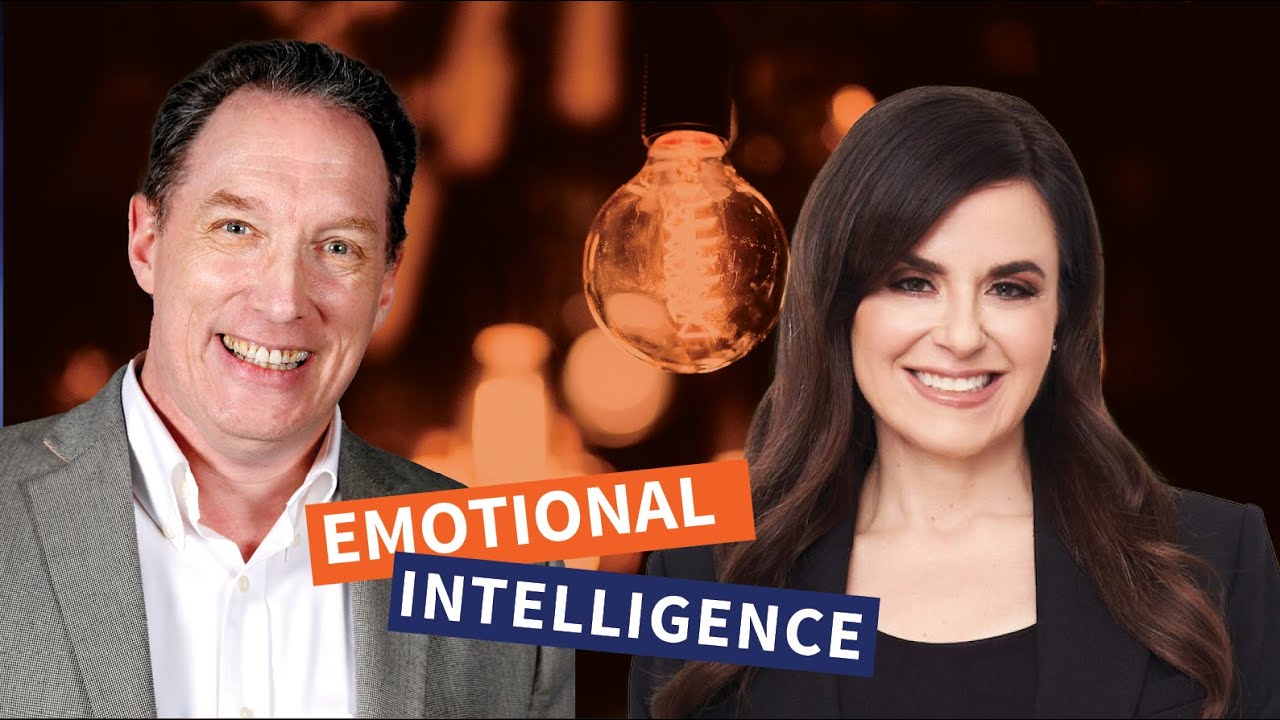
In this Marc Haine Live interview, host Marc Haine welcomes emotional‑intelligence (EI) expert, author, and professor Carolyn Stern to explore why EI is the often‑overlooked barrier to high‑performing leadership. The conversation begins with a framing of the problem: leaders frequently miss the human‑connection piece that drives team cohesion and business results. Stern defines EI as a science‑based skill set—recognizing, labeling, expressing, and regulating emotions—countering the myth that it is a vague “soft” skill. They discuss how the COVID‑19 pandemic and generational turnover have amplified the need for EI, noting that younger workers face unique stressors. Using an iceberg metaphor, they explain how hidden emotional drivers and attribution bias cause miscommunication. Stern outlines the 15 EI competencies, each with a potential “dark side,” and illustrates this with self‑regard. The core of the interview is Stern’s 6‑step self‑coaching model from her book The Emotionally Strong Leader: (1) self‑assessment of the 15 skills, (2) external feedback, (3) focus clarification, (4) exploring possibilities, (5) action‑plan with relapse‑prevention, and (6) accountability support. Practical tools such as non‑violent communication, body‑language awareness, and creating psychological safety are discussed, along with the link between EI and emotional well‑being (self‑regard, self‑actualization, relationships, optimism). Stern warns against quick‑fix solutions and stresses the need for personalized assessment. The interview closes with concrete outcomes of high EI—greater self‑awareness, empathy, healthier relationships, better decision‑making, and a safe, innovative culture—plus contact information for her training programs.
Chapters
In today's fast-paced business world, there's an underlying issue that often goes unnoticed. Yet, its impact is profound. Leaders everywhere are missing a critical piece of the puzzle, leaving teams feeling disconnected and businesses struggling to reach their true potential. And that's what we're talking about today on Marc Haine Live. Welcome to this episode. This is where small business owners and entrepreneurs develop new skills to really help them create the jaw-dropping, show-stopping experience that their customers and their employees deserve. I am your host, Customer and Employee Experience Strategist Marc Haine. Thank you so much for joining me today. I really appreciate it when you take that one commodity that you have the new currency, your time, and invest it with me. My guest for this episode is award-winning author, emotional intelligence expert, professional speaker, and university professor Carolyn Stern. Today, we will delve deep into a subject that is really overlooked, misunderstood, and even brushed under the carpet when it comes to the business landscape. And that is—
People.
Emotional intelligence. We're on a mission today to unravel why business leaders should not be afraid of being their authentic self. That's a hard word to say, authentic self. My one ask is that if you do know somebody who could use this information, could you please share the link to this episode? And while you're at it, make sure that you subscribe to this podcast. You're leading meetings. You're hitting targets. But something is missing. Your team's performance is good. But it's not great. You sense a lack of connection, a gap that the numbers and strategies alone cannot fill. You might not realize it yet. But you could be part of a widespread issue in the business world today. So that brings us to our Question of the Day. So, when was the last time you felt truly in sync with your team? And I don't mean the surface, oh yeah, we're all on the same page. Everyone knows what's expected and what we need. We're all in sync. Don't worry. No, I don't mean that. I mean truly feeling the human connection with each member of your team and they with you. How did it impact your results? I'd love for you to be part of this conversation. Please go ahead and share this episode on your favorite social media platform. Hashtag it #ExperienceLeadership. Your answer could be the key that unlocks a new level of leadership awareness, And leadership success. As I mentioned, my guest today is a fourth— a force to be reckoned with. Rented lips. She's a force to be reckoned with in the realm of leadership and emotional intelligence. Carolyn Stern is not just an expert. She is a trailblazer in leadership development. An award-winning author, acclaimed speaker, and esteemed university professor, she has transformed how leaders really globally think about and harness their emotions. With accolades from her groundbreaking book, The Emotional Strong Leader, and appearances on platforms like The Social and CTV Your Morning, Carolyn is leading the charge in redefining strength in leadership. Carolyn, welcome to the show! It is so great to have you.
Thank you so much for having me. I'm excited to be here.
Before we get too deep into today's topic, could you just tell us a little bit about how you serve your clients?
So, I'm an emotional intelligence trainer, speaker, and author. The reason I wrote the book is I was sick and tired of hearing leaders like you telling me that showing emotion was a sign of weakness and should cause shame. And what I ended up doing was building a curriculum. So, I teach. I do a lot of emotional intelligence training programs. I just today, this morning was in a keynote. We do a lot of retreats, workshops, assessments. But we really get people to understand what their emotional makeup is and how that's helping and hurting their leadership.
I love it. I guess one of the things we should maybe start off by doing is could we define what emotional intelligence is and what it is not?
Well, it's not a mushy skill. You know how everyone says it's a soft skill? There's nothing soft about it. There's a lot of science behind it. Really, what you're trying to do is get— it's really being intelligent about your emotions. So, knowing what you're thinking and figuring out, recognizing what you're feeling, understanding where that feeling's coming from, labeling that feeling appropriately. Are you angry or are you frustrated? And expressing it constructively. So, if I'm angry, do I have to swear and yell at you or can I just tell you that I'm angry?
Hmm.
And regulating it appropriately. I mean, that's really what EI is. So, it's really understanding that we feel things, all of us. We're human and we all have feelings, right or wrong, good or bad. They're not factual always. They're incredibly painful. They're incredibly personal. But they're not always factual. And paying attention on purpose to how we're feeling so that we can figure out what to do with that information. And the problem is people are so afraid of their emotions.
Yes. And I think being the last of the baby boomers, I can absolutely attest to the fact that a lot of leaders did not have the grounding or the humility to be able to outline how they were feeling. They figured, because I'm the boss, I just have to be the staunch leader and I will tell people how to behave and I will tell them what I want.
Yes. And the problem is we are human before we're a leader or an employee. And because we're human, we have feelings. And there is no on and off switch as soon as you get to the work. They're there with us all the time. And they're Yeah. And the problem is none of us, including me, had an emotional education, right? We've all been— because we are so afraid of emotions, we're told, as you said at the beginning, to push them under the rug and carry on as if they don't exist. But what we need to realize is because we're afraid of showing emotions and we're scared to show them at work, we don't know how to deal with them. So, we make assumptions about how people are feeling rather than being brave and actually having the conversation and say, hey Marc, I see you stomping down the hallway. The story I'm telling myself is you're angry. Is that correct? No, we don't have those conversations. What we do is we just assume something. I whisper to Sally, hey, stay away from Marc because he's pissed off right now.
Yeah.
But in actuality, if I was brave enough to say, hey, are you angry? And you might say, no, I'm not angry at all. I'm just frustrated. The challenge is This is how mishaps, miscommunications, and misunderstandings happen in the workplace because what psychologists call attribution bias. I'm attributing an emotion to your behavior. But I'm not actually being brave enough to ask you, hey, is this how you're feeling? And that's how we make too many assumptions in the workplace. And that's how come we have so many misunderstandings in the workplace.
So, how would you define the lack of emotional intelligence in today's business leadership landscape?
In what way?
Well, because we had prior to COVID, it seemed like COVID was like a tipping point for many different things. And so now, the baby boomers are starting to retire. The millennials are in those leadership roles now. We're taking the next generations are stepping in. Is emotional intelligence now in the corporate landscape? Is this something that People are being aware that it needs to come to the surface?
Oh yes. So, ever since the pandemic, I mean, emotional intelligence has been around since the early 1990s. But it's been resurrected. I think what's happened is when the pandemic hit, we were all emotional and we could no longer stuff them, stuff our emotions under the rug. We were scared about our safety. We were scared about losing our jobs. We were scared about a lot. And so, organizations now, like I've had my business for 17 years as I told you. And from the beginning, when I first started, I had to convince people what emotional intelligence was and why they should do emotional intelligence training and invest in it. And now, the phones are ringing off the hook of incredibly high-profile companies. Why? Because they realize that their leaders don't have the skills on how to tend to their emotions, let alone other people's emotions. So absolutely, I think it's more prevalent now than ever. We also, you talk about different generations.
Yeah.
Did you know that the younger generations, the Gen Zs or Zeds depending on if you're American or Canadian, they are worse at problem solving, worse at stress management, and worse at independence than any generation before them? Why? Because they grew up with phones and helicopter parents. And so, think back, Marc, when you and I were in school. All the world's information was in 12 encyclopedias.
Uh-huh.
You remember in the good old days when all you had to do is go to the library and look for all the information under those 12 encyclopedias? Well, now the world information is at everyone's fingertips. And so, we have to realize that this generation, this upcoming generation didn't grow up the same way we did. And if we as leaders are looking at them thinking they see things from our lens, that's a huge mistake. You are not the standard to which everything is judged. We need to remember just because I woke up a certain way today doesn't mean that you woke up a certain way. And unfortunately, with emotional intelligence, a lot of that's underneath the surface. What you see is my communications. What you see is my actions. But what you don't see is all the things contributing to my communications and actions. My fears, my motivators, my stressors, my concerns, my assumptions, my aspirations, my biases. All of those things Color how I act and talk.
Hmm.
And unless you're having those deeper, as I call them in the book, inner iceberg conversations, then you're missing the boat. It's like what killed the Titanic was not the little piece of ice above the waterline. What killed that unsinkable ship was the huge piece of ice below the waterline. Well, guess what? People are a lot like that. What you see is just the tip of the iceberg. You don't see all of the stuff underneath the iceberg. And until we start having those deeper conversations at work, We're completely missing the boat.
So, what behaviors or patterns do you typically think, or do you think signify that a leader lacks emotional intelligence? Is it only that they're not vocalizing their moods? Or is there something deeper?
No. So, emotional intelligence can be broken down into 15 different skills. And in the book, The Emotionally Strong Leader, I talk about Yeah. Maybe you're really good at something and/or maybe you're really weak at something. And sometimes, what you think you're really good at might actually be— your strength might end up being a liability. I'll give you an example. Let's take self-regard. Self-regard is one of the 15 emotional intelligence competencies. On a scale of 1 to 10, Marc, I'm going to put you on the spot. How confident and self-assured are you?
Probably about a 6.25.
Okay. How come you didn't give yourself a 7? But also, how come you didn't give yourself a 5?
Well, I know that I have imposter syndrome in some aspects. As good as I know that I am in certain things, I also am very much aware of my weaknesses.
Do you know anyone that has so much confidence that they become overly confident. That's the dark side of self-regard. Like, do you know anyone I can think of even in politics perhaps?
Totally.
Right? That they're overly confident. They might have an inability to admit mistakes. They might be a borderline narcissist. That's the dark side of self-regard. Well, guess what? Each one of these 15 different skills that I talk about in the book have a dark side. So for me, I'm like you. I struggle with self-regard. I have low self-confidence. And people are always surprised by that because if they saw me, they see me on stage. I'm always sort of— I'm leading teams. I'm leading— I'm the thought leader in this, expert in this field. But that doesn't mean I don't have insecurities.
Mm-hmm.
The interesting thing about insecurities is it's invisible. So, unless I show you that I'm insecure with my actions or my communications, you wouldn't know. So, maybe some of your listeners today might be like, oh wow! He's got imposter syndrome. I never knew that about Marc. But that's the whole point. Why are we showing— why can't we just be honest and say, hey, I have low self-regard. But I'm also— and this is what I wrote in the book is you can be emotional and strong. They're not mutually exclusive. I think the best example of this that I have to tell people because my whole life, I was told I was too emotional. Well, guess what? I'm making a living out of it now. And emotional, all that means is I feel things deeply. So absolutely, I cry at any Hallmark movie. But I also am a badass business person. And when I have to, I can be strong. So, you can be emotional and strong. They're not mutually exclusive. And the best story I can use to describe this is, and you can imagine this because you're also a keynote speaker. 10 minutes before I was about to go on stage in front of over 100 people, I got a call from my mother that my father died.
Hmm.
And I was the keynote. And I had to put on the show. And I want people to realize that I did the keynote. It was, I think, 60 or 90 minutes long. I can't remember. But after the keynote, at the very end, I dedicated my talk to my dad. And the whole audience was in awe because they had no idea what was going on for me internally as I was sharing externally about emotional intelligence. Well, 20 years ago, Marc, I could have never done that.
Right.
Emotional intelligence truly saved my life. It's made me be able to have the cognitive skills and mental strategies to be bigger and stronger than my emotions. Now, that doesn't mean I have to strong-arm my feelings or pretend that I don't I don't feel things and have a steely resolve not to feel. All this means is that, as I said earlier, is I recognize that I feel things. So, that day when I found out my father passed, there was a myriad of emotions. I felt grief. I felt sadness. I felt anger. I felt disappointment. I felt regret. I felt a myriad of emotions. And to understand what those feelings, where they're coming from, To label them appropriately. Am I frustrated or am I angry? To express them constructively and to regulate them appropriately. If we can learn to do those simple things, we can learn to be more intelligent than our emotions.
Right. But to your point, the example that you just provided about having to go on stage and do the keynote, does that mean then that we have to be better at compartmentalizing Once, like it's one thing to recognize this is how I'm feeling. But I got a job to do. And so, I'll get the job done and then I'll deal with how I'm feeling about it afterwards. Is that a fair assessment?
No, I think you can feel things. In that example, I had a job to do and I didn't think it was the proper place to share what had just happened with an audience that didn't know me. I didn't want to put them in a bad state. I wanted them to be open to learning. I had a job to do. But there are times at work that you're going to be frustrated, or angry, or sad, or stressed. And it's not about compartmentalizing those feelings. It's about recognizing that you feel things and pressing pause. It's about making sure our prefrontal cortex, the thinking part of our brain, is smarter than that little amygdala that wants to fire off and think we're in danger. So, if in a business case, if you came to me with an unrealistic expectation and I'm really angry and all I want to do in the moment is tell you, screw you. I don't want to do the project. I don't want to make one moment in time define me forever.
Right.
So, there are times that yeah, you might. In that case with the keynote, I did have to park my emotions. I had a job to do. And then afterwards, I grieved. I said what I wanted to for my dad at the time. I acknowledged him and said goodbye to him in front of Those 100 people. But I still had a job to do that I was being paid to do. At work, you might be able to say to your boss, hey, rather than screw you, you might say to him, hey, I can't get Project X done by next week. But if you— or by this week. But if you give me— if you let me do Project Y by next week, then I can probably get it done. Is that fair? Right? Then, you can have a conversation rather than letting your emotions take over. So, you can tell your boss, hey, Hey, I'm frustrated because this deadline doesn't seem realistic given that there's only 24 hours in a day. And how, what priorities do you want me to put in place? What do you want me to let go of so I can make sure this is a priority? So, it's not compartmentalizing always. In this case, for the keynote, yeah, I think I had to compartmentalize because I had a job to do. And that was a lot to process in front of Yeah. You know, 100 people. But it's also about realizing that I can compartmentalize. I am stronger than whatever feeling I'm feeling and I can still do a job. Just like as much as I want to tell my boss to screw off because he gave me an unrealistic deadline, I can be bigger than that temptation and say, wait, let's press pause. Let's figure out, is this the right thing to do? Do we want to tell our boss to screw off or are we going to get written up for insubordination? So, we need to go, Emotion, trigger, understanding, hey, I'm angry because he gave me an unrealistic deadline. What's my response going to be? And what's the impact of that response? If I tell you, screw you, I might lose my job. If I tell you, let's set some boundaries and let me do— let's negotiate about when projects are due, you might not love my answer. But you'll respect me for speaking up and setting a boundary.
Yeah, it's interesting. Just the other day, I was talking with somebody who who was having problems with their employee. And she was saying how hard it was to always deal. She, number one, defined her as a Type A personality and really hard to get along with. And every time she had to deal with this employee, she would like, she would have to psych herself up to go face to face with the employee. I'm challenged because the emotional intelligence component is Is this a two-sided coin that you also have to understand the angst and the capacity of the people we're dealing with as much as our own thing? Because obviously, she had fear as a leader. She was exhibiting that when we talked about it. She goes, yeah, I'm a little bit scared of dealing with this person because it always comes out to this big blowout. How much does she have to be aware of what that other person is feeling?
Well, it's interesting. I just had a lot of people in the audience today when I spoke this morning asking me that question. What happens when you're emotionally intelligent but the other person you're dealing with isn't? All your control is your side of the street.
Yes.
So absolutely, you need to be aware of how that other person may or may not react. But one of the questions I would suggest to your client might be, okay, if you're scared, of speaking up because you're worried it's going to blow up into something, what you might want to ask your colleague or your boss is to say, hey, if I want to throw out another idea, or if I want to challenge some of your ideas, how can I do that in a respectful way without it blowing up into being a disagreement?
Mm-hmm.
And then, shut up and listen to what they have to say. They might say, Oh, I just want you to tell me what you really think.
Yeah.
Or they might say, okay, no, I actually— if you're gonna challenge me, I'm pretty sensitive about my ideas. I want you to do such and such and such stuff. But they'll give you a roadmap on how to do it. I think it's really important to realize that emotional intelligence is 2 ways. It's one, we got to be aware of ourselves and how we're feeling. But yeah, we have to pick up on the nuances in the room. I'm sure you've walked into a meeting and you felt the tension. When you got into the room and you had no idea what had just happened. Well, that's empathy. That's you picking up on the nuances and the emotions of the people in the room. Yeah, you need to be aware of that. But the problem is we're not asking people these questions. We're not asking people, hey, how would you like to receive feedback? Hey, what motivates you? What stresses you out? What are you afraid of? What are your assumptions? We're not asking that. We're just making all of these assumptions. And if we could get to the heart of the issues, Which are all that EQ stuff underneath the surface, we would have much better communication. People always ask me all of these questions. What should I do? How do I tell my boss this? Or how do I tell my partner that? Just speak your truth respectfully and professionally knowing that tone of voice is 38% of what people hear.
Yeah.
Body language is 55%. So, if I want to have a disagreement with my partner, maybe the last thing I need to do is not sit across the table from him. Maybe the best thing I need to do is sit beside him on the couch or go for a walk holding hand in hand. Body language says a lot. So, can we figure out what we want to say? Figure out, as you said with your client, they were fearful of the aftermath. Well, I would ask them deeper questions like, what are you afraid of? What are you afraid that you won't be able to handle the conflict? Are you afraid that they won't like you? Like, what is it that you are afraid of? Are you afraid you're going to lose your job? Because the fear is the answer. The fear is the reason why they're not doing it. That's the real issue. And if you can get to the real issue, then you can solve the right problem.
Right, right. Yeah, it makes perfect sense. The mental wellness and mental health within organizations now, That is a constant conversation. How much is employee mental well-being tied to a leader's level of emotional intelligence?
The byproduct of emotional intelligence is emotional well-being. And what emotional well-being is, is happiness, being satisfied, enjoying your very many aspects of your life. And it really is associated with 4 different emotional intelligence skills, which is self-regard, which we talked about already, an area that we both need to work on.
Yeah.
Self-actualization, which is all about living a life of meaning and purpose and wanting to be the best us that we can be. In that case, I rank really high on that. I'm on the dark side. I'm never satisfied. I just wrote an award-winning book and rather than celebrating, I'm on to the next book, right? So, any of your listeners perfectionists like me, right? Bigger, better, more, always wanting to go. So, that's one that affects our happiness. Interpersonal relationships, how well you Connect and relate to others? Can you build mutually satisfying relationships? And optimism. What kind of a positive attitude do you have about life? All of those things relate to our emotional well-being. And unless we— I call them like emotional muscles, Marc. We have 15 different emotional intelligence muscles underneath. And supposedly, if I did more ab crunches, I'd have a 6-pack that came out. That I have yet to see that. But it's the same thing with emotional muscles. If I work my muscle more, if I work that and I do the exercises, if I struggle with independence, I worry about what people think of me, which is hard as a public figure. I have to care less about what people think. If I get a thumbs down on one of my videos, I have to be okay with that.
Mm-hmm.
And that's tough. It's easy to say, not easy to do. And so, in order to build that muscle, I have to do the work. And the work is hard. Just like crunches are hard at the gym, building independence is hard in life. And so, these 15 different skills that we teach. And by the way, emotional intelligence can be enhanced. It isn't like IQ that peaks at 17 or 18. It can grow. And one study shows it says, it peaks in our 60s. So, we both have hope. And it rises as you get older. But it changes throughout time. Every year, it's different, right? Like, how are you faring this year might be different than how you're faring last year.
Yeah. And again, coming out of COVID we all felt how radically different we could be feeling at any particular moment.
Yes. And we went through a roller coaster ride.
We sure did.
I want you to think of how you felt March 2020. And how you feel now. We've gone through a lot. But are you even paying attention to how you're feeling? Or are you or your listeners just going on to the next Zoom meeting, or the next Teams meeting, or the next board meeting? Are we even checking in with how we're feeling? Because how you feel at work and about your work affects how you perform at work.
Hmm.
And if people started paying attention to how they feel, I mean, if we're measuring performance at work, this is your expertise here. If we're measuring performance, then we got to get in touch with the heart of the issue, which is emotions.
Right, yeah. I would love to get into some steps of how we can grow our emotional intelligence. As you mentioned, it's something that can be developed. I'd like to get to that and we'll get to that right after this. When the spotlight shines on your business, are customers applauding or yawning? In other words, how is your business Make your business a star with a new book, Lights! Camera! Action!, Business Operational Excellence Through the Lens of Live Theater by Marc Haine. Marc uses his business and acting experience to help you see your business like a live show so you can create a performance your customers will never forget. Buy Lights!
Camera! Action!
today at your favorite online retailer or directly at marchaine.com. Welcome back! I am speaking with the author of The Emotionally Strong Leader: An Inside-Out Journey, to Transformational Leadership with author Carolyn Stern. Carolyn, why don't you tell us a little? You've hinted to a bunch of things about your book. Why don't you give us a quick little synopsis of what people can expect when they get your book?
Well, the first thing that they can expect is I'm going to hopefully convince them that emotions are not the enemy. Feelings are not facts. Feelings are not good or bad, right or wrong. They're just an emotional reaction to a person, thing, or situation. That's that. And we need to become bigger and stronger than our feelings. We need to stop being so afraid of them and push them under the rug. We need to believe that they give us information rather than— and look for that information. How am I feeling? What is that feeling telling me about me? And the second part of the book is really, it's a self-coaching model. Once you figure out— I'm hoping people will realize that emotions, we don't need to Be afraid of them anymore. We need to make friends with our feelings. But once they do that, then I want them to figure out what their emotional makeup is and how it helps and hurts their leadership. And so, I take them through a 6-step process. And the first step is connect with yourself and figure out on those 15 different emotional intelligence skills, where are you strong? Where are you weak? Where are you in the middle? And where are you on the dark side like that we talked about? And so, we measure them. But here, that's only the first step. The second step is you got to ask people, do you see me the way I see myself? Marc, I bet you, we just met. I'm guessing that neither of us would have thought either of us had low self-regard because on the outside, we might appear confident. But we don't necessarily see it on the inside. And so, what's really going on in the inside? So, you've got to ask 5 people. In the book, I say consult with others. Step 3 is once you've taken your self-perception and how other people see you, you got to figure out what am I going to focus on. Clarify your focus. What is the thing that's getting in your way of being your best self? And then from there, you go into possibilities. What are the possibilities to get you stronger and bigger and build that emotional intelligence muscle? And in the book, I give you 60 strategies depending on which skill you're struggling with. Whether it's impulse control, or empathy, or flexibility, or decision-making. There's also many different emotional intelligence skills and composite skills that I get you to work on to figure out what you're struggling with. And then, what's getting in your way? Why haven't you already done it? And then, step 5 is really about plan an action plan and knowing that today, you're probably going to relapse, right? So, what are you going to do when you go back to old patterns of behavior? And step 6 is really close the conversation with yourself, which is really about figuring out How you're going to get support. Who's going to be your accountability partner to keep you honest because this work is tough. And so, that's the 6-step program I take people through that has, from what I've heard from my readers and followers, is that really has helped them both personally and professionally.
Love it! And as you were saying it, it made so much sense kind of how you've itemized those 6 steps. It's made So much sense. And part of, I think, the magic bullet is, as you were saying it, is the word humility came out. It came to mind that we have to have some level of humility and know that we don't have all the answers.
No, it's hard to take a good honest look in the mirror and say, what am I good at? What am I not good at? And if they're prepared to do the hard work, and it's not easy to take that look and say, hey, I'm not— the best thing I ever did as a leader is realize that I had low independence. And I had too much flexibility. Because how does that get in my way as a leader? I over-accommodate way too much, wanting to keep my employees happy. And sometimes, I need to be more stringent and care a little less about what they think. That's the work that I need to do. But you yourself and all your listeners have their own work. I have yet to meet— I have trained 35,000 leaders in the last 5 years. There is no— I have yet to meet one leader that has it all figured out.
Hmm.
And so, the issue is figuring out that balance. People always want to know. When the book came out, I got a lot of media coverage and they all wanted to know, what's the quick fix to become emotionally intelligent? It depends. It depends on what your starting point is. If you have low empathy, you need to care a little bit more. If you have too much empathy, you need to care a little bit less. You need to set better boundaries. So, depending on where you're starting, Is the first step. The second step is, why do I do what I do? Why am I the way I am? The reason I realized that I had low independence is, bless her heart, I had a very overbearing mother. I still do. She now lives with me. I could write a book about that. But as a classic helicopter parent, she meant well. But she tried to give me the world to protect me from everything, like most helicopter parents. But what that did is I didn't learn how to stand on my own 2 feet. Well, now I'm a grown-ass adult. Now that I know that, I can do something about that. I can then say, hey, I struggle with independence. So, as much as I want to ask you a validating question, Marc, like, oh, did you like this? Was this a good podcast? No, I need to just stop myself and trust that it is what it is. Whether you liked it or not, I did my best and move on. And that's really hard for someone who struggles with what people think. And so, it's really taking a good honest look in the mirror, having compassion, not judgment. We are who we are for our lived experience has made us who we are. And start to understand why you are the way you are. Because once you can understand your why, then you can do something about it.
I love that. For the people who this message is really resonating with, how can people get in touch with you if they want to connect with you? And learn more about what you're doing?
So, you can go on to carolynstern.com and find out all about me. But if you want to find out about our emotional intelligence training arm, which is eiexperience.com. So, carolynstern.com if you want to talk to me. If you want to talk about emotional intelligence training, or assessments, or retreats, or online programs, you can go on to eiexperience.com.
And we'll make sure that the links are in the show notes. We've talked a lot about the challenges with emotional intelligence, not having it, the symptoms, the consequences, and so on. The end result, what does leading with emotional intelligence actually look like to somebody who's stepping into, let's say, a photograph of what emotional intelligence would look like in their corporate culture, within their team dynamics, What does that look like?
It looks like you have better self-awareness. It looks like you have better control of your actions. It looks like you have more empathy for others. It looks like you have healthier relationships. It looks like you don't let your emotions cloud your objectivity. It looks like you know how to speak up and talk about not only your thoughts but also how you feel about things. It looks like having that confidence that you and I are trying to build. It looks like being fulfilled in your life. It looks like so many things. It looks like when you make a mistake as a leader, admit it. Have, as you said, humility and admit when you've made a mistake. It's speaking up in meetings. It's bravely leading your teams. It's being vulnerable. It's doing the research and gathering all the facts and figuring out the pros and cons and then making a decision rather than letting your emotions cloud it. It's so many things. But it's necessary in the workplace because who you are is how you lead. And it's so important for people to understand who they are. And that's why the book is called An Inside-Out Journey to Transformational Leadership because I wanted people to realize they gotta look inward first before they lead others. They have to figure out how they're showing up and how that's impacting others because we all leave a wake just like a boat leaves a wake. We all leave a ripple effect. And how So, we hope that our ripple effect is for good, positive. But it might be unintentionally leaving a negative ripple effect.
As you were saying all these different snapshots, I get a sense that employees coming into this kind of environment where emotional intelligence is really strong, where leaders have a very high quotient of emotional intelligence, where team members themselves are endorsed and supported to have high emotional intelligence, that this would feel like a very safe work environment.
Absolutely! Psychological safety. You know, Amy Edmondson, who coined the term, she's on the COVID of my book. She said, crucial and timely. Stern's guide to an inside-out journey presents a vital roadmap for today's leaders. I mean, we absolutely need to create a safe environment where people do not feel judged. To share their opinions and their ideas because you might have the next big idea. And if you're too afraid, like let's be honest. Creativity takes vulnerability. Putting your ideas out there for the world to judge is scary. Writing a book when I care so much about what the world thinks was hard. But guess what? I can be brave and afraid at the same time. And that's what I want.
You mentioned people coming to you and wanting kind of like the quick For the people who love band-aid solutions, what are some cautionaries we should be looking at when we want to start evaluating our own emotional intelligence and when we want to start kind of pushing the boundaries to get better at it? What are some cautionaries we should be aware of?
Well, I think the problem is reading a book and like Googling what's the top ways to improve your emotional intelligence. Well, the problem is it depends on where you're starting from. So for instance, I'm going to ask you again. I'm going to put you on the spot again. Independence, which is feeling self-directed, which is not caring about what people think. I struggle with that. Where are you on that? Do you feel like you're very self-directed? Or do you feel like you care too much about what people think? Or are you on the dark side, which is you never ask for help and people in relationship never feel wanted, needed, or trusted? Are you on the dark side?
I'm on the dark side. Yep. And I know, but I, I still know that I have lots of weaknesses. But one of the biggest challenges I think I've had is asking for help.
Right. So, you and I are on completely different ends. So, if you never ask for help and I ask for help too much, I'm not going to give us both the same strategy. I'm gonna say, Carolyn, stand on your own 2 feet. Trust your judgment. Don't ask for validation and do it yourself. You, I'm gonna say, start asking for help even if you don't need it because people in relationship with you might not see you as a team player. They might not feel wanted, needed, or trusted. Those are 2 completely different strategies. So, the worst thing people can do is just read a quick listicle online and say, okay, I've got the answers. Because what is your starting point? So, that is why in the book, the very first step is connect with yourself. Take a good hard look in the mirror. Look at the good, the bad, and the ugly. And figure out where are you at. And then also, where do you want to be? Maybe—
Yeah.
I'm happy being needy. Hey, the positives of being needy is I get a lot of help. I'm the damsel in distress. People help me a lot. I delegate. So, that gets a lot of work done. The negative side of that is people don't trust my judgment. They don't think I'm capable. I don't make decisions easily on my own. I question myself. I don't take risks. So, it's about finding a sweet spot. And the challenge is we've got to figure out when we've swung too far or not far enough. So, that's the first area. The second thing that I would say is it depends on the other person. So, as you said earlier, your client wanting to talk to you, to that other woman, to the other person.
Yeah.
But she's afraid of the blow-up. Well, what's going on for that other person? Like, do you think right now, Marc, of someone at work that really drives you crazy? And let's say you think they're bossy, arrogant, And pushy. Do you think they're sitting in the mirror in the morning and going, wow, I'm bossy. I'm pushy. I'm arrogant? No, they're saying, I'm confident. I'm driven. I say what I want. They don't see themselves how you see them.
But their bubble could be compensating for something. And until we have really honest discussions, we're not going to be able to uncover that.
That's right. And so, it's really about saying, hey, when you did blank, I felt blank.
Mm-hmm.
And what I'd like you to do in the future is blank. And how it's going to benefit us is blank. If we can start doing that adaptation of the nonviolent communication model, we, you and I, can have more honest, respectful communications where I get to set boundaries. I let you know what is okay and what's not okay. But unless, again, we do have those deeper conversations, I'm just seeing externally what's going on rather than finding out what's really going on internally.
Yeah, absolutely. It's interesting as you're saying that. One of the things I was telling people, especially with interpersonal conflicts as a leader, I've had to put out many fires of people kind of butting heads together. And one of the things I realized is a lot of these conflicts happen because people's feelings get hurt. And somewhere after being 10 years old, where mom said, you go and tell Steve that he hurt your feelings. Sometime after that, We got the snot beat out of us for saying that. And then, we never said it ever again. And yet, we see so many of these conflicts happen because people feel disrespected. They feel that they don't get their own due or whatever. But ultimately, it boils down to their feelings got hurt.
That's right. And so, whenever I have 2 students that come to me or 2 clients that come to me because I work with a lot of people that are not getting along, That's the first thing I start with. Okay, what happened for you? What's your perspective of the situation? How did it make you feel? And what happened for you, Person X? And how did it make you feel? Let's get it out in the open, right? But we've got to get over this, oh, I've got to— you know, you said earlier in the beginning, you're like, you have to be stoic, unflappable, never let them see you sweat mentality. That's so outdated. We need to turn leadership on its head. We need to start realizing that you've got to lead from the inside out. And that means from a strong mind and a kind heart.
Yep, absolutely. Yeah, we're born of the same bread and butter on that one, my friend.
There you go. There you go.
This has been such an amazing discussion, Carolyn. Do you have any last thoughts about what we've been talking about today?
I just, I mean, I hope I leave people realizing that Stop thinking that emotions are the enemy. We need to stop being afraid of feelings. If I could tell any of your listeners one thing is that stop being so afraid of your emotions or those of others, right? We are filled with feelings. We've got to start tending to what our feelings are telling us. And we got to look for the information they provide us because they give us incredible insights into our internal psyche and the external world around us.
I love it. Could you remind everybody one more time how they can get a hold of you?
They can reach me at carolynstern.com. Or if they're interested in emotional intelligence training, or online training, workshops, retreats, they can get us at eiexperience.com.
Thank you so much. It has been so great having you on the show, Carolyn. Thank you so much for gracing us with your passion and your knowledge and your expertise.
I hope that emotional intelligence in this conversation helps somebody because I know it's been my lifeline. It's changed how I show up to work. It's changed my relationships. It's changed everything. So, it has truly been my lifeline. And I hope that people realize that EI is the answer to every personal and interpersonal problem out there. So, thank you very much.
Thank you so much. Thank you very much. Why don't you let me know if this was of value to you? As always, my offer stands. If you would like 30 minutes of my time to brainstorm your business with you and your team, feel free to book time on my online calendar. The link is in the show notes. It's the one marked meetwith.marchaine.com. Pretty convenient, isn't it? It would be my absolute honor to be of service to you. And why don't you leave a comment or review about this episode? I'd love to get your feedback. Was this of value to you? And while you're at it, why don't you go ahead and make sure you subscribe so that if you're doing this on YouTube, make sure you also ring that bell. That way, you get notification whenever I come out with brand new content each and every week. It has been so great to hang out with you today. My name is Marc Haine. I hope you stay safe, stay healthy, and I hope you dare to be the exception.









