The Wealth Strategy Small Business Owners Are Missing
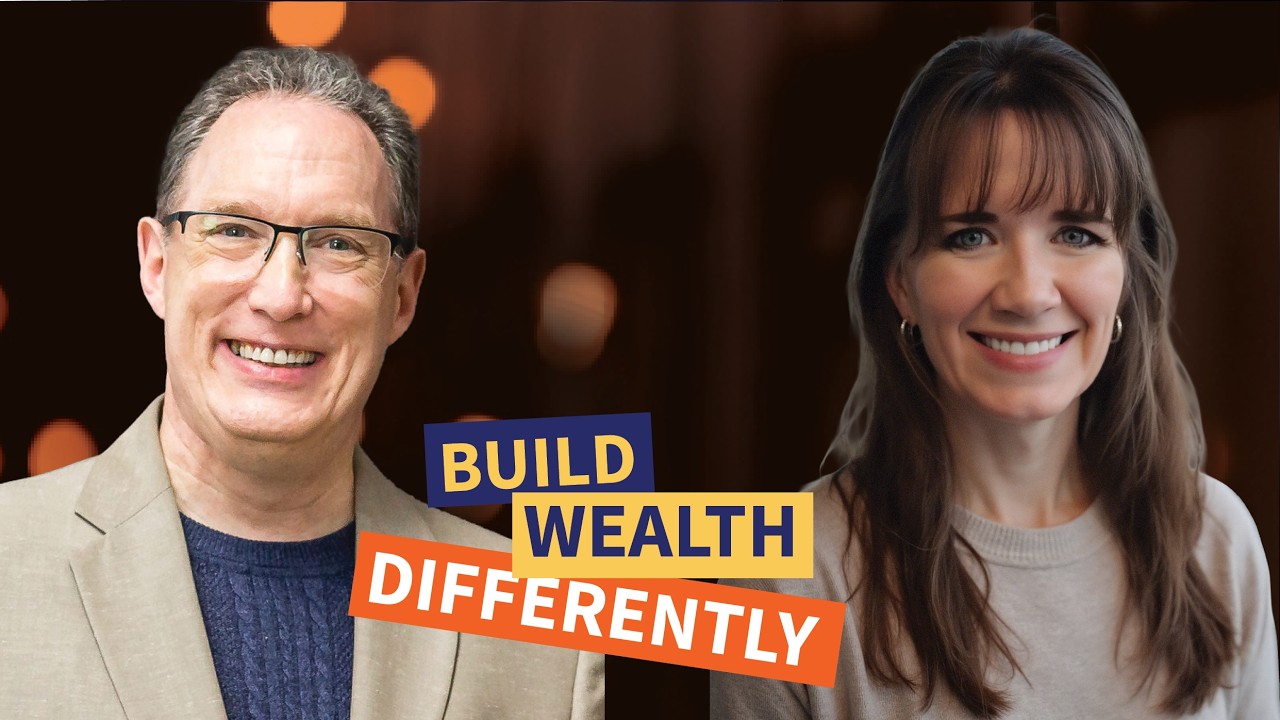
Rebecca Irey, a financial fiduciary, explains why business revenue doesn't equal personal wealth. Many entrepreneurs reinvest every dollar and lack tax or retirement strategies. She outlines tools like self-directed 401(k)s and SEP IRAs to build real financial independence from your business.
Chapters
A lot of small business owners are chasing freedom by doing the one thing that keeps them— that keeps stealing it away from them. And that is they keep working harder. They grow their business. They increase revenue. They add clients, staff, products, services, headaches, software subscription, and possibly those 3 new passwords that they're never ever going to remember. And from the outside, it looks like success. But behind the curtain, the owner is still carrying the risk, still feeding every dollar back into the business, and still relying on the next sale, and still hoping that one day, the company will magically turn into personal wealth. And there's the trap. And that's what we're talking about today on Marc Haine Live. Welcome to this episode of Marc Haine Live. Of course, this is where small business owners and entrepreneurs develop new skills to help them create the jaw-dropping, show-stopping experience that their customers and their employees deserve. I am your host, Customer and Employee Experience Strategist Marc Haine. And I'm really thrilled that you're with me today because my guest is Rebecca Irey, founder of Blue Sky Financial.
Hi Marc!
And today, we are talking about why business revenue is not the same as personal wealth and how entrepreneurs can start turning business success into long-term financial independence. So, stick with us. My one ask is if you know somebody could use this information, please make sure you share a link to this episode. Let them know that you've tuned in and you learned something and that it was valuable. And hey, if you haven't done so yet, please make sure that you're subscribed to the podcast. That way, you'll get notifications when I bring you fresh new experts each and every week. On Marc Haine Live. You know, small business owners are often taught to chase revenue like it's the finish line. More sales, more clients, more growth, more hustle, more caffeine, more spreadsheets with names like Final Final Updated Really No This Time It Is The Final. And to be fair, revenue matters. You can't build much of anything without money coming in. But here's where a lot of business owners get caught. They assume that because the business is making money, They are building wealth. Those are not the same thing. A business can be busy, profitable, admired, still leave the owner financially exposed, especially if every dollar goes back into the company. Especially if there's no tax strategy. And especially if the owner is the spark plug, the steering wheel, and the emergency roadside assistance. And that becomes a very big expensive problem. And that brings us to Our Question of the Day. So, if your business stopped needing you every single day, would your personal financial life still work? Or have you accidentally built a company that depends on your constant hustle in order to survive? I'd love to know what your experience is. Why don't you go ahead and share a link to this episode on your favorite social media platform. #ExperienceLeadership. Put your comments down and let's make you part of the conversation. Go ahead and do that. As I mentioned, my guest today is Rebecca Irey, founder of Blue Sky Financial and a financial advisor who's not only here because she wants to hand you the beige brochure, pat you gently on the wallet, and tell you everything will be fine. That's not her shtick. Rebecca has been working in financial services since 1991 as a Certified Financial Fiduciary. She helps families, entrepreneurs, and especially women rethink traditional financial advice and build strategies designed for real life. And Rebecca's perspective is not theoretical. Rebecca herself had challenges and personal challenges that really put her at risk. So, she's not preaching from the pulpit because it's all theoretical but because she's actually lived it. Her experiences has pushed her to understand the financial system from the inside out. tax strategy, retirement planning, risk protection, and the structures that create true independence. Rebecca, welcome to the show. I'm so glad we could make time.
Thanks for having me, Marc. I'm glad to be here.
So Rebecca, can you dig into a little bit deeper about who your customers are and how you serve them?
Sure. So, I'm a woman and a Texan. So, I have strong opinions about every dang thing. One of those things is taxation in retirement. So, my primary goal is helping families, specifically women typically, to retire with as little tax liability as possible, but really with a strong foundation of income. I think women, by nature, we serve other people. And that means we take care of our kids, we take care of our husbands, we take care of our aging parents. And typically, that means we neglect saving for ourselves. The way we need to. And the fact is we live longer, we save less, and we make less. And we don't necessarily need to talk about the politics of why that is, but it is true. We make less, we save less, and we live longer. So working with women to handle their financial empowerment is a big deal. It's a really big deal because when it comes to retirement, we need to be safe.
Yeah.
More than our male counterparts who will say everything's going to be okay. Women are, no, I need to know. I need to know that I know that I'm going to be good in retirement. And that's what BlueSky does.
I love that. So Rebecca, why don't we start with the big myth? Why do so many entrepreneurs believe that more revenue automatically means that they're on the path to financial freedom?
Entrepreneurs, part of the thing that makes entrepreneurs especially a risk for retirement is that we look at the top line. We don't always know our metrics. One of the things that I say about entrepreneurs and revenue is that it's much like a fat girl on the scale, right? So, I had 7 children. I know about being a fat girl on the scale. After my 4th child, I wouldn't step on the scale anymore. I just wouldn't do it. It was mortifying, right? And my doctor said to me, The number on the scale is not good or bad. It just is the number. And if you don't know the number, you can't do anything about it. Are you going to go have a pint of ice cream now or are you going to go for a walk in the park? It's what you do after this. But if you don't know the number on the scale, you don't know the right thing to do next. And I think entrepreneurs, you know, we're rainmakers. We make money. This is what we do, right? And so that leads to a little bit of overconfidence in that we're going to plow everything back into the business. And as long as our revenue is strong, as long as our top line is strong, everything else, well, it's going to shake out. It's going to trickle down to our net income. Oh, not necessarily true. As a serial entrepreneur who's been, you know, finance has been my main focus, but I've been in the medical space, I've been in the food space, I've been in the entertainment space. That's not necessarily true. In fact, more times than not, it's not true. You can be hustling Always and have a great top line and still be hand-to-mouth at the end as the owner.
Right. So, when you look at small business owners, what's the difference? For the people tuning in, what's the difference between someone who has built a profitable business and someone who has built personal wealth? How do we define the difference?
So, I think that's totally different. Yes. So, your business ideally, if you have a real business and you're not just the chief employee, your business, you should be able to step away from your business. You should be able to take a month off. You should have systems and processes in place, playbooks, so that people can come in and manage your, your, your operation. Now, are you maybe the chief talent and visionary, the chief strategist? Yes. But a business is not reliant on one person. Now, if it's structured correctly, and tax advisory and business building is something that needs to be looked at, It will flow through to your personal wealth. So business owners who are looking at the long game personally, right, having their business flow into personal wealth are going to set up structures, appropriate business structures that flow into self-directed 401s and SEP IRAs. So, and HSAs, these are things that as entrepreneurs we don't necessarily think of because we are always in the mindset of I'm plowing everything back into the business. But the fact is, from a taxation standpoint and a business standpoint, you need to be thinking about those things because eventually, the day comes as it has come for me many times where you either cannot or don't want to hustle quite the way you did when you were 25 if you're not 25 anymore.
Yeah. So, this idea that business is an income engine obviously because I mean, if there's If there's no margin, there's no mission. Not specifically a wealth strategy. Some owners might be, or some business people might be tuning in going, wait, I thought my business was the plan for me to become financially independent and being able to make my own choices. What do you figure? How are they framing this wrong? That's taken them off the proper track.
So, eventually, legacy wealth and succession is a thing that we need to look at, right? Where we're all going to reach a phase where we need to either look at succession or sale because here's what happens, right? Entrepreneurs are either focused on growth, they're stagnant, Or there's only 3 ways to be: stagnant, growing, or shrinking.
Right.
And as an owner, especially an owner who's very involved in the day-to-day operations of your business, this trajectory of growth really only happens as long as we're actively involved in the day-to-day operations. Succession and real generational wealth can only happen if we look at the structure of the business set up appropriate savings so that we have generational wealth, right? And the fact is, and most people don't realize this, but I certainly do now that most of my children are grown, there is no guarantee that your children are going to want to be the successor of your business.
Right.
So, that generational wealth that steps outside the confines of your corporation and says, No, I'm going to pass on generational wealth regardless of the context of the corporation. That takes extra planning.
And it's interesting because when a business owner is so ingrained in their business, let's say for the last 20 or 25 years, and they decide, now I want to sell it, they're shocked when the valuation is a lot lower than they anticipated because they've been involved in every every minutia of the business. Essentially, what they're selling is they're selling a business that's successful on their backs. But without them, it's a brand new business.
That's right.
That's right.
And so, looking at— go ahead. No, no.
I was just going to ask you to just expand on that a little bit.
No, I think as entrepreneurs, and I've been down this road more than once, you pour your heart and your soul, your blood, sweat, and tears into a business. And so therefore, in your mind, it is worth something, this, this. But we forget that when someone from the outside who doesn't have blood, sweat, and tears involved with it, they're going to look at 2 things, the price that you're asking and the earnings of the corporation. And it has to be the earnings of the corporation without you. And so really, entrepreneurship is about working yourself out of a job. Because you only have an actual valuable asset if you are not the linchpin of the organization anymore. If you continue to be the linchpin of the organization, then I hope you have a child that wants to take over. But I think parents out there everywhere, myself included, are realizing that the values that I have, the things that I value, whether it's grandma's china, my business, Or whatever. Kids are like, no, I don't think so. I don't want that. I'm like, how could you not want this? I spent 20 years building this and you don't want that?
Having said that, they also have the experience that they have that you spent 20 years building it, investing every time, every moment, every baseball game, every soccer tournament in store. And it's like, why would I want to work that hard, Dad? I just, I, why would I want that?
It's, it's when they, they know that, right? And they, even my, my youngest, you know, she is, uh, had, had the experience recently of, so she's 15, she was in the emergency room. So she wasn't, it wasn't life-threatening. We don't have any blood or bones. It was just, okay, we needed to take care of some things. So there's a long wait. And what is mom doing? Well, I'm on my laptop. She's like, Mom, we're in the emergency room. I'm like, I know, but you're being taken care of. And I just had to orient my whole day. I have things to reschedule now. She's like, I'm in the emergency. Yes. So they do have that experience. And I think that our children's generate— their mentality about work is different, right?
Yes.
I'm Gen X, right? I, I, the day I got my first job was a red letter day. Yay, I'm a work— I'm a worker. Yay. My kids are like, nah, I don't want my driver's license. I don't actually need a paying job. As long as you're willing to foot the bill, Mom, that's fine with me. Right?
Yeah.
They just look at it. They're great kids, but they look at it differently than we did as Gen X, baby boomer.
And, and what's interesting is a new generation is really There's a lot more entrepreneurship going on in the younger generations now because people have figured out, I don't want to work for somebody else. I want to do something I'm passionate about and build my own thing. And with the internet, it's becoming easier and easier and easier to do stuff like that, right? And so, it's interesting that we have all these entrepreneurs who are getting in later in life who are looking at succession planning or moving things forward and so on. But then, at the same token, we have a generation that doesn't want to buy into the old business models that we've created.
I think what they are realizing is that the financial system that worked for me and that worked for my parents doesn't— it's broken for them.
Yes.
It doesn't work for them. So if they, you know, there is a sense among millennials and Gen Z that we will never be wealthy. This system of just put your head down, work real hard, get a good job, that's not going to work for me. And they just natively know it and they're right. It will not work for them. And that is a very, very true statement. If you look at the cost of things going up, like you could buy a house in 2000 for $165,000 on average across the country.
Right.
Today, it's going to cost you over $500,000 average new home across the United States. Average salary in 2000 was $40,000. Average salary today is $60,000. That math doesn't math for young people.
Right.
Like, the math is not— and, and they, they just know that that's true. And I think our generation needs to come alongside them and say, you know what, you're right. And we do need to look at things like entrepreneurship. And maybe you're not going to be a YouTube star. Maybe you're not going to be the next TikTok sensation. But there are ways that you can control your own financial destiny. And part of that is not just how much money hits my bank account today, but how am I planning for the future, right? That matters.
And it's interesting because a lot of business owners I talk to, a lot of entrepreneurs, especially the Gen Xs and the Baby Boomers who are now looking at retiring and whatnot, they've done everything. Every penny that they brought in that their salary. They reinvested it back into the business. So in their minds, their valuation of their business is, do you know how much money I've put into this? I've generated income. I've continually reinvested it back into this business. And so, this whole idea of reinvest everything back into the business, is this a dangerous kind of mindset without having a larger kind of personal financial strategy?
It leads to overinflation of the value of your business. So most entrepreneurs have no practical concept of what their EBITDA score is, right? Like, what is the actual valuation? So in our minds, we think, because I, I, it was my idea and I, I bet the farm on this. I, I, every penny, every moment.
Okay.
Okay. Guess what that means to the next owner? Nothing. It means nothing to them.
Yeah.
All they care about is price to earnings. So, you know, I always give the example when I'm teaching entrepreneurs of if I started Baskins-Robbins, right? If I'm the ice cream store owner, but I just have my one little franchise and you have come to my ice cream store for decades, you brought your kids, now you're bringing your grandkids and you see a for sale sign, right? And so you ask me, first question, what are you selling your ice cream store for? Well, I'm going to sell it for $4 million because I picked the site, I built it up, all the decor, that's mine, all the flavors are mine, the menus, all of this, I did that. And second question is going to be, what are the earnings? And if I tell you, well, you're pretty much guaranteed $100,000 a year, are you buying my ice cream store?
Right.
No, no, no, no, no, no, no, no, you're not. But that is the situation with an entrepreneur. We value all of that sacrifice, but on the marketplace, it doesn't actually mean anything. We got the benefit of living all those years with a business funding our lifestyle. We've already— it's a hard thing to say to an entrepreneur, and I didn't like hearing it either, but we've already been paid, right?
Yeah.
So as an entrepreneur, The fact that I got to homeschool all of my children, I got to take them on RV trips in the summer. I was still working, but hey, we were living a lifestyle. The business funded that. I've already been paid. So now you need to, you need to cut out that part and look at your price to earnings and what it's actually worth to the next owner. And discount it by all of the lifestyle that you've lived. Because while you would say that you've plowed everything into the business, you've also lived a certain lifestyle. And that's worth something. You've already taken that value out of the business inherently.
That's a great— this is the first time I've heard that, Rebecca. It's the first time I've had it framed that way because that makes perfect sense. And at the same token, if you have built this business where you're not the linchpin, where you have— you're a true entrepreneur in that you have a general manager being able to run the day-to-day stuff. And it's not reliant on your back. The valuation automatically goes a little bit higher.
Yeah, it's significantly higher actually. Because is it not more valuable to me? Is my ice cream store not more valuable to you just to bring it on down, right? If I can say, not only do I have an ice cream store, But I have a trained staff. I have procedures and policies in place. People just— you don't actually have to be here. You just cash the checks. I'm still not buying your ice cream store for $4 million at $100 grand of earnings. I'm still not doing that. But it is more appealing to me versus saying, oh, and by the way, you need to open and you need to make sure that Mary Jo shows up because she tends to not do that. And you're going to have to recruit at the height. No, I don't want to do any of that. I just want a business that pays me. That's what I want, right? I don't want that. I don't share that dream. I just want a profitable business.
And as you say that, I can't help but wonder the majority of small business owners jump into entrepreneurship to buy themselves a job. And to your point then, if that's the case for the last 15, 20 years, however long you've had your business, you've reaped the reward of the wages that you garnered.
We don't want to hear that. But that is very true. We don't want to hear that.
So, I'd like to get into some strategies to help those who are tuning into this really kind of wrap their mindset around this new way of kind of thinking about it. And then, give them some strategies that they can look at their business and say, okay, right now it's time to build personal wealth. And we'll get to that right after this.
When the spotlight shines on your business, are customers applauding or yawning? In other words, how is your business performing? Make your business a star with the new book Lights! Camera! Action!, Business Operational Excellence Through the Lens of Live Theater by Marc Haine. Marc uses his business and acting experience to help you see your business like a live show so you can create a performance your customers will never forget. Buy Lights! Camera! Action! today at your favorite online retailer or directly at marchaine.com.
Welcome back! I'm having a great conversation with Rebecca Irey. Rebecca, you yourself had a very personal wake-up call when your husband got ill. Can you talk a little bit about that and how it changed? Where were you at kind of in your own kind of bubble? And then, how did it change the way you saw financial security?
Sure. So, my husband had been my business partner all of my life. Since I was 18, like all of my multiple businesses. We, we were in food together, we were in medical together, we were in finance together. We actually sold cars together at one point. So we had done everything together. Um, he was unfortunately the kind of man who didn't like going to the doctor. He always said to me, I don't need a guy with a white coat and a degree to tell me I need to lose 20 pounds. Which is fair. Okay. He hadn't been feeling well for a while. I took him to the emergency room eventually. Happy wife, happy life, right? You have to go. After an hour in the emergency room, the doctor brought me out of the room and said, I don't know what you need to figure out, but your husband will never check out. I was still homeschooling 6 children at that point in my life, and that was my business partner. I hadn't— I thought I had time. I was not yet 45 years old when that happened. So I thought I had time to figure out security and safety and how are we going to retire. We weren't even close. I thought I had time. And what I realized is that, you know, the universe doesn't give you a warning shot when life is going to change. So we had multiple times with multiple businesses plowed every, every penny back into it. Now, we, we lived a nice lifestyle. I was still able to homeschool the kids. We did all the travel. We did those things, but we thought we had time to plan for after the kids are grown. This is what we're going to do. And it turned out that we didn't have that at all. So what I learned from that is when finances become practical, when it's not about I have time and I'm going to do this someday, I know I need to, and someday I will, you don't know when things are going to change. So building those practical aspects into your business, even from the point of revenue generation, right? So think about looking at any business as an employee. Are you going to look at a business that doesn't have retirement, doesn't have benefits, it doesn't have some kind of a plan for the future? Well, as if I'm in employee mode, probably not. So building that in. This is just a cost of doing business. And I know it's hard. Believe me, I get it. I know it's hard to say, okay, this 10%, this is going to my self-directed 401. This is going to my SEP IRA. This is what I'm going to do. It's a cost of doing business. And because you don't know when things are going to change, and maybe that's the market, maybe it's the administration, right? Some new person gets elected that changes your industry, because that happens. Maybe it's a health crisis, maybe it's something. But if you're not prepared, and now you have been— entrepreneurs are inherently unemployable people, right?
Right.
We're independent, we're self-directed, we don't take instruction well. We need to be the chief. We're not good Indians. We're just not. We're not gonna— I know that's politically incorrect, but I mean it in the most respectful way possible. We need to be the boss. We're not, we're not oriented the other way. So we need to plan for that. It is a cost of doing business. And you need to— if you don't know your weight on the scale, you can't take the right direction. Right? So it all comes back, all comes back to the fat girl on the scale.
Yep. And again, you know, those numbers are just numbers is what you I mean, the numbers are there to help us be more strategic. I mean, you yourself, you teach this idea of wealth architecture. What does that mean and why is it such a useful way for entrepreneurs to kind of think about their business?
So, one of the things that I learned from my dad, my dad was a rancher in South Dakota, is that you always count the cost. You count the cost of each cow. You count the cost of each bale of hay. You have to count the cost. Well, Counting the cost includes the entire cost of goods sold. So would you build a house without a plan? Would you build a house without a blueprint? I mean, you could. Would it be a good house in the end? But I, but I worked really hard for it and I sweated over it and I spent nights doing the plumbing and doing all the electric myself and doing all— Yes, you did. And is it going to be a good house? Is it going to be a saleable house? Probably not. So sitting down with a tax and a wealth and a business advisor, having a team of advisors, even for a startup entrepreneur, having that architecture behind you that says, this is the roadmap from I'm bleeding for this, I'm working 20 hours a day on this, to I have an asset that will give my family— that will change the financial trajectory of my family. If you don't have a map, you're not going to get to where you're going. We all know that. We all know the truisms, right? We all say those things, but it matters. If you don't have a map, you're not going to get there. If you don't have a blueprint, you're not going to build the right house. So having a team of people to come around you, even if you think you're not ready, okay, maybe you're not ready, but sitting down with someone to say, okay, here's where I am. Here are my numbers. If I'm not ready, how do I get to ready so that I can start building an asset that will build generational wealth for my family? Because we don't do this just for ourselves. We don't. We want to make a difference in the world. We want to make a difference for our family, for our kids, our grandkids, our churches, our charities. That's why we do it.
It's interesting because I've talked to a lot of entrepreneurs and when they're The realization kicks in when they're up to here, right? And it's like, well, why didn't you get a financial advisor? Why didn't you get somebody to advise you? And it's like, well, do you know how much they cost? And it's like, well, what's it costing you now that you never did that work? Right? And so, this idea of kind of having to invest in somebody, in legal, in having a lawyer take a look at your lease contracts, Having a financial advisor take a look at your 5-year plan or help you devise your 5-year plan, understanding kind of where your metrics need to be in order for this to be a viable business over the long term. And in their mind, I see my background has been hospitality. And I see that so many restaurants start up underleveraged. Like they just don't understand. They figure if they have $120,000 and the business is going to cost them $100,000, it's like, yeah, I got enough money to buy stock. And then, the initial build-out is more expensive. They end up going on credit cards. And before you know it, 6 months out, they're like, the business is no good. And that could have all been avoided. So, what's the mindset?
Yeah.
What do you think?
What needs to change? What's that switch in our minds? What different lens do we need to put on this for entrepreneurs who are tuning in to realize That before I get going, I need certain checks. I need checkboxes before to say that I'm ready.
So, here's the thing. I don't think before you get going, right? Go. We're entrepreneurs. We're not like— try telling a new entrepreneur you need a business plan. They're going to go, no, I like to cook. I have $120,000 and I really like what I do. I make a mean pizza and I'm going to be fine. That's what they're going to tell you.
Yes, that's exactly what they tell me.
That's exactly what they tell you. No, my pizza is the best pizza. I have $120 grand. How much more could it cost? Oh, you have no idea. That will be the death of a thousand paper cuts, and it will be intensely painful for you, and you will never eat pizza again, most likely, right? I can't even look at pizza now. Start, because you have to scratch the itch. Go ahead and start. But know that if you want to be successful, be rebellious. We are by nature. We're entrepreneurs. We're world changers. We are. But find an advisor or a team of advisors that speaks your language, right? One of the frustrations I had as a young entrepreneur is that I didn't have an advisor who would say to me, hey, Rebecca, if you just did this a little bit differently, your taxes would be better. Your wealth building would be better. Your business would flow better. Just, they were backwards-looking advisors, not forward-looking advisors.
Right.
Find an advisor. And I always tell people, Marc, honestly, I'm not everybody's cup of tea. I'm more of a shot of whiskey. So maybe I'm not your girl. Find somebody who speaks your language so that you can talk about the actual business costs. And that includes planning for your future, your legacy. That's part of it because that's what you're going to take away, not just when you sell it from— we don't all sell PayPal, right? We don't all sell Tesla or Amazon. No, most of us are not that. Most of us are the local ice cream store.
Right.
That's what most of us are. So, plan for your future because that's the financial trajectory of your generational family. And don't negate that. And don't say someday because you don't know someday is going to happen. Trust me when I say going home to 6 little babies that were saying, Mom, can you correct my math while my husband's not going to check out? That's a paradigm shift. And woulda, shoulda, coulda ain't going to pay the bills.
Exactly.
It's really not. You have to plan.
Rebecca, for the people tuning in who this is resonating with, how can people get in touch with you?
So best way to reach me is blueskyfinancial.com. B-L-U-E-S-K-Y-E, because I had to be special. blueskyfinancial.com. Um, all of our contact information is there, but I'm also on LinkedIn, YouTube, Instagram. I do not TikTok. This is the price of being Gen X. I don't TikTok. I haven't figured that one out yet. So all the other socials you can reach me on.
I love the encouragement.
TikTok. I do not TikTok.
I don't TikTok. We Instagram but we don't TikTok because we're old.
That's right. We Instagram. I'm on the Gram. But I do not TikTok.
So Rebecca, for people tuning in, what's one simple first step a business owner can take to start separating this idea of business income from personal wealth?
What's the mindset shift that needs to happen in So, we are coming into this end of the second quarter, right?
Yep.
So, do your metrics. Do a balance sheet for yourself and then add as a cost of doing business, your own retirement. And this is not hard to do, right? There's so many tools out there. AI is a thing, right? When I am— and young people today, if I say to a young person, when do you want to retire? They're going to look at me and say, yeah, before I'm as old as you. I mean, that's what they're thinking. They don't say it. They're super respectful. They never say that. But you know, they're looking at you going, yeah, I'm not going to— this action? No, we're not having that. No, I'll be like 45. Okay. Okay. Fair. When you retire at 45, what do you want your income to be? Now you take your business out of that number and you reverse engineer it because you— that's really easy to do. You can do it. ChatGPT can tell you. Okay, so then, then you're going to have your monthly or annual number and you add that to your cost of doing business. Easy, easy. Find a financial advisor that's not fee-based, right? So they can give you counsel and you, you start the thing going and now it's just a cost of doing business. It's not that hard. But if you wait until crisis hits, the crisis will eat you alive, especially if you are the linchpin because now you can't be the linchpin because now you have this other thing you have to pay attention to. Do something as simple as your own balance sheet. Reverse engineer what you want to have. And if you can't figure it out, call me. I'll help you.
There you go. I love that. When we come back, I'd like to talk about some cautionaries and pitfalls. People start doing this work, some things that they should be aware of. And we'll get to that right after this.
When you're delivering an important speech to a huge audience, it's easy to lose your place or go way over time. Give yourself an advantage with the Pro Speaker Presentation Speech Timer app. No more checking your watch or calling for time. The Pro Speaker Presentation Speech Timer app keeps you on track with easy-to-see timers, even changing for visual prompts during your speech, and you can set audio cues to practice or set it to vibrate so you don't even have to look. Be the pro you know you are. Download the app at speakerpresentationtimer.com. Independent, right? So independence matters.
If you talk to If you talk to a Wells Fargo advisor, they're very good, but they're going to necessarily recommend Wells Fargo products. Same with Morgan Stanley, same with Fidelity, because they work for that company. Find an investment advisor or a financial advisor who works for you. No particular company, no particular product. If you have an advisor who can only help you with one particular thing, as an example, just a stockbroker, well then, I'm a hammer, everything's a nail. I want to sell you mutual funds. You don't want someone who's going to sell you something, but who can look at the whole financial tool chest and say, this is what's going to work best for you. Now, second thing is someone who's a fiduciary, ideally a certified financial fiduciary. Most people, when they say they're a fiduciary, that means they have a license. I have a license to sell you stocks and bonds. I have a license to sell you insurance products. Certified financial fiduciary is ethically bound to do what's right for you without regard to product or company. The third thing is ideally they have a network. So I'm a big fan of the Rockefeller Family Office structure, which means that the last thing you want in a wealth advisor is jack of all trades because they are master of none. I am good at what I do. I'm not necessarily an expert in, in I'm not an estate planning attorney. I'm not a CPA. I'm not a Medicare expert. I don't do those things, but I have people on my team that do. So when you look at wealthy families in America, they have teams of people to advise them. If you think Elon Musk just has one financial advisor, I'm going to tell you you're wrong. Jeff Bezos, Bill Gates, name your wealthy person, Kim Kardashian, it doesn't matter. They have teams of people to help them, and so should you. Because your financial future is just as important to you as theirs is to them. So find someone who has a network of people that can come around you and say, not just this is retirement, but this is tax advisory. Not a CPA that just says, here's your taxes, but this is tax advisory. This is wealth creation. This is business assessment. Might not be all me because I don't want to be— I'm just the quarterback. We're going to call in special teams as we need to. Right? That's important. So, those 3 things: independent fiduciary with a team or at least a network of people who they can vouch for that will help you come around your business and make good decisions.
It's interesting because earlier you mentioned that you can get wealth advisors that you don't have to really pay for, right? So, when you do do Wells Fargo or the bank consultants and that sort of thing, that they won't charge you necessarily to do the service but they will They're working for their organization. And so, their job is to sell you products that Wells Fargo people are set to sell Wells Fargo products. Whether you like it or not, that's their job. So, being able to do independent means that there's going to be an investment component in there as well, isn't there?
Sure. So, and there are different ways that you can structure that. And I think that's an important question to ask any financial advisor is how do you get And is there flexibility in that payment? For example, I have clients that will come to me and say, look, I understand that you could be my broker and I could just pay you a percentage of what I do. I would much rather pull the trigger myself. So can we just arrange a quarterly fee and you can advise me? Yes. Yes, we can do that. If you want to be the one to pull the trigger, cool. Let's do that. I have other entrepreneurs that are like, I'm busy doing what I do and that's what I do. I don't do what you do. Can we structure an arrangement where you just manage this for me? Absolutely. So that flexibility is able to be done with an independent advisor in a way that you can't with a captive advisor because they're not really answering for you. They're answering to their employer, which is not you.
I love that.
Rebecca, that's such a great hint. Is there any other cautionaries or pitfalls people should be considering as they kind of want to reshape their business model?
I think that the biggest things that I would say is don't assume you have time. Don't assume that you have time. Don't assume because you know what that does. We don't assume.
We're a podcast. We could say it. It makes out of an ass out of you and me.
That's right, exactly. Okay, thank you. You said it, I didn't. You're the host. Okay, fair enough. Um, don't, don't assume you have time. Don't assume you're too small. And don't assume it's too late.
Yeah.
Because all of those will make an ass out of you. And, and me too, maybe, but definitely you. So, yeah, don't do that. Like, it doesn't hurt to make the call, right? You don't know how much time you have. That's the truth. And Interviewing people doesn't cost anything. So, find out for sure, for sure. Yeah.
And it's so interesting because people got into their business because they loved what they do. You made an element of a pizza man, a cook who loves pizzas, right? He knows pizzas. He knows how to make pizzas. He knows how to run. Maybe he knows how to run a kitchen. He has no experience on the fiduciary side of their business.
Really?
And it's like, why do we have this delusion that we can do it all? How hard can it be?
I think that's a disease. How hard can it be disease? I've said that many times in my life. And then, I find out, oh God, so hard actually. It can be so very hard. And here's the thing. I think to a certain extent, technology and AI has led us down a road to think that We can do anything. I have a client who is a— he leads tours in Vegas. He's really good at it. He's done it for years and years. But when I initially talked to him, he said, you know what? I've been managing my own investments in a 401. So, I have that, you know, I look at the allocations and I pick and I've done great. I'm like, well, you've done great because the market's been going straight up for the last 18 years. Fair enough. But okay. He's like, so, why would I pay you? And I'm like, Fair enough. If I'm going to take my team to Vegas, I can figure it out myself. Why would I pay you? I can just— I can book a tour. I know how to hire a helicopter to take us to the Grand Canyon. I know where the casino is. I can do— why am I going to pay you? He's like, well, because I know more and I can do better and I know all the secrets and I know, I know the best restaurant in town. I'm like, That's it. You just answered your own question, didn't you, darling?
Yep.
But we don't think about it that way.
And it's amazing how many times we'll get into something thinking, how hard can it be? But then, we realize that our knowledge gaps were not a gap. It was a chasm. We have knowledge chasms and we need experts to help us pass this. Rebecca, this has been such a great discussion. As we wrap up, do you have any last thoughts about what we've talked about today?
My advice would be step on the scale. Really know your numbers. Count your future wealth as a cost of doing business. And don't assume that it's too late or you would have— who cares about woulda, shoulda, coulda? All that matters is what you do from here on out. And we can together, we can get there from here. I promise that we can. We can get there from here. It doesn't matter. We'll get there. I love that.
Could you remind everybody one more time how they can get a hold of you?
Absolutely. blueskyefinancial.com. B-L-U-E-S-K-Y-E financial.com. On Instagram, LinkedIn, YouTube. No TikTok.
TikTokless. We're TikTokless today.
TikTokless. Yes, we are.
Rebecca, thank you so much. Thank you for sharing your passion and your expertise today. It was really, really brilliant. You've really given us some things to think about as a new way of being able to to move ourselves forward. Not just be good business people but at the end of it, come out of the other end retired, happy with the financial security that we need. So, I really appreciate everything you've done for us today.
Absolutely my pleasure. Thank you, Marc.
Why don't you let me know if this was of value to you? As always, my offer stands. If you would like 30 minutes of my time to brainstorm your business with you and your team, feel free to book yourself on my online calendar. The link is in the show notes. It's the ones marked meetwith.marchaine.com. It would be my absolute honor to be of service to you. And if anything about today's episode resonated with you and you think you need help, please make sure you reach out to Rebecca at least for a quick call just to ask some questions, just to get curious with her and be able to pick her brain a little bit so that she can maybe help guide you on what your next steps should be. Hey, while you're here, why don't you go ahead and leave a comment or review about this episode? I'd love to get your feedback. Was this of value to you? And please do make sure that you're subscribed to the podcast. I'd love to make absolutely sure that you get notifications if you find this valuable. We have 305 other episodes in the library of super fabulous experts who could help you and our future guests. We're booked for months and months and months with super amazing guests. So, stay tuned. Thank you for joining me today. My name is Marc Haine. I hope you stay safe.
Stay well.
Stay healthy and I hope you dare to be the exception. See you next week. See you next week.









