These Keys Will Help You Communicate More Effectively
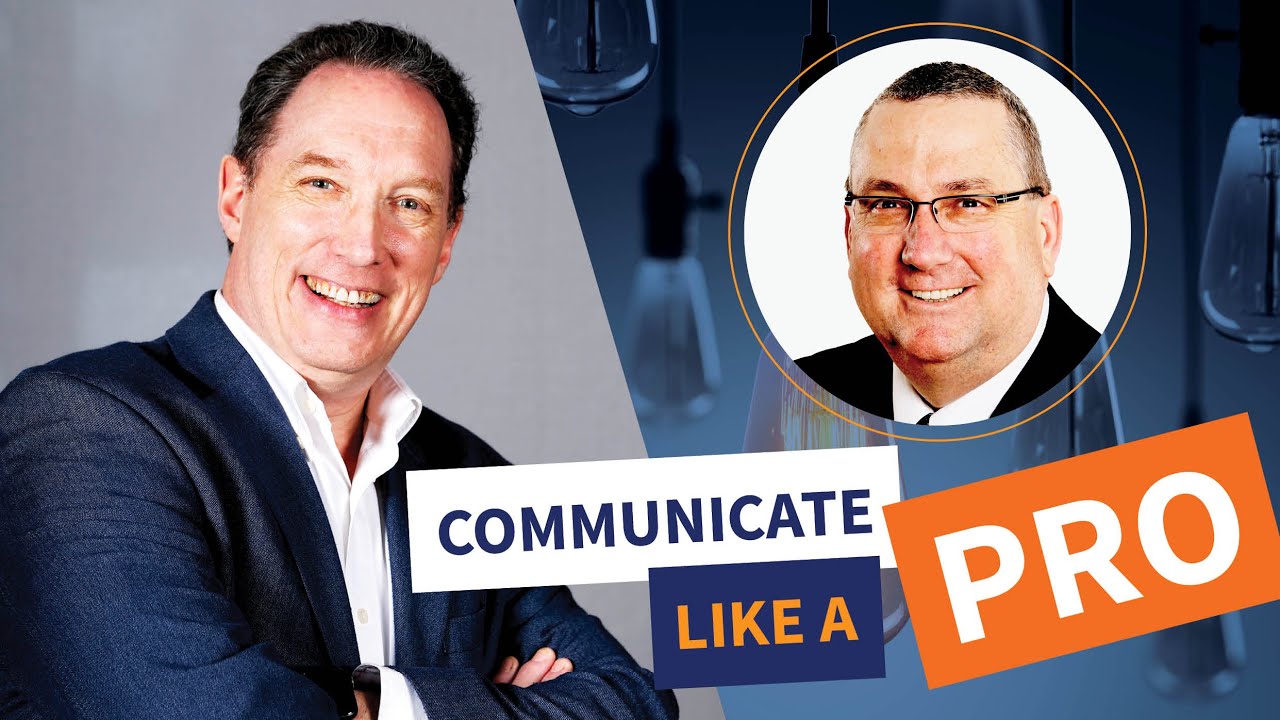
Greg Wood, a connection coach and magician, shares communication strategies for leaders and entrepreneurs. He explains the 15-second rule for capturing attention, why eye contact and body language matter, and how to overcome introversion or self-doubt when speaking.
Chapters
We all know someone that seems to have a magical way with people. No matter who they talk to, it always seems like they have something to talk about and that people are really interested in what they have to say. One of Stephen Covey's principles is to seek first to understand, then to be understood. But sometimes, try as we might, some of us really struggle to become or get understood. So, as a leader, what can you do to be a more effective communicator? And that's coming up next on Marc Haine Live. Welcome to Marc Haine Live! This is episode number 19. This is where small business owners and entrepreneurs pick up some core skill sets to help them work on their business, not just in their business. I am your host, Service Expert and Master of Experiences Marc Haine. And if you are here live with me today, well, welcome! It's nice to have you. And of course, if you're watching this on the replay, it's nice to have you here as well. Thank you so much for tuning in. Please feel free to click the subscribe button. Hit the share button if you think this is valuable content. Share it with your network. Share it with the people you know could use the information. Our special guest today is a master communicator, Greg Woods. Super, super entertaining gentleman. And he is going to talk to us a little bit about what it takes to become an effective communicator. But we'll get to him in a moment. In the meantime, feel free to drop your questions or your own personal insights into the comment box so people can benefit from your experience as well. As you know, I think that knowledge is power. But it's only powerful if you share it. In my experience, there are so many people who seem like they are born communicators. Growing up, I remember in high school that they just seemed like it was part of their DNA. They instantly connected with people. And it was a skill, looking back now, it's a skill I wish they taught me in school. Of course, especially when I was some awkward 15-year-old wanting to ask a girl out. I couldn't communicate for the life of me. But today, we're going to be uncovering some core steps you can use to effectively communicate with people you speak with. People that you want to connect with in a real meaningful way. But first, I'd like to know from you our Question of the Day. So, what challenges do you have making yourself understood? This is a very valid question because we sometimes click with people. Other times, we don't. Our guest today is a sought-after professional speaker. He's a magician and a comedian. He's one of the funniest guys I know. Glenn Wood has won multiple awards for his illusions performing all over the world. He has recently been awarded the Accredited Speaker Program from Toastmasters International. And this is a very big thing. This is an award that says that he is the best in his field. And he is also a Certified Virtual Presenter, which means doing this on screen now is part of what he does. And he incorporates the art of magic into his leadership-focused keynotes and his presentations. And if that wasn't enough, Greg is also a contributing author to the book, Keystones and Cornerstones: Solid Foundations for Success in Business and in Life, which you can get on Amazon. Welcome to the show, Greg, Mr. Wood. It's such a pleasure to have you.
Thanks, Marc. Thanks for having me.
Hey, before we jump full into the topic, thank you. Before we get full into the topic, could you Just maybe give us a little hint about what you do for your clients.
Well, I'm a connecting coach, connection coach. But I also speak on connecting and how to get your ideas across. The only way you can have any influence at all is if you can get your ideas across. If you fail to do that, you can't. So, we work through that with coaching. We show you how to connect with your audience. Everything from somebody trying to make a pitch at the boardroom table to somebody standing on a stage. We talk about connection and leadership because of it. As you know, Marc, you can't be a leader if you can't influence people. And you can't influence people if they won't listen to what you say.
Oh, that is so true. And a lot of times, we talk about people say, oh, I don't like sales. But every single day, we're talking to people and we're trying to sell our ideas and make that connection. So, that's actually a really brilliant observation. But before we get full bore into it, I just want to remind everybody that today's episode is brought to you by the Speaker Presentation Timer app. It is an app that I developed for speakers and presenters who want to develop great stories and compelling presentations without ever breaking the fourth wall. And if you ever want to know what the fourth wall is, go to the website speakerpresentationtimer.com and check out the write-up about that. Because there's this idea that as speakers and presenters, we're of service to our audience. The app is available for iOS and Android-powered devices and is on the App Store and Google Play. So again, visit speakerpresentationtimer.com. It's a wonderful app and I I think if you do any kind of presentation, you're going to find it's super handy. So, in past episodes, I spoke with diversity and inclusivity expert Tina Verghese about the effect that unconscious bias has on our everyday life. So, Greg, I'm going to kick us off with— I'd like to have a little bit of a conversation about this idea. Tina talks about unconscious bias.
Yeah.
And so, how important are prejudices when it comes to forming our very first impressions?
Absolutely vital. I don't know how to say it more than that because people have— you have 15 seconds to make an impression on somebody. And you've got to be there in those first 15 seconds. You can't You can't blow it in those first 15 seconds. And even before you get on, that first 15 seconds may not be when you actually are in front of them or at the meeting. It could be when you're sitting in the waiting room. One of the experiences I had years ago, I was doing just an entertainment presentation for a A group, a corporate group, a Christmas party, I think. Doesn't matter. I was late. I'd had problems, vehicle problems. I had to switch vehicles and I got there late. And I was distracted and I was upset with myself for being late. And normally everything's set up. I have this whole stage, the sound system, everything's set up ahead of time. But now I had to do it while they were sitting there eating their dinner. And I was not happy. And I could— by the— I set everything up. I came back after they were finished. I was introduced. I walked on, big smile on my face, trying to connect with the audience. And I was never able to get across to them. I was never able to do that connection. Oh, they laughed at some of the stuff and they were amazed by some of the magic, but I never really had that connection that I normally have with an audience. And driving home, I looked back on it and I realized they had seen— that first impression was long before I walked on stage smiling and looking at them and performing magic. That first 15 seconds was with me walking in carrying my equipment. A friend of mine, Fukai, who's a magician out of Japan, related a story about him berating one of his students. Berating is probably a bad word, but before he went into a competition, he was just standing there slouched. And Fukai came over to him and told him, stand up straight and look like you're a professional. Oh, why? I'm not on stage yet. No, but they can see you, and the second they can see you, they start to make, um, make their decisions about you. And that, that can be so difficult. And It's so hard to get past that later.
Yeah, it's interesting you say that because as a leader, having worked in hospitality, I've done a lot of job interviews. And people don't realize that when they walk onto property, that they are all of a sudden— that's when the assessment starts. It doesn't start when they're sitting down in front of you for the interview. What people fail to realize is that we are we go to the front desk clerk and we say, what was your experience with this particular person? What was this person like before I came down? And Hugh Culver talks a lot to professional speakers and he mentions, he talks about when people are at conferences that as soon as you show up on the floor, you're on. This is part of your performance whether you're sitting down with a bunch of delegates at a conference and making small talk with them. You are on. And so, it's really interesting this idea that you— because you hit the nail right on the head when it comes down to this idea that we must absolutely use unconscious bias I think in our benefit, to our benefit and give people that positive first experience.
Absolutely! We need to be on right from the very beginning. As a matter of fact, the reason I like to set up ahead of time and be ready to go is so that I can bend over and plug things in. And, and being this size and an old man, um, I, I make old man noises when I bend over and do those type of things, and I don't want anyone to see me. I want them to see me as a professional, as someone who's come there, someone who is having a good time. I mean, let's be brutally honest, Marc. How easy is it to let everybody feel like you're having a good time when you're going, mm?
You're right. That is an old man noise. Good job.
Sophia Loren said one time, they asked her, she was quite aged at the time, and they asked her, why is it she doesn't seem old? And she said, she doesn't make old lady noises. I've just never got to that point, Sophia. Sorry.
Yeah, yeah. I think it's a filtering software in our brains or something. I'm going to say something to make the grunts come out. But part of the challenge when we come— so, the fact that we're always facing these unconscious biases and people will look at somebody and go— I believe in fact, in my book Lights! Camera! Action! that's coming out in November, I talk about this idea of experience expectation. Every time we enter into a transaction, we have an expectation as to the experience that we're going to have. And so, some people when this unconscious bias kicks in, some people roll. I mean, there's tons of stories. About rich people who dressed up as paupers. I mean, there's a story of a king who did it. But you hear it today, right? People testing out what human nature looks like and how people get judged. So, one of the things, one of the challenges I think that we have is sometimes people will get a first impression that's not entirely accurate. So, what should we do or what should be considered about how do we overcome those perceptions once they got set?
Well, one of the first things is to not let that happen. To look professional right from the very beginning. Once you've lost that, it's going to take a lot of work to get past that because that's locked in their minds. It really is. It's so difficult for you to overcome that. You need to I'm not exactly sure what it is you, you know, these people are doing in particular. But, you know, you talk about the expectations. When I'm checking into a hotel, I have certain expectations. And that person, if they exceed those expectations, well, I like this place. If they don't, there's almost nothing they can do at that point. They could offer me an upgrade, and I'm still remembering it was a bad experience. So You need to, you know, get past it. One of the things that I was taught by my mentor, Dwayne Laughlin, a magician out of Pigeon Forge and Branson, he's at theaters in different places, but he was my mentor and he taught me that you need to know exactly what you're going to say, exactly what your face is going to look like, and exactly how you're going to step. In order to, you know, to give that first impression. And if you've already got a bad impression, then you just need to do your best to continue to try to win them back because you can win people over time. There are people that you've met the first time and maybe you didn't particularly like them because of an unconscious bias. But over time you realized, oh, okay, I guess I did have a bad impression or wrong impression. You don't think that out loud, but that goes on and you turn off to like them. So you want to be calm, you want to be happy, you want to have, like I said, that first impression. It's just as important when speaking one-on-one. Know exactly what you're going to do and how you're going to do it. But when we went— when I went in and I was step 2 of my level 2 judging, as you probably know, Accredited Speaker has application level 1 and level 2 judging for applicants. And to get the designation, I was in Chicago and they put us on the stage and I rehearsed walking on and off that stage about 10 times because I wanted to know. I wanted to put my best foot forward. Well, your best foot forward is whichever one, you know, if I'm walking on this way, well, I want to be this way so I'm open to the audience. I want to smile, look out to the audience. I want to smile at them as I move and That I learned that from both my mentor and the instructor. I took the Chavez studio course in magic out of La Verne, California, and I watched him in action do that over and over and over. That's what he rehearsed. Didn't rehearse what he was saying so much. He didn't rehearse his magic because he already had that down pat. But he wanted that first impression. He was so important to him, that first impression. And that's one way to win them back is to have that. openness to them and keep a smile on your face. Yeah, you know, the simple things, Marc. Eye contact. It is so incredible how many people don't find it necessary to make eye contact. They're afraid of it, and then that's just something you need to work through. Trust me, you're not going to get very far if you don't have— yeah.
I'm sorry, what?
I know, but without eye contact, how does somebody know that something's going on? And, you know, we make that all the time. People see life in your eyes. That's about the only place in your body where they can actually see life. You know, when you're on stage, uh, I speak more from a stage standpoint, of course, but there's— if you look in someone's eyes who's standing on stage, there's little square dots in their eyes. That's the light reflecting back.
Mm-hmm.
And that little white dot in their eyes— I don't know if you can see it. If I move my head around, maybe my light will reflect off my glasses. But that light in the eyes, in the actual eyes themselves, shows that you're alive. People don't realize that. And they have to be able to see your eyes and you have to be looking at them to make that come across. Even when you're talking to 1,500 people, for some reason that still comes across.
Yeah.
That looks like— I went to a puppet museum down in Iowa one time. My wife was a master puppeteer. And so we went to things like puppet museums. Guess whose idea it was? It wasn't mine, but we went there. And they talked about the white dot in the puppet's eyes and how this particular fellow had been the first one to realize that that was needed so that the puppets looked alive. So I can't say it enough, eye contact is vitally important to doing that. And there are ways you can practice it. Yeah.
Yeah.
Mason City, Iowa.
That's where we went. Where in Iowa?
It was Mason City, Iowa.
Mason City, Iowa.
The Art Museum.
So here, we're doing a shout-out to all the Masonites at the Puppet Museum. It's interesting that you said that because part of what we do. So, as customers to businesses, we know right away when the service level that we're getting is insincere. Like you will get Also, part of it I think is vocal, the voice that you use. I mean, how many times have you been in a restaurant and then the server walks up and you hear her talking? She's talking normally. Then she turns to you and goes, hi, how are you? Right? And you know that she's not really all that concerned, that this is the act. But what makes it the sincere connection between that she is there to make sure that you're happy? So between her job and your satisfaction is whether or not she stops and makes eye contact with you. And in fact, from a service provider's standpoint, if you don't make eye contact with people, people perceive you as short and rude, which is really interesting.
Yeah.
You mentioned a couple of times earlier on, you mentioned this thing about 15 seconds. I think this needs to be unpackaged a little bit. This idea that people's attention spans are 15 seconds. Could you dig a little deeper into that?
Well, yeah, the first thing you need to know is that you've got 15 seconds to make that first impression. That's it. 15 seconds from the time people see you, you've got 15 seconds to make that first impression. From a magic standpoint, when I'm developing my show, that first 15 seconds, boom, boom, boom. A comic will come out and start right away with punchline. And hit something, get that first laugh. You'll notice it. They've got to get that first laugh within the first 15 seconds. Otherwise, they're going to be in trouble and be fighting back the whole time. But you know, I learned this as a street busker, as an entertainer doing busking on the street. People are walking by. They didn't come to see a busker. They're on their way somewhere else. But I need to draw them in, make them watch me for 20 minutes to half an hour, and then give me money. If you're making your living as a busker, that's how it works. And that was, you know, very difficult, but you had 15 seconds. Grab their attention and pull them in. But beyond that, and this is something I learned from my mentor and others in magic, is the 15-second rule is that you need to change and add information every 15 seconds. Now, by adding information, I don't mean Have a new point on your slide. That's not what I mean by adding information. But if you watch television, movies, you will note that at least every 15 seconds the camera angle changes. That maybe they move in close up, out, another piece of dialogue is spoken, another way of looking. That is changing constantly every 15 seconds. And because Because of that, we've become used to that. So we need to be adding something every 15 seconds. You know, we see virtual trainers, and Marc, I know you're not guilty of this, but I have seen some people who are, and what they really become is the webinar behind the PowerPoint. They have their PowerPoint or Keynote slides and they put them up and you never see them. You'll just see the slide. And for the next 45 minutes, you don't see their face. And so they can't see you smiling. They can't see your eye contact. And it doesn't matter even how often you're changing those things on the slide. You need to go back and forth. You need to pop out. You need to pop back in. You can go to slides. There's nothing wrong with PowerPoint slides. You and I were discussing earlier, I put up a PowerPoint slide so I can take a drink of my water or I can adjust the keys so I know what scene to go to next. I could do things that people don't see me, but I don't leave the slide up there for any length of time without coming out on top of it or, or being beside it. And so you've got to continually add something, and it's, it's a 15-second rule.
And—
Because the minute people get bored, they're gone. When I was busking I couldn't allow that 15 seconds of boredom because they weren't there to see me. They were on their way to Sears. And the minute they got bored, they would go and move. And then, I don't know if you've ever noticed this about buskers, but when the people aren't there at the end, they don't make much money. So I learned that you had to hang on to them until you passed the half.
But you're a magician. You just make it appear.
Yeah.
Yes.
Yes. I just took a comedy course recently, and in it they talked about stupid statements and stupid statements that we hear. And I wrote down, you're a magician, why don't you just—
Yeah.
And yeah. So I'm building a whole routine based on the fact that you're a— things people have actually said to me.
Yeah.
You're a magician, why don't you—
Yeah, you could write a book. It's like somebody who approaches me and she's a psychic and she wants to read my palm. Well, if she was a psychic, she'd know I don't buy into it. Yeah.
You know I don't believe that. Yeah.
So, I'd like to get into some more best practices for effective communication because you mentioned a lot of things. And you talk about your experience as a busker and as an entertainer. But a lot of the samples, a lot of the examples that you use are just as valid for face-to-face conversation. Like when you mentioned the 15-second rule. And so, just shifting your body weight, just changing something about your appearance will help make that happen, make it more interesting. But before we get more into it, before we get deeper into some of the best practices, could you tell our audience how they could get in touch with you if they want to tap into your expertise?
Sure. If they are looking for connection coaching, If they are looking for something in this vein, I do a full-day workshop called Everyone Communicates But Few Connect. I do a keynote on that, of course, and then the connection coaching. And they can find all of that at gregwood.ca. Okay.
And of course, the link is down in the show notes below.
Yeah, yeah, I saw it there.
Yeah, you saw it there. It's like magic. It just appeared. So, I just want to just check quickly to see if there's any questions. We have a couple of viewers on. I don't see anything. You, you, um, Art has mentioned and says, what a great guest, Greg Wood. I'm thinking he's a friend of yours because, you know, strangers saying that— how odd would that be for a stranger to say that?
So, so, good man. I have no idea who he is, but I'm having coffee with him this afternoon, socially distanced. Yeah.
So, are there— so, you mentioned, I mean, we've talked an awful lot about different aspects of effective communication. You mentioned that you're a connection coach. Can you dig a little bit deeper into telling me what that entails? What does that look like?
Well, it's based on that people communicating and not connecting and how they can connect better. And It's it's coaching, so it's them coming to the realization themselves and learning themselves with a little bit of help. We work through some situations and how they can change that and change how they could connect better with their audience. Now, when I talk audience, you say, "Oh, he's a magician. He you know he got audiences. He's get three hundred, five hundred. I think five thousand is the most ever people watching him." alive. But that's not what I'm talking about. Because I owned a professional land surveying business for years and had to connect with a lot of lawyers and developers. Well, that was one-on-one and you had to deal with them one-on-one. And it was just as important, actually at that point in my life more important, that I could connect with them. And so, it's teaching all of those things and working through that. Like I said, there's a full-day workshop on better ways to connect.
Okay.
And it's for everybody. I mean, it doesn't matter who you're failing to get your ideas across to. It could be, you know, you're presenting and people don't seem to get it. You're presenting your best ideas and no one's buying it. You're in this Zoom meeting with somebody or a board meeting and you've shared your best ideas but nobody embraces them. Don't you find it frustrating when you share with your children And they're not paying attention to you, your worldly wisdom, wisdom that could help them make better decisions than you made because they're looking at their phones. You know, you need to be able to connect it in all those situations. You need to be able to connect. And we talk about things like the 15-second rule, but we coach through it. It's a matter of, okay, how can we change? What is it we can do? How can you add new information every 15 seconds that things are changing. Yeah, the word information is probably not the best word because people think of it as data that somebody— but it's not data. You have to add new things into it.
Right.
And of course, eye contact. But, but then the most important rule of communication that's going to open doors to connection is common ground. Oh.
Okay, we'll get to that in a second. I'd like to talk about some strategies to find common ground. But Art has a question for us. I'm popping it up on the screen. And he's saying, what's the best way to put a speech together? What do you think holds people back from reaching all that they are meant to be? So, I'm guessing it's putting your best face forward. How do you represent this? And I think why this is important The reason this is important is because as leaders, we're constantly having staff meetings. We're constantly meeting with banks. We're constantly negotiating with landlords and so on. So, this is actually quite a strong question. So, what's the best way to put a speech together? What do you think holds people back from reaching all that they are meant to be?
I think the things that hold them back can usually be your self-esteem. And that's a whole other issue. And I deal with that in a completely separate talk, Building Your Own Self-Esteem, The Magic of Believing in You. But that's a separate issue. But that's, I believe, what holds people back quite often. But to put it together, you need to decide what it is you want to talk about. Then you need to talk about what it is like leadership. But I don't talk about leadership. Leadership's too broad. If I told you everything I knew about leadership, we'd be here a long time because I've learned quite a bit about it. And you could be different from what I've learned about leadership, but there's so much. So connecting to me is that centralized idea that I want to speak about. And then you need to really come up with a statement of what it is you're trying to accomplish, what it is you're trying to— everybody can benefit from this product for these 3 reasons and coming across in that way. And you need to build your speech in that way. I actually, when I'm teaching the communication skills and I'm talking to people who are creating speeches, that's actually a big piece of what I do.
Yeah.
So, the timing is actually pretty good there, Art. Thank you for asking the question.
Yeah, and it's interesting because—
I'm gonna have my coffee this afternoon.
Coffee date! So, but again, you bring up a really good point because when we're talking about speeches, but every interaction that we have has to first start off by what do we want to accomplish. And usually, where we lose people I think is when We want to accomplish something for ourselves. And so, if we can take on the guise of, what can I do for— how can I be of service to this other person? We are much more likely to make those connections, I feel. Don't you?
Oh, definitely. Instead of, here's what I can do for you. Instead of, here's what I do. It's more of, here's something that you need and here's the way that I can help to solve that problem. In every situation, every sale is that. I— you need a way to get around, you need to be able to move around the city properly, and you need to be able to haul large things, so you need a van. I can sell you the answer to that problem, and that's me sell you a van.
Sure.
I, I don't have a van for sale, but you know what I mean. From a salesman's point, they're at, you know, we're it is that you're doing from it. A real estate agent is going in there knowing what— some real estate agents don't, but if you understand your client and know what it is they want, what it is that they need, where did they come from, where's their background, what's the things they're looking for, then you can find a better— and you're going to do a better house, a better home for them.
Sure.
But you're going to do better as a real estate agent simply because You know your audience well and that's—
Right. And what they care about. Yeah. So, I know that there are people out there who struggle with communications. They recognize that they're not good communicators. In fact, they use it almost as— I've talked to a lot of people and they're like, oh, I'm just no good at communicating. And they typically tend to be introverts. Typically, you mentioned self-esteem. But sometimes, they have low self-esteem. And they're challenged. So, if you were to counsel somebody like that, what is the first step they need to take now in order to change that?
I think one of the first things is come to realize that most public speakers and comedians, those standing on the stage, live performers, variety artists are actually introverts.
It's true.
It's quite interesting. I am actually a little bit of an introvert, but when it's my stage, then I come alive.
Yes.
And there are some real fear factors that go along with speaking in front of anybody, trying to make a sales call. We have 2 boys that are 16 and 14. My grandsons, they live with us, and the son of my boys. But we— they are both autistic. And so looking someone in the eye is, is a big deal. And we just work through it on a regular basis, a constant basis, uh, to, you know, to do the things that are necessary and, you know, kind of force yourself into that. Um, There are other methods, but preparation is probably the biggest key. And that's what we teach the boys. Here's what you're going to say. Somebody's coming over, they're new. Okay, here's what you're going to do. You're going to go— now this is pre-COVID, just so you know. You're going to reach out your hand and you're going to shake their hand. You're going to look them in the eye and you're going to say what? Pleased to meet you. Well, you've actually, you know them. And so, good to see you again would be better. Okay. Good to see you again. And I know it's, that sounds very simplistic, but knowing exactly what you're going to say at the beginning can make a huge difference because that's when it goes, yeah. You know, for me, it's, it's quite often the first laugh that I go, okay.
Yeah.
Which is why I hate virtual because everybody's muted and I can't tell when they're laughing. But you know, I remember being very nervous. I was doing the True North Leadership Conference in Saskatoon, and I was opening for Patrick Lencioni. Lencioni? Lencioni? And I was just never been that nervous in my life about approaching an audience. And so, but I stepped out. I did the first line that I had written actually the day before. I did that line. It was appropriate because of timing. They laughed and I went— my wife says, your shoulders dropped, the smile came on your face, I saw your eyes come alive, and suddenly you were fine. That story is only to say, once you know exactly what you're going to say— I'm not saying you need to have the whole conversation memorized. If you're trying to sell somebody a car or a piece of land or A widget.
Yeah.
You don't have to have it all because you need to delve into what it is they need and how you can help them with their problems and how you can solve their problems. But knowing how you're going to start can make such a huge, huge difference. And I mean, I'm sorry, but I right now I can even hear people saying, oh yeah, but if it's memorized, it won't sound good. I get this a lot when I work with people in an organization, Toastmasters organization. Marc, you probably have heard of it.
Just a little organization. Does something around leadership and speaking, I think. Rumor has it.
But, and the reason it grows leaders is because it helps them to communicate. And when you can communicate, then you grow as a leader because you can influence others. Until you communicate, you can't influence people to buy a widget or to change— to try to change the world.
Yeah.
Uh, so that's— but I get people and they don't want to memorize what they're going to say because it'll sound too boring or too static. And I asked them if they ever went to see The Lion King or Rent or any play that has been on Broadway for 3 years. Those actors have been saying that same line every single day, twice on Sundays with the matinee, and it still sounds like the very first time.
Yes.
It's, it's not impossible to do. My opening lines, my opening probably 6 minutes of my show, I say those words exactly as I have said them for the last 4 Yeah. Every once in a while, I'll come up with a new gag or something and change it. But very much, it stays the same. And I know that I got that and I feel much calmer going into it.
Yeah.
I hope that answers the question, Marc. I may have got on my own answer.
No, no. But that's the perfect thing is people have to realize that really, when we are dealing with other people, we are performing. And there's a thing I remember reading this article about being authentic. And so, some people, the argument I get for memorizing an opening line or your first greeting or whatever is the fact that people say, well, I'm not allowed to be authentic then. And it's like, it has nothing to do with authenticity. I mean, authenticity I think is a misnomer anyway because as a service provider, you would never go up to a customer and go, oh, another whiny-ass crybaby I have to deal with today. Because maybe that's how you're feeling that day, right? That would be authentic and we would never do that, right?
This is the These are the don't-dos.
Yeah, these are the don't-dos. Yeah. And it's so funny because I've heard people say, I can't influence other people. I can't influence how they feel. And I said, well, can you do something that will absolutely destroy their day? Could you say something that would make this the worst experience of their lives? And they go, yeah, of course I can. I said, well, if you can do that, then you can do the opposite. You have the power, right? Greg, this is all the time we have today. Thank you so much for being on the show today. I feel that we could We could probably talk about this much longer and much further and get even deeper into it. But that's unfortunately all the time that we have. Could you remind everybody one more time how they can get a hold of you? And then, you mentioned something about you have several different types of workshops as well that you offer.
Yes, I've offered a number of keynotes and a number of workshops. I'm doing more of the online training workshop stuff right now with COVID There's not as much need for keynote speeches, though I'm still doing that, and I'm still doing the entertaining piece of what I do, just simply as an entertainer.









