These Strategies Will Help You Seize the Freakin’ Day!
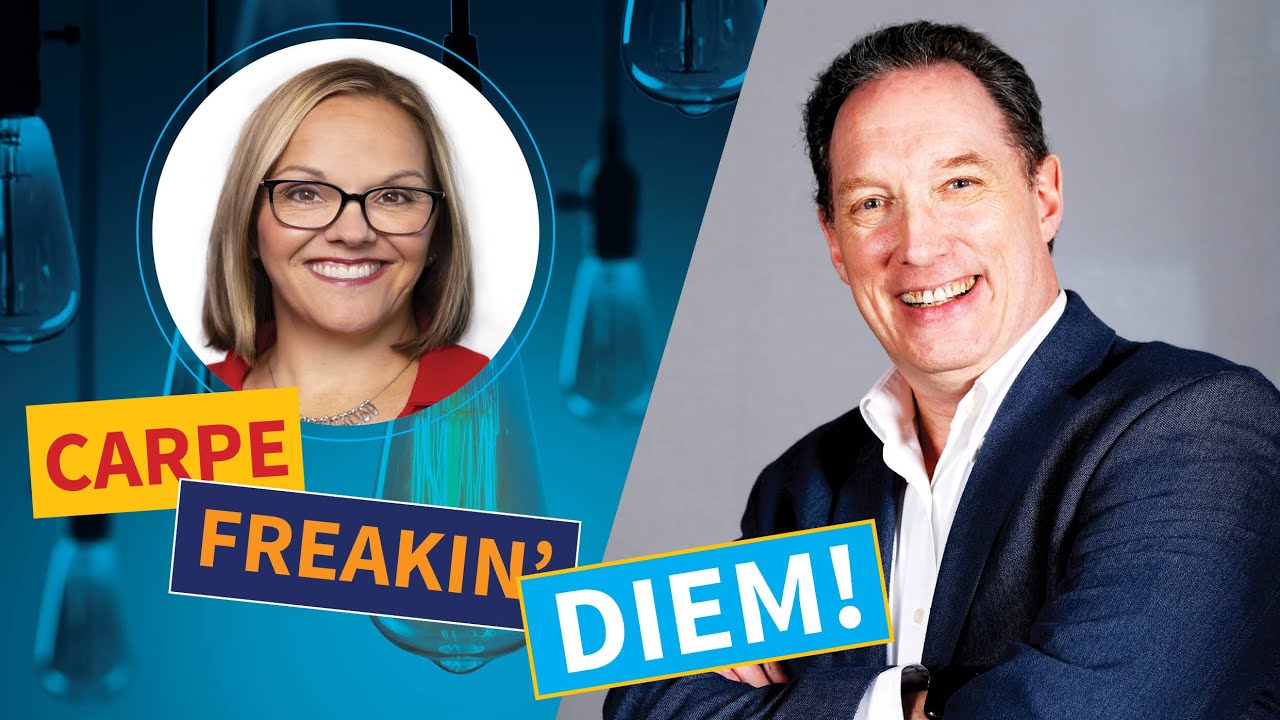
In this episode of Marc Haine Live, host Marc Haine interviews Certified Exercise Psychologist and author Michelle Cederberg. The conversation centers on how modern, technology‑driven life creates three distinct forms of stress—acute, chronic, and pervasive (tech‑driven) stress—and how individuals and leaders can manage them. Cederberg introduces her framework, The Success Energy Equation, which posits that success is a function of clear, exciting goals, self‑belief, disciplined work, and a renewable “energy multiplier” that includes physical, emotional, mental, spiritual, social, and cognitive energy. Practical tactics are shared: taking regular breaks, purposeful breathing, micro‑lifts of joy, walking commutes, intentional morning routines, and setting boundaries between work and home, especially in a post‑COVID remote‑work environment. The dialogue also touches on the double‑edged nature of technology (social media comparison traps, doom‑scrolling, and dopamine‑driven notifications) and the need for leaders to foster empathy, open communication, and flexibility to sustain employee well‑being. Throughout, both hosts promote their respective books and resources, and provide contact information (successenergybook.com, marchaine.com, meetme.so/MarcHaine).
Chapters
Okay, I don't know about you. But sometimes, I just feel so overwhelmed by my situation. The grind, the frustration, the endless stress. In today's fast-paced, high-powered world, how the heck can we keep up? And that's coming up next on Marc Haine Live. Welcome back to Marc Haine Live, where small business owners and entrepreneurs pick up some core skill sets to help them work on their business, not just in their business. I am your host, Service Expert and Master of Experiences Marc Haine. And today, I am so honored to be speaking to a person who needs a cape. She is a super Change agent Michelle Cederberg. And we'll get to her in just a moment. I just wanted to do a quick shout out to my subscribers. Thank you so much for inviting me into your world. I am so humbled that you think enough of me and of course, of this channel to say, I want more. And to those watching this episode today, thank you so much for joining me. I really truly hope that you and your team get extraordinary value from today's content. If you do find the information here valuable, please do click the thumbs up button and share this video with people you think can benefit from this content. And what the heck, while you're at it, why don't you click the subscribe button? I love the quote from Hans Selye. It's not stress that kills us. It's our reaction to it. And really, when I think about stress, when I think about what happens in our world, sometimes it feels a little bit like Dr. Doolittle's Push Me, Pull You. No matter what you try to do, you're trying to move forward, you're trying to move backwards, you're trying to get things going and it just doesn't happen. And so, I have for you, my friends, our Question of the Day. So, as a business owner, as a manager, heck, even as a leader, haven't you at times felt that you are pulled in so many directions all at the same time? It's really hard to focus. It's really hard to figure out what you need to be doing next. It's really hard to figure out how to move your business forward. Why don't you put some comments in the comment box? Let us know what your situation is. What When has it been really bad for you as far as the level of stress for you, for your family, for your employees, for your business? I am so glad that today, the words, it's too hard, is one phrase that I have never heard our guest utter. Michelle Cederberg believes that personal and professional success is directly influenced by how we harness the physical, mental, and emotional capacity we all have within us. She holds a Master's in Kinesiology, a BA in Psychology, a specialization in Health and Exercise Psychology. She's a Certified Exercise Psychologist, Certified Co-Active Life Coach, and an ORSC-trained team coach. She's brilliant. And I know Michelle from the Canadian Association of Professional Speakers where she has her CSP, her Certified Speaking Professional designation. along with her Certified Virtual Presenter designation. She is the author of 3 books. Her newest one called The Success Energy Equation, which debuted as a bestseller like last month. Yeah, she's waving. There you go. Welcome, Michelle. Thank you so much for being here.
I'm so happy to be here, Marc.
Thank you. So Michelle, can you tell us a little bit about— I mean, your list of credentials are so long and So brilliant! And really, I'm not really— it's really tongue-in-cheek about the cape but not really. Maybe you could tell us a little bit about what you do for your clients. Who are your clients? What do you do for them? How do you help move them forward?
My clients are that group of people who are driven, hard-working individuals, usually kind of in their mid-30s onward, who are moving upward. Middle managers, caregivers, educators, just people who are out there giving their all and not necessarily having all the energy within them to keep doing it at the level they like. And so I come in and I help them work on their resilience, help them recognize how much this body that we live in and the brilliant mind in it can serve us towards success if we just treat it properly. So health and productivity. On steroids.
On steroids without actually any chemical intervention.
Right, yeah, naturally.
Your new book, The Success Energy Equation, is built on the premise that how we are working is not actually working. Could you tell us a little bit more? Like, take us into a little bit what was the catalyst for you writing this book?
The original title, well, the working title of the book for such a long time was It's How We Work. It's how our body works. And I wanted to write about how our body works to help us work better because many of us, there's no doubt that we're hard workers. There's no doubt that we've got success on our side and we're driving to do good and be better in everything that we do every single day. I'm a big believer in the power of the human spirit. All of us want to be better, do better, have more. The challenge is that we dig in and dig in and dig in and forget about taking care of our health. Or rather, we'll say, I don't have the time. I don't have the energy. And because our bodies are amazingly resilient pieces of machinery, they will let us push forward and push on and push through for much longer than is healthy. And so, to my mind, the book is all about helping people find focus right now, figure out what's important to them, and then get the energy to drive their success to higher levels.
Yeah. It's something like, so I read through, I read the book and I was looking at it. And really, this is the first time that I've read anybody talking about this idea that energy is manageable within us. And I love the way that you broke it out into 3 specific sections. Can you tell a little bit about how you broke those out?
Are you talking about the sections of the book?
Yeah.
Yeah, well, I start off with helping regain focus. And so really, if any of us want to find higher levels of success, we have to get what I say, we have to get present to the mess. We have to get present to our lives as they are right now. Good, bad, crazy, high, low, whatever it might be. And then really decide, what do I want for myself? What are the things that are important to me right now? What are the things that I strive for? And that's a lot harder for people to get clear on than you might think.
Yeah.
And then I talk a lot about Recharging energy as the driver of success. And I do talk about 3 parts of gaining energy as well. So, your physical energy, your emotional energy, and then this capacity within us to really just pause to recharge. We need to take care of this machinery so it helps us do all the things that we need to do at a higher level.
Fantastic! I am so looking forward to delving into this a little bit deeper with you. But just before we kick everything off, I just want to let everybody know that this episode is brought to you by my book because I get to promote my book too. Lights! Camera! Action! Business Operational Excellence Through the Lens of Live Theater. It tears down what it takes to put on a great show for your customers no matter what business you're in. If you'd like to get notification of when the book is going to be released, go to marchaine.com/lights-camera-action and click on the Coming Soon button. The link is down below. So, Michelle—
I want to find out about that book because I'm a big believer in lights, camera, action. My, my— it's an aside, but my twin sister is a theater major and a drama teacher, and one of the best things she taught me was how to break down that fourth wall. Yes, how to connect with your audience in an authentic way. I'm telling you, if you want to be better, then get the book. I'm putting it on my list.
Thanks so much! Well, I did see that you did click the notification button. Yes, I did. You're on the list. You're on the list for the first one. So, Michelle, thank you so much for that. But it's so funny because I was telling you before we went live that my mom's 85. And when I talked to my mom or to my aunt and even before that, when I talked to my grandparents, and it seems like every generation has had perceptions about what made their life stressful, or harder, or in some case, how they've had it easier. But sitting down with like, I'm getting to the age where my peers are telling me, kids today don't know how good they have it. In my day—
I never thought I'd be that person, Marc.
Me neither. Me neither. It was all a lie. That was them.
Yeah.
But is there a way we are living now that is much different from the days that have gone by in all An all-realistic attitude.
In all truth, yes. I mean, yes, there's no doubt that our parents worked very hard and our grandparents before that. And we're all in it to win it as well, working hard. But what has changed is this little thing, right? We've added this device to our lives, this high-powered supercomputer at our fingertips. We're connected technologically, you know, the most technologically advanced time in history, and it's changing us. It's changing how we interact. It's changing how we learn or don't learn. It's changing how we feel about ourselves. And so, I think that the biggest difference, you know, and it does have some positives, let's be clear about that. But the biggest difference is that we have to manage everything that's happening out there, but we're also processing everything that we've got at our fingertips here. And it's tiring us out. It's taking up our precious bandwidth and it's messing with our success.
I love that you mentioned about this idea that it changes how we see ourselves. Can you talk a little bit about that?
And I'm not just talking about this device. I'm talking about technology and social media and everything out there in general. I call Facebook the soul-sucking social media comparison trap. Because we can, we can sit down and we can scroll through other people's pseudo-lives online and, and compare it to our own without having any real connection to that person on the other side of the, you know, the technology. And I think that what we need to be aware of is just how much our connection to social and comparisonitis, if you will, puts us inward and helps us Or makes us feel not so great about ourselves when it's not. It's perception and not reality. Yeah. So, we're spending so much more time connected to our worlds through technology, especially now during COVID I mean, our phones, our technology is our gateway to everything right now. My 86-year-old mother learned to use Zoom during COVID right? So yeah.
If she ever needs any hints, My 85-year-old mother is more than happy to hold a workshop for her because she's become an absolute pro at it. And she's probably watching this going, that's twice you've mentioned my age. But I'm so proud of her to be able to pick it up because you have so many people who go, at my age, you can't teach me nothing.
Well, and here's the beautiful thing. And so, I was saying that technology is a challenge but it's also a blessing in many ways because during The lockdown especially, and gosh, hope we don't have to go into that again. Um, it was the first time that my mom at 86 got to connect on Zoom with all of her daughters and grandkids, um, you know, and, and sisters-in-law and brothers and/or sons-in-laws and daughters-in-laws on a big family Zoom. And like, she didn't say much because she's hard of hearing, but she just sat there and smiled. And, you know, and we did that several times during COVID and it's really changed in a positive way how we've connected. Although, I'm sure that many of us these days, especially in our work environment, might be experiencing a bit of Zoom fatigue.
Yes, absolutely. And there's this whole idea now as well. I mean, in past episodes, I talked about corporate culture about how before Zoom or before the COVID-19 happened, leaders would not even consider letting their employees work from home. There was a trust factor that was involved. And it's like, how do I make sure that they're doing the work that they're assigned? And my response has always been that proof is in the pudding.
Well, and different leaders will take that task differently, won't they? There will be the ones who will say, I'm going to empower my team to do well at home and be successful online and create this opportunity to telecommute. Even after COVID because there's a lot of people who have absolutely benefited from being at home and there's no need for them to commute. But then, there are yes other leaders who will say, if I don't see butts in seats, then how do I know you're working? That's a trust factor. And that's something I think we're going to all have to get over because the way we work has absolutely changed. And it's not necessarily for the worst.
Right. So now though, we have Basically, with the workforce working from home, we basically have 24-hour workdays.
Yeah.
Right? And so, have you been able to— have you delved into at all what some of the challenges are with the people working from home now and the stress that that's creating in itself?
Well, we need to think back. We're in our 9th month now of restricted COVID-restricted living. And when we first all had to shift to working from home, there was a bit of a panic and pivot situation where we had to set ourselves up technologically and make sure everything worked. and go, go, go. And there was an urgency there. We then kind of eased off. It's like, all right, we're in it now and we're working along. But what happened with more than one of my coaching clients is that there were no boundaries between work and life.
Yes.
And that hasn't changed for some people. But now that we're getting into the 9th month, many people are realizing, wow, like we're in it. I need to reconnect with my health. I need to reconnect with a little bit of work-life balance. I need to really get present to how I conduct myself during the day. It can't be all work and no play because it's an energy drain and it's messing with productivity.
And we're seeing, I mean, obviously everybody has seen the footage of the, I think it was a councilman in the UK who was having a press conference. Or talking to the media. And his kids came running in and then his wife came in to drag the kids out. And that said a few things about us. And I think now, people are realizing the people who we hire are actually human beings. Which is great.
I love the reality of that. Yeah, I love the humanness of that. And that is helping us to work from home without having to feel like, oh my gosh, everything has to be perfect Right. I had a presentation online the other day where the technology was failing for no good reason. And we just had to roll with it. So, the CEO of the company continued to have a conversation while the tech behind the scenes fixed it. And it wasn't a panic. It was just like, well, this is the way it is these days. I've got a puppy. I've had more than one call where she's managed to sneak into my office and she'll just stand at the window and look out the door. The people online can't see her until she starts to bark at the squirrel or the rabbit that's on the lawn. It's life.
Well, on the upside—
It's so fun and interesting. Yeah.
Well, and the upside is there's been a lot of puppies being adopted during COVID-19. And with the kids doing schoolwork from home, it's no longer the puppy ate my homework. It's now the puppy chewed into my coax cable and killed my connection.
The struggle is real, Marc.
The struggle is real. It's horrible. But you know—
You raise a good point though because You know, the work from home has its benefits and it has its challenges. And we have to just be aware of— we're still in the early days for this, even though we're 9 months in, trying to figure out how do we do this if we're going to sustain, you know, great work from home without losing our life balance. We need to make a lot of— I don't want to say changes, but be aware of the differences between going into the office and being at home and having that flexibility and listening to our bodies more often. There's so many things that we're gaining. And then there's also things that we're missing that are changing our bandwidth.
Hmm.
For instance, a lot of people might be going back to the office now. But when we were all on lockdown, it's turned into a bit of Groundhog Day. It's the same old thing. Get up, get the kids' schooling on the table, go into the office, which might also be on the kitchen table, and do all of that on repeat for weeks. What we're missing, those of us who are still at home, is what I call these little micro lifts, little hits of joy throughout the day that just break up the monotony. So, if you go into the office, it's going to your favorite coffee shop and getting that coffee and connecting with friends while you're standing in line. You know, grabbing a friend and going for lunch. It's wandering through the food courts or wandering through the mall at your lunch break and just connecting with the outside world. All of those little micro lifts have been replaced with shushing your dog out of the office or telling your kids to be quiet because you're on a Zoom call. And we need to be aware of how we schedule our days so we have a little bit of fun and enjoyment amidst the work. There's a lot that we That we just— there's a lot of little things that we can do during our day to make it better.
Right. And I think part of that is this idea that we have to recognize the stress. We have to recognize when something's not right. And but yet, the theory of stress is such a broad term. You being the specialist, could you kind of put it into context? I mean, is all stress— I know there's different kinds but is all stress equal?
Well, no, absolutely not. And we all, every single— anybody who says they don't experience stress is lying because every single one of us experiences stress every single day. But it's how we react to it. Like you said, the Hans Selye quote, stress isn't what happens to us, it's how we react to it. The first kind of stress is acute stress, and that is like normal stress. If we want stress, that's the one we want to have. And here's the thing. You're in control of whether it's acute or otherwise. Acute stress is stress without adequate recovery. So, you have a tough meeting. You have a difficult day. You have some sort of stressor that hits you and you give yourself a chance to recover afterwards. You take a coffee break. You go for a walk. At the end of the day, you get a good night's sleep or maybe you get some exercise. You eat healthfully and you allow your body to come back to some level of normal. Acute stress is how all of us ultimately should be conducting ourselves through the day. But with the busyness of life and the pace of it ramping up and having our devices right at our fingertips, chronic stress is more common now more than ever. And that's stress without recovery. So, you have a tough meeting and you follow that up with a difficult conversation with an employee. And you follow that up with your kids screaming at the kitchen table at each other. And you follow it up with after, after, after, no recovery. You don't listen to your body. You ignore the signs and you just keep plowing through until you feel that stress bottom out. If you put many days like that together, it's a recipe for burnout. And in the book, I talk about a third kind of stress, pervasive stress, or 21st and a quarter century stress is what I call it. This idea that technology is adding to our stress in a way that we hadn't even imagined. So, I call it a tech-driven, FOMO-fed, pervasive, unrelenting— you know, you've got 24-hour news cycles. You've got push notifications. You've got beeps on your phone that you need to respond to. You've got this urge to go and scroll through your social. It's drawing you in, in ways that we can control or not. But the interesting thing about these devices is that they are designed to hook the neural pathways in our brain in the same way that gambling an addiction does. And so I call them little dopamine factories, little dopamine machines. And that dopamine is the— is the one of the happy hormones. So if we're feeling stressed, here's an interesting thing. We'll often reach for the device as a little calming mechanism, which will then increase our cortisol sometimes, which is a stress hormone. And then we'll be looking for other ways. And it's often, you know, through the cycle of scroll, repeat, scroll. I heard a term on the radio the other day called doom scrolling. Doom scrolling. Yeah, everything we're just looking— everything that we're coming across is, you know, it's hard to look at.
Like bad news.
And then we go deeper down the rabbit hole. I know a lot of people around the US elections were doom scrolling. They just couldn't get off their phones. They needed to find the next bit of advice. And so, yeah, stress, acute stress, chronic stress, and what I call pervasive 21st and quarter century stress. Here's the thing about stress. It's inevitable. But how we choose to recover is 100% up to us. And that's what I want to empower your listeners and my coaching clients and audiences to do, to take control of the stress management in small steps.
Love it! I'd love to delve into some strategies as to what you think business owners, their employees, their managers could do to kind of get over this or be able to recognize the 3 different kinds and be able to then put a strategy together to deal with it and get into a more intentional level of living, if we were. But before we do, could you let everyone know how they can get in touch with you?
I've made it easy for everybody, a one-stop shop. If you just go to successenergybook.com, super easy. You can connect to where to buy the book. You can connect to all my social channels. You can connect to my speaker website. And you can see what I'm doing there. It's all at successenergybook.com. So, you don't have to think of 16 different things in this stressful bandwidth full time of our lives.
Nice, nice. So, for you watching this, I hope this is making sense to you and is of value to you. Please do feel free to give it a thumbs up and share your comments in the comment box below. You know me. Every episode I tell you, hey, knowledge is power. But it's only powerful if you share it. If we share your experiences, other people can learn from it. And it doesn't mean that you yourself are not a subject matter expert. So, I'd love to hear what you have to say and how you've maybe dealt with some of the stress and some of the strategies you use to overcome what ails you when you realize that you're not performing at your very best. So, Michelle, in past episodes, we spoke about the needs for leaders to adopt a mindset focused on the positive. Focus on looking for the good things. But I think that there's a misnomer in the belief that— and I think your book mentions it. It's something about an equation. The dream times the hard work equals success.
That's my bad math version of the Success Energy Equation where I talk about, I mean, it is a pie in the sky. All we got to do is have the dream. do the work. And yes, in an ideal world, it would just be that easy. Figure out what you want and then drive after it. But my bad math version of the Success Energy Equation talks about all of the things that get in our way as we're driving the path towards success. And it's our own self-doubt. And it is the government and the economy. And it's a lack of motivation. And any given day, it might be fatigue. It could be other people's expectations. And All the other things that we need to do. And so, we need to be able to arm ourselves with a little bit more robust equation for success. Let's just say that takes into account that as we're driving the road to success, life is coming at us from all sides. Stuff that we can control and stuff that we can't control. It doesn't mean that you deserve the success any less. It just means you need to be aware of what the factors are and arm yourself with a little bit of tools to get where you want to go with a little bit more success.
Right. And it's interesting because there's, I think from what you're saying, there is just as much a need for strategy on your well-being as there is a business strategy to move yourself forward to your success.
100%. And so, I'll share with your listeners my formula for success. And I say success equals Setting clear and exciting goals and then having belief in yourself to accomplish those goals and the discipline to do the work. Those are the first 3 factors of my Success Energy Equation. If we only ever did those 3 things, we would experience success. We really would. And some people are. But I add in energy as what I call the magic multiplier to raise those base dreams to the power of awesome. Because energy— and I don't talk— when I talk about energy, it's not just physical energy and taking care of fitness. It's physical energy. It's emotional energy. It's mental energy. It's even spiritual and social energy. And it's cognitive energy. Everything that our body does to help us work better. When we take care of our energy systems, and I will say, the energy within us is a renewable resource. This is my shout out to Albert O'Neil. We will set higher goals. We will have higher belief in ourselves to accomplish those goals. Our self-esteem will go up. Our self-confidence, our self-efficacy. Which is our belief in our ability to accomplish a task. And because we've set goals that we're excited about and we've kind of harnessed the belief within us, our discipline to do the work will also go up. And I'm not saying it's all going to happen at once. But when we nurture our energy while we're driving success, it's going to raise all of those areas to higher levels. And that can't do anything but help you be more successful. So, when you talk about that bad math equation, the dream times hard work, it's not enough to just set a goal. As much as everybody says goals are great and I do think goals are great, it doesn't matter how big the goal is that you set for yourself if you don't believe in your ability to accomplish that task. And so, I don't want people to have set and forget goals. I want people to set goals they're excited to tackle and believe within themselves that they can and have the discipline to do the freaking work. And that all to my mind comes from the energy within.
Right. You know, in past episodes as well, we've talked about workplace culture. Do you feel that as leaders, they have control over the workplace environments to be able to use your formula and apply it to helping lead their Absolutely.
I mean, we're navigating strange times. And I would say that the biggest challenge that I hear from my coaching clients and from audience members is that I'm stretched. I'm tired. My bandwidth is taken up. I don't have as much oomph or motivation to do the work. And that all comes down to energy. And With the leaders that I talk to, I'm really encouraging them to communicate with their teams to just kind of get the pulse of what's going on in the work-from-home offices. And if you have the fortune to get together physically distanced in the offices, to really just say like, how are things going? Like really? Because people will put up that facade and say, I'm fine, I'm fine, I'm fine, thinking I'm the only one that's feeling this way. But Guaranteed, everybody's had those moments in the last 9 months where we've gone, oh my gosh, like, I don't know, this is crazy. Like, my motivation's gone. I lost— me personally, I lost, you know, a motivational speaker. I lost my mojo mid-July, you know, after I pivoted hard and put all of my in-person presentations into 2021 and shifted to online. And I'd done my last online presentation that I was going to do for the next 6 weeks or so. And I just went, It's like, gosh, like I'm done. I was, you know, I didn't want to work. So, for about 6 weeks, I really had to reset and go, wow, like this isn't over yet. And I'm looking into the fall to all of the presentations that had been postponed from April. Now, they're moving them into '21. I'm going, wow, like this is it. Like things have changed. So, I know that many, you know, if you're a leader of teams, many of your team have been feeling those same Highs and lows. I call it the COVID roller coaster because feeling— I kind of went into a dip in July and August. And then, I came back out of it in the fall saying, all right, let's just square our shoulders. We'll get through this. And then, winter came and dips come like the cases are rising and there's another dip. I'm like, okay. Guaranteed, your teams are struggling with that. So, communicate. Absolutely. Allow flexibility. When working from home, allow flexibility for your teams to manage work and life because right now, they're inextricably linked. So, if it's all work but the kids at the kitchen table and the spouse needs to take over that care because your boss is a little bit too rigid, that can cause challenges. So, flexibility and a recognition that if we— There are 2 things that I really want people to do more of and they're dead simple. Take your breaks. Take your breaks and breathe. And I share these 2 only because they're so easy to do. Our brains are massively energy-hungry organs. And if we're constantly screen time, screen time, screen time, meeting, meeting, meeting, we need— productivity will go down. We need to take breaks every 90 minutes to 2 hours. Yeah, you can try and override it. You can try and override it. But it's not how your body works.
And but it's not just productivity. It's decision-making is affected. How we make decisions are affected. Because when you're— and it's so funny that because you mentioned about the people who just kind of shove it off. I mean, there are people out there who are like, oh, you know what? Stress is normal. Just get over it. But we need— I think one of the things that you mentioned is to understand that some people won't say that they're stressed. Some people won't say that they're not okay for fear of reprisals, fear of judgment. And so, it's really incumbent I think upon the leaders to make sure that they have empathy for everybody on the team. And like you said, look them straight in the eye and say, are you okay?
And to give your team permission, that's a gift. That's a sign of strength in leadership right there. To say, yeah, I get it. These are tough times. And whatever resources we have available, utilize your employee EAPs if you have them. But have the conversations. And here's the thing. Any leader who has the courage to have those kinds of conversations with their team and really open them up to, what do you need? They're going to find that that's going to return in a positive way for productivity and contentment in the workplace. And if you've got their back, then they're going to rise to the challenge and have your back when it comes to deliverables and staying with their head in the game and all of those things that companies need to maintain their viability during these really challenging times.
Yeah, yeah. I think I could sit here and talk with you for hours about this stuff. We are kind of getting into getting a little bit long. But I do want, if you could, are there strategies that people can use to get more in sync with their lives? You did mention breathing and taking breaks. Are there other strategies people could use to make their lives better?
Because people are busy and stressed, I don't go for the big life-changing, life-altering, sweep everything off the table, start again kind of strategies. I'm all about getting present with the small things that we need for ourselves. And because I'm an exercise physiologist, I believe that when we check in with the physical body, it'll help us to be connected cognitively as well. One thing I will say is how you start your day is a game changer. And these days, because we're so fully connected to our devices, my challenge would be for all of your listeners, if you have your phone beside your bed, do not use it as your first entry point into the day because that's not how you want to take control of your day. I say check in with yourself before you check in with the world, because if you go onto your phone and you see the headlines, And the news is bad, or you see the pop-ups for email, and all of a sudden, all of the outside world has hijacked your ability to get connected to what you truly need for the day. And so, what I will say is, while you're lying there in bed, take a few minutes to just ask yourself, how am I doing? How did I sleep? What is it that I need for myself today? What's a couple of things that I'd really like to get checked off my to-do list that would help me feel successful today? And then, step into the day with a little bit more purpose towards the things that are going to drive your success, not the agenda of everybody in your inbox. I will also say, try to schedule in those moments of whether it's movement or fuel or little hits of joy, as I said, little micro-lifts throughout the day. One of the suggestions that I have is walk yourself to work. If you're working from home, rather than just heading straight into the office from the kitchen, Walk out the front door. Walk around the block 5-10 minutes. And when you come in the door, use that as your transition from home to work. Go straight into the office and then do it again at the end of the day. Do it again at lunch. It's an amazingly powerful tool to help the mental shift and keep those boundaries a little bit defined.
Yeah, and I find that's one thing that is missing with this working from home bit. I truly believe that when we get ready for work in the morning, Like us turning on our brain. We're getting ready for the day. We get dressed in our costume where, you know, so whether if you're a mechanic, it might be overalls. It might be jeans. Or if you're working in an office, it might be a suit or whatever. But that helps us create that mental tie that we are getting turned on for the day.
Yeah. And even our commute does that. So, you think about that now. Our commute is now gone. And for many people, the commute might have been a chance listen to a podcast or to read a book or to just sit and look out the window of the transit or whatever it might be. That is now gone. And there are some companies that are now scheduling in 45-minute virtual commute, which is fascinating. So, think about this. The goal is that you are not to log into your computer until 7:30 or 8, which means that we are scheduling in a time of that for you to do whatever you want— exercise, reading, meditation. I think that's a fabulous idea.
And it's intentional, which is great.
Yeah.
Yeah. Michelle, this has been so great. Before we log off, could you remind everybody how they can get hold of you one more time? And I will be putting it in the show notes as well.
Go to successenergybook.com. And I love to hear from people. If you have any questions, feel free to email me via that website. And it's just always a pleasure to talk to you, Marc. One of the most positive people that I know.
The Energizer Bunny rabbit. But sometimes, like you said, I need to recharge, right? And so, I can't be on all the time. So, thank you so much for this. I really appreciate you being here to share your knowledge, your passion, your expertise with everybody. And I can't thank you enough for your generosity of spirit to make this happen.
Thank you, Marc. Hope everybody goes out there and has a success energy-filled day.
Thank you so much. Why don't you give me a thumbs up if this was of value to you? As always, my offer stands. If you would like 30 minutes of my time to help you brainstorm your business with you and your team, feel free to book yourself on my calendar. The link is down below. It's the meetme.so/MarcHaine. Haine. And that's Marc with a C. As always, I am at your service. I want to be able to make sure that every time you tune into one of these podcasts that you are getting huge value out of it. And if you haven't done so yet, why don't you hit the subscribe button down below and ring the bell? Whoops! Ring the bell. That was a little bit of a glitch. If you ring the bell, then you will get a notification when I bring you some fresh content to help you work on your business, not just in your business. My name is Marc Haine. I hope you stay safe, stay healthy, and dare to be the exception.









