Thriving in Chaos: Crucial Tips for Surviving Rapid Change and Uncertainty
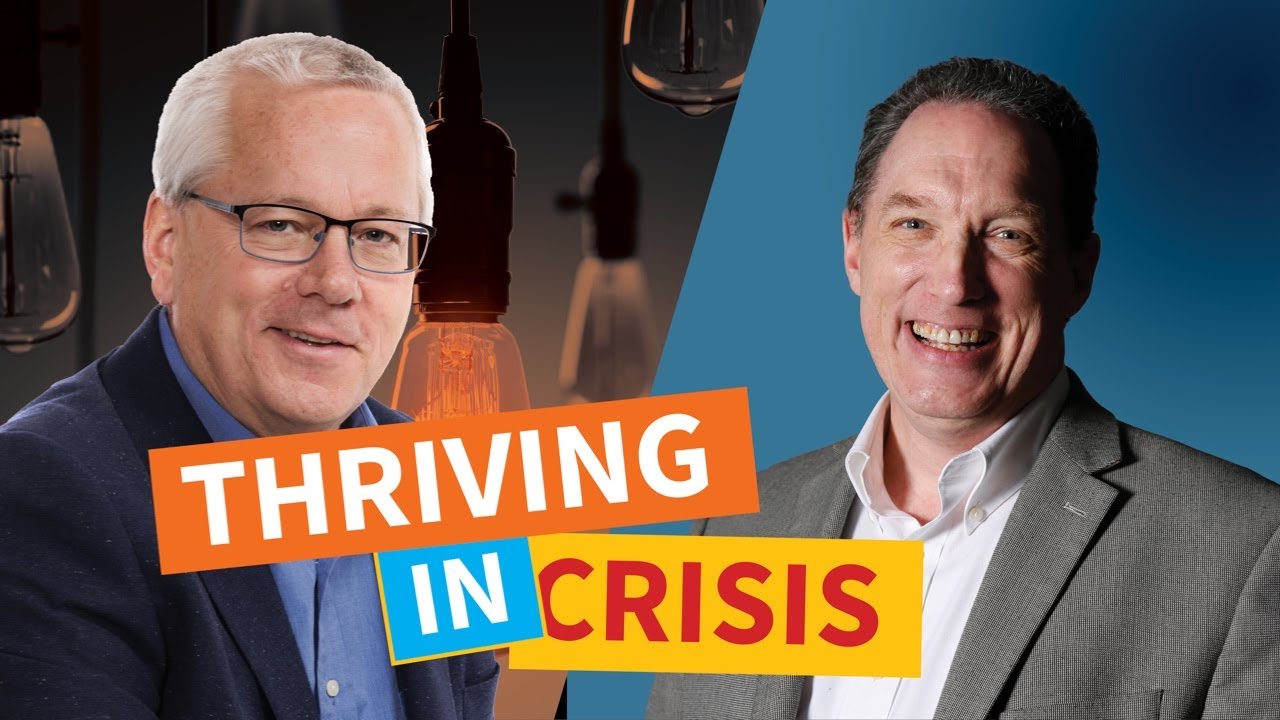
This content was created by Marc Haine. This content was uploaded by Marc Haine. This is a YouTube interview-style episode titled "Thriving in Chaos: Crucial Tips for Surviving Rapid Change and Uncertainty" (uploaded January 13, 2023). It features host Marc Haine (podcast/YouTube host and hospitality leader) interviewing John Robertson (workforce wellness expert and culture alignment specialist, author of Run Towards the Roar) with intermittent announcer/ads (Speaker C). The conversation focuses on leadership during crisis, how core values and culture surface under stress (the "hot water tea bag" effect), practical strategies for supporting leaders and teams, the Passio Fidelis concept, and actionable steps organizations can take to thrive through rapid change.
Chapters
Are you the kind of leader people want to follow? Are you the kind of leader that you want to follow? What about in a crisis? There was an old quote that we had in one of my earlier jobs. It went something like, if you can keep your head when everybody else is losing theirs, you probably don't know what's going on. Of course, that is tongue-in-cheek. But we do know when crisis hits, it can have a domino effect on your culture, employee engagement, and of course, on client satisfaction. And that's what we're going to be talking about today on Marc Haine Live. Welcome to today's show! This is where small business owners and entrepreneurs pick up core skill sets to help them work and help them drive jaw-dropping, show-stopping experiences that their customers and their employees deserve. I am your host, Service Expert and Master of Experiences Marc Haine. And I am so glad that you're investing your time joining me here today. My guest for this episode is Workforce Wellness Expert and Culture Alignment Specialist John Robertson. And today, we will be talking about how your true core values really bubble up to the surface during conflicts and crisis. And what you as a leader can do to keep the domino effect at bay. So, stay with us. My one ask is that if you know somebody who could use this information, please go ahead and share the link because knowledge is power but only if we share it. I have to tell you, working as a general manager for a hotel, I had an episode where I broke down one day. I mean, I had a temper tantrum. Like a horrible temper tramper. And I know you're looking at me saying, but you? You had a temper tantrum? Yep, I did. And it was nasty. I started spewing all sorts of nastiness about how the world was against me and how I should fire everybody and start over. A few hours later, the crisis was over. I had calmed down ages before. But as I wrapped up my day, I wondered why I reacted the way I did. I definitely was not proud. It was completely contrary to my nature and to my values. It was not how I wanted the staff or people in general to see me. As I analyzed my condition before, during, and after the crisis, I realized before the event even happened, I had a set of expectations that got quashed by the crisis. My blowout happened because I was harping on the problem, not dealing with the problem. So that brings me to our Question of the Day. When you consider that a crisis highlights your values and even your corporate culture, what has been that one episode you wished you had dealt with better? I'd love for you to be part of this conversation. Why don't you share this episode on your favorite platform and put a comment in there about that one time that you wish you could do over because it just really didn't reflect who you truly were. I am really excited to be joined today by John Robertson. John is a workforce wellness expert, and cultural alignment specialist with over 30 years of experience helping organizations and leaders navigate crisis. He is a sought-after speaker and the author of Run Towards the Roar: Transform Crisis and Change into the Opportunity to Thrive. John, welcome to the show! It's great having you.
My pleasure and I really enjoyed your introduction. And Marc, there's a part of me that's— so, how is that dealing with your condition going for you? I just— but we all have. And I know you mentioned the bubble up. The other way that I illustrated or visualized it is I call it the hot water tea bag effect. When we're in hot water, what's inside leaks out.
Yeah.
And Marc, kudos to you for your leadership, willingness to be of service. by sharing that non-shining moment because that's exactly what real leadership is.
I mean, we all have those moments, right? And but what I find really fascinating is as I read your book, as I went through your bio and kind of your levels of experiences, you've had a fascinating career. How did you get into this line of work around this idea of supporting first responders and running towards the roar versus what everybody else tends to do?
One of the things, and I don't know if it's just my wiring, my personality, I know it's part of my values, is I got really tired of treating injured, ill, sick, whatever I'm supposed to call people who are not in need of deep therapy, need to talk about how grandma spanked them when they were 5. But talking with people who get a charley horse. So, somebody goes through a divorce, relational charley horse. And depending on their faith expression, a moral charley horse or an emotional charley horse. And I got tired of that model of we either send them to a therapist counselor or we tell them, get over it. Like life happens. We do this to children all the time. Well, children are normally resilient. Well, not with the right supports. They're not. And so, then I started doing crisis intervention. And I was doing career counseling. There was a big company in Ottawa. There's 2 big high-tech companies that were doing meltdown. Huge layoffs. And the number of people who had, and these are not my words, these are some of the people I've met with, I have sold my soul For the high-tech pension. And now, I have nothing to show for all that I've sold my soul for. And you know, there's no like the charley horse. There's no way I can say, skate it off. Walk it off. You're fine. It doesn't hurt. Because now, there's a serious wallop. And how do we help them get back in the game? And so, my background includes being a clergy, pastor, minister, whatever I'm supposed to call that, starting my own business, being the father of 3 children. My wife says she has 4 children. But together, we have 3. And that whole model of we test this stuff. Like, we live it. Our family— well, if you Google our family, we will not appear under the Hallmark Channel.
As most of us won't. So, I mean, looking at your background, how would you say you serve your clients today when people call you? How are you serving them?
First thing we do is when they say, well, okay, I need help getting people's heads back in the game. I need some way that I can lead. So for example, the change in leadership authority is dramatic over the last 5, 10 years. And so, one of the first things we do is we talk about, well, what's the problem with what's happening right now? I'm not coming in to sell a program. I'm not coming in to tell them what to do. But it's that discovery phase that says, okay, let's look at what's wrong with what is. Let's discover what could be before we start treating anything. So for example, Marc, one of the terms that I remind people of, and this is so, so important for those of you listening or watching, Please, please, please. The event is never the real crisis. And that is, I mean, talk to a farmer about the death of an animal and they're gonna eat. Yeah, okay. Well, that's kind of the work. On the other hand, I know people who get traumatized by death of animals. And that's not a negative or criticism. It's just very different norms.
Right.
And so, in your analogy that you used, not your shining moment story, is the event is never the crisis. So, your crisis was around expectations at the end of the day. And any human, any person in business that does not have expectations, I would recommend you get out of business. Because there's no hope for tomorrow if I don't have expectations.
Right. You know, we've always had crisis and stress in the past. I mean, the most recent of course was COVID and the pandemic and all that. But even before then, we've always had crisis. Why is this topic so timely now, especially now?
Honestly, I think for the listeners and myself who've lived in small communities, I don't know, Marc. Have you ever lived in a small town, small community?
I live in a small community right now.
So, you know how you get to know your neighbors? And I call it— so what I do is set up a platform of what's kind of called front porch therapy, where you get together with your neighbors. You talk about like that Grandma and Grandpa Jones that aren't related, or aunt or uncle that are not relatives. We can tell them how life stinks, or school sucks, or whatever. When we are done venting, they hit delete and we step off the front porch feeling better. What's shifted? A lot of people don't have those high trust relationships right now.
Would it be fair to say that the front porch is now social media?
Well, and to your comment, not only is the front porch social media, but people are sharing things that are not theirs to share or are not fact-based. Like it's kind of a— and I don't want to think of George Clooney. But it's kind of the perfect storm because everybody's life is perfect on social media. Everybody's an expert on social media. And what crucifies many people in business is somebody vents something on social media completely out of context. And now, they're dead in the water.
Yeah, yeah.
Yeah.
And we see this for reviews and rant. On Facebook, we have rant and rave pages, right? Where the only— and unfortunately, it's more rants than it's ever raves because people just want a platform to bellyache.
Yeah. And to that comment, and people talk about the demise of common sense. Well, common sense requires 2 things for it to be developed. It requires truth with consequences. Social media denies that.
Right. You can exude your truth but there's no consequence. There's no debate. There's no follow-up. Yeah.
And look at the number of leaders in numbers of organizations who— and I'm an old Western guy. I love reading the old Westerns because at the end of it, the good guy shoots the bad guy. They're not mentally taxing books to read. However, what we are doing right now is the Old West theme. There's a posse who goes out, tries, convicts, and lynches a person regardless of the legal system. And I'm not talking just legal. I'm talking about I know a person who is running a business, a restaurant business. And it was a husband and wife. And something, a comment was made about a service that was provided in the restaurant. And I'm going to say within a month, it might not have been that long. But within the month, the restaurant was closed.
Yeah.
And it was 100% wrong. It was just somebody, basically somebody who was over their alcohol limit was denied another drink. Right. Wow! That's not brain surgery. If you're in my restaurant and you're over the limit, you're getting an Uber or taxi. You're not getting another drink.
Right. And in my book, I talk about a similar situation where somebody got slammed on— a restaurant owner got slammed on social media. And really, what ended up closing them was their response to getting slammed on social media because it became an emotional thing and people judged them for the reaction, not because they had a bad review. But I've been around organizations that when crisis hits, there seems to be a lot of fingers pointing. Like people are blaming other people for situations which are an indicator of an organizational problem. But this idea about pointing fingers every single time there's a mistake or there's an error, is this normal? And is this really a good way to be pushing forward? in driving our businesses?
2 things. Yeah. Is it a good way to push forward? Absolutely not. 100% no. Because what will happen is people will be more concerned about being in front and leading for fear of what might happen. So, as a result, nobody leads. The second part of blaming, finger-pointing goes back to the— I'm going to say Jewish tradition. It's where I heard it. But it's where the people would, you know, make an offering and tie up all the sins of the people and send the animal into the wild with all the sins of the people tied up on it. That animal was called a goat. Today, we call it scapegoating. And what is finger-pointing is it's scapegoating because we look for a quick, immediate fix rather than be silent and verify, okay, what's actually the issue that's going on right now?
Right.
And that's not normal. People in crisis mode are no different than people who are stressed. Patience goes out the window when we get stressed. Period. End of story.
Yep. And our brain thinks it works differently.
Oh, and the brain doesn't work for long term. It thinks immediate, which is kind of worst-case scenario.
Well, and to your point, I mean, you mentioned this whole idea about the event is not the crisis. I think all too often when people pinpoint what the problem is, they're really looking at the symptom of something that's bigger. So, is our focus wrong?
Yes. So, one of the things that happens is Well, we used to— COVID has been a phenomenal hot water tea bag season because one of the things that has happened during COVID is it has allowed people— well, actually, it's forced people to step back and say, what's really important to me right now since I can't go anywhere, since I can't do anything, since I can't whatever, socialize. What's really of value to me? And once we go through— I refer to crisis as that refining river, river of fire. When we go through a river of fire, it burns away a lot of impurities. And pre-BC, I call it before COVID A lot of us would think that busy is being important. We don't consciously do it. But if I'm not pedal to the metal, if I don't have a full schedule, if I don't have a full calendar, yada, yada, yada. AC after COVID, there's a lot of us that are realizing, yeah, I don't need to be busy doing that stuff.
Right.
And so, if I'm an employer, business owner, whatever, and I'm focused on being busy, I might actually be being busy doing the unimportant. And I mean, Marc, no names. But think about some of the people that are hugely significant in your life. How many times have they greeted you, okay, well Marc, I'd love to hear what you got to say. It's 2 minutes after the hour. Okay, got a 1-minute summary because at 3 minutes after the hour, you know, and the conversation's over.
Yeah.
On the other hand, those types of value-based people Honor the important are, hey Haine, I don't know what's going on. But your face and body language are telling me that you're not firing on all cylinders. Grab a chair. I'll pretend to be a therapist. But you are not keeping this garbage inside. What's going on?
Yeah, yeah. And to your point, the teabag effect in COVID, we saw this in organizational cultures all over. I mean, everything from trust to productivity was tested through COVID.
Yep.
Right? You know, I'd really love to get into the effect that crisis has on our ability to lead. And we'll get to that right after this.
When the spotlight shines on your business, are customers applauding or yawning? In other words, how is your business performing? Make your business a star with a new book, Lights! Camera! Action! Business operational excellence through the lens of live theater by Marc Haine. Marc uses his business and acting experience to help you see your business like a live show so you can create a performance your customers will never forget. Buy Lights! Camera! Action! today at your favorite online retailer or directly at marchaine.com.
Welcome back! I'm speaking with workplace culture expert John Robertson. We're having a great discussion. And what I find happening with our conversation is we're starting to bridge now into value systems and culture systems. But John, let's talk about the importance of supporting leaders in the time of crisis. I realize that when anything happens, the very first person who's on the hot seat is the leader. But I think having leaders within our midst is not a question of, okay, well, it's his problem to solve.
So sorry, I was waiting for a question. So that's that hesitation. But one of the things that I want to clarify right out of the gate. There are 2 terms that we need to clarify around leader and leadership. There are the ones that have the title and there are the ones that have the authority. Ideally, we want them to be the same person. In reality, not always true. And so therefore, when we talk about having Leaders in our midst. Do we have leadership in our midst? And without exception, one of the things that always helps organizations grow through crisis is that leadership realizes, okay, the old is dead. It's not even on life support. Therefore, we need to figure out what we're going to do to grow forward. And it doesn't matter what it is. But Jim Collins did incredible amount of research around this in Good to Great and Built to Last and all the other books that he's written from his research. But at the end of the day, for you and I, it's really just about us saying, okay, That isn't working. And what is it, dead horse or something? Beating a dead horse. Like, okay, it's not going anywhere no matter how hard you beat it, John.
Right.
So, what do you want to do with the wagon and the things you have on it?
Right.
And that requires And that requires a very different mindset because we got to think grow, not wave a magic wand or hatch.
Right. So, what is our intentionality then within organizations, within communities of teams and that sort of thing to support leadership in our midst?
Well, one of the first things that has to happen is I illustrate it, teach it, whatever, as think like a team but work like a body. And a lot of people focus on the prominent positions. But it doesn't matter to me what team sport organization we pick on. We are only as good as the least visible members. You know, so for example, during COVID everybody was talking about the demands on this, that, and the other. So, whether it be hospital or whether it be schools and some of the prominent positions in those. But I can shut a hospital down in milliseconds. Take this custodial staff out of the building.
Yeah.
It doesn't matter how good everything else is. In business, I went into a restaurant not that long ago and I said, I'm not criticizing but it might be interpreted that way. But can you give me a wipe for the table because it's really sticky? And she started to laugh and she says, thank you for the way you asked that question because most people just blow a gasket. What's happened is during COVID because of the chemical cleaner we had to use, it stripped all the sealer off the table. And now, we have a tacky table.
It was probably a wood block top with Varathane.
Yes.
And the hot sanitizer tears it down.
And see, and that's part of the backstory. She didn't know and I didn't know.
Yeah.
But it was so funny when she responded with, yeah, you know the COVID Now, we get to resurface all our tables.
Yeah, yeah.
And so, what happens in an organization is who are those people, leaders with the leadership, who are vital key for the success and health And they will be the ones that people talk with. They will be the ones that people listen to. And I'm going to go right back to the introduction of your whole theme of what you do is that value-added extra level of service. And go to the tagline and I don't remember it off the top of my head. But it's, be that difference. Yeah.
Yes.
Am I close?
It's close.
What is it?
Now, you're testing me. Yeah, it'll come to me in a second. It's probably because I'm on a different plane right now that I can't really think about it. But it's to lead with love and kindness first.
Okay. And what I just did to you, Marc, is illustrated how crisis stress works.
Yes.
Because when I come in with my train of thought of what we need to do, somebody can put a stick in the spokes by asking a question that we weren't prepared to be thinking about.
Right.
And it's not because I don't know it, don't believe it, and don't own it. It's because I had, for lack of better words, tunnel vision But I had my focus on what I was aimed towards. And that's how crisis works.
Hmm.
And therefore, having that core solid team around us that says, okay, John, deep breath. Take a break. You know this. We just need to slow the train down a little bit so you're not too far ahead of us.
Well, and my opening story about having my temper tantrum, really the expectation was I had promised my wife that I'd be home for supper tonight. I'm working in restaurants and hospitality. And 3 people had called in sick by 4 o'clock. And literally, with half hour to an hour before their shift, I couldn't get anybody else in. And my temper tantrum happened because I was expecting to be putting on my jacket and leaving for the day. But now, I had to stay and I had to support the restaurant staff. By 7 o'clock, everything was nice and smooth. Everything's running wonderful and everything else. And that's when I had that epiphany of why was I so upset? Like really, at the end of the day, this was just such a minor inconvenience. But at the same token, because of the way that I reacted, I really felt that I had been on a different channel. Right? And just like when you asked me about what is my tagline about leading with love and kindness first. I was on a different channel because I'm playing podcast host, not the speaker part of my psyche. But at the same token, this is really where the teabag effect happens because now my values, my behaviors contrary to the values that I want to have. And then, I looked at it and go, well, Jesus, that my values now? Is that my values that I'm going to be lashing out and having temper tantrums?
Okay. But I will challenge you to also reframe that because what caused the reaction was a value statement. It was the value of your wife that life impacted.
Yes, absolutely.
Because at the end of the day, you had said, Whatever you call her. But sweetheart, I will be home at XYZ time. Life happens and your values got walloped with your wife. And that hot water tea bag stuff is when our values get walloped. How do we manage that? Because that's the art of leadership that is a very different ethos than just performance goals, or producing X number of widgets, or serving X number of tables during an evening shift. Right, right.
Well, but so then, it brings up the idea then because what we talk a little bit about, we're talking about values. But we're also talking about how we perceive virtues. So, are there any key virtues that you think are paramount to overcoming these crises so that we can live our values?
I think part of the virtues discussion will come out of our values. For example, if I want you to trust and respect me, whatever that is as a value statement, then there might be— nah, that's a lie. There will be seasons when you may not like me because I hold the value of truth or honesty, whatever, dear. So therefore, speaking the truth in love. But I will be saying something that it's kind of like that 5-year-old when the parent says, well, Tell the truth, sweetheart. Tell me what you really think until the kid does. Best illustration of this is this mom was having friends over and tea, afternoon tea social. And she got her daughter all dressed up in a pretty dress and hair done back and everything else. And everybody's there. And she says, sweetheart, why don't you say a little grace for us with everybody here? And the little girl said, okay. What should I say? And the mom says, well, why don't you just say the last prayer that mom prayed?
Okay.
Dear God, why did I invite all these people over today? And, you know, and truth and honesty is not one of those values that manifest as virtues that people may not always like us. However, truth and honesty means they can trust us even when at times they may not— what's the expression— when they may not feel the love. Yes, yeah.
But it's interesting. I was doing— there's a thing called the Virtues Project. And you pick a virtue card and you kind of reflect on what the virtue means to you. And one of the virtues that popped up I had a real challenge with because it was based on that you have to live your beliefs. The virtue was righteousness.
Hmm.
And when I did my episode on it, I said, I don't know if this is truly really a positive virtue because righteousness, we see it in the media all the time. We're seeing it with the politicians all over the place that they are righteous about their belief systems and To your point about their truth, about telling you their truth, which can be really harmful.
Well, and I think that that's part of it. And I'm not trying to make this philosophical because this is really practical discussion. Because one of the things that we have to start seeing is a value is true, period. So for example, one of the values that you have said on your website or wherever it was I read it. But it was that of service.
Yes, being of service.
Being of service. So, that value may make other people uncomfortable because when somebody says at Billy Bob's Restaurant, Marc, I know you've done this. I know you're way above this. But we're short whatever— dishwasher or server. Would you mind losing the sport coat and helping us out? That's where that value gets manifested when it's inconvenient. Not, well, you know, Saturday morning, January 10th, 2026, I should have some time to be of service.
Right, right. Well, and as anybody will tell you, I am a damn good dishwasher.
And to your point— It's the whole principle of a good marriage, buddy.
I think this is what differentiated me in my realm as a hospitality specialist because even though I'm general manager, I know enough about the whole realm of hospitality. that I can jump into. Like my staff has seen me cook. They've seen me do dishes. They've seen me serve. They've seen me make beds because whatever needs to happen has to happen because it's all about supporting the people around us. But this is such a phenomenal discussion. I can absolutely imagine that there are people watching this who might say, you know what? John has some philosophy that we need to take a look at our culture. How can people get in touch with you if they want to reach out?
Easiest way is just shoot me an email. Hello or John, whichever you prefer, whichever is the easiest, at Fort Log. Fort, safe place in the frontier. You got to know where you're going. And a log is a journal to sail the seas to bring so others can follow because there's no point going there alone. john@fortlog.co.
.co, okay.
And I've chosen that domain .co because I work with people, coach, Collaborator, colleague. I don't— it's not a, here, we'll wave this magic wand and come in fixed. No.
Yeah.
I don't know what— like Marc, it'd be like me sitting down and we all have these experts in our lives. Go to the hockey arena or the football stadium. You know who the best athletes are? They're the 20,000 to 50,000 people sitting in the stands because they know exactly what to tend to, 20, 30 on the field should be doing. And I don't do that. Just john@fortlog.co to have that discovery call to say, okay, what does success mean? And I want to flag something so that nobody gets blindsided. I believe that if we do not have values, if we are not willing to literally put a stake in wet concrete. And I do not use the expression draw a line in the sand. Think about that logically. One of the most foolish things we do is draw a line in the sand. Why? So, the next wave or the next wind moves the line.
Absolutely.
Draw a line in wet concrete or put your values stake pole like tetherball pole. Put that in wet concrete. Let it harden and then pivot around it. And I do not believe that we can thrive without faith, without those values. Resilience is the best we can hope for.
Love it! I love that whole philosophy. And to your point, I think we always have values. It might not be the values that we want reflected or the values that we write on our mission statement at the reception desk. Those may be the values you hope to achieve. But right now, regardless of whatever you're doing within a crisis, your values are there. Your true values are there.
And Marc, one of the things that I have fun with, and I'm going to share it with a personal analogy. But if we ask ourselves, how do we want people to describe us in a non- physical way? And obviously, how do people describe us? But I'm a coward. I asked my 3 kids when I was driving because they were sitting behind me so I didn't have to see their faces. My wife was sitting behind me and I said, so guys, how would you describe your dad in a non-physical way? All right, our daughter, I know that you love your job. Son, I know that you love your work. Other son, I know that you love what you do. Okay, anything else? And I heard crickets. And my wife not only threw me under the bus, she drove the bus. And she looked at me in a way that I can't describe. It's just like a slap without slapping. But it was that look that says— and then she says, And are there any other questions you feel you need to ask, John? And it was like, wow!
Exactly.
But for the Americans listening, it's ESPN. For the Canadians listening, it's TSN. But that was my TSN turning point because I did not want my kids, 3 of the most important possessions in my world, I did not want them to say, Dad loves what he does, or Dad loved what he did. And not be able to say anything else about me.
Right, right.
That was the epitome of failure.
And I think we all get these little test sub things. I mean, to your point, I had an experience. I was General Manager of a hotel. My son came to help with some banquets and we were moving tables. And this was the first time he had actually seen me at work. And so, we're carrying this rather heavy table and he goes, Dad, he goes, I noticed something. He says, you know, from the minute you walked in here, you've had a smile on your face. And I go, what? He goes, you just seem so happy being here. This is great. And I go, yeah, well, no matter what happens, I can't really let the staff see if I'm upset or stressed or whatever. He goes, Dad, that's really great. Really great, Dad. Could you do that at home? Wow! Wow!
To quote a movie line, you cut me deep, Shrek. You cut me deep.
And it's like, isn't that a wake-up? It's like, wow, that was so profound. So profound. But you know, yeah, go ahead.
And one of the things, Marc, that I want to flag is a lot of people say they have integrity.
Right.
And one of the biggest problems of all values is a value has to be named, defined, and then described. Without all 3 elements, it's not worth the paper it's printed on or the website it's on. And let me illustrate with this integrity value. I have never met anybody who says, I don't have any integrity. However, I've done work with some people that, well, we don't share the same definition. Now, let me illustrate why integrity. Because go back to the virtue, or the ethics, or the morals, whatever you want me to call that.
manifestation.
So, if I say I have integrity and I say, for example, I don't have a problem lying to a customer. Now, we whitewash it. We call it a white lie. But I don't have a problem lying to a customer when it helps my business or my case. I can now say, if I lie to a customer and you see me lying, I can now say to you that I do have integrity because I said values. I don't have a problem lying. You see me lying to the customer/client. So therefore, my ethics and behaviors, my ethics and morals are integrity. They have alignment. They're integrous or whatever that word is. But I actually have integrity because I said I was going to lie. I did. So therefore, I have it.
And anybody listening to this, they're probably going, holy moly!
Well, and so therefore, to your comment about your son, he's the perfect example. When I work with people and say, well, how do you want people to describe you in a non-physical way? And then, ask people. Most of us go back to that scapegoating discussion. Most of us have learned that when sometimes people ask us, well, how would you describe me in a non-physical way? They're not really asking for an honest answer. Go borrow a teenager. Give them— if you don't have a teenager in your own house, borrow a teenager that knows you. Give them permission to be honest or tell you the truth. And then, don't get upset when they answer your question. How do you describe me non-physically? Teenagers are the best breath of fresh air because they just call them, you know, John, you're a fraud. You're only deceiving yourself. Or as we just heard, Dad, would you mind doing that at home?
Yeah, yep. It's a really good test. Hey, I'd like to explore some of the cautionaries and some of the kind of next steps that people could take having been witness to this conversation. I'd like to do that right after this.
When you're delivering an important speech to a huge audience, it's easy to lose your place or go way over time. Give yourself an advantage with the Pro Speaker Presentation No more checking your watch or calling for time. The Pro Speaker Presentation Speech Timer app keeps you on track with easy-to-see timers, even changing color for visual prompts during your speech. And you can set audio cues to practice or set it to vibrate so you don't even have to look. Be the pro you know you are. Download the app at speakerpresentationtimer.com.
As you can tell, John and I are passionate about helping entrepreneurs and business managers just like you. If you belong to an industry association or an organization that you feel could really use our services, feel free to drop us a line and do a connection request. All our details are in the show notes. And if you're just tuning in, I am speaking with the author of Run Towards the Roar, John Robertson. John, why don't you tell us a little bit about your brand new book?
So, It's a very simple premise. When a lion ages, his mane deteriorates, muscle tone deteriorates, teeth deteriorate. The way the lion keeps his pride is his roar. And the way lions hunt is the lion will go to one side of a herd of antelope. The pride will go to the other side. And when the lion roars, animal instinct is fight, flight, freeze, appease. Most of those animals will run away from the roar and run into the hunting party. What happens to humans when we hear a roar? Could be layoffs coming. Could be downsizing. It could be a double whammy for a bill. Could be any number of roars. Animal instinct is we run away and we actually run into bigger problems. Humans are the only ones that we can train to run toward the roar. And that's why values matter. The premise that I coined in the book is called Passio Fidelis. Passio is the root word of passion. Fidelis is the root word of fidelity, of faithfulness, of loyalty. When you and I determine and define and describe what we are committed to be Passio Fidelis, Even when life gives us a roar or a wallop, we will find a way to get back in the game. And those of us who are in business, we have learned that there is no shortage of roars. And we can hide from them, pretend they're not big, or do the, well, it's fine. It's good. It'll all work out. Or we can run toward the roar based on our passion, and values, our faithfulness, our loyalty, passio fidelis, and thrive.
Nice, nice. I really do love in part 2 of the book, you talk about the ABCs of like 3 critical elements of thriving through crisis. Could you just do a quick review of what ABC stands for? Because I think it's super valuable.
It's the first 3 letters of the alphabet, Marc. No.
Oh, okay.
Thank you. Yeah, versus XYZ. And ABCs are attitudes, beliefs, and connections. And if we, like a desktop icon on the computer, if we double-click on attitudes, it's our emotions and physical. Like if we're not physically active, our attitude's usually going to stink. If we do not process our emotions constructively, positively, our attitude's going to stink. Beliefs are spiritual and psychological. Now, For listeners without the context, don't go getting all religious on me, please. If Marc is my supervisor and I believe he's out to get me, I'm now a spiritual person.
Right.
Because I have a belief system. And so, beliefs are the spiritual and the psychological. And one of the things around psychological is, and I can't remember who it was to give credit, but it's that what a person thinks They become. And it's one of those famous authors.
Mm-hmm.
But, and C are the connections. And connections are the relationships and the morals. Now, some of the listeners who are on the younger side of the age continuum do not know the joy a dome light would provide on usually the coldest night of the year. Because the new vehicles all have battery savers. But relationships, attitudes, beliefs work just like a dome light. And they trickle drain our batteries so that when we need that start, there's nothing in the battery to start our motor.
Right.
More dangerous, especially those of you serving others, especially those of us investing in other people. If they need a boost and we have not been pruning the dome lights and keeping a charge in our own battery, we may not be able to boost their battery. Right.
And we see this philosophy time and time again that it's the airplane metaphor, right? You have to put your mask on before you put the mask on somebody else.
Yeah. And to that comment, You know, some dome lights are just part of caring. So sometimes, a dome light could be a family member. You know what? They drain the battery but I love them. They're family. On the other hand, in workplace, we call them toxic relationships. If we don't manage those, they will corrupt this operating system.
Yeah, brilliant. Everything that we've discussed today, for those wanting to get better, what do you think immediate steps— what immediate steps do you think they should be taking?
First one is what does a thriving organization look like non-physically? Please, if you focus in on money, profit, and so on and so forth, that's just one value. What are the other values? So, if you want, why should somebody deal with Marc Haine or John Robertson? That's a non-physical answer.
Right.
Second part of that is how do people describe us and/or the organization? And this requires self-reflection. It's not The expression, we didn't get into this overnight. We're not going to get out of it by flipping a switch.
Right.
And therefore, I'm not a gardener. I can kill plants that people say are unkillable. But I'm very good at it. And green thumb, not part of my vocabulary. So, when I'm talking about gardening those values, gardening those descriptions, I am talking as somebody who doesn't do gardening very well. But we got to fertilize. We got to cultivate. We got to weed. We got to prune. We got to do all those things to grow that healthy person, or environment, culture in the same way of service. And part of where you and I cross paths is We share that value. I serve people even when sometimes I know RBC requires regular contributions from me for the house that I live in. But I know sometimes I shouldn't serve people because there's no ROI, money, whatever in it. But I can't walk away without serving. It's still the right thing to do.
Right.
And so therefore, If I'm serving people that are toxic, that's a very different discussion.
Yes, that becomes almost like I would say, like the word that comes to mind is a choice.
Yeah.
But I mean, just choosing to serve is a choice. But it's a different choice when you're choosing to help serve somebody who is who is toxic and who at the end of the day is a disaster.
And let's be honest. If I don't want to help me, what can you do by serving me to make it better? Like, this isn't brain surgery.
Yeah. Now, this has been absolutely fascinating, John. Do you have any last thoughts about what we've been talking about today? What haven't we covered, John?
Yeah, well, there's the million-dollar question. But what I would really ask people to be thinking about or mindful of or whatever I'm supposed to call it is think about finishing well. What does it mean for you as a person, for you as a person with value and a person of values. What does it mean to finish well? And that might mean healthy. That might mean financially secure. Those tend to be low-hanging fruit.
Hmm.
You know, Marc, one of the most tragic things I've ever seen as a clergy is— and then, I know anybody can do a funeral. But I was at a funeral where there were 6 of us in attendance. And this was not COVID. This was years before that, like a long, long time ago. And they talked about what a wonderful member of the community this person was and all the good this person had done. And they were still— the funeral was in the same community. They were talking about this person was a wonderful member. And every ounce of me wanted to Stop and just— excuse me.
Yep. How come there's only 6 of us?
I know that out of the 6 of us that are here, one is the funeral director. I'm because they needed an officiant. And 4 of you are in the will. What am I missing about this wonderful member of the community? And I know that some of your listeners right now will get upset with me about extenuating circumstances. And I can go right back to finger-pointing. No, at the end of the day, if it is something, someone that we love, we will find a way to be there. That was part of the biggest wallop that happened through deaths during COVID People could not grieve as a community, as friends. Right, right, right. So, what does it mean for you to finish well? Second, Who are you going to get in your boat to row with you? Life, I know it's a cliché, but life is not a solo sport. But the second part of that is life is not a sprint. It's a marathon. So therefore, you've got to have people in your boat who are willing to serve and commit to finishing well as well.
I love it. I love it. John, thank you so much for sharing your passion, your expertise, and your values with us today. Could you just remind everybody one more time how they can get a hold of you?
Simplest way is john@fortlog.co. Fort, safe place in the frontier. Log is a journal to help others sail the sea. john@fortlog.co and I'd love to have a conversation. Encourage you to continue expanding what it means for you to finish well. And Marc, I want to say thank you for your hospitality, for allowing me to contribute to your listeners. That means a lot and I'm very grateful. Thank you.
Well, thank you so much. It has absolutely been so brilliant. And I have a sneaking suspicion if anybody picks up the phone and books time to talk with you, it's not going to be a discovery call. It's going to be an exploration call. So, thank you so much, John.
I'm trying to make it safe. It's all good. Thank you.
Thank you again, John. Why don't you let me know if this was of value to you? As always, my offer stands. If you would like 30 minutes of my time to brainstorm your business with you and your team, feel free to book yourself on my online calendar. The link is down below in the show notes. It would be My absolute honor to be of service to you. While you're at it, why don't you go ahead and leave a comment or review about this episode? I'd love to get your feedback. Was this of value to you? Was this a good discussion that you could take some things away with? My name is Marc Haine. Thank you so much for joining me today. I hope that you stay safe, stay healthy, and I hope you dare to be the exception.









