Toxic Bosses Are Killing Your Company's Productivity
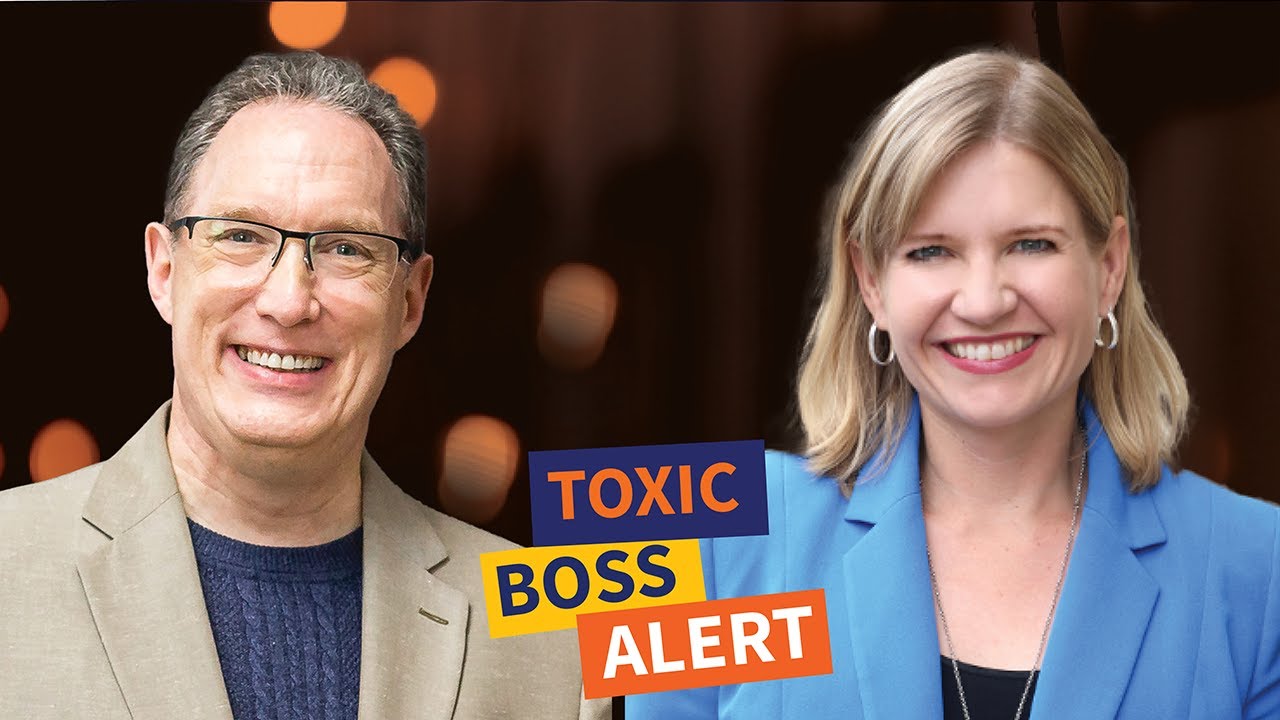
In this episode of Marc Haine Live, host Marc Haine interviews organizational psychologist Dr. Laura Leavitt to explore the pervasive problem of toxic bosses and their damaging effects on teams, productivity, and the bottom line. The conversation begins by distinguishing toxic leaders from merely difficult managers, emphasizing that toxic bosses intentionally harm employee well‑being through overt (bullying, aggression) and covert (manipulation, hidden agendas) behaviors. Dr. Leavitt outlines eight common toxic‑leader personas—gaslighter, self‑serving egomaniac, control freak, dishonest manipulator, divider, narcissist, sociopath, and others—explaining how each manifests and rationalizes their actions. The discussion moves to the tangible consequences: reduced engagement, burnout, increased turnover, medical claims, and financial loss. Early warning signs such as “hotspots,” high exit rates, and patterns in climate or 360‑feedback surveys are highlighted. Practical recommendations are offered for both organizations and individuals: hire slowly, promote cautiously, use data‑driven hiring and promotion tools, conduct climate surveys, implement 360‑feedback, enforce a zero‑tolerance policy for toxic behavior, and act swiftly to remove problem leaders. For employees, the episode advises gathering evidence, seeking legal counsel, leveraging recordings cautiously, and developing exit plans. The importance of emotional intelligence, humility, empathy, and trust in building healthy cultures is underscored, along with the value of external, objective experts to foster trust in low‑trust environments. Throughout, Dr. Leavitt shares real‑world anecdotes (e.g., a restaurant supervisor, dental hygienist, dermatology staff) and directs listeners to her website (drlaura.live), her blog’s “5 top signs of a toxic boss,” and Canada Career Counseling for further support. The episode concludes with calls to action for listeners to engage with both hosts for coaching, resources, and further learning.
Chapters
Have you ever walked into work and felt the tension so thick that you could cut it with a knife? Maybe it's the boss who micromanages every move or the leader who leaves their team feeling invisible and undervalued. Toxic bosses aren't just bad for morale. They're a ticking time bomb for businesses, driving away talent, crushing productivity, and costing companies billions every year. And that's what we're talking about today on Marc Haine Live. Welcome to this episode. This is where small business owners and entrepreneurs pick up core skill sets to create the show-stopping, jaw-dropping experience that your customers and your employees deserve. I am your host, Customer and Employee Experience Strategist Marc Haine. And today, my guest is organizational psychologist Dr. Laura Leavitt. And today, we're going to be diving into one of the most pressing challenges in today's workplaces. And maybe not just today. Maybe it was the past workplaces as well. But it's really this whole idea around how toxic bosses impact teams, productivity, and company culture, and what leaders can do to identify and address these destructive behaviors. So, stay with us. This is going to be a wonderful show. I have to tell you, my youngest daughter is a server in a local restaurant. And recently, they brought in a brand new supervisor who seemingly has not been trained in any kind of leadership principles. This new supervisor has got a particular set of skills. Skills that alienate and distance her team while devaluing the worth of the people around her. Her team members are in tears, not from sadness but from anger and frustration. Every conversation that they have out of earshot of this supervisor is surrounded by those same frustrations, fears, and anger. Most are punctuated with statements like, what the fuck is wrong with her? The door. They're draining productivity, crashing morale, and leaving businesses with turnover costs that Could fund a small island. But here's the kicker. What if the problem isn't just out there? What if it's closer to home? Maybe, it's right inside the mirror. And that brings me to our Question of the Day. So, have you ever wondered if your leadership style or the leadership style of one of your managers might be driving your team to disengage, underperform, and even leave? And what is that truly costing your business? I'd love for you to share your experience with us. Go ahead, share this episode on your favorite social media platform. Hashtag it #ExperienceLeadership and be part of this conversation. As I mentioned, our guest today is an absolute rock star in workplace psychology and a beacon for anyone navigating Navigating the often tricky terrain of modern leadership. Dr. Laura Lovett is an organizational psychologist, keynote speaker, and a podcast host for the acclaimed Where Work Meets Life. With nearly 25 years of experience, she has dedicated her career to creating workplaces where people don't just survive but they thrive. Dr. Laura is the founder of several psychology and consulting practices including Canada Career Counseling with teams across Canada helping individuals and organizations tackle career and workplace challenges. She is an award-winning thought leader, having been named a Global Influencer by the Canadian Women of Inspiration Awards. Today, she is here to help us tackle one of the most destructive forces in any business. And that is toxic bosses and how their impact ripples across teams, productivity, and even the bottom line. Dr. Laura, welcome back! I love having you back on the show.
Thanks so much for having me, Marc.
So, maybe we could start off a little bit about— could you tell us a little bit of how you serve your clients? Who they are and how do you serve them?
Sure. So, I've been running Canada Career Counseling for over 15 years now. And our clients are people from across the country who are confused, uncertain, or unsure about their career from ages 16 to 65. 55+. So, navigating career pivots, transitions, finding meaning, fulfillment, and purpose in what you do for a living. And also, we serve organizations to build better cultures and teams and leadership so people's careers can thrive.
I love that. And so, you're really talking kind of grassroots then by having people thrive within workplaces. It's not just working on the individual. It's working within the organizational culture as well?
Both. I love working at both levels.
Yeah. So, why don't we start off with how do we define a toxic boss and how does it differ from merely the difficult bosses?
That's a great question. So, earlier definitions really looked at a whole series of really negative behaviors like being narcissistic, like being controlling, overly controlling. And what I did is I did a research project recently to update the definition and to really look at what's going on post-pandemic with toxic leadership because I had been seeing a rise in it in our clientele who were suffering and struggling from it. And anecdotally, from across hundreds of Yeah. And as you work with clients, you start to see a pattern of, hey, this thing is a real issue out there. It's not getting better. It seems to be getting worse. So, I did this research and then, the definition is about overt and covert behaviors. So, covert being kind of behind the scenes, more subtle behaviors. Or overt, which is like the bullying, the harassment, the outward displays of anger and aggression. So, covert and overt behaviors. that harm people's well-being and productivity basically, and their engagement. So, it makes you not engaged in your work. It harms your health, both physical and mental. And it harms your productivity and ultimately, the organization's bottom line.
Yeah. So, when you say covert, the COVID toxicity, that would be things like personal agendas and And kind of the drive that nobody sees and nobody can truly understand except for the person.
Yeah, exactly. Like, it just happens more subtly. It's harder to put your finger on what's happening. And you asked about the difference between difficult and toxic bosses. And that's absolutely a brilliant question because the difference is toxic leaders harm and they have the intent to harm. And they're very, very difficult to correct. So, they don't do well with coaching or leadership development. Or it's very difficult to turn them into an effective leader. Whereas a difficult leader is a pain in the butt. They may be micromanaging. They may be poor communicators. But you can learn how to navigate them and work around them. And they don't have the intent to harm. So, they're not deliberately causing harm. They're just frustrating and a pain in the butt is the best way to describe it. So, that's how I differentiate the two of them.
But in both circumstances, they have an effect on people whether intentional or not.
Oh yeah.
That creates such a nasty environment.
Yeah, well, I'd say difficult bosses are frustrating and they create a frustrating environment and inefficiencies and stuff. But they don't harm people's physical and mental well-being.
Yeah.
A toxic boss harms your health and you need to get away basically. It's not a situation that's sustainable. So, I work on the dark side, the extreme side of toxic leadership. And I have 8 different personas of what it looks like in action. And gaslighting is a good example. So, the gaslighter is one of my personas. They make you question reality. They make you question what you heard and what you know. And you start to doubt your sanity. And it's a horrible, horrible experience to go through. So, that's just one example.
And so, why is it that it's so pervasive? I mean, I grew up in workplaces where abusing the staff was a norm. It was my first job. It was 1980. And there was no problem with the leaders yelling and screaming and demeaning people on shift. And in front of everybody else. And you just had to suck it up and take it. We know more now. So, why is it so prevalent?
I think that we're much more open about recognizing it. And it has a light shone on it now because health and well-being and mental health, it's more talked about than it's ever been before. And equity, diversity, and inclusion is more talked about. So safety, psychological safety, workplace safety is more talked about. So, all these things converge where it shines more of a light on it. So, it may have been happening at similar volumes. But now, we're seeing and hearing about it more. But also, when an economy is going through struggles and there are fewer resources and more concern about jobs, it brings out toxic competition in people. And so, toxic leadership does increase in those times.
Yeah, and so, I guess when we talk about toxic leaders, I guess we should— we're really talking about toxic bosses on 2 fronts. One is that we need to recognize if we ourselves are a toxic boss. And to your point, you have the intentional And you have the non-intentional. But both have the same effect on staff. And the other is that we might have toxic bosses on our team. Like, I might not be a toxic boss myself. But maybe one of my frontline supervisors is toxic. Like my daughter's situation where a toxic boss was brought in unbeknownst to all the rest of the leaders. And really, that toxic boss could be anywhere within the hierarchy. So, are there early warning signs? Are there ways that we're able to define some of the most common traits or behaviors of toxic leaders?
Yeah, no. So, that's a really good point. And I'd say the impacts of toxic bosses, and we'll call them bosses because they're not really leaders. Leaders are people who inspire and grow others. Right? So, that's why I try to use bosses as much as I can.
Fair enough.
So yeah, like they need to be identified first of all. And I always say organizations need to really get better at hiring and letting go quickly when there's these toxic leaders at play. So, they need to hire slow, fire fast, I say. And I think that being really vigilant about who you hire and who you promote into leadership is super key. And not enough times is there enough data and evidence to really make sure that the people being promoted have the ingredients to be a good people leader. You know, it's often about, well, they're good at their job and they— or they've made good money for the organization. Or they're, you know, they're friends with the C-suite or whatever it is. And they work their way up and maybe they're very political and good at managing Upwards and they climb that ladder. But what we really need to do is collect data on how they are impacting their people. Upward feedback. And if there are high numbers of exits under a leader, that needs to be treated like a wildfire about to happen, a hotspot, toxic hotspot I call it. And it needs to be addressed swiftly. And I don't see that happening enough. It's like, oh yeah, that's happening. But The toxic boss is very good at making excuses for why. And they're never about themselves.
Right. But to your point, when the exits start to happen, this becomes a situation too little, too late. Is there anything that would indicate that a problem is existing today within somebody that we promoted or somebody we brought on board, or even a change of behavior of somebody. Because maybe you had somebody and over time, bad behavior wasn't being recognized and wasn't being addressed. And so, I believe that bad behavior will always evolve into worse behavior.
Yeah, so it's about treating those early behaviors and the signs seriously. And oftentimes, it's Yeah. HR, our wonderful HR leaders and partners that end up hearing it first. But HR can be in a very difficult position to do something about it if the toxic boss is above them in the hierarchy. That can be very difficult because HR is part of the organizational fabric. They're part of the politics. So, if they say, wait a minute, like that new vice president, there's some issues going on. But I mean, they may not be in a position to influence that decision if that new vice president is very good at managing up to the C-suite and managing sideways to their peers. And what do you mean? They're great and they're bringing in a lot of money and projects and new clients. Like, what do you mean, right? You know, oh, that's just a whiner. That person's just whining. And then, it gets snuffed. But it is a spark in that hot toxic spot that I think we need to just have a zero tolerance policy for really bad behavior and identify it and deal with it swiftly.
Well, and a lot of the bad behavior thing happens within crisis. I've always said that really the true test of leadership is when things are going horribly wrong because we see right away where the value systems get compromised. Or where their leaders actually will walk the talk is going to be through crisis. But we do see that the more pressure we put on leaders and so on, the more we'll see behavioral changes. And those behavioral changes in themselves could result in toxic behavior of some sort.
Yeah.
So, how do we address that? How do we check in with ourselves to be able to figure out, okay, is my behavior being toxic? Am I, first of all, am I the cause of the culture issue? And if I'm not the cause, how can I support to figure out what is the cause?
Well, it takes great vulnerability and the ability to have self-insight to do what you're saying. I mean, I think a wonderful way to do that is a 360 feedback. That's just fantastic. My whole team just did them recently. I have a report. But it's about being vulnerable enough to look at that data and to debrief it with someone you trust and to say, okay, I may not agree with everything in it or I didn't intend to come across that way. But I'm going to put in place some things that I don't do that again and I shift my behaviors.
Yes.
And that type of self-insight is really, really important. But I go back to the point that toxic bosses, which are the extreme of that continuum of great boss all the way to toxic boss, the toxic bosses have real trouble doing that because one of the things they're lacking is self-insight and empathy. So, it's very difficult and their egos are massive and it's very difficult to see beyond their own ego. And you need to be able to do that to take that feedback, that difficult feedback, and grow from it as a leader.
Right. And so, there's a definition between bosses and a leader is that you would have some levels of insight. You said that there are 8 different types of personality types that define kind of these toxic, intentionally toxic people. Can you describe a few more of them?
Yeah, no. And I call them Yeah. So, a toxic boss can have one or more of these personas and it's usually more than one that they have. So, there's this self-serving egomaniac who's all about their own career advancement, their own money, their own success. And they don't really care about other people around them unless those people will help build up their own success. So, I think a lot of us can relate to the self-serving egomaniac. There's the control freak, which it's not just your everyday micromanager. It's like their micromanagement on steroids. So, they need to control everything. And it's very difficult and suffocating reporting to the control freak. Then, there is the dishonest manipulator. So, they are inherently dishonest. They lie to advance their own agenda. They manipulate, which is a covert behavior. So, they manipulate situations and they're always manipulating the environment. So, they create an environment of deep mistrust. And then, one more I'll give you is the great divider. And they're very good at dividing people against each other, pitting people against each other. And I've seen it a lot in my research, either it's on their own team, they'll have their favorites and their non-favorites. And they'll pit them against each other or even with other teams and people in the organization. They thrive on dividing because it gives them more power. They believe it gives them more power and control if they can divide people.
And what's interesting about each one of those personas, those leaders will have justifications for how they behave. Like the divider will say, Hey, you know what? I'm just trying to create a really positive competitive thing so that they start elevating their game. Right? And, you know, or I remember having one toxic leader where he used to, when somebody pissed him off, he used to, even though the person wasn't in the room, he would slam that person to all the other employees. And when I pull them aside and I say, Oh my God! Can you understand how dangerous this is? Like how toxic this is? He goes, no. He says, what I'm trying to do is I'm trying to let everybody else know and put them on notice that I won't tolerate it. It's like, well, isn't that an interesting way to do it?
Yeah.
And so instead, right? And of course, it's heavily toxic. And of course, there are studies that show that people who see kind of bad behavior towards other people within the work environment, it will affect the people who witness it as well.
Absolutely! It's a ripple effect. It's horrible to be a bystander and seeing this in action. And if you end up trying to do something about it, then you can be targeted as well is the way it tends to happen with a toxic boss.
Sure. I'd love to dig into some actionable strategies that we can use to recognize toxic workplace behavior and what leaders can do to kind of turn that tide. And we'll get to that right after this.
When the spotlight shines on your business, are customers applauding or yawning? In other words, how is your business performing? Make your business a star with a new book, Lights! Camera! Action! Business operational excellence through the lens of live theater by Marc Haine. Marc uses his business and acting experience to help you see your business like a live show so you can create a performance your customers will never forget. Buy Lights! Camera! Action! today at your favorite online retailer or directly at marchaine.com.
Welcome back! I am speaking with the fabulous Dr. Laura Lovett. Laura, there are a waft of consequences to having toxic bosses within our ranks. What are some of the conditions you've seen that have affected kind of the business and the people around you, around them I should say?
The conditions that have let the toxic boss cause more harm?
Yes. And what's the outfall on the consequences of the team and stuff? You mentioned, we mentioned people quitting. But are there other indicators and other Yeah, I mean, absolutely.
So, there's an environment of distrust that's created. Engagement goes down. People are less engaged. People are exerting more of their energy protecting themselves and navigating a distrustful environment that takes away their creative and innovative energy to do their job and do their job well. And then, it starts to erode their well-being. So, they're more exhausted. And I'm doing a new research project on the link between toxic leadership and burnout across 4 generations. So, we can look at some of the differences in how the different generations handle toxic leadership and burnout as a result.
It's so interesting because when you mention like the different generations, of course, each of the generations would handle this differently, right? Like, again, being a baby boomer, I know that there are aggressive Type A personalities in the workplace who are going to be thinking that I'm under their thumb. And we have to deal with that. But for people working under a toxic boss, what are steps that they should take? Because to your point, when it's HR managing, dealing with somebody above, It's like, how do we turn this tide?
Yeah. So, I always say, again, collect your information. Collect the data. Turn a very keen ear to what's going on and where the hotspots might be. Education is really important too. So, we find that there's There's a fair amount of education now on bullying and harassment and sexual harassment and what that is and what that looks like. And that's a form of abuse that we need to shine a major light on. However, there's not enough on the other types of COVID toxicity that happen because a fair amount of it is actually covert and you can't easily see it going on. It's kind of behind the scenes like a snake in the grass situation. And we need to shine a light and educate people on what that is and what the impacts of it are so that people can start to identify that sooner and do something about it sooner for themselves and for others in the organization when they see it going on.
Yeah, but to your point, sometimes it's really subtle. It's very small. It's very like, I'm sure everybody who's tuning in could think of a time when somebody said something and you went, that's really strange for that person to say something like that. Right?
Yes.
And I got to the point where I started calling it out. I would say something after like some sort of a cruel comment or aggressive comment. That's really interesting. Why would you say that? And all of a sudden, it forces that person to all of a sudden go, oh! And now, they start to backpedal. And now, it's like, oh, I was just joking. What? Can't you take a joke?
Right?
Yeah. But the fact that we call it out starts— they start second-guessing whether or not they should act that way around you. Is that fair?
Yeah, yeah. The more it's called out and unacceptable and, hey, we learned that in this workplace civility training and that You know, this goes against that. Or, hey, that didn't feel right. That, you know, I saw the way this person reacted to what you said and that just didn't sit right with me.
Yeah.
You know, those sorts of conversations I think start to build a culture around we're not going to tolerate toxic behaviors at work. But you need to know that people have your back, that senior leadership has your back, that HR has your back, that when you call out these things that you're not going to be at risk of punishment or at worst, losing your job. And that's the problem in a toxic workplace. Those are very real risks.
What would you say? I've been watching a fellow on YouTube. He does these shorts where people will publish kind of recordings of conversations they've had with their bosses because of course, everybody carries these around now. And to do a recording is very, very simple, or email threads and that sort of thing. What is your advice to employees who might want to kind of leverage the technology to kind of help them build their case?
Well, that's tricky. So, what you're saying, Marc, is recording conversations without the boss's knowledge?
Yeah. So, like the employee goes in knowing full well that they're going to have a very challenging conversation with their boss. And so, they started recording and put the cell phone in their pocket.
Hmm, that actually makes me think that I would like to talk to an employment lawyer about that. Now seriously, and I have—
No, it's true though, right? It's something we have to consider because—
Yeah, to know like, is that evidence that could be used? So, if I work for a toxic boss and I get recordings of them harassing me, maybe bullying me, maybe sexual harassment, whatever it is. Is that defensible if I were to file a claim? That's a question I don't want to answer because I don't know for sure. But it's something I'm going to explore. Yay!
And so, for the audience tuning in, maybe this is a seed. It's something we need to explore because I do know that when people get into desperate situations, And you're absolutely right when people go because you have managers in the back room and it's like, oh, Donna said this. Oh, she's just a whiny-ass crybaby. Don't listen to anything. It's not worth your time. And it's like, no, wait a second. This is an individual. This is a person on our team. But it's so easy for the ones, especially the narcissists and the control freaks and so on, to disclaim any reports just saying, they're just so overly sensitive. It's like, They cry at the drop of a dime.
Oh yeah, totally.
This is such a great conversation. Just out of curiosity, if people are tuning in and this could be triggering in some form or fashion, or somebody knows that they need help, how could they get a hold of you if they want help?
Well, I'm definitely at drlaura.live is my website. And I have a contact form there. I'm also on all the social media channels, and I like to engage in dialogue with people. You can shoot me a private message. If you are struggling and feeling like this is impacting your mental health, depression, anxiety, any of that, we definitely have helplines and resources in different geographies that we can share with you. This can be very traumatic.
Okay.
So, toxic leadership is a trauma-inducing set of behaviors. And we find that people when they leave a toxic boss, what they say is, I wish I had left sooner. And second, they say, it takes a while to get over it. I have to go through a full recovery mentally, physically, emotionally. It takes a while to recover because it's like being in an abusive relationship.
Absolutely. And in fact, to that point, I have a friend of mine who's a dental hygienist who ended up quitting because of a very toxic boss, the dentist. And she left, went to work for another dentist, and was treated worse by that dentist.
Wow!
And now, she is out of the workplace because she just In her mind now, she equates the trauma of working in a dental office with the abuses that she suffered as a dental hygienist in these 2 organizations. Even though her very first organization she worked in was absolutely stellar. She had a wonderful leader who helped support her growth and so on. But the other 2, it's like if she came up with ideas because of course, a dental hygienist first and foremost with the patient. And they're there to represent the patient. But then, when they went to the dentist, the dentist just shut them down because, you know what? You're not a dentist.
I had someone I hired. She worked for dermatologists. And same thing. They were really abusive and toxic. And she ended up crying in her job interview because I'm able to show empathy around this. And I think people know that I really care about recently with another hire. And I'm thinking, what is going on, right? That you have to leave a workplace that would lead you to cry in your job interview. It's so toxic.
Well, and the same thing happened with my daughter. My daughter's like early 20s. And this toxic leader got hired. And she's out back with her co-workers. They're crying not because they were Sad. But she was just so riled up and so frustrated with everything because nothing seemed to work. And the fact that the head manager and the supervisor had some sort of a relationship, it wasn't a romantic— they were friends or something. And so now, it's like, oh, now I can't even go to my boss to report this. And so, the frustration level just grew and grew to the point where at some point, the head manager figured, found out about it and was able to start addressing it. But my goodness, it just makes going into work nasty, nasty, nasty.
Yeah, I'm so sorry your daughter has had to go through that. And hopefully, she'll be able to avoid that in the future. I mean, one of the things I'm writing in my book because I'm writing a book on this topic is how to spot a toxic boss before you accept the job offer.
Yes.
And I actually just wrote an article. So, on my blog, on my drlaura.live/blog, I wrote an article exactly on that that just came out yesterday. And I have the 5 top signs you should look out for and how you can minimize your chances of the next toxic boss. You can never eliminate it entirely because some of the COVID ones are very sneaky. But you can minimize Your chances.
Love that. And we will put a link. I'll make sure there's a link to that blog in the show notes so people can go directly to it because it is a scary situation. And it's one that makes us feel like we have no control at all. And when we don't feel like we have control, we just throw up our hands and it's just a miserable, miserable time for everybody.
Yeah.
For leaders out there who have multiple hierarchies and such. How can organizations proactively prevent toxic leadership from taking root within their organization?
Hire slow. Promote slow. Use lots of tools and data in your hiring and promotion decisions. Bring in the experts who know about the DNA or the ingredients of people leadership because it's not a set of skills or ingredients that we all have. Certain people have the competencies and attributes that they can lead people. And others, keep them in technical roles. Keep them as a brilliant technical expert or subject matter expert. But don't put them into people leadership.
Yeah, there's so many people who get promoted because they were great performers. And then, they get promoted into leadership roles without the training, without the skill sets because the skill set that got them to be recognized as a technician is not the same skill sets they need to be really effective leaders.
Exactly. And then, when you see the hotspot, don't ignore it. You know, you gotta deal with that hotspot. Spot. And you need to deal with it swiftly and it'll take courage. And yeah, some people just can't stay. They just can't stay. And I think we hang on too long and sometimes we expect that we can develop the person, we can help them grow. But you need to understand what is growable and what is just purely a toxic risk Yeah.
And I love that you use the word hotspot. This idea of not ignoring it because again, I've watched many different organizations and it's like, yeah, well, I knew she was a little bit of a problem. But we're short-staffed and we figured it would work itself out. And so, this idea of explaining away the bad behavior is so dangerous and so damaging.
You said it so well, Marc. It's explaining it away. It's making excuses or it's ostriching. Like, I see that. I'm so busy. I can't deal with that. That's a 2025 issue or that's an issue for the next quarter. And then suddenly, you've lost a couple more people. There's a couple more medical leaves happening. And numbers of medical leaves happening under a leader or in a department is a sign of toxicity as well. Sure, some of them are medical health issues and stuff. But some of them are burnout. And either way, physical health or mental health, both of them are impacted by toxic leadership.
And when you think that now, mental health here in Canada is a WCB claim, right? It's now you're going to lose productivity. Now, you're going to have people out stepping out of their roles to go and deal with the mental anguish and the turmoil that this all creates. So, we need to get a handle on it. And I'm still really shocked that it still happens in the degree that it happens.
Me too. Me too. Like, it sounds like we're aware. Yeah, like the MeToo movement. Thank goodness that happened because that's opened a lot of important Discussions and cases. But oh boy, it's not over, right?
Yeah.
It's like a slippery slope. We can go back in time so easily.
Yeah.
And same with toxic leadership, workplace culture. The pandemic, I saw some really good humanistic behaviors going on during the pandemic where it was a chance to kind of rehumanize work. And then, I'm seeing that sliding again.
Yeah, it's interesting.
Oh, I trust you to work remotely. I trust you. Oh yeah, when I need you to. But as soon As soon as I don't, your butt is back in this seat, you know, full-time back in this seat. Well, wait a minute. Like, do I really need to come in 5 days a week and spend 10 hours commuting? Like, really? To do a job where I'm at a computer anyway? Yes, you do, because your butt in the seat is part of our healthy culture.
Yeah. Yeah. I feel the anguish. Like, as you're telling me this, it's like I see so many different scenarios. And so many different people who it's like, really, can we give our head a shake? And let's think about what we're talking about. Let's think about what we're doing and be more intentional. And to your point, you mentioned the word trust earlier. And we have to have the humility to understand how we operate. We also need to have this idea that we're building a community when we have an organization. And within that community, we require And it's like, how do we do that? So, what I'd like to do is I'd like to, for the people who are tuning in and thinking, yeah, I gotta make a change. I'd like to get in some pitfalls to watch out for and some cautionaries. And we'll get to that right after this.
When you're delivering an important speech to a huge audience, it's easy to lose your place or go way over time. Give yourself an advantage with the Pro Speaker Presentation Speech Timer app. No more checking your watch or calling for time. The Pro Speaker Presentation Speech Timer app keeps you on track with easy-to-see timers, even changing color for visual prompts during your speech. And you can set audio cues to practice or set it to vibrate so you don't even have to look. Be the pro you know you are. Download the app at speakerpresentationtimer.com.
Welcome back. I hope you're getting tons of value from today's episode. As you can tell, Dr. Laura and I are on a mission to support businesses just like yours. So, if you belong to an organization that could use our help, or you or someone you know might be planning a leadership retreat or a conference, drop us a line. We'd love to serve you. We'd love to explore how we could be of service to you and your people. So, make the call. So, Laura, could we talk about the role of emotional intelligence? And what it plays when we talk about this idea of workplace dynamics.
Wow, okay. So, emotional intelligence. That's, I mean, it's a broad topic. Emotional intelligence is a whole like a series or set of—
A whole episode just on emotional intelligence.
Yeah, yeah. And to be honest, like it's something that's, yeah, it's an important piece of this this whole pie. And I view it as like one of many important parts of being a great people leader.
Yeah.
So, it's kind of, yeah, we need emotionally intelligent leaders and we need leaders that are a whole bunch of other things. And part of that depends on the organization and the field that we're in, the specifics that we need. But there's a lot of common things that we need across all leaders like I would say humility is a huge attribute. Being an empathetic leader is another one. Being a leader who focuses on developing and growing your people. And that's caring about your people's development. And emotional intelligence is understanding. I mean, there are different elements to it. But understanding the nature of humans and relationships and being able to manage your emotions Effectively when you're dealing with them. And that requires deep listening and great communication and a whole bunch of other things. So, I would say we need emotionally intelligent leaders. But we need leaders that are a whole bunch of other things too.
Yeah. And again, some of the skill sets we can train and we can coach. But to your point, where we have intentionally toxic people, Because of the level of narcissism, the level of control, and so on. The power dynamic that some people need to have affecting the whole tone of one's corporate culture. We can't— it's almost like the difference between somebody who causes an accident and somebody who by accident and someone who intentionally harms people, right? And so, it's almost like the criminal side of that intentionality, isn't it?
Yeah, exactly. And that intentionality is scary. And that's why 2 of my personas are the sociopath and the narcissist. And both of those are scary patterns. And we use the word narcissism a lot. We throw it around a ton. And a lot of people Diagnose others with it, like, my ex is a narcissist, and stuff. And yeah, they may be, and sometimes they are, absolutely.
Mm-hmm.
But narcissism as a series of behaviors and traits is a really scary thing. It's very, very damaging. I ended up doing 4 podcast episodes on my earlier season, I think it was 2 seasons ago, where I explored narcissism with 2 leading experts in North America because I was dealing with it and seeing it, and I'm like, I need to know more about what this is. And now, I know a whole lot more than I used to because it's a term not to be used lightly.
Yeah, and it's not just a word you throw around and just finger point on. There is real damage behind the whole title. For people who are tuning in and want to kind of diagnose their corporate culture, they know things aren't quite right. They're not quite sure what it is. What's the first step that they have to take?
Well, I always am a fan because I mean, I've seen how well this works. It's called climate surveys. So, engagement surveys are typically an annual, how's our engagement level? And a lot of them are benchmarked, meaning they ask the same sorts of questions like Gallup, for example. Same sorts of questions across a whole bunch of organizations so you can see how you're Fairing compared to others. But a climate survey is about the specifics of your organizational culture. So, we as organizational psychologists, we target the questions based on what we need to learn about and know about. And sometimes, we'll even ask the people, what do you want to be asked about by us? And people will say, we want to be asked about this or that or the other thing, or our resources, or our management. or communication. So, we'll make sure to target questions in a way that gets the information. And then, you give people the opportunity to give open-ended feedback too. You analyze it and you get a clear indication of, okay, here's what's going on. And we won't work with organizations unless they commit to sharing what they're going to do about the feedback and sharing the aggregated feedback with the people. So, here's what we learned. And here's what's going to happen. Here's our longer-term plan and here's our shorter-term quick wins that we're going to implement immediately as an organization. And that's the way to do it.
Lovely! For the people, my biggest fear always is I've worked in lots of organizations where somebody, a new leader would come up with a piece of information. It becomes the policy of the month, or the procedure of the month, or the band-aid. Are there any cautionaries or pitfalls about making changes to our corporate culture when we do find that we have a problem? Anything we should be aware of?
Well, I think when we find we have a problem, we need to make sure we're addressing the root cause of the problem. That we are— maybe we need to collect more information. Once we find out there's a hotspot, we need to go deeper and understand it. And I would say, having objective people involved is always good because you get that objective lens. And people are more likely to open up when it's an objective party like an organizational psychologist that it's confidential, etc. You know, we want to— we're working for you to help protect you as well as your organization versus if it's someone internally, they're part of the political fabric. And it's tougher, right, to know if you can open up to them and your job will still be safe.
Yeah, so it's interesting because in an environment where the trust is low, you can't solve this on your own because you need a definition of a way how can people trust when you're asking them to divulge certain information. How can you create that trust? And I think the only way to do that is by bringing somebody outside in to make that happen. Yeah. Dr. Laura, this has been really fantastic. Could you just remind everybody one more time how they can get a hold of you?
Oh sure, Marc. So, drlaura.live is my platform where I have my blog, the podcast Where Work Meets Life. And I love speaking as well. That's how Marc and I met, the Canadian Association for Professional Speakers. And Marc is a heck of a speaker and I love the speaking community. It's so much fun. And then, canadacareercounseling.com is really where to go for people who are confused, uncertain, unsure about their career, or suffering from a toxic leader, for example. That's where all the one-on-one psychologists on my team reside and where we do the workplace stuff like climate surveys, leadership development, emotional intelligence-related stuff. whatever it is to help build a healthier workplace culture.
And on your website, I think I did see a link for a 15-minute free discovery call if somebody's having some challenges. They need to speak to somebody.
Oh yeah, 100%.
Terrific! Dr. Laura, as we wrap up, do you have any last thoughts about what we've been talking about today?
If you have a toxic boss, if you're suffering from one, Please know that you're not alone and you do need to get out of it. And there is a way forward. Please don't feel stuck. There are better opportunities within your organization or externally. And making a clear exit plan is something in your grasp.
I love that. Thank you. Thank you so much for coming back onto the show. I really appreciate you being here and to share your knowledge and your expertise. It's just been so brilliant. And this is a conversation I think we need to have more of in the workplace and outside of the workplace because we have to get to the point where we can no longer tolerate this. So, thank you so much.
Oh, you're so welcome, Marc. Always a pleasure.
So, if you have any questions about today's episode or you would like a complimentary 30-minute brainstorming session with you and your team, feel free to book yourself on my online calendar. The link is below. It's at meetwithmarc MarcHaine.com. As always, I am at your service. And if you haven't done so yet, please, why don't you go ahead and subscribe to this feed? That way, you'll get notifications when I bring you new episodes each and every week with absolutely fabulous experts like Dr. Laura. And please make sure that you follow me on social media, especially on LinkedIn. Feel free to engage. I'd love to be in a conversation with you. Thank you so much for joining me today. My name is Marc Haine. Thank you, Marc. I hope you stay safe, stay healthy, and I hope you dare to be the exception.









