Transforming Work-Life Balance: The Power of Assertive Boundary Setting
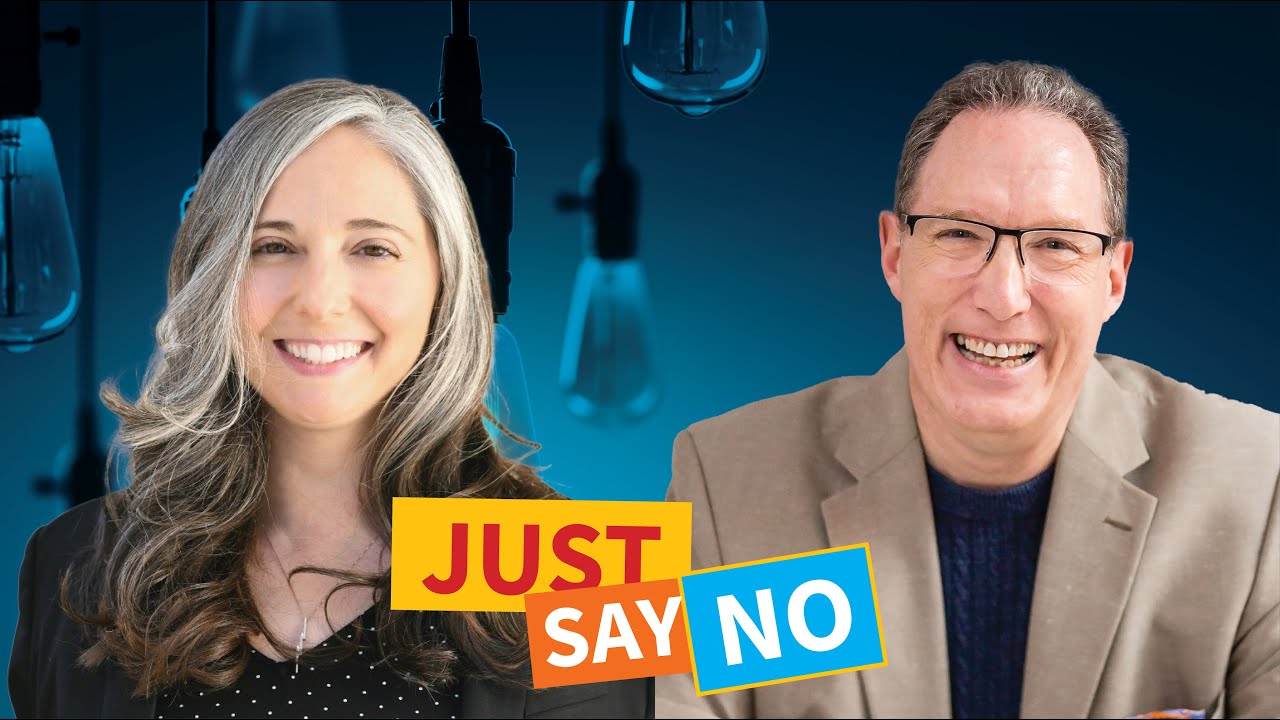
Marc Haine talks with Cheryl Greene, the Boundary Sage, about setting limits at work. They cover signs you have weak boundaries, how scope creep happens, when to fire clients, and exact phrases to use when saying no.
Chapters
Have you ever felt overworked, stressed out, or even overwhelmed wondering where to draw the line between your personal and your professional life? Ever found yourself in a situation where you've been pulled into tasks and responsibilities that you have never signed up for? I think we've all been there. And that's What we're talking about today on Marc Haine Live. Welcome to this episode. This of course is where small business owners and entrepreneurs develop some new skills to help them create the jaw-dropping, show-stopping experience that their customers and their employees deserve. I am your host, Service Expert and Master of Experiences Marc And it is so great to have you here joining me today. I know that the newest commodity of course is time. And the fact that you're spending time here, I hope that we can earn the return on investment for you. My guest for this episode is the Boundary Sage, mental health speaker and author Cheryl Greene. And today, we will be peeling back the layers on the critical yet over- looked at aspects of establishing clear and effective boundaries. We will be talking about the risks of blurred lines and learn how to say no assertively and to discover how maintaining your ground can significantly improve your relationships, your mental well-being, and of course, your overall business success. My one ask of course is that if you know somebody who could use this information, please share a link to this episode. Knowledge is power but only if we share it. So, if you have somebody out there who's just so busy with blurred lines of balance, share the episode. Business environments really are increasingly becoming stress incubators. They're impacting everyone from owners all the way to frontline employees. And guess what? Your customers feel it too. The constant pressures and demands are creating volatile conditions. And the failure to establish solid boundaries is magnifying every negative outcome. It leads to poor relationships, huge mental strains, and of course, It impairs business success. So that brings us to our Question of the Day. So I need you to be honest. Have you ever found yourself stretched too thin, committing to tasks and responsibilities only to realize it's impacting your well-being and the quality of your work and of course, your relationships. What have you tried in order to overcome that? I'd love for you to be part of this conversation. Again, share this episode on your favorite social media platform. Hashtag it #ExperienceLeadership and be part of this conversation. I look forward to getting some comments and hearing some of your stories as well. As I mentioned, my guest today is an incredibly inspiring individual whose journey from Extreme people pleasing led her to an enlightening revelation about the power of boundaries. Cheryl Greene, once oblivious to the concept of boundaries, encountered a metaphorical brick wall after spreading herself way too thin. Today, she is a beacon of knowledge empowering others to strike a balance in their lives. Cheryl is a prolific author, With 6 titles under her belt, including her brand-new book. Point to it. You had me at no. Her vast professional background spans fields like mental health, public relations, and education, all backed by a Master's in Forensic Psychology. Beyond her professional achievements, Cheryl's heart beats for the voiceless. dedicating resources and hundreds of hours to animal rescue. Off the clock, she is nurturing a mini jungle of 180 houseplants, practicing yoga, and cherishing moments with her husband and her 2 fur babies. Cheryl, welcome to the show. It's so nice to have you today.
Thank you so much. And Marc, you are gonna have to come to networking events with me because you just introduced me better than I've ever done for myself. So, clear the calendar.
There you go. We'll transcribe it for you. You could send it out before every networking event.
Perfect.
Before we get into today's topic, could you tell us a little bit about how you serve your clients?
Yeah, so I work with clients through workshops, through keynote speaking. Basically, I want to be there to help you Learn how to establish boundaries and how to maintain them. Because getting them done in the first place is wonderful and necessary. But if we don't actually stick with it and continue to maintain those boundaries, then they go by the wayside and we're right back where we started.
And I don't know if it was COVID. But it just seems to me that mental health has become such a huge topic these days. When we've had like, I'm the last of the baby boomers. And we've had generations of workers and managers who just took a, just suck it up attitude, right? What's going on that's making this such a prevalent conversation these days, do you think?
I think with the generational changes, we're becoming more aware that this is actually a And that it's a problem that there is a solution to. You're right. I mean, it was just the, the just suck it up generation. And look, now I think people can take things a little bit too personally. We might be going, you know, in the other direction, swinging a bit far on the pendulum. But there is that happy medium where we can be respectful of each other. And we can be respectful of ourselves. And honestly, that's where that positive mental health is going to come from. We're seeing, you know, unfortunately, all the school shootings and all hate crimes, and we're seeing so many things pop up now that if we did have to deal with them in the past, we didn't really talk about it. Like, we didn't see it. And now it's like, okay, there is a problem in society and we need to Well, we didn't see it until we heard about postal shootings.
That was really what for me as growing up, that was really kind of the catalyst of this idea of all of a sudden, people are blowing up at work and that sort of stuff, right? And it just seems to expand exponentially now because we're hearing it all the time. We're hearing there's like a mass shooting every single day somewhere.
Yeah.
And it's like, Why don't we start off by talking a little bit about what boundaries are and why we are not setting healthy boundaries?
So, I like to talk about boundaries in terms of physical boundaries because that's the easiest one to understand. Picture your property, your house, your farm, your mansion, whatever it may be. You have a property line and that is theoretically protecting you from people coming onto your property and doing things that they shouldn't be doing. For example, you'd be a little irritated if you came home and found that your neighbors were throwing a party in your backyard. Okay. It's your space and they're encroaching on it. Okay. I use this because I'm an animal lover, obviously. You'd be upset if your neighbor was letting their dog use your front lawn as a toilet. Because again, this is your space. So boundaries, whether they're emotional, physical, mental, sexual, financial, material, any of those, it's where you end and somebody else begins or vice versa. And it's how you are willing to be treated, How you accept being treated and how you treat others. And unfortunately, this is not something that many of us were taught growing up. I was thinking about it yesterday. I don't think the word boundaries ever came up when I was a child. Like, I don't remember a single conversation around it. For me, it was just like, well, you're part of the family. You do what we tell you to do. You're here to make everybody else happy. And we don't have that knowledge growing up. And in the book, I talk about, consider gravity. If you grew up in a space or in space, I should say, outer space without gravity and nobody told you that it existed, you'd come to this planet and you'd be like, why am I stuck to the ground? You wouldn't understand it. For most people, that's what boundaries are. You know, we didn't learn about them. So if we even know they exist, we certainly don't know how to work with them and what a healthy boundary looks like. So as much as I hate to blame the families and the parents and, you know, bring Freud into this, but we just didn't learn. We don't know. And our parents didn't either.
It's because, of course, growing up, you know, in the— my first job was in the late '70s, 1978. It was my first job. And it was— you were there to do the work. You keep your mouth shut. You do the work. And that whole thing of you drove whatever your manager told you you had to do. And turning around saying, no, I don't think I want to do that. No, you know what? It doesn't feel right for me. It was you just did it.
Right, right.
And so, today now, it's forcing us to start thinking a little bit more intentionally. I do know that For me, boundaries is an issue. My wife is probably watching this going, he finally said it. He finally admits he has boundary issues. But could you describe some early signs or some symptoms that someone might be struggling with who've got poor boundaries in their professional and maybe even in their professional life, in their professional and maybe even in their personal life?
Yes. So look, if you are feeling overwhelmed, I had a client say, at the end of the day, it feels like there's nothing left for me. If that resonates, chances are you've got some boundary issues. But what made me realize it, that there was a problem before I even knew it was a boundary issue, was I was resentful of everything, including the people I love. I was at the point where I didn't want to do anything. I had a request from my parents who I'm very close to, a request from a friend, a client reached out to me, and I am grumbling under my breath, how dare you? And it was just this realization that I was resentful of everything and everyone. And I'm like, this isn't me. I'm normally a caring person. I believe in service. I want to be there for these people that I care about. And I couldn't find it. I couldn't find it. So if you've got this underlying resentment and you're like, why do I suddenly hate everyone and everything? You probably have a boundary issue. And the last thing I'll say, and this isn't going to resonate with everybody because I realized The entire world doesn't cry quite as much as I do. But if you are crying all the time and you can't understand where it's coming from, there's a good chance you've got a boundary issue.
Yeah, it's amazing. Of course, my background is in hospitality and we are constantly on. For an 8-hour shift, you're on. You're there to be of service. And so, to that point, I do resonate with that whole aspect of, I just wish people would just leave me alone now. I just want them to all go away because I don't want to have to deal with another person for a little while.
Yeah.
But I guess, is it fair to say that boundary violations or feeling overwhelmed, these are kind of like a roller coaster that you'll feel it more times than other times?
Yeah. And I think, you know, we're going to have points in our lives where we can handle more. You know, we were talking before, like, I'm in the process of buying a new house. Like, now's not the time for me to be taking on other people's things, other people's priorities, I call them. If you have a new baby, like, your friends really shouldn't be, like, you know, calling you to complain about their day at work. Like, there's, there's times in our lives that, that we can handle more, and that requests or demands on our time and our energy are not going to be seen as these boundary violations because they're really— they're, they're acceptable. They're just people helping each other get through this life.
Sure.
I do think sometimes we've reached that boiling point, and that was, that was what happened to me. And we said hit a metaphorical brick wall. I almost hit a physical brick wall. You get to this point where it's like, I can take no more. It's done. Something has to give or I'm going to physically and mentally break.
Mm-hmm.
So that's what we want to avoid because it's not necessary. Let's stop before then and figure out what we're doing.
Yeah, and it's interesting. I did read parts of your book. Unfortunately, I didn't have it long enough to be able to go through Plato Post. And I appreciate the fact that you're very vulnerable in talking about this metaphorical break that you had and how it kind of was really actually the catalyst for you changing your whole philosophy about work. We do know that there are some things that we can expect that at some point, people are going to cross boundaries. But what about this idea? How can people recognize when their boundaries are being consistently violated? Are there any particular feelings or situations that really stand out?
Yeah. So look, there are going to be— I call them boundary busters in our lives. They're the ones that are going to be consistently disrespecting boundaries that you have established. And boundaries that you haven't yet, and we can talk about that later. But those boundary busters, like, you're gonna know who they are. You're gonna— when you pick up your phone and you see someone calling and your instant response is to curse, or do whatever your, your thing is if you don't curse, if you have that reaction every time someone calls, There's a good chance that they're one of these boundary busters for you. The other thing, and I like to share this, this is not when it's being messed with every time, but our bodies know things that our brains do not.
Right.
And when you get that tightening in your throat, that like gross feeling in your stomach, when your heart starts pounding, when somebody requests something of you, when they just call, when they, you know, they're asking for help, they're inviting you somewhere, and your body is literally screaming like Danger Will Robinson, make a run for it, like back up, you know, fake your own death. Exactly. Like whatever your body is saying to you.
We've just made a reference, by the way, that Oh, there we go.
There you go.
I knew this was gonna happen.
Okay, is that it?
Oh, who knows? It's probably gonna go off a couple of times, but it is what it is. Que sera sera. But it's, you know, we just made a reference that like Gen Xs won't get.
Yet.
So if you're watching this and you didn't get that reference, Google Danger.
Danger Will Robinson?
Will Robinson. That's what it was. It's interesting because you say about the stress. How it manifests in me is I just want to get so many things done that I actually feel almost like an itch all over my body. It's like I get this kind of like, it seems like every synapse is just firing. I just want to do so much. I have so many things. And that's my stress load. It becomes, oh, I got all this stuff I want to get done, all these things I want to do. frustrated with the fact that I can't get to this. Is that one of the signs of the boundaries or is this just my kind of psycho overperformance?
You know, I think it's going to be different for everybody. Is that your sign? It could very well be. It's like a tell in poker. Everybody's going to have their own. But I would more look at Why do you have a desire to get all the things done? Where is that coming from? Because what I've seen with myself, what I've seen with my clients is that is usually a sign of people pleasing behavior.
Hmm.
That I have to get all the things done. I have to do everything for everyone. And usually people pleasing behavior is coming from a fear of not being liked. From a fear of not being included. And people laugh at me when I say this, but part of my background is in anthropology. So I'm always thinking from the individual and the group. And we're afraid of being eaten. That lizard brain of ours is still going back to a time when if you weren't accepted by the tribe, if you didn't please everyone, if they decided, like, eh, we're done with Marc. He's, he's out. You literally became lunch for a passing wildebeest. You no longer had the protection of, of the tribe and of your people. So I know it sounds ridiculous, but I have to do this with myself. When I, I find myself getting into this people-pleasing behavior, I have to stop and go, Cheryl, are you afraid of being eaten? Because it's ridiculous. We are not in that civilization anymore, or lack of civilization, however you want to put that. We're not in that world anymore that being, you know, cast out means we're going to be lunch. But we still have that. So I would, the next time you've got that itch and the next time you feel that, I would really ask yourself, where is this coming from? Am I trying to make other people happy? And am I afraid of being lunch?
Yeah, there you go. That should become a hashtag. Hashtag, I'm afraid of being lunch. Whenever I feel that way, maybe I'm going to post something and go, hashtag, I'm afraid of being lunch.
Please, please.
There'll be a new thing, right? You could put that in with your book every time you publish your book now. Every time you do a thing for your book. I'm afraid to be lunch. From a business perspective, what risks do organizations, companies, teams face when they don't establish clear boundaries with their clients, with their vendors, or even with their team members?
Yeah. So look, I did the hard route to entrepreneurship, which is the I didn't ask anybody. I didn't have anybody in my family that was an entrepreneur. And I just kind of put myself out there and was like, I'll write for you. And I'm a good writer. And I learned the hard way about scope creep. And if you are in any kind of service industry, I don't know that this happens so much in goods, but in the service industry, somebody asks you to do something and you agree to it and you give them a price and you're all Happy. You're like, woohoo, I'm gonna make some money. And then they come back and they're like, oh, well, you know, you're gonna do this too, right? And, and you're like, I guess, like, I guess I should. Is that— I guess that's part of it. Okay, cool. And you're gonna do this too. And it just keeps going until, one, you don't recognize the project that you signed up for. 2, you are making pennies on the dollar of what you should be earning because now they're kind of, I don't want to say taking advantage of you, but they know that they can push and they're going to get what they want. And all the while you're like, one, I'm resentful of my clients, so I'm not going to do the best job that I could possibly do. 2, I'm kicking myself, so I'm actually wearing down my self-esteem. And 3, you're one setting a precedence for, I guess, 3 and 4, you're setting a precedence for future clients, but you're also creating, as I said, a product that's not great. And word of mouth is going to get out there. Like, you know what? Yeah. I mean, I guess they were cheap, but so was their work. So you're creating a very dangerous situation. And again, learned this the hard way, you know, like, oh yeah, are you gonna— you'll include revisions in that, right? Absolutely, we're gonna get it to your happiness level or whatever. And, you know, 4 years later, you're like, oh my God, I've been revising this every 3 days for 4 years. I mean, are you happy yet? So, having that clear communication and knowing, Like, this is what I do, this is what I do for you, and this is what the price is based off of. And if we go beyond that, I've got something in my contract with an hourly rate, with a, you know, we add another page or whatever it is, um, for a certain flat amount. Um, does that answer your question?
It does indeed. You know, as you were saying that, I was thinking of my, my social media consultant, strategist Brittany Miller. Because when she started off, she started off by doing everybody's social media for them. And then, she realized very quickly that the amount of time it took to do social media for one particular person, she was being pulled and stretched in so many different directions. Never mind the fact that she wasn't really charging enough for her time.
Right.
And so, to your point, she got to that point where all of a sudden, it became like a breaking thing. She couldn't Compromise the quality. So, she had to deliver on her promise. That's how she's wired. And she gave 100% the best but at the detriment to her own personal health and to actually the health of her business because she couldn't scale until she made some difficult decisions.
Yeah, exactly.
Yeah, it's really interesting to see that too because that's exactly— and I see this with entrepreneurs all the time. I see it with entrepreneurs who are, you know, they open up a brick-and-mortar store and they want to get so much done. We have value system. I want to live our values. And then, something pushes against those constantly. And at some point, is it okay to fire your client?
Oh yeah! That was one of the most enjoyable days of my life. That makes my life sound sad. But I had a client that was texting me at 6 o'clock in the morning. He was in a different time zone on Sundays. I was writing for him. There are no writing emergencies.
Right.
I'm not a doctor. I am not a firefighter. There are no writing emergencies. They don't happen. So we don't need to talk really on weekends, but certainly before 9:00 AM. And I asked him not to and kept going. He was late on payments. And I have a good friend who I actually interviewed in the book. She's an attorney. And I sat down one day and I wrote out this beautiful long email, like, I really wish you would respect me. And I mean, it just went on and on about all the boundary violations. And I read it to my attorney friend and she said, this is awesome. Good job. And I was like, yay, thank you. And she goes, delete everything and write the following. No more work will be done until payment is made.
There you go.
And I was like, ugh. But I did. And he said, no problem. I'll get it to you on Monday. And I said, fantastic. And Saturday afternoon, I got a text. Oh, I was thinking we need to do this, this, and this. And I was like, breaking point. And I went upstairs and I sat down and I emailed him. And out of the kindness of my heart, and so I felt good about it, I refunded him a little bit of the money he'd paid at that point. And I was done. And it felt wonderful. It was freeing and empowering. And I recommend everyone fires a client at least once.
It's amazing because after you did it, you're probably thinking to yourself, why didn't I just do this sooner? Yeah, it's pretty amazing. Hey, I'd like to get into some steps that we can take to practice maybe more healthy boundaries. And we'll get to that. Right after this.
When the spotlight shines on your business, are customers applauding or yawning? In other words, how is your business performing? Make your business a star with the new book Lights! Camera! Action!, Business Operational Excellence Through the Lens of Live Theater by Marc Haine. Marc uses his business and acting experience to help you see your business like a live show so you can create a performance your customers will never forget. Buy Lights! Camera!
Action!
today at your favorite online retailer or directly at marchaine.com.
Welcome back! I am speaking with the Boundary Sage, Cheryl Greene, the author of You Had Me at No. Cheryl, why don't you tell us a little bit about your book?
Oh, I lost you there for a second.
That's okay. Why don't you tell us a little bit about your book? You held it up nicely and I tried to get you on screen with your book.
So a couple of years ago, as I was telling you before we jumped on here, I used to teach storytelling and I loved it and it was good and successful and people were benefiting from it. But I knew there was something more that I was here for on this planet. And I had this experience in 2018. 2021. It was October-ish, and I was working full-time with an animal rescue, and I was running my own business. Every day was like 16 to 18 hours, and I couldn't catch up on life. Like, I was behind on everything I was doing, crying, as I said in the beginning, all the time. It was not very pleasant to be around. And one day I was just driving down the road and it was dusk and I saw the headlights coming at me of oncoming cars. Sorry if you can hear my dog in the background. But I saw these headlights and I just got kind of mesmerized by them. And I had this thought pop into my head that if I just crossed over the median, this would all be over in a second. And I mean, it terrified me, of course, but I pulled off the road, I calmed myself down, and I vowed in that moment, something has to change. And it was kind of the beginning of this boundary journey, but just the beginning. About 6, 8 months later, a friend of mine asked me to step into a leadership position at our local NSA chapter, the Speakers Association, not the spies. And I didn't want to say yes. My parents were getting older. There was more responsibility. I was planning a wedding. I had to get my own business up and running. There was so much going on, but I couldn't say no to her. And I kept putting it off and putting it off. And finally she said one day, I need to know by the end of the week. And I said yes and instantly regretted it, within seconds. The emails started, the meetings started, the responsibility started, and I was like, what did I do here? And I spoke to a couple of mentors, I spoke to friends, I spoke to my fiancé at the time, and realized that I had made a mistake. So I was sitting on an airplane one day and my Kindle didn't work. And that was also terrifying because I was stuck alone with my thoughts for 4 hours. And I just ended up outlining this book. It popped into my head. My issue is with boundaries. And this is something I need to learn. I need to go on this journey. I need to learn everything I can. And then I need to teach it to others because it's not just me alone. And a year-ish later, the book is here and the feedback has been amazing because I was right. There's a lot of people out there that need this.
Yeah, so true. And we see it time and time again. For somebody just realizing that they now lack healthy boundaries, what are the first steps that they should take in order to rectify the situation? When you did your journey, you had to go through a pattern, a new evolution. How does somebody start?
So, the very first thing you need to do is embrace the fact that you have the right and the responsibility to have boundaries. That is, I think, the biggest hurdle for people to overcome is to have that realization that I am entitled To— and I shouldn't have put the emphasis on that word because I hate that in the general world, but I'm entitled to express my opinions. I am entitled to expect a certain level of treatment from people. And so many of us don't feel that way. So that realization is the first one. The second one that I would say is you are not a victim. We look at boundaries and they are encroaching on our boundaries. They are overstepping. They are doing this to me. And that's a very weak position to be in. The powerful position is the realization that you are allowing them. to do that. Once you get to that point, once you flip that little switch in your head, then you can make changes. So those are the first 2 steps that I would say. The 3rd is start looking at the past and start looking at— I call boundary work like rearview mirror work because a lot of it is done looking at things that have happened in the past and going, oh, I didn't like how that felt. I didn't like how that turned out. That didn't end well for me or for my client or my family or my spouse, whatever it is. And looking at it and going like, what can I learn from this situation? Like, stop kicking yourself. We all do it. But really, what can I learn from this situation? What can I do differently in the future? And then that next time that a similar situation pops up, and they always do, we are constantly meeting the same people and we're constantly experiencing the same situations. The next time it comes up and your spidey sense is tingling, make a different choice. So yeah, I would say those will get you started. And just realize it's— I don't want to call it an uphill battle because that sounds so negative, but it is a constant journey. It's a constant reminder. Even once you've established them doesn't mean you get to let your guard down. It doesn't mean you get to go on vacation. Like, now's really the time you got to dig in.
It's interesting because when I served on nonprofit boards and stuff, I remember somebody coming to me and saying, oh, would you like to join join our board? And it's like, oh, you know, I'm just really busy. And her response to me was, busy people are always busy. That shouldn't have any bearing into deciding whether or not you're going to do this. So, I said yes. And it was one of those. And it almost became kind of a super cape, like a powerful cape of, hey, I'm a busy person and busy people stay busy. And because of this, I do. And it almost became a point of pride. To the point where at some point, it just got to the— you just get tired. And to your point, you just get frustrated. And it's like, no, they want something else.
Yeah. Well, so first of all, congratulations because you met somebody who doesn't have good boundaries.
Yeah.
Because when you have poor boundaries yourself, you don't respect them in other people either. And I was there. I was there. I had a friend tell me, she was working with me at the rescue and she told me, Yes, I can work on this, but I'm out of hours for the week, so can I do it next week? And I called her a lot of very nasty names in my head because I was like, this is for the animals. How dare you? I mean, of course, outwardly I said that.
Where's your work ethic?
Exactly. I'm like, this, I mean, animals, puppies. What's wrong with you? But it was really what was wrong with me. So yeah, I mean, for all the listeners out there, when you meet someone who has a response like that, like, you can chalk that up— you don't have to say it out loud, but you can chalk that up to like, oh, they don't have very good boundaries themselves. And then you can hand them a copy of my book. Um, you should read this.
As a gift. What a nice gift.
Absolutely. Just thoughtful. Um, but yeah, we, we do in this society, we wear busy as a— it's a point of pride.
Badger word.
Yep, absolutely. And it shouldn't be.
I'm guessing that one of the challenges is that at some point, we need to communicate our boundaries. How do we communicate it in a way to ensure that when we communicate it to our peers, to our family, to our colleagues, that it's respected and understood?
Clearly.
Kindly and concisely.
So can you give me an example?
Yeah. So we— I was, I was talking to somebody about grief yesterday and how boundaries play into grief. And we were talking about, you know, losing a pet. And when you do lose a pet, if you are as close as many of us pet parents are, you You get these responses from people like, oh yeah, it's just an animal. And that's a huge trigger for anybody who considers their pet their child, which is a big part of the population. And the best way to handle that is to say something like, and you have to put this in your own words, but I understand That you don't— or I, I see that you don't understand the relationship I have with my pet, and that's okay. However, if you want to support me, you need to realize that this is how I feel and stop minimizing it. And I, I think it's scary to do When it comes to being offered something or invited to something or asked to do something, you know, it can be as simple as just saying something like, you know what, I really appreciate the offer or you thinking of me. Now is not a great time and I wouldn't be able to give my best. So my answer, my answer is no. And there's different ways you can handle this. And I call it the yes, and response because if you've ever followed—
Improv.
Word here. Thank you. If you've ever followed improv, yes, and keeps the scene going. And it's the best way to not have somebody hit a wall and be like, ugh. We like hearing yes. And sometimes your answer is going to be, yes, I would love to serve on the board. However, not now. Why don't you reach out to me in 6 months and I'll reevaluate where I'm, where I'm at? So there's, there's ways to do this. Like it can be kind. You don't have to shut people down. I was speaking to a group of people last week and one of the guys raises his hand and says, So should I just tell people I'm not going to do that because I don't want to? And I was like, I mean, it depends on the relationship you have with somebody. Your friends are going to be like, oh, haha, yeah, I guess that makes sense. That's not something that's up your alley. I wouldn't say that to a client. Maybe wouldn't say that to a boss or something in that setting.
So there's a— There's a bridge between not being willing to doing something and not being able to doing something.
Yes. And both are acceptable.
Yes.
For sure. Like, yeah, they're 2 different things, but you don't have to do everything that you're able to do. Like, your time is your time. And just because you're not scheduled for something doesn't mean you have to be. There was this great meme that was, I didn't say no because I'm busy. I said no because I don't want to be.
Ah, there you go.
Love it.
There you go.
Love it. So, yeah, if you're an animal person, like, sorry, I have a date with my dog.
There you go. It's time for a walk. I'd love to get into some cautionaries as people try to apply this to their lives. I'd like to get into some cautionaries, and we'll do that right after this.
When you're delivering an important speech to a huge audience, it's easy to lose your place or go way over time. Give yourself an advantage with the Pro Speaker Presentation Speech Timer app. No more checking your watch or calling for time. The Pro Speaker Presentation Speech Timer app keeps you on track with easy-to-see timers, even changing color for visual prompts during your speech, and you can set audio cues to practice or set it to vibrate so you don't even have to look. Be the pro you know you are. Download the app at speakerpresentationtimer.com.
We are having a phenomenal discussion about setting healthy boundaries. As you can tell, Cheryl and I are passionate about serving you and your team. So, if you would like to explore how we could maybe be of benefit to us, to you, to us, maybe you could be— we could be a benefit to you, drop us a line.
Our contact Could benefit us too.
Yeah, yeah, it could be beneficial to us too. But more than likely, we're here to help serve you. It's interesting. A lot of what you're talking about really resonates with me because I know that boundaries are such a blurry line for me. I know that there are certain things, anything, if there's any opportunity that I get to learn something new, I'm all over it. Like, it is crazy that I'm challenged by stuff I don't know. And so, if there's any opportunity I tend to jump on it and try. And of course, it drives my wife absolutely crazy because of course, I'm so taken up with all different things. But for me, it's a learning opportunity. But I know that we've talked a little bit about kind of how it's all happening. But there are internal factors you mentioned. Of course, I don't want to get eaten. I don't want to be lunch. And there are external factors. The fact that your boss is constantly coming to you. Your team is constantly coming to you and people are begging you and that sort of thing. How can we reinforce the internal boundaries, especially when we're grappling with things like self-doubt or the external pressures?
The internal. So, I would say that again, that realization that it's not only your rights but it's your responsibility. And a lot of people, we look at boundaries as this just benefits me. And that's hard for people pleasers. That's hard for people that have spent their entire life trying to serve everyone around them. But ultimately, boundaries are not just for you. If you come to me and you say, hey, Cheryl, I really need your help on this product, uh, project. Um, can, can you do this by Friday? And I just spit out, yes, absolutely, I'm here for you. I can do whatever you need for sure. I'm getting right on it. But I don't have the resources to get that done. I just don't. I don't have the time. I don't have the energy. Like, there's no space in my life to help you right now. But I don't tell you right away. Friday comes around or Saturday morning comes around and you call me and you're like, hey, Cheryl, how'd that project go? Is it all done? Are you ready? I got to get it to the client or whatever. And I go, oh, I'm so sorry. I didn't get it done. Now you are in a very bad position and you could lose a client. You could lose a job, whatever it may be, all because I couldn't tell you upfront I can't support you in that way right now or at all. When we do that, when we say like, look, I'd love to help you, but it's just, it's not an option at the moment, you have the ability to go, cool, thank you. I'm going to go find somebody that can help me and you're going to get your project done. So I think for those, for the people pleasers out there, Realizing that boundaries are not just for you. It actually makes it a little bit easier when you're like, okay, I'm kind of doing this for other people too. And maybe it seems like a weak way out, but as we're learning and as we're changing our mindset, sometimes you got to take the shortcuts.
Love it. And I think as people want to make changes, I bet falling off the wagon is probably extremely easy. Are there any strategies for people wanting to make this mental shift but who constantly kind of fall back? In my case, I mean, I have 62 years ahead of me. So, chances are if I'm going to be changing my behavior, I'm going to fall down every once in a while.
Yeah, learn from it. You can beat yourself up. You can wake up one morning and go, It's just like a diet. You know, you can wake up one morning and go, oh my God, I ate an entire cake and like 6 bags of Doritos and a whole pizza last night. Like, I might as well give up. Like, I'm never going to lose weight. It's just not going to happen for me. It's not, not meant to be. Or you can wake up the next day and be like, whoo, that was rough. One, why did I go on this eating binge? 2, was there a point during it where I could have asked myself like, hmm, is this really what I want to be doing? And 3, you know, what can I do in the future so that I don't inhale the contents of my kitchen? You can ask yourself all those questions and you can learn from it instead of just destroying yourself and, you know, self-flagellation. You can do the same thing with boundaries. You can wake up the next day and go like, oh my goodness, I can't believe I did that. I let them step all over my boundaries. I'm not good at this. I might as well just go back to being a doormat. Or you can wake up and go—
So it's important to give yourself some grace.
Yeah. Like, what happened? How do I fix this going forward? And can I go back and fix whatever happened? If somebody said, hey, can you do this for me? And you went, yeah, absolutely. Sure. And then, you woke up the next morning and went, oh no, I can't. Call them. Call them as soon as you can and say, you know what? I overstepped here and I overscheduled and I'm not going to be able to help you. Do you have time to find somebody else?
Yeah, love it. Are there any cautionaries? People want to make the change. What should they be concerned about?
Yeah, yeah. There's going to be boundary busters all over you, all around you. There's going to be people that There's going to be a few that are like, hey, you got some boundaries, cool, and they're going to move on with their lives. There's going to be a few, or hopefully the majority, that are going to be like, oh, wait a second, you've never said no to me. That feels weird, and I have to sit with that for a minute. And, you know, we'll get back to our relationship, but, um, you know, they're not comfortable. People don't like change. Um, and then you're gonna have the boundary busters. And those are the ones to watch out for because they're going to push back and they're going to say, well, you've always done this for me in the past, or busy people are always busy. And they're going to push you and you could give in to maintain the relationship, but then you're going to wake up with a hangover the next morning. Or You could say, no, that's not going to work for me. And at some point, you might have to say goodbye to some people in your life. You might have to fire the client. You might have to break up with the partner. I'm not saying anybody should get a divorce right now. Just, there are going to be people in your life that are not going to accept the new you. And you need to make a decision at that point. Am I willing to let them treat me in a way I don't want to be treated? Or am I going to put up another boundary and say, hey, you know what? We're not friends anymore. I can't be this with you.
It's almost like we need to be intentional. Like I know that when I quit smoking, for instance, I know that I would go to a party. But before I ever went, because I knew I quit smoking, I psyched myself up to say, I know that there are going to be times that I am going to be tempted to smoke. I'm going to be around all these people. So, here's my strategy if that happens. So again, I think that's something that we could use in this idea of the boundary busters is I know I'm going to be going up against this one particular person who is constantly asking me for favors. So, here's how I'm going to do it in a way that I can maintain my relationship with the person.
Mm-hmm.
Do it as you mentioned it. We do it with fairness and do it with kindness and have that strategy ahead of time.
Yeah, having a canned response, having several responses in your communication arsenal is really important. Because in the moment, it can be difficult if there's emotion there. If there's any fear there, it can be difficult to come up with these ideas. But one thing I will say is buy yourself some time. There is nothing wrong with responding to a request or an invitation with, thank you so much. You know what? I have to check my calendar. I have to check my bank account. I have to check with my partner. I will let you know by 5:00 PM tomorrow.
Right.
And it's funny you use the word intentional because that was the original title of the book. Not very exciting, but it was intentional decision-making.
Oh, yeah.
Because I'm not suggesting you say no to everything.
Right.
The world needs you. I'm all about service. The world needs you to be an engaged member of society.
Love it.
What I'm trying to stop is the automatic yes, the one that comes flying out of your mouth And there's no thought and there's no filter as to whether you want to, have to, can. So, buy yourself some time. Totally okay. Just let them know when you're gonna get back to them and be respectful and get back to them by that date or time, whatever.
I love it. I love it. This has been such an amazing conversation, Cheryl. Do you have any last thoughts about what we've talked about today?
Last thoughts about this. Well, I always like to end with spay and neuter your pets. So, I know we didn't talk about it today, but that's my homage to Bob Barker and giving animals a voice. Like, get your creature snipped.
Yes, absolutely.
But no, really, having those canned responses ahead of time is super important. I created a, How to Say No Cheat Sheet, which you can download at youhadmeatno.com. It is free and it's just, it's something you can print out, laminate, stick it on your wall, keep it in your wallet, whatever it is. And it tells you how to respond to different situations in that clear, kind, concise manner.
Love it. Absolutely love it. Could you remind everybody how they can get a hold of you?
Yeah. So, you can find me at youhadmeatno.com or at CherylGreenspeaks.com. And it's Cheryl with an S. I'm on Instagram. I'm on LinkedIn. If you shine a puppy signal up to the sky, I will come running. But email is probably best.
And I think I have your key to boundary busting for you. I have a sneaking suspicion if somebody comes in with puppy dog eyes, they're going to walk all over you.
If an actual puppy comes in, they're going to walk all over me. But I am now trained to not accept the puppy dog eyes.
I love it. Cheryl, I want to thank you so much for sharing your passion and your expertise with us today. It has been such a thrilling conversation. We've had lots of laughs and it's been absolutely brilliant. So, thank you for joining me today. Why don't you let me know if this was of value to you? As always, my offer stands. If you would like 30 minutes of my time to brainstorm your business with you and your team, feel free to book yourself on my online calendar. It's the one that's marked meetwith.marchaine.com. The link is in the show notes. It would be my honor to be of service to you. And while you're at it, why don't you go ahead Leave a comment or a review about this episode. I'd love to get your feedback. Was this of value to you? I'd appreciate to— I really want to know. Thank you again for joining me today. My name is Marc Haine. I hope that you stay safe, stay healthy, and I hope you dare to be the exception.









