Unlock Your Marketing Potential: Learn to Think Like a Media Company
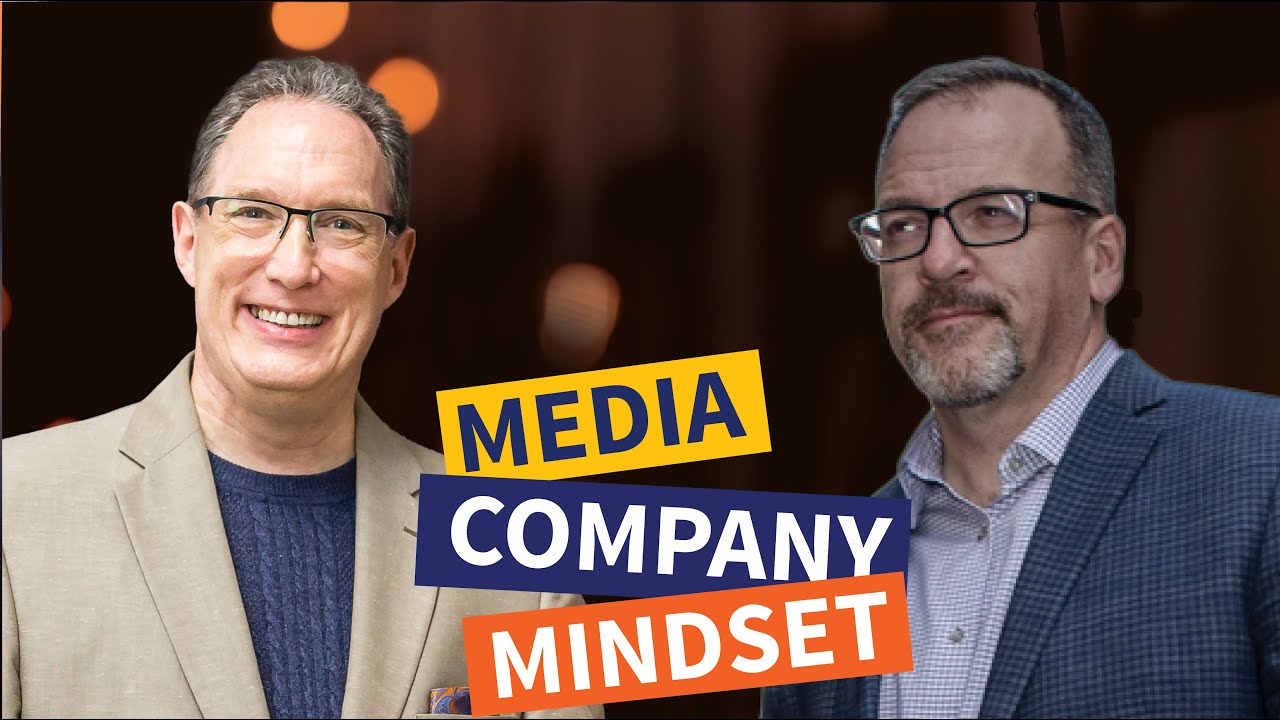
Rob Lelacher of Road 55 explains why businesses need to think like media companies instead of relying on ads. He breaks down a 3-2-1 budget split across awareness, engagement, and conversion, and uses the Michelin Guide's shift from a free booklet to a premium brand as an example of how storytelling builds long-term authority.
Chapters
Aren't you tired of putting out content and spending money on advertising only to have it ignored? Traditional advertising and marketing is becoming more challenging and expensive than ever before, especially if you want to be disruptive. That is, you want to get noticed above all the marketing messages that you're competing with. How do you stand out? Today, you cannot get to disrupt people with any message that you want anymore. You need to earn their attention and their time. And that's what we're talking about today on Marc Haine Live. Welcome to this episode of Marc Haine Live. This is where small business owners and entrepreneurs pick up core skill sets to create the show-stopping, jaw-dropping experience that their customers and their employees deserve. I am your host, Service Expert and Master of Experiences Marc Haine. And today, my guest is the founder and CEO of Road 55. We will spotlight how by changing your mindset to think like a media company, you can increase your authority and break through the noise To get noticed. We will explore the potential benefits and lay out some practical steps involved in implementing this new idea, a new way of doing things, and the impact you can have on customer relationships and engagement. So, stay with us. If this is your first time with us, I'd like to say welcome. If you find this episode valuable, please go ahead and check out our past episodes and Feel free to subscribe to this channel. And please, if this is super valuable to you and you know somebody who could use it, go ahead and share it. You know, knowledge is power but only if we share. I am going to date myself a little bit. But I remember all you had to do to get people's attention was to place an ad in the newspaper, on radio, or on television. Back then, you would even do a listing in The Yellow Pages. What is the Yellow Pages? It's the analog version of Google. If you needed more information, you'd reach out to the supplier. They send you packages by mail and you can make really good decisions. The world knew how to find you and you had only a few ways to get noticed. Plus, there wasn't as much traffic as there is today. So that Which brings me to our Question of the Day. How would you transform your business if you started thinking not just as a product or a service provider but as a media company? Would that change how you would do things? Would it affect the kind of content you produce or the way that you interact with your customers? I'd love to hear your feedback. Go ahead and share this episode on your favorite social media platform and make sure that you hashtag it #ExperienceLeadership. I'd love for you to be part of this conversation. As I mentioned, my guest for this episode is a leading authority on media branding and understands the power of storytelling. Rob LeLacher is the founder and owner of Road 55 and is a sought-after expert and speaker working with organizations to really step up their marketing game. Rob is a contributing author of the newly released The Most Amazing Marketing Book Ever. Yes, that is the title. Rob, welcome to the show!
Hey Marc! So nice to be here. Thank you.
It's so great to have you. Hey, maybe you can start off by telling us a little bit about how you serve your clients. What do you do for them?
Yeah, so I own a company called Road 55. We're right here in the heart of downtown Edmonton. And we started the company about 5 and a half years ago. And all around content, if you will. You brought up one of my old Haunts of the newspaper business. I came from the media game, and you know, as time evolved, we we could see the change happening where it used to be the tools that we sold, you know, ad in the newspaper or that big old yellow pages ad that you you talked about as a means to connecting with the audience. And it and it you know the tide changed where all of a sudden everyone had access to the tools themselves. So the value shifted to not necessarily the tool, but What do we do with these tools? The strategy, the ideas, and that really formed the basis of Road 55. Woke up one morning and said, geez, I have a lot of experience in traditional marketing, digital marketing, social marketing, and all these things together. I joke with people, spoiler alert, it takes a little bit of everything working together to really make that connection. And that's what we started Road 55 with. So, We work with companies in kind of a couple different ways. One where we plug right in with them. It's almost like we're their marketing director, if you will, where we help them build up that strategy, the ideas to connect with the audiences they want to connect with. And then we move from that ideation stage into the— we can make it for them. We have a full studio here. We do a lot of video production. Podcast production, and even old school. I'll make you a magazine if you want a magazine too. Some of that old print. But that's on one side. And then others where the companies we work with, they have that expertise at the table. They have those marketing folks but don't quite have the production element. And we plug in and we kind of augment the work that they're doing. Yet, they still really value the ideas and the strategy that go along with it. Because frankly, if they didn't, it's a commodity. It's a race to the bottom. And I know that there's always a kid willing to make a video cheaper than the next. So yeah, that's a bit about us at Road 55. You said I'm owner, founder, chief bottle washer, janitor, whatever needs doing, key grip. Anything on any particular day to get the job done.
Wonderful! Why don't we start off by talking a little bit about the changing landscape of marketing? Why is this topic today big? Our title of today's episode is Think Like a Media Company. Why is this topic so important today?
Well, if you think of the very popular channels of connecting with audience, obviously social media is at the top there. And at the core of it, all those platforms care about outside of generating revenue off of their advertising is their audience. They want their audience to enjoy the experience of the platform. And if they showed you everything that us marketers wanted you to see, or even Aunt Martha and her 72 cat photos, you know, it would be an experience that people wouldn't come back to. They wouldn't enjoy the experience. So, they're very mindful of what gets shown on the platform. We went through a period where, you know, you had 1,000 followers, you posted something, 1,000 people would see it. Today, it's maybe 1%, 2%. Different platforms act differently. But whether they show the material or not, it is not assumed. So, you truly have to earn that attention at the beginning. You have to earn the time with them. So, it's putting a really big onus on creating value for that audience because otherwise, you're going to have to pay through the nose just for that opportunity to just that initial connection. So, that creative really becomes a variable of your success or not. And the beauty is, you know, I have a $1,000 budget. They're going to take your $1,000. They're Don't worry about that. They're not leaving that on the table. It's a matter of how big of an audience that you're going to garner with that $1,000 because they're going to go out of their way to minimize it. But on the other side, you have this opportunity to maximize the impact if you're creating that valued content for your audience.
Right, right. You know, I do laugh when I think back to when you and I worked together years ago and we had a discussion of we're trying to market stuff. Let's just throw spaghetti on the wall and see what sticks, indicating that we'd take all sorts of marketing collateral and just flood all the channels. Why isn't that a good strategy anymore?
Well, I'll offer that I'm a little bit of a fan of overcoming fear and trying new things. I think it's in those attempts to try new things that you'll truly discover some just great connections that if you lived in that safety zone of marketing, you'll never get in trouble. And I talk about that lots. I pick on my friends in the financial side of things. Like, they'll never scold you for doing something that, oh great, you're talking about just us, our products, our services. Makes total sense. But on the other side, you won't be rewarded for it. So, trying new things but being open to, you know, as an old newspaper guy, the challenge was we couldn't change our audience. We couldn't change our distribution. We were only left with our creative really. Like, that was our opportunity to, well, this is the audience. Let's try a different creative approach. My fear is almost zero now because We have the audience that we're after, the platforms that we're going to choose to connect with them, the creative we're going to attempt to do it. And then, being open to— we went into it eyes wide open with a— we thought this was the message. This was the platform. This was the audience. Something didn't work. What was it? Right audience, wrong platform, and trying some different things. So, we look at the signals after the fact. The ultimate signal being the cash register. And moving them there. But that ability, the conversion, if you will, old hockey player took a lot of punches, a lot of pucks to the head over my day. I like things simple. That funnel at the top, awareness, engagement, at the bottom, conversion.
Right.
A lot of the tools today have created this illusion of, well, forget all of this other stuff. I literally want to spend a dollar. I want to go right down to that bottom of the funnel. I want to spend the dollar today because I want the $10 back tomorrow. And honestly, if it is that easy, I'll introduce you to these big companies called Amazon and Google and what have you. They'll spend $1.05 and they'll outspend you. They'll outspeed you. All those things. If you don't hold any equity in the relationship with that audience, Before that, boy, you're in trouble when it comes to that conversion opportunity because it truly then is, are you cheaper, faster, bluer? Those are the only elements that are going to go if you have no relationship with the audience.
Well, I really like that. The one magical word that popped out at me was this idea of equity. It's no longer— and unfortunately, I see the mom-and-pop operators think it's okay just to— today, we're just going to post our specials all over Facebook. And we'll do Facebook and we'll do Twitter and we're going to take a picture and send it to Instagram. We'll just tell people what we're selling. But to your point, without having equity, and maybe we need to talk a little bit about what that equity looks like. But without having that equity, those messages don't mean anything.
Well, the message will work. And I say it works if the If that's all you have to work with, great. But I'm telling you, this is what you're going to be up against. You then need to be— they don't, they don't know you, they don't like you, they don't trust none of those things. So it really defaults down to, do you have the model I want, the color I want it in, the, the— is it cheaper than anyone else?
Exactly.
You know, and again, if you want to play that game, great. But, you know, we approach everything with— I love the line, I heard it, that As we look ahead, especially with the onslaught of AI tools and everything coming down the pipe, that the most human companies are going to be the ones that are going to win eventually. And if you don't have that built into the fabric of who you are, it's going to put tremendous pressure on, like I say, here's my product. Here's my service. What's the price? It's Sales 101, back to the day of the, do I trust you? Do I like you?
Yeah.
You know, all of those things. That's that equity that I'm talking about. How do you create that with your audience and then move into the, these are our products. These are our services. By all means, we want to talk about these things. But if it is the only thing that you're talking about, just puts tremendous pressure on just that product and service.
And to your point, when you don't have that equity, then you end up posting the same thing your competitors are posting because they are talking the same language as you are. And so, you're not standing out in the industry. You're in your marketplace. If you're saying that you have the cheapest breakfast in town, well, somebody else can beat that out nice and easy for you.
Yeah.
And so, to your point, that equity of the know, like, trust factor is really important. If people were just to keep on doing what they've been doing for the last 20 years, what are the consequences of not changing how we do business when it's related to our marketing messages.
Yeah, so I talked about the platforms. Are you going to be challenged with the platform? Like they're just not even going to show your content. So, don't worry about the people yet. The platforms are going out of their way to do that. And it's worth adding too that a lot of the platforms penalize your content if all you're trying to do is get people to leave that platform. So, if you're constantly saying, here's my link out here, my link there, it's going to— well, we don't want them to leave. So, we're going to show. So, it really forces you to think about the platform itself. How do I convey these, the value of content where I'm at? Then, we get to the people side. And Those quick thumbs, right? A dear old friend of mine said, I love this line. I use it a lot. I can smell sales breath from a mile away, right? And if you look at your messaging with that, oh, this reeks of sales breath, right? And so again, there's opportunity for that. But if it's the only thing that you're doing, You're really only dealing with this very minute market of it. And I've shared in some of my speaking where, you know, 100 people, 100% of your audience at any given time, maybe 3 to 5% of those people are what we would consider in market. They're looking for your product.
Wanting your product now, ready to buy now is only 3 to 5%.
So, you think of All of your messaging, all of your content out there, the vast majority is speaking to just that minute part of the audience. So then, you've got this 95% to 97% of the market that I don't— to them, it just reeks of sales breath because you're creating no value for me at all. So, the pillars of great content are you inspire me, you educate me, you entertain me, So, it really forces our thinking to try and come up with things that what is going to get people close to my boat, so to say, that they're not just going to jump right in. And using the fishing analogy, it's, well, you can have a 10-foot line if all the fish are just always around your boat, or if they're always way out there when you're trying to cast to them, you need a line that's a mile long. And with that, comes great expense and time and, you know, all those things. So, that's that difference where it's just going to cost more and more. Cost is going to go up. Engagement's going to go down because you're not— whatever your industry, you're not just competing with your direct industry. You're creating with or competing with the realtor, with the car dealership, with the government messaging. Everyone's after that same 3 square inches of of real estate. And if they're not in market at that time, you kind of know that that quick thumb is gonna hit you before you know what hit you.
And you become extremely forgettable because nothing you've done has made an impact. So, even if somebody would want your product 8 months from now, you've done nothing to become memorable. And so, this is why I love your theory about this idea of thinking like a media company. And I'd love to delve into kind of uncovering what that means. And we'll get to that right after this.
When the spotlight shines on your business, are customers applauding or yawning? In other words, how is your business performing? Make your business a star with a new book, Lights! Camera! Action!, Business Operational Excellence Through the Lens of Live Theater by Marc Haine. Marc uses his business and acting experience to help you see your business like a live show so you can create a performance your customers will never forget. Buy Lights! Camera! Action! today at your favorite online retailer or directly at marchaine.com.
I am speaking with Rob Lillacher, owner of Road 55 and the contributing author on the most amazing marketing book ever. Rob, tell us a little bit. This book is brand spanking new. Tell us a little bit about it.
Well, such a fun story of how it came to be. So, I saw this amazing speaker about a year and a half ago, Marc Schaefer. And Marc lives in Knoxville, Tennessee. And he just— I really liked his messaging. He's considered one of the world's foremost marketing futurists, well-published author, great podcast, all that. And last year, my wife and I and our little guy, we went on— we did the definitive Road 55, We did a 55-day road trip through the United States. And one of the stops along the way, I went and spent the day with Marc in Knoxville, Tennessee. And it was just an amazing day together. And that was the first moment he told me about this project that he was working on, effectively kind of sending the elevator down, giving an initial opportunity to a lot of marketing professionals from around the world to have their first published book opportunity, which was The Most Amazing Marketing Book Ever. So, they devised about 35, 36 topics. And there's 35 authors from around the world, 10 countries, I believe. Each of us were given a topic to then break down with 10 thoughts, ideas, some actionable items that you could integrate in your business, whatever your business was. So, I got traditional media. They gave me the up-and-coming categories of Newspapers, radio, and billboards. So, that was a fun one. But I approached it with— I called it Walking with Dinosaurs. And that, look, they're still relevant. There's still a place for them at the table. As I said earlier, traditional, digital, social, they can work together. They will work together if you're mindful of the journey that they do create. So yeah, the book just came out a few weeks ago. And boy, what a fun experience seeing it. develop, you know, herding cats, getting all these people not only on the written side, but they actually did it on the audio side. The book's available on Audible. And so, we all recorded our chapters for the Audible portion. And it's doing really well coming out of the gate and has given me something that I went into it with, look, Rob's not getting rich off of selling copies of books here. But you know what? This is going to open some other doors, some speaking and engagement opportunities. That has been just a great experience so far.
Lovely! And I did put the link to the book in the show notes. So, I'd like— so this idea about thinking like a media company, and you've alluded to it many different times in different aspects by talking about this idea of of content. And then, you talked about the different things about engaging us, entertaining us, inspiring us, and all that. What does it mean to think like a media company when marketing one's business now?
Yep.
I think to frame it up is best with one question first. Would another company ever pay you money to be part of your marketing? Now, 99.9% will say no. And the reason is because all you do is talk about yourself, your own products, and your own services. If you're thinking like a media company, you're thinking with that audience in mind. You're thinking about that 95 to 97% of that audience that are not currently in market at that time. So, what are we going to create That creates value for that audience. Probably definitely think about is sustainable. You know, I joke with our clients, hey, I know you know your first 6 episodes of whatever it is. Tell me about the 50th episode. Tell me about the 100th episode of whatever that, or magazine, whatever it is that you choose to make that connection. And then, we get into the sustainability of the idea. Is it going to be something that— you know, can stand a bit of the test of time. Because this is not that immediate gratification of the, oh, I spent $1 today. I got $10 back tomorrow, which I joke with many. I'm like, oh good, do it again. Do it again.
I like that line of thinking because it pulls people away from the band-aiding of trying to come up with gimmicks that might, you know, a few years ago they were talking about to create viral videos. Viral videos happened. Many of them were not intentional. They just happened. But then, when people started engineering it, it didn't work.
Yeah.
And so, this idea like I love that mindset that we should be looking at the long game, not looking at the immediate results. I mean, this podcast was a perfect example. I mean, this is episode number 153. This week, I just hit 100,000 viewers. But that wasn't what I saw.
I should have held out for 2 weeks and waited for episode 155.
There you go. Maybe I'll have you back. So yeah, but I love this idea that it is asking people to start thinking differently about it and getting creative. And something else that you said earlier on, this thing about you try something and you get brave by trying something and then see if it works. And then, you turn around and you then analyze it and say, well, why didn't it work? And so, this idea of failing forward as well is very close to my heart as a way of let's— we're not spending a kajillion dollars to do this. So, why don't we make incremental changes to our idea? And are we on the right track as far as this idea of changing that mindset?
Yeah, you brought up an important thing when you talk about the long game. Right. I've nicely asked clients, I'm like, are you going to be in business 10 years from now? Well, yeah. Everyone says yes to that. I'm like, okay, well, let's act like it. Okay? Let's stop acting like you're going out of business in 2 weeks and everything is so transactional to this moment. Again, it has its place. But if it's all that you're doing, it's putting all that pressure on that transactional part of the Thinking like a media company. What I love about it, Marc, is I use the term from the individual local donut shop to the multinational conglomerate. Like, it works. It can work all the way. There's small, medium, and large of this approach. It starts with, you know, back to those pillars of what's going to educate or inform, entertain. What are those things? What are the— and as I picked on the accountants in the room, they kind of come back to, oh, we're going to talk about our products and services.
Yes!
And maybe say, well, we're going to talk about others and we're going to have some fun and entertain and do that. You're going to get a lot of like scowls in the room like, we're spending our money and time and resources to talk about not us? Like, and it's really— so, you know, it takes a bit of a brave person to take that approach. But, you know, from there, you get through that and say, okay, so we're going to ideate. We're going to create it. We got to package it. We got to distribute it. And there's all these different channels. And I talk— it's hard to come up with that original idea that you're just going to repeat or come up with a new idea for every different outlet out there. We're a big fan of we repackage, repurpose. You know, how do we, you know, use the— it's packaged up here. But, you know, my team, we do a fun little movie trailer 5 times a year. We make an actual different genre. I'm a big fan of The Big Lebowski. So, this month's was The Big Robowski. And we did a bowling movie. Well, we did the— we end up with behind-the-scenes photos of the making of. Obviously, the video itself, we get the movie poster for our magazine. It's just, you know, fun ways of how we create different products that can be put out there. Once we're kind of around that idea, then we start going to the tools. Okay, is it video? Is it audio? Are we doing writing? And, you know, is it digital, social, or is it traditional? You know, how are we going to put that out there?
I love that. Rob, this is really fascinating. And as people are tuning into it, I'm thinking that they're probably watching you and thinking, I need to get in touch with them to find out more about this stuff. How can people get in touch with you if they want to connect?
If they want to email me directly, rob@road55.ca, or please connect on LinkedIn, Rob Lelacher. Good luck spelling it. But hopefully, Marc has the— it's in there.
Just under your chin.
Yeah, okay, there you go. Find me on LinkedIn and would love to connect. And I'm pretty open with ideas in the first phase of engagement because honestly, if you feel that you can take this and I can do this all myself, I know what the next conversation looks like 2, 3 months from now. And I'd rather you just take it and kind of run with it at that point. But as I said, There are days where I wish it was the old days where you want to talk to the whole city. Buy 2 quarter-page ads in 2 publications and you almost get the entire city. It's hard. There are so many different places.
So, talking about that, businesses get together and every year form a marketing strategy. They're trying to figure out what did we do well this year? What should we be doing in the coming year? How does this idea of thinking like a media company How does that influence the development of their marketing strategy now? What are some of the conditions they should be considering?
Well, you get to the budget side of like, how do you allocate those resources? Again, back to those 3 layers of awareness, engagement, conversion. I kind of break that down to 3-2-1. So, taking half of your budget And it's got to create that awareness with the— they need to know who you are. They need to like you a little, trust you, all of those elements before you start moving them down that funnel to the buy from me, into those products and services. And so, within a bit of that structure of, okay, what are the financial resources, the human resources that we have to work with to build this out? And then start making a plan that goes from the idea to obviously the creation of it. But then, as I said earlier, the sustainability of that content too. We want to make sure that we're doing something that has definitely a longer lens to it. Because again, if you approach this with, oh, I've done 4 episodes of my podcast, no one has knocked on my door yet or phoned me or clicked on this, they haven't bought from me yet, this has been useless up to this point. Yeah. I'm telling you, spoiler, don't even start it if that's the expectation at the beginning. But you start to think when you look at those layers, these are different types of content at different times with those audiences. And if you jump right to the buy from me and you don't have any of that equity in the previous layers, it just— not to hash it out over and over, but it They just put so much pressure on price, product, all of those things. So, that's kind of the starting point of— I heard a podcast recently. I loved it because they said their goal was to make the CMO, the Chief Marketing Officer, best friends with the CFO, the Chief Financial Officer, because they usually are like this. They have no alignment. One's in charge of trying to make the connection. The other's got the purse strings. And that constant challenge of attribution. And we hear this all the time that I don't want to do this unless I can connect dot A to dot B and you can't show it. So, and honestly, it isn't. I'm sorry, you're fooling yourself if you think it is so easy that, oh, I just did this one thing and yep, they filled out my form. They gave me all their personal information. on the I promise to bother you later forum. And you created no value for me. Like I said, you're fooling yourself that there was a day that you could walk in with 100 people and, who wants to go out with me? And for one reason or another, one would, oh, okay, I will. But the others would be like, I don't even know who you are. Like, maybe say hello first. Tell me your name and let's get to the next step of the relationship.
And for the people who think this idea of talking about other things, talking, stepping away from your core product to build relationships, for those people who think that this would be a waste of time, you need to tell us about the Michelin story.
The mission story?
The Michelin story.
Oh, I'm sorry.
The Michelin When I saw you speak a couple weeks ago, I was really impressed by the fact that you highlighted Michelin because of course, we all know that they sell tires.
Well, spoiler alert there, Marc. Geez, man. The Michelin Guide. I love this story from— I shared it. It was the late 1800s. 2 brothers started this guide called the Michelin Guide in France. And basically, it was a printed guide to give you the great places to visit and to eat in the countryside. And they gave it out for free for about 20 years until one day, one of them saw that a mechanic shop was using a stack of them to prop up a bench. And from that day forward, he said, no, we're charging for this guide. Today, it represents the guide where 1, 2, or 3 Michelin stars rating of the finest restaurants in the world. Definitely sought after in our home province of Alberta. I don't believe there's a single one. They're mostly located in Vancouver and Toronto. And at the core of all this, who would do this guide? Who would produce something that's going to get you into restaurants and experiences in that? You would think it's more of tourism, hospitality. And back to the spoiler alert from Marc, it was a tire company. It was Michelin Tires. You know, what's going to get people driving? What's going to get them out enjoying the countryside so we can sell them more tires at the end of the day? Today, if you worked at a tire company and you walked into your CFO's office and said, we're going to create a guide that's going to rate restaurants and I know the conversation. I've been in those meetings. Like, are you kidding me? No, I want to see a full-page ad. I want to see a dozen tires and their prices and their specs. That's what we should be doing. And that's that, like, just that bottom of the conversion. That's a 3% to 5% of that audience that wants, needs that product right now. Perfect. It works for them. But hey, now it's a matter of, like, price. Do you have it? All that. This was something that, you know, they developed a brand that engaged with this audience well outside of that immediate need. And I love the Michelin Guide story.
I love it too because it's so good. And I wonder when they released it if they knew how big of an impact it would become in the long term. But at the same token, you mentioned something earlier on and something that you do at Road 55, which is this content creation piece that you're doing all sorts of things around storytelling. And so, what I'd like to do is I'd like to get into the role of storytelling when thinking like a media company. What is it that you can do to create stories that will help you with the know, like, and trust factor? And we'll get to that right after this.
When you're delivering an important speech to a huge audience, it's easy to lose your place or go way over time. Give yourself an advantage with the Pro Speaker Presentation Speech Timer app. No more checking your watch or calling for time. The Pro Speaker Presentation Speech Timer app keeps you on track with easy-to-see timers, even changing color for visual prompts during your speech. And you can set audio cues to practice or set it to vibrate so you don't even have to look. Be the pro you know you are. Download the app at speakerpresentationtimer.com.
Welcome back. I hope you are getting I hope you've gotten tons of value from today's episode. As you can tell, Rob and I are super passionate about today's topic. If you belong to an organization that could use our help, or they might be planning a leadership retreat or a conference, drop us a line. We would love to explore how we could be of service to you and your team. Rob, there seems to be a lot of opportunity to really elicit brand authenticity when it comes down to this idea of of thinking like a media company. You do it by doing your videos. You do it by doing behind-the-scenes stuff. A typical business, what would you suggest that they do to create that human connection that you mentioned earlier as well as tie it to authentically, this is who we are?
Yeah, so you get into the process of like, okay, I kind of get what you're talking about. I understand it. Where do we start here? So, within that idea phase, what's the— call it the show. What's that core piece of content that we're going to be able to create that is going to provide this opportunity to connect with audiences earlier in the stage? It's going to make us stand out a little bit. I share this story in my talk, Marc, about my time spent with the City of St. Albert. I was chair of the brand leadership team. And we went through this exercise of tourism-related, trying to get people to visit. And in that exercise was this moment where they shared all of these images of different tourism ads. And it was the definitive, a great place to live, work, and play. And in this exercise, they actually blanked out the city name. The joke was, can you guess where this is? And Everyone was using it. And I share that as an example of try to avoid that. Try to avoid the whatever it is that you come up with, that moment when our organization or our show name don't make it a great place to live, work, and play. So, it's really fine-tuning, finding that vertical and almost slicing it a couple more times, like getting into that This is the real focus of the content that we want to create. From there, we start looking for ideas of what type of content is out there. It's hard for myself to think of something where, okay, I'm going to be simply the topic expert on everything. I'm going to speak on everything. I'm going to write on everything, video, all that. That's a challenge. Like, that takes a lot of work. It's a lot to get there. So, we start looking for opportunities where— here's one right now, Marc. You and I are doing it. We're having a conversation. We're having an interview where we have this chance to talk about a variety of topics. It feeds the machine well. And that sustainability side of there's going to be those guests that you can engage. Again, audio, video, written form that you can engage that In many ways, you're going to be talking about the same thing over and over and over. It takes— we are in a business of repetition. And I share that. And don't get caught in the one and done, right? There's a— who was it? Thomas Smith from 1885 shared the 25 steps to advertising. And even 140 years ago, the truth held then that it takes repeated steps over and over to get that message in front of people. Well, we're doing that through content. And I say that because we can rinse and repeat. We can talk about the same things, but it's going to look and feel a little bit different because it's a different guest, slightly different topics, and just a great way to engage in the topic that you're after. A nice part too is it also leads to great opportunity around discoverability. I like you, Marc. You're my friend. If you ask me to share something about your business, I'll do it for you. I'll probably do it once, maybe twice, just like when we get into the peer, these are my products and my services. Beyond that, my propensity to do that is probably not that great. But all of a sudden, I'm your guest. I'm part of this content too. So, the chance that I'm going to share this content within my network goes up probably 100-fold at that point. So, it becomes a great opportunity of discovering new audiences that's going to get your face, your voice, all that, your brand in front of these other people. The headlines, back to the newspaper days. I say, curating the headlines and not breaking the headlines. And I think that's an important distinction between the two. Breaking news business is terrible and everyone's dying left, right, and center, right? Because not even the newsmakers are losing out, or the news people are losing out to the newsmakers because they want to break the news first and then hand it over to the media companies to do so. But the curation of the headlines is a great opportunity where, look, I know this happened. You're not making me go, wow, with that. However, I like Respect, trust, that authoritative side of you sharing the headlines with us. And it can be with a, I don't know anything about this. But guess what? We're going to learn this together. We're going to have this conversation about this headline together. And I think that becomes this great opportunity to, like I say, engage the audience that I'm not just telling you. We're on this journey together of this particular topic. And then, I talk about the donut theme. I use that as an example where just be totally different. Just be that this has nothing directly to do with our business. Usually, this is a little bit more on the entertainment side of things. It's a little bit flashier, a little bit more out there. I talked about have some creative fun with the— and this week, we're going to talk about the top 3 donuts I ate this week. Now, obviously, we're out to talk or aim for some relatability with the audience that, hey, I love golf too, or I love cooking or traveling and that. But you're a plumbing company. What does that have to do with— well, 3 to 5%, remember, they need a plumber this week. Everyone else couldn't give two hoots. So, what is it that's going to create some value for them on that way? So those are some initial ideas of how you may go down the path of what can we do to create something for us. I talked earlier about the AI tools out there. Please don't get caught in having AI do everything for me because to the earlier point, it's the human companies that are going to win. But they are amazing tools right now to be harnessed to help you in creating that content. Hey, I want to do a cooking show. Give me 10 ideas. Give me 10 different topics. What are some questions I can ask? It's some really good tools that can be used in that content creation.
Yeah. And as you're saying that, it reminded me of the Huggable Car Dealer in Atlantic Canada. If you Google the Huggable Car Dealer, he's done a terrific job of changing the whole dynamic of how people perceive used car dealerships. And by his own thing, he decided to change the narrative about it. And he uses a lot of storytelling in order to make that happen. How can a business effectively incorporate storytelling into the strategy while thinking like a media company? Because part of the challenge I see out of small businesses is like, well, I don't want to tell people how I do things because then other people will copy me.
Yeah, there's the, um, I think that just relates to that, that trust and that authority side of the, like, I, I'm showing you, uh, firsthand that, uh, we know how to do this. I'm showing you how to do things or talking about how you can do it. And yeah, as I said earlier, those who can just take it and run, they're going to run anyways. Right? But by default, most are going to come back to, ah, you know what? You're the expert at this. I like you. I trust you. All of those things. That's still a little product service-centric at that point. We're still really close to that bottom conversion at that point. How do I change my own tire or whatever? Obviously, I need my tire changed today. So, but thinking of things before that, I should add too, events are great content as well. Like, we run by the mantra of creating content that connects and letting these things work together. And please make them work together because it's going to power up everything. I remember in the old days of selling advertising that, oh, I'll try one ad and We'll see what happens. I'm doing something totally different than anything else that I've done. Like, you think the weight of that transaction is all on just this one moment of the, well, who are they? How are they engaging me? And now they want me to buy. Like, ding, ding, ding all along. And I'm sorry, it's just, it was rare then and it's even more rare now when you're just putting all that pointed pressure on one thing. So, try to look at all the different things that you're doing right to that H2H, the human-to-human component. Like within your team, is it matching the way they're engaging with clients? Is it matching on all the other things that you're doing out in the public place? Just to add one more thing too, Marc, on the content approach too is definitely think about that calendar. Aspect of, of whatever you do. I use the term, at the very least, be consistently shitty and, and work on, uh, making it better from there. But if, if, uh, do something that you know you can sustain. Get a little bit ahead of yourself. If, if it's every Tuesday your newsletter's coming out, or once a month my magazine's being printed, if you— I send it to you one month but then I just, I got I got distracted and I'll get back to that. 3, 4 months later, I'll send another one. You're almost starting from zero again at that point. And the journey has— you've pressed the restart button. So, when you do come up with those ideas, when you get to that point, okay, what's our schedule going to look like? And there's the old newspaper guy in me where the press starts tonight at 11 PM and we have to have a paper. together at that point.
And so, to your point, you make it non-negotiable, right? You make it— when you decide to play this long game and you put initiative in place, you make it non-negotiable. It's not going to be when it's convenient. I mean, anybody who's followed this podcast for a length of time, go down to episode number 1 and see how terrible it was. Because it wasn't 152 episodes ago.
It was— That's the collector item though, isn't it? Episode number 1.
That is a collector item. So now, I anticipate that the viewership on episode number 1 is going to go up and YouTube's gonna go, what's going on? Are there any potential drawbacks or challenges businesses should be aware of when adopting this media company mindset? They're ready to take the step out now and get uncomfortable.
I think when I talked earlier about It's a little out of that safety zone of you're not just talking about us and our products and our services. Again, you're never going to get— no one's going to chastise you for— you're not in trouble for that. But I quickly say you'll rarely get rewarded for that as well. So it's kind of going into it with a bit of— again, this is not 100% of what you're doing. I'm trying to, you know, be mindful of do that product and service. But you have to be mindful of what are the other ways that we're engaging the audiences we want to engage with along the way. So, sharing part of that overall plan of, look, we're going to talk technical with them. We're going to talk about our price and our offering and that. But these are the things that we're doing to cultivate that relationship well in advance to Like I say, remove some of that pressure off of just the price and inventory, those kinds of things.
Yeah, yeah. And I guess at the end of the day, if you want people to start talking differently about you compared to your competitors, you've got to start doing differently than what your competitors are doing. As we wrap up, do you have any last thoughts about what we've been talking about today?
Well, you spoke earlier about the viral video. Just sharing with all the clients we've worked with over the years, I can honestly say it was never the product or service There you go. It was the stuff outside of that, the fun, the entertainment, the educate. It was those types of things. That's your magnification opportunity. And I said it has its place, but really encourage people to think a little different. Think a little, if they blanked out your name, would they eventually know that this is your thing? This is the blank guide showing up on my— well, it's the Michelin Guide. And as a real big example, but just really, really working towards that. And I think you'll have a lot of fun with it. And I think it will create a great engagement opportunity that future-wise, the future version of your company, when you act like you're going to be in business 10 years from now And you start building those stronger relationships, raising your authority, raising your likability, it's going to bode really well for your business.
Love it! Rob, this has been so fantastic. Could you just remind everybody one more time how to get a hold of you?
Yeah. So, Rob Lulacher. I own Road 55, road55.ca if you want to visit our website there. Please connect with me on LinkedIn. Look forward to making new connections. Or you could just email me directly, rob@road55.ca.
Love it! Thank you again. I really appreciate you being here and sharing your knowledge, your passion, and of course, your expertise. It's been brilliant, brilliant, I tell you.
Well, thank you, Marc. Thank you, my friend.
If you have any questions about today's episode or would like a complimentary 30-minute brainstorming session, I'd love to get together with you and your team. Feel free to book time that works for you on my online calendar. The link is down below. It's the one marked meetwith.marchaine.com. And again, if you want to get Rob's new book, the link is in the show notes. It's brilliant. It's a different way of looking at marketing and being the best marketing book ever. I think it'll be As always, I am at your service. If you haven't done so yet, feel free and subscribe to this podcast. And be sure to follow me on social media. That way, you get notifications whenever I bring you fresh new content, brand new experts, and of course, topics that are relevant to you and your business. My name is Marc Haine. I hope that you stay safe, stay healthy, and I hope you dare to be the exception.









