Unlocking Leadership: How Self-Awareness Can Save Your Business
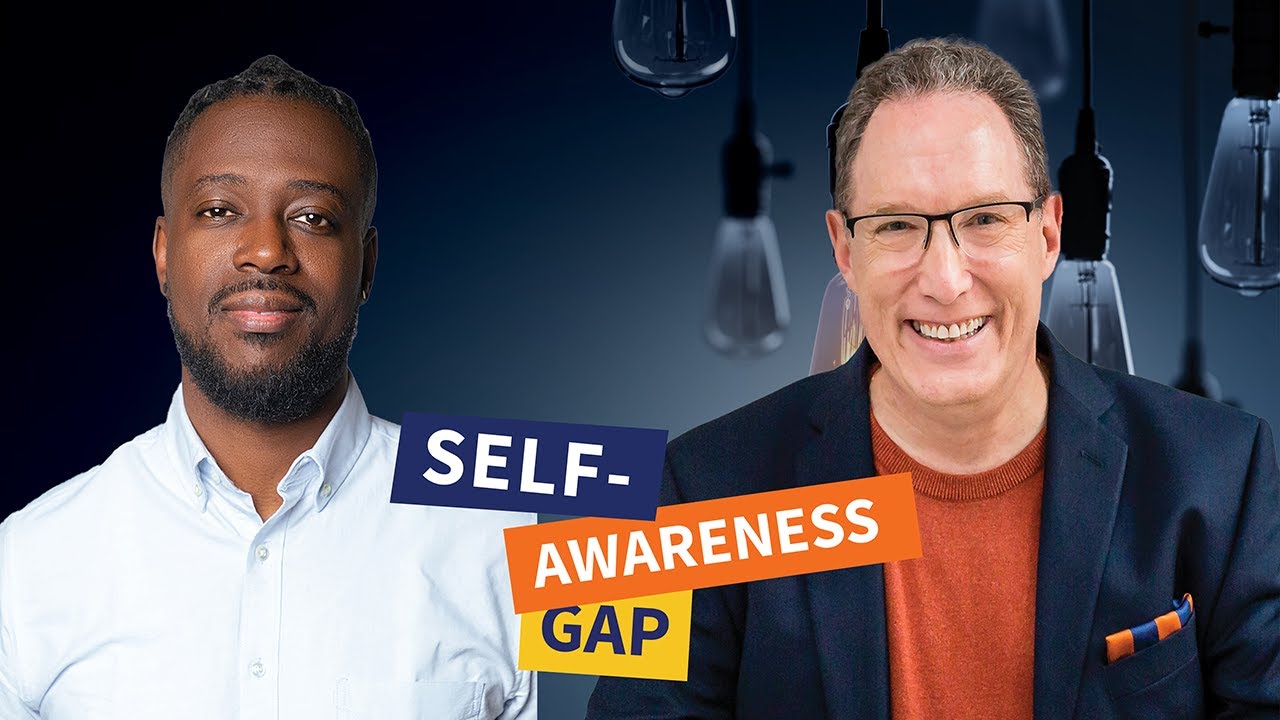
Philip Holmes, founder of The Highest Good Consulting, explains how leadership blind spots damage retention and culture. Leaders who don't understand their emotions or power dynamics create toxic workplaces. Holmes offers concrete tools: an emotion-wheel template, shifting from "why" to "what/how" questions, and practicing curiosity instead of judgment.
Chapters
Why are so many businesses losing their best employees and struggling to create a workplace where people want to stick around and thrive in? The answer often boils down to one thing: leadership blind spots. What? You don't have any leadership blind spots? How do you know if they are your blind spots? Here's the thing. Ineffective leadership is leading to toxic workplace cultures. It's the leading cause of dysfunctional teams working together. And that's what we're talking about today on Marc Haine Live. Welcome to this episode of Marc Haine Live. This is where small business owners and entrepreneurs pick up core skill sets to create the show-stopping, jaw-dropping experiences that their customers and their employees deserve. I am your host, Customer and Employee Experience Strategist Marc Haine. And today, my guest is Leadership Consultant Philip Holmes. Today, we are going to be pulling back the curtains on the hidden leadership blind spots that could be costing you your best employees, damaging your workplace culture, and holding your businesses back from getting to its full potential. So, stick around because this is the episode for you. My one request is that you please make sure that you subscribe to this podcast. And please make sure that you share it with your circle. I'd love to see the business community really supporting the work that I've been doing since March of 2020. And it's free. And the resources keep coming and coming. And it is absolutely brilliant. And today is no different. So, I have to ask, why do so many businesses with incredible products, dedicated teams, and well-thought-out strategies still struggle with things like disengaged employees, high turnover, and a work culture that feels more like a battlefield than a thriving community. If you've ever looked around your workplace and thought, why can't we get this right? You're not alone. The truth is most leaders don't even realize that the biggest obstacle to creating a productive, healthy work environment might actually be themselves. And that brings me to our Question of the Day. So, could it be that your leadership blind spots are actually costing you your very best people and sabotaging your company success, or your team success, or your department success? Think about it. Have you ever wondered why your team feels stuck? Why great employees leave? Or why everything seems to grind to a halt whenever a conflict arises? Chances are it's not about their skills. It's really about, and I hate to say it, it's about your ability to see and manage problems effectively. I'd love for you to share your experience. Why don't you go ahead, share the link to this episode on your favorite social media platform, hashtag it #ExperienceLeadership, and become part of this conversation. Today's guest is someone who knows leadership isn't just about managing tasks. It's really about this idea of leading people, their emotions, and ultimately yourself. Philip Holmes is a leadership consultant and the founder of The Highest Good Consulting, where he helps conscientious professionals become the leaders that their teams really need. Philip's passion for democratizing leadership development has transformed organizations by fostering healthier, productive workplace cultures. With a track record of doubling things like online engagement, growing communities by over 85,000 in a matter of months, and turning teams into high-performing powerhouses, Philip is here to help us uncover the blind spots that hold leaders back and the strategies to move forward with purpose. Philip, welcome to the show. I'm so looking forward to today's conversation.
Hey Marc, I appreciate you having me.
So maybe you could start off digging. Maybe you could dig a little bit deeper about what you do for your clients. Who are your clients? How do you serve them?
Yeah, no, that's a great question. So you mentioned kind of our mission, which is to democratize leadership development. We want to make leadership development more accessible to all professionals, whether they're middle managers, whether they're high-up executives, or whether they're entry-level professionals who are just getting started. We— one of the things I realized, and we talked about this pre-interview, is that a lot of people don't know what they don't know. They don't have access to leadership development. They know how to do the work, and oftentimes they're promoted because they know how to do the work, but nobody ever teaches them those soft skills that they need in order to be able to thrive as a leader. And one of the things I tell my clients all the time, especially when they're entering into executive roles or middle management roles, is that you need to become better at the actual leadership part of the job, not at the actual work that you were promoted as a result of. And so, those are the things that we really focus on. And the thing is, is that We work with middle managers. We work with executives. But some of my clients, they don't have any reports. They're just professionals trying to figure out how to navigate poor leadership. And I tell them, you have to become a leader yourself. That's how you do it. Leadership development is key.
Yeah. So, I guess maybe we should start kind of really grassroots. What are the most common leadership blind spots that you see in businesses today that you keep crossing and tripping over?
That's a great question. I think that common leadership blind spots often are a result of people not really knowing themselves. It's a lack of self-awareness. And so in, in general, I can say it like this: you have to understand what it's like to be on the other side of you, especially when you're in leadership. You have to understand the power that you have. And so the The things that you say carry a different type of weight than what you're typically used to, right? Your words have power that you might not necessarily be aware of. And so, you may say, hey, you guys, my team knows that they can come to me and talk to me about anything. But you also got to realize, and I saw this from one guy, he mentioned, he was like, you have to realize that I can fire you is on your forehead at all times. And when you have that type of power, you have to let people know. You have to work extra hard to let people know that it's safe, right, to come and bring you concerns, to bring you questions, to ask for help, to admit mistakes. And I think so many leaders just assume that, hey, I'm a nice guy, or my people should know that they can come to me, when this is something that you have to constantly remind them. And you have to model A workplace culture where this is not just said one time when you hire them, come to me if you need anything, but it is modeled on a day-to-day basis. And you're constantly paying attention to how your team is acting and how they're performing and how they're engaging. And you are using those cues to figure out where are they really.
I know this is what they're telling me, but I want to make sure that their words match It's so interesting because a lot of leaders I talk to for some reason don't have that self-awareness piece. Like they don't have the humility to maybe look at themselves and say, maybe I'm the problem. And of course, the behavior keeps leading to organizations where the teams are distrustful of one another, that there's a lot of infighting. And then, the leader in response does nothing but point fingers and blame. So, why is self- awareness such a critical skill for leaders? And why do they, so many leaders struggle with it?
Well, you know, I talked about this. I gave a keynote yesterday and the whole point of the keynote was that in order to experience or find meaningful work, it requires empathy. And one of the emphasis was self-empathy, right? How people treat other people is oftentimes a reflection of how they treat themselves.
Hmm.
Right? If I am— if I ignore the emotions of others, right, or if I dismiss the emotions of others, you'll oftentimes find that that's a person who dismisses or doesn't pay attention to their own emotions. And so oftentimes what looks like maybe anger or dismissiveness on the outside, there's, there's usually so many other things that are going on on the inside. And that anger that you see on the outside is just all those other emotions being suppressed. And so it's so important for leaders to really take a look at themselves. But that's hard work. Like, leadership is, is not, it's not a, a competence or a skill in the sense that you can read a book and figure it out. Right. In order to be a good leader, it actually changes you as a person. You know, I saw a quote that is, leadership isn't difficult because of what you have to know. It's difficult because of the person that you have to become.
Hmm.
And if you're not willing to change, it's not something that you can just turn on, right, uh, when it's time to clock in and then turn off when you go home. It has to become a lifestyle, and you become a better person as a result of you trying to become a better leader.
So, just reflecting that humility, I see a lot of, to your point, I see a lot of leaders who are, they come across aggressive. They come across stern, or they come across whatever. And I can't help wondering, I've met tons of people that even at the highest level, there's still a semblance of imposter syndrome, of trying to meet other people's expectations and live up to Do you think that that is manifesting itself? That they're, because they have those fears themselves, they're actually manifesting those fears within their teams as well?
Yeah, absolutely. It's that external validation. External validation is such a yellow, and I would say maybe even a red flag, especially when you're in leadership, right? Because when you start looking for external validation, and you're not getting, um, uh, you're not getting the— if the motivation isn't coming from inside of you, and if, and if it's coming from what other people think about you, or if it's coming from money, maybe even in recognition, which is very, very common, right, in the workforce today, that's a red flag. Um, there's a, um, I think it was by, uh, Richard— I can't think of the 2 psychologists' names, I haven't— tip of my tongue, but they came up with the self-determination theory. And they recognize that humans have 3 core psychological needs. One is autonomy, competence, and then relatedness, right? And when these 3 needs are being met, the intrinsic motivation is very high, meaning that they don't necessarily need to be told what to do. They don't necessarily need to be pumped and primed. They are there for the love of what they're doing. If they have autonomy, if they feel competent about the work that they're doing, and if they are connected to other people— relatedness, right? But if they're missing any of those 3 things, even if they have 2 out of 3 or 1 out of 3, what happens is they start looking for external validation or external motivation, extrinsic motivation, right, in order to do the job. And this always results in burnout. and disengagement over time. Temporarily, it'll work. Money will get you excited about a job. Validation or recognition will get you excited for a little while. It feels good temporarily, but over the long, long term, you're going to become disengaged or you're going to burn yourself out. And I think the same is true for leaders. So when the leader is searching for, um, valid validation externally, uh, oftentimes they're missing one or more of those 3 things.
It makes so much sense. But you hit on one aspect about recognition reward systems like money, for instance. Like every team I've ever met where the managers are working towards getting their bonus and they're striving for that in itself, presents a level of distrust in the hierarchy or in the culture because the staff or the team members are always looking at the leader going, oh yeah, he wants us to work shorthanded because he wants to make the labor cost bonus at the end of the year. Or he's forcing us to do overtime now that we're going to get kicked in the teeth for later on because overtime is such a bad word. But he's doing it so that we make the production quota later on. And so, this dichotomy then of what the cultures are trying to do and what the leaders are trying to fulfill then come at odds with each other, also causing a problem.
Yeah, yeah, absolutely. 100%. That's 100%. Yeah.
So, are there any warning signs that a workplace culture is suffering from this ineffective leadership? I know I talked about it a little bit. But what have you seen?
Yeah, I think the biggest warning sign is you have to find other things to motivate your people to do the work. Right? When you have to be the one that constantly pumps and primes them when they're disengaged, when they're asking for— when everything is about money, right?
Right.
And don't get me wrong, a healthy organization is going to take care of their people. But I know my employees don't show up just for money. And they constantly verbalize all the time the reason why they love working. And it hasn't always been that way, right? This is something that the company, as I grew as a leader, had to figure out. But I'm not worried about losing my people because of money. Somebody can offer them more money and I'm not worried about losing them. It's because they have things that money can't buy, right? You only— only empathy, right? Only growth, personal growth and personal development can actually accomplish that. So I think disengagement is probably one of the biggest, uh, red flags when you know that Uh, when you're trying to assess whether or not my people are here, uh, because of my leadership or if they're being motivated by other things. So anytime they're looking for extrinsic motivations, right, in order to keep them, and that means that something has gone wrong. Now it's interesting because when you think about that, oftentimes if a person is coming to you and they're saying, hey, I want more money or else I'm going to take this other job. There is a way to approach that. You can blame it on the person and say, oh, they're just looking for extrinsic motivations, right? External motivations. But that's oftentimes a reflection of the work environment that you've created. If you jump to the conclusion and just try to give them more money in order to keep them, then then you're assuming that they know what's really the core issue, what's really going on. And so, a leader has to be more discerning. And so, they need to be asking questions. They need to be empathizing. They need to try to enter into this person's world to really try to figure out, hey, what is it that you really want? Now, the only time you actually get there to the person saying, hey, this company is offering me this much, but you're only offering me this much, this is usually because That empathy, right? Really entering into their world, getting to know them, figuring out what it is that they want. It's because that hasn't happened up until now. Those types of requests don't come out of the blue.
Right.
And so when people say, well, I have employees, I feel like I'm doing a good job, but I have employees who are asking for more money to stay. I'm like, there's some other things that you've been doing that led up to that. Because if you're shocked by that, then that means that— and they've gotten to this place, that means that there are some other things that you have been neglecting or abdicating. And we got to have a conversation about that first.
When all else fails, people will turn to money as being the ultimate motivator of why they're going to stick around. And it usually— and a lot of times, like I've talked to franchise owners, I've talked to Independent business people where they say, I feel like my staff are holding me hostage because they keep threatening to quit. And it's like, well then, you have to take a look at other things that you're doing because we know that when people have purpose in our business, money becomes like lower end on the totem pole, right?
Absolutely.
And to your point, like not everybody wants to evolve into becoming a manager and get promoted and so on. But I do I still believe that everybody is on a journey with us. And at certain points, their needs will change even though they might not be leadership kind of driven or they don't want the power of that. But I do believe that everybody will evolve with us. And I think it's incumbent upon the leaders themselves to recognize what those milestones are and how they can serve their people.
Yeah, yeah. And here's the thing. When it comes to pay, what I don't want people to hear us saying, because I know that oftentimes people can be listening to this interview and they'll project their past experiences or past leaders' motivations onto what we're saying. What we're not saying is that leaders should not pay their people well, or leaders should dismiss concerns about making additional money, right? I think an empathetic leader is going to be extremely generous or They're gonna give you a clear roadmap, right, on what is needed in order to get you to the point that you need to get to, right? They want to see you succeed. And so, if you want to make $100K, they're gonna tell you, hey, here's the employee that I need you to become. It's not gonna be a, this sort of, well, we'll see. And, you know, it's always vague and they don't really know how to—
Just give me 6 months. As soon as I do the budget, let's, and I'll see if I can get you a raise.
Right, right, right. They're gonna be extremely transparent. Right, about what's going on. They're going to have an honest conversation with you and they're going to shoot you straight. And it's not going to be a yes or no. Usually it's going to be a, here's what I need from you. Let's talk about what this really looks like because this needs to make sense for the both of us, right?
Yeah.
And, and that's what good leaders do. They're not afraid to have those conversations. And if an employee is ambitious and wants to make more money and wants to grow with the company, they're willing to give them a roadmap because a lot of, especially entrepreneurs and small business, we're looking for employees like that, right? We're looking for hungry employees. But you can't just be hungry for money. The money will take care of itself. But you got to be hungry. I want people alongside me who care about the mission and vision of what we're trying to do.
And you've just opened up this whole Pandora's box of other expectations in leadership. So for instance, giving a roadmap to an employee to say, this is the kind of employee I need you to become. Why don't we put together a plan to work on this for the next 18 months and let's see how close we can get. But it means now that the manager now turns into a coach to do regular check-ins to test where they're at in the journey. And they are, to your point, they're highly transparent on where things are falling down and where things might not be as realistic as they thought and be able to bring that to the table as well.
Yeah, yeah, absolutely. Absolutely. As you were saying that, one of the things that popped into my mind too that I think We have to be honest about, we have a leadership problem in America, but leaders don't just—
No.
Right, but that's the obvious one, right? That's the one that we all know, but leaders don't just come out of nowhere. Every leader was once an employee.
Right.
And what does that tell us? That tells me From based on my observation, my own personal experience, me, and I'm talking about Philip, right? What I've, what, what I've done, but also what I've observed just kind of watching online conversations is that we also have an employee problem. Both have, have a, have a wrong view of how we look at vocation and work. So money, if you really want meaningful work and if you want a job that you enjoy going to, Money cannot be the main motivator, right? You need to be thinking through passion and purpose, right? And, and, and if you don't, what happens is those people who are employees, a select few become leaders, and this is what you get. And so this is what I'm always kind of pushing my clients to, is that if you have a problem with a toxic leader, I empathize with you. I've been there. I've been under toxic leadership. But that means that you have to grow, right? You have to become the leader that you wanted. And that doesn't just happen by everybody looking out for themselves. Somebody has to say, you know what? I'm going to be different and I'm going to look out for the collective. I'm going to look out for everyone.
It's interesting you say that because one of the concepts that I've been flogging recently is to get away from this idea that, hey, this is a great place to work because we're a big happy family. I'm more now Yeah. I look at what that implication is. And that most families are dysfunctional and you can't choose your family members.
Right.
So now, my big focus has been to build communities within organizations. And it changes the whole dynamic and whole conversations when we start thinking about communities. And so, what you're saying makes a lot of sense. But again, it's incumbent upon the leader to have the humility the fortitude to be able to look at what is it in my behavior that's causing all these problems. And then, how can I shake that out and move forward? And so, that's something I want to talk about. Before we get into that though, I want to talk about the role that incivility plays in our workplace. And we'll get to that right after this.
When the spotlight shines on your business, are customers applauding or yawning? In other words, how is your business performing? Make your Make your business a star with a new book, Lights! Camera! Action!, business operational excellence through the lens of live theater by Marc Haine. Marc uses his business and acting experience to help you see your business like a live show so you can create a performance your customers will never forget. Buy Lights! Camera! Action! today at your favorite online retailer or directly at marchaine.com.
Welcome back. I am here with the fabulous Philip Holmes. And we're talking a lot about the role of leadership as being kind of the core ground between success or failure. And we've done a lot of shows about incivility in the workplace. How much of that is contained in what we're talking about today?
Yeah, so did you say instability?
Incivility.
Incivility, yes.
Like, so basically toxic workplaces.
Yes, absolutely. Um, so much of that has to do with a lack of empathy. Empathy is oftentimes viewed as a word for weakness, right? Or people who are empathetic are easy to manipulate. And there's this, there's this misunderstanding of what empathy actually is. Empathy is not— Agreeing, right? It's understanding. Empathy is not agreeing, it's understanding. So I want to understand— I think it was, um, Dr. Chazzari Williams who defined empathy as understanding, uh, what a person sees and how they see, right?
Right.
Oftentimes we see the same thing, but how we see Are two kind of two completely different things. I have my, my son is, uh, my middle son is autistic, and we're always looking at the same thing, but how he sees the world, how he processes information, how he processes everything that's going on around him is completely different. I have to understand that. I have to be able to empathize, but I don't have to agree with everything that my 5-year-old son thinks, right? The conclusions that he draws as a result of how he sees. And so, when you bring that into the workplace and you find a leader who only views things from their perspective with the power, with the influence, right, with the access to resources that they have, but they can't come to— for a second, stop and look at what they're asking of their employees from their employees' perspective, it ultimately leads to incivility because This is what happens if I live in one reality and you live in another reality, and that those 2 realities are conflicting with one another. I'm gonna think you're crazy, and you're gonna think I'm crazy, right?
Right.
And I— what I try to tell people is that this— listen, my reality And how I see the world is very much that, my reality, but it's not the real world. I can't really understand the real world until I am willing to step out of my world, Philip's world, and engage in your world. And then I get a bigger piece, right, or a clearer vision of what this world is actually like. But if I'm always looking at things from my perspective, from my biases, from the framework that I was raised, Raised within, I'm never really going to understand what the world is actually like, and I'm always going to be judgmental. And and and anytime you're judgmental and hypercritical, it's always going to lead to incivility because people oftentimes respond in the same manner. The diff the thing that makes it so difficult in the workplace, and the reason why we're talking specifically to leaders right now, is because they have. more power in these situations, right? And so, it's not just a, hey, well, you guys can just go your separate ways. There's a lot of damage that can be done by the leader as a result of the power that they have if they are not willing to be empathetic and enter into, or condescend in a sense, into their employees' world to understand what life is like on that side.
What I love is that you tied the empathy part now into the virtue of curiosity. Because with empathy, I think curiosity just has to follow naturally to be able to say, oh, let's explore this and let me see how you're seeing the situation.
Yeah. Curiosity is key. All empathy really is, right? There's an emotional component as well, right? I have to understand and see what it is that you're feeling. I have to identify the emotions, right? So that I know what's influencing Um, how you're processing this situation, but it's also an intellectual understanding as well. And so if you want to think about it like this, if, if you're like kind of like, I don't really like the emotional part of it, right? That's a personal problem that you probably want to work through. Uh, highly recommend it. But also just, just look at— if you need another motivator, look at it like this: empathy keeps you from remaining ignorant, right? Because if it's simply understanding and not agreeing, then all I'm doing is having the courage to step out of my own comfort zone and into your world and to just be open and consider your perspective, your take on things, and not get defensive. You know, uh, Chris Voss, who is a former FBI hostage negotiator, he has a, a famous book, uh, Never Split the Difference. He always says this. He says, people aren't against you, they're for themselves.
Yes.
And if you can understand that and approach life from that purview, that means that when I'm in a conversation with you and you're lashing out at me, or you're in tears, or you're frustrated about something, I'm not taking that any— I'm not taking that personal, right? I'm saying there's something going on here That needs to be further explored, and I could potentially help simply by being curious, simply by understanding. And maybe I can actually help you get to the root, right? Because I'm the objective one in this situation. If, if you're being driven by your emotions and kind of you're attacking me or you're frustrated by something, you're probably not in the place right now where you can see things objectively. But if I can come alongside you and not be triggered and not be kind of riled up by your emotions And I can just listen, ask questions, and understand. We can probably get to the root of the problem and realize that what you initially told me was the issue is not really the issue. Actually, this is the issue.
Yeah.
Right?
It's so funny because I think so many times we see an issue like for instance, a leader will see that they have high turnover. And then, so then they'll blame the world that all these kids these days, everybody's so lazy. Nobody wants to work. And they're not looking at the root cause of that symptom because that's just a symptom to something that's bigger. Likewise, engagement and so on. Or likewise, employees crying in the walk-in cooler in a restaurant or having a conniption fit in the bathroom, right? That's a symptom to a deeper problem that we have to work towards.
Yep, yep, I agree. You know, one of the things that happens every single time I get on the call with a leader or with an employee They'll start, and about 10 minutes into the conversation, I already know what the problem is, what needs to change, and what they need to do about it, right? But I don't start giving them advice.
I'm terribly sorry, John. You're— you just— your leadership sucks.
I just keep— I just— I just keep asking questions.
Yeah.
And— and it is— and it is amazing what happens Because eventually they begin to see the contradictions, right? I'll help them regulate, and I was like, hey, it seems like this is really— this is really frustrating. This is a difficult situation for you to be in, right? Even if I know that they have played a part in creating, right, this disastrous situation, I don't start attacking them because they need to—
They'll shut down.
They'll shut down. They'll become ashamed. They need to know that I understand and that I can relate, and and that that they're that they're human, right? I think I think that's that's the part that's so important is that sometimes we get to a point where we start looking at each other, our adversaries, right? This is where the incivility comes in. We start looking at our adversaries as inhuman or as mustards, and it's like no, they're human. This is their response to you is you might not be able to understand it, but you can't understand it because you haven't tried to enter into their world. You're only seeing this from your. perspective. But I guarantee you that if you could just understand things from their perspective, you'll realize that what you're seeing is very much a human response that makes perfect sense.
It is amazing because again, that humility piece to your point. When they realize after you've asked the question and that light goes off and they go, Oh, wait a minute. Maybe I had control over that. And I think that's really where that humility kicks in. And it's like, wait a second. Maybe I do have power here.
Yeah, yeah.
The lack of respect in a workplace. I know that when we have incivility in workplaces and I saw it just recently with my daughter's place of work where they brought in a brand new manager and almost instantaneously, that one manager destroyed kind of the culture of team and everything else by coming in. And it's very rare though that the toxic culture is like a light switch. Usually, there are subtle ways that respect or disrespect creeps into the workplace. Can you talk about some of the behavior patterns you've seen in leaders that kind of lend to this pattern of disrespect?
Yeah, the most subtle ones are oftentimes When it is— when disrespect comes in the form of niceness.
I don't want to be rude, but—
Yeah, it's like, it's like they're not— they— it's not kindness. It's they're avoidant of hard conversations, right? They, they're not really honest with you. They don't really tell you Uh, the truth. Um, they, they dismiss it. You bring them a problem and they say that it's not really a problem. This is, this is the kind of form of disrespect that happens. And, and maybe even it's, it's kind of behind your back, you know, in your face there's a smile, but behind your back they're kind of undermining you. Uh, those are the most subtle forms of disrespect that I think are oftentimes come, um, That are most common. And ultimately, it's the people— look, it's, it's leaders who are looking out for themselves. That's when you know that the disrespect is going to be constant, because in every conversation, they're going to be thinking about how to come out on top, and oftentimes it's going to be at your expense. And if there's anything that they have to take responsibility for They're going to try to figure out how to shift that back on you. And that's ultimately what it looks like. Yeah.
I am hoping that people watching right now, some people are watching this thinking, oh my goodness, he's just described me. How can people get in touch with you if they realize that they need help like what you offer?
Yeah. So the easiest way is to book an entry one-on-one session with me, 30 minutes. Um, and this is something that I do charge for because I make sure that I, I give value for it. Uh, I make sure that you walk away with a full coaching session and you feel like you have some actionable next steps. Um, and I also want people who are serious about investing in themselves, uh, and, and, and growth. And so, and, and what that simply looks like is a conversation where I ask you questions. A lot of people said, like, this feels like borderline therapy. I was like, yeah, but I'm not qualified to deal with the stuff that therapists deal with, right? You know, I, I— this is typically how I distinguish therapy for coaching, is that if an athlete, right, breaks their ankle, A, and they have to go to a physical therapist, they're not going to go to the strength and conditioning coach, right, to, to get their ankle better, right? When it's time for rehabilitation, Right. they're going to go to physical therapy, and that physical therapy is not to get them ready for the Olympics. That physical therapy is to simply get them to be able to do the normal functions again. And you go to a coach when your body is like, you know, one, not tip-top optimal, but like just, hey, this person is, is healthy. Mm-hmm. And that's typically the people that I'm looking for, is that when you come to me, and it's— it does feel like therapy because I'm not just gonna come in and talk to you. You're gonna do 80% of the talking. I'm just gonna ask questions. I'm going to enter into your world to make sure that I really understand what it is that you're going through. We're just going to have a conversation. And it's one of the most— and every time I, I end the conversation, I ask my client, how are you feeling? And 9 times out of 10, I get a word like hopeful, calm, because they typically come in anxious. They come in overwhelmed. They come in not being able to see forward. And I, I know what that's like. I've been there. Uh, and I, I love to help people, uh, to be able to see the light at the end of the tunnel and say, hey, it doesn't have to be this hard. Love that. You can get through this.
How do they get in touch with you though?
Oh, thank you. Instagram. And my ADHD kicked in. You Instagram, uh, my website, highestgood, uh, consulting, uh, highestgood.consulting. Uh, those are the 2, 2 easiest ways. You can also find me on LinkedIn as well. So I'm all over social media. Just look up Philip Holmes. And I'll pop up.
And we have your link in the show notes here right away. So, I'd love to dig into some core strategies for the people who are thinking, he's just described like 90% of what I'm going through. Can we talk about a little bit about what first steps people need to take to start turning the tide? And we'll get to that right after this.
When you're delivering an important speech to a huge audience, it's easy to lose your place or go way over time. Give yourself an advantage with the Welcome back.
I am speaking with Philip Holmes, Leadership Consultant and Coach. As you can tell, Philip and I are absolutely dedicated to helping business owners and business managers just like you. So, if you're planning something like a leadership retreat or a conference and you're thinking you'd like to bring in a real expert to help work with your team, please feel free to reach out to us. Our contact information is in the show notes. Take advantage of it.
It's here.
A resource just for you. Philip, for the people who are tuning in and going, yes, this is happening to me. What are some of the first steps leaders can take right now to start developing greater self-awareness and a greater sense of their reality? Get past their little bubble.
Yeah, one of the first questions I ask any of my clients is, hey, what's your relationship like with your emotions? And it's a broad question on purpose. Because this gives me a good opportunity just to see how they respond to that basic question. And usually they'll talk quite a bit. And so if I was giving someone an actionable strategy, I would say, hey, you can go online, you can actually go to our website. I have an emotional regulation template, but you can just type in emotion wheel. And it's a wheel with like 3 layers, a bunch of colors, and it gives you just a list of all the different emotions. And it starts in the core with happy, sad, anger, and then it gets more complex with emotions as the circle moves out. The reason why I say that is because most people, if you ask them what it is that they're feeling, what emotion they're feeling, they'll give you an experience, they'll give you a situation. And I always have to say, no, what emotion are you feeling right now? And they typically have a hard time Identifying one, right? Beyond the core ones— happy, sad, anger, you know, uh, or something like that. And, and emotions are much more complex. And so I give them this wheel because one of the first things that you need to be able to do in order to get some— get to get more objectivity is you have to be able to identify emotion. Because when you label an emotion, it does something to your brain.
Right.
And it allows your brain to say, oh, that's, that's what that is. And now all of a sudden, the reasoning, right, in your prefrontal cortex begins to increase. You can— now you begin to get back a sense of objectivity. And then the next question that you simply ask yourself is, what's making me feel that way? Never ask yourself why you feel a certain way. When you ask yourself why you feel a certain way, that's a philosophical deep question. You know, it— you know, I don't ask people why questions because that makes them defensive. And I, I've even tried not to— I stopped asking myself why questions, right? Because why questions don't really get you anywhere. You want to— what or how questions get you much better answers than why questions. And so you ask yourself, hey, what's making me feel that way? What event? What situation? What happened? And then you ask yourself, what are some other ways I could view this situation? Right? Is there— or another way, is there another perspective, right, from which I could view this particular situation that may give me a different outcome or a different way of looking at it? Those things help because now— and that's— and what I just walked you through is just what we call regulating, right? Managing your emotions. What happens is if when you don't identify emotions, they don't go away. It's like a beach ball, right? You put the beach ball underwater, eventually it's going to come up. And that's typically what happens with emotions is that when you suppress them, eventually they come up with full force and they kind of hit you in the face or they hit somebody else. And if you don't identify them again and try to suppress them some more, they'll come up again. And all of a sudden you're stressed, you're angry, you're in a bad mood and you don't really know why. And it's because you haven't really dealt with that. And so now it's clouding your vision. And so what you want as a leader is to be able to see clearly. You cannot make good leadership decisions if you're not operating from a place of objectivity.
Hmm.
You can't see people clearly. And you have to do this, you know, we talk about regulating negative emotions, but You got to be able to regulate positive emotions like happiness as well, because excitement has, has caused me to make some bad decisions in the past, right?
Mm-hmm.
Has caused me to overlook, uh, some, some warning signs or some red flags in people in the past, right? Uh, how do you think people end up with, uh, bad, bad spouses or partners, right? It's because that initial emotional feeling that was good Right? Cause them to overlook some warning signs. So, as a leader—
And you don't find out till 7 years later. And it's like, oh, you drive me crazy.
Exactly. And so, as a leader, you want to be able to do that. Go ahead. Yeah.
Yeah. So, you mentioned this thing about objectivity. How does one test against objectivity? Like, because anybody I talk to, yeah, my vision is perfect. How do they test That they have more objective view of the world. That's just a little question, by the way.
How?
Just a little tiny question.
How do you respond when somebody challenges it? Challenges your view.
Give me an example of that.
Are you defensive? Gotcha. Yeah. If if if you're not curious, but just but but defensive. And you're probably not as objective as you think you are.
There you go. That becomes the test right there.
That's the test.
Yeah, gotcha. For people who are tuning in who are thinking, yes, I need to get some work done. I'm always afraid of kind of the band-aid managers, the band-aid solution finders where they're like, oh, okay, I'll just change this one thing and then everything will be fine. What are some pitfalls and cautionaries we should be aware of as people try to make a change in their world, their behavior, and how it affects the rest of the team?
Yeah, I think the biggest pitfall is looking for a one-off solution, right? If, when it comes to a leader, this is not like some surface-level, try this strategy, use these tactics in the conversation. You have to change as a person. Going back to what we said in, in the beginning of the interview is that if this is not a full-on transformation of who you are that's really challenging you to kind of get out of your comfort zone, um, and if you're just trying to, you know, open up a playbook or a manual and like put some tactics together or have a workshop on, you know, emotional intelligence but not really like even think about it, just bringing the speaker in, it's not going to change anything. You have to say, I got to come to grips with who I am and what needs to change about me first. And if that's not difficult, if it's not hard, if it's just you memorizing a few scripts, you're not going to bring any lasting change.
I like the whole theory about— because it's not a checklist, right? It's not a checklist of, okay, did I make eye contact with people today? Check. Did I say hi and ask them something personal about themselves?
Check. Yes.
Right? It's not that at all. And so, yeah. So, how much empowerment? Like, people work within organizations and we're talking about middle leadership and we're talking about frontline leadership as well as CEOs and so on. How can companies empower their leaders but also support them as they try to overcome these blind spots? What can people above them do?
Empathy, right? It's, and I say that 'cause it's gonna sound like, oh yeah, well, the answer to everything is empathy, but it kind of is. Because typically, if the middle managers are a reflection of executive leadership, right? And you can't say, oh, We don't have people down here, that means that the people up there aren't doing their jobs, right? Because it trickles down. So coaching is something that has to be done at the top that trickles down to the bottom, and you got to figure out where the disconnect is. And because if, if, if, if, if as an executive I am not coaching my middle managers, right? If I am not training them on how to, how to lead in a way that's healthy, if I am imposing demands on them that cause them stress and anxiety, which they pass down to their employees, right? I have unreasonable expectations for them. And then I say, well, I don't figure out— I don't care how you do it, you just got to get it done. That's toxic leadership, right? They just, they're just getting paid a little bit more to be the bad guys, right? And this is what middle managers oftentimes find themselves in. And they're, they're like, I, I, I have these people down here and I kind of usually, most, most middle managers kind of know what it's like, right? Because they're kind of interacting with the top and the bottom.
Yes.
And they always find themselves in this really difficult, uh, situation because they know the company Kind of better than anybody, but they're torn because they're being asked to do stuff that they know isn't right. And some do it, you know, kind of like, hey, I'm sorry, I gotta do this, but this is what the top is saying. Others just kind of are completely like, hey, I'm gonna do this.
You completely rape your power of influence.
Yeah, that's the way this is.
It's not me, it's It's everybody above. You have to understand. You've just completely turned yourself in.
100%. And then, they don't respect you now. Your employees don't respect you.
Right. Because they know that you're not somebody they can go to to help them solve their problems. And so, I love that intentionality for the leadership to be able to turn around and say, if I can coach these people through their challenges, they will be able to then coach the people through their team's challenges. And they become the kind of leader. So really, at the end of the day, it's modeling as well. You're modeling the kind of leadership that your organization is driven by. And it just does trickle down. Philip, this has been an absolutely fantastic conversation. Could you just remind everybody one more time how they can get a hold of you?
Yeah, you can follow me on Instagram, LinkedIn, and you can also go to my website at highestgood.consulting. Awesome.
And as we wrap up, do you have any last thoughts? Anything we didn't cover? Anything you just want to hit home?
Oops.
Oops.
Uh-oh.
Sorry about that.
There we go. Oh, no worries. No worries. Um, stay curious, ask questions, really try to do that first with yourself and do it with others. And you'll realize how powerful that can be because that'll give you perspectives and insights that you wouldn't be able to get otherwise. So when you're listening to people, try to think about the next question that you're gonna ask as opposed to the next thing that you're gonna say to make yourself look smart. All the time, sometimes the best contributions are in good questions.
I love that. Phillip, thank you so much for doing this with us today. This has actually been a brilliant conversation.
I've learned a lot. Marc, thank you for having me.
Oh, it's been brilliant. I really appreciate you being here, sharing your knowledge and your passion, your expertise. I'm hoping that people are taking copious notes. And this has been— I believe that this is a game-changing conversation when we let this conversation happen. So, thank you for doing this today.
You're welcome. Thank you.
Got any questions about today's episode? Or maybe you're thinking, hey, we could really use a 30-minute brainstorming session with Marc, or even reaching out to Philip for his Pay-as-you-go 30-minute discovery call to understand where you are at. Well, the good news is you can snag a spot on our calendars. Our links are in the show notes. As always, I am at your service. If you haven't done so yet, why don't you subscribe to this podcast, follow me on social media, and feel free to post questions and be part of this conversation. Thank you so much for being here. My name is Marc Haine. I hope that you stay safe, stay healthy, and I hope you dare to be the exception.









