Unlocking Success: Why Emotional Well-being in the Workplace Matters
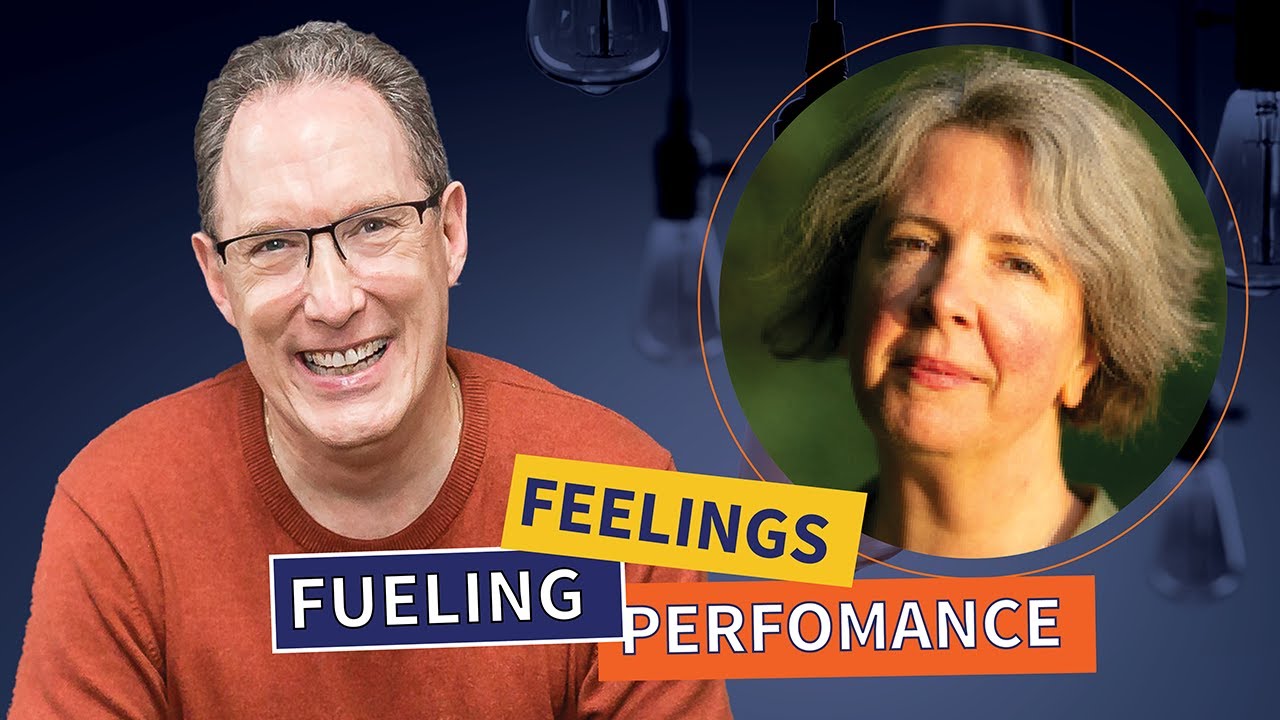
This content was created by Marc Haine. This content was uploaded by Marc Haine. This is a YouTube episode titled "Unlocking Success: Why Emotional Well-being in the Workplace Matters" (published 2024-07-25). It's a hosted interview on Marc Haine Live with host Marc Haine and guest Susan Nee Creighton (leadership coach and facilitator). The conversation targets small business owners and leaders and covers why emotional well‑being matters at work, signs a company is undervaluing emotions, practical strategies (creating space, manager intentionality, trust, neuroplasticity, the RULER framework, reflection), measurement/long‑term impact on engagement and performance, and real workplace examples. The episode also contains sponsor/promotional segments for books and services.
Chapters
I've said it before. If you are solely focused on your business tangibles, things like sales figures, marketing metrics, productivity, and operational efficiencies, you may be missing the mark. There's a deeper layer influencing your business's success that often goes unnoticed. It's not something that you can quantify with numbers. Yet, it's powerful enough to impact every decision, interaction, and bottom line within your organization. It actually feeds all your tangibles. And that's what we're talking about today on Marc Haine Live. Welcome to this episode of Marc Haine Live. Thank you so much for joining me today. This is where small business owners and entrepreneurs pick up core skill sets to help them create the show-stopping, jaw-dropping experience that your customers and your employees deserve. I am your host, Customer Employee Experience Strategist Marc Haine. And like I said, I'm so glad that you're here because today, my guest is Leadership Coach and Facilitator Susan Nee Krieton. Today, we will be exploring how ignoring key elements of emotional well-being in our teams can stifle creativity, reduce engagement, and ultimately cost your business more than dollars. So, stay with us because we are going to get really down deep and dirty. Okay, well, maybe not dirty. Down deep. We'll really delve deep a little bit into this idea of bringing emotional well-being into the workplace. You know, in businesses, we talk a lot about the big wins, the deals, the dollars, the dazzling innovations. And we complain whenever something affects those metrics. Yet, we tend to focus so much on the symptoms of the disease and not the disease itself. What do I mean by that? Well, we're constantly pointing fingers at Things like, oh, I don't know why employees are lazy. They're not engaged. I don't know why they keep quitting. And all sorts of other ways that we take a look. And so, we need to take a deeper look at what is the disease causing all those symptoms. So, it is time for our Question of the Day. So, have you ever considered how much the unresolved emotional dynamics within your teams could be costing your business? Think about that for a second. It's an interesting spin on things that when we talk about engagement, we talk about culture and that sort of thing, isn't it? I'd love you to go ahead and share your experience on social media. Make sure you hashtag your comment with #ExperienceLeadership. and be part of this conversation. As I mentioned, my guest for this episode is Leadership Coach and Facilitator Susan Nee Creighton. Susan knows that the secret to business isn't just in the numbers. It's also in the feels. It's not every day you meet someone who can balance a ledger and a deep understanding of human emotions with equal finesse. She's the author of the eye-opening book and the podcast by the same name, Leading Beyond the Numbers, where she spills the tea on why your accounting might need a little more EQ and a little less spreadsheet obsession. If you're navigating the complex world of emotions and businesses, were an Olympic sport, she'd be the undisputed champion. Think of her as the emotional whisperer of the business world. Susan, welcome to the show! It's so nice to have you.
Wow! For a minute, I was really wondering if you were talking about me with that amazing intro.
Well, you know, I had to bring in the Olympics into that, right? It's the buzz thing now. So, there you go. So, I think you could turn this into an Olympic sport, Susan.
Oh, okay. Let's come back to that one.
Before we get into it, maybe you could tell us a little bit about how you serve your clients.
Absolutely. Thank you, Marc. And so, as Marc said, I work as a coach or a facilitator. And Often, it's the transition, that space between. So, we go in and we're mad for transformation. We really want the results. But often, it's the bit in the middle that causes the chaos. And often, I liked what you said, Marc, about unresolved emotional dynamics because actually, it is the people part that is so important to get right.
Yeah.
Once you get the people right, the numbers will follow. And we tend to focus on the numbers. But as somebody once said to me, numbers don't make decisions, people do. So spending time getting people to talk to each other openly, honestly, and really unpack stuff so that they can move forward in an aligned way is where I focus. And that's with teams, but, and then individuals as well, to actually Know who they are inside and out.
And so, I mean, just in that, you have covered so many different components in there. And I'm looking forward to really kind of uncovering exactly what that looks like. Because to a lot of people, they're like, oh well, I hire right. So, I know it's not my people. And it's like, oh, but wait a second. There's more than just hiring your people to make it right. So, what common misunderstandings do businesses have about the role of things like emotions in the workplace?
Well, first of all, that there's no place for them. Let's start there. And it's not our fault. That's the thing. What was fascinating to me when I delved deep into the world of emotions more as I wrote my book was actually emotions were kind of just dismissed as irrational and not helpful in any way, shape, or form, even by psychologists. until the early '80s. And that's only 40 years ago. So, for people of our age, Marc, it's no wonder that we went into work not knowing that we could bring our emotional self with us. And we have this divide, don't we? There's the personal. Oh, I'm going the wrong way with the camera. But the personal and professional. And it's like never the twain shall meet.
Yes. And it was to your point. I mean, there were a lot of policies out there that said, Keep your personal issues at home. And it's like, well, how are you separating the people from home, the people that are sitting at the desk working for you?
Absolutely. And an organization is made up of people and money. I mean, that's what an organization consists of. That's the basics. And the people are— they're human. They are actually human beings. Yeah. And they have their own lives, and they have things that impact who they are every single day.
Definitely.
And they go out and they have families and friends and communities and whatever, and so on it goes. And you cannot— just because you come across a threshold into work, it doesn't mean that you've— the rest of the world is left behind. And I love— I don't know if you've seen that TV program Severance.
No, I have not.
So it's one to watch, but just a quick spoiler. This guy gets this, like, a couple of people. So there's like a team of people and they work in a basement of a building, and every day they come to work and they've had some microchip implanted in them. So when they get in the lift to go down into the basement, they forget their personal side and just become their work side. And then on the evening, the reverse happens. So as they leave the building, all the work gets left behind and they go back to who they are outside. And of course, the whole thing ends in chaos. But it's, it's still— it's such a brilliant way of exaggerating what we're talking about for effect. And I think that's what it is. And I think emotions have a bad rap When we talk about emotions or emotional, we're usually saying it in a negative or not helpful way. But actually, even being here, if I didn't have this feeling of joy to be talking to you, then I could just really just stand here and speak like this for the next— So everything I do is filled with some sort of emotion and the decisions I make. And emotions aren't good or bad. They are. And I think it's figuring out what's appropriate to the context in the situation is how to get them to work for you.
And it's so wonderful to hear you say that because when you hear the statistics about the level of disengagement in organizations now, like we have, I think the stat is somewhere around about 72% of the workforce is disengaged. 15% of the workforce are actively disengaged. So, those are the cancers standing around the water cooler just poisoning the well, if you will. And so, being able to understand the fact that people are emotional beings at the core of who they are, I think this is really refreshing to hear this. What are some of the telltale signs that a company is undervaluing the emotional contributions of their people?
Where do we start?
Hmm.
I like, I think what's fascinating is how people interact with one another. So if you're in a meeting and people tend to talk over one another, they're not listening to each other. They're staring at their shoes. They're on their phone. There's so many telltales like that, but they're not actively engaged. And if you walk around an office, which we hardly do anymore, so I guess maybe if it's a Zoom room, they might have their camera off. And sometimes there's an absolute reason for doing that.
Sure.
But if you're kind of checked out, then you probably don't want to be visible either. You want to play it under the radar. And I think things getting passed from person to person, so no one actively taking responsibility or accountability for what's there. never accepting that perhaps they've made a mistake when they have, and not having that space to make mistakes and learn from mistakes. And we talked about this before coming live, the importance of being able to experiment and fail and so on. So I think the other thing is, this is one that amuses me, is there's almost like an order that we need to be creative And innovative, so you know you better get on that. And that's a sign as well, because once people are relating to one another, you don't need to tell people to be creative; they will, because we are creative as well. It's our natural state to be creative, and we will collaborate, and we will make each other better. But you know, it's that kind of like in school when you had your homework, and you know, or whatever. It's that. The atmosphere is usually one of blame, mistrust. How are we going to keep these people in line? Words like that. These people. I can't believe I have to work with them. You know, there's, there's so many telltale signs. And unfortunately, I think it's almost easier to pick the opposite because that's the exception. It's almost easier to say when an organization is performing by taking the whole person into account because they stand out from the crowd.
Yeah, and it's interesting because I worked for a municipal government at one point. And I remember an employee like we'd have to— it was my first foray into the business from getting out from hospitality. And at 10:30, they'd come and they'd go, hey, are you coming for coffee? And it's like, coffee? In my head, like in hospitality, you're getting ready for lunch rush. There's no time for coffee. And then, and so, it's like, oh, okay. I guess I'll come for tea. And I come for tea and we're sitting around the table and everybody's like, okay, okay, 50 minutes are up. We have to go back to work. And it's like, but we're in the middle of a conversation. It's like, but wait a second. And it's like, no, no, we have to go back. And it turns out that people got evaluated on what management perceived as wasted time. So, you take extra 2 minutes at your break time, or you're standing in somebody's doorway talking to somebody. It's like, when are you doing the work? And it's like, oh my goodness! It's like, oh, we have punch clock industrial age thinking has permeated. And it's no wonder when people turn around and go, I just don't understand why we can't be more innovative, more creative in our thinking and more dynamic in our responses and proactive. And it's like, but because the rest of our business world is not giving us that. Is that fair?
Yeah. Yeah. And it just needs to be turned on its head. It really does. And I feel in a way it's like Here, we're preaching to the converted, okay? And possibly people that are tuning into this are already aware of this, Marc. So, you know, you talked about the numbers of people that are disengaged. It's also interesting to look at the numbers that are engaged because they're the ones, the truth tellers, if you like, because they know what it's like to work in an environment where they're given the freedom to be themselves. They have autonomy over how they work. They have agency over how they show up. They take responsibility. They're accountable. They're creative. They collaborate. They do it naturally. And so, I like to look at it from that perspective. If it's— the statistics are even worse in Europe. So, if it's 1 in 5 people are engaged over here, how do we make that 4 in 5?
Hmm.
Because then, it's only 1 in 5 that is disengaged. And I think that's the way to go. And we spend a lot of time, I think some companies or people I've spoken to have said, are you going to help us create a business case for why we should do this, why we should treat people well, why we should understand? And I'm like, no. Where is the business case? As in the foreword to my book, Matt Phelan, who runs the Happiness Index, wrote, where is the business case for not treating people properly?
Yes.
So we have this idea because we've always been doing it like this that we need to continue and it's too much of a risk to be nice to people. We don't know how they're going to behave. But I think the thing is you start with yourself and you say, well, how do I work at my best? And then you think about everyone else from that perspective. And okay, we will all have a different way. You want to bring out the best in people. Start there.
Start with yourself first. Yeah, yeah. The man in the mirror. That's it. Start with the man in the mirror.
But you get out to work as a CEO. Do you start your day going, how do we treat people badly here? Like, how can we make these results worse? It's like, I don't know. I just don't understand the disconnect we have. So often to how we do things. It doesn't make common sense.
It's interesting you say that because I watched a podcast where somebody, a business owner, was talking about Glassdoor and about how his company was getting slammed on Glassdoor for being a lousy company and being not very supportive and so on. And he sat on the podcast and said, why can't we get a platform to bitch and bellyache about how bad the people are? And it's like, and that, my friend, is why you're on Glassdoor getting slammed.
You couldn't make it up.
No, no, you can't make this stuff up. You can't make this stuff up. But it's interesting because you mentioned this idea about kind of bringing emotions to work and being an emotional being. But we're talking more about— we're not just talking about emotional well-being. We're talking about understanding that people have their ups, their downs, their strengths, their weaknesses, and recognizing people as individuals. And that in itself takes a lot of intentionality to make that happen. How do we get people who aren't that intentional to start thinking that way? I personally believe that we give managers way too much work to do. Their heads down. They're Doing paperwork. They're doing stuff. But they're not leading. And I think that's one of the challenges. Are you seeing that as well?
Yeah, I mean, ever since COVID and pre-COVID, the line you get from people is, we have no time. Whatever about no money, there's no time. Everybody's just busy, busy, busy. But I think COVID took that to a whole other level. And while in some respects, it's been absolutely amazing to work from home, I think also this working from home reduced the boundaries, the thresholds we talked about earlier. So actually you're often working more and more. And I think people got into that habit and that habit is hard to break. And one of my podcast guests talked about how your commuting time, if you do go into the office, is now almost understood also as being part of the working day. And it's okay to have Zoom calls while you're sitting on the train or the bus, hopefully not while you're driving. But maybe while you're walking, and I think we have to look at creating space. That's really what it's about, because actually it's in the space that we often have just that time to think differently, and we look at things the same way all the time simply because. We don't have the time to look at it in a different way. And I think starting with very small pauses, something I often do with my coaching clients is set them a task, another task to add, but it's to take 2 minutes doing nothing, like nothing. Set a timer for 2 minutes and do nothing. And actually, that's quite hard to do if you're used to always being on. And it can also stress you out a little bit more. But it's only 2 minutes. And if you can start there, you can start to create space. And, you know, we, we all talk about how we might have our best ideas in the shower or while we're out for a walk. And we actually even know we need to do those things. So, you know, you'll hear people saying, I need to go out to clear my head. I need to get out of here and get outside, clear my head. So I think instinctively we know these things are good for us, yet somehow we think we don't have time. And The fresher we feel, the more rested our brain is, recharged, regenerated, whatever you want to say, rejuvenated, the easier it is to tackle things and to look at things from a different perspective. And the easier it is to deal with uncertainty and all of that. But actually, if you want people in a factory line, then fine, keep them busy and on that Treadmill.
But don't expect innovation. Don't expect— you know, it's interesting. I did for a hotel. I did a SWOT analysis. And so, I was going through. I went through the managers first just to get a sense of where their heads were. And then, I went to the staff. And then, the owners came back and they said, we understand you're doing this exercise. And I said, yeah, it's a SWOT analysis and I'm interviewing employees. And they looked at me and they said, what can a dishwasher tell me about my business? And I said, well, it's interesting because don't you think that a dishwasher would understand where some of their challenges are, where some of the obstacles are in them performing? They'd have huge insight into what's working, what's not working as far as the structure of their jobs. And he looked at me and says, the only thing a dishwasher can tell me is when it's time to go for a smoke and when payday is. And I thought right then and there, it's like, I can't work with you. Because if that's going to be your perception of your employees, then there's nothing I can do to change that, right? And so, again, looking at the— I believe personally, everybody on the team, you hired them. They have magical superpowers that you don't know of. And our job is to try to figure what those are.
Yeah. It's, you know, I love that book by Benjamin Zander, The Art of Possibility. And he talks about how you give everyone an A. And, you know, and then they will lean into that A. So, you just absolutely, you know, and I think especially the senior teams, like, of course, everybody can do what they're hired to do. But in a senior team, I've worked in organizations myself where You're hired to do this job, like to be the finance director, and yet no one wants you to do it because they want to input to it. They want to actually say, "No, no, no, you can't do that because da da da da." You know, so there's this there's this control that people feel they have to keep over things that really isn't helpful. And it's that phrase, isn't it? Why have a dog and wag your tail yourself? Or whatever it is. I probably butchered it, but, you know, it's like we— I don't— as the leader, do you have autonomy? And did you as you progressed? Because if you didn't, perhaps you think that's the way things have to be done. But does anyone like being told what to do? I know I don't. No.
Yep. Interesting though, like I've walked into businesses where I was consulting for the business. And the main complaint from the manager was, nobody's creative. Nobody can do anything on their own. Nobody takes initiative. And then, when I actually did an analysis of what was going on, this manager or this owner was hugely micromanaging. And so, it's like, okay, so you're saying you want them to be innovative, creative, and so on. But you don't want them to change Anything except for the way that you want them to do things. And it's like, how does that match? And she goes, well, because I can't trust them to do what they're supposed to do. And it's like, okay, we need to do some work. That's painful.
And trust is a two-way thing. I think this is what a lot of people don't understand is it's not just about you not trusting them. If you don't trust them or you don't trust me, I'm not going to trust you. End of. And I might not trust you anyway already.
Because you don't leave me to do my job.
No.
And I think that's what— I think it's teams where the team leader is trusted by the team and vice versa are 12 times more effective than teams without it. Now, I don't know who's— somebody studied that, but it's fascinating, isn't it? It's like, it's such a simple thing. And I think Trust is one of those things we often take for granted as well, Marc, that as a senior leader, that we just have trust because we deserve it. However, you really don't know whether you've got that there or not. And even if you do, it's so easily damaged. And if you lose that, it's way harder to get back. It's really hard to regain trust.
Yeah, yeah. But it is possible. But it really again creates that intentionality. We've hinted to a bunch of solutions to the problem. But I'd love to dig a little bit deeper on some strategies that leaders can use to properly diagnose emotional factors within the organization, which can significantly impact employee engagement, productivity, and ultimately their business success. And we'll get to that right after this.
When the spotlight shines on your business, are customers applauding or yawning? In other words, how is your business performing? Make your business a star with the new book Lights! Camera! Action!, Business Operational Excellence Through the Lens of Live Theater by Marc Haine. Marc uses his business and acting experience to help you see your business like a live show so you can create a performance your customers will never forget.
Buy Lights!
Camera! Action!
Lights!
Camera! Action! today at your favorite online retailer or directly at marchaine.com.
Welcome back! We are having an absolutely stellar conversation and I hope it's resonating with you. Susan, you yourself, you mentioned your book. Why don't you tell us a little bit about your book?
I've got it right here. Oh, you've got it there. Even better. Look at that. So, Leading Beyond the Numbers: How Accounting for Emotions Tipped the balance at work. And I started my career, I spent 15, 20 years of my career working in finance. So I trained as an accountant. And so I grew up with a very rational, logical, absolutely wore it like a shield, that identity, and didn't see any place for emotions. I mean, numbers are totally emotionless, aren't they? Even though most people I've ever come in contact with them have some fear around emotions. And that might be the next book. But for now, Accounting for Emotions, I thought, well, I learned so much myself about how important it was to be my whole self and bring my whole self to work through various jobs that I had and lots of mistakes and some hairy moments over the years. And I learned so much more about my brain and my body and my heart and gut and how all of these play a role in who I am and how I show up. And I thought, well, accounting is storytelling. I mean, that's what we do with numbers. They tell a story. So what about accounting for our emotions and telling the story around them as well? And let's bring them in and have a both/and. We don't need to be either/or.
I love that. You know, one of my taglines I mentioned to you prior to the show starting was that one of my taglines is I encourage people to lead with love and kindness first. And to some people, it's hugely woo-woo. But how does that fit into what we're talking about today?
Well, for me, I think every single person that shows up at you at work, we are balanced, right? So, we've got body budgeting. And this is where I got the idea from in the first place for my book from Lisa Feldman Mm-hmm. And she talks about body budgeting and how our brain's most important job, if you like, is to keep our body in budget. So that means keeping the oxygen and everything flowing, knowing when you need to take a drink, knowing when you need to eat, all of these things that we, we just do automatically to keep ourselves in balance. But we can, by not sleeping properly, have that out of balance. And so the body has to do more work to bring it back into balance. So when somebody shows up at work, which we're all familiar with, and you're underslept, you may not necessarily look like that, but are you working at your optimal level? Is your body in balance? Are you capable of making decisions in the right way? Or is your stress heightened as a result of not sleeping properly or not eating properly or Or you were in the car in the morning and you had a run-in with somebody on the road and your anger levels went through the roof and you can't let it go. And you bring that into the office with you and everything you look at for the day, you look at it through that lens. So, however, somebody might go, oh, that's just Marc. Marc's usually like this when he comes to the office. Or, oh, Susan, she's always cranky around this time. Whatever it is, and we just dismiss it. But actually, by looking at somebody and saying, I don't know what their experience is, I don't know what's inside, what's happening inside, it allows us perhaps to be a bit more curious about people and a bit more— I don't want to say lenient because it's not like school or college. Well, we don't need it anywhere, but it's actually understanding that All of us go through things that impact who we are and how we show up, and most of that is invisible. And it's that old adage, isn't it? You can't judge a book by the COVID Well, we do. We judge people by their behaviors all the time. And I think that is really the thing, that we judge people by their behaviors. And when, you know, it's like, well, Susan was really angry in that meeting, and it's kind of like, well, actually, What was going on there? Because she's not normally like this. And rather than saying Susan was angry, you can look at it and say, what happened in there that created this fuss or this different approach from her? What was going on? And maybe it was something she brought in from the outside, maybe not. But you can also ask her. And I think we assume so much with people. And we assume because we're a person, If we're not late, then no one else should be late. And there are things that we just— yeah.
As leaders, I think we have a heavier burden as well though. Because if we come in the door kind of already riled up and people are like, oh, Kevin's— you better be careful. Kevin's in a mood. And everybody knows what being in the mood means when it comes to Kevin. And so, everybody's tiptoeing. Everybody's on caution and the whole team just basically shuts down because they don't want to take a chance on pissing Kevin off any more than he already is. So, we have this. What test can we use to maybe shake ourselves out of that mindset when we ourselves might be the cause?
Oh yeah, that's an interesting one. And And if you take Kevin, Kevin's handling—
Sorry, your name's Kevin? Sorry, Kevin, we're not talking about you. It's another Kevin, I promise.
Absolutely. You don't know this Kevin at all. If you're Kevin, what you might not be seeing is the contagion of what you're— the impact of what you've done is as well. So, you come in in a mood. Everybody's tiptoeing around you. But also, Your day is going to go through that lens. And also, everybody else might just pick up on, turn into a bad mood as well. And I hate using good or bad, but it's an easy way of describing it, that actually the mood, that shift in mood happens. And so, we may not get anywhere. So, what can Kevin do? I think self-awareness is a huge thing.
Yeah.
And Kevin can check in with himself before he ever does anything. That takes a lot more, I think, than we're aware of ourselves. And, you know, one of the questions I often ask people on the podcast, my podcast, is how do you know you're aware? And I think we're often not aware of our tendencies. And so we have to start small. And if, if you notice that there's quiet in a room every time you come into it, get curious about yourself first. Am I the common denominator here? Is it only when I enter the room? Start gently with yourself. Or if you've got a trusted person that you can talk to, ask them, look, I noticed when I went into that room, everyone was quiet. And they'll go, well, Kevin, you do that all the time. Didn't you know? And Kevin will go, I never knew. And then suddenly Kevin has a bit of information that everyone assumed Kevin already had because we assume about each other. And they think he did it on purpose almost. But Kevin was oblivious that his mood was spreading like that.
Yeah.
So I think that's something I, I think being able to tell people— I heard a fantastic phrase the other day. Somebody had a really tough interaction with somebody. And they said to them, I experience you as a bully.
Wow.
Yeah.
That's powerful.
Isn't it? That is so powerful. So instead of saying, I'm afraid, or, you're a bully, or accusatory, which we tend to do, you're actually saying, this is my experience. So if Kevin has a trusted companion or you feel brave enough, Because I do think we need courage to stand up to people at times. You could go to Kevin and say, I experience your mood today and it isn't helping us be at our best, or whatever, you know, or some version of—
I experience there's something wrong and I experience that you have something that you're dealing with, or—
Yeah, yeah, yeah. And so something, and I think we assume that people understand the impact that they're having on us And I think many of us don't because we're so caught up in that issue that was inside in our head that put us into that mood in the first place that we're not really paying attention to anything else. And yeah, it's starting to bring awareness to how you impact others. And we talked about this beforehand, Marc, but I think the thing for me as a leader, the thing I learned to do more than anything was— of course, I didn't always get it right— but was to put my focus on the other person.
Hmm.
And actually, that helps you get outside of your own head as well, because often we live in a world created by ourselves and we're going around trying to get everyone to work to our world rather than saying, well, what does the world need from me? And the other thing, Kevin could go into the room, notice everybody is in the state that they're in, Because not— maybe not get that it's got to do with Kevin, but can say something like to himself, how can I turn this around? What do I need to do to shift the mood here? And that gets a different perspective. And I think it's all about looking at things differently, because without looking, you're not going to see.
And to your point, it's about being curious as well. Well, which I thought was really interesting. Susan, this is really interesting. How could people get in touch with you if this is resonating with them?
So, LinkedIn is probably the best way of finding me. So luckily, I'm the only Susan Neacréon on the planet. Well, I don't know if I'm the only one, but I would imagine there aren't many.
On the planet, on LinkedIn.
Yeah, definitely on LinkedIn. And so, you can find me on LinkedIn. You can grab a copy of my book. Oh, it's like Scott again. Oh, look, there we go. You can grab a copy of Leading Beyond the Numbers: How Accounting for Emotions Tips the Balance.
What a nice-looking book. Ooh, ooh.
And that's available widely on Amazon, on wherever you get your books from, hopefully online and possibly in stores near you too. And you can listen to my podcast, Life Beyond the Numbers. And you can check out my website, Beyond the Numbers. There's a definite theme here.
I see that. I think it's well branded. It's like, it's amazing how you just came up with those. So Susan, in your book, you mentioned neuroplasticity as a kind of a way that people use this is the way we've always done it mindset. How do we shake out of that?
I think it's perhaps a simplification but it's the way I imagine it. So, if neuroplasticity is what Hebb's Law says, neurons that fire together wire together. So, when I do something repetitively, it's going to create a stronger neural pathway. So, if every day I come to work and sit in the same seat and have my cup of coffee at the same time and go to lunch with the same person, they become automatic. And we feel like we don't have another way of approaching things. And actually, someday go to lunch with somebody else. Have your cup of coffee at a different time. But you can extend that to how I read my financial statements or how I interact in a meeting. Because if you sit in the same seat in every single meeting, then you have the same perspective. Sit in a different seat. And it's almost wrong. It feels wrong to sit in a different part of the room. And somebody might go, oh, you're in my seat. But it's really simple things that can start to shift our neuroplasticity. And I think what's really interesting about neuroplasticity is the more senses that are involved in the shift, the easier it is for the neurons to wire together as well. So for example, when you hear a song come on the radio that you haven't heard since 1984, you can probably sing all the words still. Because actually, when you were a teenager— I'm talking about me now— when you were—
You called me old.
I hope you were a teenager too in 1984. I don't know though. Or early 20s. You probably like sang to that and you danced to it and you, you knew the words off. And they're, they're actually just stored somewhere in your memory. And all you need is the first few tunes for that to come back. So if that's neuroplasticity in action, isn't it the same in our workplaces? And back to our conversation earlier, Marc, about how this industrial era type mentality is still in flow. It's because this is the way we've always done it. We don't know how to break that. And we start small. We always start small. Start with the first step.
Hmm. Love it! You mentioned in your book about the ruler tool, which I thought was really a really interesting way for us to be looking at our culture. As we kind of wrap up, could you give us kind of a 30,000 view of what this ruler tool is?
Yeah. So, out of Yale, I can't remember the university now. But Professor Marc Brackett is head of the emotional intelligence school. I think it is Yale. And they've come up with a ruler for managing your emotions, and it's an acronym. So R stands for recognizing emotions in you and others. U is for understanding. L is for the label. So there are so many emotion words, and we tend to pick a very few. So the more clearly you can articulate or label something, the easier it is to unpack it, and it takes the charge out of it. it as well. And then E is for expression of the emotion, because the emotion does need to be expressed, but is it appropriate to the context? And the final R then is about regulating, because we can regulate our emotional state. And I think a lot of us grew up not knowing that we could regulate our emotions. We believe that they're just going to kind of come out of some parts of our brain and attack us and take us hostage. Well, Actually, we have more ability to regulate our emotional state than we know. And I think learning that, it gives us choice. It really gives huge choice. And I think that's the other thing. You know, there is no right or wrong. There's choice. And we're always choosing, even if we don't feel in the moment that we are. Yes.
I fall back onto Viktor Frankl's quote. He said that Between stimulus and response is this big gap. And in this gap is our ability to choose. And so, we could choose our response. And to me, that was when I read it in— I actually read it in Stephen Covey's book back in the early '90s and thought that influenced me in such a hard way because how many times are we reactive to things that happen and we get mad because somebody did this to us. And being able to understand that, wait a second, let me just take a breath here and let me choose how I want to respond, became a magical key for me growing up in the business.
And in a workshop I did, one of the leadership development training, one of the cohorts I was with, they added an extra R at the end, which I loved. And I put it in the book.
Reflection.
Because actually, and we haven't talked about that at all today, but reflection, and I guess we have without naming it, but reflection is such a powerful tool. And it's something that we reflect happily on other people's behavior. But we need to turn it on ourselves. And if we can self-reflect, then we can unpack what's happened. And we can choose differently the next time.
Love it. I'd like to get into some pitfalls and cautionaries. And we'll get to that right after this.
When you're delivering an important speech to a huge audience, it's easy to lose your place or go way over time. Give yourself an advantage with the Pro Speaker Presentation Speech Timer app. No more checking your watch or calling for time. The Pro Speaker Presentation Speech Timer app keeps you on track with easy-to-see timers, even changing color for visual prompts during your speech. And you can set audio cues to practice or set it to vibrate so you don't even have to look. Be the pro you know you are. Download the app at speakerpresentationtimer.com.
Welcome back! I hope you're getting tons of value from today's episode. As you can tell, Susan and I are on a mission to support businesses just like yours. So, if you belong to an organization or a company And you could use our help. Maybe somebody you know is planning a leadership retreat or a conference and you need somebody to come and talk to your people. Drop us a line. We'd love to explore how we could be of service to you and to your attendees and your people because that's what we're here to do is to serve. Susan, once organizations start focusing on things like emotional intelligence, which is that reflection piece, and start looking at their teams as individuals? What metrics or indicators can they use to measure success? Because that to me has always been a challenge is, prove to me that there's value.
Well, I mean, if you want to take a very crude one, you can look at the disengagement ones in your own organization. But again, the thing about this is Surveys and data, it's what you're going to do with it that really matters. So unless you're going to actually do something with it. But I think also when people complete a survey or to do whether they're engaged at work or disengaged, it can very much just depend on that day, what they're feeling or what happened that morning.
Right.
So actually, I think it's more about that understanding the atmosphere of your office. And in, in the book, I talk about how the financial statements give you the financial state of an organization. But actually, the financial statements are like a proxy for the emotional state of everybody. And if you add up the emotional state of everyone in your organization, that is what your bottom line, so to speak, is representing. So if you can treat people in a way that they're bringing their best selves to work, That should show in the numbers. Your results should do better. But we're so focused on short term.
I was just going to say this means that we need to play the long game because the short term is not going to be day 1, result 1. We're going to see it over a longer period of time. And we're going to see it not only in things like sales and profits and operational efficiencies and so on. We'll see it in lower employee turnover. We're going to see it in higher engagement. People wanting to come to work versus the people who come to work every day going, oh God, not another day.
You'll see it in volunteering. People putting their hands up saying, I'll take that on. You'll see it in meetings where people are engaged in the meeting and not like talking about it outside. You'll see it in whether people want to get together outside of work. I think as well. I think you'll see it in so many different ways. People will tell you that they like working here, that they're enjoying what they do. And I think the thing about it is, is we will all do more. We will all give over and above if we really believe that we're valued.
Hmm.
And it's that simple. I mean, it is so simple.
It's so simple. But yet, there's so much history to wanting to make those changes. So, for people who are tuning in who want to make a change, are there any pitfalls or cautionaries we should be aware of when trying to enhance this emotional awareness in our corporate stance, or in our teams, and our leaders? What should we be aware of?
I think if you're— I often feel like if you're going to do stuff like this, you really need to start at the top. So, you need to look at where you are as a leadership team and be honest about it before you start implementing changes across the board or trying to force something in. Don't give it to human resources because every single one of us is human. And there are parts of our jobs that we need to be able to do as people. You need leaders who can lead people and deal with people and they are people themselves. I mean, we are all people and we need to look at everyone as having a different personality, a different capacity, a different capability. One size fits all doesn't necessarily work. And we like checklists and we like everything to be ISO compliant. There are certain things that we can do at Absolutely. There are statutory obligations. I worked in accounting. I honestly know there are things that we have to do that way. The regulators will get us. But let's be emotional regulators as well. Let's actually open the atmosphere, talk to people. You know, you had some beautiful examples about how people didn't want to talk to their staff as we talked here. Talk to everyone. Everyone has an impact on the organization. And anyone who answers the phone, deals with customers, deals with people is your reputation.
I love it.
Susan, this has been absolutely fantastic. Could you remind everybody one more time how they can get a hold of you?
Yes, you can get me on LinkedIn. That's the easiest place to start. And Then buy the book, Leading Beyond the Numbers.
Lovely. And as we wrap up, do you have any last thoughts?
Well, I think there's a lovely quote and I use it in the last chapter of my book. And it's by, I think he's a Spanish poet, Antonio Machado. And he says, traveler, there is no path. The path is made by walking. And that's what we have to do. Don't worry about getting it right or wrong. Make choices that are the optimal choices and take them one at a time. Don't think it all out to the end because it's never going to work out that way.
Yep. I had this conversation with a colleague. She says, well, what happens? I said, just take a step. I said, at some point, you can always change directions. But just keep moving forward. Just Take that step and try it. And take the next step and try that. And then, you'll figure out, do you have an obstacle? Do you need to go around something? Do you need to overcome something? You'll figure it out. But take the freaking step!
Absolutely!
What he said.
Thank you again. This has been really amazing. I've so appreciated having this conversation and just loving Your knowledge, your expertise, your passion for what you were talking about. Thank you so much for being here today.
Thank you for the invite. And I've really enjoyed it. I look forward to a rematch.
I would love to have you back on the show.
No, you come to me this time. You reach out.
Oh, why not?
Yeah, there you go. It's gonna be like, so everybody just keep an eye out for a posting that might say, I'm gonna be on Susan's podcast. There we go. Thank you, Susan.
Thank you.
If you have any questions about today's episode or you would like a complimentary 30-minute brainstorming session with you and your team, feel free to book yourself on my online calendar. The link is in the show notes. It's the one that's marked meetwith.marchaine.com. As always, I am at your service. And if you haven't done so yet, why don't you go ahead and subscribe to this Follow me on social media. I'd love to get into conversations with you. And just remember, if you want to get into a conversation with me on social media, hashtag it #ExperienceLeadership and we'll communicate back and forth. It would be my absolute pleasure. Thank you so much for joining me today. My name is Marc Haine. I hope you stay safe, stay healthy, and I hope you dare to be the exception.









