Unlocking Workplace Potential: How Authentic Connections Drive Success
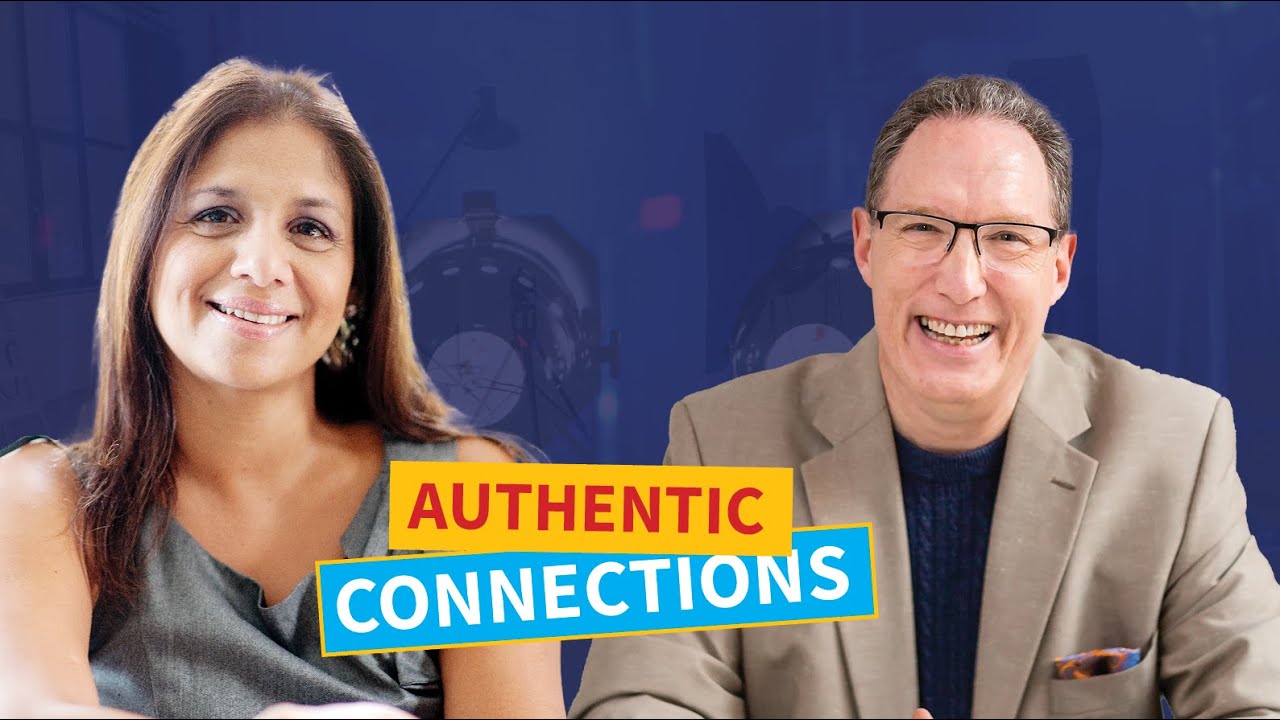
Psychotherapist Roxanne Durhodge talks about the silent crisis of workplace loneliness since remote work took over. She presents her Return on Relationships framework, which measures connection and communication across five areas, and explains how leaders can spot inauthentic behavior and rebuild trust through humility and concrete stress-response techniques.
Chapters
There is a silent crisis unfolding in the corridors of businesses everywhere. Across industries, a pervasive issue lurks behind the hustle of our daily operations. And that is the growing disconnect between employee well-being and organizational success. And that's what we're talking about today on Marc Haine Live. Welcome to this episode! This is where small business owners and entrepreneurs develop new skills to help them create the jaw-dropping, show-stopping experience that their customers and their employees deserve. I am your host, Customer and Employee Experience Strategist Marc Haine. And I have so much gratitude for you to be joining me today for our very special conversation. My host or my guest, I was going to say my host. My guest for this episode is psychotherapist and wellness strategist Roxanne Durhaj. Today, we will shine a spotlight on employee mental health and the need for authentic workplace connections, which often takes a back seat as businesses strive for things like innovation and And efficiency, and of course, profit. This leads to burnout, turnover, and a plummeting workforce culture. But what if there's a key we're missing? A piece to the puzzle that could transform this narrative? Stick with us because that's what we're talking about. My one ask for you today is that if you know somebody who could use this information, please go ahead and share the episode. It's so important that when we have information that we are able to share it. And of course, if you like our podcast, go ahead and subscribe. You know, it's really funny. I was just speaking at a corporate leadership summit about how to create more engagement within our workplace. That is how to engage and retain the workers that we have in a way that's productive and in a way that keeps them engaged for long periods of time. And people were really surprised when I talked about the value of impromptu creative collisions. You know those interactions that you have like at the water cooler, or in front of the coffee machine, in the lunchroom, outside having a smoke? Those kind of interactions. As a leader, those are the last places we want to see our staff. Leaders are often so focused heavily on things like the financial results like return on investments and performance metrics and grinding out performance. And so, they sneer down at the times when our people might be standing around being unproductive. What they miss really is a really key factor to being in the people business. And that is the human side of our businesses. The emotional and mental well-being of our team is It's not optional. And it has very real impact on our profits. Issues like high staff turnover, lack of employee engagement, poor team relationships are not just HR problems. They are leadership challenges with very real financial costs to our businesses. So that brings us to our Question of the Day. So, have you thought about how ignoring the mental health of your employees and limiting the creation of authentic and real at-work connections could be quietly reducing your profitability and your productivity? Something to think about. I'd love for you to be part of this conversation. Why don't you go ahead and share a link to this episode on your favorite social media platform, hashtag it #ExperienceLeadership, and put down your comments. I'd love to follow you. I'd love to get into a conversation with you about what your thoughts are because it's so important that we keep these lines of communication open. As I mentioned, my guest today is psychotherapist, mental health and wellness specialist Roxanne Derhodge. Roxanne is a very special person. As a graduate of the University of Toronto and the University of Guelph, Roxanne specializes in cognitive behavior and family systems therapy. As a former 15-year executive with one of the largest health and wellness firms in North America, she now leverages her expertise to assist companies with their corporate strategies in occupational health and wellness. Roxanne is a sought-after speaker and the Amazon best-selling author of ROR: Return on Relationships— Amplify Your Authentic Leadership to Create More Resilient Roxanne, welcome to the show!
Well, so excited to be here with you, Marc.
It's so grand to have you. I'm so glad we can make this work. Before we get too deep into today's topic, could you just tell us a little bit about who your clients are and how you serve them?
Well, my clients are leaders that are really wanting to, I'm going to say, find their superpower around What it takes to lead at that optimal level. People that are wanting to maximize their capacity internally so that they can impact anybody within, like I would say, that 10-foot radius around them, which would be their immediate staff. And then ultimately, the corporate culture around them.
You know, I've been doing so much studying on this idea of engagement and connection and authenticity. in leadership. Gallup has so many studies about the level of authentic connections and friendships in the workplace and how the causal effect, how prevalent the— and how prevalent the fact that we're not connecting with people as we used to. I saw studies back in 2018 and 2019. And then, we saw a huge disconnect when COVID hit and people were becoming remote workers. And From the time that we've now come out of COVID we're not really seeing people connecting like they did before. So, in your experience, how prevalent is the issue of disconnection in the workplace based on everything that you're seeing?
Well, absolutely. I think initially, where everybody was really happy, we're gonna be able to stay home and not do the commute and all those things. But unfortunately, what started to happen after that is Yeah. We recognized there was a level of loneliness that was occurring when people were so disconnected. And as human beings, ultimately, Marc, what we're trying to do is we're trying to engage. And you and I, Marc and I have spent some time together but it's only been virtually. And I believe we've met once really briefly in Calgary. But there's that whole impact of really being in that other person's space that sometimes, the lack of words. You can get things done, to your point with your introduction, by having one of those kind of bump-ins at the water cooler where you get really feel a sense of connection. And then ultimately, someone makes a request of you related to some parts of the business. And then you think, oh yeah, Marc, that Marc guy is a pretty nice guy. I think I'll help him along here. So, we've missed Mm-hmm. And I think what's happening now is a lot more people, even though they've gone back to hybrid situations, are struggling to kind of know, how do I reconnect now so I don't feel like it's contrived? And it's not like I'm always looking for something when I'm connecting in this post-pandemic world.
Yeah, it's interesting because I wonder how many people actually kind of sit back and go, I don't know why I feel so needy. Do you think that people are aware that they need this connection, that they need this interaction? Or is it just something that they're just lonely, or they're sad, or they're disconnected and that's just the reality?
Well, I think again, going back to 2020, like I think we're realizing it now even more. And I know people like you and I, I work from home unless I'm speaking, or training, or doing an event. And I literally— and I'm the, I would say, the extrovert that loves connection, Marc. But sometimes, I literally will have to make myself leave the office and say, I have not left the office in about 2 days, meaning my home now. So, I think what needs to happen is we need to recognize that that habit of being alone is something that is real. Since the pandemic and get back to some basics where we're checking in with people and saying, how are you really doing? I know you're right on mark with your numbers and your teams are okay. And there's not been any conflict. And we're right on target with that project. But how are you truly doing? And I think what we are remiss in doing now, when we were in person full-time, when we were in corporate, we were seeing each other all the time. We have to really implement some of the basic things now to really, really connect because we're not seeing each other often enough to do it organically.
So, what are some of the misconceptions that leaders have about mental health and leveraging authenticity in the workplace?
I think the assumption is if nothing's going wrong, that everything is okay. Right? And what we know from the data is that anxiety and depression has gone up by 40%. So, if people are Are you getting their ultimate productivity? Or are you getting what they call presenteeism, which is, I'm gonna show up. Either I'm gonna be on my computer and I'm gonna get those projects in, or I'm gonna be in the office. But I'm giving you about 65% to 75% of my productivity because I'm feeling disconnected. So, there are no alarm bells that are going on that says, when we're reporting to the board with our quarter, quarterly numbers that were off. But there's that general kind of level of disconnection. And they're not— these are the people that are going off potentially on short-term claims, right?
Right.
And they're not going off and going on any further. But these are the same people that are coming back to work. But then, there may be something else is coming back. So, I think you need to look at your data. Look at your incidental absences. You need to check with your different leaders at the different levels? How are people really doing? How well do you know your team, right? And that's a basic fundamental. What are they like? What is Marc really into? What is really kind of happening? Not to get into the nitty-gritty of knowing all the elements of someone's personal life. But you should know some basics like the who, what, when, and why in someone's life.
Right.
So that you can kind of know if they're off the mark. And I think, it's like, can we quantify this? I would say that ultimately, it would be quantifiable to some degree. But it's that elusive number. So, it's kind of saying, what am I feeling internally as a leader? Am I feeling like something's awry but everybody seems like shiny and bright? Then, you need to really kind of recognize that you may be connecting with people that you're in alignment with that's a lot like your personality. But what about the person that's diametrically opposed to personality as yours? What about the people in the middle? What about the people that always speak that you never have to worry about? But the people that kind of sit in the background, how are you eliciting the connection from them and giving feedback that's needed in a way that allows everybody to have kind of feel that openness to share from their perspective?
Right, right, right. I tripped as I was doing research. I tripped over your website. You had a phrase called authenticity Yes. Could you delve into that a little bit?
So, in my new book, The ROR, like you introduced earlier, these are the 5 areas that I delve into in an assessment with leaders and their teams and ultimately, their culture. So, we assess the leader's capacity in the areas of connection, communication, decision-making, awareness, and balanced processing, or a fancy way of saying, how do I make decisions? And based on that metric, we also have the team do that of their leadership, leader's ability in those areas. And we do basically a scorecard of where does the leader think he or she sits and how does your team quantify your skills as well. And then, we basically look at that from a perspective of a learning and development perspective for the leader. So, if I'm— let's say you've just gone through the leadership modules. Around communication and we're checking with your teams to see how you're doing and you're still getting subpar numbers, then we know that ultimately, there's something a little bit deeper that we need to delve into. And because maybe you're thinking you're communicating well but you're not hitting the right marks for everybody that the business is needing. And then, we're going to drill down further and do more one-to-one coaching with that leader because that means that there's more skill enhancement that's needed. Because Yeah. Because I think as human beings, Marc, we know what we're good at. We know where we're kind of somehow in the middle. And then others, you're like, oh no, I'm not so good at those areas. But sometimes, it could be upside down in that we, as human beings, we do give ourselves sometimes higher scores on areas that we are not so good in. And I think that's why the AQL is so important because it really gives you a snapshot of what is really happening as the leaders go through this, the ROR training, group training, or individual executive coaching and training.
Are there any telltale signs that a leader might be hindering rather than fostering that level of authenticity within their team that would lead to things like mental resilience?
Well, I think the leader has to look and see, are you the type of leader Hmm. Or do people kind of continue along? That's a bit of a litmus test, right? Because generally, if you're the kind of leader that you're the leader, it means you're separate from the rest of the team. If people are just kind of, oh yeah, here's Marc, and they continue along with their things, you know that they have a certain level of comfortability with being authentic around you. If you find that at the water cooler, let's say, or wherever you're having lunch, all of a sudden, you come in and there's a kind of awkwardness. complete shift in conversation or activity or scurrying away of certain people, that's an indication that maybe people aren't as comfortable with you. So, the lack of awareness might show you that, okay, I need to understand what I do well and what I don't do so well. And then, what kind of ways can you get that feedback? Obviously, I'm not going to come forward to my leader and say, by the way, Roxanne, you're not so good at decision-making when you're under pressure. But I want to elicit that information so I can use that information in a concrete way to enhance my capacity to get connected to myself. If I am more mentally aware and resilient as a leader, then I'm able to understand from my space what's going on with others around me. And then understanding what is it that they need differently from me as the leader to just allow people to sit in the best version of themselves. And that's ultimately what you want with people. Because if I feel supported by my leader, I'm going to work awfully, awfully hard. But if I kind of think that they're already not even, I'm a line on a spreadsheet and a graph, I'm going to be less likely to want to work as hard because I want to make you proud. Generally, most people want to make their leaders proud of who they are.
Yeah, and I truly believe that nobody comes into work every day thinking, today, I'm going to shag the dog. I'm going to do the least amount of work possible and make sure that—
right?
So, everybody I think wakes up every day wanting to do really well. And somewhere along the way within the culture, that kind of passion or that kind of energy gets fused out. And to your point, it's up to the leader to have enough humility to say, what am I doing wrong? As opposed to pointing fingers.
I absolutely agree. And then, sometimes when I start working with leaders that maybe they've had some bumps along the way and then they want to be completely authentic, I'm like, hold up. Let's kind of see where you are.
Exactly.
And let's kind of tread this water a little bit lightly there for a little bit and say, look, I'm trying to enhance my ability to meet the needs of what you're needing. And I know I'm going to tell you what I think I do really well. And I'm going to open it up for you to help me and give me guidance about what areas you think would help overall. And if you don't feel like speaking up in this meeting, I'd love to meet with you one-to-one. Or you can send me an email Yeah. Anonymously. And we'll figure out a way how you can do that so that ultimately, I can take that information and like I said, look at myself and then try to bring the best out in myself so that I can impact others and listen on a deeper level to what's needed to have people feel better on the inside. Because I want to feel better. If I'm a leader, I want to walk out of that office at 3:30 on a Friday afternoon and feel like, oh, I've had a good week. I'm not wanting to drag out of there and feel like, oh, I don't think I did so well this week. And I know 60% of my team is not doing well and we're off target and people just aren't happy. I think leaders want to do equally as well as employees do.
Yes, yeah. It's really surprising because I have come across leaders who are, I'm the boss and so, I pay them so they just need to get over it kind of mindset. And I hate to say it but it's my generation of the baby boomers who are still kind of hanging on to that industrial age mindset of I pay you, therefore, I own you for a little while, for the 8 hours or for the 9 hours. But most people I think have the humility to say, something's wrong and I want to explore it. But to your point, you need to have like a really trustworthy way of being able to garner that data so people don't feel like at some point, you're going to turn around and be vindictive or want to lash out and all this sort of stuff. So, this is where hiring somebody like yourself would would really kind of be in alignment with what they're trying to achieve while keeping some of the data points confidential so that you can have really open and honest discussions.
Right, because most companies, if they're a bigger company, if they're a smaller company, maybe they have an HR department. But most companies have EAP programs. They have wellness committees. They have advocates, all those things. If you were to aggregate all that data, Marc, that's important because that's giving you a pulse of what your mental well-being of your organization is going through. So like, when I was in the consulting world, we knew about 10% of people attended services that would have otherwise not attended work because they had psychological services. So, if that's the case, companies would bench against that. But then, it was the 20%. It was that layer in between, the people that didn't use the Employee Assistance Program. that they almost sit under the radar. And that's the people you really, really need to meet because they are the most— they're the drain in the cost analysis of things. But they're not showing up anywhere. They're the people that are giving you that 65%. And that's impacting kind of the bottom line with time. And that's why the concept of the ROR, which is instead of ROI, which is return on investment, go with the ROR. Because ultimately, if you can maximize, there's still going to be about 15% that has other issues. That are mental health problems that need concerns and long-term disability, those types of things. You're going to obviously put your systems in place to catch those individuals and give them the support. But everybody else, you're just really wanting to understand if with a 24/7 service with 50-year-old males east to west coast, then, and you're a transportation company, what are the demographics that are going to come up, the psychosocial concerns that are going to come up? And then, how are you addressing what needs to be addressed in reference to implementation from policy all the way up to your benefits to address the concerns? And then, you're not being reactive because there has been an accident with a driver that's on the evening shift because he's drinking a bit much. That's a red flag. So, don't plug that hole. In fact, Start to look at your data to say, okay, what are the concerns that are coming up for that individual in that age and stage of development with what's happening in like when you do your kind of your SWOT analysis of the industry internally? What changes have you gone through? And what has that individual gone through? How have they been managed? Right.
Well, it's interesting that you mentioned—
sorry.
It's interesting that you mentioned trucking companies because one of the things that I heard is that we're seeing an all-time high in perception of loneliness with truck drivers. And they're attributing it to the fact that the CB radios are no longer a thing.
Oh, okay.
That they no longer have the instant access of being able to reach out into the ether and connect with a stranger for hours at a time, or multiple strangers at a time. And I thought that was really interesting. Because that's something I hadn't thought of as far as the technology evolution of our communications. It's like, oh, I could see that.
And that ability to just hear a voice, right? Like, I mean, and unfortunately, what's happening is that texting is becoming the norm, right? And like, if you think about it, hearing a voice allows you to connect on a deeper level. Seeing someone in person gives you even a deeper level. Being in person allows you to see the person's eyes, which is such an ultimate level of connection. But again, when we're getting levels and levels that's being taken away in the case like with the CB radio with the truckers, that's that one level of connection when you're on a 24-hour haul that that person could just really, really just say, hey, who's out there? Can we have a bit of a chit-chat? And I think again, going back to some basics, Marc, we're losing some of the basics, right? Like especially taking away something like that. And then, what's replacing it, I guess, is the question in trucking. What is happening now? How do truckers communicate now, I guess, is the question. I don't know.
Well, hopefully, they don't have their cell phone up on their dashboard watching Netflix to help pass the time.
We hope.
We hope. When we come back, I'd like to talk about some steps that leaders can take to start kind of shaking that tree and start reaping a reward of taking steps to move forward into a solution. And we'll get to that right after this.
When the spotlight shines on your business, are customers applauding or yawning? In other words, how is your business performing? Make your business a star with the new book Lights! Camera! Action!, business operational excellence through the lens of live theater by Marc Haine. Marc uses his business and acting experience to help you see your business like a live show so you can create a performance your customers will never forget. Buy Lights! Camera! Action! today at your favorite online retailer or directly at marchaine.com.
Welcome back. I am having a great conversation with Roxanne Durhodge. And we're talking about this idea of creating authentic connections within our workplace and making sure that we are sensitive to the fact that we're bringing our authenticity. But other people are being able to react with their authenticity as well. Roxanne, you have a tag on your website your website called the Authentic Connection Movement. Could you tell us a little bit about the Authentic Connection Movement? What's that all about?
Well, I think it's starting the connection with you. And I even see the quote that you had about acting in love and being of service today. I love that quote that I was reading as I was waiting to come on. And I think it starts with us, Marc. Like, I mean, it's the basic fundamentals about So, when we think about what we want in our day, right? And we want to feel some kind of connection to someone else. And I think as business owners, entrepreneurs, leaders, we have that duty because of the positions we've taken on to create that connection. So, once you start with yourself, right? Ultimately, you can create that connection in others. And then, what happens is it becomes kind of pull, right? Like before you know it, it's like other people doing something really, really simple. Right? And I think you start to demonstrate it as the leader. The counterpart of that is if someone does things where they don't act in accordance with authenticity but then they turn around and ask their employees to be authentic, that's where things break down. So, I always say the concept of Authentic Connection Movement is start with yourself. Look at yourself. How authentic are you? Are you in alignment with what you need to do to be the best version of yourself? And try to ensure that you're doing that as much as you can, as often as you can. And then, try to think about if I was incongruent, or if I was rough with someone, or if I was abrupt, or if I kind of seemed like I was being a little bit— there was a bit of nepotism happening. Try to always think, what am I doing to clarify if I've made a mistake?
Right.
And be humble enough to discuss it to say, I realize I didn't do so well last week and I want to start off this week on a better foot. This is what I want you to know that I'll try to do different. And that's what that whole concept of that inkblot that kind of grows. That's what the concept is based on.
I love that. It's such a great concept. But again, it takes a lot of humility for people to be able to do that. For clarity's sake, Roxanne, what risks do companies face when they fail to address the disconnect employees feel with their managers and their peers? What have you seen?
Well, I'm going to tell a story because of course, we're speakers and we tell stories. And I think of when I was a director at a hospital and the senior executive of the team, she had Outbursts, literally outbursts, right? And but she she got things done. But so she kind of had the ability to kind of run rampant, and our the hospital had a U shape, right? And oftentimes what would happen is the directors would say, "Oh boy, I hope she doesn't make a walk through the U shape at the end of the week," because what would happen is there would be. potentially things that were happening and things that weren't going well. But she would be privy to it at say, 3, the end of the week. And those bombs would start going off. And people would literally be concerned about how her reactivity was going to impact their ability to function. I could tell you on that team, People, they did their jobs. But there was a lot of people not well. There were people going off on leave. There were people that were beg, borrowing, and steal to get to another department to get away from her. So, I think you really have to look at what is the impact of ineffective leadership because you are disconnecting people to who they are. You are telling people, hide what you're doing but perform.
Right.
Because of your inner ability to modulate who your temperament. And because you're in that role, you have even a higher duty in my opinion to go out and figure out what you need to do to be able to be respectful and kind. You may have to freak out in the parking lot on your way home. That's okay. That may happen. But to be able to do that. And what happened is major people left that unit that were phenomenal. You had people going off on short-term leave. A lot of things got done kind of behind the scenes that potentially were not in the patient's best interests. And then ultimately, the treatment of the clients that we were needing to address was not done in a way that was best practices. So, I think you have disconnection. You have lack of engagement. You have a lot more arbitrations with unions, all those things. And that was an example. And I was in that unit for quite a while.
Hmm.
And I literally as well was thinking, okay, I can't wait till I can get out. I just have to figure out how am I going to parachute out and not leave people behind to some degree. So, those are the deficits that happen when people are not taking responsibility for their inability to lead.
I'd like to speak directly to people who right now have a tendency to get themselves all riled up, get themselves so angry about stuff that they lash out to their teams. Because if I go to a leader and say, hey, I want to talk to people who get angry, they're gonna go, I never get angry. But we also know that there are people out there who are exactly what you're describing. There are people who like, they get their knickers in a twist so tight that they are like an exploding volcano and they lash out. So, Speaking directly to those people right this minute, what's the first step they need to do to be aware and to take a step to getting better?
So, I'm going to speak to leaders directly right now. I'm going to teach you something to say. Do you know your stress response? What is your stress response when you are starting to get stressed? Are you a fidgeter? Quite literally, do you kind of pace, or you are the type that you kind of get stuck or frozen, or do you kind of want to run away from the scenario? Kind of the concept of the fight, flight, or freeze. You need to kind of start to think, what do I do? That being said, you know, if you are the type that freezes, I want you to get up and start to make a short list of 5 things you can do really quickly To get back in your body. Because what happens is with your stress response, your body wants you to react in an agitated state. If you are the type that gets frozen, move around. Move around. Do a couple of things. Again, make that list for yourself. But ultimately, what you're trying to do is to put back on the prefrontal cortex, which is the boss of the brain. That's a logical, linear part of our brain that allows It allows us to make decisions in a sequential way. But however, if you don't keep your eyes on your stress response, what happens is your stress becomes cumulative. And when your stress becomes cumulative, you're not aware of the first signs when you're getting so dysregulated that you're going to react to someone in a way that's less than desirable. So, leaders out there, think, how do I manage my stress? What is my stress response? I'm a hyper-arouser or a hypo-arouser. And what kinds of things, a quick list of 5 things you can do. Do those things before you respond, before you walk into a meeting. And you'll find that that makes a difference just with how you can deliver things.
Right there is gold. Gold. Absolute gold. Roxanne, if this resonates with people, how can they How can they get in touch with you?
Well, you can get a hold of me at roxannedurhodge.com/quiz. If you go there, we'll give you a quick quiz and it'll give you some of these quick tips and give you a sense of where you benchmark into being connected to yourself either at home or at work.
Wonderful!
I'll put the link in the show notes. How can leaders effectively measure and track improvements? Like somebody makes a commitment and they want to get better. How can they track themselves?
Well, I think you have to kind of think, let's say it's the most difficult quarter generally in the business. What kind of things am I looking for in my team around that time? And if you're finding that there's a lot more things are being missed or people aren't communicating as well, look at what things aren't going well at that pivotal time in the stress highest stress point in your business. And decide what would I like to see a bit different. And I think a lot of it gets really lofty, right? I want everybody to communicate and be able to problem solve. Just try to think about what would be one small step that you would want to see a bit different in the areas that aren't working so well. And then, check it a month down the road just to kind of one small step. salient or important step that you need to see in all the areas that people are falling down in and try to check in to see if they implemented something. What helped? What didn't help? And maybe potentially what they worked— what they could work on again to help them get closer to addressing that concern.
It's interesting because when the leaders have the humility to do this exercise, the next step becomes really self-evident. And the step after that becomes self-evident because you start looking at where are we hitting the mark. Where are we letting people down? And it becomes a question of every time I have to turn around and apologize to somebody, I know I have to fix it. I know I can't keep letting that happen.
Yeah, the apology without the follow-through, it becomes all words, right? I'm not going to scream at you when I am stressed.
I'm so sorry.
It will never happen again. What the hell are you doing? Sure.
Yeah.
When we come back, I'd like to talk about some pitfalls and cautionaries for people as they try to make the change. I'm always afraid of people who watch an episode like this and go, oh, from now on, this is what I'm going to do. And they put a big band-aid over the problem without actually dealing with the problem. So, I'd like to discuss that. And we'll do that right after this.
When you're delivering an important speech to a huge audience, it's easy to lose your place or go way over time. Give yourself an advantage with the Pro Speaker Presentation Speech Timer app. No more checking your watch or calling for time. The Pro Speaker Presentation Speech Timer app keeps you on track with easy-to-see timers, even changing color for visual prompts during your speech. And you can set audio cues to practice or set it to vibrate so you don't even have to look. Be the pro you know you are. Download the app at speakerpresentationtimer.com.
Welcome back! As you can tell, Roxanne and I are committed to serving businesses just like yours. And if you are planning a conference or a leadership retreat and would like to explore how we could be working together, feel free to connect with us. Our contact details are in the show notes. Roxanne, before we get into the cautionaries, can we talk a little bit about your book? The book was released last year. Could you delve a little bit more into what people can expect if they purchase your book?
Well, I think what leaders and teams can expect is that you'll know the areas that are the ones that you need to focus on immediately. The areas that are showing you that that's where your teams are getting into difficulties based on your leadership style. And from that, in the book, there are 5 areas to the book. There are actual practical experiences and exercises, not unlike the one we just shared earlier, that the leader can actually start to delve into. If I'm a decision maker that's maybe say, more autocratic when I'm stressed, what are some of the steps that I need to take to be able to be a little bit more authoritarian versus autocratic because I'm recognizing the symptoms of my stress? So, there are lots different practical experiences, experiential exercises that they can work through, along with case studies for other leaders that have done it ineffectively. And in turn, have been through the ROR process. And they share the path of which they took, some of the steps that they took to make it better.
Wonderful! This has been such a great conversation. We talk about Pitfalls and cautionaries. As people want to make— start making changes in their corporate cultures, they start with themselves. What are some of the things they should be aware of? Some things they should avoid? Some things that they should maybe be on the lookout as a maybe early indicator of failure or more damage?
Well, I think don't be overzealous. It takes time to develop habits. Right? And to break old patterns of behavior. So, to recognize you may have a vision about what your corporate— you want your corporate culture or your teams to look like. We have to kind of clear out the shrapnel first, to put it bluntly.
Hmm.
And to look at what has happened within whether it's a personal relationship with one of your team members. You have to start to look at it individually and collectively. And has there been alliances within your team that you've kind of not looked at as deeply as you should have looked at? Um, has there been, um, you know, difficulties or conflicts that really— some of them maybe you address perfectly and some of them not so well? Um, so my analogy is I often say that if we said to you that you were not going to clear out the garbage weekly or the recycle, after a while things are, you know, going to be out of control. So to expect that if you're now having a vision We have to have buy-in. And you have to start slowly to think about who are your ambassadors that are around you that see the qualities or maybe have that goodwill within you. You start with them. And then ultimately, you start to slowly build by saying, what are some of the core fundamental blocks that might stand in the way of my vision? And I may be a little bit overzealous, so I want to temper that space to be able to make sure that we do well with it. And let's, let's start. I wanna know what they are, and I would like guidance from you as much as I'm going to give guidance to this ultimate view. And I want to understand what are the blocks that you see that I may not be seeing. And just steady as they go. You can't start to be authentic if you've been inauthentic or have 60% of your team feeling that you're inauthentic. It means that you have to start slowly to work on some of the skill enhancements within yourself and within your teams. And then progressively, ultimately, you still have to do business. I get that. But how is it that you can slowly start to address some of those concerns so then you can start to learn about How to communicate more effectively on a nonverbal, or how to make decisions when the numbers are off, or how to recognize people in ways that may not come easily to you. A bit at a time.
The one word that pops into my head as you said all that was this idea of values. We all have mission vision statements on our walls and in our businesses and all this sort of stuff. And really, the congruency between the organization's values, your values as a leader, and the values of your team members, I think, must also have to come into play somehow.
Absolutely! Because I may be sitting there and I started at this job and I like the company. But now, the company is creating a different shift. So, I'm trying to figure it out. I'm trying to think, okay, Is this in values alignment with me and my integrity? And I may be in a different subset of that team that's not seeing it. And if someone's not seeing it, it's like, okay, how do I need to share this in a different way? Or what is it that this person is needing to see the vision? And sometimes, Marc, as we know, sometimes the misalignment may be too big and some people need to go. And that's oftentimes difficult to accept. But I think the clearer that you become in your value system, and the strategic objectives of the company. And then, trying to understand how that individual will put themselves in alignment to meet those. If there are incongruences, how can we assist to move the process along? And if it's so big that you can't buy into the strategy, what other options exist? And that's the sobering conversation sometimes that leaders find it difficult to have with some of their employees.
Yeah, I recognize that some people have really low trust work environments. Is it fair to say that leaders who drive these low trust work environments cannot be the solution to their problem? That they need to bring somebody from the outside in?
I think so. I think so because you need to Yeah. So, you need to understand what it takes. What will it really take when you're not in the room to establish trust? And so, sometimes in some of the consulting projects that I've done, I've gone into teams and they've been able to openly share. And some of the things can be quite scathing at times. But it needs— people need to be able to— I always say they need to be able to honor what they're feeling, tell others what's really happened for them and what it means for them today. And so that once they can do that and you can aggregate that data, you can give something that goes back to the management from a level to let them understand why this low trust culture continues and what needs to happen. And it not be personal, right?
Yes.
Because at the end of the day, if you are wanting a high trust culture, what is it that you're not doing to afford And is it that you're saying you want it but you're not willing to take the steps? So, I would say definitely bringing someone that's an outside consultant in. And with the investment, that will give you all the things that you need to know that needs to be addressed. And you slowly start to kind of parse away at it a bit at a time.
And it works as long as you don't hold the consultant over a fire and say, tell me who told you that? Who said that? Who said that about me?
Did I tell you that has happened to me?
No, no. I've heard it happens. I've heard it happens.
Yes, yes, for sure, for sure.
It's like, okay, that's not a low trust activity. So, do you have— I mean, I've absolutely loved this conversation, Roxanne. Do you have any last thoughts about what we've talked about? Anything that we've missed or that you'd like to tag in there?
I just want all leaders to know that we all have the capacity to lead at a fundamentally high level, right? We're human beings. And I truly believe a lot of times when people say to me, well, you're a psychotherapist, you can do this, and I go, I'm a human being that happened to learn these skills. And yes, I practiced a lot. So you have the capacity to learn, to figure out what is needed to be able to meet people. So, you know, don't, don't negate that you have skills, and obviously a lot of skills. And sometimes the skill enhancement may not be as difficult that you think. Yeah, yeah.
Could you remind everybody one last time how they can get a hold of you?
So, you can reach me at roxannedurhodge.com and on any social, just @roxannedurhodge. I spend a lot of time on LinkedIn.
Roxanne, thank you so much. Thank you for doing this on such short notice. Thank you for doing it while you're in the middle of your own client crises all over the place. I really appreciate that you took time out to share your passion and your expertise with us today. It has been absolutely brilliant.
Well, thank you so much. This has been amazing. I love the chat.
Likewise. Why don't you let me know if this was of value to you? Was this of value? Did you get anything out of it? As always, my offer stands. If you would like 30 minutes of my time to help you brainstorm your business with you and your Feel free to book yourself on my online calendar. I have a ton of resources. And if I don't have the answer, I know people who do. So, go ahead, click my calendar link in the show notes. Book a 30-minute, no-obligation clarity call with me. It'll be my honor for me to be of service to you. And while you're at it, why don't you go ahead and leave a comment or review about this episode? I'd love to get your feedback. Was this of value to you? What was your big takeaway today? And since I'm on my way to tipping over 200,000 subscribers, why don't you go ahead and make sure you subscribe to this podcast? That way, you get notification each week when I bring you fresh new content with great experts each and every week. Thank you so much for joining me today. My name is Marc Haine. I hope you stay safe, stay healthy, and I dare you to be the exception. Thank you, Marc. Thanks for being here.









