You Didn't Hire the Wrong People. You're Just Destroying the Right Ones.
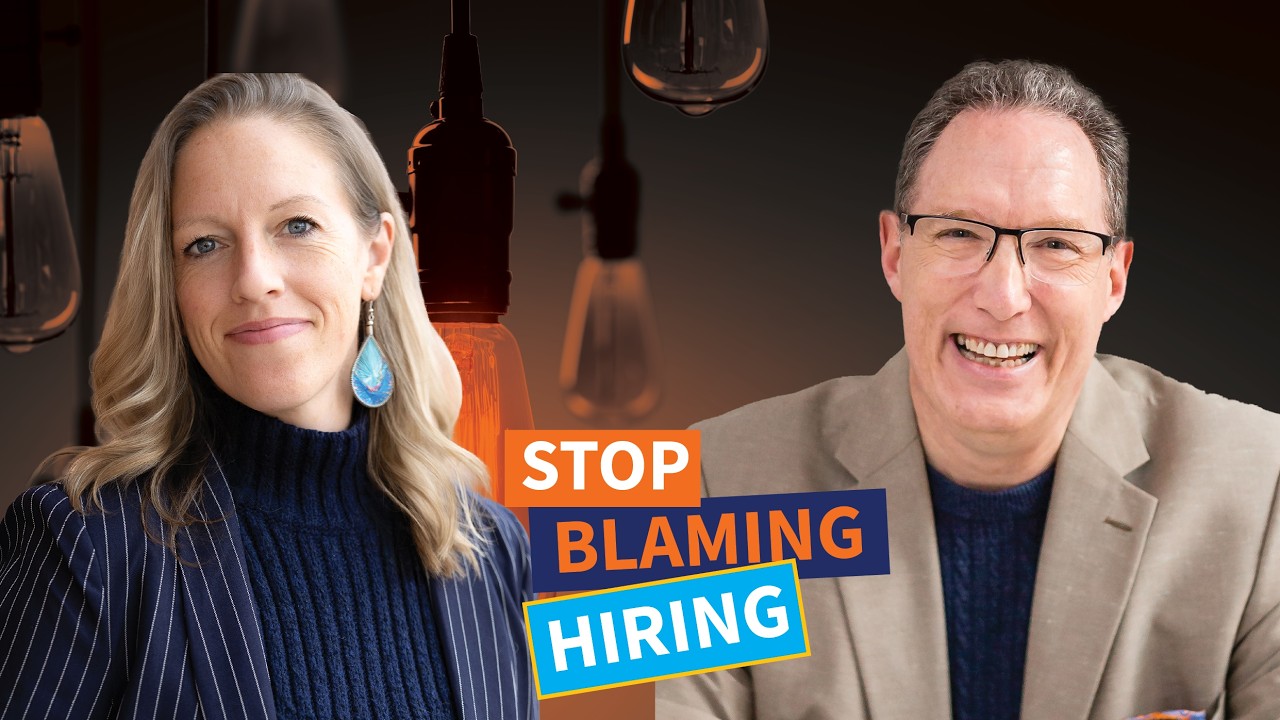
Marc Haine talks with Allison Alkemia about why teams underperform. Most of the time it's not bad hires, it's that leaders haven't figured out what they actually want or haven't dealt with their own stuff. They discuss the Holographic Model of Leadership and how Human Design can diagnose what's really broken.
Chapters
You can have smart people, decent systems, and a full payroll and still feel like your business is dragging a massive piano uphill. Why? Because sometimes the real problem isn't your team. It isn't your process. It's not even that you hired the wrong people. And that's What we're going to be talking about today on Marc Haine Live. Welcome to this episode of Marc Haine Live. Of course, this is where small business owners and entrepreneurs develop new skill sets to help them create the jaw-dropping, show-stopping experience that their customers and their employees deserve. I am your host, Customer and Employee Experience Strategist Marc Haine. And I'm really glad that you're with us today. because my guest is Allison Alkimiya. Oh, I knew I was going to mess it up. Alkimiya. And today, we are unpacking why your team's underperformance may have far less to do with hiring and far more to do with maybe with leadership clarity. So, if this is your first time with us, welcome, welcome to the show. We have some amazing content on this channel. So, feel free to explore look around and take in the great experts I've had in the past. And while you're at it, please make sure that you subscribe to this podcast. That way, you'll get notifications when I bring you fresh new experts and content each and every week. So, I think let's be honest. A lot of leaders are out here trying to fix human problems with organizational duct tape. By that, I mean, Sales are soft, so we hire. Teams feel flat, so we need a new system. Cultures feel weird, so we toss in a workshop, a pizza lunch, and maybe get a ping pong table for the staff break room. Meanwhile, you're exhausted. The team is walking on eggshells and business keeps acting like a smoke detector with a low battery. You know, chirping constantly and ruining everybody's mood. And that brings us to our Question of the Day. So, are you fixing the wrong problem in your business because it's easier to blame people than to diagnose what your leadership pressure is doing to the team? I'd love for you to share your experience. Go ahead and share this episode on your favorite social media platform. #ExperienceLeadership and then put down your comments and be part of this conversation. As I mentioned, my guest today is Allison Alkemiya. And she's an executive advisor who works with founders and senior leaders kind of navigating growth, complexity, and high-stakes decisions. She is the creator of something rather spectacular called the Holographic Model of Leadership, a framework built around one provocative idea. And that is whatever is unresolved in the leader gets distributed outward through everything that they touch. And growth only amplifies all those problems. She has more than 22 years of coaching experience. Allison has advised leaders across healthcare, finance, financial tech, professional services, nonprofit organizations. And her work focuses on reducing that leadership drag clarifying authority, and helping organizations move forward without losing standards, controls, or good people in the process. Allison, welcome to the show! It's so great to have you.
Thank you so much. It's so great to be here. I'm excited for today's conversation. I hope it provides so much value because I know there's a lot of leaders out there that are going through this right now.
Right, right. So, maybe can you start off a little bit by digging a little bit deeper into who your clients are and how you serve them?
Yes. Well, my background has predominantly been within healthcare, but it has translated, like the bio says, into other industries as well. I started noticing a long time ago that the people who were leading the room, in that case, healthcare providers at that time, had a lot of other hidden stressors that they really couldn't talk to anybody else about. And also, they just don't teach business School inside of med school. And so, it kind of organically became this thing where healthcare providers were starting to ask me questions about their operations, about their workflow, about their team members. But even deeper underneath that, which I think is kind of the real meat and potatoes of what we're going to be talking about, they would start opening up about what they were going through personally within the role of leading their organization. And throughout those conversations and thousands of conversations over the years, it became evident to me that whatever is unresolved in that person, it doesn't magically go away with more people, even good people, good team members, even more revenue. What happens is it gets amplified. Whatever is on the inside gets amplified and comes out to the outside. So, that's kind of the The overarching concept of how that came to be.
So, you mean the sign on the front door on day 1 that says, leave your problems at home, leave you— right? That memo doesn't work?
You know, if it does, will you please let me know if you find a way to do that? I'd love to know. No, our problems, you know, my son has a saying that I have to give him credit for. But he says, make friends with your problems because they're not going anywhere.
Well, and we have this expectation when we're at work that we can separate the two, which is just not reasonable. I mean, on any stretch of the imagination, it's not reasonable.
Right, right. Yeah, it just comes out and then, it can come out sideways, right? So, I first observed this. We'll have to go back. I'm showing my age. I just celebrated a birthday. But We'll have to go back 22 years ago. I was 20 years old and I was a coach then and I was coaching people in transition with having children. So I was a birth doula. I don't know if you've ever heard of that.
Yeah.
And I was coaching in very high-stakes situations, life or death. It doesn't get quite higher stakes than literal lives on the line there. And what I would observe in my clients is that Whatever was unresolved emotionally, mentally, psychologically, even spiritually, whatever was going on inside of that person or that family unit, it wasn't going to magically go away once the baby was born. It was actually going to start coming out and manifesting in some interesting ways during the labor event. And I saw it over and over hundreds of times. And that was where I was like, okay. There's something here. There's something intangible and invisible that not a whole lot of people are talking about. But it really runs our entire lives. And then, when you bring business to the table and you put yourself in a place of leadership, and then you bring more people to the table on the team, it just gets bigger and bigger and bigger. And this might sound like it could be a really intimidating big hairy problem. And it can be. But it can also be the greatest strength of an organization in my opinion.
It's interesting because as you were saying that, I was reflecting back on businesses that I helped coach, changing culture and all that sort of thing. And one of the challenges that I found was as much as the leaders wanted to change the culture and be part of some brand new growth and a rebirth kind of policy and of discovering our why, where everybody tended to fall back on was when there was a crisis and everybody reverted back to their past behavior. And it was trying to shake that. That was the toughest. Is that something you've experienced?
Yeah, what's that saying that I think they have? Oh God! To all my military friends and family out there, don't shoot the messenger if I butcher this. What's the saying that says, you don't rise to your highest capacity. You fall to your to your weakest link. Something along those lines. Do you know what I'm talking about?
Yeah, no, but that still makes a lot of sense is that when we hit with crisis, it's almost like we forget intentionality. And we forget what we were trying to do. And we revert back into kind of this crisis mode, lizard brain kind of jumping on it and just doing everything we know that we've tried before and never worked. But right now, we're in a crisis. So right now, that doesn't matter.
100%. And so much of this is run by the subconscious brain and neurowiring that we had that we probably picked up in childhood, right? And maybe this isn't like super sexy to talk about in business or in the boardroom. But really, if we as the leaders want to get real about results, we have to look in the mirror first and invite just a different angle, a different way of looking at things to see What's hiding in there that's actually running the entire show?
Yeah, it's interesting because I've worked with— I get called in as kind of a 911. It's like, we've tried everything, Marc. We need your help. And when I sit down with owners, operators, managers, I see a lot of finger pointing, right? And I love the quote. I can't remember who said it that when you're pointing a finger at somebody, you're pointing 3 fingers to yourself.
Yes, exactly.
And so, when I started the show outlining that leaders tend to blame the staff, they tend to blame, oh, they're not doing what I'm telling them to do. I have to repeat myself 100 times. And it just seems to be so prevalent. Why does this keep happening?
Right, right. So, that's interesting because what's happening is that's the only way that the invisible problem that I keep kind of referencing here.
Yeah.
It shows visibly outside of us. It shows up visibly as this kind of mirror experience. But that's not the root. It's just a mirror. The root is something that's happening inside of the person who is observing it. And what— I'm not a quantum physicist, but there are studies that demonstrate this with the observer and all of these things. It's a very nuanced, very interesting conversation to have. But I like to say it begins with number one, it begins with awareness. But right on the heels of awareness is radical responsibility. And I mean radical because it takes a certain quality of a leader to be able to have a problematic team member, let's say, Or problematic operation, or something is going off in growth and the scaling. Scaling brings all of this to the fore. Something's going off and it takes a certain quality of a leader to first and foremost, before pointing any fingers anywhere, take themselves into a quiet room, get really real with themselves and say, what the am I doing that is creating the result that I am experiencing outside of me?
Yeah, it's interesting because when I work with these leaders, they'll revert back to, I've been doing this for 23 years. I used to be successful. So, what I used to do worked. It's because the generations have changed. And they go back into it. So, So, Allison, what are the biggest mistakes leaders make when they're trying to fix underperformance? Because I know I hinted at this kind of lighthearted kind of, we try to look at solutions. We see what you called a symptom and we, oh, okay. So, we see the symptom. Let's do this. We see this symptom. Let's do this. What are the, in your experiences, what are the biggest mistakes leaders are making?
Well, I think you— I really think you're You're touching on it already, and that is to shift the, shift the responsibility elsewhere. And, and coming from a healthcare background, I can, I can say what you're saying with, you know, treating the symptom. It's kind of like, oh, going and getting a pill for something. Okay, fine. Nothing wrong with treating a symptom as long as we realize that that may or may not be addressing the actual substance of what is actually going on. And when we dedicate ourselves to that, what we're going to find is that it's probably going to take a little bit more time than we're comfortable with. It might take a little bit more investment than what feels comfortable. It's going to take more focus. And that's where the radical responsibility comes in again, because it's like, okay, are we dedicated to actually solving the problem, or do we just want to complain about it and pretend like it's not Right.
Well, and it's interesting because people will— we know that they say the poop rolls downhill, right? That there are going to be people on the team who were once high performers. And when leaders point out that people are weak, it's like, well, did you hire a weak person? Like, did you when you did the interviewing and you did the hiring and you did the screening? Did you hire bad people? And they're like, no, they used to be really good. So, are there any signs that there's Like strong team members actually being damaged by the environment that these leaders are creating?
I think so, yes. And when I hear something like that, like it used to be this way and now it's this way, the math actually changes. The game actually changes. The game has certainly changed from 20 years ago. If we have people saying, 20 years ago, I was so, so successful. The game has completely changed. We're in a completely different game. So you won that game. Now, you have to focus on this one. It's not apples to apples. And the same goes for when an organization is experiencing growth. So, the people that I tend to work with are actually experiencing a lot of good things happening. They are getting, you know, their revenue is is growing at a really healthy rate. They are bringing on good team members. Everything is going kind of right. And yet, they still feel that there's something that they're missing. And the reason they're feeling that is because they've reached their own ceiling. They've reached their own limit of their own expertise. And they are actively growing and scaling. And they're entering completely uncharted territory. And that can feel all kinds of ways. It brings up all kinds of things. Point being, whatever is on the inside is going to come out as I keep saying.
Yeah.
So, there's underperform— oh, sorry. Go ahead.
No, no, no. Sorry, I didn't mean to interrupt.
No. When there's underperformance, I start in a very safe manner, I guess. Safety is really important to me. as a value. So, in a safe way, I start just asking questions of the leader about them, not about their team member who's underperforming. I mean, yes, we want some intel. We want some information to know what the facts are about that situation. But then, I want to know how does the leader feel about how they show up in that dynamic? Because even though they're not going to say this out loud to very many people, what is usually underneath there is they feel ill-equipped to show up in a certain way with that dynamic, with that particular underperforming person or underperforming department. So, I always come to the head person because there's There's something there. If they can, I say the term alchemize a lot. That's my last name is Alchemia, the root word for alchemy. If we can alchemize whatever is going on inside of that leader, it's going to naturally help massage the pathway to get the results that they're looking for with their underperforming team.
I love that. That makes so much sense. And obviously, going up to people and seeing how they behave and saying, oh, by the way, do you know you suck as a leader? Would you like some help? Would just shut them down. So, I I really appreciate kind of the means by which you go about doing that. Hey, I'd love to jump into your superpower, this holographic model of leadership. I'd love to talk a little bit about that and we'll get to that right after this.
When the spotlight shines on your business, are customers applauding or yawning? In other words, how is your business performing? Make your business a star with a new book, Lights! Camera!
Action!
Business operational excellence through the lens of live theater by Marc Haine. Marc uses his business and acting experience to help you see your business like a live show so you can create a performance your customers will never forget. Buy Lights! Camera! Action! today at your favorite online retailer or directly at marchaine.com.
Welcome back! I am speaking with Executive Advisor Allison Alchemilla. Allison, you have a special program coming up in about a week. Do you want to tell us a little bit about that?
Yes. So, we're going to be talking about where the hidden capacities are in your existing organization. I would call it a webinar but it's not. It's going to be more of a— we're actually going to dynamically live start troubleshooting and talking. And there's going to be some hot seat coaching and executive advising if there are execs in the room. We're just going to do it together. So, that's next week, April 29th.
Nice! And we will get— you're going to send me the link so we can add it to the show notes. And then, for the people who are watching the recording, is there going to be any access to that after the fact? Or is there a way for them to get into that if they're watching after April 29th?
Yes, this will be a monthly recurrence. So, there will be— yes, it'll be a revolving monthly thing. I love getting live with people and just hearing what's going on. And giving easy access to really meaningful shifts that can happen. Because this stuff, I mean, we're talking about big hairy problems. But sometimes, the solutions are simpler than we think.
Yeah, I know. And maybe that's why people can't digest it. It's like, oh, that's just way too simple. Okay, it has to be something more complicated, right? And it's like when you talk to dietitians, right? When they say, okay, so you're pre-diabetic and you have to change your diets. Here's something. And people are like, oh, that, that, that's, you know, I've been doing this all my life. I, you know, this is way too simple. It's, you know, who cares if I'm eating sugar and carbs?
Yeah, it's kind of funny how the mind does that. I've said to people so many times, um, the solutions are often so simple I almost, almost feel wrong for, for needing to come in and offer these solutions. It's So simple. But when you're inside, one of my friends says this and I love it. She says, it's really hard to read the label from inside the jar.
Right.
And that's the thing with leadership is like, obviously, no one started and led a successful organization if they are incompetent or unintelligent. None of that is the case. I work with people who are actually so brilliant and intelligent. There's— they're almost too close to it. They can't— they, they know it, and that's why they've achieved success so far. But when it comes into this unknown, uncharted territory, then there— it's kind of like a fish out of water. And it's like, wait, I'm a really smart, competent person.
Yeah.
Why can't I figure this out? There's literally nothing wrong with you. I want everyone to hear that. There is nothing wrong with you. It's just that the game changes at a certain point. The math changes. And the leadership communication also needs to change. But all of that has the same root, which is inward, right? It's an internal game.
Well, when you're looking at anything that's honed in nature, everything evolves. Everything like from your garden to how quickly the grass grows. Like everything evolves. Nature is about evolution. And so, we kind of get ourselves stuck and we don't think ourselves as being kind of in a natural system. where things are going to evolve in our business as well.
Yeah, and that goes to— I mean, this isn't a philosophy discussion or a history discussion. But I mean, hundreds of years ago, there was a shift in our paradigm where the philosophers created a lot of division. And that's how we today, we think, okay, we have work over here. We have personal life and family life here. And we have this over here. None of it is compartmentalized in truth.
Right.
It's all this kind of messy, soupy ecosystem.
The lines are so blurry.
So very blurry. When we look at nature, like you said, we have— I actually believe we have everything we need right there. And that's how the holographic model of leadership came to be. I don't know if I put this in the information or not, but I've studied kung fu and tai chi for 11 years now. And pretty seriously. And, um, there have been— people have known this for a very long time. And if we look at how quantum physics has evolved, and even physics is changing, right? The only constant here is change.
Yeah.
And as we continue to realize that and know that, it's like, oh, what if, what if there's a holographic template inside of each individual. Let's call it an entity. Maybe it's a business, maybe it's a nonprofit, maybe it's, it's a religious organization. It could be any number of things. Um, but the, the template is already there. And if we can just look at it from a different angle and start accessing what's already in there, then it's really cool what happens. All these, all these tricky issues and problems that keep us up late at night. They start resolving themselves. And then, we can come in with a lot of clarity, a lot of alignment, and speak to it in a really precise way that does change it.
So, let's dig into this holographic model of leadership that you've developed because it sounds like that might be one way that the audience can create this awareness around everything that we're talking about and put put it into context. Do you want to discover, uncover some of this?
Yeah, sure, sure. Um, well, there's so much we could talk about. I don't know that I've created anything so much as just named how I truly see that the universe operates. Okay, so yeah, okay, fair enough. Yeah, the world operates in a certain way, and if we can just get out of our own way to realize that that translates into business as well, then the results start showing up in really cool ways. I'm talking like double revenue in a month. Like crazy, crazy things. Business happens for my clients consistently, actually. So, it's because it's already there inside of us. I know I sound like a broken record, but it really is that simple. So if we think of a hologram, a hologram is where the the template of a thing, the blueprint of a thing, is is encoded at every single level. Right? There are theories out there. There are physics theories and philosophies out there that we are. You know how there's like you walk, you're taking a walk, you're walking your dog or something, and you pass an anthill, and there's like a colony of ants and things. I don't know if you've heard this, Marc, but the theory that we are just like inside of this small ecosystem, that maybe there's some huge other ecosystem out there that's observing us as if we are the ants in the anthill.
Right.
It can kind of start like scrambling the brain a little bit when we start really digging into it. However, when you look at water, Even the molecules of water and how they can structure themselves and crystallize themselves in different ways according to what they are exposed to. If they get— if it's exposed to sunlight, if it's exposed to— there's even studies about like exposing it to good music or positive affirmations being spoken at the water, and then they're studied under these microscopes and showing that There's organizational architecture behind this. And that translates— I'm just talking about a drop of water. But what about a human being?
Right.
What about a human being who has intention for their organization? None of the leaders and bosses and people who are out there winning Nobody just got into this saying, oh, well, maybe I'll just kind of sort of give it a shot at business. And maybe I, you know, maybe I'll be able to do something good in the world. No, you and I both know that in order to have a successful business, intention is everything. And when you start bringing that into every area, every conversation, What you're doing is helping that organization within. I call it alignment. You know, I call it the hologram. It starts multiplying outside of you. I hope this is making sense. This is all very nebulous talk, but the results are very tangible and very real, which is what I have been observing for the past many, many years. Which is about this whole discussion.
So, how can leaders tap into that? Because you mentioned earlier about even things that happen to them as children will dictate what kind of leader they can become without having proper training, without having coaching, and so on. That we have a natural propensity for certain behaviors in a certain way. When we think about this kind of holographic model of leadership, how can we look at this to create kind of the new us in how we want to affect the world. Because you mentioned that again. You mentioned that intentionality, which I believe is the key for everything.
Yeah.
But we're weak human beings, Allison. And we want to be intentional for all sorts of things. I know I have to lose weight. I know I have to get on the treadmill. I know I have to do stuff. And it's not But the minute-to-minute kind of life that we live, it's like, how do we get that? How do we check ourselves to make sure that intentionality is sound?
Such a good question. Such a good question. I think that there are actually many, many pathways that really resonate with certain people in certain ways. I know the tool that I use with my clients who come to me. It's actually called Human Design, which is not something that I think is being used in business a lot. There's a little bit of that happening in Australia. But if we think of— one way to think of this is kind of like how Myers-Briggs has been applied to team dynamics and all the things. And sometimes, it produces good results. And sometimes, it just creates a lot of frustration because there's like a 3-hour surveys that people have to take and then they're kind of pigeonholed into this personality thing. And they're like, yeah, but that it just I don't think it has created the results that we were hoping that it would. Human design is something that is it's just a tool. It's not it's not really a personality assessment. It's more of a a way of bringing if we were to take the actual template of a person. And put it on 2D paper and say, this is how your system likes to operate as you, just you. So if we take Marc and we take your, the way that you like to process your thoughts, the way that you like to make decisions, the way that you like to relate to other people in your life, we can actually look at that at a very, very detailed micro level with human design. It's actually so accurate. It can kind of freak people out sometimes because all they give me is their birthday and I tell them everything about themselves. And they're like, how did you do that? When we look at that, we start unlocking some real key aspects of not only who you are as an individual, but your leadership strengths, some of your weaknesses, some of the things that are up on the table to evolve at this point in your particular life. And then, that's where we get really granular with a person's actual what I call blueprint or a template. And then, only then do we start talking about teams after that, right? I hope that—
I love that. So first off, for people tuning in who this is resonating with, Allison, how can they get in touch with you so if they need to work with you, they have a fast track?
Great question. Probably the two easiest ways are just to go to the website allisonalkemia.com. So it's allisonalkemia.com and just fill out the contact form. And then also on LinkedIn, it's Allison Carney Baker, my full government name, and also Allison Alchemia. I'm searchable that way as well. But reach out to me on I like to have conversations with people before we even start thinking about working. But if you know, you know also. Yeah, I believe as well.
Absolutely. So, this idea of doing Human Design because I mean, we've all had the MBTI, the DiSC, other assessment tools. This idea of going into Human Design the way that you've defined it seems to be entirely different.
Yeah, it is.
Is it a tool that you use in connection with other assessments or is this something that is standalone? and can help recreate the blueprint for our path?
Yeah, it's actually completely standalone. But by standalone, I just mean standalone from Myers-Briggs, standalone from DiSC, the things that we're more used to in the corporate world. However, it's a synthesis of 7 different bodies of work. It's an extraordinarily complex system. It takes the Judeo-Kabbalah, the Chinese I Ching, the the Hindu Brahmin chakra system, physics, quantum physics, astronomy. So the scientific study of the planets, genetics, biochemistry, and the thousands-year-old study of the energy of the planet. So astrology. So all of these things, some of them have been more accepted in the hard sciences. Some of them have been poo-pooed by the scientific community over the past couple hundred years. But when we, when we take the evolution of our species into, into the conversation and look at the past 5,000 years, it actually takes all of that into account. And the way I say it is all those systems kind of got together, had a baby, and that's Human Design.
There you go.
Yes, it's a language. It's a tool. I just find that it works really well. So, when my clients are open to it, I'm just saying if you want the really specific granular answers, we can actually find them.
You interestingly said, when your clients are open to it. Talk a little bit about that.
Okay. Well, full disclosure, Marc. All of my clients are open to it because I don't—
Because they called you.
But, but some people aren't, and I completely respect that, and I understand why. I myself am a skeptic. I've always been a skeptic, and I think that that's really healthy in certain ways. Some people are very open-minded and kind of borderless when it comes into information, and that's how they are wired, and I respect that, right? I, even though, um, I'm not a scientist, I, I was signing up for med school when COVID hit, and I decided to pivot and go to a much faster route to start helping people lot faster. But, um, I just have that mindset of I need to prove it to myself that this is reliable information. Does this actually work? I'm a very practical, pragmatic, results-oriented person. So if it's not going to bring me that, I'm just frankly, I'm not that interested. And I have found that this is— this does bring results.
Yeah.
But some people are going to scrutinize it, um, and that's absolutely their right. And perfect and fine. Probably would not be the best fit to work with me as your consultant.
Right.
If that's the case. And that's wonderful. I think that there are different tools for different people.
Yeah. So, to that point, I mean, obviously, when people work with you, you're working with the leader first. Can you walk us through your diagnostic process and what that looks like the leadership team as a whole versus just like the CEO? Because there are different levels of leadership that need to be adjusted using chiropractic terms.
Yeah, great question. Yeah, my most recent client, I just got back from an engagement in LA, is a very successful chiropractor with an amazing extraordinary team. So that being said, It really depends on the size and the stage of growth that the organization is in, right? So, if it's a fairly large operation, if there's a large team, I'm going to bring more people with me into the diagnostic as well. I'm going to bring my fractional CEO along. I'm going to bring my IO psychologist. I'm going to bring my people. If it's If it's below a certain team number, if it's below a certain revenue, then it'll probably just be me. What it looks like in the front end is a lot of a lot of questions, a lot. I warn people on the front end. I'm like, I am just going to annoy you with emails and questions. There's no time limit. There's no. pressure. I'm very aware, keenly aware of the amount of pressure that my clients are under. So they are never pressurized to return my, you know, emails, texts, phone calls in a timely manner. I'm on their timeline, right?
Mm-hmm.
That being said, um, there are going to be a lot, a lot of questions, and some of them are gonna sound like they're coming completely out of left field. It's like, why are you asking me that, Allison? It's like, there's a method to the madness, I promise.
Trust the process.
Trust the process. As I say, from my experience in healthcare, a good doctor is going to ask you— they're the ones that are going to give you the 20-page intake form. Yeah, right. They want to know everything. That's how I approach these engagements. I want to know Everything. I will fly myself out there early and spend a day in the office and ask the janitor what's going on. That's how obsessed I get over every level of what's happening. So, if I'm working with the exec, that's one thing. If I'm working with the leadership team, it takes a different flavor.
Yes.
Yeah, I hope I'm answering your question.
Yeah, no, no. So, those questions kind of then uncover pretty much the humanity behind each of the leadership components. And then, it helps you then be able to work with them to get them on track and get them aware of the changes that they could be making.
Very much. And then, always part of the engagement is always an executive Human Design reading with me. And so, we get in the room together. And then, the core team, I do that for them as well. And then sometimes, when it makes sense and when the person wants it, we'll do the whole team. I just did readings for the entire team out in LA.
So, when you do a whole team, are you doing it as a culture as a whole? Like treating kind of the whole gathering as kind of the system? that runs the organization? Or is it just individual? Like if you have 15 frontline leaders, you're doing 15 different kinds of analysis?
It's actually both, which is kind of crazy. Crazy for me. But it's really great. And if the people, if the team members want to go deeper individually, there's a pathway for them to do that. But we really focus on the roles that they are playing there, right? Which I love, by the way. I can't wait to read your book because showing up for an organization, it is, it's almost like an acting gift.
Yeah.
We're coming up there with certain hats and certain roles. And we're so much more than our role at work. But it's really a beautiful thing when we can take the whole person into account and say, oh, Claudia works best This way.
Yeah.
And we've been giving her tasks that actually really drain her energy. And we can put her Human Design and say, she ain't never— and this is Kentucky coming out. I'm originally from Kentucky. She ain't never gonna flow that way no matter how hard she tries. And she could be a really wonderful— she is a really wonderful person.
Yeah. Well, and this has all come out like since COVID Things like people working from home and now they're being forced back into the office. And I mean, that might not be their best use for them to show up with their superpower, right?
Right.
And being, you know, we had, gosh, I think episode number 120 or something, 3 or 4 years ago. We talked about sleep habits and how some people are early risers. Some people are, you know, they're late. They do so well in the afternoon but they're not so good in the morning. And so, what would be wrong Which shifting up how the organization looks at how they run based on—
Yes, it's very nuanced.
Yeah, yeah.
And sleep wrapped up in Human Design too. We can actually look at a chart and say, this is how you do best with your sleep hygiene.
Oh, there you go.
It's specific. It's specific.
Yeah. So, when we come back, I'd like to talk about cautionaries and pitfalls as people kind of consume this information. And they say, yeah, you know what? I think we need to make some changes. I'd like to talk about what are some of the cautionaries we should be aware of as we try to shift not only ourselves but our culture into a more productive scheme. And we'll get to that right after this.
When you're delivering an important speech to a huge audience, it's easy to lose your place or go way over time. Give yourself an advantage with the Pro Speaker Presentation Speech Timer app. No more checking your watch or calling for time. The Pro Speaker Presentation Speech Timer app keeps you on track with easy-to-see timers, even changing color for visual prompts during your speech. And you can set audio cues to practice or set it to vibrate so you don't even have to look. Be the pro you know you are. Download the app at speakerpresentationtimer.com.
Welcome back. I hope you're getting a ton of value from today's episode. As you can see, Allison and I are committed to supporting business owners and leaders just like you. So, if you're planning a leadership retreat or a conference where you want to bring some really great people together with some experts who can really help kind of shake your outside perspective to move your people forward, feel free to reach out to Allison and myself. Our contact information is in the show notes. So, don't be afraid to call. Just to find out if we can serve you in any way. Allison, you mentioned at one point this idea of safety. How does psychological safety connect to performance, visibility, and people feeling genuinely seen? Because I think all too often, when we focus so much on the leadership aspect of it, we forget that beneath that, there's a whole bunch of people who've somehow been kind of scapegoated, or ignored, or set to the side Because the leader is the one driving based on his own agenda.
Right. Such a good important question. This is really tantamount to everything that I do. Without getting into too many details at all, this originated with my own childhood experiences, right? So, in my childhood, I had very little power and some very very dark and disturbing things occurred. And I had— I was a child, right?
Yeah.
So children are the most vulnerable. What that, what that brings out over the course of a lifetime is these invisible— I'll call them blockages or something. It's like something is blocking success, and I don't know why. And really, the key and the root typically comes down to I don't feel safe to be seen, right? It's not safe to be seen because if I am, then this bad thing could happen. It's not safe to— even for our female listeners, as a female, it's not safe to be a strong, powerful, intelligent female because maybe someone will feel intimidated and attack. Or there's so many really interesting compelling psychological stories that we tell ourselves. And the point of all of this is that they don't just come out of nowhere. So, if there's a leader out there that is kind of getting in their own way, as I like to say, I help people get out of their way, out of their own way. There are stories that they're likely telling themselves whether they know or are aware of what those stories are. Or maybe there's not a full awareness yet. If they can feel safe enough to acknowledge, oh, that's the story I've been telling myself. I'm not wrong for doing that. It probably came from maybe something back there. Maybe I'll talk to my therapist about it. Maybe I'll do something else about it. But I can also just really intelligently say, that doesn't have to run the show anymore. Like, I can step forward with my full agency And realize that I can become— I like to say this— become more me and evolve more and transmit that to the people who look to me as their leader.
Right.
Does that make sense?
And to that point, I mean, when I'm talking to leaders, this whole idea of looking like more me is a scary, scary thought.
Sure.
Right? All of a sudden, it's like, well, what do you mean you're not perfect? I've been working with you for 5 years and everything. You want us to do everything and now you're changing?
Right, right.
And it's interesting because I've been in like stepping into like hotels, for instance, that had really toxic leadership. They've had people who have been sticking around for 5, 8, 10 years And then, I come on board and we try to start changing things. And all of a sudden, those people who've been around for the 5, 8, 10 years are no longer happy with the way things shift.
Right.
And so, it seems to me that there are some people who can really handle kind of domineering, toxic, aggressive leadership and some people who can't. And the people who can't will quit. But then, you keep these handful of people. But then, the whole thing It follows that the reason why the culture is so toxic is because these people who stick around are just as toxic.
That's right. And they've found— so, the people who are sticking around who've been there for 5, 6, 7 years, they're attached to their identity in that role. So, they are number one, so closely attached to how they function to keep the toxic dynamic going. So, my hunch— again, I'm not a therapist. However, my hunch is that those people probably had childhood experiences that taught them a certain level of skill set in order to keep toxic leadership happy and going. Happy enough, going enough. They keep the wheels turning, right? And then, when an outside perspective comes in that is actually healthier, It completely disrupts their sense of identity, and they're so attached to their identity, which again, as a society, we've been taught this whole thing about like, well, don't go through an identity crisis, right? Like, if you don't know who you are, you're really messed up. Actually, you know what? Being able to be malleable and step in and out of these things that we call identities can actually really, to use your word, which I like a lot, can Really be a superpower because then when change comes in, we're not so resistant to it, and we can grow. And when you're in a growing business, this is absolutely a requirement. It's not something that's nice to have.
Right?
It's like if it if this isn't following through, then the ceiling, the revenue ceiling is pretty low. It's going to stay there, and the the impact is going to stay stuck. It's going to stay in this. place where the identities and the egos can be protected. But at what cost?
Yeah. And you said that revenues drop, expenses go up higher. Like everything costs so much more to compensate for it. And of course, you have attrition and you have lack of performance and all that. There's so many different signs. As people kind of get into what we've been talking about today, Allison, are there any cautionaries or pitfalls as people want to make a change? But they're stepping into it thinking, okay, this all makes sense. Oh, I just have to change myself and change how I do things. And I'm just going to go in and it's going to become the policy of the month next month.
Yeah, well, a couple. I think 2 pitfalls are coming to mind right away. Number one, as much as I love embracing change, there is such a thing as too much too fast according to The team members already present, right? You have to read the room. You have to know how to read the room and see what can people tolerate. And what am I willing to tolerate as the leader if this is going to upset certain people? Can I lose them at this juncture? I like to say, yes, you can. As much as I value every single individual out here, Every single human being has intrinsic value and worth in my eyes. That being said, in business, everyone's replaceable. And so, it's such a nuanced conversation to be having. But we can just as to bring the healthcare sector back kind of to the fore. Just as a surgeon is going to go in and say, okay, we've got like 4 complex issues going on here. Number 1 and number 2 absolutely must be addressed in this surgery. Number 3, I'm going to get in there and see if I can, but if I disrupt too much of the surrounding tissue, I'm gonna not do it. Number 4 is gonna have to wait until like 6 months down the road, right? So there's definitely a diagnostic and assessment that goes into this. Uh, the second pitfall is that when, when we're bringing things like Human Design or any assessment tool To the table, we have to realize it is just a tool, and everything can be weaponized. Everything—the best things in the world can be weaponized. So I tell my people when we're in an engagement, I don't want to hear anyone say, "Oh well, I can't do this because I'm a five one manifesting generator." Blah blah blah. It's just like using the Myers Briggs or saying, "I am an INTJ, so I can't." Blah blah blah. Then we're back to not taking, we're shirking responsibilities. It has nothing to do with the tool.
And we're back to identity. It's like, but that's what I am.
So exactly, it's like how, how detached can we become in a really healthy energetic mindset? How? And then we come back to intention. Yeah, right. Yeah. So at the risk of sounding, it's like these things are We make them so complex.
Yeah.
But are they really?
Allison, this has been a fantastic conversation. Could you remind everybody one more time how they can get in touch with you?
Yes, just go to my website. It's allisonalkhemia.com. There's a contact form. I'm also on LinkedIn. I'm on a lot of social media. But those are the two that you can reach me the easiest at.
And is it fair to say that if they go to your website, they'll find the link for signing up for the event next week?
Yes, as soon as my team fixes the link, which should be happening by the end of today.
Come on, guys!
I know.
Perfect. Hey, as we sign off, Allison, do you have any last thoughts about what we've talked about today?
You know, this may sound a little different, but just remember, remember your worth. Remember your worth as a human being. There's nothing that can replace you. So whether you have a team of 100, 520, maybe it's you and your dog, it doesn't matter. You're here for a reason. And when you look in the mirror, speak kindly to yourself.
Yeah, be kind to ourselves first. Give ourselves grace. Thank you so much for doing this with us today, Allison. I really appreciate you taking time out to share.
Thank you for having me. It's been an honor.
It's been great. Hey, why don't you let me know if this was of value to you? As always, my offer stands. If you'd like 30 minutes of my time to help you with your team, or you'd like to get Allison to help you with yours, Our contact information is in the show notes. And while you're at it, why don't you go ahead and share your thoughts about today's episode in the comments on this YouTube channel? Put your comments down. I'd love to see what thoughts you have about what we've talked about today. And feel free again, as I mentioned, feel free to book yourself on my online calendar. The link is in the show notes. It's the one that's marked meetwith.marchaine.com. It would be my absolute honor to be of service to you. And while you're at it, please make sure that you subscribe to That way, you'll get notifications when we bring you fresh new perspectives each and every week. I want to thank you so much for taking time with us and investing your time in us. I believe time is our biggest commodity these days. So, I really appreciate that you did that with us today. And I hope we were able to pay it back in spades. My name is Marc Haine. I hope you stay safe, stay healthy, and I hope you dare to be the exception. See you next week!









